Category Archives: Analysis

Blaming religion for Middle East violence ignores nuance and absolves governments of their responsibility

Tristan Dunning writes: As the Islamic State group’s territorial project slowly but inexorably comes to an end in Iraq and Syria, the White House is once again trotting out the twin rationales of foreign fighters and the impending apocalypse to absolve itself of any responsibility for the rise and spread of extremist militant Islam.

Last week, US Special Presidential Envoy Brett McGurk revealed that the US-led coalition was compiling a database of foreign jihadists fighting for IS, thereby signalling that the White House may be preparing to shift the focus of its operations from the ongoing recruitment bazaars of Iraq and Syria, to the putative eschatological battle against extremist militant Islam on a global level.

In similar vein, White House Deputy Assistant to the President Sebastian Gorka asserted earlier this year that IS propagated the idea that Judgement Day was nigh and that now was the last chance to engage in jihad and thereby ascend to Paradise.

Invocations of such rationales as official explanations for the rise and persistence of extremist militant Islam are not only misleading, but also potentially counterproductive and dangerous. There are a variety of other more mundane reasons at play aside from supposed religious dogma. [Continue reading…]

Facebooktwittermail

Jaroslaw Kaczynski is driving Poland away from European democracy

Der Spiegel reports: The nucleus of Poland’s political power lies not in the parliament in Warsaw, not in the presidential palace, but in a windowless, slightly strange looking building that most resembles a multistory car park. It’s not quite part of Warsaw’s city center, although downtown’s many new glass and steel skyscrapers are still just in sight.

Every day, an official car picks up Jaroslaw Kaczynski from his apartment in the Zoliborz neighborhood and brings him to this office block at 84-86 Nowogrodzka. The building houses a sushi restaurant, a copy shop and an insurance company — and the headquarters of Kaczynski’s ruling Law and Justice (PiS) party.

Its chairman uses a separate entrance. In the mornings, a team of young staff members supplies him with books, newspapers and printouts. All in Polish, because Kaczynski only reads Polish sources. At midday, a procession of black limos starts arriving, delivering ministers — and occasionally the president of the Polish National Bank — to the Nowogrodzka office to pick up directives and seek advice.

Despite holding no formal government office, Kaczynski is Warsaw’s undisputed leader. Together with his late twin brother, Lech, he founded the PiS party in 2001 and twice led it to victory. In 2015, he hand-picked its presidential candidate Andrzej Duda, at the time an unknown member of the European Parliament, who went on to win the vote. He also personally selected current Prime Minister Beata Szydlo. Both politicians are widely seen as Kaczynski’s willing stooges. [Continue reading…]

Facebooktwittermail

The untouchable Hope Hicks, a ‘souvenir from Trump Tower’

Politico reports: Hope Hicks was celebrating a family wedding at a Bermuda golf club the weekend after Donald Trump was elected president when she overheard members of another party expressing dismay about his victory.

The young press secretary was off duty, but she couldn’t help inserting herself into the conversation at the next table. “I promise, he’s a good person!” Hicks chimed in, begging them not to worry, according to multiple people who witnessed the exchange.

Hicks’ instinctual defense of the president is emblematic of how she views her role in the White House: as someone who deeply understands Trump, but also understands why, in her mind, people misunderstand him. The polite, soft-spoken 28-year-old newbie to Washington politics holds the lofty title of director of strategic communications, pulls down the top White House salary of $179,700 – the same as strategist Steve Bannon and chief of staff Reince Priebus – but operates outside of any organizational chart.

She is protected, in a world of rival power centers, by the deep bond she shares with the man at the top. He affectionately refers to her as “Hopester.” She still calls him “Mr. Trump.” And she views her job, ultimately, as someone who is installed where she is in order to help, but not change, the leader of the free world. [Continue reading…]

Facebooktwittermail

How climate change denial threatens national security

Wired reports: In a cramped meeting room Wednesday on Capitol Hill, House Democrats hosted a roundtable to discuss climate change with several national security experts. In attendance were two former admirals, a retired general, a once-ambassador to Nigeria, and the former undersecretary to the Secretary of Defense.

Over several hours of questioning, they described how climate change would escalate instability across the globe and make it harder for the US military to conduct its operations. Nothing they said, however, was all that new. In fact, the Department of Defense has known about, and sometimes planned for, the security threats created by climate change for well over a decade. Congressional Democrats—minority members of the House Science Committee—called the roundtable as a plea to the Republican-led Congress to stop standing in the way of the military’s preparations for the heightened dangers of a warming world.

One of the key phrases here is “threat multiplier.” Coined about a decade ago by panelist Sherri Goodman, a former Deputy Under Secretary of Defense, it means climate change will raise the stakes for existing conflicts, and push unstable communities toward catastrophe. Case study: the Syrian Civil War, rise of ISIS, and Syrian refugee crisis began in part because of a climate change-linked drought that began in 2006. “Droughts affected the Syrian harvests, compounded by historically poor governance and water management,” says Marcus King, a professor of international affairs at George Washington University. This caused migrations of farmers into the cities, where they had neither jobs nor food. The violent protests for both became rallying cry against repressive president Bashar Assad. The protests became riots, then insurgency, and eventually full-blown chaos.

The threat multiplier paradigm is appearing in other places. Guatemala already has problems with food security, and many regions are still left ungoverned after that country’s not-so-distant civil war. Rising seas are bringing saltwater incursion to Egypt’s Nile Delta, adding food insecurity to that country’s already tense political situation. And in Nigeria’s capital city of Lagos, nearly half of the 22 million residents live below sea level and will eventually have to relocate—unlikely to be easy or conflict-free. “This isn’t a political issue for the defense community,” says Ann Phillips, a retired admiral and an advisor for the Center for Climate and Security. “We in this community are pragmatic and mission-focused.” [Continue reading…]

Facebooktwittermail

Swedish Nazis trained in Russia before bombing a center for asylum seekers

BuzzFeed reports: By the time Anna Ahlberg arrived at the shelter, the only evidence that remained of the blast was a pool of blood that had melted through the snow in the parking lot.

The makeshift shelter was a rundown concrete motel on a lonely road off the highway running into Gothenburg, Sweden’s second-largest city. It housed people who had come to Sweden seeking asylum, but had been ordered to leave the country. Ahlberg, the director of the local migration agency, rushed to the scene about an hour after the explosion went off on the afternoon of January 5. By the time she arrived, the only person injured had been taken away in an ambulance. He was a janitor who’d been peppered with shrapnel and had both legs broken in the blast.

Ahlberg spent a long hour sitting in the back of a police car waiting for a bomb squad to clear the building before they’d allow her inside to reassure the roughly 60 asylum seekers on lockdown. She clung to the hope that the explosion was caused by a firework, or by a propane canister that one of the residents had been using to fuel a camp stove in their room.

“I didn’t want to think that it was meant to harm any person, that it was just an accident or bad luck,” Ahlberg told BuzzFeed News during an interview in Gothenburg in March.

But Ahlberg’s worst fears were confirmed a week later when investigators revealed that the people behind the blast were members of Sweden’s largest Nazi organization, the Nordic Resistance Movement.

They had found DNA samples on fragments of a bomb and the bicycle it had been strapped to that matched a 23-year-old named Viktor Melin. Melin was the leader of the group’s Gothenburg cell, and prosecutors ultimately brought charges against him and two other members, 20-year-old Anton Thulin and 50-year-old Jimmy Jonasson. The explosive matched devices used in two other attacks that winter: one that exploded in November outside the gathering spot of a left-wing organization without injuring anyone, and another that was discovered before it could go off at a residence for refugees in late January.

This was not the first time Ahlberg had seen one of her facilities vandalized. Two others in her jurisdiction had been damaged just before they were due to open in 2015. Scores of facilities were torched that year, part of the backlash that met the 160,000 asylum seekers who came to Sweden at the height of the EU refugee crisis. But the incident in the parking lot was the first time Ahlberg had heard of a bombing — and someone was nearly killed.

As the case headed to trial six months later, prosecutors dropped a bombshell. The perpetrators weren’t simply inspired by events at home, according to court filings reviewed by BuzzFeed News. Prosecutors presented evidence that two of the men had traveled to Russia, where they trained with paramilitaries who had fought alongside Russian separatists in Eastern Ukraine.

The evidence prosecutors laid out to the judge could have far-reaching consequences throughout Europe. They showed how a largely forgotten war hundreds of miles away that has claimed thousands of lives had emboldened fringe nationalists deep inside the EU and built networks into Russia.

Security analysts worry that the Ukraine conflict fueled a transformation of right-wing extremist groups across the West. [Continue reading…]

Facebooktwittermail

No, Trump can’t pardon himself. The Constitution tells us so

Laurence H. Tribe, Richard Painter and Norman Eisen write: Can a president pardon himself? Four days before Richard Nixon resigned, his own Justice Department’s Office of Legal Counsel opined no, citing “the fundamental rule that no one may be a judge in his own case.” We agree.

The Justice Department was right that guidance could be found in the enduring principles that no one can be both the judge and the defendant in the same matter, and that no one is above the law.

The Constitution specifically bars the president from using the pardon power to prevent his own impeachment and removal. It adds that any official removed through impeachment remains fully subject to criminal prosecution. That provision would make no sense if the president could pardon himself. [Continue reading…]

Facebooktwittermail

Putin’s hackers now under attack — from Microsoft

The Daily Beast reports: A new offensive by Microsoft has been making inroads against the Russian government hackers behind last year’s election meddling, identifying over 120 new targets of the Kremlin’s cyber spying, and control-alt-deleting segments of Putin’s hacking apparatus.

How are they doing it? It turns out Microsoft has something even more formidable than Moscow’s malware: Lawyers.

Last year attorneys for the software maker quietly sued the hacker group known as Fancy Bear in a federal court outside Washington DC, accusing it of computer intrusion, cybersquatting, and infringing on Microsoft’s trademarks. The action, though, is not about dragging the hackers into court. The lawsuit is a tool for Microsoft to target what it calls “the most vulnerable point” in Fancy Bear’s espionage operations: the command-and-control servers the hackers use to covertly direct malware on victim computers. These servers can be thought of as the spymasters in Russia’s cyber espionage, waiting patiently for contact from their malware agents in the field, then issuing encrypted instructions and accepting stolen documents. [Continue reading…]

Facebooktwittermail

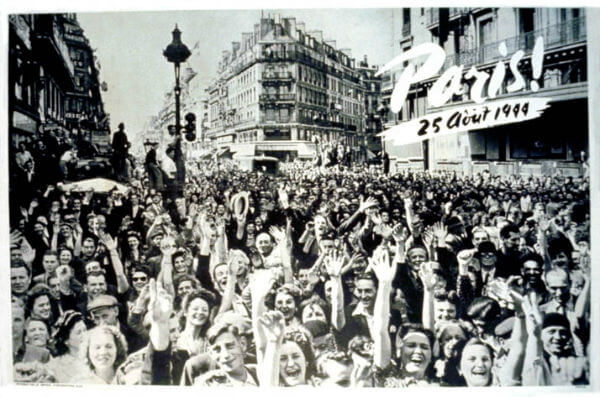
Trump in Paris — biggest celebration ever?

1944 liberation from Nazi occupation saw the biggest celebrations in Paris — prior to Donald Trump’s arrival


On MSNBC this morning, the New York Times’ Michael Schmidt described Trump as often being “hard to follow” during their White House interview on Wednesday.

As a reporter, Schmidt might feel obliged to maintain a facade of neutrality — as though he has no opinion about the state of this president’s mental health.

And yet, an insistent unwillingness to make judgments can mask a fear of making meaningful observations. In everyday life, as we read other people — through their words, demeanor, body language, and other indications — we use our powers of discernment to discriminate between delusion and deception.

A journalist doesn’t have to claim the capacity to read Trump’s mind in order to convey his or her sense of whether Trump actually believes the ridiculous things he so often says.

Trump is hard to follow because he’s hard to swallow.

The occasional probing interjection might provide some clarity during his otherwise meandering stream of consciousness. For instance, pointing out that the history of the Eiffel Tower stretches back to the Nineteenth Century would suggest that it had been the location of bigger celebrations than the one Trump claims he recently witnessed — leaving aside the fact that the throngs in question may have simply been the swell of tourists typically found in central Paris on a midsummer evening.

Does Trump generally assume that any crowd in his vicinity is most likely a crowd of admirers?

TRUMP: We had dinner at the Eiffel Tower, and the bottom of the Eiffel Tower looked like they could have never had a bigger celebration ever in the history of the Eiffel Tower. I mean, there were thousands and thousands of people, ’cause they heard we were having dinner.

[crosstalk/garbled]

HABERMAN: You must have been so tired at, by that point.

TRUMP: Yeah. It was beautiful. We toured the museum, we went to Napoleon’s tomb …

[crosstalk]

TRUMP: Well, Napoleon finished a little bit bad. But I asked that. So I asked the president, so what about Napoleon? He said: “No, no, no. What he did was incredible. He designed Paris.” [garbled] The street grid, the way they work, you know, the spokes. He did so many things even beyond. And his one problem is he didn’t go to Russia that night because he had extracurricular activities, and they froze to death. How many times has Russia been saved by the weather? [garbled]

[crosstalk/unintelligible]

TRUMP: Same thing happened to Hitler. Not for that reason, though. Hitler wanted to consolidate. He was all set to walk in. But he wanted to consolidate, and it went and dropped to 35 degrees below zero, and that was the end of that army.

[crosstalk]

But the Russians have great fighters in the cold. They use the cold to their advantage. I mean, they’ve won five wars where the armies that went against them froze to death. [crosstalk] It’s pretty amazing.

So, we’re having a good time. The economy is doing great.

And this snippet of Wednesday’s interview leads to another question about Trump’s second conversation with Putin at the G-20 — the one that Trump recounted as having amounted to little more than an exchange of pleasantries.

If the New York Times reporters found Trump hard to follow, how clear was he to the Russian president and his translator?

The fact that Trump initiated the contact — evident in hand gestures and a nod that were videoed — appear to show he knew what he wanted to say. An indication, perhaps, that Trump’s appearance of confusion may have less to do with his garbled thinking than with his desire to sow confusion.

Facebooktwittermail

Bannon and Kushner want to outsource Afghanistan to mercenaries

Mark Perry writes: On July 10, the New York Times revealed that the Trump White House had recruited Erik Prince, the founder of the notorious private security firm Blackwater, and wealthy Trump backer Steve Feinberg, the owner of the high-profile military contractor DynCorp International, to “devise alternatives to the Pentagon’s plan to send thousands of additional troops to Afghanistan.” The story suggested that the president and his top advisers were dissatisfied with the military’s thinking on the conflict, the subject of an intense series of a consultations between senior military officers and Trump’s national security team over the last several months.

While the recruitment of Prince and Feinberg, who are close friends, was intended to provide new options for winning the 16-year war, the administration has been hesitant to describe their role. Both men are controversial for their advocacy of the U.S. government contracting out the Afghan conflict to a private company that would build Afghan state capacity, provide logistical support to the Afghan army, and battle the Taliban. At the very least, the new arrangement would mean a lighter footprint for the U.S. military (or perhaps none at all); at the most it would mean that corporate America, and not the U.S. government, would be responsible for running an overseas war—a kind of “War Inc.”

“Dyncorp has its hands all over Afghanistan anyway, and I mean they’re just everywhere,” a high-level former intelligence officer who is privy to the administration’s thinking told me, “so [senior White House adviser Steve] Bannon and crew figure, ‘What the hell, let’s just turn the whole country over to them.’”

But the proposal has shocked the handful of senior Pentagon and CIA officials familiar with it, who point out the difficulty the United States has had in controlling private armies—and those who run them. This was particularly true of Blackwater, whose contractors gave the U.S. military fits in Iraq’s Anbar Province in the aftermath of Operation Iraqi Freedom, where both national security adviser H.R. McMaster and Defense Secretary James Mattis served in key command positions. Senior military officers blame Blackwater for destabilizing Fallujah in 2004 (forcing Mattis to send his Marines into the city in “Operation Vigilant Resolve”) and for the deaths of 20 Iraqi civilians in Baghdad (the “Nisour Square Massacre”) in 2007. [Continue reading…]

Facebooktwittermail

Here’s the chain reaction Trump could set off by trying to fire Mueller

Bloomberg reports: President Donald Trump’s interview with the New York Times on Wednesday has stirred speculation he may consider firing Special Counsel Robert Mueller for investigating Trump’s business dealings as part of the Russia probe.

But Trump can’t fire Mueller directly, according to the law that authorizes Mueller’s probe. If he tried, he could set off a chain-reaction that would throw the Justice Department into upheaval.

Only the person acting as attorney general, currently Rod Rosenstein on matters related to the probe, can fire Mueller, and he’s said he won’t do it without “good cause.” So Trump would first have to purge the upper ranks of the Justice Department until he finds someone willing to follow his orders and dismiss the special counsel.

He’d almost certainly begin by dismissing Rosenstein, whose political loyalties Trump questioned in the Times interview on Wednesday in which he also warned Mueller against broadening his investigation. Such a scenario would parallel President Richard Nixon’s 1973 “Saturday Night Massacre,” when Nixon forced out the top two officials in the Justice Department in order to oust the Watergate special counsel.

“I don’t think that’s politically survivable, and it’s not clear how much collateral damage he has to do to in order to put himself into a position to have somebody fire Mueller,” said Senator Sheldon Whitehouse, a Democrat from Rhode Island. [Continue reading…]

Facebooktwittermail

Is the nuclear deal with Iran slipping away?

Robin Wright writes: On Monday, the White House hastily organized a press teleconference on the Iranian nuclear deal. The accord—brokered by the world’s six major powers two years ago—is to President Trump’s foreign policy what Obamacare is to his domestic policy: he is determined to destroy it, without a coherent or viable strategy, so far, to replace it. It’s also not clear that Trump fully understands its details, complex diplomatic process, or long-term stakes any more than he does health care.

During the White House briefing, I asked the three senior Administration officials whether, after months of inflammatory declarations about the “bad deal” and the “bad” government in Tehran, the Trump Administration is moving toward a policy of regime change. It often sounds like it. Secretary of State Rex Tillerson told Congress in June that U.S. policy includes “support of those elements inside Iran that would lead to a peaceful transition of that government.” Last month, the Defense Secretary, James Mattis, described Iran as “a country that is acting more like a revolutionary cause, not to the best interests of their own people,” and added, “until the Iranian people can get rid of this theocracy.” Shortly after Trump’s Inauguration, a memo circulated by hawks within the Administration suggested that Iran was susceptible to “coerced democratization,” a euphemism for regime change. Authored by Mark Dubowitz, of the Foundation for Defense of Democracies, the memo argued that “the very structure of the regime invites instability, crisis and possibly collapse,” and urged the White House to work against the reëlection this year of President Hassan Rouhani, the chief sponsor of the nuclear deal on the Iranian side. [Continue reading…]

Facebooktwittermail

I’m a scientist. I’m blowing the whistle on the Trump administration

Joel Clement writes: I am not a member of the deep state. I am not big government.

I am a scientist, a policy expert, a civil servant and a worried citizen. Reluctantly, as of today, I am also a whistleblower on an administration that chooses silence over science.

Nearly seven years ago, I came to work for the Interior Department, where, among other things, I’ve helped endangered communities in Alaska prepare for and adapt to a changing climate. But on June 15, I was one of about 50 senior department employees who received letters informing us of involuntary reassignments. Citing a need to “improve talent development, mission delivery and collaboration,” the letter informed me that I was reassigned to an unrelated job in the accounting office that collects royalty checks from fossil fuel companies.

I am not an accountant — but you don’t have to be one to see that the administration’s excuse for a reassignment such as mine doesn’t add up. A few days after my reassignment, Interior Secretary Ryan Zinke testified before Congress that the department would use reassignments as part of its effort to eliminate employees; the only reasonable inference from that testimony is that he expects people to quit in response to undesirable transfers. Some of my colleagues are being relocated across the country, at taxpayer expense, to serve in equally ill-fitting jobs.

I believe I was retaliated against for speaking out publicly about the dangers that climate change poses to Alaska Native communities. During the months preceding my reassignment, I raised the issue with White House officials, senior Interior officials and the international community, most recently at a U.N. conference in June. It is clear to me that the administration was so uncomfortable with this work, and my disclosures, that I was reassigned with the intent to coerce me into leaving the federal government. [Continue reading…]

Facebooktwittermail

Trump’s war against ISIS in Syria: Why Putin, Assad, and Iran are winning

Robin Yassin-Kassab writes: In his inaugural address, U.S. President Donald Trump promised to “unite the civilized world against radical Islamic terrorism, which we will eradicate completely from the face of the earth.”

To be fair, he’s had only about six months, but already the project is proving a little more complicated than he hoped. First, ISIS has been putting up a surprisingly hard fight against its myriad enemies (some of whom are also radical Islamic terrorists). The battle for Mosul, Iraq’s third-largest city, has concluded, but at enormous cost to Mosul’s civilians and the Iraqi army. Second, and more importantly, there is no agreement as to what will follow ISIS, particularly in eastern Syria. There, a new great game for post-ISIS control is taking place with increasing violence between the United States and Iran. Russia and a Kurdish-led militia are also key players. If Iran and Russia win out (and at this point they are far more committed than the U.S.), President Bashar al-Assad, whose repression and scorched earth paved the way for the ISIS takeover in the first place, may be handed back the territories he lost, now burnt and depopulated. The Syrian people, who rose in democratic revolution six years ago, are not being consulted.

The battle to drive ISIS from Raqqa—its Syrian stronghold—is underway. The Syrian Democratic Forces (SDF), supported by American advisers, are leading the fight. Civilians are paying the price. United Nations investigators lament a “staggering loss of life” caused by U.S.-led airstrikes on the city.

Though it’s a multiethnic force, the SDF is dominated by the armed wing of the Democratic Union Party, or PYD, whose parent organization is the Kurdistan Workers Party, or PKK. The PKK is listed as a terrorist organization by the United States (but of the leftist-nationalist rather than Islamist variety) and is currently at war with Turkey, America’s NATO ally. The United States has nevertheless made the SDF its preferred local partner, supplying weapons and providing air cover, much to the chagrin of Turkish President Recep Tayyip Erdogan.

Now add another layer of complexity. Russia also provides air cover to the SDF, not to fight ISIS, but when the mainly Kurdish force is seizing Arab-majority towns from the non-jihadi anti-Assad opposition. The SDF capture of Tel Rifaat and other opposition-held towns in 2016 helped Russia and the Assad regime to impose the final siege on Aleppo.

Eighty percent of Assad’s ground troops encircling Aleppo last December were not Syrian, but Shiite militiamen from Lebanon, Iraq and Afghanistan, all armed, funded and trained by Iran. That put the American-backed SDF and Iran in undeclared alliance.

But those who are allies one year may be enemies the next. Emboldened by a series of Russian-granted victories in the west of the country, Iran and Assad are racing east, seeking to dominate the post-ISIS order on the Syrian-Iraqi border. Iran has almost achieved its aim of projecting its influence regionally and globally through a land corridor from Tehran to the Mediterranean via Iraq, Syria and Lebanon. In this new context, Assad and his backers are turning on the SDF. On June 18, pro-Assad forces attacked the SDF near Tabqa, west of Raqqa. When a regime warplane joined the attack, American forces shot it down. [Continue reading…]

Facebooktwittermail

Did Trump campaign collude with Russia to defeat Republican opponents in GOP primary?

Ryan Goodman writes: Russia’s election interference began well before the general election. It started during the GOP primaries and clearly in support of Donald Trump over his GOP opponents. Thanks to investigative reporting by the New York Times, we now know, at the very least, the Trump campaign was open to support from the Russian government by early June 2016 when senior campaign members met with Russians purporting to have information from the Kremlin that would harm Hillary Clinton’s presidential bid, discussed timing for implementing Russian support, and failed to report any of this to U.S. authorities. Many have raised the question whether the Trump campaign’s knowledge of Russian government support and these kinds of exchanges began before June 2016. Yet to truly understand the scope of Russian interference in the U.S. election, we must ask a more specific question: did the Trump campaign know about, accept, or work with the Russian government when the Kremlin interfered in the GOP primary?

The publicly available information on this matter should prompt Congress, Robert Mueller, news media, and others to pursue that question with utmost concern. Let’s take a closer look.

I. Russia’s election interference during the Republican primary

Before we explore whether the Trump team was working with Russia during the primaries, it’s worth briefly reviewing the Russian government’s overall involvement in in the 2016 GOP primaries. Russian election interference reportedly took effect during the primaries in an effort to undercut GOP candidates whose positions were hostile to Moscow’s interests and, more specifically, in an effort to boost Donald Trump. The Russian operation included (at least) two prongs: a propaganda effort to spread fake news and cyber operations to steal confidential information.

When exactly did the Russian influence campaign begin? In an interview with Just Security, former FBI special agent Clint Watts explained that the Russian approach to its influence campaign involved an earlier starting point than many assume. [Continue reading…]

Facebooktwittermail

Ian Bremmer talks about Trump’s second, previously undisclosed, meeting with Putin at G-20


The New York Times reports: The evening after his two meetings with Mr. Putin — the first lasting 135 minutes and the second an hour — Mr. Trump returned to Washington. On the Air Force One flight back, his top advisers helped draft a statement about a meeting his son Donald Trump Jr. attended last year with a Kremlin-connected lawyer who promised damaging information about Hillary Clinton.

“We have the worst relationship as a country right now with Russia that we have in decades, and yet we have these two leaders that, for reasons that do not make sense and have not been explained to anyone’s satisfaction, are hellbent on adoring each other,” Mr. Bremmer said. “You can take everything that’s been given to us, and it doesn’t add up.”

On Tuesday, the Kremlin intensified its demands that the Trump administration return two compounds in the United States that the Obama administration seized from Russia last fall in retaliation for the election meddling. After meeting with Thomas A. Shannon Jr., the under secretary of state for political affairs, Sergei A. Ryabkov, Russia’s deputy foreign minister, said he had warned the Americans that there must be an “unconditional return” of the property or Moscow would retaliate. [Continue reading…]

Facebooktwittermail

Trump sees truthfulness as his enemy

In an editorial, the Wall Street Journal says: Special counsel Robert Mueller and the House and Senate intelligence committees are investigating the Russia story. Everything that is potentially damaging to the Trumps will come out, one way or another. Everything. Denouncing leaks as “fake news” won’t wash as a counter-strategy beyond the President’s base, as Mr. Trump’s latest 36% approval rating shows.

Mr. Trump seems to realize he has a problem because the White House has announced the hiring of white-collar Washington lawyer Ty Cobb to manage its Russia defense. He’ll presumably supersede the White House counsel, whom Mr. Trump ignores, and New York outside counsel Marc Kasowitz, who is out of his political depth.

Mr. Cobb has an opening to change the Trump strategy to one with the best chance of saving his Presidency: radical transparency. Release everything to the public ahead of the inevitable leaks. Mr. Cobb and his team should tell every Trump family member, campaign operative and White House aide to disclose every detail that might be relevant to the Russian investigations.

That means every meeting with any Russian or any American with Russian business ties. Every phone call or email. And every Trump business relationship with Russians going back years. This should include every relevant part of Mr. Trump’s tax returns, which the President will resist but Mr. Mueller is sure to seek anyway.

Then release it all to the public. Whatever short-term political damage this might cause couldn’t be worse than the death by a thousand cuts of selective leaks, often out of context, from political opponents in Congress or the special counsel’s office. If there really is nothing to the Russia collusion allegations, transparency will prove it. Americans will give Mr. Trump credit for trusting their ability to make a fair judgment. Pre-emptive disclosure is the only chance to contain the political harm from future revelations. [Continue reading…]

It’s nice to believe that the truth will always prevail, but just like every other small-time and big-time crook, Donald Trump has an inflated estimation of his capacity to beat the system.

Apart from the fact that he would regard complete transparency as demeaning, there’s little reason to doubt that Trump’s choice is rational: that the information he continues to conceal, will, if revealed, have a more damaging effect on his presidency than does his unremitting effort to deflect, distract, and obstruct the ongoing investigation.

And as Trump could say: “I didn’t get to where I am today by being honest.”

Facebooktwittermail

Most Americans worry about full-scale war with North Korea, but lack confidence in Trump to handle issue

Emily Guskin writes: Nearly three-quarters of Americans are concerned the United States could get involved in a full-scale war with North Korea, even as a majority lacks trust in President Trump to handle the situation, according to a new Washington Post-ABC News poll.

A new high of 66 percent say North Korea poses a “serious threat” to the United States, up from 54 percent in a 2005 Post-ABC poll and 55 percent in 2003, with concern spanning partisan and ideological lines.

The poll was conducted shortly after North Korea launched its farthest-reaching missile test to date in July with a range experts say could reach Alaska. Secretary of State Rex Tillerson said the missile test was a new escalation of the threat posed to the United States and the world, and that Washington would bring North Korea’s action before the U.N. Security Council.

The Post-ABC poll finds lagging confidence in Trump to handle the situation, with 36 percent saying they trust Trump at least “a good amount” to deal with the issue, while 63 percent have “just some” or less confidence. Four in 10 say they do not trust Trump “at all” on the issue, nearly twice the number who express “a great deal” of confidence. [Continue reading…]

Facebooktwittermail
