Category Archives: Obama administration

The legal assault on WikiLeaks and press freedom

As the Justice Department develops a legal strategy for attacking WikiLeaks it will be looking for political cover to defend itself from the charge that it is attacking the First Amendment rights of a free press and will do so by arguing that what WikiLeaks does is not journalism.

The administration’s lack of interest in defending the Constitution is transparent. The question is, where will the pillars of the American mainstream media establishment take their stand? In defense of a free press? Or will they equivocate because they attach greater value to the privilege of government access than they do to their obligation to serve the public?

Wired reports:

The Justice Department would have no problem distinguishing WikiLeaks from traditional media outlets, if it decides to charge WikiLeaks founder Julian Assange with violating the Espionage Act, a former federal prosecutor told lawmakers Thursday.

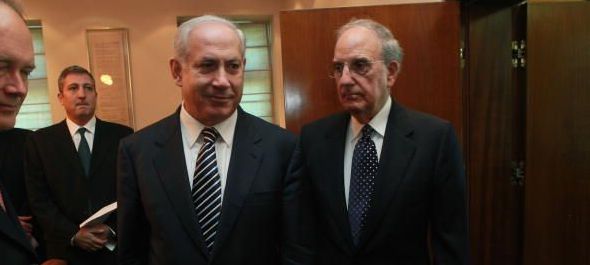
“By clearly showing how WikiLeaks is fundamentally different, the government should be able to demonstrate that any prosecution here is the exception and is not the sign of a more aggressive prosecution effort against the press,” said Kenneth Wainstein (pictured at right), former assistant attorney general on national security, during a House Judiciary Committee hearing about WikiLeaks and the Espionage Act on Thursday.

The hearing was the first to publicly address WikiLeaks. It consisted of testimony from legal scholars and attorneys as well as former Green Party presidential candidate and consumer advocate Ralph Nader. Testimony focused primarily on whether the 1917 Espionage Act should be revised to make it easier to prosecute recipients of classified information.

But Wainstein’s remarks, coming from a former prosecutor, hint at arguments the Justice Department is likely to make if it proceeds with prosecuting Assange under the existing Espionage Act.

Facebooktwittermail

Al Qaeda braced for a war without end

Syed Saleem Shahzad reports:

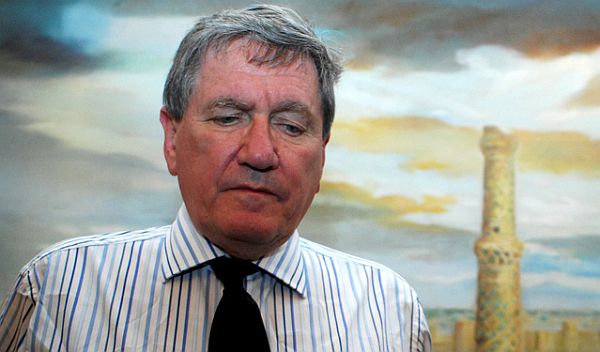
Richard Holbrooke, the United States special envoy for Afghanistan and Pakistan who died on Monday aged 69, had come to the realization that the nine-year war in Afghanistan had to come to an end.

Stopping the war will not be an easy matter. The situation on the ground is not so simple.

For instance, the North Atlantic Treaty Organization (NATO) claims success against the Taliban in Kandahar and Helmand provinces, but what has happened is that al-Qaeda-affiliated groups have stepped into the vacuum and they will continue the battle.

Similarly, Pakistan claims success in its tribal areas, but a more defiant and more ideologically motivated group has emerged to take ownership of the war.

Wali Mohammad, the brother of slain Taliban commander Nek Mohammad (see The legacy of Nek Mohammed Asia Times Online, July 2004), has taken over command of militants in South Waziristan.

Last week, army chief General Ashfaq Parvez Kiani, accompanied by other top brass and members of the media, traveled to South Waziristan to showcase the military’s “victory” against militants. They were greeted by four missiles. No one was injured in the attack, but the message is clear – the militants are back.

Facebooktwittermail

Will the Afghanistan war break Obama’s presidency?

Simon Tisdall writes:

Barack Obama puts a brave face on it. The Afghan war is winnable, he insists. “We are going to break the Taliban’s momentum,” he told US troops at Bagram this month. He repeated the mantra today. But American commentators and analysts, across the political spectrum, are wondering aloud: will it happen the other way around? Will the war break Obama’s presidency?

Obama is not yet the Rose Garden prisoner of a failed policy – the fate that befell a Democrat predecessor, Jimmy Carter, whose administration was taken hostage by Iran’s revolutionary mullahs. But he’s uncomfortably close, for all the determined White House talk.

Obama the presidential candidate talked up the war, spoke of fighting the good fight in Afghanistan in contrast to Iraq, wrote Peter Feaver in Foreign Policy. But Obama the president struggles to communicate his aims, much as he struggled on healthcare. Feaver said:

“The administration’s strategy appears to be to drive the public narrative underground.”
In other words, Obama would rather not talk about it unless he cannot avoid it.

This reluctance is political and intellectual. Veteran foreign policy analyst Leslie Gelb, writing in the Daily Beast, said Obama can no longer persuasively answer the basic question: why are 100,000 American troops in Afghanistan, at an annual cost of $113bn?

A New York Times report from Kunduz indicates that as the US has focused its efforts on securing the south, the Taliban is now taking control of the north.

This city, once a crossroads in the country’s northeast, is increasingly besieged. The airport closed months ago to commercial flights. The roads heading south to Kabul and east to Tajikistan as well as north and west are no longer safe for Afghans, let alone Westerners.

Although the numbers of American and German troops in the north have more than doubled since last year, insecurity has spread, the Taliban are expanding their reach, and armed groups that purportedly support the government are terrorizing local people and hampering aid organizations, according to international aid workers, Afghan government officials, local residents and diplomats.

The growing fragility of the north highlights the limitations of the American effort here, hampered by waning political support at home and a fixed number of troops. The Pentagon’s year-end review will emphasize hard-won progress in the south, the heartland of the insurgency, where the military has concentrated most troops. But those advances have come at the expense of security in the north and east, with some questioning the wisdom of the focus on the south and whether the coalition can control the entire country.

Facebooktwittermail

Julian Assange freed on bail

The Guardian reports:

Britain’s high court today decided to grant bail to Julian Assange, the WikiLeaks founder who is wanted in Sweden for questioning over allegations of rape.

Justice Duncan Ouseley agreed with a decision by the City of Westminister earlier in the week to release Assange on strict conditions: £200,000 cash deposit, with a further £40,000 guaranteed in two sureties of £20,000 and strict conditions on his movement.

The New York Times reports:

Federal prosecutors, seeking to build a case against the WikiLeaks leader Julian Assange for his role in a huge dissemination of classified government documents, are looking for evidence of any collusion in his early contacts with an Army intelligence analyst suspected of leaking the information.

Justice Department officials are trying to find out whether Mr. Assange encouraged or even helped the analyst, Pfc. Bradley Manning, to extract classified military and State Department files from a government computer system. If he did so, they believe they could charge him as a conspirator in the leak, not just as a passive recipient of the documents who then published them.

Among materials prosecutors are studying is an online chat log in which Private Manning is said to claim that he had been directly communicating with Mr. Assange using an encrypted Internet conferencing service as the soldier was downloading government files. Private Manning is also said to have claimed that Mr. Assange gave him access to a dedicated server for uploading some of them to WikiLeaks.

Glenn Greenwald writes:

Bradley Manning, the 22-year-old U.S. Army Private accused of leaking classified documents to WikiLeaks, has never been convicted of that crime, nor of any other crime. Despite that, he has been detained at the U.S. Marine brig in Quantico, Virginia for five months — and for two months before that in a military jail in Kuwait — under conditions that constitute cruel and inhumane treatment and, by the standards of many nations, even torture. Interviews with several people directly familiar with the conditions of Manning’s detention, ultimately including a Quantico brig official (Lt. Brian Villiard) who confirmed much of what they conveyed, establishes that the accused leaker is subjected to detention conditions likely to create long-term psychological injuries.

Since his arrest in May, Manning has been a model detainee, without any episodes of violence or disciplinary problems. He nonetheless was declared from the start to be a “Maximum Custody Detainee,” the highest and most repressive level of military detention, which then became the basis for the series of inhumane measures imposed on him.

Facebooktwittermail

Middle East peace process: Dead but not buried

In an age where the newspaper editorial has become an anachronism, few are worth reading. This, from The Guardian, is an exception and for that reason I include the whole piece.

The Middle East peace process died a quiet, undramatic death with the statement last week that the US had given up trying to persuade Binyamin Netanyahu to stop building on occupied land as a prerequisite to direct talks with the Palestinians. Few, however, are interested in burying the corpse.

The rightwing coalition under Mr Netanyahu is relaxed about the failure to restart the talks, because half the cabinet do not accept that they are occupying any land other than their own. And anyway, every day without a final status agreement is another day when the cement mixers can whirl and the cranes swivel. Palestinian leaders who recognise Israel are also reluctant to make good their pledges to resign, because they, too, would lose position, power and political meaning. Fatah has still legitimacy, but where would the Palestinian Authority be in Palestinian eyes other than as a surrogate for Israeli soldiers?

The US is unwilling to set a date for the funeral, because to recognise that a death had taken place would entail an inquest and an examination of 18 fruitless years of failed attempts. And that is the last thing a US president fighting re-election will do. The radical part of Barack Obama’s Middle East strategy has already been and gone. He has spent his political capital and needs to conserve the dimes in his pocket. All of these are compelling short-term reasons for doing nothing, for saying, as if this has not been said often enough in the past, that the time is not ripe, the leaders are too weak, the sides are not ready. But they are dreadful long-term ones. Israel will continue to impose its own one-state solution, with separate roads, and separate governance for Jew and Arab. The Palestinian leadership will continue weak and divided. The argument that Hamas and other militant groups use, that Israel makes territorial concessions only when it is forced to, will grow in resonance. And, inch by inch, the next conflict – be it in the form of a strike on Iran, or a third Palestinian uprising – will come closer. Doing nothing is not just the counsel of despair. In the asymmetry of relations between the growing state of Israel and the shrinking non-state of Palestine, doing nothing is a deeply partisan act.

There are political moves that could release the log jam. Israel’s Labour party could pull out of the coalition, making good on frequent threats to do so. If its leader, Ehud Barak, was right when he said that there is a contradiction between the structure of the government and the chance of promoting negotiations, and he is, then Labour should pull out. President Mahmoud Abbas should also consider steps that would end the current sham. If, in his words, he is presiding over an authority without any authority, and if he is right when he says that the PA’s very existence has made Israel’s occupation the cheapest ever, it is time to end this state of affairs. What exactly is there to lose? Disbanding the PA would mean a return to direct occupation, and seeking UN recognition of a Palestinian state, or handing over responsibility for the Palestinian territories to the UN, would attract a US veto. But if this US president or any future US president were pushed to the point at which the US could abstain in such a vote, all bets would be off.

The contradiction at the heart of US policy is that its support for Israel is unconditional. Even the offer of billions of dollars of aid did not turn Mr Netanyahu’s head, because he knew, if he refused, the flow of US money and weaponry would continue unabated. Any future US president, not just the current one, must calibrate the relationship with Israel as the US does with any other ally. The cost of each new housing unit built in occupied territory should be deducted off US aid. The realities that make such a measure inconceivable today do not lessen the case for such moves tomorrow. They make them compelling.

Facebooktwittermail

The killing spirit in America

“I don’t want to just end the war,” Barack Obama said in January 2008, “but I want to end the mindset that got us into war in the first place.”

That was a line which seduced many a progressive across America during the presidential campaign and it’s one reason so many now feel betrayed. Either Obama later had a change of heart, or he knew at the time that he was cynically making a vacuous statement for the sole purpose of hooking a slice of the electorate — one that might be sufficiently inspired to provide useful foot soldiers in his campaign.

Reflecting some of that sense of betrayal, David Bromwich writes:

It has lately become usual for right-wing columnists, bloggers, and jingo lawmakers to call for the assassination of people abroad whom we don’t like, or people who carry out functions that we don’t want to see performed. There was nothing like this in our popular commentary before 2003; but the callousness has grown more marked in the past year, and especially in the past six months. Why? A major factor was President Obama’s order of the assassination of an American citizen living in Yemen, the terrorist suspect Anwar al-Awlaki. This gave legal permission to a gangster shortcut Americans historically had been taught to shun. The cult of Predator-drone warfare generally has also played a part. But how did such remote-control killings pick up glamor and legitimacy? Here again, the president did some of the work. On May 1, at the White House Correspondents dinner, he made an unexpected joke: “Jonas Brothers are here tonight. Sasha and Malia are huge fans. But boys, don’t get any ideas. Two words: predator drones. You will never see it coming.” The line caught a laugh but it should have caused an intake of breath. A joke (it has been said) is an epigram on the death of a feeling. By turning the killings he orders into an occasion for stand-up comedy, the new president marked the death of a feeling that had seemed to differentiate him from George W. Bush. A change in the mood of a people may occur like a slip of the tongue. A word becomes a phrase, the phrase a sentence, and when enough speakers fall into the barbarous dialect, we forget that we ever talked differently.

I’m not sure about Bromwich’s claim that the turning point was 2003.

Relatively early in America’s expansionist history, the slogan, “Wanted: Dead or Alive,” positioned extra-judicial killing at the center of a conception of justice in which the gun was elevated to the status of a sacred instrument.

It should have come as no surprise a week after the September 11 attacks, that a cowboy in the White House would try shaping the American mindset into one necessary for war, by employing those words.

President Bush said yesterday that he wanted Osama bin Laden, the Saudi exile, “dead or alive” in some of the most bellicose language used by a White House occupant in recent years.

“I want justice,” he said after a meeting at the Pentagon, where 188 people were killed last Tuesday when an airliner crashed into the building. “And there’s an old poster out West that says, ‘Wanted: Dead or Alive.’ ”

He then seemed to temper his remarks by adding: “All I want and America wants is to see them brought to justice. That’s what we want.”

Almost nine years later, Obama’s Attorney General Eric Holder confirmed that the same mindset was still at work — in spite of the Democratic president’s campaign promise — and assured Congress that bin Laden “will never appear in an American courtroom.”

The clichéd phrase, “bring to justice,” even if it might seem to preclude the justice of extrajudicial killing, nevertheless connotes justice as the exercise of power — not the enactment of a legal process that should by definition have an unpredictable outcome.

Which brings us to the American wrath now being directed at Julian Assange. His “crime” — the fact that most Americans wouldn’t be able to say what crime he might have committed hasn’t dampened their desire to see him punished — has I believe less to do with national security or legal statutes than the simple fact that he and WikiLeaks have embarrassed America. How dare a scruffy Australian have the audacity to do that?

Imperial power has no humor and responds to the smallest affront with fierce indignation.

Facebooktwittermail

Holbrooke’s death-bed ‘stop the war’ comment just a joke

The real story is not the one reported. The real story we can only imagine — but it’s buried in here somewhere.

The Washington Post reports that Richard Holbrooke’s final words before entering surgery in which he died yesterday evening, were these: “You’ve got to stop the war in Afghanistan.”

Did Obama’s Af-Pak envoy go seriously off-message in the last moments of his life and reveal his abhorrence for what has become President Obama’s war? And more to the point, was the White House disturbed that this might be Holbrooke’s legacy — right at the moment that the administration was ready to wheel out its stay-on-course message about the war’s progress?

The Washington Post — at who’s behest we’ll probably never know — now provides some clarification. Holbrooke was just joking around while engaged in pre-surgery banter.

In the following account, the Post uses a phrase beloved by its reporters and those at the New York Times: emerged.

News pops up like mushrooms from an invisible mycelium. For a reporter to report on how a story emerges — well that would be unseemly and unnecessary, a distraction from the narrative that is supposedly the reader’s sole interest.

What possible concern could we have in understanding the chain of events that led to an anti-war death-bed story getting airbrushed out of the record?

Thank goodness we now know that Holbrooke was not eager to end the war.

As friends and colleagues from four decades of diplomatic life reflected on the intensity of Richard C. Holbrooke’s dedication, many were not surprised to learn that concerns about the Afghanistan war were apparently among his final thoughts.

Following Holbrooke’s death, The Washington Post, citing his family members, reported that the veteran diplomat had told his physician just before surgery on Friday to “stop this war.”

But on Tuesday a fuller account of the tone and contents of his remarks emerged.

As Dr. Jehan El-Bayoumi was attending to Holbrooke in the emergency room at George Washington University Hospital, she told him to relax and asked what she could do to comfort him, according to an aide who was present. Holbrooke, who was in severe pain, said jokingly that it was hard to relax because he had to worry about the difficult situation in Afghanistan and Pakistan.

El-Bayoumi, an Egyptian-American internist who is Secretary of State Hillary Rodham Clinton’s physician, replied that she would worry for him. Holbrooke responded by telling her to end the war, the aide said.

The aide said he could not be sure of Holbrooke’s exact words. He emphasized Tuesday that the comment was made in painful banter, rather than as a serious exhortation about policy. Holbrooke also spoke extensively about his family and friends as he awaited surgery by Farzad Najam, a thoracic surgeon of Pakistani descent.

Hmmm… Holbrooke’s surgeon was of Pakistani descent… No, I promise, I won’t go there.

Facebooktwittermail

Press freedom threatened by the Obama administration

Glenn Greenwald writes:

During the Bush era, I frequently wrote about escalating attacks by the U.S. Government on press freedoms. The Bush DOJ vowed to prosecute whistleblowers while steadfastly refusing to do the same for the high-level criminals they exposed. Alberto Gonzales openly threatened that the DOJ could prosecute editors and reporters of The New York Times for revealing the illegal NSA spying program. CIA Director Porter Goss vowed to subpoena journalists who publish classified information in order to compel them to disclose their sources or go to prison.

And, worst of all, Bush officials sought for the first time in American history to obtain an espionage conviction — under the Espionage Act of 1917 — against non-government-employees who had received and disseminated classified information. About that case — brought against two AIPAC officials who had passed classified information they received from a Pentagon official to the Government of Israel (the Pentagon official pled guilty) — I wrote about “the Bush Administration’s broader, unprecedented assault on a free press of which the AIPAC prosecution is but a part,” and argued that “the Bush Administration is seeking to criminalize the very act which defines what an investigative journalist does and has always done in America.” The Washington Post‘s Walter Pincus reported at the time, quoting a legal expert, that “administration officials ‘want this case as a precedent so they can have it in their arsenal’ and added: ‘This is a weapon that can be turned against the media’.” After a series of adverse judicial rulings against the Government, the DOJ finally abandoned that AIPAC prosecution.

Amazingly, the Obama administration is surpassing its predecessor when it comes to assaults on whistle-blowing and a free press. As Politico’s Josh Gerstein reported, “President Barack Obama’s Justice Department has taken a hard line against leakers. . . .’They’re going after this at every opportunity and with unmatched vigor,’ said Steven Aftergood of the Federation of American Scientists.” The New York Times similarly documented: “the Obama administration is proving more aggressive than the Bush administration in seeking to punish unauthorized leaks.” The Obama DOJ has launched nothing less than a full-on war against whistleblowers; its magnanimous “Look Forward, Not Backward” decree used to shield high-level Bush criminals from investigations is manifestly tossed to the side when it comes to those who reveal such criminality. And they even revitalized an abandoned Bush-era subpoena issued to The New York Times‘ James Risen, demanding that he disclose his source for an article in which he revealed an embarrassingly botched attempt to infiltrate and sabotage Iran’s nuclear program.

Facebooktwittermail

The expiration of the ‘peace process’: where now for the Middle East?

Alastair Crooke writes:

A ‘peace process’ that, from its inception, took Israel’s self-definition of its own security needs as the sole determinate of the walls within which any solution for Palestinians was to be conducted, has reached exhaustion. Based on such a reductive premise, its arrival at this deathly nadir, with no more than a prospect of disjointed alleviated occupation, possessing the most hollow trappings of statehood as its final security-led outcome, should evoke no surprise.

The non-solution to which such a premise would take us would defuse nothing: indeed, it might well prove to be the spark that could exacerbate or explode simmering regional animosities — even if these animosities were not ostensibly linked directly to the Palestinian issue.

Any thought that such a hollowed-out solution — alleviated occupation, posing as statehood — will defuse anti-American sentiment in the Muslim world is likely to prove to be resoundingly misplaced. On this, the critics from the political Right are correct: a flawed Israeli-Palestinian agreement, per se, will not drain-off anti-western regional sentiment; it will exacerbate it. It will feed it. But the corollary the Right pushes in its place, that defeating Iran somehow precisely is that elusive magic bullet the West so ardently desires (the key to soothing regional tensions and defusing hostility towards the West) represents an even greater pathology and disassociation from reality. It is one that is no less illusory for having the apparent endorsement of America’s Arab clients, whose talk is no more than a reflection back into the looking-glass of American diplomacy, as it stares at its own face.

What these American protégés really fear is the growing groundswell of scorn — scorn towards the western élites on whom these interlocutors wholly depend — but more precisely it is fear of the parallel disdain, directed towards these pro-American, self-enriching élites, themselves. Any show of western muscularity indirectly gives these anxious oligarchs, feeling their authority decay beneath them, a further lease on survival. Thus they speak their deeper fears into the American looking-glass in its own thinking. All these worrying, popular stirrings can only be Iranian: for they fear they carry the gene of revolution.

The peace process solution-phantasm has not only divided the Palestinians; but also shaped the political structure for the region for the last decades: polarizing the region — on the false premise — between those who were ‘opposed’ to peace and those who ‘supported’ peace. Many of those who were termed opposed to peace in reality were opposed more to Israel’s self-referencing security-led paradigm — than to a peaceful solution per se.

Contrary to general western expectations, there will be many in the region who welcome evidence of the clinical death of ‘the process’. They will see its passing away as a welcome and necessary catharsis that opens new possibilities; new politics. Already the polarized cold war architecture of the peace process has begun to dissolve: Turkey’s shift of orientation is one example of the shifts taking place — as the former regional division into two sculptural solids, spoilers versus supporters of peace, melts into a much more fluid and mobile regional mass. [Continue reading]

Facebooktwittermail

An open letter from Afghanistan experts to Barack Obama

An open letter from Afghanistan experts to Barack Obama:

To the President of the United States: Mr. President, We have been engaged and working inside Afghanistan, some of us for decades, as academics, experts and members of non-governmental organisations. Today we are deeply worried about the current course of the war and the lack of credible scenarios for the future. The cost of the war is now over $120 billion per year for the United States alone.

This is unsustainable in the long run. In addition, human losses are increasing. Over 680 soldiers from the international coalition – along with hundreds of Afghans – have died this year in Afghanistan, and the year is not yet over. We appeal to you to use the unparalleled resources and influence which the United States now brings to bear in Afghanistan to achieve that longed-for peace.

Despite these huge costs, the situation on the ground is much worse than a year ago because the Taliban insurgency has made progress across the country. It is now very difficult to work outside the cities or even move around Afghanistan by road. The insurgents have built momentum, exploiting the shortcomings of the Afghan government and the mistakes of the coalition. The Taliban today are now a national movement with a serious presence in the north and the west of the country. Foreign bases are completely isolated from their local environment and unable to protect the population. Foreign forces have by now been in Afghanistan longer than the Soviet Red Army.

Politically, the settlement resulting from the 2001 intervention is unsustainable because the constituencies of whom the Taliban are the most violent expression are not represented, and because the highly centralised constitution goes against the grain of Afghan tradition, for example in specifying national elections in fourteen of the next twenty years.

The operations in the south of Afghanistan, in Kandahar and in Helmand provinces are not going well. What was supposed to be a population-centred strategy is now a full-scale military campaign causing civilian casualties and destruction of property. Night raids have become the main weapon to eliminate suspected Taliban, but much of the Afghan population sees these methods as illegitimate. Due to the violence of the military operations, we are losing the battle for hearts and minds in the Pashtun countryside, with a direct effect on the sustainability of the war. These measures, beyond their debatable military results, foster grievance. With Pakistan’s active support for the Taliban, it is not realistic to bet on a military solution. Drone strikes in Pakistan have a marginal effect on the insurgency but are destabilising Pakistan. The losses of the insurgency are compensated by new recruits who are often more radical than their predecessors.

Facebooktwittermail

Richard Holbrooke’s final words: “You’ve got to stop this war in Afghanistan.”

Richard Holbrooke died this evening. The Washington Post looked back at his career.

Mr. Holbrooke was sent to Vietnam in 1963, assigned to the lower Mekong Delta as a field officer for the U.S. Agency for International Development, a post that would later give him unique perspective on reconstruction efforts and provincial stabilization in Afghanistan.

His insights drew the attention of the U.S. Embassy in Saigon, and he was soon moved there to serve as a staff assistant to two ambassadors, Maxwell D. Taylor and Henry Cabot Lodge Jr.

In 1966, he joined the Vietnam staff in the Johnson White House, where had a front-row seat for what came to be considered an unwise escalation of U.S. military forces based on deceptive assessments.

“Our beloved nation sent into battle soldiers without a clear determination of what they could accomplish and they misjudged the stakes. And then we couldn’t get out,” he said that year at a State Department conference on the American experience in Southeast Asia. “. . . We fought bravely under very difficult conditions. But success was not achievable. Those who advocated more escalation or something called ‘staying the course’ were advocating something that would have led only to a greater and more costly disaster afterwards.”

Facebooktwittermail

America’s alliances with Central Asia’s despots

The Guardian reports:

The post-Soviet state of Uzbekistan is a nightmarish world of “rampant corruption”, organised crime, forced labour in the cotton fields, and torture, according to the leaked cables.

But the secret dispatches released by WikiLeaks reveal that the US tries to keep President Islam Karimov sweet because he allows a crucial US military supply line to run into Afghanistan, known as the northern distribution network (NDN).

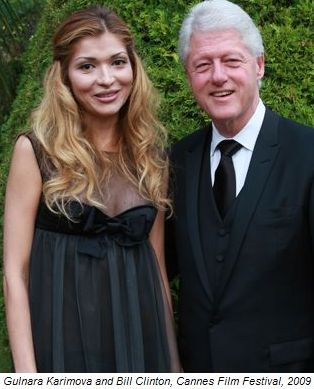
Many dispatches focus on the behaviour of Karimov’s glamorous and highly controversial daughter Gulnara, who is bluntly described by them as “the single most hated person in the country”.

She allegedly bullied her way into gaining a slice of virtually every lucrative business in the central Asian state and is viewed, they say, as a “robber baron”. Granted diplomatic status by her father, Gulnara allegedly lives much of the time in Geneva, where her holding company, Zeromax, was registered at the time, or in Spain.

She also sings pop songs, designs jewellery and is listed as a professor at Tashkent’s University of World Economy and Diplomacy.

The British ambassador in Tashkent, Rupert Joy, was criticised by human rights groups in October when he helped boost Gulnara’s image by appearing with her on a fashion show platform.

Der Spiegel reports:

The US is anxious to broaden its influence in Central Asia — and limit that of Russia. The result, however, are questionable alliances with some of the strangest despots in the world.

The secret country assessment from the US Embassy in the Tajikistan capital of Dushanbe, prepared for General David Petraeus on Aug. 7, 2009 ahead of his visit later that month, described a country on the brink of ruin. Tajikistan, a country of 7.3 million people on the northern border of Afghanistan, is a dictatorship ruled by Emomali Rakhmon, a former collective farm boss and notorious drunkard. “Parliament acts as a rubber stamp, barely discussing important legislation such as the national budget,” the dispatch noted.

Some of the state’s revenues were from criminal sources: “Tajikistan is a major transit corridor for Southwest Asian heroin to Russia and Europe.” The country had “chronic problems with Uzbekistan,” its neighbor, and the impoverished former Soviet republic faced the prospect of civil war fomented by Islamists in the east of the country.
Nevertheless, Petraeus, at the time head of US Army Central Command, was urged to court Rakhmon. The US needed his help in Afghanistan. The US had other ambitious goals in the region as well. The US, in recent years, has serenaded several former Soviet republics in Central Asia — oil interests, counter-terrorism assistance and American influence in the region inform the approach. As a result, US diplomats have had to cozy up to a collection of decidedly shady characters.

In the case of Tajikistan, Petraeus’ task was clear: “Secure Rakhmon’s agreement to accept transit of lethal materials to Afghanistan through Tajikistan” — arms and ammunition for US troops. In return, the US could offer assistance in quelling the Islamists: “Assure Tajikistan of our support as it works to contain militants in the east of the country.”

Facebooktwittermail

Radical jihadism is not a mental disorder

Stephen N. Xenakis warns that the US government is sliding in the direction of the Soviet Union when it uses psychiatrists, willing to spout pseudoscience for the purpose of identifying “enemies of the state.”

The case of Omar Khadr was the first war crimes prosecution of the Obama administration, and it could set a dangerous precedent for how mental health professionals are used in terrorism trials.

I attended the proceedings in October – the first American tribunal for a child soldier since World War II – because I had been working with Khadr’s defense team for two years. I am a child and adolescent psychiatrist and a retired Army brigadier general; the defense had asked me to evaluate Khadr’s physical and mental health, as well as advise on military procedure.

As I listened to the prosecution’s expert testimony depicting Khadr’s state of mind, I was reminded of psychiatry and the politicization of mental health under the Soviet regime. Those were the years when political dissidents were accused of insanity simply because they had the audacity to challenge the Soviet system. The medical profession, especially psychiatry, was a political instrument of control and repression.

Facebooktwittermail

America: the panoptic shiver

At Open Democracy, Paul Rogers writes:

Among the most compelling nuggets of information contained in the batch of United States diplomatic documents released by WikiLeaks and published in leading international newspapers is the list of installations in more than fifty countries which the state department in Washington deems to be a US security concern.

Some of the locations seem obvious (major oil-and-gas processing-plants and pipeline terminuses, for example); but others are far harder to fit any evident national-security frame (such as an Australian pharmaceutical plant specialising in anti-snake-venom treatments, and cobalt-mines in the Democratic Republic of Congo).

But even the more unlikely sites are relevant to a country that sees itself as the world’s sole superpower with interests across the globe. The anti-snake-venom plant in Australia almost certainly has the expertise and equipment to make antidotes to other toxins, and this could be highly significant in the event of a biological-warfare threat.

The cobalt-mines around Kolwezi and Mutshatsha in the southern DRC extract the world’s most important deposits of cobalt ores, and ferro-alloys containing cobalt have the specific property of retaining their shape at very high temperatures. They are therefore much in demand for the guidance-vanes of missile-engines and other elements of modern weapons-systems.

The more surprising elements of the list as much as the expected ones thus illustrate the continued reach of the United States’s strategic and security ambitions. But they also reveal something more: its new vulnerabilities. The increased inter-state competition across much of the global south from China and other rising states is one, familiar, source of these; another and perhaps less visible source is the challenge posed by insurgent groups to these prime targets. Indeed, central Africa may be a good place to begin to track this superpower dilemma.

Facebooktwittermail

Whose side is Obama on?

James Galbraith, speaking at the ADA Education Fund’s Post-election Conference at the Harvard Kennedy School, said:

I want to raise a hard question — a question on which Americans are divided. It seems to me, though, we will get nowhere unless we realize where we are, what has actually happened, and what the future most likely holds.

Recovery begins with realism and there is nothing to be gained by kidding ourselves. On the topics that I know most about, the administration is beyond being a disappointment. It’s beyond inept, unprepared, weak, and ineffective. Four and again two years ago, the people demanded change. As a candidate, the President promised change. In foreign policy and the core economic policies, he delivered continuity instead. That was true on Afghanistan and it was and is true in economic policy, especially in respect to the banks. What we got was George W. Bush’s policies without Bush’s toughness, without his in-your-face refusal to compromise prematurely. Without what he himself calls his understanding that you do not negotiate with yourself.

It’s a measure of where we are, I think, that at a meeting of Americans for Democratic Action, you find me comparing President Obama unfavorably to President George W. Bush.

Facebooktwittermail

WikiLeaks and the Espionage Act

WL Central reports:

Today, Jennifer Robinson, one of the lawyers for Julian Assange, told The Guardian that the US government may be about to press charges against Julian Assange under the Espionage Act. She said that the legal team had heard from “several different US lawyers rumours that an indictment was on its way or had happened already, but we don’t know”. Ms Robinson told ABC News that “Our position of course is that we don’t believe it (the Espionage Act) applies to Mr. Assange and that in any event he’s entitled to First Amendment protection as publisher of Wikileaks and any prosecution under the Espionage Act would in my view be unconstitutional and puts at risk all media organizations in the U.S.”

Rumours about the possibility of Julian Assange having been indicted by a grand jury, whose proceedings are secret, have been circulating for a while. The Christian Science Monitor had a few days ago quoted Stephen Vladeck, an expert in national security law at American University, who said that an empaneled grand jury could have already been considering the case. “We wouldn’t know what they’re doing until the whole thing is concluded,” he said. The Monitor also quoted CNN legal expert Jeffrey Toobin, who said “I would not be at all surprised if there was a sealed arrest warrant currently in existence.”

Prominent civil rights attorney Harvey A. Silverglate, who worked on the Pentagon Papers case, also raised the possibility in an interview with NECN, while also pointing out that prosecution would be extremely difficult, and for many reasons not in the interest of the United States government.

As we previously covered, the legal consensus appears to be that a prosecution under the Espionage Act would be both difficult and dangerous for the United States, notably with regards to First Amendment protections (also see: EFF, ACLU.)

The US Congressional Research Service published on December 6 a report titled “Criminal Prohibitions on the Publication of Classified Defense Information” [PDF]:

This report identifies some criminal statutes that may apply, but notes that these have been used almost exclusively to prosecute individuals with access to classified information (and a corresponding obligation to protect it) who make it available to foreign agents, or to foreign agents who obtain classified information unlawfully while present in the United States. Leaks of classified information to the press have only rarely been punished as crimes, and we are aware of no case in which a publisher of information obtained through unauthorized disclosure by a government employee has been prosecuted for publishing it. There may be First Amendment implications that would make such a prosecution difficult, not to mention political ramifications based on concerns about government censorship. To the extent that the investigation implicates any foreign nationals whose conduct occurred entirely overseas, any resulting prosecution may carry foreign policy implications related to the exercise of extraterritorial jurisdiction and whether suspected persons may be extradited to the United States under applicable treaty provisions. (emphasis ours)

The report’s conclusion states: “Thus, although unlawful acquisition of information might be subject to criminal prosecution with few First Amendment implications, the publication of that information remains protected.”

A new poll finds that only 31% of Americans believe that the publication of secrets is protected by the First Amendment.

This implies that most Americans have unquestioningly swallowed the line that the boundaries that circumscribe freedom for the press are those defined by the US government. The government defines the terms of national security and the press must not challenge those definitions.

In other words, the press should have as much freedom as the government sees fit.

In other words, the press can enjoy the same amount of freedom that a well-trained dog enjoys once it has learned to never strain at its leash.

In other words, most of the Americans who say that America is at war in order to protect our freedom, see that freedom as being akin to the freedom of a domesticated animal.

We know how to bark, how to wag our tails and how to catch treats.

Facebooktwittermail

Israel progresses down the path to isolation

Peter Beinart facetiously congratulates Benjamin Netanyahu now that he’s thwarted President Obama’s Middle East peace efforts.

Now all you have to worry about is…Argentina. You see, Argentina just recognized a Palestinian state on 1967 borders. Brazil did so days earlier. Uruguay and Paraguay are expected to follow suit, and then Bolivia and Ecuador. Oh, and you have a small problem with rock stars: last year Elvis Costello and Carlos Santana cancelled Israel gigs because of the occupation, and more seem poised to follow. Dock workers are another worry: from Sweden to South Africa, they keep protesting the occupation and the Gaza blockade by refusing to offload Israeli goods. And then there’s Hanna King, the 17-year-old Swarthmore freshmen who along with four other young American Jews disrupted your speech last month in New Orleans because, as she told Haaretz, “settlements…are contrary to the Jewish values that we learnt in Jewish day school.” You should probably expect young Jews like her to protest all your big American speeches from now on.

I know, I know. You consider all this unfair, and in some ways it is. But when you’ve been occupying another people for 43 years, confiscating more and more of their land and denying them citizenship while providing it to your own settlers, it doesn’t do much good to insist that things are worse in Burma. Your only effective argument against the Elvis Costellos and Hanna Kings was that you were trying to end the occupation. That’s where Obama came in. As long as the U.S. president seemed to have a chance of brokering a deal, his efforts held the boycotters and protesters and Palestinian state-recognizers at bay. When Brazil and Argentina recognized Palestinian independence, the American Jewish Committee’s David Harris declared it “fundamentally unhelpful to the Arab-Israeli peace process.” But what if there is no peace process? What’s your argument then? Maybe you can tell the Ecuadorians that Israel deserves Hebron because Abraham bought land there from Ephron the Hittite.

Rest assured, the Obama administration won’t go along with these efforts to punish and isolate you. It may even denounce them. But as you may have noticed, the world doesn’t listen to America like it used to. Non-Americans have grown tired of hearing that only the U.S. can broker a deal, especially because you’ve now shown that to be false. And so the dam preventing countries and institutions from legitimizing Palestine and delegitimizing Israel may soon break. You didn’t like the American way? Get ready for the Brazilian way.

Facebooktwittermail

How WikiLeaks turned the First Amendment into a ‘problem’

First Amendment attorney Floyd Abrams says: “WikiLeaks may just be the price we pay for freedom of the press in this country.”

Why not: “WikiLeaks demonstrates the value of the First Amendment”?

After all, what’s the good of having a free press when journalists so willingly serve the interests of the establishment? If the Fourth Estate had not turned itself into a fourth branch of government, WikiLeaks would have little reason to exist — or at least, little reason to be challenging the authority of the US government.

Freedoms not exercised will easily be taken away.

Time reports:

Thanks to nearly a century of cases dealing with the clash between national security and the freedom of the press, the Constitution provides enormous protection for publishers of state secrets. Those who leak the secrets in the first place — government officials, even soldiers, for instance — can and are prosecuted, such as Army private, Bradley Manning, now sitting in a military prison after having been charged with illegally downloading secret files amid suspicions that he gave them to WikiLeaks.

Putting someone like Assange in jail for publishing documents he did not himself steal, on the other hand, is exactly the kind of thing that First Amendment makes difficult. “From everything we’ve seen, [Manning] was merely responding to the notion that Assange might publish the cables,” former CIA inspector general Frederick P. Hitz told TIME. “There’s nothing to show that Assange played an active role in obtaining the information.” He conceded that the leaks had been tremendously damaging, but added “I don’t see any easy effort there” in pursuing charges.

Holder has said the government will explore whether Assange could be charged with a form of theft since the records had been stolen, though such a course is fraught will obstacles, given that the files are digital copies of government records. Holder said too the government will consider whether Assange might be guilty of conspiring somehow with Manning, or went beyond the traditional role of publisher by acting as a kind of broker in dissemenating the files to newspapers around the world. What worries famed First Amendment attorney Floyd Abrams is that if the government stretches to get around the Constitution to charge Assange, it may end up damaging the press freedoms enjoyed by every publisher. Nobody should applaud Assange, Abrams told TIME, but trying to remedy the harm he caused could easily leave the country worse off. “WikiLeaks may just be the price we pay for freedom of the press in this country,” Abrams said.

The New York Times reports on the administration’s ongoing effort to find a legal trap in which they might snare Assange:

Justice Department officials have … examined whether Mr. Assange and WikiLeaks could be charged with trafficking in stolen government property.

But scholars say there might be legal difficulties with that approach, too, because the leaked documents are reproductions of files the government still possesses, not physical objects missing from its file cabinets. That means they are covered by intellectual property law, not ordinary property law.

“This is less about stealing than it is about copying,” said John G. Palfrey, a Harvard Law School professor who specializes in Internet issues and intellectual property.

Intellectual property law criminalizes the unauthorized reproduction of certain kinds of commercial information, like trade secrets or copyrighted music, films and software files. But those categories do not appear to cover government documents, which by law cannot be copyrighted and for which there is no ordinary commercial market.

Mr. Assange has received leaks of private-sector information as well. He has indicated, for example, that his next step might be to publish a copy of the contents of a hard drive belonging to an executive at a bank — apparently, Bank of America.

If he does so, some of the problems associated with trying to find a way to prosecute him for distributing leaked government documents could disappear. The works of a person in the private sector are automatically copyrighted, and bank documents could be deemed trade secrets.

“If you had large-scale dissemination of a private-sector company’s records, there might be some kind of argument there similar to commercial espionage,” said James Boyle, a Duke University law professor who specializes in intellectual property and public-domain issues.

There would still be obstacles. For example, Mr. Assange could claim that his distribution of the files was allowable under the “fair use” exception to copyright law and that it was not for financial gain. Still, “fair use” does not allow wholesale reproduction, and prosecutors could argue that his organization was raising money from its activities.

Even so, Mr. Boyle cautioned, intellectual property law is not well designed to prosecute what WikiLeaks is doing.

“The reason people are upset about this is not about commercial theft or misusing the fabulous original expressions of U.S. diplomats,” Mr. Boyle said. “I think it is the wrong tool. You go after Al Capone for tax evasion rather than bootlegging — fine. But this is a bridge too far.”

Facebooktwittermail