Last year’s climate summit in Copenhagen was a political disaster. Leaked US diplomatic cables now show why the summit failed so spectacularly. The dispatches reveal that the US and China, the world’s top two polluters, joined forces to stymie every attempt by European nations to reach agreement.
In May 2009 the Chinese leaders received a very welcome guest. John Kerry, the powerful chairman of the Senate Foreign Affairs Committee, met with Deputy Prime Minister Li Keqiang in Beijing. Kerry told his hosts that Washington could understand “China’s resistance to accepting mandatory targets at the United Nations Climate Conference, which will take place in Copenhagen.”
According to a cable from the US embassy in the Chinese capital, Kerry outlined “a new basis for ‘major cooperation’ between the United States and China on climate change.”
At that time, many Europeans were hoping the delegates at the Copenhagen summit would agree climate-change measures that could save the planet from the cumulative effects of global warming. But that dream died pitifully in mid-December 2009, and the world leaders went their separate ways again without any concrete achievements. Confidential US diplomatic cables published by WikiLeaks now show just how closely the world’s biggest polluters — the United States and China — colluded in the months leading up to the conference. And they give weight to those who have long suspected that the two countries secretly formed an alliance.
The US is warning that it could cut substantial funding to Iraq’s Health, Education, and Transport ministries if the anti-American Sadr bloc is given those cabinet posts in a new government being formed by Prime Minister Nouri al-Maliki.
The comments by a senior US embassy official were the clearest public statements yet of US determination to try to limit the influence of the Sadr movement if it continues to rebuff American overtures. The hardline Shiite bloc won the single biggest number of seats in the Iraqi parliament in March 7 elections but refuses to meet with American officials.
“We accept and understand there are going to be Sadrist ministers, but some of the ministries that have been mentioned in the press as potentially going to the Sadrists happen to be ministries that we look at very closely,” said the embassy official in an interview with the Monitor on Saturday. “We hope that if Sadrists are able to head those ministries, they will be able to take a more pragmatic approach than they have in the past, because it would be a terrible shame for the Iraqi government and the Iraqi people if we were no longer able to run the very substantial education programs we’re running in Iraq.”
The official, speaking on condition of anonymity, cited the education, health, and transport ministries as those which could become impossible to support if the Sadrists continued to oppose dealing with the US. He declined to specify which Iraqi ministries the US would have no problem in seeing the Sadr bloc running.
A federal judge on Tuesday threw out a lawsuit that had sought to block the American government from trying to kill Anwar al-Awlaki, a United States citizen and Muslim cleric in hiding overseas who is accused of helping to plan attacks by Al Qaeda’s branch in Yemen.
The ruling, which clears the way for the Obama administration to continue to try to kill Mr. Awlaki, represents a victory in its efforts to shield from judicial review so-called targeted killings, one of its most striking counterterrorism policies.
In an 83-page opinion, Judge John D. Bates said Mr. Awlaki’s father, the plaintiff, had no standing to file the lawsuit on behalf of his son. He also said decisions about targeted killings in such circumstances were a “political question” for executive branch officials to make — not judges.
Judge Bates acknowledged that the case raised “stark, and perplexing, questions” — including whether the president could “order the assassination of a U.S. citizen without first affording him any form of judicial process whatsoever, based the mere assertion that he is a dangerous member of a terrorist organization.”
Jameel Jaffer, a lawyer for the American Civil Liberties Union, said: “If the court’s ruling is correct, the government has unreviewable authority to carry out the targeted killing of any American, anywhere, whom the president deems to be a threat to the nation.” He said: “It would be difficult to conceive of a proposition more inconsistent with the Constitution, or more dangerous to American liberty.”
“On November 27, the State Department — the US government basically — wrote a letter saying that the WikiLeaks activities were deemed illegal in the United States and as a result our [acceptable use] policy group had to make the decision of suspending the account,” PayPal’s VP of Platform Osama Bedier said on stage at Le Web 2010 conference in Paris today, TechCrunch reported. He later clarified that this letter was not sent to Paypal but was addressed to Julian Assange and his lawyer Jennifer Robinson.
This is what the State Department letter from legal adviser Harold Hongju Koh says on the legality of WikiLeaks activities:
As you know, if any of the materials you intend to publish were provided by any government officials, or any intermediary without proper authorization, they were provided in violation of U.S. law and without regard for the grave consequences of this action. As long as WikiLeaks holds such material, the violation of the law is ongoing.
The letter then goes on to provide an assessment of the damage that publication of “documents of this nature at a minimum would” cause. It also claims that WikiLeaks is not acting in accordance with the organization’s stated principles.
The only illegal action that the State Department identified was one that could be committed by a US government official. If WikiLeaks itself was violating or about to violate any law, it’s hard to imagine that the State Department would be mealy mouthed about stating the fact. Indeed, not only would the legal infraction be spelled out but likewise the legal consequences.
For that reason — the lack of legal recourse — State was forced to fall back on moral persuasion, in the hope that it might pressure WikiLeaks to do what the US government regards as “the right thing.”
The fact that the administration is now clutching at straws in its pursuit of a legal case against WikiLeaks is evident in the suggestion that Assange might be charged with receiving stolen property. If that happens, Bill Keller at the New York Times better get ready to turn himself in — for that matter, virtually every journalist in America should volunteer to be arrested.
One can only assume that Paypal, Visa, Mastercard and other corporations that are now acting as lackeys for the Obama administration in its witch-hunt against WikiLeaks, hope that come the day they themselves run afoul of the law, they can expect leniency in return for today’s favors. Even worse, they seem happy to display a corporate-government solidarity that reflects the all too transparent fact that representative democracy now means government of corporations, for corporations, by corporations.
The deal the President struck with Republican leaders is an abomination.
It will cost $900 billion over the next two years — larger than the bailout of Wall Street, GM, and Chrysler put together, larger than the stimulus package, larger than anything that’s come out of Washington in years.
It makes a mockery of deficit reduction. Worse, the lion’s share of that $900 billion will go to the very rich. Families with incomes of over $1 million will reap an average of about $70,000, while middle-class families earning $50,000 a year will get an average of around $1,500. In addition, the deal just about eviscerates the estate tax — yanking the exemption up to $5 million per person and a maximum rate of 35 percent.
And for what?
Wealthy families won’t spend nearly as large a share of what they get out of this deal as will middle-class and working-class families, so it doesn’t do much to stimulate the economy.
The deal further concentrates income and wealth in America — when it’s already more concentrated than at any time in the last 80 years.
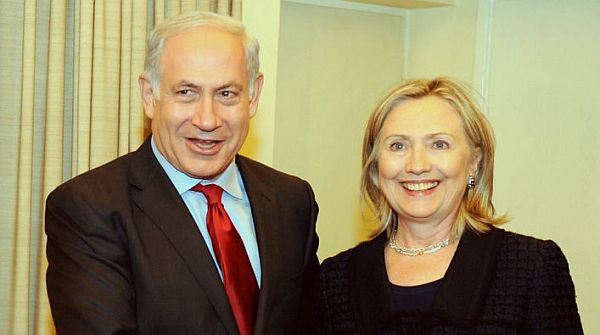
I guess Hillary Clinton already has her hands full overseeing the State Department’s UN credit card number theft operations along with coordinating cyber attacks on WikiLeaks — the Middle East peace process would just have to go on the back burner. There will be a statement tomorrow.
I wonder whether Israel still gets a free squadron of F-35 striker jets, for… well, just for being Israel. On the other hand, the US could consider offering firefighting equipment instead of fighter jets.
The decision to throw in the towel on getting a paltry three-month extension of the settlement slowdown is not “a retreat,” the Washington Institute for Near East Policy’s David Makovsky tells Politico. That’s true. You can only retreat if you first advance.
The United States has decided to abandon an effort to persuade Israel to issue a new temporary West Bank settlement moratorium in order for direct Israeli-Palestinian peace talks to resume, U.S. officials said Tuesday.
“After consulting with the parties, we have determined that a moratorium extension will not at this time provide the best basis for resuming negotiations,” a U.S. official said on the condition of anonymity Tuesday.
“We are still going to continue our engagement with both sides on the core issues and we continue to work towards the goal of a framework agreement,” the official said.
“We hope, obviously, to get the parties to direct talks, but in the meantime, we will continue our engagement with both sides,” the official said, declining to use the word “proximity” in reference to the talks. “We are not changing course. We are still very much committed” to getting a framework agreement.
Secretary of State Hillary Clinton is due to make a statement Wednesday on the Middle East peace process. On Friday, Clinton will speak to the Saban forum, which will also be addressed by Palestinian Nation Prime Minister Salam Fayyad and Israeli Defense Minister Ehud Barak.
There will be “no dramatic change” in policy that Clinton announces, a second U.S. official said Tuesday on condition of anonymity.
State Department spokesman PJ Crowley insists: “The process has not stopped. We obviously recognize that, we face a difficult obstacle, and we will continue to engage the parties on the way forward.”
Meanwhile, Brazil and Argentina are showing another way forward which does not depend on the ineffectual Obama administration: recognizing the state of Palestine.
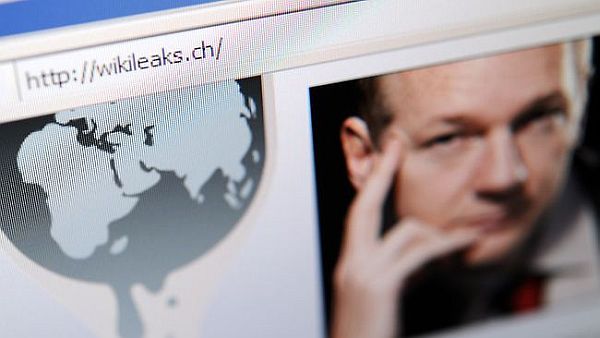
Well, they got him at last. WikiLeaks founder Julian Assange, the target of several of the world’s most powerful governments, turned himself into British authorities today and is now at the mercy of state authorities who have already shown their wolfish – and lawless – desire to destroy him and his organization.
It has been, by any standard, an extraordinary campaign of vilification and persecution, wholly comparable to the kind of treatment doled out to dissidents in China or Burma. Lest we forget, WikiLeaks is a journalistic outlet – just like The New York Times, the Guardian and Der Spiegel, all of whom are even now publishing the very same material – leaked classified documents — available on WikiLeaks. The website is also a journalistic outlet just like CNN, ABC, CBS, Fox and other mainstream media venues, where we have seen an endless parade of officials – and journalists! – calling for Assange to be prosecuted or killed outright. Every argument being made for shutting down WikiLeaks can – and doubtless will – be used against any journalistic enterprise that publishes material that powerful people do not like.
And the leading role in this persecution of truth-telling is being played by the administration of the great progressive agent of hope and change, the self-proclaimed heir of Martin Luther King and Mahatma Gandhi, the winner of the Nobel Peace Prize, Barack Obama. His attorney general, Eric Holder, is now making fierce noises about the “steps” he has already taken to bring down WikiLeaks and criminalize the leaking of embarrassing information. And listen to the ferocious reaction of that liberal lioness, Sen. Dianne Feinstein, who took to the pages of Rupert Murdoch’s Wall Street Journal to call for Assange to be put in prison – for 2,500,000 years:
When WikiLeaks founder Julian Assange released his latest document trove—more than 250,000 secret State Department cables—he intentionally harmed the U.S. government. The release of these documents damages our national interests and puts innocent lives at risk. He should be vigorously prosecuted for espionage.
“The law Mr. Assange continues to violate is the Espionage Act of 1917. That law makes it a felony for an unauthorized person to possess or transmit “information relating to the national defense which information the possessor has reason to believe could be used to the injury of the United States or to the advantage of any foreign nation.” … Importantly, the courts have held that “information relating to the national defense” applies to both classified and unclassified material. Each violation is punishable by up to 10 years in prison.
So there you have it. Ten years for each offense; 250,000 separate offenses; thus a prison term of 2.5 million years. Naturally, tomorrow the same newspaper will denounce Feinstein for being such a namby-pamby terrorist-coddling pinko: “Why didn’t she call for Assange to be torn from limb to limb by wild dogs, as any right-thinking red-blooded American would do!?”
‘Never waste a good crisis” used to be the catchphrase of the Obama team in the runup to the presidential election. In that spirit, let us see what we can learn from official reactions to the WikiLeaks revelations.
The most obvious lesson is that it represents the first really sustained confrontation between the established order and the culture of the internet. There have been skirmishes before, but this is the real thing.
And as the backlash unfolds – first with deniable attacks on internet service providers hosting WikiLeaks, later with companies like Amazon and eBay and PayPal suddenly “discovering” that their terms and conditions preclude them from offering services to WikiLeaks, and then with the US government attempting to intimidate Columbia students posting updates about WikiLeaks on Facebook – the intolerance of the old order is emerging from the rosy mist in which it has hitherto been obscured. The response has been vicious, co-ordinated and potentially comprehensive, and it contains hard lessons for everyone who cares about democracy and about the future of the net.
There is a delicious irony in the fact that it is now the so-called liberal democracies that are clamouring to shut WikiLeaks down.
Consider, for instance, how the views of the US administration have changed in just a year. On 21 January, secretary of state Hillary Clinton made a landmark speech about internet freedom, in Washington DC, which many people welcomed and most interpreted as a rebuke to China for its alleged cyberattack on Google. “Information has never been so free,” declared Clinton. “Even in authoritarian countries, information networks are helping people discover new facts and making governments more accountable.”
She went on to relate how, during his visit to China in November 2009, Barack Obama had “defended the right of people to freely access information, and said that the more freely information flows the stronger societies become. He spoke about how access to information helps citizens to hold their governments accountable, generates new ideas, and encourages creativity.” Given what we now know, that Clinton speech reads like a satirical masterpiece.
The counterpart of asymmetric warfare is asymmetric fear — a form of mass hysteria in which smaller and smaller threats provoke more and more extreme reactions.
The arc that connects Osama bin Laden to Julian Assange describes the pathology of these times: fear has become our only compass.
When the United States Secretary of State describes the release of reams of somewhat embarrassing but generally informative cables as “an attack on the international community,” and while opinion makers call for Assange’s arrest, assassination or execution, we shouldn’t be asking how much harm WikiLeaks can do, but whether the political establishment in America is becoming unhinged.
Julian Assange and Pfc Bradley Manning have done a huge public service by making hundreds of thousands of classified U.S. government documents available on Wikileaks — and, predictably, no one is grateful. Manning, a former army intelligence analyst in Iraq, faces up to 52 years in prison. He is currently being held in solitary confinement at a military base in Quantico, Virginia, where he is not allowed to see his parents or other outside visitors.
Assange, the organizing brain of Wikileaks, enjoys a higher degree of freedom living as a hunted man in England under the close surveillance of domestic and foreign intelligence agencies — but probably not for long. Not since President Richard Nixon directed his minions to go after Pentagon Papers leaker Daniel Ellsberg and New York Times reporter Neil Sheehan – “a vicious antiwar type,” an enraged Nixon called him on the Watergate tapes — has a working journalist and his source been subjected to the kind of official intimidation and threats that have been directed at Assange and Manning by high-ranking members of the Obama Administration.
Published reports suggest that a joint Justice Department-Pentagon team of investigators is exploring the possibility of charging Assange under the Espionage Act, which could lead to decades in jail. “This is not saber-rattling,” said Attorney General Eric Holder, commenting on the possibility that Assange will be prosecuted by the government. Secretary of State Hillary Clinton called the Wikileaks disclosures “an attack on the international community” that endangered innocent people. White House Press Secretary Robert Gibbs suggested in somewhat Orwellian fashion that “such disclosures put at risk our diplomats, intelligence professionals, and people around the world who come to the United States for assistance in promoting democracy and open government.”
For the past several months, Assange has widely believed to have been in hiding somewhere in the United Kingdom. The public perception has been one of a man hunt.
But according to his U.K.-based lawyer, Mark Stephens, Scotland Yard has actually had precise knowledge of Assange’s whereabouts since he arrived in this country in October. Indeed, Stephens maintains, they even have a phone number should they wish to reach him.
“I feel like I am sitting in the middle of a surreal Swedish fairytale,” Stephens said. “The trolls keep threatening to come on and keep making noises off stage. But at the moment, no appearance from them.”
Apparently, the delay in Assange’s apprehension stems from the fact that the original warrant listed the maximum penalty only for the most serious charge (in this case, rape), rather than for all of the charges (which include sexual molestation and unlawful coercion). Assuming the new warrant fulfills the letter of the law, Soca will then be legally obliged to authorize the police to arrest Julian Assange.
Baruch Weiss, a former federal prosecutor who served in the Treasury and Homeland Security departments, asks:
What law did Assange violate? It will surprise many that there is no statute making it illegal to reveal classified information. There are statutes that criminalize the disclosure of very specific types of classified information, such as the identity of a covert operative (think Valerie Plame) or “codes, ciphers or cryptographic systems.” But there is no catch-all law that simply says, “Thou shalt not disclose classified information.”
Indeed, when Congress tried to enact such a statute, President Bill Clinton sensibly vetoed it. His reason: The government suffers from such an overclassification problem – some intelligence agencies classify even newspaper articles – that a law of this sort would end up criminalizing the disclosure of innocuous information. And even that vetoed statute would have applied only to government officials, not to private individuals or journalists.
Instead, prosecutors in the Assange case, like the prosecutors in the AIPAC case I handled, would resort to the Espionage Act of 1917, an archaic, World War I-era statute that prohibits “willfully” disclosing “information relating to the national defense.” According to Judge T.S. Ellis in the AIPAC case, this means that the prosecution must prove, among other things, that a defendant knew that the information he was disclosing was potentially damaging to national security and that he was violating the law.
Here, Assange can make the department’s case especially difficult. Well before publishing the cables, he wrote a letter to the U.S. government, delivered to our ambassador in London, inviting suggestions for redactions. The State Department refused. Assange then wrote another letter to State, reiterating that “WikiLeaks has absolutely no desire to put individual persons at significant risk of harm, nor do we wish to harm the national security of the United States.”
In that second letter, Assange stated that the department’s refusal to discuss redactions “leads me to conclude that the supposed risks are entirely fanciful.” He then indicated that WikiLeaks was undertaking redactions on its own.
In an interview with the BBC, Bill Keller, executive editor of the New York Times, said that his paper presented to the Obama administration all the cables they planned on publishing and sought and received advice on making redactions and on national security issues. The fact that the administration was willing to enter into discussions with the Times but not Wikileaks, suggests that the administration has less concern about security risks than it does with sustaining the incestuous relationship it enjoys with its favorite newspaper.
A press release just issued by Wikileaks says the Julian Assange Defense Fund has been frozen.
The Swiss Bank Post Finance today issues a press release stating that it had frozen Julian Assange’s defense fund and personal assets (31K EUR) after reviewing him as a “high profile” individual.
The technicality used to seize the defense fund was that Mr. Assange, as a homeless refugee attempting to gain residency in Switzerland, had used his lawyers address in Geneva for the bank’s correspondence.
Late last week, the internet payment giant PayPal, froze 60Keur of donations to the German charity the Wau Holland Foundation, which were targeted to promote the sharing of knowledge via WikiLeaks.
WikiLeaks and Julian have lost 100Keur in assets this week.
One of the most fascinating aspects of the Cablegate exposure is how it is throwing into relief the power dynamics between supposedly independent states like Switzerland, Sweden and Australia.
WikiLeaks also has public bank accounts in Iceland (preferred) and Germany.
Please help cover our expenditures while we fight to get our assets back.
True believers in secrecy know that its most staunch defenders are secrecy’s worst enemies. They know that the inevitable consequence of the rampant proliferation of a secrecy culture, will be to feed doubt that secrecy itself has any legitimacy. The assumption will take hold that secrecy’s one and only function is the protection of power.
Secrecy is maintained by constructing barriers between those who can know and those who can’t. The powers of a Security State have less to do with protecting secrets than with controlling the barriers of secrecy and determining who can be allowed in and who must be kept out. In other words, secrecy ends up having more to do with maintaining inequities in the distribution of power than in protecting the public interest.
In the multitude of ways that the Obama administration has mishandled the WikiLeaks drama, none is worse than the signal it has just sent out to a generation of young Americans: if you have an inquiring mind, don’t bother applying for a job with the US government. If however you are happy to blindly follow orders and have a slavish admiration for institutional authority — who knows, maybe one day you could become president.
The Office of Management and Budget today directed all federal agencies to bar unauthorized employees from accessing the Wikileaks web site and its leaked diplomatic cables.
In an email to federal agencies obtained by TPM, the OMB’s general counsel directed the agencies to immediately tell their employees to “safeguard classified information” by not accessing Wikileaks over the Internet.
Classified information, the OMB notes, “remains classified … until it is declassified by an appropriate U.S. Government authority.” Employees may not view classified info over a non-classified system (i.e., the Internet), the OMB says, “as doing so risks that material still classified will be placed onto non-classified systems.”
Reading a classified document appearing in the New York Times presents the risk that the designation of its secrecy will lose effect in the minds of those who are required to maintain a reverential respect for rubber stamps.
Meanwhile, the State Department, apparently hoping it might be able to lobotomize a few young minds in preparation for government service, sent out some friendly advice:
Students of Columbia University’s School of International and Public Affairs were warned this week not to spread the Wikileak cables online if they ever wanted a job at the State Department.
The warning came through the office of career services, from an unnamed alumnus who now works at State and wanted to pass along the message.
“The documents released during the past few months through Wikileaks are still considered classified documents. He recommends that you DO NOT post links to these documents nor make comments on social media sites such as Facebook or through Twitter,” reads the email, sent by the office of career services. Engaging in these activities would call into question your ability to deal with confidential information, which is part of most positions with the federal government.”
Oh the irony, that any of us could have been so naive as to imagine that the Bush era might be followed by a more enlightened administration. Instead, a cast of colorful characters who were easy to demonize has been replaced by something worse: technocratic zombies who have normalized and solidified the power grabs initiated by their Machiavellian predecessors.
And this is what it has come to under Obama’s leadership: that the surest way of predicting how this administration will act, is simply to ask: what would be the most cowardly course of action? For that is the direction in which we can be sure it will proceed.
If this failing was merely that of a particular president or political party, America might not be in such bad shape, but the test came on 9/11 and America has been failing ever since.
Danger always poses a challenge. Will fear scream so loudly that nothing else can be heard?
“Courage is the ability to follow your principles even when you’re scared to death,” said Lt Cmdr Charles Swift after successfully challenging the Bush administration before the Supreme Court in Hamdan v. Rumsfeld.
Swift appears in Secrecy — a documentary no less relevant now than when it came out in 2008. (If you’re a Netflix subscriber you can “watch instantly.”)
Last year (before WikiLeaks had acquired such prominence), the film’s directors Peter Galison and Robb Moss joined professors Jack Goldsmith (author of The Terror Presidency and former Assistant Attorney General in the Bush administration) and Martha Minow from Harvard Law School, for a discussion on the documentary, moderated by Jonathan Zittrain from Harvard’s Berkman Center for Internet & Society.
Ever since 9/11, protecting America has been the name of the political game, yet there has been no consensus about what constitutes that which is under threat and in need of protection. Global hegemony? Rampant consumerism?
What has gradually become clear is that it is American democracy itself which faces the greatest challenge and if the issue of secrecy is to be addressed in a way that supports rather than undermines democracy, it will be approached using the same principles that shape the whole operation of government, with checks and balances, for these are the principles which if not applied will fall into disrepair, leaving an America armed to protect everything while no longer standing for anything.
In the run-up to a new round of nuclear talks between the P5+1 and Iran on Monday, Western commentators are re-hashing old arguments that the Islamic Republic is either too politically divided or too dependent on hostility toward the United States for its legitimacy to be seriously interested in a nuclear deal. From this perspective, the Obama administration has been more than forthcoming in its efforts to “engage” Tehran; the obstacles to diplomatic progress are all on the Iranian side.
But a sober examination of the Obama administration’s interactions with Iran since President Obama took office in 2009 reveals a dismaying mix of incompetence and outright duplicity that has done profound damage to American interests and credibility. In light of this record, the question is not whether the United States should have any confidence it can productively engage the Islamic Republic. The real question is: why should Iranian officials believe they can trust President Obama and his administration to deal with them straightforwardly and with a genuine interest in finding a diplomatic solution to the nuclear standoff?
The recent release of the Wikileaks cables confirms the assessment we have been offering since May 2009: The Obama administration has failed to follow up on President Obama’s early rhetorical overtures to Tehran with bold steps and substantive proposals to demonstrate its seriousness about rapprochement. Strategic engagement — think Nixon and China — is not the same as “carrots and sticks”. In fact, strategic engagement requires a self-conscious effort by the United States to put “sticks” aside in order assure Iran that it is serious about realigning relations. And that is something the Obama administration has never been willing to do. (Obama’s vague letters to Iran’s Supreme Leader, Ayatollah Ali Khamenei — dispatched as Obama ignored two letters sent by Iranian President Mahmoud Ahmadinejad — were seen in Tehran as just the latest U.S. attempt to “game” Iran’s political system rather than to come to terms with it.)
In its first months in office, the Obama administration sought to protect Bush administration officials facing criminal investigation overseas for their involvement in establishing policies the that governed interrogations of detained terrorist suspects. A “confidential” April 17, 2009, cable sent from the US embassy in Madrid to the State Department—one of the 251,287 cables obtained by WikiLeaks—details how the Obama administration, working with Republicans, leaned on Spain to derail this potential prosecution.
The previous month, a Spanish human rights group called the Association for the Dignity of Spanish Prisoners had requested that Spain’s National Court indict six former Bush officials for, as the cable describes it, “creating a legal framework that allegedly permitted torture.” The six were former Attorney General Alberto Gonzales; David Addington, former chief of staff and legal adviser to Vice President Dick Cheney; William Haynes, the Pentagon’s former general counsel; Douglas Feith, former undersecretary of defense for policy; Jay Bybee, former head of the Justice Department’s Office of Legal Counsel; and John Yoo, a former official in the Office of Legal Counsel. The human rights group contended that Spain had a duty to open an investigation under the nation’s “universal jurisdiction” law, which permits its legal system to prosecute overseas human rights crimes involving Spanish citizens and residents. Five Guantanamo detainees, the group maintained, fit that criteria.
Soon after the request was made, the US embassy in Madrid began tracking the matter. On April 1, embassy officials spoke with chief prosecutor Javier Zaragoza, who indicated that he was not pleased to have been handed this case, but he believed that the complaint appeared to be well-documented and he’d have to pursue it. Around that time, the acting deputy chief of the US embassy talked to the chief of staff for Spain’s foreign minister and a senior official in the Spanish Ministry of Justice to convey, as the cable says, “that this was a very serious matter for the USG.” The two Spaniards “expressed their concern at the case but stressed the independence of the Spanish judiciary.”
British and American officials colluded in a plan to hoodwink parliament over a proposed ban on cluster bombs, the Guardian can disclose.
According to leaked US embassy dispatches, David Miliband, who was Britain’s foreign secretary under Labour, approved the use of a loophole to manoeuvre around the ban and allow the US to keep the munitions on British territory.
Unlike Britain, the US had refused to sign up to an international convention that bans the weapons because of the widespread injury they cause to civilians.
[B]eyond the dispatches on Prince Andrew’s crass follies and Colonel Gaddafi’s “weirdness”, the leaks do paint a revealing picture of an overstretched imperial system at work, as its emissaries struggle to keep satraps in line and enemies at bay.
Much has been made of the appalling damage supposedly done to the delicate business of diplomacy. No doubt the back channels will survive the shock of daylight. But in any case the United States is the centre of a global empire, a state with a military presence in most countries which arrogates to itself the role of world leader and policeman.
When genuine checks on how it exercises that entirely undemocratic power are so weak at home, let alone in the rest of the world it still dominates, it’s both inevitable and right that people everywhere will try to find ways to challenge and hold it to account.
After the Russian revolution, the secret tsarist treaties with Britain and France were published to expose and challenge the colonial carve-ups of the day. In the 1970s, the publication of the Pentagon papers cut the ground from beneath the US case for the Vietnam war. Now technology is allowing such exposures on a far grander scale.
Clinton complained this week that the leaks “tore at the fabric” of government and good relations between states. Far more damaging is her own instruction to ordinary US diplomats to violate the treaties the US government has itself signed and spy on UN officials, along with any other public figure they happen to meet: down to their credit card details, biometric records – and even frequent-flyer account numbers.
Not surprisingly, US allies and client states come out badly from the leaks.
Gary Anderson, a retired US Marine colonel, says that Julian Assange is an enemy combatant and is “as much an enemy to the United States as any Al Qaeda operative.”
Not long ago an Esquire headline writer posed the question: “Should we execute Julian Assange?” “We” being the national American vigilante?
“Lives are at risk” is one of those fire-alarm imperatives that drains blood from the brain. It sets arms and legs and vocal chords in motion, fixes the mind on red-light conclusions and turns quiet deliberation into an unaffordable luxury.
A few years ago in Reader’s Digest, Michael Crowley rang the same alarm bell when he demanded that life-threatening websites like Cryptome (a sibbling of WikiLeaks) be shutdown.
To understand what nuts and zealots can do with this sort of information [available through sites like Cryptome], recall what happened in the early 1990s when three abortion doctors were killed after pro-life extremists created “wanted” posters displaying the physicians’ names and photographs. A few years later, a website showed pictures of other abortion doctors, and listed the murdered ones with their names crossed out. Eventually the site’s Web server shut it down.
Having been an outlet for State Department and CIA propaganda in the 1940s and 50s, Reader’s Digest was already on shaky ground positioning itself as a champion of public interest, but it was the Department of Justice which revealed that on occasions Reader’s Digest itself had been a source of dangerous information.
Stories of crimes contained in popular literature and magazines also constitute a rich source of bombmaking information. For example, the August 1993 edition of Reader’s Digest contains an account of efforts by law enforcement officers to track down the killer of United States Court of Appeals Judge Robert S. Vance and attorney Robert Robinson. That article contained a detailed description of the explosive devices used by the bomber in committing the murders, including such information as the size of the pipe bombs, how the bombs were constructed, and what type of smokeless powder was used in their construction. According to the Arson and Explosives Division of the Bureau of Alcohol, Tobacco and Firearms, in a bombing case originating in Topeka, Kansas, the devices were patterned after the bomb used to kill Judge Vance. Upon questioning, the suspect admitted to investigators that he constructed the bomb based on information contained in the Reader’s Digest article.
As Daniel Ellsberg notes, in its efforts to clamp down on embarrassing leaks, the government’s first recourse is invariably to declare that “lives are at stake”
That’s a script that they roll out — every administration rolls out — every time there’s a leak of any sort. The best justification they can find for secrecy is that lives are at stake. Actually lives are at stake as a result of silence and lies which a lot of these leaks reveal.
In the latest revelations from WikiLeaks, the dangers of secrecy are no more clearly evident than in what we now learn about the vulnerability of Pakistan’s nuclear stockpiles — an issue we have previously been repeatedly assured poses no immediate risk. Secretly, we now learn, America’s leading diplomats in Pakistan did not share the confidence that the administration wanted to instill among Americans whose ignorance it preferred to guard.
Less than a month after President Obama testily assured reporters in 2009 that Pakistan’s nuclear materials “will remain out of militant hands,” his ambassador here sent a secret message to Washington suggesting that she remained deeply worried.
The ambassador’s concern was a stockpile of highly enriched uranium, sitting for years near an aging research nuclear reactor in Pakistan. There was enough to build several “dirty bombs” or, in skilled hands, possibly enough for an actual nuclear bomb.
In the cable, dated May 27, 2009, the ambassador, Anne W. Patterson, reported that the Pakistani government was yet again dragging its feet on an agreement reached two years earlier to have the United States remove the material.
She wrote to senior American officials that the Pakistani government had concluded that “the ‘sensational’ international and local media coverage of Pakistan’s nuclear weapons made it impossible to proceed at this time.” A senior Pakistani official, she said, warned that if word leaked out that Americans were helping remove the fuel, the local press would certainly “portray it as the United States taking Pakistan’s nuclear weapons.”
The fuel is still there.
It may be the most unnerving evidence of the complex relationship — sometimes cooperative, often confrontational, always wary — between America and Pakistan nearly 10 years into the American-led war in Afghanistan. The cables, obtained by WikiLeaks and made available to a number of news organizations, make it clear that underneath public reassurances lie deep clashes over strategic goals on issues like Pakistan’s support for the Afghan Taliban and tolerance of Al Qaeda, and Washington’s warmer relations with India, Pakistan’s archenemy.
The issue here, however, is more complex than transparency vs secrecy. While the dangers posed by nuclear stockpiles in Pakistan — and for that matter anywhere else — should concern everyone, the overbearing relationship between the US and a client state which it has turned into a theater for remote war, has fed popular and well-founded suspicion about the intentions of the US government. Pakistanis widely believe that the United States is intent on stealing the Islamic republic’s nuclear crown jewels. Those suspicions will now be further compounded as Pakistan’s government struggles to placate competing international and domestic fears.
If transparency is the buzzword of this political moment, maybe it should be seen as a signal that a larger issue is in desperate need of remedying — an issue that WikiLeaks cannot address: that the need for transparency is symptomatic of a global deficit in trust.
We have repeatedly been given reason to expect that government leaders, corporations and other powerful institutions cannot be trusted. WikiLeaks now fuels that mistrust and those who feel threatened can either shrink behind the barricades of secrecy or acknowledge that they must address the monumental task of building confidence in the fragile idea of public service.
On Dec. 16 I will join Daniel Ellsberg, Medea Benjamin, Ray McGovern and several military veteran activists outside the White House to protest the futile and endless wars in Iraq and Afghanistan. Many of us will, after our rally in Lafayette Park, attempt to chain ourselves to the fence outside the White House. It is a pretty good bet we will all spend a night in jail. Hope, from now on, will look like this.
Hope is not trusting in the ultimate goodness of Barack Obama, who, like Herod of old, sold out his people. It is not having a positive attitude or pretending that happy thoughts and false optimism will make the world better. Hope is not about chanting packaged campaign slogans or trusting in the better nature of the Democratic Party. Hope does not mean that our protests will suddenly awaken the dead consciences, the atrophied souls, of the plutocrats running Halliburton, Goldman Sachs, ExxonMobil or the government.
Hope does not mean we will halt the firing in Afghanistan of the next Hellfire missile, whose explosive blast sucks the oxygen out of the air and leaves the dead, including children, scattered like limp rag dolls on the ground. Hope does not mean we will reform Wall Street swindlers and speculators, or halt the pillaging of our economy as we print $600 billion in new money with the desperation of all collapsing states. Hope does not mean that the nation’s ministers and rabbis, who know the words of the great Hebrew prophets, will leave their houses of worship to practice the religious beliefs they preach. Most clerics like fine, abstract words about justice and full collection plates, but know little of real hope.
Hope knows that unless we physically defy government control we are complicit in the violence of the state. All who resist keep hope alive. All who succumb to fear, despair and apathy become enemies of hope.
WikiLeaks revelations that American officials were planning to raise pressure on Iran with more sanctions and a missile defense shield – even while President Obama was making high-profile public overtures to Iran – are being seen in Tehran as validation of deep skepticism from the start about Obama’s effort.
Iranians and analysts alike say the leaked diplomatic cables show a half-hearted attempt at engagement in which the US administration’s “dual track” policy of simultaneously applying pressure and negotiating was undermined by a singular focus on the pressure track and a growing assumption that engaging Iran was pointless.
“Although the [American] gestures sounded sincere and honest, according to these documents there was at least a parallel approach to keeping both options open, though they were 180 degrees apart,” says a veteran observer in Tehran who could not be named for security reasons. “WikiLeaks indicates that from the beginning [Obama] was very sharp on this issue, and some Iranian officials … were right [in their skepticism].”
The US undertook its engagement strategy with Iran with the clear conviction that it would fail. At the same time, it was preparing (and disseminating in private) an alternative pressure strategy. This is the most serious indictment of all.
According to the record, the Obama administration was briefing allies almost from the start — and before Iran had even had a chance to respond to offers of engagement — that we expected this initiative to fail and that we were actively preparing the pressure track that would immediately follow.
Iran could hardly have been unaware of all this, so the chance that they would respond favorably — even before the contested election in June 2009 and the brutal crackdown that followed — was essentially zero. The only conclusion I can draw from this is that Obama was never sincere about his engagement strategy. It has yet to be tried.
The intrepid Ghaith Abdul-Ahad, in his most recent series of reports from Afghanistan, describes his meeting with Abdul Salam Zaeef, the former Taliban ambassador to Pakistan, who spent three years from 2002 in Guantánamo and who, until July this year, was on the UN list of known terrorists.
Zaeef is now a prolific writer and speaks five languages fluently. According to many Taliban insiders, if there are any negotiations between the Taliban and the Americans they will go through him.
“The Americans came and sat here,” he said, pointing at one of the big sofas. “They said they needed to talk to the Taliban but couldn’t find them. They didn’t know who the Taliban were. I said go and look, they are everywhere, the Taliban have shadow governors and administrators, why don’t you go and talk to them?”
The real reason the Americans didn’t talk, he said, was that they had no respect for the Taliban.
“I told the Americans to respect their enemy. You can’t negotiate with the Taliban from a position of strength, so why would the Taliban come and talk to you? If you want talks you have to treat the Taliban as equals.”
In any negotiation, the Taliban would assert that as long as their land was under occupation they would struggle to liberate it.
They would continue to fight until the foreigners left. Their argument was with the Americans, not the Afghan government. They did not want to bring down the government, they just wanted to renew it.
“The Taliban have no problem with the Afghan government. We have no problem with Karzai or the Afghans. The problem lies with the Americans,” he said.
“Why would we negotiate with Karzai if he has no say in running his government? They are under occupation and all orders come from foreigners.”
The Americans, he said, had not talked to any senior Taliban to his knowledge. However, “the government and the Taliban have been talking for two years on local matters, health-related issues, prisoner exchange, education.
“This is not a negotiation, this is a way to help and benefit our Afghan people and nation. Negotiations haven’t started yet.”
The Americans had a right to know that Afghanistan would not be used as a base for attacks against them, he said, but that was all.
“The Americans have one right only, and that is their right to be assured that Afghanistan will not be used against them and that is something the Taliban should give.
“Apart from that they have no rights, they have no right to tell us about democracy and human rights. That’s an Afghan issue and it will be decided by the Afghans.
“The Americans behave with arrogance and if they don’t want to be defeated in Afghanistan they should talk.
“They don’t belong here,” he said. “They are foreigners, outsiders.”
Meanwhile, The Guardian contradicts earlier reports which had claimed that British intelligence had been responsible for engaging an impostor negotiator.
Peace talks conducted with an impostor who posed as a Taliban leader, and which led to a meeting with Hamid Karzai in Kabul and thousands of dollars in “goodwill payments”, were started by the Afghan government and approved by the former American commander, Stanley McChrystal, the Guardian has learned.
This account sharply contradicts claims made by the Afghan presidency, which has put the entire blame on Britain, apparently supported privately by US officials.
Michael Ratner, president of the Center for Constitutional Rights (CCR) and adjunct professor of law at Columbia University Law School, interviewed by International Socialist Revew:
ISR: Let’s start with the Obama administration’s policies on habeas corpus and on torture. As a presidential candidate, Obama said he would close Guantánamo, said he believed in habeas corpus rights, and was critical of President Bush. What’s been his practice since he came to office?
Michael Ratner: My office, CCR, is one of the legal groups that represents many of the Guantánamo detainees and brings these writs of habeas corpus. That is a fancy way of saying, “Let’s go to court, and see if there’s any evidence to hold the person.” The expectations of the team of lawyers representing the detainees was very high that Guantánamo would actually close, that Obama would do it. There were probably a little over 300 people in Guantánamo when he took office. It’s down to maybe 200-some now. But we expected better—and now it may go on for years. We really thought that Obama wouldn’t fight us in court on the rights of the detainees, that he would get the detainees either to another country or he would charge and try them. And of course, it hasn’t worked out that way at all, and it’s a deep disappointment. In fact a lot of the habeas lawyers signed a letter supporting Obama saying his election would actually be good for our clients. Obama’s effort to close it seemingly got off to a somewhat quick start. Obama, within two days of being in office, signed an executive order, which is essentially a presidential order, which said that Guantánamo would be closed in a year. Of course, as we speak now, it’s more than a year and a half after that order, and it is not near closed. Obama’s commitment has been abandoned. And he made a number of other promises that have not been met about secret detention sites, military commissions, and the like.
Obama has put new clothes on the Bush doctrine toward “enemy combatants,” but the underlying lawlessness of the doctrine is the same. In particular, imagine this: you go to court on behalf of someone in Guantánamo, and the judge has to decide whether there is sufficient evidence to hold him. What Bush said was they can be held as “enemy combatants,” and he gave the term a vague definition, such as that the person was hostile to the United States or picked up arms against the United States or belonged to a group that was hostile to the United States. If there was “evidence” those detainees could be held in prison indefinitely, essentially a form of preventive detention. We had hoped Obama would get rid of that entire preventive detention scheme. CCR’s view is there should not be a preventive detention scheme—it’s illegal and immoral. What you must do, and what is legally necessary, is to charge someone with a crime, and hold them only if they’re convicted. The rule is simple: charge and try people with crimes, or release them. There are not any other valid legal choices.
I considered this preventive detention scheme to be one of the worst hallmarks of the Bush administration. Sadly, this intolerable preventive detention scheme has continued, and you could say continued with a vengeance, under Obama.
This website or its third-party tools use cookies, which are necessary to its functioning. By closing this banner, you agree to the use of cookies.






 Zaeef is now a prolific writer and speaks five languages fluently. According to many Taliban insiders, if there are any negotiations between the Taliban and the Americans they will go through him.