



Charlie Savage writes: June 2013, when a cascade of leaked top-secret documents showed the world that Barack Obama had entrenched the post-9/11 surveillance state bequeathed to him by George W. Bush, many observers were surprised. But several of Obama’s advisers thought back to an afternoon some 4½ years earlier, shortly after their administration took office. An important meeting with Obama was scheduled to begin in the Situation Room at half past noon on Friday, February 6, 2009. Officials who had been asked to participate gathered around the conference table waiting to brief the new president. He was late.
The officials were there to tell Obama about secret surveillance programs — including the fact that the National Security Agency was collecting Americans’ domestic phone records in bulk. The meeting and its aftermath helped establish a pattern for Obama’s presidency that has confounded many of his supporters. The liberal-minded legal scholar promised change from Bush’s “global war on terrorism,” but he ended up entrenching many Bush-like counterterrorism policies: drone strikes, military commissions, detaining Guantánamo prisoners without trial — and broad surveillance activities, including the NSA’s bulk phone records program. How did this seeming transformation happen? Obama’s approach to the bulk records program — driven, above all, by his inclinations as a lawyer — is key to deciphering the larger mystery. [Continue reading…]

By Jon Moran, University of Leicester
Building an army in a short space of time is a very difficult task. To be sure, there are some impressive examples. Cromwell’s republican New Model Army was put together while the English Civil War was already underway; Washington’s army of US Independence quickly wore down and beat the British in the 18th century; Napoleon’s revolutionary army was born from the French Revolution and swept all Europe before it; the Red Army of the Soviet Union was forged from the chaos of its defeat in World War I.
But the list of failures is just as spectacular. The South Vietnamese Army boasted billions of dollars, up-to-date equipment and state-of-the-art training, but couldn’t control even South Vietnam itself. It ultimately surprised observers only by holding on as long as it did after the Americans left.
The Soviet Union similarly built up the communist army in Afghanistan but always distrusted it as a fighting force; it ultimately suffered mass desertions.
And the latest ignominious addition to the list seems to be the Iraqi Army. Despite being nourished, trained and supplied by the US, it seems to be perpetually in trouble, whether failing to fend off terrorist groups or all but collapsing in the face of a stunning advance by Islamic State (IS).

Mohamad Bazzi writes: In Sisi, the House of Saud found a new strongman for Egypt. Sisi had served as an Egyptian military attaché to Saudi Arabia, and as he led the crackdown against the Brotherhood, the kingdom became his most important sponsor. The Sauds provided more than $12 billion to keep the Egyptian economy afloat, and they pressed two other Gulf monarchies, the United Arab Emirates and Kuwait, to pledge more aid. Since the coup, Sisi’s regime has received over $30 billion in support from the three Gulf monarchies.
A series of leaked audio recordings of Sisi and other top generals showed that the Emirates had provided funds to the Egyptian military to finance the protest campaign against Morsi. “Sir, we will need 200 tomorrow from Tamarod’s account—you know, the part from the UAE, which they transferred,” Sisi’s chief of staff, General Abbas Kamel, tells another general, later clarifying that he means 200,000 Egyptian pounds — about $30,000. At the time, the group that led the popular protests, Tamarod (Arabic for “Rebellion”), was portrayed in much of the Arab and Western press as a grassroots campaign that emerged spontaneously to agitate against Morsi’s misrule. After the coup, one recording captured Sisi instructing Kamel to keep billions of dollars in Saudi and other Gulf aid in accounts controlled by the defense ministry, rather than the civilian government. On other recordings, Sisi and his fellow generals can be heard snickering at their Gulf patrons and how easy it is to demand large sums from them. “Why are you laughing?” Sisi asks his chief of staff. “They have money like rice, man!”
In another recording, Sisi sounds incredulous of the sums he and the generals have received from their Gulf allies. “No, no, no! It’s not $8 billion in six months, no!” he says, before one of his deputies convinces him they have received a total of over $30 billion. “May God continue providing!” Sisi responds.
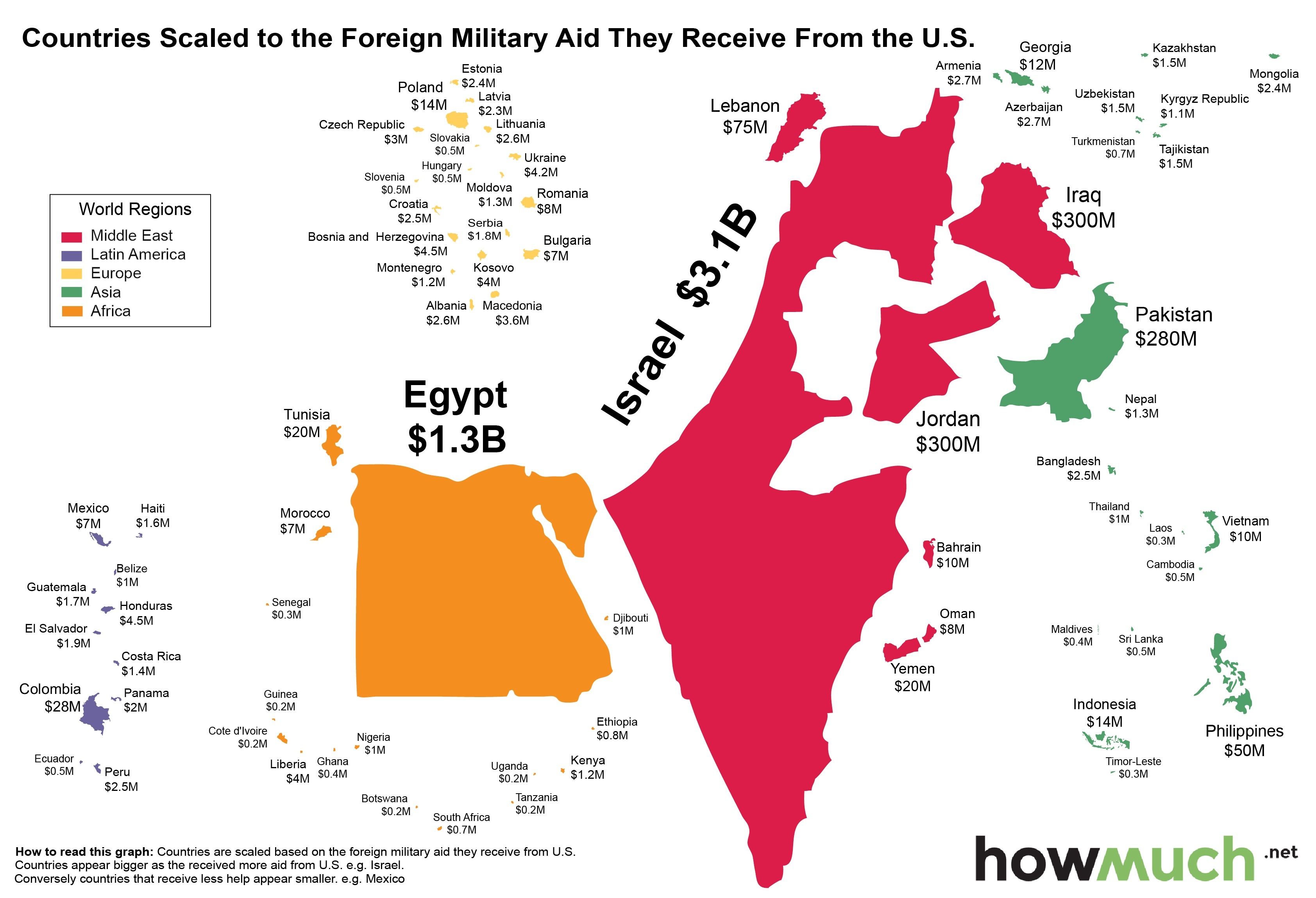
Today, Sisi’s regime can continue its crackdown with impunity partly because the United States and other world powers made clear that they favor stability over democracy. Much of the West accepted the coup and has remained largely silent about the sham trials and mass death sentences being handed down by the Egyptian judiciary. The United States provides Egypt with $1.3 billion in military aid each year, but it has been reluctant to use that as leverage against the Egyptian regime. Neither President Barack Obama nor Secretary of State John Kerry has substantively criticized Sisi’s dictatorship. [Continue reading…]
An editorial in the New York Times says: Viewing its alliance with Egypt as too crucial to fail, the Obama administration has done too little to confront the Sisi government’s expanding authoritarianism. Congress has continued to award Egypt $1.3 billion in military aid each year, despite ample evidence that its armed forces commit human rights abuses with impunity. The Obama administration and other Western governments have sought to nudge the Egyptian government to protect civil liberties with gentle public admonishments.
That approach is clearly not working. Egypt desperately needs international investment and deeply values its military relationship with the United States. Trade and military aid should be conditioned on clear signs that the government will respect freedom of expression and what’s left of the country’s civil society. [Continue reading…]
The New York Times reports: A federal judge on Monday partly blocked the National Security Agency’s program that systematically collects Americans’ domestic phone records in bulk just weeks before the agency was scheduled to shut it down and replace it. The judge said the program was most likely unconstitutional.
In a separate case challenging the program, a federal appeals court in New York on Oct. 30 had declined to weigh in on the constitutional issues, saying it would be imprudent to interfere with an orderly transition to a replacement system after Nov. 29.
But on Monday, in a 43-page ruling, Judge Richard J. Leon of United States District Court for the District of Columbia wrote that the constitutional issues were too important to leave unanswered in the history of the program, which traces back to after the Sept. 11 terrorist attacks and came to light in 2013 in leaks by Edward J. Snowden, the former intelligence contractor. [Continue reading…]
National Post reports: While TransCanada Corp. has been cooling its heels on its Keystone XL proposal for the past six years, the oil pipeline business has been booming in the United States.
Crude oil pipeline mileage rose 9.1 per cent last year alone to reach 66,649 miles, according to data from the Washington, D.C.-based Association of Oil Pipe Lines (AOPL) set to be released soon.
Between 2009 and 2013, more than 8,000 miles of oil transmission pipelines have been built in the past five years in the U.S., AOPL spokesperson John Stoody said, compared to the 875 miles TransCanada wants to lay in the states of Montana, South Dakota and Nebraska for its 830,000-bpd project. By last year, the U.S. had built 12,000 miles of pipe since 2010. [Continue reading…]
The New York Times reports: As the United States prepares to intensify airstrikes against the Islamic State in Syria, the Arab allies who with great fanfare sent warplanes on the initial missions there a year ago have largely vanished from the campaign.
The Obama administration heralded the Arab air forces flying side by side with American fighter jets in the campaign’s early days as an important show of solidarity against the Islamic State, also known as ISIS or Daesh. Top commanders like Gen. Lloyd J. Austin III, who oversees operations in Syria and Iraq, still laud the Arab countries’ contributions to the fight. But as the United States enters a critical phase of the war in Syria, ordering Special Operations troops to support rebel forces and sending two dozen attack planes to Turkey, the air campaign has evolved into a largely American effort.
Administration officials had sought to avoid the appearance of another American-dominated war, even as most leaders in the Persian Gulf seem more preoccupied with supporting rebels fighting the government of President Bashar al-Assad of Syria. Now, some of those officials note with resignation, the Arab partners have quietly left the United States to run the bulk of the air war in Syria — not the first time Washington has found allies wanting.
Saudi Arabia and the United Arab Emirates have shifted most of their aircraft to their fight against Iranian-backed Houthi rebels in Yemen. Jordan, reacting to the grisly execution of one of its pilots by the Islamic State, and in a show of solidarity with the Saudis, has also diverted combat flights to Yemen. Jets from Bahrain last struck targets in Syria in February, coalition officials said. Qatar is flying patrols over Syria, but its role has been modest. [Continue reading…]
Bill McKibben writes: The fossil-fuel industry — which, for two centuries, underwrote our civilization and then became its greatest threat — has started to take serious hits. At noon today, President Obama rejected the Keystone Pipeline, becoming the first world leader to turn down a major project on climate grounds. Eighteen hours earlier, New York’s Attorney General Eric Schneiderman announced that he’d issued subpoenas to Exxon, the richest and most profitable energy company in history, after substantial evidence emerged that it had deceived the world about climate change.
These moves don’t come out of the blue. They result from three things.
The first is a global movement that has multiplied many times in the past six years. Battling Keystone seemed utterly quixotic at first — when activists first launched a civil-disobedience campaign against the project, in the summer of 2011, more than ninety per cent of “energy insiders” in D.C. told a National Journal survey that they believed that President Obama would grant Transcanada a permit for the construction. But the conventional wisdom was upended by a relentless campaign carried on by hundreds of groups and millions of individual people (including 350.org, the international climate-advocacy group I founded). It seemed that the President didn’t give a speech in those years without at least a small group waiting outside the hall to greet him with banners demanding that he reject the pipeline. And the Keystone rallying cry quickly spread to protests against other fossil-fuel projects. One industry executive summed it up nicely this spring, when he told a conference of his peers that they had to figure out how to stop the “Keystone-ization” of all their plans. [Continue reading…]
Shadi Hamid writes: I was in Egypt for two of the most important political moments of the Arab Spring: the day President Hosni Mubarak fell on February 11, 2011 and then the lead-up to the Rabaa massacre of August 14, 2013, which Human Rights Watch has called “the worst mass killing in modern Egyptian history.” These two moments serve as appropriate bookends for understanding the recent trajectory of Egyptian politics.
February 11, 2011 was one of those once-in-a-lifetime moments. That night, I overheard an Egyptian woman telling her friend: “I’ve never seen Egyptians so happy in my life.” Neither had I. During those eighteen whirlwind days of protest in Tahrir Square, Islamists, liberals, and leftists fought and died together. They saved each other’s lives. This remarkably diverse movement of secularists, socialists, Muslim Brothers, Salafis, and hardcore soccer fans were drawn together by what they opposed. But if this was the opposition’s most impressive moment of unity, it would also prove to be one of the last. This wasn’t the end of ideology, as some had hoped, but the beginning of a long-running cold – and sometimes hot – war, with questions of religion and identity at its center.
President Mohamed Morsi and the Muslim Brotherhood’s one year in power further polarized an already polarized country, pitting Islamists against non-Islamists in what was increasingly perceived, at least by liberal and secular elites, as an existential battle over the meaning, purpose, and nature of the Egyptian state. This was the context in which the military moved to oust Morsi on July 3, 2013. In the days leading up to the Rabaa massacre, a significant segment of the population cheered on the repression, encouraged by the nearly nonstop demonization of the Brotherhood in the state and private media.
I should say from the outset that the question here is not whether the Brotherhood was any good at governing. It wasn’t. President Morsi and Brotherhood officials failed to govern inclusively, managing to alienate old and new allies alike. They showed favoritism toward Islamist-aligned groups, harassed or threatened prominent opposition voices, and detained secular activists such as April 6th Movement co-founder Ahmed Maher. Reasonable people can disagree on what exactly happened and didn’t happen during Morsi’s short tenure in power. But the very real sins of the Morsi government – and the general illiberalism of the Brotherhood – have nothing to do with whether we, as Americans, should turn a blind eye to the unprecedented levels of violence and repression that have followed Morsi’s removal from power. Importantly, this campaign of repression has targeted not just Muslim Brotherhood members but also liberal, socialist, secular revolutionary activists as well as respected civil society organizations which have dared to speak out against the regime’s policies. [Continue reading…]
Fred Hof writes: The four-plus years the United States spent holding Syria at arm’s length, hoping its carnage could be contained while drawing erasable red lines and merely calling on Assad to step aside, have helped to spawn horrific unanticipated consequences and narrowed policy options. Decisions America deferred in 2012 came home to roost in 2015. Everything is harder now, and policy choices run along a spectrum of bad to worse, with “inaction” firmly situated at the “worse” end. And yet hard decisions, if avoided in 2015, can haunt Obama’s successors for decades to come. What should be done right now to defeat ISIS?
In western Syria, the United States and its partners should make civilian protection the near-term centerpiece of their anti-ISIS strategy, before even beginning to seek the political solution [David] Ignatius [in a recent essay] rightly calls the best hope for Syria’s survival. The objective should be twofold: terminate the ability of the Assad regime to kill large numbers of civilians, whether with barrel bombs, artillery shelling, high-performance aircraft bombing and strafing, or missile attacks; and oblige the regime to lift sieges that deny food and medical care to up to 600,000 Syrians. Blunting Assad’s policy of collective punishment ought to be a humanitarian imperative. But it will be good enough if the Obama administration sees civilian protection as an essential anti-ISIS war measure, which it most assuredly is.
How to do it? First, lean hard diplomatically on Russia and Iran. The recent meeting in Vienna among diplomats from world and regional powers means nothing and goes nowhere unless Syrian civilians receive protection from the depredations of their own so-called government. Leaders in Tehran and Moscow have it in their power to compel their client to stop bombing civilians and to lift starvation and disease sieges in accordance with UN Security Council Resolution 2139. After all, without Russia and Iran, Assad is finished. The United States should present them with a straightforward proposition: Get your client to stop committing war crimes and crimes against humanity, or we will take steps to protect Syrians. Russia’s UN ambassador, Vitaly Churkin, announced the day after the Vienna meeting that the Assad regime had stopped barrel bombing—a positive development if true, and an interesting one given Assad’s repeated denials of having used those weapons at all. [Continue reading…]
The Washington Post reports: President Obama has concluded that a peace deal between Israel and the Palestinians is beyond reach during his presidency and will press Israeli Prime Minister Benjamin Netanyahu to take steps to preserve the mere possibility of a two-state solution, senior administration officials said Thursday.
The issue has taken on greater importance with the recent wave of stabbings carried out by Palestinians against Israelis, senior administration members said during a conference call with reporters about Netanyahu’s visit next week.
They said that the administration has become “realistic” that there might not even be negotiations between Israeli and Palestinian officials before Obama leaves office. In September, Palestinian Authority President Mahmoud Abbas said his government would no longer consider itself bound by the Oslo peace agreements in effect for two decades, charging that Israel had failed to live up to its obligations. [Continue reading…]
The Wall Street Journal reports: Iran’s powerful Revolutionary Guard military force hacked email and social-media accounts of Obama administration officials in recent weeks in attacks believed to be tied to the arrest in Tehran of an Iranian-American businessman, U.S. officials said.
The Islamic Revolutionary Guard Corps, or IRGC, has routinely conducted cyberwarfare against American government agencies for years. But the U.S. officials said there has been a surge in such attacks coinciding with the arrest last month of Siamak Namazi, an energy industry executive and business consultant who has pushed for stronger U.S.-Iranian economic and diplomatic ties.
Obama administration personnel are among a larger group of people who have had their computer systems hacked in recent weeks, including journalists and academics, the officials said. Those attacked in the administration included officials working at the State Department’s Office of Iranian Affairs and its Bureau of Near Eastern Affairs.
“U.S. officials were among many who were targeted by recent cyberattacks,” said an administration official, adding that the U.S. is still investigating possible links to the Namazi case. “U.S. officials believe some of the more recent attacks may be linked to reports of detained dual citizens and others.”
Friends and business associates of Mr. Namazi said the intelligence arm of the IRGC confiscated his computer after ransacking his family’s home in Tehran. [Continue reading…]
Médecins Sans Frontières reports: The international medical humanitarian organization Doctors Without Borders/Médecins Sans Frontières (MSF) today released an internal document reviewing the October 3 airstrikes by US forces on its hospital in northern Afghanistan. The chronological review of the events leading up to, during, and immediately following the airstrikes reveal no reason why the hospital should have come under attack. There were no armed combatants or fighting within or from the hospital grounds.
The document, part of an ongoing review of events undertaken by MSF, is based upon sixty debriefings of MSF national and international employees who worked at the 140-bed trauma center, internal and public information, before and after photographs of the hospital, email correspondence, and telephone call records. At least thirty people were killed in the airstrikes, including 13 staff members, 10 patients and 7 unrecognizable bodies yet to be identified.
“The view from inside the hospital is that this attack was conducted with a purpose to kill and destroy,” said Christopher Stokes, MSF general director. “But we don’t know why. We neither have the view from the cockpit, nor the knowledge of what happened within the US and Afghan military chains of command.”
The initial findings of the MSF review firmly establish the facts from inside the hospital in the days leading up to and during the attack. The review includes the details of the provision of the GPS coordinates and the log of phone calls from MSF to military authorities in attempt to stop the airstrikes. MSF had reached an agreement with all parties to the conflict to respect the neutrality of the hospital, based on international humanitarian law.
“We held up our end of the agreement — the MSF trauma center in Kunduz was fully functioning as a hospital with surgeries ongoing at the time of the US airstrikes,” said Dr. Joanne Liu, international president of MSF. “MSF’s no-weapons policy was respected and hospital staff were in full control of the facility prior to and at the time of the airstrikes.”
Among the 105 patients at the time of the airstrikes, MSF was treating wounded combatants from both sides of the conflict in Kunduz, as well as women and children.
“Some public reports are circulating that the attack on our hospital could be justified because we were treating Taliban,” said Stokes. “Wounded combatants are patients under international law, and must be free from attack and treated without discrimination. Medical staff should never be punished or attacked for providing treatment to wounded combatants.”
The MSF internal review describes patients burning in their beds, medical staff that were decapitated and had lost limbs, and others who were shot from the air while they fled the burning building.
“The attack destroyed our ability to treat patients at a time of their greatest need,” said Dr. Joanne Liu, international president of MSF. “A functioning hospital caring for patients cannot simply lose its protected status and be attacked.”
In an effort to attack Taliban fighters, an air strike by a U.S. plane killed dozens of civilians in Kunduz, Afghanistan. In the wake of the attack, an American general responded in unequivocal fashion. “I take this possible loss of life or injury to innocent Afghans very seriously,” he said. “I have ordered a complete investigation into the reasons and results of this attack, which I will share with the Afghan people.”
In an effort to attack Taliban fighters, an air strike by a U.S. plane killed dozens of civilians in Kunduz, Afghanistan. In the wake of the attack, an American general responded in unequivocal fashion. “I want to offer my deepest condolences to those innocent civilians who were harmed and killed on Saturday,” he said. “I’ve ordered a thorough investigation into this tragic incident… we will share the results of the investigation once it is complete.”
The first of those air strikes took place in 2009 and targeted fuel tankers hijacked by the Taliban. The second took place last month and targeted a hospital that Afghan officials say was used as a safe haven by the Taliban. The striking similarities between the two attacks are rooted not in uncanny coincidence but in the law of averages. Bomb a country long enough and such echoes are bound to occur.
Of course, U.S. planes have been carrying out attacks and terrorizing innocent Afghans in and around Kunduz (and elsewhere in the country) since 2001. This is, after all, America’s war in Afghanistan, which has produced eerily repetitive tragedies; a war that’s also seen almost endless announcements of achievements, improvements, and progress; a war that seems to regularly circle back on itself.
“The Taliban is gone,” Army General Tommy Franks, the chief of U.S. Central Command, announced in 2002. “Afghanistan is rising from the oppression of the Taliban into an independent, democratic nation.” Six years later, the Taliban was, oddly enough, still around. But things were still going well. “We’re clearly not done… But I do know that we’re making good progress, and each and every day we’re making a difference in the Afghan people’s lives,” said Army Major General Jeffrey Schloesser. In 2010, Army General David Petraeus offered his unique assessment of the war. “We’re making progress, and progress is winning, if you will,” he insisted. This summer, another five years having passed, Army General John Campbell weighed in: “We have done a great job, both from both a conventional perspective and our special operating forces, and from the Afghan security forces… I see [the Afghans] continue to progress and continue to be very resilient.”
There have been so many claims of “progress” these last 14 years (and so many air strike apologies as well) and yet each announcement of further success seems to signal the very opposite. Days after Campbell spoke, for instance, Brigadier General Wilson Shoffner, the U.S. deputy chief of staff for communications in Afghanistan, told reporters, “Kunduz is — is not now, and has not been in danger of being overrun by the Taliban… that’s sort of how we see it.” Just over a month later, Kunduz fell to the Taliban.
This is the war that TomDispatch regular Ann Jones has monitored, analyzed, and covered since its opening stages, first as a humanitarian worker and then as a reporter. While the military was spinning tales of progress, Jones had a far more realistic assessment. “The story of success in Afghanistan was always more fairy tale than fact — one scam used to sell another,” she wrote at this site in 2006, drawing attention to “a threefold failure: no peace, no democracy, and no reconstruction.” After embedding with U.S. troops in 2010 she said all the things America’s generals never did. “I’d been ‘on the front’ of this war for less than two weeks, and I already needed a vacation,” she wrote. “Being outside the wire had filled me with sorrow as I watched earnest, heavily armed and armored boys try to win over white-bearded Afghans — men of extraordinary dignity — who have seen all this before and know the outcome.”
All this is to say Jones has been remarkably, consistently, undeniably ahead of the curve on the conflict, a reality reflected in her revelatory look at the deeply personal costs of America’s second Afghan War in her now-classic book, They Were Soldiers: How the Wounded Return from America’s Wars — The Untold Story. She’s done what billions of U.S. taxpayer dollars, 17 U.S. intelligence agencies, the finest officers produced by America’s premier military academies, and untold numbers of analysts with access to highly classified information, have failed to do: accurately assess the situation in a country the U.S. has been intimately enmeshed in, on and off now, for the better part of four decades. With that in mind, let Jones give you the lowdown on the current state of “progress” there. When you’re through, chances are — even if you lack a top-secret clearance and have never set foot in the Greater Middle East — you’ll have a better grasp of the reality of the war than either the Pentagon or the president has ever had. Nick Turse
Afghanistan “after” the American war
Once more down the rabbit hole
By Ann JonesTen months ago, on December 28, 2014, a ceremony in Kabul officially marked the conclusion of America’s very long war in Afghanistan. President Obama called that day “a milestone for our country.” After more than 13 years, he said, “our combat mission in Afghanistan is ending, and the longest war in American history is coming to a responsible conclusion.”
That was then. This is now. In between, on September 28, 2015, came another milestone: the Taliban takeover of Kunduz, the capital of the province of the same name in northern Afghanistan, and with a population of about 270,000, the country’s fifth-largest city.

The New York Times reports: A newly appointed spokesman for the alliance briefed reporters in Syria beneath a yellow banner bearing its name in Kurdish, Arabic and Assyrian. But the meeting took place inside a Kurdish militia facility because the alliance does not have its own bases yet, nor flags to put on its cars or a defined command structure, said the spokesman, Talal Sillu.
The combined force is to be commanded by a six-person military council, Mr. Sillu said. But he acknowledged that only one member had been selected so far — Mr. Sillu himself.
Last week, President Obama announced plans to deploy dozens of Special Operations troops to support the new alliance. And before that, American officials said 50 tons of ammunition had been airdropped for Arab fighters with the new group.
But already, things have not always gone as planned. Since the ammunition airdrop, American officials have privately acknowledged that the Arab units it was intended for did not have the logistical capability to move it. So, again, the Kurds were called to help.
An array of smaller groups have allied with the Kurds, including Arab and Turkmen rebels, Christian militias and Bedouin fighters loyal to a sheikh who considered the Libyan leader Col. Muammar el-Qaddafi a friend.
While these groups hate the Islamic State, most are small, and some have been repeatedly routed by the very jihadists the United States now hopes they will defeat.
While the Kurds have become used to securing territory, with uniformed forces and a clear chain of command, their Arab allies often leave teenagers with Kalashnikovs at checkpoints who stop and release cars at random, scaring drivers.
A commander of one Arab group lamented that while Kurdish commanders could simply order their fighters to move, he could only make suggestions and hope his men complied. [Continue reading…]
Natalie Nougayrède writes: t is a rare thing for a high-level official to admit they got something completely wrong. Frederic Hof, the former special adviser on Syria to Hillary Clinton (as secretary of state), has had that temerity – or that kind of despair. He recently wrote an article (for Politico magazine) headlined “I got Syria so wrong”. It is a painful analysis of how early hopes, in 2011, of seeing Bashar al-Assad overthrown by a popular revolt were either naive or blind. It also contains stark criticism of the Obama presidency, which apparently never fully intended to do anything about Syria’s killing fields, preferring to let the problem fester, unaddressed.
It’s tempting to believe that the latest rekindling of international diplomacy over Syria will lead to a brighter outcome. But a few days before ministerial talks were to begin in Vienna, Hof seemed to dash these hopes at a meeting on Syria’s human rights catastrophe in the House of Commons. The walls were covered with photos of tortured bodies smuggled out of Syria two years ago by “Caesar”, a military photographer who believed that if the world could see the slaughter going on in Assad’s jails, it would act. Nothing happened. Now Hof says he can see “no evidence yet of a change of policy” from the US side. Basically, his warning is: don’t be fooled by the new round of talks.
The Obama administration may be sending envoys to talks, and even a special forces unit into northern Syria to fight Isis, but it is nevertheless intent on keeping the Syrian dossier at arm’s length. This is what suits its long-held narrative of withdrawing from conflicts, and it is what the American public wants. There are only 14 months of the Obama presidency left, so the likeliest scenario is that the White House will wait this crisis out. The US has mostly outsourced Syria to regional actors, and all the signs are that it is set to outsource it some more, this time to Russia – whatever the human cost. [Continue reading…]