Category Archives: CIA

CIA kidnapped, tortured “the wrong guy,” says former agency operative Glenn Carle

Jason Leopold reports: Rob Richer, the No. 2 ranking official in the CIA's clandestine service, paid a visit to Glenn Carle's office in December 2002 and presented the veteran CIA operative with an urgent proposal.

"I want you to go on a temporary assignment," Carle recalls Richer telling him. "It's important for the agency, it's important for the country and it's important for you. Will you do it?"

Richer, who resigned from the CIA in 2005 and went to work for the mercenary outfit Blackwater, told Carle that agency operatives had just rendered a "high-value target," an Afghan in his mid-forties named Haji Pacha Wazir, who was purported to be Osama bin Laden's personal banker as well as financier for a number of suspected terrorists. Wazir was being held at a CIA black site prison in Morocco, and the agency needed a clandestine officer who spoke French to take over the interrogation of the detainee.

Carle, formerly the deputy national intelligence officer for transnational threats, who had no prior interrogation experience, agreed, and within 72 hours, he boarded a CIA-chartered jet bound for Morocco.

Carle recounts what unfolded next in his riveting book, "The Interrogator: An Education," which stands as a damning indictment of the CIA's torture and rendition program and the Bush administration's approach to the so-called Global War on Terror.

Facebooktwittermail

American 16-year-old boy — latest victim in Obama’s global drone war

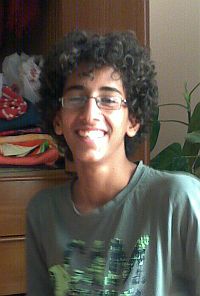
The Washington Post reports: In the days before a CIA drone strike killed al-Qaeda operative Anwar al-Awlaki last month, his 16-year-old son ran away from the family home in Yemen’s capital of Sanaa to try to find him, relatives say. When he, too, was killed in a U.S. airstrike Friday, the Awlaki family decided to speak out for the first time since the attacks.

“To kill a teenager is just unbelievable, really, and they claim that he is an al-Qaeda militant. It’s nonsense,” said Nasser al-Awlaki, a former Yemeni agriculture minister who was Anwar al-Awlaki’s father and the boy’s grandfather, speaking in a phone interview from Sanaa on Monday. “They want to justify his killing, that’s all.”

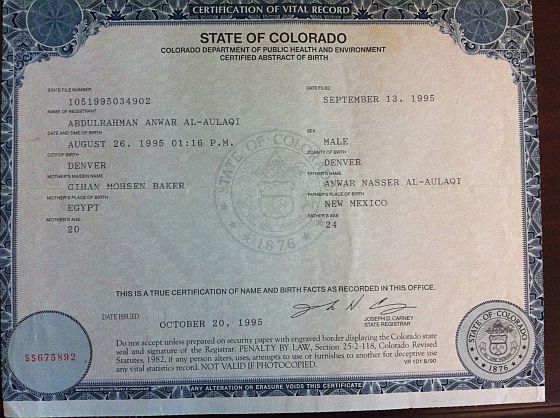
The teenager, Abdulrahman al-Awlaki, a U.S. citizen who was born in Denver in 1995, and his 17-year-old Yemeni cousin were killed in a U.S. military strike that left nine people dead in southeastern Yemen.

The young Awlaki was the third American killed in Yemen in as many weeks. Samir Khan, an al-Qaeda propagandist from North Carolina, died alongside Anwar al-Awlaki.

Yemeni officials said the dead from the strike included Ibrahim al-Banna, the Egyptian media chief for al-Qaeda’s Yemeni affiliate, and also a brother of Fahd al-Quso, a senior al-Qaeda operative who was indicted in New York in the 2000 attack on the USS Cole in the port of Aden.

The strike occurred near the town of Azzan, an Islamist stronghold. The Defense Ministry in Yemen described Banna as one of the “most dangerous operatives” in al-Qaeda in the Arabian Peninsula, often referred to by the acronym AQAP.

U.S. officials said they were still assessing the results of the strike Monday evening to determine who was killed. The officials would not discuss the attack in any detail, including who the target was, but typically the CIA and the Pentagon focus on senior figures in al-Qaeda’s affiliate in Yemen.

“We have seen press reports that AQAP senior official Ibrahim al-Banna was killed last Friday in Yemen and that several others, including the son of Anwar al-Awlaki, were with al-Banna at the time,” said Thomas F. Vietor, a spokesman for the National Security Council. “For over the past year, the Department of State has publicly urged U.S. citizens not to travel to Yemen and has encouraged those already in Yemen to leave because of the continuing threat of violence and the presence of terrorist organizations, including AQAP, throughout the country.”

A senior congressional official who is familiar with U.S. operations in Yemen and spoke on the condition of anonymity to discuss sensitive policy issues said, “If they knew a 16-year-old was there, I think that would be cause for them to say: ‘Gee, we ought not to hit this guy. That would be considered collateral damage.’ ”

The official said that the CIA and the military’s Joint Special Operations Command are expected to ensure that women and children are not killed in airstrikes in Pakistan and Yemen but that sometimes it might not be possible to distinguish a teenager from militants.

Amy Davidson writes: Here is a birth certificate, for a boy who was born in Denver, Colorado, on September 13, 1995. (Via the Washington Post.) He turned sixteen a month ago, and a few days ago he died, killed when one of his country’s drones hit him and a number of other people in Yemen. His name was Abdulrahman al-Awlaki. His father, Anwar al-Awlaki, who, as the birth certificate notes, was himself born in New Mexico, and was twenty-four years older than his son, was killed a couple of weeks ago, in a separate attack. The father was targeted for assassination. He was an American citizen, and there were no judicial proceedings against him, just, reportedly, a White House legal opinion that concluded that it would be fine to kill him anyway, because the Administration thought he was dangerous. Anwar al-Awlaki was a member of Al Qaeda in the Arabian Peninsula and wrote angry and ugly sermons for them. The Administration says that it had to kill him because he had become “operational,” but so far it has kept the evidence for that to itself.

Was the son targeted, too? The Yemeni government says that another person, a grown man, was the target in the attack that killed Abdulrahman. Maybe he was just in the wrong place, like the Yemeni seventeen-year-old who reportedly died, too. Abdulrahman’s family said that he had been at a barbecue, and told the Post that they were speaking to the paper to answer reports said that Abdulrahman was a fighter in his twenties. Looking at his birth certificate, one wonders what those assertions say either about the the quality of the government’s evidence—or the honesty of its claims—and about our own capacity for self-deception. Where does the Obama Administration see the limits of its right to kill an American citizen without a trial? (The last time I wrote about Awlaki, a reader commented that “Awlaki was a citizen in name only”; but that name is the name of the law, and is, when it comes down to it, all any of us have, unless we want to rely on how charming our government finds us.) And what are the protections for an American child?

You can, in many ways, blame Abdulrahman’s death on his father—for not staying in Colorado, for introducing his son to the wrong people, for being who he was. That would be a fair part of an assessment of Anwar al-Awlaki’s character. But it’s not sufficient. He may have put his child in a bad situation, but we were the ones with the drone. One fault does not preclude another. We have to ask ourselves what we are doing, and at what cost.

Facebooktwittermail

American teenager killed in drone strike

An American teenager gets blown up in a US drone strike and the only explanation provided for why he was killed is that his father was alleged to be a terrorist. And given the small amount of reporting on yesterday’s killings it appears that having covered the Obama-kills-an-American story last month, Obama-kills-another-American is a story of no great interest. But this isn’t just a story about the abuse of executive power. It would now appear that individuals can be snuffed out just because the US government objects to what they are saying.

The New York Times reports: Airstrikes, believed to have been carried out by American drones, killed at least nine people in southern Yemen, including a senior official of the regional branch of Al Qaeda and an American, the 17-year-old son of a Qaeda official killed by the United States last month, according to the government and local reports on Saturday.

Fighting also escalated in the capital, Sana, where at least 12 antigovernment protesters were killed by security forces near the Foreign Ministry and at least four civilians were killed in a battle near the airport, opposition officials said.

The fighting in Sana was the deadliest since President Ali Abdullah Saleh returned to the country last month, and coincided with rising political tensions as all sides await a statement by the United Nations Security Council expected in weeks.

Yemen has been in turmoil for months, as protesters demanding the ouster of Mr. Saleh, who has ruled for 33 years, have filled the streets, and rival political factions have fought for power. Despite tremendous domestic opposition, international pressure and an assassination attempt that severely wounded him in June, Mr. Saleh has refused to step down.

Islamic militant groups, including Al Qaeda in the Arabian Peninsula, the Yemeni branch of the terrorist organization, have exploited the chaos, taking over large regions in Shabwa and Abyan Provinces in the south.

The American drone strike last month that killed the Qaeda official, Anwar al-Awlaki, has been particularly controversial in the United States. Despite being an American citizen, Mr. Awlaki, a Qaeda propagandist, was killed without a trial. The United States has argued that he had taken on an operational role in the organization, plotting attacks against Americans, which made him a legitimate target.

The killing of his son in a drone attack on Friday night, if confirmed, would be the third time an American was killed by such a United States attack in Yemen, although it was not clear if the son was an intended target. A second American, Samir Khan, the editor of Al Qaeda’s online magazine, was killed in the attack on Mr. Awlaki, which was launched from a new secret C.I.A. base on the Arabian Peninsula.

Facebooktwittermail

White House clarifies when it’s OK for Obama to kill Americans

A week after the assassination of Anwar al-Awlaki — “a great day for America,” as one senior Obama administration official put it — and then a flurry of headlines about Obama killing US citizens, the White House clearly sees the need to change the narrative. Although it had already been stated that the president was exerting powers in accordance with legal advice, the administration wants to assure everyone that this was sound advice — the kind that would require the thoroughness of a 50-page memo drafted by a team of lawyers.

In other words, to those who are concerned about the suspension of the rule of law, the consolation is rule by procedure. It’s not due process, but it involved meetings, legal opinions, documentation, signatures — all the essential ingredients to ensure that those involved can later point to the ways in which they diligently followed procedures and ultimately no one can be held responsible. The buck stops nowhere.

Even so, since this is a presidency where secrecy often appears to be cherished more than anything else, we don’t get to actually read the Justice Department’s memorandum describing the circumstances in which Obama has the discretion to suspend the constitution. Instead, the contents of the memo get selectively revealed to a reporter.

It’s not exactly a leak — more like a drip.

The New York Times reports: The Obama administration’s secret legal memorandum that opened the door to the killing of Anwar al-Awlaki, the American-born radical Muslim cleric hiding in Yemen, found that it would be lawful only if it were not feasible to take him alive, according to people who have read the document.

The memo, written last year, followed months of extensive interagency deliberations and offers a glimpse into the legal debate that led to one of the most significant decisions made by President Obama — to move ahead with the killing of an American citizen without a trial.

The secret document provided the justification for acting despite an executive order banning assassinations, a federal law against murder, protections in the Bill of Rights and various strictures of the international laws of war, according to people familiar with the analysis. The memo, however, was narrowly drawn to the specifics of Mr. Awlaki’s case and did not establish a broad new legal doctrine to permit the targeted killing of any Americans believed to pose a terrorist threat.

The Obama administration has refused to acknowledge or discuss its role in the drone strike that killed Mr. Awlaki last month and that technically remains a covert operation. The government has also resisted growing calls that it provide a detailed public explanation of why officials deemed it lawful to kill an American citizen, setting a precedent that scholars, rights activists and others say has raised concerns about the rule of law and civil liberties.

But the document that laid out the administration’s justification — a roughly 50-page memorandum by the Justice Department’s Office of Legal Counsel, completed around June 2010 — was described on the condition of anonymity by people who have read it.

The legal analysis, in essence, concluded that Mr. Awlaki could be legally killed, if it was not feasible to capture him, because intelligence agencies said he was taking part in the war between the United States and Al Qaeda and posed a significant threat to Americans, as well as because Yemeni authorities were unable or unwilling to stop him.

The memorandum, which was written more than a year before Mr. Awlaki was killed, does not independently analyze the quality of the evidence against him.

The administration did not respond to requests for comment on this article.

Facebooktwittermail

9/11: the tapping point

David Rose writes: One morning in June 2001, three months before the 9/11 attacks on the United States, I happened to be interviewing a senior official from the British Secret Intelligence Service, M.I.6. His current focus was the war on drugs, not international terrorism, but he shared a piece of information that united the two subjects.

A short time earlier, the official told me, the U.S. National Security Agency had intercepted a call between two satellite-telephone users in Afghanistan—the al-Qaeda leader Osama bin Laden and the Taliban leader Mullah Mohammed Omar. They had been discussing the Taliban’s ban on growing opium poppies, imposed the previous summer—a remarkably effective edict that had shrunk production in areas they controlled almost to zero.

According to the M.I.6 official, bin Laden sounded unhappy. “Why stop growing opium?” he asked. “Heroin only weakens our enemies.” There was no need to worry, Mullah Omar replied. The ban was merely a tactic. “There has been a glut, and the price is too low. Once the world price has risen, the farmers can start growing it again.”

The real lesson of this overheard conversation was not its specific content but the fact that it could be heard at all. Electronic eavesdropping clearly had potential in Taliban-controlled Afghanistan. But in the years before 9/11, when bin Laden’s terror plot was first being discussed, that potential remained limited. The reason was simple: Afghanistan had no cell phones, no Internet, and only a rudimentary landline network, which did not work at all outside the country’s largest cities. This could be remedied, however. Indeed, by the end of 1999, the Taliban government had embraced a full-fledged American scheme to install a modern cell-phone-and-Internet system in Afghanistan. It could have been up and running within months. The Taliban had already granted an exclusive license to a U.S.-owned firm, the Afghan Wireless Communications Company.

More to the point, electronic modifications concealed within the circuitry would have allowed every call and every e-mail emanating from Afghanistan to be relayed without interference to N.S.A. headquarters in Fort Meade, Maryland. “This project was a dream,” says one former senior F.B.I. counterterrorism specialist who knew about the scheme at the time. “To be able to wire up a country from ground level up—you don’t get too many opportunities like that.” No, you don’t. But at the critical moment, the Clinton administration put the project on hold, while rival U.S. agencies—the F.B.I., the N.S.A., and the C.I.A.—bickered over who should control it.

In the decade since 9/11, investigations by journalists and government commissions have explored the many missed opportunities to prevent bin Laden’s attacks. Overall, it is the story of a catastrophic failure to connect the dots. One can argue—and many have—that the connections emerge more visibly in retrospect than they ever did as events themselves unfolded. But the affair of the Afghan cell-phone network—put on hold until time ran out—falls into a category by itself. It was a course of action whose value and urgency were acknowledged by everyone, but it was impeded nonetheless. The cell-phone plan “was one tool we could have put in Afghanistan that could have made a difference,” a former C.I.A. official says. “Why didn’t we put it in? Because we couldn’t fucking agree.”

Facebooktwittermail

CIA: Detainee’s torture drawings, writings, “should they exist,” to remain Top Secret

Jason Leopold reports: In 2002, not long after he was subjected to so-called “enhanced interrogation techniques” by Bruce Jessen and James Mitchell, psychologists under contract to the CIA, high-value detainee Abu Zubaydah made about ten drawings depicting the torture he endured while in custody of the agency.

One of the drawings Zubaydah had sketched captured in incredible detail the waterboarding sessions he underwent. Another drawing showed him being chained by his wrists to the ceiling of a CIA black site prison where he was held and another showed him strapped to a chair and being doused with water as part of a sleep deprivation program, according to two counterterrorism officials who have seen Zubaydah’s drawings.

Zubaydah drew the pictures of the torture techniques he was subjected to on a sheet of paper measuring about 8 x 11 inches and on pieces of paper about the size of an index card. In some instances, Zubaydah drew several of the torture techniques on a single piece of paper.

Zubaydah’s “artwork is very detailed right down to the straps that were used when he was on the waterboard and almost looks like a photograph,” said one of the counterterrorism officials, who requested anonymity in order to discuss classified material.

Brent Mickum, Zubaydah’s attorney, previously told Truthout that in the absence of the 92 interrogation videotapes, which the agency destroyed, the drawings Zubaydah made contain the best description of the torture techniques used against him while he was being held at the agency’s black site prison facilities.

“These are a good group of drawings and he is a pretty good artist,” Mickum told Truthout last year. Mickum said he is prohibited from discussing the contents of Zubaydah’s drawings because it remains classified. However, he said, “the depictions would be of interest” and agreed that Zubaydah “can draw and with great detail.”

Additionally, Zubaydah wrote poetry, short stories, and articles while in CIA custody. The content of his writing, however, is not known.

But the CIA refuses to release any of his drawings or writings and won’t even acknowledge that those materials actually exist. If Zubaydah’s drawings and writings do exist, the CIA said, it would be part of the agency’s “operational files,” which means “records and files detailing the actual conduct of [CIA’s] intelligence activities.”

Facebooktwittermail

Does Obama believe he has the right to kill anyone, anywhere, anytime?

This is a great day for America,” says a senior Obama administration official, but not such a great day for the people of Yemen.

Fayza Sulieman, a protest leader fighting for democracy in Yemen told The Guardian:

We always question the timing of these announcements from our government, [Yemen’s recently returned President] Saleh is on the backfoot and on the verge of stepping down and suddenly Anwar Awlaki is killed. We all know that Saleh’s ‘fight’ against Al-Qaida is the only thread of support keeping him in office. We pray that this news does not distract the world from our struggle against this tyrannical regime.

Mary Ellen O’Connell, vice chair of the prestigious American Society of International Law, as well as a professor at the University of Notre Dame, tells Danger Room why President Obama had no legal authority to order the assassination of Awlaki.

“The United States is not involved in any armed conflict in Yemen,” O’Connell tells Danger Room, “so to use military force to carry out these killings violates international law.”

O’Connell’s argument turns on the question of whether the U.S. is legally at war in Yemen. And for the administration, that’s a dicey proposition. The Obama administration relies on the vague Authorization to Use Military Force, passed in the days after 9/11, to justify its Shadow Wars against terrorists. Under its broad definition, the Authorization’s writ makes Planet Earth a battlefield, legally speaking.

But the Authorization authorizes war against “nations, organizations, or persons [the president] determines planned, authorized, committed, or aided the terrorist attacks that occurred on September 11, 2001.” It’s a stretch to apply that to al-Qaida’s Yemen affiliate, which didn’t exist on 9/11. But when House Republicans tried to re-up the Authorization to explicitly bless the new contours of the war against al-Qaida, the Obama administration balked, fearing the GOP was actually tying its hands on the separate question of terrorist detentions.

“It is only during the intense fighting of an armed conflict that international law permits the taking of human life on a basis other than the immediate need to save life,” O’Connell continues. “In armed conflict, a privileged belligerent may use lethal force on the basis of reasonable necessity. Outside armed conflict, the relevant standard is absolute necessity.”

So did al-Awlaki represent an “absolute” danger to the United States? President Obama, in acknowledging Awlaki’s death on Friday morning, didn’t present any evidence that he did.

As NPR reported, at a moment when few politicians are willing to question anything that is done in the name of national security, GOP presidential candidate Ron Paul had some tough words for Obama

“I don’t think that’s a good way to deal with our problems,” Paul told reporters. “Al-Awlaki was born here; he is an American citizen. He was never tried or charged for any crimes. No one knows if he killed anybody. We know he might have been associated with the underwear bomber. But if the American people accept this blindly and casually that we now have an accepted practice of the president assassinating people who he thinks are bad guys, I think it’s sad.

“I think what would people have said about Timothy McVeigh? We didn’t assassinate him, who we were pretty certain that he had done it. Went and put through the courts then executed him. To start assassinating American citizens without charges, we should think very seriously about this.”

And if Obama thinks his much trumpeted overseas successes are going to help him get re-elected, as MSNBC points out, the failing economy is really the only issue that preoccupies American voters.

No president since George H.W. Bush has had more foreign-policy successes happen under his watch than President Obama. The death of bin Laden. The dismantling of al Qaeda. The ouster of Khaddafy. And the end of combat operations in Iraq. Yet when you look at polls and Obama’s approval rating, he’s getting almost no credit from the American public, a la Bush 41.

When you ask the public about Obama and foreign policy, he gets good marks. But it’s not front of voters’ minds. In a bad economy, as Bush 41 learned, what happens overseas doesn’t matter.

Facebooktwittermail

Gunman kills American at Kabul CIA office

The Wall Street Journal reports:

An Afghan gunman late Sunday killed one American citizen and wounded another at what is reported to be the Central Intelligence Agency’s offices in Kabul.

The two American citizens came under fire by a “lone Afghan employee” in an “annex of the U.S. Embassy” in Kabul, said Embassy spokesman Gavin Sundwall. Mr. Sundwall wouldn’t comment on whether the shootout involved CIA employees or occurred at the CIA’s Kabul offices.

A western security official in Kabul said the Afghan attacker “had the trust” of the CIA employees in the compound, and was possibly an informant, which is why he was allowed into the annex and had access to a gun. It wasn’t clear if he was searched before entering the building.

The western security official said the gunman late Sunday may have gotten on the roof of the CIA building, where he fired on the nearby U.S. Embassy.

Sunday night’s attack comes less than two weeks after Afghan insurgents occupied a building under construction and fired rocket-propelled grenades at the U.S. Embassy. About a half-dozen rockets penetrated the Embassy’s fortified walls and several more hit within the U.S.-led military coalition’s headquarters in Kabul. The attack lasted for about 20 hours.

Facebooktwittermail

Libyan rebel leader says MI6 knew he was tortured

The Independent reports:

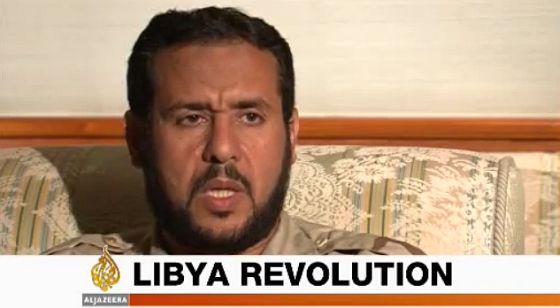
“They knew I was being tortured, I have no doubt of that,” Abdelhakim Belhaj, a former prisoner who is now the rebel security chief of the Libyan capital, said about the British intelligence agents who came to interrogate him while he was in the hands of Muammar Gaddafi’s secret police.

“I hoped they would do something about it. I was too terrified during the meeting to say out loud what was being done to me because I thought the Libyans [secret police] were taping what was going on. When the Libyan guards left I made sign movements with my hands.

“The British people nodded, showed they understood. They showed this understanding several times. But nothing changed, the torture continued for a long time afterwards.”

The appalling treatment inflicted on Mr Belhaj, a former head of the Libyan Islamist Fighting Group (LIFG), is now in the centre of an international diplomatic storm. The Independent revealed, after discovering secret files in Tripoli, how Britain played a key role in the rendition of Mr Belhaj, which delivered him into hands of the Gaddafi regime for seven years of incarceration, six of them in solitary confinement.

Mr Belhaj’s vehement claims that British officials were fully aware of the maltreatment he was undergoing and lays the UK intelligence services open to charges of direct complicity. There is nothing to suggest in a tranche of MI6 papers that the UK raised concerns about his ordeal with the regime.

Instead there are repeated requests to the Libyan secret police for information about Mr Belhaj, including one believed to be from Sir Mark Allen, who was then MI6’s head of counter-terrorism and now works for BP, when arranging Tony Blair’s visit to meet Colonel Gaddafi. “I was grateful to you for helping the officer we sent out last week. Abu Abd Allah’s [a nom-de-guerre for Mr Belhaj] information on the situation in this country is of urgent importance to us.”

Speaking to The Independent in a Tripoli hotel now being used by the Transitional National Council (TNC), Mr Belhaj described being interviewed by three British agents, one woman and two men, at the security headquarters of Moussa Koussa, who was then Libya’s spymaster. The two questioning sessions each lasted about two hours. The name of the female officer is known to The Independent but it is not being published for security reasons. Documents show that she was one of the most frequent visitors to Tripoli under the Gaddafi regime.

“The British people they sent were real experts, they knew the names of LIFG members in England, even their codenames. I have been told [by regime officials] that if I named them as being involved with al-Qa’ida they would be returned to Libya and my own conditions would improve. I was given names of other opposition people who were not even members of LIFG, who I did not even know,” Mr Belhaj, 45, said.

“I told the British, as I told everyone else, that LIFG had no link with al-Qa’ida. I knew making a link would stop what was happening to me, but I was not going to do it. I showed the British about what was happening to me.”

Mr Belhaj’s sense of being betrayed extends beyond the unheeded plea for help to the UK agents during his interrogation. After being arrested in Malaysia as a suspect during the US-led “war on terror”, he had applied for asylum to the UK, which was supposedly granted. Instead, British intelligence used the system to start a chain of events that led to his rendition to Libya. As Mr Belhaj and his wife, who was four months pregnant, travelled from Kuala Lumpur to the Thai capital, Bangkok, on the way to London in March 2004 they were arrested by CIA officers and the Thai police.

Mr Belhaj said he was subjected to physical abuse in Thailand before being moved to Abu Salim prison, a place of fear for Libyans where torture became a daily occurrence and often involved being suspended from the ceiling by his wrists.

Mr Belhaj, who was released from prison under an amnesty by the regime earlier this year, said yesterday: “My wife is still badly affected by what happened, even after all these years. It was very frightening for her. I am angry that the asylum application was used in this way. I thought Britain was a place where human rights were respected. I thought it was a place I could go to be safe. Instead, they used this to trap me.

Patrick Cockburn writes:

Here is an account by a Libyan, who did not want to disclose his name, of what it was like to be tortured by Libyan security. He says: “I was blindfolded and taken upstairs. I was shocked with electricity and made to sit on broken glass. They were kicking and punching me until I confessed. I said ‘No’.” This went on for over a week.

One day the interrogators tied his hands behind his back and took him upstairs. He continues: “They opened the door and I saw my son and wife. There were five or six members of security with masks. They tied me to a chair and one of them said: ‘Do you want to sign or should we torture them?'”

According to the prisoner one of the interrogators took his 10-month-old son and put a wire on his hand and “he screamed and his face turned red”. The little boy appeared to stop breathing. Soon afterwards the prisoner signed the confession demanded by Libyan security.

The testimony about the baby’s torture in front of his father was recorded by Human Rights Watch in Tripoli in 2005. The same year the UK signed a Memorandum of Understanding accepting Libyan diplomatic assurances that torture would not be used against Libyan exiles repatriated from the UK to Libya. Few documents agreed to by a British government exude so much hypocrisy and cynicism.

Facebooktwittermail

A look at the US military’s Joint Special Operations Command

Dana Priest and William M. Arkin write:

Two presidents and three secretaries of defense routinely have asked JSOC to mount intelligence-gathering missions and lethal raids, mostly in Iraq and Afghanistan, but also in countries with which the United States was not at war, including Yemen, Pakistan, Somalia, the Philippines, Nigeria and Syria.

“The CIA doesn’t have the size or the authority to do some of the things we can do,” said one JSOC operator.

The president has also given JSOC the rare authority to select individuals for its kill list — and then to kill, rather than capture, them. Critics charge that this individual man-hunting mission amounts to assassination, a practice prohibited by U.S. law. JSOC’s list is not usually coordinated with the CIA, which maintains a similar, but shorter roster of names.

Created in 1980 but reinvented in recent years, JSOC has grown from 1,800 troops prior to 9/11 to as many as 25,000, a number that fluctuates according to its mission. It has its own intelligence division, its own drones and reconnaissance planes, even its own dedicated satellites. It also has its own cyberwarriors, who, on Sept. 11, 2008, shut down every jihadist Web site they knew.

Obscurity has been one of the unit’s hallmarks. When JSOC officers are working in civilian government agencies or U.S. embassies abroad, which they do often, they dispense with uniforms, unlike their other military comrades. In combat, they wear no name or rank identifiers. They have hidden behind various nicknames: the Secret Army of Northern Virginia, Task Force Green, Task Force 11, Task Force 121. JSOC leaders almost never speak in public. They have no unclassified Web site.

Despite the secrecy, JSOC is not permitted to carry out covert action like the CIA. Covert action, in which the U.S. role is to be kept hidden, requires a presidential finding and congressional notification. Many national security officials, however, say JSOC’s operations are so similar to the CIA’s that they amount to covert action. The unit takes its orders directly from the president or the secretary of defense and is managed and overseen by a military-only chain of command.

Facebooktwittermail

In records of court case lie details of secret airlifts of terror suspects to CIA-run prisons

The Associated Press reports:

The secret airlift of terrorism suspects and American intelligence officials to CIA-operated overseas prisons via luxury jets was mounted by a hidden network of U.S. companies and coordinated by a prominent defense contractor, newly disclosed documents show.

More than 1,700 pages of court files in a business dispute between two aviation companies reveal how integral private contractors were in the government’s covert “extraordinary rendition” flights. They shuttled between Washington, foreign capitals, the U.S. military base at Guantanamo Bay, Cuba, and, at times, landing points near once-secret, CIA-run overseas prisons.

The companies ranged from DynCorp, a leading government contractor that secretly oversaw the flights, to caterers that unwittingly stocked the planes with fruit platters and bottles of wine, the court files and testimony show.

A New York-based charter company, Richmor Aviation Inc., which supplied corporate jets and crews to the government, and a private aviation broker, SportsFlight Air, which organized flights for DynCorp, have been engaged in a four-year legal dispute. Both sides have cited the government’s program of forced transport of detainees in testimony, evidence and legal arguments. The companies are fighting over $874,000 awarded to Richmor by a New York state appeals court to cover unpaid costs for the secret flights.

The court files, which include contracts, flight invoices, cell phone logs and correspondence, paint a sweeping portrait of collusion between the government and the private contractors that did its bidding — some eagerly, some hesitantly. Other companies turned a blind eye to what was going on.

Trial testimony studiously avoided references to the CIA. When lawyers pressed a witness about flying terrorists from Washington or Europe to Guantanamo Bay, Supreme Court Judge Paul Czajka of Columbia County, N.Y., put on the brakes: “Does this have anything to do with the contract? I mean, it’s all very interesting, and I would love to hear about it, but does it have anything to do with how much money is owed?”

At another point, the name of a high-level CIA official was mentioned, but the official’s intelligence ties were not divulged.

Among the new disclosures:

—DynCorp, which was reorganized and split up between another major contractor and a separate firm now known as DynCorp International, functioned as the primary contractor over the airlift. The company had not been previously linked to the secret flights.

—Airport invoices and other commercial records provide a new paper trail for the movements of some high-value terrorism suspects who vanished into the CIA “black site” prisons, along with government operatives who rushed to the scenes of their capture. The records include flight itineraries closely coordinated with the arrest of accused 9/11 mastermind Khalid Sheik Mohammed and the suspected transport of other captives.

—The private jets were furnished with State Department transit letters providing diplomatic cover for their flights. Former top State Department officials said similar arrangements aided other government-leased flights, but the documents in the court files may not be authentic since there are indications that the official who purportedly signed them was fictitious.

—The private business jets shuttled among as many as 10 landings over a single mission, costing the government as much as $300,000 per flight.

According to invoices between 2002 and 2005, many of the flights carried U.S. officials between Washington Dulles International Airport and the Guantanamo detention compound, where the U.S. was housing a growing population of terror detainees. Other flights landed at a dizzying array of international airports.

Jets were dispatched to Islamabad; Rome; Djibouti; Frankfurt, Germany; Dubai, United Arab Emirates; Shannon, Ireland; Glasgow, Scotland; Tenerife, Spain; Sharm el Sheik, Egypt; and even Tripoli.

Some flights landed at airports near where CIA black sites operated: Kabul, Bangkok and Bucharest. Others touched down at foreign outposts where obliging security services reportedly took in U.S. terror detainees for their own severe brand of persuasion: Cairo; Damascus, Syria; Amman, Jordan; and Rabat, Morocco.

Facebooktwittermail

The CIA’s ties to the Gaddafi regime

The Wall Street Journal reports:

The Central Intelligence Agency and Libyan intelligence services developed such a tight relationship during the George W. Bush administration that the U.S. shipped terror suspects to Libya for interrogation and suggested the questions they should be asked, according to documents found in Libya’s External Security agency headquarters.
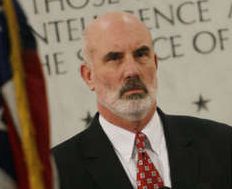
The relationship was close enough that the CIA moved to establish “a permanent presence” in Libya in 2004, according to a note from Stephen Kappes, at the time the No. 2 in the CIA’s clandestine service, to Libya’s then-intelligence chief, Moussa Koussa.

The memo began “Dear Musa,” and was signed by hand, “Steve.” Mr. Kappes was a critical player in the secret negotiations that led to Libyan leader Col. Moammar Gadhafi’s 2003 decision to give up his nuclear program. Through a spokeswoman, Mr. Kappes, who has retired from the agency, declined to comment.

A U.S. official said Libya had showed progress at the time. “Let’s keep in mind the context here: By 2004, the U.S. had successfully convinced the Libyan government to renounce its nuclear-weapons program and to help stop terrorists who were actively targeting Americans in the U.S. and abroad,” the official said.

The files documenting the renewal of ties between the CIA and Libyan intelligence were reviewed and copied by researchers from Human Rights Watch during a tour of Libya’s External Security agency headquarters in downtown Tripoli. Emergencies Director Peter Bouckaert said he was touring the building on Friday as part of the group’s effort to help the Libyan transitional authority secure sensitive documents left by the Gadhafi regime, which collapsed in August after a five-month rebellion.

Mr. Bouckaert said he discovered the files inside the complex in a room that guards described as the former office of Mr. Koussa, who became foreign minister in 2009. Mr. Bouckaert photographed the documents, leaving the originals in their place, and gave copies to The Wall Street Journal.

Human Rights Watch has been critical of the U.S. policy of sending terror suspects to third countries for interrogation, a practice known as rendition. The practice dates at least to 1995, when Egypt began aiding the U.S. with rendition.

U.S. officials say they obtained assurances from the recipient countries that the rendered detainees would be treated humanely. “There are lots of countries willing to take terrorists off the street who want to kill Americans,” the U.S. official said. “That doesn’t mean U.S. concerns about human rights are ignored in the process.”

In an April 15, 2004 letter to Libyan intelligence, the CIA proposed the rendition of another man, saying, “We respectfully request an expression of interest from your service regarding taking custody.”

Citing “recently developed agreements,” the CIA asked the Libyans to “agree to take our requirements for debriefings of [the suspect], as well as a guarantee that [his] human rights will be protected.”

The files also show the close relationship that some British intelligence officials had with Mr. Koussa.

Mr. Koussa, who defected from Col. Gadhafi’s government in March, was credited with helping negotiate Libya’s rapprochement with the international community and bartering an end to sanctions in return for Libya renouncing its weapons-of-mass-destruction program.

Yet he was also one of the stalwarts of the Gadhafi regime and headed the foreign intelligence service during a time when many Western officials believed Col. Gadhafi was funding and supporting international terrorist groups. In 1980, he was expelled from his diplomatic post in the U.K. after calling in a newspaper interview for the killing of Libyan dissidents in Great Britain. Libya later claimed he had been misquoted.

By the early years of the George W. Bush administration, however, as seen in the 2004 memo, Mr. Kappes was writing to Mr. Koussa: “Libya’s cooperation on WMD and other issues, as well as our nascent intelligence cooperation mean that now is the right moment to move ahead.”

The intelligence services had discussed the move for “quite some time” Mr. Kappes wrote.

The files provide an extraordinary window into the highly secretive and controversial practice of rendition, whereby the agency would send detainees to other countries for interrogation, including ones known for harsh treatment of detainees. The program was ramped up for terror detainees after the Sept. 11 attacks.

When taking over the CIA at the outset of the Obama administration, then-director Leon Panetta said the agency would continue to use rendition, but would seek assurances that the detainee wouldn’t be tortured—which has been the standing U.S. policy. Mr. Panetta left the CIA two months ago to lead the Pentagon.

“We are eager to work with you in the questioning of the terrorist we recently rendered to your country,” Mr. Kappes wrote in the memo, adding that he would like to send two more officers to Libya to question a suspect directly.

A lengthy profile of Kappes appeared in Washingtonian Magazine last year written by Jeff Stein, the SpyTalk columnist for the Washington Post. Stein’s account describes Kappes as resolutely loyal, dedicated, well-liked, politically skilled, and incompetent. Under his watch, the CIA was implicated in fraud, rape, and homicide.

Jeffrey Castelli, a friend of Kappes, had a pivotal role in propagating myths about Saddam Hussein’s WMD program. Castelli passed along the bogus intelligence that allowed President Bush, in his 2003 State of the Union speech to claim that Saddam had attempted to buy yellow cake uranium from Niger.

Castelli then oversaw the kidnapping of Abu Omar off a Milan street, which led to him and 24 other CIA agents being indicted by Italian magistrates.

In spite of this track record, “in 2008, Kappes picked Castelli to run the CIA’s New York station, one of the agency’s most prestigious appointments. Shock turned into protest, according to CIA insiders, forcing Kappes to drop the idea. Castelli soon retired.”

Kappes’s rise to behind-the-scenes stardom in the intelligence community is a lesson in how to maneuver in Washington: It’s one thing to be successful in the field; it’s more valuable to convince Congress you’re effective. “Kappes runs better ops on the Hill and with the White House than he ran human sources in the field,” a CIA veteran says in what turns out to be a consistent refrain.

“He’s the Teflon Don,” says a veteran of the CIA’s Operations Directorate, renamed the National Clandestine Service in 2005. “Nothing bad ever sticks to him.”

Over more than 20 years with the CIA, Kappes’s career has taken him through most of the world’s cold- and hot-war battlefields from India and Pakistan to Germany and Russia. But the journey of Kappes from secret agent to CIA superstar began in Libya.

In March 2003, leader Muammar Qaddafi signaled that he was ready to jump-start his on-again, off-again campaign to end his long diplomatic and commercial isolation, get off Washington’s list of terrorist states, and get back into the oil business with the West. Two years earlier, he’d dispatched one of his top operatives, Michigan State–educated Mousa Kousa, to a clandestine meeting in London with top CIA and British intelligence officials. Kousa carried with him the names of some of Osama bin Laden’s closest associates, including Ibn al-Sheikh al-Libi, a Libyan who would soon be the first major catch in the CIA’s pursuit of al-Qaeda. But with Qaddafi dragging his feet on final payouts over Libya’s 1988 downing of PanAm Flight 103 over Lockerbie, Scotland, negotiations stalled.

Then, with American and British troops massing to invade Iraq, Qaddafi decided it was time to talk again—in secret.

President George W. Bush and CIA chief George Tenet, desperate for intelligence on al-Qaeda, decided the time was ripe, too. But they wanted something big in return, a “deliverable,” as Bush put it: Qaddafi’s public renunciation of his nuclear, chemical, and biological weapons programs.

For the secret mission to Tripoli to work out the deal, they chose Steve Kappes.

By 2003, Kappes was deeply schooled in the dark arts. He had been station chief in Kuwait and Moscow. At a CIA station in Frankfurt, he had run highly sensitive operations targeting Iran’s nuclear-weapons program, and he had served in Pakistan, which sheltered its own nuclear-bomb effort. For the past year, as associate deputy director for operations, he had supervised some of the CIA’s most secret programs, from “extraordinary renditions”—kidnapping terrorist suspects abroad—to the agency’s secret foreign prisons to waterboarding and other “enhanced interrogation techniques.”

Then came Libya.

“Clearly, Kappes was a man who could keep a secret, and Bush gave him one: No one at State or Defense, not even Rumsfeld or Powell, should know about this major initiative,” Ron Suskind wrote in the Washington Monthly. Suskind’s account of the clandestine affair was one of a flurry of flattering articles about Kappes that began surfacing in the spring of 2006 as pressure was building to bring Kappes back to Langley.

The Libyan mission was a “lengthy dialogue, a delicate and subtle dance,” wrote Newsweek’s Mark Hosenball, quoting an anonymous former agency official. “And Steve handled it very well.”

Qaddafi did renounce his weapons-of-mass-destruction programs, allowing the Bush administration to claim that regime change in Iraq was already paying dividends elsewhere. After the Lockerbie claims were finally settled, diplomatic recognition came. The oil companies moved into Libya.

Washington, the story went, had eliminated a potential threat and gained an ally in the “war on terror.”

But on closer examination, some thought Qaddafi got the better end of it: His nuclear effort had never really gotten off the ground, intelligence sources say, despite the acquisition of millions of dollars of black-market equipment and supplies from Pakistani rogue nuclear scientist A.Q. Khan.

Qaddafi liked to buy stuff that was way beyond his scientists’ ken to assemble, a former top CIA official says.

Nor were Qaddafi’s other WMD programs much to write home about, according to the Monterey Institute’s Jonathan Tucker, one of the foremost WMD experts.

Libya’s chemical-warfare capability was “quite limited,” Tucker says. “Although Libya wanted to expand its chemical arsenal to include nerve agents, it did not have the materials, equipment, or know-how needed to do so. The nuclear program, however embryonic, was perceived as being of greater potential value, but after the interdiction of [A.Q. Khan’s] centrifuges en route to Libya, Qaddafi began to view his WMD programs as a security risk rather than an asset.”

Kappes has a reputation for micromanagement, right down to his recent insistence on selecting applicants for a two-person station. Therefore, says a former high-level official, Kappes had to know—and approve of—virtually everything that went on in the counterterrorism program after 9/11.

“All decision making in the Directorate of Operations flowed through the ADDO,” or assistant deputy director of operations, the position Kappes held when the war on terror ramped up in 2002–04, says a former top official during that era. “And he was specifically in a position of decision making and influence and persuasion. . . . So any decision or voice he gave to a particular point of view would have been, and was, given great consideration.”

“So if he was opposed to [waterboarding] and made his position known,” the former official adds, “that would have carried great weight. After all, not only was he ADDO, but don’t forget that at the same time he was carrying water for the White House on the Libya stuff and had a personal relationship, he claimed, with the President. So if he was able to do what he did on Libya, he should have been able to persuade the same decision makers with respect to enhanced interrogation techniques if he actually was opposed to them.”

It’s not likely Kappes was opposed to such programs, says a retired station chief who knows Kappes well: “He’s very jingoistic, very much a believer in American exceptionalism and the leading place the United States has in the world.”

Says John Sifton, a private investigator and attorney in New York who has carried out extensive research on the CIA’s secret programs for law firms and human-rights groups: “It strains credulity for him to say, ‘I didn’t know, I wasn’t involved.’ His denials would be like the Yankees pitching coach saying he didn’t know the playoffs rotation.”

“He became ADDO in the fall of 2002,” Sifton said, “just as the CIA was expanding its program for secret prisons and harsh interrogations and as it continued its renditions program with zeal.”

In at least one case, Kappes didn’t stay far away, sources say. According to an internal investigation, he helped tailor the agency’s paper trail regarding the death of a detainee at a secret CIA interrogation facility in Afghanistan, known internally as the Salt Pit.

The detainee froze to death after being doused with water, stripped naked, and left alone overnight, according to reports in the Washington Post and Los Angeles Times. He was secretly buried and his death kept “off-the-books,” the Post said.

According to two former officials who read a CIA inspector general’s report on the incident, Kappes coached the base chief—whose identity is being withheld at the request of the CIA—on how to respond to the agency’s investigators. They would report it as an accident.

“The ADDO’s direction to the field officer anticipated that something worse had occurred and so gave him directions on how to report the situation in his cable,” one of the former officials says.

“The ADDO basically told the officer, ‘Don’t put something in the report that can’t be proved or that you are going to have trouble explaining.’ In essence, the officer was told: Be careful what you put in your cable because the investigators are coming out there and they will pick your cable apart, and any discrepancies will be difficult to explain.”

As a result, the former official says, the Salt Pit officer’s cable was “minimalist in its reporting” on what happened to the prisoner. “It seems to me the ADDO should have been telling him, ‘Report the truth, don’t hold anything back, there’s an investigative team coming out, be honest and forthright. But that was not the message that was given to the chief of base by the ADDO.”

Facebooktwittermail

Libyan rebel military chief says he was tortured by CIA

Patrick Cockburn writes:

The overthrow of Gaddafi has brought together strange allies, but few stranger than Abdulhakim Belhaj, the military commander of all rebel military forces in Tripoli, and Nato. An Islamist whom Gaddafi tried to have the US list as a terrorist, Mr Belhaj says he was tortured by CIA agents after being arrested in the Far East in 2004 and later handed over by them to Colonel Gaddafi for further torture and imprisonment in Libya.

Mr Belhaj, the head of the military council for Tripoli, who led an Islamist guerrilla organisation fighting the Gaddafi regime in the 1990s, told The Independent in an interview that he had been directly “tortured by CIA agents” in Thailand after being first arrested in Malaysia.

If true, his story is evidence of the close co-operation between the CIA and Colonel Gaddafi’s security services after the Libyan leader denounced the 9/11 attacks. After his stint in the hands of the CIA, Mr Belhaj was kept in Abu Salim prison in Tripoli. He says: “I was in prison for seven years during which I was subjected to torture as well as solitary confinement. I was even denied a shower for three years.” Other Libyan Islamist prisoners have related how they were sometimes taken from Abu Salim to be questioned by US officials in Tripoli.

Released from prison in 2010, Mr Belhaj, who had military experience from fighting in Afghanistan against the Russians in the 1980s, became one of the most effective rebel military commanders. He is said by diplomats to have played a crucial role in the capture of Tripoli at the end of last month, and is highly regarded by the chairman of the Transitional National Council (TNC), Mustafa Abdul Jalil.

Ironically, given his claims of previous mistreatment at US hands, Mr Belhaj has emerged as one of Nato’s most important allies during their air campaign in support of the rebels over the last six months. Speaking in his headquarters in the Mitiga military airbase on the eastern outskirts of Tripoli, he forcefully denied that he and the Libyan Islamic Fighting Group (LIFG), which he helped found in 1995, had ever been allied to al-Qa’ida.

“We never had any link to al-Qa’ida,” said Mr Belhaj, a short, soft-spoken, bearded man, who does not use a military title. “We never took part in global jihad. The fact that we were in the same country, Afghanistan, [as al-Qa’ida] does not mean we had the same goal.” He stresses that the sole aim of the LIFG was always to overthrow Gaddafi.

Despite his current close co-operation with Nato, Mr Belhaj says he finds it difficult to forgive his treatment by the CIA in the past.

When first detained at an airport in Malaysia in 2004 he says he was with his wife: “She was six months pregnant and she suffered a lot.”

After a few days, CIA agents took him to Thailand as part of the notorious rendition process by which the agency transferred prisoners to countries where security forces were known to use torture. He says that in Thailand CIA agents took a direct part in his torture, though he did not give details. He says that “if I ever have the chance I will take legal action” against those responsible.

The disclosure of Libya’s intelligence files may reveal embarrassing details of co-operation between the CIA and other Western intelligence agencies with Gaddafi’s brutal and ruthless security services in pursuit of Islamist opponents. Mr Belhaj says that in the wake of 9/11, the US administration reacted by pursuing “any organisation with an Islamic agenda”.

Mr Belhaj spent seven years in Abu Salim prison which was the site of the Gaddafi regime’s most infamous atrocity, the massacre of some 1,200 prisoners in 1999, almost all of them Islamists, who had protested against conditions. The first protests which ushered in the uprising in Benghazi this February was by lawyers representing the families of the dead Abu Salim prisoners.

The Libyan prison was run with great savagery even against those whose offences were minor. Students accused of being excessively religious were stripped naked and attacked by dogs. Prisoners who survived might spend decades without seeing their families. In Abu Salim, Mr Belhaj helped write a 419-page document, published in 2009, which repudiated the Jihadi doctrine of holy war and the use of violence to change regimes. The name of the LIFG was changed to the Libyan Islamic Movement for Change. The ideological change, spurred by the failure of radical Islamic groups fighting on their own to overthrow governments, led to Islamists seeking the co-operation of more secular and liberal groups also opposed to Arab police states. It is these popular front coalitions that have won victories in Tunisia, Egypt and now Libya.

The New York Times reports on evidence gathered from the bombed ruins of Gaddafi’s intelligence headquarters in Tripoli that corroborates Belhaj’s account.

When Libyans asked to be sent Abu Abdullah al-Sadiq, another member of the [Libyan Islamic Fighting G]roup, a [CIA] case officer wrote back on March 4, 2004, that “we are committed to developing this relationship for the benefit of both our services,” and promised to do their best to locate him.

Two days later, an officer faxed the Libyans to say that Mr. Sadiq and his pregnant wife were planning to fly into Malaysia, and the authorities there agreed to put them on a British Airways flight to London that would stop in Bangkok. “We are planning to take control of the pair in Bangkok and place them on our aircraft for a flight to your country,” the case officer wrote.

Mr. Bouckaert of Human Rights Watch said he had learned from the documents that Sadiq was a nom de guerre for Abdel Hakim Belhaj, who is now a military leader for the rebels.

In an interview [with The Independent — see above] on Wednesday, Mr. Belhaj gave a detailed description of his incarceration that matched many of those in the documents. He also said that when he was held in Bangkok he was tortured by two people from the C.I.A.

Facebooktwittermail

How the NYPD, with the CIA’s help, became one of the country’s most aggressive domestic intelligence agencies

Mark LeVine writes:

Only two weeks before the 10th anniversary of the September 11, 2001 attacks, the Associated Press has broken a story that reminds us of just how much America has changed during the last decade, and how the government – and as important, some of the country’s most powerful corporations – routinely intrude into the lives of communities and individuals in a manner that would few would have thought imaginable the day before the planes struck the World Trade Center.

After a lengthy investigation, the Associated Press has published a story detailing a highly secretive decade-long relationship between the CIA and the New York Police Department (NYPD), in which the two agencies have worked together in “a massive covert programme to monitor the Muslim communities” living in the New York metropolitan area and surrounding regions.

The program is troubling for a host of reasons. It involves potentially serious violations of federal law, including First Amendment protections. Morever, it bears a strong resemblance to programs launched during the Civil Rights and Vietnam era, which saw techniques, technologies and even personnel from the US military and intelligence communities deployed against citizens within the United States.

When military tactics and strategies drawn from the front lines of war are applied to radically different contexts, the results are rarely beneficial to the health of a democracy.

According to the AP report, “The [NYPD] has dispatched teams of undercover officers, known as ‘rakers,’ into minority neighborhoods as part of a human mapping program, according to officials directly involved in the program. They’ve monitored daily life in bookstores, bars, cafes and nightclubs. Police have also used informants, known as ‘mosque crawlers,’ to monitor sermons, even when there’s no evidence of wrongdoing. NYPD officials have scrutinized imams and gathered intelligence on cab drivers and food cart vendors, jobs often done by Muslims. Many of these operations were built with help from the CIA, which is prohibited from spying on Americans but was instrumental in transforming the NYPD’s intelligence unit.”

Despite such prohibitions on spying on Americans, the NYPD and CIA have built a “partnership that has blurred the bright line between foreign and domestic spying.” The relationship has included a senior, active-duty CIA officer being hired by the NYPD to set up its intelligence programmes and another senior officer working as a “clandestine operative” inside police headquarters, and the CIA training of at least one police detective at the agency’s spy school.

Having watched the World Trade Center fall with my own eyes and then had to cope with a newborn son breathing in the soot and toxin-tainted air for weeks after, it’s hard not to sympathize with the NYPD’s willingness to “push the envelope” of police procedures in order to protect New Yorkers from a similar attack. It’s also hard not to agree with the assessment by NY cops that they can never again rely on the federal government to protect New York and therefore must become an active player in gathering and acting on intelligence that might affect the city’s eight million citizens.

Indeed, the NYPD’s “success” in these operations points out the weakness that still hampers effective intelligence work by the American intelligence community: Most CIA officers are white men who could never blend into a Muslim community; but the NYPD’s 34,000 officers reflect the ethnic and religious mosaic of New York, providing it with a host of Arab and South Asian officers who speak the languages and intimately know the cultures, making it much easier for them, effectively, to spy on their communities.

And it’s clear that this is what the NYPD is doing, having become, in the AP‘s words, “one of the country’s most aggressive domestic intelligence agencies.” Intelligence-read, spy-agencies spy; they aren’t set up primarily to look for evidence of crimes, but to gather intelligence, knowledge that might later be useful do shape policies or influence the behaviour of the groups or communities being surveilled.

Police are supposed to monitor citizens only to the extent there is evidence or sufficient suspicion of criminal activity or its planning. But the AP reports that in many cases members of the unit go out of their way not to have their information, or even their existence, brought to a court of law.

Simply put, if the intelligence that the NYPD intelligence unit is gathering is not useful to the judicial process, then it’s not police work, it’s spying. If Americans think being spied on by their government isn’t such a big deal, they can talk to the millions of Arabs who’ve rebelled in good measures because of decades of such practices, or the citizens of former Communist countries in Eastern Europe. All of these governments also justified spying with the need to “protect” the state and citizens from potentially dangerous people. But it always ends the same way.

Facebooktwittermail

The CIA, lies and intelligence

After a recent speech, John Brennan, a longtime former CIA officer and currently President Obama’s counter-terrorism advisor, took a question from John Hopkins professor of strategic studies, Elliot Cohen, on the US policy of so-called targeted killing. Brennan responded by highlighting the “surgical” precision that Obama has insisted upon when the US chooses its targets.

If there are terrorists who are in an area where there are women and children or others, we do not take such action that might put those innocent men, women and children in danger. In fact I can say that the types of operations that the US has been involved in — in the counter-terrorism realm — that nearly for the past year there hasn’t been a single collateral death because of the exceptional proficiency, precision, of the capabilities that we have been able to develop.

Brennan might have been repeating what he had been told by the CIA and their reports may have stated that in each drone attack over the said period no civilians were knowingly killed. But ignorance is no defense.

Indeed, the CIA’s lack of interest in the truth is evident in the fact that they have been eager to refute the findings on the latest research on civilian casualties from drone attacks on the tribal areas of Pakistan before such findings had even been published.

  • One in seven of all US strikes appear to have resulted in child fatalities.
  • Between 2,292 and 2,863 people have died in the attacks.
  • Since Obama took office, those attacks have occurred on average once every four days.
  • Among those killed only 126 militants have been named.
  • Credible news reports indicate that between 385-775 civilians have been killed, including 164 children.

The New York Times reports:

On May 6, a Central Intelligence Agency drone fired a volley of missiles at a pickup truck carrying nine militants and bomb materials through a desolate stretch of Pakistan near the Afghan border. It killed all the militants — a clean strike with no civilian casualties, extending what is now a yearlong perfect record of avoiding collateral deaths.

Or so goes the United States government’s version of the attack, from an American official briefed on the classified C.I.A. program. Here is another version, from a new report compiled by British and Pakistani journalists: The missiles hit a religious school, an adjoining restaurant and a house, killing 18 people — 12 militants, but also 6 civilians, known locally as Samad, Jamshed, Daraz, Iqbal, Noor Nawaz and Yousaf.

The report, “Drone War Exposed – the complete picture of CIA strikes in Pakistan,” comes from The Bureau of Investigative Journalism.

CIA drone strikes have led to far more deaths in Pakistan than previously understood, according to extensive new research published by the Bureau. More than 160 children are among at least 2,292 people reported killed in US attacks since 2004. There are credible reports of at least 385 civilians among the dead.

In a surprise move, a counter-terrorism official has also released US government estimates of the numbers killed. These state that an estimated 2,050 people have been killed in drone strikes – of whom all but an estimated 50 are combatants.

The Bureau’s fundamental reassessment of the covert US campaign involved a complete re-examination of all that is known about each US drone strike.

The study is based on close analysis of credible materials: some 2,000 media reports; witness testimonies; field reports of NGOs and lawyers; secret US government cables; leaked intelligence documents, and relevant accounts by journalists, politicians and former intelligence officers.

The Bureau’s findings are published in a 22,000-word database which covers each individual strike in Pakistan in detail. A powerful search engine, an extensive timeline and searchable maps accompany the data.

The result is the clearest public understanding so far of the CIA’s covert drone war against the militants. Yet US intelligence officials are understood to be briefing against the Bureau’s work, claiming ‘significant problems with its numbers and methodologies.’

Iain Overton, the Bureau’s editor said: ‘It comes as no surprise that the US intelligence services would attack our findings in this way. But to claim our methodology is problematic before we had even published reveals how they really operate. A revelation that is reinforced by the fact that they cannot bring themselves to refer to non-combatants as what they really are: civilians and, all too often, children’.

The Bureau’s data reveals many more CIA attacks on alleged militant targets than previously reported. At least 291 US drone strikes are now known to have taken place since 2004.

The intended targets – militants in the tribal areas – appear to make up the majority of those killed. There are 126 named militants among the dead since 2004, though hundreds are unknown, low-ranking fighters. But as many as 168 children have also been reported killed among at least 385 civilians.

More than 1,100 people are also revealed to have been injured in the US drone attacks – the first time this number has been collated.

In the wake of the Bureau’s findings Amnesty International has called for more CIA transparency.

But transparency is not what intelligence agencies trade in — “transparency” is for them nothing more than another name for public relations.

Facebooktwittermail