Category Archives: US government

NEWS: Supreme Court stands up for torture (so long as it’s secret)

Secrecy defense prevails in torture case

In a victory for the Bush administration and its use of the “state secrets” defense, the Supreme Court refused Tuesday to hear a lawsuit from a German car salesman who said he was wrongly abducted, imprisoned and tortured by the CIA in a case of mistaken identity.

The court’s action, taken without comment, was a setback for civil libertarians who had hoped to win limits on the secrecy rule, a legacy of the Cold War.

Since the Sept. 11, 2001, attacks, the so-called state secrecy privilege has been invoked regularly to bar judges or juries from hearing claims of those who say they were beaten, abused or spied upon by the government during its war on terrorism. Administration lawyers have argued successfully that hearing such claims in open court would reveal national security secrets. [complete article]

Facebooktwittermail

OPINION: Legal protection for torturers

Torture’s paper trail

Last week, the New York Times published a front-page article describing two legal memoranda issued secretly by the Bush Administration in 2005 that purported to provide guidance regarding the legality of CIA interrogation methods. What the memos said, specifically, was that certain CIA practices did not violate the law.

I emphasize the “purported” purpose of the memos because I think their true purpose was quite different. Rather than giving objective guidance that would assist CIA officials in conforming their conduct to legal standards, the memos were actually meant to provide legal cover for conduct that violated fundamental legal norms.

The real purpose of the memos was, in short, to immunize US officials from prosecution for abusive conduct. They were meant to facilitate abuses, not to prevent them. [complete article]

Facebooktwittermail

NEWS: Iraqi refugees trapped; US embassy delayed indefinitely

Doors closing on Iraqi displaced

An increasing number of Iraqi provinces are refusing entry to refugees fleeing violence in other parts of the country, the UN refugee agency has warned.

The head of the UNHCR Iraq Support Unit told the BBC up to 11 governors were restricting access because they lacked resources to look after the refugees.

Andrew Harper warned that, with no imminent end to the displacement, Iraq was becoming a “pressure cooker”. [complete article]

US Embassy opening in Baghdad delayed indefinitely

The opening of the mammoth new U.S. Embassy in Baghdad has been delayed indefinitely while its Kuwaiti contractor fixes a punch list of problems, the State Department said on Tuesday.

The sprawling complex, whose cost is edging toward $750 million, was set to open last month but U.S. lawmakers say shoddy work by the contractor and poor oversight by the State Department have delayed it.

State Department spokesman Sean McCormack rejected claims of inadequate oversight and said there was no indication how long it would be before the new embassy opened. [complete article]

Facebooktwittermail

NEWS: Supreme Court cover-up

Supreme Court won’t hear torture appeal

A German citizen who said he was kidnapped by the Central Intelligence Agency and tortured in a prison in Afghanistan lost his last chance to seek redress in court today when the Supreme Court declined to consider his case.

The justices’ refusal to take the case of Khaled el-Masri let stand a March 2 ruling by the United States Court of Appeals for the Fourth Circuit, in Richmond, Va. That court upheld a 2006 decision by a federal district judge, who dismissed Mr. Masri’s lawsuit on the grounds that trying the case could expose state secrets. [complete article]

See also, Lost opportunity to review government’s abuse of “state secrets” (ACLU).

Editor’s Comment — Just when it would be most inconvenient for the administration to be forced to answer questions about its use of torture, the Supreme Court steps in and saves the day – a good day for Bush and another blow to democracy.

Facebooktwittermail

FEATURE: Crime of the century

The People vs. the Profiteers

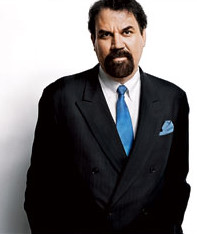
In his functional home-office in Orlando, and at the Beltway headquarters of his law firm, Grayson & Kubli, [Alan] Grayson spends most of his days and many of his evenings on a lonely legal campaign to redress colossal frauds against American taxpayers by private contractors operating in Iraq. He calls it “the crime of the century.”

grayson.jpgHis obvious adversaries are the contracting corporations themselves—especially Halliburton, the giant oil-services conglomerate where Vice President Dick Cheney spent the latter half of the 1990s as C.E.O., and its former subsidiary Kellogg, Brown & Root, now known simply as KBR. But he says his efforts to take on those organizations have earned him another enemy: the United States Department of Justice.

Over the past 16 years, Grayson has litigated dozens of cases of contractor fraud. In many of these, he has found the Justice Department to be an ally in exposing wrongdoing. But in cases that involve the Iraq war, the D.O.J. has taken extraordinary steps to stand in his way. Behind its machinations, he believes, is a scandal of epic proportions—one that may come to haunt the legacy of the Bush administration long after it is gone. [complete article]

Facebooktwittermail

NEWS & EDITOR’S COMMENT: Will Blackwater face Iraqi law?

NEWS: Will Blackwater face Iraqi law?
Iraqi authorities seek Blackwater ouster

Iraqi authorities want the U.S. government to sever all contracts in Iraq with Blackwater USA within six months. They also want the firm to pay $8 million in compensation to families of each of the 17 people killed when its guards sprayed a traffic circle with heavy machine gun fire last month.

The demands — part of an Iraqi government report examined by The Associated Press — also called on U.S. authorities to hand over the Blackwater security agents involved in the Sept. 16 shootings to face possible trial in Iraqi courts.

The tone of the Iraqi report appears to signal further strains between the government of Prime Minister Nouri al-Maliki and the White House over the deaths in Nisoor Square — which have prompted a series of U.S. and Iraqi probes and raised questions over the use of private security contractors to guard U.S. diplomats and other officials.

Al-Maliki ordered the investigation by his defense minister and other top security and police officials on Sept. 22. The findings — which were translated from Arabic by AP — mark the most definitive Iraqi positions and contentions about the shootings last month. [complete article]

Blackwater chief at nexus of military and business

Erik D. Prince, the crew-cut, square-jawed founder of Blackwater USA, the security contractor now at the center of a political storm in both Washington and Baghdad, is a man seemingly born to play a leading role in the private sector side of the war efforts in Iraq and Afghanistan.

He is both a former member of the Navy Seals and the scion of a fabulously wealthy, deeply religious family that is enmeshed in Republican Party politics. As a result, the 38-year-old Mr. Prince stands at the nexus between American Special Operations, which has played such a critical role in the war operations, and the nation’s political and business elite, who have won enormous government contracts as war operations have increasingly been outsourced.

Republican political connections ran deep in his family long before Mr. Prince founded Blackwater in 1997. When he was a teenager, religious conservative leaders like Gary Bauer, now the president of American Values, were house guests. James C. Dobson, the founder of the evangelical organization Focus on the Family, gave the eulogy at his father’s funeral in 1995. “Dr. and Mrs. Dobson are friends with Erik Prince and his mother, Elsa Broekhuizen,” Focus on the Family said in a statement. [complete article]

See also, Iraqis tell of guards’ reckless behavior (LAT) and State Dept. ignored Blackwater warnings (LAT).

Editor’s Comment — It has frequently been reported that Blackwater operates in Iraq with legal immunity. Now AP reports that the Iraqi government says otherwise:

It said Blackwater’s license to operate in Iraq expired on June 2, 2006, meaning it had no immunity from prosecution under Iraqi laws set down after the fall of Saddam Hussein in 2003.

What’s Erik Prince’s response to that?

Facebooktwittermail

OPINION: An Iraqi show of unity

A different strategy actual Iraqis support

Sept. 30 saw a rare display of Iraqi-American unity in Baghdad: The U.S. embassy as well as scores of Iraqi politicians joined forces in condemning a U.S. Senate resolution to impose a federal state structure on all parts of Iraq.

In general, there was agreement that the proposal which had been introduced by Sen. Joseph Biden constituted gross interference in Iraqi internal affairs. Iraq already has a specific and very elaborate procedure for deciding the federalism issue, but both the timeline (nothing will start until April 1, 2008) as well as the size and number of the future federal entities (to be decided by popular referendums on the basis of grass-roots initiatives) are clearly at variance with the Senate’s proposal of an “international conference” intended to accelerate and simplify matters.

For once, it seemed as if the Bush administration and the Iraqis were united in stressing the virtues of a unified Iraq capable of recovering from sectarian distrust.

There was one anomaly in this picture of Iraqi-American unity of purpose: The main forces that pulled together to condemn the Senate’s decision were mostly from parties that are being largely ignored by the Bush administration. They included Sadrists, the Fadila party, independents and Daawa members of the United Iraqi Alliance, the Tawafuq bloc, and secular groups like Iraqiyya and National Dialogue Front. All in all, they made up a strong Shiite-Sunni alliance accounting for more than a simple majority in Iraq’s parliament.

By way of contrast, all of Washington’s principal allies in Iraq were absent. The Kurds enthusiastically welcomed the Senate decision, and the Islamic Supreme Council of Iraq wavered in its response, probably understanding some obvious parallels between the Senate proposal and their own scheme for a Shiite region, but also sensing a public opinion blowing in a different direction. [complete article]

Facebooktwittermail

OPINION: The administration that harbors murderers

Licensed to kill

The Bush Justice Department does have an essential law enforcement mission, though sometimes it seems to behave much more like a criminal syndicate. It warmly embraces the crime of torture as a tool for collecting human intelligencenotwithstanding both its manifest illegality and immorality and the uniform view of intelligence professionals that torture consistently produces corrupted, inherently unreliable information. In so doing of course it is engaged in a fairly primitive game of self-protection. It can’t acknowledge the fundamental criminality of its conduct, so it turns the Justice Department into its consigliere. Three different lawyers in the office of legal counsel have rendered formal opinions giving a stamp of approval to a universal crime. Indeed, this sort of legal dexterity now seems to be accepted as a rite of passage for “movement” lawyers—a fact which is very revealing of the new character of the “movement.” It has nothing to do with ideals, and everything to do with personal fidelity. In each of these cases, the opinion boils down to the fundamental principle of the authoritarian state, namely: if the Leader authorizes it, then it must be okay. [complete article]

Facebooktwittermail

NEWS: The campaign against Iran – support from outside; dissent within

The man who stands between US and new war

Robert Gates, the US defence secretary, has taken charge of the forces in the American government opposed to a US military attack on Iran, writes Tim Shipman.

Pentagon and State Department officials say Mr Gates has set himself up as chief rival to Dick Cheney in a bid to thwart the vice?president’s desire to bomb the Islamic state.

Those familiar with internal battles in the Bush administration say Mr Gates has eclipsed Condoleezza Rice, the secretary of state, as the chief opponent of air strikes and is the main reason President George W.Bush has yet to resort to military action.

Pentagon sources say Mr Gates is waging a subtle campaign to undermine the Cheney camp by encouraging the army’s senior officers to speak frankly about the overstretch of forces, and the difficulty of fighting another war. [complete article]

Britain ‘on board’ for US strikes on Iran

British defence officials have held talks with their Pentagon counterparts about how they could help out if America chose to bomb Iran.

Washington sources say that America has shelved plans for an all-out assault, drawn up to destroy the Iranian nuclear facilities and take out the Islamist regime.

The Sunday Telegraph has learned that President Bush’s White House national security council is discussing instead a plan to launch pinpoint attacks on bases operated by the Iranian Revolutionary Guard Quds force, blamed for training Iraqi militants.

Pentagon officials have revealed that President Bush won an understanding with Gordon Brown in July that Britain would support air strikes if they could be justified as a counter-terrorist operation. [complete article]

Facebooktwittermail

NEWS & EDITOR’S COMMENT: When anthropologist becomes counter-insurgency technician

Army enlists anthropology in war zones

In this isolated Taliban stronghold in eastern Afghanistan, American paratroopers are fielding what they consider a crucial new weapon in counterinsurgency operations here: a soft-spoken civilian anthropologist named Tracy.

Tracy, who asked that her surname not be used for security reasons, is a member of the first Human Terrain Team, an experimental Pentagon program that assigns anthropologists and other social scientists to American combat units in Afghanistan and Iraq. Her team’s ability to understand subtle points of tribal relations — in one case spotting a land dispute that allowed the Taliban to bully parts of a major tribe — has won the praise of officers who say they are seeing concrete results.

Col. Martin Schweitzer, commander of the 82nd Airborne Division unit working with the anthropologists here, said that the unit’s combat operations had been reduced by 60 percent since the scientists arrived in February, and that the soldiers were now able to focus more on improving security, health care and education for the population. [complete article]

Editor’s Comment — Anthropologists can now save lives and help win the war on terrorism. “We’re not focused on the enemy. We’re focused on bringing governance down to the people,” says Col. Martin Schweitzer, commander of the 82nd Airborne Division. The Pentagon has turned into the Peace Corps! Right.

Not surprisingly, when it’s for internal consumption the story becomes a little different. In a presentation at the Pentagon earlier this year, an official reported that mapping the human terrain “enables the entire Kill Chain for the GWOT [Global War on Terrorism].” And as it applies to the US air force, here’s how the “kill chain” is described:

Because enemies have learned to limit the amount of time they and their weapons are in sight and thus vulnerable, these mobile targets require a different approach. The Air Force must compress its six-stage target cycle of Find, Fix, Track, Target, Engage, and Assess, also known as F2T2EA, or, more simply, the “kill chain.”

Concerned anthropologists such a Roberto Gonzalez are asking, “Where is the line that separates the professional anthropologist from the counter-insurgency technician?” By the Pentagon’s own admission there appears to be none. Instead of being deployed in Afghanistan and Iraq, perhaps anthropologists could do more useful work inside the Pentagon itself.

Facebooktwittermail

OPINION: Upholding the Constitution

How Congress forgot its own strength

Senators Jim Webb of Virginia and Hillary Clinton of New York are right to demand that the president go before Congress to ask for a “declaration of war” before proceeding with an attack against Iran or any other nation. But there is no need for this demand to be put into law, as the two Democrats and their colleagues are seeking to do, any more than there is need for legislation to guarantee our right of free speech or anything else protected by the Constitution. [complete article]

Facebooktwittermail

NEWS & EDITOR’S COMMENT: The State Department’s reckless protectors

Blackwater faulted in military reports from shooting scene

U.S. military reports from the scene of the Sept. 16 shooting incident involving the security firm Blackwater USA indicate that its guards opened fire without provocation and used excessive force against Iraqi civilians, according to a senior U.S. military official.

The reports came to light as an Interior Ministry official and five eyewitnesses described a second deadly shooting minutes after the incident in Nisoor Square. The same Blackwater security guards, after driving about 150 yards away from the square, fired into a crush of cars, killing one person and injuring two, the Iraqi official said.

The U.S. military reports appear to corroborate the Iraqi government’s contention that Blackwater was at fault in the shooting incident in Nisoor Square, in which hospital records say at least 14 people were killed and 18 were wounded. [complete article]

Bill applies U.S. law to contractors

With the armed security force Blackwater USA and other private contractors in Iraq facing tighter scrutiny, the House of Representatives on Thursday overwhelmingly approved a bill that would bring all United States government contractors in the Iraq war zone under the jurisdiction of American criminal law. The measure would require the F.B.I. to investigate any allegations of wrongdoing.

The bill was approved 389 to 30, despite strong opposition from the White House. It came as lawmakers and human rights groups are using a Sept. 16 shooting by Blackwater personnel in Baghdad to highlight the many contractors operating in Iraq who have apparently been unaccountable to American military or civilian laws and outside the reach of the Iraqi judicial system.

The State Department, which had been leading the investigation into the shooting, said Thursday that a team of F.B.I. agents sent to Baghdad in recent days had taken over the inquiry. No charges have been filed in the case, and Justice Department officials have said it is unclear whether American law applies. [complete article]

See also, U.S. issues new rules for Iraq security firm (WP) and Iraqis: Put Blackwater guards on trial (AP).

Editor’s Comment — With plenty of evidence that until now the State Department has had more interest in protecting their trigger-happy guards than in reining them in, today’s announcement of new security procedures intended to “make sure there is a management feedback loop,” are clearly disingenuous. Well before Blackwater hit the headlines, is it conceivable that there were not numerous occasions in which State Department officials witnessed the type of violence for which Blackwater is now infamous? And while it’s no excuse, it’s hardly surprising that those being protected were afraid of blowing the whistle on their sometimes (or often) reckless protectors.

Facebooktwittermail

ANALYSIS: A sea change inside the Pentagon

New military leaders question Iraq mission

Four and a half years after the nation’s top military leaders saluted and fell in behind President Bush’s pre-emptive invasion of Iraq, their replacements are beginning to question the mission and sound alarms about the toll the war is taking on the Army and the Marine Corps.

The change at the Pentagon is striking but little-noticed, in part because Defense Secretary Robert Gates, a longtime veteran of the CIA, is quiet where his predecessor Donald H. Rumsfeld was not.

“It’s part of a sea change,” said Loren Thompson, a military analyst at the Lexington Institute, a national-security research center in Washington. “The ideologues have been replaced by managers who view Iraq not as a cause, but a problem to be solved.” [complete article]

Facebooktwittermail

NEWS & EDITOR’S COMMENT: State-sanctioned torture

Secret U.S. endorsement of severe interrogations

The administration had always asserted that the C.I.A.’s pressure tactics did not amount to torture, which is banned by federal law and international treaty. But officials had privately decided the agency did not have to comply with another provision in the Convention Against Torture — the prohibition on “cruel, inhuman, or degrading” treatment.

Now that loophole was about to be closed. First Senator Richard J. Durbin, Democrat of Illinois, and then Senator John McCain, the Arizona Republican who had been tortured as a prisoner in North Vietnam, proposed legislation to ban such treatment.

At the administration’s request, Mr. Bradbury [head of the Office of Legal Counsel at the Justice Department] assessed whether the proposed legislation would outlaw any C.I.A. methods, a legal question that had never before been answered by the Justice Department.

At least a few administration officials argued that no reasonable interpretation of “cruel, inhuman or degrading” would permit the most extreme C.I.A. methods, like waterboarding. Mr. Bradbury was placed in a tough spot, said Mr. Zelikow, the State Department counselor, who was working at the time to rein in interrogation policy.

“If Justice says some practices are in violation of the C.I.D. standard,” Mr. Zelikow said, referring to cruel, inhuman or degrading, “then they are now saying that officials broke current law.”

In the end, Mr. Bradbury’s opinion delivered what the White House wanted: a statement that the standard imposed by Mr. McCain’s Detainee Treatment Act would not force any change in the C.I.A.’s practices, according to officials familiar with the memo.

Relying on a Supreme Court finding that only conduct that “shocks the conscience” was unconstitutional, the opinion found that in some circumstances not even waterboarding was necessarily cruel, inhuman or degrading, if, for example, a suspect was believed to possess crucial intelligence about a planned terrorist attack, the officials familiar with the legal finding said. [complete article]

Editor’s Comment — The sociopathic nature of the Bush administration has always been evident in its shameless use of language as the means through which it can conceal its actions and obscure its intentions. The long-discarded signature phrase used to deflect criticism, doubt, and misgivings, was moral clarity. The president could be trusted because he and those around him were empowered by the strength of their moral convictions, or so we were meant to believe.

Thus, when Bush and Cheney were accused of having instituted an interrogation system that clearly sanctioned the use of torture, Bush was adamant that the United States does not permit nor condone the use of torture. And how could we know that? Because no treatment of a detainee would be permitted that “shocks the conscience.”

In parallel, yet in complete contradiction with this assertion, was the idea that everything possible would be done to protect American lives. Why is this a contradiction?

Because, if what is deemed acceptable or unacceptable treatment of a detainee is going to be determined by a factor other than the condition of the detainee — specifically, by whether or not the lives of others can be protected — then the condition of the detainee becomes irrelevant. “We pulled the detainee’s finger nails out because we knew that by so doing we would be able to locate and diffuse the bomb and save thousands of lives.” This is the spurious line of reasoning that gives the ticking time-bomb scenario its popular appeal.

The administration, however, has always wanted to be on both sides of the fence. It wants to assert that it applies a form of moral pragmatism that allows it to do whatever is necessary, yet it also wants to assert that it is morally absolute in prohibiting torture.

What it refuses to acknowledge is that there can be no meaningful definition of torture that allows for mitigating circumstances — a definition that would in effect claim that something which might otherwise be described as torture, ceases to be torture because a greater good is being served.

The decoy it came up with to obscure this contradiction, is the term, “shocks the conscience.” Skeptics would instantly question the use of such a notion since it is obvious that what might shock one person’s conscience might not shock another’s. Yet as a piece of political propaganda, the phrase is clearly intended to resonate well in the minds of those Americans who actually believe that this is a presidency that upholds moral principles. In other words, this is intended to reassure the faithful — not ward off the critics.

That said, if we deconstruct the language, we can quickly expose the lie.

The dictates of conscience are infinite, yet in every instance conscience reveals the directions of an internal moral compass. What would truly shock the conscience would do so, irrespective of the terms of a Justice Department legal opinion. What would shock the conscience would be any type of action that denied the humanity of the victim while diminishing the humanity of the perpetrator.

When we consider the various actors in the Bush-Cheney torture tragedy, it is significant that the advocates and enablers of this policy have by and large been people who display neither an interest nor ability to follow the dictates of their own moral compass — these are the servants of obedience and loyalty whose allegiance to presidential power is the very stuff upon which fascism thrives. In contrast, those who displayed real moral clarity knew that not even the president of the United States could be allowed to sway their conscience.

Facebooktwittermail

NEWS: Fighting for freedom from religion

Are U.S. troops being force-fed Christianity?

At Speicher base in Iraq, US Army Spec. Jeremy Hall got permission from a chaplain in August to post fliers announcing a meeting for atheists and other nonbelievers. When the group gathered, Specialist Hall alleges, his Army major supervisor disrupted the meeting and threatened to retaliate against him, including blocking his reenlistment in the Army.

Months earlier, Hall charges, he had been publicly berated by a staff sergeant for not agreeing to join in a Thanksgiving Day prayer.

On Sept. 17, the soldier and the Military Religious Freedom Foundation (MRFF) filed suit against Army Maj. Freddy Welborn and US Secretary of Defense Robert Gates, charging violations of Hall’s constitutional rights, including being forced to submit to a religious test to qualify as a soldier. [complete article]

See also, Military Religious Freedom Foundation.

Facebooktwittermail

FEATURE: Israel’s attack on the USS Liberty

New revelations in attack on American spy ship

The Johnson administration did not publicly dispute Israel’s claim that the attack [on June 8, 1967, the fourth day of what would become known as the Six-Day War,] had been nothing more than a disastrous mistake. But internal White House documents obtained from the Lyndon B. Johnson Presidential Library show that the Israelis’ explanation of how the mistake had occurred was not believed.

Except for McNamara, most senior administration officials from Secretary of State Dean Rusk on down privately agreed with Johnson’s intelligence adviser, Clark Clifford, who was quoted in minutes of a National Security Council staff meeting as saying it was “inconceivable” that the attack had been a case of mistaken identity.

The attack “couldn’t be anything else but deliberate,” the NSA’s director, Lt. Gen. Marshall Carter, later told Congress.

“I don’t think you’ll find many people at NSA who believe it was accidental,” Benson Buffham, a former deputy NSA director, said in an interview.

“I just always assumed that the Israeli pilots knew what they were doing,” said Harold Saunders, then a member of the National Security Council staff and later assistant secretary of state for Near Eastern and South Asian affairs.

“So for me, the question really is who issued the order to do that and why? That’s the really interesting thing.” [complete article]

See also, USS Liberty Memorial.

Facebooktwittermail

OPINION & NEWS: Blackwater’s Prince of Death

The man from Blackwater, shooting from the lip

…when [Blackwater CEO Erik] Prince made a rare public appearance before the House Oversight and Government Reform Committee yesterday, he acted as if the lawmakers were wasting his time.

How much does Blackwater, recipient of $1 billion in federal contracts, make in profits? “We’re a private company, and there’s a key word there — private,” Prince answered.

What about the 2004 crash of a Blackwater plane in Afghanistan, when federal investigators said the pilots acted unprofessionally? “Accidents happen,” Prince explained.

The lack of prosecution for a drunken Blackwater worker who shot and killed a security guard to an Iraqi vice president? “We can’t flog him,” Prince said. [complete article]

From errand to fatal shot to hail of fire to 17 deaths

It started out as a family errand: Ahmed Haithem Ahmed was driving his mother, Mohassin, to pick up his father from the hospital where he worked as a pathologist. As they approached Nisour Square at midday on Sept. 16, they did not know that a bomb had gone off nearby or that a convoy of four armored vehicles carrying Blackwater guards armed with automatic rifles was approaching.

Moments later a bullet tore through Mr. Ahmed’s head, he slumped, and the car rolled forward. Then Blackwater guards responded with a barrage of gunfire and explosive weapons, leaving 17 dead and 24 wounded — a higher toll than previously thought, according to Iraqi investigators.

Interviews with 12 Iraqi witnesses, several Iraqi investigators and an American official familiar with an American investigation of the shootings offer new insights into the gravity of the episode in Nisour Square. And they are difficult to square with the explanation offered initially by Blackwater officials that their guards were responding proportionately to an attack on the streets around the square. [complete article]

Guards in Iraq cite frequent shootings

Most of the more than 100 private security companies in Iraq open fire far more frequently than has been publicly acknowledged and rarely report such incidents to U.S. or Iraqi authorities, according to U.S. officials and current and former private security company employees.

Violence caused by private security guards in Iraq has come under scrutiny since a Sept. 16 shooting in Baghdad involving employees of Blackwater USA. The company’s chairman, Erik Prince, told a congressional committee Tuesday that Blackwater guards opened fire on 195 occasions during more than 16,000 missions in Iraq since 2005.

However, two former Blackwater security guards said they believed employees fired more often than the company has disclosed. One, a former Blackwater guard who spent nearly three years in Iraq, said his 20-man team averaged “four or five” shootings a week, or several times the rate of 1.4 incidents a week reported by the company. The underreporting of shooting incidents was routine in Iraq, according to this former guard. [complete article]

Facebooktwittermail

NEWS: Blackwater’s drive-by gunmen

Report says firm sought to cover up Iraq shootings

Employees of Blackwater USA have engaged in nearly 200 shootings in Iraq since 2005, in a vast majority of cases firing their weapons from moving vehicles without stopping to count the dead or assist the wounded, according to a new report from Congress.

In at least two cases, Blackwater paid victims’ family members who complained, and sought to cover up other episodes, the Congressional report said. It said State Department officials approved the payments in the hope of keeping the shootings quiet. In one case last year, the department helped Blackwater spirit an employee out of Iraq less than 36 hours after the employee, while drunk, killed a bodyguard for one of Iraq’s two vice presidents on Christmas Eve.

The report by the Democratic majority staff of a House committee adds weight to complaints from Iraqi officials, American military officers and Blackwater’s competitors that company guards have taken an aggressive, trigger-happy approach to their work and have repeatedly acted with reckless disregard for Iraqi life. [complete article]

See also, Blackwater chief defends guards’ actions in Iraq (WP), Email shows State officials doing Blackwater damage control (TPM), and Other killings by Blackwater staff detailed (WP).

Facebooktwittermail