Alyssa Battistoni writes: Coal is without question our dirtiest fuel source: When burned, it dumps toxins like mercury and nitrogen oxides into the air and packs an outsize punch when it comes to carbon emissions. Since America has a lot of it, though, we’ve tended to use a lot: Historically, around half our electricity has been generated by coal combustion plants. But as a result of sustained anti-coal activism, low prices for natural gas, and new EPA regulations on power plant emissions, Americans are using a lot less coal than we used to, and the future of the sooty stuff in this country is looking dim. So the U.S. coal industry is pinning its hopes on China. While historically most of our exported coal has gone to Europe, U.S. exports to China increased 176 percent between 2009 and 2010, and that number is likely to keep rising as the Asian market for coal continues to expand. The prospect of shipping coal across the Pacific is even more appealing considering that Western states like Wyoming and Montana have vast coal reserves in the Powder River Basin, one of the largest coal deposits in the world.
But while the incentives to drastically scale up Western-mined, Asia-bound coal exports exist, the infrastructure to do so does not — at least, not yet. Coal mining companies are hoping to change that by building up to six coal export terminals in the Pacific Northwest — three apiece in Washington and Oregon — with the combined capacity to ship around 150 million short tons of coal to Asia each year. These new plans would more than double 107 million short tons of coal the U.S. exported in 2011.
But good news for the coal industry is bad news for the climate, and whether Powder Basin coal is burned here or abroad, it’ll add the same amount of greenhouse gas emissions to an already-warming atmosphere. [Continue reading…]
Category Archives: climate change
Most mammals won’t flee climate change fast enough
DiscoveryNews reports: As the climate changes over the next century, the ranges of nearly 90 percent of mammal species will shrink — in many cases because animals won’t be able to get to areas where the climate is going to become suitable for them, says new research.
Across the Western Hemisphere, the study also found, nearly 10 percent of mammals will be unable to move fast enough to keep up with changes in climate. In some areas, such as the Amazon, that number will be as high as 40 percent.
And while some animals will do just fine or even better than before, certain animals in certain places face catastrophic losses of survivable habitat. Most at risk are primates, which will likely lose 75 percent of their range because of both inhospitable climate and the inability to get to livable places. [Continue reading…]
Game over for the climate
James Hansen, director of the NASA Goddard Institute for Space Studies, writes: warming isn’t a prediction. It is happening. That is why I was so troubled to read a recent interview with President Obama in Rolling Stone in which he said that Canada would exploit the oil in its vast tar sands reserves “regardless of what we do.”
If Canada proceeds, and we do nothing, it will be game over for the climate.
Canada’s tar sands, deposits of sand saturated with bitumen, contain twice the amount of carbon dioxide emitted by global oil use in our entire history. If we were to fully exploit this new oil source, and continue to burn our conventional oil, gas and coal supplies, concentrations of carbon dioxide in the atmosphere eventually would reach levels higher than in the Pliocene era, more than 2.5 million years ago, when sea level was at least 50 feet higher than it is now. That level of heat-trapping gases would assure that the disintegration of the ice sheets would accelerate out of control. Sea levels would rise and destroy coastal cities. Global temperatures would become intolerable. Twenty to 50 percent of the planet’s species would be driven to extinction. Civilization would be at risk.
That is the long-term outlook. But near-term, things will be bad enough. Over the next several decades, the Western United States and the semi-arid region from North Dakota to Texas will develop semi-permanent drought, with rain, when it does come, occurring in extreme events with heavy flooding. Economic losses would be incalculable. More and more of the Midwest would be a dust bowl. California’s Central Valley could no longer be irrigated. Food prices would rise to unprecedented levels.
If this sounds apocalyptic, it is. This is why we need to reduce emissions dramatically. President Obama has the power not only to deny tar sands oil additional access to Gulf Coast refining, which Canada desires in part for export markets, but also to encourage economic incentives to leave tar sands and other dirty fuels in the ground. [Continue reading…]
What could become a fatal remedy for climate change
Michael Specter writes: Late in the afternoon on April 2, 1991, Mt. Pinatubo, a volcano on the Philippine island of Luzon, began to rumble with a series of the powerful steam explosions that typically precede an eruption. Pinatubo had been dormant for more than four centuries, and in the volcanological world the mountain had become little more than a footnote. The tremors continued in a steady crescendo for the next two months, until June 15th, when the mountain exploded with enough force to expel molten lava at the speed of six hundred miles an hour. The lava flooded a two-hundred-and-fifty-square-mile area, requiring the evacuation of two hundred thousand people.
Within hours, the plume of gas and ash had penetrated the stratosphere, eventually reaching an altitude of twenty-one miles. Three weeks later, an aerosol cloud had encircled the earth, and it remained for nearly two years. Twenty million metric tons of sulfur dioxide mixed with droplets of water, creating a kind of gaseous mirror, which reflected solar rays back into the sky. Throughout 1992 and 1993, the amount of sunlight that reached the surface of the earth was reduced by more than ten per cent.
The heavy industrial activity of the previous hundred years had caused the earth’s climate to warm by roughly three-quarters of a degree Celsius, helping to make the twentieth century the hottest in at least a thousand years. The eruption of Mt. Pinatubo, however, reduced global temperatures by nearly that much in a single year. It also disrupted patterns of precipitation throughout the planet. It is believed to have influenced events as varied as floods along the Mississippi River in 1993 and, later that year, the drought that devastated the African Sahel. Most people considered the eruption a calamity.
For geophysical scientists, though, Mt. Pinatubo provided the best model in at least a century to help us understand what might happen if humans attempted to ameliorate global warming by deliberately altering the climate of the earth.
For years, even to entertain the possibility of human intervention on such a scale—geoengineering, as the practice is known—has been denounced as hubris. Predicting long-term climatic behavior by using computer models has proved difficult, and the notion of fiddling with the planet’s climate based on the results generated by those models worries even scientists who are fully engaged in the research. “There will be no easy victories, but at some point we are going to have to take the facts seriously,’’ David Keith, a professor of engineering and public policy at Harvard and one of geoengineering’s most thoughtful supporters, told me. “Nonetheless,’’ he added, “it is hyperbolic to say this, but no less true: when you start to reflect light away from the planet, you can easily imagine a chain of events that would extinguish life on earth.”
There is only one reason to consider deploying a scheme with even a tiny chance of causing such a catastrophe: if the risks of not deploying it were clearly higher. No one is yet prepared to make such a calculation, but researchers are moving in that direction. To offer guidance, the Intergovernmental Panel on Climate Change (I.P.C.C.) has developed a series of scenarios on global warming. The cheeriest assessment predicts that by the end of the century the earth’s average temperature will rise between 1.1 and 2.9 degrees Celsius. A more pessimistic projection envisages a rise of between 2.4 and 6.4 degrees—far higher than at any time in recorded history. (There are nearly two degrees Fahrenheit in one degree Celsius. A rise of 2.4 to 6.4 degrees Celsius would equal 4.3 to 11.5 degrees Fahrenheit.) Until recently, climate scientists believed that a six-degree rise, the effects of which would be an undeniable disaster, was unlikely. But new data have changed the minds of many. Late last year, Fatih Birol, the chief economist for the International Energy Agency, said that current levels of consumption “put the world perfectly on track for a six-degree Celsius rise in temperature. . . . Everybody, even schoolchildren, knows this will have catastrophic implications for all of us.” [Continue reading…]
Why trees matter

Jim Robbins writes: Trees are on the front lines of our changing climate. And when the oldest trees in the world suddenly start dying, it’s time to pay attention.
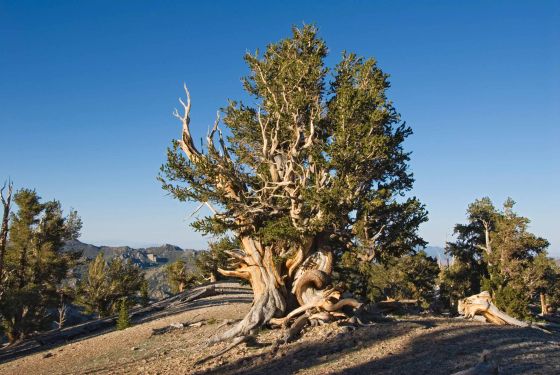
North America’s ancient alpine bristlecone forests are falling victim to a voracious beetle and an Asian fungus. In Texas, a prolonged drought killed more than five million urban shade trees last year and an additional half-billion trees in parks and forests. In the Amazon, two severe droughts have killed billions more.
The common factor has been hotter, drier weather.
We have underestimated the importance of trees. They are not merely pleasant sources of shade but a potentially major answer to some of our most pressing environmental problems. We take them for granted, but they are a near miracle. In a bit of natural alchemy called photosynthesis, for example, trees turn one of the seemingly most insubstantial things of all — sunlight — into food for insects, wildlife and people, and use it to create shade, beauty and wood for fuel, furniture and homes.
For all of that, the unbroken forest that once covered much of the continent is now shot through with holes.
Humans have cut down the biggest and best trees and left the runts behind. What does that mean for the genetic fitness of our forests? No one knows for sure, for trees and forests are poorly understood on almost all levels. “It’s embarrassing how little we know,” one eminent redwood researcher told me.
What we do know, however, suggests that what trees do is essential though often not obvious. Decades ago, Katsuhiko Matsunaga, a marine chemist at Hokkaido University in Japan, discovered that when tree leaves decompose, they leach acids into the ocean that help fertilize plankton. When plankton thrive, so does the rest of the food chain. In a campaign called Forests Are Lovers of the Sea, fishermen have replanted forests along coasts and rivers to bring back fish and oyster stocks. And they have returned. [Continue reading…]
North America’s dirty oil boom and the threat to the environment and environmentalists
The New York Times reports: The reversal of fortune in America’s energy supplies in recent years holds the promise of abundant and cheaper fuel, and it could have profound effects on what people drive, domestic manufacturing and America’s foreign policy.
Cheaper fuel produced domestically could reduce the cost of shipping and manufacturing, trim heating and cooling bills, improve the auto market and provide tens of thousands of new jobs.
It might also pose new environmental challenges, both predictable and unforeseen, by damping enthusiasm for clean forms of energy and derailing efforts to wean the nation from its wasteful energy habits.
But for Americans battered by rising gasoline prices, frustrated by the dependence on foreign oil, skeptical of the benefits or practicality of renewable fuels and afraid of nuclear power, the appeal of plentiful domestic oil and gas could far outweigh the costs.
Just a few years ago, the dominant theme in discussions about energy was of declining production and the fear of running out of oil. Even today, political tensions in the Middle East, particularly in the Persian Gulf, have fanned fears of supply disruptions that are keeping prices high.
But a new boom in energy production in recent years has upended these expectations in record time. High energy prices led to a wave of successful oil and gas exploration in North America, including in fields that were deemed uneconomical only a few years ago. Using techniques like horizontal drilling and hydraulic fracturing, oil companies are tapping into deeply buried reserves in shale rocks and in the ocean’s depths.
The surge in energy prices, along with a recession and new government rules that tightened fuel-economy standards, led to a sharp cutback in gasoline consumption. This decline in demand in the last five years reversed decades of almost uninterrupted growth that made the United States the world’s top energy consumer, accounting for one in every four barrels of oil burned around the globe.
The North American energy revival is primarily the result of so-called unconventional sources of energy — like shale oil and shale gas across the United States, oil sands in Canada and deepwater production in the Gulf of Mexico. In the last five years, the United States and Canada combined have become the fastest-growing sources of new oil supplies around the world, overtaking producers like Russia and Saudi Arabia.
“The transformation unfolding in North America represents a potentially decisive shift in the history of energy,” Rex W. Tillerson, the chairman and chief executive of Exxon Mobil, who is not usually given to hyperbole, said in a speech in Houston last month.
Ed Morse, head of global commodity research at Citigroup and a longtime energy analyst, says North America has the potential to become a “new Middle East.”
“The reduced vulnerability of North America — and the world market — to oil price spikes also has deep consequences geopolitically, including the reduced strategic importance to the U.S. of changes in oil- and natural gas-producing countries worldwide,” Mr. Morse said in a recent 92-page report called Energy 2020. ”Pressures towards isolationism in the U.S. will likely grow, with consequences for global stability that can only just begin to become understood.”
“The only thing that could stop this is politics — environmentalists getting the upper hand over supply in the U.S., for instance,” the report said. [Continue reading…]
A new tipping point on climate change
It’s widely assumed that the lack of will from governments and industry to take the radical steps required to tackle climate change result from the difficulties the non-scientific community has in grasping the science behind the dire warnings we have all been hearing for decades. But maybe the most significant shift in attitudes is about to happen and it won’t be because of a burgeoning wider understanding of the scientific data. Instead it will be because financial markets are becoming worried that fossil fuels are destined to turn into toxic assets — toxic not because their combustion is poisoning the planet but because they are going to plummet in value.
The Guardian reports: The huge reserves of coal, oil and gas held by companies listed in the City of London are “sub-prime” assets posing a systemic risk to economic stability, a high-profile coalition of investors, politicians and scientists has warned Bank of England’s governor, Sir Mervyn King.
In an open letter on Thursday, they tell King that the global drive to reduce carbon emissions could mean billions of pounds of fossil fuel reserves will rapidly lose value and cause a “major problem” for institutional investors and pension funds.
At the most recent UN climate change summit in December, 194 of the world’s nations agreed to enact legally binding curbs on greenhouse gas emissions within three years to limit global warming to 2C. But meeting this limit would mean just 20% of existing fossil fuel reserves could be burned, according to recent research.
“These high-carbon assets pose significant strategic challenges for the future prosperity of Britain that just can’t be ignored,” said investment manager James Cameron, who is a member of the prime minister’s business advisory group. “Investors continue to pour cash into unsustainable assets without understanding the risks associated with these investments, such as climate change, local pollution, fossil fuel price volatility, political risk and catastrophes such as Deepwater Horizon.”
The letter is also signed by the government’s former chief scientific adviser Sir David King, Zac Goldsmith MP, former environment minister John Gummer and 17 others. It urges action to investigate the risk of the “carbon bubble”.
Keystone XL decision is a big win — for now
Bill McKibben writes: Last spring, almost no one outside of Nebraska had heard of the Keystone XL pipeline. As late as October, when the National Journal surveyed 300 “energy insiders” in D.C., 91 percent predicted that the Obama administration would approve the permit for the pipeline. TransCanada stacked 1,700 miles of pipe along the proposed route, so confident was the company of victory.
Today, the State Department and the president denied the permit for the pipeline. It’s one of the rare days in the 20-year climate fight when scientists can smile and Big Oil has to frown. Because citizen activists around the country were willing to put their bodies on the line, and because the environmental movement worked with rare unity and coordination, a done deal has come spectacularly undone.
There are no permanent environmental victories, certainly not this one. TransCanada (or any other company) is free to reapply for a new permit, though I imagine this time the State Department process will be conducted with more transparency and less favoritism. And of course the biggest caveat of all: Even if every drop of tar-sands oil remained safely in the ground, we’ve still got more than enough coal and gas and oil to crash the climate system.
Doomsday Clock ticks one minute closer to midnight
The Guardian reports: The world tiptoed closer to the apocalypse on Tuesday as scientists moved the Doomsday Clock one minute closer to the zero hour.
The symbolic clock now stands at five minutes to midnight, the scientists said, because of a collective failure to stop the spread of nuclear weapons, act on climate change, or find safe and sustainable sources of energy – as exemplified by the Fukushima nuclear disaster.
The rare bright points the scientists noted were the Arab spring and movement in Russia for greater democracy.
The clock, maintained by the Bulletin of Atomic Scientists, has been gauging our proximity to global disaster since 1947, using the potent image of a clock counting down the minutes to destruction. Until Tuesday afternoon, the clock had been set at six minutes to midnight.
“It is five minutes to midnight,” the scientists said. “Two years ago it appeared that world leaders might address the truly global threats we face. In many cases, that trend has not continued or been reversed.”
Where is Obama’s climate change agenda?
Climate change — our real bequest to future generations
Dean Baker writes: The guiding philosophy on this issue in the United States is pretty much that we can inflict whatever harm we want on people elsewhere in the world because we are powerful and they are not. This is certainly true today, but will it still be true 60 or 70 years from now? Do we expect that the United States will still be able to act unilaterally without regard to the consequences that our actions have on the rest of the world?
Before anyone tries to answer this question, they should consider that the International Monetary Fund’s projections show China’s economy surpassing the US economy before the end of the next presidential term. And China is not the only country whose growth is substantially outpacing ours.
The point is not that we should worry about an invasion from hostile powers, but instead, that we should not imagine that we will be able to inflict great harm on the rest of the world with impunity. In other words, our children and grandchildren may well be forced to pay a substantial price for the damage caused by our greenhouse gas emissions today.
Those who want to worry about questions of generational equity might start to wrap their heads around combating global warming. Global warming threatens to do far more damage to the wellbeing of future generations than the social security and Medicare benefits going to baby-boomers, no matter how much the deficit hawks try to twist the numbers to claim otherwise.
Book examines America’s turn from science, warns of danger for democracy
McClatchy reports: Americans have trouble dealing with science, and one place that’s especially obvious is in presidential campaigns, says Shawn Lawrence Otto, who tried, with limited success, to get the candidates to debate scientific questions in the 2008 presidential election. Otto is the author of a new book, “Fool me twice: Fighting the assault on science in America,” which opens with a quote from Thomas Jefferson: “Whenever the people are well informed, they can be trusted with their own government.” And if the people and their leaders aren’t well informed and don’t use scientific information to solve modern problems, Otto suggests, the United States could soon skid into decline. “Without the mooring provided by the well-informed opinion of the people, governments may become paralyzed or, worse, corrupted by powerful interests seeking to oppress and enslave,” he writes. Today, he adds, Congress seems paralyzed and “ideology and rhetoric increasingly guide policy discussion, often bearing little relationship to factual reality.” In 2008, Otto and a group of other writers tried to organize a presidential debate on science issues. Neither Barack Obama nor John McCain was interested. In the end, the two candidates agreed to respond to 14 questions in writing, and Otto’s group posted them on its ScienceDebate.org website. Otto said the group plans to try for another science debate in 2012. Reporters play a role in whether science is discussed in campaigns. A League of Conservation Voters analysis in early 2008 found that prime-time TV journalists asked 2,975 questions in 171 interviews. Only six questions were about climate change, “and the same could be said of any one of several major policy topoics surrounding science,” Otto writes in the book.
Climate change and the failure of market mechanisms
What happens when the economy stops growing — forever?
Counting the Cost – The cost of climate change
World on track for nearly 11-degree temperature rise, energy expert says
The Washington Post reports: The chief economist for the International Energy Agency said Monday that current global energy consumption levels put the Earth on a trajectory to warm by 6 degrees Celsius (10.8 degrees Fahrenheit) above pre-industrial levels by 2100, an outcome he called “a catastrophe for all of us.”
Fatih Birol [PDF] spoke as as delegates from nearly 200 countries convened the opening day of annual U.N. climate talks in Durban, South Africa.
International climate negotiators have pledged to keep the global temperature rise to 2 degrees Celsius, or 3.6 degrees Fahrenheit, above pre-industrial levels. The Earth has already warmed 0.8 degrees Celsius, or 1.4 Fahrenheit, so far, according to climate scientists.
According to the IEA’s most recent analysis, heat-trapping emissions from the world’s energy infrastructure will lead to a 2-degree Celsius increase in the Earth’s temperature that, as more capacity is added to the system, will climb to 6 degrees Celsius of warming by 2100.
Unless there is a shift away from some of the fossil fuel energy now used for electricity generation and transportation, Birol said, “the world is perfectly on track for a six-degree Celsius increase in temperature.
“Everybody, even the schoolchildren, knows this is a catastrophe for all of us,” he said at the Carnegie Endowment for International Peace.
Petroleum junkies of the world, unite!
Craig Collins writes: It took me years to realize that our supercharged lifestyle depends on a vanishing supply of fossil fuels and cannot possibly be reproduced on a global scale. If the people of China lived like Americans, there would be more cars in China than there are in the entire world today. Their cars would need all of the oil the world produces plus fifteen million extra barrels a day. China would consume two-thirds of the world’s grain harvest, burn more coal than the entire world uses today and use twice as much paper. And this is just China. The Earth simply does not have enough land, water and hydrocarbons for everyone to live the high-energy lifestyle of Americans. In fact, America’s coveted lifestyle is running on empty and on the verge of going bust, like the boomtowns that became ghost towns after the gold rush panned out.
Throughout the 20th century, the world was preoccupied with modernity, progress, science and technology, yet no one was crediting the amazing energy source that made it all possible. Even today, we routinely underestimate and overlook the unique characteristics that have made fossil fuels the energy source that has utterly transformed human life on this planet.
Fossil fuels are the most concentrated, versatile, inexpensive energy source ever discovered. Energy is the capacity to do work and we have harnessed fossil fuels to do unbelievable amounts of it. There are about 23,000 human labor hours (12.5 years at 40 hours per week) in every barrel of oil and humans use about 85 million barrels of oil every day. Just one gallon of gas can do as much work as 350 to 500 hours of hard human labor. How much would you expect to be paid for 350 to 500 hours of hard work? At $15 an hour, your labor would be worth between $5,250 and $7,500 dollars. Now compare that with how much you spend for a gallon of gas.
Modern industry and agriculture would be impossible without fossil fuels. According to Michael Pollan, it takes about ten calories of fossil energy to produce and transport each calorie of supermarket food we eat. In the United States, food typically travels between 1,500 and 2,500 miles from farm to plate. Supermarkets and fast food chains survive on a life support system of cheap fossil fuels. Agricultural machinery, irrigation systems, petrochemical pesticides and fertilizers, huge centralized feedlots, slaughterhouses, food processors and refrigerated storage all rely on hydrocarbons – as do the trucks, ships, trains and planes that move food around the world.
Capitalism vs. the climate
Naomi Klein writes: There is a question from a gentleman in the fourth row.
He introduces himself as Richard Rothschild. He tells the crowd that he ran for county commissioner in Maryland’s Carroll County because he had come to the conclusion that policies to combat global warming were actually “an attack on middle-class American capitalism.” His question for the panelists, gathered in a Washington, DC, Marriott Hotel in late June, is this: “To what extent is this entire movement simply a green Trojan horse, whose belly is full with red Marxist socioeconomic doctrine?”Here at the Heartland Institute’s Sixth International Conference on Climate Change, the premier gathering for those dedicated to denying the overwhelming scientific consensus that human activity is warming the planet, this qualifies as a rhetorical question. Like asking a meeting of German central bankers if Greeks are untrustworthy. Still, the panelists aren’t going to pass up an opportunity to tell the questioner just how right he is.
Chris Horner, a senior fellow at the Competitive Enterprise Institute who specializes in harassing climate scientists with nuisance lawsuits and Freedom of Information fishing expeditions, angles the table mic over to his mouth. “You can believe this is about the climate,” he says darkly, “and many people do, but it’s not a reasonable belief.” Horner, whose prematurely silver hair makes him look like a right-wing Anderson Cooper, likes to invoke Saul Alinsky: “The issue isn’t the issue.” The issue, apparently, is that “no free society would do to itself what this agenda requires…. The first step to that is to remove these nagging freedoms that keep getting in the way.”
Claiming that climate change is a plot to steal American freedom is rather tame by Heartland standards. Over the course of this two-day conference, I will learn that Obama’s campaign promise to support locally owned biofuels refineries was really about “green communitarianism,” akin to the “Maoist” scheme to put “a pig iron furnace in everybody’s backyard” (the Cato Institute’s Patrick Michaels). That climate change is “a stalking horse for National Socialism” (former Republican senator and retired astronaut Harrison Schmitt). And that environmentalists are like Aztec priests, sacrificing countless people to appease the gods and change the weather (Marc Morano, editor of the denialists’ go-to website, ClimateDepot.com).
Most of all, however, I will hear versions of the opinion expressed by the county commissioner in the fourth row: that climate change is a Trojan horse designed to abolish capitalism and replace it with some kind of eco-socialism. As conference speaker Larry Bell succinctly puts it in his new book Climate of Corruption, climate change “has little to do with the state of the environment and much to do with shackling capitalism and transforming the American way of life in the interests of global wealth redistribution.”