Category Archives: Issues

Donald Trump’s bigotry

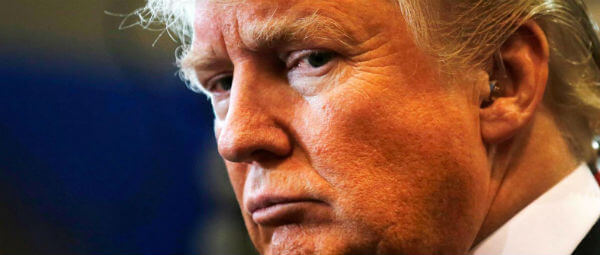
trump-frown

Charles Blow writes: According to recent polls, the image of Donald Trump as a bigot has begun to crystallize, and for good reason: Because it’s true!

A Quinnipiac poll released last week found that 59 percent of likely voters, and 29 percent of likely Republican voters in particular, think that the way Trump talks appeals to bigotry. Republicans were the only anomaly. A majority or plurality of every other demographic measured — Democrats, independents, men, women, white people with and without college degrees, every age group, whites and nonwhites alike — agreed that Trump’s words appeal to bigotry.

But there is one demographic that must be particularly concerning to Trump: college-educated whites.

I know that Trump has boasted that he loves the poorly educated, but there appears to be little love lost between him and those white people with degrees. In fact, as the blog FiveThirtyEight predicted in July, “Trump may become the first Republican in 60 years to lose white college graduates.”

This may in part be due to his particularly abysmal performance among college-educated white women. [Continue reading…]

Facebooktwittermail

How Dostoevsky predicted Trump’s America

By Ani Kokobobo, University of Kansas

As a professor of Russian literature, I’ve come to realize that it’s never a good sign when real life resembles a Fyodor Dostoevsky novel.

Donald Trump’s presidential campaign, with its riotous rhetoric and steady stream of scandals, calls to mind Dostoevsky’s most political novel, “Demons,” written in 1872. In it, the writer wanted to warn readers about the destructive force of demagoguery and unchecked rhetoric, and his cautionary messages – largely influenced by 19th-century Russian political chaos – resonate in our present political climate.

To show his readers just how bad things could get if they didn’t pay attention, Dostoevsky linked his political nightmare to unhinged impulses and the breakdown of civility.

A passion for destruction

Dostoevsky was as addicted to newspapers as some of us are to social media, and he often plucked crises and violence right from the headlines, refashioning them for his fiction.

Russia during the 1860s and 1870s – the heyday of the author’s career – was experiencing massive socioeconomic instability. Tsar Alexander II’s Emancipation of the Serfs freed Russian peasants from a form of class bondage, while the subsequent Great Reforms aimed to restructure the executive and judidical branches, as well as the military, tax code and education system. The reforms were supposed to modernize the country by dragging it out of the caste-like system of estates and legal privilege. But it didn’t do much to improve the economic lot of the peasant.

It was a reversal of America’s present political landscape. While today there’s simmering discontent from the right, in 19th-century Russia it was leftists who were enraged. They were angered by the reforms for not going far enough and had lost hope in the government’s ability to produce meaningful change.

Continue reading

Facebooktwittermail

A clearer portrait of Trump supporters

Tom Jacobs writes: When Donald Trump emerged as a serious candidate, his supporters were widely described as working-class white men who were hurting economically. When word emerged that most are actually doing surprisingly well, the need for a more accurate profile became clear.

Such a portrait has just been published, and it suggests attitude, not income, is the common denominator among Trump supporters.
In short, they tend to be anti-intellectual, scornful of authority figures, and deeply mistrustful of perceived outsiders.

“Trump’s supporters are distinctive in their unique combination of anti-expertise, anti-elitism, and pro-nationalist sentiments,” political scientists J. Eric Oliver and Wendy Rahn write in the Annals of the American Association of Political and Social Science. “Trump’s supporters are also distinctive in their high levels of conspiratorial thinking, nativism, and economic insecurity.”

In a word, they embody populism, the belief that a self-serving elite has accumulated too much power. “The year 2016 is indeed the year of the populist,” the researchers write, “and Donald Trump is its apotheosis.” [Continue reading…]

Facebooktwittermail

FBI says foreign hackers penetrated state election systems

Michael Isikoff reports: The FBI has uncovered evidence that foreign hackers penetrated two state election databases in recent weeks, prompting the bureau to warn election officials across the country to take new steps to enhance the security of their computer systems, according to federal and state law enforcement officials.

The FBI warning, contained in a “flash” alert from the FBI’s Cyber Division, a copy of which was obtained by Yahoo News, comes amid heightened concerns among U.S. intelligence officials about the possibility of cyberintrusions, potentially by Russian state-sponsored hackers, aimed at disrupting the November elections.

Those concerns prompted Homeland Security Secretary Jeh Johnson to convene a conference call with state election officials on Aug. 15, in which he offered his department’s help to make state voting systems more secure, including providing federal cyber security experts to scan for vulnerabilities, according to a “readout” of the call released by the department. [Continue reading…]

Facebooktwittermail

Spreading lies: A powerful Russian propaganda weapon

The New York Times reports: With a vigorous national debate underway on whether Sweden should enter a military partnership with NATO, officials in Stockholm suddenly encountered an unsettling problem: a flood of distorted and outright false information on social media, confusing public perceptions of the issue.

The claims were alarming: If Sweden, a non-NATO member, signed the deal, the alliance would stockpile secret nuclear weapons on Swedish soil; NATO could attack Russia from Sweden without government approval; NATO soldiers, immune from prosecution, could rape Swedish women without fear of criminal charges.

They were all false, but the disinformation had begun spilling into the traditional news media, and as the defense minister, Peter Hultqvist, traveled the country to promote the pact in speeches and town hall meetings, he was repeatedly grilled about the bogus stories.

“People were not used to it, and they got scared, asking what can be believed, what should be believed?” said Marinette Nyh Radebo, Mr. Hultqvist’s spokeswoman.

As often happens in such cases, Swedish officials were never able to pin down the source of the false reports. But they, numerous analysts and experts in American and European intelligence point to Russia as the prime suspect, noting that preventing NATO expansion is a centerpiece of the foreign policy of President Vladimir V. Putin, who invaded Georgia in 2008 largely to forestall that possibility. [Continue reading…]

Facebooktwittermail

How Arab authoritarian regimes learned to defeat popular protests

Marc Lynch writes: The Arab world never seemed more unified than during the incandescent days of the 2011 Arab uprisings. Tunisia’s revolution clearly and powerfully inspired Arabs everywhere to take to the streets. Egypt’s Jan. 25 uprising, which resulted in the removal of Hosni Mubarak, taught Arab citizens and leaders alike that victory by protesters could succeed.

The subsequent wave of protests involved remarkable synergies that could not plausibly be explained without reference to transnational diffusion. Bahrainis, Yemenis and Jordanians alike attempted to replicate the seizure and long-term encampments in Egypt’s Tahrir Square, and protesters across the Arab world chanted the same slogans and waved the same signs.

But what happened in the months and years after those heady days? Did similar processes of diffusion and cross-national learning shape the post-uprisings era? Did autocratic regimes learn from one another in the same way that protesters did? In June, more than a dozen scholars came together in Hamburg, Germany, for a workshop jointly organized by the Project on Middle East Political Science and the German Institute of Global and Area Studies. The workshop closely examined learning, diffusion and demonstration across autocratic regimes during the Arab counter-revolution. The papers for that workshop, available here as an open access PDF download, closely examine the ways in which Arab autocrats did — and did not — learn from one another. [Continue reading…]

Facebooktwittermail

‘No vacancies’ for blacks: How Donald Trump got his start, and was first accused of bias

The New York Times reports: She seemed like the model tenant. A 33-year-old nurse who was living at the Y.W.C.A. in Harlem, she had come to rent a one-bedroom at the still-unfinished Wilshire Apartments in the Jamaica Estates neighborhood of Queens. She filled out what the rental agent remembers as a “beautiful application.” She did not even want to look at the unit.

There was just one hitch: Maxine Brown was black.

Stanley Leibowitz, the rental agent, talked to his boss, Fred C. Trump.

“I asked him what to do and he says, ‘Take the application and put it in a drawer and leave it there,’” Mr. Leibowitz, now 88, recalled in an interview.

It was late 1963 — just months before President Lyndon B. Johnson signed the landmark Civil Rights Act — and the tall, mustachioed Fred Trump was approaching the apex of his building career. He was about to complete the jewel in the crown of his middle-class housing empire: seven 23-story towers, called Trump Village, spread across nearly 40 acres in Coney Island.

He was also grooming his heir. His son Donald, 17, would soon enroll at Fordham University in the Bronx, living at his parents’ home in Queens and spending much of his free time touring construction sites in his father’s Cadillac, driven by a black chauffeur.

“His father was his idol,” Mr. Leibowitz recalled. “Anytime he would come into the building, Donald would be by his side.”

Over the next decade, as Donald J. Trump assumed an increasingly prominent role in the business, the company’s practice of turning away potential black tenants was painstakingly documented by activists and organizations that viewed equal housing as the next frontier in the civil rights struggle.

The Justice Department undertook its own investigation and, in 1973, sued Trump Management for discriminating against blacks. Both Fred Trump, the company’s chairman, and Donald Trump, its president, were named as defendants. It was front-page news, and for Donald, amounted to his debut in the public eye. [Continue reading…]

Facebooktwittermail

Hillary hatred is a reckless indulgence

Gabriel Schoenfeld writes: … for all her failures on the truth front, Clinton is not a congenital liar like Trump, who spouts falsehoods without compunction or, seemingly, even awareness. Rather, she engages in what conservatives like me would call progressive prevarication. Like so many on the left, she sees herself as both a paragon and an agent of virtue. As such, she uninhibitedly bends the rules and stretches the truth to advance her own career and causes. This leads her critics to paint her as a practiced liar, but in her own mind she is always telling a higher truth. Wrongdoing mixed with self-righteousness naturally elicits a special kind of fury.

But not all the hatred is kindled by Clinton herself. Even as first lady, her activist role fueled attacks on her hairstyle, her pantsuits and her voice, all of which evolved into a set of shopworn memes deriving from her gender. The fact that she gained political ascendance by riding piggyback on her husband’s career has added energy to the sex-based enmity. Today, her status as the first female presidential nominee for a major party has turned this stream into a river.

It has not helped that Clinton’s candidacy occurs during a period when traditional concepts of marriage and gender identity are being overturned. As radical changes in this most sensitive realm are introduced — in some instances with the force of law — anxieties are boiling over. As a female politician visibly identified with the social transformation, Clinton is a locus of the backlash.

Trump, for his part, has been riding that backlash toward power. Misogyny is what he traffics in, and he is not alone. Indeed, his frank expressions of contempt for women — and Clinton as a living symbol of female political power — are an intrinsic part of his appeal to the non-college educated white men who form the core of his constituency. It is unsurprising that the cohort most insecure in the new social order is the one whose members most loudly chant “lock her up” at rallies and sport “Hillary for prison” bumper stickers on their cars. [Continue reading…]

Facebooktwittermail

Turned off by Trump: Republican mega-donors focus on congressional races

The Guardian reports: Should Hillary Clinton defeat Trump, Democrats would need only four more Senate seats to take control through the vote wielded by the Senate president, Clinton vice-president Tim Kaine. The Republicans’ House majority is stronger, but not safe.

The Guardian can reveal that the casino billionaire Sheldon Adelson, who is said by well-placed sources to be worried about losing control of Congress, met Trump in New York last week.

The donor, who one friend said has been “irked by a lot of things”, had already met Trump privately at least twice this year. He has pushed for the candidate to visit Israel, which has not happened, and supported former House speaker Newt Gingrich for vice-president. Trump chose the governor of Indiana, Mike Pence.

Earlier this summer, Adelson endorsed Trump, reportedly signaling that he was willing to spend up to $100m on the presidential contest. To date, however, he has not given money to any Super Pac. Three fundraising sources with good ties to Adelson said he is focused on trying to keep control of Congress, though he could donate to Trump if his gaffes are eliminated and his poll numbers improve.

“I’m shocked that Adelson has not done anything yet for Trump,” a senior GOP operative told the Guardian. “Sheldon knows that late money is wasted.” [Continue reading…]

Facebooktwittermail

‘Words are to confuse, so that at election time people will solemnly vote against their own interests’

Henry Porter writes: As I watched half a dozen Eastern European workers cutting zucchini and placing them on a slow-moving trailer in the small English village where I was brought up, one of the hard truths regarding the epic, self-defeating lunacy of Brexit came home to me: Britain’s precarious food supply.

Under the European Union’s right to the freedom of movement, some 250 Eastern European workers come here each year to pick vegetables — mostly onions, parsley, beans, Brussels sprouts, and cabbages — which are grown in the alluvial soil beside the River Avon. This is a sensible arrangement that suits both the farmer and migrant workers. But it was not always so. When I was a teenager, roaming the countryside with a .410-gauge shotgun or a fishing rod, I only ever came across one foreigner in the fields: Franz Reinwart, a Sudeten German from Czechoslovakia, who was brought to Britain as a P.O.W. during the last war and stayed on. The others were English and they came mostly from the local town in Worcestershire.

Franz was a gentle, good-looking man and a hard worker, too, much like his young successors from Romania, Bulgaria, Poland, and Lithuania, who toil long hours in all weather and earn enough to make the summer trip to the U.K. worthwhile. About 60,000 seasonal workers come to Britain every year and it is fair to say that British farmers would be lost without them. More important, if Brexit goes ahead, they cannot hope to replace them with the local labor force, which has come to see this kind of back-breaking work as beneath itself, or, in any case, is probably not very good at it.

I have no idea whether this local farmer voted to stay or leave the E.U. in the referendum, or if he even voted at all. Yet it was often farmers, who need foreign workers — and the rural working class, who are reluctant to become agricultural laborers — who voted to “take their country back.” Watching those men in the zucchini field this week, I wondered, not for the first time, how voters have become so blinded to their own interests. [Continue reading…]

Facebooktwittermail

U.S. military now says ISIS leader was held in Abu Ghraib

The Intercept reports: In February 2004, U.S. troops brought a man named Ibrahim Awad Ibrahim al-Badry to Abu Ghraib in Iraq and assigned him serial number US9IZ-157911CI. The prison was about to become international news, but the prisoner would remain largely unknown for the next decade.

At the time the man was brought in, Maj. Gen. Antonio Taguba was finalizing his report on allegations of abuse at Abu Ghraib’s Hard Site — a prison building used to house detainees singled out for their alleged violence or their perceived intelligence value. Just weeks later, the first pictures of detainee abuse were published on CBS News and in the New Yorker.

Today, detainee US9IZ-157911CI is better known as Abu Bakr al-Baghdadi, the leader of the Islamic State. His presence at Abu Ghraib, a fact not previously made public, provides yet another possible key to the enigmatic leader’s biography and may shed new light on the role U.S. detention facilities played in the rise of the Islamic State. [Continue reading…]

Facebooktwittermail

Just 90 companies are to blame for most climate change, this ‘carbon accountant’ says

Science reports: Last month, geographer Richard Heede received a subpoena from Representative Lamar Smith (R-TX), chairman of the House of Representatives Committee on Science, Space, and Technology. Smith, a climate change doubter, became concerned when the attorneys general of several states launched investigations into whether ExxonMobil had committed fraud by sowing doubts about climate change even as its own scientists knew it was taking place. The congressman suspected a conspiracy between the attorneys general and environmental advocates, and he wanted to see all the communications among them. Predictably, his targets included advocacy organizations such as Greenpeace, 350.org, and the Union of Concerned Scientists. They also included Heede, who works on his own aboard a rented houseboat on San Francisco Bay in California.

Heede is less well known than his fellow recipients, but his work is no less threatening to the fossil fuel industry. Heede (pronounced “Heedie”) has compiled a massive database quantifying who has been responsible for taking carbon out of the ground and putting it into the atmosphere. Working alone, with uncertain funding, he spent years piecing together the annual production of every major fossil fuel company since the Industrial Revolution and converting it to carbon emissions.

Heede’s research shows that nearly two-thirds of anthropogenic carbon emissions originated in just 90 companies and government-run industries. Among them, the top eight companies — ranked according to annual and cumulative emissions below — account for 20 percent of world carbon emissions from fossil fuels and cement production since the Industrial Revolution. [Continue reading…]

Facebooktwittermail

Study finds biofuels worse for climate than gasoline

Climate Central reports: Years of number crunching that had seemed to corroborate the climate benefits of American biofuels were starkly challenged in a science journal on Thursday, with a team of scientists using a new approach to conclude that the climate would be better off without them.

Based largely on comparisons of tailpipe pollution and crop growth linked to biofuels, University of Michigan Energy Institute scientists estimated that powering an American vehicle with ethanol made from corn would have caused more carbon pollution than using gasoline during the eight years studied.

Most gasoline sold in the U.S. contains some ethanol, and the findings, published in Climatic Change, were controversial. They rejected years of work by other scientists who have relied on a more traditional approach to judging climate impacts from bioenergy — an approach called life-cycle analysis. [Continue reading…]

Facebooktwittermail

Donald Trump’s campaign manager wants to destroy the left


Conor Friedersdorf writes: Stephen Bannon, who recently took over as Donald Trump’s campaign manager, once gave an interview, while promoting his 2010 film, “Fire From the Heartland: the Awakening of the Conservative Woman,” where he argued that Sarah Palin, Michele Bachmann, and Ann Coulter pose an existential threat to the left.

“These women cut to the heart of the progressive narrative,” he explained. “That’s one of the unintended consequences of the women’s liberation movement––that, in fact, the women that would lead this country would be feminine, they would be pro-family, they would have husbands, they would love their children. They wouldn’t be a bunch of dykes that came from the 7 Sisters schools.”

The quote captures a key attribute of the former U.S. Navy officer, whose stints at Georgetown University, Harvard Business School, and Goldman Sachs afforded a foothold at the core of America’s elite, enabling him to launch a film career that began with a Sean Penn collaboration before segueing into polemic right-wing documentaries. [Continue reading…]

Facebooktwittermail

Hillary Clinton denounces the ‘alt-right,’ and the alt-right is thrilled

The New York Times reports: As Hillary Clinton assailed Donald J. Trump on Thursday for fanning the flames of racism embraced by the “alt-right,” the community of activists that tends to lurk anonymously in the internet’s dark corners could hardly contain its glee.

Mrs. Clinton’s speech was intended to link Mr. Trump to a fringe ideology of conspiracies and hate, but for the leaders of the alt-right, the attention from the Democratic presidential nominee was a moment in the political spotlight that offered a new level of credibility. It also provided a valuable opportunity for fund-raising and recruiting.

Jared Taylor, editor of the white nationalist publication American Renaissance, live-tweeted Mrs. Clinton’s remarks, questioning her praise of establishment Republicans and eagerly anticipating her discussion of his community.

“Come on, Hillary,” he wrote. “Talk about Alt Right.”

In an ode to Mr. Trump’s characterization of Jeb Bush, Mr. Taylor described her speech as “low energy.”

Other white nationalists mocked Mrs. Clinton, saying she sounded like a neoconservative and a “grandma,” while welcoming the publicity. [Continue reading…]

Facebooktwittermail

U.S. plans to ‘corner’ Russia on Syria’s chemical weapons

Christopher Dickey and Noah Shachtman report: Syria continues to develop chemical weapons it is supposed to have destroyed, and to use chlorine gas it agreed not to use on the battlefield. This, according to reports from United Nations agencies that have been leaked in recent days by Obama administration officials and were confirmed in part by public statements from U.S. officials on Wednesday and Thursday.

“It is now impossible to deny that the Syrian regime has repeatedly used industrial chlorine as a weapon against its own people,” said a statement from U.S. National Security Council spokesperson Ned Price. (Chlorine was the first gas used in the trenches of World War I. When it mixes with the moisture in human eyes and lungs, it turns to acid with potentially fatal effects.)

Also very disturbing is the conclusion in the same report that the so-called Islamic State has used sulfur mustard gas, which causes skin and lungs to blister painfully, or fatally.

These leaks and statements are part of an administration effort to put pressure on President Bashar al-Assad and his Russian backers before an Aug. 30 meeting by the U.N. Security Council to look at the issue of chemical weapons in Syria, a U.S. intelligence official told The Daily Beast.

Why now? According to this official, the answer goes back to 2014, when the Assad regime was accused of repeated chlorine attacks, and the world shrugged its shoulders.

“We weren’t getting enough political oomph when the chlorine attacks first came to light. So we figured the best option was to work through the slow UN process, get the Russians to a place where they’re cornered diplomatically,” the intelligence official said.

Plus, the official added, finger pointing by the United States alone wouldn’t be nearly as effective as collective action.

“You know the way the Russians treat anything Syria-related,” the official said. “If we bring it forward, the Russians would reject it out of hand. So we helped OPCW [the Organization for the Prohibition of Chemical Weapons] uncover it on its own.”

In fact, the timing is politically problematic for President Barack Obama, and potentially for his favored successor, Hillary Clinton, since she is so closely identified with his administration.

We are looking at the third anniversary of Obama’s Great Syria Failure, as many of his critics see it: the debacle in which he drew a red line against the Syrian regime’s use of chemical weapons, and the regime stepped right across it, killing more than a 1,000 men, women, and children with sarin nerve gas on Aug. 21, 2013, in a Damascus suburb called Ghouta. [Continue reading…]

Facebooktwittermail

Saudis and extremism: ‘Both the arsonists and the firefighters’

Scott Shane reports: Hillary Clinton and Donald Trump do not agree on much, but Saudi Arabia may be an exception. She has deplored Saudi Arabia’s support for “radical schools and mosques around the world that have set too many young people on a path towards extremism.” He has called the Saudis “the world’s biggest funders of terrorism.”

The first American diplomat to serve as envoy to Muslim communities around the world visited 80 countries and concluded that the Saudi influence was destroying tolerant Islamic traditions. “If the Saudis do not cease what they are doing,” the official, Farah Pandith, wrote last year, “there must be diplomatic, cultural and economic consequences.”

And hardly a week passes without a television pundit or a newspaper columnist blaming Saudi Arabia for jihadist violence. On HBO, Bill Maher calls Saudi teachings “medieval,” adding an epithet. In The Washington Post, Fareed Zakaria writes that the Saudis have “created a monster in the world of Islam.”

The idea has become a commonplace: that Saudi Arabia’s export of the rigid, bigoted, patriarchal, fundamentalist strain of Islam known as Wahhabism has fueled global extremism and contributed to terrorism. As the Islamic State projects its menacing calls for violence into the West, directing or inspiring terrorist attacks in country after country, an old debate over Saudi influence on Islam has taken on new relevance.

Is the world today a more divided, dangerous and violent place because of the cumulative effect of five decades of oil-financed proselytizing from the historical heart of the Muslim world? Or is Saudi Arabia, which has often supported Western-friendly autocrats over Islamists, merely a convenient scapegoat for extremism and terrorism with many complex causes — the United States’s own actions among them?

Those questions are deeply contentious, partly because of the contradictory impulses of the Saudi state.

In the realm of extremist Islam, the Saudis are “both the arsonists and the firefighters,” said William McCants, a Brookings Institution scholar. “They promote a very toxic form of Islam that draws sharp lines between a small number of true believers and everyone else, Muslim and non-Muslim,” he said, providing ideological fodder for violent jihadists.

Yet at the same time, “they’re our partners in counterterrorism,” said Mr. McCants, one of three dozen academics, government officials and experts on Islam from multiple countries interviewed for this article.

Saudi leaders seek good relations with the West and see jihadist violence as a menace that could endanger their rule, especially now that the Islamic State is staging attacks in the kingdom — 25 in the last eight months, by the government’s count. But they are also driven by their rivalry with Iran, and they depend for legitimacy on a clerical establishment dedicated to a reactionary set of beliefs. Those conflicting goals can play out in a bafflingly inconsistent manner.

Thomas Hegghammer, a Norwegian terrorism expert who has advised the United States government, said the most important effect of Saudi proselytizing might have been to slow the evolution of Islam, blocking its natural accommodation to a diverse and globalized world. “If there was going to be an Islamic reformation in the 20th century, the Saudis probably prevented it by pumping out literalism,” he said. [Continue reading…]

Facebooktwittermail

How many guns did the U.S. lose track of in Iraq and Afghanistan? Hundreds of thousands

C.J. Chivers reports: Early this year, a Facebook user in Baghdad using the name Hussein Mahyawi posted a photograph of a slightly worn M4 assault rifle he was offering for sale. Veterans of the latest war in Iraq immediately recognized it. It was a standard American carbine equipped with a holographic sight, a foregrip that was military-issue during the occupation and a sticker bearing a digital QR code used by American forces for inventory control. Except for one detail — an aftermarket pistol grip, the sort of accessory with which combatants of the current generation often pimp their guns — it was a dead ringer for any of the tens of thousands of M4s the Pentagon handed out to Iraqi security forces and various armed militias after toppling Saddam Hussein in 2003. And here it was on the open market, ready for bids.

Was this a surprise? No. A little more than four years after the United States withdrew all its military forces from Iraq, and not quite two years after a smaller number of American troops began returning to the country to help fight the Islamic State, the open sale of such an M4 was part of Iraq’s day-to-day arms-trafficking routine. Mahyawi’s carbine was another data point attesting to an extraordinary and dangerous failure of American arms-trafficking and public accountability and to a departure from a modern military’s most basic practice: keeping track of the guns.

Since the Sept. 11 terrorist attacks, the United States has handed out a vast but persistently uncountable quantity of military firearms to its many battlefield partners in Afghanistan and Iraq. Today the Pentagon has only a partial idea of how many weapons it issued, much less where these weapons are. Meanwhile, the effectively bottomless abundance of black-market weapons from American sources is one reason Iraq will not recover from its post-invasion woes anytime soon.

An inkling of just how expansive these arms transfers were, and how stubbornly resistant they are to precise measurement, is apparent in a new attempt at weapons-tallying compiled in a project led by Iain Overton. Overton is a former BBC journalist who is now the executive director of Action on Armed Violence, a charity based in London that researches and lobbies against weapons proliferation and violence against civilians; he is also the author of “The Way of the Gun,” a dark examination of some of the roles firearms play in modern society. With a string of Freedom of Information Act requests that began last year, he and his small team of researchers pooled 14 years’ worth of Pentagon contract information related to rifles, pistols, machine guns and their associated attachments and ammunition, both for American troops and for their partners and proxies. They then crosschecked the data against other public records. Overton is releasing the data and his analysis today. It covers 412 contracts and merits pause for reflection as the parties to the international Arms Trade Treaty gather this week in Geneva. The treaty, which took effect in 2014 and of which the United States is a signatory, is intended to promote transparency and responsible action in the transfer of conventional arms and to reduce their diversion to unintended hands — exactly what the United States often failed to do in recent wars. [Continue reading…]

Facebooktwittermail
