Category Archives: Issues

Syria shows that Russia built an effective military. Now how will Putin use it?

The Washington Post reports: As Russia turned the Syrian conflict into an exhibition ground for its newly robust military over the past six months, its neighbors were watching with rapt interest.

This, after all, was a sterling opportunity to assess Russia’s new battlefield capabilities, in the form of ship-based cruise missiles, improved logistics and elite units. And on display, too, were Russia’s weaknesses.

“It is like a game of football,” said Janis Berzins, the managing director at the Center for Security and Strategic Research of the National Defense Academy of Latvia, a NATO member nation that borders Russia. “If you’re playing against Germany, then you go watch Germany play, right? It’s the natural thing to do.”

No one expects Russia and NATO to engage in a conventional war anytime soon. But with limited, consequential interventions in two conflicts, Ukraine and Syria, in the past two years, President Vladimir Putin had shown the Russian military’s growing proficiency as well as his appetite to use force to achieve his greater geopolitical goals. [Continue reading…]

Facebooktwittermail

‘In Iraq I would have died quickly. Here I feel I am dying, but very slowly’

Millennial refugees describe their lives to The Guardian, first, Akeel, 28, from Baghdad, who is now in Calais, France: I have been in the camp for six months now. It feels like such a long time. I get embarrassed when I speak to people who aren’t in my position. They probably just see me as a refugee and look at me with sympathy. If we had met in Baghdad I might have seemed quite cool.

I had a good life there. My life was probably very similar to that of anyone else my age. I wasn’t always living in a tent on my own, eating food from tins. I had such good friends. I really miss laughing with them. I adored my family, I still do. All my relationships are carried out on my phone now. I am on it all the time. It’s the only way to have any kind of life outside of this place.

I used to be a teacher. I taught maths and English. I wanted to be headmaster one day and run teaching camps for disadvantaged children in Iraq but who knows what I will do now, if anything. It’s hard being young in the camp – I mean, it’s hard being any age. It is just so, so boring. I feel like my 20s are going before my eyes. I feel 50, not 28.

I used to look at life with excitement, and wonder what would happen in the future – that’s what it’s like when you’re young. You have so many possibilities. I wanted to do a lot of good in my country. Now I feel like I am just a lot of needs: someone who needs a home, who needs food and on and on. Not someone who can do something for other people. That is the worst part of it.

I try to keep up the things I like. I love football. I try to play here and sometimes we watch matches on our phones. But we are all now thinking constantly about what life will be for us.

In Iraq I would have died quickly. Here I feel like I am just dying, but very slowly. [Continue reading…]

Facebooktwittermail

More than 44,000 refugees are already trapped in Greece, a number rising each day

The New York Times reports: Taha al-Ahmad’s family is sleeping in mud. His youngest daughter, age 1, lies beneath wet blankets, coughing inside their soggy tent. It has rained for days. Portable toilets are overflowing. Men burn firewood to stay warm. A drone circles overhead. Television trucks beam images of misery to the world.

It is primeval, and surreal, this squalid, improvised border camp of 12,000 refugees, a padlocked waiting room for entering the rest of Europe. Mr. Ahmad, barely two weeks out of Syria, does not understand why his family cannot cross the Macedonian border — roughly a football field away — and continue toward Germany. Hundreds of thousands of migrants passed through last year, but now Macedonia is closed. Europe’s door is slamming shut.

“I am in a very high degree of miserable,” Mr. Ahmad told me, speaking in a singsong English he learned in Syria, as our shoes sank into the muck.

“I ask my friends in Germany and Turkey: ‘What is happening? Tell us,’” he said. “We don’t know what is happening outside.”

To Mr. Ahmad, “outside” is the world of politics and policy beyond the wretchedness of the Idomeni camp. In Idomeni, refugees exist in a decrepit suspended animation. Disease spreads. Grandmothers sleep beside train tracks. Outside, specifically in Brussels, the leaders of the European Union, under public pressure to stop the migrant flow, will begin discussing the fate of refugees on Thursday, and a disputed plan to deport them to Turkey. [Continue reading…]

Facebooktwittermail

Ted Cruz’s new national security advisers include ‘one of America’s most notorious Islamophobes’

Huffington Post reports: A big part of Sen. Ted Cruz’s appeal is that he’s not Donald Trump, the openly bigoted billionaire currently leading the Republican Party’s presidential race.

But the notion that a Cruz presidency would be more palatable to those concerned about Trump’s anti-Muslim stance came into doubt on Thursday, when Cruz unveiled his own team of national security advisers. It includes Frank Gaffney, a man described by the Southern Poverty Law Center as “one of America’s most notorious Islamophobes.”

Gaffney, who served in the Reagan-era Defense Department, now heads the Center for Security Policy. It’s a think tank of sorts well known for promoting conspiratorial theories about the Muslim Brotherhood infiltrating the U.S. government at high levels and the Sharia system replacing American democracy. [Continue reading…]

Facebooktwittermail

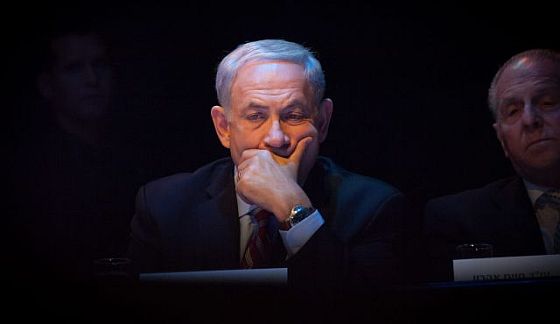
Netanyahu’s toxic embrace with Israel

spent-force

Nicola Abé reports: Even though this new wave of violence has been underway since October, Netanyahu has been unable to do anything about it or bring peace to his country. Some would argue that his record is disastrous, and that the tense situation would harm his popularity, but the opposite has been true. Last year, Netanyahu expanded his power even further, simply claiming a number of ministries for himself. Now, in addition to being prime minister, he is also foreign minister, economy minister, communication minister and regional development minister. He has installed allies in the media, in the police force and in the judiciary. It’s as if Netanyahu is in a toxic embrace with his country.

During a state trip last fall, Netanyahu’s official plane flew through heavy, dark clouds, with the fasten seatbelt sign on. Just as the aircraft entered severe turbulence, Netanyahu appeared in the rear section of the aircraft, where the journalists sat. He wanted to give a background talk at that very moment. He had a full 12 hours to speak, but he only chose to do so a few minutes prior to landing.

As a hurricane-like storm brewed, the journalists clung to their seats. It was the middle of the night in Jerusalem and Netanyahu spoke with them about Syria and Iraq. He had dark circles under his eyes and unkempt hair. His words essentially amounted to nothing.

The plane swayed back and forth. His press spokesman then pulled at his sleeve, trying to get him to sit down. The aircraft hit an air pocket, but Netanyahu didn’t flinch. This was and is his message. He stages politics as a never-ending dance at the brink of an abyss — in which he constantly remains in control. This catastrophic backdrop allows Netanyahu to appear both as victim and savior. He turns everything into an existential question, because he derives his power from the existential.

“The survival mode is in the Israeli DNA,” says journalist Nahum Barnea of Yedioth Ahronoth, one of the country’s biggest daily newspapers. He has followed Netanyahu for years. “He plays the type who holds the dam together.” [Continue reading…]

Facebooktwittermail

Global risks: Trump presidency as dangerous as jihadi terrorism, says The Economist

trump-bw

Politico reports: A Donald Trump presidency poses a top-10 risk event that could disrupt the world economy, lead to political chaos in the U.S. and heighten security risks for the United States, according to the Economist Intelligence Unit.

Electing Trump could also start a trade war, hurt trade with Mexico and be a godsend to terrorist recruiters in the Middle East, according to the latest EIU forecasts.

The well-respected global economic and geopolitical analysis firm put a possible Trump presidency in its top 10 global risks this month, released Wednesday. Other risks include a sharp slowdown in the Chinese economy, a fracture of the Eurozone, and Britain’s possible departure from the European Union. [Continue reading…]

Facebooktwittermail

Gregory Foster: A case for demilitarizing the military

General Lloyd Austin, the outgoing head of U.S. Central Command (CENTCOM), recently testified before Congress, suggesting that Washington needed to up its troop levels in Iraq and Syria.  Meanwhile, in his own congressional testimony, still-to-be-confirmed incoming CENTCOM chief General Joseph Votel, formerly head of U.S. Special Operations Command, seconded that recommendation and said he would reevaluate the American stance across the Greater Middle East with an eye, as the Guardian’s Spencer Ackerman put it, to launching “a more aggressive fight against the Islamic State.”  In this light, both generals called for reviving a dismally failed $500 million program to train “moderate” Syrian rebels to support the U.S. fight against the Islamic State (IS).  They both swear, of course, that they’ll do it differently this time, and what could possibly go wrong? 

Meanwhile, General David Rodriguez, head of U.S. Africa Command (AFRICOM), pressed by Senator John McCain in congressional testimony, called on the U.S. to “do more” to deal with IS supporters in Libya.  And lo and behold, the New York Times reported that Secretary of Defense Ashton Carter had only recently presented an AFRICOM and Joint Special Operations Command plan to the president’s “top national security advisers.”  They were evidently “surprised” to discover that it involved potentially wide-ranging air strikes against 30 to 40 IS targets across that country.  Meanwhile, in Afghanistan — U.S. Special Operations units and regular troops having recently been rushed once again into embattled Helmand Province in the heartland of that country’s opium poppy trade General Austen and others are calling for a reconsideration of future American drawdowns and possibly the dispatch of more troops to that country.

Do you sense a trend here?  In the war against the Islamic State, the Obama administration and the Pentagon have been engaged in the drip, drip, drip of what, in classic Vietnam terms, might be called “mission creep.”  They have been upping American troop levels a few hundred at a time in Iraq and Syria, along with air power, and loosing Special Operations forces in combat-like operations in both countries.  Now, it looks like top military commanders are calling for mission speed-up across the region.  (In Libya, Somalia, Iraq, and Afghanistan, it already seems to have begun.)

And keep in mind, watching campaign 2016, that however militaristic the solutions of the Pentagon and our generals, they are regularly put in the shade by civilians, especially the Republican candidates for president, who can barely restrain their eagerness to let mission leap loose.   As Donald Trump put it in the last Republican debate, calling for up to 30,000 U.S. boots on the ground in Syria and Iraq, “I would listen to the generals.”  That might now be the refrain all American politicians are obliged to sing.  Similarly, John Kasich called for a new “shock and awe” campaign in the Middle East to “wipe them out.”  And that’s the way it’s been in debate season — including proposals to put boots on the ground big time from Libya and possibly even the Sinai peninsula to Afghanistan, bomb the region back to the stone age, and torture terror suspects in a fashion that would have embarrassed Stone Age peoples. 

Put another way, almost 15 years after America’s global war on terror was launched, we face a deeply embedded (and remarkably unsuccessful) American version of militarism and, as Gregory Foster writes today, a massive crisis in civil-military relations that is seldom recognized, no less discussed or debated.  TomDispatch hopes to rectify that with a monumental post from a man who knows something about the realities of both the U.S. military and changing civilian relations to it.  Gregory Foster, who teaches at National Defense University and is a decorated Vietnam veteran, suggests that it’s time we finally ask: Whatever happened to old-fashioned civilian control over the U.S. military?  Implicitly, he also asks a second question: These days, who controls the civilians? Tom Engelhardt

Pentagon excess has fueled a civil-military crisis
How civilian control of the military has become a fantasy
By Gregory D. Foster

Item: Two U.S. Navy patrol boats, with 10 sailors aboard, “stray” into Iranian territorial waters, and are apprehended and held by Iranian revolutionary guards, precipitating a 24-hour international incident involving negotiations at the highest levels of government to secure their release. The Pentagon offers conflicting reports on why this happened: navigational error, mechanical breakdown, fuel depletion — but not intelligence-gathering, intentional provocation, or hormonally induced hot-dogging.

Item: The Pentagon, according to a Reuters exposé, has been consciously and systematically engaged in thwarting White House efforts to close the Guantanamo Bay detention facility and release cleared detainees. Pentagon officials have repeatedly refused to provide basic documentation to foreign governments willing to take those detainees and have made it increasingly difficult for foreign delegations to visit Guantanamo to assess them. Ninety-one of the 779 detainees held there over the years remain, 34 of whom have been cleared for release.

Item: The Pentagon elects not to reduce General David Petraeus in rank, thereby ensuring that he receives full, four-star retirement pay, after previously being sentenced on misdemeanor charges to two years’ probation and a $100,000 fine for illegally passing highly classified material (a criminal offense) to his mistress (adultery, ordinarily punishable under the Uniform Code of Military Justice) and lying to FBI officials (a criminal offense). Meanwhile, Private Chelsea (née Bradley) Manning continues to serve a 35-year prison sentence, having been reduced to the Army’s lowest rank and given a dishonorable discharge for providing classified documents to WikiLeaks that included incriminating on-board videos of a 2007 Apache helicopter attack in Baghdad that killed up to 18 civilians, including two Reuters journalists, and wounded two children, and of a 2009 massacre in Afghanistan in which a B-1 bomber killed as many as 147 civilians, reportedly including some 93 children.

What do these episodes have in common? In their own way, they’re all symptomatic of an enduring crisis in civil-military relations that afflicts the United States.

Continue reading

Facebooktwittermail

Kurds hope to establish a federal region in northern Syria

The New York Times reports: Syrian Kurdish parties are working on a plan to declare a federal region across much of northern Syria, several of their representatives said on Wednesday. They said their aim was to formalize the semiautonomous zone they have established during five years of war and to create a model for decentralized government throughout the country.

If they move ahead with the plan, they will be dipping a toe into the roiling waters of debate over two proposals to redraw the Middle East, each with major implications for Syria and its neighbors.

One is the longstanding aspiration of Kurds across the region to a state of their own or, failing that, greater autonomy in the countries where they are concentrated: Turkey, Iraq, Iran and Syria, all of which view such prospects with varying degrees of horror.

The other is the idea of settling the Syrian civil war by carving up the country, whether into rump states or, more likely, into some kind of federal system. The proposal for a federal system has lately been floated by former Obama administration officials and publicly considered by Secretary of State John Kerry, but rejected not only by the Syrian government but by much of the opposition as well. [Continue reading…]

Middle East Eye reports: Syrian Kurds have declared a “Federation of Northern Syria” that unites three Kurdish majority areas into one entity, an announcement swiftly denounced by the Syrian government, opposistion and regional powers.

According to Kurdish Democratic Union Party (PYD) official Idris Nassan, the plan will involve “areas of democratic self-administration” under the federal banner, encompassing all ethnic and religious groups living in the area.

Two officials at talks involving Kurdish, Arab, and other parties in the town of Rmeilan told the AFP news agency that delegates had agreed a “federal system” unifying the three mainly Kurdish cantons in northern Syria.

According to the pro-Kurdish Firat News Agency (ANF), the “Rojava and Northern Syria Unied Democratic System Document Text” was approved after a vote from 200 delegates, which included Arab, Kurdish, Armenian, Turkmen, Chechen, Syriac and other ethnic groups.

The boundaries of the federalised region have yet to be established, according to a delegate to the talks on Twitter. [Continue reading…]

Facebooktwittermail

Kurd turns on Kurd as Turkey and U.S. back new faction in Syria

Middle East Eye reports: Turkey is backing a new Kurdish faction within the Free Syrian Army to take back territory from the Islamic State (IS) group and stop the Kurdish People’s Protection Units (YPG) from seizing further ground along the Turkish border.

The group, known as the Grandsons of Salahadin after the famed 12th-century Muslim Kurdish leader, has already captured several villages in the IS-controlled border region between Jarabulus and Azaz following Turkish artillery attacks and missile strikes. In response, IS hit the Turkish town of Kilis earlier this month, killing two civilians.

But threats to attack the YPG unless it withdraws from territory seized from opposition rebels during an advance by pro-government forces in northern Syria last month have stoked concerns of a possible “Kurdish civil war”.

Mahmoud Abu Hamza, a Grandsons of Salahadin commander based in Turkey, told Middle East Eye that the group was backed by both the US and Turkey and considered itself part of the international coalition fighting IS.

“Turkey doesn’t support us with arms. Our arms are American,” he said. [Continue reading…]

Facebooktwittermail

How Saudi Arabia turned its greatest weapon on itself

Andrew Scott Cooper writes: For the past half-century, the world economy has been held hostage by just one country: the Kingdom of Saudi Arabia. Vast petroleum reserves and untapped production allowed the kingdom to play an outsize role as swing producer, filling or draining the global system at will.

The 1973-74 oil embargo was the first demonstration that the House of Saud was willing to weaponize the oil markets. In October 1973, a coalition of Arab states led by Saudi Arabia abruptly halted oil shipments in retaliation for America’s support of Israel during the Yom Kippur War. The price of a barrel of oil quickly quadrupled; the resulting shock to the oil-dependent economies of the West led to a sharp rise in the cost of living, mass unemployment and growing social discontent.

“If I was the president,” Secretary of State Henry Kissinger fumed to his deputy Brent Scowcroft, “I would tell the Arabs to shove their oil.” But the president, Richard M. Nixon, was in no position to dictate to the Saudis.

In the West, we have largely forgotten the lessons of 1974, partly because our economies have changed and are less vulnerable, but mainly because we are not the Saudis’ principal target. Predictions that global oil production would eventually peak, ensuring prices stayed permanently high, never materialized. Today’s oil crises are determined less by the floating price of crude than by crude regional politics. The oil wars of the 21st century are underway. [Continue reading…]

Facebooktwittermail

Kenya’s security forces say they’re targeting terrorists, but it’s young people who keep dying

Nanjala Nyabola writes: One day in 2014, university students Felix Nyangena and Dennis Magomere, 21 and 22 years old respectively, were walking from the Globe Cinema roundabout in Nairobi’s central business district to the nearby offices of the Higher Education Loans Board, a government agency that oversees financial disbursements to students. The Globe Cinema roundabout is one of the Kenyan capital’s busiest bus terminals, and during the day it can be among the most densely populated parts of the city. There, in the gentle light of the still-rising sun, Nyangena and Magomere were gunned down by two plainclothes police officers attached to the city’s anti-mugging unit. Nyangena did not die immediately. So the officer stood over his body and fired twice more, killing the young man in broad daylight. The officer then calmly wiped his fingerprints off the gun, planted it on the young man’s body, and made a call — presumably to report a robbery.

We know all of this because unlike many other extrajudicial killings by police and security officials in Kenya, Nyangena and Magomere’s murder was captured on video. The crisp, high-quality footage of the crime, taken on a witness’s mobile phone, is the centerpiece of a recent documentary by noted Kenyan journalist Mohammed Ali on the epidemic of extrajudicial killings and forced disappearances by security services. And perhaps as a result of both the video and the documentary, Kenya’s public prosecutor has announced that for the first time in recent memory, his office will charge a police officer for the unlawful killing of a civilian.

Unfortunately, the only unusual thing about this horrific story is the judicial outcome. Through a conspiracy of public apathy and sinister cover-ups, Kenyan security forces have essentially acquired carte blanche to kill and disappear citizens, particularly young ones, on the pretext of fighting crime and terrorism. The scourge of killings and disappearances has accelerated in recent years as the Somali militant group al-Shabab has trained its sights on Kenya, but abuse and impunity long have been the calling cards of the Kenyan security services. And while the discriminatory religious contours of the “War on Terror” would suggest that the problem is confined to northeastern and coastal Kenya, regions that are predominantly Muslim and have a high proportion of ethnic Somalis, the truth is that Kenyan authorities routinely commit violent crimes against young people all over the country. [Continue reading…]

Facebooktwittermail

How the world has changed since Paris climate pact

Earth

Climate Central reports: The relatively good news overall is new data showing that annual rates of emissions of the world’s main greenhouse gas may be stabilizing, though not yet falling. One of the goals of the Paris Agreement is to pursue “rapid reductions” to yearly pollution output following a plateau.

Preliminary International Energy Agency figures published Wednesday showed 35 billion tons of carbon dioxide pollution was released in 2015 — about the same amount that was released in 2014, which was similar to the amount from 2013.

“In the more than 40 years in which the IEA has been providing information on CO2 emissions, there have been only four periods in which emissions stood still or fell compared to the previous year,” the agency said. “Three of those – the early 1980s, 1992 and 2009 – were associated with global economic weakness. But the recent stall in emissions comes amid economic expansion.”

The bad news since December has been record-smashing global temperatures. Not only was 2015 the hottest on record, boosted by greenhouse gas pollution and warm phases in ocean cycles, but the first month of 2016 was the warmest January on record. A month after that, February was the most unusually warm month in 135 years of NASA records. [Continue reading…]

Facebooktwittermail

The Madison Valleywood Project: A media-tech alliance formed to fight ISIS

Kaveh Waddell writes: On January 8, White House Chief of Staff Denis McDonough, Attorney General Loretta Lynch, the directors of the FBI and the NSA, the director of national intelligence, and other officials traveled to San Jose, California, to meet in secret with tech-company executives. The officials asked for the executives’ advice for how to launch counter-messaging campaigns on social media, according to reports. And a few weeks later, Secretary of State John Kerry made his way to Universal Studios, where he met with a dozen Hollywood studio executives to discuss how film and storytelling could be used to counter extremist narratives, reports said.

The culmination of the government’s efforts came just last month, when officials packed a room to capacity for a closed-door meeting at the Justice Department in Washington, D.C. There, the three elements of the government’s push came together both in person and in name: The agenda that was distributed to participants bore the title “Madison Valleywood Project,” in honor of the three main industries in attendance.

The meeting, which was scheduled to take three hours, was a chance to connect attendees whose worlds don’t usually intersect. After Carlin gave opening remarks, a New York-based branding consultant presented an overview of ISIS media strategies and recruiting tactics. Then, participants broke into eight-person teams and had an hour to storyboard a messaging plan.

The government played host and incubator, but left the creative work to the guests, who also included documentary filmmakers, political consultants, NGO representatives, and even a video-game developer. “We tried to cast a wide net,” said the administration official with knowledge of the meeting. “A lot of effort went into ensuring that each table had a person from each community.” Each table also included someone from the government.

Sitting next to Carlin, Jeffrey connected with another of his tablemates, a D.C.-based political consultant who staffed Obama’s 2008 and 2012 campaigns. The two began to talk about one of the main hurdles that the anti-extremist project faces: how to fund it.

They’re considering setting up a 501(c)(3) non-profit or a foundation, which would allow American companies to donate toward the cause. It’s important the money come from the private sector and individuals, Jeffrey said. “It can’t look like anything political or part of the U.S. government.”

One reason the government wants to stay out of the equation is to preserve the credibility of whatever the participants produce. For a would-be terrorist, the U.S. government probably isn’t the most trusted source for information. Officials are bringing people together, and giving them advice and information, but they appear to want the final product to be free of the baggage of being connected to the feds. [Continue reading…]

That’s right: ISIS recruits aren’t big fans of Uncle Sam, but they use social media, seem impressed by Hollywood blockbuster-style violence, and are responsive to slick advertising.

The logic of bringing together Hollywood, Madison Avenue, and Silicon Valley to fight ISIS, makes sense, kind of — except it really doesn’t.

The masters of form in this arena seem about as clueless as anyone else when it comes to content. There’s a consensus, apparently, that they need to come up with a “positive message.”

ISIS is appealing to people who want to bring about a radical change in the world and participate in the fulfillment of what they regard as a utopian vision. A plausible alternative would need to go some distance in appealing to such grandiose ambitions.

Whatever this as-yet unfunded project ends of producing, seems likely to be as half-baked as its conception.

If they are really intent on countering the propaganda coming from ISIS, then at the outset they surely need to be as focused and serious about their own undertaking as is ISIS’s own propaganda machine.

There’s no point coming up with a brand if you don’t have a product.

Facebooktwittermail

Trump: I consult myself on foreign policy

Politico reports: Donald Trump finally shared the name of someone he consults on foreign policy: himself.

Asked on MSNBC’s “Morning Joe” who he talks with consistently about foreign policy, Trump responded, “I’m speaking with myself, number one, because I have a very good brain and I’ve said a lot of things.”

“I know what I’m doing and I listen to a lot of people, I talk to a lot of people and at the appropriate time I’ll tell you who the people are,” Trump said. “But my primary consultant is myself and I have a good instinct for this stuff.” [Continue reading…]

Facebooktwittermail

Surge in renewable energy stalls world greenhouse gas emissions

denmark-wind-power

The Guardian reports: Falling coal use in China and the US and a worldwide shift towards renewable energy have kept greenhouse gas emissions level for a second year running, one of the world’s leading energy analysts has said.

Preliminary data from the International Energy Agency (IEA) showed that carbon dioxide emissions from the energy sector have levelled off at 32.1bn tonnes even as the global economy grew over 3% .

Electricity generated by renewable sources played a critical role, having accounted for around 90% of new electricity generation in 2015. Wind power produced more than half of all new electricity generation, said the IEA. [Continue reading…]

Facebooktwittermail