



By Andrew Hadfield, University of Sussex
How many refugees should a country take? Between 1535 and 1550 citizenship was granted to 5,000 Flemish and Walloon refugees from the Low Countries to settle in Britain. They were fleeing the wars of religion that ravaged Europe throughout the 16th and 17th centuries after Martin Luther’s 1517 demand for reformation of the church.
Henry VIII, a monarch not normally known for his open-minded tolerance, started the process, and welcomed Protestant refugees after his break with Rome. The king of Spain, Charles V, Henry’s principal ally and niece of his queen, Catherine of Aragon, was outraged but Henry stuck to his principles and continued to grant religious asylum. The population of England in 1517 was around 3m people; today it is more than 53m. David Cameron has pledged that Britain will take 20,000 Syrian refugees by 2020, a considerably smaller figure in real terms than Henry managed 500 years ago.
There was sometimes ill feeling towards foreigners. The most significant outbreak of xenophobia was the “Evil May Day” riot of 1517. Angered by the presence of wealthy German merchants in London, a mob of more than a thousand gathered in Cheapside, attacking foreigners and freeing prisoners convicted of rioting. They refused to listen to the pleas of the under-sheriff of London, Thomas More, but were eventually dispersed by the king’s troops. Thirteen were executed and many more would have been but for the intervention of the queen, who pleaded for mercy to spare the suffering of the wives and children of the convicted.

So much that matters in our world and on our planet happens in and remains in the shadows. This website is dedicated to shining at least a small light into some of those shadows. Commenting recently on the failure of the U.S. war on terror as well as the war against the Islamic State, Andrew Bacevich wrote: “To label [such a] problem ‘terrorism’ is to privilege convenience over understanding. It’s like calling big-time college football a ‘sport.’ Doing so entails leaving out all the grimy, money-soaked activity that occurs off the gridiron.” In fact, much of the activity that truly shapes our world happens off that “gridiron” and out of sight. And what you don’t see (or see reported), you often can’t imagine either.
Sometimes history helps. Today’s dispatch is an example. It is adapted from Adam Hochschild’s new book, Spain in Our Hearts: Americans in the Spanish Civil War, 1936-1939, a dramatic account of the thousands of Americans who volunteered to fight the war against fascism before it was faintly fashionable and the correspondents who covered them. It’s a vivid tale of some very well known people like Ernest Hemingway, Martha Gellhorn, and George Orwell who saw the socialist-led Spanish Republic’s defeat firsthand, but also of quite ordinary Americans who had the urge to stop a terrible force before it could storm the world. (Unfortunately, in that they failed.) It also offers an unforgettable picture of a past America under stress and possibly of the last moment before the arrival of Bernie Sanders when “socialism” was not a curse word in this country.
In researching the book, Hochschild came across one of those crucial figures working in the shadows — an unforgettable oilman with a Trumpian personality whose acts in support of Spanish general Francisco Franco and then Adolf Hitler helped ensure that fascism would come to power in Spain and, in the end, that the globe would be bathed in blood. Somehow, his role was missed by the hundreds of journalists covering the war. As you read this piece, ask yourself who and what is no one noticing at this very second as our world spins so madly on. Tom Engelhardt
The oilman who loved dictators
Or how Texaco supported fascism
By Adam Hochschild[This piece has been adapted from Adam Hochschild’s new book, Spain in Our Hearts: Americans in the Spanish Civil War, 1936-1939.]
“Merchants have no country,” wrote Thomas Jefferson in 1814. “The mere spot they stand on does not constitute so strong an attachment as that from which they draw their gains.” The former president was ruing the way New England traders and shipowners, fearing the loss of lucrative transatlantic commerce, failed to rally to their country in the War of 1812.
Today, with the places from which “merchants” draw their gains spread across the planet, corporations are even less likely to feel loyalty to any country in particular. Some of them have found it profitable to reincorporate in tax havens overseas. Giant multinationals, sometimes with annual earnings greater than the combined total gross national products of several dozen of the world’s poorer countries, are often more powerful than national governments, while their CEOs wield the kind of political clout many prime ministers and presidents only dream of.
No corporations have been more aggressive in forging their own foreign policies than the big oil companies. With operations spanning the world, they — and not the governments who weakly try to tax or regulate them — largely decide whom they do business with and how. In its quest for oil in the anarchic Niger Delta, according to journalist Steve Coll, ExxonMobil, for example, gave boats to the Nigerian navy, and recruited and supplied part of the country’s army, while local police sported the company’s red flying horse logo on their uniforms. Jane Mayer’s new book, Dark Money, on how the brothers and oil magnates Charles and David Koch spent hundreds of millions of dollars to buy the Republican Party and America’s democratic politics, offers a vivid account of the way their father Fred launched the energy business they would inherit. It was a classic case of not letting “attachments” stand in the way of gain. Fred happily set up oil installations for Soviet dictator Joseph Stalin before the United States recognized the Soviet Union in 1933, and then helped Adolf Hitler build one of Nazi Germany’s largest oil refineries that would later supply fuel to its air force, the Luftwaffe.

Yael Marom writes: Over half of Israelis believe that Israel has become a more racist society over the past two years, according to a new poll published on Sunday by the Coalition Against Racism in Israel.
The poll, conducted with Israeli pollster Rafi Smith and surveyed 400 Jewish Israelis and 100 Arab citizens, was published to coincide with the International Day for the Elimination of Racial Discrimination, which is held annually on March 21. According to the findings, 79 percent of respondents believe that there is racism against Arabs; 77 percent claimed that there is racism against asylum seekers; 75 percent believe there is racism against Ethiopian-Israelis; 41 percent say Mizrahim (Jews with origins in Arab or Muslim countries) suffer from racism; 39 percent believe that immigrants from the former Soviet Union face discrimination; and 20 percent responded that there is racism against Ashkenazim (Jews of Eastern European ancestry).
According to the survey, 25 percent said they had personally faced racist behavior in the past year. Twenty-four percent of Israeli Jews said they personally experienced racism, as opposed to 28 percent of Arabs. Among Russian-speaking citizens, 37 percent said they experienced racism in the past year. [Continue reading…]
By Sophia Dingli, University of Hull
A missile strike on a crowded market in the northern Yemeni province of Hajja has killed dozens of civilians and injured many others. It comes almost a year after a coup by Houthi “nationalists” and the start of a Saudi-led bombing campaign, ostensibly on behalf of the Yemeni government – a devastating war that shows no signs of dissipating.
Since the bombing began in March 2015, there have been at least 3,000 civilian casualties, among them 700 children and a further 26,000 have been injured. Some 3.4m children are out of school, while 7.6m people are a step away from famine. Almost all Yemenis are in need of some form of aid.
In addition to the human casualties, 23 UNESCO heritage sites have been bombed and destroyed along with hospitals, centres for the blind, ambulances, Red Cross offices and a home for the elderly.
The war has been a brutal affair: all sides have allegedly committed war crimes. The Saudi coalition has been using banned cluster munitions manufactured in the US, while the Houthi rebels have been laying landmines. Child soldiers have been used by both the Houthis and government forces.
The world beyond the Middle East has struggled to mount an appropriate and united response to the conflict. The US and the UK have been supporting the Saudi war effort, while the EU parliament has called for an embargo on arms sales to Saudi Arabia. All attempts to form a sustainable peace building effort have been met with intransigence by the belligerents and ended in failure.
To understand why this is and to come up with some way of bringing this slaughter, misery and suffering to an end, we must revisit the root causes of the war and the factors that are still getting in the way of any sort of peace process.

David Cole writes: On March 4, the United States used drones and other aircraft to drop precision bombs on Somalia, a country with which we are not at war, reportedly killing about 150 al-Shabab militants who were said to be preparing for an imminent attack on American and African Union forces. The US government asserted that no civilians were killed, although neither that claim nor the allegation of an imminent attack could be verified. What do we really know about how American officials decide to launch such strikes?
In the last two weeks, the Obama administration has announced that it will for the first time make public a redacted version of the Presidential Policy Guidance outlining the standards for targeted killing and will also provide its own estimates of combatant and civilian deaths in drone attacks dating back to 2009. Yet much about these decisions remains opaque. In Eye in the Sky, a remarkably timely and important new film about a fictional drone strike against al-Shabab, South African director Gavin Hood offers a hypothetical window into such decision-making. The picture it paints is deeply disturbing, and raises fundamental questions about when, if ever, such attacks are justified. It may be the closest those of us on the outside ever get to the internal process behind the drone war.
In the film, Helen Mirren plays Katherine Powell, a steely British colonel charged with tracking terrorists in North Africa. The only travel Powell needs to do, however, is between her home in Surrey and her office in London, where she operates a top-secret drone program, in conjunction with American drone operators in Nevada and African agents in Kenya. As the film opens, Powell wakes to learn that a British woman, who has become a leader of al-Shabab, has been located in Nairobi along with her husband, an American citizen who is also an al-Shabab leader. What follows is a tense minute-by-minute depiction of one of the most daunting ethical and legal decisions a nation’s military and civilian leaders ever have to make—whether to kill a suspected enemy, even if innocent civilians may also die. Without taking sides, the film dramatically illustrates why technology, far from answering such questions, has only made them more difficult. [Continue reading…]

Eric Fair writes: In March 2004, at Forward Operating Base St. Mere outside Falluja, Iraq, I was walking home from work. Ferdinand Ibabao, my close friend and fellow contractor, was walking with me. It had been a long day of interrogations, so we were looking forward to checking emails, and hearing about what our families were up to back home.
As we walked through a large open field on the base, the distinct sound of incoming mortar rounds interrupted our conversation. We’d been talking about finding new contracting jobs in Iraq. Conducting interrogations at places like Abu Ghraib and Falluja was beginning to take a toll. We both agreed it was time to move on to something less complicated, something that didn’t force us to set aside our humanity in order to go to work.
As the mortars detonated nearby, Ferdinand, always one to joke, ran around like a baseball player trying to catch a pop fly shouting “I got it, I got it!” He said it would be a mercy killing.
I found myself thinking about Ferdinand and his dark humor after Ted Cruz and Donald J. Trump unapologetically endorsed the use of waterboarding at a Republican debate early last month. “I’d bring back waterboarding,” Mr. Trump said, “and I’d bring back a hell of a lot worse than waterboarding.”
I don’t know what drives a man to say such things. I just know that when they do, men like Ferdinand and me will be forced to shoulder the consequences.
In my role as a civilian contractor for the Department of Defense, I spent the first three months of 2004 torturing Iraqi prisoners. At the time, we were calling it enhanced interrogation, but that’s a phrase I don’t use anymore. Stress positions, slaps to the face and sleep deprivation were an outrage to the personal dignity of Iraqi prisoners. We humiliated and degraded them, and ourselves. [Continue reading…]

Virginia Postrel writes: Why would anyone vote for Donald Trump? One popular theory holds that his supporters are bigots angered by America’s changing racial mix. Another is that they’re salt-of-the-earth working folks left behind by the loss of manufacturing jobs, alienated from the moneyed ruling class and irritated by the tyranny of political correctness. Or some combination thereof.
These theories, which contain elements of truth, emphasize Trump’s dire assessment of present-day America and his followers’ discontent. They focus on negative sentiment. But an important part of the story is Trump’s positive allure — the way the candidate taps into, and projects, the most fundamental outlines of the American Dream.
Conventional explanations miss the glamour of Trump’s message.
The word “glamour” originally meant a literal magic spell that makes people see things differently than they are. Understood correctly, glamour is not a particular style — different styles seem glamorous to different people — but, like humor, a form of communication that creates a specific emotional response. Glamour generates a feeling of projection and longing: “if only.” If only I could walk that red carpet, drive that car, wear that dress, belong to that group, have that job, be (or be with) that person . If only I could have that life.
The feeling is universal, but the manifestation is particular: One person’s glamorous vacation may be a busy trip to Paris, while another dreams of the solitude of a mountain cabin. What you find glamorous depends on who you are — and who you yearn to be. [Continue reading…]
By Sergi Pardos-Prado, University of Oxford
Some of the oldest and most established party systems in the world seem to be imploding. Unprecedented levels of electoral volatility, the collapse of the historical mainstream, and the emergence of new populist alternatives are part of a vertiginous process that is not always easy to comprehend.
A new wave of radical right parties is now proving capable of reshaping democracies that once seemed immune to them. The recent success of Alternative for Germany (AfD) in the regional elections is just the latest example of the establishment being shaken at the ballot box.
In the March 13 elections, AfD, a party that was only founded in 2013, won seats in eight German state parliaments. It came second, winning up to 24% of the popular vote, in states such as Saxony-Anhalt in East Germany.
Research on radical right politics has focused on the socio-demographic profile of anti-immigrant voters, and on national characteristics such as the state of the economy. While illuminating, both approaches have proved insufficient.
There is a high degree of certainty about the sociological profile of the anti-immigrant voter. They tend to be working class, low educated, unemployed, male, nationalistic, and somewhat authoritarian.
But all established European democracies have significant portions of the electorate sharing these characteristics. So this approach can’t explain why radical parties have emerged in France and the Netherlands, for instance, but not in Spain or Portugal.

The New York Times reports: Smoking cigarettes and huddling against the midnight chill, a group of Syrian men sat outside a mosque waiting for a smuggler’s call. It was their last chance, they said, to reach Europe.
It was late Friday, hours after they watched news reports from cafes and hotel lobbies that the Europe Union and Turkey had struck a deal that would send refugees from war-torn countries back to Turkey, from the shores of Greece. Time was running short: Officials said the deal would take effect Sunday.
“One hour ago,” said Milad Ameen, 19, when asked when he decided to set off for Europe. He had a life jacket, an inner tube and small bag containing his passport and school certificates he hoped would help him land a job in Europe.
As the men waited, they lamented a deal that they believe shuts the door on the last way out of their misery. “It’s for Turkey’s good, but not for the good of the Syrian people,” Mr. Ameen said.
A man standing next to him, who gave only his first name, Raafat, said he was from Aleppo, Syria. Raafat said he was demoralized that Europe no longer seemed to welcome Syrians. When he heard news of the pending deal, he rushed from Istanbul, where he had worked in a textile factory, to this coastal city. “We aren’t going to Europe to destroy Europe,” he said, explaining that he wished to assimilate and learn the language in whichever country would take him. “We are going in peace. [Continue reading…]
Wladimir van Wilgenburg writes: They have been locked out of Syrian peace talks, and by extension a future Syrian government, despite controlling much of northern Syria, being the only force to successfully oppose the Islamic State and having the favour of both the United States and Russia.
On Thursday the Syrian Kurds decided on their answer to this outsider status: the formation of a new Federation of Northern Syria that would take in Kurdish-majority areas of Jazeera, Kobane and Afrin, knowns as Rojava, plus Arab towns currently under Kurdish control.
Syria’s government, opposition and regional powers have rejected the new system, saying the Kurds have no right to carve up Syria for their own purposes.
But Salih Muslim Mohammed, the co-leader of the Democratic Union Party (PYD), the largest Kurdish party in Syria, said the federation should not be seen as an autonomous Kurdistan region, but rather a blueprint for a future decentralised and democratic country, where everyone is represented in government.
“There is no autonomous Kurdish region, so there is no question of recognising it or not,” he said. “It is part of a democratic Syria, and it might expand all over Syria. We want to decentralise Syria, in which everyone has their rights.
“The name is not important, we call it a democratic Syrian federalism,” he told Middle East Eye. [Continue reading…]
Hasnain Kazim, who has reported for Der Spiegel from Istanbul for the last three years and has now been forced to leave, writes: On our last day in Turkey, my family and I are not in the mood to go, but we have to leave the country. After several torturous months of uncertainty and concern, we have no other option. We fear for our safety.
The bags are packed. The furniture, books, clothing, everything is gone. My son has been taken out of kindergarten; it was a painful farewell for him too. Before we drive to the airport, I write down a list of telephone numbers for my wife: colleagues, diplomats, friends in Istanbul. These are in case I am detained at the airport and my family has to continue their journey without me.
Since the beginning of the year, the Turkish government has declined to grant me accreditation as a foreign correspondent, thereby denying me the ability to work. As a German journalist living in Turkey, I need a residency permit — and this permit is linked to my press accreditation.
Accreditations are normally approved at the turn of the year, but this year all German journalists have had to wait unusually long. Prime Minister Ahmet Davutolu repeatedly assured Chancellor Merkel at the beginning of the year that all German correspondents would receive their papers. The German side relayed this message to us on multiple occasions.
I never received any notification at all. Officially, my request hasn’t been declined, it is being “examined.” But neither the Turkish nor the German authorities believed that my accreditation would still be granted.
Even worse, I received warnings. Turkish state prosecutors, who are critical of the government and its interference in the judiciary, told me that, if I were to stay in the country, I could conceivably be charged under some pretense. Perhaps for “supporting a terrorist organization” or for “insulting the president.” These are common accusations in Turkey against journalists who are too critical of those in power. Thus far, only domestic journalists have faced them. [Continue reading…]
Rasha Al Aqeedi writes: Yearning for Saddam’s Iraq, in many cases, has little to do with Saddam or his style of ruling.
As Nada, a Twitter personality with a significant following among frustrated Sunnis, put it: “Many love Iraq and are heart-broken to witness its deterioration, which they feel happened after the invasion and the emergence of failing leaders.”
Dina Al Azawi, a writer now living in the United States but who has a large Facebook following in Iraq, lost her brother and cousin in the violence that engulfed the country in 2004.
“Under Saddam, our foreign policy was balanced, and the world respected us,” she wrote. “Iraq was not a proxy for a foreign agenda. Yes, we were independent and sovereign. It was a tyranny, but it was a state. Iraq does not even resemble a state today. It is not about who rules, it is about how we were ruled.”
She is one of many Iraqi Sunnis who compare life before and after the 2003 fall of Saddam, often concluding that tyrannical rule is better than the chaos of today’s Iraq.
More than two million Sunnis in Iraq are displaced. The government has accomplished little in the way of reconciliation and thousands of Sunnis remain in prisons without trial. Meanwhile, no charges have been laid over the horrific massacre of Hawija in 2013 when government security forces fired at peaceful unarmed protesters, killing 54 and injuring hundreds. More recently, news of Shia militias’ continuing torture of Sunnis has been confirmed. Nostalgia for better days is predictable.
Ihsan Nouri, a political writer, said he understood what was driving this: “They had the best posts in the governments and military. They lived in the posh areas of Baghdad and they were respected wherever they went; just their last name is enough to get them out of any fix. Most of those people were Sunnis.” [Continue reading…]
The Guardian reports: A record number of Americans believe global warming will pose a threat to their way of life, new polling data shows, amid strengthening public acceptance that rising temperatures are being driven by human activity.
“I think a shift in public opinion and consciousness has been underway for several years now,” Michael Mann, a prominent climate scientist at Pennsylvania State University, told the Guardian.
A spokesman for 350 Action, the political arm of climate activist group 350.org, said meanwhile that politicians who cast doubt on climate science would soon have to take such polling into account. Republicans, he said, “are going to be screwed if they don’t change their tune”.
Polling firm Gallup, which has been tracking public sentiment on the topic annually since 1997, found that 41% of US adults feel warming will pose a “serious threat” to them during their lifetimes. This is the highest level recorded by Gallup, a 4% increase on 2015. [Continue reading…]
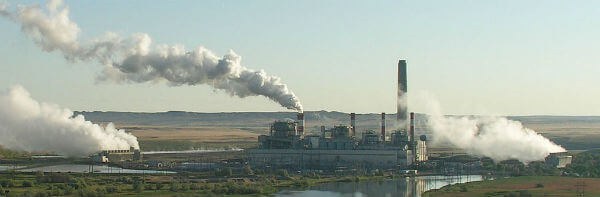
Mother Jones reports: Merrick Garland has spent the last decade in the weeds of some of the most contentious clean air cases in history — and he’s consistently come out on the side of the environment and against big polluters.
Garland, the DC Circuit Court chief judge who is President Barack Obama’s pick to replace Antonin Scalia on the Supreme Court, faces a steep climb to confirmation in the face of fierce opposition from Senate Republicans.
But if Garland makes it to the Supreme Court, the battle over Obama’s flagship climate regulations will likely be one of his first big cases. That policy, known as the Clean Power Plan, aims to slash the nation’s carbon footprint by restricting greenhouse gas emissions from power plants. The Environmental Protection Agency built the plan on a provision of the Clean Air Act that allows it to set emissions standards for existing “stationary” sources (i.e., power plants, rather than, say, cars) and then leave it up to each state to choose how to reach that standard. The rule was immediately challenged by two dozen coal-reliant states, which have argued that it oversteps EPA’s legal authority because it applies to the whole electricity system rather than to individual power plants. Shortly before Scalia’s death, the Supreme Court voted 5-4 to put the plan on hold while Garland’s current colleagues in the DC circuit court weigh its legality.
The climate regulations will likely wind up in front of SCOTUS sometime next year. So, Garland’s record on cases involving the Clean Air Act—which many legal experts see as the world’s single most powerful piece of environmental law—is a helpful guide for how he might rule. Garland once described the Clean Air Act as “this nation’s primary means of protecting the safety of the air breathed by hundreds of millions of people.” [Continue reading…]

David Shulman writes: Israeli human rights activists and what is left of the Israeli peace groups, including joint Israeli-Palestinian peace organizations, are under attack. In a sense, this is nothing very new; organizations such as B’Tselem, the most prominent and effective in the area of human rights, and Breaking the Silence, which specializes in soldiers’ firsthand testimony about what they have seen and done in the occupied territories and in Gaza, have always been anathema to the Israeli right, which regards them as treasonous. But open attacks on the Israeli left have now assumed a far more sinister and ruthless character; some of them are being played out in the interrogation rooms of Israeli prisons. Clearly, there is an ongoing coordinated campaign involving the government, members of the Knesset, the police, various semiautonomous right-wing groups, and the public media. Politically driven harassment, including violent and illegal arrest, interrogation, denial of legal support, virulent incitement, smear campaigns, even death threats issued by proxy — all this has become part of the repertoire of the far right, which dominates the present government and sets the tone for its policies.
There is now a palpable sense of danger, and also an accelerating decline into a situation of incipient everyday state terror. Palestinians have lived with the reality of state terror for decades — it is the very stuff of the occupation — but it has now seeped into the texture of life inside the Green Line, as many on the left have warned that it would. Israelis with a memory going back to the 1960s sometimes liken the current campaign to the violent actions of the extreme right in Greece before the colonels took power, as famously depicted in the still-canonical film Z.
The witch-hunt began this time with a targeting of the ex-soldiers’ organization Breaking the Silence by a strident chorus on the right, including Prime Minister Benjamin Netanyahu, Defense Minister Moshe Ya’alon, and other members of the cabinet, but also including prominent politicians and journalists from the wishy-washy center, including the highly popular Haaretz correspondent Ari Shavit. There have been calls to outlaw the organization entirely. [Continue reading…]
By Sharon Coen, University of Salford; Aleksej Heinze, University of Salford; Deborah Chambers, Newcastle University; Kirsty Fairclough-Isaacs, University of Salford; Philip James, Newcastle University, and Richard Jones, University of Huddersfield
After 10 years of documenting the world in 140 characters, Twitter now has more than 300m active users. This might be far fewer than Facebook’s 1.5 billion, but Twitter arguably has a disproportionate influence on the world, partly because it attracts a significant number of politicians, journalists, and celebrities. Our expert panel explain how their field has been changed by the little blue bird.
Sharon Coen, senior lecturer in media psychology, University of Salford
Twitter has obviously been used to raise awareness of political topics, spread political messages and coordinate collective action. This has often come through specific campaigns such as #blacklivesmatter (protesting violence against black people) and #JezWeCan (promoting the candidacy of British Labour Party leader Jeremy Corbyn).
But Twitter is also used to gauge public opinion, often producing a false sense of consensus or of how many people feel strongly about a topic (so-called Twitter storms). This is because users tend to connect with people who hold similar views to their own and are less likely to come across different issues and opinions. On top of this, by giving politicians personalised profiles similar to those of other famous people, Twitter has helped turn them into celebrities rather than public servants.

By Bahar Baser, Coventry University
Kurdish history is full of oppression, suffering and tragedies. But the gas attack at Halabja, 28 years ago this week, must surely be the most egregious.
In 1988, during the closing days of the Iran-Iraq war, Saddam Hussein’s army attacked the Kurdish province near the Iranian border with chemical gas, including mustard gas, sarin, cyanide and tabun. Survivors from Halabja say the gas smelled sweet like apples and instantly killed people who were exposed.
These attacks were part of a larger genocidal campaign mainly against the Kurdish people. Called al-Anfal, it cost 50,000 to 100,000 lives and destroyed 4,000 villages between February and September 1988. Al-Anfal referenced the eighth “sura” of the Koran, “The Spoils of War”, which described the campaign of extermination of non-believers by Muslim troops in 624CE under Ali Hassan al-Majid.
In Halabja, nearly 5,000 civilians were killed on the spot. A further 10,000 were left with serious injuries that affect their lives to this day. It was reported that more than 75% of the victims were women, the elderly and children. The attacks completely destroyed residential areas. Many of those who fled were never to return.
