Category Archives: Issues

Police homicides in the United States

Patrick Ball writes: Americans are afraid of many threats to their lives – serial killers, crazed gunmen, gang bangers, and above all terrorists – but these threats are surprisingly unlikely. Approximately three-quarters of all homicide victims in America are killed by someone they know. And the real threat from strangers is quite different from what most fear: one-third of all Americans killed by strangers are killed by police.

This is the story of the hidden numbers of police homicides in the United States. The killings of Michael Brown, Eric Garner and Walter Scott have increased the world’s attention to US police violence, yet most Americans underestimate the threat posed by the people charged with keeping them safe.

Let’s turn to the facts.

There is no national registry of civilians killed by police and corrections officers in the United States. Several states, including Texas, Connecticut and California, maintain complete records, but in most parts of the United States, local law enforcement chooses whether to report officer-involved homicides to the federal government. The lack of systematic data poses a challenge both for those who wish to hold police accountable for their actions and for those who want to propose reform measures to reduce police violence. How many killings are committed by police? [Continue reading…]

Facebooktwittermail

The right to sue the gun industry

In an editorial, the New York Times says: The world recoiled in horror in 2012 when 20 Connecticut schoolchildren and six adults were killed at Sandy Hook Elementary School by a deranged teenager using a military-style assault rifle to fire 154 rounds in less than five minutes. The weapon was a Bushmaster AR-15 semiautomatic rifle adapted from its original role as a battlefield weapon. The AR-15, which is designed to inflict maximum casualties with rapid bursts, should never have been available for purchase by civilians.

This is the eminently reasonable point that the parents of the 6- and 7-year-old students cut down at the school are now pressing in Connecticut state court. They are attempting to sue the gun manufacturer, Remington; the wholesaler; and a local retailer for recklessness in providing the weapon to the consumer marketplace “with no conceivable use for it other than the mass killing of other human beings.”

The question of whether the lawsuit will be allowed to proceed is at issue because Congress, prodded by the gun lobby, in 2005 foolishly granted the gun industry nearly complete immunity from legal claims and damages from the criminal use of guns.

The Sandy Hook parents argue that their suit should continue because that law, the Protection of Lawful Commerce in Arms Act, allows claims against companies — gun shop dealers, for example — if they knew or should have known that the weapons they sold were likely to risk injury to others. The parents contend that the maker of the Bushmaster is no less culpable because it knowingly marketed a risky war weapon to civilians. [Continue reading…]

Facebooktwittermail

The EU risks major ructions if Greece is offered no help with its refugees

Costas Lapavitsas writes: he current influx of refugees into Greece has major humanitarian implications but it also poses a direct threat to the European Union. Together with the neverending eurozone crisis and the Brexit referendum, it could throw the EU into an existential crisis in 2016. Visionary leadership is called for, which at present looks in short supply.

According to the UNHCR, in 2014 Syria was the main source of refugees in the world, and 95% of Syrian refugees were located in surrounding countries. Turkey held the largest number at roughly 1.6 million. It is worth noting that developing countries took 86% of the world’s refugees in 2014. The poor proved more compassionate and generous than the rich yet again.

In 2015 Greece became the main point of entry into the EU of refugees and migrants from Turkey; it is believed 850,000 people undertook the perilous crossing of the Aegean. In January and February more than 120,000 have arrived – far more than the same period last year. At this rate there will be millions of men, women and children who will risk their lives in shoddy rubber dinghies between Turkey and Greece in 2016. Up to 90% are likely to be from Syria, Afghanistan and Iraq.

These are not economic migrants. There is absolutely no doubt that the wave of refugees and migrants into Europe is a direct result of the destruction of the three countries largely due to western intervention during the last three decades. [Continue reading…]

Facebooktwittermail

Europe’s harsh new message for refugees: ‘Do not come’

The Washington Post reports: A senior European Union official carried a stark warning Thursday to the front lines of the migrant crisis, telling those seeking to flee poverty and unrest that Europe is no longer the answer, even as about 1 million migrants have now poured into Europe in the past year.

“Do not come to Europe,” said Donald Tusk, president of the European Council, after meeting with the Greek prime minister in Athens. “Do not believe the smugglers. Do not risk your lives and your money. It is all for nothing.”

Tusk’s comments came as a top U.N. official also warned Thursday that as many as 70,000 people could be “trapped” in Greece in the coming weeks because Macedonia and other European countries are shutting their borders, transforming Greece into a holding pen for migrants desperate to leave.

Tusk also said it was up to Turkey, not its European neighbors, to decide how to manage a reduction in refugee numbers — a stance that Turkish Prime Minister Ahmet Davutoglu quickly rebuffed. Turkey is under pressure to reduce the numbers of migrants crossing into Greece as a March 7 summit meeting between Turkey and the European Union approaches to discuss the issue. [Continue reading…]

Facebooktwittermail

Europe’s border crossings become economic choke points

The New York Times reports: Traffic along one of Europe’s busiest highways, which used to flow unimpeded, now often backs up for miles at a newly installed checkpoint, where a phalanx of German police officers screens trucks and cars for hidden migrants.

At this border crossing, as a result, Austrians who work in Germany have trouble getting to their jobs. Many companies in Germany must wait days longer for deliveries of food, machine parts and other goods. Shoppers who made quick weekend jaunts to Freilassing’s stores now mostly stay away.

“It’s really bad,” said Karl Pichler, the owner of a large gardening center here in Freilassing, whose sales of tulips, rose bushes and other plants has slumped as longtime customers from Austria have stopped coming.

More than two decades after much of Europe began abolishing border controls under the so-called Schengen Agreement, the free movement of people and products between countries has helped transform the European Union into the world’s largest economy. [Continue reading…]

Facebooktwittermail

Trump admires leaders like Putin — even if they murder their opponents

Leon Neyfakh writes: Marco Rubio attacked Donald Trump at Thursday’s debate for expressing admiration for Vladimir Putin. “Wrong, wrong, wrong!” Trump said, before explaining that it had been the other way around.

“Putin said about me — I didn’t say about Putin — Putin said very nice things about me. And I say, very nicely, ‘Wouldn’t it be nice if actually we could get along with Russia?’ ”

First of all, Trump has most certainly spoken glowingly about Putin. In December 2015, on MSNBC’s Morning Joe, he said, “I’ve always felt fine about Putin. He’s a strong leader, he’s a powerful leader. … He’s actually got popularity within his country.”

Trump was impressed with Putin’s popularity: “I think he’s up in the 80s. You see where Obama’s in the 30s and low 40s and [Putin’s] up in the 80s.”

Morning Joe host Joe Scarborough brought up the fact that Putin has been accused of ordering the killing of journalists and political rivals. “He’s running his country, and at least he’s a leader, unlike what we have in this country,” Trump replied. [Continue reading…]

Facebooktwittermail

Russian ultranationalist Aleksandr Dugin: ‘Vote for Trump’

At the Russian site, Katehon.com, the ultranationalist ideologue, Aleksandr Dugin, writes:

[Donald Trump] is an extremely successful ordinary American. He is crude America, without gloss and the globalist elite. He is sometimes disgusting and violent, but he is what he is. It is true America.

Most likely, Donald Trump is another designed product, a virtual figure. However, it is him who makes people feel fresh and hopeful. He is trustworthy: the black peacekeeper promised to change everything, but was unable to change anything, nothing at all, and Hilary Clinton, with a quickly aging poker face, doesn’t promise to change anything, maybe Trump will be able to get America’s natural borders back.

Maybe, that redhead rude Yankee from the saloon will get back to the problems inside the country and will leave humanity alone, which is tired of American hegemony and its destructive policy of chaos, bloody rivers and color revolutions?

Trump is a leader. Most likely, he is fake, but even if he is not fake, he has no chance of winning, as the globalist elites and financial oligarchy control practically everything in the USA.

But we want to put trust in Donald Trump.

Vote for Trump, and see what will happen.

Max Fisher adds:

[I]n spring 2015, when I traveled to Moscow, I found the once-triumphant Duginists and ultranationalists no longer saw Putin as an ally, and even considered him a traitor to the cause. Some had been pressured by security services, which they took as a sign that their views were no longer tolerated. Meanwhile, Putin had largely dropped his grand Eurasianist rhetoric.

In retrospect, it seems likely that Putin’s short-lived embrace of Duginism was opportunistic and superficial. In other words, Putin decided to invade Ukraine for narrow political reasons, then reached for Eurasianism and neo-imperialism in order to justify his actions and to whip up public support.

But when Putin’s Novorossiya project floundered — his actions in eastern Ukraine succeeded in destabilizing the country but not in dominating it outright — he shifted strategies, seeking to maintain a low-level conflict rather than to escalate. The neo-imperialist ideological justifications no longer fit the strategy. And far-right movements, newly empowered, were pushing Putin to go further than he wanted to. So Putin turned on them.

It turned out that Dugin’s apparent importance to the Kremlin’s ideology had been overstated. This is not to criticize those who considered Dugin important — it was a reasonable conclusion to draw at the time — but rather just to say that we now know Dugin’s ideas were never all that important, and that today he is at the nadir of his influence.

Therefore, we should probably not conclude that Dugin’s Trump endorsement tells us anything useful about the Kremlin’s view of the US presidential race. It’s true that Trump has praised Putin and that Putin has returned the favor, but Trump likely appeals to these two Russians on different grounds and for different reasons.

Facebooktwittermail

Turkey: Zaman newspaper taken over as government steamrolls press freedom

Amnesty: Today’s government takeover of Zaman newspaper is the latest deeply troubling episode in the Turkish authorities’ ongoing onslaught on dissenting media, Amnesty International said today.

“By lashing out and seeking to rein in critical voices, President Erdogan’s government is steamrolling over human rights,” said Andrew Gardner, Amnesty International’s Turkey expert.

“A free and independent media, together with the rule of law and independent judiciary, are the cornerstones of internationally guaranteed freedoms which are the right of everyone in Turkey.”

Just last week, the TV channel IMCTV was taken off air, silencing the only national news channel reporting a counter view of the situation in south-eastern Turkey, where round-the-clock curfews were imposed as armed clashes devastated entire towns. [Continue reading…]

Facebooktwittermail

U.S. has spent over $3.3 billion providing Israel with one of the most advanced missile defense systems in the world

The Washington Post reports: A joint exercise now being conducted between thousands of Israeli troops and the U.S. European Command represents a final test before Israel begins to deploy one of the most sophisticated missile defense systems in the world.

When it is complete, Israel’s multibillion-dollar rocket and missile air defense system will be far superior to anything in the Middle East and will likely rival, and in some ways surpass, in speed and targeting, air defenses deployed by Europe and the United States, its developers say.

The United States has provided more than $3.3 billion over the past 10 years to support the defensive system, which will be able to knock down not only ballistic missiles but also orbiting satellites.

Although Israeli Prime Minister Benjamin Netanyahu and President Obama have had a strained relationship, rubbed raw by their deep disagreement over the Iran nuclear deal, U.S. ­spending on Israel’s air defenses has soared in the past decade, from $133 million in 2006 to $619 million in 2015. [Continue reading…]

Facebooktwittermail

Flipping the script: Could peace talks help defuse North Korea?

The Associated Press reports: The new U.N. sanctions on North Korea are out and they are going to pinch Pyongyang hard. But they also beg a big question — since sanctions thus far have failed to persuade North Korea to roll over and give up its nukes, are more, but tougher, ones really the most effective way to bring the North out of its hardened Cold War bunker?

Is it time to flip the script?

China, a key broker in the North Korea denuclearization puzzle, thinks so. It wants the U.S. and North Korea to sit down for peace talks to formally end the Korean War. That idea has always been a non-starter in Washington, which insists the North must give up its nuclear ambitions first, but some U.S. experts also think it might be a viable path forward.

For sure, advocates of sitting down with a nuclear-armed North Korea are the minority camp in the United States. And even those who do support the idea generally agree sanctions can be a useful tool in pushing negotiations forward, if there is a coherent and internationally coordinated follow-up plan on where those negotiations should go.

But sanctions can also backfire, pushing an insecure and threatened regime into a more defiant, and potentially more dangerous, direction.

Pyongyang gave a hint at that possibility Friday in its first official response to the sanctions, saying the measures were an “outrageous provocation” that it “categorically rejects.” North Korea threatened to carry out countermeasures against the U.S. and other countries that supported the sanctions.

While such threats usually amount to nothing, the U.N.’s efforts to change the North’s behavior through sanctions haven’t amounted to much, either. [Continue reading…]

Facebooktwittermail

North Korea’s Kim Jong-un tells military to have nuclear warheads on standby

The New York Times reports: The North Korean leader, Kim Jong-un, has urged his military to have its nuclear warheads deployed and ready to be fired at any moment, the country’s state-run news agency reported Friday.

Mr. Kim’s comments were reported a day after the United Nations Security Council approved tougher sanctions aimed at curtailing his country’s ability to secure funds and technology for its nuclear weapons and ballistic-missile programs.

The North’s official Korean Central News Agency called the resolution unanimously adopted by the Council “unprecedented and gangster-like,” and it quoted Mr. Kim as repeating his exhortation to his military to further advance its nuclear and missile capabilities.

“The only way for defending the sovereignty of our nation and its right to existence under the present extreme situation is to bolster up nuclear force, both in quality and quantity, and keep balance of forces,” Mr. Kim was quoted as saying.

He then stressed “the need to get the nuclear warheads deployed for national defense always on standby so as to be fired any moment,” the agency said. [Continue reading…]

Facebooktwittermail

UN rights chief says unlocking gunman’s iPhone could open ‘Pandora’s box’

The New York Times reports: The top human rights official at the United Nations warned the United States authorities on Friday that their efforts to force Apple to unlock an iPhone belonging to a gunman risked helping authoritarian governments and jeopardizing the security of millions around the world.

The remarks by Zeid Ra’ad al-Hussein, the United Nations high commissioner for human rights, came as American investigators continued to press Apple to write software to help them gain access to an iPhone used by one of the gunmen in a shooting in San Bernardino, Calif., in December. Though the F.B.I. says it is a one-time request, Apple and others have raised concerns that the case could set a precedent and could force technology firms to install so-called back doors in devices, potentially invading customer privacy.

Mr. al-Hussein said that American law enforcement agencies, in seeking trying to break the encryption protecting one phone, “risk unlocking a Pandora’s box,” and that there were “extremely damaging implications” for the rights of many millions of people, with possible effects on their physical and financial security. [Continue reading…]

Facebooktwittermail

As Utah coal slumps, solar energy booms

Deseret News reports: The sun is becoming big business in Utah.

Whether it’s in the sun-drenched deserts of Dixie or the sometimes smoggy valleys of northern Utah, more and more homeowners are taking the plunge and betting that solar energy will pay off for them in the future.

The boom has pushed employment in Utah’s solar industry to a point well beyond the job numbers in a more traditional energy sector, Utah’s coal industry.

“Well, I figured I should just own my own power,” said Kerry Zacher, a Centerville man who got his rooftop solar system up and running at the end of September. “I got sick of paying high electric bills.”

He saw immediate benefits.

“September’s bill was roughly 150 dollars,” Zacher said. “October? Nine. Nine dollars.”

Zacher monitors the energy production from his solar panels with an app on his cellphone. He’s already learned that in northern Utah, there are good days as well as occasional very poor days when there’s not enough sunshine to provide for his power needs. On those days he has to rely on power from the grid. On sunny days, though, he often produces excess power that is traded back to the grid. [Continue reading…]

Facebooktwittermail

U.S. government agency says it has beaten Elon Musk and Bill Gates to holy grail of battery storage

The Guardian reports: A US government agency says it has attained the “holy grail” of energy – the next-generation system of battery storage, that has has been hotly pursued by the likes of Bill Gates and Elon Musk.

Advanced Research Projects Agency-Energy (Arpa-E) – a branch of the Department of Energy – says it achieved its breakthrough technology in seven years.

Ellen Williams, Arpa-E’s director, said: “I think we have reached some holy grails in batteries – just in the sense of demonstrating that we can create a totally new approach to battery technology, make it work, make it commercially viable, and get it out there to let it do its thing,”

If that’s the case, Arpa-E has come out ahead of Gates and Musk in the multi-billion-dollar race to build the next generation battery for power companies and home storage.

Arpa-E was founded in 2009 under Barack Obama’s economic recovery plan to fund early stage research into the generation and storage of energy.

Such projects, or so-called moonshots, were widely seen as too risky for regular investors, but – if they succeed – could potentially be game-changing. [Continue reading…]

Facebooktwittermail

China set to surpass its climate targets as renewables soar

New Scientist reports: China is surging ahead in switching to renewables and away from coal in what its officials say will allow it to surpass its carbon emissions targets.

The country’s solar and wind energy capacity soared last year by 74 and 34 per cent respectively compared with 2014, according to figures issued by China’s National Bureau of Statistics yesterday.

Meanwhile, its consumption of coal – the dirtiest of the fossil fuels – dropped by 3.7 per cent, with imports down by a substantial 30 per cent.

The figures back up claims last month in Hong Kong by Xie Zhenhua, China’s lead negotiator at at the UN climate talks in Paris last December, that the country will “far surpass” its 2020 target to reduce carbon emissions per unit of national wealth (GDP) by 40 to 45 per cent from 2005 levels. [Continue reading…]

Facebooktwittermail

‘The old normal is gone’: February shatters global temperature records

Eric Holthaus, a meteorologist, writes: Our planet’s preliminary February temperature data are in, and it’s now abundantly clear: Global warming is going into overdrive.

There are dozens of global temperature datasets, and usually I (and my climate journalist colleagues) wait until the official ones are released about the middle of the following month to announce a record-warm month at the global level. But this month’s data is so extraordinary that there’s no need to wait: February obliterated the all-time global temperature record set just last month.

Using unofficial data and adjusting for different base-line temperatures, it appears that February 2016 was likely somewhere between 1.15 and 1.4 degrees warmer than the long-term average, and about 0.2 degrees above last month—good enough for the most above-average month ever measured. (Since the globe had already warmed by about +0.45 degrees above pre-industrial levels during the 1981-2010 base-line meteorologists commonly use, that amount has been added to the data released today.)

Keep in mind that it took from the dawn of the industrial age until last October to reach the first 1.0 degree Celsius, and we’ve come as much as an extra 0.4 degrees further in just the last five months. Even accounting for the margin of error associated with these preliminary datasets, that means it’s virtually certain that February handily beat the record set just last month for the most anomalously warm month ever recorded. That’s stunning. [Continue reading…]

Facebooktwittermail

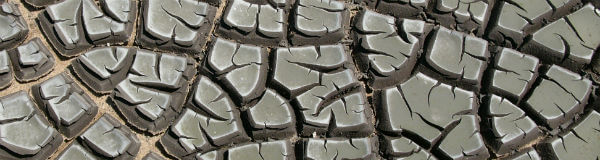
Drought in eastern Mediterranean Levant region worst in 900 years, study finds

shadow16

American Geophysical Union: A new study finds that the recent drought that began in 1998 in the eastern Mediterranean Levant region, which comprises Cyprus, Israel, Jordan, Lebanon, Palestine, Syria, and Turkey, is likely the worst drought of the past nine centuries.

Scientists reconstructed the Mediterranean’s drought history by studying tree rings as part of an effort to understand the region’s climate and what shifts water to or from the area. Thin rings indicate dry years while thick rings show years when water was plentiful.

In addition to identifying the driest years, the science team discovered patterns in the geographic distribution of droughts that provides a “fingerprint” for identifying the underlying causes. Together, these data show the range of natural variation in Mediterranean drought occurrence, which will allow scientists to differentiate droughts made worse by human-induced global warming. The research is part of NASA’s ongoing work to improve the computer models that simulate climate now and in the future.

“The magnitude and significance of human climate change requires us to really understand the full range of natural climate variability,” said Ben Cook, lead author and climate scientist at NASA’s Goddard Institute for Space Studies and the Lamont Doherty Earth Observatory at Columbia University in New York City. [Continue reading…]

Facebooktwittermail

Who owns the Syrian revolution?

kobane

Naila Bozo writes: I recognized the importance of Syria in my life through my separation from it. The hours before going to the airport made me feel weak. The departure from Syria was a small but recurring trauma. I was not merely putting kilometers between Syria and myself; I felt I had travelled for centuries, travelled through galaxies as soon as I landed in Europe. Only a few hours after leaving the country, Syria felt like nothing but a hazy memory.

I do not know if I can put a claim to Syria as my home but that sunbaked, dusty country with the coincidental palm trees scattered by the roads, with the empty red bags of potato chips blowing in the gutter and the sound of Umm Kulthum owns me. I can still conjure the warmth of the yellow taxis’ leather seats under my fingers.

The claim to a home has grown more complex with the war in Syria. On one hand, there is a wish to be united with all Syrians against the dictatorial regime of Bashar al-Assad but on the other hand, one cannot ignore the Syrian armed and political opposition’s dubious alliance with Turkey, a state that has violated Kurdish rights for decades and recently intensified its crackdown upon Kurdish civilians and fighters. Today, the mutual mistrust between Syrian rebels and Kurdish fighters has intensified due to the former being a loose coalition that includes several formations within the so-called moderate Free Syrian Army that have varying degrees of affiliations with groups like Islamist rebel group Ahrar al-Sham and al-Qaeda’s branch in Syria, Jabhat al-Nusra while the latter is being accused of carrying out an expansionist agenda facilitated by U.S. and Russian airstrikes. [Continue reading…]

Facebooktwittermail