Category Archives: Issues

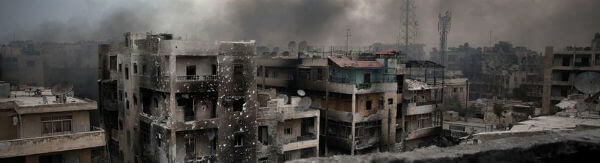
Russia guilty of Syria war crimes, says Amnesty

msf-hospital

Sky News reports: Amnesty International has told Sky News that Russia is guilty of some the most “egregious” war crimes it has seen in decades.

The human rights organisation claims Moscow’s warplanes have been deliberately targeting civilians and rescue workers in Syria over the last week.

Tirana Hassan, director of Amnesty’s crisis response programme, said the attacks are ongoing – with strikes documented on schools, hospitals and civilian homes.

She claimed the bombing of civilian targets by Russian and Syrian forces was in itself a war crime, but warned there have been consistent reports of second bombardments which injure and kill humanitarian workers and civilians attempting to evacuate the wounded and the dead. [Continue reading…]

Facebooktwittermail

The technical reasons the FBI’s claim, ‘just this one phone,’ is bogus

fbi

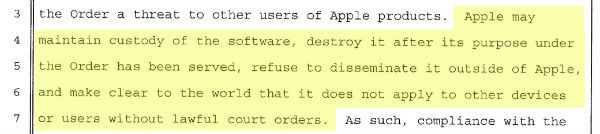
Jonathan Zdziarski, an expert in iOS forensics, writes: For years, the government could come to Apple with a subpoena and a phone, and have the manufacturer provide a disk image of the device. This largely worked because Apple didn’t have to hack into their phones to do this. Up until iOS 8, the encryption Apple chose to use in their design was easily reversible when you had code execution on the phone (which Apple does). So all through iOS 7, Apple only needed to insert the key into the safe and provide FBI with a copy of the data.

This service worked like a “black box”, and while Apple may have needed to explain their methods in court at some point, they were more likely considered a neutral third party lab as most forensics companies would be if you sent them a DNA sample. The level of validation and accountability here is relatively low, and methods can often be opaque; that is, Apple could simply claim that the tech involved was a trade secret, and gotten off without much more than an explanation. An engineer at Apple could hack up a quick and dirty tool to dump disk, and nobody would need to ever see it because they were providing a lab service and were considered more or less trade secrets.

Now lets contrast that history with what FBI and the courts are ordering Apple to do here. FBI could have come to Apple with a court order stating they must brute force the PIN on the phone and deliver the contents. It would have been difficult to get a judge to sign off on that, since this quite boldly exceeds the notion of “reasonable assistance” to hack into your own devices. No, to slide this by, FBI was more clever. They requested that Apple developed a forensics tool but did not do the actual brute force themselves. [Continue reading…]

Facebooktwittermail

After Paris terror attacks, France struggles with faith on the job

The New York Times reports: A week after the terrorist attacks in France last November, Bachir B., a passenger screener at Orly airport south of Paris, was called into his manager’s office. Bachir, a devout Muslim who wears a thick beard in keeping with his faith, was ordered to trim his facial hair. His boss even offered to buy him a beard clipper as a birthday gift.

While supervisors had sometimes reminded him of a company dress code requiring whiskers to be kept “tidy” and “short,” Bachir said that the rule had been enforced only sporadically over his six years working for Securitas, a private security company. This time, the manager made clear that the new crackdown was “because of what was happening in the news,” said Bachir, who asked that his last name not be used to protect his family’s privacy.

Bachir trimmed his beard that weekend. But he said his boss sent him home about 10 days later, again citing his failure to comply with the dress code. Soon after, Bachir received a registered letter from Securitas, saying that he was fired. [Continue reading…]

Facebooktwittermail

Video found in Belgium of nuclear official may point to bigger plot

The New York Times reports: A suspect linked to the Nov. 13 Paris attackers was found with surveillance footage of a high-ranking Belgian nuclear official, the Belgian authorities acknowledged on Thursday, raising fears that the Islamic State is trying to obtain radioactive material for a terrorist attack.

The existence of the footage, which the police in Belgium seized on Nov. 30, was confirmed by Thierry Werts, a spokesman for Belgium’s federal prosecutor, after being reported in the Belgian daily newspaper La Dernière Heure.

The news set off an immediate outcry among Belgian lawmakers, who charged that they and the country had been misled about the extent of the potential threats to the country’s nuclear facilities, as well as about the ambitions of the terrorist network linked to the Islamic State that used Belgium to plot the Paris attacks, which killed 130 people.

The International Atomic Energy Agency and the State Department also confirmed on Thursday a report by Reuters that radioactive material had disappeared since November in Iraq, where the Islamic State controls broad areas of territory, adding to fears that the group may be able to acquire material for an attack with newly disconcerting dimensions. [Continue reading…]

Facebooktwittermail

Pope Francis and the Republican Party’s unchristian values

Religion should be kept out of politics — unless we’re talking about abortion, gay marriage, family values or any other issue where apparently it’s reasonable for religion to enter politics.

But for an Argentine pope to shove his nose into a U.S. presidential election, ranks in audacity close to Fidel Castro threatening America.

No doubt there are lots of Republicans who are convinced that Francis is really just a commie dressed in white — another Latino revolutionary out to stir up trouble.

In fact, the remarks the pope made yesterday that were reported as an attack on Trump were simply a rather basic enunciation of Christian values — as expressed in the Sermon on the Mount.

Maybe the Republicans would prefer the pope to refrain from preaching altogether. They might be happier if henceforth he simply be the Catholic church’s chief smiley face.

Michael Sean Winters writes: The difference could not be more stark. Pope Francis, in Ciudad Juarez yesterday, called for justice for migrants and an economic structure that serves people before profits and measures its health by the degree to which it includes everybody. Meanwhile, the Republican party’s presidential candidates are falling all over themselves to see who can be the toughest on immigration and the idea that profit is not the final arbiter of economic relations is viewed not just skeptically but as a kind of heresy.

The pope gave three talks in Ciudad Juarez, one to prisoners, one to workers, and a sermon at a Mass alongside the border with the United States. All three were a kind of rhetorical photographic negative of the attitudes we see championed by today’s Republican Party. [Continue reading…]

Facebooktwittermail

Trump: I’ll be ‘neutral’ on Israel and Palestine

The Hill reports: GOP presidential front-runner Donald Trump on Wednesday refused to pick sides in the conflict between Israel and Palestine.

“You know, I don’t want to get into it,” he told hosts Joe Scarborough and Mika Brzezinski during a MSNBC town hall in Charleston, S.C.

“If I win, I don’t want to be in a position where I’m saying to you [my choice] and the other side now says, ‘We don’t want Trump involved,'” the real estyate mogul said of potentially winning the presidency and then brokering a lasting peace deal.
“Let me be sort of a neutral guy,” the billionaire added. “I have friends of mine that are tremendous businesspeople, that are really great negotiators, [and] they say it’s not doable.

“You understand a lot of people have gone down in flames trying to make that deal. So I don’t want to say whose fault it is — I don’t think that helps.” [Continue reading…]

Facebooktwittermail

Médecins Sans Frontières: Attacks on civilians and hospitals in Syria have become routine

Dr Joanne Liu, International President of Médecins Sans Frontières, writes: Today in Syria, the abnormal is now normal. The unacceptable is accepted.

Relentless, brutal, and targeted attacks on civilians are the dominant feature of this war. In addition to the countless numbers of dead, hundreds of thousands of people are fleeing for their lives. Many of them trapped, and denied the fundamental right to flight.

Deliberate attacks against civilian infrastructure, including hospitals struggling to provide lifesaving assistance, are routine.

Healthcare in Syria is in the crosshair of bombs and missiles. It has collapsed.

Let me be clear: attacks on civilians and hospitals must stop. The normalization of such attacks is intolerable. [Continue reading…]


[Click infographic to enlarge]

Facebooktwittermail

The cost Sweden has paid for its unshared idealism in welcoming refugees

James Traub writes: The Swedish Migration Agency in Malmo, the southern port city on the border with Denmark, occupies a square brick building at the far edge of town. On the day that I was there, Nov. 19, 2015, hundreds of refugees, who had been bused in from the train station, queued up outside in the chill to be registered, or sat inside waiting to be assigned a place for the night. Two rows of white tents had been set up in the parking lot to house those for whom no other shelter could be found. Hundreds of refugees had been put in hotels a short walk down the highway, and still more in an auditorium near the station.

When the refugee crisis began last summer, about 1,500 people were coming to Sweden every week seeking asylum. By August, the number had doubled. In September, it doubled again. In October, it hit 10,000 a week, and stayed there even as the weather grew colder. A nation of 9.5 million, Sweden expected to take as many as 190,000 refugees, or 2 percent of the population — double the per capita figure projected by Germany, which has taken the lead in absorbing the vast tide of people fleeing the wars in Syria, Iraq, and elsewhere.

That afternoon, in the cafeteria in the back of the Migration Agency building, I met with Karima Abou-Gabal, an agency official responsible for the orderly flow of people into and out of Malmo. I asked where the new refugees would go. “As of now,” she said wearily, “we have no accommodation. We have nothing.” The private placement agencies with whom the migration agency contracts all over the country could not offer so much as a bed. In Malmo itself, the tents were full. So, too, the auditorium and hotels. Sweden had, at that very moment, reached the limits of its absorptive capacity. That evening, Mikael Ribbenvik, a senior migration official, said to me, “Today we had to regretfully inform 40 people that we could [not] find space for them in Sweden.” They could stay, but only if they found space on their own.

Nothing about this grim denouement was unforeseeable — or, for that matter, unforeseen. Vast numbers of asylum-seekers had been pouring into Sweden both because officials put no obstacles in their way and because the Swedes were far more generous to newcomers than were other European countries. A few weeks earlier, Sweden’s foreign minister, Margot Wallstrom, had declared that if the rest of Europe continued to turn its back on the migrants, “in the long run our system will collapse.” The collapse came faster than she had imagined.

The vast migration of desperate souls from Syria, Iraq, and elsewhere has posed a moral test the likes of which Europe has not faced since the Nazis forced millions from their homes in search of refuge. Europe has failed that test. Germany, acutely aware that it was the author of that last great refugee crisis, has taken in the overwhelming fraction of the 1 million asylum-seekers who have reached Europe over the past 18 months. Yet the New Year’s Eve 2016 orgy of rape and theft in Cologne, in which migrants have been heavily implicated, may force Chancellor Angela Merkel to reconsider the open door. Her policy of generosity is now being openly attacked by her own ministers.

Most of Europe, and much of the world, has, as Wallstrom feared, turned its back. The ethnically homogeneous nations of Eastern Europe have refused to take any refugees at all; Hungary, their standard-bearer on this issue, has built fences along its borders to keep refugees from even passing through. Balkan countries, by contrast, helped migrants pass through their territories to the West — until mid-November, when they collectively began blocking asylum-seekers who did not hail from Iraq, Syria, or Afghanistan. England has agreed to take only those refugees arriving directly on its shores from the Middle East. Denmark has taken out ads in Arabic-language newspapers warning refugees that they will not be welcome, and has passed legislation authorizing officials to seize migrants’ assets to pay for their care. In the United States, where politicians eager to exploit fear of terrorism have found a receptive audience, Congress has sought to block President Barack Obama’s offer to accept a meager 10,000 Syrians.

And then there is Sweden, a country that prides itself on generosity to strangers. During World War II, Sweden took in the Jews of Denmark, saving much of the population. In recent years the Swedes have taken in Iranians fleeing from the Shah, Chileans fleeing from Gen. Augusto Pinochet, and Eritreans fleeing forced conscription. Accepting refugees is part of what it means to be Swedish. Yet what Margot Wallstrom meant, and what turned out to be true, was that Germany, Sweden, Austria, and a few others could not absorb the massive flow on their own. The refugee crisis could, with immense effort and courage, have been a collective triumph for Europe. Instead, it has become a collective failure. This is the story of the exorbitant, and ultimately intolerable, cost that Sweden has paid for its unshared idealism. [Continue reading…]

Facebooktwittermail

European states deeply divided on refugee crisis before key summit

The Guardian reports: Europe’s deep divide over immigration is to be laid bare at an EU summit in Brussels on Thursday, with German chancellor Angela Merkel struggling to salvage her open-door policy while a growing number of countries move to seal borders to newcomers along the Balkan routes.

A debate on the migration crisis over dinner on Thursday evening will do little to resolve the differences, senior EU officials predict. Donald Tusk, the president of the European council, has avoided putting any new decisions on the agenda in an attempt to avoid fresh arguments.

The leaders of four anti-immigration eastern European countries met in Prague on Monday and demanded alternative EU policies by next month. Their plan amounts to exporting Hungary’s zero-immigration razor-wire model to the Balkans, sealing Macedonia’s border with northern Greece, and bottling up the vast numbers of refugees in Greece unless they are deported back to Turkey. [Continue reading…]

Facebooktwittermail

Trump campaign manager: Assad ‘keeping things in check’ in Syria

BuzzFeed reports: Donald Trump’s campaign manager, Corey Lewandowski, said in an interview on Tuesday that Syrian President Bashar al-Assad is “keeping things in check” in the war-torn country.

The conflict in Syria, which has been ongoing for four-and-a-half years, has resulted in the deaths of hundreds of thousands of Syrians, and created a refugee crisis in the region. Trump has said he wants to work with Russia on Syria to defeat ISIS and opposes overthrowing Assad.

Appearing on the John Fredericks Show, Lewandowski, defending Trump’s position, said, “He is very, very bad individual, but he is an individual who, in his country, is keeping things in check because he is such a bad guy they’re afraid of him.” [Continue reading…]

Facebooktwittermail

Bill McKibben: It’s not just what Exxon did, it’s what it’s doing

The time scale should stagger you.  Just imagine for a moment that what we humans do on this planet will last at least 10,000 more years, and no, I’m not talking about those statues on Easter Island or the pyramids or the Great Wall of China or the Empire State Building.  I’m not talking about any of our monumental architectural-cum-artistic achievements.  Ten thousand years from now all the monuments to our history may be forgotten ruins or simply obliterated, while what we’re doing at this very moment that’s truly ruinous may outlast us all.  I’m thinking, of course, about the burning of fossil fuels and the sending of carbon dioxide (and other greenhouse gases) into the atmosphere.   It’s becoming clearer by the month that, if not brought under control relatively quickly, this process will alter the global environment in ways that will affect humanity and everything else living on this planet for what, from a human point of view, is eternity.

In essence, there’s no backsies when it comes to climate change.  Once you’ve begun the full-scale destabilization and melting of the Greenland ice sheet and of the vast ice sheets in the Antarctic, for instance, the future inundation of coastal areas, including many of humanity’s major cities, is a foregone conclusion somewhere down the line.  In fact, a recent study, published in the journal Nature Climate Change by 22 climate scientists, suggests that when it comes to the melting of ice sheets and the rise of seas and oceans, we’re not just talking about how life will be changed on Planet Earth in 2100 or even 2200.  We’re potentially talking about what it will be like in 12,200, an expanse of time twice as long as human history to date.  So many thousands of years are hard even to fathom, but as the study points out, “A considerable fraction of the carbon emitted to date and in the next 100 years will remain in the atmosphere for tens to hundreds of thousands of years.” The essence of the report, as Chris Mooney wrote in the Washington Post, is this: “In 10,000 years, if we totally let it rip, the planet could ultimately be an astonishing 7 degrees Celsius warmer on average and feature seas 52 meters (170 feet) higher than they are now.”

Even far more modest temperature changes like the two degree Celsius rise discussed at the recent Paris meeting, where 196 nations signed onto a climate change agreement, would transform the face of the planet for thousands of years and result in the drowning of a range of iconic global cities “including New York, London, Rio de Janeiro, Cairo, Calcutta, Jakarta, and Shanghai.”

This, in other words, is what the hunt for yet more fossil fuels and more profits by the planet’s giant energy companies actually means — not tomorrow, but on a scale we don’t usually consider.  This is why those who continue to insist on pursuing such a treasure hunt (for a few companies and their shareholders), despite knowing its grim future results, will truly be in the running with some of the monsters of our past to become the ultimate criminals of history.  In this light, consider what Bill McKibben, TomDispatch regular, founder of 350.org, and author most recently of Oil and Honey: The Education of an Unlikely Activist, has to say about one of those companies, ExxonMobil, and its pivotal role in our warming world. Tom Engelhardt

Exxon’s never-ending big dig
Flooding the Earth with fossil fuels
By Bill McKibben

Here’s the story so far. We have the chief legal representatives of the eighth and 16th largest economies on Earth (California and New York) probing the biggest fossil fuel company on Earth (ExxonMobil), while both Democratic presidential candidates are demanding that the federal Department of Justice join the investigation of what may prove to be one of the biggest corporate scandals in American history.  And that’s just the beginning.  As bad as Exxon has been in the past, what it’s doing now — entirely legally — is helping push the planet over the edge and into the biggest crisis in the entire span of the human story.

Back in the fall, you might have heard something about how Exxon had covered up what it knew early on about climate change. Maybe you even thought to yourself: that doesn’t surprise me. But it should have. Even as someone who has spent his life engaged in the bottomless pit of greed that is global warming, the news and its meaning came as a shock: we could have avoided, it turns out, the last quarter century of pointless climate debate.

Continue reading

Facebooktwittermail

Reflections on Palestinian strategy

Amal Ahmad writes: The Palestinian people began the New Year facing a bleak political situation, with a weak and compromised leadership, a geographically and administratively fragmented people, and a civil society increasingly marked by individualism and loss of political anchor. The state-building project that promised so much in the 1980s and 1990s is fast losing adherents – a recent poll revealed that nearly two-thirds of Palestinians no longer believe it is practical even though 137 countries now recognize Palestine. Yet little has emerged by way of an alternative political goal that enjoys popular support.

This commentary argues that the current political weakness of the Palestinian people derives in large part from the absence of strategic thinking, despite some organized efforts in this regard including for example by the Palestine Strategy Group and by Masarat. Yet it is vital that Palestinians strategize with or without the political factions within and outside the Palestine Liberation Organization (PLO): Without a clear and agreed strategy, some of the tools and tactics being adopted risk draining energies and proving ineffective or producing unwanted results. [Continue reading…]

Facebooktwittermail

The archaic All Writs Act the government is using to try and unlock a terrorist’s iPhone

The Washington Post reports: The U.S. government and Apple are locked in a legal battle over unlocking an iPhone used by one of the San Bernardino shooters. But a new court order is throwing a law that dates to the days of the founding fathers into a high-tech debate over digital security.

On Tuesday, a U.S. magistrate judge in California ordered Apple to provide “reasonable technical assistance” to the government as it tries to bypass security features built into its products based on an interpretation of the “All Writs Act.”

The original form of that statute dates to the Judiciary Act of 1789, centuries before the iPhone was a twinkle in Steve Jobs’s eye. In its current form, the law gives federal courts the power to “issue all writs necessary or appropriate in aid of their respective jurisdictions and agreeable to the usages and principles of law.”

Basically, it’s “a very short, cryptic statute” that gives the courts “all sorts of incidental powers” to require things not specifically covered by other laws, according to Stephen Vladeck, a law professor at American University.

In the past, the act has been used to compel non-parties — like service providers of tech companies — to help in criminal investigations, Vladeck said. But that help has typically been limited to straightforward requests, like activating or turning off particular features and using systems that are already in place, he said.

The new order is different: It tells Apple to help the government by creating an entirely new software to help investigators bypasses security features. “That requires Apple to go much further than any company has ever been required to go in one of these cases,” said Vladeck. [Continue reading…]

Last October, Jennifer Granick and Riana Pfefferkorn wrote: Under the government’s interpretation of the All Writs Act, anyone who makes software could be dragooned into assisting the government in investigating users of the software. If the court adopts this view, it would give investigators immense power. The quotidian aspects of our lives increasingly involve software (from our cars to our TVs to our health to our home appliances), and most of that software is arguably licensed, not bought. Conscripting software makers to collect information on us would afford the government access to the most intimate information about us, on the strength of some words in some license agreements that people never read. (And no wonder: The iPhone’s EULA came to over 300 pages when the government filed it as an exhibit to its brief.)

The government’s brief does not acknowledge the sweeping implications of its arguments. It tries to portray its requested unlocking order as narrow and modest, because it “would not require Apple to make any changes to its software or hardware, … [or] to introduce any new ability to access data on its phones. It would simply require Apple to use its existing capability to bypass the passcode on a passcode-locked iOS 7 phone[.]” But that undersells the implications of the legal argument the government is making: that anything a company already can do, it could be compelled to do under the All Writs Act in order to assist law enforcement. [Continue reading…]

Facebooktwittermail

How a New York judge inspired Apple’s encryption fight

Reuters reports: Last October, prosecutors from the Justice Department asked a federal magistrate judge in Brooklyn to issue an order directing Apple to help the Drug Enforcement Administration bust security on an iPhone 5 seized from the home of Jun Feng, a suspected meth dealer.

The government had previously obtained many such orders against Apple and other companies under the All Writs Act, a 1789 statute that grants federal courts broad power to issue “necessary or appropriate” writs.

The act has been a powerful tool for prosecutors since 1977, when the U.S. Supreme Court ruled in U.S. v. New York Telephone that the All Writs Act extends, under certain conditions, to private companies in a position to assist “the proper administration of justice.”

Apple has a long history of compliance with All Writs Act orders. The company helped New York investigators extract data from a suspected child sex abuser’s iPhone in 2008; rushed a data extraction in 2013 from the phone of an alleged child pornographer in Washington; and in 2015 provided federal agents in Florida with data the company extracted from a drug suspect’s phone.

According to a Justice Department brief filed last fall, Apple never objected to All Writs Act orders in those cases – nor, for that matter, to any All Writs Act order directing the company to help federal investigators break into iPhones.

Apple’s policy of acquiescence abruptly changed in the Jun Feng case last year. And for all of the attention now focused on Apple’s announced opposition to a newly issued All Writs Act order directing the company to help Justice Department investigators break the passcode on an iPhone belonging to San Bernardino shooter Syed Farook, the Feng case is quite likely to produce a ruling before the Farook case.

The impending showdown over Farook’s phone is an irresistibly stark depiction of the competing interests of individual privacy and national security. But keep your eye on precedent from Feng. [Continue reading…]

Facebooktwittermail

FBI’s push to ‘fix a typo’ would really expand its surveillance authority

Robyn Greene writes: At last week’s Senate Intelligence Committee hearing on Worldwide Threats, FBI Director James Comey reiterated his call for a major expansion of the FBI’s surveillance authorities, but disingenuously downplayed it as fixing a “typo” in the law. In fact, Comey’s proposed fix, which he calls one of the FBI’s top legislative priorities, would be a major expansion of surveillance authority, and a major hit to Americans’ privacy and civil liberties. It would grant the FBI access to a range of revealing and personal details about Americans’ online communications — what are called Electronic Communications Transactional Records (ECTR), in legalese — without court approval.

Through Comey’s “ECTR fix,” the FBI would have the unilateral authority to obtain information from phone and Internet companies about your online communications such as logs of emails you send and receive, cell site data (including your location information), and lists of websites you visit. The FBI wants to get this information using National Security Letters (NSLs), which are demands for information issued directly by local FBI offices without any court approval or supervision.

Under current law, the FBI can only use NSLs to get information pertaining to a customer’s “name, address, length of service, and local and long distance toll billing records of a person or entity.” By contrast, if the FBI wants to compel a company to hand over the much more revealing private information that is included in ECTRs, they currently can’t use NSLs — instead, they have to get a court order after convincing a judge that they have a factual basis for demanding those records. Therefore, the FBI’s proposal that Congress add ECTRs to the NSL statute is far from a typo fix, and would instead be a major expansion of FBI’s authority to conduct surveillance with virtually no oversight and no accountability. [Continue reading…]

Facebooktwittermail

Apple’s stance highlights a more confrontational tech industry

Farhad Manjoo writes: The battle between Apple and law enforcement officials over unlocking a terrorist’s smartphone is the culmination of a slow turning of the tables between the technology industry and the United States government.

After revelations by the former National Security Agency contractor Edward J. Snowden in 2013 that the government both cozied up to certain tech companies and hacked into others to gain access to private data on an enormous scale, tech giants began to recognize the United States government as a hostile actor.

But if the confrontation has crystallized in this latest battle, it may already be heading toward a predictable conclusion: In the long run, the tech companies are destined to emerge victorious.

It may not seem that way at the moment. On the one side, you have the United States government’s mighty legal and security apparatus fighting for data of the most sympathetic sort: the secrets buried in a dead mass murderer’s phone. The action stems from a federal court order issued on Tuesday requiring Apple to help the F.B.I. unlock an iPhone used by one of the two attackers who killed 14 people in San Bernardino, Calif., in December.

In the other corner is the world’s most valuable company, whose chief executive, Timothy D. Cook, has said he will appeal the court’s order. Apple argues that it is fighting to preserve a principle that most of us who are addicted to our smartphones can defend: Weaken a single iPhone so that its contents can be viewed by the American government and you risk weakening all iPhones for any government intruder, anywhere.

There will probably be months of legal tussling, and it is not at all clear which side will prevail in court, nor in the battle for public opinion and legislative favor.

Yet underlying all of this is a simple dynamic: Apple, Google, Facebook and other companies hold most of the cards in this confrontation. They have our data, and their businesses depend on the global public’s collective belief that they will do everything they can to protect that data. [Continue reading…]

Facebooktwittermail

A Syria policy that dare not speak its name

Syria5

Michael Ignatieff writes: Once President Barack Obama had let Bashar al-Assad cross his “red line” and use chemical weapons in 2013, America was left with a policy in Syria that dare not speak its name.

The policy is not what the US wants but, in light of the ceasefire plan agreed last week in Munich between Moscow and Washington, it appears to have become what it reluctantly accepts: to allow Mr Assad and Russian president Vladimir Putin to win by focusing attacks on anti-regime rebels in strongholds such as Aleppo — and then, after a decent interval, to join with them to crush the militants of Isis.

The consequences of this policy are becoming clearer by the day: free Aleppo is dying under continuing Russian bombardment and a civilian uprising that began in 2011 is collapsing for want of help. Mr Assad is re-establishing his tyranny and is certain to take vengeance on surviving insurgents.

This is where risk avoidance has led a conscientious, prudent American president — to a diabolical transaction in which he and his allies regretfully sacrifice the lives of innocent civilians in the name of the mistaken belief that the west’s only overriding strategic interest in Syria is the defeat of Isis.

If this is the actual policy of the US the consequences should be spelt out. Russia and Iran will consolidate control of a rump state in the Middle East but the millions of Syrians who have fled the fighting will never return home and the region will never know peace. [Continue reading…]

Facebooktwittermail

How to lose sight of war crime immorality

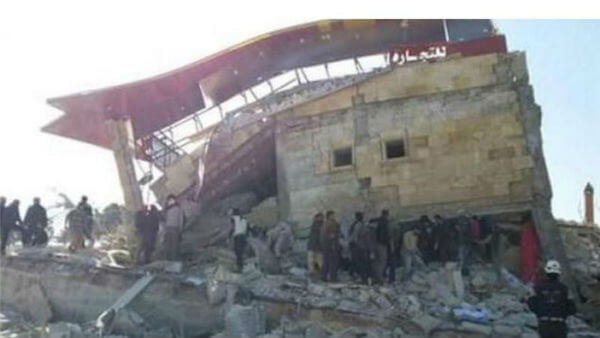
msf-hospital

After the U.S. dropped bombs on a hospital run by Doctors Without Borders (Médecins Sans Frontières (MSF) in the Afghan city of Kunduz on October 3, Glenn Greenwald wrote:

Doctors who travel to dangerous war zones to treat injured human beings are regarded as noble and trustworthy. They’re difficult to marginalize and demonize. They give compelling, articulate interviews in English to U.S. media outlets. They are heard, and listened to.

MSF has used this platform, unapologetically and aggressively. Its staff are clearly infuriated by the attack on their hospital and the deaths of their colleagues and patients. From the start, they have signaled an unwillingness to be shunted away with the usual “collateral damage” banalities and, more important, have refused to let the U.S. military and its allies get away with spouting obvious falsehoods.

Greenwald shared MSF’s disgust in response to statements which amounted to justifications for war crimes.

Following the latest airstrikes on MSF hospitals in Syria, Greenwald’s reaction has so far been much more muted. It has yet to go beyond a couple of tweets which rather than being directed at the likely culprit of these war crimes, Russia, focus instead on the hypocrisy of the U.S. government.


Indeed, the U.S. can’t credibly denounce Russia for bombing MSF hospitals in Syria when it has done the same in Afghanistan.

By the same token, however, how can Greenwald credibly denounce American war crimes if he’s going to refrain from denouncing Russia’s?

He can’t be accused of being a hypocritical U.S. official. He doesn’t represent the American government.

Maybe at the moment he’s suspending judgment about who was responsible for the latest airstrikes in Syria — even though MSF says the attack was “deliberate” and says “either the [Syrian] government or Russia” was “clearly” responsible:


That’s a pointless question in this case since as far as Russia is concerned, there is nothing to investigate.

As TASS reports:

Asked for a comment regarding reports a hospital in Syria’s Idlib province had been bombed, as well as claims the Russian air group was responsible, [Russian presidential spokesman Dmitry] Peskov invited everybody to rely “on the root source first and foremost.” “In this particular case the representatives of Syrian authorities are the root source,” he said.

Peskov recalled that Syria’s ambassador to Russia, Riyadh Haddad, said on Tuesday the hospital in Idlib province was destroyed by the Americans, and not the Russian air group.

If Greenwald actually believed Haddad’s claim, I would expect him to be now denouncing U.S. airstrikes on MSF hospitals in Syria, but he isn’t — most likely because he realizes the Syrian ambassador was spouting obvious falsehoods.

Instead, Greenwald’s primary interest is in using these war crimes as an opportunity to take shots at the U.S. government — even though as Physicians for Human Rights (PHR) and others have documented, attacks on medical facilities are neither accidental nor incidental to the conflict: they are an integral feature of the war strategy used by Assad and his allies.

Writing in the New England Journal of Medicine in December, doctors with PHR said:

Since the conflict began in 2011, PHR has documented the killings of 679 medical personnel, 95% of them perpetrated by government forces. Some personnel were killed in bombings of their hospitals or clinics; some were shot dead; at least 157 were executed or tortured to death.

The issue here is that anyone who wants to resolutely challenge American double standards needs, for the sake of credibility, to avoid having their own double standards on war crimes.

As for the notion that Greenwald, as an American, has a duty to challenge his own government rather than Russia’s, he might pause to consider that his tweets and articles probably attract more attention in the Kremlin than they do in the White House.

Facebooktwittermail