



Ivan Krastev writes: “Vladimir Vladimirovich, is war coming?”
The question is asked in the first frame of “Myroporyadok” (“World Order”), a manifesto-style documentary aired in the last days of December on Russian state television. And in the following two-plus hours, President Vladimir V. Putin, aided by diplomats, policy analysts, conspiracy theorists and retired foreign statesmen, attempts to provide an answer.
Though the Russian leader resists sounding the alarm, the audience is nonetheless convinced that if nothing changes in the coming months, the Big War could be imminent. And the Kremlin isn’t doing much to dissuade them: Days after the film’s airing, its new national security strategy, which declares NATO and the United States as fundamental threats to Russia’s future, was unveiled.
“Myroporyadok” is a powerful expression of the Kremlin’s present state of mind. It views the world as a place on the edge of collapse, chaotic and dangerous, where international institutions are ineffective, held hostage to the West’s ambitions and delusions. Nuclear weapons represent the sole guarantee of a country’s sovereignty, and sovereignty is demonstrated by a willingness and capacity to resist Washington’s hegemonic agenda. [Continue reading…]
Helen Pidd writes: “You are not going to like me saying this,” my dad said, “but you need to get a lock on your bedroom door and a lock on your bathroom door. Men can get very frisky when they are away from their wives.”
I rolled my eyes, hung up and panicked. I’d rung my parents to tell them that Yasser, a Syrian refugee, was coming to live with me while he arranged for his wife and baby to join him in Britain. I was a little nervous about the arrangement, but of all the many things worrying me – would he disapprove of my single heathen lifestyle? Could I carry on having bacon butties at the weekend? Should I edit my drinks cupboard? – the possibility of getting molested by my lodger had yet to occur to me.
I first had lunch with Yasser one day in August, after a mutual friend in Turkey told me he had arrived in Manchester and had no mates. She didn’t tell me he was Syrian, or how he had reached our rainy island. So I was gobsmacked when, in very broken English, he told me of his 37-day odyssey across land and sea. He had sailed across the Mediterranean in an inflatable boat in the dead of night, even though he can’t swim; walked from Greece to Macedonia, and crossed Europe until he reached the Jungle in Calais, where he jumped on trucks for six nights before making it to England hidden in the back of a lorry. After 17 hours packed between boxes of toys, he banged on the door. The truck driver was furious: he would face a £2,000 fine were the border police to discover his human cargo. Yasser scarpered. He wasn’t sure he was even in England until a car passed him driving on the left. He walked to the nearest petrol station and asked them to call the police. His new life had begun.
I wondered how I could help him. He was living on £5 a day given to him by Serco, the outsourcing company contracted by the Home Office to process asylum applications. While Yasser waited, he couldn’t take paid work and was living in a Serco house off the Curry Mile with five other asylum seekers: Syrians, Eritreans, a guy from Sudan. I asked if he fancied coming round to help me strip wallpaper on the bank holiday weekend. He agreed, but then I had to go and cover the world gravy wrestling championships in Bacup (try explaining that one to someone whose first language isn’t English), so left him to it.
When I got back, he had almost finished. We had an awkward meal together, then I tried to give him some money. Yasser looked appalled. “No, no,” he said. “I don’t want money. I want friends.”
Two days later, three-year-old Alan Kurdi washed up on a beach in Turkey. The mood in Britain changed. Suddenly the sort of newspapers who usually run stories about immigrants eating swans started showing compassion. David Cameron agreed to resettle 20,000 of the most vulnerable Syrian refugees – and I offered my spare room to Yasser. [Continue reading…]
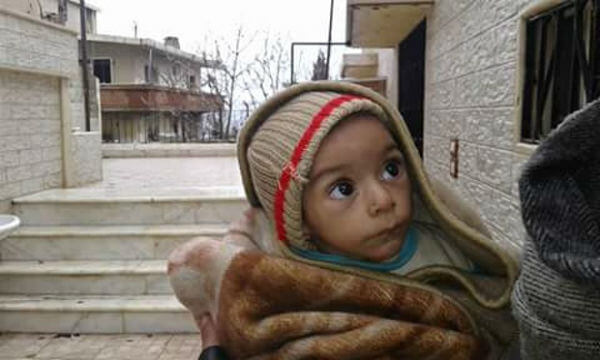
Reuters reports: Residents of a besieged Syrian town have told U.N. investigators how the weakest in their midst, deprived of food and medicines in violation of international law, are suffering starvation and death, the top U.N. war crimes investigator told Reuters on Tuesday.
An aid convoy on Monday brought the first food and medical relief for three months to the western town of Madaya, where 40,000 people are trapped by encircling government forces.
Another United Nations official who oversaw the aid delivery described on Tuesday how he saw malnourished residents, particularly children, some of whom were little more than skeletons and barely moving.
The U.N. commission of inquiry documenting war crimes in Syria has been in direct contact with residents inside Madaya, the commission’s chairman Paulo Pinheiro said in an emailed reply to Reuters questions.
“They have provided detailed information on shortages of food, water, qualified physicians, and medicine. This has led to acute malnutrition and deaths among vulnerable groups in the town.” he said in the email sent from his native Brazil.
The U.N. inquiry, composed of independent experts, has long denounced use of starvation by both sides in the Syrian conflict as a weapon of war, and has a confidential list of suspected war criminals and units from all sides which is kept in a U.N. safe in Geneva. [Continue reading…]

Reuters reports: The Obama administration is set to refund as much as $14 million in royalties to a coal company run by billionaire investor William Koch that says it is entitled to the money since the now-shut mine on federal land was costly to operate.
The Interior Department recommended the payout in a December letter to Colorado Governor John Hickenlooper, seen by Reuters, that gives the state executive a chance to object.
The subsidy, part of a decades-old program to promote coal production on public lands, is now under scrutiny since President Barack Obama has vowed to curb the nation’s reliance on fossil fuels, which contribute to global warming. [Continue reading…]
Der Spiegel reports: No, Frans Timmermans says, unfortunately he still hasn’t received an answer. The deputy head of the European Commission has written to the government in Warsaw twice in recent weeks to express his concern over the rule of law in Poland. Instead of the requested letter, all he got was gloating on the part of new Polish Foreign Minister Witold Waszcykowski. Any EU official “who came to office via political connections” is “not a legitimate partner” for a government elected by the people, Waszcykowski scoffed.
Timmermans these days is having to exercise his utmost diplomatic skill in order to avoid an escalation of tensions. When, during a visit to Amsterdam on Thursday, Timmermans was asked about the Polish foreign minister’s jibe, he could have struck back. But there is already enough tension, so he chose to take a different tack, instead praising the transformation of Eastern European countries from socialist dictatorships to free societies. But, he added, true democracies include two important elements: the protection of human rights and adherence to the rule of law.
The fact that Timmermans had to utter something that obvious says a lot about the current state of the European Union — and developments in Poland. In less than two months, the country’s new nationalist-conservative government has succeeded in disempowering the constitutional court, passing a law establishing government control over public broadcasting and installing party-aligned political appointees at the head of its intelligence services. “We want to cure our country of a few illnesses,” Foreign Minister Waszcykowski told Germany’s tabloid Bild earlier this month.
It’s a choice of words most often associated with autocrats and has alarmed the European Commission. On Wednesday, the EU executive is expected to discuss whether or not it will open the so-called “rule of law mechanism.” Should it do so, it would mark the first time a member state has been subjected to that level of scrutiny for violating the fundamental values of the European Union. [Continue reading…]
The Associated Press reports: Palestinian journalist Ayman al-Aloul frequently writes about the hardships of life in the Gaza Strip, and is one of the few voices willing to publicly criticize the rule of the Islamic Hamas movement.
But after nine days in jail, al-Aloul says he won’t be writing about politics anymore. He said a painful experience that included beatings and being forced to sit uncomfortably in a tiny chair has made him a “new man” and that he will now focus on less controversial topics like sports, food, literature and fashion.
“I’ve decided not to talk about the general situation anymore,” al-Aloul said in an interview at his home Tuesday, a day after he was released. “The experience I went through was very difficult.”
Al-Aloul’s experience is part of a crackdown by Hamas at a time when the continuing miseries of life in Gaza appear to be driving its population toward more open dissent. Critics have grown bolder on social media sites, and attempts by Hamas to impose new taxes have triggered rare public protests. [Continue reading…]

Paul La Farge writes: In A History of Reading, the Canadian novelist and essayist Alberto Manguel describes a remarkable transformation of human consciousness, which took place around the 10th century A.D.: the advent of silent reading. Human beings have been reading for thousands of years, but in antiquity, the normal thing was to read aloud. When Augustine (the future St. Augustine) went to see his teacher, Ambrose, in Milan, in 384 A.D., he was stunned to see him looking at a book and not saying anything. With the advent of silent reading, Manguel writes,
… the reader was at last able to establish an unrestricted relationship with the book and the words. The words no longer needed to occupy the time required to pronounce them. They could exist in interior space, rushing on or barely begun, fully deciphered or only half-said, while the reader’s thoughts inspected them at leisure, drawing new notions from them, allowing comparisons from memory or from other books left open for simultaneous perusal.
To read silently is to free your mind to reflect, to remember, to question and compare. The cognitive scientist Maryanne Wolf calls this freedom “the secret gift of time to think”: When the reading brain becomes able to process written symbols automatically, the thinking brain, the I, has time to go beyond those symbols, to develop itself and the culture in which it lives.
A thousand years later, critics fear that digital technology has put this gift in peril. The Internet’s flood of information, together with the distractions of social media, threaten to overwhelm the interior space of reading, stranding us in what the journalist Nicholas Carr has called “the shallows,” a frenzied flitting from one fact to the next. In Carr’s view, the “endless, mesmerizing buzz” of the Internet imperils our very being: “One of the greatest dangers we face,” he writes, “as we automate the work of our minds, as we cede control over the flow of our thoughts and memories to a powerful electronic system, is … a slow erosion of our humanness and our humanity.”
There’s no question that digital technology presents challenges to the reading brain, but, seen from a historical perspective, these look like differences of degree, rather than of kind. To the extent that digital reading represents something new, its potential cuts both ways. Done badly (which is to say, done cynically), the Internet reduces us to mindless clickers, racing numbly to the bottom of a bottomless feed; but done well, it has the potential to expand and augment the very contemplative space that we have prized in ourselves ever since we learned to read without moving our lips. [Continue reading…]

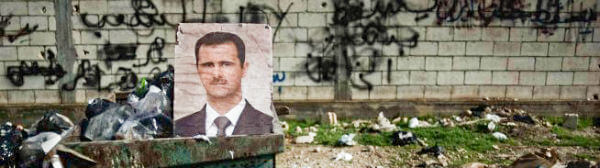
The Economist reports: It has become fashionable in some circles to ape Russia and Iran in blaming this failure [of the Arab Spring] on supposedly “naive” Western policymakers. Had Western powers not abandoned old allies such as Egypt’s Hosni Mubarak; had they not intervened in support of Libyan rebels; had they not presumed that the Syrian dictator Bashar al-Assad was just another domino waiting to topple; had they not turned a blind eye to the danger of Islamist fanatics: then all would be well.
This is tosh [nonsense]. To frame the uprisings of 2011 as a sequence of isolated events, each of which had a unique and optimal policy response, is to deny the historical reality of what happened. Such hindsight belies the actual experience of seeing an entire region — and the world’s most politically torpid region, at that — whirl into sudden, synchronised motion. It also denies agency to the actors themselves: to the crowds whose cries of “Enough!” reached critical mass; to the paranoid rulers whose responses exacerbated the protests.
This is not to say that the events of 2011 had no precursors. Algeria’s Islamist uprising in 1991, two intifadas in Palestine, the “Independence revolution” that ousted Lebanon’s government in 2005, even the short-lived “Green revolution” in non-Arab but nearby Iran, all signalled the region’s desire for change. But the world’s democracies were, by and large, correct in judging that what they were seeing in 2011 was something broader, more potent and more difficult to steer than a set of national crises that happened to coincide. Nor were they naive to think that an empowered “Arab street” would seek to move its countries closer to global norms of good governance. That was the demand the demonstrators made in protest after protest, from the Gulf to the Atlantic.
The West’s naivety, which was shared — and paid for — by those hopeful demonstrators, lay in underestimating two things. One was the fragility of many Arab states, too weak in their institutions to withstand such ructions in the way that, say, South Africa did when apartheid fell. The other was the vicious determination with which established regimes would seek to retain or recapture control. Who could believe that a soft-spoken leader such as Mr Assad would prefer to destroy his country rather than leave his palace? Those were the truths that brought hope to the ground.
Just as the spring itself was more than just a set of national events, so the current period of counter-revolution is an international matter. Conservatives across the region have received powerful backing from the Gulf. One early and stark example of this was Bahrain, where the ruling family called on fellow Sunni monarchs to help it crush a pro-democracy movement championed by its Shia majority. Last year’s intervention in Yemen by a Saudi-sponsored coalition can be seen in the same light. The Saudis are seeking not only to thwart Houthi rebels, whose Iranian backing they revile. They are trying to force a return to the status quo.
The most internationalised conflict is the bitter civil war in Syria, where powers from the region and beyond contend through proxies. The war has long since metastasised into a monumental free-for-all involving dozens of belligerents. But it remains at its core a fight between aggrieved citizens and a narrowly based — and in Syria’s case largely sectarian — elite intent on keeping its hold on power.
In Egypt, a nation-state of longer standing and greater stability, the ancien régime’s fight has — again with help from the Gulf — been won, for now. Egypt has long been seen as the region’s bellwether, and for good reason. Over the past five years it has provided the Arab spring’s most revealing story of failure; today it highlights the degree to which the tensions persist that brought about the uprisings. [Continue reading…]

Roger Cohen writes: Is realism really, really what America wants as the cornerstone of its foreign policy?
Stephen M. Walt, a professor of international affairs at Harvard University, has an eloquent ode to realism in Foreign Policy magazine. He argues that, with realism as the bedrock of its approach to the world over the past quarter century, the United States would have fared far better. Realists, he reminds us, “have a generally pessimistic view of international affairs and are wary of efforts to remake the world according to some ideological blueprint.”
Pessimism is a useful source of prudence in both international and personal affairs. Walt’s piece makes several reasonable points. But he omits the major European conflict of the period under consideration — the wars of Yugoslavia’s destruction, in which some 140,000 people were killed and millions displaced.
Realists had a field day with that carnage, beginning with former Secretary of State James Baker’s early assessment that, “We don’t have a dog in that fight.” This view was echoed by various self-serving assessments from the Clinton White House that justified inaction through the portrayal of the Balkans as the locus of millennial feuds neither comprehensible nor resolvable.
True, discerning a vital American national interest in places with names like Omarska was not obvious, even if the wars upset the European peace America had committed to maintaining since 1945. The realpolitik case for intervention was flimsy. Sarajevo was not going to break America, less even than Raqqa today.
The moral case was, however, overwhelming, beginning with the Serbian use in 1992 of concentration camps to kill Bosnian Muslim men deemed threatening, and expel Muslim women and children. These methods culminated at Srebrenica in 1995 with the Serbian slaughter of about 8,000 male inhabitants. In the three-year interim, while realists rationalized restraint, Serbian shelling of Sarajevo blew up European women and children on a whim. Only when President Clinton changed his mind and NATO began concerted bombing was a path opened to ending the war.
I covered that conflict and its resolution. For my baby-boomer generation, spared Europe’s repetitive bloodshed by American military and strategic resolve, it was a pivotal experience. After that, no hymn to realism pure and simple could ever be persuasive. Walt calls me “a liberal internationalist;” I’ll take that as an honorable badge. [Continue reading…]
The New York Times reports: Tunisia’s main Islamist party, Ennahda, re-emerged as the dominant faction in Parliament on Monday as mass resignations from President Béji Caïd Essebsi’s secular party continued, largely to protest his son’s position as party chief.
The upheaval in the governing party, Nidaa Tounes, just over a year after it defeated Ennahda in parliamentary elections and swept Mr. Essebsi to power in a presidential vote, had been brewing for months. The splintering is not expected to bring down the coalition government that Nidaa Tounes leads — indeed, a cabinet reshuffle was confirmed Monday evening despite the resignations — but the shift in power is likely to complicate politics going forward. The lawmakers kept their seats in Parliament but are unaffiliated with a political party for now.
Tunisia has been praised for its democratic progress in the five years since a popular uprising overthrew the dictator Zine el-Abidine Ben Ali, inciting the Arab Spring. But it has had five governments in five years, and many political parties have struggled to find a firm footing. [Continue reading…]
Gordon Brown writes: mid the Syrian chaos of carnage, starvation and evacuation, there is a tiny glimmer of hope. The Lebanese government has declared that it has taken 207,000 Syrian refugee children off the streets and given them places in their country’s public schools.
And today I am setting out a plan to extend the opportunity of education to 1 million refugee boys and girls across Lebanon, Jordan and Turkey during the course of 2016 – with the ambition that by next year every refugee child will be offered a place at school.
Through a combination of generous European Union funding by development commissioner Johannes Hahn and contributions from both public and private sectors in the region itself, $250m has been raised – the first instalment of the $750m we need to deliver this bold initiative. And in the run-up to the UN pledging conference in London on 4 February we are asking donors from public and private sectors to do more.
What has unlocked the chance of hundreds of thousands of extra school places is the introduction of a “double-shift school system”. Local Lebanese children are educated in the morning in their neighbourhood schools but the same classrooms are now being thrown open to refugee children in the afternoon and early evenings.
Because the double-shift system uses existing schools and so avoids the huge capital costs of building, the average cost is just $10 per school place per week. Already 200 Lebanese schools are offering double-shift education and there are now robust plans to offer 400,000 places by doubling the number of schools.
And as a direct result of Lebanon’s success, Turkey and Jordan are now ready to make double-shift schools the centrepiece of this year’s educational efforts for refugees. Working with Unicef, Turkey has set out its goals to double its school places for refugees to more than 450,000 this year. In Jordan, where just over 100,000 refugees are already in school, the aim is to double places. [Continue reading…]
The New York Times reports: To hear his father tell it, Mordechai Meyer, 18, a high school dropout, has spent the past few years camping out with his teenage friends in the rolling hills around Jewish outposts like this one in the northern West Bank. They want “to live simply, to build their own things and to commune with God,” said the father, Gedalia Meyer.
But Israel’s domestic security agency, Shin Bet, says the younger Mr. Meyer belongs to a Jewish terrorist network, some of whose members have been charged with grave crimes, including the July arson attack that killed a Palestinian toddler and his parents in the West Bank village of Duma. The two suspects in that case also spent time in these hills.
The existence of the network, known as the Revolt for the title of its manifesto, became known about six months ago, after the arrest of several suspected members. This latest manifestation of Jewish terrorism is the creation of young extremists rebelling against what they view as the inertia of the Israeli establishment, and it has fermented in lawless outposts like Baladim, a tiny encampment outside Maale Shlomo, and Geulat Zion to the north. [Continue reading…]
The Associated Press reports: Afghan forces are struggling to man the front lines against a resurgent Taliban, in part because of untold numbers of “ghost” troops who are paid salaries but only exist on paper.
The nationwide problem has been particularly severe in the southern Helmand province, where the Taliban have seized vast tracts of territory in the 12 months since the U.S. and NATO formally ended their combat mission and switched to training and support.
“At checkpoints where 20 soldiers should be present, there are only eight or 10,” said Karim Atal, head of Helmand’s provincial council. “It’s because some people are getting paid a salary but not doing the job because they are related to someone important, like a local warlord.”
In some cases, the “ghost” designation is more literal — dead soldiers and police remain on the books, with senior police or army officials pocketing their salaries without replacing them, Atal said. [Continue reading…]
BBC News reports: Iran has removed the core of its Arak heavy-water nuclear reactor and filled it with cement, according to the country’s Fars news agency.
The fate of the reactor was one of the toughest sticking points in Iran’s long nuclear negotiations last year.
Under the terms of the deal, Iran agreed the heavy-water reactor would be reconfigured so it was not capable of yielding material for a nuclear weapon.
The removal of the core is one of the final steps required by the deal. [Continue reading…]
When it comes to news about Saudi Arabia, the execution of an oppositional Shiite cleric, Nimr al-Nimr, has topped the headlines recently — and small wonder. Aging King Salman bin Abdulaziz al-Saud and his 30-year-old son, Deputy Crown Prince Mohammed bin Salman, the new defense minister who has already involved his country in a classic quagmire war in Yemen, clearly intended that death as a regional provocation. The new Saudi leadership even refused to return the cleric’s body to his family for burial, but interred it with the many al-Qaeda terror suspects killed at the same time, some beheaded. After death, in other words, al-Nimr was left in uncomfortable company. Think of it as the ultimate beyond-the-grave insult. The provocative message embedded in the announcement of his execution was so obvious that, in Shia Iran, crowds supporting that country’s religious hardliners (with their own hideous execution policies) promptly torched the Saudi embassy in Tehran. In the following days, as the Saudis broke diplomatic relations with Iran, ended a failing truce in Yemen (promptly bombing a home for the blind and also hitting the Iranian embassy in Sana’a), and rallied Sunni neighboring states to similarly break ties or at least downgrade relations, the whole, roiling region hit the news as war fears rose.
On September 10, 2001, had someone predicted that the oil heartlands of the planet would, within a decade and a half, become a roiling mix of failed states, fierce sectarian religious and ethnic struggles, spreading terror groups, and the first terror “caliphate” in history, if you had suggested that Saudi Arabia, one of the more stable countries on the planet, might someday begin to come unglued, that Libya would essentially collapse, Syria be no more, and Iraq be transformed into a riven tripartite land, you would surely have been laughed out of any room of pundits and experts. So the recent intensification of such a state of affairs, involving two countries in those heartlands with gigantic energy reserves, is big news indeed — but not perhaps the biggest news in the region.
My own pick might be a story that passed largely unnoticed in our American world. Sitting atop some of the planet’s great oil reserves and getting 73% of their revenues from oil sales (income that dropped by 23% last year), the Saudi royals just hiked the domestic price of gas at the pump by 40%. Though it still remains dirt cheap by global standards, that act — which is like charging for salt water in the middle of the ocean — is an indication that something startling is going on. And note that, in the years to come, that kingdom’s rulers are planning to cut back on similar subsidies for “electricity, water, diesel, and kerosene.” In other words, the world’s largest oil producer and a country of striking wealth (and foreign reserves) no longer feels comfortable giving away gas to its own population, even though this is part of a bargain it struck long ago for peace in the kingdom.
And the reason for this has little to do with Iran or Syria or Yemen or Iraq or the Islamic State. The problem is far more basic, as TomDispatch’s resident energy expert Michael Klare points out today. It’s the price of oil, which in the last 18 months has dropped through the floor. In a sense, the oil business — with its constellation of giant energy firms, until recently among the most profitable companies in history, and its energy-producing states, until recently riding high — may prove to be the natural-resource equivalent of a failed state, and, as Klare makes clear, the changing economics of oil will transform the political face of the planet. So keep your eye on Saudi Arabia. Things there could get ugly indeed. Tom Engelhardt
The oil pricequake
Political turmoil in a time of low energy prices
By Michael T. KlareAs 2015 drew to a close, many in the global energy industry were praying that the price of oil would bounce back from the abyss, restoring the petroleum-centric world of the past half-century. All evidence, however, points to a continuing depression in oil prices in 2016 — one that may, in fact, stretch into the 2020s and beyond. Given the centrality of oil (and oil revenues) in the global power equation, this is bound to translate into a profound shakeup in the political order, with petroleum-producing states from Saudi Arabia to Russia losing both prominence and geopolitical clout.
To put things in perspective, it was not so long ago — in June 2014, to be exact — that Brent crude, the global benchmark for oil, was selling at $115 per barrel. Energy analysts then generally assumed that the price of oil would remain well over $100 deep into the future, and might gradually rise to even more stratospheric levels. Such predictions inspired the giant energy companies to invest hundreds of billions of dollars in what were then termed “unconventional” reserves: Arctic oil, Canadian tar sands, deep offshore reserves, and dense shale formations. It seemed obvious then that whatever the problems with, and the cost of extracting, such energy reserves, sooner or later handsome profits would be made. It mattered little that the cost of exploiting such reserves might reach $50 or more a barrel.

By David J. Bailey, University of Birmingham
The year 2011 is widely viewed as the peak of protest and dissent in the wake of the 2008 financial crisis and the austerity agenda that followed it. It was the year of the Arab Spring, Occupy, UK Uncut, indignados, urban riots and anti-austerity and tuition fee protests – and in which Time magazine famously named “The Protester” as its person of the year.
Yet in the UK, protests continue to occur at a rate rarely seen prior to the global economic crisis in 2008. Indeed, 2015 seems to have confirmed the suggestion, made at the beginning of the year, that 2011 was “really only just the beginning”.
In fact, we appear to be facing a longer-term age of contestation, perhaps prompted by the experience of low growth, and the hardening of attitudes by mainstream politicians despite growing popular demands.


David Suzuki writes: Like any year, 2015 had its share of good and bad, tragedy and beauty, hope and despair. It’s difficult not to get discouraged by events like the Syrian war and refugee crisis, violent outbreaks in Beirut, Paris, Burundi, the U.S. and so many other places, and the ongoing climate catastrophe.
But responses to these tragedies and disasters offer hope. It became clear during 2015 that when those who believe in protecting people and the planet, treating each other with fairness, respect and kindness and seeking solutions stand up, speak out and act for what is right and just, we will be heard.
As Syria descended deeper into chaos during 2015, people in many wealthy nations called for blocking refugees. But many more opened their hearts, homes and wallets and showed compassion. Governments responded by opening doors to people who have lost everything, including family and friends, to flee death and destruction.
Shootings and the inevitable absurd arguments against gun control continued south of the border, but many people, including the president, rallied for an end to the insanity. And while the U.S. presidential race remains mired in bigotry, ignorance and a dumbfounding rejection of climate science, many U.S. citizens, including political candidates, are speaking out for a positive approach more aligned with America’s professed values. And in 2015, voters here and elsewhere rejected fear-based election campaigns that promoted continued reliance on climate-altering coal, oil and gas.
The fossil fuel industry and its supporters continued to sow doubt and confusion about the overwhelming evidence for human-caused climate change and to rail against solutions, but many more people marched, signed petitions, sent letters, talked to friends and family, demanded action from political, religious and business leaders, and got on with innovating and implementing solutions.
The public appetite for a constructive approach to global warming led Canada to shift course in 2015, taking global warming seriously enough to make positive contributions at the Paris climate conference in December. The resulting agreement won’t lower emissions enough to prevent catastrophic warming, but it’s a significant leap from previous attempts, and it includes commitments to improve targets.
If we want to heal this world we have so badly damaged, we must do all we can. Although many necessary and profound changes must come from governments, industry and other institutions, we can all do our part. For the climate, we can conserve energy, eat less meat, drive less, improve energy efficiency in our homes and businesses and continue to stand up and speak out. [Continue reading…]
