Category Archives: Issues

Turkey wages lengthy battle for Kurdish stronghold

The Wall Street Journal reports: To most Turks living outside Diyarbakir’s ancient citadel walls, the military operation inside the city [the de facto Kurdish capital in southeastern Turkey] is something they see only in television images of flag-draped solders’ coffins and civilians fleeing urban battle zones.

But the outcome of the broader military operation is likely to have a major impact on the rekindled aspirations of millions of ethnic Kurds in Turkey, whose ancestors’ hopes of building a Kurdish nation were thwarted by world powers after World War I.

Kurdish leaders say they want to make sure they don’t let this new opportunity slip away. “The fate of the Middle East is being rewritten,” said Selahattin Demirtas, the top Kurdish lawmaker whom Mr. Erdogan wants to see stripped of parliamentary immunity. “As Kurds, we don’t want the mistakes made 100 years ago to be made again.”

Mr. Demirtas leads a political group drawing inspiration from the successes of American-backed Kurdish militants in neighboring Syria, where they are governing an autonomous region carved out of parts of the country they’ve seized from Islamic State rivals.

“The Kurds are a growing power in the Middle East,” Mr. Demirtas said in an interview last week with The Wall Street Journal.

Emboldened by the gains in Syria and prodded by Mr. Erdogan’s efforts to marginalize his pro-Kurdish Peoples’ Democratic Party, Mr. Demirtas is stepping up his calls for self-rule, a politically charged stance in Turkey that skeptics see as a precursor to Kurdish demands for outright independence.

That is becoming an increasing concern for Mr. Erdogan, who has championed the expanding military and political crackdown on Kurdish activists and insurgents across the country.

One of the most important battlegrounds is in Diyarbakir, where more than 2,000 Turkish security forces have spent weeks battling small numbers of Kurdish militants who have laid deadly booby traps throughout a neighborhood that is home to some of the oldest mosques in Islamic history.

Since Dec. 2, large parts of Diyarbakir’s Sur District have been under 24-hour curfew. Many of the 24,000 people living in the now-closed military zone have fled, said Huseyin Aksoy, the Ankara-appointed governor of Diyarbakir. About 4,000 residents are believed to be trapped in their homes while Turkish forces try to uproot what the governor estimates to be no more than 100 Kurdish militants.

Since mid-December, when Turkey sent 10,000 members of its security forces into a “decisive” military operation targeting thousands of Kurdish militants who have declared self-rule in parts of cities and towns across southeastern Turkey, more than 440 Kurdish fighters have been killed, according to the military. [Continue reading…]

Facebooktwittermail

How Rolling Stone handled Sean Penn’s exclusive interview with El Chapo

The New York Times reports: Several months ago, Jann Wenner, a founder of Rolling Stone magazine, received a call from the actor Sean Penn.

Mr. Penn, Mr. Wenner said in an interview on Sunday, wanted to discuss something important. But he did not want to speak openly over the phone, so the two began to speak elliptically about a potential project.

That vague conversation was the beginning of what eventually became an article, written by Mr. Penn, that rocked both Mexico and the United States when it was published Saturday night. It was an exclusive interview with Joaquín Guzmán Loera, the notorious drug kingpin known as El Chapo, that was conducted while Mr. Guzmán was on the run from the authorities after an audacious escape from a Mexican prison last year.

The 10,000-word article includes accusations of cooperation between the military and Mr. Guzmán’s Sinaloa cartel, as well as Mr. Guzmán’s acknowledgment of his status as a drug dealer and his thoughts about the ethical implications of his business. Mr. Guzmán, whose escape from prison — his second — made him one of the most wanted fugitives in the world, was caught on Friday, before the article was published.

But after its publication, questions have been raised about the ethics for the magazine in dealing with Mr. Guzmán, a criminal being sought on charges of drug trafficking and murder, and in allowing him to approve what would ultimately be published about him. The Republican presidential candidate Marco Rubio, speaking Sunday on “This Week,” on ABC News, acknowledged Mr. Penn’s “constitutional right” to meet with Mr. Guzmán, but called the interview “grotesque.”

Steve Coll, the dean of the Columbia University Graduate School of Journalism, said he was concerned by the editorial approval offered to Mr. Guzmán. But ultimately, he said, “scoring an exclusive interview with a wanted criminal is legitimate journalism no matter who the reporter is.” [Continue reading…]

Facebooktwittermail

Sexism is not an imported product

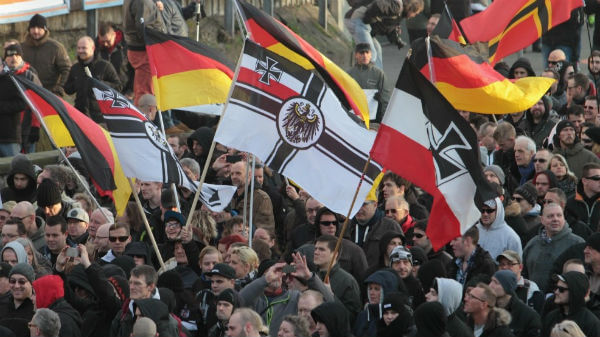
neo-nazis

Silke Stöckle and Marion Wegscheider, whose original article in German appeared in marx21, write: The NYE festivities in Cologne, Hamburg and other cities witnessed a high number of sexual attacks on women, and in at least one case, a rape. It is disturbing that this could happen, and outrageous that the authorities in the first instance failed to take victims’ reports seriously.

Sexual violence against women in Germany is in general a large and indeed a long-existing problem: women are commonly and frequently sexually harassed at large festivals, at the Oktoberfest in Munich or during the Carnival in Cologne and other cities. According to a new study commissioned by the Federal Ministry of Family Affairs, one in seven women in Germany experiences sexual violence. One in four women – irrespective of education level or socio-economic status – is exposed to domestic violence. The perpetrators are almost always men, among whom no significant distinction according to religion, background, educational level or social status exists.

In other words, every day there are more than enough reasons for a society-wide outcry over sexism and sexualised violence in Germany. Both phenomena are closely connected to the dominant image of women. Accordingly, sexual assaults on women are all too often not taken seriously, and are at first marginalised – as in Cologne, where victims have had the pleasure of being schooled by local politicians about “rules of behaviour for mass gatherings”, as though the victims, in the face of their determined assaulters, had the possibility to negotiate their way out of harm.

Women are continually portrayed as sexual objects in films, advertising and mass media. But more than this, women’s oppression is structurally anchored in our society, evidenced by differences in pay, employment opportunities or dominant role models. There is no equality here, despite frequent public proclamations to the contrary.

Rather than connecting the events in Cologne and Hamburg to the everyday sexist violence faced by women in Germany, politicians and the media establishment have, from the moment the events occurred, focused above all on the background of the alleged perpetrators, and on questions of public security. Where sexual molestation is acknowledged as a structural manifestation at all, it is only ever in relation to the “culture” in the supposed countries of origin of the perpetrators. In this way, the debate about the attacks has been instrumentalised from the get-go and, in line with a classic racist line of argument, Muslims or refugees have been stereotyped en masse. [Continue reading…]

Deutsche Welle reports: A few kilometers away [from the main station in Cologne], in the “Multi Kulti” center in the neighborhood of Mülheim, several women have gathered in an attempt to work out what measures should be taken to make the streets of Cologne safe again.

“No one is talking about the fact that this is happening to women every day,” Tanja, an activist and one of the initiators of the event told DW.

“People are insisting on making this a political story, trying to shift the focus on pro- or anti-refugees. But in fact, no one is listening to what we have to say – the women who have been suffering from this violence in the streets on a daily basis long before refugees even came here,” she says.

The violence on New Year’s Eve was not different from that during any other big-scale celebration in the city, according to Tanja. “Because refugees are now a burning topic, the media all of a sudden report about these events, but what nobody wants to admit is that these things happen all the time. I’m sorry to break this to you, but German-born men also harass and rape.” [Continue reading…]

Facebooktwittermail

Germany’s welcome for refugees has to survive the Cologne attacks

Doris Akrap writes: Too often in the past few days I have heard the Willkommenskultur-Germans saying they feel “exploited”, “abused”, “cheated”. We know this behaviour. It’s like angry parents whose children have got into trouble: “I did everything for you and what do you do?” As every parent, every German, has to learn: just like every child, every refugee is an individual. Not every refugee will study hard and become a doctor. No, some refugees will get drunk on New Year’s Eve and make a whole lot of mess.

I don’t want to trivialise sexual attacks. And I don’t want to deny the possibility that some people from the Middle East may have greater problems with women and alcohol than others. Nobody ever said that the refugees, even when they were wrapped in insulation blankets after arriving over the Mediterranean, were all angels. You’re sure to find bigots, antisemites and criminal gangs among them, just as you’ll find racists, rapists and arsonists among the German population (there were more than 200 arson attacks on refugee accommodation in Germany last year).

But my fear is that Willkommenskultur could end up as nothing more than a slogan. The people who always wanted it to fail, who believe in a Germans-only state, are abusing the fears and insecurities we all have over the background of the new arrivals. And more than that, they are abusing the dozens of women who were victims of assault on New Year’s Eve. [Continue reading…]

Facebooktwittermail

Ten ways on how not to think about the Iran/Saudi conflict

Omid Safi writes: In order to understand this conflict, do not start with Sunni/Shi‘a seventh century succession disputes to Prophet. This is a modern dispute, not one whose answers you are going to find in pre-modern books of religious history and theology. Think about how absurd it would be if we were discussing a political conflict between the U.S. and Russia, and instead of having political scientists we brought on people to talk about the historical genesis of the Greek Orthodox Church.

Probably the most succinct elaboration of this point came from Marc Lynch:

“The idea of an unending, primordial conflict between Sunnis and Shiites explains little about the ebbs and flows of regional politics. This is not a resurgence of a 1,400-year-old conflict.”

The attempt to explain the Iranian/Saudi conflict, or for that matter every Middle Eastern conflict, in purely religious terms is part of an ongoing Orientalist imagination that depicts these societies as ancient, unchanging, un-modern societies where religion is the sole determining factor (allegedly unlike an imagined “us,” who have managed to become modern and secular.) Watch this four-part series by the late, great Edward Said on how Orientalism operates (skip the introduction):

There is no disputing that religion is a factor in understanding the Middle East. In some conflicts, it might even be a primary factor. But it is never, ever the only factor. Most often it is the other factors (history, economics, ideology, demographics) that are much more important.

Religion, religious traditions, and human societies never stay static and unchanging. There is no such thing as an eternal, unchanging human tradition. [Continue reading…]

Facebooktwittermail

French proposal to strip citizenship over terrorism sets off alarms

The New York Times reports: The French police have carried out thousands of heavy-handed searches since the Nov. 13 Paris attacks, and a raft of new laws is poised to permanently concentrate even more power in the hands of the Interior Ministry.

Yet among civil libertarians, no government proposal has raised as much alarm as a recent one to strip citizenship from French-born dual nationals convicted of terrorism.

The idea, promoted by Prime Minister Manuel Valls, a Socialist with a conservative twitch, has struck at the core of France’s ideals of the rights of citizens, while underscoring the quandary the government faces as it confronts a widening threat from terrorists born and raised in France.

While the proposal to strip them of citizenship — known here as “déchéance,” or “forfeiture” — is backed by the right and much of the public, it has provoked furious debate and outraged the left, including many of Mr. Valls’s colleagues in the Socialist Party.

Mr. Valls has described the measure as “highly symbolic.” But critics fear that it would deepen fissures in French society by creating two classes of citizens.

Socialists are usually extremely reluctant to distinguish between French citizens, said Patrick Weil, the country’s leading historian on immigration. “The principle of equality is one of the pillars of French identity,” he said. “That he wants to distinguish between French citizens is creating a tsunami. It’s a terrible break with the fundamental principles of the French republic.”

At the same time, opponents of the plan point out that such a change in the law would hardly deter would-be terrorists. No one has been able to envision a situation in which a binational French suicide bomber might not press the button for fear of losing citizenship. [Continue reading…]

Facebooktwittermail

Scientists move one step closer to turning water into hydrogen fuel, affordably

Christian Science Monitor reports: Scientists have cleared one hurdle on the path to deriving hydrogen fuel from water affordably, a breakthrough that could drastically change the way we power vehicles.

Hydrogen has the potential to fuel incredibly environmentally clean cars. But making that fuel hasn’t been so efficient or economical. Pure hydrogen gas does not occur naturally on Earth, so scientists must devise ways to separate hydrogen from naturally occurring compounds, like H2 O.

Until now, cars that run on water have been out of reach. Electrolysis, the process of breaking H2 O into hydrogen and oxygen gases by passing an electric current through water, and other possible methods have been prohibitively expensive or difficult.

But a team of scientists have come up with a different mechanism to produce hydrogen fuel from water. These researchers have created a biomaterial that catalyzes the splitting of the water elements, which they describe in a paper published in the journal Nature Chemistry. [Continue reading…]

Facebooktwittermail

Why we can’t stay silent on Germany’s mass sex assaults

Maajid Nawaz writes: Recent mass migration patterns across Europe have meant that misogyny has finally come head to head with anti-racism, multiculturalism is facing off against feminism, and progressive values are wrestling with cultural tolerance.

Yes, it is racist to suspect that all brown men who look like me are rapists. It is bigoted to presume that all Muslim men who share my faith advocate religiously justified rape. It is xenophobic to assume that all male refugees are sexual predators awaiting their chance to rape. But let me be absolutely clear: What will feed this racism, bigotry, and xenophobia even more is deliberately failing to report the facts as they stand. Doing so only encourages the populist right’s rallying cry against “the establishment.”

If liberals do not address such issues swiftly, with complete candor and courage, the far-right and anti-Muslim populist groups will get there first. They have been doing so for a while now.

The far-right street protest group Hogesa, or Hooligans Against Salafism, continues to cause consternation on the streets of Cologne, while the populist-right Pegida has already responded to the New Year’s Eve attacks by announcing a protest in Cologne on Jan. 9.

No, my fellow liberals, these issues cannot be brushed under the carpet or simply willed away. They are not going anywhere, anytime soon. So how can we address this sensibly, without bursting a blood vessel in our Right eye, or missing the blind spot in our Left? [Continue reading…]

Facebooktwittermail

Europe should steer clear of anti-refugee sentiment and take sexual assault seriously

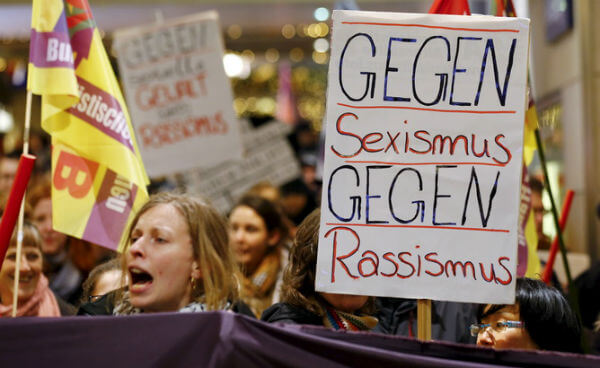
against-sexism-racism

Natasha Lennard and Lukas Hermsmeier write: Treating rape as a problem imported from the Middle East and North Africa that can be deported along with refugees grossly ignores and normalizes an already ubiquitous rape culture. Swiss newspaper Neue Zuercher Zeitung warned this week of an “imported macho culture” arriving on German soil with the refugees. The insinuation that Europe does not already have a well-worn macho culture or macho cultures of its own is nothing short of an offense to feminism. Most assaults, after all, take place in German homes: Marital rape was still legal in Germany until 1997.

This is not to say the attacks on New Year’s Eve are not deadly serious. A large number of contemporaneous assaults demand an investigation into whether and how each attack is connected; if there is a connection rooted in certain cultural or societal mores, it should not be dismissed. Currently, details about the attacks remain scarce. We know that at least 18 asylum seekers are suspects and that victims described the perpetrators as looking North African or Arabic — which are broad strokes. And needless to say, most people in Germany of that description are not seeking asylum.

In opposing the right’s racism, we must be able to countenance that a group of refugees could be responsible for the assaults and that these individuals should not be defended. We engage in our own subtle racism if, in defending the rights of refugees in general, we collapse them all into a homogeneous category, because all racism is predicated on treated an entire group of people as an undifferentiated mass. The key is to take these assaults seriously on their own terms and as part of a generalized scourge of sexual harassment and assault, which is not fought by picking out specific ethnic groups. What’s more, we should be suspicious of any people so keen to point out the links between Islamic culture and misogyny if they are not equally concerned with the prevailing violent misogynies in the cultural West. [Continue reading…]

Facebooktwittermail

Polarized views on refugees in Germany obstruct serious conversation about integration

Anna Sauerbrey writes: precisely when the country needs a coolheaded conversation about the impact of Germany’s new refugee population, we’re playing musical chairs: Everybody runs for a seat to the left and to the right, afraid to remain in the middle, apparently undecided.

The irony is that the Cologne attacks, by highlighting the issue of refugees and their culture, raise an incredibly important question and at the same time make it almost impossible to have a reasonable conversation about it.

Integration will fail if Germany cannot resolve the tension between its secular, liberal laws and culture and the patriarchal and religiously conservative worldviews that some refugees bring with them. We cannot avoid that question out of fear of feeding the far right. But integration will also fail if a full generation of refugees is demonized on arrival.

The left has long ignored the established correlations between crime and the poverty and poor education that plague refugee communities; the right has long overestimated the link between the refugees’ culture and criminal activity, even when studies show no such link exists (excepting so-called crimes of honor, which are extremely rare).

The real question we should be asking is not whether there is something inherently wrong with the refugees, but whether Germany is doing an effective job of integrating them — and if not, whether something can be done to change that. [Continue reading…]

Facebooktwittermail

In pursuit of a nuclear deal, Obama shunned Iran’s democracy movement

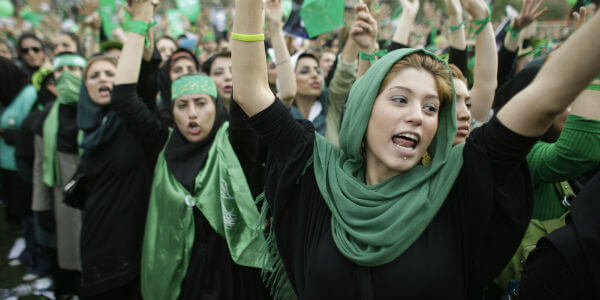
green-movement

The Wall Street Journal reports: Iranian opposition leaders secretly reached out to the White House in the summer of 2009 to gauge Mr. Obama’s support for their “green revolution,” which drew millions of people to protest the allegedly fraudulent re-election of President Mahmoud Ahmadinejad.
The demonstrations caught the White House off guard, said current and former U.S. officials who worked on Iran in the Obama administration.

Some U.S. officials pressed Mr. Obama to publicly back the fledgling Green Movement, arguing in Oval Office meetings that it marked the most important democratic opening since the 1979 Islamic revolution.

Mr. Obama wasn’t convinced. “‘Let’s give it a few days,’ was the answer,” said a senior U.S. official present at some of the White House meetings. “It was made clear: ‘We should monitor, but do nothing.’ ”

The president was invested heavily in developing a secret diplomatic outreach to Mr. Khamenei that year, sending two letters to the supreme leader in the months before the disputed election of Mr. Ahmadinejad, said current and former U.S. officials.

Obama administration officials at the time were working behind the scenes with the Sultan of Oman to open a channel to Tehran. The potential for talks with Iran — and with Mr. Khamenei as the ultimate arbiter of any nuclear agreement — influenced Mr. Obama’s thinking, current and former U.S. officials said.

U.S. officials said the White House also was getting conflicting messages from Green Movement leaders. Some wanted Mr. Obama to publicly warn Mr. Khamenei against using force. Others said such a declaration would give Iran’s supreme leader an excuse to paint the opposition as American lackeys.

Mr. Obama and his advisers decided to maintain silence in the early days of the 2009 uprising. The Central Intelligence Agency was ordered away from any covert work to support the Green Movement either inside Iran or overseas, said current and former U.S. officials involved in the discussions.

“If you were working on the nuclear deal, you were saying, ‘Don’t do too much,’ ” said Michael McFaul, who served as a senior National Security Council official at the White House before becoming ambassador to Russia in 2012.

After a week of demonstrations, Iran’s security forces went on to kill as many as 150 people and jail thousands of others over the following months, according to opposition and human rights groups. Mr. Khamenei accused the U.S. of instigating the uprising. Iran denied killing protesters.

Some of Mr. Obama’s closest advisers, including former Secretary of State Hillary Clinton, said in retrospect the U.S. should have backed the Green Movement. “If we could do it again, I would give different counsel,” said Dennis Ross, Mr. Obama’s top Mideast adviser during his first term. At the time, he said, he argued against embracing the protests.

A senior U.S. official said this week that the Obama administration argued against covert support for the Green Movement because it risked undermining its credibility domestically, not out of fear of Mr. Khamenei’s reaction. “We did not want to tar the movement,” the official said. [Continue reading…]

Facebooktwittermail

How New Year’s Eve in Cologne has changed Germany

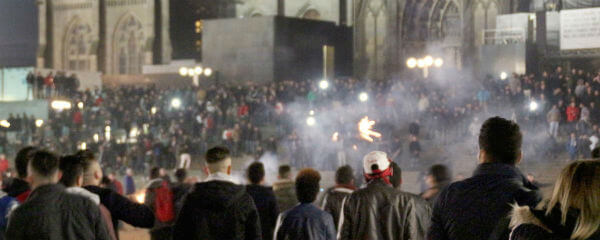
cologne-attacks2

Der Spiegel reports: A lot happened on New Year’s Eve in Cologne, much of it contradictory, much of it real, much of it imagined. Some was happenstance, some was exaggerated and much of it was horrifying. In its entirety, the events of Cologne on New Year’s Eve and in the days that followed adhered to a script that many had feared would come true even before it actually did. The fears of both immigration supporters and virulent xenophobes came true. The fears of Pegida people and refugee helpers; the fears of unknown women and of Chancellor Angela Merkel. Even Donald Trump, the brash Republican presidential candidate in the US, felt it necessary to comment. Germany, he trumpeted, “is going through massive attacks to its people by the migrants allowed to enter the country.”

For some, the events finally bring to light what they have always been saying: that too many foreigners in the country bring too many problems along with them. For the others, that which happened is what they have been afraid of from the very beginning: that ugly images of ugly behavior by migrants would endanger what has been a generally positive mood in Germany with respect to the refugees.

As inexact and unclear as the facts from Cologne may be, they carry a clear message: Difficult days are ahead. And they beg a couple of clear questions: Is Germany really sure that it can handle the influx of refugees? And: Does Germany really have the courage and the desire to become the country in Europe with the greatest number of immigrants?

The first week of 2016 was a hectic one. Tempers flared and hysteria spread. It should be noted that an attack would have triggered similar national emotions, or the murder of a child in a park or any other crime that touched on our deepest fears and serviced our long-held stereotypes — any crime in which a foreigner was involved. On New Year’s Eve in Cologne, it was — according to numerous witness reports — drunk young men from North Africa who formed gangs to go after defenseless individuals. They humiliated and robbed — and they sexually assaulted women.

Their behavior, and the subsequent discussion of their behavior in the halls of political power in Berlin, in the media and on the Internet, could easily trigger a radical shift in Germany’s refugee and immigration policies. The pressure built up by the images and stories from Cologne make it virtually impossible to continue on as before. That, too, is a paradox: The pressure would be no less intense even if not a single one of the refugees and migrants who arrived in 2015 were among the perpetrators. [Continue reading…]

CNN reports: German authorities have identified 31 people, including 18 asylum-seekers, as suspects in mob sex attacks and muggings in Cologne on New Year’s Eve — one of several such incidents in Europe.

In Cologne, where most of the attacks took place, a police spokesman confirmed Chief Wolfgang Albers was fired Friday. Albers’ dismissal comes amid criticism of his department’s handling of the violence.

One victim of the Cologne violence told CNN there were too few police on the streets to prevent attacks.

“We ran to the police. But we saw the police were so understaffed,” the victim said. “They couldn’t take care of us and we as women suffered the price.”

Spiegel Online reported that groups of men prevented officers from reaching those crying out for help.

Interior Minister Thomas de Maiziere has slammed the response of Cologne police while German Justice Minister Heiko Maas was among many who blasted Cologne Mayor Henriette Reker for advising women to keep “more than an arm’s length” from unknown men.

Reker later complained the comments were taken out of context.

Cologne police spokeswoman Christoph Gilles told reporters Friday that some 170 criminal complaints have been filed related to the apparently coordinated attacks, “at least 120 of which have a sexual angle.”

An 80-person investigative team is looking at 250 videos (with about 350 hours of footage), Gilles added.

The suspects include nine Algerian nationals, eight people from Morocco, five from Iran and four from Syria, German interior ministry spokesman Tobias Plate said. Two are German citizens, while one each are from Iraq, Serbia and the United States.

Other German cities had similar attacks that same night, including the northern city of Hamburg, where more than 50 similar incidents were reported. Other European cities also reported attacks.

Six women in Zurich, Switzerland, told authorities they were “robbed from one side, [while] being groped … on the other side” by groups of men described as having dark skin, according to a Zurich police statement released Friday.

And in Helsinki, Finland, police said they are investigating two possible criminal offenses related to New Year’s Eve harassment centered around “a gathering of asylum-seekers.”

Both the Zurich and Helsinki allegations became public well after the incidents took place. [Continue reading…]

As well as the fact that there were significant delays in the reporting of many of these events, another element of the story has as far as I’m aware received virtually no attention: the fact that at the very time these assaults were taking place, every major city in Europe (and much of the rest of the world) was under heightened security because of the anticipated risk of an attack by ISIS.

It’s as though security services in their hypervigilance watching out for masked men brandishing AK-47s and wearing suicide belts, regarded drunken mayhem and mob violence as a distraction. By being geared towards dealing with atrocities, the task of handling law and order got downgraded. The all-important preemptive police-work of keeping the peace, failed.

Facebooktwittermail

The U.S. ‘right’ to own guns came with the ‘right’ to own slaves

Christopher Dickey writes: For most of the last two centuries, Europeans have been puzzling over their American cousins’ totemic obsession with guns and their passion for concealed weapons. And back in the decades before the American Civil War, several British visitors to American shores thought they’d discerned an important connection: People who owned slaves or lived among them wanted to carry guns to keep the blacks intimidated and docile, but often shot each other, too.

In 1842, the novelist Charles Dickens, on a book tour of the United States, saw a link between the sheer savagery of slave ownership and what he called the cowardly practice of carrying pistols or daggers or both. The author of Oliver Twist listened with a mixture of horror and contempt as Americans defended their utterly indefensible “rights” to tote guns and carry Bowie knives, right along with their “right” to own other human beings who could be shackled, whipped, raped, and mutilated at will.

As damning evidence of the way slaves were treated, in his American Notes Dickens published texts from scores of advertisements for the capture of runaways. Often these public notices described the wanted men and women by their scars. One especially memorable example:

“Ran away, a negro woman and two children. A few days before she went off, I burnt her with a hot iron, on the left side of her face. I tried to make the letter M.”

Dickens also compiled a list of several shooting incidents, not all of them in the South: a county councilman blown away in the council chamber of Brown County, Wisconsin; a fatal shootout in the street in St. Louis; the murder of Missouri’s governor; two 13-year-old boys defending their “honor” by dueling with long rifles, and other examples.

What could one expect, he asked, of those who “learn to write with pens of red-hot iron on the human face” but that they carry guns and daggers to use on each other. “These are the weapons of Freedom,” Dickens wrote with brutal irony. “With sharp points and edges such as these, Liberty in America hews and hacks her slaves; or, failing that pursuit, her sons devote themselves to a better use, and turn them on each other.” [Continue reading…]

Facebooktwittermail

How you can play a part in tackling climate change – long after the Paris hype is over

By Stuart Capstick, Cardiff University and Adam Corner, Cardiff University

There’s a curious paradox at the heart of climate change. Despite scientists asserting the need for urgent action and the widespread acceptance of the reality of climate change by people worldwide, it is a subject that we tend not to talk about with friends, family or colleagues. Just 6% of the British public say they discuss climate change often, whereas approaching half (44%) do so at most rarely. Likewise, two-thirds of Americans rarely or never discuss the subject.

Perhaps we are too fearful of appearing worthy or hectoring to express our concerns, or maybe the issues seem too complex and overwhelming. Or we have grown tired of seeing polar bears floating on melting icebergs. Whatever the reasons for our reticence, however, it is hard to see how a global impetus for public engagement and action can be realised if it remains out of bounds for discussion by all but an interested few.

The Paris summit meant climate change was headline news for a week or two. Perhaps you did find yourself reflecting on the unusual weather or the fate of low-lying Pacific nations. But now that Christmas has come and gone, are you still worrying about these things? The discussion can’t tail off from here – after Paris, we need public conversation about climate change more than ever before. Whether you think the agreement was a resounding success or are troubled by its limitations, it is clear that the hard work still lies ahead.

Continue reading

Facebooktwittermail

From Tailhook to Cologne — the patterns in sexual violence

cologne-attacks

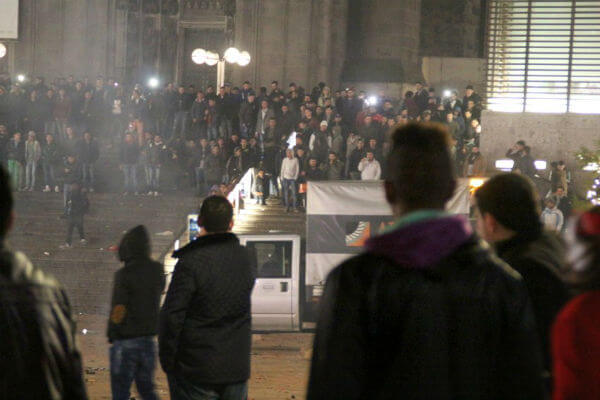
On New Year’s Eve, as many as 1,000 young men who according to police and witnesses were of north African and Arab appearance, took part in mass sexual violence and assaults on women outside the railway station in the German city of Cologne. BBC News reports that more than 100 women and girls have come forward with reports of sexual assault and robbery.

One victim, named as Busra, spoke of a sense of lawlessness outside the station, where the attackers felt they could do as they pleased.

“They felt like they were in power and that they could do anything with the women who were out in the street partying,” she said.

“They touched us everywhere. It was truly terrible.”

One of the most obvious parallels that is now being drawn is with the mass sexual assaults in Cairo that, as The Guardian reported in 2013, “have been endemic at Tahrir protests since at least the 2011 revolution”.

An internal report by Germany’s national police, the Bundespolizei, obtained by Der Spiegel, lists police officers’ experiences including one who quoted a suspect as saying: “I’m a Syrian! You have to treat me kindly! Mrs. Merkel invited me.”

Cologne’s mayor, Henriette Reker, has drawn scorn by suggesting that young women and girls need to protect themselves by adopting a code of conduct which includes, as The Independent reports, “maintaining an arm’s length distance from strangers, to stick within your own group, to ask bystanders for help or to intervene as a witness, or to inform the police if you are the victim of such an assault.”

As the accounts of victims of the attacks make clear, such a code would have been impossible to adopt on New Year’s Eve:

One woman, whose identity has been protected, told German television how gangs of men assaulted her in the crowd.

“All of a sudden these men around us began groping us,” she said. “They touched our behinds and grabbed between our legs. They touched us everywhere.

“So my girlfriend wanted to get out of the crowd. When I turned around one guy grabbed my bag and ripped it off my body.”

She said she felt in extreme danger, but there were no police officers to help.

“I thought to myself that if we stay here in this crowd they could kill us, they could rape us and nobody would notice. I thought we simply had to accept it.

“There was no one around us who helped or was in a position to help. All I wanted was to get out.

“I was scared that I wouldn’t leave this crowd alive. I was scared that if someone showed up with a knife I could be raped in the middle of the street.”

In another account reported by BBC News, a 17-year-old British girl described what she witnessed:

I was at Cologne on New Year’s Eve with my boyfriend. Upon arriving at 10pm at the train station, I felt afraid the moment I saw the strange behaviour of the people around me.

The main station was full of wobbly teenagers and young adults, of all ages, some possibly below 18, very drunk and unaware of their whereabouts. Some had already passed out on the floor in their own vomit.

Bottles were smashed on the ground and you could feel shards of glass crunching beneath your feet with every step.

Fights had taken place in the station and police were trying to contain them, but the amount of fighting made it difficult for the police to focus on every individual dispute.

We walked towards the exit of the station towards the cathedral, only to be welcomed by a huge crowd blocking the exits.

We heard a woman screaming and crying somewhere in the midst of this crowd, appearing to be escaping from a foreign man, who was shouting back and pointing his finger at her and chasing her with his accomplices.

Later on, we saw two men corner women at the cathedral and touch them while they were screaming for help and trying to fight back.

For those in Europe and North America who want to gin up fears of immigrants and refugees, the events in Cologne will seem to demonstrate that their fears are warranted, that Donald Trump’s proposed ban on Muslims is justifiable, and that those of us who repeat the slogan, “refugees welcome!” are naive.

Understandably, the attacks have sent shock-waves through Germany.

In an interview by Human Rights Watch reporting on sexual violence in Egypt in 2013, a young man in typical Western attire with gelled hair, says: “It’s not a good habit, it’s wrong, but they [women] lead us to do this. From the way they dress. From the way they walk. Everything. They push Egyptian men to do this.”

A young woman, in hijab, says: “It has happened to me several times but I don’t always react, because I’m afraid of the reaction from the guy in front of me. And I’m afraid the people around me won’t back me up.”

Al Jazeera reported in 2014:

Many Egyptian men, including members of the police force, either downplay or shrug off sexual harassment, reflecting popular views that women either should remain at home or bring trouble on themselves by dressing provocatively if they go out on the street.

“She can’t go anywhere without me,” Capt. Ahmed Mahmoud, a police officer in a working-class Cairo neighborhood, told the Huffington Post in May, speaking about his wife. “If a woman is wearing provocative clothing, the change needs to come from her.”

If this blame-the-victim mentality represented a distinctive feature of Middle Eastern societies, it might be difficult to counter the arguments being made by those in the West who want to block the entry of refugees, especially young men.

The fact is, however, that a pandemic of sexual violence involves the same factors:

  • a sense of impunity among perpetrators
  • the perpetrators’ belief that their victims deserve to be abused
  • the expectation among victims that they have little chance of finding justice

The perpetrators of most of this violence are not mobs on the rampage; they are the victims’ own intimate partners.

Both on the streets and behind closed doors, alcohol is often a contributing factor.

A 2014 report by the European Union Agency for Fundamental Rights which found that an estimated 3.7 million women in the EU had been the targets of sexual violence during the preceding 12 months, noted:

Prevalence of physical and/or sexual violence by a current partner is also markedly higher among women whose partner gets drunk frequently. If a current partner is said never to drink, or never to drink so much as to get drunk, the prevalence of this type of violence was 5%. The prevalence climbs, however, to 23% for women whose current partner gets drunk once a month or more often.

In the 1991 Tailhook scandal involving the U.S. Navy and Marines, 83 women and seven men were victims of sexual assault and harassment. The 4,000 attendees in Las Vegas “viewed the annual conference as a type of ‘free fire zone’ wherein they could act indiscriminately and without fear of censure or retribution in matters of sexual conduct or drunkenness,” according to a Pentagon investigation.

While cultural factors in sexual violence should not be ignored, there are ultimately two reasons why this kind of conduct is so commonplace:

  • the perpetrators know they can get away with it;
  • they know this because other men so often turn a blind eye.

Those who now claim that in defense of “our women” we need to guard against a foreign threat, are choosing to ignore the fact that the far more pervasive threat is much closer to home in the familiar face of a former boyfriend, an ex-husband, boyfriend, husband, father, step-father, brother, cousin, friend, or a neighbor.

Guys, the collective failure here is ours.

Facebooktwittermail

Dawn of the Anthropocene: Five ways we know humans have triggered a new geological epoch

By Jan A. Zalasiewicz, University of Leicester and Mark Williams, University of Leicester

Is the Anthropocene real? That is, the vigorously debated concept of a new geological epoch driven by humans.

Our environmental impact is indeed profound – there is little debate about that – but is it significant on a geological timescale, measured over millions of years? And will humans leave a distinctive mark upon the layers of rocks that geologists of 100,000,000AD might use to investigate the present day?

Together with other members of the Anthropocene Working Group we’ve just published a study in Science that pulls much of the evidence together.

The case for the Anthropocene might be distilled into five strands:

1. Carbon in the atmosphere

Carbon is important, both due to its growing impact on global warming and because it leaves long-lived geological traces. The increased levels of carbon dioxide in the atmosphere – now higher than at any time in at least the past few million years – can be found as fossil bubbles in the geologically short-lived “rock” that is polar ice.

But there are wider and more long-lived traces too, in the form of changed patterns of carbon isotopes (absorbed by every living thing) and in tiny, virtually indestructible particles of fly ash released from furnaces and chimneys. These are leaving an indelible signal in rock and soil strata now accumulating.

Continue reading

Facebooktwittermail

How to tell the difference between a nuclear test and an earthquake

Patrick Tucker writes: Shortly after North Korea claimed it had tested a hydrogen bomb—a weapon potentially hundreds of times more powerful than the fission bombs the country had already set off—seismologists at the United States Geological Survey, or USGS, went to work trying to understand the event. Their early findings suggest that a nuclear-bomb test did occur but that it wasn’t a hydrogen bomb. So how do you tell the difference?

First, you try to rule out the possibility that North Korea was just trying to claim credit for an earthquake. Geologists and seismologists look at several factors to determine whether a seismic event is natural or manmade. One is the location: Is it on a known fault line, a place where there’s a lot of mining activity, etc.? Another factor is the seismological waveform itself—the waving lines that appear on the seismograph. An explosion forms wiggles that are different from the ones generated by an earthquake, according to USGS seismologist Paul Earle.

Lay a Slinky on the floor, grab one end, and move it back and forth to create a wave that propagates down its length. This is called shear wave propagation, the kind created by tectonic plates slipping beneath the surface of the earth. “That side-to-side motion, you’ll get less of it in an explosion,” said Earle. [Continue reading…]

Facebooktwittermail

Putin’s anti-Obama propaganda is ugly and desperate

Paula J. Dobriansky and David B. Rivkin Jr. write: Although international relations are not conducted under Marquess of Queensberry rules and political satire can be expected from one’s foes, intensely personal attacks on foreign leaders are uncommon except in wartime. While Soviet-era anti-American propaganda could be sharp, it did not employ slurs. But in recent years racist and scatological salvos against foreign leaders have become a staple of official Russian discourse.

Turkish, German and Ukrainian officials are cast as sycophantic stooges of the United States. While slamming Ankara at a December news conference for shooting down a Russian plane that violated Turkish airspace, Russian President Vladimir Putin opined that “the Turks decided to lick the Americans in a certain place.” Sergey Glaziev, a senior adviser to Putin, has called Ukrainian President Petro Poroshenko “a Nazi Frankenstein,” and Deputy Prime Minister Dmitry Rogozin compared Ukrainian Prime Minister Arseniy Yatsenyuk to “a rubber doll from a sex shop.”

The ugliest vilification campaign, however, has been reserved for President Obama. Anti-Obama tweets come openly from government officials. Rogozin, while commenting on Obama’s 2015 State of the Union address, compared Obama to a Tuzik, Russian slang for a pathetic small dog. Irina Rodnina , a well-known Duma member, tweeted doctored images of Barack and Michelle Obama staring longingly at a banana.

Nobody in Russia gets to freelance propaganda-wise. Thus, anti-Obama rants, even when coming from prominent individuals outside government, have Putin’s imprimatur. Russian media personalities, including Dmitry Kiselyov, the host of the widely viewed “News of the Week” TV roundup, often deliver racist slurs, as compiled by Mikhail Klikushin on the Observer Web magazine. Evgeniy Satanovskiy, a Russian academic and frequent guest on Kiselyov’s program, recently also referred to Obama as a “monkey,” prompting derisive laughter and applause from the audience. Meanwhile, the famous nationalist comedian Mikhail Zadornov regularly deploys the term “schmoe” — a slang Russian prison acronym for a person who is so debased he deserves to be defecated upon — alongside Obama’s name. “Obama schmoe” has become ubiquitous enough to be scrawled on the runway of Russia’s Latakia air base in Syria. [Continue reading…]

Facebooktwittermail