Category Archives: Issues

After rapid release of hot air, Israeli leaders may soon run out of cliches

spent-force

The New York Times reports: Israeli leaders denounced the agreement reached Sunday in Geneva, saying they were not bound by it and reiterating the principle that Israel would be ready to defend itself without assistance against any threat.

After weeks of intense lobbying against any deal between the world powers and Iran that does not ensure the dismantling of Iran’s nuclear program, Prime Minister Benjamin Netanyahu of Israel called the agreement “a historic mistake,” saying in remarks that were broadcast from the start of his weekly cabinet meeting, “Today the world has become a much more dangerous place because the most dangerous regime in the world has taken a significant step toward attaining the most dangerous weapon in the world.”

Mr. Netanyahu excoriated the world’s leading powers for agreeing to Iranian uranium enrichment for the first time and for relenting on sanctions “in exchange for cosmetic Iranian concessions that can be canceled in weeks.”

“Israel is not bound by this agreement,” he said. “As prime minister of Israel, I would like to make it clear: Israel will not allow Iran to develop a military nuclear capability.”

The foreign minister of Israel, Avidgor Lieberman, told Israel Radio that “Israel will have to make a reassessment” and that “all the options are on the table.”

“We are talking about the greatest diplomatic achievement for the Iranians,” he said. “We have to take our decision in a cleareyed, independent manner, and we have to be serious enough to be responsible for our fate. Responsibility for the fate of the Jewish people and for the state of Israel lies with the Israeli government alone.” [Continue reading…]

Yada, yada, yada. What options on which table?

Jeffrey Goldberg is in no doubt that Israel no longer has any military options:

[Obama] boxed-in Israeli Prime Minister Benjamin Netanyahu so comprehensively that it’s unimaginable Israel will strike Iran in the foreseeable future. Netanyahu had his best chance to attack in 2010 and 2011, and he missed it. He came close but was swayed by Obama’s demand that he keep his planes parked. It would be a foolhardy act — one that could turn Israel into a true pariah state, and bring about the collapse of sanctions and possible war in the Middle East — if Israel were to attack Iran now, in the middle of negotiations.


Facebooktwittermail

Secret U.S.-Iran talks set stage for nuke deal

The Associated Press reports: The United States and Iran secretly engaged in a series of high-level, face-to-face talks over the past year, in a high-stakes diplomatic gamble by the Obama administration that paved the way for the historic deal sealed early Sunday in Geneva aimed at slowing Tehran’s nuclear program, The Associated Press has learned.

The discussions were kept hidden even from America’s closest friends, including its negotiating partners and Israel, until two months ago, and that may explain how the nuclear accord appeared to come together so quickly after years of stalemate and fierce hostility between Iran and the West.

But the secrecy of the talks may also explain some of the tensions between the U.S. and France, which earlier this month balked at a proposed deal, and with Israel, which is furious about the agreement and has angrily denounced the diplomatic outreach to Tehran. [Continue reading…]

Haaretz reports: Israel found out about the existence of secret talks between the United States and Iran months before they were officially informed of the negotiations by the U.S. government, a senior Israeli official told Haaretz. The Israeli government learned of the secret negotiations sometime near the beginning of the summer through intelligence it managed to obtain.

Managed to obtain how? Through surveillance on U.S. diplomatic communications? Or, more likely, through leaks from an Israel-friendly Washington insider.

Facebooktwittermail

Obama has leeway on Iran, despite U.S. lawmakers’ concerns

Reuters reports: Republican and Democratic U.S. senators on Sunday voiced skepticism about an interim nuclear deal reached with Iran but Congress looked likely to give President Barack Obama room to see if the agreement works.

The deal does not need to be ratified by Congress and Obama is using his executive power to temporarily suspend some existing U.S. sanctions on Iran.

Senators have been discussing for months imposing even tighter sanctions, which could anger Tehran and put Sunday’s deal reached in Geneva in jeopardy.

But influential Democrats – who control the Senate – made clear that any new sanctions against Iran would include a six-month window before they took effect.

That would allow time to see if Iran is sticking by the pact, worked out between Tehran, the United States and other world powers.

“It is a choice between a pause or imminent war. I choose a verifiable pause,” Senator Bill Nelson, a Democrat from Florida said.

Influential Democratic Senator Robert Menendez, who is known as a hawk on Iran, said forthcoming legislation would “provide for a six-month window to reach a final agreement before imposing new sanctions on Iran.” [Continue reading…]

Facebooktwittermail

Arab states show cautious optimism on nuclear deal

The Wall Street Journal reports: Saudi Arabia maintained a pointed silence Sunday on the new nuclear pact between world powers and Saudi Arabia’s top rival, Iran, while other Gulf and Arab states gave a cautious welcome to a deal hoped to ease tensions in a region bloodied by proxy battles between Shiite Iran and Sunni Arab states.

Saudi political commentators voiced persistent fears that Iran would now see itself as freed to advance on other, non-nuclear fronts against its Middle East rivals.

By early Monday in the Middle East, most of the region’s Muslim powers — Turkey, Egypt, and at least four of the six wealthy Arab Gulf countries — had issued statements expressing support for the deal. The United Arab Emirates., a commerce-minded nation that traditionally has thrived on doing business with both Iran and Arab states, welcomed the deal as one it hoped would protect the region “from the tension and danger of nuclear proliferation,” the emirates’ council of ministers said.

Saudi Arabia, the most powerful of the Arab states and the most intensely suspicious rival of Shiite Iran, made no public comment on the pact Sunday, and its foreign ministry didn’t return requests for comment. [Continue reading…]

Facebooktwittermail

A nuclear deal to which no one can reasonably object

Fred Kaplan writes: The Iranian nuclear deal struck Saturday night is a triumph. It contains nothing that any American, Israeli, or Arab skeptic could reasonably protest. Had George W. Bush negotiated this deal, Republicans would be hailing his diplomatic prowess, and rightly so.

A few weeks ago, a “senior administration official” outlined the agreement that President Obama hoped to achieve in Geneva. Some reporters who heard the briefing (including me) thought that the terms were way too one-sided, that the Iranians would never accept them. Here’s the thing: The deal just signed by Iran and the P5+1 nations (the United States, Britain, France, Russia, and China plus Germany) is precisely the hoped-for deal laid out at that briefing.

It is an interim agreement, not a treaty (which means, among other things, that it doesn’t require Senate ratification). It is meant as a first step toward a comprehensive treaty to be negotiated in the next six months. More than that, it expires in six months. In other words, if Iran and the other powers can’t agree on a follow-on accord in six months, nobody is stuck with a deal that was never meant to be permanent. There is no opportunity for traps and trickery.

Meanwhile, Iran has to do the following things: halt the enrichment of all uranium above 5 percent and freeze the stockpile of uranium enriched to 3.5 percent; neutralize its stockpile of uranium that’s been enriched to 20 percent (either by diluting it to 5 percent purity or converting it to a form that cannot be used to make a weapon); stop producing, installing, or modernizing centrifuges; stop constructing more enrichment facilities; halt all activities at the Arak nuclear reactor (which has the potential to produce nuclear weapons made of plutonium); permit much wider and more intrusive measures of verification by the International Atomic Energy Agency, including daily inspections of all facilities.

Without going into a lot of technical detail (which can be read here), the point is this: The agreement makes it impossible for the Iranians to make any further progress toward making a nuclear weapon in the next six months—and, if the talks break down after that, and the Iranians decide at that point to start building a nuclear arsenal, it will take them much longer to do so. [Continue reading…]

Facebooktwittermail

A path towards peace with Iran — Netanyahu’s worst nightmare

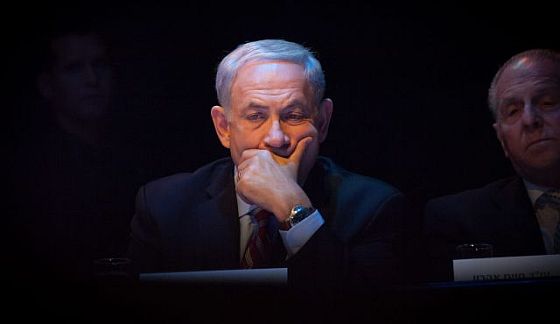
Haaretz reports: Prime Minister Benjamin Netanyahu said Sunday that the interim agreement reached hours prior between Iran and six world powers in Geneva over the prior’s nuclear program endangered Israel, calling the deal a “historic mistake.”

“What was achieved last night in Geneva is not a historic agreement; it is a historic mistake,” he said. “Today the world has become a much more dangerous place because the most dangerous regime in the world has taken a significant step toward attaining the most dangerous weapon in the world.”

“This agreement and what it means endanger many countries including, of course, Israel,” he said. “Israel is not bound by this agreement. The Iranian regime is committed to the destruction of Israel and Israel has the right and the obligation to defend itself, by itself, against any threat. As Prime Minister of Israel, I would like to make it clear: Israel will not allow Iran to develop a military nuclear capability.”

In his last-minute shuttle diplomacy, Benjamin Netanyahu made his entreaties to all the world powers begging them not to make a “bad deal” with Iran. He was politely received and then duly ignored.

Well, ignored might be an overstatement since for the last decade Israel has been instrumental in pushing Iran to the top of the international agenda when, absent that pressure, the world could have been attending to much more urgent and truly global issues.

At a time when the diplomatic momentum was clearly not moving in Netanyahu’s favor, one might ask: why did he not back down from his maximalist demand on zero enrichment and find a way of offering qualified support for this emerging nuclear accord? Why hold on to a set of conditions that Iran would find impossible to accept?

The reason is that Netanyahu’s goal has never been for the nuclear issue to be resolved. It’s political value resides wholly in this remaining an unresolved issue and in Israel’s ability to cast Iran as a perpetual threat. For Netanyahu, any deal is a bad deal because absent an Iranian threat, Israel will find itself under increasing pressure to address the Palestinian issue.

If, as now seems genuinely possible, a permanent nuclear accord is reached with Iran, this will diminish the risk of a major regional war. The risk of a local war — most likely with Lebanon — will, however, increase for as long as Israel is governed by warmongers who prefer to drum up external threats rather than attempt to get their own house in order.

Facebooktwittermail

Geneva deal seals Netanyahu’s legacy: An ineffectual leader

Amir Oren writes: Netanyahu is a serial failure. Mitt Romney was not elected president. Congress did not stand behind Israel and against Obama. The agreement with Iran will be carried out, over Netanyahu’s objections, because that is what the superpowers want. John Kerry, encouraged by the diplomatic success that began with Syria’s chemical disarmament, will not let go regarding the Israeli-Palestinian talks. The Likud leadership anticipates a diplomatic and political crisis next spring, with a divided party that will try to tie Netanyahu’s hands. If he wants to run again, as his ministers believe he does, he will have to become even more extreme and speed toward Obama on a collision course.

This morning, in Switzerland, Netanyahu had his toy gun taken away. In Basel, Herzl founded the state of the Jews, and in Geneva, Obama ended Netanyahu’s era. He can no longer claim truly that he wants to govern the Israelis. The prime minister of Israel cannot be merely some diplomatic version of PR expert Rani Rahav who rails — as Rahav does about Shelly Yacimovich — that the deal with Iran is “bad, bad, bad.”

Netanyahu continuing as prime minister is a waste of time, energy, money and attention. In a new reality, Israel needs new leadership.

Facebooktwittermail

Iran’s nuclear deal-maker keeps Twitter and the ayatollah happy

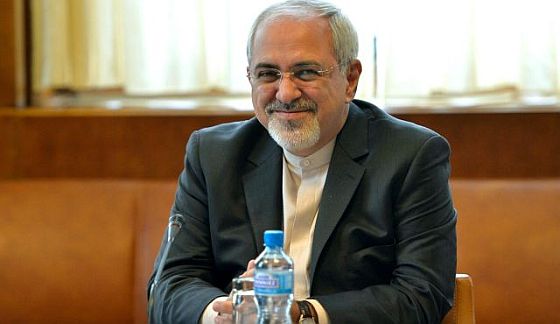
Mohammad-Javad-Zarif

The Guardian reports: “It takes two to tango,” said Iran’s foreign minister, Mohammad Javad Zarif, in an interview in September when asked how optimistic he was about a possible nuclear deal with the west.

In the early hours of Sunday, as Zarif and his six western counterparts prepared to leave Geneva’s Intercontinental hotel on a five-minute journey to Palais des Nations for a historic Kodak moment, the Iranian foreign minister was sure the other side had said yes to his invitation. The 53-year-old veteran Iranian diplomat was depicted tango dancing in the arms of Uncle Sam in a sketch by prominent cartoonist Touka Neyestani, published by Iranwire.

Before leaving the hotel, Zarif took a few moments to go up to his room on the 14th floor and complete one more task: update Twitter and Facebook. “We have reached an agreement,” he tweeted at 3.03am local time.

With that simple message, the 53-year-old veteran diplomat showed that President Hassan Rouhani’s best decision upon assuming office was to appoint him as the man in charge of reviving Tehran’s diplomacy, which was badly damaged under Mahmoud Ahmadinejad.

Now, exactly 100 days after he was officially appointed as foreign minister, Zarif has become immensely popular at home, with Iranians sympathetic to the opposition and supporters of the regime largely united in their admiration for his diplomatic work in a short time. [Continue reading…]

Facebooktwittermail

Full text of the interim nuclear agreement with Iran

Preamble: The goal for these negotiations is to reach a mutually-agreed long-term comprehensive solution that would ensure Iran’s nuclear programme will be exclusively peaceful. Iran reaffirms that under no circumstances will Iran ever seek or develop any nuclear weapons. This comprehensive solution would build on these initial measures and result in a final step for a period to be agreed upon and the resolution of concerns. This comprehensive solution would enable Iran to fully enjoy its right to nuclear energy for peaceful purposes under the relevant articles of the NPT in conformity with its obligations therein. This comprehensive solution would involve a mutually defined enrichment programme with practical limits and transparency measures to ensure the peaceful nature of the programme. This comprehensive solution would constitute an integrated whole where nothing is agreed until everything is agreed. This comprehensive solution would involve a reciprocal, step-by-step process, and would produce the comprehensive lifting of all UN Security Council sanctions, as well as multilateral and national sanctions related to Iran’s nuclear programme.

There would be additional steps in between the initial measures and the final step, including, among other things, addressing the UN Security Council resolutions, with a view toward bringing to a satisfactory conclusion the UN Security Council’s consideration of this matter. The E3+3 and Iran will be responsible for conclusion and implementation of mutual near-term measures and the comprehensive solution in good faith. A Joint Commission of E3/EU+3 and Iran will be established to monitor the implementation of the near-term measures and address issues that may arise, with the IAEA responsible for verification of nuclear-related measures. The Joint Commission will work with the IAEA to facilitate resolution of past and present issues of concern. [Continue reading…]

Facebooktwittermail

With Iran deal sealed, don’t expect Israel to send out the air force

In Haaretz, Amos Harel writes: The Israeli government has lost this battle, as it believed it would once Hassan Rohani was elected Iranian president in June. It didn’t convince the superpowers to stand firm and make the Iranians crawl toward a more demanding agreement.

Despite the criticism expected to follow, it seems Israel will have to swallow hard and accept the deal, as problematic as it is. Later on it will focus on the sanctions front. Prime Minister Benjamin Netanyahu may resume putting pressure on his friends in the U.S. Congress to try to block the administration and tighten the sanctions that are still in Congress’ purview.

Meanwhile, Israeli intelligence will try to reveal Iranian deception that would let Netanyahu keep telling the world “I told you so.” Israel has already warned that Iran could go the way of North Korea and reach the bomb despite the global diplomatic effort. But an Israeli military option isn’t in play, at least not at this stage. As long as there is such sweeping international support for the interim agreement, bombing Iran’s nuclear facilities would be political suicide.

Meanwhile, Reuters reports: Israeli stock prices rose to another record high on Sunday, ignoring local politicians’ comments that a deal to curb Iran’s nuclear programme was a mistake.

Facebooktwittermail

New U.S. sanctions would spell ‘end of deal’ to limit nuclear program

NBC News reports: Iran will not honor the nuclear agreement it just signed with the United States and other world powers if Congress imposes new sanctions, Iran’s foreign minister told NBC News after the deal was announced.

“If there are new sanctions, then there is no deal. It’s very clear. End of the deal. Because of the inability of one party to maintain their side of the bargain,” Foreign Minister Javad Zarif said during an exclusive interview with NBC News.

After four days of marathon bargaining, on Sunday the United States and its allies agreed to offer Iran “modest relief” from harsh economic sanctions and access to a portion of the revenue that the country has been denied through these sanctions. In exchange, Iran will give inspectors broader access to nuclear sites and allow spontaneous inspections.

If NBC News actually read the text of the agreement, they would not be reporting “Iran’s foreign minister told NBC News.” They would have seen it in black and white:

The U.S. Administration, acting consistent with the respective roles of the President and the Congress, will refrain from imposing new nuclear-related sanctions.

Can the crazy people on Capitol Hill exercise some restraint over the coming months? We’ll see.

Facebooktwittermail

How Iran and world powers finally got to yes on a nuclear deal

Barbara Slavin reports: Bargaining into the early hours of Sunday morning in Geneva, the representatives of the world’s major powers and Iran reached a milestone on what remains a long road to resolving the decade-old nuclear crisis, and potentially also marking a turning point in three decades of hostility between Tehran and Washington.

Under the deal hammered out between Iran and the U.S., France, Britain, Germany, China and Russia, Tehran agreed to what President Barack Obama called “substantial limitations” on its nuclear program in return for “modest relief” of sanctions that have harshly impacted the Iranian economy. The agreement covers a six-month period, during which the parties hope to establish momentum for a more far-reaching deal.

While skeptics on all sides are expected to try and pick apart the agreement, few can doubt its historical significance. Had the parties failed again this weekend – only two weeks after Secretary of State John Kerry and his counterparts last rushed to Geneva but came up short – it would have been extremely difficult to maintain the momentum of negotiations in the face of mounting pressure from more hawkish voices on all sides. President Obama’s efforts to restrain Congress from an escalation of U.S. sanctions in order to give diplomacy a chance would have been dealt a severe blow. While some in Congress will almost certainly still try to pass further sanctions, the deal reached in Geneva will have helped the White House make its case.

Indeed, Obama, speaking from the Oval Office late Saturday in Washington, said “now is not the time to move forward on new sanctions” and the agreement promises no new nuclear-related sanctions for six months if Iran abides by its commitments. [Continue reading…]

Facebooktwittermail

Iran, six world powers clinch breakthrough nuclear deal

The New York Times reports: The foreign policy chief of the European Union and Iranian officials announced a landmark accord Sunday morning that would temporarily freeze Tehran’s nuclear program and lay the foundation for a more sweeping accord.

After marathon talks that finally ended early Sunday morning, the United States and five other world powers reached an agreement with Iran to halt much of Iran’s nuclear program, and some elements would even be rolled back. It was the first time in nearly a decade, American officials said, that steps were taken to halt much of Iran’s nuclear program and roll some elements of it back.

The freeze would last six months, with the aim of giving international negotiators time to pursue the far more challenging task of drafting a comprehensive accord that would ratchet back much of Iran’s nuclear program and ensure that it could be used only for peaceful purposes.

“We have reached agreement,” Catherine Ashton, the European Union’s chief foreign policy official, posted on Twitter on Sunday morning.

According to the accord, Iran would agree to stop enriching uranium beyond 5 percent. To make good on that pledge, Iran would dismantle the links between networks of centrifuges.

All of Iran’s stockpile of uranium that has been enriched to 20 percent, a short hop to weapons-grade fuel, would be diluted or converted into oxide so that it could not be readily used for military purposes.

No new centrifuges, neither old models nor newer more efficient ones, could be installed. Centrifuges that have been installed but which are not currently operating — Iran has more than 8,000 such centrifuges — could not be started up. No new enrichment facilities could be established. [Continue reading…]

Facebooktwittermail

Surveillance goes on trial

An editorial in the New York Times says: There was a lot that was ordinary about the hearing in Courtroom 20B of the Manhattan federal courthouse on Friday morning: a team of lawyers at the plaintiff’s table, spectators in the gallery. What was extraordinary was the defendant, the United States government, and the lawsuit it is facing over the National Security Agency’s seven-year-old, once top-secret phone-surveillance program, which until this week it never had to defend in open court.

Until Edward Snowden, a disaffected N.S.A. contractor, came along and documented the stunning scope of the phone program — which vacuums up information about every call made in the United States every day for the purpose of identifying possible terror suspects — intelligence and law-enforcement officials were accustomed to operating in the friendlier confines of the Foreign Intelligence Surveillance Court.

That is not a court by any standard definition. A rotating slate of federal judges considers secret warrant applications from the government and issues secret opinions, without hearing any opposing argument. In 2012, the court approved 1,855 of 1,856 requests that came before it.

The environment on Friday was very different, as lawyers for the A.C.L.U. vigorously contested the legality of the phone-data sweep, and Federal District Judge William Pauley III expressed a proper skepticism of the government’s claim that the program raised no constitutional concerns. When a government lawyer argued that Congress twice reauthorized the Patriot Act section under which the phone program has been approved, Judge Pauley reminded him that several members of Congress have said publicly they were not made aware of what was in the program. Others have said they believe it is being abused.

The A.C.L.U., which filed its suit days after the revelation of the phone-data sweep, called the program a “vast dragnet” that violates both federal law and the Constitution. The fact that the government must show a higher level of suspicion before it can examine a specific call’s data is irrelevant, the group’s lawyers said. The collection of so much data on millions of innocent Americans is itself an unconstitutional search, they argued, and under the government’s theory, the power to collect even more is “absolutely without limit.”

In the wake of the Snowden disclosures and the ensuing public debate, the agency and the intelligence court have declassified some rulings and other documents in an attempt to justify the various surveillance programs. But far from providing comfort, the releases have only highlighted the dubious grounds on which the programs have been approved, and how often and how systematically the N.S.A. violates the court’s orders.

However Judge Pauley and the other federal judges facing similar litigation eventually rule, the most important reforms to the programs must come from Congress, which has the power to end or drastically curtail the bulk data collection and to strengthen oversight and transparency of an agency that needs much more of both.

Facebooktwittermail

U.S. ranks #27 in Web freedom and openness

Web Index: Designed and produced by the World Wide Web Foundation, the Web Index is the first multi-dimensional measure of the World Wide Web’s contribution to development and human rights globally. It covers 81 countries, incorporating indicators that assess the areas of universal access; freedom and openness; relevant content; and empowerment.

First released in 2012, the 2013 Index has been expanded and refined to include 20 new countries and features an enhanced data set, particularly in the areas of gender, Open Data, privacy rights and censorship. The Index combines existing secondary data with new primary data derived from an evidence-based expert assessment survey.

This is the second edition of the Web Index, which will be published annually. It will eventually allow for comparisons of trends over time and the benchmarking of performance across countries, continuously improving our understanding of the Web’s value for humanity.

Facebooktwittermail

How the government can discover your health problems, political beliefs, and religious practices using just your metadata

Dahlia Lithwick and Steve Vladeck write: This week brought a new round of revelations about yet another National Security Agency surveillance program, this one created to hoover up details about how individual Americans use the Internet. The new disclosures were met by most observers with a fatalistic shrug. After all, we’ve quickly grown accustomed — or at least desensitized — to the fact that the government is looking at much of the information we voluntarily provide to others. And the material being collected in this case was only “metadata”: the details of when, where, and how we used the Internet — not what we actually read or wrote.

Should NSA sweeps of our “to” and “from” lines be fair game? How much can the government really learn about us without knowing what we’re saying in the text?

The legality of the “telephony metadata” program — the initiative revealed by Glenn Greenwald in the Guardian in June that showed the government collecting telephone records of Americans on a mass scale — will be considered by a federal district judge in Manhattan on Friday. According to the now disclosed orders of the secret Foreign Intelligence Surveillance Court, such “metadata” includes “the originating and terminating telephone number and the time and duration of any call.” It also includes information about the location of both parties to the call and the international mobile subscriber identity (IMSI) and international mobile station equipment identity (IMEI) numbers, which allow Uncle Sam to “identify the user or device that is making or receiving a call.” But because it doesn’t include the content of the phone calls, the story goes, there’s no invasion of our privacy. Nothing, therefore, to worry about?

As Professor Edward Felten, director of the Center for Information Technology Policy at Princeton University, explains in a declaration filed in that phone records case, our metadata in fact tells the government a lot more about us than we might realize, especially when different types of metadata are aggregated together. Consider calls to single-purpose hotlines: NSA collection of our metadata means the government knows when we’ve called a rape hotline, a domestic violence hotline, an addiction hotline, or a support line for gay teens. Hotlines for whistleblowers in every agency are fair game, as are police hotlines for “anonymous” reports of crimes. Charities that make it possible to text a donation to a particular cause (say, Planned Parenthood) or political candidate or super PAC could reveal an enormous amount about our political activities. And calling patterns can reveal our religious beliefs (no calls on Sabbath? Heaps of calls on Christmas?) or new medical conditions. If, for instance, the government knows that, within an hour, we called an HIV testing service, then our doctor, and then our health insurance company, they may not “know” what was discussed, but anyone with common sense — even a government official — could probably figure it out. [Continue reading…]

Facebooktwittermail

The FBI files on being and nothingness

Andy Martin writes: I was leafing through some FBI files on French philosophers when a new candidate for occupancy of the populous Grassy Knoll in Dallas leapt out at me. To the massed ranks of the CIA, the Mafia, the KGB, Castro, Hoover, and LBJ, we can now add: Jean-Paul Sartre. FBI and State Department reports of the 1960s had drawn attention to Sartre’s membership of the Fair Play for Cuba Committee, of which Lee Harvey Oswald was also a member. And — prophetically? — Sartre had “dismissed the US as a headless nation.” Naturally I rushed around trying to work out exactly where Sartre might have been on 22nd November 1963. Could he, after all, have been the Second Shooter? Suddenly all the pieces started to fall into place.

But subsequent references in the main Oswald file showed that the FBI, although generally perturbed by the “Leftist tendencies” of Sartre, and his association with Communists, Castro, and Bertrand Russell, were specifically concerned that he was now — in addition to protesting against US involvement in Vietnam — threatening to “take an active part in the French Who Killed Kennedy Committee” (according to an article in the Washington Post of 14th June 1964). The FBI was wedded to the Lone Gunman theory. The emphasis of their interest in Sartre, then, was not on whether he had participated in any conspiracy, but rather that he was a believer in conspiracy theory and “supported the position that Oswald was not the true assassin of President Kennedy.”

The FBI had been keeping an eye on Sartre from as early as 1945. Soon after, they began to investigate his contemporary, Albert Camus. On 7th February, 1946, John Edgar Hoover, director of the FBI, wrote a letter to “Special Agent in Charge” at the New York field office, drawing his attention to one ALBERT CANUS, “reportedly the New York correspondent of Combat [who] has been filing inaccurate reports which are unfavorable to the public interest of this country.” Hoover gave orders “to conduct a preliminary investigation to ascertain his background, activities and affiliations in this country.” One of Hoover’s underlings had the guts to inform the director that “the subject’s true name is ALBERT CAMUS, not ALBERT CANUS” (diplomatically hypothesizing that “Canus” was probably an alias he had cunningly adopted).

The irony that emerges from the FBI files on Camus and Sartre, spanning several decades (and which, still partly redacted, I accessed thanks to the open-sesame of the Freedom of Information Act) is that the G-men, initially so anti-philosophical, find themselves reluctantly philosophizing. They become (in GK Chesterton’s phrase) philosophical policemen. [Continue reading…]

Facebooktwittermail

Toxic mix of frustration and aggravation among U.S. officers controlling nuclear weapons

The Associated Press reports: Trouble inside the Air Force’s nuclear missile force runs deeper and wider than officials have let on.

An unpublished study for the Air Force, obtained by The Associated Press, cites “burnout” among launch officers with their fingers on the triggers of 450 weapons of mass destruction. Also, evidence of broader behavioral issues across the intercontinental ballistic missile force, including sexual assaults and domestic violence.

The study, provided to the AP in draft form, says that court-martial rates in the nuclear missile force in 2011 and 2012 were more than twice as high as in the overall Air Force. Administrative punishments, such as written reprimands for rules violations and other misbehavior, also were higher in those years.

These indicators add a new dimension to an emerging picture of malaise and worse inside the ICBM force, an arm of the Air Force with a proud heritage but an uncertain future.

Concerned about heightened levels of misconduct, the Air Force directed RAND Corp., the federally funded research house, to conduct a three-month study of work conditions and attitudes among the men and women inside the ICBM force. It found a toxic mix of frustration and aggravation, heightened by a sense of being unappreciated, overworked, micromanaged and at constant risk of failure.

Remote and rarely seen, the ICBM force gets little public attention. The AP, however, this year has documented a string of missteps that call into question the management of a force that demands strict obedience to procedures. [Continue reading…]

Facebooktwittermail