Category Archives: Issues

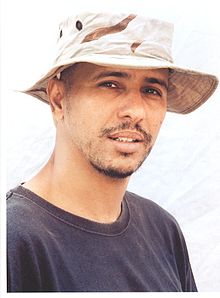
The Guantánamo memoirs of Mohamedou Ould Slahi

Mohamedou Ould Slahi has been held without charge in Guantánamo for 11 years. He was kidnapped by the U.S. government in November 2001, flown to Jordan where he was held for eight months. The Jordanians concluded he had not engaged in terrorism but the U.S. nevertheless transferred him to Bagram Air Base in Afghanistan and then two weeks later to Guantánamo.

Larry Siems writes:

What followed was one of the most stubborn, deliberate, and cruel Guantánamo interrogations on record. Secretary of Defense Donald Rumsfeld personally signed Slahi’s interrogation plan. Like Mohamed al-Qahtani, the Pentagon’s other “Special Project,” Slahi would be subjected to months of 20-hour-a-day interrogations that combined sleep deprivation, severe temperature and diet manipulation, and total isolation with relentless physical and psychological humiliations. He was told his mother had been detained and would soon be at the mercy of the all-male population at Guantánamo. He was threatened with death and subjected to a violent mock rendition. Declassified files, including the Defense Department’s Schmidt-Furlow Report, the Justice Department’s investigation of FBI involvement in Guantánamo interrogations, and the Senate Armed Services Committee’s report on the treatment of detainees, document the Pentagon’s plan and its meticulous and malicious implementation.

That all this abuse was fruitless is clear from the 2010 decision of U.S. District Court Judge James Robertson granting Slahi’s habeas corpus petition and ordering his release. Once there had been talk of trying Slahi as a key 9/11 recruiter, a capital crime, but no criminal charges were ever prepared against him. The man first assigned to prosecute him, Marine Corps Lt. Col. Stuart Couch, withdrew from the case when he discovered Slahi had been tortured. When Couch’s boss, former Guantánamo chief prosecutor Col. Morris Davis, met with the CIA, the FBI, and military intelligence in 2007 to review Slahi’s case, the agencies conceded they could not link him to any acts of terrorism. During Slahi’s habeas corpus proceedings, the government still alleged he played a role in recruiting the 9/11 hijackers, though by then it was acknowledging, as Robertson notes in a footnote to his opinion, “that Slahi probably did not even know about the 9/11 attacks.” The only evidence the government offered to support allegations of Slahi’s involvement in terrorist plots came, Robertson found, from statements he made in the course of his brutal interrogation.

Slahi testified by closed video link to Washington during the habeas corpus proceedings. What he said remains classified. Until now, one of the few documents we had of Slahi describing his ordeal, in his own words, is the declassified transcript of his November 2005 Administrative Review Board hearing. The document is remarkable for the characteristic clarity and sly humor of Slahi’s voice; a masked interrogator, he tells the board, “had gloves, OJ Simpson gloves on his hands.” It is also exceptionally earnest. Early in his statement, he tells the board, “Please, I want you guys to understand my story okay, because it really doesn’t matter if they release me or not, I just want my story understood.”

At the time, Slahi was already working on his memoir. When his pro bono attorneys met him for the first time in April 2005, he greeted them with 100 handwritten pages. With their encouragement, he delivered additional installments over the next year, complaining at one point in a letter, “You ask me to write you everything I told my interrogators. Are you out of your mind! How can I render uninterrupted interrogation that has been lasting the last 7 years? That’s like asking Charlie Sheen how many women he dated.” And yet Slahi’s writing is much more than a litany of abuses. It is driven by something much deeper: not just the desire to “be fair,” as he puts it, but to understand his guards, his interrogators, and his fellow detainees as protagonists in their own right, and to show that even the most dehumanizing situations are composed of individual, and at times harrowingly intimate, human exchanges. The result is an account that is both damning and redeeming.

From Slahi’s memoir, May, 2003 — some names and other words have been redacted:

In the block the recipe started. I was deprived of my comfort items, except for a thin iso-mat and a very thin, small, and worn-out blanket. I was deprived of my books, which I owned. I was deprived of my Quran. I was deprived of my soap. I was deprived of my toothpaste. I was deprived of the roll of toilet paper I had. The cell — better, the box — was cooled down so that I was shaking most of the time. I was forbidden from seeing the light of the day. Every once in a while they gave me a rec time in the night to keep me from seeing or interacting with any detainees. I was living literally in terror. I don’t remember having slept one night quietly; for the next 70 days to come I wouldn’t know the sweetness of sleeping. Interrogation for 24 hours, three and sometimes four shifts a day. I rarely got a day off.

“We know that you are a criminal.”

“What have I done?”

“You tell me, and we reduce your sentence to 30 years. Otherwise you will never see the light again. If you don’t cooperate we are going to put you in a hole and wipe your name out of our detainees database.” I was so terrified because I knew, even though he couldn’t make such decision on his own, he had the complete backup of the high government level. He didn’t speak from the air.

“I don’t care where you take me, just do it.”

When I failed to give him the answer he wanted to hear, he made me stand up, with my back bent because my hands were shackled with my feet and waist and locked to the floor. [ ? ? ? ? ?] turned the temp control all the way down, and made sure that the guards maintained me in that situation until he decided otherwise. He used to start a fuss before going to his lunch, so he kept me hurt during his lunch, which took at least two to three hours. [ ? ? ? ? ?] likes his food; he never missed his lunch. I was wondering, how could [ ? ? ? ? ?] have possibly passed the fitness test of the Army? But I realized he is in the Army for a reason.

The fact that I wasn’t allowed to see the light made me “enjoy” the short trip between my freakin’ cold cell and the interrogation room. It’s just a blessing when the warm GTMO sun hit me. I felt the life sneaking back into every inch of my body. I always had this fake happiness, though for a very short time. It’s like taking narcotics.

“How you been?” said one of the Puerto Rican escorting guards, with his weak English.

“I’m OK, thanks, and you?”

“No worry, you gonna back to your family,” he said. When he said so I couldn’t help breaking into [ ? ? ? ? ?]. Lately, I had become so vulnerable. What’s wrong with me? Just a soothing word in this ocean of agony was enough to make me cry. [Continue reading…]


Facebooktwittermail

Obama: Guantánamo is ‘not sustainable’

The presidential commentator-in-chief says that Guantánamo is not sustainable — and 100 prisoners on hunger strike seems to reinforce that observation. But Obama used to like to talk about the Israeli-Palestinian conflict and say “the status quo is not sustainable”. Both of these sound like the observations of a powerless bystander — someone who can see what’s wrong but has no ability to fix it.

The office of the president of the United States might not be all-powerful, but it surely possesses more power than Obama often seems willing to employ.

The New York Times reports: President Obama on Tuesday recommitted to his years-old vow to close the Guantánamo Bay prison following the arrival of “medical reinforcements” of nearly 40 Navy nurses, corpsmen and specialists amid a mass hunger strike by inmates who have been held for over a decade without trial.

“It’s not sustainable,” Mr. Obama said at a White House news conference. “The notion that we’re going to keep 100 individuals in no man’s land in perpetuity,” he added, made no sense. “All of us should reflect on why exactly are we doing this? Why are we doing this?”

Citing the high expense and the foreign policy costs of continuing to operate the prison, Mr. Obama said he would try again to persuade Congress to lift restrictions on transferring inmates to the federal court system. Mr. Obama was ambiguous, however, about the most difficult issue raised by the prospect of closing the prison: what to do with detainees who are deemed dangerous but could not be feasibly prosecuted.

Mr. Obama’s existing policy on that subject, which Congress has blocked, is to move detainees to maximum-security facilities inside the United States and continue holding them without trial as wartime prisoners; it is not clear whether such a change would ease the frustrations fueling the detainees’ hunger strike.

Yet at another point in the news conference, Mr. Obama appeared to question the policy of indefinite wartime detention at a time when the war in Iraq has ended, the one in Afghanistan is winding down and the original makeup of Al Qaeda has been decimated. “The idea that we would still maintain forever a group of individuals who have not been tried,” he said, “that is contrary to who we are, contrary to our interests, and it needs to stop.”

But in the short term, Mr. Obama indicated his support for the force-feeding of detainees who refused to eat.

“I don’t want these individuals to die,” he said.

As of Tuesday morning, 100 of the 166 prisoners at Guantánamo were officially deemed by the military to be participating in the hunger strike, with 21 “approved” to be fed the nutritional supplement Ensure through tubes inserted through their noses. [Continue reading…]

Facebooktwittermail

Netanyahu and Obama’s ‘red lines’ both becoming exposed as empty rhetoric

For Reuters, Crispian Balmer and Dan Williams write: Israel risks a loss of credibility over both its “red line” for Iran’s nuclear program and its threat of military action, and its room for unilateral maneuver is shrinking.

After years of veiled warnings that Israel might strike the Islamic Republic, Prime Minister Benjamin Netanyahu laid out an ultimatum at the United Nations last September.

Iran, he said, must not amass enough uranium at 20 percent fissile purity to fuel one bomb if enriched further. To ram the point home, he drew a red line across a cartoon bomb, guaranteeing him front page headlines around the world.

However, a respected Israeli ex-spymaster says Iran has skillfully circumvented the challenge. Other influential voices say the time has passed when Israel can hit out at Iran alone, leaving it dependent on U.S. decision-makers.

“If there was a good window of opportunity to attack, it was six months ago – not necessarily today,” said Giora Eiland, a former Israeli national security adviser. Pressure from Washington, he said, had forced Israel to drop its strike plan.

Israel has long insisted on the need for a convincing military threat and setting clear lines beyond which Iran’s nuclear activity should not advance, calling this the only way to persuade Iran that it must bow to international pressure.

Serving officials argue that Netanyahu’s repeated warnings of the menace posed by Iran’s nuclear project have pushed the issue to the top of the global agenda and helped generate some of the toughest economic sanctions ever imposed on a nation.

But some officials have also questioned the wisdom of his red line, arguing that such brinkmanship can generate unwelcome ambiguity – as the United States has discovered with its contested stance on the use of chemical weapons in Syria.

Amos Yadlin, a former military intelligence chief who runs a Tel Aviv think-tank, suggested last week that Israel had also got itself into a tangle, saying Iran had expanded its nuclear capacity beyond the Israeli limit, without triggering alarms.

“Today it can be said that the Iranians have crossed the red line set by Netanyahu at the U.N. assembly,” Yadlin told a conference at the Institute for National Security Studies (INSS), which he heads. [Continue reading…]

Facebooktwittermail

Every drone strike is an execution — with no accountability

Steve Coll writes: In the summer of 1960, Sidney Gottlieb, a C.I.A. chemist, flew to Congo with a carry-on bag containing vials of poison and a hypodermic syringe. It was an era of relative subtlety among C.I.A. assassins. The toxins were intended for the food, drink, or toothpaste of Patrice Lumumba, Congo’s Prime Minister, who, in the judgment of the Eisenhower Administration, had gone soft on Communism. Upon his arrival, as Tim Weiner recounts in his history of the C.I.A., Gottlieb handed his kit to Larry Devlin, the senior C.I.A. officer in Léopoldville. Devlin asked who had ordered the hit. “The President,” Gottlieb assured him. In later testimony, Devlin said that he felt ashamed of the command. He buried the poisons in a riverbank, but helped find an indirect way to eliminate Lumumba, by bankrolling and arming political enemies. The following January, Lumumba was executed by the Belgian military.

For Eisenhower, who had witnessed the carnage of the Normandy landings and the Battle of the Bulge, and later claimed to “hate war as only a soldier who has lived it can,” political assassinations represented an alluring alternative to conventional military action. Through the execution or overthrow of undesirable foreign leaders, the thinking went, it might be possible to orchestrate the global struggle against Communism from a distance, and avoid the misery — and the risks of nuclear war — that out-and-out combat would bring. Assassination was seen not only as precise and efficient but also as ultimately humane. Putting such theory into practice was the role of the C.I.A., and the agency’s tally of toppled leftists, nationalists, or otherwise unreliable leaders is well known, from Mohammad Mosadegh, of Iran, in 1953, and Jacobo Árbenz Guzmán, of Guatemala, in 1954, to Ngo Dinh Diem, of South Vietnam, in 1963, and Salvador Allende, of Chile, in 1973. Not all the schemes went according to plan; a few seemed inspired by Wile E. Coyote. The C.I.A. once planned to bump off Fidel Castro by passing him an exploding cigar.

Aside from the moral ugliness of violent covert action, its record as a national-security strategy isn’t encouraging. On occasion, interventions have delivered short-term advantages to Washington, but in the long run they have usually sown deeper troubles. Lumumba’s successor, the dictator Joseph Mobutu, may have been an ally of the United States until his death, in 1997, but his brutal rule prepared the way for Congo’s recent descent into chaos. Memory of the C.I.A.’s hand in Mosadegh’s overthrow stoked the anti-American fury of the Iranian Revolution, which confounds the United States to this day. Foreign policy is not a game of Risk. Great nations achieve lasting influence and security not by bloody gambits but through economic growth, scientific innovation, military deterrence, and the power of ideas. [Continue reading…]

Facebooktwittermail

What if the Tsarnaevs had been the ‘Boston Shooters’?

John Cassidy writes: Here’s a little mental experiment. Imagine, for a moment, that the Tsarnaev brothers, instead of packing a couple of pressure cookers loaded with nails and explosives into their backpacks a week ago Monday, had stuffed inside their coats two assault rifles — Bushmaster AR-15s, say, of the type that Adam Lanza used in Newtown. What would have been different?

Well, for one thing, the brothers would probably have killed a lot more than three people at the marathon. AR-15s can fire up to forty-five rounds a minute, and at close range they can tear apart a human body. If the Tsarnaevs had started firing near the finish line, they might easily have killed dozens of spectators and runners before fleeing or being shot by the police.

The second thing that would have been different is the initial public reaction. Most Americans associate bomb attacks with terrorists. When they hear of mass shootings, they tend to think of sociopaths and unbalanced post-adolescents. If the Tsarnaevs had managed to carry out a gun massacre unharmed and escaped, their identities unknown, would the first presumption have been that the shooters were Islamic extremists? Or would people have looked in another direction?

Third, had the attack been carried out with assault rifles rather than explosives and nails, the gun-control bills that perished on Capitol Hill just two days after the Boston bombings may have met a different fate. After yet another gun massacre, this one on the streets of Boston, it’s hard to imagine the White House wouldn’t have been able to summon up sixty votes in the Senate for expanded background checks. The proposed ban on assault weapons would surely have gotten the support of more than forty senators, too, and the proposal to ban multi-round magazines would also have gained more support — that’s if the gun lobby hadn’t managed to postpone the votes until emotions had cooled, which it would certainly have tried to do.

Finally, there’s the question of what would have happened to the Tsarnaevs after they had been caught — that’s assuming one or both of them had survived the attack. Just for the sake of argument, let’s say things had developed pretty much as they did, with Tamerlan, the elder brother, being killed, and Dzhokhar, the younger brother, being wounded and captured. Would the government have charged him with conspiring to use “weapons of mass destruction,” a count that could lead to the death penalty? And if they had done this, what would it have meant for the future of assault weapons? Once they’d been classified as W.M.D.s, would that have not made a difference to the public debate about how freely available they should be? [Continue reading…]

Facebooktwittermail

The Boston bombing and immigration

Andrew Rosenthal writes: Rep. Steve King, Republican of Iowa has … said that “[in light of the Boston bombings] we need to take a look at the big picture” before proceeding with immigration reform.

So, let’s look at the big picture. The slain older brother, Tamerlan Tsarnaev, had a green card, while the surviving younger brother, Dzhokhar, is a naturalized citizen. As I said, they both arrived here fairly recently.

But then, so did Lu Lingzi, one of the three people killed in the explosions. She was from China, a graduate student at Boston University who played piano and liked dogs and blueberry pancakes.

The Tsarnaevs’ 26-year-old carjacking victim was also born in China. According to a Boston Globe story on his harrowing experience “his quick-thinking escape…allowed police to swiftly track down” the brothers, “abating a possible attack” on New York City.

Guess who else was foreign born? The gas station clerk who sheltered the carjack victim and called 911. His name is Tarek Ahmed. He is 45 years old,. He told a Times reporter, Wendy Ruderman, that he is Muslim and came here from Egypt seven years ago.

Mr. Ahmed also told The Times: “I love this country. My heart goes out to everybody who is affected by this.”

The story of the Boston marathon attacks is not just about two immigrant brothers suspected of committing a horrific act of violence. It is also about the foreign residents and immigrants they victimized and those who assisted in their capture.

The “big picture” is the same as it ever was: Visa shortages and the millions of people living in the shadows, doing jobs no one else wants.

Facebooktwittermail

How Monsanto GMO crops may threaten your health

A new scientific study links the use of Roundup — the most popular herbicide used worldwide, manufactured by Monsanto and used in conjunction with Roundup-ready GMO crops whose derivatives can be found in most processed foods — with “most of the diseases and conditions associated with a Western diet, which include gastrointestinal disorders, obesity, diabetes, heart disease, depression, autism, infertility, cancer and Alzheimer’s disease.”

Reuters: The peer-reviewed report, published last week in the scientific journal Entropy, said evidence indicates that residues of “glyphosate,” the chief ingredient in Roundup weed killer, which is sprayed over millions of acres of crops, has been found in food.

Those residues enhance the damaging effects of other food-borne chemical residues and toxins in the environment to disrupt normal body functions and induce disease, according to the report, authored by Stephanie Seneff, a research scientist at the Massachusetts Institute of Technology, and Anthony Samsel, a retired science consultant from Arthur D. Little, Inc. Samsel is a former private environmental government contractor as well as a member of the Union of Concerned Scientists.

“Negative impact on the body is insidious and manifests slowly over time as inflammation damages cellular systems throughout the body,” the study says.

We “have hit upon something very important that needs to be taken seriously and further investigated,” Seneff said.

Environmentalists, consumer groups and plant scientists from several countries have warned that heavy use of glyphosate is causing problems for plants, people and animals.

The EPA is conducting a standard registration review of glyphosate and has set a deadline of 2015 for determining if glyphosate use should be limited. The study is among many comments submitted to the agency.

Monsanto is the developer of both Roundup herbicide and a suite of crops that are genetically altered to withstand being sprayed with the Roundup weed killer.

These biotech crops, including corn, soybeans, canola and sugarbeets, are planted on millions of acres in the United States annually. Farmers like them because they can spray Roundup weed killer directly on the crops to kill weeds in the fields without harming the crops.

Facebooktwittermail

Everything is rigged: The biggest price-fixing scandal ever

Matt Taibbi writes: Conspiracy theorists of the world, believers in the hidden hands of the Rothschilds and the Masons and the Illuminati, we skeptics owe you an apology. You were right. The players may be a little different, but your basic premise is correct: The world is a rigged game. We found this out in recent months, when a series of related corruption stories spilled out of the financial sector, suggesting the world’s largest banks may be fixing the prices of, well, just about everything.

You may have heard of the Libor scandal, in which at least three – and perhaps as many as 16 – of the name-brand too-big-to-fail banks have been manipulating global interest rates, in the process messing around with the prices of upward of $500 trillion (that’s trillion, with a “t”) worth of financial instruments. When that sprawling con burst into public view last year, it was easily the biggest financial scandal in history – MIT professor Andrew Lo even said it “dwarfs by orders of magnitude any financial scam in the history of markets.”

That was bad enough, but now Libor may have a twin brother. Word has leaked out that the London-based firm ICAP, the world’s largest broker of interest-rate swaps, is being investigated by American authorities for behavior that sounds eerily reminiscent of the Libor mess. Regulators are looking into whether or not a small group of brokers at ICAP may have worked with up to 15 of the world’s largest banks to manipulate ISDAfix, a benchmark number used around the world to calculate the prices of interest-rate swaps. [Continue reading…]

Facebooktwittermail

Despair drives Guantánamo detainees to revolt

The New York Times reports: In the early afternoon quiet, guards in camouflage fatigues walked the two-tiered cellblocks of Camp Six, where the most cooperative of the 166 terrorism suspects held in the military prison here are housed. From a darkened control room, other guards watched banks of surveillance monitors showing prisoners in white clothing — pacing, sleeping or reading — in their cells.

But the relative calm on display to visiting reporters last week was deceiving. Days earlier, guards had raided Camp Six and locked down protesting prisoners who had blocked security cameras, forbidding them to congregate in a communal area. A hunger strike is now in its third month, with 93 prisoners considered to be participating — more than half the inmates and twice the number before the raid.

“They are not done yet, and they will not be done until there is more than one death,” said a Muslim adviser to the military, identified as “Zak” for security reasons, who fears there may be suicides. Only one thing, he predicted, will satisfy the detainees: if someone is allowed to leave.

The spark for the protest is disputed. Detainees, through their lawyers, say that when guards conducted a search of their cells on Feb. 6, they handled their Korans in a disrespectful way. Prison officials dispute that.

But both military officials and lawyers for the detainees agree about the underlying cause of the turmoil: a growing sense among many prisoners, some of whom have been held without trial for more than 11 years, that they will never go home. [Continue reading…]

Facebooktwittermail

Republican lawmakers opposed to judicial independence

The Wall Street Journal reports: A federal judge decided to advise Boston bombing suspect Dzhokhar Tsarnaev of his Miranda rights, even though investigators apparently still wanted to question him further under a public-safety exception.

The judge’s move, made on Monday in the hospital where Mr. Tsarnaev was recovering, has prompted some Republican lawmakers to press the Justice Department as to why it didn’t make a stronger bid to resist the judge’s plans.

Those lawmakers say Mr. Tsarnaev’s interrogation should have continued without him being advised of his right to remain silent, because they say agents should have had more time to determine if there were other undetected bombs or plotters. After being read his rights, the suspect stopped talking to investigators, officials said.

“There will be more instances like this, and we will need to have a much better understanding about what is appropriate,” House Intelligence Committee Chairman Mike Rogers (R., Mich.) said in an interview Thursday. “We have a long-standing tradition that the judiciary does not interfere with investigations. This sets a very dangerous precedent.”

Justice Department spokesman Dean Boyd said Thursday, “The rules of criminal procedure require the court to advise the defendant of his right to silence and his right to counsel during the initial appearance.” Mr. Boyd said Magistrate Judge Marianne Bowler made it clear on Sunday, after the first sealed charges were filed in her court against Mr. Tsarnaev, 19 years old, that the hearing would be held the following day.

Federal rules require that defendants appear before a judge without unnecessary delay—usually defined as within one business day. [Continue reading…]

Facebooktwittermail

Post-democracy: where states answer only to business

Henry Farrell, who was asked to speak at the summer school for Il Partito Democratico, the Italian Democratic Party, in Cortona last year, writes: In the 1990s and the 2000s, right-wing parties were the enthusiasts of the market, pushing for the deregulation of banks, the privatisation of core state functions and the whittling away of social protections. All of these now look to have been very bad ideas. The economic crisis should really have discredited the right, not the left. So why is it the left that is paralysed?

Colin Crouch’s disquieting little book, Post-Democracy (2005), provides one plausible answer. Crouch is a British academic who spent several years teaching at the European University Institute in Florence, where he was my academic supervisor. His book has been well read in the UK, but in continental Europe its impact has been much more remarkable. Though he was not at the Cortona summer school in person, his ideas were omnipresent. Speaker after speaker grappled with the challenge that his book threw down. The fear that he was right, that there was no palatable exit from our situation, hung over the conference like a dusty pall.

Crouch sees the history of democracy as an arc. In the beginning, ordinary people were excluded from decision-making. During the 20th century, they became increasingly able to determine their collective fate through the electoral process, building mass parties that could represent their interests in government. Prosperity and the contentment of working people went hand in hand. Business recognised limits to its power and answered to democratically legitimated government. Markets were subordinate to politics, not the other way around.

At some point shortly after the end of the Second World War, democracy reached its apex in countries such as Britain and the US. According to Crouch, it has been declining ever since. Places such as Italy had more ambiguous histories of rise and decline, while others still, including Spain, Portugal and Greece, began the ascent much later, having only emerged from dictatorship in the 1970s. Nevertheless, all of these countries have reached the downward slope of the arc. The formal structures of democracy remain intact. People still vote. Political parties vie with each other in elections, and circulate in and out of government. Yet these acts of apparent choice have had their meaning hollowed out. The real decisions are taken elsewhere. We have become squatters in the ruins of the great democratic societies of the past.

Crouch lays some blame for this at the feet of the usual suspects. As markets globalise, businesses grow more powerful (they can relocate their activities, or threaten to relocate) and governments are weakened. Yet the real lessons of his book are about more particular forms of disconnection.

Neo-liberalism, which was supposed to replace grubby politics with efficient, market-based competition, has led not to the triumph of the free market but to the birth of new and horrid chimeras. The traditional firm, based on stable relations between employer, workers and customers, has spun itself out into a complicated and ever-shifting network of supply relationships and contractual forms. The owners remain the same but their relationship to their employees and customers is very different. For one thing, they cannot easily be held to account. As the American labour lawyer Thomas Geoghegan and others have shown, US firms have systematically divested themselves of inconvenient pension obligations to their employees, by farming them out to subsidiaries and spin-offs. Walmart has used hands-off subcontracting relationships to take advantage of unsafe working conditions in the developing world, while actively blocking efforts to improve industry safety standards until 112 garment workers died in a Bangladesh factory fire in November last year. Amazon uses subcontractors to employ warehouse employees in what can be unsafe and miserable working conditions, while minimising damage to its own brand.

Instead of clamping down on such abuses, the state has actually tried to ape these more flexible and apparently more efficient arrangements, either by putting many of its core activities out to private tender through complex contracting arrangements or by requiring its internal units to behave as if they were competing firms. As one looks from business to state and from state to business again, it is increasingly difficult to say which is which. The result is a complex web of relationships that are subject neither to market discipline nor democratic control. Businesses become entangled with the state as both customer and as regulator. States grow increasingly reliant on business, to the point where they no longer know what to do without its advice. Responsibility and accountability evanesce into an endlessly proliferating maze of contracts and subcontracts. As Crouch describes it, government is no more responsible for the delivery of services than Nike is for making the shoes that it brands. The realm of real democracy — political choices that are responsive to voters’ needs — shrinks ever further.

Politicians, meanwhile, have floated away, drifting beyond the reach of the parties that nominally chose them and the voters who elected them. They simply don’t need us as much as they used to. These days, it is far easier to ask business for money and expertise in exchange for political favours than to figure out the needs of a voting public that is increasingly fragmented and difficult to understand anyway. Both the traditional right, which always had strong connections to business, and the new left, which has woven new ties in a hurry, now rely on the private sector more than on voters or party activists. As left and right grow ever more disconnected from the public and ever closer to one another, elections become exercises in branding rather than substantive choice. [Continue reading…]

Facebooktwittermail

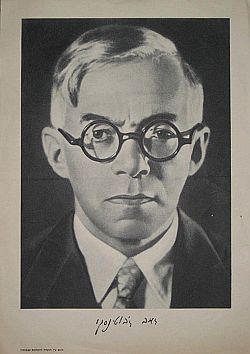
Zionism’s colonial roots

Geoffrey Wheatcroft writes: Over the last months before his much-lamented death in August 2010, Tony Judt talked at length with Timothy Snyder, his friend and fellow historian. Their conversations, published after Judt died as Thinking the Twentieth Century, were about “the politics of ideas,” the subject of the book on which Judt had embarked after Postwar, his splendid history of Europe since V-E Day, but which he knew he would not live to write. Some of these political ideas had affected him personally, in particular Zionism. As a schoolboy in London and a Cambridge undergraduate, Judt had been not only a committed supporter but also an energetic activist in Dror, a small socialist-Zionist group. He spent summers working on a kibbutz and in 1967 flew to Israel in the hour of peril as the Six-Day War began.

The story of Judt’s disenchantment with Israel and Zionism is well known, culminating in a 2003 essay in the New York Review of Books in which he concluded that Zionism, as a version of late nineteenth-century nationalism, had itself become anachronistic in a twenty-first century of open borders and multiple identities. In Thinking the Twentieth Century, Judt talks again at some length about these questions, and there is one particularly arresting passage. Despite his own early indoctrination in the socialist variant of Zionism, “I came over time to appreciate the rigor and clear-headed realism of Jabotinsky’s criticisms.”

Today there are perhaps not many readers of the New York Times or the Washington Post, let alone most other Americans, even if they warmly support Israel, who could identify Vladimir Jabotinsky by name. “Jabo” died in 1940 at a training camp near New York City and might seem a remote historical figure. And yet, as a South African historian once wrote, although his pages told of distant events, “they are also about today.” While such essays as Akiva Eldar’s fascinating “Israel’s New Politics and the Fate of Palestine” in this magazine give much insight into the here and now, that in itself cannot be understood without the there and then. What Jabotinsky once said and did is acutely relevant now, ninety years after he founded his “Revisionist” New Zionist Organization.

He may have died long ago, but his soul went marching on. In 1946–1948, the Irgun, the Revisionist armed force — “terrorists” to the British and the New York Times at the time — practiced violence against British and Arabs. It was led by Menachem Begin, who in 1977 would become the first Israeli prime minister from the Right, ending almost three decades of Labor hegemony. Two more recent leading Israeli politicians, Ehud Olmert and Tzipi Livni, a former prime minister and a one-time foreign minister, respectively, are children of Irgun activists. Jabo’s portrait hangs at Likud party meetings, and Benjamin Netanyahu, the present Likud leader and prime minister, has a direct personal connection with him. As for the Jewish Americans who continue to support the Jewish state, they may never have read a word of him, but they might be troubled if they did. Jabo is very much about today. [Continue reading…]

Facebooktwittermail

Ex-Bush official willing to testify Bush, Cheney knew Gitmo prisoners innocent

Jason Leopold reports: Former Secretary of Defense Donald Rumsfeld once declared that individuals captured by the US military in the aftermath of 9/11 and shipped off to the Guantanamo Bay prison facility represented the “worst of the worst.”

During a radio interview in June 2005, Rumsfeld said the detainees at Guantanamo, “all of whom were captured on a battlefield,” are “terrorists, trainers, bomb makers, recruiters, financiers, [Osama Bin Laden’s] body guards, would-be suicide bombers, probably the 20th hijacker, 9/11 hijacker.”

But Rumsfeld knowingly lied, according to a former top Bush administration official.

And so did then Vice President Dick Cheney when he said, also in 2002 and in dozens of public statements thereafter, that Guantanamo prisoners “are the worst of a very bad lot” and “dangerous” and “devoted to killing millions of Americans, innocent Americans, if they can, and they are perfectly prepared to die in the effort.”

Now, in a sworn declaration obtained exclusively by Truthout, Col. Lawrence Wilkerson, who was chief of staff to former Secretary of State Colin Powell during George W. Bush’s first term in office, said Bush, Cheney, and Rumsfeld knew the “vast majority” of prisoners captured in the so-called War on Terror were innocent and the administration refused to set them free once those facts were established because of the political repercussions that would have ensued. [Continue reading…]

Facebooktwittermail

What really happened to Sunil Tripathi?

Salon: Of all the ways in which last week’s horror in Boston showed the resilience and cooperation of a community in the wake of disaster, the tragedy will also inevitably go down as a shining example of the desperate, despicable scramble to hunt, to accuse, to blame first – and worry about ethics and responsibility later. If ever.

We saw it in the epic bungling of mainstream media outlets like CNN and the New York Post. We saw it in the frenzy of Redditors and overeager tweeters. We saw it, most cruelly, in the story of a missing student, a young man whose body may have been pulled Tuesday night from the Providence harbor. [Tripathi’s death has now been confirmed.]

Sunil Tripathi was already making headlines before the Boston Marathon bombing. The Brown undergraduate was last seen on March 16, wearing “a black jacket, blue jeans and a Philadelphia Eagles cap.” In the early days of his disappearance, the news focused on his friends and Pennsylvania family, who posted a video on YouTube pleading for him to come back. “Hey, Sunny,” they say to the man whose nickname belied a reported history of depression. “We miss you.” It was, at first, the haunting mystery of a philosophy student with a “warm smile and generous gentle spirit,” who’d taken a leave from school while he was “trying to figure out his future.”

And then Boston happened. In what was later far too generously referred to as the “confusion” of its aftermath, the amateur detectives of Reddit decided that the missing man could be seen in images at the scene of the bombing. [Continue reading…]

Facebooktwittermail

Miranda warning, then silence from bombing suspect

The Associated Press reports: Sixteen hours after investigators began interrogating him, the surviving suspect in the Boston Marathon bombings went silent: he’d just been read his constitutional rights.

Dzhokhar Tsarnaev immediately stopped talking after a magistrate judge and a representative from the U.S. Attorney’s office entered his hospital room and gave him his Miranda warning, according to four officials of both political parties briefed on the interrogation. They insisted on anonymity because the briefing was private.

Before being advised of his rights, the 19-year-old suspect told authorities that his older brother, Tamerlan Tsarnaev, 26, only recently had recruited him to be part of the attack that detonated pressure-cooker bombs at the marathon finish line, two U.S. officials said.

The CIA, however, had named Tamerlan to a terrorist database 18 months ago, said officials close to the investigation who spoke to The Associated Press on condition of anonymity because they were not authorized to discuss the case with reporters.

The new disclosure that Tamerlan Tsarnaev was included within a huge, classified database of known and suspected terrorists before the attacks was expected to drive congressional inquiries in coming weeks about whether the Obama administration adequately investigated tips from Russia that Tsarnaev had posed a security threat.

Shortly after the bombings, U.S. officials said the intelligence community had no information about threats to the marathon before the April 15 explosions that killed three people and injured more than 260.

Facebooktwittermail

How the hyperkinetic media is breeding a new generation of terrorists

Scott Atran writes: “Americans refuse to be terrorized,” declared President Barack Obama in the aftermath of the Boston Marathon bombings. “Ultimately, that’s what we’ll remember from this week.” Believe that, and I’ve got a bridge to sell you in Brooklyn.

The Boston bombings have provoked the most intense display of law enforcement and media coverage since the 9/11 attacks. Greater Boston was in full lockdown: “a ghost town,” “a city in terror,” “a war zone,” screamed the headlines. Public transit was stopped, a no-fly zone proclaimed, people told to stay indoors, schools and universities closed, and hundreds of FBI agents pulled from other pressing investigations to focus exclusively on the case — along with thousands upon thousands of other federal, state, and city agents equipped with heavy weapons and armored vehicles. It all came close to martial law, with all the tools of the security state mobilized to track down a pair of young immigrants with low-tech explosives and small arms who failed to reconcile their problems of identity and became suspected amateur terrorists.

Not that the events weren’t shocking and brutal. But this law enforcement and media response, of course, is part of the overall U.S. reaction to terrorism since 9/11, when perhaps never in history have so few, armed with so few means, caused so much fear in so many. Indeed, as with the anarchists a century ago, last week’s response is precisely the outsized reaction that sponsors of terrorism have always counted on in order to terrorize.

Nothing compares to the grief of parents whose child has been murdered like 8-year-old Martin Richard, except perhaps the collective grief of many parents, as for the 20 children killed in last December’s school massacre in Newtown, Conn. Yet, despite the fact that the probability of a child, or anyone else in the United States, being killed by a terrorist bomb is vastly smaller than being killed by an unregistered handgun — or even by an unregulated fertilizer plant — U.S. politicians and the public seem likely to continue to support uncritically the extravagant measures associated with an irrational policy of “zero tolerance” for terrorism, as opposed to much-more-than-zero tolerance for nearly all other threats of violence. Given the millions of dollars already spent on the Boston bombing investigation and the trillions that the national response to terrorism has cost in little more than a decade, the public deserves a more reasoned response. We can never, ever be absolutely safe, no matter how much treasure we spend or how many civil liberties we sacrifice. [Continue reading…]

Facebooktwittermail

Inside America’s dirty wars

Jeremy Scahill writes: Anwar al-Awlaki’s youngest brother, Ammar, was nothing like him. While Anwar embraced a radical interpretation of Islam and preached jihad against the United States, Ammar was pursuing a career at an oil company in Yemen. Ammar was Canadian-educated and politically well connected. He dressed in blue jeans, wore hip Armani eyeglasses and sported a goatee. His hair was slicked back, and he had the latest iPhone. In February 2011, Ammar told me, he was in Vienna on a business trip. He had just returned to his hotel after sampling some of the local cuisine with an Austrian colleague when the phone in his room rang. “Hello, Ammar?” said a man with an American accent. “My wife knows your wife, and I have a gift for her.”

Ammar went down to the lobby and saw a tall, thin white man in a crisp blue suit. They shook hands. “Can we talk a bit?” the man asked, and the two sat down in the lobby. “I don’t actually have a gift for your wife. I came from the States, and I need to talk to you about your brother.”

“I’m guessing you’re either FBI or CIA,” Ammar said. The man smiled. Ammar asked him for identification.

“Come on, we’re not FBI, we don’t have badges to identify us,” the man said. “The best I can do is, I can show you my diplomatic passport…. Call me Chris,” the American added.

“Was that your name yesterday?” Ammar replied.

Chris made it clear that he worked for the CIA. He told Ammar that the United States had a task force dedicated to “killing or capturing your brother”—and that while everyone preferred to bring Anwar in alive, time was running out. “He’s going to be killed, so why don’t you help in saving his life by helping us capture him?” Chris said. Then he added, “You know, there’s a $5 million bounty on your brother’s head. You won’t be helping us for free.”

Ammar told Chris that he didn’t want the money, that he hadn’t seen Anwar since 2004 and had no idea where he was. The American countered, “That $5 million would help raise [Anwar’s] kids.”

“I don’t think there’s any need for me to meet you again,” Ammar told Chris. Even so, the American told Ammar to think it over, perhaps discuss it with his family. “We can meet when you go to Dubai in two weeks,” he said. Ammar was stunned: his tickets for that trip had not yet been purchased, and the details were still being worked out. Chris gave Ammar an e-mail address and said he’d be in touch. [Continue reading…]

Facebooktwittermail