Category Archives: Issues

The strange non-death of neoliberalism

Review by Henry Farrell: The Strange Non-Death of Neo-Liberalism looks at the prospects of neo-liberalism (which [Colin] Crouch sees as claiming that “optimal outcomes will be achieved if the demand and supply for goods and services are allowed to adjust to each other through the price mechanism, without interference by government or other forces”) post-2008, and argues that they are pretty good. Even if neoliberalism should have been discredited, it is emerging more powerfully than ever, as states cut back welfare and public spending in the wake of the crisis. Crouch argues that neoliberalism, despite its claims, is effectively “devoted to the dominance of public life by the giant corporation.” What neo-liberals, and some leftists, see as a conflict between the market and the state is in fact an argument over how the two should relate to each other. Neoliberals are not pushing for free markets so much as a certain style of politics, which masquerades as a commitment to free markets, independent of politics, but in fact is an unhealthy hybridization of the two. To the extent that politics pervades markets, and markets pervades politics, both suffer.
[…]
Crouch depicts classical liberalism and social democracy as mirror images of each other. Both are intensely suspicious of the intermediate zone where politics and markets influence each other, classical liberals because they fear that politics will distort markets, social democrats because they fear that markets will distort politics. But neoliberals have settled for solutions which greatly widen the zone of interaction. As neoliberals have been unable to convince the public that government should simply stop providing key collective goods, and instead leave them to the market, they have instead opted for intermediate arrangements, such as privatization (but with regulators) and the contracting out of government work.

This argument leads directly into a damning (and to me entirely convincing) indictment of the UK government’s privatization and ‘marketization’ of public services from Margaret Thatcher on. These have not created true markets. Instead, they have resulted in a kind of horrid chimera of government and private actor, with no obvious lines of accountability. The UK government turns to the private sector for project financing – but the private sector firm which leases the relevant facility back to the government has control for 20 or 30 years, under a fixed contract. “Long PFI contracts bring in private firms while limiting the role of the market, again demonstrating how the neoliberal policy shift is more about firms than about markets.” Lengthy chains of contracting and subcontracting relations mean that no-one is really accountable. The businesses who win these contracts win because they have a comparative advantage – in winning government contracts. [Continue reading…]


Facebooktwittermail

Stephen Hawking joins academic boycott of Israel

The Guardian reports: Professor Stephen Hawking is backing the academic boycott of Israel by pulling out of a conference hosted by Israeli president Shimon Peres in Jerusalem as a protest at Israel’s treatment of Palestinians.

Hawking, 71, the world-renowned theoretical physicist and former Lucasian Professor of Mathematics at the University of Cambridge, had accepted an invitation to headline the fifth annual president’s conference, Facing Tomorrow, in June, which features major international personalities, attracts thousands of participants and this year will celebrate Peres’s 90th birthday.

Hawking is in very poor health, but last week he wrote a brief letter to the Israeli president to say he had changed his mind. He has not announced his decision publicly, but a statement published by the British Committee for the Universities of Palestine with Hawking’s approval described it as “his independent decision to respect the boycott, based upon his knowledge of Palestine, and on the unanimous advice of his own academic contacts there”. [Continue reading…]

Facebooktwittermail

Outsourcing assassination

Micah Zenko writes: “Outsourcing” is a dirty word in Washington these days. But officials are strangely silent when it involves targeted killings. This column has repeatedly focused on the scope, distinction, legality, and strategic effectiveness of America’s Third War of non-battlefield targeted killings in Pakistan, Yemen, Somalia, and the Philippines. Among the most widely promulgated criticisms of U.S. drone strikes is the absence of any transparency in decision making, limited congressional and judicial oversight, and the potential for civilian harm without any apparent corrective action. Policymakers and analysts have offered suggestions for how — over 10 years after they began — the Obama administration could comprehensively reform its targeted killing policies. Finally, President Barack Obama and Attorney General Eric Holder promised some reforms related to transparency “in the months ahead.” That was several months ago. Given the Obama administration’s refusal to provide witnesses to recent congressional hearings on drones — or answer clarifying questions posed by journalists and policymakers — it is likely that forthcoming announcements will fall short of the president’s repeated goal of making his, “the most transparent administration in history.”

However, if you’re concerned by the Obama administration’s targeted killing policies, don’t overlook similar attacks conducted by allies and partners who receive U.S. money, weapons, or actionable intelligence. When the United States provides other states or non-state actors with the capabilities that enable lethal operations — without which they would not happen — it bears primary responsibility for the outcome. Whatever drone strike reforms the White House offers, or if additional congressional hearings are held, they must take into account America’s troubling role in client-state targeted killings. Consider some of the most egregious recent examples which the United States directly abetted: [Continue reading…]

Facebooktwittermail

Why the politics of envy are keenest among the very rich

George Monbiot writes: ‘I never did anything for money. I never set money as a goal. It was a result.” So says Bob Diamond, formerly the chief executive of Barclays. In doing so Diamond lays waste to the justification that his bank and others (and their innumerable apologists in government and the media) have advanced for surreal levels of remuneration – to incentivise hard work and talent. Prestige, power, a sense of purpose: for them, these are incentives enough.

Others of his class – Bernie Ecclestone and Jeroen van der Veer (the former chief executive of Shell), for example – say the same. The capture by the executive class of so much wealth performs no useful function. What the very rich appear to value is relative income. If executives were all paid 5% of current levels, the competition between them (a questionable virtue anyway) would be no less fierce. As the immensely rich HL Hunt commented several decades ago: “Money is just a way of keeping score.”

The desire for advancement along this scale appears to be insatiable. In March Forbes magazine published an article about Prince Alwaleed, who, like other Saudi princes, doubtless owes his fortune to nothing more than hard work and enterprise. According to one of the prince’s former employees, the Forbes magazine global rich list “is how he wants the world to judge his success or his stature”.

The result is “a quarter-century of intermittent lobbying, cajoling and threatening when it comes to his net worth listing”. In 2006, the researcher responsible for calculating his wealth writes, “when Forbes estimated that the prince was actually worth $7 billion less than he said he was, he called me at home the day after the list was released, sounding nearly in tears. ‘What do you want?’ he pleaded, offering up his private banker in Switzerland. ‘Tell me what you need.'”

Never mind that he has his own 747, in which he sits on a throne during flights. Never mind that his “main palace” has 420 rooms. Never mind that he possesses his own private amusement park and zoo – and, he claims, $700m worth of jewels. Never mind that he’s the richest man in the Arab world, valued by Forbes at $20bn, and has watched his wealth increase by $2bn in the past year. None of this is enough. [Continue reading…]

Facebooktwittermail

Where people go to save their souls

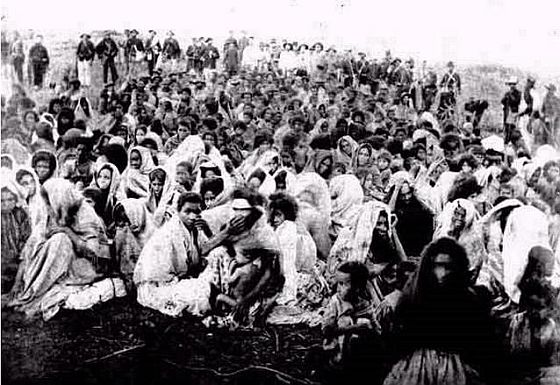
Jacob Mikanowski writes: Canudos, the holy city. From the hills it had looked like a mirage. Fifty-two hundred mud huts and a handful of white-washed churches spread along a bend in the Vasa-Barris, where a few years before there had been only a ruined farmhouse and an old well. The walls of the houses were the same shade as the parched earth on which they stood, so you could barely see the town until you were already in it. For the last ten months of the city’s life, it been bombarded by a full division of the Brazilian Army. Thousands of its defenders — the half-cowboy, half-bandit jagunços — were dead. They had been shelled by artillery from the mountains and gunned down by machine guns on the plains. When the fighting moved into the city itself, they fought house to house and door to door, using piles of corpses as barricades. Their leader was dead. Dysentery claimed him in the night. Hundreds had died in the weeks since. The end was at hand. On October 5, 1897 the Army made its final assault on the town. They found four combatants left in the trenches: two adults, an old man, and a child. They died where they stood. Canudos was no more.

Euclides da Cunha, an engineer and journalist embedded with the troops, nicknamed Canudos the “mud-walled Jerusalem,” but to the people who lived there, it was Belo Monte, the beautiful hill. When the soldiers of the Brazilian Republic finally took the city, they burnt every house, one by one, and pulled down all the spires. Then they cut the throats of all the male prisoners, including the children, and sold the women and girls to the brothels on the coast.

Finally, they dug up the body of Antonio Conselheiro, Antonio the Counselor, maybe to make sure the Messiah of the Brazilian backlands was dead. They cut off his head and sent it to Salvador, where it was met by a jubilant crowd. Doctors studied the skull for abnormalities, after which it was placed in a museum.

The photograph above shows prisoners from Canudos. It might be the first photograph of refugees, ever. It was taken just before the end of the siege by Flavio de Barros, a journalist embedded with the Brazilian Army. Barros’ equipment wasn’t very good. His pictures are scratched, damaged, and blown out by the force of the tropical sun. In this photo, the blurriness comes from the slow exposure time. Inadvertently, he caught the adults’ restlessness, the fidgeting of the children. We can’t know for sure if they are aware of what’s coming, but it’s a safe bet that they’re afraid.

The apocalypse they had been promised was different. It was supposed to be an end to poverty, an end to hunger, an end to drought, an end to property and rank. They were going to inherit the earth. For a time, it had even felt as if they had.

Canudos came into being because of a dream. It was a dream of utopia and a dream of escape. It was an ancient dream: the earthly Jerusalem, the heavenly city. And in the 1890s, it was shared by the dispossessed and marginalized the world over: by the inhabitants of Canudos in the drought-raved backlands of Brazil, by the anti-foreign Boxers in northern China, by the half-ecstatic, half-despairing practitioners of the Ghost Dance in the American West. All of them, in their separate ways, were searching for space and the means to remake the world over in their image. [Continue reading…]

Facebooktwittermail

Guantanamo detainee says prison ‘shakedown’ sparked hunger strike

The Los Angeles Times reports: Obaidullah, an Afghan villager captured with diagrams of improvised bombs, has marked nearly 11 years as a detainee at the U.S. naval base on Guantanamo Bay, Cuba.

Three months ago, outraged by what he called another prison “shakedown,” he joined a hunger strike there, and now is locked in solitary confinement with at least 100 fellow detainees.

“I have seen men who are on the verge of death being taken away to be force-fed,” Obaidullah said in a federal court affidavit declassified Friday. “I have also seen some men coughing up blood, being hospitalized, losing consciousness, becoming weak and fatigued.”

His observations are the most extensive yet by a detainee about conditions at the military prison and what prompted the hunger strike. He and others tell of a Feb. 6 search when guards confiscated toiletries, family pictures and copies of the Koran. For the detainees, the trigger was “U.S. soldiers rifling through the pages of many Korans and handling them roughly.”

Military officials said about four dozen doctors and nurses had been deployed to Guantanamo Bay to help the detainees stay alive and maybe start eating again. And Col. John Bogdan, who runs the prison, recently told reporters that the raid, which he defended, unearthed contraband including crudely fashioned weapons made out of mop handles. [Continue reading…]

Facebooktwittermail

The human cost of climate change

Overheated: The Human Cost of Climate Change — a review: The dedication of Andrew Guzman’s book makes obvious what he hopes to convey in the couple of hundred pages to follow. “To Nicholas and Daniel,” he writes, referring to his sons, “Whose Generation Will Face The Consequences.”

Many authors have written about how global warming will damage some of the world’s most treasured landscapes and beloved species. This book aims to lay out exactly how bad it will be for human beings. Guzman, a law professor and associate dean at the University of California at Berkeley, is neither a scientist nor a trained environmental activist; he is an academic well-versed in international treaties and legal niceties. This background gives him an interesting perspective on the shifts that are sure to come as climate change rearranges the world’s traditional social and economic order and as different factions jockey for advantage.

The wisest choice Guzman has made in outlining this scenario concerns the warming estimate on which he bases his projections: an increase of 2 degrees Celsius, or 3.6 degrees Fahrenheit, above pre-industrial levels by 2100. This is the threshold political leaders have pledged to keep within to have a chance of averting dangerous consequences, but every indication is that the world will warm much more by the end of the century. By adopting what Guzman himself calls “a conservative prediction,” he bolsters his case for action. After all, if things fall apart under a 2-degree scenario, how much worse would it be if the rise reached 4 degrees, which is what might very well happen given the current rate of global carbon emissions?

His answer is harsh: Plenty of disasters will unfold. The book ticks off the obvious losers in a world of rising seas, hotter temperatures and less predictable precipitation patterns: tiny Pacific island nations such as the Maldives, but also larger jurisdictions, including Bangladesh and, closer to home, California, where more than half of the state’s water supply could be disrupted if the levees in its delta region fail as a result of such effects as rising sea levels and more intense storms. Water scarcity in many regions, including the Middle East and Africa, could not only harm individuals but destabilize nations. [Continue reading…]

Facebooktwittermail

Future drones: Micro Air Vehicles — unobtrusive, pervasive, and lethal

When graduate student Pakpong Chirarattananon at the Harvard robotics laboratory successfully launched RoboBee on its first flight, the project might have looked like an innocuous and ingenious exercise in miniaturized robotics. But the Pentagon has had its eyes on such technology for several years, with “Micro Air Vehicles” which could be launched in swarms and used for surveillance and even killing.

M.A.V. – Micro Air Vehicles — U.S. Air Force Research Laboratory:

Facebooktwittermail

Guantanamo burns through $900,000 a year per inmate

Reuters reports: It’s been dubbed the most expensive prison on Earth and President Barack Obama cited the cost this week as one of many reasons to shut down the detention centre at Guantanamo Bay, which burns through some $900,000 (£577,886) per prisoner annually.

The Pentagon estimates it spends about $150 million each year to operate the prison and military court system at the U.S. Naval Base in Cuba, which was set up 11 years ago to house foreign terrorism suspects. With 166 inmates currently in custody, that amounts to an annual cost of $903,614 per prisoner.

By comparison, super-maximum security prisons in the United States spend about $60,000 to $70,000 at most to house their inmates, analysts say. And the average cost across all federal prisons is about $30,000, they say.

Facebooktwittermail

Sidelining Palestinians in Israel will doom prospects for peace

Ben White writes: In mid-April, the United States state department published its annual human rights review – and the country report for Israel makes for interesting reading. An ally praised in public as the embodiment of liberal democratic values in a “tough neighbourhood” is described as practising “institutional discrimination” against its own Palestinian citizens (the so-called Israeli Arabs).

Even in a far-from-comprehensive summary of Israel’s systematic racism, the report notes discrimination in the education system, the land regime and housing, and the legal restrictions on a Palestinian from the West Bank or Gaza living with his or her spouse in Israel.

These were not unprecedented observations – previous state department reports have said similar things – but the study provides an opportune moment to think through some important, neglected questions.

Palestinians in Israel continue to get far less attention from the international community than those in the West Bank and the Gaza Strip, even though this omission makes for bad history, poor analysis and even worse long-term peacemaking.

By coincidence, at the same time the US government published its report, Amnesty International called on the Israeli government to “scrap plans to forcibly evict Bedouin” in the Negev. The so-called Prawer Plan would involve Israel expelling tens of thousands from communities that it refuses to recognise and moving them into approved shanty towns.

Amnesty says that the plan for “house demolitions and forced evictions” is one that “blatantly violates international law”. It is criticism echoed by other human rights groups and not least by the Bedouin community itself.

But it is not just discrimination and segregation that raise concerns. There are those in Israel who would like to be rid of Palestinian citizens altogether – and see an opportunity to do so in the context of the “peace process”. [Continue reading…]

Facebooktwittermail

The bad joke called ‘the FISA court’ shows how a ‘drone court’ would work

Glenn Greenwald writes: In the mid-1970s, an investigation by the US Senate, conducted by the Church Committee, uncovered decades of serious, systemic abuse by the US government of its eavesdropping powers: listening in on the telephone calls of civil rights leaders, reading the mail of political opponents, spying on anti-war groups. The supposed lesson learned from this was that political leaders will inevitably abuse their surveillance powers if they are permitted to exercise them in the dark and without meaningful oversight. The “solution” was the enactment of a law – the 1978 Foreign Intelligence Surveillance Act (Fisa) – that made it a criminal offense for government officials to eavesdrop on the electronic communications of Americans without first obtaining a warrant from the newly created Fisa court.

From the start, the Fisa court was a radical perversion of the judicial process. It convened in total secrecy and its rulings were classified. The standard the government had to meet was not the traditional “probable cause” burden imposed by the Fourth Amendment but a significantly diluted standard. There was nothing adversarial about the proceeding: only the Justice Department (DOJ) was permitted to be present, but not any lawyers for the targets of the eavesdropping request, who were not notified. Reflecting its utter lack of real independence, the court itself was housed in the DOJ.

And, and was totally predictable, the court barely ever rejected a government request for eavesdropping. From its inception, it was the ultimate rubber-stamp court, having rejected a total of zero government applications – zero – in its first 24 years of existence, while approving many thousands. In its total 34 year history – from 1978 through 2012 – the Fisa court has rejected a grand total of 11 government applications, while approving more than 20,000. [Continue reading…]

Facebooktwittermail

Pentagon upgrades ‘bunker buster’ to appease Israelis

The Wall Street Journal reports: The Pentagon has redesigned its biggest “bunker buster” bomb with more advanced features intended to enable it to destroy Iran’s most heavily fortified and defended nuclear site.

U.S. officials see development of the weapon as critical to convincing Israel that the U.S. has the ability to prevent Iran from getting a nuclear bomb if diplomacy fails, and also that Israel’s military can’t do that on its own.

Several times in recent weeks, American officials, seeking to demonstrate U.S. capabilities, showed Israeli military and civilian leaders secret Air Force video of an earlier version of the bomb hitting its target in high-altitude testing, and explained what had been done to improve it, according to diplomats who were present.

In the video, the weapon can be seen penetrating the ground within inches of its target, followed by a large underground detonation, according to people who have seen the footage.

The newest version of what is the Pentagon’s largest conventional bomb, the 30,000-pound Massive Ordnance Penetrator, or MOP, has adjusted fuses to maximize its burrowing power, upgraded guidance systems to improve its precision and high-tech equipment intended to allow it to evade Iranian air defenses in order to reach and destroy the Fordow nuclear enrichment complex, which is buried under a mountain near the Iranian city of Qom. The upgraded MOP designed for Fordow hasn’t been dropped from a plane yet.

The improvements are meant to address U.S. and Israeli concerns that Fordow couldn’t be destroyed from the air. Overcoming that obstacle could also give the West more leverage in diplomatic efforts to convince Iran to curtail its nuclear program. [Continue reading…]

Facebooktwittermail

As long as it stays open, Guantánamo is a stain on America’s reputation

Morris Davis, former chief prosecutor for the military commissions at Guantánamo, writes: I am going to say something I have not said as often as I would have liked: I agree with President Obama. Despite indications to the contrary – such as fighting me tooth and nail in court the past three years (and counting) over my firing by the Library of Congress for writing op-eds critical of his and President Bush’s detainee policies – he apparently came to the same realization I had several years ago that, in his words, “we’ve got to close Guantánamo.”

At a press conference on Tuesday, the president said that Guantánamo is unnecessary to keep America safe; it is expensive and inefficient; it diminishes the standing of the United States in the international community; it hampers cooperation with allies on counterterrorism efforts; and it serves as a recruitment tool for extremists. He is right on all counts. How, then, could anyone find an upside to perpetuating the Guantánamo fiasco?

Well, some see advantage in pandering to fear, particularly politicians on the far right of the ideological spectrum. They argue that anyone who would consider moving the “crazy bastards” out of Guantánamo and closing it is soft on terrorism. They are wrong: they are the ones who are soft … in the head and the spine. American law enforcement agencies, prison systems and judicial processes have proven themselves quite capable of dealing with “crazy bastards” of all types. They can handle a Khalid Sheikh Mohammed. It is time to stop wasting the taxpayers’ money and squandering what credibility America has left keeping a folly afloat. [Continue reading…]

Facebooktwittermail

How to close Guantanamo

Laura Pitter writes: President Barack Obama finally broke his long silence on Tuesday on the need to close Guantanamo. Echoing comments he made four years ago — when, on his second day in office he promised to close the facility within a year — he said “Guantanamo is not necessary to keep America safe. It is expensive. It is inefficient…. It needs to be closed.”

Welcome words, but it’s unlikely they will brighten the day of the 100 men currently on hunger strike at the facility. Twenty-one are currently being tube-fed, a procedure that entails being put in a restraint chair while a lubricated plastic tube is inserted down a detainee’s nose and into his stomach. (Detainees are then held in the chair for approximately two hours to make sure the liquid supplement fed into the tube is digested.) Obama’s words might carry more resonance with those who have been lobbying for closure of the facility for the better part of a decade, though perhaps more so if he didn’t seem so keen to apportion blame elsewhere.

In his remarks, made in response to questions at the White House press briefing, Obama pointed the finger at Congress saying it had been “determined” not to let him close the facility, and that he promised to “re-engage with Congress” on the issue. While it’s true that Congress has certainly placed obstacles in the way of closing the facility, such as restricting the use of funds to transfer detainees to the United States for trial, there are still a number of steps the Obama administration could have taken — and can still take now — to begin closing the facility and ending indefinite detention without trial. [Continue reading…]

Facebooktwittermail

U.S. drone strikes being used as alternative to Guantánamo, lawyer says

The Guardian reports: The lawyer who first drew up White House policy on lethal drone strikes has accused the Obama administration of overusing them because of its reluctance to capture prisoners that would otherwise have to be sent to Guantánamo Bay.

John Bellinger, who was responsible for drafting the legal framework for targeted drone killings while working for George W Bush after 9/11, said he believed their use had increased since because President Obama was unwilling to deal with the consequences of jailing suspected al-Qaida members.

“This government has decided that instead of detaining members of al-Qaida [at Guantánamo] they are going to kill them,” he told a conference at the Bipartisan Policy Center.

Obama this week pledged to renew efforts to shut down the jail but has previously struggled to overcome congressional opposition, in part due to US disagreements over how to handle suspected terrorists and insurgents captured abroad.

An estimated 4,700 people have now been killed by some 300 US drone attacks in four countries, and the question of the programme’s status under international and domestic law remains highly controversial. [Continue reading…]

Facebooktwittermail

Delegitimizing pro-Palestinian queer voices

Brandon Davis writes: In the last eight years, the Israeli government has sought to rebrand Israel as a “liberal haven” for gay rights in an otherwise-homophobic Middle East as a means of increasing tourism and international goodwill. Critics refer to the campaign as “pinkwashing,” an attempt to whitewash the Israeli occupation by focusing on gay and lesbian issues. Many of these critics are queer people themselves, and their movement against Israeli policies is building within the LGBT community. But recent pro-Israel initiatives hope to change that; rather than simply promoting Israeli gay images in the international sphere, these Israel advocates are actually attempting to sanitize LGBTQ spaces of pro-Palestinian activism entirely.

The most recent battleground is Toronto, where Councilman James Pasternak has proposed offering extra money to the Pride parade if the organizers prevent pro-Palestinian group Queers Against Israeli Apartheid (QuAIA) from marching this June. Pasternak had previously attempted to withdraw funding from Pride altogether, claiming QuAIA’s use of the phrase “Israeli Apartheid” constituted hate speech; when that failed, he proposed granting what he calls a “diversity bonus” if Pride keeps QuAIA off the roster. Pasternak’s idea is simple: we straight people will only support you if you exclude any dissenting voices.

Unfortunately, this thinking isn’t limited to straight people, and many in the gay community — especially gay Jews — are also attempting to keep LGBT spaces clear of any pro-Palestinian sentiment. Two years ago, a small group of gay Jews successfully campaigned the New York Gay and Lesbian Center from allowing Siege Busters, another pro-Palestinian group, to hold an event, claiming the group’s politics made them feel “unsafe.” As they see it, Israel is a natural “ally” to the gay community — so what does that make pro-Palestinian gays? [Continue reading…]

Facebooktwittermail

Saudi Arabia ‘warned the United States in writing about Boston bomber Tamerlan Tsarnaev in 2012’

The Daily Mail reports: The Kingdom of Saudi Arabia sent a written warning about accused Boston Marathon bomber Tamerlan Tsarnaev to the U.S. Department of Homeland Security in 2012, long before pressure-cooker blasts killed three and injured hundreds, according to a senior Saudi government official with direct knowledge of the document.

The Saudi warning, the official told MailOnline, was separate from the multiple red flags raised by Russian intelligence in 2011, and was based on human intelligence developed independently in Yemen.

Citing security concerns, the Saudi government also denied an entry visa to the elder Tsarnaev brother in December 2011, when he hoped to make a pilgrimage to Mecca, the source said. Tsarnaev’s plans to visit Saudi Arabia have not been previously disclosed.

Facebooktwittermail