Category Archives: Issues

A new tipping point on climate change

It’s widely assumed that the lack of will from governments and industry to take the radical steps required to tackle climate change result from the difficulties the non-scientific community has in grasping the science behind the dire warnings we have all been hearing for decades. But maybe the most significant shift in attitudes is about to happen and it won’t be because of a burgeoning wider understanding of the scientific data. Instead it will be because financial markets are becoming worried that fossil fuels are destined to turn into toxic assets — toxic not because their combustion is poisoning the planet but because they are going to plummet in value.

The Guardian reports: The huge reserves of coal, oil and gas held by companies listed in the City of London are “sub-prime” assets posing a systemic risk to economic stability, a high-profile coalition of investors, politicians and scientists has warned Bank of England’s governor, Sir Mervyn King.

In an open letter on Thursday, they tell King that the global drive to reduce carbon emissions could mean billions of pounds of fossil fuel reserves will rapidly lose value and cause a “major problem” for institutional investors and pension funds.

At the most recent UN climate change summit in December, 194 of the world’s nations agreed to enact legally binding curbs on greenhouse gas emissions within three years to limit global warming to 2C. But meeting this limit would mean just 20% of existing fossil fuel reserves could be burned, according to recent research.

“These high-carbon assets pose significant strategic challenges for the future prosperity of Britain that just can’t be ignored,” said investment manager James Cameron, who is a member of the prime minister’s business advisory group. “Investors continue to pour cash into unsustainable assets without understanding the risks associated with these investments, such as climate change, local pollution, fossil fuel price volatility, political risk and catastrophes such as Deepwater Horizon.”

The letter is also signed by the government’s former chief scientific adviser Sir David King, Zac Goldsmith MP, former environment minister John Gummer and 17 others. It urges action to investigate the risk of the “carbon bubble”.

Facebooktwittermail

The very real danger of genetically modified foods

Ari LeVaux writes: Chinese researchers have found small pieces of ribonucleic acid (RNA) in the blood and organs of humans who eat rice. The Nanjing University-based team showed that this genetic material will bind to proteins in human liver cells and influence the uptake of cholesterol from the blood.

The type of RNA in question is called microRNA, due to its small size. MicroRNAs have been studied extensively since their discovery ten years ago, and have been linked to human diseases including cancer, Alzheimer’s, and diabetes. The Chinese research provides the first example of ingested plant microRNA surviving digestion and influencing human cell function.

Should the research survive scientific scrutiny, it could prove a game changer in many fields. It would mean that we’re eating not just vitamins, protein, and fuel, but information as well.

That knowledge could deepen our understanding of cross-species communication, co-evolution, and predator-prey relationships. It could illuminate new mechanisms for some metabolic disorders and perhaps explain how some herbal medicines function. And it reveals a pathway by which genetically modified (GM) foods might influence human health.

Monsanto’s website states, “There is no need for, or value in testing the safety of GM foods in humans.” This viewpoint, while good for business, is built on an understanding of genetics circa 1950. It follows what’s called the “Central Dogma” (PDF) of genetics, which postulates a one-way chain of command between DNA and the cells DNA governs.

The Central Dogma resembles the process of ordering a pizza. The DNA knows what kind of pizza it wants, and orders it. The RNA is the order slip, which communicates the specifics of the pizza to the cook. The finished and delivered pizza is analogous to the protein that DNA codes for.

We’ve known for years that the Central Dogma, though basically correct, is overly simplistic. For example: Pieces of microRNA that don’t code for anything, pizza or otherwise, can travel among cells and influence their activities in many other ways. So while the DNA is ordering pizza, it’s also bombarding the pizzeria with unrelated RNA messages that can cancel a cheese delivery, pay the dishwasher nine million dollars, or email the secret sauce recipe to WikiLeaks.

Monsanto’s claim that human toxicology tests are unwarranted is based on the doctrine of “substantial equivalence.” This term is used around the world as the basis of regulations designed to facilitate the rapid commercialization of genetically engineered foods, by sparing them from extensive safety testing.

According to substantial equivalence, comparisons between GM and non-GM crops need only investigate the end products of DNA translation: the pizza, as it were. “There is no need to test the safety of DNA introduced into GM crops. DNA (and resulting RNA) is present in almost all foods,” Monsanto’s website reads. “DNA is non-toxic and the presence of DNA, in and of itself, presents no hazard.”

The Chinese RNA study threatens to blast a major hole in that claim. It means that DNA can code for microRNA, which can, in fact, be hazardous.

Facebooktwittermail

The Middle East didn’t really get any freer in 2011

Max Fisher reports: The societies of the Middle East and North Africa are not much freer than they were one year ago, according to the new annual report by Freedom House on global trends in freedom. The 2012 Freedom in the World report, out today, finds that political rights and civil liberties in the region were pulled back almost as much as they were advanced. It seems that, although the popular democracy movements of the Arab Spring ejected three dictators and altered the region, perhaps forever, Middle Eastern autocrats and monarchs are fighting back, nearly to a draw.

The people of the Middle East and North Africa are still the least free in the world, according to Freedom House’s authoritative data. Their annual report characterizes 85 percent of Middle Easterners as “not free,” 13 percent as “partly free,” and only 2 percent as “free.” (By comparison, 39 percent of Sub-Saharan Africans — half the rate of the Middle East — are considered “not free.”) That didn’t really change this year. Middle Easterners may be organizing, protesting, fighting, and often dying for freedom, but they have by and large still not gotten it.

Freedom House describes a country’s freedom on a one-to-seven scale, with seven as the least free, for political rights and for civil liberties. For example, the U.S. receives a “one” for both political rights and civil liberties, while North Korea has a “seven” for each. According to this metric, political rights changed in only one of the region’s 21 countries and territories: Tunisia, where peaceful revolution brought the score down from a Stalinist seven to an Eastern European-style three. Civil liberties actually got worse in the aggregate. Revolution and reform brought one-point drops in Tunisia, Libya, and Lebanon; but fearful dictators and bloody crackdowns saw the scores rise by a point each in six countries: Saudi Arabia, Syria, Yemen, the United Arab Emirates, Bahrain, and the Western Sahara.

Facebooktwittermail

Anti-Semitism today

Never forget, has been the admonition from those who rightly insist that the world should never forget the horror of the Holocaust. Strange then that the term which describes the hatred that gave rise to the Holocaust should have been turned into a cheap political weapon whose primary purpose is to stifle criticism of Israel. It seems that those who say we should never forget, have themselves forgotten the meaning of anti-Semitism.

One of the most compelling illustrations of this fact is Yoav Shamir’s brilliant documentary, Defamation, currently viewable on YouTube (though it has a habit of periodically getting pulled down) and if not watched there, also now available for instant viewing at Netflix.

Glenn Greenwald writes about the latest ruckus kicked up by the Israel lobby and the efforts of former AIPAC spokesmen Josh Block, to silence those who dare criticize Israel or even question the existence of an Iranian nuclear weapons program. (And note, as I pointed out earlier, Block — like many others — treats “nuclear program” and “nuclear weapons program” as synonyms.

Look at what Josh Block told Politico about what makes someone an anti-Semite:

As a progressive Democrat, I am convinced that on issues as important as the US-Israel alliance and the threat posed by Iran’s nuclear program, there is no room for uncivil discourse or name calling, like ‘Israel Firster or ‘Likudnik’, and policy or political rhetoric that is hostile to Israel, or suggests that Iran has no nuclear weapons program, has no place in the mainstream Democratic party discourse. I also believe that when it occurs, progressive institutions, have a responsibility not to tolerate such speech or arguments.

So according to Block, you are not allowed (unless you want to be found guilty of anti-Semitism) to use “policy rhetoric that is hostile to Israel” or — more amazingly — even to “suggest that Iran has no nuclear weapons program.” Those ideas are strictly off limits, declares the former AIPAC spokesman. Apparently, then, America’s National Intelligence Estimates of 2007 and 2010 are both anti-Semitic, since they both concluded that Iran ceased work on developing a nuclear weapon back in 2003 and that there is no conclusive evidence demonstrating it resumed; to cite those reports and to embrace their conclusions makes you an anti-Semite, since you’re not allowed to “suggest that Iran has no nuclear weapons program.” Israel’s government is also evidently suffused with anti-Semites, given that Haaretz reported this week that “the Israeli view is that while Iran continues to improve its nuclear capabilities, it has not yet decided whether to translate these capabilities into a nuclear weapon.” Make certain, though, not to mention that because, according to Block, that expression of anti-semitism “has no place in the mainstream Democratic party discourse.” To avoid being an anti-Semite, you must quietly and gratefully accept the most extreme claims about the state of Iran’s nuclear weapons program: it is not permissible to debate it.

Then there’s Jason Issacson of the American Jewish Congress, who told The Jerusalem Post that “references to Israeli ‘apartheid’ . . . are so false and hateful they reveal an ugly bias no serious policy center can countenance.” Make sure to write that down: unless you want to stand revealed as an anti-Semite, you’re not allowed to point out the stark and tragic similarities between South African bantustans and the way in which residents of the West Bank are walled off into tiny enclaves and Gazans are forcibly confined to ghettos. Those guilty of anti-Semitism on this ground not only include the President of Turkey, the Foreign Minister of Finland, and a former American President – all of whom have made that comparison – but also the publisher of Haaretz, who last year repeatedly compared Israeli treatment of the Palestinians to South African apartheid; the Israeli writer Yitzhak Loar, who has argued that the situation in the occupied territories is actually worse than South African apartheid in material ways; and also, once again, Israel’s own Defense Minister (and former Prime Minister), who last year warned that the only alternative to peace is apartheid: “If this bloc of millions of Palestinians cannot vote, that will be an apartheid state.

But the most revealing decree comes from Abe Foxman’s Anti-Defamation League, which said this when arguing that these anti-Semitism smears against CAP and MM are warranted:

Most of their blogs come from a perspective of blaming Israel for the lack of progress in Israeli-Palestinian affairs and minimizing or rationalizing the Iranian threat.

So Israel has been brutally occupying Palestinian land for 45 years, and continues to aggressively expand settlements that all but foreclose any possibility of a two-state resolution. But as an American taxpayer — contributing to the billions of dollars of annual aid sent to Israel and affected in all sorts of ways by this conflict — you are not allowed to opine that Israel is primarily at fault for the lack of a peace agreement. If you do so opine, you’re not merely wrong, but you’ve exposed yourself as an anti-Semite. That opinion regarding the assignment of fault in the Israel-Palestinian conflict is strictly off limits.

Facebooktwittermail

PIPA support collapses, with 18 new Senators opposed

Ars Technica reports: Members of the Senate are rushing for the exits in the wake of the Internet’s unprecedented protest of the Protect IP Act (PIPA). At least 13 members of the upper chamber announced their opposition on Wednesday. In a particularly severe blow for Hollywood, at least five of the newly-opposed Senators were previously co-sponsors of the Protect IP Act. (Update: since we ran this story, the tally is up to 18 Senators, of which seven are former co-sponsors. See below.)

The newly-opposed Senators are skewed strongly to the Republican side of the aisle. An Ars Technica survey of Senators’ positions on PIPA turned up only two Democrats, Ben Cardin (D-MD) and Jeff Merkley (D-OR), who announced their opposition on Wednesday. The other 11 Senators who announced their opposition on Wednesday were all Republicans. These 13 join a handful of others, including Jerry Moran (R-KS), Rand Paul (R-KY), Mark Warner (D-VA), and Ron Wyden (D-OR), who have already announced their opposition.
[…]
The partisan slant of the defections is surprising because copyright has not traditionally been considered a partisan issue. Before Wednesday’s protests, PIPA had 16 Republican co-sponsors and 23 Democratic ones. The bill lost a quarter of its Republican co-sponsors on Wednesday, while we know of only one Democrat, Ben Cardin (D-MD), who dropped his support.

Those who dropped their support were most likely bolstered by strong opposition from conservative think tanks and blogs. On Tuesday, the influential Heritage Foundation announced that it would include SOPA and PIPA as a key issue on its voter scorecard. And the popular conservative blog redstate.com, whose founder threatened to mount primary challengers to SOPA supporters last month, has been hailing Senators who come out in opposition.

Neither side is close to having a majority. A whip count by OpenCongress found 35 supporters (including 34 co-sponsors), 18 opponents, and 12 more Senators leaning toward opposition. About 35 Senators have not committed to a position, perhaps reluctant to do so for fear of angering either deep-pocketed Hollywood campaign contributors or their constituents back home.

The Los Angeles Times reports: When Google speaks, the world listens.

And today, when Google asked its users to sign a petition protesting two anti-piracy laws circulating in Congress, millions responded.

A spokeswoman for Google confirmed that 4.5 million people added their names to the company’s anti-SOPA petition today.

When he was about to leave the Senate, Chris Dodd predicted he would not pass through Washington’s revolving door and become a lobbyist. Earlier, in an interview with Glenn Greenwald in 2007, he had scoffed at the idea that anyone would want to become president of a trade association. He’s now “Hollywood’s chief lobbyist“.

Apparently, the person Chris Dodd scorned back then as someone “who wants to be president of a trade association” was . . . Chris Dodd, who is now President of Hollywood’s trade association. Back then, Dodd was running around inducing large numbers of people (including me) to cheer on his presidential campaign by venerating Constitutional freedoms as the supreme value. Now, a mere three years later, he is peddling his influence in Washington — assembled during his 35 years in Congress — on behalf of a bill that, as several law professors in The Stanford Law Review recently wrote, “not only violates basic principles of due process by depriving persons of property without a fair hearing and a reasonable opportunity to be heard, it also constitutes an unconstitutional abridgment of the freedom of speech protected by the First Amendment” (Constitutional law professor Laurence Tribe has argued the same).

Furthermore, one of the bill’s chief Senate sponsors is a liberal Democrat from Vermont, Pat Leahy, who during the Bush years flamboyantly depicted himself as a stalwart defender of Constitutional liberties — and whosetop 3 campaign contribution sources [are] lawyers, entertainment industry, lobbyists.” Those industries are, of course, also major donors to Leahy’s House GOP counterpart. It’s all redolent of how Howard Dean quickly converted himself from a righteous presidential candidate who inspired large numbers of young Americans into little more than a paid shill who exploits his political celebrity by reciting the script of whichever political interests are paying him the most.

In the face of pervasive, sleazy conduct like this, it’s not only tempting to be jaded about partisan activism: it’s rational. Watching Chris Dodd and Pat Leahy join equally compromised Republicans in crusading for an Internet censorship bill — not even out of sincerely held authoritarian impulses but just base, corrupted subservience to industry — reveals most of what one needs to know about how the political class functions and who owns and controls it.

Facebooktwittermail

Study reveals the Web isn’t as polarized as we thought

Farhad Manjoo writes: Today, Facebook is publishing a study that disproves some hoary conventional wisdom about the Web. According to this new research, the online echo chamber doesn’t exist.

This is of particular interest to me. In 2008, I wrote True Enough, a book that argued that digital technology is splitting society into discrete, ideologically like-minded tribes that read, watch, or listen only to news that confirms their own beliefs. I’m not the only one who’s worried about this. Eli Pariser, the former executive director of MoveOn.org, argued in his recent book The Filter Bubble that Web personalization algorithms like Facebook’s News Feed force us to consume a dangerously narrow range of news. The echo chamber was also central to Cass Sunstein’s thesis, in his book Republic.com, that the Web may be incompatible with democracy itself. If we’re all just echoing our friends’ ideas about the world, is society doomed to become ever more polarized and solipsistic?

It turns out we’re not doomed. The new Facebook study is one of the largest and most rigorous investigations into how people receive and react to news. It was led by Eytan Bakshy, who began the work in 2010 when he was finishing his Ph.D. in information studies at the University of Michigan. He is now a researcher on Facebook’s data team, which conducts academic-type studies into how users behave on the teeming network.

Bakshy’s study involves a simple experiment. Normally, when one of your friends shares a link on Facebook, the site uses an algorithm known as EdgeRank to determine whether or not the link is displayed in your feed. In Bakshy’s experiment, conducted over seven weeks in the late summer of 2010, a small fraction of such shared links were randomly censored—that is, if a friend shared a link that EdgeRank determined you should see, it was sometimes not displayed in your feed. Randomly blocking links allowed Bakshy to create two different populations on Facebook. In one group, someone would see a link posted by a friend and decide to either share or ignore it. People in the second group would not receive the link—but if they’d seen it somewhere else beyond Facebook, these people might decide to share that same link of their own accord.

By comparing the two groups, Bakshy could answer some important questions about how we navigate news online. Are people more likely to share information because their friends pass it along? And if we are more likely to share stories we see others post, what kinds of friends get us to reshare more often—close friends, or people we don’t interact with very often? Finally, the experiment allowed Bakshy to see how “novel information”—that is, information that you wouldn’t have shared if you hadn’t seen it on Facebook—travels through the network. This is important to our understanding of echo chambers. If an algorithm like EdgeRank favors information that you’d have seen anyway, it would make Facebook an echo chamber of your own beliefs. But if EdgeRank pushes novel information through the network, Facebook becomes a beneficial source of news rather than just a reflection of your own small world.

That’s exactly what Bakshy found. His paper is heavy on math and network theory, but here’s a short summary of his results. First, he found that the closer you are with a friend on Facebook—the more times you comment on one another’s posts, the more times you appear in photos together, etc.—the greater your likelihood of sharing that person’s links. At first blush, that sounds like a confirmation of the echo chamber: We’re more likely to echo our closest friends.

But here’s Bakshy’s most crucial finding: Although we’re more likely to share information from our close friends, we still share stuff from our weak ties—and the links from those weak ties are the most novel links on the network. Those links from our weak ties, that is, are most likely to point to information that you would not have shared if you hadn’t seen it on Facebook. The links from your close ties, meanwhile, more likely contain information you would have seen elsewhere if a friend hadn’t posted it. These weak ties “are indispensible” to your network, Bakshy says. “They have access to different websites that you’re not necessarily visiting.” [Continue reading…]

Facebooktwittermail

Keystone XL decision is a big win — for now

Bill McKibben writes: Last spring, almost no one outside of Nebraska had heard of the Keystone XL pipeline. As late as October, when the National Journal surveyed 300 “energy insiders” in D.C., 91 percent predicted that the Obama administration would approve the permit for the pipeline. TransCanada stacked 1,700 miles of pipe along the proposed route, so confident was the company of victory.

Today, the State Department and the president denied the permit for the pipeline. It’s one of the rare days in the 20-year climate fight when scientists can smile and Big Oil has to frown. Because citizen activists around the country were willing to put their bodies on the line, and because the environmental movement worked with rare unity and coordination, a done deal has come spectacularly undone.

There are no permanent environmental victories, certainly not this one. TransCanada (or any other company) is free to reapply for a new permit, though I imagine this time the State Department process will be conducted with more transparency and less favoritism. And of course the biggest caveat of all: Even if every drop of tar-sands oil remained safely in the ground, we’ve still got more than enough coal and gas and oil to crash the climate system.

Facebooktwittermail

Guantánamo: An oral history

On the 10th anniversary of the arrival of the first detainees, Vanity Fair set out to compile an oral history of Guantánamo.

Pierre-Richard Prosper: On Thanksgiving weekend, I received a phone call informing me that we had just captured approximately 300 al-Qaeda and Taliban. I asked all our assistant secretaries and regional bureaus to canvass literally the world to begin to look at what options we had as to where a detention facility could be established. We began to eliminate places for different reasons. One day, in one of our meetings, we sat there puzzled as places continued to be eliminated. An individual from the Department of Justice effectively blurted out, What about Guantánamo? The individual then began to make clear that Guantánamo now is an empty facility, that there’s a basic structure there, that it’s a place that had been used to hold Haitian and Cuban migrants, and that U.S. courts in the past have given the executive branch great deference in what it did in Guantánamo.

William Howard Taft IV: At the time we selected Guantánamo we were adhering to the Geneva Conventions, and no decision had been made not to. I can’t say as to everyone, but on our side [the State Department] we were expecting and certainly quite comfortable with the use of the Geneva Conventions. It was the normal way our military had operated for 50 years.

December 27, 2001: Defense Secretary Donald Rumsfeld announces that War on Terror prisoners will indeed be sent to Guantánamo. Guantánamo, he will later say, is to be the place of confinement for “the worst of the worst.” A Red Cross presence at U.S. detention facilities has long been routine. It is not what the administration has in mind for Guantánamo, however. Manuel Supervielle was the chief military lawyer—the staff judge advocate—at Southern Command, in Miami.

Manuel Supervielle: I called Geneva, and I said, I need to speak with head of operations. I introduced myself, and I said, You may have heard the news that they’re going to be receiving some detainees in Guantánamo in the not too distant future. Would you all be interested in sending a team down there to observe?

There’s a really long pause, and the guy says, Well, yes, thank you, that’s very kind of you. He sounded quite startled. I don’t think he was expecting a phone call from U.S. jag [Judge Advocate General] at SouthCom.

During that first week of January I had a conversation with Jane Dalton [counsel to the chairman of the Joint Chiefs]. I remember saying to her, By the way, I called the I.C.R.C. a few days ago, and asked them if they wanted to come to Guantánamo. She said, You did what? In a much more excited way than that. She said, Manny, what were you thinking? I said, Look, you all have given us guidance to follow the principles of the Geneva Conventions. Would you not agree that the most important principle is transparency? The discussion mostly turned on her anticipating a very negative reaction from D.O.D., from general counsel [Jim Haynes].

January 9, 2002: Getting Guantánamo ready for an influx of detainees requires a crash effort by the military. Meanwhile, the administration lays the groundwork to abandon the Geneva Conventions. Over the next decade, Carol Rosenberg, of The Miami Herald, will spend more time at Guantánamo than any other reporter. She is there when it opens.

Carol Rosenberg: There were 40 cells made from chain-link fencing sitting on a cement slab and next to a dump, and inside it there were Seabees—Navy engineers—slamming new cages into the ground and building them as fast as they could in one corner. And Marines in another corner were rehearsing how to handle potentially fanatical, suicidal, dangerous terrorists, with one Marine playing the role of the prisoner being shackled and manacled and pushed up against the fence and handled the way a Marine would handle someone who’s the enemy, and other Marines practicing the roles of guards.

William Howard Taft IV: In early January we got a draft memorandum from the Department of Justice, which was arguing that it was not necessary for the military to comply with the Geneva Conventions in this particular conflict. It was quite a lengthy memo, and was sent to us for comment. We disagreed with it and wrote a fairly lengthy memo back.

January 11, 2002: A group of 20 prisoners arrives at Guantánamo from Afghanistan. They are housed in open-air cages—hence the name Camp X-Ray. The International Committee of the Red Cross makes its first visit six days later. The number of detainees will grow into the several hundreds during the next several years. Army Private Brandon Neely witnessed the arrival of the first detainees.

Brandon Neely: The main gate to Camp X-Ray opened, and the bus pulls up. I’m standing 20 feet away. You could hear the Marines on the bus yelling at the detainees. You know, shut up. Look down. You’re now property of the United States of America. [Continue reading…]

Facebooktwittermail

Web protests piracy bills, and senators change course

The New York Times reports: Online protests on Wednesday quickly cut into Congressional support for online antipiracy measures as lawmakers abandoned and rethought their backing for legislation that pitted new media interests against some of the most powerful old-line commercial interests in Washington.

A freshman senator, Marco Rubio of Florida, a rising Republican star, was first out of the starting gate Wednesday morning with his announcement that he would no longer back antipiracy legislation he had co-sponsored. Senator John Cornyn, the Texas Republican who heads the campaign operation for his party, quickly followed suit and urged Congress take more time to study the measure, which had been set for a test vote next week.

By Wednesday afternoon, Senator Orrin Hatch, Republican of Utah and one of the Senate bill’s original co-sponsors, called it “simply not ready for prime time” and withdrew his support.

Their decisions came after some Web pages were shut down Wednesday to protest two separate bills, the Stop Online Piracy Act in the House, written by Representative Lamar Smith, the Texas Republican who is chairman of the House Judiciary Committee, and the Protect Intellectual Property Act, drafted by Senator Patrick Leahy, the Vermont Democrat who is chairman of the Senate Judiciary Committee.

Protests organized in the real world drew far less attention. A rally convened in Midtown Manhattan outside the offices of Senators Charles E. Schumer and Kirsten E. Gillibrand, who co-sponsored some of the proposed legislation, drew a few hundred protesters.

Members of Congress, many of whom are grappling with the issues posed by the explosion in new media and social Web sites, appeared caught off guard by the enmity toward what had been a relatively obscure piece of legislation to many of them. The Internet sensibility of the Senate was represented a few years ago in remarks by the late Senator Ted Stevens, Republican of Alaska, who called the Internet “not a big truck” but a “series of tubes” — an observation enshrined in the Net Hall of Shame.

In reaction to the pending legislation, the online encyclopedia Wikipedia went dark. Google’s home page had a black banner across its home page that led to pointed information blasting the bills.

Such new-media lobbying was having an impact.

“As a senator from Florida, a state with a large presence of artists, creators and businesses connected to the creation of intellectual property, I have a strong interest in stopping online piracy that costs Florida jobs,” Mr. Rubio wrote on his Facebook page. “However, we must do this while simultaneously promoting an open, dynamic Internet environment that is ripe for innovation and promotes new technologies.”

James Allworth and Maxwell Wessel write: SOPA and PIPA are prime examples of big companies trying to do everything they can to stop new competitors from innovating. They’re also examples of how lobbying in the United States has become one of the most effective ways of limiting this sort of competition.

The argument over this legislation has essentially been characterized in the press as having two sides. The first side, which is generally represented by big content, is that piracy (and any new technology that facilitates it) is an existential threat to any business based on intellectual property. That’s actually a line that has been used a few times before — most famously by Jack Valenti, head of the MPAA, when he testified in front of congress that the VCR was to the movie industry what the Boston Strangler was to women.

And on the other side of the argument? Well, they have been mostly characterized as the “technology industries.” They’ve been making the case that SOPA and PIPA will chill innovation and threaten free speech.

But “content” vs “technology” doesn’t do justice to describing the two sides. Tim O’Reilly, the CEO of O’Reilly Media — a very well-known publishing and media company that derives a large portion of its revenue from the sale of books — has been one of the most ardent critics of SOPA and PIPA. On the other hand, GoDaddy.com, the largest of the web’s domain name registrars, was very much in favor of SOPA — at least until a boycott caused them to back down. Similarly, there are plenty of other technology firms that have supported SOPA.

So if “content” vs “technology” doesn’t capture what’s going on in this fight, what does? Well, SOPA makes much more sense if you look at the debate as big companies unwilling to accept change versus the innovative companies and startups that embrace change. And if we accept that startups are created to find new ways to create value for consumers, the debate is actually between the financial interests of “big content” shareholders versus consumer interests at large.

Facebooktwittermail

Prosecutors aim new weapon at Occupy activists: lynching allegation

MSNBC reports: Sergio Ballesteros, 30, has been involved in Occupy LA since the movement had its California launch in October. But this week, his activism took an abrupt turn when he was arrested on a felony charge — lynching.

Under the California penal code, lynching is “taking by means of a riot of any person from the lawful custody of any peace officer,” where “riot” is defined as two or more people threatening violence or disturbing the peace. The original purpose of the legal code section 405a was to protect defendants in police custody from vigilante mobs — especially black defendants from racist groups.

Whether its use in this case will be upheld by California’s courts is uncertain. But the felony charge — which carries a potential four-year prison sentence — is the kind of accusation that can change the landscape for would-be demonstrators.

“Felonies really heighten the stakes for the protesters,” said Baher Azmy, legal director at Center for Constitutional Rights in New York. “I think in situations where there are mass demonstrations and a confrontation between protesters and police, one always has to be on the lookout for exaggerated interpretations of legal rules that attempt to punish or squelch the protesters.”

Facebooktwittermail

Israel’s ‘national suicide’

Mark LeVine writes: Say what you will about Israel’s High Court of Justice, it knows how to name a decision.

In titling last Wednesday’s legal decision, upholding the controversial Citizenship Law that prevents Palestinian spouses of Israeli citizens from living in Israel “Human rights are not a prescription for national suicide”, the court’s majority well summed up the existential predicament Israel faces today – indeed, has always faced – as it attempts to be both Jewish and democratic.

“National suicide” is, of course, an incredibly loaded term in the Israeli context. In the historical shadow of the Holocaust, Chief Justice Asher Grunis’s appellation immediately raised the spectre of an existential threat to the Jewish people, or nation (Am Yisrael), being posed by the mere possibility of Palestinian Arabs joining Israeli society through marriage.

Right-wing lawmakers such as National Union chairman Ya’acov Katz have declared that the law would protect Israel from “the threat of being flooded with two-to-three million Arabs from outside its borders”. But such claims are utterly nonsensical. The true number, as Grunis and the five other Justices who joined the 6-5 majority surely know, would be in the low thousands.

So why would they argue that allowing Palestinian spouses to become Israeli, which as the decision’s title clearly admits is a basic human right, constitutes an act of “national suicide” for Israeli Jews?

To answer this question, we need to consider other possible meanings of the national suicide claim. We could imagine that the justices believe that recognising such marriages would accelerate the already “dangerous” trend towards demographic equality between Jewish and Palestinian citizens, based on higher fertility rates among Palestinians.

The only problem with this oft-repeated claim is that it’s false; the growth rate among the Palestinian population of Israel has actually slowed in the past decade, while those of religious Jews has exploded.

Simply put, the threat of a Palestinian “demographic bomb”, as Prime Minister Netanyahu has called it, is little more than a contrivance to justify the further exclusion of Palestinians from full citizenship rights within Israel.

But accurate or not, the average Jewish Israeli is likely not spending much time parsing the logic or statistical foundations of the High Court’s decision – because they understand the deeper meaning of the argument underlying the decision’s title: to extend full human rights to Palestinians will lead inevitably to the “national” – that is, political – suicide of Israel as a Jewish state.

Why?

Because to recognise that Jews and Palestinians can become one in the most intimate way possible – through love, sex and children – is to open Israeli Jews to the possibility that there is nothing essential that separates them from Palestinians, that as human beings with deep roots in this land, Palestinians have the same human rights as Israeli (or diaspora) Jews.

Once people accept this reality, Zionism – which, at its core, is based on the exclusive Jewish claim of rights to and sovereignty over the Land of Israel – loses whatever remains of its moral and political legitimacy.

Such a recognition, then, would spell the death knell, not of Israeli Jews as people, but of Zionism as a viable political ideology.

Facebooktwittermail

UK deputy PM: Israel is vandalizing the peace process

The Daily Telegraph reports: Nick Clegg tilted Britain’s Middle East policy sharply towards the Palestinians on Monday with an attack on Israel’s settlement policies in the West Bank.

The Deputy Prime Minister drew a hostile reaction from Israel by saying the government’s continued construction on internationally recognised Palestinian land was “an act of deliberate vandalism” that undermined the basis of the Middle East peace process.

In some of the most critical language ever used by a senior European politician in government, Mr Clegg accused Israel of making the likelihood of a negotiated settlement to the conflict impossible to deliver.

“It is an act of deliberate vandalism to the basic premise on which negotiations have taken place for years and years and years,” Mr Clegg said.

AFP reports: The number of Israeli settlers living in the West Bank at the end of 2011 rose by 4.3 percent compared with the previous year to 342,414, an Israeli lawmaker said in a statement on Sunday.

Citing official data obtained from the interior ministry, Yaakov Katz of the far-right National Union party said the number of settlers in the West Bank had increased despite a 2010 partial settlement freeze, which he claimed continued to slow Jewish construction in the West Bank in 2011.

Katz said there were now more than 700,000 Israelis living in areas occupied by Israel in 1967, including east Jerusalem and the Golan Heights.

He said some 300,000 Jews now live in east Jerusalem, along with another 20,000 in the Golan Heights, both beyond the so-called Green Line, the armistice line agreed after the 1948 Arab-Israeli war.

The figures given by Katz for overall settlement population and the number of settlers in east Jerusalem far exceed those usually cited by watchdog groups.

Israeli anti-settlement group Peace Now put the number of settlers in east Jerusalem in 2010 at 200,000, with another 18,000 in the Golan Heights, and 311,000 in the West Bank.

Katz said another 60,000 Jewish Israelis were studying at institutions in West Bank settlements in 2011, meaning there are “currently 720,000 Jews residing beyond the Green Line.”

Facebooktwittermail

On nuclear programs and nuclear weapons programs

Ali Gharib reports: A consensus seems to be developing on Iran’s nuclear program among those hired by major news organizations to keep an eye on their own reporting. Much of the discussion so far has focused on the latest International Atomic Energy Agency (IAEA) report on Iran’s nuclear program, the most comprehensive publicly-available evidence on the issue. In the document, the IAEA expressed “serious concerns regarding possible military dimensions to Iran’s nuclear programme.” As a White House official said at the time, the IAEA report neither indicated that Iran has a nuclear weapons program nor that Tehran has made a decision to build a bomb.

A spate of ombudsmen and public editors of major news organizations have come out and bolstered the more accurate reading of the IAEA report — one that raises worries but does not conclude that Iran has a nuclear weapons program. First Washington Post ombud Patrick Pexton said so, urging extra caution because overstating evidence about the program can “play into the hands of those who are seeking further confrontation with Iran.” He was followed by New York Times public editor Arthur Brisbane, who wrote that hewing closely to available facts matters “because the Iranian program has emerged as a possible casus belli.” Now, they’re both being joined by Edward Schumacher-Matos, National Public Radio’s ombudsman, and Public Broadcasting System (PBS) ombudsman Michael Getler.

The Organization of News Ombudsman declares in its mission statement: “The ombudsman refrains from engaging in any activity that could create a conflict of interest.” It also says: “The ombudsman is an independent officer acting in the best interests of news consumers.”

If that was really true then news ombudsmen would neither be appointed by nor paid by the news organizations whose output they monitor. In reality, their function is more a kind of refined public relations — they simply provide newspaper editors, journalists, and the companies inside which they operate, an additional layer of protection.

If NPR and others now studiously try to avoid blurring the distinction between Iran’s nuclear program and a nuclear weapons program whose existence has yet to be established, the most likely effect of doing so will be to provide these news organizations with an extra piece of cover in the event that the media once again comes under scrutiny for the role it might have played in starting a war.

The semantic distinction between “nuclear program” and “nuclear weapons program” is significant, but since these terms have already frequently been used as interchangeable and since in wording they are so similar, it is debatable how much will be gained at this point if some journalists diligently avoid substituting one for the other. Too many news consumers will fail to notice the difference and when hearing “nuclear program” will still think “nuclear weapons program” — the former sounds too much like an abbreviation of the latter.

A more neutral and less ambiguous alternative to “nuclear program” would be “nuclear activities.”

Facebooktwittermail

The New York Times and NPR rise to defend the 1 percent

In a magazine feature for the New York Times, NPR’s Adam Davidson explains that credit cards are among the many amazing ways through which in America, thanks to Wall Street, the rich share their wealth with the poor!

Elsewhere, the Times offers a more “nuanced” picture of the one percent — heaven forbid that the wealthy might fall victim of crude stereotypes unfairly foisted upon them during cruel class warfare.

To my mind, both these institutions — NPR and the NYT — represent the most disgusting feature of America’s liberal elite: that it can profess an interest in the welfare of every American and at the same time defend the status quo.

Doug Henwood writes: For a while, I’ve been thinking about writing a piece on how NPR is more toxic than Fox News. Fox preaches to the choir. NPR, though, confuses and misinforms people who might otherwise know better. Its “liberal” reputation makes palatable a deeply orthodox message for a demographic that could be open to a more critical message.

The full critique will take some time. But a nice warm-up opportunity has just presented itself: a truly wretched piece of apologetic hackery by Adam Davidson, co-founder of NPR’s Planet Money economics reporting team, that appears in today’s New York Times magazine.

In the print edition, the thing is called “A World Without Wall Street.” For some reason, the paper’s web editors decided to call it “What Does Wall Street Do For You?” Maybe they thought that the question would draw in readers, who might find the declarative title of the print edition an appealing little fantasy and just turn the page.

Davidson concedes, with a mocking tone (that’s part of his straining at cool), that Americans have long hated Wall Street. But he rejects the usual complaints—that financiers are a bunch of bloodsucking parasites who periodically drive the real economy into a ditch—with the disclosure that finance is “a fundamentally beneficial business.” It brings together borrowers and lenders, a task that it does “extremely well”—“most of the time.”

Now I will be the first to argue that critiques of finance that let the “real” sector off the hook are incomplete, and even dangerous. (For more: “How to misunderstand money.”) The world of production can be a very nasty place. Corporations make money by paying workers less than the value of what they produce. They’re constantly maneuvering to cut costs, which means cutting pay, speeding up the line, dumping toxic waste in rivers, and a host of other familiar misdeeds. Like financiers, they’re in business to make money, and they’ll do nothing that doesn’t make money unless they’re forced to. Yes, they often provide useful products in the course of their pursuit of money. But it’s wrong to get carried away in painting them as the Good Guys, by contrast with the moneychanging Bad Guys.

But Davidson’s defense brief is incredibly wrong. I’d say “dishonest,” but I suspect he really doesn’t know better. [Continue reading…]

Facebooktwittermail

Striking to protest SOPA and PIPA

War in Context will be going dark on January 18 (8AM till 8PM US Eastern Standard Time) to protest the SOPA and PIPA, two bills promoted by the American entertainment and publishing industries currently making their way through Congress.

The Electronic Frontier Foundation provides more information on how PIPA and SOPA violate White House principles supporting free speech and innovation:

Over the weekend, the Obama administration issued a potentially game-changing statement on the blacklist bills, saying it would oppose PIPA and SOPA as written, and drew an important line in the sand by emphasizing that it “will not support” any bill “that reduces freedom of expression, increases cybersecurity risk, or undermines the dynamic, innovative global Internet.”

Yet, the fight is still far from over. Even though the New York Times reported that the White House statement “all but kill[s] current versions of the legislation,” the Senate is still poised to bring PIPA to the floor next week, and we can expect SOPA proponents in the House to try to revive the legislation—unless they get the message that these initiatives must stop, now. So let’s take a look at the dangerous provisions in the blacklist bills that would violate the White House’s own principles by damaging free speech, Internet security, and online innovation:

The Anti-Circumvention Provision

In addition to going after websites allegedly directly involved in copyright infringement, a proposal in SOPA will allow the government to target sites that simply provide information that could help users get around the bills’ censorship mechanisms. Such a provision would not only amount to an unconstitutional prior restraint against protected speech, but would severely damage online innovation. And contrary to claims by SOPA’s supporters, this provision—at least what’s been proposed so far—applies to all websites, even those in the U.S.

As First Amendment expert Marvin Ammori points out, “The language is pretty vague, but it appears all these companies must monitor their sites for anti-circumvention so they are not subject to court actions ‘enjoining’ them from continuing to provide ‘such product or service.’” That means social media sites like Facebook or YouTube—bascailly any site with user generated content—would have to police their own sites, forcing huge liability costs onto countless Internet companies. This is exactly why venture capitalists have said en masse they won’t invest in online startups if PIPA and SOPA pass. Websites would be forced to block anything from a user post about browser add-ons like DeSopa, to a simple list of IP addresses of already-blocked sites.

Perhaps worse, EFF has detailed how this provision would also decimate the open source software community. Anyone who writes or distributes Virtual Private Network, proxy, privacy or anonymization software would be negatively affected. This includes organizations that are funded by the State Department to create circumvention software to help democratic activists get around authoritarian regimes’ online censorship mechanisms. Ironically, SOPA would not only institute the same practices as these regimes, but would essentially outlaw the tools used by activists to circumvent censorship in countries like Iran and China as well.

The “Vigilante” Provision

Another dangerous provision in PIPA and SOPA that hasn’t received a lot of attention is the “vigilante” provision, which would grant broad immunity to all service providers if they overblock innocent users or block sites voluntarily with no judicial oversight at all. The standard for immunity is incredibly low and the potential for abuse is off the charts. Intermediaries only need to act “in good faith” and base their decision “on credible evidence” to receive immunity.

As we noted months ago, this provision would allow the MPAA and RIAA to create literal blacklists of sites they want censored. Intermediaries will find themselves under pressure to act to avoid court orders, creating a vehicle for corporations to censor sites—even those in the U.S.—without any legal oversight. And as Public Knowledge has pointed out, not only can this provision be used for bogus copyright claims that are protected by fair use, but large corporations can take advantage of it to stamp out emerging competitors and skirt anti-trust laws:

For instance, an Internet service provider could block DNS requests for a website offering online video that competed with its cable television offerings, based upon “credible evidence” that the site was, in its own estimation, promoting its use for infringement….While the amendment requires that the action be taken in good faith, the blocked site now bears the burden of proving either its innocence or the bad faith of its accuser in order to be unblocked.

Corporate Right of Action

PIPA and SOPA also still allow copyright holders to get an unopposed court order to cut off foreign websites from payment processors and advertisers. As we have continually highlighted, copyright holders already can remove infringing material from the web under the DMCA notice-and-takedown procedure. Unfortunately, we’ve seen that power abused time and again. Yet the proponents of PIPA and SOPA want to give rightsholders even more power, allowing them to essentially shut down full sites instead of removing the specific infringing content.

While this provision only affects foreign sites, it still affects Americans’ free speech rights. As Marvin Ammori explained, “The seminal case of Lamont v. Postmaster makes it clear that Americans have the First Amendment right to read and listen to foreign speech, even if the foreigners lack a First Amendment speech right.” If history is any guide—and we’re afraid it is—we will see specious claims to wholesale take downs of legitimate and protected speech.

Expanded Attorney General Powers

PIPA and SOPA would also give the Attorney General new authority to block domain name services, a provision that has been universally criticized by both Internet security experts and First Amendment scholars. Even the blacklist bills’ authors are now publicly second-guessing that scary provision. But even without it, this section would still force many intermediaries to become the Internet police by putting the responsibility of censorship enforcement on those intermediaries, who are usually innocent third parties.

The Attorney General would also be empowered to de-list websites from search engines, which, as Google Chairman Eric Schmidt noted, would still “criminalize linking and the fundamental structure of the Internet itself.” The same applies to payment processors and advertisers.

These are just some of the egregious provisions in PIPA and SOPA that would drastically change the way we use the Internet (for the worse), and punish millions of innocent users who have never even thought about copyright infringement. As Reddit co-founder Alexis Ohanian explained, PIPA and SOPA are “the equivalent of being angry and trying to take action against Ford just because a Mustang was used in a bank robbery.” These bills must be stopped if we want to protect free speech and innovation on the web.

Please take action now and tell your Congressional representatives you oppose the blacklist bills.

Facebooktwittermail

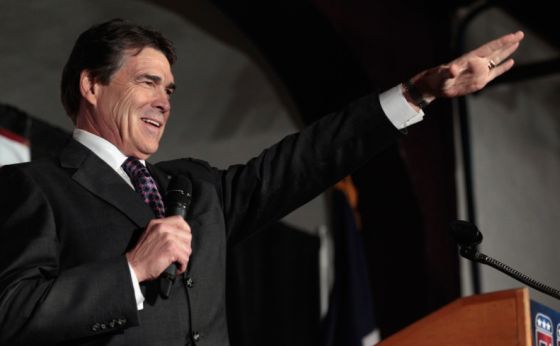
Turkey slams Perry for ‘terrorist leaders’ remarks

Today’s Zaman reports: The Turkish Foreign Ministry on Tuesday slammed US presidential hopeful Rick Perry for his remarks in which he questioned Turkey’s NATO membership and called Turkish leaders “Islamic terrorists,” saying the statements are groundless and inappropriate.

The ministry said in a statement released on Tuesday that Turkey strongly condemns Perry’s remarks and said those who run as candidates for a position like the US presidency, which requires the utmost responsibility, are expected to have “more information about the world” and be more careful in their statements.

Perry, the governor of Texas, said in a debate with other Republican contenders in Myrtle Beach, South Carolina, on Monday that Turkey was a US ally in the past, but not anymore. “Obviously when you have a country that is being ruled by what many would perceive to be Islamic terrorists, when you start seeing that type of activity against their own citizens, then, yes, not only is it time for us to have a conversation about whether or not they belong to be in NATO but it’s time for the United States, when we look at their foreign aid, to go to zero with it,” Perry claimed.

“Turkey became a NATO member when Mr. Governor was two years old,” the statement said in reference to Turkey’s becoming a NATO member in 1952. “It is one of the countries that has contributed much to the transatlantic alliance and will continue to be so. Turkey is among the countries that are on the front line in fighting terrorism. It holds the co-chairmanship of the Global Counterterrorism Forum [GCTF] with the US,” the statement further said in response to Perry.

In response to Perry’s accusations against Turkish leaders, the Foreign Ministry added that Turkish leaders are well-respected not only in the US, but in Turkey’s region and the world. Noting that Perry’s “unfortunate” opinions are not backed by Republican Party grassroots, which was revealed by weak support for him in recent polls, the statement said this shows the “common sense of the US voters.”

Facebooktwittermail

Preventing a nuclear Iran, peacefully

Shibley Telhami and Steven Kull write: The debate over how to handle Iran’s nuclear program is notable for its gloom and doom. Many people assume that Israel must choose between letting Iran develop nuclear weapons or attacking before it gets the bomb. But this is a false choice. There is a third option: working toward a nuclear weapons-free zone in the Middle East. And it is more feasible than most assume.

Attacking Iran might set its nuclear program back a few years, but it will most likely encourage Iran to aggressively seek — and probably develop — nuclear weapons. Slowing Iran down has some value, but the costs are high and the risks even greater. Iran would almost certainly retaliate, leading to all-out war at a time when Israel is still at odds with various Arab countries, and its relations with Turkey are tense.

Many hawks who argue for war believe that Iran poses an “existential threat” to Israel. They assume Iran is insensitive to the logic of nuclear deterrence and would be prepared to use nuclear weapons without fear of the consequences (which could include killing millions of Palestinians and the loss of millions of Iranian civilians from an inevitable Israeli retaliation). And even if Israel strikes, Iran is still likely to acquire nuclear weapons eventually and would then be even more inclined to use them.

Despite all the talk of an “existential threat,” less than half of Israelis support a strike on Iran. According to our November poll, carried out in cooperation with the Dahaf Institute in Israel, only 43 percent of Israeli Jews support a military strike on Iran — even though 90 percent of them think that Iran will eventually acquire nuclear weapons.

Most important, when asked whether it would be better for both Israel and Iran to have the bomb, or for neither to have it, 65 percent of Israeli Jews said neither. And a remarkable 64 percent favored the idea of a nuclear-free zone, even when it was explained that this would mean Israel giving up its nuclear weapons.

The Israeli public also seems willing to move away from a secretive nuclear policy toward greater openness about Israel’s nuclear facilities. Sixty percent of respondents favored “a system of full international inspections” of all nuclear facilities, including Israel’s and Iran’s, as a step toward regional disarmament.

If Israel’s nuclear program were to become part of the equation, it would be a game-changer. Iran has until now effectively accused the West of employing a double standard because it does not demand Israeli disarmament, earning it many fans across the Arab world.

And a nuclear-free zone may be hard for Iran to refuse. Iranian diplomats have said they would be open to an intrusive role for the United Nations if it accepted Iran’s right to enrich uranium for energy production — not to the higher levels necessary for weapons. And a 2007 poll by the Program on International Policy Attitudes found that the Iranian people would favor such a deal.

We cannot take what Iranian officials say at face value, but an international push for a nuclear-free Middle East would publicly test them. And most Arab leaders would rather not start down the nuclear path — a real risk if Iran gets the bomb — and have therefore welcomed the proposal of a nuclear-free zone.

Facebooktwittermail