Category Archives: Issues

Fighting a forbidden battle: How I stopped covering up for a hidden wrong

Jesse Lieberfeld is one of the winners of Carnegie Mellon University’s 2012 Martin Luther King Jr. Day Writing Awards. The 17-year-old Jewish high school student writes:

I once belonged to a wonderful religion. I belonged to a religion that allows those of us who believe in it to feel that we are the greatest people in the world—and feel sorry for ourselves at the same time. Once, I thought that I truly belonged in this world of security, self-pity, self-proclaimed intelligence, and perfect moral aesthetic. I thought myself to be somewhat privileged early on. It was soon revealed to me, however, that my fellow believers and I were not part of anything so flattering.

Although I was fortunate enough to have parents who did not try to force me into any one set of beliefs, being Jewish was in no way possible to escape growing up. It was constantly reinforced at every holiday, every service, and every encounter with the rest of my relatives. I was forever reminded how intelligent my family was, how important it was to remember where we had come from, and to be proud of all the suffering our people had overcome in order to finally achieve their dream in the perfect society of Israel.

This last mandatory belief was one which I never fully understood, but I always kept the doubts I had about Israel’s spotless reputation to the back of my mind. “Our people” were fighting a war, one I did not fully comprehend, but I naturally assumed that it must be justified. We would never be so amoral as to fight an unjust war. Yet as I came to learn more about our so-called “conflict” with the Palestinians, I grew more concerned. I routinely heard about unexplained mass killings, attacks on medical bases, and other alarmingly violent actions for which I could see no possible reason. “Genocide” almost seemed the more appropriate term, yet no one I knew would have ever dreamed of portraying the war in that manner; they always described the situation in shockingly neutral terms. Whenever I brought up the subject, I was always given the answer that there were faults on both sides, that no one was really to blame, or simply that it was a “difficult situation.” It was not until eighth grade that I fully understood what I was on the side of. One afternoon, after a fresh round of killings was announced on our bus ride home, I asked two of my friends who actively supported Israel what they thought. “We need to defend our race,” they told me. “It’s our right.”

“We need to defend our race.”

Where had I heard that before? Wasn’t it the same excuse our own country had used to justify its abuses of African-Americans sixty years ago? In that moment, I realized how similar the two struggles were—like the white radicals of that era, we controlled the lives of another people whom we abused daily, and no one could speak out against us. It was too politically incorrect to do so. We had suffered too much, endured too many hardships, and overcome too many losses to be criticized. I realized then that I was in no way part of a “conflict”—the term “Israeli/Palestinian Conflict” was no more accurate than calling the Civil Rights Movement the “Caucasian/ African-American Conflict.” In both cases, the expression was a blatant euphemism: it gave the impression that this was a dispute among equals and that both held an equal share of the blame. However, in both, there was clearly an oppressor and an oppressed, and I felt horrified at the realization that I was by nature on the side of the oppressors. I was grouped with the racial supremacists. I was part of a group that killed while praising its own intelligence and reason. I was part of a delusion. [Continue reading…]

Facebooktwittermail

Geert Wilders has something against Islam

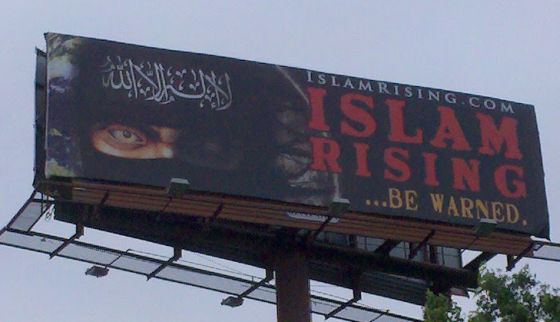
Christopher Dickey writes: A couple of years ago, a billboard appeared outside Columbia, S.C., looming above Interstate 26. Beady eyes stared out from a black balaclava emblazoned with an inscription from the Quran—clearly the eyes were meant to be those of a terrorist—and next to them were these words: “ISLAM RISING … BE WARNED.”

Erected by the Virginia-based Christian Action Network, the sign advertised the group’s documentary about a charismatic Dutch politician with dyed-blond hair, a mysterious past, and a platform of paranoid hate. South Carolina seemed to offer a ready audience for Geert Wilders’s dire warnings against the Muslim religion. Today, with the Republican road show encamped in the state for the Jan. 21 presidential primary, the 48-year-old Dutchman is more than ever a man who needs to be watched and listened to carefully. At home in the Netherlands, his explosive theme of unrelenting hostility to Islam has built his xenophobic Party for Freedom, founded in 2005, into the country’s third-largest political party; across the Atlantic his message packs serious resonance in an American heartland still shaken by the 9/11 attacks. Wilders’s name and message have been invoked repeatedly in South Carolina and at least a dozen other state legislatures as they debate measures to ban an imagined threat: Islamic law.

So does he worry about the violence his rants could inspire? Wilders is a master at capitalizing on real fears and conjuring false ones—and then dodging responsibility if people’s lives are ruined or lost. “I am responsible for my own actions and for nobody else’s actions,” he says. In a wide-ranging interview at the offices of the Dutch Parliament in The Hague, Wilders complained to Newsweek that the “naive” Obama administration wasn’t doing nearly enough to combat what Wilders regards as the Islamic threat. Expanding on his claims that the Quran should be banned, just as Mein Kampf has been in some countries, he said the United States should be “getting rid of Islamic symbols—no more mosques—and closing down Islamic schools.”

There’s no such thing as moderate Islam, Wilders insists, and he’s tired of hearing that radical Islam is something different from the mainstream faith. It means nothing to him that among Muslim believers there are many different sects and currents. “He makes no distinctions whatsoever,” says Robert Leiken, author of the just-published study Europe’s Angry Muslims. “He wants to throw out the whole Quran because of some things that are objectionable—but you could say the same thing about the Book of Joshua.” Wilders refuses to concede the point. In his view, those who follow the Quran are deluded or worse. “Totalitarian fascist ideology,” he calls it. “I have nothing against the people,” he says. “I have something against Islam.”

Facebooktwittermail

Interview with Haneen Zoabi

The Israeli Occupation Archive interviews Haneen Zoabi, a Palestinian member of Israel’s parliament who became known around the world after her participation in the Gaza Flotilla aboard the MV Mavi Marmara.

During the past year, a series of ethnocentric and other legislative initiatives were introduced in the Knesset, designed to define loyalty to the state as Jewish; severely penalize participation in non-violent BDS actions against the occupation; enable discrimination in housing and access to land via “Admission Committees” that can bar Palestinian Israelis from residing in hundreds of communities to keep them exclusively Jewish; punish NGOs that protect the civil rights of citizens by limiting or taxing international funding sources they depend on; limit the press; influence the Supreme Court; and more.

How do these efforts affect the million and a half Palestinian citizens of Israel, and how do you see future relations between Arab and Jewish citizens of Israel unfolding over the next few years?

HZ: First of all, the situation of the Palestinians in Israel is not new. I don’t agree with the [Israeli] left’s description that we are moving from a democratic to a fascist state. It is a gradual continuation of long-standing policies that confiscated my land; that discriminate against me; and that refuse to recognize me as an equal citizen and as one of the owners of this homeland.

The problem is not simply the terms of citizenship: We want to be equal to the Jews, but also, as the indigenous people, this homeland belongs to us. I want to be equal not because I immigrated or because I’m a citizen. Primarily I want to be equal because it is my homeland and nobody has the right to take it away. And when I ask for this kind of equality, not as an immigrant but as a member of the indigenous people, as the owner of this land, then I am already making a compromise, making a huge compromise. In this context, just asking for equality with the Jews is a compromise.

But there is also something new, something that really changed in the nature of the racism and discrimination. Earlier, the racism and discrimination were inherent in policies that were part of Israel’s liberal and democratic discourse.

The state really believed it could be Jewish and democratic, and defended Israel as though there was no contradiction between the values of Jewishness and democracy. When many years ago my party [the National Democratic Assembly] started pointing out that there was a contradiction between the two, its arguments seemed to many to be dangerous. We found ourselves defined as a “strategic threat.” Israelis and the world would say: What’s the contradiction? Others – the Shin Bet, the domestic intelligence service, and mainstream politicians – would say that this undermines Israel as a “Jewish and democratic state.”

Now, even Israeli policy-makers understand the problem. These [anti-democratic] laws have forced some of the Knesset members to say, “If there’s a contradiction between Jewish values and democratic values, we prefer the Jewish values.” Now it’s not even a question of which value they prefer, it’s clear they prefer to be Jewish over being democratic.

Now, this is a new reality, not just a continuation of the [old] policies of racism and Judaization. Israeli Jews don’t hesitate now to say “We prefer the Jewish values,” and they are willing to use these values to justify discrimination, racism and treating Palestinian citizens as a strategic threat.

Because, if Jewish values are at the core of policy – and this obsession with the Jewishness of the state is part of a new political culture – and we are not Jewish, and we will not give up our rights, then obviously we present not just an alternative view, but something that contradicts the state’s very legitimacy: not the religious aspects, but the political aspects, meaning Zionism. Because Jewishness here means Zionism, not Judaism. It is misleading to talk about a Jewish and democratic state; it is a Zionist state. Because we are challenging these policies, it has become natural to say that our struggle, our very existence, is threatening the state. This is new.

Facebooktwittermail

Obama’s assassination problem

In a column that appeared in the Jerusalem Post a few days ago, Avi Perry made this prediction about “The looming war with Iran”:

Iran, just like Nazi Germany in the 1940s, will take the initiative and “help” the US president and the American public make up their mind by making the first move, by attacking a US aircraft carrier in the Persian Gulf.

The Iranian attack on an American military vessel will serve as a justification and a pretext for a retaliatory move by the US military against the Iranian regime. The target would not be Iran’s nuclear facilities. The US would retaliate by attacking Iran’s navy, their military installations, missile silos, airfields. The US would target Iran’s ability to retaliate, to close down the Strait of Hormuz. The US would then follow by targeting the regime itself.

Elimination of Iran’s nuclear facilities? Yes. This part would turn out to be the final act, the grand finale. It might have been the major target, had the US initiated the attack. However, under this “Pearl Harbor” scenario, in which Iran had launched a “surprise” attack on the US navy, the US would have the perfect rationalization to finish them off, to put an end to this ugly game.

Unlike the latest attempt at an Iranian revolution, this time the US would not shy away, rather, it would go public, openly calling for the Iranian people to join in with the US in working to overthrow the corrupt Islamic fundamentalist regime. The Iranian people would respond in numbers.

Spring would reemerge, and the Iranian people would join the rest of the Middle East – this time with the direct support of the US.

The greatest irony behind this most significant episode in 2012 is that the Iranian regime would affect their own demise. Attacking the US navy in the open seas is equivalent to carrying out a suicide bombing.

Is there any reason to take Perry’s prediction seriously?

He is described by the Jerusalem Post as having “served as an intelligence expert for the Israeli government.” Keep in mind though that in Israel, intelligence experts come a dime a dozen.

In Perry’s case his intelligence expertise does not seem to extend further than the experience he gained as a youngster serving in the IDF during the 1967 Six-Day War. Perhaps it’s of just as much relevance that he also served as an accordionist and comedian in an army troupe that entertained the soldiers. And probably even more telling is the fact that he is now a novelist who enjoys fiction because it allows him to “play god.”

So why would I bother quoting from Perry’s column?

Firstly, because some readers who have looked no further than the biographical information the Jerusalem Post provided, believe that his prediction provides confirmation that some kind of Gulf of Tonkin Incident is about to trigger a war with Iran.

But whether Perry has any credibility is besides the point — the risk’s of such an event are very real. Unlike Vietnam, where Washington was looking for a pretext to escalate the war, this time it looks much more likely that Israel will try and drag the U.S. into a war — a war which Israel is incapable of fighting on its own.

Perry implausibly conjures up a Pearl Harbor-like trigger for war. More likely might be a USS Cole-type attack. Were such an attack to take place, given Israel’s willingness to recruit members of the terrorist group Jundallah to conduct attacks in Tehran, might it not also be willing to instigate a war-triggering incident in the Strait of Hormuz?

Secondly, the fact that a column such as this would garner any attention is in some measure a reflection of a wider problem: that few if any of the statements currently coming out of Washington can be taken at face value.

Following the assassination of the Iranian nuclear scientist, Mostafa Ahmadi Roshan, Secretary of State Hillary Clinton said: “I want to categorically deny any United States involvement in any kind of act of violence inside Iran.”

U.S. Defense Secretary Leon Panetta said: “We were not involved in any way — in any way — with regards to the assassination that took place there…. that’s not what the United States does.”

In the Foreign Policy report, “False Flag,” an American intelligence officer is quoted saying: “There’s no question that the U.S. has cooperated with Israel in intelligence-gathering operations against the Iranians, but this was different. No matter what anyone thinks, we’re not in the business of assassinating Iranian officials or killing Iranian civilians.” And a recently retired intelligence officer says: “And we don’t do political assassinations.”

The United States does not conduct assassinations.

Really?

Why exactly should the Iranian government take Clinton and Panetta at their word when it is common knowledge that President Obama has authorized multiple assassinations?

Does anyone believe that the Navy SEALs operation that resulted in Osama bin Laden being shot in the head and his body dumped in the ocean, might instead have resulted in him being arrested and put on trial? “This was a kill operation,” a U.S. national security official told Reuters.

And in Yemen in September the killing of the U.S. citizens, Anwar Awlaki and Samir Khan, both of whom operated as al Qaeda propagandists — was this not the definition of a political assassination?

The official line is that Awlaki had an operational role in planning terrorist attacks and that he could therefore be killed as an “enemy combatant” on the “battlefield,” but these are merely terms of political and legal convenience. It remains a matter of debate whether Awlaki did much more than preach — as unpalatable to American ears as much of his preaching might have been. As for Khan, when he was investigated by the FBI they couldn’t gather sufficient evidence to indict him. Neither was he on the hit list of individuals that Obama claims a right to execute.

It isn’t — as leading members of the current administration now claim — that the United States doesn’t do assassinations, but rather that it generally follows guidelines dictating who can or cannot be assassinated. Iranian nuclear scientists are currently not deemed suitable targets — at least that’s the administration’s stated position, but there are others with a more expansive view.

Even before the terrorist attack that resulted in the latest death of an Iranian nuclear scientist, GOP presidential hopeful Rick Santorum declared in November that he favored “sending out a very clear message to nuclear scientists who work on that program that they are enemy combatants similar to the Taliban and al-Qaeda.”

In the latest development, Iran says that it sent Washington evidence of the CIA’s role in this week’s assassination. Even so, given the sanctions strategy Obama is pursuing, the method of the attack, and the indications that Israel wants to provoke Iran in order to create a pretext for war, there seems to be much more reason to assume that Mossad, rather than the CIA, was behind Roshan’s killing.

But rather than implausibly assert that the U.S. is not in the assassination business, perhaps all that Obama can honestly say is that it is not currently the policy of his administration to assassinate Iranian nuclear scientists.

At the same time, anyone who wants to try and probe that policy a bit more deeply should request some amplification on a phrase that officials never hesitate to repeat: “all options are open.”

Since it’s generally understood the “all options” includes the option to bomb Iran’s nuclear facilities, why exactly would we infer that it precludes assassinating nuclear scientists? Are we to understand that the bombing would only take place outside office hours?

A U.S. president, however inspiring his rhetoric might sometimes be, should be in no doubt that at the most critical moment the power of his word hinges on its truthfulness. The president who promised hope, dialogue, transparency and an end to the mindset that took us to war, has a serious credibility problem. Since he’s willing to joke about his ability to assassinate people, why should his administration’s denials now be taken seriously?

Facebooktwittermail

Joint U.S.-Israel drill postponed to ‘defuse Iran tensions’

It sounds like the 2012 Netanyahu-led anti-Obama campaign got ahead of the administration when framing this story. Obama wants to defuse tensions with Iran and the Pentagon is hamstrung by budget cuts — the GOP candidates are going to love this one.

Ynet reports: A major joint Israel-US military drill, which was set to take place in a few weeks time with the participation of thousands of IDF and US army soldiers, has been postponed by at least six months, Ynet reported Sunday

The decision was made by Defense Ministry officials in coordination with the Pentagon.

A number of global media outlets said the exercise will likely take place in the summer – at the earliest.

Israeli officials said the Americans asked to delay the drill so as not to heighten tensions with Iran over its nuclear program and avoid draw any additional attention from the Arab countries during such a turbulent period.

Security establishment officials said the decision was also related, in part, to budgetary concerns.

The decision to postpone the drill comes after the US condemned last week’s assassination of a nuclear scientist in Tehran and after US President Barack Obama and Prime Minister Benjamin Netanyahu discussed the recent developments in the Islamic Republic.

Ron Ben-Yishai, Ynet’s military analyst, said Washington is looking to defuse tensions in the region following Iran’s military exercise in the Strait of Hormuz and the raid by Iranian protesters on the British Embassy in Tehran.

The Americans also hope the economic and diplomatic pressure on Iran will force it to engage in talks over its nuclear program, he said.

According to Ben-Yishai, the decision to delay the drill is also related to financial concerns. Washington has cut its defense budget for 2012 by $450 billion dollars – a move which is aimed at helping the US tackle its national debt, which has affected the country’s credit rating.

During the drill, which just a few days ago was dubbed as the largest drill joint US-Israel exercise ever, the countries were set to test air-defense capabilities, as well as test-fire new missiles.

Facebooktwittermail

Romney and the pathology of Bain

Gary Weiss writes: No one can make Mitt Romney look good — not even a crazy man with a program that’s slightly to the right of Juan Peron. Ron Paul, currently the second most popular Republican presidential candidate, may be nuts but Romney is arguably a lot worse: the standard-bearer of the worst aspects of borderline sociopathic, bottom-feeding American capitalism.

I don’t mean to call people names. I speak as a bona fide expert on these subject, having covered business and written a book about a sociopath and having known many professionally through the years. I’m merely trying to provide a dispassionate analysis of Romney’s life and career, especially (but not exclusively) his record as a job-destroying corporate warrior at the Bain Capital buyout firm.

Romney’s tenure at Bain, which he ran from 1984 to 1999, is currently being raked over the coals in the media and in a TV spot paid for by the stunningly hypocritical Newt Gingrich, but I’m not seeing much about what this says about him as a human being.

Here’s one of the better brief digests of Romney as a corporate job-destroyer, written by Josh Kosman, who wrote an excellent book in 2010 on the buyout industry called “The Buyout of America: How Private Equity Is Destroying Jobs and Killing the American Economy.” This book is required reading for anybody who wants to understand what Romney did for a living at Bain. He is the living embodiment of how the “job creator” Republican meme is grotesquely misleading, if not an outright lie.

You can’t really blame him. It was his job. Or as Don Vito Corleone once put it, it was “strictly business.” Romney was taught at Harvard Business School that the purpose of a corporation is not to “create jobs” but to create profits for its owners by, among other things, keeping the cost of labor at an absolute minimum. Job creation, if any, is incidental and entirely expendable, sort of the way oil-drilling rigs burn off natural gas. If profits are to be enhanced by job destruction, so much the better.

Facebooktwittermail

America isn’t a corporation

Paul Krugman writes: “And greed — you mark my words — will not only save Teldar Paper, but that other malfunctioning corporation called the U.S.A.”

That’s how the fictional Gordon Gekko finished his famous “Greed is good” speech in the 1987 film “Wall Street.” In the movie, Gekko got his comeuppance. But in real life, Gekkoism triumphed, and policy based on the notion that greed is good is a major reason why income has grown so much more rapidly for the richest 1 percent than for the middle class.

Today, however, let’s focus on the rest of that sentence, which compares America to a corporation. This, too, is an idea that has been widely accepted. And it’s the main plank of Mitt Romney’s case that he should be president: In effect, he is asserting that what we need to fix our ailing economy is someone who has been successful in business.

In so doing, he has, of course, invited close scrutiny of his business career. And it turns out that there is at least a whiff of Gordon Gekko in his time at Bain Capital, a private equity firm; he was a buyer and seller of businesses, often to the detriment of their employees, rather than someone who ran companies for the long haul. (Also, when will he release his tax returns?) Nor has he helped his credibility by making untenable claims about his role as a “job creator.”

But there’s a deeper problem in the whole notion that what this nation needs is a successful businessman as president: America is not, in fact, a corporation. Making good economic policy isn’t at all like maximizing corporate profits. And businessmen — even great businessmen — do not, in general, have any special insights into what it takes to achieve economic recovery.

Why isn’t a national economy like a corporation? For one thing, there’s no simple bottom line. For another, the economy is vastly more complex than even the largest private company.

Facebooktwittermail

U.S. warns Israel against military strike on Iran

The Wall Street Journal reports: U.S. defense leaders are increasingly concerned that Israel is preparing to take military action against Iran, over U.S. objections, and have stepped up contingency planning to safeguard U.S. facilities in the region in case of a conflict.

President Barack Obama, Defense Secretary Leon Panetta and other top officials have delivered a string of private messages to Israeli leaders warning about the dire consequences of a strike. The U.S. wants Israel to give more time for the effects of sanctions and other measures intended to force Iran to abandon its perceived efforts to build nuclear weapons.

Stepping up the pressure, Mr. Obama spoke by telephone on Thursday with Israeli Prime Minister Benjamin Netanyahu, and U.S. Gen. Martin Dempsey, chairman of the Joint Chiefs of Staff, will meet with Israeli military officials in Tel Aviv next week.

The high-stakes planning and diplomacy comes as U.S. officials warn Tehran, including through what administration officials described Friday as direct messages to Iran’s leaders, against provocative actions.

Tehran has warned that it could retaliate to tightened sanctions by blocking oil trade through the Strait of Hormuz. On Thursday, Iran’s Supreme Leader Ayatollah Ali Khamenei vowed to punish the perpetrators of the assassination—blamed by Iran on the U.S. and Israel—of an Iranian scientist involved in the nuclear program.

The U.S. denied the charge and condemned the attack. Israel hasn’t commented.

The U.S. and Iran, however, have taken steps in recent days apparently designed to ease tensions. Iran has agreed to host a delegation of United Nations nuclear inspectors this month. The U.S., meanwhile, has twice this month rescued Iranian sailors in the region’s seas.

Covert efforts by Israel’s intelligence service to prevent Tehran from developing nuclear weapons have been credited with slowing the program without the high risk of military conflict that could be sparked by an airstrike. Iran says its nuclear program is for peaceful uses.

But Israel has declined to rule out a strike, as has the U.S.

“It is the policy of the Israeli government, and the Obama administration, that all options remain on the table. And it is crucial that the ayatollahs in Tehran take this policy seriously,” said Michael Oren, Israel’s ambassador to the U.S.

Mr. Netanyahu said in a recent interview that Iran has begun to “wobble,” a signal some U.S. officials believe suggests he is willing to follow the current U.S. strategy, which seeks to avoid a military confrontation with Iran.

“Recent comments by the Israelis show they understand how tough the sanctions we’ve put in place are and are giving them time to work,” said a senior Obama administration official.

The U.S. military is preparing for a number of possible responses to an Israeli strike, including assaults by pro-Iranian Shiite militias in Iraq against the U.S. Embassy in Baghdad, according to U.S. officials.

The U.S. believes its embassy and other diplomatic outposts in Iraq are more vulnerable following the withdrawal of U.S. forces last month. Up to 15,000 U.S. diplomats, federal employees and contractors are expected to remain in Iraq.

Facebooktwittermail

Why not to attack Iran

Elbridge Colby and Austin Long write: The pressure for an attack on Iran is building. Media reports suggest that the Obama administration is under pressure to take action and may even be considering action itself, and Foreign Affairs published an article in its opening 2012 issue by nuclear expert Matthew Kroenig forthrightly stating that it is “time to attack Iran.” Many argue that strikes against Iran’s nuclear program are the only responsible course. Defense Secretary Leon Panetta declared on December 18 that if the United States receives “intelligence that [the Iranians] are proceeding with developing a nuclear weapon, then we will take whatever steps necessary to stop it.” And former White House Middle East chief Dennis Ross suggested in a December 23 op-ed that, if pressure fails, the military option is the only sensible recourse. The United States cannot live with a nuclear Iran, he argues.

The reality, however, is that attacking Iran without provocation is a dangerous course. The arguments for avoiding military strikes are well known: deterrence, while neither easy nor cheap, can work; the costs of likely Iranian retaliation outweigh the likely benefits, perhaps markedly; and the United States (and its allies) have considered preventive attacks against adversary nuclear programs before, thought the better of it and come out tolerably.

But perhaps the most important argument against attacking Iran has received less attention. That is that none of the attack proponents can give a sensible answer to the question General David Petraeus posed at the beginning of the Iraq war: “How does this end?” Kroenig and other advocates for war note, correctly, that a strike against Iran could do substantial damage to Iran’s program. But they fail to explain how the United States will prevent Iran from simply restarting its program, this time in deadly earnest. Moreover, they don’t explain why such strikes won’t contribute to the immediate rallying of the Iranian people around the otherwise reviled regime.

Facebooktwittermail

Unexpected road block to Afghanistan peace: prisoners of war

Spencer Ackerman reports: Negotiating a peace deal with the Taliban after 10 years of war in Afghanistan is hard enough. But the stalemated politics of the Guantanamo Bay detention facility risk effectively killing the negotiations before they even have the chance to end the war.

The Taliban leadership has evidently decided it wants to talk peace terms. Among the things it wants as a gesture of good faith from its U.S. adversaries: the release of five detainees from Guantanamo.

Provisions in the defense bill recently signed into law by President Obama make it difficult to transfer detainees out of Guantanamo Bay, the terrorism detention complex that turns 10 years old this week. But they’re a symptom of a greater obstacle to a peace deal: Congress’ broad, bipartisan allergy to releasing any detainees from Gitmo at all.

The calendar actually makes it worse than that. 2012 is an election year. Opening Guantanamo Bay’s doors as a gesture to the Taliban is a narrative practically begging for a political attack ad.

An administration official, who requested anonymity to discuss the super-sensitive proposition, tells Danger Room that Obama hasn’t actually made a decision — except to rule out a straight detainee release. “We would never consider an outright release,” the official says. “The only thing we’d consider is a transfer into third-party custody.” And that might actually provide the administration with a way to get the talks going, get the detainees out of Gitmo without freeing them, and keep Congress on board.

Outside analysts, however, aren’t convinced. “Politically,” says Karen Greenberg, who directs Fordham Law School’s Center for National Security, “it’s a nonstarter.”

Facebooktwittermail

Nuclear scientists are not terrorists

In an op-ed for the New Scientist, Debora MacKenzie writes: Attempts to derail a country’s nuclear programme by killing its scientists “are products of desperation”, says [William] Tobey [of the Belfer Center for Science and International Affairs at Harvard University] – citing a US effort to kill legendary physicist Werner Heisenberg during the second world war, abandoned at the last minute only when the would-be assassin decided Heisenberg was not involved in a Nazi nuclear effort after all.

“Nuclear scientists are not terrorists,” says Tobey in the BAS this week. Killing them at best delays bomb development, by removing key people and perhaps deterring young scientists from careers in nuclear science. But it will not stop bomb development.

These slim advantages are far outweighed, Tobey says, by the downsides: possible retaliation, reduced chances for diplomacy, tighter security around nuclear installations and a pretext for Iran to hamper IAEA monitoring.

Iran has already accused the IAEA of abetting the assassinations by publicising confidential Iranian lists of key nuclear scientists and engineers.

The IAEA needs such information, as talks with nuclear personnel are considered essential for verifying safeguards against diverting uranium to bombs, says Tobey. Making this process harder only makes sense if the people behind the assassinations think it is too late for safeguards and that slowing bomb R&D by killing scientists is therefore more expedient.

The Israeli columnist Ron Ben-Yishai writes: The most curious question in the face of these incidents is why Iran, which does not shy away from threatening the world with closure of the Hormuz Straits, has failed to retaliate for the painful blows to its nuclear and missile program? After all, the Revolutionary Guards have a special arm, Quds, whose aim (among others) is to carry out terror attacks and secret assassinations against enemies of the regime overseas.

Moreover, if the Iranians do not wish to directly target Western or Israeli interests, they can prompt their agents, that is, Hezbollah, Islamic Jihad and other groups, to do the job. In the past, Iran did not shy away from carrying out terror attacks in Europe (in Paris and Berlin) and in South America (in Buenos Aires,) so why is it showing restraint now?

The reason is apparently Iran’s fear of Western retaliation. Any terror attack against Israel or another Western target – whether it is carried out directly by the Quds force or by Hezbollah – may prompt a Western response. Under such circumstances, Israel or a Western coalition (or both) will have an excellent pretext to strike and destroy Iran’s nuclear and missile sites.

This sounds like a confirmation that Israel is indeed wanting to provoke Iran in order to start a war.

But here’s the paradox: if Iran is intent on developing nuclear weapons then it has ever incentive to continue keeping its powder dry. Why should it jeopardize its nuclear program by succumbing to provocation?

On the other hand if Israel’s covert war does indeed succeed in triggering a full-scale war, this may be an indication that Iran never intended to go further than develop a nuclear break-out capacity.

At the same time, the idea that Iran can only strike back through some form of violence, ignores the economic and psychological levers that it can pull much more easily.

The question may not be how much provocation Iran can withstand but rather how high can the price for oil rise before the global economy buckles?

Facebooktwittermail

When the GOP came to town on a suicide mission

Here is Newt Gingrich and Sheldon Adelson‘s campaign to support Occupy Wall Street! Well, not really. Ostensibly it’s a 30-minute attack ad on Mitt Romney. Beyond needing to know that this as a production by Gingrich’s super PAC, “Winning Our Future,” this video speaks for itself.

More than anything, this is a demonstration of the degree to which the OWS anti-corporate narrative is now at the core of American political discourse.

Do any of the GOP candidates truly believe they can credibly co-opt this message? This seems like a spectacular collision between rampant hubris and profound contempt for the average American.

Facebooktwittermail

The smell of war

Iranian Christians pray during New Year Mass at the Vank church in the central city of Isfahan, Iran, on Sunday, January 1, 2012. (AP Photo/Vahid Salemi)

Hooman Majd writes: The ransacking of the British embassy capped an annus horribilis for the Iranian leadership. Throughout the year, the supreme leader, Ayatollah Ali Khamenei, Ahmadinejad, and every politician in between have seemingly been at odds with each other over just about every possible matter of state. The result is an uncertainty and nervousness among officials, and a kind of political paralysis in which it has become hard for people to know exactly who is in charge, or even whom to blame for policy gone bad. But it was also a terrible year for the Iranian people. They are baffled by the West’s approach to dealing with their country’s nuclear program — the stated aim is a change in policy, but the result is only general hardship. Big-city dwellers complain about rampant inflation, a strangled economy, and general inconvenience on a daily basis.

On the street, nowhere is the impact more evident than at any one of the many foreign exchange bureaus where Iranians gather to monitor the flat screens that show the almost minute-by-minute slide in the rial. Men and women gather at the kiosks to buy dollars as a hedge against crippling inflation; many think that the government will soon run out of greenbacks as international sanctions clinch Iranian banks. The country’s financial culture is cash — there are no credit cards — and the government routinely pumps hundred-dollar bills into circulation in an effort to keep the currency stable. The strategy has backfired. By the end of last year, confidence that the regime could withstand international financial pressure — particularly after the British government cut all financial ties with Tehran — had sunk to an all-time low.

By December, escalating talk of military strikes, promoted by respectable Western and Israeli politicians, analysts, and commentators — in the pages of this journal, too — raised anxieties in Tehran to a level not witnessed in many years. In years past, war over the nuclear program had always been the subject of chatter in Iran, but few took it very seriously. In fact, if war came up in ordinary conversation, it was mentioned jokingly. In December, however, my optician, an older Isfahani with a wry sense of humor who hosts a salon of sorts with locals every evening in his shop, captured the mood of the city when he said of the worry over a coming war, “You can smell it,” he said. “This time, you can smell it.”

If you live in Iran it is hard to imagine what the West, particularly the United States, is trying to accomplish. No one doubts that Israeli and Western operators are behind recent assassinations of nuclear scientists on the streets of Tehran. And the sudden frequency of “accidents” at various factories and Revolutionary Guards bases (which a majority — their government’s denial notwithstanding — also believe are the work of foreign agencies) has done nothing to change the minds of either government officials or the general public about the nuclear program.

Few in Iran believe that the nuclear program is a quest for a Shia bomb to obliterate Israel once and for all. No, the Iranian people, from my greengrocer to college students who resent their government, still consider the nuclear question in generally nationalistic terms. The particular regime in power is of passing relevance. So sanctioning Iran’s central bank and embargoing Iranian oil, tactics the White House may be using as a way to avoid having to make a decision for war, will neither change minds in Tehran nor do much of anything besides bring more pain to ordinary Iranians. And making life difficult for them has not, so far, resulted in their rising up to overthrow the autocratic regime, as some might have hoped in Washington or London.

Facebooktwittermail

United States condemns latest murder of an Iranian nuclear scientist

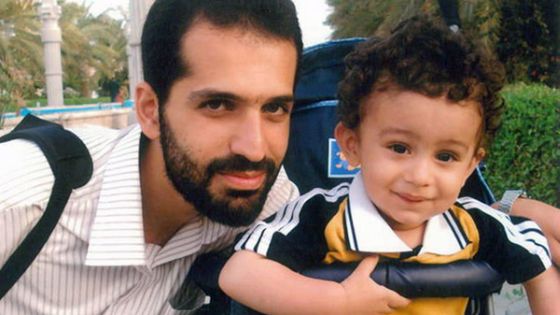
Mostafa Ahmadi Roshan with his son. Roshan is the fifth Iranian nuclear scientist whose murder is being linked to Israel.

The New York Times reports: As arguments flare in Israel and the United States about a possible military strike to set back Iran’s nuclear program, an accelerating covert campaign of assassinations, bombings, cyberattacks and defections appears intended to make that debate irrelevant, according to current and former American officials and specialists on Iran.

The campaign, which experts believe is being carried out mainly by Israel, apparently claimed its latest victim on Wednesday when a bomb killed a 32-year-old nuclear scientist in Tehran’s morning rush hour.

The scientist, Mostafa Ahmadi Roshan, was a department supervisor at the Natanz uranium enrichment plant, a participant in what Western leaders believe is Iran’s halting but determined progress toward a nuclear weapon. He was at least the fifth scientist with nuclear connections to be killed since 2007; a sixth scientist, Fereydoon Abbasi, survived a 2010 attack and was put in charge of Iran’s Atomic Energy Organization.

Iranian officials immediately blamed both Israel and the United States for the latest death, which came less than two months after a suspicious explosion at an Iranian missile base that killed a top general and 16 other people. While American officials deny a role in lethal activities, the United States is believed to engage in other covert efforts against the Iranian nuclear program.

The assassination drew an unusually strong condemnation from the White House and the State Department, which disavowed any American complicity. The statements by the United States appeared to reflect serious concern about the growing number of lethal attacks, which some experts believe could backfire by undercutting future negotiations and prompting Iran to redouble what the West suspects is a quest for a nuclear capacity.

“The United States had absolutely nothing to do with this,” said Tommy Vietor, a spokesman for the National Security Council. Secretary of State Hillary Rodham Clinton appeared to expand the denial beyond Wednesday’s killing, “categorically” denying “any United States involvement in any kind of act of violence inside Iran.”

Facebooktwittermail

Assassination in Tehran: An act of war?

M.J. Rosenberg writes: I rarely learn anything meaningful from reading The Atlantic‘s Jeffrey Goldberg. In my opinion, his tight relationship with the Israeli government and its lobby here greatly influences his take on both foreign and domestic events. Although he occasionally deviates from the Israeli line, he not only appears very uncomfortable doing so, he tends to correct course fairly rapidly.

Nonetheless, in a Goldberg column about Iran this week, there was one paragraph that was dead-on and which he will have a hard time taking back (should he be so inclined).

Writing about a piece in the current edition of Foreign Affairs that endorses bombing Iran as a neat and cost-free way to address its nuclear program, Goldberg explains why he thinks the author, Council on Foreign Relations fellow Matthew Kroenig, is wrong. Goldberg says he now believes:

…that advocates of an attack on Iran today would be exchanging a theoretical nightmare — an Iran with nukes — for an actual nightmare, a potentially out-of-control conventional war raging across the Middle East that could cost the lives of thousands Iranians, Israelis, Gulf Arabs and even American servicemen.

Think about that for a minute. Uber-hawk Jeffrey Goldberg is saying that the threat posed by Iran is a “theoretical nightmare” while a war ostensibly to neutralize that threat would present an “actual nightmare.”

No critic of U.S. policy toward Iran could say it better or would say it differently. And why would we?

According to the International Atomic Energy Agency, Iran has not yet made the decision to go nuclear. Speaking to CBS’ Face the Nation last Sunday, Defense Secretary Leon Panetta made the same point. Iran is not working on the bomb.

We do know, as Goldberg says, that a “potentially out-of-control conventional war raging across the Middle East” could “cost the lives of thousands of Iranians, Israelis, Gulf Arabs and even American servicemen.”

And that makes the decision against war a no-brainer. As Goldberg puts it:

Now that sanctions seem to be biting — in other words, now that Iran’s leaders understand the President’s seriousness on the issue — the Iranians just might be willing to pay more attention to proposals about an alternative course.

That alternative course would be an attempt “to try one more time to reach out to the Iranian leadership in order to avoid a military confrontation over Tehran’s nuclear program.”

In short, dialogue.

The United States, to this day, has never attempted a true dialogue with the Tehran. Even under President Obama, all we have done is issue demands about its nuclear program and offer to meet to discuss precisely how they comply with those demands.

That is not dialogue and it’s not negotiation; it’s an ultimatum.

Facebooktwittermail

Another nuclear scientist assassinated in Tehran

Mostafa Ahmadi-Roshan

An Iranian university professor and deputy director at Natanz enrichment facility was killed in a terrorist bomb blast in a Northern Tehran neighborhood on Wednesday morning, the Fars News Agency reports.

Some guy says this was a joint operation carried out by Mossad and the Iranian terrorist group, Mujahideen-e Khalq (MEK) — though when I say “some guy,” if that’s taken to imply that the source of this information is a man, I am perhaps being too specific.

Richard Silverstein heard about the Mossad-MEK connection from his “own confidential Israeli source.” This attribution of responsibility for the attack may indeed be accurate, but to describe a source no more specifically than to say that this source is an “Israeli” tells us next to nothing. It does however allow newspaper journalists to repeat this “information” as though it was news. Hence the Fars News Agency itself repeats Silverstein’s claim and tries to boost his credibility by describing him as “a senior Jewish American journalist.” Israel’s Ynet plays the same game, though with the embellishment that Silverstein’s source has been elevated to a “senior Israeli source.”

Having said all that, it seems reasonable to assume that this attack — an attack that were it to take place anywhere outside Iran would widely be described as a terrorist attack — was conducted with the direct or indirect involvement of the Israeli and/or United States governments.

One of the strange ethical anomalies of the era in which we live is that an American president willingly accepts responsibility for authorizing assassinations conducted by special forces or drone-launched Hellfire missiles, even though in both types of operation the target may be mistaken and innocent bystanders frequently get killed, yet no government official is willing to claim responsibility for a cold-blooded murder. For the killing to be legitimized it has to given the legal pretext that it is being conducted on a “battlefield” during a “war.”

For as long as the streets of Tehran are not regarded as a battlefield and neither the United States nor Israel is officially at war with Iran, no one will acknowledge that a campaign of state terrorism is indeed being waged, since to do so would be offer an open invitation for Iran to respond in kind.

Bloomberg reports:

Today’s attack “comes in the middle of heightened tensions and it helps Iran to play on a sense of threat that it is under a lot of pressure,” Gala Riani, a Middle East analyst at London-based forecaster IHS Global Insight, said by telephone. “It can also be beneficial to more extremist elements in the government who are supporting further military drills in the Strait of Hormuz.”

Iran conducted naval exercises near the Strait of Hormuz for 10 days that ended early this month.

Previous attacks against Iranian nuclear scientists include the assassination of Massoud Ali-Mohammadi, killed by a bomb outside his Tehran home in January 2010, and an explosion in November of that year that took the life of Majid Shahriari and wounded Fereydoun Abbasi-Davani, who is now the head of Iran’s Atomic Energy Organization.

Oil pared losses of as much as 0.6 percent after the report on Roshan’s death. Crude for February delivery was at $102.25 a barrel, up 1 cent, in electronic trading on the New York Mercantile Exchange at 4:06 p.m. Singapore time.

“While it is difficult to gauge the impact of the scientists’ deaths on the country’s nuclear development, Iranian officials have already acknowledged they have a human-resources problem in the program largely because of the sharp political differences within the country,” Meir Javedanfar, lecturer on Iranian politics at the Herzliya Interdisciplinary Center in Israel, said in a telephone interview.

The explosion follows an Iranian court’s Jan. 9 decision to sentence an American of Iranian descent, Amir Mirzaei Hekmati, to death for spying. U.S. State Department spokesperson Victoria Nuland said allegations that Hekmati worked for the CIA were “simply untrue.”

Facebooktwittermail