Robert Reich writes: A combination of police crackdowns and bad weather are testing the young Occupy movement. But rumors of its demise are premature, to say the least. Although numbers are hard to come by, anecdotal evidence suggests the movement is growing.
As importantly, the movement has already changed the public debate in America.
Consider, for example, last week’s Congressional Budget Office report on widening disparities of income in America. It was hardly news – it’s already well known that the top 1 percent now gets 20 percent of the nation’s income, up from 9 percent in the late 1970s.
But it’s the first time such news made the front page of the nation’s major newspapers.
Why? Because for the first time in more than half a century, a broad cross-section of the American public is talking about the concentration of income, wealth, and political power at the top.
Score a big one for the Occupiers.
Even more startling is the change in public opinion. Not since the 1930s has a majority of Americans called for redistribution of income or wealth. But according to a recent New York Times/CBS News poll, an astounding 66 percent of Americans said the nation’s wealth should be more evenly distributed.
Category Archives: Issues
Occupy Movement and demands
In Libya, fighting may outlast the revolution
The New York Times reports: Many of the local militia leaders who helped topple Col. Muammar el-Qaddafi are abandoning a pledge to give up their weapons and now say they intend to preserve their autonomy and influence political decisions as “guardians of the revolution.”
The issue of the militias is one of the most urgent facing Libya’s new provisional government, the Transitional National Council. Scores of freewheeling brigades of armed volunteers sprang up around the country and often reported to local military councils, which became de facto local governments in cities like Misurata and Zintan, as well as the capital, Tripoli.
The provisional government’s departing prime minister, Mahmoud Jibril, suggested in a news conference Sunday night that instead of expecting the local militias to disband, the Transitional National Council should try to incorporate them by expanding to include their representatives.
“Nobody wants to give up arms now, and many tribes and cities are accumulating arms ‘just in case,’ ” said Mahmoud Shammam, a spokesman for the council’s executive board.
Noting reports of sporadic clashes between militias as well as vigilante revenge killings, many civilian leaders, along with some fighters, say the militias’ shift from merely dragging their feet about surrendering weapons to actively asserting a continuing political role poses a stark challenge to the council’s fragile authority.
“This could lead to a mess, to conflict between the councils,” said Ramadan Zarmoh, 63, a leader of the Misurata military council, who argued that the city’s militia should dissolve itself almost immediately after a new defense ministry is formed. “If we want to have democracy, we can’t have this.”
Will Greece abandon Eurozone?
For Pakistan, deep ties to Haqqani network may trump U.S. pressure
The New York Times reports: Secretary of State Hillary Rodham Clinton and other senior administration officials visited Pakistan in October to demand that Pakistan’s spy agency either deliver the Haqqani network, a virulent part of the insurgency fighting American forces in Afghanistan, to the negotiating table or help fight them in their stronghold in Pakistan’s rugged tribal areas.
But there are any number of reasons why the Pakistanis may disappoint the Americans. Not least is that the Haqqani leadership — contrary to the American emphasis on drone strikes in the tribal areas — does not have to hide in Pakistan’s ungoverned fringes. So close are the Haqqanis’ ties to Pakistan’s military and intelligence service that one might just as well look for them around the capital, Islamabad, or in the closely guarded military quarters of Rawalpindi.
Osama bin Laden was thought to have been hiding in the tribal areas, too, said a tribal elder reached by telephone in the Haqqani stronghold of North Waziristan. Instead, Bin Laden was killed by American commandos in Abbottabad, a small city deep in Pakistan that is home to a top military academy. Whether he was there with the knowledge of Pakistan’s spy agency is still unclear.
“The Americans have taken the hell out of us through drones all these years trying to target O.B.L.,” said the elder, referring to Bin Laden, and not wanting to be named for fear of his safety. “But they found him in Abbottabad. The same will happen with the Haqqanis, too.”
The freedom of movement the Haqqanis enjoy in Pakistan could be witnessed on a sweltering July day last year at a graduation ceremony at one of Pakistan’s largest religious schools, Darul Uloom Haqqania, well known for producing the ranks of the Afghan and Pakistani Taliban.
Among the thousands who had gathered that day in Akora Khattak, just an hour from the capital, were top members of the Haqqani family. The family patriarch, Jalaluddin Haqqani, is a graduate of the school and draws his last name from it.
The Haqqanis stayed for several hours at the event, which was almost certainly monitored by Pakistani intelligence agents, and, after lunch, left in a car with Islamabad license plates.
The Haqqani family, which runs the network like a mafia, maintains several town houses, including in Islamabad and elsewhere, and they have been known to visit military facilities in Rawalpindi, attend tribal gatherings and even travel abroad on pilgrimages, say military and political analysts who follow militant activity in Pakistan.
Israel rushes settlement growth after Unesco accepts Palestinians
The Guardian reports: Israel is to expedite the construction of about 2,000 homes in Jewish settlements in the West Bank and East Jerusalem in response to the Palestinians’ successful bid to join Unesco.
Israel also imposed a temporary halt on the transfer of tax revenues which it collects on behalf of the Palestinian Authority (PA) pending a final decision on whether to impose a long-term freeze. Israel collects about £630m a year in VAT and customs revenues which it passes on to the PA.
A meeting of eight senior cabinet ministers agreed the punitive measures – which include a ban on Unesco missions to Israel – on Tuesday following the symbolically significant vote at the United Nations’ cultural and educational agency.
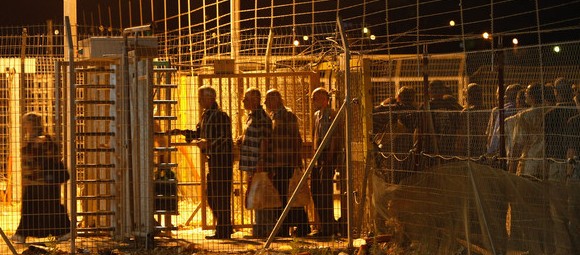
The ministers are to reconvene to discuss further actions which may include revoking the special status of Palestinian ministers and senior officials which allows them to pass through Israeli military checkpoints.
In response, the PA said the Israeli measures would “speed up the destruction of the peace process”. Nabil Abu Rdainah, spokesman for Palestinian president Mahmoud Abbas, described the decision to temporarily halt transfers of funds as “inhumane”.
Germany threatens to halt submarine sale to Israel
Der Spiegel reports: Germany is threatening to stop the delivery of a “Dolphin” submarine to Israel in protest over the country’s settlement policies. Government sources confirmed the development when asked by SPIEGEL following speculation last week in the Israeli media that Germany might halt the sale.
The move is in response to the recent decision by the Israeli government to approve the construction of 1,100 homes in Gilo, an Arab part of Jerusalem captured from Jordan in the 1967 Six Day War. The Israeli government considers the area to be a Jewish suburb, but the international community contests that description.
The threat by German Chancellor Angela Merkel has been the subject of considerable concern in Israel.
The nuclear-weapons capable Dolphin submarines are an important part of the Israeli military strategy. The navy already owns three of the submarines and two further vessels are currently being built by Howaldtswerke-Deutsche Werft (HDW), the shipbuilding division of German steelmaker Thyssen-Krupp, in Kiel, Germany.
This summer, the German government approved €135 million ($189 million) in funding to assist Israel with the purchase of a sixth Dolphin submarine over the next four years. Now, however, that deal for the sixth submarine is in jeopardy.
Palestinians hit by cyber-attack following success at Unesco
The Guardian reports: Internet services in the West Bank and Gaza have come under “sustained attack” by unknown hackers in multiple locations, according to officials.
“There has been a sustained attack since the morning from many sources in many countries,” said Palestinian Authority spokesman Ghassan Khatib. “It is deliberate and continuous.”
Computer experts were trying to identify the sources of the attack and the authority would seek assistance from the governments of those countries involved, he said. The attack had interrupted services, causing internet connections to range from “very, very slow to completely stopped”.
The authority has no idea who was behind the cyber- attack and the reason for it, Khatib said.
The telecoms minister, Mashour Abu Daqqa, told Reuters that “all Palestinian IP addresses have been exposed to a focused, organised attack from abroad. I think this is organised by a state”.
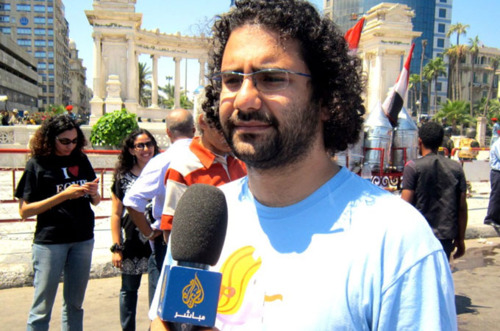
Egypt’s military may soon regret jailing Alaa Abd El Fattah

Brian Whitaker writes: Alaa Abd El Fattah is in jail. He was arrested on Sunday – accused of inciting violence against the Egyptian military – and on Monday was given 15 days’ detention for refusing to answer questions to a military court.
A campaign to secure his release has also got under way with extraordinary rapidity: protests in the streets, a Twitter hashtag (#FreeAlaa) and even graffiti appeared within the first 24 hours or so. That is not especially surprising as Alaa, besides being a pioneer of Egyptian blogging, belongs to one of the most famous families of leftist agitators.
By arresting him, the Supreme Council of the Armed Forces, which is currently running Egypt (and increasingly being referred to as “the junta”), has picked a fight with the core of the movement that toppled President Mubarak in January. Leftists, liberals and Islamists have all been rallying to Alaa’s support and it may not be long before the junta starts to regret its action.
Why does the U.S. spend more on prisons than higher education?
If California emptied its prisons today and sent every inmate to a University of California college it would save $7 billion a year!
That’s one of the stunning statistics presented in the chart below, created by Joseph Staten, an info-graphic researcher with Public Administration (h/t Brian Resnick at the Atlantic.)
In the land of the free, we should be asking why the government invests more in locking up it citizens than in equipping them with the skills to make the most of their liberty and why the country that is only the sixth largest in the world is #1 in the rate of incarceration.

Defections from Syria’s armed forces are growing
The Economist reports: The glue and the guts of President Bashar Assad’s regime are the army and its allies in the police and the Mukhabarat, the intelligence service. So far they have generally stayed loyal. But defectors are growing in number and are getting better organised.
Since the start of the uprising in March there have been defections, mainly from the ranks of Sunni conscripts. Some flee the country, others hide among civilians. In July, Riad al-Asaad, a colonel in his 50s, left for Turkey and announced the formation of the Free Syrian Army. Another group, calling itself the Free Officers’ Movement, also emerged.
At the time the two organisations were thin. Defecting soldiers worked in small and disparate groups. But in late September the two outfits announced a merger. They now seem more coherent. The Free Syrian Army says it has 22 “battalions” across the country, with field leaders taking orders from a central command in Turkey. These include the Khalid bin Walid battalion in Homs, where clashes with loyalist forces have been fiercest. In the past few weeks, fighting has also broken out in Idlib, in the north-west, and al-Bukamal, on the border with Iraq.
The role of defectors is changing. “Defected soldiers initially just fled, then they came out with weapons behind protesters just to ensure they were safe to go out,” says a man who received military training and took part in Free Syrian Army actions. Now he says the army defectors are becoming more belligerent, attacking checkpoints, armed pro-regime gangs and military equipment. They often make grandiose claims, for instance to have disabled tens of tanks at a time. These are probably exaggerations. But ambushes of convoys of security men are certainly taking place.
In an exclusive interview with The Daily Telegraph, President Assad dismissed the Syrian National Council, a broad front bringing together most of his main opponents.
“I wouldn’t waste my time talking about them,” he said. “I don’t know them. It’s better to investigate whether they really represent Syrians.”
He insisted that anti-government demonstrators were being paid and were motivated by money
“You have a lot of money being paid every day, a lot of money moving across the border,” he said. “Part of this money actually supports our economy.”
Speaking to the Sunday Telegraph, President Assad warned that foreign intervention in his country would “burn” the whole Middle East.
“Syria is the hub now in this region,” he said. “It is the fault line, and if you play with the ground you will cause an earthquake … Do you want to see another Afghanistan, or tens of Afghanistans?
“Any problem in Syria will burn the whole region. If the plan is to divide Syria, that is to divide the whole region.”
Opposition groups and activists accused the Syrian leader of raising false fears to deter action against his regime, which has killed at least 3,000 civilians, including 187 children, in months of street protests.
“After eight months of uprisings, why do you think this will suddenly descend to civil and then regional war?” said Nasser Ahme, a Kurdish activist member of the Sawa, or ‘Together’, youth movement, speaking from a hiding place in Turkey.
“He is trying to make the uprising seem threatening to the West and the Middle East,” said Walat Afimeh, another member of the group.
In Damascus, where Assad’s interview has been widely reported, ordinary Syrians voiced support for his views.
“Everybody’s talking about it,” said a café owner, Maher Omran, interviewed in the presence of a government minder. “What he said was powerful and very comforting for the Syrian people.”
Despite the unpopularity of the regime in many quarters, it also enjoys some uncoerced support. Massive demonstrations in support of Assad have taken place in three Syrian cities, including the capital, over the past week. Independent observers said the participants did not appear to have been forced to attend.
The latest pro-regime rally, yesterday, saw thousands of people holding Assad posters in the central square of the southern city of Sweida.
Activists meanwhile renewed the call for a Libyan-style no-fly zone, and the equipping of the ‘Syrian Free Army’ (SFA) – an opposition military group composed of defecting soldiers.
However, Western diplomatic sources said that there was “no appetite” for military intervention against Syria.
Goldstone’s latest act of atonement at the feet of the Zionists

“If this bloc of millions of Palestinians cannot vote, that will be an apartheid state.” Israel Defense Minister Ehud Barak, February, 2010.
In his latest act of atonement, Judge Richard Goldstone claims that those who assert Israel practices a form of apartheid, make this accusation in order to “retard rather than advance peace negotiations.” The discrimination that Palestinians face is neither intentional nor permanent, he says.
[In the West Bank] there is no intent to maintain “an institutionalized regime of systematic oppression and domination by one racial group.” This is a critical distinction, even if Israel acts oppressively toward Palestinians there. South Africa’s enforced racial separation was intended to permanently benefit the white minority, to the detriment of other races. By contrast, Israel has agreed in concept to the existence of a Palestinian state in Gaza and almost all of the West Bank, and is calling for the Palestinians to negotiate the parameters.
So, according to Goldstone’s way of thinking one could say that to the extent that Palestinians have to suffer living inside a system of Israeli oppression that looks like apartheid, it’s their own fault because they have so far failed to negotiate the terms for their own release. They’re like prisoners who keep on flunking in front of the parole board. (Let’s not raise the awkward question about what exactly they did in order to deserve being thrown in prison in the first place.)
Prof. Gerald Steinberg, president of NGO Monitor, is quick to use Goldstone’s rejection of the Israel-apartheid equation in order to advance his own organization’s agenda.
Those who invoke this false analogy to advance BDS, lawfare, and other forms of political warfare against Israel, have been named and shamed by the former South African judge who helped end apartheid and who was also critical of Israeli policies. This is a fatal blow to the BDS movement and the apartheid analogy.
I wonder whether NGO Monitor advisory board member, Alan Dershowitz, now shares Steinberg’s enthusiasm about Goldstone? Only last year Dershowitz compared Goldstone with the Nazi war criminal, Joseph Mengele.
The Occupy movement has rattled the establishment

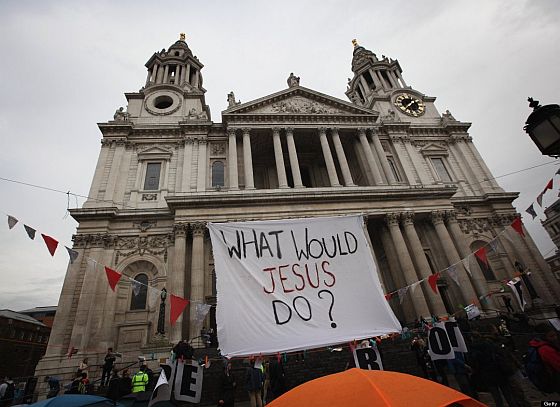
Occupy London protestors outside St Paul's Cathedral challenge the church to live up to its principles.
Time reports: The London arm of the worldwide Occupy Wall Street movement has proved its ability to shake up an institution, as a third senior cleric from St. Paul’s Cathedral has resigned in less than three weeks.
The Occupy London protest has been camped outside the historic church for a little more than two weeks, and St. Paul’s muddled response to the anti-corporate greed protesters has already resulted in public backlash, dissent within the church’s governing body and even resignations.
On Monday, Reverend Graeme Knowles, the dean of St. Paul’s, announced that he would be resigning from his position in the wake of criticism over the cathedral’s managing of the protest camp issue. With his announcement, Rev. Knowles joins two other senior clerics who’ve recently left St. Paul’s over the protest. Last week, canon chancellor Giles Fraser resigned, saying he thought that the cathedral’s opposition to the protest signaled they were “set on a course of action that could mean there will be violence in the name of the church.” Just days later, a part-time chaplain, Fraser Dyer, resigned because, as he noted on his blog, he was dismayed by St. Paul’s decision to evict the camp, and he did not “relish the prospect of having to defend the cathedral’s position in the face of the inevitable questions that visitors to St Paul’s will pose in the coming weeks and months.”
Andrew Rawnsley writes: A big mistake is to think that because the protesters tend to be youthful it follows that they should be treated like children. Richard Chartres, the Bishop of London, has made that error by suggesting to the campers that they ought to leave in return for a debate under the dome of St Paul’s – gosh, thanks my Lord Bishop. He further asks them to go on the grounds that: “I am involved in ongoing discussion with City leaders about improving shareholder influence on excessive remuneration.”
I am sure that the bishop is well-meaning, but that is not going to cut it. There has been “ongoing discussion” for years. The result, according to the latest report by Incomes Data Services: Britain’s top executives gave themselves a 49% increase in their salaries, benefits and bonuses in the past year. It does not even occur to the business and financial elite that it might be good old cynical public relations to moderate their greed while so many of their fellow citizens are suffering the consequences of corporate follies.
Who is truly the more adult: the protesters or an establishment that regards itself as older and wiser? The protesters have largely been very decorously behaved. They have thus far displayed no propensity to riot or to loot. Their tents are erected in rather neat rows. They hold laboriously consensus-seeking meetings at which they keep minutes and take votes. Their spokespeople are polite and articulate. If they do not have all the answers, they are at least posing some of the right questions. I don’t see why they should be criticised for the absence of a manifesto when the leaders of Europe spent months quarrelling and flailing over the euro crisis before scrabbling together an expensively botched compromise.
The protesters shun formal leaders and hierarchies – and I also don’t see why they should be criticised for this at a time when conventional leaders and hierarchies have been so conspicuously useless. Here are some recent scenes in establishment politics. Silvio Berlusconi displays his incomparable charms by describing Angela Merkel as “culona ichiavabile” (“an unfuckable lard arse”). Rick Perry, contender to become Republican candidate for the great office of president of the United States, questions where Barack Obama was born five months after the White House released his long-form birth certificate, and excuses himself by saying: “It’s fun to poke at him.” A punch-up breaks out on the floor of the Italian parliament between one right-wing member of the government and an even more right-wing member. Nicolas Sarkozy tells David Cameron to “shut up” because he is “sick” of him. David Cameron elevates the tone at prime minister’s questions by shouting: “Complete mug!” at Ed Miliband.
Protesters or leaders? I know who looks the more grown-up.
A Guardian video: Occupy London, a street level view: ‘How clear are we all on what consensus actually is?’
As St Paul’s reopens its doors, and the cathedral joins with the City of London Corporation to take legal action to evict the Occupy London protest, the activists come to terms with a manifesto being leaked to the press.
An investment banker says bankers must listen to the Occupy movement
Ken Costa, one of the best-known investment bankers in the City, London’s financial district, recognizes that the Occupy movement resonates with a wide constituency that cannot be ignored.
A cloud of public anger has appeared on the horizon; it is growing. It may currently be no bigger than a man’s fist but it presents us with a clear choice to take the underlying arguments seriously and to strengthen the foundations of the market economy or to risk the consequences.
When such a wide range of people are singing a tune perhaps discordant to a City worker’s ears but seemingly in tune with the global view that the market economy has failed to deliver growth, jobs, and hope, we need to listen. The cure is not more legislation, or increased regulation. It is the pressing need to reconnect the financial with the ethical.
Free markets may be free in the sense that they permit uncoerced transactions between individuals but they do not exist in a moral vacuum. For markets to work freely, they need somehow to be nurtured and sustained by a moral spirit. This is not the box-ticking morality with which we have become familiar but somehow, improbable as it may seem to the many critics of the City, by a desire to do well, by doing good.
This argument is conservative inasmuch as it was outlined by Adam Smith who regarded moral foundations as integral to the success of the market economy. It is also radical in that it reflects the desire for change prevalent in the emerging generation. So what do I mean by “connecting the financial and the ethical”?
First we have to recognise that there is such a thing as morality. Good and bad do exist, not simply as opinions. They are objective rather than subjective; real rather than endlessly pliable; relevant to public life rather than restricted to private life; and, above all, necessary.
Put bluntly, ultimately businesses cannot work, banks cannot lend, economies cannot function and societies cannot flourish without mutual trust and respect, or without fundamental honesty and integrity. In the short term they can, as we have also seen, much to the advantage of practitioners. But such a system is simply unsustainable.
Second, we all need to learn the grammar of morality, not in a judgmental way but by becoming more comfortable in thinking, writing and talking openly about values and ethics. For many this will be like learning an entirely new language.
Third, leaders need to show that they read the signs of the times. Governments will not be able to resist the continuing anger and will be goaded by ever more strident calls for intervention. They have to advance the case for the free market vigorously in language that is compelling to this generation. We will only win the debate if we take seriously the need to reconnect the robust desire for profit and financial incentives that is core to the free market economy with the moral values that are its foundation. The price of economic freedom is moral vigilance. We forget this at our peril.
Nuclear powers plan weapons spending spree, report finds
The Guardian reports: The world’s nuclear powers are planning to spend hundreds of billions of pounds modernising and upgrading weapons warheads and delivery systems over the next decade, according to an authoritative report [PDF] published on Monday.
Despite government budget pressures and international rhetoric about disarmament, evidence points to a new and dangerous “era of nuclear weapons”, the report for the British American Security Information Council (Basic) warns. It says the US will spend $700bn (£434bn) on the nuclear weapons industry over the next decade, while Russia will spend at least $70bn on delivery systems alone. Other countries including China, India, Israel, France and Pakistan are expected to devote formidable sums on tactical and strategic missile systems.
For several countries, including Russia, Pakistan, Israel and France, nuclear weapons are being assigned roles that go well beyond deterrence, says the report. In Russia and Pakistan, it warns, nuclear weapons are assigned “war-fighting roles in military planning”.
Max Fisher writes: After 10 years of close but unproductive talks, the U.S. and China still fail to understand one another’s nuclear weapons policies, according to a disturbing report by Global Security Newswire and the Nuclear Threat Initiative. In other words, neither the U.S. nor China knows when the other will or will not use a nuclear weapon against the other. That’s not due to hostility, secrecy, or deliberate foreign policy — it’s a combination of mistrust between individual negotiators and poor communication; at times, something as simple as a shoddy translation has prevented the two major powers from coming together. Though nuclear war between the U.S. and China is still extremely unlikely, because the two countries do not fully understand when the other will and will not deploy nuclear weapons, the odds of starting an accidental nuclear conflict are much higher.
Neither the U.S. nor China has any interest in any kind of war with one other, nuclear or non-nuclear. The greater risk is an accident. Here’s how it would happen. First, an unforeseen event that sparks a small conflict or threat of conflict. Second, a rapid escalation that moves too fast for either side to defuse. And, third, a mutual misunderstanding of one another’s intentions.
U.S. turned a blind eye to torture in Afghan prisons
The Washington Post reports: Across the street from U.S. military headquarters in Kabul, shrouded from view by concrete walls, the Afghan intelligence agency runs a detention facility for up to 40 terrorism suspects that is known as Department 124. So much torture took place inside, one detainee told the United Nations, that it has earned another name: “People call it Hell.”
But long before the world body publicly revealed “systematic torture” in Afghan intelligence agency detention centers, top officials from the State Department, the CIA and the U.S. military received multiple warnings about abuses at Department 124 and other Afghan facilities, according to Afghan and Western officials with knowledge of the situation.
Despite the warnings, the United States continued to transfer detainees to Afghan intelligence service custody, the officials said. Even as other countries stopped handing over detainees to problematic facilities, the U.S. government did not.
U.S. Special Operations troops delivered detainees to Department 124. CIA officials regularly visited the facility, which was rebuilt last year with American money, to interrogate high-level Taliban and al-Qaeda suspects, according to Afghan and Western officials familiar with the site. Afghan intelligence officials said Americans never participated in the torture but should have known about it.
When the United Nations on Aug. 30 brought allegations of widespread detainee abuse to Gen. John Allen, the top U.S. military commander here, he took swift action ahead of the public release of the findings. Coalition troops stopped transferring detainees to Department 124 and 15 other police and intelligence agency prisons. They also hastily began a program to monitor those facilities and conduct human rights classes for interrogators.
But the prospect that U.S. officials failed to act on prior warnings raises questions about their compliance with a law, known as the Leahy Amendment, that prohibits the United States from funding units of foreign security forces when there is credible evidence that they have committed human rights abuses.
The State Department is investigating whether the law applies and what funding might be affected, according to U.S. officials.
Attacks on Americans in Kabul get Haqqani network’s message across
Rod Nordland reports: Every bomb, they say, has a return address.
When car bombs blew up in West Beirut, or explosions cut down worshipers in Sadr City mosques, survivors generally knew who was to blame, and more or less why — even when no one claimed responsibility.
So, too, with the suicide car bomb that on Saturday delivered the worst blow that NATO forces have suffered yet in Kabul, smashing into an armored bus full of troops and killing 13 foreigners, most of them Americans, and at least 4 Afghans.
The Taliban immediately claimed responsibility, but Afghan and American officials suspect that, more specifically, it was the fearsome Haqqani faction, whose fighters have proved better trained and organized than many Taliban, and which in recent months especially has focused its attacks on military targets rather than civilian ones.
The message the Haqqanis are sending — to the world and, especially, to the Afghan public — is that they are willing and able to kill foreign troops. And with the Haqqani bombs comes a particularly troublesome return address: Pakistan, where the group is based.
One Western diplomat, speaking on the condition of anonymity under diplomatic ground rules, said it was clear that if the Haqqanis were behind the attack, the militants were reacting to Secretary of State Hillary Rodham Clinton’s recent trip to Pakistan. During the visit, she again demanded that the government do something about the Haqqanis, whose bases are in the Pakistani territory of North Waziristan.
“No one goes to this much trouble if they don’t think you’ll get the message,” the diplomat said.
An Afghan political analyst, Haroun Mir, agreed. “These are planned attacks in response to the pressure from the United States on Pakistan against the Haqqani network,” Mr. Mir said. Beyond that, he added, “the Pakistanis are sending another message, too: They are not willing to abandon their support of the Taliban.”
The New York Times also reports: Just a month after accusing Pakistan’s spy agency of secretly supporting the Haqqani terrorist network, which has mounted attacks on Americans, the Obama administration is now relying on the same intelligence service to help organize and kick-start reconciliation talks aimed at ending the war in Afghanistan.
The revamped approach, which Secretary of State Hillary Rodham Clinton called “Fight, Talk, Build” during a high-level United States delegation’s visit to Kabul and Islamabad this month, combines continued American air and ground strikes against the Haqqani network and the Taliban with an insistence that Pakistan’s Inter-Services Intelligence agency get them to the negotiating table.
But some elements of the ISI see little advantage in forcing those negotiations, because they see the insurgents as perhaps their best bet for maintaining influence in Afghanistan as the United States reduces its presence there.
The strategy is emerging amid an increase in the pace of attacks against Americans in Kabul, including a suicide attack on Saturday that killed as many as 10 Americans and in which the Haqqanis are suspected . It is the latest effort at brokering a deal with militants before the last of 33,000 American “surge” troops prepare to pull out of Afghanistan by September, and comes as early hopes in the White House about having the outlines of a deal in time for a multinational conference Dec. 5 in Bonn, Germany, have been all but abandoned.
But even inside the Obama administration, the new initiative has been met with deep skepticism, in part because the Pakistani government has developed its own strategy, one at odds with Mrs. Clinton’s on several key points. One senior American official summarized the Pakistani position as “Cease-fire, Talk, Wait for the Americans to Leave.”
In short, the United States is in the position of having to rely heavily on the ISI to help broker a deal with the same group of militants that leaders in Washington say the spy agency is financing and supporting.
“The Pakistanis see the contradictions in the American approach,” said Shamila N. Chaudhary, a former top Obama White House aide on Pakistan and Afghanistan. “The big question for the administration is, What can the Pakistanis actually deliver? Pakistan is holding its cards very closely.”
Obama administration plans to increase military support for autocratic Gulf rulers
The New York Times reports: The Obama administration plans to bolster the American military presence in the Persian Gulf after it withdraws the remaining troops from Iraq this year, according to officials and diplomats. That repositioning could include new combat forces in Kuwait able to respond to a collapse of security in Iraq or a military confrontation with Iran.
The plans, under discussion for months, gained new urgency after President Obama’s announcement this month that the last American soldiers would be brought home from Iraq by the end of December. Ending the eight-year war was a central pledge of his presidential campaign, but American military officers and diplomats, as well as officials of several countries in the region, worry that the withdrawal could leave instability or worse in its wake.
After unsuccessfully pressing both the Obama administration and the Iraqi government to permit as many as 20,000 American troops to remain in Iraq beyond 2011, the Pentagon is now drawing up an alternative.
In addition to negotiations over maintaining a ground combat presence in Kuwait, the United States is considering sending more naval warships through international waters in the region.
With an eye on the threat of a belligerent Iran, the administration is also seeking to expand military ties with the six nations in the Gulf Cooperation Council — Saudi Arabia, Kuwait, Bahrain, Qatar, the United Arab Emirates and Oman. While the United States has close bilateral military relationships with each, the administration and the military are trying to foster a new “security architecture” for the Persian Gulf that would integrate air and naval patrols and missile defense.
The size of the standby American combat force to be based in Kuwait remains the subject of negotiations, with an answer expected in coming days. Officers at the Central Command headquarters here declined to discuss specifics of the proposals, but it was clear that successful deployment plans from past decades could be incorporated into plans for a post-Iraq footprint in the region.
For example, in the time between the Persian Gulf war in 1991 and the invasion of Iraq in 2003, the United States Army kept at least a combat battalion — and sometimes a full combat brigade — in Kuwait year-round, along with an enormous arsenal ready to be unpacked should even more troops have been called to the region.
“Back to the future” is how Maj. Gen. Karl R. Horst, Central Command’s chief of staff, described planning for a new posture in the Gulf. He said the command was focusing on smaller but highly capable deployments and training partnerships with regional militaries. “We are kind of thinking of going back to the way it was before we had a big ‘boots on the ground’ presence,” General Horst said. “I think it is healthy. I think it is efficient. I think it is practical.”
Mr. Obama and his senior national security advisers have sought to reassure allies and answer critics, including many Republicans, that the United States will not abandon its commitments in the Persian Gulf even as it winds down the war in Iraq and looks ahead to doing the same in Afghanistan by the end of 2014.