Category Archives: Issues

The American leviathan

The American leviathan

News travels fast across the red desert bush of remote Djibouti. Even as US military reservists erect a field hospital around a cluster of tents and blockhouses near a desolate watering hole, dozens of tribespeople are waiting for treatment in orderly rows. They arrive with maladies of every sort: bad teeth, diarrhea, fevers, colds, arthritis. At the triage center, an elderly tribesman has had a thorn removed from his foot, a wound that had been infected for months. At the dental surgery station, Navy Lt. Bill Anderson, an orthodontist from Northfield, New Jersey, will over the next few hours extract a dozen rotting or impacted teeth using instruments that sparkle in the late-morning sun.

The reservists are attached to a Djibouti-based task force of some 1,800 soldiers, marines, sailors and Air Force personnel. Embedded with them is an aid specialist from the Agency for International Development, which provides guidance for the operation. She is reticent and refers questions to the agency’s country leader, Stephanie Funk. The next day, Funk acknowledges that USAID’s solitary representation on the triage mission is symptomatic of a new age in US foreign policy–one in which America, in peacetime as much as in war, is personified abroad more by soldiers than by civilians. “If we had the numbers and the money to do fieldwork, we would, but our budgets have been declining for years,” Funk said in her office on the US Embassy compound in Djibouti City. “The Pentagon has got both numbers and money. For every fifty of them, there’s only one of me.”

Quietly, gradually–and inevitably, given the weight of its colossal budget and imperial writ–the Pentagon has all but eclipsed the State Department at the center of US foreign policy-making. The process began with the dawn of America’s post-World War II global empire and deepened in the mid-1980s, with the expansion of worldwide combatant commands. It matured during the Clinton years, with the military’s migration into humanitarian aid and disaster relief work, and accelerated rapidly with George W. Bush’s declaration of endless conflict in the “global war on terror” and a near-doubling of military spending. [continued…]

Facebooktwittermail

Netanyahu’s secret Moscow visit was part of campaign against missile sales to Iran

Netanyahu’s secret Moscow visit was part of campaign against missile sales to Iran

Prime Minister Benjamin Netanyahu’s trip to Moscow on Monday was part of quiet diplomacy between Russia and Israel over Russia’s plan to supply S-300 anti-aircraft missiles to Iran, Haaretz has learned.

A senior government source in Jerusalem confirmed yesterday that Netanyahu was in Russia for talks on security issues, particularly the sale of Russian weapons to Iran.

The missiles could help Iran protect its nuclear facilities from attack.

The purpose of the prime minister’s trip, disclosed to only a few government officials, was to persuade senior officials in Russia’s government and security establishment not to move ahead on a deal to give Iran the missiles.

The discussion also dealt with Russia’s refusal to back more sanctions against Iran over its nuclear program. Continue reading

Facebooktwittermail

US Jewish leaders push Obama to act on Iran

US Jewish leaders push Obama to act on Iran

Several hundred Jewish leaders and activists are planning to arrive here Thursday to urge top Obama administration officials and US congressmen to take action on Iran.

They are pushing for Congress to quickly pass an Iran sanctions bill sponsored by US House Foreign Affairs Committee Chairman Howard Berman and otherwise take serious economic and diplomatic steps to pressure Iran to abandon its pursuit of nuclear capabilities that threaten Israel.

“Congress is back, legislation is on the agenda, and this is September, when at some level decisions are being made in connection with Iran,” Anti-Defamation League Washington Director Jess Hordes said of the planning of the event.

His organization will be joining the United Jewish Communities, the Jewish Council for Public Affairs, the Conference of Presidents of Major American Jewish Organizations, the National Conference of Soviet Jewry and several other groups as part of the effort. [continued…]

U.S. says Iran could expedite nuclear bomb

American intelligence agencies have concluded in recent months that Iran has created enough nuclear fuel to make a rapid, if risky, sprint for a nuclear weapon. But new intelligence reports delivered to the White House say that the country has deliberately stopped short of the critical last steps to make a bomb.

In the first public acknowledgment of the intelligence findings, the American ambassador to the International Atomic Energy Agency declared on Wednesday that Iran now had what he called a “possible breakout capacity” if it decided to enrich its stockpile of uranium, converting it to bomb-grade material.

The statement by the ambassador, Glyn Davies, was intended to put pressure on American allies to move toward far more severe sanctions against Iran this month, perhaps including a cutoff of gasoline to the country, if it failed to take up President Obama’s invitation for serious negotiations. But it could also complicate the administration’s efforts to persuade an increasingly impatient Israeli government to give diplomacy more time to work, and hold off from a military strike against Iran’s facilities. [continued…]

Iran dims hopes for diplomacy

ran rejected any compromise with the West over its nuclear program Wednesday, as blunt comments from the Obama administration over Tehran’s bomb-making capability suggested that the two sides were headed toward a renewed diplomatic crisis.

Iran offered Western officials a long-awaited package of proposals to restart negotiations over its nuclear program. But diplomats who viewed the offer Wednesday said the document of fewer than 10 pages essentially ignored questions over Iran’s production of nuclear fuel and instead focused broadly on other international issues.

It made no mention of Tehran’s willingness to suspend its uranium-enrichment activities or to enter into substantive talks about the future of its nuclear program, they said. [continued…]

Russia ‘delivers SAMs to Syria’

Russia has begun deliveries of Pantsir S1 air-defense missiles to Syria, some of which are expected to be passed on to Iran, Syria’s strategic ally that has largely bankrolled the deal, according to the Interfax-AVN military news agency.

Interfax quoted Yuriy Savenkov, deputy director general of the Instrument Design Bureau, or KBP, as saying that deliveries started several weeks ago. KBP produces the Pantsir and other high-precision weapons.

Meantime, Kommersant quoted Alexei Fedorov, head of Russia’s United Aircraft Corp., as confirming the existence of a 2007 contract with Syria for eight twin-engined MiG-31E interceptors.

This aircraft, NATO codename Foxhound, can fly at three times the speed of sound and engage several targets at a range of up to 110 miles simultaneously. [continued…]

Taking Iran seriously

Given Iran’s shortening nuclear timetable and diplomatic challenges for forging an international consensus on sanctions, we urge Mr. Obama simultaneously to begin preparations for the use of military options. Now is the time for the president to reinforce his commitment to “use all elements of American power to prevent Iran from developing a nuclear weapon,” as he stated in February. We believe only a credible U.S. military threat can make possible a peaceful solution.

By showing that he has not taken the military option off the table, Mr. Obama may also be able to convince Israel to forgo a unilateral military strike while forcing Tehran to recognize the costs of its nuclear defiance. Furthermore, making preparations now will enable the president, should all other measures fail to bring Tehran to the negotiating table, to use military force to retard Iran’s nuclear program. We do not downplay the risks of this option and recognize its complications, but we do believe it to be a feasible option of last resort. [continued…]

Facebooktwittermail

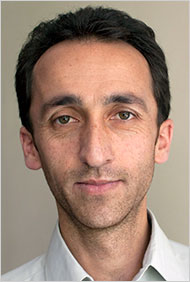
Afghan reporter recalled as a man of many abilities

Afghan reporter recalled as a man of many abilities

The death of [Sultan M] Munadi illustrated two grim truths of the war in Afghanistan: vastly more Afghans than foreigners have died battling the Taliban, and foreign journalists are only as good as the Afghan reporters who work with them.

Mr. Munadi, 34, the father of two boys, worked as an office manager and reporter in the Kabul bureau. He and other Afghan reporters who work with foreign journalists are vastly more than interpreters.

“The story calls him an ‘interpreter,’ which misleads the reader about what these great people do for us,” Barry Bearak, a Times correspondent who worked with Mr. Munadi in 2001 and 2002, said, referring to an article about Mr. Munadi’s death.

“They serve as our walking history books, political analysts,” he added, “managers of logistics, taking equal the risks without equal the glory or pay.”

Those who worked with him said his country’s turmoil did not dampen his spirit or limit his determination. During Taliban rule, he worked with the International Red Cross in his native Panjshir Valley, a mountainous area north of Kabul that was never ruled by the Taliban, even when they dominated the country from 1996 to 2001. [continued…]

The reporter’s account: 4 days with the Taliban

I lay on the ground, gave my name and newspaper and pointed to where Sultan was lying behind me, telling them I thought he had been shot.

The body was lying motionless in the ditch where I had seen him go down. I hoped he had dropped and was lying still. I knew it wasn’t the case. They told me they had his picture and would look for him, then dragged me away past the house across a rutted field and toward the helicopter landing zone.

It was over. Sultan was dead. He had died trying to help me, right up to the very last seconds of his life. [continued…]

Negotiators shocked by special forces rescue raid on Taleban

Hostage negotiators expressed shock and anger at Gordon Brown’s decision to approve a commando raid to free a kidnapped British journalist, saying that they were within days of securing his release through peaceful means.

Stephen Farrell — who was in Afghanistan for The New York Times — was not harmed in the raid but his Afghan translator, Sultan Munadi, and a British soldier from the Special Forces Support Group were killed. The men were being held at a house in Kharudi in northern Afghanistan. Just after midnight on Tuesday US helicopters dropped British special forces and Afghan troops in the village. Taleban militants fled the house and a fierce battle ensued. At least one civilian and scores of militants were killed. [continued…]

Facebooktwittermail

NATO nations ask U.N. for new Afghan ‘timelines’

NATO nations ask U.N. for new Afghan ‘timelines’

The Spanish defense minister, Carme Chacón, said Wednesday that five years would be a “reasonable” timeframe for NATO forces to withdraw from Afghanistan, just as major European powers officially called on the United Nations to convene an international conference before the end of the year to set new “benchmarks and timelines.”

Mrs. Chacón also said she would request 220 more troops for Spain’s Afghanistan contingent, bringing the permanent deployment there to about 1,000. With the additional troops, Spain’s contribution would still fall behind those of 10 other NATO members, led by the United States, Britain, France and Germany. Spain’s government is expected to approve the request Friday at a cabinet meeting.

Prime Minister José Luis Rodríguez Zapatero had already said in July that troop levels would probably increase. [continued…]

Afghan election watchdog discards tainted votes

The U.N.-funded elections watchdog in Afghanistan has begun to throw out fraudulent ballots from the country’s presidential balloting, a day after a tally including contested votes put President Hamid Karzai over the 50% he needs to avoid a second round.

The Electoral Complaints Commission, a United Nations-sponsored body responsible for investigating allegations of fraud and misconduct, has been looking into more than 600 serious accusations, Commissioner Grant Kippen said. The accusations include instances of ballot stuffing and voter intimidation. In some cases, the commission has disqualified results from entire polling stations. [continued…]

Facebooktwittermail

September 9: The shot that was not heard round the world

September 9: The shot that was not heard round the world

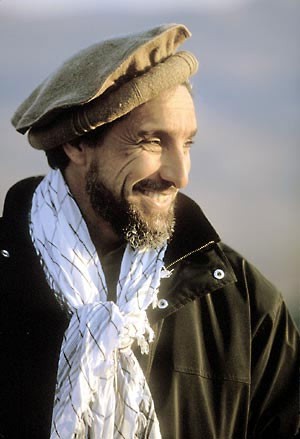
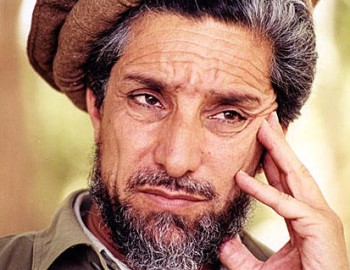
As the war in Afghanistan enters its ninth year, in the minds of most Americans the attacks of September 11, 2001 remain the signal event that shaped everything that has followed. Yet had we been paying more attention, we would have known that September 9, 2001, the day that Ahmed Shah Massoud was assassinated, was no less significant.

On that day, Afghanistan lost a leader of global stature — a man who truly was irreplaceable. Now, as much as ever, as the Taliban is resurgent and American and its allies attempt to prop up a deeply corrupt government in Kabul, the memory of Massoud is a symbol of the Afghan people’s so many shattered hopes.

A year after Massoud’s death, John Burns wrote in the New York Times:

As Americans prepare to mark the Sept. 11 anniversary, with many still struggling to come to terms with the cataclysm of that day, Afghans are passing through their own harrowing remembrance, of an attack that was overshadowed for the rest of the world by what happened two days later in the United States. Only four men died on Sept. 9 — the 49-year-old Mr. Massoud, an aide and the assassins — but there has been little healing of the wounds the killers inflicted on the hearts and the hopes of millions of his countrymen.

Ask Afghans who knew Mr. Massoud what it was about him that inspires such grief, and they struggle. Like [Fahim] Dashti [who was with Massoud at the time of his assassination], they talk of his skills as the guerrilla commander who astonished Soviet generals he outfought during the occupation of the 1980’s, or of his years holding out against the Taliban, when almost all other guerrilla leaders had joined the Taliban or fled abroad.

They speak of Mr. Massoud’s directness, his lack of pretense or false piety, his modesty, the look of somber intensity that rarely left his face. But usually, they give up, as people do when they try to define charisma. Mr. Dashti, the editor, resorted, in the end, to the simplest words. “We loved him,” he said. “We loved him more than we loved our own mothers and fathers. He embodied everything we loved about Afghanistan.”

In 1998, in a letter to the American people, Massoud wrote:

Let me correct a few fallacies that are propagated by Taliban backers and their lobbies around the world. This situation over the short and long-run, even in case of total control by the Taliban, will not be to anyone’s interest. It will not result in stability, peace and prosperity in the region. The people of Afghanistan will not accept such a repressive regime. Regional countries will never feel secure and safe. Resistance will not end in Afghanistan, but will take on a new national dimension, encompassing all Afghan ethnic and social strata.

The goal is clear. Afghans want to regain their right to self-determination through a democratic or traditional mechanism acceptable to our people. No one group, faction or individual has the right to dictate or impose its will by force or proxy on others. But first, the obstacles have to be overcome, the war has to end, just peace established and a transitional administration set up to move us toward a representative government.

We are willing to move toward this noble goal. We consider this as part of our duty to defend humanity against the scourge of intolerance, violence and fanaticism. But the international community and the democracies of the world should not waste any valuable time, and instead play their critical role to assist in any way possible the valiant people of Afghanistan overcome the obstacles that exist on the path to freedom, peace, stability and prosperity.

Pepe Escobar recounts:

During the 1990s, and especially during the time of the Taliban rule, which began in 1996, Washington never knew exactly how to deal with Massoud. But after the attacks on the US embassies in Kenya and Tanzania in 1998, Central Intelligence Agency (CIA) agents sought a meeting with Massoud in Dushanbe. The CIA wanted information on how to get to bin Laden. Massoud carefully considered all the angles, but ultimately he could not but criticize American shortsightedness. For the Bill Clinton administration, the ultimate aim was to get bin Laden and destroy al-Qaeda. For Massoud, the main point was to destroy the Taliban. He repeatedly stressed at the time that “without the Taliban, Osama can’t do anything”.

Massoud, indeed, had agents and intelligence in the heart of Taliban country. The best example is how his Panjshiris planted a powerful truck bomb just outside Mullah Omar’s compound in central Kandahar, in 1999. The explosion left a huge crater and killed 10 people, including three of Mullah Omar’s bodyguards. Omar escaped, almost by a miracle, but if the Northern Alliance could get close to the Taliban, they could not penetrate al-Qaeda’s ultra-hardcore security to try to find and menace bin Laden. And as much as the Northern Alliance could penetrate the Taliban, security chief Arif – now head of intelligence of Hamid Karzai’s government – says that “Osama was actively trying to recruit spies inside the Panjshir Valley”. But once again, no one investigated the “Moroccans”.

In his interview with Asia Times Online, the second-to-last in his lifetime, Massoud repeatedly portrayed al-Qaeda, the Taliban and Pakistan as a sort of “triangle of evil”. He criticized the US for basically following a Pakistani plan: try to “reform” the Taliban and concentrate on seducing Taliban “moderates” (a contradiction in terms). There were never any moderates within the Taliban. Mullah Omar was totally under the spell of bin Laden. American diplomats with knowledge of Central Asia were warning about the “Arabization” of Afghanistan. But no one in Washington was listening. The US only got the message after September 11 – and after Massoud’s death.

In the first months of 2001, Massoud calculated that he had to involve himself in a complex gamble: change his image from warrior to statesman. He addressed the European parliament in Strasbourg, France, in April 2001. This was his first official trip to the West. He tried hard to attract Western support for the resistance against the Taliban. But still no one was listening. In Strasbourg, Massoud delivered a stunning message that nobody took seriously at the time: “If President Bush doesn’t help us, then these terrorists will damage the United States and Europe very soon – and it will be too late.”

Afghanistan Revealed a documentary broadcast by National Geographic in October 2001, presents a portrait of Massoud and his struggle to save Afghanistan.

Facebooktwittermail

Israeli settlement expansion may bring one-state solution closer

Israeli settlement expansion may bring one-state solution closer

As Israel announced plans to expand settlements in the West Bank in anticipation of a settlement “freeze”, the former US president, Jimmy Carter, who recently returned from a trip to the Holy Land, suggested that the implementation of a two-state solution is becoming increasingly unlikely.

“A more likely alternative to the present debacle is one state, which is obviously the goal of Israeli leaders who insist on colonising the West Bank and East Jerusalem. A majority of the Palestinian leaders with whom we met are seriously considering acceptance of one state, between the Jordan River and the Mediterranean Sea. By renouncing the dream of an independent Palestine, they would become fellow citizens with their Jewish neighbours and then demand equal rights within a democracy. In this nonviolent civil rights struggle, their examples would be Mahatma Gandhi, Martin Luther King Jr and Nelson Mandela.”

Mr Carter belongs to a group of veteran world leaders, known as the Elders, who recently visited Israel and the West Bank. Another member of the group, former Irish president and UN Human Rights Commissioner Mary Robinson told The Jerusalem Post last month that if Israel does not freeze settlement construction, a two-state solution may no longer be possible. [continued…]

Facebooktwittermail

U.S. tried to soften treaty on detainees

U.S. tried to soften treaty on detainees

From 2003 to 2006, the Bush administration quietly tried to relax the draft language of a treaty meant to bar and punish “enforced disappearances” so that those overseeing the CIA’s secret prison system would not be criminally prosecuted under its provisions, according to former officials and hundreds of pages of documents recently declassified by the State Department.

The aim of the global treaty, long supported by the United States, was to end official kidnappings, detentions and killings like those that plagued Latin America in the 1970s and 1980s, and that allegedly still occur in Russia, China, Iran, Colombia, Sri Lanka and elsewhere. But the documents suggest that initial U.S. support for the negotiations collided head-on with the then-undisclosed goal of seizing suspected terrorists anywhere in the world for questioning by CIA interrogators or indefinite detention by the U.S. military at foreign sites.

Instead of embracing a far-reaching ban on arrests, detentions and abductions of people without disclosing their fate or whereabouts or ensuring “the protection of the law,” the United States pressed in 2004 for a more limited prohibition on intentionally placing detainees outside legal protections for “a prolonged period of time.” At the time, the CIA was secretly holding about a dozen prisoners. [continued…]

The complicit general

With regard to the interrogation of detainees after September 11, it is well established that the path to torture was based on three key decisions. First, on February 7, 2002, President Bush decided that none of the detainees held at Guantánamo would have any legal rights under the Geneva Conventions. Second, starting in July 2002 the administration decided to authorize the use of waterboarding and other “enhanced interrogation techniques” against certain detainees held by the CIA, and obtained legal approval from the Department of Justice, in the form of two now notorious memos signed by Jay Bybee and largely written by John Yoo, with input from Dick Cheney’s legal counsel, David Addington.[1] Third, on December 2, 2002, came Secretary Rumsfeld’s memo approving the use of fifteen techniques on prisoners held by the military at Guantánamo, causing the military to adopt some of the interrogation practices used by the CIA. Each decision was significant. The cumulative effect was devastating, opening the path to the abuses at Abu Ghraib and elsewhere. [continued…]

Facebooktwittermail

Measuring success in Afghanistan

Measuring success in Afghanistan

Here may be the single strangest fact of our American world: that at least three administrations — Ronald Reagan’s, George W. Bush’s, and now Barack Obama’s — drew the U.S. “defense” perimeter at the Hindu Kush; that is, in the rugged, mountainous lands of Afghanistan. Put another way, while Americans argue feverishly and angrily over what kind of money, if any, to put into health care, or decaying infrastructure, or other key places of need, until recently just about no one in the mainstream raised a peep about the fact that, for nearly eight years (not to say much of the last three decades), we’ve been pouring billions of dollars, American military know-how, and American lives into a black hole in Afghanistan that is, at least in significant part, of our own creation.

Imagine for a moment, as you read this post, what might have happened if Americans had decided to sink the same sort of money — $228 billion and rising fast — the same “civilian surges,” the same planning, thought, and effort (but not the same staggering ineffectiveness) into reclaiming New Orleans or Detroit, or into planning an American future here at home. Imagine, for a moment, when you read about the multi-millions going into further construction at Bagram Air Base, or to the mercenary company that provides “Lord of the Flies” hire-a-gun guards for American diplomats in massive super-embassies, or about the half-a-billion dollars sunk into a corrupt and fraudulent Afghan election, what a similar investment in our own country might have meant.

Ask yourself: Wouldn’t the U.S. have been safer and more secure if all the money, effort, and planning had gone towards “nation-building” in America? Or do you really think we’re safer now, with an official unemployment rate of 9.7%, an underemployment rate of 16.8%, and a record 25.5% teen unemployment rate, with soaring health-care costs, with vast infrastructural weaknesses and failures, and in debt up to our eyeballs, while tens of thousands of troops and massive infusions of cash are mustered ostensibly to fight a terrorist outfit that may number in the low hundreds or at most thousands, that, by all accounts, isn’t now even based in Afghanistan, and that has shown itself perfectly capable of settling into broken states like Somalia or well functioning cities like Hamburg. [continued…]

Evidence of ballot fraud for Karzai forces U.S. into action

Evidence of electoral fraud on behalf of incumbent Afghan President Hamid Karzai has become so overwhelming, some U.S. and Western officials say, that they are scrambling to avoid a potential political crisis if he claims victory.

Afghanistan’s election commission decided Monday that it will release a complete preliminary tally from the Aug. 20 presidential election, including votes tainted by fraud charges but not disqualified, a commission official said. Western officials now say they believe almost one of every six of Afghanistan’s more than 25,000 polling stations is tainted by fraud, most of it on behalf of Mr. Karzai.

Including those votes, the preliminary tally is expected to show Mr. Karzai with more than 50% of the vote — enough to avoid a runoff election, Afghan and Western officials say. [continued…]

Facebooktwittermail

Ahmadinejad invites six powers to Tehran

Ahmadinejad invites six powers to Tehran

Iranian President Mahmoud Ahmadinejad on Monday invited representatives from a group of six world powers, including the United States, to Tehran, but he said negotiations over his country’s right to a nuclear program would be off the table.

Discussion on the nuclear issue, he told reporters at a news conference, is “finished.”

“We will never negotiate on the Iranian nation’s obvious rights,” he said, adding that Iran would not halt its uranium enrichment efforts. Ahmadinejad said Iran had prepared a proposal for breaking the deadlock on its nuclear program, and he asked diplomats to come to Tehran to pick it up. [continued…]

Ahmadinejad levels new broadside at opponents

Three months after Iranian President Mahmoud Ahmadinejad derided his opponents as “dirt and dust,” sending hundreds of thousands of angry protesters into the streets, he risked enraging them again Monday by likening them to “pollutants” staining “the gown of the revolution.”

The comment, during prepared remarks at a news conference, drew an immediate rebuke from a conservative clerical association in the holy city of Qom, which urged the president and his staff to “concentrate their minds seriously on economic woes and social challenges and avoid uttering unnecessary and provocative remarks.”

But along with Ahmadinejad’s defiant and boastful tone on the sensitive nuclear issue, Monday’s statement also suggested that three months of the worst domestic unrest in the Islamic Republic’s history had not caused the president to change his ways. [continued…]

Khamenei tells Ahmadinejad to listen to criticism

Iran’s supreme leader Ayatollah Ali Khamenei told President Mahmoud Ahmadinejad to listen to “benevolent criticism” as the hardliner began another term in office amid opposition claims his re-election was fraudulent.

“There is internal criticism backed by foreign media with the aim of sabotage but there is also benevolent criticism which may not come from supporters of the government but they contain good comments,” Khamenei said in a meeting with Ahmadinejad and his cabinet, state television reported.

He called on the government to have its “ears open to criticism.”

Also on Monday a leading Iranian conservative clerical group told Ahmadinejad to avoid “provocative” comments, in a first such message to the hardliner whose disputed re-election has bitterly divided the political elite. [continued…]

Facebooktwittermail

Despite slump, U.S. role as top arms supplier grows

Despite slump, U.S. role as top arms supplier grows

Despite a recession that knocked down global arms sales last year, the United States expanded its role as the world’s leading weapons supplier, increasing its share to more than two-thirds of all foreign armaments deals, according to a new Congressional study.

The United States signed weapons agreements valued at $37.8 billion in 2008, or 68.4 percent of all business in the global arms bazaar, up significantly from American sales of $25.4 billion the year before.

Italy was a distant second, with $3.7 billion in worldwide weapons sales in 2008, while Russia was third with $3.5 billion in arms sales last year — down considerably from the $10.8 billion in weapons deals signed by Moscow in 2007. [continued…]

Facebooktwittermail

Should Obama go ‘all in’ on Afghanistan?

Should Obama go ‘all in’ on Afghanistan?

Obama does not act impulsively. Before betting his remaining chips on Afghanistan, he will no doubt deliberate carefully. He will consult. He will sift through all the evidence. Yet before hitting the “start over” button on Afghanistan, he would do well to consider the following: Sometimes the essence of leadership is not to render the right decision but to pose the right question.

As difficult as it is to do so at a time when war has become a seemingly perpetual condition, when it comes to Afghanistan, the really urgent need is to recast the debate. Official Washington obsesses over the question: How do we win? Yet perhaps a different question merits presidential consideration: What alternatives other than open-ended war might enable the United States to achieve its limited interests in Afghanistan?

At this pivotal moment in his presidency, if Obama is going to demonstrate his ability to lead, he will direct his subordinates to identify those alternatives. [continued…]

Editor’s Comment — For Obama to pose the right question he would need to have not already given the wrong answer. Having emphatically called this a “war of necessity” makes it incredibly difficult to climb out of the rhetorical hole he has dug himself into, for it there are alternatives there can be no necessity.

Facebooktwittermail

The path to peace is hard to find on Obama’s ‘roadmapolis’

The path to peace is hard to find on Obama’s ‘roadmapolis’

President Bush’s “road map” first emerged as the US began preparing to invade Iraq. Key Arab regimes had long made clear to Washington that the price of even tacit support for the war was American willingness to address a conflict that generated immense hostility towards the US on the Arab street. The “road map” read like a crack of the whip, outlining a timetable that promised a provisional Palestinian state by the end of 2003 and a resolution of all final status issues by the beginning of 2005. But the Bush administration gave the Israelis and Palestinians no reason to take it seriously; its purely symbolic purpose was plain to see.

The Bush administration made a second high-profile stab at the peace process in the form of the Annapolis Conference held in November 2007, which drew in not only the Israelis and Palestinians, but also a range of Arab states – in what it portrayed as a symbolic affirmation of the administration’s policy of building an alliance of Arab moderates with the US and Israel against the region’s radicals, namely Hamas, Hizbollah, Syria and Iran. Again, there was little reason for the Israelis or Palestinians to take the process seriously. Annapolis simply invited them to talk among themselves about what a peace agreement could look like. The conversation went nowhere, of course, but the fact that it was happening at all was the point for the Bush administration, whose new priority had become rallying Arab support against Iran and its allies.

So what does any of this have to with the US president Barack Obama’s own efforts to jump start the peace process? After all, Mr Obama made it a priority from the get-go of his presidency and can hardly be accused of going through the motions in order to mollify the Arabs to win their support on other issues. Or can he? [continued…]

Facebooktwittermail

The Afghanistan abyss

The Afghanistan abyss

President Obama has already dispatched an additional 21,000 American troops to Afghanistan and soon will decide whether to send thousands more. That would be a fateful decision for his presidency, and a group of former intelligence officials and other experts is now reluctantly going public to warn that more troops would be a historic mistake.

The group’s concern — dead right, in my view — is that sending more American troops into ethnic Pashtun areas in the Afghan south may only galvanize local people to back the Taliban in repelling the infidels.

“Our policy makers do not understand that the very presence of our forces in the Pashtun areas is the problem,” the group said in a statement to me. “The more troops we put in, the greater the opposition. We do not mitigate the opposition by increasing troop levels, but rather we increase the opposition and prove to the Pashtuns that the Taliban are correct.

“The basic ignorance by our leadership is going to cause the deaths of many fine American troops with no positive outcome,” the statement said. [continued…]

Can victory for President Karzai be taken as legitimate?

Western diplomats have been afraid of this predicament ever since the poll results began to come in, with an apparent lead for President Karzai accompanied by a torrent of allegations of fraud. Mr Karzai is now within a whisker of the 50 per cent that would allow him to him claim victory and prevent a run-off vote. But the huge number of serious allegations of fraud — in the thousands, but with at least 600 material to the outcome of the election — mean that it is hard to take his victory as legitimate.

That, certainly, is the view of Abdullah Abdullah, his main rival, and Abdullah supporters. They are threatening to challenge the result through legal appeals and through violence if necessary. The studied position of British and US officials for the past week — that it is for Afghans to decide whether or not the polls produce a credible and legitimate result — is about to shatter. If substantial numbers of Afghans decide that the vote was rigged, what do other governments do then? They have had no answer, hoping not to be in that position. They had better find one now. [continued…]

Fake Afghan poll sites favored Karzai, officials assert

Afghans loyal to President Hamid Karzai set up hundreds of fictitious polling sites where no one voted but where hundreds of thousands of ballots were still recorded toward the president’s re-election, according to senior Western and Afghan officials here.

The fake sites, as many as 800, existed only on paper, said a senior Western diplomat in Afghanistan, who spoke on the condition of anonymity because of the political delicacy of the vote. Local workers reported that hundreds, and in some cases thousands, of votes for Mr. Karzai in the election last month came from each of those places. That pattern was confirmed by another Western official based in Afghanistan.

“We think that about 15 percent of the polling sites never opened on Election Day,” the senior Western diplomat said. “But they still managed to report thousands of ballots for Karzai.”

Besides creating the fake sites, Mr. Karzai’s supporters also took over approximately 800 legitimate polling centers and used them to fraudulently report tens of thousands of additional ballots for Mr. Karzai, the officials said. [continued…]

Sole informant guided decision on Afghan strike

To the German commander, it seemed to be a fortuitous target: More than 100 Taliban insurgents were gathering around two hijacked fuel tankers that had become stuck in the mud near this small farming village.

The grainy live video transmitted from an American F-15E fighter jet circling overhead, which was projected on a screen in a German tactical operations center four miles north of here, showed numerous black dots around the trucks — each of them a thermal image of a human but without enough detail to confirm whether they were carrying weapons. An Afghan informant was on the phone with an intelligence officer at the center, however, insisting that everybody at the site was an insurgent, according to an account that German officers here provided to NATO officials.

Based largely on that informant’s assessment, the commander ordered a 500-pound, satellite-guided bomb to be dropped on each truck early Friday. The vehicles exploded in a fireball that lit up the night sky for miles, incinerating many of those standing nearby.

A NATO fact-finding team estimated Saturday that about 125 people were killed in the bombing, at least two dozen of whom — but perhaps many more — were not insurgents. To the team, which is trying to sort out this complicated incident, mindful that the fallout could further sap public support in Afghanistan for NATO’s security mission here, the target appeared to be far less clear-cut than it had to the Germans.

One survivor, convalescing from abdominal wounds at a hospital in the nearby city of Kunduz, said he went to the site because he thought he could get free fuel. Another patient, a 10-year-old boy with shrapnel in his left leg, said he went to gawk, against his father’s advice. In Kabul, the Afghan capital, relatives of two severely burned survivors being treated at an intensive-care unit said Taliban fighters forced dozens of villagers to assist in moving the bogged-down tankers.

“They came to everyone’s house asking for help,” said Mirajuddin, a shopkeeper who lost six of his cousins in the bombing — none of whom, he said, was an insurgent. “They started beating people and pointing guns. They said, ‘Bring your tractors and help us.’ What could we do?” [continued…]

Editor’s Comment — The striking gap in this account is the absence of testimony from the pilots who released the 500-pound bombs. It’s as though they were merely small cogs in a military machine within which they had little control. Yet we do learn one thing: one of the F-15 pilots recommended dropping 2000-pound bombs. Based on the thermal images he could see, there was little he could discern about the individuals gathered around the fuel trucks yet in his mind the best thing to do would be to kill the maximum number of people in the area.

As the story has been told, the fuel was being dispersed because the trucks couldn’t reach their intended destination. What seems more likely? That the insurgents hoped to later re-collect hundreds of gallons of kerosene stowed away in kitchen jugs, or that the stolen fuel was destined to be used cooking beans over hand-pumped kerosene burners?

“Who goes out at 2 in the morning for fuel? These were bad people, and this was a good operation,” a key local official told the Post.

In the clear mountain air of Afghanistan, the full-moon late last week would have provided surprisingly good light – certainly good enough to make the prospect of some free fuel appealing to more than just the bad people.

Europeans seek to shift security role to Afghan government

The leaders of France, Germany and Britain called Sunday night for an international conference to work out a plan to shift responsibility for security in Afghanistan to the Afghan government.

The call by the three governments, the largest contributors of troops to the war in Afghanistan after the United States, came as mounting military casualties and doubts about the mission there have fueled growing public opposition to the war in Europe.

In Washington, a State Department spokeswoman, Megan Mattson, said the department had no immediate comment on the proposed conference. [continued…]

Facebooktwittermail

American power and the fall of modernity

American power and the fall of modernity — Part I

Modernity is still rooted in a framework of state religious nationalism. Yes, modernity made the state the arbiter of identity. For two centuries and more, collective belonging and meaning has been a state enterprise. In the great religious wars of the 20th century, millions willingly sacrificed themselves for the sacred vision of the nation-state.

Yet now that very vision is in deep recess or near-death, even as the regulatory structures of nation-states keep expanding. Western modernity’s claim of religious nationalism died in the killing fields of the last century — and with it the power of Western identity.

The air is coming out of modernity’s tires — first in the marginal places run by European colonialism, and then increasingly in the places where modernity began. Where it falters, other cultural forms rise to take up the slack. Thus, states are not weakening or failing because of “radical” or “illicit” threats.

In their stead — especially in the faux nation-states sloughed off by European colonialism — equally passionate local and universalistic visions have risen up. They lay their claims not in the consumer and social welfare-driven economies of the developed world, but with societies in need. They flourish where the demand for identity is greatest.

Modernity left a legacy where much of humanity is desperately in need of something new to belong to — and hold on to.

Today 60% of human society has been left behind. Scores of so-called nation-states cannot support raw human needs — or simply care not to — and billions are effectively being abandoned. [continued…]

Drug wars and faltering states: the demise of national identity — Part II

Our 40-year “War on Drugs” merely showcases how U.S. drug demand translates into a field of distortion that has cleared a swath of pure cultural destruction from Mexico to Ecuador.

What of gangs like Mara Salvatrucha, created by the U.S. war in El Salvador in the 1980s?

Of those refugee kids who came to the United States — only to be re-exported by us back to the slums of San Salvador in the 1990s — as many as 50,000 quickly became the shock troops of a U.S.-inspired transnational gang enterprise.

What did they begin to do when they got back home? They started taking over the country. This was a fully funded American disruption. [continued…]

American power and the fall of modernity — Part III

Moving away from modernity’s religious nationalism need not necessarily presage a world of disorder.

Rather, it suggests a world where both local and universalistic identities interact equally with the remnants of the nation-state.

We see this in the world of Islam and elsewhere with the surge of Pentecostal evangelism in Africa.

The state is supplanted in much of Africa by an intricate weave of non-state actors. Many of them are intimately connected to non-state actors in the developed world — such as missionary groups tied to the Arab region, Iran and Texas — and to Western NGOs for assistance in aid and administration.

But even in societies with working state administrations, the non-state continues to flourish. Look at Brazil and Mexico. While the state remains effective, its base is shrinking to those more elite constituencies for whom it provides real security and services.
Meanwhile in the developed world, modernity’s first nation-states have neither the money nor the commitment to reclaim their lost stature and authority in the human ecology of today’s non-state.

Many, like the EU and Russia, feel their own national identities besieged. They fear being overwhelmed by the “other” in their own countries. Their national energies are increasingly tasked to immigration management and strategies of minority assimilation — or maybe just mitigation.

This is not a world of tariff-based deglobalization like the 1930s. It is a world of true global decompression.

Global networks will continue, but only for those who manage to “make it” by the first decades of this early-21st century. Unable to aid the 60% left behind, humanity’s prosperous minority — whether they admit it or not — is increasingly looking to its own defense and preserving the integrity of a smaller system that is still viable. Globalization is now all about a minority living defensively within a seething non-state majority. [continued…]

Michael Vlahos‘ latest book, Fighting Identity: Sacred War and World Change, is reviewed here by Michael Lind.

Facebooktwittermail

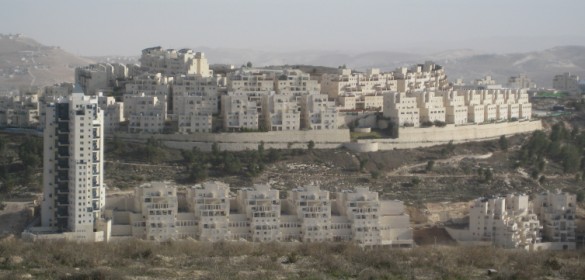
Israel to build new houses in settlements

Israel to build new houses in settlements

Prime Minister Benjamin Netanyahu will approve hundreds of new housing units in West Bank settlements before slowing settlement construction, two of his aides said Friday, in an apparent snub of Washington’s public demand for a total settlement freeze.

The aides also said Netanyahu would be willing to consider a temporary freeze in settlement construction, but their definition of a freeze would include building the new units and finishing some 2,500 others currently under construction.

The settlement suspension also would not include east Jerusalem, which the Palestinians hope to make their future capital.

The U.S. has a set a high public bar for a freeze, saying repeatedly that all settlement activity on lands the Palestinians claim for a future state must stop, without exception. However, Israel appeared to gain some wiggle room in recent weeks as the sides discussed the details of a would-be settlement freeze. [continued…]

Editor’s Comment — When did Netanyahu make his definitive assessment of Obama?

Was it when the presidential candidate was putting on his most obsequious performance in front of AIPAC, spouting drivel about an indivisible Jerusalem?

Or was it when as president-elect he became a mute witness to the Gaza massacre?

Whenever it happened, it is clear that Netanyahu took a clear measure of the strength of his adversary and concluded that whatever the power of his office, this particular president was pliable as willow.

The White House now says:

We regret the reports of Israel’s plans to approve additional settlement construction. Continued settlement activity is inconsistent with Israel’s commitment under the Roadmap.

As the President has said before, the United States does not accept the legitimacy of continued settlement expansion and we urge that it stop.

When this president urges this prime minister to stop, I’m reminded of Bush urging Sharon to pull his troops out of Jenin “without delay” in 2002 – a meek demand that was predictably ignored – and of Olmert telling Bush how Rice should vote at the UN – a presumptuous call that was not rebuffed.

Crude as this way of expressing it might be, again and again we witness a suposedly powerful American president acting like he’s the Israeli prime minister’s bitch.

Have I given up on Obama? Not yet, but I see little evidence that he has the capacity to be bold. The skeptic at this blog is teetering on the brink of becoming a cynic.

Netanyahu accepts part settlement freeze: report

The Central Bureau of Statistics said there were 672 new housing starts in Jewish settlements in the West Bank in the first half of 2009, down from 1,015 in the same period last year.

The data which does not include annexed east Jerusalem.

But while the 33 percent dip appears significant, it returns construction levels to about the same pace as 2007 when 713 new housing projects were begun. [continued…]

Abbas: Netanyahu’s new West Bank build ‘unacceptable’

Prime Minister Benjamin Netanyahu’s planned approval of the construction of hundreds of new housing units in West Bank settlements is “unacceptable,” Palestinian President Mahmoud Abbas said Friday in Paris.

“What the Israeli government said [about the planned construction] is not useful,” Abbas said after a meeting with French President Nicolas Sarkozy. “It is unacceptable for us. We want a freeze on all settlement construction.”

Abbas also told journalists that a possible summit meeting with Netanyahu and U.S. President Barack Obama in New York, on the margins of a UN General Assembly meeting, depended on “steps that are taken beforehand regarding a settlement construction freeze.” Continue reading

Facebooktwittermail

The best Congress AIPAC can buy

The best Congress AIPAC can buy

Many Americans who thought that the health care debate was important must have wondered where their congressmen were in early August during the first two weeks of the House of Representatives recess. It turns out they were not hosting town hall meetings or listening to constituents because many of them were in Israel together with their spouses on a trip paid for by the American Israel Public Affairs Committee (AIPAC). Fully 13% of the entire US House of Representatives, 56 members, traveled to Israel in the largest AIPAC-sponsored fact-finding visit by American politicians ever conducted. And the leaders of the two congressional groups, 25 Republicans for a week starting on August 2nd followed by 31 Democrats beginning on August 13th, were drawn from the top ranks of their respective parties. House Minority whip Eric Cantor headed the Republican group and House Majority leader Steny Hoyer led the Democrats.

Cantor and Hoyer are longtime enthusiasts for Israel and all its works. In January, when Israel was pounding Gaza to rubble and killing over a thousand civilians, Hoyer and Cantor wrote an op-ed entitled “A Defensive War,” which began with “During this difficult war in the Gaza Strip, we stand with Israel.” Why? Because “Instead of building roads, bridges, schools and industry, Hamas and other terrorists wasted millions turning Gaza into an armory.” Hoyer and Cantor, clearly noticing a militarization of the Gaza Strip that no else quite picked up on, also affirmed that Israel occupied the moral high ground in the conflict, “While Israel targets military combatants, Hamas aims to kill as many civilians as possible.” That Hoyer and Cantor were completely wrong on this vital point as well as others, in fact reversing the truth, has never resulted in an apology or a correction of the record from either lawmaker. [continued…]

Facebooktwittermail

A seven-step program to return America to a quieter, less muscular, patriotism

A seven-step program to return America to a quieter, less muscular, patriotism

It’s time to stop deferring to our generals, and even to their commander-in-chief. They’re ours, after all; we’re not theirs. When President Obama says Afghanistan is not a war of choice but of necessity, we shouldn’t hesitate to point out that the emperor has no clothes. Yet when it comes to tough questioning of the president’s generals, Congress now seems eternally supine. Senators and representatives are invariably too busy falling all over themselves praising our troops and their commanders, too worried that “tough” questioning will appear unpatriotic to the folks back home, or too connected to military contractors in their districts, or some combination of the three.

Here’s something we should all keep in mind: generals have no monopoly on military insight. What they have a monopoly on is a no-lose situation. If things go well, they get credit; if they go badly, we do. Retired five-star general Omar Bradley was typical when he visited Vietnam in 1967 and declared: “I am convinced that this is a war at the right place, at the right time and with the right enemy — the Communists.” North Vietnam’s only hope for victory, he insisted, was “to hang on in the expectation that the American public, inadequately informed about the true situation and sickened by the loss in lives and money, will force the United States to give up and pull out.”

There we have it: A classic statement of the belief that when our military loses a war, it’s always the fault of “we the people.” Paradoxically, such insidious myths gain credibility not because we the people are too forceful in our criticism of the military, but because we are too deferential. [continued…]

Facebooktwittermail