Category Archives: Issues

New Israeli rules curb travel from West Bank

New Israeli rules curb travel from West Bank

In an echo of restrictions already firmly in place in Gaza, Israel has begun barring movement between Israel and the West Bank for anyone holding a foreign passport, including humanitarian aid workers and thousands of Palestinian residents.

The new policy is designed to force foreign citizens to choose between visiting Israel, including East Jerusalem, which Israel has annexed illegally, and the West Bank. In most cases, travel between the two areas will no longer be possible.

The new regulation is in breach of Israel’s commitments under the Oslo accords to western governments that their citizens would be given continued access to the occupied territories. [continued…]

Ezra Nawi: Jewish pacifist facing jail for aiding Arabs

A plumber by trade, Ezra Nawi is a Jewish member of a small band of Israeli peace activists who put themselves on the line week in and week out by traveling to the stony hills outside Hebron to help Palestinians defend their land against right-wing Jewish settlers. And he has the lumps to show for it. Four years back, some settlers at Susya had tried to drive a Palestinian family off their land by tossing a dead dog into their well in order to poison the family’s water. The following day, Palestinians hauled the dog out of the well and were trying to draw water under the protection of Nawi and some other volunteers from an Jewish-Arab peace group known as Ta’ayush. Masked settlers appeared, smashed one activist with the butt of a gun and broke a long wooden stick over Nawi’s head.

Nawi reacted as he always has — by holding his ground — without resorting to violence. In his many confrontations over the years with Israeli police, soldiers and settlers, Nawi has never struck back, say his colleagues at Ta’ayush. “Non-violence is Ezra’s natural affinity,” says David Shulman, a Ta-ayush member and professor of Sanskrit who has on multiples occasions witnessed Nawi’s encounters with settlers and police. “He is amazingly gentle and empathetic. He’s not capable of violence.” [continued…]

Facebooktwittermail

Idle Iraqi date farms show decline of economy

Idle Iraqi date farms show decline of economy

Late July and early August is date harvesting season in Iraq, when within the span of a few weeks the desert sun turns hard green spheres into tender, golden brown fruit prized for its sweetness.

But here in Iraq, one of the places where agriculture was developed more than 7,000 years ago, there are increasing doubts about whether it makes much sense to grow dates — or much of anything for that matter.

As recently as the 1980s, Iraq was self-sufficient in producing wheat, rice, fruits, vegetables, and sheep and poultry products. Its industrial sector exported textiles and leather goods, including purses and shoes, as well as steel and cement. But wars, sanctions, poor management, international competition and disinvestment have left each industry a shadow of its former self.

Slowly, Iraq’s economy has become based almost entirely on imports and a single commodity. [continued…]

The sheikh down

It’s a bright day in February, and I am in a pink villa on the outskirts of Fallujah, sitting with a tribal sheikh and a Marine commander as they hunch over a plate of truffles. The sheikh is Eifan Saddun al-Isawi, a charming 33-year-old Iraqi in a red-checkered kaffiyeh, a brown dishdasha, and DKNY wraparound sunglasses who uses phrases like “sons of bitches” when he talks about Al Qaeda with Americans. He is the head of Fallujah’s Sahwa, or Awakening, council, the Sunni militia hired by the United States in early 2007 to fight its enemies in Iraq, and he’s become one of the American military’s go-to guys in the city, as evidenced by the photos on his walls of him with George W. Bush and Barack Obama.

The American officer, Lt. Colonel Chris Hastings, apologizes for forgetting to bring Eifan “magazines with pictures of pretty ladies” and congratulates him for winning a seat in the provincial elections. He proceeds to tell Eifan to make sure that a certain someone the Marines are “concerned” about doesn’t make it into local politics. Eifan assures him he’ll see to it.

Hastings also needs Eifan on the hearts-and-minds front: The Marines recently killed a teacher strapped with a suicide belt, and Hastings wants the sheikh to convince his community that the Americans aren’t bloodthirsty warmongers. The Awakening councils don’t officially work for the Americans anymore—the Iraqi government now pays the $300-a-month salaries of Eifan’s men—but Eifan obliges immediately. “Give me pictures and I will give it to all the imams and sheikhs to show them he was wearing a belt,” he says. He then presses the lieutenant colonel to release some of his friends from prison (Hastings agrees), offers him an antique hunting rifle (Hastings declines), and steers the talk back to the topic he’s been hinting at throughout the meeting: American cash.

“Just tell the colonel to give me the contract. Come on, man. You know I’ll do a good job,” he says. Over the years, Eifan’s gotten used to the way Americans do business in Iraq. Working with them has made him a millionaire. [continued…]

Minorities trapped in northern Iraq’s maelstrom

Kamal Ahmed woke up before the crack of dawn and went to the village mosque where he serves as the muezzin.

After calling the people to prayer, he went back to sleep on the roof of his house in a metal post bed covered with a mosquito net, a common practice in Iraq during the sweltering summer months. Minutes later, a huge explosion brought down half of the two-floor house. His side of the house remained miraculously intact, but three members of his family, who were asleep inside, were crushed to death.

Two explosions, which obliterated a large swath of this village of nearly 10,000 people near the northern Iraqi city of Mosul on Monday, killed 34 people and wounded almost 200. The village is inhabited by Shiite Shabaks, a Kurdish-speaking minority. [continued…]

Facebooktwittermail

Sometimes it’s not your war, but you sacrifice anyway

Sometimes it’s not your war, but you sacrifice anyway

To outsource the wars in Iraq and Afghanistan, the United States has turned to the cheapest labor possible. About two-thirds of the 200,000 civilians working under federal contracts in the war zones are foreigners. Many come from poor, Third World countries. Others are local hires.

These low-paid foreign workers face many of the same risks soldiers do. Mortars have killed Filipinos who served meals in mess halls. Assassins have targeted Iraqis translating for soldiers. Roadside bombs have ripped into trucks driven by Turkish nationals. These workers have been wounded like soldiers. They have died like soldiers.

The United States has a system to provide care for such civilian casualties. Developed in the 1940s, it is an obscure type of workers’ compensation insurance, funded by taxpayers and overseen by the Labor Department. Mandated by a law called the Defense Base Act, the system requires almost every federal contractor working abroad to purchase insurance to cover injuries arising from work or war, for all employees, American or foreign.

American civilian workers have had trouble enough getting payment for their injuries. AIG, the primary provider of such insurance, has battled them over everything from prosthetic legs to treatment for post-traumatic stress disorder, according to court records and interviews. But at least the Americans have a fighting chance.

For foreign workers, the system has not even come close to delivering on its promises. In Nepal, I spoke with a family in a remote valley of tumbling rivers and jewel-green rice fields. After neighbors heard news reports over the radio, the family watched an Internet video that showed that their son had been executed in a dusty ditch in western Iraq on his way to work at a base for U.S. soldiers. Neither the company nor the United States had made any effort to contact them. The elderly couple, who had relied upon their son’s salary, wondered how they would survive. [continued…]

Facebooktwittermail

A thousand little Gitmos

A thousand little Gitmos

The last person to see Syed Mehmood Hashmi as a free man was his friend Mohammed Haroon Saleem, who on June 6, 2006, drove Hashmi to London’s Heathrow Airport, walked him to the security checkpoint, and watched him hoist his bag and head for the gate. But Hashmi never made his flight. At passport control, constables pulled him from the line and told him they had an extradition warrant on behalf of the US government. He was to be charged with aiding Al Qaeda.

Today Hashmi, who is 29, sits in a windowless cell, in solitary confinement. He is not allowed to watch television or listen to the radio or read a newspaper unless it is at least 30 days old and censored. He is not allowed to speak to guards, other inmates, or the media, or to write anyone but his attorney and his family (once a week on three single-sided pages). The only people cleared to visit, besides his lawyer, are his mother and father, but he couldn’t see them for three months after he was caught shadowboxing in his cell—an infraction that cost him visiting privileges. Hashmi’s lawyer, Sean Maher, says the isolation is slowly driving his client mad.

Hashmi is not in Guantanamo Bay, nor is he an enemy combatant. He’s a US citizen, born in Pakistan and raised in Flushing, Queens, facing trial in federal court in Manhattan. His home for the past two years has been the Special Housing Unit at the Metropolitan Correctional Center, a stone’s throw from the Brooklyn Bridge. Hashmi might be guilty, he might not. We may never know—because when he goes before judge and jury later this year he won’t get a fair trial. Much of the government’s evidence against him is secret, and he can’t see it because he doesn’t have a security clearance. Maher, who does have a security clearance, can’t see much of it either. Maher finds this incredible.

“There are cases across the country where men are being convicted and given astronomical sentences under the most inhumane and draconian conditions possible,” says Maher. “Animals at the Bronx Zoo get treated better than this.” [continued…]

Facebooktwittermail

Obama is not delivering the goods

Obama’s America is not delivering the goods

With great sorrow and deep consternation, we hereby declare the death of the latest hope. Perhaps rumors of its death are greatly exaggerated, to paraphrase the famous quote by Mark Twain, but the fears are being validated day after day. Barack Obama’s America is not delivering the goods. Sharing a glass of beer with a racist cop and a pat on the back of Hugo Chavez are not what we hoped for; wholesale negotiations on freezing settlement construction are also not what we expected. Just over six months after the most promising president of all began his term, perhaps hope has a last breath left, but it is on its deathbed.

He came into office amid much hoopla. The Cairo speech ignited half the globe. Making settlements the top priority gave rise to the hope that, finally, a statesman is sitting in the White House who understands that the root of all evil is the occupation, and that the root of the occupation’s evil is the settlements. From Cairo, it seemed possible to take off. The sky was the limit.

Then the administration fell into the trap set by Israel and is showing no signs of recovery.

A settlement freeze, something that should have been understood by a prime minister who speaks with such bluster about two states – a peripheral matter that Israel committed to in the road map – has suddenly turned into a central issue. Special envoy George Mitchell is wasting his time and prestige with petty haggling. A half-year freeze or a full year? What about the 2,500 apartment units already under construction? And what about natural growth? And kindergartens?

Perhaps they will reach a compromise and agree on nine months, not including natural growth though allowing completion of apartments already under construction. A grand accomplishment.

Jerusalem has imposed its will on Washington. Once again we are at the starting point – dealing with trifles from which it is impossible to make the big leap over the great divide.

We expected more from Obama. Menachem Begin promised less, and he made peace within the same amount of time after he took office. When the main issue is dismantling the settlements, the pulsating momentum that came with Obama is petering out. Instead, we are paddling in shallow water. Mitchell Schmitchel. What’s in it for peace? Prime Minister Benjamin Netanyahu will once again meet him in London at the end of the month. A “magic formula” for a settlement freeze may be found there, but the momentum is gone.

Not in Israel, though. Here people quickly sensed that there is nothing to fear from Obama, and the fetters were taken off. Defense Minister Ehud Barak was quick to declare that there is no Palestinian partner, even after the Fatah conference elected the most moderate leadership that has ever been assembled in Palestine. Afterward, in a blatant act of provocation, he brought a Torah scroll into the heart of the Muslim Quarter in the Old City of Jerusalem, in full view of television cameras, just so America can see who’s boss around here.

Deputy Prime Minister Eli Yishai and Knesset Speaker Reuven Rivlin, another two politicians who smell American weakness, were quick to declare during a visit to Ma’aleh Adumim that Israel will not freeze any construction. To hell with Obama. The settlers continue to move into more homes in East Jerusalem, Netanyahu is silent and Israelis sense that the “danger” has passed. Israel is once again permitted to do as it pleases. The landlord has once again gone insane. Except that the landlord has gone insane because the real landlord is showing signs of weakness, signs of folding, signs of losing interest in events in the region that most endangers world peace.

Nothing remains from the speeches in Cairo and Bar-Ilan University. Obama is silent, and Yishai speaks. Even “Israel’s friends” in Washington, friends of the occupation, are once again rearing their heads.

One source familiar with Obama’s inner circle likened him this week to a man who inflates a number of balloons every day in the hope that one of them will rise. He will reach his goal. The source compared him to Shimon Peres, an analogy that should insult Obama. The trial balloons the U.S. president sends our way have yet to take off. One can, of course, wait for the next balloon, the Obama peace plan, but time is running out. And Israel is not sitting idly by.

The minute Jerusalem detected a lack of American determination, it returned to its evil ways and excuses. “There is no partner,” “Abu Mazen is weak,” “Hamas is strong.” And there are demands to recognize a Jewish state and for the right to fly over Saudi Arabia – anything in order to do nothing.

An America that will not pressure Israel is an America that will not bring peace. True, one cannot expect the U.S. president to want to make peace more than the Palestinians and Israelis, but he is the world’s responsible adult, its great hope. Those of us who are here, Mr. President, are sinking in the wretched mud, in “injury time.”

Editor’s Comment — When an 11 year-old gets the privilege of going to The White House to interview the president and the kid respectfully observes, “I notice as president you get bullied a lot,” it’s time to sit up straight.

Obama’s lack of backbone is apparent to a child and his method for handling getting bullied — “if I’m doing a good job, I’m doing my best, and I’m trying to always help people, then that keeps me going” — might make him feel better but it does little to push back those who are emboldened by his weakness.

Is Obama capable of imposing his will? After six months we should know the answer to that question. The fact that we don’t is a problem.

Facebooktwittermail

People Not Places: greatest hip-hop song for Palestinians ever

People Not Places: greatest hip-hop song for Palestinians ever


This docu-music-video is based on the song of the same name by Invincible featuring Abeer and Suhell Nafar (DAM). Invincible plays two characters in the video: a Birthright Israel tour recruiter, styled as a used car salesman; and herself, subverting the recruiter’s mission by exposing the buried Palestinian significance of each location in the tour.

Invincible exposes the process of historic and continued colonization of Palestine as being even deeper than land seizure and ethnic cleansing, but one that attempts to erase the indigenous language, culture, and memory of Palestinians.
Intertwined with the music video are interviews that expose how Zionist claims to a Jewish “birthright” to Palestine have come at the expense of the Palestinian Right of Return to their indigenous land. These interviews show how the Right of Return of Palestinians is interconnected with the resistance of occupied and displaced refugee communities globally, from Turtle Island to Puerto Rico and beyond.

People Not Places is featured on Invincible’s ShapeShifters album, available in the EMERGENCE Store.

Read lyrics and explanations for People Not Places. [continued…]

Settlers at odds over Bnei Adam outpost

Settlers residing at the illegal West Bank outpost of Bnei Adam have recently asked Rabbi Mordechai Eliyahu to rule on whether they should comply with the State’s eviction order.

Rabbi Eliyahu asked Rabbi Haim Drukman, the head of the Bnei Akiva yeshivot center to make the final ruling, and the latter said the settlers should comply with the order – which the Head of the Benyamin Council, Avi Roeh, agreed to as well.

The ruling, however, has left the settles conflicted, as some agree to a consensual evacuation and some still oppose it. A settlers’ group calling itself “the committee for the cessation of the cooperation with the enemy” distributed flyers through the West Bank Thursday, calling on settlers to disregard the ruling. [continued…]

Facebooktwittermail

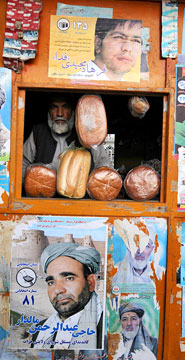
Abdullah Abdullah throws down election gauntlet to President Karzai

Abdullah Abdullah throws down election gauntlet to President Karzai

“Without rigging, Karzai will lose the vote in southern Afghanistan,” Dr Abdullah told The Times. “People are crossing ethnic, linguistic and regional lines.”

At the last election in 2004, Mr Karzai won in the first round with 55.4 per cent of the vote and vowed to eradicate terrorism, poverty, corruption and the opium trade.

Five years on, he has not only failed on all of those counts; a Taleban insurgency has enveloped most of the country and international forces have suffered their bloodiest month since 2001.

The election is seen not just as a test of his popularity but of the entire international mission in Afghanistan. “The legitimacy of the international community’s involvement in Afghanistan is at stake in this election,” said Thomas Ruttig, co-director of the Afghanistan Analysts’ Network. “These British soldiers — if they’ve died for something that ends in a mess then you simply can’t defend it.” [continued…]

The future of Afghanistan

In two weeks, or six if there is a run-off, Afghanistan will have a new president for the next five years. Whether in five years the new president will still have Afghanistan is uncertain. It depends not on the elections themselves but on what happens afterwards.

These elections, as part of a broader strategic review, will, it is hoped, re-energise the troubled international effort to secure and stabilise Afghanistan by bringing a new legitimacy to a government elected by an imperfect but theoretically universal suffrage.

However, as Benazir Bhutto once explained to me patiently and somewhat ironically given the records of her own governments, if in developed countries a leader’s legitimacy comes from being chosen in free and fair elections, in her own Pakistan and in states like it, legitimacy comes more from post-election performance. This needs to be nuanced, of course, as all such generalisations do, but it is nonetheless fair to say that there are few Afghans who have much confidence in the electoral process itself, justifiably given the scale of potential fraud and the security problems. So it is what happens post-election that will determine whether the winner is seen by the population generally to deserve their position or not. [continued…]

Suicide blast kills at least seven, injures dozens in Kabul

Just five days before a presidential election that the Taliban has vowed to thwart, a massive suicide car bomb exploded outside the U.S. military headquarters in Kabul on Saturday morning, killing seven people and wounding scores of others in the largest attack in the capital in months.

The 8:30 a.m. blast, on the main road outside the concrete barriers that wall off the U.S. and NATO headquarters, along with the U.S. Embassy, was the first major in Kabul since February, when Taliban insurgents attacked three government buildings, killing at least 19 people. The explosion Saturday set cars on fire, crumbled concrete walls and shattered windows of buildings hundreds of yards from the explosion site. [continued…]

Facebooktwittermail

Baghram isn’t the new Guantanamo, it’s the old Guantanamo

Baghram isn’t the new Guantanamo, it’s the old Guantanamo

Back in September 2005, when I first began researching Guantánamo for my book The Guantánamo Files, the prison was still shrouded in mystery, even though attorneys had been visiting prisoners for nearly a year, following the Supreme Court’s ruling, in June 2004, that they had habeas corpus rights. Researchers at the Washington Post and at Cageprisoners, a human rights organization in the U.K., had compiled tentative lists of who was being held, but, although these efforts were commendable, much of it was little more than groping in the dark — a broken jigsaw puzzle based on media reports and interviews with released prisoners — because the Bush administration refused to provide details of the names and nationalities of those it was holding.

In April 2006 — four years and three months after Guantánamo opened — the government finally conceded defeat, after the Associated Press took the Pentagon to court, and won. That month, the first ever list of prisoners (PDF) — containing the names and nationalities of the 558 prisoners who had been subjected to the administration’s Combatant Status Review Tribunals (one-sided reviews, designed to rubberstamp their prior designation as “enemy combatants”) — was released, and was followed in May by a list of the 759 prisoners held up to that point (including the 201 who had been released before the tribunals began), which included names, nationalities, and, where known, dates of birth and places of birth (PDF).

The government also released 8,000 pages of tribunal transcripts and allegations against the prisoners, which pierced the veil of secrecy still further, allowing outside observers, as well as lawyers, the opportunity to examine whether the government’s claims that the prison was full of terrorists were true, and to conclude that, actually, the prison was largely populated by innocent men or low-level Taliban foot soldiers, recruited to fight an inter-Muslim civil war that began long before the 9/11 attacks, and had nothing to do with al-Qaeda or international terrorism. [continued…]

Facebooktwittermail

Israeli ‘white flag’ shootings of Gaza civilians

Israeli ‘white flag’ shootings of Gaza civilians

During Israel’s recent Gaza offensive, Israeli soldiers unlawfully shot and killed 11 Palestinian civilians, including five women and four children, who were in groups waving white flags to convey their civilian status, Human Rights Watch said in a report released today. The Israeli military should conduct thorough, credible investigations into these deaths to tackle the prevailing culture of impunity, Human Rights Watch said.
The 63-page report, “White Flag Deaths: Killings of Palestinian Civilians during Operation Cast Lead,” is based on field investigations of seven incident sites in Gaza, including ballistic evidence found at the scene, medical records of victims, and lengthy interviews with multiple witnesses – at least three people separately for each incident.

The Israel Defense Forces (IDF) declined repeated Human Rights Watch requests for a meeting to discuss the cases and did not respond to questions submitted in writing. [continued…]

Account of life in the West Bank

My wife, Lamia, once asked me: “Why can’t we live like other people?” It was a very difficult question for me to answer. All the Palestinians of my generation were born under military occupation, so this is the only life we know.

As I write these words, it’s almost midnight and we are sitting on the roof of my house, on the look-out for the Israeli army. It’s been two months since the most recent wave of night raids began, with the army now employing a new strategy of arresting every villager who attends the demonstrations, in an attempt to crush our campaign of nonviolent resistance. Up until now eleven people have been arrested, but the list of those wanted is much, much longer. So in Bi’lin, no one goes to sleep before four or five in the morning. We stay awake all night, observing the movements of the Israeli military, fearing that we may be the next person to be kidnapped and thrown in jail. Our nights have become our days, and our days have become our nights. For some it is more difficult than others because of work commitments, but we have no choice.

But it’s not only the adults who stay awake. Our children can’t sleep either, afraid that the army will burst into his or her room in the middle of the night. They don’t knock on the door during the night raids. So imagine the horror for a child to wake up to find a stranger with a painted face pointing his gun in their face. We don’t stay up so much to avoid arrest, but to avoid facing this terrible moment. [continued…]

Hamas got wood!

Spending a few weeks in Gaza and seeing the full extent of the Hamas media control in Gaza, you can’t help but notice the success of Hamas and its propaganda efforts in the Palestinian territories and beyond. As someone who does not hold much affection toward Hamas and its ideology (their militia killed my first cousin and mutilated his body in front of cameras) I have to give credit where credit is due:

1) For starters, there’s the Al-Aqsa TV station, a Hamas run satellite TV that has upbeat programming and a wonderful lineup of shows that keep audiences interested and tuned in. The station broadcasts educational, religious, social and political programming, the last of which really shows the extent to which Hamas makes things clear that they’re serious about propaganda. Compare that with the official, Ramallah-run Palestine channel where audiences would have to be paid in Euros to be kept in their seats. Boring and old-fashioned messages with too much political rhetoric just turns off those who tune in. [continued…]

Facebooktwittermail

With Iran — slower, please!

Under pressure from hawks, Obama tacks to the right

In the face of mounting pressure from hawks in Washington and the continued threat of military action from Israel, the Barack Obama Administration has been taking a harder line in its latest pronouncements about Iran.

Recent media reports have suggested that the administration is leaning toward an end-of-September deadline for Tehran to respond to U.S. diplomatic outreach concerning its nuclear programme, at which point it will consider stepping up sanctions against the Iranian energy sector.

This course would cut against the advice of a growing number of Iran analysts, who have cautioned both that the Tehran regime is in no position to negotiate at the moment and that sanctions are likely only to solidify the power of Supreme Leader Ali Khamenei and President Mahmoud Ahmadinejad. [continued…]

Editor’s Comment — Barack Obama has crossed a politically dangerous threshold: from actor to reactor. It’s going to be hard reversing the trend.

In the next few weeks, suppose “the Iranians” — a collective noun that should at this point only appear in quotes since no one actually knows exactly who this refers to — suppose “the Iranians” come back with this as their response to Obama’s offer of talks:

We’re ready, but clearly you aren’t. Push your healthcare plan through Congress by the end of September and then we can talk. We can’t talk to you now — you’re administration is too weighed down by domestic political issues.

How dare “the Iranians” try and dictate American affairs, everyone in Washington would scream. Indeed, the idea that a complex piece of legislation could be advanced under arbitrary external pressure would be seen as absurd.

Meanwhile, Washington appears to have picked up Michael Ledeen’s favorite mantra: “faster, please!”

Wag the dog, again

Israeli media reports that visiting National Security Adviser General Jim Jones and Secretary of Defense Robert Gates have told the government of Prime Minister Benjamin Netanyahu to stop complaining about Iran because the US is preparing to take action “in eight weeks” demonstrate that even when everything changes in Washington, nothing changes. President Barack Obama has claimed that a peaceful settlement of the Palestinian-Israeli conflict is a high priority but the Israelis and their allies in congress and the media have been able to stonewall the issue. Israel has made no concessions on its settlement policy, which is rightly seen as the single biggest obstacle to eventual creation of a Palestinian state, and has instead pushed ahead with new building and confiscations of Arab homes. Obama has protested both Israeli actions but done nothing else, meaning that Israel has determined that the new US president’s policies are toothless, giving it a free hand to deal with the Arabs. Vice President Joe Biden’s comments that Israel is free to attack Iran if it sees fit was a warning that worse might be coming. If the Israeli reports are true, it would appear that the Obama Administration has now bought completely into the Israeli view of Iran and is indicating to Tel Aviv that it will fall into line to bring the Mullahs to their knees. In short, Israel gets what it wants and Washington yet again surrenders. [continued…]

Facebooktwittermail

The Palestinians aren’t suckers, either

The Palestinians aren’t suckers, either

Look at that Mahmoud Abbas – another Palestinian who never misses an opportunity to miss an opportunity. Here Binyamin Netanyahu has accepted the two-state solution, he’s offering to negotiate peace without preconditions, and all Abbas can say is nyet. He’s waiting for Barack Obama to do all the work for him, to force concessions out of Israel while he sits there fanning himself. This is no partner for peace. This is no “moderate.”

So goes the Israeli consensus on the leader of the Palestinian Authority. I agree with one part – that he’s missing an opportunity. But I think the one he’s missing is the opportunity to call Bibi’s bluff.

If I were Abbas, I would take Netanyahu up on his offer for peace talks without preconditions. I would negotiate from a simple, reasonable principle: equal rights for Palestinians and Israelis. Fair is fair. [continued…]

Abandoning reason to demonise Obama

Does Barack Obama represent the best hope for a just and final settlement of the Israel-Palestine conflict or will his Middle East policy lead directly to the destruction of Israel?

I would guess that most Palestinians faced with this question would regard it as ridiculous. Notwithstanding the president’s Cairo speech and his insistence on a total freeze on the expansion of Israeli settlements in the West Bank and East Jerusalem, they would be deeply sceptical about the US president’s ability to make any fundamental changes in US Middle East policy. Even were he to make such an adjustment, they would have grave doubts about whether it would seriously take on board Palestinian concerns. And they would be incredulous that anyone could argue that he is doing anything that could be interpreted as against Israel’s interests. Once again, they would say, the Palestinians are being written out of the script.

But to many American Jews, as well as to many Israeli Jews and to some Jews in the UK, the question would seem to reflect a very real and stark choice. While some who are taking sides on the issue are presenting their arguments in a reasonable manner, for others the issue is positively Manichean in its consequences, giving licence to quite staggering levels of rhetorical bitterness, vilification and hyperbole in an area where debate is already dangerously polarised. [continued…]

Facebooktwittermail

A window into CIA’s embrace of secret jails

A window into CIA’s embrace of secret jails

In March 2003, two C.I.A. officials surprised Kyle D. Foggo, then the chief of the agency’s main European supply base, with an unusual request. They wanted his help building secret prisons to hold some of the world’s most threatening terrorists.

Mr. Foggo, nicknamed Dusty, was known inside the agency as a cigar-waving, bourbon-drinking operator, someone who could get a cargo plane flying anywhere in the world or quickly obtain weapons, food, money — whatever the C.I.A. needed. His unit in Frankfurt, Germany, was strained by the spy agency’s operations in Afghanistan and Iraq, but Mr. Foggo agreed to the assignment.

“It was too sensitive to be handled by headquarters,” he said in an interview. “I was proud to help my nation.”

With that, Mr. Foggo went on to oversee construction of three detention centers, each built to house about a half-dozen detainees, according to former intelligence officials and others briefed on the matter. One jail was a renovated building on a busy street in Bucharest, Romania, the officials disclosed. Another was a steel-beam structure at a remote site in Morocco that was apparently never used. The third, another remodeling project, was outside another former Eastern bloc city. They were designed to appear identical, so prisoners would be disoriented and not know where they were if they were shuttled back and forth. They were kept in isolated cells. [continued…]

Interrogator: ‘intolerance’ led to torture

Former Air Force Maj. Matthew Alexander, whose questioning of a captured terrorist led to the elimination al Qaeda’s top man in Iraq, said a pervasive “intolerance” of Arabs and Muslims among American interrogators led to abuses at Abu Ghraib and other prisons.

“Soldiers referred to them as rag heads and so on,” Alexander said during a Monday talk at the International Spy Museum, in Washington, D.C. to promote his book, “How To Break a Terrorist: The U.S. Interrogators Who Used Brains, Not Brutality, to Take Down the Deadliest Man in Iraq.”

“They had read things like ‘The Politically Incorrect Guide to Islam,’ which characterizes its practitioners as potential terrorists, he added.

An Air Force criminal investigator for over a decade before being assigned to Iraq in March 2006, Alexander was careful not to characterize all, or even most, interrogators as bigots, although he said, “it was not just a few bad apples” who tortured prisoners.

“It was not a majority of interrogators. If I had to guess, maybe 20 per cent,” he told a packed room at the International Spy Museum, which opened its doors in July 2002.

“A small minority with a lot of power” at the top of the chain of command was responsible for fostering at atmosphere in which abuses could flourish, he said. [continued…]

Facebooktwittermail

Is Karzai in trouble?

Is Karzai in trouble?

Afghanistan should, perhaps, be called the “graveyard of expectations.” Every time the shrewd analyst thinks he knows what is going to happen, the picture shifts. The country’s presidential election, scheduled for August 20, is no exception.

Just a few weeks ago, pundits were nodding sagely at the political astuteness of the incumbent, Hamid Karzai. He has spent the past year assiduously courting and bullying the tribal leaders and strongmen who control the country, promising them jobs, perquisites, forgiveness of past sins, even the odd province or two. The process might have been a bit unsavory, but international election experts were saying they expected a “fair enough” referendum on Karzai’s tenure — in which, both inside Afghanistan and abroad, the president’s re-election was thought to be a sure thing.

Now, with just two weeks to go before the ballot, what had been a yawn of a race is suddenly a pulse-pumping sprint for the finish, with no clear winner in sight. What rocked Karzai’s formerly sturdy campaign boat? To understand the exciting and confusing contest, the careful observer should pay attention to a trio of contenders and at least two governments — and be prepared for the unexpected. [continued…]

Deadly contractor incident sours Afghans

Mirza Mohammed Dost stood at the foot of his son’s grave, near a headstone that read, “Raheb Dost, martyred by Americans.”

His son was no insurgent, Dost said. He was walking home from prayers on the night of May 5 when he was shot and killed on a busy Kabul street by U.S. security contractors.

“The Americans must answer for my son’s death,” Dost said as a large crowd of young men murmured in approval.

The shooting deaths of Raheb Dost, 24, and another Afghan civilian by four gunmen with the company once known as Blackwater have turned an entire neighborhood against the U.S. presence here. [continued…]

Taliban, foes clash in Pakistan

Taliban fighters attacked rival militants backed by the government in Pakistan’s tribal areas, sparking clashes that intelligence officials and tribal elders said left dozens dead.

There were few details of Wednesday’s fighting, on the edge of the isolated South Waziristan tribal area, a key Taliban and al Qaeda stronghold.

Two intelligence officials in the area said it began when the region’s dominant Taliban faction — whose leader, Baitullah Mehsud, was believed to have been killed last week in a U.S. missile strike — attacked a tribal faction backed by the government. The two sides battled in and around the village of Sura Ghar with assault weapons, rocket-propelled grenades and mortars, the officials said. One official said Pakistani forces tried to help the government-backed militants repel the Taliban, but gave no details. [continued…]

Facebooktwittermail

Obama officials to tour Michigan prison

Obama officials to tour Michigan prison

Obama administration officials plan on Thursday to tour a soon-to-be-shuttered Michigan state prison considered an option to hold terrorism suspects now detained at Guantanamo Bay in Cuba.

Two government officials said representatives of the Defense, Justice and Homeland Security departments would visit a state prison in Standish. The officials spoke on condition of anonymity because they were not authorized to speak publicly about the visit.

An Obama administration official said the visit was intended to gather information about the facility and no decisions had been made about where to move the detainees. Multiple options are being considered, said the official, who spoke on condition of anonymity because of the sensitivity of the discussions. [continued…]

Facebooktwittermail

Target of Obama-era rendition alleges torture

Target of Obama-era rendition alleges torture

During the 2008 presidential campaign, Barack Obama sharply criticized the Bush Administration’s extraordinary renditions program. “To build a better, freer world, we must first behave in ways that reflect the decency and aspirations of the American people,” he wrote in Foreign Affairs. “This means ending the practice of shipping away prisoners in the dead of night to be tortured in far-off countries, of detaining thousands without charge or trial, of maintaining a network of secret prisons to jail people beyond the reach of law.” But Obama was consistently careful never to commit to ending the practice of rendition entirely. When the issue flared shortly after his inauguration, senior administration officials were quick to say that abuses including torture would end, but that “ordinary” renditions – the spiriting away of suspects from other countries without going through the formal process of extradition — would be continued in a cleaned-up form. Now in a federal court in suburban Washington, a case is unfolding that gives us a practical sense of what an Obama-era rendition looks like.

Raymond Azar, a 45-year-old Lebanese construction manager with a grade school education, is employed by Sima International, a Lebanon-based contractor that does work for the U.S. military in Iraq and Afghanistan. He also has the unlikely distinction of being the first target of a rendition carried out on the Obama watch.

According to court papers, on April 7, 2009, Azar and a Lebanese-American colleague, Dinorah Cobos, were seized by “at least eight” heavily armed FBI agents in Kabul, Afghanistan, where they had traveled for a meeting to discuss the status of one of his company’s U.S. government contracts. The trip ended with Azar alighting in manacles from a Gulfstream V executive jet in Manassas, Virginia, where he was formally arrested and charged in a federal antitrust probe.

This rendition involved no black sites and was clearly driven by a desire to get the target quickly before a court. Also unlike renditions of the Bush-era, the target wasn’t even a terror suspect; rather, he was suspected of fraud. But in a troubling intimation of the last administration, accusations of torture hover menacingly over the case. According to papers filed by his lawyers, Azar was threatened, subjected to coercive interrogation techniques and induced to sign a confession. Azar claims he was hooded, stripped naked (while being photographed) and subjected to a “body cavity search.”

On a ride to the infamous Bagram air base in Afghanistan — site of the torture-homicides involving U.S. interrogators exposed in the Oscar-winning documentary Taxi to the Dark Side — Azar contends that a federal agent pulled a photograph of Azar’s wife and four children from his wallet. Confess that you were bribing the contract officer, the agent allegedly said, or you may “never see them again.” Azar told his lawyers he interpreted that as a threat to do physical harm to his family. [continued…]

2 U.S. architects of harsh tactics in 9/11’s wake

Col. Steven M. Kleinman, an Air Force interrogator and intelligence officer who knows Dr. Mitchell and Dr. Jessen, said he thought loyalty to their country in the panicky wake of the Sept. 11 attacks prompted their excursion into interrogation. He said the result was a tragedy for the country, and for them.
“I feel their primary motivation was they thought they had skills and insights that would make the nation safer,” Colonel Kleinman said. “But good persons in extreme circumstances can do horrific things.”

For the C.I.A., as well as for the gray-goateed Dr. Mitchell, 58, and the trim, dark-haired Dr. Jessen, 60, the change in administrations has been neck-snapping. For years, President George W. Bush declared the interrogation program lawful and praised it for stopping attacks. Mr. Obama, by contrast, asserted that its brutality rallied recruits for Al Qaeda; called one of the methods, waterboarding, torture; and, in his first visit to the C.I.A., suggested that the interrogation program was among the agency’s “mistakes.”

The psychologists’ subsequent fall from official grace has been as swift as their rise in 2002. Today the offices of Mitchell Jessen and Associates, the lucrative business they operated from a handsome century-old building in downtown Spokane, Wash., sit empty, its C.I.A. contracts abruptly terminated last spring. [continued…]

Facebooktwittermail

Has Kandahar already fallen?

Has Kandahar already fallen?

In a week where security in Afghanistan seems headed anywhere but up (rocket strikes on Kabul, a Taliban frontal assault in Logar province today), the question on many a commentator’s lips has been: where is this all going?

Some of the strongest analysis on stabilizing Afghanistan recently has come from Andrew Exum who just took a break from his position at the Center for New American Security to act as some-time advisor to General McChrystal. I was struck by a comment he made in an interview on the World Politics Review:

“The fall of Kandahar is not going to look like the Taliban rolling down the streets in tanks. The fall of Kandahar is going to look like the Taliban steadily making ground with a campaign of fear and intimidation, and creating an environment in which the Afghan government can’t operate in Kandahar, and Kandahar eventually becomes ideologically inhospitable to the government of Afghanistan, never mind Coalition forces.”

I think Ex is dead on. But by that standard, I have to question: Has Kandahar already fallen? [continued…]

President Karzai’s supporters ‘buy’ votes for Afghanistan election

Supporters of President Karzai are preparing to rig voting in next week’s presidential elections in unstable parts of Afghanistan’s south as Taleban violence threatens to intimidate voters and hit turnout in his traditional support base.

The Times has talked to several witnesses whose reports will bolster suspicions within the international community that there will be electoral fraud across the south, some of it allegedly orchestrated by Mr Karzai’s half-brother, Ahmed Wali Karzai.

Such irregularities could threaten the credibility of the election process and have led to threats of violent demonstrations in the north if Mr Karzai is thought to have stolen the vote.

One tribal elder in the Marja district of Helmand alleged that the vote rigging was being organised by members of Mr Karzai’s family and local tribal allies, particularly Sher Mohammad Akhundzada, the former governor of the province. [continued…]

U.S. ambassador seeks more money for Afghanistan

The United States will not meet its goals in Afghanistan without a major increase in planned spending on development and civilian reconstruction next year, the U.S. ambassador in Kabul has told the State Department.

In a cable sent to Secretary of State Hillary Rodham Clinton, Ambassador Karl W. Eikenberry said an additional $2.5 billion in nonmilitary spending will be needed for 2010, about 60 percent more than the amount President Obama has requested from Congress. The increase is needed “if we are to show progress in the next 14 months,” Eikenberry wrote in the cable, according to sources who have seen it.

Obama has asked for $68 billion in Defense Department spending in Afghanistan next year, an amount that for the first time would exceed U.S. military expenditures in Iraq. Spending on civilian governance and development programs has doubled under the Obama administration, to $200 million a month — equal to the monthly rate in Iraq during the zenith of spending on nonmilitary projects there. [continued…]

Life, death and the Taliban: War of ideas

Almost daily, girls’ schools are burned and bombed and teachers, principals, students and their families receive what are known as “night letters,” Islamic decrees of death issued by the Taliban and pasted on homes and the walls of villages in the dead of night.

In just two years, more than 640 schools in Afghanistan and more than 350 in Pakistan have been bombed, burned or shut down, according to the education ministries in both countries. Eighty percent of those targeted were girls’ schools.

In the Helmand Province in the south of Afghanistan, where the Taliban is effectively in control of most of the province, 75 of the 228 schools have been shut down by Taliban militias that disapprove of the secular teaching and the idea of girls receiving an education. [continued…]

Afghan drug lords: targeted until proven innocent

So first we expanded our forces in Afghanistan. Then we took on the challenge of prison reform there (ignoring the fact that America’s own prison system is a national disgrace). And yesterday we learned that U.S. armed forces are putting suspected Afghan drug dealers on a “kill or capture” list. In other words, we are now extending the “war on drugs” to Afghanistan, ignoring the fact that this “war” (first announced by Richard Nixon four decades ago) hasn’t led to victory. The new strategy also ignores some of the obvious lessons of that “war,” and places the United States on some pretty dubious moral ground. [continued…]

Facebooktwittermail

Pakistan denies militants attacked nuclear sites

Pakistan denies militants attacked nuclear sites

A military spokesman denied a recent report that militants have attacked Pakistan’s nuclear facilities three times in two years, saying Wednesday there is “absolutely no chance” the country’s atomic weapons could fall into terrorist hands.

Maj. Gen. Athar Abbas said an article written by a U.K.-based security expert was false because none of the bases named actually had any nuclear facilities.

“It is factually incorrect,” he said.

Taliban militants’ brief takeover of areas some 60 miles (100 kilometers) from the capital, Islamabad, raised new fears about the security of Pakistan’s atomic weapons being seized by extremists linked to al-Qaeda, although the country insists its arsenal is secure.

Shaun Gregory, a professor at Bradford University’s Pakistan Security Research Unit, wrote that several militant attacks have already hit military bases where nuclear components are secretly stored. The article appeared in the July newsletter [PDF] of the Combating Terrorism Center of the U.S. Military Academy at West Point. [continued…]

Facebooktwittermail

Officials see rise in militia groups across US

Officials see rise in militia groups across US

ilitia groups with gripes against the government are regrouping across the country and could grow rapidly, according to an organization that tracks such trends.

The stress of a poor economy and a liberal administration led by a black president are among the causes for the recent rise, the report from the Southern Poverty Law Center says. Conspiracy theories about a secret Mexican plan to reclaim the Southwest are also growing amid the public debate about illegal immigration.

Bart McEntire, a special agent with the Bureau of Alcohol, Tobacco, Firearms and Explosives, told SPLC researchers that this is the most growth he’s seen in more than a decade.

“All it’s lacking is a spark,” McEntire said in the report. [continued…]

Return of the militias

The 1990s saw the rise and fall of the virulently antigovernment “Patriot” movement, made up of paramilitary militias, tax defiers and so-called “sovereign citizens.” Sparked by a combination of anger at the federal government and the deaths of political dissenters at Ruby Ridge, Idaho, and Waco, Texas, the movement took off in the middle of the decade and continued to grow even after 168 people were left dead by the 1995 bombing of Oklahoma City’s federal building — an attack, the deadliest ever by domestic U.S. terrorists, carried out by men steeped in the rhetoric and conspiracy theories of the militias. In the years that followed, a truly remarkable number of criminal plots came out of the movement. But by early this century, the Patriots had largely faded, weakened by systematic prosecutions, aversion to growing violence, and a new, highly conservative president.

They’re back. Almost a decade after largely disappearing from public view, right-wing militias, ideologically driven tax defiers and sovereign citizens are appearing in large numbers around the country. “Paper terrorism” — the use of property liens and citizens’ “courts” to harass enemies — is on the rise. And once-popular militia conspiracy theories are making the rounds again, this time accompanied by nativist theories about secret Mexican plans to “reconquer” the American Southwest. One law enforcement agency has found 50 new militia training groups — one of them made up of present and former police officers and soldiers. Authorities around the country are reporting a worrying uptick in Patriot activities and propaganda. “This is the most significant growth we’ve seen in 10 to 12 years,” says one. “All it’s lacking is a spark. I think it’s only a matter of time before you see threats and violence.” [continued…]

Facebooktwittermail