Category Archives: war in Afghanistan

‘I told the US to talk to the Taliban. They jailed me’

‘I told the US to talk to the Taliban. They jailed me’

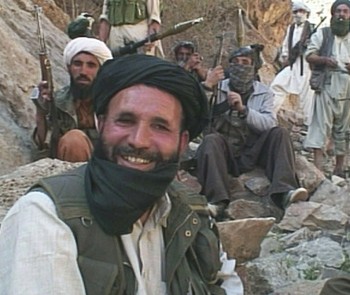
He was the man they called the mullah with a human face, the internet mullah, or the Rudolph Hess of the Taliban. Wakil Ahmed Muttawakil was the Taliban’s foreign minister. It was he who in October 2001, a month after 9/11 and weeks before the US-led invasion of Afghanistan, broke ranks with the hardline clerical leadership and tried to broker a peace deal with Washington.

Eight years on, as the West struggles to form a coherent policy on Afghanistan amid mounting domestic opposition to the war, Mullah Muttawakil has claimed that the West has repeatedly squandered chances for peace.

“We have seen a lot of fighting since then, a lot of blood has been spilt, all for what?” he asked. “They are saying now that they will talk to some of the Taliban. That is what I said to them just after the war. I offered to put them in touch with the relevant people. Their answer was to put me in jail.” [continued…]

Facebooktwittermail

To save Afghanistan, look to its past

To save Afghanistan, look to its past

No matter who is ultimately certified as the winner of Afghanistan’s presidential election, the vote was plagued by so much fraud and violence, and had such low turnout, that it is inconceivable the Afghan people will regard the victor as a legitimate leader. And if a majority of Afghans do not consider the president and his government to be legitimate, the military campaign now being waged by the United States and its allies is doomed to fail, regardless of the number of troops deployed.

Current discussions about cobbling together mistrustful factions into a new power-sharing government will produce neither enduring democracy nor short-term peace. The slate must be wiped clean. Afghans need to start again from scratch and choose their leader by a fresh process that restores legitimacy to the national government.

Fortunately, such a process already exists — one that is both highly respected by the Afghan people and recognized in the Afghan Constitution: the convening of an emergency loya jirga, or grand assembly. The loya jirga has been called in times of national crisis in Afghanistan for centuries. In 1747, such an assembly in Kandahar selected Ahmad Shah Durrani as the first king of Afghanistan, uniting a patchwork of contentious tribal entities into the modern Afghan state. The loya jirga, moreover, is not only deeply rooted in Pashtun tradition, but is also consistent with notions of Western representative democracy. [continued…]

Obama faces doubts from Democrats on Afghanistan

The leading Senate Democrat on military matters said Thursday that he was against sending more American combat troops to Afghanistan until the United States speeded up the training and equipping of more Afghan security forces.

The comments by the senator, Carl Levin, a Michigan Democrat who is the chairman of the Armed Services Committee, illustrate the growing skepticism President Obama is facing in his own party as the White House decides whether to commit more deeply to a war that has begun losing public support, even as American commanders acknowledge that the situation on the ground has deteriorated.

Senator Levin’s comments, made in an interview and in the draft of a speech he will deliver Friday, are significant because his stature on military matters gives him the ability to sway fellow lawmakers, and his pivotal committee position provides a platform for vetting Mr. Obama’s major decisions on troops. [continued…]

Pelosi sees support ebbing for Afghan war

House Speaker Nancy Pelosi said she sees little congressional support for boosting troop levels in Afghanistan, putting the Democratic majority in Congress on a possible collision course with the Obama administration over the future conduct of the war there.

The remarks Thursday by Ms. Pelosi (D., Calif.) make her the highest-ranking Democrat to signal opposition to the administration’s handling of the Afghan war, a top national-security priority.

The remarks also underscored the increasingly complex political dynamics confronting President Barack Obama as he considers whether to send additional U.S. forces to Afghanistan. [continued…]

Afghan warlord General Atta Mohammad Nur warning raises fear of election violence

One of Afghanistan’s most powerful warlords has defended the popular right to protest against the presidential election results, raising fears that the country could be engulfed by violence if supporters of the losing candidates reject the poll as being rigged.

General Atta Mohammad Nur, who broke ranks with the Government to support President Karzai’s main election rival, insisted: “It is the right of our people to defend their votes. Demonstrations, gatherings, strikes and protests against fraud being carried out by the current system are the absolute right of the people.”

Speaking on national television, he accused the country’s Interior Minister, Hanif Atmar, of “forcing people to keep silent”. [continued…]

Facebooktwittermail

Afghan reporter recalled as a man of many abilities

Afghan reporter recalled as a man of many abilities

The death of [Sultan M] Munadi illustrated two grim truths of the war in Afghanistan: vastly more Afghans than foreigners have died battling the Taliban, and foreign journalists are only as good as the Afghan reporters who work with them.

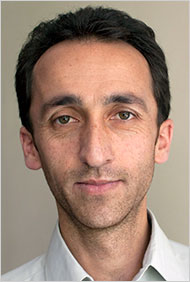
Mr. Munadi, 34, the father of two boys, worked as an office manager and reporter in the Kabul bureau. He and other Afghan reporters who work with foreign journalists are vastly more than interpreters.

“The story calls him an ‘interpreter,’ which misleads the reader about what these great people do for us,” Barry Bearak, a Times correspondent who worked with Mr. Munadi in 2001 and 2002, said, referring to an article about Mr. Munadi’s death.

“They serve as our walking history books, political analysts,” he added, “managers of logistics, taking equal the risks without equal the glory or pay.”

Those who worked with him said his country’s turmoil did not dampen his spirit or limit his determination. During Taliban rule, he worked with the International Red Cross in his native Panjshir Valley, a mountainous area north of Kabul that was never ruled by the Taliban, even when they dominated the country from 1996 to 2001. [continued…]

The reporter’s account: 4 days with the Taliban

I lay on the ground, gave my name and newspaper and pointed to where Sultan was lying behind me, telling them I thought he had been shot.

The body was lying motionless in the ditch where I had seen him go down. I hoped he had dropped and was lying still. I knew it wasn’t the case. They told me they had his picture and would look for him, then dragged me away past the house across a rutted field and toward the helicopter landing zone.

It was over. Sultan was dead. He had died trying to help me, right up to the very last seconds of his life. [continued…]

Negotiators shocked by special forces rescue raid on Taleban

Hostage negotiators expressed shock and anger at Gordon Brown’s decision to approve a commando raid to free a kidnapped British journalist, saying that they were within days of securing his release through peaceful means.

Stephen Farrell — who was in Afghanistan for The New York Times — was not harmed in the raid but his Afghan translator, Sultan Munadi, and a British soldier from the Special Forces Support Group were killed. The men were being held at a house in Kharudi in northern Afghanistan. Just after midnight on Tuesday US helicopters dropped British special forces and Afghan troops in the village. Taleban militants fled the house and a fierce battle ensued. At least one civilian and scores of militants were killed. [continued…]

Facebooktwittermail

NATO nations ask U.N. for new Afghan ‘timelines’

NATO nations ask U.N. for new Afghan ‘timelines’

The Spanish defense minister, Carme Chacón, said Wednesday that five years would be a “reasonable” timeframe for NATO forces to withdraw from Afghanistan, just as major European powers officially called on the United Nations to convene an international conference before the end of the year to set new “benchmarks and timelines.”

Mrs. Chacón also said she would request 220 more troops for Spain’s Afghanistan contingent, bringing the permanent deployment there to about 1,000. With the additional troops, Spain’s contribution would still fall behind those of 10 other NATO members, led by the United States, Britain, France and Germany. Spain’s government is expected to approve the request Friday at a cabinet meeting.

Prime Minister José Luis Rodríguez Zapatero had already said in July that troop levels would probably increase. [continued…]

Afghan election watchdog discards tainted votes

The U.N.-funded elections watchdog in Afghanistan has begun to throw out fraudulent ballots from the country’s presidential balloting, a day after a tally including contested votes put President Hamid Karzai over the 50% he needs to avoid a second round.

The Electoral Complaints Commission, a United Nations-sponsored body responsible for investigating allegations of fraud and misconduct, has been looking into more than 600 serious accusations, Commissioner Grant Kippen said. The accusations include instances of ballot stuffing and voter intimidation. In some cases, the commission has disqualified results from entire polling stations. [continued…]

Facebooktwittermail

September 9: The shot that was not heard round the world

September 9: The shot that was not heard round the world

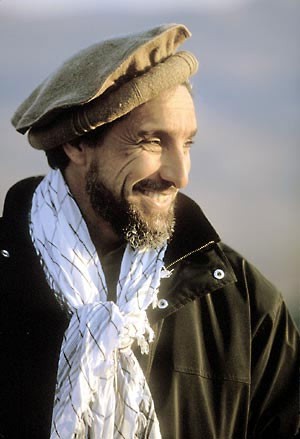
As the war in Afghanistan enters its ninth year, in the minds of most Americans the attacks of September 11, 2001 remain the signal event that shaped everything that has followed. Yet had we been paying more attention, we would have known that September 9, 2001, the day that Ahmed Shah Massoud was assassinated, was no less significant.

On that day, Afghanistan lost a leader of global stature — a man who truly was irreplaceable. Now, as much as ever, as the Taliban is resurgent and American and its allies attempt to prop up a deeply corrupt government in Kabul, the memory of Massoud is a symbol of the Afghan people’s so many shattered hopes.

A year after Massoud’s death, John Burns wrote in the New York Times:

As Americans prepare to mark the Sept. 11 anniversary, with many still struggling to come to terms with the cataclysm of that day, Afghans are passing through their own harrowing remembrance, of an attack that was overshadowed for the rest of the world by what happened two days later in the United States. Only four men died on Sept. 9 — the 49-year-old Mr. Massoud, an aide and the assassins — but there has been little healing of the wounds the killers inflicted on the hearts and the hopes of millions of his countrymen.

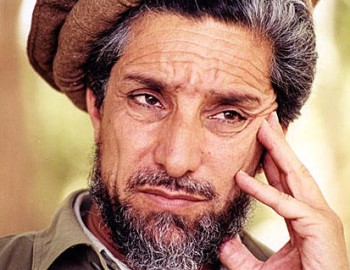
Ask Afghans who knew Mr. Massoud what it was about him that inspires such grief, and they struggle. Like [Fahim] Dashti [who was with Massoud at the time of his assassination], they talk of his skills as the guerrilla commander who astonished Soviet generals he outfought during the occupation of the 1980’s, or of his years holding out against the Taliban, when almost all other guerrilla leaders had joined the Taliban or fled abroad.

They speak of Mr. Massoud’s directness, his lack of pretense or false piety, his modesty, the look of somber intensity that rarely left his face. But usually, they give up, as people do when they try to define charisma. Mr. Dashti, the editor, resorted, in the end, to the simplest words. “We loved him,” he said. “We loved him more than we loved our own mothers and fathers. He embodied everything we loved about Afghanistan.”

In 1998, in a letter to the American people, Massoud wrote:

Let me correct a few fallacies that are propagated by Taliban backers and their lobbies around the world. This situation over the short and long-run, even in case of total control by the Taliban, will not be to anyone’s interest. It will not result in stability, peace and prosperity in the region. The people of Afghanistan will not accept such a repressive regime. Regional countries will never feel secure and safe. Resistance will not end in Afghanistan, but will take on a new national dimension, encompassing all Afghan ethnic and social strata.

The goal is clear. Afghans want to regain their right to self-determination through a democratic or traditional mechanism acceptable to our people. No one group, faction or individual has the right to dictate or impose its will by force or proxy on others. But first, the obstacles have to be overcome, the war has to end, just peace established and a transitional administration set up to move us toward a representative government.

We are willing to move toward this noble goal. We consider this as part of our duty to defend humanity against the scourge of intolerance, violence and fanaticism. But the international community and the democracies of the world should not waste any valuable time, and instead play their critical role to assist in any way possible the valiant people of Afghanistan overcome the obstacles that exist on the path to freedom, peace, stability and prosperity.

Pepe Escobar recounts:

During the 1990s, and especially during the time of the Taliban rule, which began in 1996, Washington never knew exactly how to deal with Massoud. But after the attacks on the US embassies in Kenya and Tanzania in 1998, Central Intelligence Agency (CIA) agents sought a meeting with Massoud in Dushanbe. The CIA wanted information on how to get to bin Laden. Massoud carefully considered all the angles, but ultimately he could not but criticize American shortsightedness. For the Bill Clinton administration, the ultimate aim was to get bin Laden and destroy al-Qaeda. For Massoud, the main point was to destroy the Taliban. He repeatedly stressed at the time that “without the Taliban, Osama can’t do anything”.

Massoud, indeed, had agents and intelligence in the heart of Taliban country. The best example is how his Panjshiris planted a powerful truck bomb just outside Mullah Omar’s compound in central Kandahar, in 1999. The explosion left a huge crater and killed 10 people, including three of Mullah Omar’s bodyguards. Omar escaped, almost by a miracle, but if the Northern Alliance could get close to the Taliban, they could not penetrate al-Qaeda’s ultra-hardcore security to try to find and menace bin Laden. And as much as the Northern Alliance could penetrate the Taliban, security chief Arif – now head of intelligence of Hamid Karzai’s government – says that “Osama was actively trying to recruit spies inside the Panjshir Valley”. But once again, no one investigated the “Moroccans”.

In his interview with Asia Times Online, the second-to-last in his lifetime, Massoud repeatedly portrayed al-Qaeda, the Taliban and Pakistan as a sort of “triangle of evil”. He criticized the US for basically following a Pakistani plan: try to “reform” the Taliban and concentrate on seducing Taliban “moderates” (a contradiction in terms). There were never any moderates within the Taliban. Mullah Omar was totally under the spell of bin Laden. American diplomats with knowledge of Central Asia were warning about the “Arabization” of Afghanistan. But no one in Washington was listening. The US only got the message after September 11 – and after Massoud’s death.

In the first months of 2001, Massoud calculated that he had to involve himself in a complex gamble: change his image from warrior to statesman. He addressed the European parliament in Strasbourg, France, in April 2001. This was his first official trip to the West. He tried hard to attract Western support for the resistance against the Taliban. But still no one was listening. In Strasbourg, Massoud delivered a stunning message that nobody took seriously at the time: “If President Bush doesn’t help us, then these terrorists will damage the United States and Europe very soon – and it will be too late.”

Afghanistan Revealed a documentary broadcast by National Geographic in October 2001, presents a portrait of Massoud and his struggle to save Afghanistan.

Facebooktwittermail

Measuring success in Afghanistan

Measuring success in Afghanistan

Here may be the single strangest fact of our American world: that at least three administrations — Ronald Reagan’s, George W. Bush’s, and now Barack Obama’s — drew the U.S. “defense” perimeter at the Hindu Kush; that is, in the rugged, mountainous lands of Afghanistan. Put another way, while Americans argue feverishly and angrily over what kind of money, if any, to put into health care, or decaying infrastructure, or other key places of need, until recently just about no one in the mainstream raised a peep about the fact that, for nearly eight years (not to say much of the last three decades), we’ve been pouring billions of dollars, American military know-how, and American lives into a black hole in Afghanistan that is, at least in significant part, of our own creation.

Imagine for a moment, as you read this post, what might have happened if Americans had decided to sink the same sort of money — $228 billion and rising fast — the same “civilian surges,” the same planning, thought, and effort (but not the same staggering ineffectiveness) into reclaiming New Orleans or Detroit, or into planning an American future here at home. Imagine, for a moment, when you read about the multi-millions going into further construction at Bagram Air Base, or to the mercenary company that provides “Lord of the Flies” hire-a-gun guards for American diplomats in massive super-embassies, or about the half-a-billion dollars sunk into a corrupt and fraudulent Afghan election, what a similar investment in our own country might have meant.

Ask yourself: Wouldn’t the U.S. have been safer and more secure if all the money, effort, and planning had gone towards “nation-building” in America? Or do you really think we’re safer now, with an official unemployment rate of 9.7%, an underemployment rate of 16.8%, and a record 25.5% teen unemployment rate, with soaring health-care costs, with vast infrastructural weaknesses and failures, and in debt up to our eyeballs, while tens of thousands of troops and massive infusions of cash are mustered ostensibly to fight a terrorist outfit that may number in the low hundreds or at most thousands, that, by all accounts, isn’t now even based in Afghanistan, and that has shown itself perfectly capable of settling into broken states like Somalia or well functioning cities like Hamburg. [continued…]

Evidence of ballot fraud for Karzai forces U.S. into action

Evidence of electoral fraud on behalf of incumbent Afghan President Hamid Karzai has become so overwhelming, some U.S. and Western officials say, that they are scrambling to avoid a potential political crisis if he claims victory.

Afghanistan’s election commission decided Monday that it will release a complete preliminary tally from the Aug. 20 presidential election, including votes tainted by fraud charges but not disqualified, a commission official said. Western officials now say they believe almost one of every six of Afghanistan’s more than 25,000 polling stations is tainted by fraud, most of it on behalf of Mr. Karzai.

Including those votes, the preliminary tally is expected to show Mr. Karzai with more than 50% of the vote — enough to avoid a runoff election, Afghan and Western officials say. [continued…]

Facebooktwittermail

Should Obama go ‘all in’ on Afghanistan?

Should Obama go ‘all in’ on Afghanistan?

Obama does not act impulsively. Before betting his remaining chips on Afghanistan, he will no doubt deliberate carefully. He will consult. He will sift through all the evidence. Yet before hitting the “start over” button on Afghanistan, he would do well to consider the following: Sometimes the essence of leadership is not to render the right decision but to pose the right question.

As difficult as it is to do so at a time when war has become a seemingly perpetual condition, when it comes to Afghanistan, the really urgent need is to recast the debate. Official Washington obsesses over the question: How do we win? Yet perhaps a different question merits presidential consideration: What alternatives other than open-ended war might enable the United States to achieve its limited interests in Afghanistan?

At this pivotal moment in his presidency, if Obama is going to demonstrate his ability to lead, he will direct his subordinates to identify those alternatives. [continued…]

Editor’s Comment — For Obama to pose the right question he would need to have not already given the wrong answer. Having emphatically called this a “war of necessity” makes it incredibly difficult to climb out of the rhetorical hole he has dug himself into, for it there are alternatives there can be no necessity.

Facebooktwittermail

The Afghanistan abyss

The Afghanistan abyss

President Obama has already dispatched an additional 21,000 American troops to Afghanistan and soon will decide whether to send thousands more. That would be a fateful decision for his presidency, and a group of former intelligence officials and other experts is now reluctantly going public to warn that more troops would be a historic mistake.

The group’s concern — dead right, in my view — is that sending more American troops into ethnic Pashtun areas in the Afghan south may only galvanize local people to back the Taliban in repelling the infidels.

“Our policy makers do not understand that the very presence of our forces in the Pashtun areas is the problem,” the group said in a statement to me. “The more troops we put in, the greater the opposition. We do not mitigate the opposition by increasing troop levels, but rather we increase the opposition and prove to the Pashtuns that the Taliban are correct.

“The basic ignorance by our leadership is going to cause the deaths of many fine American troops with no positive outcome,” the statement said. [continued…]

Can victory for President Karzai be taken as legitimate?

Western diplomats have been afraid of this predicament ever since the poll results began to come in, with an apparent lead for President Karzai accompanied by a torrent of allegations of fraud. Mr Karzai is now within a whisker of the 50 per cent that would allow him to him claim victory and prevent a run-off vote. But the huge number of serious allegations of fraud — in the thousands, but with at least 600 material to the outcome of the election — mean that it is hard to take his victory as legitimate.

That, certainly, is the view of Abdullah Abdullah, his main rival, and Abdullah supporters. They are threatening to challenge the result through legal appeals and through violence if necessary. The studied position of British and US officials for the past week — that it is for Afghans to decide whether or not the polls produce a credible and legitimate result — is about to shatter. If substantial numbers of Afghans decide that the vote was rigged, what do other governments do then? They have had no answer, hoping not to be in that position. They had better find one now. [continued…]

Fake Afghan poll sites favored Karzai, officials assert

Afghans loyal to President Hamid Karzai set up hundreds of fictitious polling sites where no one voted but where hundreds of thousands of ballots were still recorded toward the president’s re-election, according to senior Western and Afghan officials here.

The fake sites, as many as 800, existed only on paper, said a senior Western diplomat in Afghanistan, who spoke on the condition of anonymity because of the political delicacy of the vote. Local workers reported that hundreds, and in some cases thousands, of votes for Mr. Karzai in the election last month came from each of those places. That pattern was confirmed by another Western official based in Afghanistan.

“We think that about 15 percent of the polling sites never opened on Election Day,” the senior Western diplomat said. “But they still managed to report thousands of ballots for Karzai.”

Besides creating the fake sites, Mr. Karzai’s supporters also took over approximately 800 legitimate polling centers and used them to fraudulently report tens of thousands of additional ballots for Mr. Karzai, the officials said. [continued…]

Sole informant guided decision on Afghan strike

To the German commander, it seemed to be a fortuitous target: More than 100 Taliban insurgents were gathering around two hijacked fuel tankers that had become stuck in the mud near this small farming village.

The grainy live video transmitted from an American F-15E fighter jet circling overhead, which was projected on a screen in a German tactical operations center four miles north of here, showed numerous black dots around the trucks — each of them a thermal image of a human but without enough detail to confirm whether they were carrying weapons. An Afghan informant was on the phone with an intelligence officer at the center, however, insisting that everybody at the site was an insurgent, according to an account that German officers here provided to NATO officials.

Based largely on that informant’s assessment, the commander ordered a 500-pound, satellite-guided bomb to be dropped on each truck early Friday. The vehicles exploded in a fireball that lit up the night sky for miles, incinerating many of those standing nearby.

A NATO fact-finding team estimated Saturday that about 125 people were killed in the bombing, at least two dozen of whom — but perhaps many more — were not insurgents. To the team, which is trying to sort out this complicated incident, mindful that the fallout could further sap public support in Afghanistan for NATO’s security mission here, the target appeared to be far less clear-cut than it had to the Germans.

One survivor, convalescing from abdominal wounds at a hospital in the nearby city of Kunduz, said he went to the site because he thought he could get free fuel. Another patient, a 10-year-old boy with shrapnel in his left leg, said he went to gawk, against his father’s advice. In Kabul, the Afghan capital, relatives of two severely burned survivors being treated at an intensive-care unit said Taliban fighters forced dozens of villagers to assist in moving the bogged-down tankers.

“They came to everyone’s house asking for help,” said Mirajuddin, a shopkeeper who lost six of his cousins in the bombing — none of whom, he said, was an insurgent. “They started beating people and pointing guns. They said, ‘Bring your tractors and help us.’ What could we do?” [continued…]

Editor’s Comment — The striking gap in this account is the absence of testimony from the pilots who released the 500-pound bombs. It’s as though they were merely small cogs in a military machine within which they had little control. Yet we do learn one thing: one of the F-15 pilots recommended dropping 2000-pound bombs. Based on the thermal images he could see, there was little he could discern about the individuals gathered around the fuel trucks yet in his mind the best thing to do would be to kill the maximum number of people in the area.

As the story has been told, the fuel was being dispersed because the trucks couldn’t reach their intended destination. What seems more likely? That the insurgents hoped to later re-collect hundreds of gallons of kerosene stowed away in kitchen jugs, or that the stolen fuel was destined to be used cooking beans over hand-pumped kerosene burners?

“Who goes out at 2 in the morning for fuel? These were bad people, and this was a good operation,” a key local official told the Post.

In the clear mountain air of Afghanistan, the full-moon late last week would have provided surprisingly good light – certainly good enough to make the prospect of some free fuel appealing to more than just the bad people.

Europeans seek to shift security role to Afghan government

The leaders of France, Germany and Britain called Sunday night for an international conference to work out a plan to shift responsibility for security in Afghanistan to the Afghan government.

The call by the three governments, the largest contributors of troops to the war in Afghanistan after the United States, came as mounting military casualties and doubts about the mission there have fueled growing public opposition to the war in Europe.

In Washington, a State Department spokeswoman, Megan Mattson, said the department had no immediate comment on the proposed conference. [continued…]

Facebooktwittermail

A seven-step program to return America to a quieter, less muscular, patriotism

A seven-step program to return America to a quieter, less muscular, patriotism

It’s time to stop deferring to our generals, and even to their commander-in-chief. They’re ours, after all; we’re not theirs. When President Obama says Afghanistan is not a war of choice but of necessity, we shouldn’t hesitate to point out that the emperor has no clothes. Yet when it comes to tough questioning of the president’s generals, Congress now seems eternally supine. Senators and representatives are invariably too busy falling all over themselves praising our troops and their commanders, too worried that “tough” questioning will appear unpatriotic to the folks back home, or too connected to military contractors in their districts, or some combination of the three.

Here’s something we should all keep in mind: generals have no monopoly on military insight. What they have a monopoly on is a no-lose situation. If things go well, they get credit; if they go badly, we do. Retired five-star general Omar Bradley was typical when he visited Vietnam in 1967 and declared: “I am convinced that this is a war at the right place, at the right time and with the right enemy — the Communists.” North Vietnam’s only hope for victory, he insisted, was “to hang on in the expectation that the American public, inadequately informed about the true situation and sickened by the loss in lives and money, will force the United States to give up and pull out.”

There we have it: A classic statement of the belief that when our military loses a war, it’s always the fault of “we the people.” Paradoxically, such insidious myths gain credibility not because we the people are too forceful in our criticism of the military, but because we are too deferential. [continued…]

Facebooktwittermail

Advisers to Obama divided on size of Afghan force

Advisers to Obama divided on size of Afghan force

The military’s anticipated request for more troops to combat the insurgency in Afghanistan has divided senior advisers to President Obama as they try to determine the proper size and mission of the American effort there, officials said Thursday.

Even before the top commander in Afghanistan submits his proposal for additional forces, administration officials have begun what one called a “healthy debate” about what the priorities should be and whether more American soldiers and Marines would help achieve them.

Leading those with doubts is Vice President Joseph R. Biden Jr., who has expressed deep reservations about an expanded presence in Afghanistan on the grounds that it may distract from what he considers the more urgent goal of stabilizing Pakistan, officials said. Among those on the other side are Richard C. Holbrooke, the special representative to the region, who shares the concern about Pakistan but sees more troops as vital to protecting Afghan civilians and undermining the Taliban and Al Qaeda. [continued…]

Nato air strike in Afghanistan kills scores

At least 90 people including 40 civilians have been killed in northern Afghanistan after Nato launched an air strike on two fuel tankers hijacked by the Taliban, Afghan officials said.

Militants seized the two trucks, which were delivering jet fuel to Nato forces, around midnight Afghan time. Nato launched the strike in Kunduz province as the Taliban fighters tried to drive the vehicles across a river, according to the local police chief, Gulam Mohyuddin.

The Nato secretary general, Anders Fogh Rasmussen, announced an investigation, saying: “A number of Taliban were killed and there is also a possibility of civilian casualties.” [continued…]

Afghanistan isn’t worth one more American life

The debate over our creeping military mission in distant Afghanistan grows ever hotter, and before we march even deeper into trouble, perhaps it’s time to dig out the old Powell Doctrine and answer the eight questions it poses.

Gen. Colin Powell, then Chairman of the Joint Chiefs of Staff, said these questions all must be answered with a loud YES before the United States takes military action. He listed his questions in the 1990 run-up to the Persian Gulf War, drawing heavily on the Weinberger Doctrine that was laid down by former Secretary of Defense Caspar Weinberger during the debate over America’s ends and means in Lebanon. [continued…]

Britain’s defense minister aide quits over Afghan strategy

A former army major has resigned as a parliamentary aide to Defence Secretary Bob Ainsworth, criticising the government’s strategy in Afghanistan.

Falkirk MP Eric Joyce said the UK could no longer justify the growing casualties in Afghanistan by saying the war would prevent terrorism back home.

The government should set a time limit on the deployment of troops, he added. [continued…]

Facebooktwittermail

GOP support may be vital to Obama on Afghan war

GOP support may be vital to Obama on Afghan war

As President Obama prepares to decide whether to send additional troops to Afghanistan, the political climate appears increasingly challenging for him, leaving him in the awkward position of relying on the Republican Party, and not his own, for support.

The simple political narrative of the Afghanistan war — that this was the good war, in which the United States would hunt down the perpetrators of the Sept. 11 attacks — has faded over time, with popular support ebbing, American casualties rising and confidence in the Afghan government declining. In addition, Afghanistan’s disputed election, and the attendant fraud charges that have been lodged against President Hamid Karzai, are contributing further to the erosion of public support.

A CBS News poll released on Tuesday reports that 41 percent of those polled wanted troop levels in Afghanistan decreased, compared with 33 percent in April. Far fewer people — 25 percent — wanted troop levels increased, compared with 39 percent in April. And Mr. Obama’s approval rating for his handling of Afghanistan has dropped eight points since April, to 48 percent. [continued…]

Afghan vote results likely to be delayed

Afghanistan’s volatile presidential election process moved closer to violent confrontation Wednesday, even as officials said releasing the final results from the Aug. 20 polls would be further delayed because of slow vote counting and an even slower effort to investigate hundreds of fraud complaints.

The tension was exacerbated by a suicide bombing outside a mosque in the capital of northeastern Laghman province Wednesday morning. A senior official of the national intelligence service and 23 others were killed; scores were wounded.

Election officials announced Wednesday that President Hamid Karzai, who is seeking reelection, had widened his lead over the main challenger, Abdullah Abdullah, an ophthalmologist and former foreign minister. With about 3.7 million valid votes from 60 percent of polling stations tallied, they said, Karzai leads Abdullah 47.2 to 32.5 percent. [continued…]

Karzai’s election victory seen as inevitable, despite claims of fraud

Richard Holbrooke, the US special envoy to the Afghanistan-Pakistan region, dismissed as fantasy the reports that Washington was seeking a run-off against Dr Abdullah. “We have no candidates and no preference as to a first-round victory or a run-off,” Mr Holbrooke said. It was up to the Electoral Complaints Commission to rule on the fraud claims before the final result was proclaimed this month. “The post-election phase, the phase of determining who won, is going to be critical in determining the future of Afghanistan,” he said.

Mr Holbrooke and others among the 27 international envoys played down the likely scope of the irregularities. Many of the 2,500 complaints referred to the same incidents, they said.

“During the process, there will be many claims of irregularities,” Mr Holbrooke said. “That happens in democracies, even when they are not in the middle of a war.”

Bernard Kouchner, the French Foreign Minister, acknowledged concern but said that the election had been a triumph “at a time of serious danger for each of the men and women who dipped their fingers in ink to vote”. [continued…]

Facebooktwittermail

How the Taliban are winning the war

Warlord’s defection shows Afghan risk

Ghulam Yahya, a former mayor of this ancient city along the Silk Road, battled the Taliban for years and worked hand in hand with Western officials to rebuild the country’s industrial hub.

Now, Mr. Yahya is firing rockets at the Herat airport and nearby coalition military headquarters. He has kidnapped soldiers and foreign contractors, claimed the downing of an Afghan army helicopter and planted bombs in central Herat — including one that killed a district police chief and more than a dozen bystanders last month.

Mr. Yahya’s stranglehold over the outskirts of Herat has destabilized a former oasis of calm and relative prosperity. “The security situation here is critical,” said Herat’s current mayor, Mohammed Salim Taraki.

The warlord’s odyssey from friend to foe shows how disillusionment with the Western-backed administration of President Hamid Karzai has pushed even some former enemies of the Taliban into the insurgency. Violence is rapidly spreading beyond the ethnic Pashtun heartland of southern and eastern Afghanistan, where much of the countryside already is in rebel hands, into parts of the country that were considered safe just a few months ago. [continued…]

U.S. to boost combat force in Afghanistan

U.S. officials are planning to add as many as 14,000 combat troops to the American force in Afghanistan by sending home support units and replacing them with “trigger-pullers,” Defense officials say.

The move would beef up the combat force in the country without increasing the overall number of U.S. troops, a contentious issue as public support for the war slips. But many of the noncombat jobs are likely be filled by private contractors, who have proved to be a source of controversy in Iraq and a growing issue in Afghanistan.

The plan represents a key step in the Obama administration’s drive to counter Taliban gains and demonstrate progress in the war nearly eight years after it began. [continued…]

Taliban surprising U.S. forces with improved tactics

The Taliban has become a much more potent adversary in Afghanistan by improving its own tactics and finding gaps in the U.S. military playbook, according to senior American military officials who acknowledged that the enemy’s resurgence this year has taken them by surprise.

U.S. rules of engagement restricting the use of air power and aggressive action against civilians have also opened new space for the insurgents, officials said. Western development projects, such as new roads, schools and police stations, have provided fresh targets for Taliban roadside bombs and suicide attacks. The inability of rising numbers of American troops to protect Afghan citizens has increased resentment of the Western presence and the corrupt Afghan government that cooperates with it, the officials said.

As President Obama faces crucial decisions on his war strategy and declining public support at home, administration and defense officials are studying the reasons why the Taliban appears, for the moment at least, to be winning. [continued…]

Deputy intelligence chief is slain in Afghanistan

The second-ranking intelligence official in Afghanistan and a prominent ally of President Hamid Karzai was assassinated by a suicide bomber on Wednesday morning in a blast that also killed 15 others outside the main mosque in the official’s hometown, near Kabul, officials and witnesses said.

The official, Dr. Abdullah Laghmani, was the deputy director of the National Directorate for Security.

“As an intelligence expert, he knew a lot about Al Qaeda, and he was a person who was very actively fighting against the Taliban and against Al Qaeda in the 34 provinces of Afghanistan,” said the provincial governor, Mutfullah Mashal, in an interview at the scene of the attack here in the capital of the eastern province of Laghman. “His loss is really a major loss.” [continued…]

$600 for a Kalashnikov – a sign of bloodshed to come in Afghanistan

The price of Kalashnikovs has doubled in Afghanistan. For a country awash with arms, the fact that the weapons are now fetching $600 apiece is a cause of some surprise, but a surge of demand is to blame for the increase, with a steady stream of weapons said to be heading for the north.

This is the Tajik constituency of Abdullah Abdullah, the presidential candidate who claims the election is being stolen by the incumbent Western-backed President, Hamid Karzai. [continued…]

U.N. sees Afghan drug cartels emerging

Afghanistan’s production of opium, the raw material for heroin, declined by 10 percent this year, and the amount of land used to cultivate opium fell by 22 percent, according to a report from the United Nations Office on Drugs and Crime that is to be formally released Wednesday.

The smaller harvest, largely attributed to market forces and heightened interdiction efforts, is a rare bit of good news for the United States and the coalition of Western governments whose troops and taxpayers are supporting what even American commanders describe as a deteriorating situation as the war approaches its ninth year.

But while United Nations officials suggested that some opium-trafficking guerrillas were now less focused on Taliban ideology, they also reported that perhaps more than 10,000 tons of illegal opium — worth billions of dollars and enough to satisfy at least two years of world demand — is now secretly stockpiled. They said they were concerned that part of this stockpile could be a “ticking bomb” in the hands of people who could use it to pay for “sinister scenarios.”

Opium is easily smuggled and stored and “is an ideal form of terrorist financing,” Antonio Maria Costa, the executive director of the United Nations Office on Drugs and Crime, said in an interview. “It’s a huge amount of money to have in the wrong hands.” He called on intelligence agencies to investigate the stockpiles. [continued…]

Contractors outnumber U.S. troops in Afghanistan

Civilian contractors working for the Pentagon in Afghanistan not only outnumber the uniformed troops, according to a report by a Congressional research group, but also form the highest ratio of contractors to military personnel recorded in any war in the history of the United States.

On a superficial level, the shift means that most of those representing the United States in the war will be wearing the scruffy cargo pants, polo shirts, baseball caps and other casual accouterments favored by overseas contractors rather than the fatigues and flight suits of the military.

More fundamentally, the contractors who are a majority of the force in what has become the most important American enterprise abroad are subject to lines of authority that are less clear-cut than they are for their military colleagues. [continued…]

Report details misbehavior by Kabul embassy guards

Private security contractors who guard the U.S. Embassy in Kabul have engaged in lewd behavior and hazed subordinates, demoralizing the undermanned force and posing a “significant threat” to security at a time when the Taliban is intensifying attacks in the Afghan capital, according to an investigation released Tuesday by an independent watchdog group.

The Project on Government Oversight (POGO) launched the probe after more than a dozen security guards contacted the group to report misconduct and morale problems within the force of 450 guards who live at Camp Sullivan, a few miles from the embassy compound.

The report highlighted occasions when guards brought women believed to be prostitutes into Camp Sullivan and videotaped themselves drinking and partially undressed. It also outlined communications problems among the guards, many of whom don’t speak English and have trouble understanding orders from their U.S. supervisors. [continued…]

Facebooktwittermail

Is the war in Afghanistan in the interests of the United States and its allies?

Is the war in Afghanistan in the interests of the United States and its allies?

Operation Enduring Freedom [OEF], through the lens of vital national interests, was largely won but for some inexplicable reason we have not realized it. What is worse, we allowed our strategy to change before the initial, imperative mission was fully accomplished. Having to a great extent captured, killed, and seriously disrupted the al-Qaeda leadership and training infrastructure in Afghanistan, the necessity, and therefore strategy for this war, has gotten away from us. This is true for one reason and one reason alone: we have transferred the consequence of the very real threat of al Qaeda to the Taliban, to fields of Afghan poppies, and to the political and economic shambles that was and is Afghanistan. These things are not existential threats to our nation. With public debate and approval, they might be worthy of continued political and economic transformation and support through other aspects of national power, but not wholesale military intervention.

It is not a threat to the United States if the Islamic Republic of Afghanistan decides to live as if it were in the 15th century and create laws to mandate it. It is not a threat to the U.S. if they decide to ban women from attending school or stone them for adultery or not wearing a headscarf correctly. Nor is it a threat if poppies are their main cash crop. These are all variously horrible, unfortunate, and things we would like to see change, but do not constitute a direct, existential threat to the United States requiring a military response. Therefore, if the direct threats are not the Taliban (who was in power minding their own business since 1996), Sharia law (which has been used in various countries at various levels of fundamentalism for over 1400 years without being a threat to us), drugs, or necessarily even the failed or ungoverned state itself (of which examples have always been present on the global stage, also without being a threat to us), what are they? The direct threat was and is the loosely tied organization of al Qaeda and its affiliates. They are best destroyed just as we successfully prosecuted the early stages of OEF- through a combination of limited relationship building with local populations, deployments of Special Operations Forces [SOF], thorough intelligence, and targeted airstrikes. When we need to, our nation can call upon these assets to attack and defeat these threats. Then those assets can come home. Any continued presence should only be conducted by the occasional SOF, Foreign Service Officers, and/or USAID representatives (in permissive environments) to maintain networks of relationships when and where necessary and promote US interests. If al Qaeda were to again coalesce in Afghanistan, we would find, fix, and kill/capture them. This is the same strategy we follow when we find them anywhere else, be it Sudan, Yemen, Pakistan, or Newark, NJ. Why, then, does only Afghanistan warrant a total military-led effort to redesign their culture, system of government, and market-base based on US biases?

As Sun Tzu said, “Tactics without strategy is the noise before defeat.” What is facing us now is a series of tactics and operations with no overlying match of policy and strategy. Even if there is a higher strategy that is in line with national policy, this policy does not pass the “Family Factor” test that Kent Johnson defines in his article “Political-Military Engagement Policy: Casualty Avoidance and the American Public.” (Aerospace Power Journal, Spring 2001) Our limited war in early OEF quickly and silently evolved into something different with the intent of removing the Taliban in their entirety and ‘enabling’ a centralized democracy to exist where none has before. After the war for our vital national interests, we allowed our nation’s military to be the tool used to secure interests of a far less critical nature; to forcibly promote our beliefs of human rights, economic freedoms, and individual liberties. In our best Wilsonian imitation, we are determined to bestow the Peace of Westphalia upon Afghanistan, create a sovereign state in the best Western sense of the word, and allow them to move through the “majestic portal” to bring them into the family of evolved nations. Somehow, this will be better for America than whatever locally legitimate ruling authority rises to power in Kabul or the rest of Afghanistan’s provinces. In a utopian world, this might be fine, but in reality, where the native Pashtun, Tajik, Hazara, and Uzbek people get a vote, it yields the quagmire we face today. Not only is this outside of our initial (and again, largely complete) mission in Afghanistan, it is outside of both the pragmatism and necessity of realpolitik and realism on one side and any cost-benefit analysis of political idealism on the other. To think that to secure the US homeland from attack we must install an amenable democratic government in Kabul awakens definite parallels in Afghani history.

Field Marshall Frederick Roberts who, during the Second Anglo-Afghan War, led a successful attack against Kabul and the later 300-miles-in-3-weeks march from Kandahar to Kabul (to rescue an embattled British force) eventually said: “The less they see of us, the less they’ll dislike us.” In the end, he, and the British parliament, realized that after three consecutive wars in the same region for the same strategic purpose, Afghanistan wasn’t as strategically important to the British as they had supposed all along. In their effort to maintain varying levels of control or influence in Afghan affairs to counter supposed Russian aims on British India, the British fought three politically debilitating wars with the Afghans resulting in less regional influence, less control, and more loss of life each time. They would eventually conclude that if the Russians wanted to attack British India through Afghanistan, they, the British, should let them. The impossible task and effort of maintaining influence over the Afghans was inordinate compared to the cost of defending India at the gates of India, not at the Hindu Kush. Invading Afghanistan was easy; the follow-on governing was impossible. It would be far easier to let Russia try and stretch their LOCs [lines of communication] and expend their blood and treasure through unconquerable Afghan territory to get to India, not the reverse.

Something about Afghanistan must breed strategic overstretch. As British ‘Forward Policy’ of the 19th century delivered three strategically unwinnable wars, we similarly seem to think defense of the homeland begins at the Hindu Kush; that we must fight them there so we don’t have to fight them here. The British realized in their successive efforts that punitive strikes and raids when necessary into Afghanistan were far more effective in the long run than trying to maintain even a semi-permanent presence and installing British-friendly (malleable) governments.

Beyond the supposed and indefensible argument that the Taliban provides us with an existential threat, we have allowed something far more insidious to occur; we have enabled al Qaeda of the 21st century to replace Russia of the 19th century in the way we, and the Victorian British before us, looked at and dealt with the territory and peoples of Afghanistan. Academically, the parallel is illuminating; in reality, it is tragic. Al Qaeda, far from requiring a massive, conventional military deployment (nor a global war on terrorism), should in actuality warrant only local police actions. If that is not possible or within the capacity of local forces, a “low-intensity,” small footprint, or otherwise limited US response to negate that threat where present would suffice. This should be the modus operandi in Afghanistan, Yemen, central or northern Africa, Indonesia, or anywhere else. Large-scale deployments or nation building are not the answer. If for no other reason than to point out the fact that we do not see the need to try and “fix” every other un- or under-governed space across the world or forcibly promote our national interests everywhere else they might differ from our own. “Fixing” Afghanistan is not a vital national interest. [continued…]

Editor’s Comment — “Operation Enduring Freedom, through the lens of vital national interests, was largely won but for some inexplicable reason we have not realized it.”

An inexplicable reason? If George Bush had not been surrounded by neoconservative handlers, I dare say that rather than come up with an overblown “war on terror” he would have kept it simple. The task in hand was to “get bin Laden.” And that’s why the war has never ended: it has failed to accomplish its primary goal.

Of course, as any fool knows, a real man hunt requires stealth.

Facebooktwittermail

The real winner of Afghanistan’s election

The real winner of Afghanistan’s election

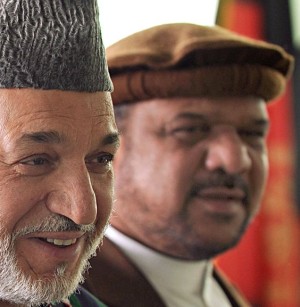
The real winner of Afghanistan’s presidential election will not be Hamid Karzai or his main rival, Abdullah Abdullah. It’s a man named Mohammad Qasim Fahim. He is Afghanistan’s senior-most military commander, with the lifetime rank of marshal, and was Karzai’s running mate during the campaign. Whether Karzai or one of his opponents wins, Fahim will hold and exercise extraordinary influence over the country’s military and security apparatus — more so than the elected president.
This means the real loser of Afghanistan’s presidential election — besides the Afghan people — will be the United States’ long-standing ambition to train and equip enough Afghan forces to allow for an eventual withdrawal of the U.S. military. Building up the Afghan military and police is at the heart of Gen. Stanley McChrystal’s latest assessment for Washington of what needs to be done in Afghanistan. But McChrystal’s forces will be training Afghan soldiers and police to work for Fahim: a human-rights-abusing, drug-trafficking warlord who might also have had a role in al Qaeda’s assassination of his political godfather, Tajik warlord Ahmad Shah Massoud, on Sept. 9, 2001 — an operation widely viewed in retrospect as a precursor to the terrorist attacks in the United States two days later. [continued…]

Time to get out of Afghanistan

“Yesterday,” reads the e-mail from Allen, a Marine in Afghanistan, “I gave blood because a Marine, while out on patrol, stepped on a [mine’s] pressure plate and lost both legs.” Then “another Marine with a bullet wound to the head was brought in. Both Marines died this morning.”

“I’m sorry about the drama,” writes Allen, an enthusiastic infantryman willing to die “so that each of you may grow old.” He says: “I put everything in God’s hands.” And: “Semper Fi!”

Allen and others of America’s finest are also in Washington’s hands. This city should keep faith with them by rapidly reversing the trajectory of America’s involvement in Afghanistan, where, says the Dutch commander of coalition forces in a southern province, walking through the region is “like walking through the Old Testament.” [continued…]

The Afghan 8os are back

It is deja vu on a huge and bloody scale. General Stanley McChrystal, the US commander in Afghanistan, is about to advise his president that “the Afghan people are undergoing a crisis of confidence because the war against the Taliban has not made their lives better”, according to leaked reports. Change the word “Taliban” to “mujahideen”, and you have an exact repetition of what the Russians found a quarter of a century ago.

Like Nato today, the Kremlin realised its forces had little control outside the main cities. The parallels don’t end there. The Russians called their Afghan enemies dukhy (ghosts), ever-present but invisible, as hidden in death as they were when alive – which echoes Sean Smith’s recent photographic account of the fighting in Helmand and the failure of the British units he was with to find a single Talib body.

The Soviet authorities never invited western reporters to be embedded, but you could track down Afghan war veterans in Moscow’s gloomier housing estates. They were conscripts, unlike British and US troops, so perhaps they had a heightened sense of anger. But how many British vets would share the sentiments that Igor expressed, as he hung out with his mates one evening in February 1989 and let me listen? “You remember that mother who lost her son. She kept repeating, ‘He fulfilled his duty. He fulfilled his duty to the end.’ That’s the most tragic thing. What duty? I suppose that’s what saves her, her notion of duty. She hasn’t yet realised it was all a ridiculous mistake. I’m putting it mildly. If she opened her eyes to our whole Afghan thing, she’d probably find it hard to hold out.” [continued…]

Facebooktwittermail

Seven days that shook Afghanistan

Seven days that shook Afghanistan

The darker currents that have undercut the American-led war in this country have surfaced often over the past eight years, but rarely have so many come into view all at once.

In the space of a single week, a string of disturbing military and political events revealed not just the extraordinary burdens that lie ahead for the Americans and Afghans toiling to create a stable nation, but the fragility of the very enterprise itself.

On Tuesday, four American soldiers on patrol near in the southern city of Kandahar were killed when their armored vehicle, known as a Stryker, struck a homemade bomb, now the preferred killer of American troops. Their deaths brought the toll of foreign soldiers killed this year to 295, making 2009 the bloodiest so far for the American-led coalition. Of the dead, 175 were American — also the most for a single year since the war began. There are still four months left in the year, and the toll keeps rising. [continued…]

Increasing accounts of fraud cloud Afghan vote

A Kabul teacher assigned to run a polling station in this village arrived at 6 a.m. on Election Day to find the ballot boxes already full, well before the voting was to start. When he protested, the other election officials told him to let it go; when he refused, he was taken away by the local tribal chieftain’s bodyguards.

Now he is in hiding and receiving threats, he said. And the village’s polling place is under investigation in one of the most serious reports of fraud that officials worry could affect the results of the country’s Aug. 20 elections — in this case, as in many others, in favor of President Hamid Karzai.

Afghan election officials said Sunday that the serious fraud reports that they were considering had suddenly doubled — to 550 from 270, in a development likely to stoke public outrage and perhaps even delay the official results past September. By law, each of the more serious cases, out of more than 2,000 complaints of irregularities so far, must be investigated before the elections results can be certified. [continued…]

Many women stayed away from the polls in Afghanistan

Five years ago, with the country at peace, traditional taboos easing and Western donors pushing for women to participate in democracy, millions of Afghan women eagerly registered and then voted for a presidential candidate. In a few districts, female turnout was even higher than male turnout.

But on Aug. 20, when Afghans again went to the polls to choose a president, that heady season of political emancipation seemed long gone. This time, election monitors and women’s activists said, a combination of fear, tradition, apathy and poor planning conspired to deprive many Afghan women of rights they had only recently begun to exercise.

With insurgents threatening to attack polling places and voters, especially in the rural south, many families kept their women home on election day, even if the men ventured out to vote. In cities, some segregated female polling rooms were nearly empty, and many educated women who had voted or even worked at polling stations in previous elections decided not to risk going out this time. [continued…]

Organized crime in Pakistan feeds Taliban

Taliban fighters have long used this city of 17 million as a place to regroup, smuggle weapons and even work seasonal jobs. But recently they have discovered another way to make fast money: organized crime.

The police here say the Taliban, working with criminal groups, are using Mafia-style networks to kidnap, rob banks and extort, generating millions of dollars for the militant insurgency in northwestern Pakistan.

“There is overwhelming evidence that it’s an organized policy,” said Dost Ali Baloch, assistant inspector general of the Karachi police.

Jihadi-linked crime has surfaced in other Pakistani cities, like Lahore. But Karachi, the central nervous system of Pakistan’s economy, and home to its richest businessmen, is the hub. It has been free of the bombings that have tormented Pakistan’s other major cities this year, and some officials believe that is the result of a calculated strategy. [continued…]

U.S. sets metrics to assess war success

The White House has assembled a list of about 50 measurements to gauge progress in Afghanistan and Pakistan as it tries to calm rising public and congressional anxiety about its war strategy.

Administration officials are conducting what one called a “test run” of the metrics, comparing current numbers in a range of categories — including newly trained Afghan army recruits, Pakistani counterinsurgency missions and on-time delivery of promised U.S. resources — with baselines set earlier in the year. The results will be used to fine-tune the list before it is presented to Congress by Sept. 24.

Lawmakers set that deadline in the spring as a condition for approving additional war funding, holding President Obama to his promise of “clear benchmarks” and no “blank check.” [continued…]

Facebooktwittermail

Karzai using rift with U.S. to gain favor

Karzai using rift with U.S. to gain favor

A little over 24 hours after the polls closed, President Obama stepped out on the White House South Lawn last week to pronounce the Afghanistan presidential elections something of a success.

“This was an important step forward in the Afghan people’s effort to take control of their future, even as violent extremists are trying to stand in their way,” Mr. Obama said. “I want to congratulate the Afghanistan people on carrying out this historic election.”

But now, as reports mount of widespread fraud in the balloting, including allegations that supporters of the Afghan president, Hamid Karzai, illegally stuffed ballot boxes in the south and ripped up ballots cast for his opponents, Mr. Obama’s early praise may soon come back to haunt him. [continued…]

U.S. fears clock ticking on Afghanistan

The Obama administration is racing to demonstrate visible headway in the faltering war in Afghanistan, convinced it has only until next summer to slow a hemorrhage in U.S. support and win more time for the military and diplomatic strategy it hopes can rescue the 8-year-old effort.

But the challenge in Afghanistan is becoming more difficult in the face of gains by the Taliban, rising U.S. casualties, a weak Afghan government widely viewed as corrupt, and a sense among U.S. commanders that they must start the military effort largely from scratch nearly eight years after it began.

A turnaround is crucial because military strategists believe they will not be able to get the additional troops they feel they need in coming months if they fail to show that their new approach is working, U.S. officials and advisors say. [continued…]

Facebooktwittermail

Afghan apocalypse

Afghan apocalypse: Part II

The highlight of Thursday’s event at the Heritage Foundation was analyst Marvin Weinbaum’s scathing review of the Afghan elections. Weinbaum, who served as a member of Barack Obama’s advisory task force on Afghanistan, is a former analyst for the State Department’s Bureau of Intelligence and Research (INR). His report on the election, where he served as an observer during the vote, contrasted sharply with the happy talk from the administration and from official and semi-official Afghan agencies who presented the vote as an inspiring exercise in democracy.

It wasn’t.

Weinbaum warned that the election was so grievously flawed that it may serve to further de-legitimize the regime of President Karzai. Turnout was abysmally low, with only about one-third of Afghans going to the polls, and in some districts — especially in the Pashtun-dominated south — perhaps between 5 and 15 percent of people voted, he said. On top of that, Weinbaum said, there is evidence of widespread fraud, and virtually all of the main opposition candidates are charging that the election was rigged. More than a thousand specific complaints have been lodged already, he said, adding that he himself saw properly marked ballots for opposition candidates that had been destroyed and left scattered along a roadside. He suggested that it’s likely that evidence of fraud and vote-rigging will emerge in the coming weeks, helping to convince Afghans that the election was illegitimate. [continued…]

Afghan apocalypse: Part I

Yesterday afternoon at the Brookings Institution, four analysts portrayed a bleak and terrifying vision of the current state of affairs in Afghanistan in the wake of the presidential election. All four were hawkish, reflecting a growing consensus in the Washington establishment that the Afghanistan war is only just beginning.

Their conclusions: (1) A significant escalation of the war will be necessary to avoid utter defeat. (2) Even if tens of thousands of troops are added to the US occupation, it won’t be possible to determine if the US/NATO effort is succeeding until eighteen months later. (3) Even if the United States turns the tide in Afghanistan, no significant drawdown of US forces will take place until five years have passed. [continued…]

US envoy ‘in angry Karzai talks’

The US special envoy to Afghanistan has held an “explosive” meeting with Afghan President Hamid Karzai over the country’s election, the BBC has learnt.

Richard Holbrooke raised concerns about ballot-stuffing and fraud, by a number of candidates’ teams, sources say.

The US envoy also said a second-round run-off could make the election process more credible, the sources said. [continued…]

More votes than voters

Three interlocking factors shaped the Afghan election day: large disparities in turnout across the country; the threat of Taliban violence; and allegations, as yet largely unproved, of systematic electoral fraud on behalf of Mr Karzai. Western military commanders claimed that the Taliban had failed to disrupt the election, with only 26 people killed on polling day. But the Taliban’s strategy was one of intimidation, designed to deter rather than kill voters. In that they were successful.

During the poll there were some 400 insurgent incidents, making it the most violent day this year. Many seemed intended just to register the presence of insurgents in the area. In Wardak, for instance, a rocket landed in the general area of every polling centre. Threats to cut off fingers marked with the indelible ink used to prevent double voting turned out to be almost entirely baseless. But they worked as a deterrent.

In a relatively benign northern arc, from Herat in the west to Nangarhar in the east, turnout was as high as 60% in some areas, though in Nangarhar it fell to about 35%, and overall turnout was well below the level achieved in the previous presidential poll in 2004. In parts of the south, however, intimidation and apathy kept turnout extremely low. “The Taliban are patrolling the area. Nobody voted and nobody could vote,” said Haji Ahmad Shah Khan, an elder in Nad Ali district of Helmand. On election day the chief of the Independent Election Commission (IEC) in Helmand, Abdul Hadee, estimated turnout in the province at under 10%. In some districts no votes were cast at all. [continued…]

Afghan civilian deaths decline under new U.S. tactics

Western troops have killed far fewer Afghan civilians since the top U.S. general imposed strict new rules of engagement aimed at addressing one of the most contentious issues of the conflict, according to newly declassified U.S. military figures.

However, the data cover a relatively short period of eight weeks, and make it clear that civilians are still dying in large numbers, a pattern blamed in part on the Taliban’s campaign of violence surrounding last week’s national elections. [continued…]

Facebooktwittermail

Accused of drug ties, Karzai running mate worries U.S.

Accused of drug ties, Karzai running mate worries U.S.

It was a heated debate during the Bush administration: What to do about evidence that Afghanistan’s powerful defense minister was involved in drug trafficking? Officials from the time say they needed him to help run the troubled country. So the answer, in the end: look the other way.

Today that debate will be even more fraught for a new administration, for the former defense minister, Marshal Muhammad Qasim Fahim, stands a strong chance of becoming the next vice president of Afghanistan.

In his bid for re-election, President Hamid Karzai of Afghanistan has surrounded himself with checkered figures who could bring him votes: warlords suspected of war crimes, corruption and trafficking in the country’s lucrative poppy crop. But none is as influential as Marshal Fahim, his running mate, whose trajectory in and out of power, and American favor, says much about the struggle the United States has had in dealing with corruption in Afghanistan. [continued…]

Bombing deepens despair in a Kandahar

This city is no stranger to bombings. There have been many here over the years of war. But the one on Tuesday night — the deadliest — may have done more than any other to deepen Kandahar’s sense of isolation and tip its people into despair that someone, anyone, has the power to halt the mayhem that surrounds them.

The bombing produced an entire city block of devastation, gutting shops and homes and reducing many of the structures to mounds of rubble. On Wednesday, residents searched at the scene and hospitals for missing loved ones, as the death toll rose to 41, with more than 60 wounded.

Abdul Nabi, 45, a shopkeeper, could find only two of his six sons in the wreckage. “I rushed to the hospital and found my sons in very bad condition,” he said. “Three of my sons are still unconscious. One 7-year-old son just opened his eyes now.

“To whom shall I complain?” he asked. [continued…]

Afghanistan’s ethnically split ballot box

2009 turned out to be a much more violent year [than 2004 when elections took place], with Taliban attacks reaching the heart of the capital and the Kabul administration and its international allies having lost credibility both in terms of delivering peace or improving the people’s living conditions. And yet millions of Afghans risked their lives, ventured out and cast their votes fully aware that voting meant taking a serious risk and knowing very well that the election would be fraudulent and the candidates most probably either lying or making empty promises. Afghan and international observers celebrate this as evidence that Afghanistan has moved forward and is no longer an essentially tribal society upon whom the West has imposed democracy by sheer force of military. In brief, a success story.

The recently published preliminary results based on a random sample of one million votes tell a different story. According to the sample, the people’s verdict has given rise to two leaders, Karzai closely followed by Abdullah Abdullah. In other words, a Pashtun leader followed closely by a half-Tajik leader with a majority Tajik support base. This is what analysts call “identity voting”. The preliminary results show that Karzai’s attempt at nation-building has failed and most Afghans’ loyalty lies first with their ethnic group, and then the nation as a whole. Karzai’s critics have repeatedly pointed out that his nation-building attempts have been largely superficial, consisting on throwing dinner parties for discredited leaders of ethnic and religious minority groups. In the words of presidential candidate Ramazan Bashardost, making a Hazara leader sit next to nomadic Pashtun leader at dinner is not exactly nation-building. The many mass graves scattered around the country bear witness to the ethnic rivalries that followed the Soviet army’s withdrawal from Afghanistan and led to the civil wars of the early 1990s. During the presidential election campaign, ex-Taliban commander turned candidate Mullah Rocketi was the only contender to openly admit that ethnic mistrust was the only reason why Afghans so easily became tools in the service of foreign powers and hence carried on fighting. Nation-building has a long way to go in Afghanistan but as economist Paul Collier argues, leaders must build a nation before they can build a state. [continued…]

Taliban punish voters in wake of Afghan election

The Taliban are attempting to exact revenge on Afghan voters and disrupt the ballot count — part of a campaign to exploit the political uncertainty after last week’s presidential election and try to undermine the results.

Since the Aug. 20 election, Taliban fighters have launched nearly a dozen attacks. They have severed the fingers of voters, stolen ballot boxes, and murdered government officials. Afghan police have been reluctant to move into Taliban-controlled areas to quell the violence. [continued…]

Facebooktwittermail