Category Archives: war in Afghanistan

A sham vote for a sham war of necessity

The ultimate burden

If we had a draft — or merely the threat of a draft — we would not be in Iraq or Afghanistan. But we don’t have a draft so it’s safe for most of the nation to be mindless about waging war. Other people’s children are going to the slaughter.

Instead of winding down our involvement in Afghanistan, we’re ratcheting it up. President Obama told the V.F.W. that fighting the war there is absolutely essential. “This is fundamental to the defense of our people,” he said.

Well, if this war, now approaching its ninth year, is so fundamental, we should all be pitching in. We shouldn’t be leaving the entire monumental burden to a tiny portion of the population, sending them into combat again, and again, and again, and again … [continued…]

Editor’s Comment — Obama’s solemn declaration that the Afghanistan is a “war of necessity” has provoked some debate on what exactly defines “necessity” when it comes to war. By far the simplest definition is to say that such a war necessitates the involvement of the majority of the adult population. No necessity, no draft.

Afghanistan’s sham vote

The dust had barely settled on the Afghan elections before the U.S. government, the United Nations and the European Union were hailing them as a success, commending voters for their heroism and election workers for their relative efficiency.

This would be laughable if it were not such a great shame. The elections were severely marred by violence and widespread fraud, and the results are unlikely to placate a population already frustrated by eight years of mismanagement and corruption.

The haste with which U.N. Special Representative Kai Eide held a press conference to say that Aug. 20 was “a good day for Afghanistan” merely served to underscore the central, if unappetizing, truth about the Afghan poll: It was never meant for the Afghans.

Instead, it was intended to convince voters in New York, London, Paris and Rome that their soldiers and their governments have not been wasting blood and treasure in their unfocused and ill-designed attempts to bring stability to a small, war-torn country in South Asia. [continued…]

Wide fraud is charged as Afghans tally votes

The preliminary results from Afghanistan’s election gave both President Hamid Karzai and his chief rival, Abdullah Abdullah, nearly 40 percent of the vote on Tuesday as accumulating charges of widespread fraud cast new doubts on the credibility of the election.

The returns announced were based on just 10 percent of ballots from a variety of provinces and seemed carefully balanced to keep emotions calm as election officials came under increasing pressure from all sides to demonstrate that the presidential election was fair.

But even as election officials announced the first glimpse of returns, presidential candidates presented a growing bank of evidence of vote rigging. Most of it appeared to favor President Karzai, and in some cases, to have taken place with the complicity of election or security officials.

What was presented included sheaves of ballots stamped and marked for one candidate, cell-phone video of poll workers and others marking off ballots and stuffing boxes in front of local police officers and security personnel, and votes said to have been thrown out of ballot boxes and discarded. [continued…]

Facebooktwittermail

U.S. military says its force in Afghanistan is insufficient

U.S. military says its force in Afghanistan is insufficient

American military commanders with the NATO mission in Afghanistan told President Obama’s chief envoy to the region this weekend that they did not have enough troops to do their job, pushed past their limit by Taliban rebels who operate across borders.

The commanders emphasized problems in southern Afghanistan, where Taliban insurgents continue to bombard towns and villages with rockets despite a new influx of American troops, and in eastern Afghanistan, where the father-and-son-led Haqqani network of militants has become the main source of attacks against American troops and their Afghan allies.

The possibility that more troops will be needed in Afghanistan presents the Obama administration with another problem in dealing with a nearly eight-year war that has lost popularity at home, compounded by new questions over the credibility of the Afghan government, which has just held an as-yet inconclusive presidential election beset by complaints of fraud. [continued…]

Karzai opponent alleges ‘widespread’ voter fraud

The main challenger to Afghan President Hamid Karzai said Sunday that he has received “alarming” reports of “widespread rigging” in Thursday’s presidential election by pro-government groups and officials, but he called on supporters to be patient and said he hopes the problem will be resolved through the official election review.

“The initial reports are a big cause of concern, but hopefully we can prevent fraud through legal means,” Abdullah Abdullah, a former foreign minister, said at a news conference. He said his campaign has filed more than 100 complaints of ballot-box stuffing, inflated vote counts and intimidation at the polls by Karzai partisans, often in places where threats from insurgents resulted in low voter turnout.

The allegations of fraud, combined with the slow pace of vote tabulation and the cumbersome process for investigating complaints, are raising political tensions as the nation waits to see whether its second presidential election will produce a result that Afghans can trust. If not, there is concern that voter anger will unleash violence along the ethnic and regional lines that divide this fragmented society. [continued…]

Facebooktwittermail

Could Afghanistan become Obama’s Vietnam?

Could Afghanistan become Obama’s Vietnam?

President Obama had not even taken office before supporters were etching his likeness onto Mount Rushmore as another Abraham Lincoln or the second coming of Franklin D. Roosevelt.

Yet what if they got the wrong predecessor? What if Mr. Obama is fated to be another Lyndon B. Johnson instead?

To be sure, such historical analogies are overly simplistic and fatally flawed, if only because each presidency is distinct in its own way. But the L.B.J. model — a president who aspired to reshape America at home while fighting a losing war abroad — is one that haunts Mr. Obama’s White House as it seeks to salvage Afghanistan while enacting an expansive domestic program.

In this summer of discontent for Mr. Obama, as the heady early days give way to the grinding battle for elusive goals, he looks ahead to an uncertain future not only for his legislative agenda but for what has indisputably become his war. Last week’s elections in Afghanistan played out at the same time as the debate over health care heated up in Washington, producing one of those split-screen moments that could not help but remind some of Mr. Johnson’s struggles to build a Great Society while fighting in Vietnam.

“The analogy of Lyndon Johnson suggests itself very profoundly,” said David M. Kennedy, the Stanford University historian. Mr. Obama, he said, must avoid letting Afghanistan shadow his presidency as Vietnam did Mr. Johnson’s. “He needs to worry about the outcome of that intervention and policy and how it could spill over into everything else he wants to accomplish.” [continued…]

Editor’s Comment — It’s not too soon to be comparing Obama to LBJ and it’s not too soon to be asking whether he’ll seek a second term. To call the war in Afghanistan a “war of necessity” was a strategic blunder. Obama first paddled up shit creek and then decided to throw away his paddle.

‘Is he weak?’

Shortly after the Group of 20 summit concluded in London in April, Nicolas Sarkozy blurted out to a small group of advisers a question that weighed on him as he watched President Obama glad-hand his way through the gathering: “Est-il faible?” (Is he weak?)

The French president did not answer his own blunt query, which faded as the American leader commanded a hectic round of domestic economic intervention and agenda-setting abroad in the weeks that followed. Initial doubts about Obama’s toughness went on the shelf at the Elysee Palace and elsewhere.

But the Sarkozy question was abruptly dusted off as Obama began hitting resistance to some of his most ambitious goals, including health-care reform, Middle East peacemaking and engagement with Iran. Is Obama making tactical retreats to gain better position on these hard cases — or is he, well, weak? [continued…]

Marines fight Taliban with little aid from Afghans

American Marines secured this desolate village in southern Afghanistan nearly two months ago, and last week they were fortifying bases, on duty at checkpoints and patrolling in full body armor in 120-degree heat. Despite those efforts, only a few hundred Afghans were persuaded to come out here and vote for president on Thursday.

In a region the Taliban have lorded over for six years, and where they remain a menacing presence, American officers say their troops alone are not enough to reassure Afghans. Something is missing that has left even the recently appointed district governor feeling dismayed. “I don’t get any support from the government,” said the governor, Massoud Ahmad Rassouli Balouch.

Governor Massoud has no body of advisers to help run the area, no doctors to provide health care, no teachers, no professionals to do much of anything. About all he says he does have are police officers who steal and a small group of Afghan soldiers who say they are here for “vacation.” [continued…]

Taliban attacks leave poll soaked in Afghan blood

Making Helmand safe to vote had been Britain’s military priority this summer, the bloodiest since 2001. The aim of the five-week operation Panther’s Claw, involving 3,000 British troops, was to push the Taliban from the north of Lashkar Gah.

Ten British soldiers died in the campaign. Lieutenant-Colonel Gus Fair, commander of the Light Dragoons battle group, wrote in his diary afterwards that, as a result, people who had been subject to the rule of the Taliban could now live without the fear of them “visiting in the middle of the night”.

With some optimism he added that they now had “the freedom to vote … the chance to look forward to enjoy some of the rights and privileges that we are lucky enough to take for granted”.

In Babaji district, where the British claimed they had brought 80,000 villagers under government control during daylight hours at least, only 150 people cast their vote. “There were supposed to be three polling stations but they were closed,” said Sardar Mohammed, 54, who lives in the district. [continued…]

U.S. seeks overhaul in Kabul after vote

US officials are strategizing about how to persuade Afghan President Hamid Karzai to overhaul his government, which is widely viewed here as corrupt and ineffectual, if he wins a second term.

At the same time, some in Washington fear a runoff election could steal valuable time from the international efforts to stabilize the country. Both Mr. Karzai and his leading challenger, former foreign minister Abdullah Abdullah, have claimed significant leads.

Results of Thursday’s presidential balloting in Afghanistan may not be available until Tuesday. If no candidate wins more than 50% of the vote, and a runoff is necessary, these U.S. officials said it could be Oct. 1 before there is a functioning government in Kabul. [continued…]

New leader of Pakistan’s Taliban is named, though officials believe he is dead

A senior leader of the Pakistani Taliban announced Saturday that a brash young commander with a reputation for pitiless violence appeared to have won the struggle to lead the group — even as the government wrestles with conflicting information about whether that commander is even alive.

Intelligence officials in Pakistan say that the newly proclaimed leader, Hakimullah Mehsud, is dead. But Pakistan’s interior minister, Rehman Malik, said Saturday in an interview that he was alive, although gravely injured, and that Taliban fighters were desperately searching for his younger brother as a stand-in.

The news on Saturday adds to the confusion that has surrounded the leadership of the group since its head, Baitullah Mehsud, was reportedly killed this month in a drone attack.

Maulvi Faqir Muhammad, deputy commander of the group, had proclaimed himself successor to Baitullah Mehsud just a few days ago. But on Saturday he told reporters by telephone that the much younger and more aggressive Hakimullah Mehsud would be the insurgency’s new leader. [continued…]

Facebooktwittermail

Saigon 2009

Saigon 2009

For those who say that comparing the current war in Afghanistan to the Vietnam War is taking things too far, here’s a reality check: It’s not taking things far enough. From the origins of these North-South conflicts to the role of insurgents and the pointlessness of this week’s Afghan presidential elections, it’s impossible to ignore the similarities between these wars. The places and faces may have changed but the enemy is old and familiar. The sooner the United States recognizes this, the sooner it can stop making the same mistakes in Afghanistan.

Even at first glance the structural parallels alone are sobering. Both Vietnam and Afghanistan (prior to the U.S. engagement there) had surprisingly defeated a European power in a guerrilla war that lasted a decade, followed by a largely north-south civil war which lasted another decade. Insurgents in both countries enjoyed the advantage of a long, trackless, and uncloseable border and sanctuary beyond it, where they maintained absolute political control. Both were land wars in Asia with logistics lines more than 9,000 miles long and extremely harsh terrain with few roads, which nullified U.S. advantages in ground mobility and artillery. Other key contributing factors bear a striking resemblance: Almost exactly 80 percent of the population of both countries was rural, and literacy hovered around 10 percent.

In both countries, the United States sought to create an indigenous army modeled in its own image, based on U.S. army organization charts. With the ARVN in South Vietnam and the ANA in today’s Afghanistan, assignment of personnel as combat advisors and mentors was the absolute lowest priority. And in both wars, the U.S. military grossly misled the American people about the size of the indigenous force over a protracted period. In Afghanistan, for example, the U.S. military touts 91,000 ANA soldiers as “trained and equipped,” knowing full well that barely 39,000 are still in the ranks and present for duty. [continued…]

Facebooktwittermail

Public opinion in U.S. turns against Afghan war

Public opinion in U.S. turns against Afghan war

Among all adults, 51 percent now say the war is not worth fighting, up six percentage points since last month and 10 since March. Less than half, 47 percent, say the war is worth its costs. Those strongly opposed (41 percent) outweigh strong proponents (31 percent).

Opposition to the Iraq war reached similar levels in the summer of 2004 and grew further through the 2006 midterm elections, becoming issue No. 1 in many congressional races that year.

By the time support for that conflict had fallen below 50 percent, disapproval of President George W. Bush’s handling of it had climbed to 55 percent, in contrast to the solid overall approval of the way Obama is dealing with Afghanistan.

But there are warning signs for the president.

Among liberals, his rating on handling the war, which he calls one of “necessity,” has fallen swiftly, with strong approval dropping by 20 points. Nearly two-thirds of liberals stand against a troop increase, as do about six in 10 Democrats. [continued…]

Rethink Afghanistan

Karzai and warlords mount massive vote fraud scheme

Afghanistan’s presidential election has long been viewed by U.S. officials as a key to conferring legitimacy on the Afghan government, but Afghan President Hamid Karzai and his powerful warlord allies have planned to commit large-scale electoral fraud that could have the opposite effect.

Two U.S.-financed polls published during the past week showed support for Karzai falls well short of the 51 percent of the vote necessary to avoid a runoff election. A poll by Glevum Associates showed Karzai at 36 percent, and a survey by the International Republican Institute had him at 44 percent of the vote.

Those polls suggest that Karzai might have to pad his legitimate vote total by much as 40 percent to be certain of being elected in the first round.

But Karzai has been laying the groundwork for just such a contingency for many months. By all accounts, he has forged political alliances with leading Afghan warlords who control informal militias and tribal networks in the provinces to carry out a vote fraud scheme accounting for a very large proportion of the votes. [continued…]

26 Afghans killed in election day attacks

Taliban threats scared voters and dampened turnout in the militant south Thursday as Afghans voted for president for the second time ever. Insurgents killed 26 Afghans in scattered attacks, but officials said militants failed to disrupt the vote.

After 10 hours of voting, including a last-minute, one-hour extension, election workers began to count millions of ballots. Initial results weren’t expected for several days.

A top election official told The Associated Press he thinks 40 to 50 percent of the country’s 15 million registered voters cast ballots — a turnout that would be far lower than the 70 percent who cast ballots for president in 2004. [continued…]

Britney Spears votes in Afghanistan

Experts laugh at claims by Afghan officialdom that all 17 million names on the electoral roll are legitimate.

An election official confided to the Dutch analyst Martine van Bijlert, of the respected Afghanistan Analysts Network, that up to 3 million of the names were fake.

”It’s ridiculous,” one diplomat said. ”You can see the process being put in place – with those numbers you don’t need big tricks.” [continued…]

Face to face with the Taliban: ‘The people are fed up with the government’

Shirjan and Agha Mansour talked about how Taliban rule worked. They were enough in control of the territory to levy their own income tax, called ushur, which is fixed at 10%, and issued receipts for payments rendered.

“They collect 10% tax on all income, even from the government fields,” said Agha Mansour. “So if you grow 100kg of wheat you pay 10kg and they give you a receipt and never charge extra or more.”

Shirjan added: “At least they are honest. They don’t take bribes like the government officials do.”

The taxes are deposited with a Taliban “banker”, who uses the money to run his shop and in return supplies the Taliban with food and other necessities.

Then Shirjan repeated an argument that can be heard all over Afghanistan.

“If you take your case to a government court it will take you four to five years to finish because the longer the case goes the more bribes you pay. So the officials don’t want you to finish. Whereas if you take your case to the Taliban court they will give a judgment in one day and according to God’s ruling. So the people go to the Taliban.” [continued…]

We must face reality in Afghanistan

The Taliban is winning the war in Afghanistan, a fact even the top US commander in the country reluctantly concedes. Offering a glimpse of the strategic assessment he was originally scheduled to deliver earlier this month, General Stanley McChrystal warned that American casualties were likely to keep rising, and said the US must deploy more troops to the south and east of the country.

The Taliban inflicted 76 casualties on coalition forces across Afghanistan in July. In Helmand, a historically restive province in the south, there is no safe area, and every day rockets fall on Lashkar Gah, the regional capital. Whatever tactical advances an increased American presence might win, the ultimate political objectives for which the US deployed its troops here are growing more distant. President Hamid Karzai is expected to lead in first-round elections later this week, but among Pashtuns in the south, attitudes toward Kabul and the international coalition are only growing more sour. Few tribes enjoy workable relations with the government – essentially only the Zirak tribes in Kandahar. Meanwhile, opinion polls in Britain and the US show the public has serious doubts about the meaning and direction of the war. [continued…]

By how many days can we shorten this war?

… our leaders in Washington, apparently, are not yet sick and tired of war in Afghanistan. For almost a year, Western officials have been conceding that the war will not end without a political solution that involves negotiations with insurgents. But, these officials say, the West isn’t ready yet to make a deal. “Reconciliation is important, but not now,” one Western diplomat told the New York Times. “It’s not going to happen until the insurgency is weaker and the government is stronger.”

So, there’s going to be a deal with insurgents; that’s a foregone conclusion. The question that remains is how many more people will die before that happens – and whether, from the point of view of the interests of the majority of Afghans and the majority of Americans, the deal we can get 5 or 10 years from now is likely to be so much better than the deal we could get in the next year as to justify the deaths that will be the guaranteed result of postponing meaningful negotiations. [continued…]

Facebooktwittermail

Empty slogans of change in Afghanistan

Empty slogans of change in Afghanistan

The 2009 presidential election is only a day away and Afghans are basking in the global media spotlight. The Taliban are staging spectacular attacks, aware that the violence will make international headlines and provide them with free publicity. Campaigners are driving up and down the country in vehicles covered in posters, wooing the population with the promise of a better future. Free lunches, a rare concept in Afghanistan, have become the rule these days as campaigners feed the poor in the hope of getting votes in return for pilau rice. The poor, in turn, should be forgiven for wishing every day were campaign day. Such charity, after all, is a rarity in the Islamic Republic of Afghanistan.

Democracy is apparently working small wonders in Afghanistan. Local newspapers quote the Qur’an as evidence that there is no contradiction between Islam and the principles of democracy. Presidential candidates invoke early Muslim history to show that the rule of the people is rooted in Muslim tradition. Debate instead of violence; citizenship instead of clientelism; nationhood instead of tribalism; all are recurrent phrases in articles revealing the desires of progressive Afghans for their country. The second presidential debate, aired live on national TV, included Hamid Karzai and was broadly interpreted as a sign that democracy is slowly taking root in Afghanistan. The cost of the election process: $221m. Democracy doesn’t come cheap but in a country where humans are forced to live in caves for want of a roof over their heads, the electoral pomp can seem morally questionable. [continued…]

Facebooktwittermail

Taliban hardliners spread out to undermine Afghanistan election

Taliban hardliners spread out to undermine Afghanistan election

The Taliban leadership has redeployed some of its most hardline foot soldiers into areas of Afghanistan where local insurgents are reluctant to disrupt the country’s elections on Thursday.

Details of the move emerged as a statement, said to carry the authority of the Taliban leader, Mullah Omar, reiterated that the movement would attempt to stop Afghans from voting.

The insurgent leadership appears to be trying to harden resolve among its men on the ground and foil deals struck between the government and individual commanders designed to guarantee peace on polling day. [continued…]

Pakistan captures aide of Taliban commander

Pakistani security forces have captured a close associate of Taliban leader Baitullah Mehsud, who was believed slain in a U.S. missile strike earlier this month.

The capture of Mr. Mehsud’s close associate, Maulvi Omar, deals another blow to a Taliban insurgency that has wracked Pakistan but now appears locked in disarray. Mr. Omar’s arrest turns a key Taliban aide into a potential source of information on the militant network based operating on Afghanistan’s border.

Mr. Omar, who worked as a spokesman for Tehrik-e-Taliban Pakistan, the group led by Mr. Mehsud, was arrested Monday night, say intelligence sources in Islamabad. He was believed to be traveling to a meeting with Taliban commanders. One official in the Mohmand tribal region — where Mr. Omar was based — said his arrest came with the help of local anti-Taliban militia. [continued…]

Facebooktwittermail

Afghanistan’s tyranny of the minority

Afghanistan’s tyranny of the minority

As the debate intensifies within the Obama administration over how to stabilize Afghanistan, one major problem is conspicuously missing from the discussion: the growing alienation of the country’s largest ethnic group, the Pashtun tribes, who make up an estimated 42 percent of the population of 33 million. One of the basic reasons many Pashtuns support the Taliban insurgency is that their historic rivals, ethnic Tajiks, hold most of the key levers of power in the government.

Tajiks constitute only about 24 percent of the population, yet they largely control the armed forces and the intelligence and secret police agencies that loom over the daily lives of the Pashtuns. Little wonder that in the run-up to Thursday’s presidential election, much of the Taliban propaganda has focused on the fact that President Hamid Karzai’s top running mate is a hated symbol of Tajik power: the former defense minister Muhammad Fahim.

Mr. Fahim and his allies have been entrenched in Kabul since American forces overthrew the Taliban in 2001 with the help of his Tajik militia, the Northern Alliance, which was based in the Panjshir valley north of the capital. A clique of these Tajik officers, known as the Panjshiris, took control of the key security posts with American backing, and they have been there ever since. Washington pushed Mr. Karzai for the presidency to give a Pashtun face to the regime, but he has been derided from the start by his fellow Pashtuns with a play on his name, “Panjshir-zai.” [continued…]

Facebooktwittermail

Inside the Taliban: ‘The more troops they send, the more targets we have’

Inside the Taliban: ‘The more troops they send, the more targets we have’

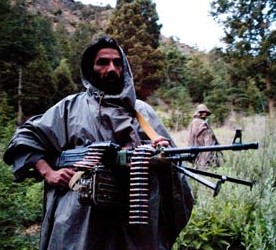
Instead of the trademark Taliban uniforms of turbans, eyeliner and flip-flops, these men wore Russian and Nato poncho raincoats over their shalwars, and boots and trainers. Most striking was the way they held their guns. Instead of carrying them in the standard militia style, on their shoulders or holding them like walking sticks, they wore them strapped around their chests, one hand by the trigger and the other holding the muzzle down. They stood just like the Americans.
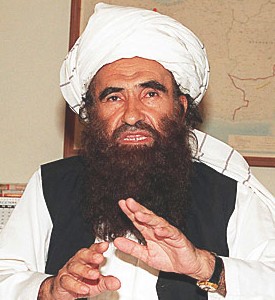
The stout commander, Mawlawi Jalali, sat surrounded by his men. One carried the white flag of the Taliban and another a video camera, which he kept pointed at me at all times.

“We are Afghans fighting the jihad and defending our country under the leadership of Jalaluddin Haqqani,” the commander said. He spoke in a schoolmasterly tone. As well as being a commander, Mawlawi Jalali is a teacher in Haqqani’s madrasa.
“The Americans toppled the emirate [of the Taliban] and we are fighting to bring it back. When the Taliban were here the jihad was only in Afghanistan. Now, thanks to the Americans, the jihad has spread to many other countries.”

How did he plan to pursue his holy war? “We use different tactics: mining the streets, fighting and direct attacks. Here in this camp we make all the preparations and have all the men we need for these different tactics.”

What about the new American surge, I asked. Did it concern him?

“We attack the towns, like in Wazi Zadran, where there is a strong American and Afghan garrison, and mine the streets every day. We average two or three attacks a day against the Americans and their allies. The more troops they send, the more targets we have, so it’s good.” [continued…]

Why Taliban leaders prefer dead diplomats

Also, the Taliban do not get most of their money from narcotics, as is often said, but they receive a significant amount from private donors in the Gulf or elsewhere in the Islamic world who are much less keen to pay for violence directed at voting Afghans than strikes on western troops or their “stooges”.

So it makes sense that the Taliban, or in this case probably the allied insurgent group led by hardline cleric and warlord Jalaluddin Haqqani, have preferred to launch the first genuinely spectacular strike since the beginning of the election campaign against a diplomatic western target.

As their spokesman explained, rather than hit the military, the Taliban would have preferred dead diplomats. Though a bomb outside the Isaf headquarters would show the insurgents’ ability to strike anywhere, their key target is international public opinion. Given the number of journalists and TV crews in the Afghan capital to cover the elections, a spectacular suicide bombing was always going to be an easy way of getting the media coverage that they need. [continued…]

Afghanistan passes ‘barbaric’ law diminishing women’s rights

Afghanistan has quietly passed a law permitting Shia men to deny their wives food and sustenance if they refuse to obey their husbands’ sexual demands, despite international outrage over an earlier version of the legislation which President Hamid Karzai had promised to review.

The new final draft of the legislation also grants guardianship of children exclusively to their fathers and grandfathers, and requires women to get permission from their husbands to work.

“It also effectively allows a rapist to avoid prosecution by paying ‘blood money’ to a girl who was injured when he raped her,” the US charity Human Rights Watch said. [continued…]

Facebooktwittermail

Sometimes it’s not your war, but you sacrifice anyway

Sometimes it’s not your war, but you sacrifice anyway

To outsource the wars in Iraq and Afghanistan, the United States has turned to the cheapest labor possible. About two-thirds of the 200,000 civilians working under federal contracts in the war zones are foreigners. Many come from poor, Third World countries. Others are local hires.

These low-paid foreign workers face many of the same risks soldiers do. Mortars have killed Filipinos who served meals in mess halls. Assassins have targeted Iraqis translating for soldiers. Roadside bombs have ripped into trucks driven by Turkish nationals. These workers have been wounded like soldiers. They have died like soldiers.

The United States has a system to provide care for such civilian casualties. Developed in the 1940s, it is an obscure type of workers’ compensation insurance, funded by taxpayers and overseen by the Labor Department. Mandated by a law called the Defense Base Act, the system requires almost every federal contractor working abroad to purchase insurance to cover injuries arising from work or war, for all employees, American or foreign.

American civilian workers have had trouble enough getting payment for their injuries. AIG, the primary provider of such insurance, has battled them over everything from prosthetic legs to treatment for post-traumatic stress disorder, according to court records and interviews. But at least the Americans have a fighting chance.

For foreign workers, the system has not even come close to delivering on its promises. In Nepal, I spoke with a family in a remote valley of tumbling rivers and jewel-green rice fields. After neighbors heard news reports over the radio, the family watched an Internet video that showed that their son had been executed in a dusty ditch in western Iraq on his way to work at a base for U.S. soldiers. Neither the company nor the United States had made any effort to contact them. The elderly couple, who had relied upon their son’s salary, wondered how they would survive. [continued…]

Facebooktwittermail

Abdullah Abdullah throws down election gauntlet to President Karzai

Abdullah Abdullah throws down election gauntlet to President Karzai

“Without rigging, Karzai will lose the vote in southern Afghanistan,” Dr Abdullah told The Times. “People are crossing ethnic, linguistic and regional lines.”

At the last election in 2004, Mr Karzai won in the first round with 55.4 per cent of the vote and vowed to eradicate terrorism, poverty, corruption and the opium trade.

Five years on, he has not only failed on all of those counts; a Taleban insurgency has enveloped most of the country and international forces have suffered their bloodiest month since 2001.

The election is seen not just as a test of his popularity but of the entire international mission in Afghanistan. “The legitimacy of the international community’s involvement in Afghanistan is at stake in this election,” said Thomas Ruttig, co-director of the Afghanistan Analysts’ Network. “These British soldiers — if they’ve died for something that ends in a mess then you simply can’t defend it.” [continued…]

The future of Afghanistan

In two weeks, or six if there is a run-off, Afghanistan will have a new president for the next five years. Whether in five years the new president will still have Afghanistan is uncertain. It depends not on the elections themselves but on what happens afterwards.

These elections, as part of a broader strategic review, will, it is hoped, re-energise the troubled international effort to secure and stabilise Afghanistan by bringing a new legitimacy to a government elected by an imperfect but theoretically universal suffrage.

However, as Benazir Bhutto once explained to me patiently and somewhat ironically given the records of her own governments, if in developed countries a leader’s legitimacy comes from being chosen in free and fair elections, in her own Pakistan and in states like it, legitimacy comes more from post-election performance. This needs to be nuanced, of course, as all such generalisations do, but it is nonetheless fair to say that there are few Afghans who have much confidence in the electoral process itself, justifiably given the scale of potential fraud and the security problems. So it is what happens post-election that will determine whether the winner is seen by the population generally to deserve their position or not. [continued…]

Suicide blast kills at least seven, injures dozens in Kabul

Just five days before a presidential election that the Taliban has vowed to thwart, a massive suicide car bomb exploded outside the U.S. military headquarters in Kabul on Saturday morning, killing seven people and wounding scores of others in the largest attack in the capital in months.

The 8:30 a.m. blast, on the main road outside the concrete barriers that wall off the U.S. and NATO headquarters, along with the U.S. Embassy, was the first major in Kabul since February, when Taliban insurgents attacked three government buildings, killing at least 19 people. The explosion Saturday set cars on fire, crumbled concrete walls and shattered windows of buildings hundreds of yards from the explosion site. [continued…]

Facebooktwittermail

Baghram isn’t the new Guantanamo, it’s the old Guantanamo

Baghram isn’t the new Guantanamo, it’s the old Guantanamo

Back in September 2005, when I first began researching Guantánamo for my book The Guantánamo Files, the prison was still shrouded in mystery, even though attorneys had been visiting prisoners for nearly a year, following the Supreme Court’s ruling, in June 2004, that they had habeas corpus rights. Researchers at the Washington Post and at Cageprisoners, a human rights organization in the U.K., had compiled tentative lists of who was being held, but, although these efforts were commendable, much of it was little more than groping in the dark — a broken jigsaw puzzle based on media reports and interviews with released prisoners — because the Bush administration refused to provide details of the names and nationalities of those it was holding.

In April 2006 — four years and three months after Guantánamo opened — the government finally conceded defeat, after the Associated Press took the Pentagon to court, and won. That month, the first ever list of prisoners (PDF) — containing the names and nationalities of the 558 prisoners who had been subjected to the administration’s Combatant Status Review Tribunals (one-sided reviews, designed to rubberstamp their prior designation as “enemy combatants”) — was released, and was followed in May by a list of the 759 prisoners held up to that point (including the 201 who had been released before the tribunals began), which included names, nationalities, and, where known, dates of birth and places of birth (PDF).

The government also released 8,000 pages of tribunal transcripts and allegations against the prisoners, which pierced the veil of secrecy still further, allowing outside observers, as well as lawyers, the opportunity to examine whether the government’s claims that the prison was full of terrorists were true, and to conclude that, actually, the prison was largely populated by innocent men or low-level Taliban foot soldiers, recruited to fight an inter-Muslim civil war that began long before the 9/11 attacks, and had nothing to do with al-Qaeda or international terrorism. [continued…]

Facebooktwittermail

Is Karzai in trouble?

Is Karzai in trouble?

Afghanistan should, perhaps, be called the “graveyard of expectations.” Every time the shrewd analyst thinks he knows what is going to happen, the picture shifts. The country’s presidential election, scheduled for August 20, is no exception.

Just a few weeks ago, pundits were nodding sagely at the political astuteness of the incumbent, Hamid Karzai. He has spent the past year assiduously courting and bullying the tribal leaders and strongmen who control the country, promising them jobs, perquisites, forgiveness of past sins, even the odd province or two. The process might have been a bit unsavory, but international election experts were saying they expected a “fair enough” referendum on Karzai’s tenure — in which, both inside Afghanistan and abroad, the president’s re-election was thought to be a sure thing.

Now, with just two weeks to go before the ballot, what had been a yawn of a race is suddenly a pulse-pumping sprint for the finish, with no clear winner in sight. What rocked Karzai’s formerly sturdy campaign boat? To understand the exciting and confusing contest, the careful observer should pay attention to a trio of contenders and at least two governments — and be prepared for the unexpected. [continued…]

Deadly contractor incident sours Afghans

Mirza Mohammed Dost stood at the foot of his son’s grave, near a headstone that read, “Raheb Dost, martyred by Americans.”

His son was no insurgent, Dost said. He was walking home from prayers on the night of May 5 when he was shot and killed on a busy Kabul street by U.S. security contractors.

“The Americans must answer for my son’s death,” Dost said as a large crowd of young men murmured in approval.

The shooting deaths of Raheb Dost, 24, and another Afghan civilian by four gunmen with the company once known as Blackwater have turned an entire neighborhood against the U.S. presence here. [continued…]

Taliban, foes clash in Pakistan

Taliban fighters attacked rival militants backed by the government in Pakistan’s tribal areas, sparking clashes that intelligence officials and tribal elders said left dozens dead.

There were few details of Wednesday’s fighting, on the edge of the isolated South Waziristan tribal area, a key Taliban and al Qaeda stronghold.

Two intelligence officials in the area said it began when the region’s dominant Taliban faction — whose leader, Baitullah Mehsud, was believed to have been killed last week in a U.S. missile strike — attacked a tribal faction backed by the government. The two sides battled in and around the village of Sura Ghar with assault weapons, rocket-propelled grenades and mortars, the officials said. One official said Pakistani forces tried to help the government-backed militants repel the Taliban, but gave no details. [continued…]

Facebooktwittermail

Has Kandahar already fallen?

Has Kandahar already fallen?

In a week where security in Afghanistan seems headed anywhere but up (rocket strikes on Kabul, a Taliban frontal assault in Logar province today), the question on many a commentator’s lips has been: where is this all going?

Some of the strongest analysis on stabilizing Afghanistan recently has come from Andrew Exum who just took a break from his position at the Center for New American Security to act as some-time advisor to General McChrystal. I was struck by a comment he made in an interview on the World Politics Review:

“The fall of Kandahar is not going to look like the Taliban rolling down the streets in tanks. The fall of Kandahar is going to look like the Taliban steadily making ground with a campaign of fear and intimidation, and creating an environment in which the Afghan government can’t operate in Kandahar, and Kandahar eventually becomes ideologically inhospitable to the government of Afghanistan, never mind Coalition forces.”

I think Ex is dead on. But by that standard, I have to question: Has Kandahar already fallen? [continued…]

President Karzai’s supporters ‘buy’ votes for Afghanistan election

Supporters of President Karzai are preparing to rig voting in next week’s presidential elections in unstable parts of Afghanistan’s south as Taleban violence threatens to intimidate voters and hit turnout in his traditional support base.

The Times has talked to several witnesses whose reports will bolster suspicions within the international community that there will be electoral fraud across the south, some of it allegedly orchestrated by Mr Karzai’s half-brother, Ahmed Wali Karzai.

Such irregularities could threaten the credibility of the election process and have led to threats of violent demonstrations in the north if Mr Karzai is thought to have stolen the vote.

One tribal elder in the Marja district of Helmand alleged that the vote rigging was being organised by members of Mr Karzai’s family and local tribal allies, particularly Sher Mohammad Akhundzada, the former governor of the province. [continued…]

U.S. ambassador seeks more money for Afghanistan

The United States will not meet its goals in Afghanistan without a major increase in planned spending on development and civilian reconstruction next year, the U.S. ambassador in Kabul has told the State Department.

In a cable sent to Secretary of State Hillary Rodham Clinton, Ambassador Karl W. Eikenberry said an additional $2.5 billion in nonmilitary spending will be needed for 2010, about 60 percent more than the amount President Obama has requested from Congress. The increase is needed “if we are to show progress in the next 14 months,” Eikenberry wrote in the cable, according to sources who have seen it.

Obama has asked for $68 billion in Defense Department spending in Afghanistan next year, an amount that for the first time would exceed U.S. military expenditures in Iraq. Spending on civilian governance and development programs has doubled under the Obama administration, to $200 million a month — equal to the monthly rate in Iraq during the zenith of spending on nonmilitary projects there. [continued…]

Life, death and the Taliban: War of ideas

Almost daily, girls’ schools are burned and bombed and teachers, principals, students and their families receive what are known as “night letters,” Islamic decrees of death issued by the Taliban and pasted on homes and the walls of villages in the dead of night.

In just two years, more than 640 schools in Afghanistan and more than 350 in Pakistan have been bombed, burned or shut down, according to the education ministries in both countries. Eighty percent of those targeted were girls’ schools.

In the Helmand Province in the south of Afghanistan, where the Taliban is effectively in control of most of the province, 75 of the 228 schools have been shut down by Taliban militias that disapprove of the secular teaching and the idea of girls receiving an education. [continued…]

Afghan drug lords: targeted until proven innocent

So first we expanded our forces in Afghanistan. Then we took on the challenge of prison reform there (ignoring the fact that America’s own prison system is a national disgrace). And yesterday we learned that U.S. armed forces are putting suspected Afghan drug dealers on a “kill or capture” list. In other words, we are now extending the “war on drugs” to Afghanistan, ignoring the fact that this “war” (first announced by Richard Nixon four decades ago) hasn’t led to victory. The new strategy also ignores some of the obvious lessons of that “war,” and places the United States on some pretty dubious moral ground. [continued…]

Facebooktwittermail

Karzai offers rival top Cabinet post in effort to avoid election defeat

Karzai offers rival top Cabinet post in effort to avoid election defeat

One of the three main contenders in Afghanistan’s presidential election admitted yesterday that he had been offered a power-sharing deal by President Karzai in an apparent attempt to sideline the other leading candidate and avoid a second-round vote.

Ashraf Ghani, a former academic and World Bank executive, told The Times that a “weakening” Mr Karzai had attempted to persuade him to abandon his campaign in exchange for the position of prime minister in a new Karzai administration.

Mr Ghani, who was Finance Minister in Mr Karzai’s first Cabinet, said that he was “listening” to the approaches from Mr Karzai’s intermediaries but was not giving up his campaign for the election on August 20. “An offer was made. It was for a position as ‘chief executive’ [in the Cabinet],” he said. “The details were not worked out. I am not discontinuing my election campaign.”

The proposed deal could seriously undermine the campaign of the other major contender in the election, Abdullah Abdullah, who is widely regarded as the main threat to Mr Karzai’s continued grip on power. [continued…]

Afghanistan enlists tribal militia forces

The Afghan and U.S. governments have launched a new effort to enlist tribal fighters from many of the country’s most violent provinces in the war against the Taliban, hoping that a tactic first used in Iraq can help turn the tide here as well.

Thousands of armed tribal fighters from 18 Afghan provinces will initially be hired to provide security for elections on Aug. 20, officials from both countries said. If the security is effective, Afghan officials say they will try to give the tribesmen permanent jobs protecting their villages and neighborhoods.

The tribal initiative is being run by a new branch of the Afghan government called the Independent Directorate for the Protection of Highways and Public Property. In coming days, officials from the agency will ask tribal shuras, or councils, in participating provinces to organize armed militias to guard polling places, roads and public gathering spaces. [continued…]

Al-Qa’ida intervenes in battle for control of the Pakistan Taliban

Al-Qai’da militants may be trying to install their own “chief terrorist” to succeed Baitullah Mehsud as the head of the Pakistan Taliban following his death during a US drone strike, Pakistan’s top security official believes.

The head of the country’s interior ministry, Rehman Malik, said the Pakistan Taliban was in disarray following last week’s targeted killing of Mehsud and that in the ensuing uncertainty al-Qa’ida was using its influence to try to ensure it selected his replacement.

Mr Malik voiced his concern as Pakistan said it was trying to collect DNA evidence to conclusively confirm the Taliban commander’s death in the rugged and inaccessible wilds of Taliban-controlled South Waziristan. Pakistani authorities will try to compare a sample to the DNA of one of Mehsud’s brothers, killed in a previous strike. [continued…]

Facebooktwittermail

Taliban now winning

Taliban now winning

The Taliban have gained the upper hand in Afghanistan, the top American commander there said, forcing the U.S. to change its strategy in the eight-year-old conflict by increasing the number of troops in heavily populated areas like the volatile southern city of Kandahar, the insurgency’s spiritual home.

Gen. Stanley McChrystal warned that means U.S. casualties, already running at record levels, will remain high for months to come.

In an interview with The Wall Street Journal, the commander offered a preview of the strategic assessment he is to deliver to Washington later this month, saying the troop shifts are designed to better protect Afghan civilians from rising levels of Taliban violence and intimidation. The coming redeployments are the clearest manifestation to date of Gen. McChrystal’s strategy for Afghanistan, which puts a premium on safeguarding the Afghan population rather than hunting down militants. [continued…]

U.S. to hunt down Afghan drug lords tied to Taliban

Fifty Afghans believed to be drug traffickers with ties to the Taliban have been placed on a Pentagon target list to be captured or killed, reflecting a major shift in American counternarcotics strategy in Afghanistan, according to a Congressional study to be released this week.

United States military commanders have told Congress that they are convinced that the policy is legal under the military’s rules of engagement and international law. They also said the move is an essential part of their new plan to disrupt the flow of drug money that is helping finance the Taliban insurgency.

In interviews with the Senate Foreign Relations Committee, which is releasing the report, two American generals serving in Afghanistan said that major traffickers with proven links to the insurgency have been put on the “joint integrated prioritized target list.” That means they have been given the same target status as insurgent leaders, and can be captured or killed at any time. [continued…]

Claims differ on Pakistani Taliban struggle

Contested claims continued Sunday over a reported falling out among factions struggling for control of the Pakistani Taliban, a day after Pakistani officials said they had news that the No. 2 figure in the militant group had been shot to death.

Pakistani officials said Saturday that Hakimullah Mehsud, a young and aggressive commander, had been shot dead in a fight with another leader, Waliur Rehman, during a meeting in a remote area of South Waziristan. The officials said the men were fighting over who would take over the Pakistani Taliban after the apparent death of the group’s supreme leader, Baitullah Mehsud, in an American drone airstrike on Wednesday.

But on Sunday, Reuters reported that in a phone call, Mr. Rehman denied that any special meeting or fight had occurred, and insisted that Hakimullah Mehsud was still alive. [continued…]

Facebooktwittermail

Afghanistan will take 40 years

General Sir David Richards: Afghanistan will take 40 years

Britain’s mission in Afghanistan could last for up to 40 years, the next head of the Army warns today in an exclusive interview with The Times.

General Sir David Richards, who becomes Chief of the General Staff on August 28, said: “The Army’s role will evolve, but the whole process might take as long as 30 to 40 years.”

He emphasised that British troop involvement, currently 9,000-strong, should only be needed for the medium term, but insisted that there was “absolutely no chance” of Nato pulling out. “I believe that the UK will be committed to Afghanistan in some manner — development, governance, security sector reform — for the next 30 to 40 years,” he said. [continued…]

The Taliban will survive Baitullah Mehsud

Behind the rise of Baitullah Mehsud in Pakistan lie factors that are not going to be resolved by a missile fired from a drone.

Firstly, there is the fusion of Pashtun tribal identity with a radical Islamic identity. The latter has only ever really thrived when grafted onto a sense of local belonging. Hamas in the Gaza Strip represent radical Islam and Palestinians. Al-Qaida in the Maghreb, about the only off-shoot of the terror group that is thriving at the moment, are, as their name suggests, firmly fixed on a real location. Al-Qaida in Iraq failed through being insufficiently Iraqi, reduced at the end to pretending leaders were from Baghdad when they were Egyptian. But the Tehrik-e-Taliban Pakistan (TTP) knew who they were and where they were from. They were Pashtuns from the Pakistani side of the frontier that has split their tribal lands for over a century.

In 1998 and 1999, I travelled widely in FATA (the Federally Administered Tribal Agencies or Areas) where the TTP and Mehsud were strongest. At the time, I met no hostility. In 2001, as bombs rained on Afghanistan, I travelled up into the Khyber Agency and was warned by Pashtun contacts that the Taliban’s war was their war. So, they added, was that waged by al-Qaida. This remains the case today. This intertwining of ethnic identity, religion and politics will take decades to undo. [continued…]

Reports: Deputy says Pakistan’s Mehsud is alive

A deputy to Baitullah Mehsud claimed Saturday that the Pakistani Taliban chief was not killed by a CIA missile strike, contradicting another aide who confirmed Mehsud’s death a day earlier.

His claim, reported widely by Pakistani media, flies in the face of growing confidence among U.S. and Pakistani officials that Mehsud died, and it could be a tactical maneuver aimed at delaying a decision on who will succeed Mehsud.

Local intelligence officials acknowledged Saturday that the missile strike said to have killed the Taliban chief was carried out with Islamabad’s help, indicating growing coordination between the two countries despite Pakistan’s official disapproval of the strikes. [continued…]

Facebooktwittermail

Death of Pakistan Taliban chief Baitullah Mahsud is confirmed

Death of Pakistan Taliban chief Baitullah Mahsud is confirmed

Pakistani Taliban chief Baitullah Mahsud, Pakistan’s most wanted terrorist and a staunch Al Qaeda ally, was killed in an American missile strike, a Pakistani government minister confirmed today, dealing a severe blow to militants who have been the architects of some of Pakistan’s worst terrorist attacks in recent years.

Mahsud’s death represents a significant victory in the bid by Pakistan and the U.S. to eliminate the Taliban and Al Qaeda. Mahsud, believed to be 35, is aligned with Al Qaeda and is thought to be responsible for dozens of suicide bombing attacks, beheadings and killings throughout Pakistan. [continued…]

Taliban leader in Pakistan was killed, his aides say

Mr. Mehsud, a diabetic in his late 30s, had been sick for some time and had come to the house of his father-in-law, Mulvi Ikramuddin, in the village of Zanghara. Mr. Ikramuddin’s brother, a medical practitioner, was treating him, the Taliban fighters said.

He had been appointed in 2004 by the Afghan Taliban leader, Mullah Omar, as the top commander for his tribe, but had a reputation for fairness and modesty, and had risen through the ranks assuming leadership over other factions of the Taliban in Pakistan, including the Wazir tribe.

The apparent death also raises questions for the future of ordinary Pashtuns, the ethnic group that predominates in the tribal areas, the overwhelming majority of whom do not support militancy or Mr. Mehsud directly.

A prominent member of the Mehsud tribe in Karachi, who spoke on the condition of anonymity because he was afraid of trouble from the military and the Taliban alike, said taking a public position on Mr. Mehsud’s death was a delicate balancing act and that Pashtuns were watching nervously to see who will come out on top: Pakistan’s military or a successor of Mr. Mehsud. [continued…]

Most Americans oppose Afghanistan war: poll

Most Americans now oppose the war in Afghanistan, which President Barack Obama has made a priority, dispatching tens of thousands of troops to fight a growing insurgency, a poll has found.

In a new low in public support for the war effort, 54 per cent of respondents said they opposed the US-led fight against the Taliban and their al-Qaeda allies, with only 41 per cent in favour in the CNN/Opinion Research Corporation poll.

The survey came as violence hit an all-time high in the nearly eight-year-old war, with 76 foreign troops killed in July, including 45 US troops ahead of elections on August 20. [continued…]

Facebooktwittermail