Shashank Joshi writes: This week, Egypt exploded for one simple reason: its army crossed the line. The Egyptian military, buoyed by its apparent role as saviour of the revolution, judged that it could manipulate the country’s democratic transition to keep its privileges intact. It was wrong.
Over the last ten months, Egypt’s ruling body, the Supreme Council of the Armed Forces (SCAF), has re-imposed martial law, assaulted journalists, imprisoned people without charge and with impunity, and sharply curtailed rights of assembly and freedom of expression. Then, early this month, the government went one step too far: it released a set of “supra-constitutional principles” that would have imposed tight limits on the scope of Egypt’s new constitution.
Those principles accorded the military the status of “protector of constitutional legitimacy”, which was – quite reasonably – interpreted as a “right to launch coups”. SCAF was to be given the exclusive right to scrutinize its own budget, the right to manage “all the affairs of the armed forces” without accountability to elected legislators, and a veto over any laws relating to the army.
In short, SCAF, led by the increasingly mistrusted Field Marshal Tantawi, wants to create a political model resembling the Turkey of the 1980s or Pakistan of today – an eviscerated democracy with no control over its national security policy, weighed down by a bloated and self-serving military-industrial apparatus.
The New York Times reports: The White House on Friday threw its weight behind Egypt’s resurgent protest movement, urging for the first time the handover of power by the interim military rulers in the Obama administration’s most public effort yet to steer the course of the Egyptian democracy.
“The United States strongly believes that the new Egyptian government must be empowered with real authority immediately,” the White House said in a statement.
“Most importantly, we believe that the full transfer of power to a civilian government must take place in a just and inclusive manner that responds to the legitimate aspirations of the Egyptian people, as soon as possible.”
The White House released the statement as tens of thousands of demonstrators poured into Tahrir Square for what is expected to be the biggest display of anger in a week of protests against the military’s intention to retain power even after parliamentary elections that are scheduled to begin on Monday.
The statement is a significant escalation of the international pressure on the generals because the United States is among the Egyptian military’s closest allies and biggest benefactors, contributing more than $1.3 billion a year in aid.
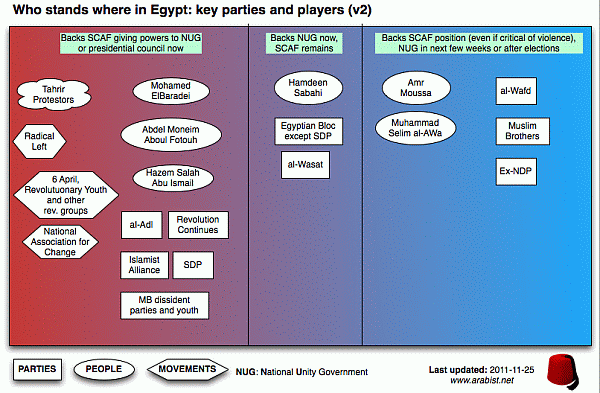
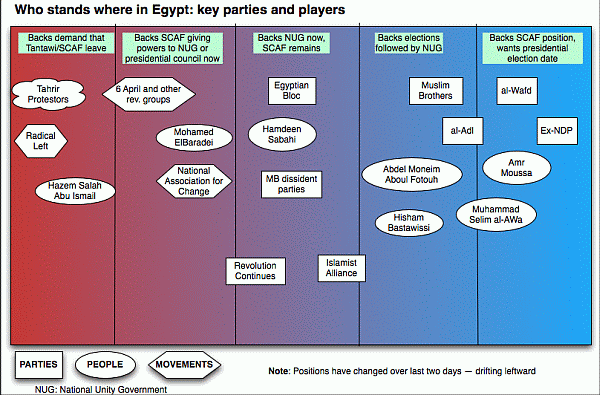
Issandr El Amrani has updated a chart he created a few days ago to show where the various political actors are now positioned in the current crisis as the rule of the Supreme Council of the Armed Forces (SCAF) is challenged by protesters in Tahrir Square.
Andrew Reynolds writes: Egypt, the largest and most important country to overthrow its government during the Arab Spring, is careening toward a disastrous parliamentary election that begins on Nov. 28 and could bring the country to the brink of civil war.
As protesters fill Tahrir Square once again and violence spreads throughout Cairo, the military government’s legitimacy is becoming even more tenuous. The announcement Tuesday of a “National Salvation Government” may stem the violence for now, but the coming vote will not lead to a stable democracy.
The election is likely to fail, not because of vote-stealing or violence, but because the rules cobbled together by Egypt’s military leaders virtually guarantee that the Parliament elected will not reflect the votes of the Egyptian people.
While advising civil society groups and political parties on election issues earlier this year in Cairo, I found that the voices of Egyptians who were at the forefront of the revolution were stifled during the secretive election-planning process.
On countless occasions, political parties went to the ruling military council to object to drafts of the electoral law and were brushed off with piecemeal changes. Civic groups concerned about the representation of women and minorities were not even given a seat at the table. And the United Nations, which played a major role in assisting Tunisia with its election, was denied access to election planners in Cairo.
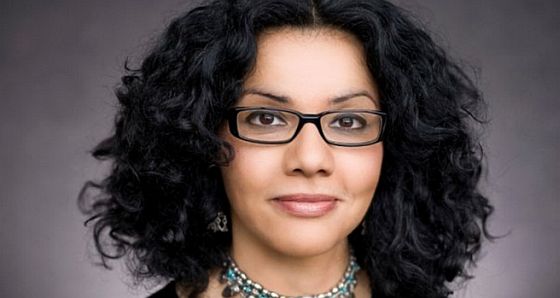
Mona Eltahawy, Egyptian-American journalist and columnist.
The Guardian reports: The US-based Egyptian journalist Mona Eltahawy has been released according to her personal twitter account after 12 hours in detention at the hands of Cairo security forces. An earlier tweet from the account @monaeltahawy said that she was sexually and physically assaulted while being held inside the interior ministry in Cairo, in the early hours of Thursday morning.
A US embassy representative in Cairo told the Guardian that the reports of her detention were “very concerning” and that “US embassy consulate officers are engaging Egyptian authorities”.
She also thanked supporters after #freemona began trending around the world on twitter.
In a series of tweets on Wednesday night, Eltahaway who is a columnist for various papers including the Toronto Star, the Jerusalem Report and Denmark’s Politiken, and has also written for the Guardian, described scenes in and around Tahrir Square including news that a relative of hers had been killed. She ended the message by damning the Supreme Council of the Armed Forces (Scaf) who have control over Egypt‘s transition.
The New York Times reports: Egyptian generals offered an unusual apology on Thursday for the killings of protesters in Tahrir Square, the iconic landmark of the country’s revolution, but rejected the demonstrators’ demands for an immediate end to military rule.
As violence around the square eased after five days of intense clashes, the military also insisted that parliamentary elections, scheduled for next Monday, would proceed as planned.
“We will not delay elections. This is the final word,” Gen. Mamdouh Shaheen, a member of the ruling military council told a news conference.
Maj. Gen. Mukhtar el-Mallah, another council member, told the news conference that the military would not relinquish power because to do so would be “a betrayal of the trust placed in our hands by the people.” Egyptians must focus on the elections, he said, not on street protests.
“We will not relinquish power because of a slogan-chanting crowd,” he said, according to The Associated Press, “Being in power is not a blessing. It is a curse. It’s a very heavy responsibility.”
On what had been the front line of the confrontation near the square, army troops in black helmets and visors replaced the police — reviled by many protesters — and a crane lowered cement barricades behind a line of coiled barbed wire to separate the protesters from the Interior Ministry building, near the library of the American University in Cairo.
“The Supreme Council of the Armed Forces presents its regrets and deep apologies for the deaths of martyrs from among Egypt’s loyal sons during the recent events in Tahrir Square,” two generals said in a statement on a Facebook page. “The council also offers its condolences to the families of the martyrs across Egypt.”
The message struck an apparently conciliatory tone as the ruling military commanders seek to defuse the crisis in time for the elections. But thousands of people remained in Tahrir Square, many demanding the ouster of Field Marshal Mohamed Hussein Tantawi, the de facto leader and a longtime colleague of the deposed former president, Hosni Mubarak.
The Guardian reports: Egyptian security forces are believed to be using a powerful incapacitating gas against civilian protesters in Tahrir Square following multiple cases of unconsciousness and epileptic-like convulsions among those exposed.
The Guardian has collected video footage as well as witness accounts from doctors and victims who have offered strong evidence that at least two other crowd control gases have been used on demonstrators in addition to CS gas.
Suspicion has fallen on two other agents: CN gas, which was the crowd control gas used by the US before CS was brought into use; and CR gas.
Issandr El Amrani has created a useful chart to show where the various political actors are positioned in the current crisis as the rule of the Supreme Council of the Armed Forces (SCAF) is challenged by protesters in Tahrir Square.
Amnesty International: Egypt’s military rulers have completely failed to live up to their promises to Egyptians to improve human rights and have instead been responsible for a catalogue of abuses which in some cases exceeds the record of Hosni Mubarak, Amnesty International said today in a new report.
In Broken Promises: Egypt’s Military Rulers Erode Human Rights [PDF], the organization documents a woeful performance on human rights by the Supreme Council of Armed Forces (SCAF) which assumed power after the fall of former President Hosni Mubarak in February.
The report’s release follows a bloody few days in Egypt that has left many dead and hundreds injured after army and security forces violently attempted to disperse anti-SCAF protesters from Cairo’s Tahrir square.
“By using military courts to try thousands of civilians, cracking down on peaceful protest and expanding the remit of Mubarak’s Emergency Law, the SCAF has continued the tradition of repressive rule which the January 25 demonstrators fought so hard to get rid of,” said Philip Luther, Amnesty International’s Middle East and North Africa Acting Director.
“Those who have challenged or criticized the military council – like demonstrators. journalists, bloggers, striking workers – have been ruthlessly suppressed, in an attempt at silencing their voices.
“The human rights balance sheet for SCAF shows that after nine months in charge of Egypt, the aims and aspirations of the January 25 revolution have been crushed. The brutal and heavy-handed response to protests in the last few days bears all the hallmarks of the Mubarak era.”
When the protestors fell and were carried to the motorcycles and ambulances ready to spirit them to makeshift clinics and hospitals, others were ready to take their place.
The fiery confrontation taking place in Egypt today is about pushing the Army out of power. It’s also about teaching the police once and for all that the unchecked brutality it has long considered its privilege will no longer stand.
One might have though that lesson had been learned already. But “nothing has changed since the revolution,” says Mohammed Mahfouz, a former police officer. “The Ministry of Interior doesn’t respect the law, doesn’t respect human rights, doesn’t respect the dignity of citizens.”
The police force, which collapsed during the uprising against former Egyptian president and dictator Hosni Mubarak last January, “feel they’re in a feud against society,” says Mahfouz. “They have a desire for revenge.”
Police and protesters have clashed more or less continuously for the last four days. The police feel “not that they are enforcing the law but it’s a battle for their survival,” says Ihab Youssef, a former high-ranking officer in the Ministry of Interior who left the force to found an NGO dedicated to improving relations between citizens and the police.
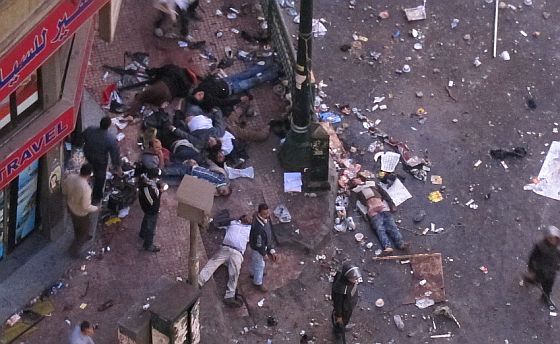
The police’s use of excessive force in clearing a small encampment in the square Saturday morning is what led thousands of indignant Egyptians to come out into the streets in protest. The brutality that followed, with policemen aiming tear-gas canisters and rubber bullets at protesters’ heads and piling bodies on the curb like so much garbage, triggered the most violent confrontation and intense political crisis Egypt has witnessed since Mubarak’s ouster.
Anthony Shadid writes: If the demonstrations that culminated in February were an uprising against President Hosni Mubarak, the revolt today is against his legacy.
“This is the real revolution,” said Mohammed Aitman, helping at a first-aid clinic in a turbulent, roiling and, at times, ecstatic Tahrir Square.
The vestiges of Mr. Mubarak’s order —the military, the Muslim Brotherhood and other Islamists, or fragmented liberals and leftists — seem ill prepared to navigate the transition from his rule. It is an altogether more difficult reckoning that has echoed in the Arab revolts in Syria, Libya, Yemen and Bahrain.
The strategy that for so long successfully repressed public anger and sapped people’s will to rebel was no longer working. As a result, it is not at all clear what path Egypt will find to go forward. The authorities hoped that the protesters would exhaust themselves and go home, but they have not. The military tried violence, but it has not worked. It has tried limited concessions, but that did not work. And it has blamed foreigners for inciting the violence, and that did not work.
This may foreshadow a dangerous and prolonged period of unrest in Egypt, as the spectacular show of discontent on Tuesday in Tahrir Square demonstrates that there is no existing institution to channel their frustrations.
The military appears largely oblivious to the scale of the protests, and Islamist parties are single-mindedly pursuing their political goals as they predict a healthy showing in the coming elections. No leader, of any ideological bent, has emerged to capture the full array of discontent once again spilling out onto the streets.
“Today, it is a failure of the political class,” said Ibrahim el-Houdaiby, a political analyst at Dar al-Hikma, a research center in Cairo. “People feel betrayed.”
Al-Masry Al-Youm reports: The Euromediterranean Human Rights Network (EMHRN) on Monday condemned the targeting of peaceful protesters in Cairo with internationally banned gases. The Geneva-based group said it was rallying an international condemnation against these violations. The EMHRN strongly condemned the targeting of peaceful protestors by the police and the armed forces as well as the use of excessive violence against them, leading to dozens of deaths and hundreds of injuries.
In a statement on Monday, the EMHRN said the use of tear gas, live ammunition and snipers to disperse a peaceful sit-in was “unacceptable and fully against all international norms and conventions.” EMHRN Regional Director Amany al-Sinwar said that testimonies by several Egyptian activists described the use of an internationally banned gas known as CR gas by security forces and the armed forces. She added that the EMHRN received similar testimonies of vomiting, paralysis and temporary loss of vision after exposure to the gas. Sinwar added that the EMHRN documented the use of this gas against protestors for the first time since the escalation of the peaceful uprising on 25 January.
The EMHRN denounced this “serious violation against civilians by using internationally banned gas, which is classified as a being a carcinogenic and of being deadly when exposed to it for long periods of time.”
The 1993 Paris Convention on chemical warfare criminalized the use of such gases. The 1907 Hague Convention also prohibited the use of toxic warfare that results in torture, while the 1925 Geneva Protocol prohibits the use of asphyxiating and poisonous gases.
The EMHRN called on the leadership of Egypt’s police force and that of the Egyptian army to “immediately stop targeting civilians, and respect their right to peaceful sit-ins, while punishing those responsible for the crimes committed against them.”
The New York Times reports: Huge crowds of protesters filled Tahrir Square in central Cairo on Tuesday and battled with the police in nearby streets for the fourth straight day, braving an increasingly lethal crackdown to demand an end to military rule.
Each day the crowds have grown; on Tuesday, a day after the civilian cabinet offered its resignation to Egypt’s transitional military government, the protesters massed at the epicenter of Egyptian resistance — first to the former president, Hosni Mubarak, ousted in February and now to the military commanders who replaced him — appeared to number well over 100,000.
Such was the nervousness about the test of wills that trading was briefly suspended on the Cairo stock exchange after its main index slumped for a third successive day, deepening the sense of crisis that has built since street fighting began on Saturday. The first parliamentary elections since Mr. Mubarak was forced from power are scheduled to begin next week, and there is widespread concern that they will be postponed.
Intense skirmishes continued for a fourth day on the main avenue leading to the Interior Ministry. For the protesters, the outburst still seemed to represent a leaderless expression of rage.
Issandr El Amrani writes: The situation in Alexandria appears to have really escalated. This is no longer just about Tahrir. The loss of Egyptian Current Party (offshoot of Muslim Brotherhood) member Bahei Eddin al-Senoussi, a major activist in Alexandria, has galvanized people there. Follow Rawya Ragei’s reporting for al-Jazeera English on this.
The resignation of Essam Sharaf’s cabinet does not seem to have moved the protest movement. The SCAF is said to be negotiating its replacement with political forces, but here they must be treading carefully: if they join in a national unity cabinet, can they be assured that the protestors in Tahrir will accept? They now risk discrediting themselves in doing so. They have to be sure they can sell it to the public, and that means a hard sell. Meanwhile, the best presidential candidates (ElBaradei and Aboul Fotouh) are scathing about SCAF but offer different ways to get to a national unity government. And the most populist one, Hazem Saleh Abu Ismail, has called for more protestors to come down onto the streets. But he still wants elections, and his criticism of SCAF is partly put as a threat.
The Washington Post reports: Three Americans studying at the American University in Cairo have been arrested and accused of participating in the violent demonstrations that are posing the greatest threat to Egypt’s military leaders since the ouster of President Hosni Mubarak last February.
As angry crowds gathered in the capital’s Tahrir Square for a fourth consecutive day, Egypt’s military leaders held a meeting with political leaders in hopes of diffusing the deepening political crisis.
But major figures refused to attend, including Mohamed ElBaradei, the Nobel Peace Prize winner who has emerged as a possibility to head a national unity government, and Shady Ghazali Harb, a leading member of the Revolutionary Youth Coalition, and a close ally of ElBaradei’s.
“I refused to go because of the violence still going on in Tahrir Square,” Harb said. “We can not negotiate with anyone still doing such violence. The legitimacy comes from the square, not the military council.”
Al-Masry Al-Youm reports: Egyptian diplomats on Tuesday signed a statement urging the ruling Supreme Council of the Armed Forces (SCAF) to pledge to conduct presidential elections and hand over power to civilians by mid-2012 at the latest.
The statement, which was signed by 245 diplomats, called on the governing military council to “stop systematic assaults by security on protesters.”
Among those who signed the statement were ambassadors and advisers at the Foreign Ministry, including Ambassor to Russia Alaa al-Hadidy and ministry spokesperson Amr Roshdy.
Al-Masry Al-Youm obtained a copy of the statement, which emphasizes the SCAF’s responsibility to preserve security and safeguard the right of peaceful protest, as is outlined in international charters and agreements.
An anonymous #OWS activist urges President Obama to break his silence on the bloodshed in Cairo where 24 people have already been killed. But let’s not forget that this is a man who in 2006 supported the carpet-bombing of Beirut, in 2008 remained mute while Israelis slaughtered Palestinians in Gaza, and in 2009 was slow to condemn the Iranian government as it crushed the Green Revolution. Obama is consistent in this respect: he displays an unswerving loyalty to power.
President Obama, where are you? Are you not watching the same images that the world is watching of the massacres in Tahrir? Are you too busy preparing for Thanksgiving to take a minute to make a strong statement about what’s happening in a country in which your government has invested so much money and support?
Are you not outraged at the brutal suppression of pro-democracy protesters by the military junta in Egypt? If so, why have you offered no meaningful condemnation of the attempt to crush a revolution that has so inspired millions of Americans? After all, their encouragement to Occupy Wall Street might actually wind up saving your presidency.
During the fateful 18 days in January and February when Egyptians took to the streets by the millions to topple Hosni Mubarak, you remained largely silent, refusing to call directly for democracy until it was clear that young Egyptians would not be denied their wish to be free of his three-decade-long rule.
In the months since then, as thousands of Egyptians have been attacked, imprisoned, sexually assaulted and murdered by their government, the United States has not merely remained silent, but has continued to provide crucial diplomatic, economic and military aid to the regime responsible for these crimes.
Now that the facade of a democratic transition has been ripped away and Egyptians are once again battling the military government in Tahrir Square for the future of the country, your administration remains as quiet as it was in the early days of the revolution. Such silence is both morally indefensible, and politically and strategically disastrous for the US. The march for freedom in Egypt cannot be stopped, and when Egyptians finally rid themselves of the military government and establish a democratic system, the US will have few friends in Egypt, or the Arab world more broadly, if it is seen as having supported the military rather than the people at this pivotal moment.
The tear gas being fired at demonstrators in Cairo is manufactured by the US company, Combined Systems.
Al-Masry Al-Youm reports: Presidential hopefuls Abdel Moneim Abouel Fotouh and Mohamed ElBaradei are speaking to Dream TV, a private satellite channel, criticizing both the Supreme Council of the Armed Forces (SCAF) and the government for mishandling the situation in Tahrir.
ElBaradei said the prime responsibility for the situation in the country is the SCAF, which he says has admitted it cannot run the country. ElBaradei asked who is responsible for starting this barbaric use of force that left over 1000 injured, 10 dead and 10 more blind; he answered: the Interior Ministry.
Abouel Fotouh said that, once again, protesters are being subjected to the same oppressive tactics used during the era of ex-president Hosni Mubarak. He added that until today, the blood of Egyptians is being shed only because the pure youth are trying to save their homeland. He said that the youth in Tahrir now are the same revolutionaries we all know.
Anjali Kamat, an independent journalist and correspondent for Democracy Now! posted a photo of “8 unmoving bodies” in Tahrir. There have been multiple reports of Egyptian security services firing live rounds during the protest.
A podcast from The Arabist puts today and yesterday’s violence in context.
Egyptian blogger, Hossam El-Hamalawy interviewed by Al Jazeera:
This website or its third-party tools use cookies, which are necessary to its functioning. By closing this banner, you agree to the use of cookies.







 The tear gas being fired at demonstrators in Cairo is manufactured by the US company,