Gideon Levy writes: One day not long from now we will wake up to a different kind of country, the country that’s now in the making. It won’t look like the country we know, which already has its share of flaws, distortions and ills. And when we become aware of this, it will be too late. At that point, the old Israel will be described in glowing terms, a model of democracy and justice, compared to the new version that is taking shape as we close our eyes to it, day after day, new law after law.
The way of life in the new Israel where we will live and die won’t remind us in the least of the country we’re used to. Even this article won’t be publishable. Only proper opinions will be put into print, the ones approved by the new government-sponsored journalists’ association, whose people will sit in every newsroom so there is no divergence from the accepted chorus of opinion.
Laws and regulations (clearly they will be passed as “emergency” regulations ) will bar publication of anything that could, in the eyes of the authorities, harm the state. A new law will bar defamation of the state, and the newspaper you will hold in your hands will be different. It will only report good news.
Radio and television broadcasts won’t be what you’re familiar with either. No media outlet will be able to go beyond the bounds of the law due to the draconian penalties for running afoul of them. The word “occupation” will be illegal, as will the expression “Palestinian state.” Treasonous journalists will be pilloried or arrested, or at least fired. That day is not long in coming.
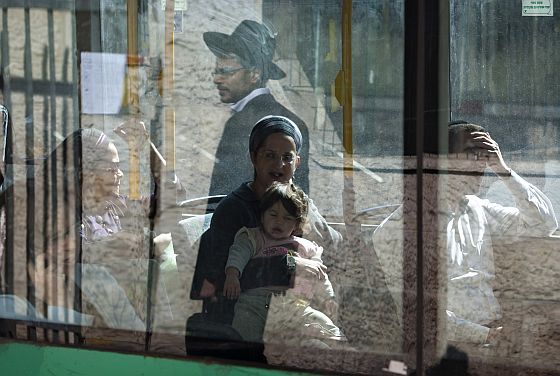
In the not too distant future, the urban landscape will look different. What is happening today in Jerusalem will play itself out in the whole country tomorrow, when the likeness of women will be banished from public view. Today Jerusalem, tomorrow the whole country. Separate buses and streets for men and women. Radio and television will only broadcast men singing. At some point, women will be required to cover their heads. Then it will be the men’s turn. They will be barred from appearing clean-shaven or without a head covering. That day is not long in coming.
The cities will be shut down on Shabbat. Not a store or movie theater will be open. Then will come the ban on driving on Shabbat. Non-kosher restaurants will be illegal. Mezuzahs will be required on the doorpost of every room in every home. Couples not registered with the rabbinate will not be allowed to live together, and couples in which only one party is Jewish will be deported immediately. Unmarried couples will be barred from walking arm-in-arm in public.
Once a month all the country’s schoolchildren will make solidarity visits to West Bank settlements. Every lesson will begin with the singing of the national anthem and a salute to the flag. Those who don’t serve in the army will lose their citizenship and be deported.
And the Jewish state will have a Jewish Knesset. First Arabs will be barred from running for parliament in their own parties. Then they won’t be allowed to be elected at all. Until then, MKs who at the beginning of every Knesset session don’t sing the national anthem’s words about the “yearning of the Jewish soul” will be permanently removed.
Arabs will be denied the right to a university education, with the exception of a symbolic quota approved by the Shin Bet security service. It will be illegal to rent to Arabs, other than in their own towns and villages, and the Arabic language will be banned. The poetry of Arab poet Mahmoud Darwish and his Jewish compatriots Aharon Shabtai and Yitzhak Laor will also be banned. Amos Oz, A.B. Yehoshua and David Grossman will have to decide. They, and all the country’s citizens, will be required to declare themselves Zionists to get published.
The West Bank will be annexed, but the Palestinians living there will not be. Left-wing organizations will be made illegal and their leaders arrested. The government will publish a blacklist of those with offensive views who will not be allowed to leave the country or speak to the foreign media. Only someone who murders Jews will be deemed a real murderer, and the statute books will be divided into two parts, one for Jews and one for non-Jews. The death penalty will only apply to Arabs.
Special legislation will give settlers the right to take control of any land in the West Bank, and military censorship will ban any news item that could “harm the strength of the Israel Defense Forces.” The Supreme Court will only serve as a court of appeals and will not consider direct petitions on civil rights violations. Supreme Court justices will be selected by the Knesset and slots on the bench will be reserved for West Bank settlers, rabbis and members of the party in power. Only religious justices will be able to serve as chief justice. Rabbis will have legal immunity similar to what MKs have. Any declaration of war or a peace agreement will need the approval of the Council of Torah Sages.
Actually, you don’t need much imagination to come up with all this. The future is now. The revolution is in progress; just wait for what’s to come.
Category Archives: Israel
Israeli ministers accused of trying to muzzle critics with funding curbs
The Guardian reports: An Israeli cabinet committee has voted to pass legislation backed by the prime minister, Binyamin Netanyahu, that would cut tens of millions of pounds in foreign funding to human rights organisations.
The ministerial committee for legislation passed two bills, one of which limits all funding for non-governmental organisations from foreign bodies, including the United Nations, to 20,000 shekels (£3,300) a year. The other seeks to tax all contributions to NGOs by foreign states. Those who support the bills say many NGOs are political groups working under the guise of human rights to “delegitimise Israel”.
Last week, Matthew Gould, Britain’s ambassador to Israel, added his voice to concerns from international diplomats. Gould met the bill’s sponsor, Likud minister Ophir Akunis, to warn him that the passage of his legislation would reflect very badly on Israel in the international community.
On Sunday, embassy sources in Tel Aviv confirmed they would be monitoring the bill’s progress carefully.
In 2010, the British embassy donated £300,000 to human rights organisations in Israel.
The EU’s ambassador to Israel, Andrew Standley, is also reported to have contacted Netanyahu’s national security adviser, Yaakov Amidror, last Thursday to advise him that approving the bill would threaten Israel’s standing as a democratic state.
Egypt detains Sinai leader accused of Eilat attacks — no Gaza connection
Ma’an News Agency reports: Egyptian authorities detained the leader of a militant Islamist movement in the Sinai peninsula on Sunday morning, security sources told Ma’an.
Muhammad Eid Musleh Hamad, also known as Muhammad al-Teehi, is accused of planning the deadly attacks in Israeli border city Eilat in August, as well as a number of attacks in the Egyptian peninsula, a Ma’an correspondent reported.
Al-Teehi was detained in northern Sinai city El-Arish after a joint police and army operation, Egyptian security officials said.
He was found hiding in a tourist chalet in the town, and surrendered without resistance, before being moved to Cairo to face charges, they added.
Egyptian authorities said al-Teehi is leader of the “Jihadists and Takfiris” movement, founded after the January revolution which ousted former leader Hosni Mubarak.
Authorities say he masterminded attacks on police stations in the city and has topped a government “wanted” list, official news agency MENA said.
A Ma’an correspondent in El-Arish said that Egyptian authorities had also accused Hamad of being involved in planning the Aug. 18 assault on number of Israeli vehicles near Eilat, which killed eight Israelis.
Israel said it shot dead six gunmen and blamed the Gaza-based Popular Resistance Committees, who denied any involvement.
Within hours of the attack, Israeli forces struck back at targets in southern Gaza, leading to four days of cross border violence that killed 15 Palestinians, and wounded more than 50.
In September, Israeli daily Yedioth Ahronoth reported that an unreleased army investigation revealed the Eilat attacks were carried out by a group of Egyptians operating in Sinai.
Egyptian security told Ma’an al-Teehi’s “Jihadists and Takfiris” movement follows Al-Qaeda intellectually and demands an end to any military or foreign presence in the Sinai peninsula.
Minority of Americans and less than a third of Democrats view Israel as an ally
A CBS News poll on Americans’ views on foreign policy finds: Forty-one percent of Americans call Israel an ally, including 58 percent of Republicans and 29 percent of Democrats. Thirty-four percent describe the nation as friendly but not an ally. Seven percent describe it as unfriendly, and five percent call it an enemy.
While thirty-eight percent say America gives the right amount of support to Israel, nearly one in three says the U.S. supports Israel too much. Seventeen percent – including 26 percent of Republicans – say the U.S. supports Israel too little.
Forty-two percent of Americans support the establishment of a Palestinian state that is recognized by the United Nations, while 34 percent are opposed to it; 22 percent aren’t sure.
Fact checkin’ Israeli apartheid
How to set the Middle East aflame
Karim Sadjadpour writes: The International Atomic Energy Agency’s new report [PDF] on Iran’s nuclear program asserts that Tehran “has carried out … activities that are relevant to the development of a nuclear explosive device” and that the agency sees “strong indicators of possible weapon development.” In other words, the IAEA has finally reached the same conclusions that Israel first reached in 1995. So should we really be worried about an Israeli strike now?
Historically, there has been an inverse correlation between Israeli saber rattling and military action, but senior Obama administration officials consistently confirm in private meetings that they take “very seriously” the prospect of an Israeli attack on Iran’s nuclear sites.
Think of it like this: In one way — and one way only — the potential of an Israeli military strike on Iran is akin to a Herman Cain presidency. Its likelihood is slim, but the potential consequences are too dramatic to ignore.
Although the precise strategy Israel would employ to carry out such an operation is debatable, its objective — to avert a nuclear-armed Tehran — is crystal clear. What’s less clear is how Tehran would react and with what aim. Would the Iranian regime be strengthened or weakened internally? Would it respond with fury or restraint?
To probe these questions, the Brookings Institution in late 2009 assembled two dozen former senior U.S. government officials and Middle East specialists for a daylong simulation of the political and military consequences [PDF] that would result from an Israeli military strike against Iran’s nuclear program.
The simulation was conducted as a three-move game, with Israeli, U.S., and Iranian teams, each representing their government’s top national security officials. The members of the U.S. team had all served in senior positions in the U.S. government; the Israeli team was composed of a half-dozen experts on Israel, including former senior U.S. officials with close ties to senior Israeli decision-makers; the Iranian team was composed of a half-dozen specialists, including people who had either lived in Tehran or served as U.S. officials with responsibility for Iran.
I had the unenviable task of trying to channel Iran’s supreme leader, Ayatollah Ali Khamenei.
The simulation was premised on a surprise Israeli military strike — absent U.S. knowledge or consent — on Iran’s nuclear facilities, motivated by the breakdown of nuclear negotiations, the ineffectiveness of sanctions, and newfound intelligence of secret Iranian weapons activity. In other words, pretty close to what we have before us now.
Arguably, the strongest argument against an attack on Iran is a question of simple mathematics. According to Israeli estimates, a strike would, at best, set back Tehran’s nuclear clock by just two to three years — but it would likely resuscitate the fortunes of a deeply unpopular, ideologically bankrupt Iranian regime, prolonging its shelf life by another decade or generation. As one Iranian democracy activist once told me, Israel and the United States should “focus less on the gun and more on the bandit trying to obtain the gun.” Bombing Iran, he said, would strengthen the bandit, not weaken it — and only increase his desire to get the gun.
Iran’s nuclear sites are purposely built close to population centers, but in the simulation, the Israeli strike managed to cause only a small number of civilian casualties. Nonetheless, one of my immediate reactions was to order Iranian state television to show graphic images of the “hundreds of innocent martyrs” — focusing on the women and children — in order to incite outrage against Israel and attempt to convert Iranian nationalism into solidarity with the regime.
To further that goal, we then invited the symbolic leadership of the opposition — Mir Hossein Mousavi and Mehdi Karroubi (both of whom are now under house arrest), as well as former President Mohammad Khatami — onto state television to furiously condemn Israel and pledge allegiance to the government. Instead of widening Iran’s deep internal fractures — both between political elites and between the people and the regime — the Israeli military strike helped repair them.
I asked a longtime aide to Karroubi about the plausibility of the above scenario. He said that an Israeli strike on Iran would be “10 times worse” — in terms of eliciting popular anger — than a U.S. strike and agreed that it would likely bring recognized opposition figures in concert with the government, strengthening the state’s capacity to respond.
And respond we did. I went into the exercise believing that the Iranian regime’s response to an Israeli military strike — despite many predictions otherwise — would be relatively subdued, given the regime’s fears of inviting massive reprisals. The opposite turned out to be true. Once our nuclear sites were effectively destroyed, we calculated that we had no choice but to escalate and retaliate in order to save face and project power to our own population and neighbors, deter future attacks, and inflict a heavy political cost on Israel.
Nuclear Israel revisited
Joseph Massad writes: How many times must this story be retold? It is common knowledge in the United States, in Europe, in the Arab World, indeed in the entire world. The international press has been reporting on it since the late 1960s. The historical details of the story are also well known. In 1955, President Dwight Eisenhower gave Israel its first small nuclear reactor at Nahal Sorek; in 1964, the French built for Israel its much larger and major Dimona nuclear reactor in the Naqab (Negev) Desert; in 1965, Israel stole 200 pounds of weapons-grade uranium from the United States through its spies at the Nuclear Materials and Equipment Corporation company in Pennsylvania; in 1968, Israel hijacked a Liberian ship in international waters and stole its 200-ton shipment of yellowcake. Israel has possessed nuclear bombs since the early 1970s. Despite official US denials, Golda Meir, the fourth prime minister of Israel, reportedly prepared to launch 13 nuclear bombs on Syria and Egypt in 1973 and was stopped short of committing this genocidal act when Henry Kissinger gave Israel the most massive weapons airlift in history at the time to reverse the course of the 1973 war (as Time Magazine reported the story). Israel has had an ongoing nuclear weapons collaboration with the South African Apartheid regime for decades, which only ended with the collapse of the regime in 1994.
Since then, experts have estimated that Israel has upwards of 400 nuclear devices, including thermonuclear weapons with megaton range, as well as neutron bombs, tactical nuclear weapons, and suitcase nukes. It also has the missile delivery systems to launch them with a reach of 11,500km (which can reach beyond Iran). Israel also has submarines that are capable of launching nuclear attacks as well as jet fighters that can deliver Israel’s nuclear cargo.
Israel has diligently prevented its neighbours from even acquiring nuclear reactors for peaceful purposes. It violated international law by bombing the Iraqi French-built Osirak nuclear reactor still under construction in 1981 in an unprovoked raid even though the reactor was going to be used, according to the French and Iraqi governments, for peaceful scientific purposes. Israel also bombed what intelligence reports allege was a North Korean nuclear reactor under construction in Syria in 2007. Israel’s Mossad has also been linked to the assassination of numerous Egyptian, Iraqi, and Iranian nuclear scientists over the decades. Israel continues to refuse to join the Nuclear Non-Proliferation Treaty and refuses to allow members of the International Atomic Energy Commission to inspect its Dimona reactor.
Israel, a predatory and aggressive country that has consistently launched wars on all its neighbours since its establishment, expelled hundreds of thousands of people, created millions of Palestinian, Lebanese, and Egyptian refugees, murdered tens of thousands of civilians and used internationally-banned weapons (from napalm to phosphorous bombs, to name the most notorious cases), continues to occupy the Palestinian territories and the Palestinian people in violation of international law, is governed by a foundational anti-Arab and anti-Muslim racist state ideology to which all its leaders, governing structures, and institutions adhere, as does its popular and political culture and a variety of its laws. Indeed, Israel not only consistently launches wars against its neighbours but also urges world powers to invade these neighbours as well, and in the meanwhile sponsors anti-Arab and anti-Muslim racist campaigns of hatred in the United States and across Europe in addition to integrating such racism in its school and university curricula and much of its cultural production.
Young U.S. Jews aim Occupy movement at Birthright Israel
Haaretz reports: As the various “occupy” movements spread across the United States, headed by the massive Occupy Wall Street events, a group of young Jewish Americans is taking the notion of the “99%” against the ruling “1%” to debunk what they see as the hypocritical U.S. Jewish leadership.
In a mission statement titled “Occupy the Occupiers: A Jewish Call to Action,” the Young, Jewish, and Proud (YJP), described as the youth wing of the left-leaning Jewish Voice for Peace movement, called out to young Jews to “stand up to the 1% in our own community, the powerful institutions that support Israel’s corporate-backed military control of the Palestinian people and act as the gatekeepers for our community.”
In one event meant to demonstrate the kind of grass-roots dissent shown in other “occupy” events, YJP members disrupted a New York event sponsored by Birthright Israel Alumni Community, using the now famous “human microphone” to interrupt a speech by venture capitalist and author Steven Pease.
Speaking of the incident to the YJP website, one participant, Liza Behrendt, said the event was meant to protest the Birthright program – in which Jewish youths are given a tour of Israel.
“Birthright is a symptom of a larger structural problem in the Jewish institutional world in which our version of the 1%, a handful of wealthy donors including people like the Schustermans or Sheldon Adelson, is able to dictate the social and political agenda of the 99%. That’s because Jewish institutions are so dependent on the 1% for funds,” Behrendt said.
Behrendt criticized Birthright as “free propaganda trips for predominantly middle and upper class American Jews while urgent needs in the United States and Israel go unmet.”
“At the same time, within the dominant Jewish institutions, like Hillel, critical thinking about Israel is not only discouraged but actively suppressed,” she added.
Another participant, Carolyn Klaasen, quoted on the movement’s website as referring to the event, said that the recent “occupy” movement made her feel that “such actions are far more in line with Jewish tradition than this event, which lifted up as a model of ‘success’ people like illegal settlement builder Lev Leviev who profit from exploitation of others.”
“That is part of the problem we’re protesting in the Occupy movement,” Klaasen added.
Israel may lack capability for effective strike on Iran nuclear facilities
Bloomberg reports: Concern that a new report on Iran’s nuclear program might spur an Israeli military strike ignores a central factor: Experts say the odds such an assault could succeed are slim.
“The Israelis actually have limited means of attacking Iran’s nuclear program,” said Richard Russell, a professor at the U.S. National Defense University’s Near East South Asia Center for Strategic Studies in Washington and a consultant to the U.S. command for the region. “This is a very, very difficult problem for the Israelis, and it’s getting more and more acute.”
The United Nations’ International Atomic Energy Agency yesterday reported on Iran’s efforts to develop a bomb small enough to put on a missile with enough range to hit Israel. Iran’s nuclear weapons facilities, outlined anew in the report, are dispersed over a broad area 1,000 miles (1,609 kilometers) and multiple countries to the east of Tel Aviv. Some are underground.
Iran has repeatedly asserted that its nuclear program is for peaceful civilian goals, such as power generation.
“The Israeli Air Force is capable of launching an attack on Iran and causing damage,” said Yiftah Shapir, director of the Military Balance Project at Tel Aviv University’s Institute for National Security Studies. “It is far from capable of disabling the Iran nuclear program. That would take at least a month of sustained bombing. That’s not something Israel can carry out alone.”
Israeli peace activist’s home vandalised with death threats and swastikas
The Guardian reports: The home of a prominent Israeli peace activist has been vandalised, with death threats and swastikas spray-painted on walls and a nearby vehicle, amid alarm among human rights groups about increasingly hostile and violent actions against them.
Police confirmed they were investigating the attack on the Jerusalem home of Hagit Ofran, who works for Peace Now, an Israeli organisation that monitors settlement activity in the West Bank and East Jerusalem.
The graffiti included the words “Hagit Ofran ‚Ä” zal [of blessed memory]”; “Rabin is waiting for you”, a reference to the assassinated Israeli prime minister Yitzhak Rabin; and “price tag”, the signature of extremist settlers who carry out operations in revenge for moves to demolish unauthorised West Bank outposts. The names of two recently dismantled outposts were also sprayed on walls.
It is the second such attack on Ofran’s home in two months. On Sunday, Peace Now’s offices were evacuated after a telephone call warned of an imminent bomb attack. “The building will explode in five minutes,” the caller said. Staff found the words “price tag” had been sprayed on the building.
“We are looking at who could be behind this action,” police spokesman Micky Rosenfeld said on Tuesday. Extremist settlers were among the suspects, he added.
Ofran said the perpetrators were trying to intimidate activists. “The discourse in Israel has become truly dangerous,” she told Haaretz newspaper.
In a statement, Peace Now said: “The responsibility for price tag attacks is [prime minister Binyamin] Netanyahu’s. The incitement and the harsh words of the coalition members in favour of illegal outposts and against the justice system and leftwing organisations is seeping into the ground and giving support to the price tag vandals.”
The attack came as Netanyahu announced he was supporting two parliamentary bills to curtail the foreign funding of Israeli human rights organisations. Groups targeted by the bills have said the legislative move is an attempt to silence them and restrict their work.
A human rights worker who asked not to be named said: “There is a public atmosphere of trying to stop human rights activity. You see it in the Knesset [Israeli parliament] in these bills and statements from politicians who claim these organisations are actually helping terror.”
Up close and personal: Getting lied to by Bibi
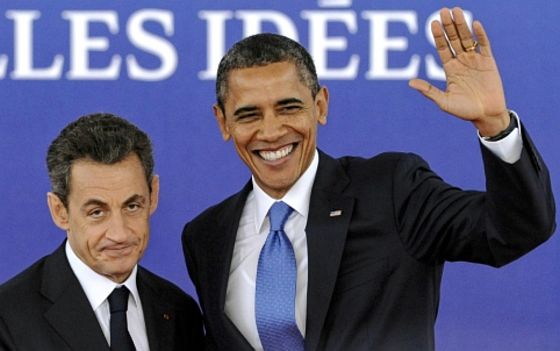
Larry Derfner writes: So now Sarkozy says Netanyahu is a “liar” and that he “can’t stand” him, and Obama moans that that’s nothing, he has “to deal with him every day.” Join the club, fellas. Tony Blair and his team considered Netanyahu an “armor-plated bullshitter,” according to his aide Alistair Campbell; Bill Clinton couldn’t stand him, and if it hadn’t been for the Holocaust, imagine what Angela Merkel would be saying about Netanyahu now.
Our Bibi is a piece of work. It’s not his right-wing politics; Sharon was right-wing, certainly in his first term, Shamir was right-wing, Begin was right-wing, and foreign leaders didn’t talk about any of them like they talk about Netanyahu. Some said Begin was stubborn and argumentative, Shamir was a brick wall (I don’t remember anybody badrapping Sharon personally) – but I don’t recall any world leader complaining that they were intolerable, that they were liars like they do about Netanyahu. And with the exception of Ehud Barak –a different sort of piece of work, even more arrogant than Netanyahu and a physically violent bully, but much less of a liar – no Israeli prime minister ever alienated his political allies at home like Netanyahu did in his first term. (Though it must be said that he’s gotten over that problem in his current term.)
What is it about this guy? Besides the lying, what is it that makes foreign statesmen, not to mention his opposition at home, find him intolerable – “revolting,” as I put it in an August 2005 Jerusalem Post column that looked at this question. To help answer it, I told a personal anecdote: [Continue reading…]
Gender apartheid on the rise in Israel

Women required to sit out of men's sight, at the back of the bus.
The Associated Press reports: Posters depicting women have become rare in the streets of Israel’s capital. In some areas women have been shunted onto separate sidewalks, and buses and health clinics have been gender-segregated. The military has considered reassigning some female combat soldiers because religious men don’t want to serve with them.
This is the new reality in parts of 21st-century Israel, where ultra-Orthodox rabbis are trying to contain the encroachment of secular values on their cloistered society through a fierce backlash against the mixing of the sexes in public.
On the surface, Israel’s gender equality bona fides seem strong, with the late Golda Meir as a former prime minister, Tzipi Livni as the current opposition leader, and its women soldiers famed around the world.
Reality is not so shiny. The World Economic Forum recently released an unfavorable image of women’s earning power in Israel, and in 2009, the last year for which data are available, Israeli women earned two-thirds what men did.
The newly enforced separation is felt most strongly in Jerusalem, where ultra-Orthodox Jews are growing in numbers and strength. The phenomenon is starting to be seen elsewhere, though in the Tel Aviv region, Israel’s largest metropolis, secular Jews are the vast majority, and life there resembles most Western cities.
Still, secular Jews there and elsewhere in Israel worry that their lifestyles could be targeted, too, because the ultra-Orthodox population, while still relatively small, is growing significantly. Their high birthrate of about seven children per family is forecast to send their proportion of the population, now estimated at 9 percent, to 15 percent by 2025.
The flotilla and the siege of Gaza
Sarkozy tells truth about Netanyahu but press decide it’s too sensitive to report

Sarkozy tells Obama, Netanyahu's a liar. Journalists blush.
“Who the fuck does he think he is? Who’s the fucking superpower here?” Bill Clinton said in exasperation about Benjamin Netanyahu after one of the Israeli prime minister’s characteristic displays of arrogance in 1996.
Now we learn that last Thursday at the G20 summit in Cannes, France’s President Nicolas Sarkozy privately described Netanyahu as a “liar” and said “I cannot stand him,” to which President Obama gave the fairly tepid response: “You’re fed up with him, but I have to deal with him every day!”
The exchange was picked up on an open microphone but the press in Cannes who overheard the presidential tête-à-tête agreed that it was too sensitive to report.
Are these journalists or presidential courtiers?
The surprising lack of coverage may be explained by a report alleging that journalists present at the event were requested to sign an agreement to keep mum on the embarrassing comments. A Reuters reporter was among the journalists present and can confirm the veracity of the comments.
A member of the media confirmed Monday that “there were discussions between journalists and they agreed not to publish the comments due to the sensitivity of the issue.”
He added that while it was annoying to have to refrain from publishing the information, the journalists are subject to precise rules of conduct.
Like when they are supposed to curtsy, make full bows, or discreetly look the other way?
Even now, now that the Sarkozy-Obama indiscretion has leaked out, there are several variations of translation of what Obama said.
“You may be sick of him, but me, I have to deal with him every day.” “You’ve had enough of him? I have to deal with him every day!”
These are different ways of translating “Tu en as marre de lui, mais moi, je dois traiter avec lui tous les jours !” That’s how Obama’s words were rendered on ArretSurImages.net.
So even though the press has broken its four day silence, instead of reporting the exact wording — words surely spoken in English — the press is merely repeating what has been reported on the French website — and even though the contents of that report have been confirmed by Reuters.
Watch out for the word sensitivity in any news report. Chances are, what it really refers to is complicity.
Why are we being readied for war with Iran?
If you want to start a war with Iran, apparently the lesson from Iraq is not that war is a dumb idea; it’s that the war charge cannot be led by the U.S. administration or a ragtag band of expatriates.
The pretext for war needs to be presented by an international body that is perceived as independent and objective. So, if you want to start a war with Iran, who could present a more compelling justification for war than the International Atomic Energy Agency?
But can the U.S. government rely on the IAEA to fulfill its covertly designated role?
Now that the irritatingly independent Mohamed ElBaradei is out of the way, we know — thanks to Wikileaks — that Washington is much more comfortable with the agency’s new director general, Yukiya Amano, who is “solidly in the U.S. court on every key strategic decision, from high-level personnel appointments to the handling of Iran’s alleged nuclear weapons program.”
The Obama administration, as well as being able to rely on the IAEA to align itself with U.S. goals, can of course always rely on the New York Times to fulfill its role as an informal ministry of information. Just as Izvestia functioned as the “delivered message” of the Soviet government, reporters like David Sanger gladly parrot their administration sources rather than question what they are being told.
[T]he Obama administration, acutely aware of how what happened in Iraq undercut American credibility, is deliberately taking a back seat, eager to make the conclusions entirely the I.A.E.A.’s, even as it continues to press for more international sanctions against Iran. When the director of the agency, Yukia Amano, came to the White House 11 days ago to meet top officials of the National Security Council about the coming report, the administration declined to even confirm he had ever walked into the building.
The final touches are still being put on the report and its critical annex, where some of the investigative details will be laid out, which may be released as early as Wednesday. But already Russia and China have sent a diplomatic protest to Mr. Amano, urging him to not to make details of the evidence public.
“Russia and China are of the opinion that such kind of report will only drive Iran into a corner,” they wrote in the note, which was obtained by The New York Times and is a rare instance of those countries commenting jointly.
Obtained by the New York Times — but from who?
Knowing how a piece of information enters the public domain can be as important as the information itself. If these reporters gave some indication about where the note came from, they would thereby provide a clearer indication about whose agenda is being served by its revelation.
Sources do of course often need to be concealed and over at Arms Control Wonk, Jeffrey Lewis obliges “an observer” by allowing him to remain nameless. Regular readers of ACW will know, however, that this is a blog not only with stellar contributors but also a highly informed readership. This observer writes:
For some reason, everyone and his cousin are suddenly seized the idea that there must be an urgent need to (at a minimum) contemplate whether to bomb Iran. No one can quite say why now, though. As Ari Shavit writes in Ha’aretz, with an impressive combination of eloquence and lack of substance:
For the past decade it has been clear that we are facing an Iranian deadline. Time after time the deadline has been put off. But it is real and it is imminent. Unless an international miracle, or an interior-Iranian miracle takes place, we will reach the crossroads.
‘When we stand at the crossroads we will have two options – prevention or deterrence. To launch a military offensive or to emerge from nuclear ambiguity. One way or another, all chaos will break loose in the Middle East. One way or another, all chaos will break loose in Israel. What was will be no more. A new era will begin.’
But just what technical or political fact has brought the deadline to the crossroads?
Why, exactly, is there an insistence that Iran is racing up to some undefined sharply defined point where its adversaries, Israel included, must either strike preventively or accept an uneasy relationship of mutual (nuclear) deterrence? If Iran is racing, so were Achilles and the Tortoise. It’s more like tiptoeing.
Shavit is now the umpty-teenth commentator, Israeli or otherwise, who apparently cannot imagine that nuclear opacity or ambiguity could apply to states other than Israel.
The drumbeat for war against Iran suggests that not only do Iran’s enemies regard the Islamic state’s acquisition of nuclear weapons as intolerable, but Tehran must be punished simply for its lack of transparency.
Unholy alliance: Israel’s right and Europe’s anti-Semites

Israel's ambassador to the UN Ron Prosor accidentally smiles while rubbing shoulders with French ultra-right leader Marine Le Pen.
Adar Primor writes: Marine Le Pen hit the jackpot. She invited about 100 diplomats to a luncheon last week during a visit to UN Headquarters in New York. Four accepted: There were the envoys from Trinidad and Tobago, Armenia and Uruguay, who obviously are of no concern to her at all. But the entrance of the fourth guest, Israeli UN Ambassador Ron Prosor, made the event a sensation and worth her whole trip.
No official American representative agreed to meet with France’s extreme-right leader. Neither did any leader of the Jewish community. She failed in her attempt to stage a photo op at the Holocaust Museum, and skipped the visit. The French ambassador to the UN sent a sharp message that she is persona non grata in the United Nations building. But the Israeli envoy? He shook her hand and spoke of the importance that must be accorded to a wide variety of opinions.
“We flourish on the diversity of ideas,” Prosor said. “We talked about Europe, about other issues and I enjoyed the conversation very much,” Prosor was quoted as saying. Even before he went into the hall where the luncheon was being held, he told shocked reporters that he was a “free man.”
The Foreign Ministry now claims there was a misunderstanding; the ambassador “thought he was attending an event hosted by the French UN delegation. When he realized his error, he skipped the meal and left.” User comments on leading French news websites over the weekend were derisive, including all the French equivalents of LOL and ROFL in response to the explanation.
No one believes it was a coincidence. Prosor is a proven professional. He would certainly want to forget the fact that he became the first representative of the Jewish state to meet with a leader of the National Front. He would probably be happy to smash the camera that documented the smiling encounter. But his mistake did not happen in a vacuum. It has the odor of a symptom. The odor of a very unholy alliance being formed between members of the Israeli right-wing and a number of the most nationalistic and anti-Semitic figures in Europe. Over the past year, among visitors to Israel were the populist Dutch leader Geert Wilders, the Belgian racist Filip Dewinter and the Austrian successor to Jorg Haider, Heinz-Christian Strache.
These politicians, like Le Pen, have exchanged the Jewish demon-enemy for the criminal-immigrant Muslim. But they have not really discarded their ideological DNA. The Israeli seal of approval they seek to get is intended to bring them closer to power. Le Pen herself has decided to leave behind the anti-Semitic scandals of her father, Jean-Marie. She wants to make the National Front a popular and legitimate party.
She is already popular (19 percent in the polls). Legitimate? In two interviews she gave to Haaretz in the past, she attacked President Jacques Chirac for his historic 1995 declaration in which he took, in the name of France, responsibility for Vichy war crimes. She adamantly refused to denounce French fascist crimes and showed that she cannot really disengage from her father, his heritage and her party’s Vichy and anti-Semitic hard core.
It is easy to guess what would happen to an Israeli ambassador if he found himself at an event hosted by the “disgraced” Palestinian Authority President Mahmoud Abbas – or, perish the thought, at a Hamas or Hezbollah event. The earth would tremble. Even tar and feathers would not be enough under such circumstances. But Le Pen is blonde and she has blue eyes. Oh, and she hates Muslims.
Let us hope the incident at the United Nations will not give her votes that will allow her to repeat her father’s sensational results in the 2002 French presidential elections, and go on to a second round in the upcoming French elections.
We must see a complete and public disavowal by Israel to prevent an ostensibly minor incident from becoming an accident of history.
Israeli security websites crash after Anonymous threat
On Friday, Anonymous accused Israel of engaging in “piracy on the high seas” after the Israeli navy intercepted the latest flotilla heading for Gaza and warned that it would “strike back”.
Today the following Israeli government websites crashed: Shin Bet, Mossad, IDF, IDF Spokesperson’s Unit, Health Ministry, Justice Ministry, Construction and Housing Ministry, Science and Sport’s Ministry, the President’s Residence, Immigration Authority, the Israel Land Administration and Israel Atomic Energy Commission.
The Deputy Director of the Israeli government’s Information Technology Unit, Ziv Slater, said: “It has nothing to do with an attack, no threat and no hacking. It’s just a systems malfunction.”
“If you continue blocking humanitarian vessels to Gaza or repeat the dreadful actions of May 31st, 2010 against any Gaza Freedom Flotillas then you will leave us no choice but to strike back. Again and again, until you stop,” Anonymous has warned.
Is today’s “system’s malfunction” the first of what will become many?