Murtaza Hussain reports: As Naji Jerf stepped out of an office building in the southern Turkish city of Gaziantep last December, a man walked up to him and fired two shots from a silenced pistol, striking Jerf in the head and chest and killing him instantly.
Jerf, 38, was a Syrian filmmaker and journalist who had become a popular activist during the revolution. A fierce critic of both the Assad regime and the Islamic State, he had received numerous death threats in the months before he was killed. Shortly after his murder, the Islamic State issued a statement claiming responsibility and Turkish authorities arrested three men in connection with the shooting.
Jerf is only one of the innumerable Syrian revolutionary activists who have lost their lives over the past five years. An editor and documentarian, he helped train a generation of young Syrians to continue the fight for democracy in their country. But his story, and the stories of those like him who continue the spirit of the 2011 uprising, rarely register in broader narratives of the conflict. For all they have sacrificed, their struggles have gone largely ignored, in a framing of the conflict that has been convenient for the Assad government.
Leila Shami, co-author of the book “Burning Country: Syrians in Revolution and War,” told me, “The Syrian government has taken huge efforts to frame the conflict as one solely between themselves and extremist groups. People are not aware that there is a third option in Syria, that there are many Syrians from a wide range of backgrounds who are still fighting for the original goals of the revolution.”
Shami added, “Syria has had so many heroes, but people often don’t know who they are.” [Continue reading…]
Category Archives: Lands
ISIS after Mosul
Hassan Hassan writes: As an alliance of Iraqi and Kurdish forces pushes to retake the city of Mosul from the Islamic State, there should be no doubt about what the group plans to do next. It will fight to the bitter end to defend its most populous and symbolic stronghold. After all, it was in Mosul that Abu Bakr al-Baghdadi — the city’s leader for two years before he became the Islamic State’s leader in 2010 — declared a caliphate from the pulpit of an iconic 12th-century mosque.
If the Islamic State loses Mosul, the group has a clearly articulated contingency plan, a strategy it has frequently broadcast on multiple platforms for the past five months: inhiyaz, or temporary retreat, into the desert.
The word “inhiyaz” appeared in May, in the last speech delivered by Abu Muhammad al-Adnani, the group’s spokesman who was killed by an American airstrike in August. Mr. Adnani explained that territorial losses did not mean defeat and that militants would fight until the end and then retreat to the desert, preparing for a comeback, just as they did between 2007 and 2013.
Various Islamic State outlets picked up the theme. Al-Naba, the group’s newsletter, ran an article about the subject in August, recalling how the militants of the Islamic State of Iraq, the Islamic State’s predecessor, survived after they were driven out of Iraqi cities following the 2007 American troop surge and the tribal insurrection known as the Awakening. [Continue reading…]
From French soldier to ISIS spymaster
Michael Weiss writes: The photograph is nearly a decade old, but it is not difficult to imagine that the young man staring inscrutably into the camera, his face bathed in the white light of a flash, now looks much older. The clean-shaven teenager, about 16 or 17, with close-cropped black hair, probably has a long beard now. Gone will be the stylish patterned T-shirt he’s wearing, which looks like it was picked up at a local H&M. Ditto the blingy chain around his neck. If the ravages of time have been accelerated on this young face in the nine years since this portrait was taken then it is because the young man has got the blood of hundreds on his hands, blood that has been spilled in two capital cities of Europe.
The boy in the photograph, which a Western intelligence source shared exclusively with The Daily Beast on the condition that it is not published, is Abdelilah Himich, who U.S. and French intelligence officials have identified as the mysterious Abu Suleyman al-Firansi, the terror operative believed to have been a prime mover of the Paris and Brussels attacks over the last year, and arguably the single most important European in ISIS.
Much that was speculated about Abu Suleyman, pieced together from testimony of active informants inside the ISIS security branch he allegedly heads as well as from defectors from the organization—a game of terrorist telephone—missed some nuances, but otherwise was close to the mark. [Continue reading…]
The battle for Mosul: A precarious alliance takes on ISIS
Christoph Reuter reports: A thundercloud, heavy and dark gray. That is what it looks like from a distance. But the closer you get to Mosul from the south, the bigger and darker this cloud becomes. Instead of floating in the sky, it grows out of the ground, ultimately becoming a towering, opaque wall that swallowing entire villages, making them disappear into the darkness.
Driving to Mosul is a drive into the apocalypse. Or at least that’s what it feels like, with the gigantic clouds of smoke coming from burning oil wells, reservoirs and ditches — laid out by Islamic State over the last two years and now set alight one after the other. Although it would normally be a sunny midday in fall, the military jeeps coming from the other direction have their lights on.
The dark curtain is meant to keep the attackers’ jets and helicopters at bay; the smoke irritates the throat and causes headaches. An armada of over 30,000 soldiers and fighters from at least a half-dozen countries began a major offensive against the de-facto capital of the “caliphate” in northern Iraq last Monday. It is not only the biggest coalition to have assembled in the fight against Islamic State (IS), it is also the least predictable.
The jihadists can be expected to commit any number of heinous acts in the hopes of holding onto their most important city, which is home of many of its leaders. The attackers, meanwhile, are part of an extremely fragile alliance: The US Air Force and Special Forces are contributing enormous firepower that can react quickly to realities on the ground. On the ground, meanwhile, the two strongest forces eye each other with suspicion: The Peshmerga fighters from the Kurdish Regional Government and the primarily Shiite militias of the so-called Popular Mobilization Forces. They forces were recently declared by decree to be Iraqi state troops, but are ultimately controlled by the Iranian Revolutionary Guards. The Shiite militias are feared, and have been accused of systematically expulsing, torturing and killing Sunnis. Furthermore, under the guise of fighting IS, they are suspected of conducting large-scale sectarian cleansing. [Continue reading…]
Turkey’s push to join battle for Mosul inflames tension with Iraq
The New York Times reports: A dispute between Iraq and Turkey has emerged as a dramatic geopolitical sideshow to the complicated military campaign to retake Mosul, Iraq’s second-largest city, from the Islamic State.
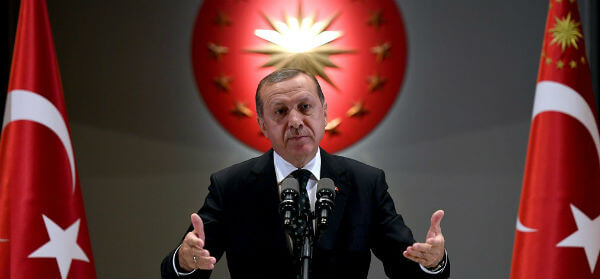
President Recep Tayyip Erdogan of Turkey has insisted on a role in the battle for Mosul, trying to ramp up an involvement in Iraq that has already alarmed the Iraqi government.
“We have a historical responsibility in the region,” Mr. Erdogan said in a recent speech, drawing on his country’s history of empire and defeat, from Ottoman rule of the Middle East to its loss in World War I. “If we want to be both at the table and in the field, there is a reason.”
In response, the normally mild-mannered Iraqi prime minister, Haider al-Abadi, warned last week of a military confrontation between Turkey and Iraq. If Turkish forces intervene in Mosul, he said, they will not “be in a picnic.”
“We are ready for them,” Mr. Abadi said. “This is not a threat or a warning, this is about Iraqi dignity.”
The rift between Turkey and Iraq is no mere diplomatic row; it is a stark example of the complete breakdown in sovereignty of not just Iraq but Syria as well. The Islamic State has erased the borders between the two countries, while Turkey has stationed troops in both countries without the permission of either government. [Continue reading…]
How Ataturk became a model for Erdogan

Mustafa Akyol writes: Since he was elected as Turkey’s president in August 2014, Recep Tayyip Erdogan has been hoping to redesign the Turkish Constitution to introduce an executive presidential system. The July 15 failed coup put that discussion aside for a moment, but not for long. Last week, the leader of the opposition Nationalist Action Party, Devlet Bahceli, who has lately emerged as a political ally of Erdogan, announced that his party could help the ruling Justice and Development Party (AKP) take the presidential system to a referendum. As a result, political observers began to expect a referendum in early 2017. In fact, government spokesman Hayati Yazici made the plan clear by noting that a constitutional amendment may come to the parliament in January and that a referendum could be held in April.
Given Erdogan’s popularity, which was only boosted with the public reaction to the coup attempt, the referendum would very likely get a “yes” vote. This would be followed by an election to choose the new president, a second ballot that Erdogan could easily win. Erdogan, in other words, may well be the first leader of the second Turkish Republic whose political system will revolve around an executive presidency.
What kind of presidency would this be? An answer to this question came from Justice Minister Bekir Bozdag, an Erdogan confidant, last week. “[Mustafa Kemal] Ataturk’s era was presidential system in action,” he said, asking, “Can you name any prime minister of that era with the exception of [Ismet] Inonu? You can’t.” This reference to Ataturk surprised some observers, because the conservative/Islamic political camp that Erdogan and his party comes from has traditionally not been a fan of Ataturk and his staunchly secularist era. Turkish-American academic Timur Kuran noted the irony here, tweeting: “Turkish Islamists have treated Ataturk’s regime as a destructive dictatorship. Now AKP uses Ataturk to justify its own monopoly of power.” [Continue reading…]
Aleppo erupts in protests following temporary ceasefire
Riad Alarian reports: After the ceasefire negotiated by the United States and Russia collapsed on September 19, 2016, the Syrian regime and its Russian allies steadily intensified their ongoing bombing campaign against Aleppo. Since then, as many as 740 civilians have been killed, while at least 1900 others have been injured, according to the Syrian Observatory for Human Rights.
On October 20, 2016, the Syrian and Russian governments instituted another (extremely short-lived) ceasefire. According to Reuters, the “unilateral ceasefire backed by Russia had come into force to allow people to leave besieged eastern Aleppo, a move rejected by rebels who say they are preparing a counter-offensive to break the blockade.”
The purpose behind this ostensibly humanitarian gesture is, however, deeply sinister, and will likely end in even more bloodshed. Sharif Nashashibi, a London-based Syria analyst, argues in News Deeply that “as with previous cease-fires, this is an escalation – part of an overall military solution to the conflict – masquerading as diplomacy and humanitarianism.”
In Nashashibi’s view, the ceasefire’s purpose “is to facilitate the capture of eastern Aleppo by encouraging rebels to abandon their positions, before ramping up the previous onslaught under the pretext that those remaining in rebel-held areas are either fighters or sympathizers.” It should come as absolutely no surprise, therefore, that rebels and residents of the city alike are holding their ground and choosing not to leave.
The city’s residents not only refused to evacuate, but also mobilized a series of protests echoing the very same demands that sparked the uprising against President Bashar Al-Assad five years ago, namely, for freedom and liberty from the tyranny of the regime and its allies.
While these protests have received little attention, they are hardly new. During periods of calm in besieged areas of Syria, protests usually break out. In March of this year, for example, Aleppo, Idlib, and Hama were engulfed in mass protests calling for the fall of the Assad regime, both in between and during periods of constant shelling. [Continue reading…]
Bring Syria’s Assad and his backers to account now
John Allen and Charles R. Lister* write: For 5½ years, the Syrian government has tortured, shot, bombed and gassed its own people with impunity, with the resulting human cost clear for all to see: nearly 500,000 dead and 11 million displaced. Since Russia’s military intervention began one year ago, conditions have worsened, with more than 1 million people living in 40 besieged communities. Thirty-seven of those are imposed by pro-government forces.
While subjecting his people to unspeakable medieval-style brutality, Syrian President Bashar al-Assad has sabotaged diplomatic initiatives aimed at bringing a lasting calm to his country. The most recent such diplomatic scheme was trashed not just by Assad, but also Russia, whose aircraft were accused of subjecting a U.N.-mandated aid convoy to a ferocious two-hour attack in September.
Since then, at least 2,500 people have been killed and wounded in eastern districts of Aleppo, amid horrendous bombardment by Syrian and Russian aircraft, and Russia cynically vetoed a U.N. resolution that would have prohibited further airstrikes in the city.
It is time for the United States to act more assertively on Syria, to further four justifiable objectives: to end mass civilian killing; to protect what remains of the moderate opposition; to undermine extremist narratives of Western indifference to injustice; and to force Assad to the negotiating table. The United States should not be in the business of regime change, but the Assad clique and its backers must be brought to account before it is too late. The world will not forgive us for our inaction.
The consequences of continued inaction are dreadful. U.S. policy has never sought to decisively influence the tactical situation on the ground. Unrealistic limitations on vetting and a policy that prohibited arming groups to fight the regime left us unable to effectively fight the Islamic State or to move Assad toward a transition. U.S. policy and strategy on Syria had a major disconnect, in being focused militarily on a group that was a symptom of the civil war without any means to achieve the stated policy objective: Assad’s departure. [Continue reading…]
*John Allen, a retired U.S. Marine general, led the International Security Assistance Force in Afghanistan from 2011 to 2013 and the international coalition to counter the Islamic State from 2014 to 2015. Charles R. Lister is a senior fellow at the Middle East Institute and author of The Syrian Jihad: Al-Qaeda, the Islamic State and the Evolution of an Insurgency.
Iranian human rights activist given six years in prison for hand-written unpublished story
Iran Human Rights Activist sentenced to 7 years in prison for writing a story – that was not even published: https://t.co/PJfk8ri3q4
— IranWire (@IranWireEnglish) October 22, 2016
IranWire reports: On Tuesday, October 4, writer and human rights activist Golrokh Ebrahimi received a strange phone call ordering her to present herself at Evin Prison by noon on Wednesday evening to start serving her prison sentence. By law, authorities much convey such an order by way of a written summons. But that was not the only unusual thing about the call.
“The arresting officer used the phone of Navid Kamran, a codefendant of mine,” Ebrahimi told IranWire hours before presenting herself at Evin. “They had gone to his shop to arrest him and used his phone. When I answered the call, the man who introduced himself as an agent of the Centre for the Implementation of Sentences said that I must present myself to serve the sentence. I said that I had received no official summons or a call from Evin Court. ‘You are using my friend’s phone to call me and it might be a joke,’ I said. ‘I don’t know you and I have no idea who is talking to me.’ He answered back that ‘you might think this is a joke but we are here to arrest your friend and you must present yourself at Evin’s court right away.’ I said that I could not get there by the end of business hours but perhaps I could do it the next day. He said that I would be arrested if I did not present myself by the next day.”
Ebrahimi’s ordeal began when the Revolutionary Guards arrested her along with her husband, Arash Sadeghi, at his workplace in Tehran on September 6, 2014. The Guards had no arrest warrant, but took the couple to their home, ransacked the place, and confiscated their computers, CDs, and notes. Among the confiscated items was a story about the punishment, under Islamic law, of death by stoning. According to a report from Amnesty International, “The story describes the emotional reaction of a young woman who watches the film, The Stoning of Soraya M, which tells the true story of a young woman stoned to death for adultery — and becomes so enraged that she burns a copy of the Quran.” [Continue reading…]
Brexit: Leading banks set to pull out of UK early next year
The Guardian reports: Britain’s biggest banks are preparing to relocate out of the UK in the first few months of 2017 amid growing fears over the impending Brexit negotiations, while smaller banks are making plans to get out before Christmas.
The dramatic claim is made in the Observer by the chief executive of the British Bankers’ Association, Anthony Browne, who warns “the public and political debate at the moment is taking us in the wrong direction”.
A source close to Brexit secretary David Davis said he and the chancellor Philip Hammond had last week sought to offer reassurance that they were determined to secure the status of the City of London.
However, the government’s stated intention to take control of the freedom of movement into the UK is widely recognised among officials to be a hammer blow to any chance of retaining the present terms of trade for banks, particularly given the bellicose rhetoric of major politicians on the continent. [Continue reading…]
The crew are cutting each other’s throats on Mrs May’s leaking ship
Andrew Rawnsley writes: It is the classic Spitting Image sketch of Margaret Thatcher in her pomp. The satirists created a scene in which the rubber puppet of the prime minster sat at a restaurant table surrounded by her cabinet. She orders raw steak. The waitress then asks: “And what about the vegetables?” Motioning to her cringing ministers, Mrs T replies: “They’ll have the same as me.”
That was a caricature. In his recently published memoir, Ken Clarke contends that the “Iron Lady” liked ministers who argued back and she promoted him even though they had many humdinger rows. But the Thatcher legend remains very lively in the Tory imagination. It was played up to by Theresa May when she arrived at Number 10 just over 100 days ago. “Iron Mayden” and “the new Maggie” were among the welcoming headlines in the rightwing press. Her team didn’t object. They did not discourage anyone from portraying her as a reincarnation of the dominatrix of folklore.
In her early days at Number 10, there was an ambition to achieve a grip over government more steely than that achieved by Mrs T even at the zenith of her power. Ministers reported that they were being forbidden to make any statement or give any interview unless it had first been cleared through Number 10. I wrote at the time that Mrs May would discover that she would not be able to impose such a stifling level of control. What I did not foresee – and neither did she nor anyone else – is just how rapidly cabinet cohesion would unravel. Discipline is now breaking down in a way that Mrs T would never have tolerated.
There are almost daily reveals of confidential papers prepared for internal discussions between ministers, especially of anything touching on Brexit. Mrs May says she will not give a “running commentary” on how she plans to approach the negotiations. We don’t need one because we have a running tap of leaks from within her cabinet. These are being accompanied by a drip feed of poisonous briefings, as some ministers try to promote themselves and their ambitions at the expense of rivals they seek to thwart or damage. [Continue reading…]
Senior administration official says Obama is ‘giving the Russians time to finish the job in Aleppo’
Josh Rogin writes: At last Friday’s National Security Council meeting on the Middle East, top Obama administration officials tabled any decisions on whether to increase the U.S. response to the ongoing Syrian and Russian aerial bombardment of civilians in Aleppo, The Post reported earlier this week. The administration prioritized discussing the new Iraqi-led offensive against the Islamic State in Mosul and the future offensive in Raqqa, for which planning is already underway.
But despite what Secretary of State John F. Kerry has called ongoing Syrian and Russian war crimes in Aleppo, there was no action on any of the several options discussed at lower-level administration meetings, including but not limited to limited strikes against the Assad regime’s air force or an increase in the quantity or quality of arms provided to the moderate Syrian rebels in the area.
One senior administration official pointed toward the slow pace of the bureaucracy in responding to the Aleppo crisis as evidence the White House has decided that Aleppo can’t be saved and therefore the United States should not try.
“They are giving the Russians time to finish the job in Aleppo, in part to tie the hands of the next president,” the official told me. [Continue reading…]
Inquiry finds Syrian government forces responsible for third gas attack
Reuters reports: An international inquiry found Syrian government forces responsible for a third toxic gas attack, according to a confidential report submitted to the U.N. Security Council on Friday, setting the stage for a showdown between Russia and western council members over how to respond.
The fourth report from the 13-month-long inquiry by the United Nations and the Organization for the Prohibition of Chemical Weapons (OPCW), the global chemical weapons watchdog, blamed Syrian government forces for a toxic gas attack in Qmenas in Idlib governorate on March 16, 2015, according to a text of the report seen by Reuters.
The third report by the inquiry in August blamed the Syrian government for two chlorine attacks – in Talmenes on April 21, 2014 and Sarmin on March 16, 2015 – and said Islamic State militants had used sulfur mustard gas.
The results set the stage for a Security Council showdown between the five veto-wielding powers, likely pitting Russia and China against the United States, Britain and France over how those responsible should be held accountable. [Continue reading…]
The siege starts without warning
Miljenko Jergovic writes: I woke one morning 24 years ago to find a war all around me. The night before I had been at a concert for the Partybreakers, a punk band from Belgrade. I’d had too much beer and I had a headache. Bursts of gunfire were audible, along with the explosions of the mortar shells that would rain down on Sarajevo for the next three and a half years.
I don’t know what it was like when the war first came to Aleppo, Syria. Only the people still living there do — thousands of men, women and children who have now been under siege for years. From the perspective of an ordinary citizen, let’s say a 25 year old with literary and musical interests, the siege starts without warning and comes out of nowhere.
Yes, the papers and the TV have been reporting for months about how the situation in the country is growing more complicated, how conflict is brewing among political opponents, and how in the provinces there has already been fighting. But as long as a city continues to live its normal, placid life, which is the sort of life it lives up until the very last instant and the final quiet evening, war seems impossible. You look at your dog and your books, the spider in the corner of your room spinning a web that tomorrow will catch its first little fly, and you can’t imagine that the next morning all this, including the dog and the spider, will be caught up in war.
At the beginning of Bosnia’s war, Sarajevo had some 400,000 inhabitants. Aleppo, before its war, was five times larger. Sarajevo was founded about five centuries ago. Aleppo is one of the oldest cities on earth, in the part of the world that brings together Europe and the East, where the Abrahamic religions — Judaism, Christianity and Islam — were born and grew up. It was there at the emergence of our civilization. Not so long ago, just 150 years back, the two cities were under the same monarch. Sarajevo was the last great city at the western boundary of the Ottoman Empire, while Aleppo was the greatest city on its eastern side.
But none of that is important to an ordinary citizen who is just trying to get through another day of a siege. When the war began, that person probably believed that reason would never allow the bombing and destruction of such a place as Aleppo. We in Sarajevo had the same illusion. [Continue reading…]
ISIS executes hundreds of Mosul area residents
CNN reports: ISIS executed 284 men and boys as coalition forces closed in on Mosul, an Iraqi intelligence source told CNN.
Those killed on Thursday and Friday had been rounded up near and in the city for use as human shields against attacks that are forcing ISIS out of the southern sections of Mosul, the source explained.
ISIS used a bulldozer to dump the corpses in a mass grave at the scene of the executions — Mosul’s defunct College of Agriculture in the north of the city, the intelligence source said.
The victims were all shot and some were children, said the source, who wanted anonymity because he is not authorized to speak to the media. CNN could not independently confirm the claim. [Continue reading…]
BBC News reports: Hundreds of people in Iraq are being treated for the effects of toxic gases after a sulphur plant was set alight in fighting with so-called Islamic State.
The US military says IS fighters set the plant on fire earlier this week, as they fled an advance by pro-government forces on their Mosul stronghold.
On Saturday, US soldiers at a base near Mosul donned protective masks as wind blew smoke towards them.
Reuters said another 1,000 people were being treated for breathing problems. [Continue reading…]
Bunkers and booby-traps as ISIS makes a stand in Libya
Reuters reports: Sheltering in tunnels, improvised bunkers and rooms fortified by sand-filled fridges, Islamic State is holding out in the Libyan city of Sirte, defending itself with snipers, booby-traps and car bombs against pro-government forces.
After a six-month campaign of often fierce street fighting, Islamic State militants are surrounded in a district less than one-kilometer square, after hundreds of U.S. air strikes that began in August in support of Libyan forces.
The battle for Sirte, taken by Islamic State more than a year ago, may be over soon. But how the militants managed to survive may give insight into the kind of tactics they could use to defend other cities. [Continue reading…]
How Russia pulled off the biggest election hack in U.S. history

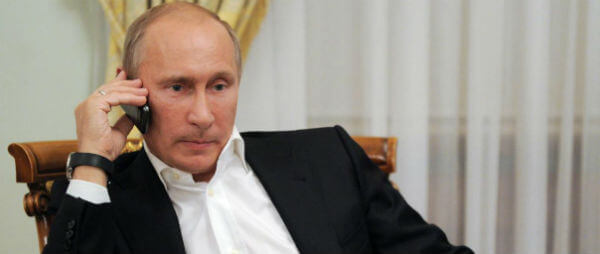
Thomas Rid writes: On an April afternoon earlier this year, Russian president Vladimir Putin headlined a gathering of some four hundred journalists, bloggers, and media executives in St. Petersburg. Dressed in a sleek navy suit, Putin looked relaxed, even comfortable, as he took questions. About an hour into the forum, a young blogger in a navy zip sweater took the microphone and asked Putin what he thought of the “so-called Panama Papers.”
The blogger was referring to a cache of more than eleven million computer files that had been stolen from Mossack Fonseca, a Panamanian law firm. The leak was the largest in history, involving 2.6 terabytes of data, enough to fill more than five hundred DVDs. On April 3, four days before the St. Petersburg forum, a group of international news outlets published the first in a series of stories based on the leak, which had taken them more than a year to investigate. The series revealed corruption on a massive scale: Mossack Fonseca’s legal maneuverings had been used to hide billions of dollars. A central theme of the group’s reporting was the matryoshka doll of secret shell companies and proxies, worth a reported $2 billion, that belonged to Putin’s inner circle and were presumed to shelter some of the Russian president’s vast personal wealth.
When Putin heard the blogger’s question, his face lit up with a familiar smirk. He nodded slowly and confidently before reciting a litany of humiliations that the United States had inflicted on Russia. Putin reminded his audience about the sidelining of Russia during the 1998 war in Kosovo and what he saw as American meddling in Ukraine more recently. Returning to the Panama Papers, Putin cited WikiLeaks to insist that “officials and state agencies in the United States are behind all this.” The Americans’ aim, he said, was to weaken Russia from within: “to spread distrust for the ruling authorities and the bodies of power within society.”
Though a narrow interpretation of Putin’s accusation was defensible—as WikiLeaks had pointed out, one of the members of the Panama Papers consortium had received financial support from USAID, a federal agency—his swaggering assurance about America’s activities has a more plausible explanation: Putin’s own government had been preparing a vast, covert, and unprecedented campaign of political sabotage against the United States and its allies for more than a year.
The Russian campaign burst into public view only this past June, when The Washington Post reported that “Russian government hackers” had penetrated the servers of the Democratic National Committee. The hackers, hiding behind ominous aliases like Guccifer 2.0 and DC Leaks, claimed their first victim in July, in the person of Debbie Wasserman Schultz, the DNC chair, whose private emails were published by WikiLeaks in the days leading up to the Democratic convention. By August, the hackers had learned to use the language of Americans frustrated with Washington to create doubt about the integrity of the electoral system: “As you see the U. S. presidential elections are becoming a farce,” they wrote from Russia.
The attacks against political organizations and individuals absorbed much of the media’s attention this year. But in many ways, the DNC hack was merely a prelude to what many security researchers see as a still more audacious feat: the hacking of America’s most secretive intelligence agency, the NSA.
Russian spies did not, of course, wait until the summer of 2015 to start hacking the United States. This past fall, in fact, marked the twentieth anniversary of the world’s first major campaign of state-on-state digital espionage. In 1996, five years after the end of the USSR, the Pentagon began to detect high-volume network breaches from Russia. The campaign was an intelligence-gathering operation: Whenever the intruders from Moscow found their way into a U. S. government computer, they binged, stealing copies of every file they could.
By 1998, when the FBI code-named the hacking campaign Moonlight Maze, the Russians were commandeering foreign computers and using them as staging hubs. At a time when a 56 kbps dial-up connection was more than sufficient to get the best of Pets.com and AltaVista, Russian operators extracted several gigabytes of data from a U. S. Navy computer in a single session. With the unwitting help of proxy machines—including a Navy supercomputer in Virginia Beach, a server at a London nonprofit, and a computer lab at a public library in Colorado—that accomplishment was repeated hundreds of times over. Eventually, the Russians stole the equivalent, as an Air Intelligence Agency estimate later had it, of “a stack of printed copier paper three times the height of the Washington Monument.” [Continue reading…]

Trump sides with Putin over U.S. intelligence
Politico reports: Donald Trump angrily insisted on Wednesday night that he is not Vladimir Putin’s “puppet.”
But at a minimum, in recent months he has often sounded like the Russian president’s lawyer—defending Putin against a variety of specific charges, from political killings to the 2014 downing of a passenger jet over Ukraine, despite the weight of intelligence, legal findings and expert opinion.
Wednesday, for instance, Trump dismissed Hillary Clinton’s assertion that Russia was behind the recent hacking of Democratic Party and Clinton campaign emails.
“She has no idea whether it’s Russia or China or anybody else,” Trump retorted. “Our country has no idea.”
As Clinton tried to explain that the Russian role is the finding of 17 military and civilian intelligence agencies, Trump cut her off: “I doubt it.”
On Oct. 7, the Department of Homeland Security and the Office of the Director of National Intelligence released a joint statement saying that the U.S. intelligence community “is confident that the Russian Government directed the recent compromises of e-mails from US persons and institutions, including from US political organizations.” That finding has also been relayed directly to Trump in the classified national security briefings he receives as a major party nominee. [Continue reading…]