Category Archives: Lands

Within three hours, three hospitals in Aleppo bombed by Assad-allied forces

The New York Times reports: Bombs from airstrikes hit three hospitals on Wednesday in the rebel-held side of Aleppo, Syria, including a pediatrics center supported by the United Nations, in what aid providers and opposition activists called a new atrocity in the fighting that has ravaged the city.

The Middle East regional office of Unicef, the United Nations Children’s Fund, said in a statement that the attacks happened within a space of three hours on al-Bayan and al-Hakeem hospitals and the Abdulhadi Fares clinic.

Unicef provided no details on casualties, damage or who was responsible, but it said the attack was the second on al-Hakeem hospital, which it helps operate.

Others said that at least 10 civilians were killed in the bombings, including children, and that many others were wounded. Activist groups blamed Syrian military forces. Insurgents have no aircraft, which are used to conduct such bombings.

“This devastating pattern of warfare in Syria seems to have no checks and balances,” the Unicef regional director, Dr. Peter Salama, said in a statement posted on Twitter. “Surely this should shake the moral compass of the world. How long will we allow the children of Syria to suffer like this?” [Continue reading…]

Facebooktwittermail

The Syrian humanitarian food farce

The Daily Beast reports: Lice shampoo — more than one bottle for every two residents. Sand-fly nets — more than 1,000 of them, designed to stop the spread of leishmaniasis, a sand-fly-borne skin disorder that isn’t prevalent in southern Syria.

After four years, the 4,000 residents of the besieged Damascus suburb of Darayya received their first official multi-agency United Nations aid convoy Wednesday. But documents viewed by The Daily Beast show that the convoy carried items that are largely useless to the population, whose primary concerns are starvation and disease. And even at that, the Assad government gave the convoy permission for the partial delivery in an eleventh-hour concession to stop the UN from staging air drops of desperately needed aid.

Darayya is only 15 kilometers — fewer than 10 miles — from downtown Damascus. Despite extensive social media fanfare by the agencies taking part in the convoy, the first “successful” delivery to the area since 2012 was far from cause for celebration for the besieged residents.

“It is unprecedented in areas of conflict that the UN and the aid community as a whole is not allowed to access an area for four years,” a UN official who did not want to be named for fear of the impact on the work of their organization, told The Daily Beast. [Continue reading…]

Facebooktwittermail

CIA and Pentagon bicker while Russia wipes out U.S.-backed rebels

The Daily Beast reports: U.S.-backed opposition forces in Syria’s largest city are facing a ferocious Russian-led assault, raising fears that the rebels could be eliminated in a matter of weeks.
So how are the Pentagon and the intelligence community responding?

By catfighting among themselves.

Two Department of Defense officials told The Daily Beast that they are not eager to support the rebels in the city of Aleppo because they’re seen as being affiliated with al Qaeda in Syria, or Jabhat al Nusra. The CIA, which supports those rebel groups, rejects that claim, saying alliances of convenience in the face of a mounting Russian-led offensive have created marriages of battlefield necessity, not ideology.

“It is a strange thing that DoD hall chatter mimics Russian propaganda,” one U.S. official, who supports the intelligence community position, wryly noted to Pentagon claims that the opposition and Nusra are one in the same.

But even if the rebels were completely separated from Nusra, there would still be something of a strategic conflict with U.S. military goals. The rebels in Aleppo, these Pentagon officials note, are fighting the Bashar al-Assad regime; the American military effort, on the other hand, is primarily about defeating the self-proclaimed Islamic State. [Continue reading…]

Facebooktwittermail

Signs of bigger ISIS cell in Germany emerge

The Wall Street Journal reports: A man who was detained in France and exposed an Islamic State terror cell in Germany told authorities that the cell contained many more people than the three arrested last week, according to officials familiar with his testimony.

The revelations, part of new details emerging about the arrested suspects, add to concerns that the extremist group could be poised to strike again in Europe.

Authorities in France, Germany and the Netherlands are examining testimony from Saleh A., who walked into a police station in the north of Paris in February claiming that he was part of an Islamic State sleeper cell of between 10 and 20 people, officials familiar with the investigation said. Based on his testimony, German police last week arrested three suspected Islamic State members who arrived in the country among Syrian asylum seekers on suspicion of preparing an attack in the western Germany city of Düsseldorf.

“Saleh A.’s statements are central” to the investigation, one German official familiar with the investigation said. German and French authorities have worked closely together on the case, the person said, adding that German investigators had been able to question Saleh A.

Saleh A. told French police that his terror cell was awaiting instructions from a certain Abu Doujana Al Tunisi, supposedly the head of foreign fighters for Islamic State, and that around 20 people were members of the cell, according to a French official. Another official familiar with the probe said Saleh A. had told investigators about 10 people would participate in the attack in Düsseldorf. [Continue reading…]

Facebooktwittermail

Israeli minister wants to annex half of West Bank and kick out the Palestinians

The Washington Post reports: A top Israeli minister said he wants the government to take complete control of more than half of the West Bank and remove the Palestinian residents of the territory.

While traveling with Prime Minister Benjamin Netanyahu on a state visit to Russia on Tuesday, Agriculture Minister Uri Ariel told the Times of Israel that the world should forget about a Palestinian state.

“We have to aspire to the annexation of Area C; these are areas where there are no Arabs at all,” Ariel said. “We would remove a few thousand, who do not constitute a significant numerical factor.”

According to the Oslo Accords, the West Bank is divided into three areas. Area C comprises more than 60 percent of the West Bank and is under complete Israeli military control, both for security and civil affairs. [Continue reading…]

Facebooktwittermail

In EU poll 70% outside Britain say UK’s exit would be bad for Europe

Pew Research Center reports: On June 23, people in the United Kingdom will vote on a referendum on whether to remain in the European Union or to leave the Brussels-based institution, a decision that has come to be called Brexit. The British go to the polls at a time when a new multi-nation survey from Pew Research Center finds that Euroskepticism is on the rise across Europe and that about two-thirds of both the British and the Greeks, along with significant minorities in other key nations, want some powers returned from Brussels to national governments. Whether favorable or not toward Brussels, most Europeans agree that a British exit would harm the 28-member EU. [Continue reading…]

I don’t think the desire to see some powers returned to national governments should be conflated with Euroskepticism. The latter questions the value of the existence of the EU, but the fact that a very large majority of those polled see the UK’s exit as being detrimental to the EU, strongly implies that there is widespread appreciation for the value of European unity.

A skeptical minority wants to break Europe apart, whereas the majority want to see revisions in the EU’s power structure.

Facebooktwittermail

Global violence worsens, driven by Middle East conflicts

Reuters reports: The world has become increasingly violent with deaths from conflict at a 25-year high, terrorist attacks at an all-time high and more people displaced than at any time since World War Two, the 2016 Global Peace Index showed on Wednesday.

The annual index, which measures 23 indicators including incidents of violent crime, countries’ levels of militarisation and weapons imports, said intensifying conflicts in the Middle East were mostly to blame.

But beyond the Middle East, the world was actually becoming more peaceful, researchers behind the index said.

“Quite often, in the mayhem which is happening in the Middle East currently, we lose sight of the other positive trends,” said Steve Killelea, founder of the Institute for Economics and Peace (IEP), which produces the index.

“If we look in the last year, if we took out the Middle East … the world would have become more peaceful,” Killelea told the Thomson Reuters Foundation. [Continue reading…]

Facebooktwittermail

Defiant Bashar al-Assad vows to retake ‘every inch’ of Syria

The New York Times reports: Syria’s president promised to retake “every inch” of the country from his foes on Tuesday in a defiant speech that appeared to reject the humanitarian relief effort and peaceful transition of power that the United States, Russia and more than a dozen other nations have pressed for since last fall.

The speech by President Bashar al-Assad was his first major address since the effort to mediate an end to the civil war broke down in Geneva in April. It reflected his sense that Russian intervention in the war has bolstered his position — and his ability to remain in power for the foreseeable future — as the war enters its sixth year.

Mr. Assad’s defiance was notable partly because of efforts in recent months by Secretary of State John Kerry and other leaders of a 17-nation collaboration, known as the International Syria Support Group, to set a series of deadlines and limits that Syria could not violate.

Every one of the directives has been broken. A cease-fire devised in Munich in February collapsed. Mr. Kerry’s demand at that time — that humanitarian access had to begin within weeks — was briefly observed in a few towns before access was again largely blocked. [Continue reading…]

Facebooktwittermail

Syrian advance raises fear of race for Raqqa

Financial Times reports: An advance by Syrian troops into Raqqa province has raised the prospect of a race to the Isis stronghold between the US-backed opposition and regime forces supported by Moscow.

Supported by Russian air power, Syrian government troops have moved to within 65km to the south-west of the city after clashes with Isis fighters that began over the weekend, according to the UK-based Syrian Observatory for Human Rights.

The fighting comes two weeks after US-backed opposition forces, known as the Syrian Democratic Forces (SDF), began an offensive north of Raqqa, the de facto capital of Isis in Syria, which has also been the centre of its self-styled caliphate since 2014.

Isis now finds itself battling on four different fronts at once: to the north and south-west of Raqqa; around Manbij near the Turkish border with Syria; and in Fallujah in Iraq, where government forces and allied militia are attempting to retake the city. [Continue reading…]

Facebooktwittermail

Will Fallujah put an end to ISIS in Iraq?

Al Jazeera reports: As the Iraqi army, backed by a coalition of militias and forces, makes slow advances toward Fallujah, one of the most circulating theories suggests that if the Islamic State group (Daesh) (ISIL, also known as ISIS) loses Fallujah to the army, then it is finished off in Iraq.

Al Jazeera talks to Iraqi scholar, Zaid al-Ali, author of the book The Struggle for Iraq’s Future, on why the battle for Fallujah matters in the larger context of the war on Daesh in Iraq, the human rights abuses committed by the militias accompanying the Iraq army and best approach to end Daesh’s rule of terror in the country. [Continue reading…]

Facebooktwittermail

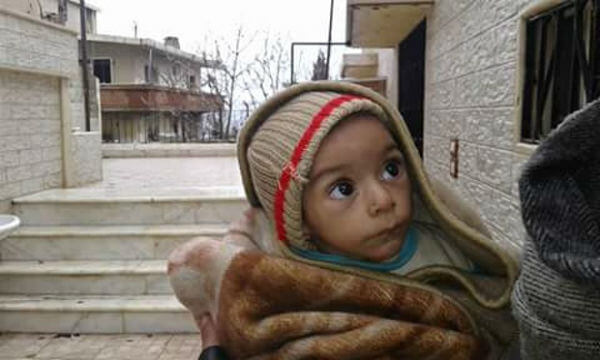
Empty stomachs, empty words: Syria’s children starve as America looks on

starving-child-madaya

In an editorial, the Washington Post says: It’s been nearly six months since the U.N. Security Council passed a resolution demanding an end to the bombing and shelling of civilian areas in Syria and calling for immediate humanitarian access to besieged areas. It’s been four months since Secretary of State John F. Kerry described the sieges as a “castastrophe” of a dimension unseen since World War II and said that “all parties to the conflict have a duty to facilitate humanitarian access to Syrians in desperate need.”

Three weeks ago, a diplomatic conference on Syria joined by Mr. Kerry issued a statement saying it “insisted on concrete steps to enable the provision of urgent humanitarian deliveries,” and warning that if none were taken, it would support airdrops to besieged towns beginning on June 1.

By Monday, there still had been no food deliveries to Darayya in the Damascus suburbs, the al-Waer district of Homs or several other of the 19 besieged areas, with a population of more than 500,000, identified by the United Nations. Nor had there been airdrops. None have been organized, and U.N. officials say none are likely in the coming days. Another deadline has been blown, another red line crossed — and children in the besieged towns are still starving. [Continue reading…]

Facebooktwittermail

Iraqis who flee fighting in Falluja find hardship and hunger

The New York Times reports: Out of security concerns, the Baghdad government, which is Shiite-led, has long restricted the movement of people between the capital and Sunni-dominated Anbar, almost as if the two areas were separate countries. For some agencies, it can be difficult and time-consuming to receive permission from the Iraqi government to travel across the bridge and deliver aid.

In some instances, aid agencies have turned to a powerful Shiite militia, Kataib Hezbollah, which is controlled by Iran and in charge of an important checkpoint in Anbar, to get aid to the displaced.

Also, as the offensive for Falluja unfolded, the Iraqi authorities were eager to facilitate access for journalists to the front lines, but have not allowed them to travel to areas to see displaced civilians.

It was only because of an invitation to join a local aid agency’s convoy on Sunday that a reporting team from The New York Times was able to visit the camps for civilians fleeing the violence around Falluja.

The government-controlled areas of western Anbar Province, a Sunni-dominated region that has been a heartland for the Islamic State, have become vast wastelands of human suffering.

Bare-bones tent cities are sprouting up all over, providing little more than basic shelter and some, but not nearly enough, food, water and medicine. The heat is terrible, always well above 100 Fahrenheit during the day, and most tents do not have fans or the electricity to run them.

When Iraqi forces reached his town of Saqlawiya, north of Falluja, last week, Hatem Shukur waved a white flag to catch their attention. In an interview, he said he and his family had been given cold water, watermelon, apples and bananas — delights after months of being under siege.

“But now we are facing another problem,” Mr. Shukur, 58, said. “Can you imagine your family living here in this heat?”

He waved his arm around the space where he and his family live, a small square of concrete floor, a metal frame and plastic sheeting for walls. On the floor, lying on a blanket, was his 8-month-old granddaughter, Rawan, flies buzzing around her as she slept.

Aid workers expressed frustration at their inability to meet the basic needs of civilians caught up in the war — there is not even enough fresh drinking water in the camps, officials said. There is always this question: Why is there always so much more money for military operations than for water and food for the civilians uprooted by them? [Continue reading…]

Facebooktwittermail

ISIS members from the West seek help getting home

The Wall Street Journal reports: Westerners who joined Islamic State once enjoyed not only power and social status but also free food, housing and even cars. But that gave way to cowering in basements during air raids, dwindling food stocks and scant medical care, according to Syrians who have fled and diplomats who debriefed defectors.

“Father, help me,” a teenager from Europe said about six months ago in a text message to her father. “I want to get out. But I now have a small child.”

The father, who declined to be identified, said he had previously made several attempts to persuade his daughter to return from Raqqa after she left to join Islamic State in late 2013.

Speaking by phone and Facebook messenger from his home in Scandinavia, the father said he asked his government for help but that there is little authorities can do. She would first have to get to Turkey, according to government officials of her home country who corroborated the father’s story.

She remains in Raqqa, too scared to flee for fear of being caught, according to her father. [Continue reading…]

Facebooktwittermail

UN includes — then removes — Saudi coalition from list of child violators in Yemen

At Human Rights Watch, Kristine Beckerle writes: Every year, the United Nations secretary-general releases a “list of shame” of government forces and armed groups that have committed grave violations against children during armed conflict. This year, the Saudi-led coalition fighting in Yemen was listed for the first time, identified as being responsible for killing and maiming children in Yemen and for attacks on schools and hospitals.

There was a six-fold increase in the killing and maiming of children in Yemen during 2015, with at least 785 children killed and 1,168 injured, according to the secretary-general’s report. The Saudi-led coalition was responsible for 60 percent of these child deaths and injuries.

The UN recorded 101 attacks on schools and hospitals in Yemen, double the number of attacks recorded in 2014. The Saudi-led coalition was responsible for nearly half of these attacks. Almost all caused the partial or complete destruction of facilities. [Continue reading…]

The Associated Press reports: Following a vehement protest from Saudi Arabia, Secretary-General Ban Ki-moon on Monday removed the Saudi-led coalition fighting Shiite rebels in Yemen from a list of government forces that committed grave violations against children last year, pending a joint review of cases.

Saudi Arabia’s U.N. Ambassador Abdallah Al-Mouallimi insisted “the removal is unconditional and irreversible,” explaining that the government has no problem with a review and is confident it will conclude that the coalition was “wrongly placed on the list.”

Earlier, he asked for an immediate correction saying Saudi Arabia’s inclusion on the list was based on “inaccurate and incomplete” information. [Continue reading…]

Facebooktwittermail

Mocking Putin got me sent to Twitter gulag

@DarthPutinKGB writes: I run the @DarthPutinKGB “parody” account. The inverted commas are over the word parody for a reason. An account parodying any part of the Kremlin will, by definition, sound almost identical to a verified Kremlin account. From passing homophobic laws while posing for homoerotic photo shoots, to putting dead people on trial for crimes they got murdered for exposing, to denying and then later admitting the presence of their armed forces in numerous conflicts, when it comes to the Kremlin, it can be hard to tell reality from parody.

The account portrays Putin as a maniacal, sinister villain bent on world domination who thinks nothing of murdering those who irritate him while he drops vodka (and real) bombs. He also thinks he is God’s gift to women but is in fact that drunk you can find in any bar on a Friday night who makes women’s skin crawl as he desperately tries to get laid.

Darth Putin is also a pathological liar who would deny it snows in Russia with a straight face if he needed to. Beneath it all, deep down he knows he’s just an emperor currently in the late stages of a massive wardrobe malfunction that he prays no one will eventually notice. Maybe this is why some struggle to tell if it’s parody or not. [Continue reading…]

Facebooktwittermail

Chomsky’s outdated view of American power

In a review of Noam Chomsky latest book, Who Rules the World?, Kenneth Roth writes: Chomsky’s book is not an objective account of the past. It is a polemic designed to awaken Americans from complacency. America, in his view, must be reined in, and he makes the case with verve and self-confident assertion, even if factual details are sometimes selective or scarce.

Yet Who Rules the World? is also an infuriating book because it is so partisan that it leaves the reader convinced not of his insights but of the need to hear the other side. It doesn’t help that the book is a collection of previously published essays with no effort to trim the repetitive points that pop up in chapter after chapter. Nor was much attempt made to update earlier chapters in light of later events. The Iranian nuclear accord and the Paris climate deal are mentioned only toward the end of the book, even though the issues of Iran’s nuclear program and climate change appear in earlier chapters.

At times Chomsky’s book suffers from simple sloppiness. For example, he reports that “the Obama administration considered reviving military commissions” on Guantánamo when in fact these commissions have been operating there for most of President Barack Obama’s eight years in office. And in certain places it is simply confused, as when Chomsky quotes from a review by Jessica Mathews in these pages and implies that she subscribes to the view that America advances “universal principles” rather than “national interests,” when in fact she was criticizing that perspective as part of her negative review of a book by Bret Stephens.

In some respects, Chomsky’s preoccupation with American power seems out of date because the limits of American power have become so apparent. When we ask “Who rules the world?” and take account of Syrian atrocities, the emergence of the Islamic State, or the mass displacement of refugees, the answer is less likely to be the American superpower than no one. Obama’s foreign policy has been far more about recognizing the limits of US military power than the exercise of that power, but this merits barely a mention by Chomsky. His America is the one of military adventure — the Vietnam War, the Bay of Pigs, the Central American conflicts of the 1980s, the 2003 invasion of Iraq, the potentially suicidal recklessness of the nuclear arms race.

Chomsky’s selective use of history limits his persuasiveness. He blames Middle East turmoil, for example, largely on the World War I-era Sykes-Picot agreement that divided the former Ottoman Empire among British and French colonial powers. He’s right that the borders were drawn arbitrarily, and that the multiethnic and multiconfessional states they produced are difficult to govern, but is that really an adequate explanation of the region’s current turmoil? President George W. Bush’s invasion of Iraq fits his thesis of American malevolence, and the terrible human costs of the war get mentioned, but Syrian President Bashar al-Assad’s decision to fight his country’s civil war by targeting civilians in opposition-held areas, killing hundreds of thousands and setting off the flight of several million refugees, does not. Nor does Russia’s decision to back Assad’s murderous shredding of the Geneva Conventions, since Chomsky’s focus is America’s contribution to global suffering, not Vladimir Putin’s.

Still, it is useful to read Chomsky because he does undermine the facile if comforting myths that are often used to justify US action abroad — the distinction between, as Chomsky puts it, “what we stand for” and “what we do.” His views are held not only by American critics on the left but also by many people around the world who are more likely to think of themselves as targeted rather than protected by US military power. [Continue reading…]

Facebooktwittermail

In a traumatised Netherlands, faith in the EU is plummeting

Joris Luyendijk writes: Once a beacon of progressive politics, the Netherlands today is a traumatised, angry and deeply confused nation. Support for immigration and the European project are at all-time lows. Synagogues and Jewish schools need police protection from homegrown jihadists, and freedom of expression is under serious pressure. Leading pundits and comedians incite hatred against Muslims in much the same way that antisemites rage against “the Jews”.

It seems a long time since “Dutch” was synonymous with tolerance. A founding member of the European Union, the Netherlands developed from the 1970s onwards into a laboratory for social and cultural change, boldly pioneering the legalisation of prostitution, soft drugs, euthanasia and gay marriage.

Those were the days when Dutch politicians and opinion-makers would refer to the Netherlands, without any apparent irony, as a “gidsland”, or “guide country”: a small nation leading by example. Its proudest moment probably came in June 1988 when an ethnically mixed team of Dutch footballers won the European Championships, beating the all-white teams of arch-rival Germany and then Russia. It felt like the ultimate vindication of multiculturalism.

Fast-forward 28 years, and heading the polls today is Geert Wilders’ PVV or Freedom party. Elected “politician of the year 2015”, Wilders is the sole member of the party he founded, ruling over it as undemocratically as the Arab dictators he so despises. He wants the Netherlands to drop the euro and leave the EU. Like Donald Trump he demands an end to all immigration from Islamic countries. A typical Wilders tweet: “As long as we have ‘leaders’ such as [Dutch prime minister] Rutte, Merkel, Obama and Cameron denying Islam and terror are one and the same, there will be more terrorist attacks.”

Of course there was racism and intolerance in the Netherlands during the 70s, 80s and 90s, too, and the country of old has not entirely disappeared. A slim majority continues to vote for pro-EU parties that abhor discrimination against Muslims. The popular mayor of Rotterdam, Ahmed Aboutaleb, is openly and proudly Muslim. The speaker of parliament, Khadija Arib, is of Moroccan descent; and in 2007 Dutch readers voted the book The House of the Mosque by Iranian-born Kader Abdolah to be the second “best Dutch book ever”.

Yet the influence of the PVV is widely felt, particularly because the steadily growing far-left Socialist party shares many of its views on the EU. And with every new terrorist attack, wave of refugees or expensive euro bailout, the forces of regression grow stronger, both on the far right and the far left. [Continue reading…]

Facebooktwittermail

How China fell off the miracle path

Ruchir Sharma writes: For years now, Donald J. Trump has been sounding the alarm on China, calling it an economic bully that has been “eating our lunch.” The crux of Mr. Trump’s attack is that Beijing manipulates its currency to keep it cheap and give Chinese exports an unfair advantage. But that narrative is so last decade. China is now a threat to the United States not because it is strong but because it is fragile.

Four key forces have been shaping the rise and fall of nations since the 2008 financial crisis, and none of them bode well for China. Debts have risen dangerously fast in the emerging world, especially in China. Trade growth has collapsed everywhere, a sharp blow to leading exporters, again led by China. Many countries are reverting to autocratic rule in an effort to fight the global slowdown, none more self-destructively than China. And, for reasons unrelated to the 2008 collapse, growth in the world’s working-age population is slowing, and turned negative last year in China, depleting the work force.

It will be difficult for any country to grow as rapidly as 6 percent, and all but impossible for China. Nevertheless, in an effort to exceed that target, Beijing is pumping debt into wasteful projects, and digging itself into a hole. The economy is now slowing and will decelerate further when the country is forced to reduce its debt burden, as inevitably it will be. The next step could be a deeper slowdown or even a financial crisis, which will have global repercussions because seven years of heavy stimulus have turned the world’s second largest economy into a bloated giant.

In Beijing, confidence has given way to a case of nerves. Local residents often sense trouble coming before foreign investors and are the first to flee before a crisis. Chinese moved a record $675 billion out of the country in 2015, some of it for purchases of foreign real estate. If China were eating America’s lunch, its people would not be rushing to buy safe-haven apartments in New York or San Francisco. Far from conspiring to cheapen its currency, as Mr. Trump charges, Beijing is struggling to keep the weakening renminbi from falling more, which would further erode local confidence and make a crisis more likely. [Continue reading…]

Facebooktwittermail