Category Archives: Lands

New political earthquake in Brazil: Is it now time for media outlets to call this a ‘coup’?

The Intercept reports: Brazil today awoke to stunning news of secret, genuinely shocking conversations involving a key minister in Brazil’s newly installed government, which shine a bright light on the actual motives and participants driving the impeachment of the country’s democratically elected president, Dilma Rousseff. The transcripts were published by the country’s largest newspaper, Folha de São Paulo, and reveal secret conversations that took place in March, just weeks before the impeachment vote in the lower house took place. They show explicit plotting between the new planning minister (then-senator), Romero Jucá, and former oil executive Sergio Machado — both of whom are formal targets of the “Car Wash” corruption investigation — as they agree that removing Dilma is the only means for ending the corruption investigation. The conversations also include discussions of the important role played in Dilma’s removal by the most powerful national institutions, including — most importantly — Brazil’s military leaders.

The transcripts are filled with profoundly incriminating statements about the real goals of impeachment and who was behind it. The crux of this plot is what Jucá calls “a national pact” — involving all of Brazil’s most powerful institutions — to leave Michel Temer in place as president (notwithstanding his multiple corruption scandals) and to kill the corruption investigation once Dilma is removed. In the words of Folha, Jucá made clear that impeachment will “end the pressure from the media and other sectors to continue the Car Wash investigation.” It is unclear who is responsible for recording and leaking the 75-minute conversation, but Folha reports that the files are currently in the hand of the prosecutor general. The next few hours and days will likely see new revelations that will shed additional light on the implications and meaning of these transcripts.

The transcripts contain two extraordinary revelations that should lead all media outlets to seriously consider whether they should call what took place in Brazil a “coup”: a term Dilma and her supporters have used for months. When discussing the plot to remove Dilma as a means of ending the Car Wash investigation, Jucá said the Brazilian military is supporting the plot: “I am talking to the generals, the military commanders. They are fine with this, they said they will guarantee it.” He also said the military is “monitoring the Landless Workers Movement” (Movimento dos Trabalhadores Rurais Sem Terra, or MST), the social movement of rural workers that supports PT’s efforts of land reform and inequality reduction and has led the protests against impeachment. [Continue reading…]


Facebooktwittermail

How Kosovo was turned into fertile ground for ISIS

The New York Times reports: Every Friday, just yards from a statue of Bill Clinton with arm aloft in a cheery wave, hundreds of young bearded men make a show of kneeling to pray on the sidewalk outside an improvised mosque in a former furniture store.

The mosque is one of scores built here with Saudi government money and blamed for spreading Wahhabism — the conservative ideology dominant in Saudi Arabia — in the 17 years since an American-led intervention wrested tiny Kosovo from Serbian oppression.

Since then — much of that time under the watch of American officials — Saudi money and influence have transformed this once-tolerant Muslim society at the hem of Europe into a font of Islamic extremism and a pipeline for jihadists.

Kosovo now finds itself, like the rest of Europe, fending off the threat of radical Islam. Over the last two years, the police have identified 314 Kosovars — including two suicide bombers, 44 women and 28 children — who have gone abroad to join the Islamic State, the highest number per capita in Europe.

They were radicalized and recruited, Kosovo investigators say, by a corps of extremist clerics and secretive associations funded by Saudi Arabia and other conservative Arab gulf states using an obscure, labyrinthine network of donations from charities, private individuals and government ministries.

“They promoted political Islam,” said Fatos Makolli, the director of Kosovo’s counterterrorism police. “They spent a lot of money to promote it through different programs mainly with young, vulnerable people, and they brought in a lot of Wahhabi and Salafi literature. They brought these people closer to radical political Islam, which resulted in their radicalization.”

After two years of investigations, the police have charged 67 people, arrested 14 imams and shut down 19 Muslim organizations for acting against the Constitution, inciting hatred and recruiting for terrorism. The most recent sentences, which included a 10-year prison term, were handed down on Friday.

It is a stunning turnabout for a land of 1.8 million people that not long ago was among the most pro-American Muslim societies in the world. Americans were welcomed as liberators after leading months of NATO bombing in 1999 that spawned an independent Kosovo.

After the war, United Nations officials administered the territory and American forces helped keep the peace. The Saudis arrived, too, bringing millions of euros in aid to a poor and war-ravaged land.

But where the Americans saw a chance to create a new democracy, the Saudis saw a new land to spread Wahhabism.

“There is no evidence that any organization gave money directly to people to go to Syria,” Mr. Makolli said. “The issue is they supported thinkers who promote violence and jihad in the name of protecting Islam.”

Kosovo now has over 800 mosques, 240 of them built since the war and blamed for helping indoctrinate a new generation in Wahhabism. They are part of what moderate imams and officials here describe as a deliberate, long-term strategy by Saudi Arabia to reshape Islam in its image, not only in Kosovo but around the world.

Saudi diplomatic cables released by WikiLeaks in 2015 reveal a system of funding for mosques, Islamic centers and Saudi-trained clerics that spans Asia, Africa and Europe. In New Delhi alone, 140 Muslim preachers are listed as on the Saudi Consulate’s payroll.

All around Kosovo, families are grappling with the aftermath of years of proselytizing by Saudi-trained preachers. Some daughters refuse to shake hands with or talk to male relatives. Some sons have gone off to jihad. Religious vigilantes have threatened — or committed — violence against academics, journalists and politicians.

The Balkans, Europe’s historical fault line, have yet to heal from the ethnic wars of the 1990s. But they are now infected with a new intolerance, moderate imams and officials in the region warn.

How Kosovo and the very nature of its society was fundamentally recast is a story of a decades-long global ambition by Saudi Arabia to spread its hard-line version of Islam — heavily funded and systematically applied, including with threats and intimidation by followers. [Continue reading…]

Facebooktwittermail

Monitor: 60,000 dead in Syria government jails

Al Jazeera reports: More than 60,000 people have been killed through torture or died in dire humanitarian conditions inside Syrian government prisons throughout the country’s five-year uprising, according to a monitor.

The numbers were obtained from Syrian government sources, the United Kingdom-based Syrian Observatory for Human Rights said on Saturday.

“Since March 2011, at least 60,000 people lost their lives to torture or to horrible conditions, notably the lack of medication or food, in regime prisons,” said the Observatory’s Rami Abdel Rahman. [Continue reading…]

Facebooktwittermail

Local leaders warn top U.S. commander, ‘very useless’ support means fight against ISIS will drag on for decades

The Associated Press reports: On a secret trip to Syria, the new commander of U.S. forces in the Middle East said Saturday he felt a moral obligation to enter a war zone to check on his troops and make his own assessment of progress in organizing local Arab and Kurd fighters for what has been a slow campaign to push the Islamic State out of Syria.

“I have responsibility for this mission, and I have responsibility for the people that we put here,” Army Gen. Joseph Votel said in an interview as dusk fell on the remote outpost where he had arrived 11 hours earlier. “So it’s imperative for me to come and see what they’re dealing with — to share the risk they are dealing with.”

Votel, who has headed U.S. Central Command for just seven weeks, became the highest-ranking U.S. military officer known to have entered Syria since the U.S. began its campaign to counter the Islamic State in 2014. The circumstance was exceptional because the U.S. has no combat units in Syria, no diplomatic relations with Syria and for much of the past two years has enveloped much of its Syria military mission in secrecy.

Votel said he brought reporters with him because, “We don’t have anything to hide. I don’t want people guessing about what we’re doing here. The American people should have the right to see what we’re doing here.”

Syrian Arab commanders who were made available for interviews at the U.S. camp Saturday said their forces are gaining battlefield momentum but also need a lot more help. They were quick to say the U.S.-led coalition should pitch in more.

Qarhaman Hasan, the deputy commander of the Syrian Democratic Forces, said he has given the Americans a list of his most pressing needs. Atop his list: armored vehicles, heavy weapons like machine guns, as well as rocket launchers and mortars.

“We’re creating an army,” he said through an interpreter, and have had to rely on smuggling to get weapons.

“You can’t run an army on smuggling,” he said.

Tribal leaders said in interviews that they also want to see the U.S. do more, both militarily and with humanitarian aid.

“America has the capabilities,” said Sheik Abu Khalid as he puffed on a cigarette under the shade of pomegranate and pine trees.

Talal Selo, spokesman for the Syrian Democratic Forces, was especially strong in his criticism of the U.S. for providing too little assistance and for giving the SDF “very useless” support. He said that if this continued the Syrians opposing the Islamic State will have to fight for another 50 years. [Continue reading…]

Facebooktwittermail

Yazidi escapees of ISIS’s youth training camps tell their harrowing stories

The National reports: In a bustling office in the suburbs of the Kurdish city of Dohuk, 11-year-old Raed quietly begins to recount his ordeal at the hands of ISIL. It does not take long for his eyes to well up.

The diminutive, soft-spoken Yazidi boy had been earmarked as a future jihadist and potential suicide bomber by ISIL, which is grooming the next generation of fighters for its self-proclaimed caliphate in camps set up for this purpose.

Hundreds of Yazidi boys have been forced to undergo the brutal training after being taken from their parents when ISIL attacked Iraq’s northern Sinjar region in August 2014. Raed struggles to hold back his tears as the memories come flooding back.

“I forgot about some things, but other things are more difficult to forget. I can’t get them out of my head,” he says.

Raed spent eight months in a camp called Farouk near Raqqa, ISIL’S main stronghold in Syria, where about a hundred boys were subjected to a gruelling daily routine aimed at forging the model jihadi. He says roughly half of them were fellow Yazidis who had been forced to convert to Islam. The others were children of ISIL members sent there by their parents. [Continue reading…]

Facebooktwittermail

Syrian refugee wins appeal against forced return to Turkey

The Guardian reports: The EU-Turkey migration deal has been thrown further into chaos after an independent authority examining appeals claims in Greece ruled against sending a Syrian refugee back to Turkey, potentially creating a precedent for thousands of other similar cases.

In a landmark case, the appeals committee upheld the appeal of an asylum seeker who had been one of the first Syrians listed for deportation under the terms of the EU-Turkey deal.

In a document seen by the Guardian, a three-person appeals tribunal in Lesbos said Turkey would not give Syrian refugees the rights they were owed under international treaties and therefore overturned the applicant’s deportation order by a verdict of two to one. The case will now be re-assessed from scratch. [Continue reading…]

Facebooktwittermail

Turkey’s new PM makes top priority legalizing the executive power that Erdogan already wields

Reuters reports: Turkey’s incoming prime minister said on Sunday his top priority was to deliver a new constitution to create an executive presidency, giving President Tayyip Erdogan the broad powers he has long sought.

As delegates from the ruling AK Party unanimously elected Transport Minister Binali Yildirim as their new party leader, and therefore the next premier, Yildirim left no doubt that he would prioritize the policies closest to Erdogan’s heart.

An ally of Erdogan for two decades, the 60-year-old was the sole candidate at the special congress, called after Ahmet Davutoglu said he would step down this month, following weeks of public tension with Erdogan.

Yildirim said in a speech a new constitution was necessary to legitimize the existing situation, in what appeared to be a tacit acknowledgment that Erdogan has been gone beyond the presidency’s traditionally ceremonial role. [Continue reading…]

Facebooktwittermail

Pakistan denounces U.S. strike believed to have killed Afghan Taliban chief

Express Tribune reports: Pakistan on Sunday denounced the US drone strike believed to have killed the Taliban chief Mullah Akhtar Mansour as a violation of its air space and said only negotiations could bring a lasting peace to Afghanistan.

The statement, issued by the Foreign Office late Sunday, said one of the victims of the attack was a driver named Muhammad Azam while the identity of the second “is being verified”.

“On late Saturday 21st May, 2016, the United States shared information that a drone strike was carried out in Pakistan near the Pakistan-Afghanistan border area,” in which Mansour was targeted, it said.

“This information was shared with the Prime Minister and the Chief of Army Staff after the drone strike.”

The statement denounced the drone attack as a “violation of [Pakistan’s] sovereignty, an issue which has been raised with the United States in the past as well.”

It said that a four-country group comprising the United States, China, Afghanistan and Pakistan last met on Wednesday to discuss ways to restart stalled peace talks between Kabul and the Taliban and that the group had collectively decided “a politically negotiated settlement was the only viable option for lasting peace in Afghanistan”. [Continue reading…]

Facebooktwittermail

Following reports that Hezbollah might reduce its forces in Syria, Nasrallah promises to boost support for Assad

Middle East Eye reports: Hezbollah leader Hassan Nasrallah on Friday said his Lebanese Shia movement would boost its support for Syria’s government after one of its top commanders was killed there last week.

“We will increase and bolster our presence in Syria,” Nasrallah said in a speech during a ceremony to mark a week since Mustafa Badreddine, the head of Hezbollah’s military wing, was killed near Damascus.

“More commanders than before will go to Syria. We will be present in different ways and we will continue the fight,” he said.

Hezbollah’s intervention in Syria was considered vital in shoring up Syrian President Bashar al-Assad’s government earlier in the more than five-year war against opposition rebels backed by Gulf Arab states and Western countries.

Its fighters secured most of the Lebanese border region, cutting vital rebel supply lines, and reasserted government control in most of the southern suburbs of Damascus, including the Sayyida Zeinab Shia shrine district.

Hezbollah said last week that Badreddine had been killed by rebel artillery fire, with Nasrallah on Friday vowing to avenge his death by inflicting a “great and final defeat” on those responsible.

But the circumstances of Badreddine’s death remain unclear with earlier media reports citing Israeli security sources that he may have been killed by Syrian pro-government or Iranian forces in a dispute over Hezbollah’s role in the conflict.

According to those reports, Badreddine had been planning to withdraw many of Hezbollah’s forces back to Lebanon after suffering heavy losses, possibly a third of his fighters. The area where he was killed is technically under the control of the Syrian army and is also believed to host Iranian fighters. [Continue reading…]

Facebooktwittermail

In Sweden, Syrian refugees give new life to struggling city of Malmö

The Guardian reports: When Fisal Abo Karaa stepped off the train in Malmö’s central station this time last year, exhausted after a long journey by train and boat, he looked like any other victim of Syria’s terrible civil war.

It wasn’t until April, when Malmö’s main shopping street was filled with the sound of Syrian bagpipes, drums and dancing that he made his presence felt. The opening of Jasmin Alsham, his new restaurant, was the most visible sign yet of an unexpected injection of Syrian money hitting Sweden’s third city.

Abo Karaa and his partners have invested a rumoured five million Swedish kronor (£400,000) converting what was once a Pizza Hut into a replica Damascene house. It is one of five Syrian restaurants to have opened in less than a year. “There are people saying that the Syrians have come and want to buy up everything,” says Ibrahim, a hairdresser and member of the Nahawand shisha smoking club, a meeting place for the city’s established Arab businessmen.

“There’s many, many Syrian people who want to move money to Sweden,” says Maher Alkhatib, from Damascus, who opened a restaurant last year. “I know people in the Emirates, they are asking me, ‘Find a good project so we can invest money’.”

Abo Karaa’s family owned four factories in Homs exporting paper tissues all over the Arab world. “We have lost in Syria millions of dollars, and many assets,” his nephew Mohammed says. [Continue reading…]

Facebooktwittermail

Kerry helps Egypt’s dictator avoid being asked awkward questions

David Sanger writes: The contrast between Myanmar, once one of the world’s most closed societies, and Egypt made me revisit my recent travels with Mr. Kerry in terms of what restrictions were placed on us journalists.

In November, Mr. Kerry zipped through Central Asia on a tour of some of the world’s most repressive states, including Turkmenistan, whose leadership shares Mr. Sisi’s approach to anyone who utters a thought the government finds distasteful. Still, President Gurbanguly Berdymukhammedov allowed international reporters to record his encounters with Mr. Kerry, though local Turkmen journalists were kept at a far remove.

The King of Bahrain, who knows a thing or two about clearing the streets of critics, invited reporters in for the start of his meeting with Mr. Kerry last month, and, with a deep understanding of how to keep them docile, fed them at the palace before they were packed off.

Even China’s leaders routinely let the news media pool in, though they do their best to ignore them.

Egypt used to do the same — in what now looks, by comparison, like the days of openness when Hosni Mubarak was still president. [Continue reading…]

Facebooktwittermail

What are Moqtada al-Sadr’s ambitions in Iraq?

After thousands of protesters, most of whom are loyal to Shia cleric Moqtada al-Sadr, once again stormed the Green Zone in Baghdad, Michael Weiss reports: Thirteen years of lawlessness, sectarian bloodletting and terrorism following a deeply unpopular military occupation have conspired with successive waves of Iraqi leaders who are increasingly seen as little more than factotums of interfering outside powers, namely the United States or Iran. U.S. policy has been single-mindedly wedded to backing individual actors, be it al-Abadi or the man he replaced, Nouri al-Maliki. The second, who was greeted at the White House by President Obama as a partner in making Iraq “sovereign, secure, and self-reliant,” governed with authoritarian excess, manipulated an election in 2010, and then proceeded to alienate Sunnis by means of legal persecution on trumped-up “terrorism” charges or acts of state violence. The first, while a seeming improvement on his predecessor, is simply too weak and ineffectual to deliver on his promised reforms. That al-Abadi’s office has now been raided twice by an angry mob has underscored that stark reality more persuasively than any State Department talking point.

But is al-Sadr looking to make Iraq great again, or is he just a cynical machiavellian looking to exploit failed statehood for his own outsize political ambitions? “I don’t think he gives a damn about reforms,” a U.S. military official told The Daily Beast. “Sadrists are as corrupt as hell, too. The popular anger is for reform across the country and beyond this movement. The Sadrists will follow what Moqtada says. If he says: ‘We need a dictator who’s very corrupt. They will say, ‘Allahu Akhbar, we need a dictator who is corrupt.’”

Khedery, however, welcomes the protests as a natural corrective on top-down political sclerosis. “I’m very pleased by these events because I believe Iraq needs regime change to end the systemic sectarianism and the endemic corruption that’s baked into the DNA of the post-2003 order. Not the foolish, ill-informed, hubristic foreign-backed regime change of 2003, but regime change from within, which will, one way or another, install leaders of the country that represent the Iraqi people. If they fail in meeting expectations, they’ll likely face the same untimely demise as their predecessors. Revolution is a time-honored tradition in Baghdad.” Most of today’s Iraqi elites, Khedery added, lack the qualifications to “run anything much bigger than a household.” They’re also inveterate crooks presiding over a national economy that can no longer compensate for runaway graft with unusually high global oil prices.

In this context, al-Sadr has positioned himself as one of the few true Iraqi nationalists with enough authentic grassroots support to take on a Western superpower and an interfering regional theocracy. [Continue reading…]

Facebooktwittermail

Harwood and Stanley: Policing the dystopia

For 15 years, Americans have been living in a constant state of “wartime” without any of the obvious signs of war. There is no draft. The public has in no way been mobilized. The fighting has all taken place in battle zones thousands of miles from the United States. Despite a rising homegrown fear of Islamic terrorism, an American in the continental U.S. faces greater danger from a toddler wielding a loaded gun. And yet, in ways often hard to chart, America’s endless wars — Barack Obama is now slated to preside over the longest war presidency in our history — have quietly come home. You can see them reflected in the strengthening powers and prominence of the national security state, in those Pentagon spy drones now flying patrols over “the homeland,” and, among other things, in the militarization of police departments nationwide.

Perhaps nowhere in these years, in fact, have America’s wars come home more fiercely or embedded themselves more deeply than in those police forces. It’s not just the multiplying SWAT teams — the police equivalent of Special Operations forces, often filled with ex-special ops types and other veterans from this country’s Iraqi and Afghan battlefields — or the weaponry fed by the Pentagon to police departments, also from the battlefields of the Greater Middle East, including mine-resistant ambush-protected vehicles, automatic and semi-automatic rifles, and even grenade launchers. It’s also, as Jay Stanley and TomDispatch regular Matthew Harwood, both of the American Civil Liberties Union, suggest today, intrusive new forms of technology, developed by or in conjunction with the Pentagon for battlefield use, that are coming to your neighborhood.  So welcome to the war zone, America. Tom Engelhardt

Power loves the dark
Police nationwide are secretly exploiting intrusive technologies with the feds’ complicity
By Matthew Harwood and Jay Stanley

Can’t you see the writing on the touchscreen? A techno-utopia is upon us. We’ve gone from smartphones at the turn of the twenty-first century to smart fridges and smart cars. The revolutionary changes to our everyday life will no doubt keep barreling along. By 2018, so predicts Gartner, an information technology research and advisory company, more than three million employees will work for “robo-bosses” and soon enough we — or at least the wealthiest among us — will be shopping in fully automated supermarkets and sleeping in robotic hotels.

With all this techno-triumphalism permeating our digitally saturated world, it’s hardly surprising that law enforcement would look to technology — “smart policing,” anyone? — to help reestablish public trust after the 2014 death of Michael Brown in Ferguson, Missouri, and the long list of other unarmed black men killed by cops in Anytown, USA. The idea that technology has a decisive role to play in improving policing was, in fact, a central plank of President Obama’s policing reform task force.

In its report, released last May, the Task Force on 21st Century Policing emphasized the crucial role of technology in promoting better law enforcement, highlighting the use of police body cameras in creating greater openness. “Implementing new technologies,” it claimed, “can give police departments an opportunity to fully engage and educate communities in a dialogue about their expectations for transparency, accountability, and privacy.”

Continue reading

Facebooktwittermail

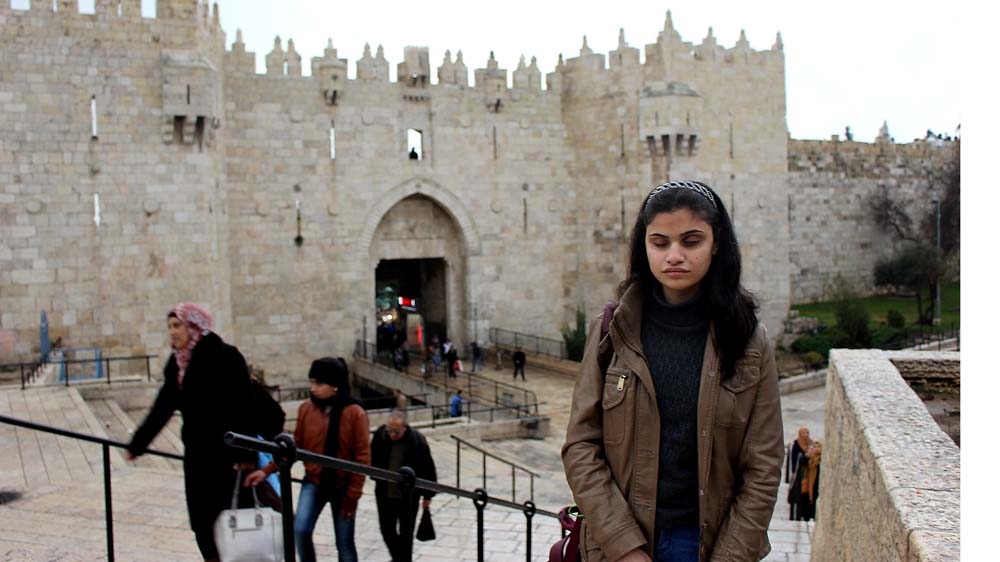
How the Syrian Revolution transformed this Palestinian activist

Budour Hassan is a law school graduate and freelance writer based in Jerusalem who contributes to Al Jazeera, Electronic Intifada, Middle East Eye, and elesewhere. She writes:

The world revolves around Palestine, or so I thought until 2011.

The Palestinian cause, I argued, was the litmus test for anyone’s commitment to freedom and justice. Palestine was the one and only compass that must guide any Arab revolution. Whether a regime is good or bad should be judged, first and foremost, based on its stance from the Palestinian cause. Every event should somehow be viewed through a Palestinian lens. The Arab people have failed us, and we inspired the entire world with our resistance.

Yes, I called myself internationalist. I claimed to stand for universal and humanist ideals. I blathered on and on about breaking borders and waging a socialist revolution.

But then came Syria, and my hypocrisy and the fragility of those ideals became exposed.

When I first heard the Syrian people in Daraa demand a regime reform on 18 March 2011, all I could think about, subconsciously, was: “If the Egyptian scenario happens in Syria, it would be a disaster for Palestine.”

I did not think about those who were killed by the regime on that day. I did not think of those arrested or tortured.

I did not think about the inevitable crackdown by the regime.

I did not greet the incredibly courageous protests in Daraa with the same elation and zeal I felt during the Tunisian, Egyptian, Bahraini, Yemeni, and Libyan uprisings.

All I could muster was a sigh of suspicion and fear.

“Assad is a tyrant and his regime is rotten,” I thought to myself, “but the subsequent results of its fall might be catastrophic for Palestine and the resistance.” That sacred axis of resistance meant to me back then much more than the Syrian lives being cut short by its defenders.

I was one of those whose hearts would pound when Hassan Nasrallah appeared on TV. I bookmarked loads of YouTube videos of his speeches and teared up while listening to songs glorifying the resistance and its victories.

And while I supported the demands of the Syrian protesters in principle, I did so with reluctance and it was a conditional support. It was not even solidarity because it was so selfish and always centered around Palestine.

I retweeted a blog post by an Egyptian activist calling on Syrians to carry Palestinian flags, in order to “debunk” regime propaganda. The Syrian people took to the streets defending the same universal ideals that I claimed to stand for, yet I was incapable of viewing their struggle outside my narrow Palestinian prism. I claimed to be internationalist while prioritizing Palestinian concerns over Syrian victims. I shamelessly took part in the Suffering Olympics and was annoyed that Syrian pain occupied more newspaper pages than Palestinian pain. I was too gullible to notice that the ordeals of both Syrians and Palestinians are just footnotes and that the breaking news would become too routine, too dull and unworthy of consumption in the space of few months.

I claimed to reject all forms of oppression while simultaneously waiting for the head of a sectarian militia to say something about Syria and to talk passionately about Palestine.

The Syrian revolution put me on trial for betraying my principles. But instead of condemning me, it taught me the lesson of my life: it was a lesson given with grace and dignity.

It was delivered with love, by the women and men dancing and singing in the streets, challenging the iron fist with creativity, refusing to give up while being chased by security forces, turning funeral processions into exuberant marches for freedom, rethinking ways to subvert regime censorship; introducing mass politics amidst unspeakable terror; and chanting for unity despite sectarian incitement; and chanting the name of Palestine in numerous protests and carrying the Palestinian flag without needing a superstar Egyptian blogger to ask them to do so.

It was a gradual learning process in which I had to grapple with my own prejudices of how a revolution should “look like,” and how we should react to a movement against a purportedly pro-Palestinian regime. I desperately tried to overlook the ugly face beneath the mask of resistance worn by Hezbollah, but the revolution tore that mask apart. And that was not the only mask torn apart, many more followed. And now the real faces of self-styled freedom fighters and salon leftists were exposed; the long-crushed Syrian voices emerged. [Continue reading…]

Facebooktwittermail

The Arab revolution of 2011 is being destroyed by a counter-revolution led by dictators and jihadists

The Irish Times reports: In late 1400 and early 1401, the Mongol conqueror Tamerlane left “pyramids of skulls, like those constructed by Islamic State today” across Syria, recalls the French Middle East expert Jean-Pierre Filiu.

Tamerlane had already destroyed Aleppo. The great Arab historian and statesman Ibn Khaldun talked to him for 35 days, in the hope of saving Damascus. “The whole time, Tamerlane knows he’s going to massacre everyone in the city,” Filiu continues. “He uses the negotiation to divide and rule, to massacre more people, faster.”

Filiu wants Staffan de Mistura, the UN special envoy for Syria, to read Ibn Khaldun, for it’s impossible not to see a parallel with the behaviour of the Syrian dictator Bashar al-Assad.

Filiu is an Arabist, historian and former diplomat who served as an adviser to a French prime minister, defence minister and interior minister. His “added value”, he says, is history. He will address members of the Institute of International and European Affairs in Dublin on The Jihadi Challenge to Europe next Monday, May 23rd, and debate The Spectre of Global Jihad with the author Shiraz Maher that evening at the International Literature Festival Dublin.

In his most recent book, From Deep State to Islamic State; The Arab Counter-Revolution and Its Jihadi Legacy, (published by Hurst in London) Filiu concludes that the Arab revolution of 2011 – a term he prefers to “Arab spring” – is being destroyed by a counter-revolution led by the remnants of dictatorships in collusion with jihadists.

Over the past century, Filiu writes, the Arabs’ right to self-determination was “denied by colonial intervention, ‘hi- jacked’ at independence by military regimes, trampled on by the double standards of the war for Kuwait and the ‘global war on terror,’ and perverted in the UN, where peoples are represented by the regimes who oppress them”.

No other people have faced “so many obstacles, enemies and horrors in the quest for basic rights”, Filiu says. [Continue reading…]

In January, Filiu spoke about the price being paid because of President Obama’s failure to uphold ethical principles.

Facebooktwittermail

Three killed in protests in Baghdad’s Green Zone

Rudaw reports: Security forces opened fire on protesters storming Baghdad’s Green Zone on Friday, killing three and wounding 20.

Thousands of demonstrators had gathered on Friday in Baghdad’s Tahrir Square. A number of them tried to enter the fortified Green Zone, which houses government institutions and foreign consulates.

A Rudaw reporter on the scene reported that security forces opened fire on the protesters, using tear gas and live rounds. “Security forces fired tear gas to disperse demonstrators who stormed the Green Zone.”

Three protesters were killed and another twenty have been wounded, including five journalists, our reporter said.

Supporters of Shiite cleric Moqtada al-Sadr tore down Green Zone barriers and took over the Iraqi parliament on April 30, demanding political reform and an end to corruption. [Continue reading…]

Facebooktwittermail

IMF agrees $5.4bn Iraq bailout to tackle ISIS and budget deficit

Financial Times reports: The International Monetary Fund has agreed to give Iraq a three-year $5.4bn bailout to help it manage the economic fallout of its war against Isis and low oil prices that have left a gaping hole in its budget.

The new rescue package, which the IMF said should be accompanied by assistance from other members of the international community, will require the government in Baghdad to implement unpopular cuts in public spending and other reforms at a time when the economy is already reeling.

“Iraq has been hit hard by the conflict with Isis and the precipitous fall in oil prices,” said Christian Josz, IMF mission chief for Iraq.

He added that the conflict with Isis had left more than 4m Iraqis internally displaced and was straining resources, while the steep fall in oil prices was “causing a large external shock to the balance of payments and budget revenue, which depend predominantly on oil export receipts”.

UN diplomats in Baghdad and officials in Washington say Iraq’s foreign backers are determined to get support to Iraq at a time when both the central government and the semi-autonomous Kurdistan administration in the north — both critical in the fight against Isis — look on the verge of economic collapse. With no money for repairs, several cities recaptured from Isis still lie in ruins.

However, Iraqi politicians privately said last week that the government may not be able to meet the terms of the IMF deal — which include fighting corruption and money laundering, as well as cutting subsidies and raising taxes. [Continue reading…]

Facebooktwittermail