Category Archives: Lands

Untangling the complicated legacies of colonialism and failed Arab regimes overshadowing today’s conflicts in the Middle East

Rami G Khouri writes: Why have most Middle Eastern lands that Great Britain, Italy, and France managed as mandates or colonies become violent wrecks and sources of large-scale conflict and human despair? It is just as dishonest to blame mainly Western colonialism for our national wreckages and rampant instability as it is to blame only Arab people and culture for those failings. We need a more complete and integrated analysis of the multiple phenomena that shaped our last erratic century.

Initially, we must absolutely acknowledge that Arab states’ inability to achieve sustainable economic growth and pluralistic democracies is the core reason for our problems today. The main reason for this reason, however, is to be found in a more complex set of interlocking relationships among powerful political actors inside our countries and capitals far and near.

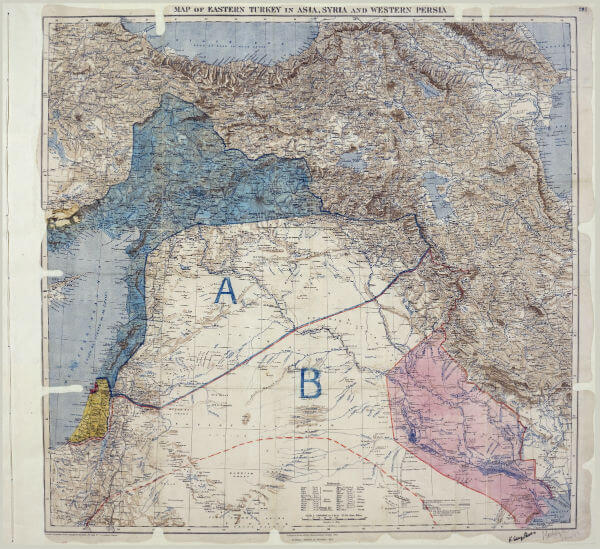
This requires going back before 1916, maybe a century or two, to recall how European powers conquered much of the world as colonies or sites of unchecked imperial plunder. The main problem with Sykes-Picot is not only what happened in and after 1916; it is also heavily a consequence of the European colonial mindset that matured in the century before 1916, and continued to exercise its colonial prerogatives for decades to follow — perhaps even in today’s continued use of European, Russian, and American military power across our region.

At the same time, three critical issues after 1916 made it virtually impossible for many Arab countries to transition from Euro-manufactured instant states born on after-dinner napkins in the hands of Cognac-mellowed British and French colonial officers, to stable, democratic, prosperous sovereign states.

These three issues were, in their historical order:

1) British support for Zionism and a Jewish state in Palestine in November 1917, which plunged Palestine into endless Zionism-Arabism warfare since then, and sucked in other Arab states, Iran, and others yet;

2) the discovery of large amounts of oil in the Middle East in the 1930s especially, which the West needed to maintain access to for its own industrial expansion; and,

3) the post-1947 Cold War between the U.S.-led West and the Russian-led Soviet Communist states that was translated into perpetual proxy wars across the Middle East for forty-four years, and maybe is resurfacing today in new guises. [Continue reading…]

Facebooktwittermail

Don’t blame Sykes-Picot for the Middle East’s mess

sykes-picot

Steven A. Cook and Amr T. Leheta write: Sometime in the 100 years since the Sykes-Picot agreement was signed, invoking its “end” became a thing among commentators, journalists, and analysts of the Middle East. Responsibility for the cliché might belong to the Independent’s Patrick Cockburn, who in June 2013 wrote an essay in the London Review of Books arguing that the agreement, which was one of the first attempts to reorder the Middle East after the Ottoman Empire’s demise, was itself in the process of dying. Since then, the meme has spread far and wide: A quick Google search reveals more than 8,600 mentions of the phrase “the end of Sykes-Picot” over the last three years.

The failure of the Sykes-Picot agreement is now part of the received wisdom about the contemporary Middle East. And it is not hard to understand why. Four states in the Middle East are failing — Syria, Iraq, Yemen, and Libya. If there is a historic shift in the region, the logic goes, then clearly the diplomatic settlements that produced the boundaries of the Levant must be crumbling. History seems to have taken its revenge on Mark Sykes and his French counterpart, François Georges-Picot, who hammered out the agreement that bears their name.

The “end of Sykes-Picot” argument is almost always followed with an exposition of the artificial nature of the countries in the region. Their borders do not make sense, according to this argument, because there are people of different religions, sects, and ethnicities within them. The current fragmentation of the Middle East is thus the result of hatreds and conflicts — struggles that “date back millennia,” as U.S. President Barack Obama said — that Sykes and Picot unwittingly released by creating these unnatural states. The answer is new borders, which will resolve all the unnecessary damage the two diplomats wrought over the previous century.

Yet this focus on Sykes-Picot is a combination of bad history and shoddy social science. And it is setting up the United States, once again, for failure in the Middle East.

For starters, it is not possible to pronounce that the maelstrom of the present Middle East killed the Sykes-Picot agreement, because the deal itself was stillborn. Sykes and Picot never negotiated state borders per se, but rather zones of influence. And while the idea of these zones lived on in the postwar agreements, the framework the two diplomats hammered out never came into existence.

Unlike the French, British Prime Minister David Lloyd George’s government actively began to undermine the accord as soon as Sykes signed it — in pencil. The details are complicated, but as Margaret Macmillan makes clear in her illuminating book Paris 1919, the alliance between Britain and France in the fight against the Central Powers did little to temper their colonial competition. Once the Russians dropped out of the war after the Bolshevik Revolution in 1917, the British prime minister came to believe that the French zone that Sykes and Picot had outlined — comprising southeastern Turkey, the western part of Syria, Lebanon, and Mosul — was no longer a necessary bulwark between British positions in the region and the Russians.

Nor are the Middle East’s modern borders completely without precedent. Yes, they are the work of European diplomats and colonial officers — but these boundaries were not whimsical lines drawn on a blank map. They were based, for the most part, on pre-existing political, social, and economic realities of the region, including Ottoman administrative divisions and practices. The actual source of the boundaries of the present Middle East can be traced to the San Remo conference, which produced the Treaty of Sèvres in August 1920. Although Turkish nationalists defeated this agreement, the conference set in motion a process in which the League of Nations established British mandates over Palestine and Iraq, in 1920, and a French mandate for Syria, in 1923. The borders of the region were finalized in 1926, when the vilayet of Mosul — which Arabs and Ottomans had long associated with al-Iraq al-Arabi (Arab Iraq), made up of the provinces of Baghdad and Basra — was attached to what was then called the Hashemite Kingdom of Iraq.

On a deeper level, critics of the Middle East’s present borders mistakenly assume that national borders have to be delineated naturally, along rivers and mountains, or around various identities in order to endure. It is a supposition that willfully ignores that most, if not all, of the world’s settled borders are contrived political arrangements, more often than not a result of negotiations between various powers and interests. Moreover, the populations inside these borders are not usually homogenous.

The same holds true for the Middle East, where borders were determined by balancing colonial interests against local resistance. These borders have become institutionalized in the last hundred years. In some cases — such as Egypt, Iran, or even Iraq — they have come to define lands that have long been home to largely coherent cultural identities in a way that makes sense for the modern age. Other, newer entities — Saudi Arabia and Jordan, for instance — have come into their own in the last century. While no one would have talked of a Jordanian identity centuries ago, a nation now exists, and its territorial integrity means a great deal to the Jordanian people.

The conflicts unfolding in the Middle East today, then, are not really about the legitimacy of borders or the validity of places called Syria, Iraq, or Libya. Instead, the origin of the struggles within these countries is over who has the right to rule them. The Syrian conflict, regardless of what it has evolved into today, began as an uprising by all manner of Syrians — men and women, young and old, Sunni, Shiite, Kurdish, and even Alawite — against an unfair and corrupt autocrat, just as Libyans, Egyptians, Tunisians, Yemenis, and Bahrainis did in 2010 and 2011.

The weaknesses and contradictions of authoritarian regimes are at the heart of the Middle East’s ongoing tribulations. Even the rampant ethnic and religious sectarianism is a result of this authoritarianism, which has come to define the Middle East’s state system far more than the Sykes-Picot agreement ever did. [Continue reading…]

Facebooktwittermail

Sadiq Khan and the future of Europe

Londoners

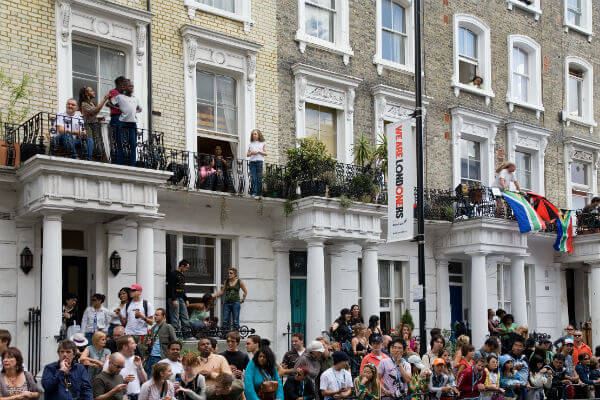
Mehdi Hasan writes: As the votes in London’s mayoral election were being counted on May 5, almost every British Muslim I know seemed to have only one thought: Would Sadiq Khan pull it off?

He did. Mr. Khan, the son of Pakistani immigrants, was elected as the first Muslim mayor of a Western capital city, with more than 1.3 million votes, in what is being called the biggest mandate in the history of British politics. And the Labour candidate managed his landslide even after his opponent, the Conservative politician Zac Goldsmith, smeared him as a “radical” and shamelessly accused him of giving “oxygen” to extremists.

Islamophobes are tearing their hair out as they decry the Islamization of Britain. But for all the Muslim baiting, London’s new mayor is part of an encouraging trend. He’s just the latest in a series of observant Muslims who have captured the hearts and minds of the British public. Last October, 14.5 million Britons tuned in to watch the smiling, hijab-clad Nadiya Hussain, the daughter of a waiter from Bangladesh, as she was crowned champion of “The Great British Bake Off,” a TV show. In April, Riyad Mahrez, who was born in Paris to an Algerian father and a Moroccan mother, was awarded the Professional Footballers’ Association Player of the Year trophy after scoring 17 goals for Leicester City, which went on to a surprise victory in the Premier League championship.

In a perfect world, the faith of a TV cooking show star, an athlete or even a major politician would be irrelevant. But in our deeply imperfect — and, yes, Islamophobic — world, it isn’t. British newspapers are filled with alarmist headlines about “Muslim sex grooming” and “the rise in Muslim birthrate.” Earlier this year, Trevor Philips, the former chairman of Britain’s Equality and Human Rights Commission, accused Britain’s Muslims of “becoming a nation within a nation.”

It’s harder to say that now. The tide is turning in the toxic debate on Islam, integration and multiculturalism. [Continue reading…]

Facebooktwittermail

Activists claim: Ben Rhodes told us he’s ‘not proud of our Syria policy’

The Daily Beast reports: Senior White House official Ben Rhodes told Syrian-American activists at a gathering on Wednesday that he was “not proud” of the Obama administration’s Syria policy, according to three people who participated in the interchange.

But Rhodes waved off any suggestion that the United States should be responsible for a conflict that has left millions displaced and hundreds of thousands dead, those attendees said.

“We aren’t proud of our Syria policy — but we don’t have any good options… nothing we could have done would have made things better,” Rhodes said, according to three individuals present: Ibrahim Al-Assil, a fellow at the Middle East Institute; Kenan Rahmani, a policy adviser with the Coalition for a Democratic Syria, and a third individual, who requested to stay anonymous.
Ned Price, a spokesman for the National Security Council disputed the activists’ characterization of the conversation. Rhodes “in no way indicted or distanced himself from our Syria policy,” Price said.

The three activists, as well as a fourth activist, the Syrian American Council’s Omar Hossino, were present for various parts of the conversation with Rhodes. Hossino told The Daily Beast that he began to weep as he told Rhodes about the cost in human life that had taken place as a result of the war, and excused himself from the conversation.

“We’re not the ones killing Syrians. [President Bashar al-]Assad is the one killing people,” Rhodes said, according to three of the individuals present.

It was, as one advocate said, a poor explanation. “It would be as if the Bush administration argued that ‘a hurricane destroyed New Orleans, so it’s not our responsibility,’” Al-Assil told The Daily Beast. [Continue reading…]

Facebooktwittermail

Hezbollah avoids blaming Israel for death of top commander in Syria

The Washington Post reports: In a surprise announcement Saturday, Lebanon’s Hezbollah militia blamed the recent killing of a militant described as its top commander in Syria on extremist Sunni insurgents. Many expected the powerful Shiite group to point a finger at its traditional nemesis, Israel.

Hezbollah revealed a day earlier that Mustafa Badreddine, one of its most senior figures, died in a mysterious blast in Damascus, the Syrian capital. Before leading thousands of militants in Syria, Badreddine, 55, is suspected of having roles in the assassination of a Lebanese prime minister in 2005, and other bombings that date to the attack on the U.S. Marine barracks in Beirut in 1983.

Analysts said Friday that ­Badreddine’s killing appeared to bear the hallmarks of an airstrike by Israel, which has targeted a number of the Lebanese militants in Syria in recent years. But in a statement, Hezbollah blamed it on “artillery bombardment carried out by takfiri groups in the area.”

Hezbollah uses “takfiri,” an ­Arabic word, to describe its extremist Sunni Muslim enemies, including al-Qaeda and the Islamic State.

Hezbollah didn’t specify which group killed Badreddine or when he died.

But the Syrian Observatory for Human Rights, a Britain-based monitoring group, said there has been no shelling for more than a week in the area where Hezbollah said Badreddine was killed, Reuters reported.

If Hezbollah had blamed Israel for his death, the group would have come under pressure to launch a tough retaliation that, in turn, would risk triggering war. Israel and Hezbollah fought a brief but devastating war in 2006. [Continue reading…]

Facebooktwittermail

How ISIS uses the internet: Talking on Telegram and sending viruses to their enemies

BuzzFeed reports: Abu Majad figured that when ISIS came for him, it would be with a knife on a dark street, or a bomb planted on his car. The 34-year-old had been living in southern Turkey since fleeing Syria nearly three years ago and knew that his outspoken stance against ISIS — online and in his hometown in northern Syria — had put him in the terrorist group’s crosshairs. What he wasn’t expecting was to wake up on the morning of March 29 to a virus planted by ISIS within a seemingly innocuous email attachment.

“Everything about this looked like a real email, sent from the admin of my own website. It looked safe, but it was not. They were trying to get my login information, my passwords. They were trying to get things that could have put real lives in danger,” said Abu Majad, who asked that his nickname be used instead of his real name to protect himself and his remaining family in Syria from reprisal attacks by ISIS. “It was very clever. When I saw it I thought to myself, Shit, now they are professional hackers?”

Cybersecurity experts and intelligence agencies who monitor ISIS say the malware is just one more sign that ISIS is growing more sophisticated in its use of the internet.

“I don’t think it is far-fetched to say that the internet is a major reason why ISIS is so successful, and so worrying, as far as global terror movements go,” said one U.S. intelligence officer, who spoke to BuzzFeed News in Washington, D.C., and asked not to be named as he wasn’t authorized to speak to the press. “They have always been ‘good’ at the internet, at the strategy of how they use it. Now they are smarter at the internet too.” [Continue reading…]

Facebooktwittermail

Kurdish tensions undermine the war against ISIS

Hassan Hassan writes: Amnesty International has in seven months issued two major reports highlighting allegations of war crimes by rebel and Kurdish forces in northern Syria. The two reports are related to a secondary conflict brewing between Arabs and Kurds from Hasakah to Qamashli to Aleppo, which could easily spin out of control and add to the many conflicts that already plague the country.

The United States has an unintentional hand in this new conflict, and de-escalation hinges largely on whether Washington is willing to review its strategy in northern Syria, which sometimes privileges the appearance of success in the battle against ISIL over sustainable policies.

On Friday, Amnesty published a damning new report accusing rebel factions in Aleppo, organised under the Army of Conquest, of committing acts that may amount to war crimes. The rights group said it gathered strong evidence of indiscriminate attacks that killed at least 83 civilians, including 30 children, in the Kurdish-dominated Sheikh Maqsoud between February and April.

On October 13 last year, Amnesty issued a report, Forced Displacement and Demolitions in Northern Syria, accusing the Kurdish political party PYD, the Democratic Union Party, of carrying out a wave of forced displacement and home demolitions that it also said may amount to war crimes. The shelling of civilians by rebel forces cannot be justified, and perpetrators must be punished and restrained by their regional backers. The attacks on Sheikh Maqsoud were encouraged by some supporters of the opposition living abroad, after the PYD’s military wing, the YPG, attacked the rebels in February. Worse, such calls continue to be heard and more indiscriminate attacks can be expected. [Continue reading…]

Facebooktwittermail

Belgium to begin air strikes against ISIS in Syria

AFP reports: Belgium will extend its F-16 air strikes against Islamic State jihadists in Iraq into Syria, the government said Friday, as it grapples with the aftermath of deadly IS-claimed bomb attacks in Brussels in March.

“In accordance with UN Resolution 2249, the engagement will be limited to those areas of Syria under the control of IS and other terrorist groups,” a spokesman for Prime Minister Charles Michel told AFP after a cabinet meeting.

“The objective will be to destroy these groups’ refuges,” the spokesman said, adding that the strikes would begin on July 1.

Belgium launched its first attacks against IS in Iraq in late 2014 as part of the US-led coalition, but decided against strikes in Syria amid public fears over getting dragged into a wider conflict. [Continue reading…]

Facebooktwittermail

What happened to billions in U.S. military aid to Egypt?

Julian Pecquet writes: The Egyptian government is hindering Washington’s ability to track billions of dollars worth of anti-aircraft missiles and other US weapons, the US government watchdog said in a blistering report just as Congress gets ready to renew the annual $1.3 billion request.

The United States provided $6.5 billion in military assistance to Cairo between 2011 and 2015 with the understanding that it would be closely monitored and it would serve American interests. Instead, the Government Accountability Office (GAO) asserts that the Obama administration has often failed to meet those requirements due to resistance from their Egyptian counterparts, lack of guidance from Washington and insufficient staffing at the US Embassy in Cairo.

The State Department and the Defense Department (DOD) have established programs “to provide reasonable assurance that military equipment transferred or exported to foreign governments is used for its legitimate intended purposes and does not come into the possession of individuals or groups who pose a threat to the United States or its allies,” the GAO said in its May 12 report. “However, gaps in the implementation of these end-use monitoring programs — in part due to limited cooperation from the Egyptian government — hampers DOD’s and State’s ability to provide such assurances.” [Continue reading…]

Facebooktwittermail

How Russia allowed homegrown radicals to go and fight in Syria with ISIS

Reuters reports: Four years ago, Saadu Sharapudinov was a wanted man in Russia. A member of an outlawed Islamist group, he was hiding in the forests of the North Caucasus, dodging patrols by paramilitary police and plotting a holy war against Moscow.

Then his fortunes took a dramatic turn. Sharapudinov, 38, told Reuters that in December 2012 Russian intelligence officers presented him with an unexpected offer. If he agreed to leave Russia, the authorities would not arrest him. In fact, they would facilitate his departure.

“I was in hiding, I was part of an illegal armed group, I was armed,” said Sharapudinov during an interview in a country outside Russia. Yet he says the authorities cut him a deal. “They said: ‘We want you to leave.’”

Sharapudinov agreed to go. A few months later, he was given a new passport in a new name, and a one-way plane ticket to Istanbul. Shortly after arriving in Turkey, he crossed into Syria and joined an Islamist group that would later pledge allegiance to radical Sunni group Islamic State.

Reuters has identified five other Russian radicals who, relatives and local officials say, also left Russia with direct or indirect help from the authorities and ended up in Syria. The departures followed a pattern, said Sharapudinov, relatives of the Islamists and former and acting officials: Moscow wanted to eradicate the risk of domestic terror attacks, so intelligence and police officials turned a blind eye to Islamic militants leaving the country. Some sources say officials even encouraged militants to leave. [Continue reading…]

Facebooktwittermail

Syria’s peace plan is flawed and Jabhat Al Nusra knows it

Hassan Hassan writes: If the United States and Russia do not see that Al Qaeda’s main Syrian franchise is benefiting from the peace process, they should look again. In recent months, Jabhat Al Nusra has led a number of battles against the forces of Bashar Al Assad in the north, while poorly-executed ceasefires are causing people to question the efficiency of nationalist forces.

The reactions of some Syrians in the opposition towards the regime losses, especially in the context of the government’s violations of the recent truces, were captured by one activist’s Facebook post: “Some of us take to the streets to protest against Jabhat Al Nusra and demand that it breaks away from Al Qaeda,” he wrote. “Had jihadist groups like Jabhat Al Nusra done everything we wanted them to do, the only place in which we could raise our revolution’s flag today would be in Taksim Square in Turkey.”

For Jabhat Al Nusra, the gains against the regime do not have to hold. Mr Al Assad can retake the areas, but the fact that it is battling the regime while other forces stand by watching weakens the latter’s stance in the eyes of some Syrians. Jabhat Al Nusra has even produced footage of its recent operations using drones, including an ambush against a foreign fighter, the blowing up of a Baath party building and the storming of a government base in Aleppo. [Continue reading…]

Facebooktwittermail

With Iran-backed conversions, Shiites gain ground in Africa

The Wall Street Journal reports: Walking from classroom to classroom at the Ahl ul Bayt Linguistic Center, which teaches Arabic and Islam, director Ahmed Tijani pointed at his students, a mixture of teens and young adults.

“This one is Shiite, these ones are also Shiite,” he said. “And these ones, they are still Sunni.”

Mr. Tijani, whose office in the Cameroonian capital is decorated with an Iranian flag and a poster of Iran’s supreme leader, Ayatollah Ali Khamenei, was also once a Sunni Muslim. Then he made the life-changing choice of enrolling at a similar Iranian-funded academy in the coastal city of Douala.

Since converting to Shiite Islam a decade ago, the 39-year-old educator has risen through the ranks, establishing this school in Yaoundé and even visiting Iran on a government-sponsored trip in 2012.

“There is a big difference between Shiite Islam and Sunni Islam,” he said. “Only the Shiites are spreading the truth.”

Such sectarian talk used to be exceedingly rare in much of Africa. So were actual Shiites. The few who could be found in Africa belonged to immigrant communities from Lebanon or the Indian subcontinent. Now, parts of the continent’s Sunni Muslim heartland are living through the biggest wave of Sunni-to-Shiite conversions since many Sunni tribes of southern Iraq adopted Shiism in the 19th century.

Hard figures are difficult to come by. But in Nigeria alone, Africa’s most populous nation, some 12% of its 90-million-strong Muslim population have identified themselves as Shiite in a recent survey by the Pew Research Center, up from virtually zero in 1980. The number is 21% for the Muslims of Chad, 20% for Tanzania, and 8% for Ghana, according to the survey.

That demographic change is occurring just as the Muslim world becomes increasingly polarized along sectarian lines, with Saudi Arabia, a self-proclaimed standard-bearer of the Sunni cause, engaged in proxy struggles from Yemen to Syria to Bahrain against a rival axis led by Iran’s Shiite theocracy.

“The core of the Saudi-Iranian confrontation over power and territory is in the Middle East. But West African Shiites are of symbolic value to Iran, for it to be able to say that its vision of Islam is expanding rather than shrinking. They give Iran more of a claim that they’re able to speak for Muslims in the whole world,” said Vali Nasr, dean of the School of Advanced International Studies at Johns Hopkins University and author of a book on the Shiite revival. [Continue reading…]

Facebooktwittermail

‘Take it off! This is America!’: Man who yanked hijab pleads guilty to religious obstruction

The Washington Post reports: Near the end of his Southwest Airlines flight from Chicago to Albuquerque in December, Gill Parker Payne decided he had to take action.

Seated a few rows in front of him was a woman he had never met before. She was wearing a religious headscarf, known as a hijab, which Payne recognized as a Muslim practice. He stood up, walked down the aisle and stopped next to her seat. Looking down at the woman, Payne instructed her to remove the covering.

“Take it off! This is America!” Payne, 37, later recalled saying. When she didn’t do it herself, Payne did: He grabbed the hijab from the back and pulled it all off. Violated, the woman, identified by the Justice Department only as K.A., quickly pulled the hijab back over her head.

On Friday, as part of a plea deal with the federal government, Payne pleaded guilty to obstructing the woman’s exercise of her religious beliefs. “Because I forcibly removed K.A.’s hijab, I admit that the United States can prove beyond a reasonable doubt that I intentionally obstructed K.A.’s free exercise of her religious beliefs,” he said in a written statement in the plea agreement.

Payne awaits sentencing. He faces a maximum penalty of one year in jail and a fine of up to $100,000.

“No matter one’s faith, all Americans are entitled to peacefully exercise their religious beliefs free from discrimination and violence,” Vanita Gupta, head of the Justice Department’s civil rights division, said in a statement. “Using or threatening force against individuals because of their religion is an affront to the fundamental values of this nation.” [Continue reading…]

Facebooktwittermail

Four ideas about the crisis of the Arab world that need to be repudiated

sykes-picot

An editorial in The Economist says: Arab states are suffering a crisis of legitimacy. In a way, they have never got over the fall of the Ottoman empire. The prominent ideologies — Arabism, Islamism and now jihadism — have all sought some greater statehood beyond the frontiers left by the colonisers. Now that states are collapsing, Arabs are reverting to ethnic and religious identities. To some the bloodletting resembles the wars of the former Yugoslavia in the 1990s. Others find parallels with the religious strife of Europe’s Thirty Years War in the 17th century. Whatever the comparison, the crisis of the Arab world is deep and complex. Facile solutions are dangerous. Four ideas, in particular, need to be repudiated.

First, many blame the mayhem on Western powers — from Sykes-Picot to the creation of Israel, the Franco-British takeover of the Suez Canal in 1956 and repeated American interventions. Foreigners have often made things worse; America’s invasion of Iraq in 2003 released its sectarian demons. But the idea that America should turn away from the region — which Barack Obama seems to embrace — can be as destabilising as intervention, as the catastrophe in Syria shows.

Lots of countries have blossomed despite traumatic histories: South Korea and Poland — not to mention Israel. As our special report (see article) sets out, the Arab world has suffered from many failures of its own making. Many leaders were despots who masked their autocracy with the rhetoric of Arab unity and the liberation of Palestine (and realised neither). Oil money and other rents allowed rulers to buy loyalty, pay for oppressive security agencies and preserve failing state-led economic models long abandoned by the rest of the world.

A second wrong-headed notion is that redrawing the borders of Arab countries will create more stable states that match the ethnic and religious contours of the population. Not so: there are no neat lines in a region where ethnic groups and sects can change from one village or one street to the next. A new Sykes-Picot risks creating as many injustices as it resolves, and may provoke more bloodshed as all try to grab land and expel rivals. Perhaps the Kurds in Iraq and Syria will go their own way: denied statehood by the colonisers and oppressed by later regimes, they have proved doughty fighters against IS. For the most part, though, decentralisation and federalism offer better answers, and might convince the Kurds to remain within the Arab system. Reducing the powers of the central government should not be seen as further dividing a land that has been unjustly divided. It should instead be seen as the means to reunite states that have already been splintered; the alternative to a looser structure is permanent break-up.

A third ill-advised idea is that Arab autocracy is the way to hold back extremism and chaos. In Egypt Mr Sisi’s rule is proving as oppressive as it is arbitrary and economically incompetent. Popular discontent is growing. In Syria Bashar al-Assad and his allies would like to portray his regime as the only force that can control disorder. The contrary is true: Mr Assad’s violence is the primary cause of the turmoil. Arab authoritarianism is no basis for stability. That much, at least, should have become clear from the uprisings of 2011.

The fourth bad argument is that the disarray is the fault of Islam. Naming the problem as Islam, as Donald Trump and some American conservatives seek to do, is akin to naming Christianity as the cause of Europe’s wars and murderous anti-Semitism: partly true, but of little practical help. Which Islam would that be? The head-chopping sort espoused by IS, the revolutionary-state variety that is decaying in Iran or the political version advocated by the besuited leaders of Ennahda in Tunisia, who now call themselves “Muslim democrats”? To demonise Islam is to strengthen the Manichean vision of IS. The world should instead recognise the variety of thought within Islam, support moderate trends and challenge extremists. Without Islam, no solution is likely to endure. [Continue reading…]

Facebooktwittermail

Struggling to fight ISIS in a fractured Libya

Frederic Wehrey writes from Sabratha, Libya: Ahmed “Amu” Dabbashi, the 28-year-old leader of a militia in this seaside town near the Tunisian border, proudly unfurls a black Islamic State flag, seized during late-February raids on safe houses of ISIS, as the group is also known. He shows me a captured arsenal, too: truck-borne explosives, detonators, crates of ammo, crew-served machine guns, and identification cards of foreign fighters.

Days earlier, American warplanes had bombed an Islamic State training site at a nearby house. Then, Amu tells me, “we decided to cleanse our town.” In the raids that followed, fighters for the so-called caliphate struck back, assaulting a police station and cutting the throats of several officers. Scores of youths perished in gunbattles.

Elsewhere across Libya, disparate factions are trying to hold the line against ISIS, often tenuously. The terrorist group is most entrenched in the central city of Sirte. Refugees fleeting Sirte tell me that ISIS extorts businesses and stops traffic to conduct executions.

In late March, a new presidential council — formed under the auspices of a U.N.-brokered unity agreement — arrived with great fanfare in the capital of Tripoli. Washington and its allies had hoped this would provide a foundation for a military campaign against ISIS. But after an initial burst of public enthusiasm, the council is struggling to exert its authority.

The fight against Islamic State faces daunting challenges. First, there still is no unified military structure through which the U.S. and Western allies can channel assistance. A powerful eastern faction allied with Gen. Khalifa Haftar remains hostile to the unity agreement and has tried to sell oil independently from Tripoli. Other militias, even if nominally supporting the new government, remain beholden to towns, tribes and power brokers.

Thus, Western special forces must work with militia surrogates in any operations against Islamic State. But this is risky: Assisting these armed groups could rekindle old rivalries and further reduce the incentives for national reconciliation.

Militias have figured out that signing up for the campaign against Islamic State is the best way to get legitimacy and attention. Whether or not they intend to use outside support solely against ISIS is another story. Many still regard their local rivals as the pressing concern. In some cases, the West may find them unsavory partners: traffickers, hard-line Salafists, tribal supremacists, military officers with authoritarian and anti-Islamist leanings.

This is evident in Sabratha, where Amu’s extended family has had longtime links with smugglers and jihadists. In the capital of Tripoli, a Salafist militia leader lets me tour his prison’s rehabilitation center, where Islamic State suspects are thrown in with drug addicts for undefined stretches with no due process. In a trip to Benghazi last fall, I saw how neighborhood militias carried out what amounts to personal and tribal vendettas, all under the cover of combating Islamic State. [Continue reading…]

Facebooktwittermail

U.S. establishes Libyan outposts with eye toward offensive against ISIS

The Washington Post reports: American Special Operations troops have been stationed at two outposts in eastern and western Libya since late 2015, tasked with lining up local partners in advance of a possible offensive against the Islamic State, U.S. officials said.

Two teams totaling fewer than 25 troops are operating from around the cities of Misurata and Benghazi to identify potential ­allies among local armed factions and gather intelligence on threats, according to the officials, who spoke on the condition of anonymity to discuss a sensitive mission overseas.

The insertion of a tiny group of U.S. personnel into a country rife with militant threats reflects the Obama administration’s worries about the Islamic State’s powerful Libyan branch and the widespread expectations of an expanded campaign against it. For months, the Pentagon has been developing plans for potential action against the group, which has at least several thousand fighters in the coastal city of Sirte and other areas. And the U.S. personnel, whose ongoing presence had not been previously reported, is a sign of the acceleration toward another military campaign in Libya.

The mission is also an illustration of President Obama’s reliance on elite units to advance counterterrorism goals in low-visibility operations. [Continue reading…]

Facebooktwittermail

Britain should stop trying to pretend that its empire was benevolent

By Alan Lester, University of Sussex

The recent debacle of David Cameron’s filmed condemnation of Nigerian and Afghan corruption and the Queen’s remark on Chinese officials’ rudeness highlights the persistence of imperial thinking in Britain. There seems to be a continuing assumption within the British establishment that it sets an example for others to follow and that the British are owed deference by others.

Ever since evangelical antislavery activists campaigned for Britain to abolish the transatlantic slave trade, Britons have assured themselves that imperial overrule is compatible with the “benign tutelage” of other races and nations. Unlike the other European empires, Britons tell themselves, theirs was an empire founded on humanitarian compassion for colonised subjects.

The argument runs like this: while the Spanish, Portuguese, French, Belgians and Germans exploited and abused, the British empire brought ideas of protection for lesser races and fostered their incremental development. With British tutelage colonised peoples could become, eventually, as competent, as knowledgeable, as “civilised” as Britain itself. These platitudes have been repeated time and again – they are still at the heart of most popular representations of the British Empire.

Even when we are encouraged to pay attention to empire’s costs as well as its benefits, these costs are imagined solely in terms of specific incidents of violence such as the Amritsar Massacre in India or the suppression of the Mau Mau rebellion in Kenya. Britain has excused itself from that most structural injustice of empire – the slave trade itself – by the fact that it was Britain that pioneered its abolition.

Continue reading

Facebooktwittermail