Category Archives: Lands

Invasion of Iraq ‘undoubtedly increased the threat’ of terrorist attacks in UK, said then-head of MI5

Richard Norton-Taylor writes: We can confidently make some assumptions about the Chilcot inquiry, whose report has just been delivered to the Cabinet Office for “national security checks”. It will strongly criticise Tony Blair for promising George Bush that the UK would join the US-led invasion of Iraq in 2003 but keeping parliament and the public in the dark; attack ministers, mandarins and top brass alike for allowing Blair to delay military preparations; and damn the catastrophic failure to prepare for the subsequent occupation of the country.

What has received far less attention is the devastating evidence Chilcot heard about the invasion making Britain more vulnerable to terrorism. Blair has always dismissed suggestions that his foreign policy decisions were in any way responsible for encouraging terrorist attacks and “radicalising” young British Muslims as a charge perpetuated by “the left”.

The evidence to Chilcot contradicts his assertion. Lady Manningham-Buller, head of MI5 at the time, bluntly told the inquiry the invasion “undoubtedly increased the threat” of terrorist attacks in Britain.

She said she communicated her view to Blair via Whitehall’s Joint Intelligence Committee (JIC). “The number of plots, the number of leads, the number of people identified, and statements of people as to why they were involved,” all pointed to the increased terrorist threat to the UK. [Continue reading…]

Facebooktwittermail

Europe says U.S. regulations keeping it from trade with Iran

The New York Times reports: With the completion of the nuclear deal with Iran and the opening of its market, European businesses expected a trade bonanza.

But three months after the lifting of many sanctions against Iran, there is growing frustration among European politicians, diplomats and businesspeople over the inability to complete dozens of energy, aviation and construction deals with the Iranians.

The main obstacle, the Europeans say, is their ally, and the driving force behind the historic nuclear agreement, the United States. Wary of running afoul of new sanctions imposed by Washington over Iran’s missile program and accusations that Iran sponsors terrorism, European banks are refusing to finance any of the deals, effectively perpetuating Iran’s isolation from the global financial system.

Europeans also point to new American visa regulations that make it more difficult for them to enter the United States if they have traveled to Iran. Those financial and travel restrictions, they say, make it nearly impossible to reach agreements with their Iranian counterparts. [Continue reading…]

Facebooktwittermail

This is why the U.S. still backs Saudi Arabia

Christopher Dickey writes: Long before his visit to Riyadh this week, when President Barack Obama was asked if the Saudis were America’s friends, he said coyly, “It’s complicated.” During his visit, a veteran of the Saudi intelligence services told me, with a similar note of irony, “It’s a special relationship — and there are special differences.”

No kidding.

How are Americans supposed to get behind a government that carries out dozens of beheadings on a single day, that has shown a recent penchant for waging wars it can’t manage to win, that supports the preaching of an extreme version of Islam that helps prepare the way for jihadists being groomed around the world, and has such a screwy relationship with women, giving them strong educations (they are 55 percent of the students in Saudi universities) then refusing to allow them to drive cars or walk the streets without head coverings?

Add to that, the suspicion lingering for the last 15 years that Saudi officials, not just Saudi citizens, were involved in some way with the September 11, 2001, attacks on the United States. [Continue reading…]

Facebooktwittermail

Snowden seeks assurance from Norway it won’t extradite him

The Wall Street Journal reports: Edward Snowden, the former defense contractor charged by U.S. authorities for leaking classified documents to the media, is seeking assurance that Norway won’t extradite him if he comes here to collect a free-speech prize.

Mr. Snowden, who resides in Russia, has petitioned a Norwegian court, asking it to rule that the espionage charges filed by the U.S. Justice Department against him wouldn’t constitute grounds for extradition.

The Schjodt law firm, which filed the motion with the Oslo District Court on Mr. Snowden’s behalf, said Thursday that political crimes were formally excluded from a bilateral treaty and other rules governing extradition between Norway and the U.S.

“Mr. Snowden’s whistleblower activities must undoubtedly be seen as matters of political character,” the law firm said in its motion to the court.

The law firm said it has evidence that the U.S. has filed an extradition request to Norwegian authorities in the event Mr. Snowden arrives in Norway.

A spokesman at Norway’s Justice Ministry declined to comment on a court matter. The court said it hadn’t yet received Mr. Snowden’s documents. The U.S. Justice Department didn’t respond to a request for comment.

Debates inside and outside the courts over Mr. Snowden’s petition could challenge relations between the U.S. and the small Nordic country, traditionally a strong U.S. ally but also a strong advocate of whistleblower rights. [Continue reading…]

Facebooktwittermail

UK spy agencies have collected bulk personal data since 1990s, files show

The Guardian reports: Britain’s intelligence agencies have been secretly collecting bulk personal data since the late 1990s and privately admit they have gathered information on people who are “unlikely to be of intelligence or security interest”.

Disclosure of internal MI5, MI6 and GCHQ documents reveals the agencies’ growing reliance on amassing data as a prime source of intelligence even as they concede that such “intrusive” practices can invade the privacy of individuals.

A cache of more than 100 memorandums, forms and policy papers, obtained by Privacy International during a legal challenge over the lawfulness of surveillance, demonstrates that collection of bulk data has been going on for longer than previously disclosed while public knowledge of the process was suppressed for more than 15 years.

The files show that GCHQ, the government’s electronic eavesdropping centre based in Cheltenham, was collecting and developing bulk data sets as early as 1998 under powers granted by section 94 of the 1984 Telecommunications Act.

The documents offer a unique insight into the way MI5, MI6, and GCHQ go about collecting and storing bulk data on individuals, as well as authorising discovery of journalists’ sources.

Bulk personal data includes information extracted from passports, travel records, financial data, telephone calls, emails and many other open or covert sources. Often they are “fused” together to help pinpoint suspects. [Continue reading…]

Facebooktwittermail

Alleged bomber of Jerusalem bus came from a well-to-do Palestinian family

The Washington Post reports: The young man accused of being the first suicide bomber in Jerusalem in a decade doesn’t fit the profile of a desperate Hamas operative — and that worries the Israelis.

His uncles are prosperous merchants. He did not grow up in a refugee camp. He went on shopping trips to Jordan.

But the cover photo on his Facebook page includes the image of Yahya Ayyash, a.k.a. “The Engineer,” the chief bombmaker for Hamas, who likely was killed by an exploding mobile phone planted by Israeli agents in 1996.

On Monday afternoon, 19-year-old Abdel Hamid Abu Srour boarded the Egged No. 12 bus and placed a package between his legs. His uncles think that it might have been his first visit to Jerusalem.

His seat was above the vehicle’s gas tanks, according to Israeli news media. His relatives scoffed at the idea that Abu Srour would know how to make a bomb himself.

His high school grades were poor enough that he wanted to retake subjects and redo his exams.

Who gave him the bomb and how it was detonated is the object of a fast-moving investigation.

Hamas claimed that Abu Srour was a member of the Islamist militant movement, although the Gaza-based terrorist group did not assert direct responsibility for the bombing.

Israeli police announced Thursday that they had arrested several members of a Hamas cell in Bethlehem tied to the case. [Continue reading…]

Facebooktwittermail

Instead of honoring leader of Syria’s ‘White Helmets,’ U.S. refused his entry

The New York Times reports: The leader of a Western-backed rescue organization that searches for survivors of bombings in Syria was denied entry into the United States this week, where he was to receive an award recognizing his contributions to humanitarian relief.

Raed Saleh, the head of the Syria Civil Defense, was to accept the award from InterAction, an alliance of aid agencies, at its gala dinner Tuesday night in Washington. The dinner’s keynote speaker was Gayle Smith, the administrator of the United States Agency for International Development.

But when Mr. Saleh, who works in Syria and Turkey, arrived Monday at Washington’s Dulles International Airport on a flight from Istanbul, the authorities said he could not enter the United States. He was told his visa had been canceled.

It was unclear whether Mr. Saleh’s name might have shown up on a database, fed by a variety of intelligence and security agencies and intended to guard against the prospect of terrorism suspects slipping into the country.

The State Department declined to give specifics, but a spokesman, John Kirby, said that “the U.S. government’s system of continual vetting means that traveler records are screened against available information in real time.”

“While we can’t confirm any possible specific actions in this case, we do have the ability to immediately coordinate with our interagency partners when new information becomes available,” he added.

Mr. Saleh was put on the next flight back to Istanbul. In a telephone interview from Istanbul on Wednesday, Mr. Saleh sought to turn the focus to the experience of millions of Syrians who find the world’s borders closed to them.

“In any airport, the treatment we get as Syrians is different,” he said. “The way they look at us, we are suspected.” In his case, he pointed out, he had no intention of staying longer than 16 hours.

His group is widely known as the White Helmets for the headgear its members wear as they rush to bomb sites to rescue survivors and dig out the dead from the rubble. Government supporters have criticized the group for working in some areas held by the Nusra Front, a terrorist organization linked to Al Qaeda. But like many internal aid groups, it says it is neutral and seeks to help civilians no matter whose territory they live in.

Joshua Landis, a Syria expert at the University of Oklahoma at Norman, called the denial of entry “a scandal.”

“The White Helmets are one of the few organizations in Syria that have been above reproach,” he said. “They have tried to observe strict neutrality in order to facilitate their humanitarian work and save lives. To do this they have worked along side all sorts of militias in order to get to victims of the fighting.”

At the dinner on Tuesday night, InterAction staff members wore white helmets in solidarity — and posted a photo on Twitter.

“I really was moved by this moment,” Mr. Saleh said. “It was a stance of the unity of humanity — and I don’t mean the international community, I mean humanity.” [Continue reading…]

In February, Saleh spoke at the Conference Supporting Syria and the Region, co-hosted in London by the UN and the Governments of the United Kingdom, Kuwait, Germany and Norway.

Facebooktwittermail

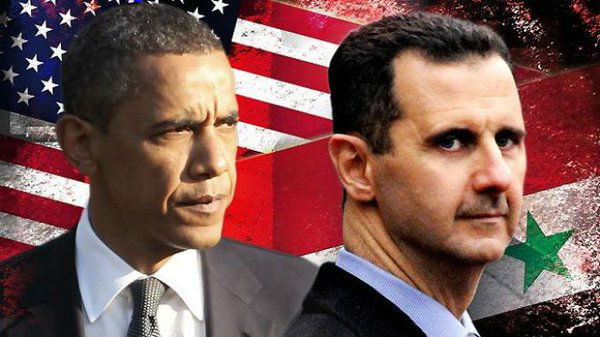
Obama’s former Middle East adviser: We should have bombed Assad

obama-assad

Jeffrey Goldberg writes: A couple of weeks ago, I was talking with Philip Gordon, who held the Middle East portfolio at the National Security Council from 2013 to 2015 (and before that, served as assistant secretary of state for European affairs) about my Atlantic article, “The Obama Doctrine.” The piece tried to explain how the president understands the world, and America’s role in it. (This week, the president is on a tour of the some of the countries he discussed in the article.)

Gordon, a loyal Obama man, is, like his ex-boss, somewhat-to-very fatalistic about the ability of the U.S. to direct the course of events in the Middle East (“realistic,” rather than “fatalistic,” is the term the president prefers). Gordon is known for, among other things, a pithy and concise formula he developed to explain why President Obama, and many of his advisers, are so hesitant to engage fully in the various catastrophes of the Middle East. In Iraq, the Gordon dictum goes, Obama learned that full-scale invasions leading to regime change don’t work; in Libya, he learned that partial interventions leading to regime collapse don’t work; and in Syria he learned that non-intervention also doesn’t work. An unspoken but obvious lesson: Once a president reaches this set of conclusions, can you blame him for wanting to pivot to Asia?

So I was a bit surprised to hear Gordon tell me that he believes, in retrospect, that President Obama should have attacked Syria in retaliation for its use of chemical weapons in 2013. A year earlier, the president drew a “red line” for the Syrian dictator, Bashar al-Assad regarding the potential use of such weapons; a year later, when Assad deployed sarin gas in the town of Ghouta, killing as many as 1,300 people, Obama set in motion a strike, but stood down at the last minute, putting the matter in the hands of Congress. In one of the interviews that informed “The Obama Doctrine,” the president told me that this moment was a source of pride for him; he resisted the pressure — and the temptation — to carry out an operation preordained by the “Washington playbook.” The “playbook,” in Obama’s mind, is in part a set of received understandings about what a president should do in the event of a rogue-state provocation. Obama argued to me that the Washington playbook is overmilitarized, and is overused.

As we know, the decision to stand down was not a popular one with America’s allies, who believed that Obama had squandered U.S. credibility. When a superpower sets a red line, the thinking goes, it must enforce the red line.

It was noteworthy that Gordon disagreed with Obama’s decision, and agreed with the criticism of U.S. allies, because he is known, in national-security circles, for being extremely wary of the consequences of deeper U.S. involvement in Syria (in this, he resembles his successor, Robert Malley, who is now Obama’s coordinator for anti-ISIS activities). I asked Gordon if he would speak to me on the record about these events, and he agreed. A full transcript of our conversation appears below, but here are some highlights: [Continue reading…]

Facebooktwittermail

Africa and the drama of migration

Tidiane Kassé writes: Migration is as old as Africa itself. People have always moved in search of a better life. The economic crisis in Africa fueled by development policies imposed on the continent by the World Bank, IMF and other donors is one of the factors forcing some Africans to undertake dangerous journeys to Europe in an attempt to improve their lot.

In some African cultures, travel is an initiatory act. One becomes a man when he leaves his family to go far to discover other people and other cultures, to confront the real world realities. This means going away from the comfort and care of a mother, far from the protection of a father. Going away is getting more experiences; coming back is enriching one’s group with what was learned in the other world. This culture brands the Soninkés – a crossborder community living between Senegal, Mali and Mauritania. In this area, the villages are empty. The houses resonate essentially with the laughter of women and children screaming. The men left. They migrated elsewhere. Soninkés are one of the most mobile people in Africa. Their mobility has lasted since the empire of Ghana (8th – 11th century).

In Diawara, a Soninké village located 800 kilometers from Dakar, more than 50 per cent of the population are French nationals. Almost all of them are returning migrants, who came back to resettle in their land of origin once their European or African courses ended. Those who have not returned yet left their wives and their offspring in luxurious residences. The houses that grow in Diawara breathe an unsuspected comfort. TV, refrigerator, air conditioner, etc., are behind the walls. So far from Dakar, in a rural area where poverty affects 70 per cent of the population, one cannot imagine this state of affairs.

Each month, from France, Germany, Italy or elsewhere, migrants send money for the monthly expense. Medical expenses, tuition, everything goes to ensure the family is taken care of. In Soninkés community, success in emigration is measured by the ease in which the family is left in the village. Remittances are considerable. In 2015, the World Bank estimated money transfers from emigration to $601 billion, including $441 billion to developing countries. In Senegal, around $2 billion has fueled this circuit. This represents more than the Official Development Assistance (ODA).

The money sent is not just for families. It also contributes to community development. Since the implementation of financial recovery plans imposed by the International Monetary Fund (IMF) and the World Bank in the 1980s African states have turned their back on social development investments, building neither hospitals nor health centers, schools, etc., but privatizing and firing hundreds and hundreds workers instead. These policies have began to change today. Africa is a continent where, for ten years, the growth rate turned at around 5 per cent, but the damage of the past is immeasurable. Reconstruction is difficult. [Continue reading…]

Facebooktwittermail

‘America treats us worse than animals’ — victims of Obama’s secret drone war speak out

The Guardian reports: Because US drone strikes are cloaked in secrecy, occur in remote or dangerous locales and target people presumed to be terrorists, Americans rarely hear from survivors or their relatives. But a theme emerges in interviews the Guardian has conducted with more than half a dozen drone survivors: the pain from the strike never ends, as the apparatus of secrecy renders closure unobtainable.

According to six people in Pakistan and Yemen who have lost their brothers, sons and grandparents to drone strikes, the strike lasts a moment and the consequences last a lifetime. Most of them have never told their stories to an American reporter. Some of them have theories about whom the US was targeting, while others are left guessing. The interviews were facilitated by the human rights group Reprieve and the Foundation for Fundamental Rights and conducted in translation.

The people are left impoverished, anguished and infuriated. Justice, let alone apologies, never arrive, even as a modest amount of blood money flows from the local governments. The United States, which styles itself a force for justice in the world, is to them the remote force that introduced death into their lives and treats them like they are subhuman, fit only to be targeted. At any moment, they fear, another drone could come for them.

The White House has said it will soon release of a tally of drone deaths. Relatives of the dead and survivors of the attacks expect little of it to include the truth, and doubt it will lead to the public apologies they desire – particularly since a senior aide to Barack Obama recently told the Atlantic that the president “has not had a second thought about drones”.

The CIA would not comment for this piece. An Obama administration official said: “It is certainly not the case that lives of a certain nationality are more valuable to us than those of any other. What is true, however, is that the president has said … that the American people need information to hold their government accountable. That is in part why we have been especially transparent when it comes to the deaths of US citizens.”

Nabila’s father, and Mamana’s son, Rafiq ur-Rehman, took a different view. “If America kills any westerner, one of their own, white people, they apologize and compensate. But if it’s Pakistanis like us, they don’t care. In my opinion, America treats us worse than animals.” [Continue reading…]

Facebooktwittermail

What the people of Nagorno-Karabakh think about the future of their homeland

By Kristin M. Bakke, UCL and Lee J. M. Seymour, Université de Montréal

The disputed territory of Nagorno-Karabakah has been caught in a tug-of-war between Armenia and Azerbaijan for decades. Internationally recognised as part of Azerbaijan, it’s home to an estimated 120,000 people, primarily ethnic Armenians, who want to separate from Azerbaijan. It’s been a de facto independent state since a fragile ceasefire was brokered in 1994, and low-level violence has flared up every spring ever since.

But while much remains unclear about the alarming fighting that began on April 2 this year, the scale of what’s happened is without precedent.

This year’s warfare has involved advanced weapons systems such as drones, helicopters, tanks, and artillery, including indiscriminate Grad rockets. Territory appears to have changed hands for the first time since the ceasefire. While combat has subsided, a full-scale war, with the potential for a wider conflict involving Russia and Turkey, remains a serious risk.

Continue reading

Facebooktwittermail

UN says up to 500 migrants may have drowned on their way to Italy

The Washington Post reports: As many as 500 migrants seeking a better future in Europe may have drowned last week in the Mediterranean Sea between Libya and Italy, U.N. refugee officials said Wednesday.

If true, the toll would make the incident one of the worst tragedies involving refugees and migrants over the last year.

On Tuesday, a team from the United Nations High Commissioner for Refugees (UNHCR) spoke with some of the 41 survivors of the alleged accident who had arrived at Kalamata, a Greek town on the Peloponnese Peninsula, the U.N. agency said in a statement.

“If confirmed, as many as 500 people may have lost their lives when a large ship went down in the Mediterranean Sea at an unknown location between Libya and Italy,” said the agency.

The survivors included 37 men, three women and a 3-year-old child. They were from Somalia, Ethiopia, Egypt and Sudan. All were rescued by a merchant ship that then brought them to Greece. [Continue reading…]

Facebooktwittermail

Syria cease-fire crumbles as bombings kill dozens

The New York Times reports: For 38 straight days, the streets of the northwestern Syrian town of Maarat al-Noaman had been the scene of protests against the government and the Islamic extremists of the Nusra Front. On Tuesday, they became a scene of carnage, as government warplanes attacked the town’s marketplace, killing dozens of people, according to residents and rescue workers.

The attack confirmed the apparent unraveling of a fragile cease-fire agreement between Syrian government forces and some armed opposition groups. The attack in Maarat al-Noaman, and a similar one in the nearby town of Kafr Nabl, came several days after the start of a new insurgent offensive in a neighboring province, and a day after the main Syrian opposition group said it would no longer participate in diplomatic discussions in Geneva.

The opposition has accused the government of repeatedly violating the partial cease-fire, and Tuesday’s attacks were seen as a violent end to the relative respite from airstrikes that had lasted nearly two months.

Some residents in Maarat al-Noaman, 68 miles north of Homs, and in other towns in Syria that had been afforded a modicum of free space, had resumed the street protests that began the uprising against President Bashar al-Assad more than five years ago. The recent protests have signaled residents’ opposition to the government that has been bombing them and their distaste for extremists fighting among the rebel groups.

As Syrians at home have again raised their voices in protest, insurgent groups have been pressing representatives of the opposition to take a harder line in talks in Geneva, which have produced little progress. The bombings Tuesday were, for many in Syria, the last straw. [Continue reading…]

Facebooktwittermail

Russia moves artillery to northern Syria, U.S. officials say

The Wall Street Journal reports: Russia has been moving artillery units to areas of northern Syria where Assad government forces have been massing, raising U.S. concern that the two allies may be preparing for a return to full-scale fighting after a nearly two-month cease-fire with the main opposition, U.S. officials say.

The recent Russian redeployments within Syria have been accompanied by the return of some Iranian army forces to government-controlled areas close to the front lines, according to officials briefed on the intelligence. Russia, Iran and the Lebanese movement Hezbollah have been President Bashar al-Assad’s main supporters in the conflict.

U.S. concerns about the Russian buildup in northern Syria, and the negative impact it could have on the cease-fire and political negotiations in Geneva, prompted President Barack Obama’s call to Russian President Vladimir Putin on Monday, officials said.

Josh Earnest, the White House press secretary, used unusually harsh language in describing the exchange between the two leaders, calling it an “intense conversation.”

Russian officials have voiced support for the partial cease-fire and the United Nations-mediated negotiations in Geneva, both in public and in private settings, according to U.S. officials.

But both are on the verge of complete collapse. Citing widening attacks by government forces, representatives of the main opposition broke off the latest round of indirect talks on Monday. Government forces have stepped up attacks in some areas in northern and central Syria in recent days, and one opposition negotiator on Tuesday described the truce as over. [Continue reading…]

Facebooktwittermail

Syria’s humanitarian ‘White Helmets’ chief denied entry to U.S.

Devex reports: Raed Al Saleh was scheduled to receive InterAction’s 2016 Humanitarian Award in a hotel ballroom in Washington, D.C., on Tuesday evening. Instead, he’ll likely be back on the Syria-Turkey border when he’ll be delivered the award on an undetermined future date.

Saleh, a 33-year-old Syrian national and head of the Syrian Civil Defense, was denied entry to the United States upon arriving at Dulles International Airport on the evening of April 18. Saleh had come prepared with a letter from the U.S. Agency for International Development to facilitate his entry with U.S. customs and immigration, but was told by U.S. officials that his visa had been cancelled. Saleh’s visa is valid until September 2016, and he had not received any notification alerting him it had expired, according to a statement from his colleague and translator Zouheir Albounni.

The electrical supplies salesman turned humanitarian had been scheduled for months to attend InterAction’s Forum, an annual gathering of humanitarian, development and sustainability professionals, where he was being recognized for his work leading more than 2,800 intrepid volunteers as the leader of the Syrian Civil Defense.

The group of unarmed and neutral civilians, also known as the “White Helmets” due to their protective hard hats, work as firefighters, paramedics and search-and-rescue teams. They have saved more than 40,000 lives in Syria on both sides of the fight, according to Saleh. [Continue reading…]

Facebooktwittermail

Saudi-led air strikes with U.S. support responsible for two thirds of civilian deaths in Yemen conflict

yemen-bombing

Reuters reports: U.N. investigators say that air strikes by the Saudi-led coalition are responsible for two thirds of the 3,200 civilians who have died in Yemen, or approximately 2,000 deaths. They said that Saudi forces have killed twice as many civilians as other forces in Yemen.

On the ground, Saudi-led forces have often struggled to achieve their goals, making slow headway in areas where support for Iran-allied Houthi rebels runs strong.

And along the Saudi border, the Houthis and allied forces loyal to former Yemeni president Ali Abdullah Saleh have attacked almost daily since July, killing hundreds of Saudi troops.

Instead of being the centrepiece of a more assertive Saudi regional strategy, the Yemen intervention has called into question Riyadh’s military influence, said one former senior Obama administration official. “There’s a long way to go. Efforts to create an effective pan-Arab military force have been disappointing.”

Behind the scenes, the West has been enmeshed in the conflict. Between 50 and 60 U.S. military personnel have provided coordination and support to the Saudi-led coalition, a U.S. official told Reuters. And six to 10 Americans have worked directly inside the Saudi air operations centre in Riyadh. Britain and France, Riyadh’s other main defence suppliers, have also provided military assistance.

Last year, the Obama administration had the U.S. military send precision-guided munitions from its own stocks to replenish dwindling Saudi-led coalition supplies, a source close to the Saudi government said. Administration officials argued that even more Yemeni civilians would die if the Saudis had to use bombs with less precise guidance systems. [Continue reading…]

William D Hartung writes: When President Obama visits Saudi Arabia this week for a meeting with representatives from the Gulf Cooperation Council countries, he should avoid doing what he did at Camp David last May, the last time he met with them: promise more arms sales. Since Mr. Obama hosted that meeting, the United States has offered over $33 billion in weaponry to its Persian Gulf allies, with the bulk of it going to Saudi Arabia. The results have been deadly.

The Saudi-American arms deals are a continuation of a booming business that has developed between Washington and Riyadh during the Obama years. In the first six years of the Obama administration, the United States entered into agreements to transfer nearly $50 billion in weaponry to Saudi Arabia, with tens of billions of dollars of additional offers in the pipeline.

The Pentagon claims that these arms transfers to Saudi Arabia “improve the security of an important partner which has been and continues to be an important force for political stability and economic progress in the Middle East.” Recent Saudi actions suggest otherwise. [Continue reading…]

Facebooktwittermail

Senator says he may back bill exposing Saudis to 9/11 lawsuits

The New York Times reports: A bill opposed by the Obama administration that would expose Saudi Arabia to legal jeopardy for any role in the Sept. 11 attacks appeared to gain momentum on Tuesday when the senator holding it up said he would be open to supporting it.

Senator Lindsey Graham, Republican of South Carolina, said in an interview on Tuesday that he would drop his opposition to the bill — predicting it could pass the Senate next week — if the sponsors of the legislation agreed to changes that he believed were important to protect American interests abroad. He did not specify what changes he was requesting.

“The goal is to bring people to justice who have been involved in terrorism,” Mr. Graham said. But he added, “I don’t want Americans to be held liable because of one bad actor in some embassy somewhere.” [Continue reading…]

The Daily Beast reports: There’s a major push in Congress right now for a bill that could hold the government of Saudi Arabia legally responsible for the 9/11 attacks. U.S. military and counterterrorism officials now leading the fights against al Qaeda and ISIS think that bill is a terrible idea.

“We don’t need this debate right now,” one defense official said, like others speaking on condition of anonymity because they’re not authorized publicly to criticize the bill, known as the Justice Against Sponsors of Terrorism Act. Saudi officials have lobbied hard against the bill, telling members of the Obama administration, lawmakers, and journalists that the Saudi government has been a stalwart ally with the U.S. and was fighting al Qaeda years before it ever attacked American soil.

That message is resonating inside the Pentagon and in U.S. national security circles. Two former officials, who likewise declined to comment on the record about the bill, said it represented a troubling insertion of politics at a key point in the war against ISIS and would distract from a shared goal of combatting Islamic extremism. [Continue reading…]

Facebooktwittermail

Anders Behring Breivik’s inexplicable crime

shadow13bw

Karl Ove Knausgaard writes: Norway is a small country. It is also relatively homogeneous and egalitarian. This means that the distance from top to bottom is short, and that great disasters affect the entire populace. For example, every Norwegian knows someone who knows someone who died when the Alexander Kielland drilling rig capsized, in 1980 — I recall that my brother had a schoolmate whose father died in the disaster — or when, a decade later, a ferry, the Scandinavian Star, burned and a hundred and fifty-eight of the passengers died. There is also something deeply sincere, almost innocent, about Norwegian culture. Practically every time something about Norway or one of its people appears in the foreign press, the Norwegian media mention this with pride. And every May 17th, National Constitution Day, people don their nicest clothes, whether these be bunads, suits, or dresses, retrieve their flags and ribbons with Norwegian colors, and spill onto the streets to watch children sing songs about Norway, while everyone shouts hurrah and waves flags in a show of patriotism that encompasses every layer of society and plays out in every part of the country. The celebration takes place without irony and is essentially unpolitical — both the left and the right are united in this sea of flags and children. This says something about the country’s egotism, but also about its harmlessness.

It was out of this world that the thirty-two-year-old Anders Behring Breivik stepped when, on the afternoon of July 22, 2011, he set out from his mother’s flat in Oslo’s West End, changed into a police uniform, parked a van containing a bomb, which he had spent the spring and summer making, outside Regjeringskvartalet, lit the fuse, and left the scene. While the catastrophic images of the attack, which killed eight people, were being broadcast across the world, Breivik headed to Utøya. That was where the Workers’ Youth League had its annual summer camp. There Breivik shot and killed sixty-nine people, in a massacre that lasted for more than an hour, right until the police arrived, when he immediately surrendered.

He wanted to save Norway. Just a few hours before detonating the bomb, Breivik e-mailed a fifteen-hundred-page manifesto to a thousand recipients, in which he said that we were at war with Muslims and multiculturalism and that the slaughter of the campers was meant to be a wake-up call. He also uploaded to YouTube a twelve-minute video that revealed, with propagandistic simplicity, what was about to happen in Europe: the Muslim invasion.

The shock in Norway was total. After the Second World War, the most serious political assault in the country had been the so-called Hadeland Murders, in 1981. Two young men, members of a small neo-Nazi underground movement, Norges Germanske Armé, were killed. Breivik’s crime was radically different. The television broadcasts of the scene were chaotic; the journalists and anchorpeople were just as affected by the events as the people they were interviewing; one read in their eyes and their body language incredulity, shock, confusion. The usual detachment with which news is delivered had collapsed. Indeed, at that moment it seemed as if the world stood open. [Continue reading…]

The New York Times reports: Anders Behring Breivik, the Norwegian extremist who killed 77 people in a bomb and gun rampage in 2011, lives in conditions that would seem luxurious by American incarceration standards: a three-room suite with windows that includes a treadmill, a fridge, a television with DVD player and even a Sony PlayStation.

But on Wednesday, a Norwegian court found that the government had violated his human rights, concluding that his long-term solitary confinement posed a threat to his mental health. Mr. Breivik has virtually no contact with other inmates and is subjected to frequent strip searches and searches of his cell. At a trial in March, he argued that his isolation amounted to torture.

Judge Helen Andenaes Sekulic of the Oslo District Court, who oversaw the trial, which was held at the prison for security reasons, found on Wednesday that prison officials had violated an article of the European Convention of Human Rights that prohibits “inhuman or degrading treatment or punishment.” She directed the government to reduce the extent of Mr. Breivik’s isolation — though she did not specify how — and ordered the government to pay Mr. Breivik’s legal fees of 331,000 kroner, or about $40,600. [Continue reading…]

Facebooktwittermail