Category Archives: Lands

Obama’s disastrous handling of the Syrian conflict

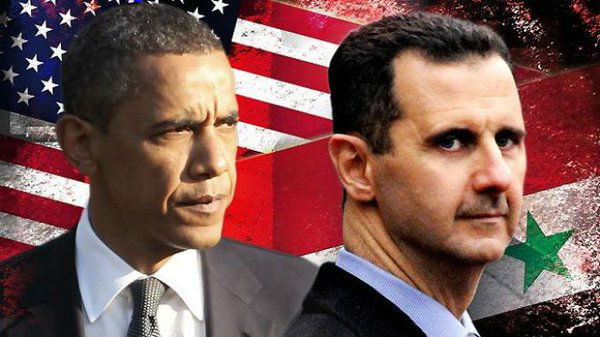
Hisham Melhem writes: For more than three decades, I have tried to interpret America to the Arabs and to explain the Arabs to Americans. I have never seen such disillusionment with an American president and his policies expressed by people in the region, ordinary citizens as well as public figures. In private, I have heard Arab officials express critical views of Obama and his style of leadership bordering on utter contempt; some Israeli officials did that publicly. For his Arab allies, Obama was too deferential to Iran and too quick to dump President Hosni Mubarak of Egypt — views also held by Israeli officials. Arabs feel Obama also mishandled Syria, a view strongly held also by Turkey. It is rarely the case for an American president to find that his relationships with Arabs, Israelis, and Turks are simultaneously troubled and in some cases very bitter.

Nor is Obama popular with the region’s ordinary citizens. A Pew Research Center poll in June 2015 shows that Obama’s image in the Middle East is mostly negative, with more than eight in ten Palestinians and Jordanians saying that they have no confidence in Obama to do the right thing in world affairs. In Lebanon 64 percent have no confidence in Obama’s leadership, with only 50 percent of Israelis saying they have confidence in the American president. In Turkey Obama’s fortune is better, but not by much where 46 percent of Turks have a negative assessment of his leadership. There is much anecdotal evidence showing that Arab youth in general have soured on Obama, accusing him of reneging on his early pledges to oppose Arab despotism and to stand by those who sought peaceful change in Egypt and Bahrain, and of abandoning Libya after the fall of the Gadhafi regime. However, what angers many Arabs is Obama’s disastrous handling of the Syrian conflict; they blame his indecisiveness on challenging the Bashar Al-Assad regime’s predations, and halfhearted measures toward helping the Syrian opposition, for the worst human tragedy in the twenty-first century. [Continue reading…]


Facebooktwittermail

How Iraq warped Obama’s worldview

obama-assad

Shadi Hamid writes: On October 2, 2002, Barack Obama gave a speech opposing war in Iraq—perhaps, in retrospect, the most important speech he ever gave. He was right, of course, and the foreign-policy establishment was largely wrong. The problem is that politicians who were right about Iraq tend to overestimate what that says about their foreign-policy judgment. For Obama, the effects of being right are magnified. He became president, in part, because of Iraq and the considerable damage the conflict had done to the country. Obama offered the promise of a decisive correction and, for true believers, a kind of spiritual atonement.

It is unclear what being right on Iraq would mean for your likelihood of being right on Syria, since the contexts in question are, in a way, opposites: Civil war in Iraq began after the United States intervened. Civil war in Syria happened in the absence of intervention. History will have to judge, but it may actually be the case that being right on Iraq made you more likely to be wrong about subsequent interventions. The tragedy of Iraq, if you weren’t careful, was likely to distort your perception of everything that followed, for wholly understandable reasons.

Iraq’s dark shadow seems to be everywhere in Jeffrey Goldberg’s fascinating yet unsettling exchanges with Obama. “Multilateralism regulates hubris,” Obama says. And he is right: It does. What is left unsaid is why, exactly, regulating hubris should, seven years after the conclusion of the Bush era, remain a primary preoccupation. It is hard to imagine any world leader citing the hubris of overextension as the problem that the United States, today, must take extra care to correct for or guard against. Obama has already corrected for it, many times over. [Continue reading…]

Facebooktwittermail

Syrians return to the streets against Assad

assad-dumped

An editorial for The Guardian says: Syrians have used the truce as an opportunity not just to relish a moment of relative calm, with fewer bombs and rockets falling on cities, but to make clear that the demands they formulated in 2011 for political change at the top have not gone away. This serves as a reminder of what the Syrian crisis was all about to start with: a popular revolt against a dictator, against a family clan that has been in power for decades, and against a security apparatus whose central tenet has been to spread terror. After five years of a civil war which has caused an estimated 300,000 to 470,000 deaths and uprooted over half of the population, the very gesture of coming out on the streets with persistent political claims stands out as an admirable act of resilience. The message coming from these protesters, under skies that could yet prove to be only briefly clear of bomber planes, is one which should guide diplomacy. No sustainable peace agreement can afford to ignore the mood on the streets.

The Syrian uprising started five years ago almost to the day, on 18 March 2011, at a time when the Arab spring seemed to hold so much promise. Peaceful protests in Tunisia and Cairo’s Tahrir Square served as powerful inspiration. But as the Syrian protests grew, the regime started firing live ammunition at crowds, and arresting and torturing protesters, sometimes just teenagers. It is the scale of the repression that led anti-Assad groups to take up arms – initially to protect demonstrators. What started as a movement of democratic aspirations morphed into a relentless conflict, with foreign powers weighing in.

Syrians have endured a state policy of mass murder on a scale that arguably has no precedent in recent times: Scud missiles, barrel bombs, chemical weapons, torture chambers, starvation, sieges. After the seizure of parts of the country by a complex web of Islamist groups, the west is focusing narrowly on Islamic State, and Russia has been substantially freed to dictate its terms for a truce.

But nothing has diminished the hunger, inside Syria and among its refugee diaspora, for an end to autocracy. The bravery of protesters must be acknowledged. And their message heard. [Continue reading…]

Facebooktwittermail

ISIS chemical attack in Iraq wounds 600, kills child

The Associated Press reports: The Islamic State launched two chemical attacks this week near the northern Iraqi city of Kirkuk, killing a toddler, wounding some 600 people and causing hundreds more to flee, Iraqi officials said Saturday.

Security and hospital officials say the latest attack took place early Saturday in the small town of Taza, which was also struck by a barrage of rockets carrying chemicals three days earlier.

Sameer Wais, whose 3-year-old daughter Fatima was killed in the attack, is a member of a Shiite militia fighting ISIS in the province of Kirkuk. He said he was on duty at the frontline when the attack occurred early in the morning, quickly ran home and said he could still smell the chemicals in the rocket.

“We took her to the clinic and they said that she needed to go to a hospital in Kirkuk. And that’s what we did, we brought her here to the hospital in Kirkuk,” he said.

Wais said his daughter appeared to be doing better the next day so they took her home. “But by midnight she started to get worse. Her face puffed up and her eyes bulged. Then she turned black and pieces of her skin started to come off,” he said.

By the next morning, Fatima had died, Wais said. [Continue reading…]

Facebooktwittermail

No way out: How Syrians are struggling to find an exit

refugee5

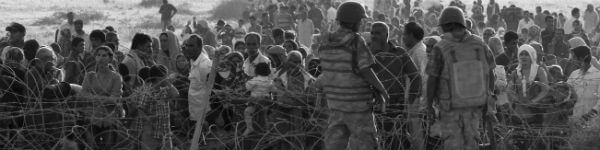
Eleonora Vio reports: Over the last five years, close to 4.8 million Syrians have fled the conflict in their country by crossing into Jordan, Lebanon and Turkey. But as the war drags on, neighbours are sealing their borders. Forced from their homes by airstrikes and fighting on multiple fronts, the vast majority of Syrian asylum seekers now have no legal escape route.

Earlier this week, EU leaders reached a hard-won deal with Turkey aimed at ending a migration crisis that has been building since last year, and that in recent weeks has seen tens of thousands of migrants and refugees stranded in Greece. But the agreement turns a blind eye to the fact that even larger numbers of asylum seekers are stranded back in Syria, unable to reach safety.

Syrians hoping to apply for asylum in Europe first have to physically get there. EU member states closed their embassies in Syria at the start of the conflict, and even embassies and consulates in neighbouring countries have been reluctant to process visa and asylum applications.

When Syria’s war erupted in March 2011, it was initially relatively easy for most refugees to leave the country. Those without the means to fly poured out in waves of tens of thousands across land borders into Jordan, Lebanon, and Turkey. But one by one, these exits have been restricted or closed off entirely. [Continue reading…]

Facebooktwittermail

Key powers mulling possibility of federal division of Syria

Reuters reports: Major powers close to U.N.-brokered peace talks on Syria are discussing the possibility of a federal division of the war-torn country that would maintain its unity as a single state while granting broad autonomy to regional authorities, diplomats said.

The resumption of Geneva peace talks is coinciding with the fifth anniversary of a conflict that began with protests against President Bashar al-Assad before descending into a multi-sided civil war that has drawn in foreign governments and allowed the growth of Islamic State militants in Syria and Iraq.

Fighting in Syria has slowed considerably since a fragile “cessation of hostilities agreement” brokered by the United States and Russia came into force almost two weeks ago. But an actual peace deal and proper ceasefire remain elusive.

As the United Nations’ peace mediator Staffan de Mistura prepares to meet with delegations from the Syrian government and opposition, one of the ideas receiving serious attention at the moment is a possible federal division of Syria. [Continue reading…]

Facebooktwittermail

Iran’s need for national reconciliation

Akbar Ganji writes: Hassan Rouhani was elected Iran’s president in June 2013 based on his promise of reaching a nuclear agreement and improving the relations with the West. He delivered on his promise, and in the process a close working relationship developed between Iranian Foreign Minister Mohammad Javad Zarif and Secretary of State John Kerry. The two diplomats have been discussing various issues, including the cease-fire in Syria. On March 6, President Rouhani said, “We can authorize our negotiation team to discuss other issues [with the West] in the world [that are of mutual interest]. We are sure that we will reach agreement similar to the nuclear negotiations.”

The Iranian people support these efforts and wish for improved relations with the United States. Under the leadership of former presidents Mohammad Khatami and Akbar Hashemi Rafsanjani, as well as Rouhani, Iran’s reformists and moderates want to pursue such goals. Leaders of the Green Movement who are under house arrest, namely former Prime Minister Mir Hossein Mousavi, his wife Zahra Rahnavard and former parliament speaker Mehdi Karroubi also support the policy of détente with the West.

Since the nuclear agreement between Iran and the P5+1 was signed in July 2015, the main problem in Iran has been national reconciliation. In other words, just as Iran and the P5+1 resolved their long-held and difficult differences diplomatically, Iranians from all walks of life also want to resolve the issues that are dividing their nation. Iranians call the nuclear agreement Barjam, the Farsi acronym for Joint Comprehensive Plan of Action. The reformists and moderates are now talking about the second Barjam, or Barjam 2, which they hope will lead to the release of all political prisoners, an end to the house arrest of the Green Movement’s leaders, freedom for political parties, independence for the universities and colleges and the resolution of other important issues.

These were also Rouhani’s promises during his campaign for the presidency, which have been opposed by Supreme Leader Ayatollah Ali Khamenei, who favors controlling cultural affairs as well as the universities. [Continue reading…]

Facebooktwittermail

Iran executions hit 20-year high in 2015, UN investigator says

Reuters reports: Iran executed nearly 1,000 prisoners last year, the highest number in two decades, and hundreds of journalists, activists and opposition figures languish in custody, a United Nations investigator said on Thursday.

Ahmed Shaheed, U.N. special rapporteur on human rights in Iran, voiced particular concern about executions for crimes committed by children under 18. This was “strictly and unequivocally prohibited under international law”.

There had been a “staggering surge in the execution of at least 966 prisoners last year – the highest rate in over two decades”, Shaheed told a news briefing. [Continue reading…]

Facebooktwittermail

As hard times hit, Egyptians at last find fault with Sisi

Reuters reports: “Your exellency: you are not working,” television presenter Azza al-Henawy said, looking into the camera but addressing the Egyptian president. “Not one single issue has been solved since you took over.”

After years of hearing little but enthusiastic applause for Abdel Fattah al-Sisi and vilification of his enemies, the tens of millions of Egyptians who watch the country’s pugnacious talk shows are suddenly being presented with the president’s faults.

The former military chief who overthrew the Muslim Brotherhood to take power in 2013 is facing the first sustained public criticism of his rule.

State television, known for being fiercely loyal, launched an internal investigation on Wednesday into Henawy for her remarks. But her comments were hardly isolated.

After years of publicly lionizing Sisi as the savior of the nation, many of the country’s most influential figures have emerged to blame the president for an economy in crisis, an Islamist insurgency raging in the Sinai peninsula and the brutality of an unreformed police force. [Continue reading…]

Facebooktwittermail

China blasts U.S. ‘rape and murder’ at UN Human Rights Council

Reuters reports: China strongly rejected U.S.-led criticism of its human rights record at the U.N. Human Rights Council on Thursday, saying the United States was hypocritical and guilty of crimes including the rape and murder of civilians.

“The U.S. is notorious for prison abuse at Guantanamo prison, its gun violence is rampant, racism is its deep-rooted malaise,” Chinese diplomat Fu Cong told the Council, using unusually blunt language.

“The United States conducts large-scale extra-territorial eavesdropping, uses drones to attack other countries’ innocent civilians, its troops on foreign soil commit rape and murder of local people. It conducts kidnapping overseas and uses black prisons.”

Fu was responding to a joint statement by the United States and 11 other countries, who criticised China’s crackdown on human rights and its detentions of lawyers and activists. [Continue reading…]

Facebooktwittermail

Blunt force: Key facts about the mysterious death of ex-Putin adviser Mikhail Lesin

RFE/RL reports: On November 3, 2015, hundreds of guests gathered at the swanky Ritz-Carlton hotel in the U.S. capital for a dinner honoring Russian billionaire and philanthropist Pyotr Aven and Susan Lehrman, a Washington socialite, investor, and patron of the arts.

On the guest list that evening, RFE/RL has confirmed, was Mikhail Lesin, a former Russian press minister, Kremlin adviser, and central player in President Vladimir Putin’s consolidation of state control over the media.

Lesin never showed up. And less than 48 hours later, on November 5, his battered body was discovered in his 9th-floor suite at Washington’s Dupont Circle Hotel.

His death sparked months of fervent speculation about what — or who — might have killed the former Kremlin insider, what he was doing in Washington, and the wall of silence that both city and federal authorities had erected around the matter.

Exactly who invited Lesin to the dinner, organized by the Washington-based Woodrow Wilson Center’s Kennan Institute, could not be immediately established. The research center, which focuses on the study of Russia and the former Soviet Union, said he was slated to sit at the table of one of the event’s sponsors but declined to say which.

Lesin’s empty seat at the dinner is among a scant handful of details about his final days that have emerged in the four months since his death, which has spawned theories that he was killed for spilling Kremlin secrets to the U.S. government — or even that he entered witness protection.

The chief city medical examiner in Washington on March 10 shed new light on the circumstances surrounding Lesin’s death, saying he died of “blunt-force injuries to the head.” [Continue reading…]

The New York Times adds: One law enforcement official said there were no obvious signs of forced entry or foul play in his hotel room. Mr. Lesin did, however, appear disheveled when he returned to the hotel, according to the video surveillance cameras, the official said. [Continue reading…]

Facebooktwittermail

The Obama doctrine: The Middle East doesn’t matter but even if it did, there’s nothing the U.S. can do to fix it

Jeffrey Goldberg writes: Inside the West Wing, officials say that Obama, as a president who inherited a financial crisis and two active wars from his predecessor, is keen to leave “a clean barn” to whoever succeeds him. This is why the fight against isis, a group he considers to be a direct, though not existential, threat to the U.S., is his most urgent priority for the remainder of his presidency; killing the so-called caliph of the Islamic State, Abu Bakr al-Baghdadi, is one of the top goals of the American national-security apparatus in Obama’s last year.

Of course, isis was midwifed into existence, in part, by the Assad regime. Yet by Obama’s stringent standards, Assad’s continued rule for the moment still doesn’t rise to the level of direct challenge to America’s national security.

This is what is so controversial about the president’s approach, and what will be controversial for years to come—the standard he has used to define what, exactly, constitutes a direct threat.

Obama has come to a number of dovetailing conclusions about the world, and about America’s role in it. The first is that the Middle East is no longer terribly important to American interests. The second is that even if the Middle East were surpassingly important, there would still be little an American president could do to make it a better place. The third is that the innate American desire to fix the sorts of problems that manifest themselves most drastically in the Middle East inevitably leads to warfare, to the deaths of U.S. soldiers, and to the eventual hemorrhaging of U.S. credibility and power. The fourth is that the world cannot afford to see the diminishment of U.S. power. Just as the leaders of several American allies have found Obama’s leadership inadequate to the tasks before him, he himself has found world leadership wanting: global partners who often lack the vision and the will to spend political capital in pursuit of broad, progressive goals, and adversaries who are not, in his mind, as rational as he is. Obama believes that history has sides, and that America’s adversaries — and some of its putative allies — have situated themselves on the wrong one, a place where tribalism, fundamentalism, sectarianism, and militarism still flourish. What they don’t understand is that history is bending in his direction.

“The central argument is that by keeping America from immersing itself in the crises of the Middle East, the foreign-policy establishment believes that the president is precipitating our decline,” Ben Rhodes told me. “But the president himself takes the opposite view, which is that overextension in the Middle East will ultimately harm our economy, harm our ability to look for other opportunities and to deal with other challenges, and, most important, endanger the lives of American service members for reasons that are not in the direct American national-security interest.”

If you are a supporter of the president, his strategy makes eminent sense: Double down in those parts of the world where success is plausible, and limit America’s exposure to the rest. His critics believe, however, that problems like those presented by the Middle East don’t solve themselves — that, without American intervention, they metastasize.

At the moment, Syria, where history appears to be bending toward greater chaos, poses the most direct challenge to the president’s worldview. [Continue reading…]

Facebooktwittermail

The Syrian revolution is not a holy war

assad-2

Hind Kabawat writes: The church bells in Daraya, a Damascus suburb that has seen some of the worst fighting in the war, no longer ring. To understand the tragic trajectory of Syria today one must look at how this town, doggedly held by rebels for the past four years, a mere half-hour drive to Bashar al-Assad’s palace, has transformed over the years.

Before the uprising, Daraya was a sleepy middle-class suburb for Damascus residents. By 2011, it had become an epicenter of peaceful protests, as thousands marched in the streets calling for Assad to step down from power. As a member of the Syrian Christian community, I was overwhelmed with excitement to join this grassroots people’s movement that called for democracy, freedom and rights for all Syrians, no matter our differences.

Syrians were united then. The church bells rang in Daraya in solidarity with the protesters. From their balconies in the narrow streets, Syrian Christians showered protesters below with rice and flowers. They marched hand in hand.

A holy war, this was not.

By 2012, the Assad regime intensified its armed crackdown against the unarmed protesters in Daraya. A terrible massacre occurred there on Aug. 24, 2012, as Assad’s regime sent troops, secret police, and members of the elite 4th Division to prevent residents from fleeing the city by any means necessary. Families were executed in their homes, whole buildings of women and children were machine-gunned in the streets, and residents were even decapitated — long before the so-called Islamic State even existed.

The state-run media launched an aggressive propaganda campaign claiming Muslims were massacring Christians, aiming to stoke fear of the opposition in the Christian community. As regime soldiers went door to door, searching for people to murder, it was the Christian community of Daraya that opened theirs to protect those fleeing the atrocities. One Catholic church treated the injured and prepared food for them.

Assad attempted to break Daraya with chemical weapons in 2013, launching a horrific sarin gas attack that killed over 1,000 across the Damascus suburbs — many were children still in their pajamas when the nighttime attack happened. Images of asphyxiated children lined up on the ground are etched in our memories of that night. The international community was on the verge of holding Assad accountable for that atrocity, but the Russians intervened at the eleventh hour with a negotiated settlement. Before the ink was dry, Assad instituted a brutal starvation siege upon Daraya and neighboring Moadamiya. [Continue reading…]

Facebooktwittermail

Third Republic: Germany enters a dangerous new political era

Dirk Kurbjuweit writes: Seven or eight months ago, Germany was a different country than it is today. There were no controversial political issues demanding immediate action and Chancellor Angela Merkel’s leadership was uncontested. It was quiet and comfortable. But then the refugees began streaming into Europe and the country’s sleepy tranquility came to a sudden end. Since then, disgusting eruptions of xenophobia have come in quick succession, a right-wing populist party is on its way to holding seats in several state parliaments, Merkel has gained approval from the center-left Social Democrats and from the Greens, some conservatives want to throw her out and the state is overwhelmed. Does anyone know what is happening? What is wrong with this country?

For Germany, this is the second democratic republic, if one leaves out East Germany, since it was only a faux democracy. First came the Weimar Republic, from 1918 to 1933, and then, since 1949, the Federal Republic, which simply continued following the momentous events of 1989. But now, it looks as though the refugee crisis has brought a significant rupture. To be sure, the German constitution and the country’s institutions won’t be called into question any time soon. But the conventions governing Germany’s political interactions are changing with incredible speed.

A crisis of representation is necessarily accompanied by jolts to the political party system. Some of those jolts have been a long time in the making, but they are now becoming apparent as the refugee crisis takes hold. It could be that our country is currently experiencing lasting change. The contours of a Third Republic are becoming apparent. [Continue reading…]

Facebooktwittermail

Oil revenue collapse may mean ISIS reliant on Gulf funds, UK inquiry is told

The Guardian reports: A collapse in oil revenues available to Islamic State is likely to have made it increasingly dependent on donations from wealthy Gulf states and profits from foreign exchange markets, the first UK inquiry into the terror group’s funding has heard.

Attacks by the US-led coalition on Isis’s oil installations and convoys are believed to have reduced its oil revenues by more than a third as the funding of the group becomes one of the central fronts in the battle to defeat it in Syria and Iraq.

The government is reluctant to cooperate with the Commons foreign affairs select committee inquiry and has barred the key Ministry of Defence official overseeing efforts to undermine Isis’s funding from giving evidence.

But the Foreign Office minister Tobias Ellwood said progress was being made, even though knowledge of the group’s opaque finances was sketchy and dependent on intelligence finds.

He asserted that the regime’s oil revenue was collapsing and even suggested the group’s Syrian headquarters in Raqqa could implode if and when the Iraqi army retakes Mosul.

But experts have told the committee the UK government may be vastly over-estimating the importance of oil revenue, and underestimating the extent to which Isis is reliant on foreign donors in the Gulf or its manipulation of the Iraqi banking system.

Luay al-Khatteeb from the Iraq Energy Institute claimed the cost of waging war for Isis must be so high, and its oil revenues now so limited, that it must be accessing large-scale donations. [Continue reading…]

Facebooktwittermail

Russian hostility ‘partly caused by West’, claims former U.S. defence head

The Guardian reports: The current level of hostility in US-Russian relations was caused in part by Washington’s contemptuous treatment of Moscow’s security concerns in the aftermath of the cold war, a former US defence secretary has said.

William Perry, who was defence secretary in Bill Clinton’s administration from 1994 to 1997, emphasised that in the past five years it has been Vladimir Putin’s military interventions in Ukraine, Syria and elsewhere that have driven the downward spiral in east-west relations.

But Perry added that during his term in office, cooperation between the two countries’ militaries had improved rapidly just a few years after the fall of the Soviet Union and that these gains were initially squandered more as a result of US than Russian actions. [Continue reading…]

Facebooktwittermail

Saudi Arabia back-tracks on Yemen

By Brian Whitaker, March 10, 2016

After waging war in Yemen for almost a year, Saudi Arabia is gradually beginning to realise what many said at the outset: that military victory is impossible.

A few days ago the Saudis took the previously unthinkable step of engaging in direct talks with the Houthis, their principal foe in Yemen. Yesterday, reinforcing this shift, Saudi foreign minister Adel bin Ahmed al-Jubeir spoke of the kingdom’s “commitment to finding a political solution”.

Even so, an end to the conflict is probably still a long way off and the scope of the Saudi-Houthi talks so far seems to be limited to a few specific issues: cross-border conflict, prisoner exchanges and supplies of humanitarian aid to Yemen. 

Continue reading

Facebooktwittermail

Iran prepared to send advisers to ‘support’ Yemen’s Houthis

Middle East Eye reports: Iran is prepared to send a team of “military advisers” to support Houthi rebels in Yemen, a senior military commander has said, amid suggestions that forces fighting on the ground could be moving towards a peace deal.

Massoud Jazayiri, deputy head of Iran’s armed forces, told Iran’s Tasnim news agency on Tuesday that the country would consider repeating its actions in Syria, where it is supporting President Bashar al-Assad.

“The Islamic Republic [of Iran] feels very deeply its obligation to help the Syrian government and its people. It also feels very deeply its obligation to help the Yemeni people in any way possible.”

Iran has sent large numbers of military advisers to fight alongside the Syrian army and Hezbollah, as well as footsoldiers thought to include Afghan migrants to Iran who are promised high rates of pay and Iranian citizenship in exchange for fighting.

Yemen’s Houthi rebels, who overran much of the country in September 2014, are already known to have received financial and military support from Iran. [Continue reading…]

Facebooktwittermail