Middle East Eye reports: The European Parliament on Thursday passed a resolution condemning “the torture and assassination” of Italian student Giulio Regeni in Egypt, describing the killing as not being isolated but taking place in a “context of torture, death in custody and enforced disappearances”.
The resolution called for a joint and transparent investigation into Regeni’s death by both Egyptian and Italian authorities and passed with a huge majority – 588 MEPs voted for it, just 10 voted against, and 59 abstained.
Dutch MEP Marietje Schaake, who supported the resolution, told Middle East Eye that Regeni’s killing has served as a “wake-up call” to European politicians about the seriousness of the human rights situation in Egypt.
“It is sad that it took the torturing to death of a European student to act as a wake-up call for some that still needed one,” she said. “This case, along with the structural repression of Egyptians, including through torture, imprisonment and disappearances, should much more strongly guide EU policies towards Egypt.”
Regeni, 28, was a doctoral candidate at the UK’s Cambridge University, and was in Egypt researching the development of Egyptian trade unions when he disappeared on 25 January – the same day as the fifth anniversary of Egypt’s uprising that overthrew long-time leader Hosni Mubarak.
On 3 February Regeni’s body was found on a road on the outskirts of Cairo bearing the hallmarks of severe beating and torture. There has been widespread speculation that Egyptian security services – known for their torture of detainees – were involved in the killing but the government of President Abdel-Fattah al-Sisi has denied this. [Continue reading…]
Category Archives: Lands
UK setting bad example on surveillance, says UN privacy chief

The Guardian reports: The UK is setting a bad example to the rest of the world with proposed changes to the law on surveillance, the United Nations special rapporteur on privacy has said.
The criticism by rapporteur Joseph Cannataci is made in a report presented to the UN Human Rights Council. The report deals with privacy concerns worldwide but Cannataci, concerned about developments in the UK, has devoted a section to the British bill.
He says the British government has failed to recognise the consequences of legitimising bulk data collection or mass surveillance. Instead of legitimising it, the government should be outlawing it, he says. [Continue reading…]
No government is more responsible for ISIS’s growth than Assad’s

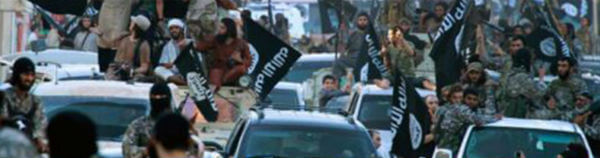
Kyle Orton writes: Last week, a judgment in United States District Court in Washington, D.C., awarded nearly $350 million to the families of two Americans killed in Jordan in 2005 by the predecessor organization to the Islamic State (ISIS). The important point of the case was who the court found liable: the regime of Bashar al-Assad, currently presenting itself to the world as the last line of defense to a terrorist takeover of Syria. This case highlights a neglected history, which began in 2002, where the Assad regime underwrote ISIS and fostered its growth, first to destabilize post-Saddam Iraq and later Lebanon, and since 2011 to discredit and destroy the uprising against Assad in Syria.
The group now known as ISIS was founded in early 2000 with Al-Qaeda seed money at a camp in Taliban-controlled Afghanistan. ISIS’ founder, Abu Musab al-Zarqawi, did not formally swear allegiance to Osama bin Laden until 2004, but the two pooled resources, notably on the Millennium Plot, which was meant to target Zarqawi’s Jordanian homeland and Los Angeles International Airport.
After the U.S. overthrew the Taliban in the wake of 9/11, Bin Laden went to Pakistan and Zarqawi went to Iran. Zarqawi then moved into Iraqi Kurdistan in April 2002, joining Ansar al-Islam, a group he and Al-Qaeda had co-sponsored, which was waging war against the elected Kurdish government that was protected by the Anglo-American no-fly zone. Ansar was penetrated at senior levels by agents of the Saddam Hussein regime, according to Kurdish intelligence, which also caught Saddam providing “logistical support, money, weapons, transportation [and] safe houses” to Ansar. Any enemy of the Kurds was a friend of Saddam’s — even before the reorientation of Saddam’s foreign policy in the mid-1980s toward instrumentalizing Islamist groups for the Baathist government’s own ends (which was later extended to internal policy).
By May 2002, Zarqawi was in Baghdad with a group of more than a dozen Al-Qaeda-affiliated jihadists, including: Zarqawi’s successor, Abu Hamza al-Muhajir, a long-time Qaeda-affiliated Egyptian who was arrested in 2014 while training jihadists in Libya, Thirwat Shehata, and Abu Humam al-Suri, who went on to become the military chief of Jabhat al-Nusra (Al-Qaeda in Syria). Zarqawi, who had “relatively free” movement within Iraq, departed Iraq in the early summer of 2002 to go on a recruitment-drive in the Levant.
First, Zarqawi went to Ain al-Hilweh, a Palestinian camp in southern Lebanon known for its Islamist militancy, and then to Syria. Zarqawi recruited numerous Syrians, notably ISIS’ current spokesman, Taha Falaha, better known as Abu Mohammed al-Adnani. From Syria, Zarqawi organized — with the complicity of Assad — the assassination of a U.S. diplomat, Laurence Foley, in Jordan. More importantly, Zarqawi set up, in collaboration with the Syrian secret police, the networks that would bring the foreign jihadists into Iraq after the fall of Saddam.
During the invasion of Iraq, Mahmoud al-Aghasi (pseudonym: Abu al-Qaqa), a Salafi agitator in Aleppo, had gone door-to-door rounding up young men to go and wage jihad in Iraq, who were then allowed to pass into Iraq unhindered by Syrian border guards. Al-Aghasi was an asset of Assad’s intelligence. Throughout the entire U.S.-led occupation of Iraq, Syria was the main conduit for ISIS’ foreign volunteers who formed the overwhelming majority of the suicide bombers. [Continue reading…]

Eating leaves, and other ways besieged Syrians try to survive
The New York Times reports: Medical workers in parts of Syria have been forced to let the wounded bleed to death for lack of bandages, and have opted to use catheter bags meant for urine to administer intravenous fluids to newborns because proper drip bags are gone.
Expectant mothers in areas vulnerable to shelling and bombing give birth by cesarean section rather than risk natural childbirth in an attack. Malnourished children are eating animal feed and leaves, in some cases only miles from warehouses full of food. Families are burning mattress stuffing and plastic scraps for heat.
Those are among some of the details in a Save the Children report issued Tuesday night about the challenges confronting Syrian civilians in 18 areas across the country that the United Nations has defined as besieged, meaning they are surrounded by armed antagonists who have severely restricted aid delivery and freedom of movement.
At least a quarter-million children are among the inhabitants of such areas, which have been effectively turned into “open-air prisons,” the report said. It drew on data from the United Nations and other organizations, as well as Save the Children’s interviews with local aid groups, doctors, teachers and civilians, including 126 mothers, fathers and children who reside in these areas. [Continue reading…]
Outsourcing a humanitarian crisis to Turkey – is that the European thing to do?
By Marianna Fotaki, University of Warwick
European countries plan to send thousands of refugees back to Turkey in a deal aimed at preventing people from trying to reach the EU by sea.
In what is being described as a “one in, one out” deal, anyone washing up on the shores of Greece will be sent back to Turkey, with one person being transferred from a Turkish refugee camp in their place.
But the deal, which is yet to be finalised, is flawed from the outset. Denying refugees the right to apply for asylum as they reach the EU is against international humanitarian law. And refusing protection to unarmed people fleeing war and persecution by sending them back to Turkey, a country under threat of a civil war, is unconscionable.
European Union leaders must be both desperate and clueless to pursue this. If the goal is to save the European Union from implosion, the question is on what terms will its unity be maintained?
EU woos Turkey for refugee help, ignoring rights crackdown
The New York Times reports: The contrast was jarring: Just days after the police broke into the offices of an opposition newspaper using tear gas and water cannons, Turkey’s prime minister was greeted in Brussels with offers of billions in aid, visa-free travel for Turks in Europe and renewed prospects for joining the European Union.
The juxtaposition highlighted the conundrum Europe faces as it seeks solutions to its worst refugee crisis since World War II. To win Turkey’s desperately needed assistance in stemming the flow of migrants to the Continent, European officials seem prepared to ignore what critics say is President Recep Tayyip Erdogan’s steady march toward authoritarianism.
It is a moment of European weakness that the Turkish leadership seems keen to capitalize on. As Prime Minister Ahmet Davutoglu arrived in Brussels this week, he upped the ante, asking for more financial aid than was previously negotiated and demanding visa-free travel by June, while offering to take back some migrants who had crossed into Europe. [Continue reading…]
Truce tests relations between Islamist giants in Syria
Aron Lund writes: The U.S.-Russian brokered truce remains deeply controversial among rebels. Hardline jihadis have condemned the peace process, while more pragmatic Islamists have endorsed it. Now, a jihadi crackdown on demonstrators in rebel-held Idlib is testing the alliance between two of the insurgency’s most powerful factions
For Syria’s rebel movement, relations between its two most powerful Islamist factions is a life or death issue. Two large salafist factions, the Nusra Front and Ahrar al-Sham, dominate the insurgency in the Idlib region, and they play a key part in the Hama and Aleppo governorates as well. While these groups are close allies on the battlefield and have often worked hand in hand politically, there are important distinctions between them. The terrorist-listed Nusra Front is outspokenly salafi-jihadi, many of its leaders are foreigners, and the group has pledged allegiance to the international al-Qaida movement. While equally committed to establishing Syria as a Sunni theocracy, Ahrar al-Sham is an indigenously Syrian group, renounces foreign attacks, and courts international support. It is particularly close to Turkey and Qatar.
The Russian-American agreement brokered on February 22, which led to a partial cessation of hostilities in Syria that began on February 27, has tested their alliance and brought previously latent conflicts of interest to the fore. The Nusra Front is explicitly opposed to the deal, indeed to the political process as a whole, describing it as a ”crusader” scheme to extinguish the Syrian uprising. The group has called for continued attacks on the government of President Bashar al-Assad, although it has in practice exercised restraint since February 27, probably for fear of alienating Syrian civilians or drawing the ire of local allies such as Ahrar al-Sham. Nusra fighters describe this as a waiting game, telling a Reuters correspondent that they are ”convinced that it will not work and it is only a matter of time before it officially ends.” Recently, some reports point to increased Nusra activity south of Aleppo, but it is difficult to know what side actually initiates fighting – the Assad government and its Russian allies have not fully ceased their skirmishing with the rebels either. [Continue reading…]
An ‘empire of women’ in Lebanon’s Bekaa Valley
Dylan Collins writes: As young Syrian refugee students celebrated International Women’s Day in the Bekaa Valley this week, education advocate Nora Jumblatt highlighted the increasingly important role of women throughout the refugee community. The war in Syria, despite its chaos and sadness, she said, has given rise to a “little miracle”
The war in Syria has brought about an “empire of women” in Lebanon’s Bekaa Valley, said civil society leader and education advocate Nora Jumblatt during a celebration of International Women’s Day.
Hundreds of young Syrian refugee girls participated in the festivities held at the Kayany Foundation’s Malala School in Bar Elias, a town equidistant from Beirut and Damascus that sits along the Syrian-Lebanese border. With the help of international organizations, local universities and volunteers, the foundation is empowering a new generation of Syrian women, equipping them with the tools and knowledge they’ll need to rebuild their country. [Continue reading…]
Iranian state TV censors speech in which President Rohani hails former President Khatami
RFE/RL reports: Iran’s president has broken a long-standing taboo by publicly defending a reformist predecessor, but his remarks were met with a muted response.
In a speech broadcast live from Mohammad Khatami’s hometown on March 7, President Hassan Rohani hailed the former reformist president as a “dear brother.”
The crowd in the central Iranian city of Yazd cheered wildly at the mention of their native son. But Iran’s state-run IRINN television, well aware of a long-standing media ban against mentioning Khatami’s name, quickly cut the volume. [Continue reading…]
Rouhani praises ex-Pres Khatami visiting Yazd, audience erupts in cheers, stateTV mutes them
[2nd half from YouTube] pic.twitter.com/QlIGIBCWYX— Hadi Nili (@HadiNili) March 7, 2016
Russia warns North Korea over threats of nuclear strike
The Guardian reports: Russia has warned North Korea that threats to deliver “preventive nuclear strikes” could create a legal basis for the use of military force against the country, suggesting that even Pyongyang’s few remaining friends are growing concerned about its increasingly confrontational stance.
The Russian foreign ministry statement, which follows a North Korean threat to “annihilate” the US and South Korea, also criticises Washington and Seoul for launching the largest joint military drills yet to be held on the peninsula.
“We consider it to be absolutely impermissible to make public statements containing threats to deliver some ‘preventive nuclear strikes’ against opponents,” the Russian foreign ministry said in response to North Korea’s threats.
“Pyongyang should be aware of the fact that in this way the DPRK will become fully opposed to the international community and will create international legal grounds for using military force against itself in accordance with the right of a state to self-defense enshrined in the United Nations Charter,” continued the statement, translated by Itar Tass news agency. [Continue reading…]
China offers Afghanistan army expanded military aid
The Wall Street Journal reports: China has offered the Afghanistan army expanded military aid to combat the Taliban, according to the Afghan Defense Ministry, a move that reflects Beijing’s readiness to deepen its engagement with the war-torn country.
The offer was made during a rare, high-level visit at the end of February by a Chinese military delegation headed by General Fang Fenghui, chief of the Joint Staff Department of the People’s Liberation Army, Afghan officials said.
China has been wary of publicly supporting the Afghan military against the Taliban, as it nurtures relations with the militant group in an effort to be seen as a neutral party in the conflict and help the peace process. However, deteriorating security and the emergence of Islamic State has prompted China to take a more active role in Afghanistan.
The timing of General Fang’s recent trip was seen as a strong show of support for the Afghan government at a time when it is losing control over parts of the country following the withdrawal of most foreign troops in 2014. The Taliban now control nearly a third of the country, according to U.S. and allied officials. [Continue reading…]
Most Israeli Jews think they deserve preferential treatment — almost half favor ethnic cleansing
Universally, the targets of discrimination are more conscious of being treated unfairly than are the perpetrators of discrimination. Israel is no exception.
A new Pew Research report includes the following findings:
Whereas only 21% of Israeli Jews see “a lot” of discrimination against Muslims, 79% of Israeli Arabs (Muslim and non-Muslim) do.
Perhaps the reason so few Israeli Jews see discrimination is because so many believe that as Jews, they deserve preferential treatment.
For half of Israeli Jews, a privileged status is apparently not enough — they would like to see Arab Israelis kicked out.
Women of the Amazon defend their homeland against new oil contract
Emily Arasim and Osprey Orielle Lake report: In late January 2016, the government of Ecuador signed a controversial contract with Chinese oil company Andes Petroleum, handing over rights to explore and drill for oil deep in the country’s pristine southeastern Amazon Rainforest, known and revered by many as “the lungs of the Earth.”
For decades, Indigenous communities of the southern Ecuadorian Amazon have successfully fought to protect their land from encroachment by oil companies, engaging in local action and international policymaking and campaigns with a powerful message of respect for the Earth’s natural laws and the rights of Indigenous peoples.
At the forefront of this ongoing struggle are courageous Indigenous Amazonian women leaders who have declared, “We are ready to protect, defend and die for our forest, families, territory and nation.”
In marches, protests, conferences and international forums, the women of the Ecuadorian Amazon are standing with fierce love and conviction for the forests and their communities, and navigating a brutal intersection of environmental devastation, cultural dislocation and violence and persecution as women human rights and land defenders.
The women have repeatedly put their bodies on the frontline in an attempt to halt oil extraction across the Amazon, often facing harsh repression by the state security. [Continue reading…]
U.S. strikes in Somalia kill 150 Shabab fighters
The New York Times reports: The fighters had just completed “training for a large-scale attack” against American and African Union forces, said Capt. Jeff Davis, a Pentagon spokesman.
Pentagon officials would not say how they knew that the Shabab fighters killed on Saturday were training for an attack on United States and African Union forces, but the militant group is believed to be under heavy American surveillance.
The Shabab fighters were standing in formation at a facility the Pentagon called Camp Raso, 120 miles north of Mogadishu, when the American warplanes struck on Saturday, officials said, acting on information gleaned from intelligence sources in the area and from American spy planes. One intelligence agency assessed that the toll might have been higher had the strike happened earlier in the ceremony. Apparently, some fighters were filtering away from the event when the bombing began.
The strike was another escalation in what has become the latest battleground in the Obama administration’s war against terror: Africa. The United States and its allies are focused on combating the spread of the Islamic State in Libya, and American officials estimate that with an influx of men from Iraq, Syria and Tunisia, the Islamic State’s forces in Libya have swelled to as many as 6,500 fighters, allowing the group to capture a 150-mile stretch of coastline over the past year.
The arrival of the Islamic State in Libya has sparked fears that the group’s reach could spread to other North African countries, and the United States is increasingly trying to prevent that. American forces are now helping to combat Al Qaeda in Mali, Niger and Burkina Faso; Boko Haram in Nigeria, Cameroon and Chad; and the Shabab in Somalia and Kenya, in what has become a multifront war against militant Islam in Africa. [Continue reading…]
Tunisian clash spreads fear that Libyan war is spilling over
The New York Times reports: Fear engulfed Tunisia on Monday that Islamic State mayhem was spilling over from neighboring Libya, as dozens of militants stormed a Tunisian town near the border, assaulting police and military posts in what the president called an unprecedented attack.
At least 54 people were killed in the fighting in the town, Ben Gardane, which erupted at dawn and lasted for hours until the security forces chased out what remained of the assailants. An enormous stash of weapons was later found.
The authorities said at least 36 militants were among the dead. The others were a mix of security forces and civilians, including a 12-year-old girl.
It was unclear where the assailants had come from, although some witnesses reported that they had local accents and had pronounced themselves as liberators. But President Beji Caid Essebsi of Tunisia, increasingly alarmed about the Islamic State’s expansion in Libya, blamed the militant group. In a televised address, he suggested that the motive was to create a new Islamic State territory on Tunisian soil, similar to the 150-mile stretch it controls in Libya. [Continue reading…]
Takeover of opposition newspaper is a death warrant for free speech in Turkey
By Ahmet Erdi Öztürk, University of Ljubljana
On Friday March 4, a Turkish court ruled that the country’s biggest daily newspaper, Zaman, would be run by appointed trustees – ostensibly because of its so called “terrorist” activities, but more likely because the publication was linked to US-based Muslim preacher Fethullah Gülen, an opponent of the government.
Shortly after the court’s decision, police stormed the paper’s Istanbul headquarters in a dramatic midnight raid, firing tear gas and water cannon at the hundreds-strong crowd that formed outside.
The new administrative members dismissed the editor, executive editor and other senior staff, transforming the newspaper’s editorial line, in less than 48 hours, from a rigorous opposition voice into a propaganda mouthpiece for the president, Recep Tayyip Erdoğan.
Full disclosure: I have written oped pieces for Zaman for the past two years or so – at a rate of about two or three per month. Never at any time was there any attempt to dictate my angle or censor my work, even when – as I did several times – I wrote articles that were critical of Gulen or his movement. Now I feel that the doors of this newspaper are closed – not only for me but also for most of the other academic writers who had used the paper as a vehicle for their opinions.
This episode has not come as a huge surprise to anyone who has been following Turkey’s political scene. While Erdoğan and his AKP party enjoyed close relations with Gulen and his Hizmet educational and religious movement when the party first emerged – and observers believe that Hizmet used his enormous popularity to help Erdogan secure his first term as prime minister in 2002 – things have gone bad between them since 2013.
Turkey cracks down on foreign fighters
The Washington Post reports: The plea for help came from Sweden: Two young Muslim males had left Stockholm for Syria and would soon be terrorists-in-training unless authorities in Turkey could intercept them.
Turkish security caught the men arriving at an airport in Istanbul with one-way tickets and camouflage gear, officials said. The two were sent back to Sweden and the trouble averted — until eight days later, when the same duo turned up at a Turkish seaport, this time arriving by ferry from the Greek island of Kos.
The back-to-back deportations of those would-be militants last year were in some ways a sign of substantial progress in the cooperation between Western governments and Turkey in sharing intelligence and stemming the flow of foreign fighters to Syria.
But the sequence and hundreds of similar cases have also fueled rising levels of frustration in Turkey, which has been accused of enabling the migration of fighters into Syria even while being called upon to block militants on behalf of other governments unwilling or unable to do the job themselves. [Continue reading…]
Saudi Arabia’s unholy war in Yemen

Nasser Arrabyee writes: Since it began its war on the Houthis in March 2015, Saudi Arabia has justified its intervention as a broader holy duty to fight Shia and protect the government in exile. Yet Yemenis increasingly view Saudi intervention more as a campaign—in which they are collateral—to upgrade Riyadh’s own influence and an ill-conceived effort to promote Mohammed Bin Salman as a powerful future Saudi king. As such, Yemenis fail to see any moral or legal justification for the U.S.-backed Saudi war. What is evident to them is the deliberate destruction of people and capital—all to no end, as the war has failed to accomplish Saudi Arabia’s goal of weakening the Houthis. Instead, the airstrikes and blockade that form the core of Saudi Arabia’s strategy have increased anti-Saudi hatred, driving greater numbers of Yemenis to support the Houthis every day.
The war has done particular damage to infrastructure — including reservoirs, airports, electric power stations, bridges and roads, markets, factories, stadiums, and hospitals. The education sector has been hit especially hard, with 39 universities damaged, 810 primary and secondary schools damaged, and another 3,809 closed. About 85 percent of the population of 27 million is in dire need of food, water, medicine, and fuel. Over 2.5 million Yemenis are displaced, and the attacks have killed or injured more than 23,000 civilians — among them thousands of women and children—using internationally prohibited weapons such as cluster bombs, as documented by Human Rights Watch and Amnesty International. [Continue reading…]