Category Archives: Lands

Israel feels the heat of U.S., EU and U.N. criticism

Reuters reports: The United States, European Union and the United Nations have issued unusually stern criticism of Israel, provoking a sharp response from Prime Minister Benjamin Netanyahu and raising Palestinians’ hopes of steps against their neighbor.

U.N. Secretary-General Ban Ki-moon on Tuesday described Israel’s settlements as “provocative acts” that raised questions about its commitment to a two-state solution, nearly 50 years after occupying lands the Palestinians seek for a state.

Ban also laid some of the blame for four months of stabbings and car rammings by Palestinians at Israel’s door, saying “as oppressed peoples have demonstrated throughout the ages, it is human nature to react to occupation, which often serves as a potent incubator of hate and extremism”.

Netanyahu’s response was quick and furious. Ban’s remarks “give a tailwind to terrorism”, he said, and ignore the fact “Palestinian murderers do not want to build a state”. [Continue reading…]

Facebooktwittermail

King Salman’s first year in power in Saudi Arabia has been a dark year for human rights

Amnesty International: Despite limited improvements in the field of women’s rights, the Saudi Arabian authorities have pursued a persistent and ruthless crackdown on all forms of dissent by, among other measures, detaining critics after grossly unfair trials before the Specialized Criminal Court, often on spurious terrorism charges, increased their use of the death penalty and maintained practices that discriminate against the country’s Shi’a Muslim minority. The Kingdom’s military has also repeatedly violated the laws of war in its military campaign in Yemen.

Dozens of human rights defenders, peaceful activists and dissidents remained behind bars after being imprisoned in previous years. Among them were blogger Raif Badawi and his lawyer Waleed Abu al-Khair, the first human rights defender to be sentenced after an unfair trial under Saudi Arabia’s counter-terror law, in force since February 2014. Dozens more were jailed under the law in 2015, including human rights defenders Dr Abdulkareem al-Khoder and Dr Abdulrahman al-Hamid, both founding members of the now disbanded independent Saudi Civil and Political Rights Association (ACPRA), also after unfair trials. Most of the organization’s other founding members remained in prison.

Prominent writer Dr Zuhair Kutbi was sentenced in December 2015 to four years in prison by the Specialized Criminal Court, followed by a five-year ban on overseas travel, a fine of 100,000 Saudi Arabian riyals (about US$26,600) and a 15-year ban on writing and giving interviews to the media. The court also ordered him to erase his social media accounts. It suspended two years of his four-year sentence because of his poor health, but indicated they would be re-imposed if he “offended” again. [Continue reading…]

Facebooktwittermail

Amnesty: Iran still a leading executioner of children

The New York Times reports: Iran is one of the leading executioners of juvenile offenders, despite its improved legal protections for children and a pledge more than two decades ago to end the death penalty for convicts younger than 18, Amnesty International said Monday.

In a new report, Amnesty International said that it had documented the execution of at least 73 juveniles in Iran from 2005 to 2015 and that 160 juvenile offenders are languishing on the country’s death row.

The report casts doubt on laws meant to improve children’s rights in Iran in the past few years, including new discretion by judges to impose alternative punishments on juveniles convicted of capital crimes. In reality, the report said, these changes are attempts by the authorities to “whitewash their continuing violations of children’s rights and deflect criticism of their appalling record as one of the world’s last executioners of juvenile offenders.”

Amnesty International, a leading global advocate for abolition of the death penalty, had also recorded the execution of juveniles in Pakistan, Saudi Arabia and Yemen, and there are juveniles on death row in the Maldives and Nigeria.

There is little doubt among rights groups that Iran has executed more people convicted of capital crimes committed as minors than any other country. [Continue reading…]

Facebooktwittermail

The bond between the Vatican and Iran is a partnership destined to endure

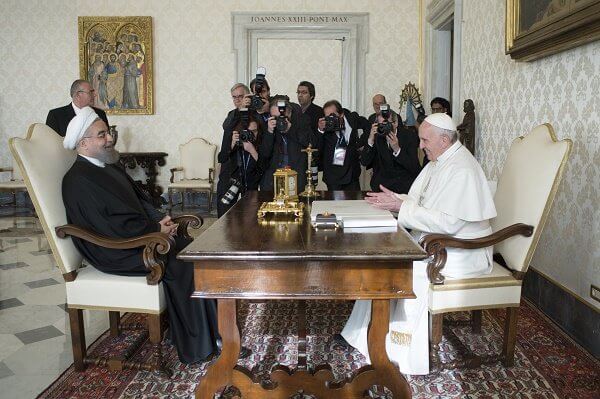
rouhani-francis

Following a meeting on Tuesday at the Vatican between Pope Francis and Iranian President Hassan Rouhani, and noting that the Vatican has had diplomatic ties with Iran since 1954 (30 years longer than U.S.-Vatican relations), John L. Allen Jr. writes: the close ties between Rome and Tehran reflect the often under-appreciated fact that both the Vatican and post-revolutionary Iran are basically theocracies, representing spiritual traditions — Catholicism and Shia Islam — that have a surprising amount in common.

Iranian writer Vali Nasr, author of the 2006 book “The Shia Revival,” argues that the divide between Sunni and Shia bears comparison to that between Protestants and Catholics, with Shia being the branch closer to Catholicism.

Among those points of contact are:

  • A strong emphasis on clerical authority
  • An approach to the Quran accenting both scripture and tradition
  • A deep mystical streak
  • Devotion to a holy family (in the case of Shiites, the blood relatives of Mohammad) and to saints (the Twelve Imams)
  • A theology of sacrifice and atonement through the death of Hussain, grandson of Mohammad and the first imam of Shia Islam
  • Belief in free will (as opposed to the Sunni doctrine of pre-destination)
  • Holy days, pilgrimages, and healing shrines
  • Intercessory prayer
  • Strongly emotional forms of popular devotion, especially the festival of Ashoura commemorating Hussain’s death

One recent sign of the spiritual vicinity is that Iranian scholars recently translated the Confessions of Augustine and the Catechism of the Catholic Church into Farsi, the result of a 12-year effort.

In terms of sheer realpolitik, both parties also have strong motives for keeping their relationship green.

From Iran’s point of view, it aspires to being not merely a regional but a global player, and to do so it requires not merely “hard” power, to invoke the famous distinction of Harvard political scientist Joseph Nye, but also “soft,” meaning moral legitimacy. The perception of being in dialogue with the Vatican is crucially important, counteracting Bush administration rhetoric about Iran being part of an “axis of evil.”

Tehran also sees the Vatican as a firebreak with sometimes hostile Western nations. In 2007, when it seemed as if concerns over Iran’s nuclear program might lead to armed conflict with the United States, Iranian diplomats quietly sought out the Vatican as a potential mediator. [Continue reading…]

Facebooktwittermail

Failures in handling unaccompanied migrant minors have led to trafficking

The Washington Post reports: On the phone, the boy was frantic. After traveling hundreds of miles from a village in Guatemala, he had made it across the U.S. border and into a government-funded shelter for unaccompanied minors.

But then something went terribly wrong.

Instead of sending him to his uncle, Carlos Enrique Pascual, a landscape worker in Florida, authorities said the shelter released the teenager to traffickers who took him to central Ohio, held him captive in a roach-infested trailer and threatened to kill him if he tried to leave.

“Please, how can I get out of this?” Pascual’s nephew begged him during a stolen moment with a telephone. “I’m hungry, and my heart is bursting with fear.”

Pascual called police and, in December 2014, authorities found his nephew, then 17, and seven other boys living in cramped, dirty trailers about an hour outside of Columbus. Authorities said they were working at Trillium Farms, one of the country’s largest egg producers, debeaking hens and cleaning cages nearly 12 hours a day, six days a week, for as little as $2 a day.

The boys were part of a surge of children flowing across the U.S.-Mexico border over the past four years, overwhelming federal officials responsible for their safekeeping, child advocates say. Since 2011, more than 125,000 unaccompanied minors from Central America have been stopped at the border, many placed in shelters funded by the federal Office of Refugee Resettlement. [Continue reading…]

Facebooktwittermail

Pursuing critics, China reaches across borders. And nobody is stopping it.

The Washington Post reports: China’s campaign against dissent is going global.

Amid extraordinary moves to rein in criticism at home, Chinese security personnel are reaching confidently across borders, targeting Chinese and foreign citizens who dare to challenge the Communist Party line, in what one Western diplomat has called the “worst crackdown since Tiananmen Square.”

A string of incidents, including abductions from Thailand and Hong Kong, forced repatriations and the televised “confessions” of two Swedish citizens, has crossed a new red line, according to diplomats in Beijing. Yet many foreign governments seem unwilling or unable to intervene, their public response limited to mild protests.

The European Union is divided and appears uncertain about what to do. Hong Kong is in an uproar, with free speech under attack, activists looking over their shoulders and many people saying they feel betrayed by a lack of support from Britain. [Continue reading…]

Facebooktwittermail

In the face of mounting opposition, Angela Merkel holds to her principles on accepting refugees

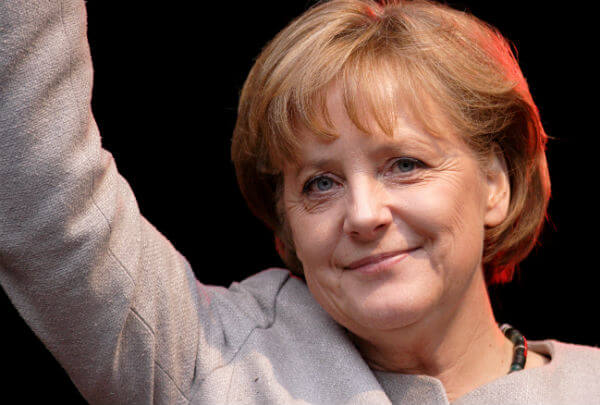
Angela_Merkel

Der Spiegel reports: On a Sunday evening in early January, Angela Merkel went to a piano concert by Antonio Acunto in the Konzerthaus on Berlin’s beautiful Gendarmenmarkt. The program included works from Chopin, Rachmaninoff and Schumann, but the chancellor didn’t just come for the music. It was also for a good cause and to show support. The concert was a benefit for the refugees. Her refugees.

Shortly before the concert began, Merkel saw an old acquaintance: Reverend Rainer Eppelmann. In 1990, Eppelmann was head of the Democratic Awakening, a party formed in East Germany soon after the fall of the Berlin Wall, and Merkel was its spokesperson. The party was ultimately folded into the Christian Democratic Union, of which Merkel is now the head.

At the concert, Eppelmann told Merkel how courageous and wonderful he thought her refugee policies were. Given the situation in which Merkel is now in, Eppelmann said, he finds himself thinking often about his favorite quote from the former Czech president and writer Vaclav Havel. “Hope is not the conviction that something will turn out well, but the certainty that something makes sense, regardless of how it turns out.”

The concert began and Merkel listened to a melancholic Chopin ballad in G-minor. When the intermission arrived, she jumped up from her chair and walked directly over to Eppelmann. She asked: “How did that quote about hope go again?”

It is completely unclear how the experiment will end that the German chancellor has forced upon the European Continent, upon her fellow citizens and, not least, upon her party. Her decision late last summer to open the German border to refugees transformed Merkel into a historic figure. It was the most consequential decision of her entire decade in office. [Continue reading…]

Facebooktwittermail

Danish parliament approves plan to seize assets from refugees

The Guardian reports: Denmark has become the latest European state to force refugees to hand over their valuables, with the continent increasingly using scare tactics and physical deterrents to deal with the biggest migration crisis since the second world war.

Following similar moves in Switzerland and southern Germany, Denmark’s parliament voted on Tuesday to allow police to search asylum seekers on arrival in the country and confiscate any non-essential items worth more than 10,000 Danish kroner (about £1,000) that have no sentimental value to their owner.

The bill presented by the centre-right minority government of the prime minister, Lars Løkke Rasmussen, was approved after almost four hours of debate by 81 of the 109 lawmakers present, as members of the opposition Social Democrats and two small rightwing parties backed the measures. [Continue reading…]

Facebooktwittermail

Hardliners disqualify Khomeini’s grandson in Iran power struggle

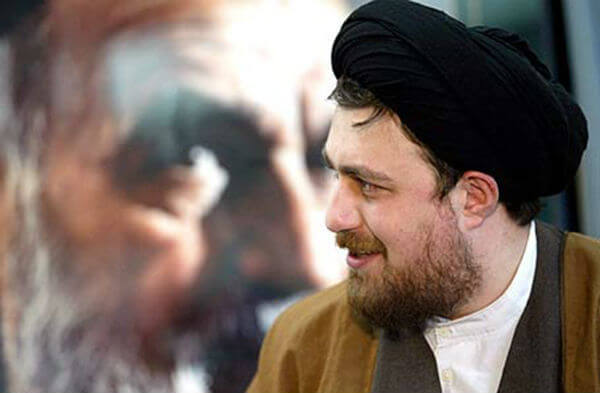
Hassan-Khomeini

Financial Times reports: Hassan Khomeini may be the grandson of the founder of Iran’s 1979 Islamic Revolution, but his religious and political credentials were deemed insufficient to qualify him for membership in the Assembly of Experts, the body that will determine Iran’s next supreme leader.

The Guardian Council, a constitutional watchdog that vets candidates standing for the council, disqualified Mr Khomeini despite “testimony by all those senior clerics” that he had reached a sufficiently high level of religious learning to interpret Islamic law or Ijtihad, Mr Khomeini’s son, Ahmad, said on his Instagram page on Tuesday.

“The reason for the disqualification is clear to all,” he added, implying that Mr Khomeini, whose candidacy outraged hardliners, was disqualified because of his alliance with reformists.

Mr Khomeini’s disqualification is a blow to centrist president Hassan Rouhani and comes amid a tense power struggle between moderate forces and hardliners. The implementation of the landmark nuclear agreement last week was seen as a big victory for pro-reform forces. But their conservative opponents are determined to maintain their hold on key institutions and say they will resist “infiltration” by western governments bent on “undermining the regime” through pro-reform forces. [Continue reading…]

IranWire reports: Reformists and moderates enthusiastically embraced Khomeini when he announced his candidacy, an excitement that Khomeini tried to quell in order to comply with electoral guidelines and to satisfy the Guardian Council — half of which are appointed by the Supreme Leader. Aware of the importance of pleasing the regime, Hassan Khomeini’s brother Ali spoke about his brother’s candidacy in a way that would meet the approval of Iran’s hardliners, particularly those on the Council.

Despite these overtures, the Council rejected Khomeini’s bid to join the Assembly of Experts.

Under Iranian law, disqualified Assembly candidates have the right to appeal the Council’s decision. The deadline for this is January 30. Khomeini has not stated whether he will launch an appeal.

Former president Akbar Hashemi Rafsanjani, currently the president of the Expediency Council, and Intelligence Minister Mahmoud Alavi, as well as President Hassan Rouhani, were all successful in their bids to run as candidates for the Assembly. [Continue reading…]

Facebooktwittermail

Syria’s next election: A practical path forward

Bassam Barabandi and Sasha Ghosh-Siminoff write: Negotiations between the Syrian opposition and governing regime start in just a few days. The challenges are numerous and many analysts are quick to proclaim the process already dead. Despite the momentum of the Vienna process, a myriad of factors continues to make Syria a complicated case: a messy situation on the battlefield, an unwillingness to compromise, political dynamics among the opposition, hostility between Iran and Saudi Arabia, Russia’s backing of Assad — take your pick.

While somewhat less than enthused by the framework set out by the UN Security Council resolution, which leaves Assad in power, Syrian opposition groups are meeting in Riyadh to prepare for negotiations. Apart from selecting members of their negotiation committee, the opposition groups are discussing their negotiation goals, including principles for political reform — reform which cannot include Assad as head of any transitional government. This is a tall order, which was once supported by the international community but apparently abandoned in the face of reality on the ground.

The focus on Assad’s role (or lack thereof) in a transitional government is understandable. Nevertheless, it might be pragmatic to review the timeline of transition as presently framed and propose a slightly different approach. With or without Assad, in the case of successful negotiations and an even somewhat effective ceasefire, a genuine deal will include constitutional reform and elections. [Continue reading…]

Facebooktwittermail

Why Iran backs Syria

Barak Barfi writes: The execution of a Shiite cleric in Saudi Arabia and the burning of Riyadh’s embassy in Iran has one again flamed Sunni-Shiite tensions and set the tiny Arab oil sheikhdoms on edge. Leaders from Lebanon to Yemen are fretting about Iranian machinations in Arab countries. But it is Tehran’s involvement in Syria that worries them the most. Tehran has bolstered its client state by dispatching senior military figures, pressing its Lebanese client Hezbollah to send fighters, providing much-needed petroleum products and extending Syria a hefty line of credit.

Without Iran’s help, the regime would likely have collapsed. Some believe Tehran has backed Syria to the hilt because of their common religious roots. Both ruling cliques claim affinity with the heterodox Shia, who are a minority in an Islamic world populated by orthodox Sunnis.

But Iran’s Syrian strategy derives less from spurious religious ties than it does from geopolitical factors. Surrounded by hostile pro-Western nations, Iran needs all the allies it can find to ensure that its regional interests are protected. [Continue reading…]

Facebooktwittermail

The UN repeats mistakes of the past in Madaya

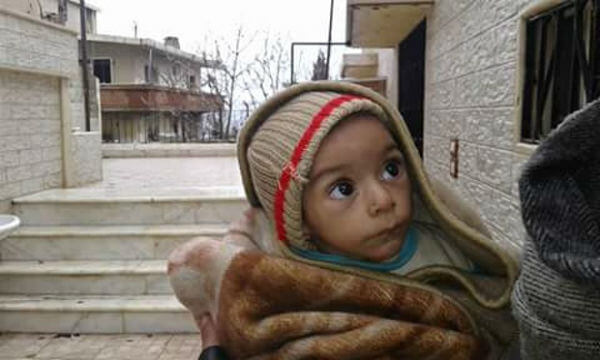
starving-child-madaya

Muhammad Idrees Ahmad writes: Two weeks before an aid convoy delivered food and medicine to the 42,000 people of Madaya, a representative for the town’s council made an urgent appeal to the UN office responsible for the region. The town had been strangled since July 2015 by Bashar Al Assad’s army and the Lebanese Hizbollah. The condition was precarious: inhabitants were subsisting on grass, cats, dogs, insects, salt and water. At least 28 had died of starvation since the beginning of December. The council representative received an automated reply: the staff were away until January 5.

On New Year’s Eve, when the UN chief Ban Ki-moon wished his Twitter followers a peaceful 2016, he made no mention of the unfolding tragedy.

The inertia was broken when a determined social media campaign forced Madaya on the world’s attention and, eventually, the UN relented. On January 7, the regime agreed to allow a one-off supply of aid. The UN was quick to praise the regime for this concession, but it took another four days before it delivered aid to the town. The delay resulted from the “complexity” of synchronising deliveries to the 12,000 inhabitants of Al Fu’a and Kefraya, two pro-regime villages in Idlib encircled by rebels. On entering the town, aid workers were shocked by the “horrifying” conditions. “There are people in Madaya, but no life,” said Sajjad Malik, the UNHCR chief in Syria. “They are fighting for survival. No food, no electricity, no heating, no medicines. People did not even have the energy to complain.”

The representative for the UN’s Office of Coordination of Humanitarian Affairs in Syria, Yacoub El Hillo, too was moved: “We saw a people that are desperate; a people that are cold; a people that are hungry; a people that have almost lost hope”.

But in a curious statement, Mr El Hillo added that before entering Madaya, “it was at times difficult to determine whether what we were seeing was actually fabricated or exaggerated”.

It is unclear why Mr El Hillo should’ve faced such difficulty. The conditions in Madaya had been known to the UN for months. This scepticism may be unfounded but it is consistent with the state-centric bias of the UN’s humanitarian practices. UN agencies are required to respect state sovereignty regardless of legitimacy. And in Syria, they have been reluctant to act without the consent of the regime. This has turned the UN into an unwitting agent of the status quo, allowing the regime to politicise aid. [Continue reading…]

Facebooktwittermail

Rebels in north-western Syria buckle under Russian bombardment

Aron Lund writes: Syria news right now is all about the peace process that is set to start on Friday in Geneva, Switzerland, despite its limited chances of success. But even as they talk, the parties continue to fight and the Russian-Iranian military intervention continues to wear down Syrian rebels. On September 30, the Russian Air Force dropped its first bombs in Syria. The government of Iran joined in by raising an expeditionary corps of Iranian, Iraqi, and Afghan Shia Islamists for the front south of Aleppo.

In a recent article for Vice News, the American freelance writer and Syria expert Sam Heller notes a flurry of desperate-sounding calls for outside support from rebels in northwestern Syria. Though most frontlines have held with little or limited change, four months of relentless Russian bombardment and offensives by the Syrian Arab Army and its Shia allies seem to have left the insurgents exhausted.

In early December, I tried to evaluate the extent of government progress in a post on Syria in Crisis. As far as I could tell, it was clear then that Assad stabilized his positions, but overall progress seemed underwhelming and the picture was mixed. We would have to wait and see.

Since then, however, the wind has continued to blow Assad’s way. General Joseph F. Dunford Jr., the chairman of the U.S. Joint Chiefs of Staff, recently noted that “the regime is in a better place now” compared to before the intervention. Indeed, after four months, the effects of the concerted Russian-Iranian-Syrian campaign have begun to surface. [Continue reading…]

Facebooktwittermail

Saudi bombing campaign — supported by Britain — leaves Yemen’s healthcare system in tatters

yemen-bombing

The Independent reports: When the men and women who worked at Shiara hospital heard the explosion, there was little surprise. Just half an hour’s drive from the border with Saudi Arabia, in Yemen’s mountainous northern region, they were used to the sound of shelling.

What they did not expect 10 months into the Saudi-led campaign of airstrikes was that it would be their own hospital that had been hit. The bombing on 10 January left six people dead, including three staff members. Many more were injured.

“The wounded were hit by shrapnel from the missile, and also by shards of metal from the fence [around the hospital]. The injuries were brutal,” said Teresa Sancristoval, the head of the emergency desk at Médecins Sans Frontières (MSF), which operates in the hospital.

The attack was among 130 on health facilities hit in Yemen since the Saudi-led coalition began its bombing campaign in March last year. It was the fourth on a facility supported by MSF – which says it gives detailed co-ordinates for its hospitals to both sides of the conflict. [Continue reading…]

Facebooktwittermail

How to determine which Democratic presidential candidate is beholden to wealthy Jewish donors

Politico reports: If Bernie Sanders defeats Hillary Clinton to win the Democratic nomination, he’ll be the first Jewish presidential nominee of a major political party.

But when it comes to his views on Israel, some Jewish Democrats are scratching their heads in confusion.

“His voting record on Israel recently is fine, absolutely fine,” said Steve Rabinowitz, a media consultant and former Clinton White House aide who supports Clinton. “I haven’t heard him once talk about it on the campaign trail. It’s as though he doesn’t utter the word Israel. It just strikes me as odd.”

But over his career Sanders has cast some votes and made critical statements about Israel that unnerve some in the pro-Israel community. That’s all the more puzzling, some say, given his own heritage as the son of a Jewish immigrant father from Poland whose family was wiped out by the Nazis — and someone who spent time working on an Israeli kibbutz.

As Clinton has struggled in recent days to prevent Sanders from notching twin victories in Iowa and New Hampshire, she has zeroed in on what she calls his naive statements about Iran — a country that Israel happens to consider its greatest enemy.

How many Democratic primary voters might have qualms with Sanders is unclear, however. President Barack Obama himself has grown increasingly critical of Israeli policy toward Iran and the Palestinians. Many liberal voters agree: A recent poll by the Chicago Council on Global Affairs found that only 4 in 10 Democrats consider Israel to be playing a positive role in the Middle East.

“The faction of the Democratic base that supports a strongly pro-Israel point of view is shrinking,” said Matthew Duss, president of the left-leaning Foundation for Middle East Peace.

But the Democratic Party still features a strong network of wealthy Jewish donors, such as the Hollywood mogul Haim Saban and American Jewish Congress president Jack Rosen, who hold candidates to high standards when it comes to Israel. It also boasts better political organization than liberals who pressure Israel to take a more conciliatory line with the Palestinians and Iran. [Continue reading…]

Some Jewish Democrats are scratching their heads in confusion? If so, that’s probably because Sanders hasn’t offered himself to the highest bidder.

At the same time, there’s no evidence that Sanders has a progressive view of Israeli-Palestinian politics. As Joseph Dana writes:

The problematic and least radical aspect of the senator’s foreign policy is his unwavering support for Israel. When it comes to the Israel-Palestine conflict, Mr Sanders’s economic radicalism falls by the wayside.

He has endorsed continuing military aid to Israel along with economic aid to the Palestinians, which has proven to be an effective tool for both Israel and the United States to exercise undue influence over Palestinian decision-making, as evidenced by the withholding of aid after the PLO pursued statehood recognition at the United Nations. Additionally, the senator has seldom condemned the Israeli occupation of Palestinian land and said nothing of Israel’s aggression in Gaza over the last decade.

Some have argued that Mr Sanders’s support for Israel is because he is Jewish. Yet, he has barely spoken about a faith-based connection to Israel. He has only cited his religion as an inspiration for progressive activism, especially regarding the struggle for civil rights equality.

Instead of taking a progressive stance, Mr Sanders relies on the security-based narrative that Israel has spun over the international community for decades. Where is the passion and critical thinking that has captured the imagination of millions of Americans and has demonstrated that fresh conversations are possible?

For a politician running a campaign against the “rigged” political and economic system that continues to disenfranchise millions, he is surprisingly content with the prevailing Washington orthodoxy on Israel (and also gun control, but that is a separate issue altogether).

The perplexing part is that Mr Sanders’s orthodoxy comes at a time when American diplomats in Israel are signalling a readiness to chart a new course on the conflict, one that doesn’t accept Israeli PR at face value.

For American single-issue voters whose sole concern is the resolution of the Middle East conflict, the 2016 presidential election won’t be different from any other: there won’t be a single candidate who ranks this as their primary issue (or even top foreign policy issue).

Is this a failure to acknowledge the defining issue of our times? On the contrary, it’s a reminder to be wary of polemicists who pound their podiums when talking about “the defining issue of our times.”

Indeed, if it turns out that throughout this election season, the subject of Israel rarely comes up, on balance that’ll probably be a good thing.

After all, when the subject does get raised, more often than not it is simply for the purpose of finding out who has the least amount of shame in presenting him or herself as a loyal Zionist.

Let’s be thankful if we are subject to as few as possible of these obsequious and obscene exercises.

Facebooktwittermail

ISIS targeting Europe for Paris-style attacks, says EU police chief

The Guardian reports: Islamic State is actively focusing its attention on conducting large-scale attacks in Europe similar to those last year in Paris, the head of the EU’s law enforcement agency has said.

Rob Wainwright, the head of Europol, the Hague-based organisation that coordinates EU policing efforts over terrorism and organised crime, said Isis had “developed a new combat-style capability to carry out a campaign of large-scale terrorist attacks on a global stage, with a particular focus in Europe”.

His comments, at a meeting of interior ministers in Amsterdam, came as France’s interior minister said Islamist terrorists had planned to attack another concert in Paris and carry out a mass killing in the streets of the capital.

Bernard Cazeneuve was defending the government’s decision to maintain a state of emergency imposed after the shootings and bombings across Paris on 13 November, which left 130 people dead, including 89 at the Bataclan concert hall. Isis claimed responsibility.

Cazeneuve said that since last spring the country’s intelligence services had foiled 11 terrorist attacks, some of which had been ordered by the Islamic State attackers behind the Paris atrocities. [Continue reading…]

Facebooktwittermail

More Syrian children die as Assad’s sieges intensify

The Telegraph reports: Fresh evidence has emerged of how starving Syrians are being forced to eat grass to survive as President Bashar al-Assad’s regime defies the UN to tighten sieges across Syria.

International aid agencies say that the regime is using humanitarian aid – which is supposed to be delivered freely under both international law and United Nations resolutions – as a bargaining chip.

Aid workers claim the crisis has now spread well beyond the town of Madaya, north west of Damascus, where photographs of emaciated children caused an international outcry earlier this month.

Omar Hakim, a doctor in Syrian capital, reported similar scenes of horror in the south-west suburb of Moadhamiya last week.
“Twelve people died last week, six of them children,” he told The Sunday Telegraph.

“There are 1,500 patients here suffering chronic diseases which require treatment or medicine which is not available. Six hundred children need breast-feeding but their mothers can’t feed them because they’re malnourished too.

“People are eating grass, and rice if it’s available. The aid which has been sent is not enough to keep people alive.”

Sieges have been used as a weapon since the start of the war, but the situation has worsened in recent weeks. [Continue reading…]

Facebooktwittermail