Al Jazeera reports on Israel’s propaganda campaign whose aim is to promote the message that the residents of Gaza, even while living under a severe economic blockade, “have everything they need.” As part of that effort, Israel distributed video footage of a guests enjoying fine cuisine in a gourmet restaurant in Gaza — guests including Mahmoud Abbas who hasn’t set foot in Gaza since the siege began!
At a time when Israel’s security officials should probably be focused on this week’s extensive home front security drill, it seems that that most of their attention is being paid to the flotilla of ships on its way to the Gaza Strip, laden with humanitarian supplies. Frantic consultations between officials and the prime minister’s top military chiefs of staff have taken place, an urgent meeting of a forum of senior government ministers was held, and the Ministry of Foreign Affairs has engaged in extensive activities, and an urgent press conference was held at the Erez border crossing. In particular, the Israeli government’s public relations machine has been mobilized with the intent of persuading the public that there is no need for the flotilla, due to the fact that the humanitarian situation in Gaza is fine, the Strip’s markets are abundant, and its gourmet restaurants are thriving.
Sheikh Raed Salah, from the Islamic Movement in Israel, tells Al Jazeera:
The official Arab role in this campaign is missing but that of the Arab people is not. We have campaigners coming from Kuwait, Jordan and Mauritania, Yemen and Algeria and that is a message we sent to the leaders. How beautiful it would be if you would reconcile with the stance of your people in their support of the cause of the Palestinians.
As the Freedom Flotilla sails towards Gaza, the Israeli propaganda machine is working at full bore. In its frenzied effort, message discipline seems to have gone out of the window.
10,000 tons of supplies being carried in the nine-ship flotilla are, the Israelis suggest, superfluous to Gaza’s needs when Israel itself is delivering 15,000 tons a week. Still, if the human rights activists insist on completing their mission, Israel’s Ministry of Foreign Affairs says it would be more “efficient” if the flotilla, instead of docking at Gaza City, docks at an Israeli port where everything can be transferred to Israeli trucks. Then everyone can say a prayer as they wait to see how much gets confiscated at the land crossing into Gaza. Why take a direct route when you can take a longer less certain indirect route?
Not surprisingly, The Freedom Flotilla organizers have declined Israel’s “offer.” Israel’s police and prisons service are now on standby, ready to deal with the potential arrest of hundreds of activists in the event that the Netanyahu government decides to block the flotilla’s passage. I imagine some kind of internment camp may need to be set up for holding and interrogating the peaceful activists prior to their deportation.
Meanwhile, Israeli officials are citing a Financial Times report that the 200 to 300 smuggling tunnels from Egypt into Gaza “have become so efficient that shops all over Gaza are bursting with goods.”
In effect, the Israelis seem to be saying that the combination of supplies that it delivers, along with those coming through tunnels, means that for all practical purposes Gaza is no longer under siege.
The siege isn’t working — don’t break the siege!
Strange message.
While Israeli officials selectively cite reporting by the Financial Times, here is part of the same report which makes it clear that under siege, Gaza’s economy has effectively been crippled — in spite of the availability of goods coming through the tunnels.
“Everything I demand, I can get,” says Abu Amar al-Kahlout, who sells household goods out of a warehouse big enough to accommodate a passenger jet.
However, Mr al-Kahlout regards his suppliers in Rafah with distaste. “The tunnel business is not real business. They [the tunnel operators] are not respectable: if they were able to cut off your skin and sell it, they would do so,” he says.
His criticism is echoed by other business leaders in Gaza, who insist that the smugglers are creating a false sense of economic improvement while damaging the territory’s battered private sector.
They concede that the tunnels are providing essential goods, yet the smugglers are also bringing in precisely the simple consumer items that could be manufactured in Gaza, especially if sanctions were eased.
“We are just replacing legitimate businessmen with illegitimate businessmen” says Amr Hammad, a Gaza-based entrepreneur and deputy head of the Palestinian Federation of Industries. Flush with cash, the tunnel operators will soon “govern the whole economy of the Gaza Strip”, Mr Hammad predicts.
For most Gazans, the period since the end of Israel’s three-week offensive in January last year has brought little improvement. According to the United Nations Relief and Works Agency, the number of “abject poor”, who depend on food aid, trebled to 300,000 – or one in five of all Gazans – in 2009.
One western official says the tunnels act like a “humanitarian safety valve”, but cautions that they offer no solution to economic decline. As Mr Hammad says: “An economy cannot just depend on tunnels.”
Over 60 percent of Gaza households are food insecure as a result of the ongoing blockade Israel imposed on the coastal enclave, leading to a collapse of its formal economy, the Association of International Development Agencies (AIDA) said Tuesday.
AIDA, which represents over 80 NGOs, called on Israel for “full and unfettered access into and out of the Gaza Strip for materials and exports necessary for the revival of the agriculture and fishing sectors.”
As Gaza’s population becomes increasingly dependent on aid, the organizations urged Israel to implement immediate measures which include the entry of agricultural input materials such as plastic irrigation piping, quality seeds/seedlings and veterinary drugs into Gaza “needed to jumpstart the agricultural sector and allow the export of produce” and the lifting of access restrictions on farming and fishing areas.
In the name of “security” — the catchall phrase used so often to justify brutality — through its siege on Gaza, Israel has engaged in a systematic campaign not merely to deprive a society of its physical needs but in order corrode, undermine and ultimately destroy the society itself.
Israel has vandalized Gaza in every possible way in a calculated effort to try and drive this society rip itself apart — to disarm Hamas by making Gaza implode. Gestures of solidarity and support for the people of Gaza from the Freedom Flotilla and elsewhere around the world are a way of saying that we can speak out even while our governments remain silent.
“We recommend the world send ships to the shores of Gaza, and we believe that Israel would not stop these vessels because the sea is open, and many human rights organizations have been successful in previous similar steps, and proved that breaking the siege on Gaza is possible.” John Ging, Head of United Nation’s Relief and Works Agency in the Gaza Strip.
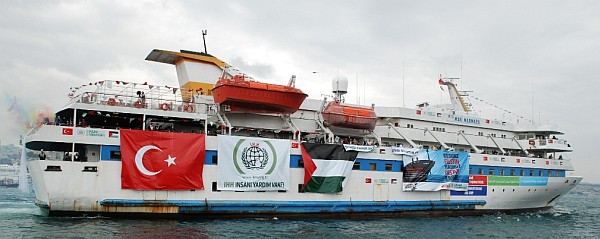
A global coalition of Palestinian support groups is taking protest to a dangerous new point of brinkmanship this week, with an attempt to crash through Israel’s naval blockade of the Gaza Strip in a flotilla of cargo and passenger boats now assembling in the eastern Mediterranean.
Converging at an undisclosed rendezvous in international waters, the four small cargo boats and four passenger vessels – ranging from cruisers carrying 20 to a Turkish passenger ferry for 600 – are a multimillion-dollar bid to shame the international community to use ships to circumvent Israel’s tight control on humanitarian supplies reaching war-ravaged Gaza.
As the first boat in the flotilla sailed from Dundalk, Ireland, to link up with others being readied at ports in Turkey and in Greece, Israel announced that it would bar the boats from landing.
A senior foreign ministry official described the flotilla as a ”provocation and a breach of Israeli law”.
Israeli media reports say that the Defence Minister, Ehud Barak, has formally ordered that waters off Gaza become a closed zone to a distance of 20 nautical miles.
Israel already has a ”large naval force” on manoeuvre in the area; and as a confrontation at sea looms, suspicion was taking hold in both camps.
Mechanical difficulties in the boat bound from Ireland – the 1200-tonne MV Rachel Corrie, named after an American who was crushed to death by an Israeli army bulldozer in Gaza in 2003 – prompted claims that the boat had been sabotaged. Unnamed Israeli officials have claimed elements in the flotilla would attempt to garner media attention by seeking to provoke Israeli violence.
Further complicating a tense scenario were reports of a welcome fleet of small boats attempting to put to sea from Gaza, and of an Israeli ”counter flotilla” that had assembled near Tel Aviv as a “civil initiative … not connected to any political group”.
Israel has rejected pleas by several ambassadors, most vocally by Dublin’s envoy to Tel Aviv, that their nationals on the flotilla be given safe passage to Gaza.
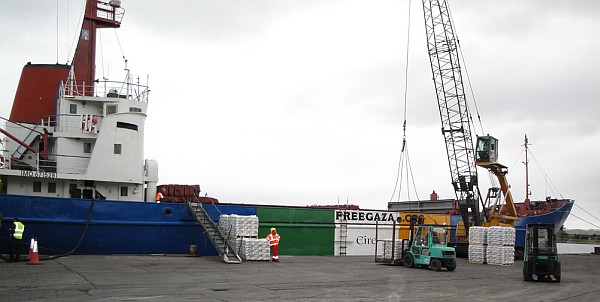
In the port of Agios Nikolaos, here on the Greek island of Crete, one of the lead organisers of the flotilla is the Free Gaza Movement’s Renee Jaouadi – a 34-year-old schoolteacher, formerly from Newcastle, NSW. Under the banner of the Freedom Flotilla, the protest is a $US3 million-plus ($3.6 million) operation. Apart from 10,000 tonnes of building, medical, educational and other supplies, on board are dozens of parliamentarians from around the world and professionals planning to offer their services in Gaza.
Celebrity names include the Swedish crime writer Henning Mankell and Denis Halliday, a former United Nations humanitarian co-ordinator who in 1998 resigned, protesting that economic sanctions on Iraq amounted to genocide.
On Saturday evening, attempts were under way to find a berth on the over-subscribed manifest for the activist American philosopher Noam Chomsky, who Israeli authorities last week barred from entering the West Bank where he had been invited to speak at a Palestinian university.
Five of eight previous protest boats have managed to land in Gaza. But most recently one was rammed at sea by an Israeli navy ship, and another was captured, with all on board being held in Israeli jails for up to a week before they were deported.
This is deliberately their biggest operation. Ms Jaouadi said the number of vessels and passengers in this week’s flotilla was intended to overstretch the capacity of Israel’s navy and, in the event of mass arrests, the capacity of its prisons.
“It is perfectly logical to go in by sea when entry by land and air is closed,” she said. “We are ordinary civilians doing what governments and big NGOs are refusing to do. The UN is always complaining that it can’t get supplies through: why is it not sending ships?”
A delegation from the California-based Free Palestine Movement includes Joe Meadors, a decorated Navy veteran and one of the survivors of the 1967 attack on the U.S.S. Liberty, in which Israeli fighter planes and ships killed 34 Americans and wounded 173, and Ambassador Edward L. Peck, who spent 32 years in the Foreign Service, including stints as Chief of Mission in Iraq and Mauritania, and was Deputy Director of the Cabinet Task Force on Terrorism in the Reagan administration.
“It’ll be like old home week,” said Meadors, recalling the Israeli attack he survived 43 years ago. “I’m determined to land with this internationally coordinated effort on the shores of Gaza to deliver relief to the 1.5 million inhabitants suffering under the Israeli-led illegal blockade.”
John Ging, the Director of Operations of the United Nations Relief and Works Agency for Palestine Refugees (UNRWA) in Gaza, recently called upon the international community to break the siege on the Gaza Strip by sending ships loaded with desperately needed supplies .”We believe that Israel will not intercept these vessels because the sea is open, and human rights organizations have been successful in similar previous operations proving that breaking the siege of Gaza is possible.”
Explaining his decision to participate in the convoy, Ambassador Peck said many Americans oppose Israeli’s oppressive policies in Palestine and especially Gaza, and believe that they are not in anyone’s interests, especially Israel’s. “All the peoples of the Middle East will live in peace and security”, he said, “only when, and if, all of them live in peace and security.”
Explaining his decision to participate in the convoy, Ambassador Peck said he wants to show that many Americans oppose Israeli policy and believe that it is in U.S. interests to hold Israel to accountable to international law and human rights standards. “All the peoples of the Middle East will live in peace and security only when and if all of them live in peace and security,” he said.
Ismael Patel, from Friends of Al Aqsa in Britain, describes the flotilla’s mission:
The State of Israel has no interest in flooding television screens all over the world with footage of its navy violently assaulting against peace activists at sea. It is time to remove the suffocating siege and allow residents of Gaza to have free contact with the outside world, freely operate sea and air ports of their own like any country in the world.
The Gush Shalom movement calls upon the government to allow the eight-boat aid flotilla from all over the world to reach the shores of Gaza, where they are scheduled to arrive next week, and unload the humanitarian cargo which is urgently needed by the residents of Gaza. In a letter to Defense Minister Barak, Gush Shalom calls upon him to cancel immediately the instructions given to Israeli Navy ships off the Gaza shore to intercept the aid flotilla.
“The whole world is looking. The State of Israel has no interest in flooding the international television screens with images of Israeli sailors and naval commandos violently assaulting hundreds of peace activists and humanitarian aid workers, many of them well-known in their countries. Whose interest will it serve when hours long dramatic live reports arrive from the Mediteranean, with the world’s sympathy given to hundreds of non-violent activists, on board eight boats, assaulted by the strongest military power in the Middle East?” were the words of a letter to the Defense Minister.
No harm whatsoever will be caused to Israel from the aid flotilla reaching Gaza Port and unloading a cargo of medical supplies and medicines, school supplies and construction materials to rebuild the houses destroyed by the Israeli Air Force a year and half ago and not yet been restored. On the contrary, it would be in Israel’s best interest to declare without delay that as a humanitarian gesture, the boats’ way will not be blocked. And in general, it is time to end once and for all the suffocating siege imposed on the Gaza Strip and causing terrible suffering to its million and a half inhabitants.
The siege on Gaza utterly failed in all the goals set for it by the government of Israel. The siege was supposed to result in toppling the Hamas government – and on the contrary strengthened this government, which relied on the support of a significant part of the Palestinian People. The siege was supposed to help in gaining the release of captured soldier Gilad Shalit – but on the contrary, the siege just delays that release, which could have been achieved long ago had the government of Israel agreed to the prisoner exchange deal, on which most of the details have been decided long ago. It’s time to end this cruel and pointless siege.
The residents of the Gaza Strip, like the citizens of Israel and of any other country in the world, have the right to maintain direct contacts with the outside world – to leave their country and return to it, to develop their economy, to import the products they need and export their own produce to anyone who wants to buy it, without asking or needing for permission from Israel, Egypt or any other country. Just as Israel needs no permit from any other country to operate daily the sea ports of Ashdod and Haifa and Eilat and the Ben Gurion International Airport, so are the Palestinians and their state to be entitled to run their own sea port and airport in the Gaza Strip. Let the flotilla of humanitarian aid from all over the world be given the honour of inaugurating the sovereign Palestinian Port of Gaza!
We’ve all caught the fever, every one of us who works to send boats to Gaza. From August 2006, when a handful of us started the Free Gaza Movement, every one who has joined us has been stricken with a bad case of the disease. It is chronic. It sometimes causes afflicted patients to insist that if just one more voyage can be planned to this small slice of the Mediterranean, we’ll all be in remission. There is no real cure in sight… yet.
Gaza Fever has now attacked thousands of us who have a passionate sense of justice.
The disease began shortly after Israel invaded Lebanon in 2006, as a group of us were in despair that the Palestinians, once again, were the forgotten symptom of Israel’s grand designs. As the world watched the defeat of Israel by a small band of guerrilla fighters in Lebanon, Israel decided it would take its wrath out on the Palestinians, specifically the Palestinians of Gaza. We watched as Israel, in January 2009, deliberately bombed 1.5 million Palestinians into abject poverty, a man-made catastrophe bordering on genocide.
One man in Australia suggested we sail a boat from New York to Gaza in protest of the closures there. That small idea has grown into a flotilla that leaves at the end of May with 700 people on board nine ships.
We, who have traveled by boat to Gaza, come back changed, blisters of outrage forever marking us. Those who have supported us through donations, letters, outraged picketing in front of Israeli Embassies demanding Israel stop its war crimes against a civilian population are also changed, as they watched our small boats sail into Gaza five times, cheering us on our way. Then, when our last three missions were violently stopped by Israel, thousands stepped up and donated to help us buy new boats.
In July 2009, Tun Dr.Mahathir bin Mohamad, former Prime Minister of Malaysia, and his wife, Tun Dr. Siti Hasmah bin Mohamad visited the Free Gaza Movement in Cyprus. They had heard about the voyages to Gaza and what Israel had done to the last three, ramming the Dignity, turning one back under threat of fire and hijacking the Spirit of Humanity, kidnapping the 21 human rights observers and throwing them into detention for a week.
He wanted to come and see for himself the small fishing boat that had been, in August 2008, Free Gaza’s first vessel to enter the port of Gaza in 41 years. When he and his wife stepped on this small vessel, he was shocked. “You went all the way to Gaza on this small boat? You braved the sea in a boat that was barely seaworthy?”
When we replied that, indeed, we had crossed the sea in not only this small boat, but one even smaller, 44 of us challenging Israel’s blockade on the 1.5 million Palestinians of Gaza, he caught Gaza Fever.
“You need a proper boat,” he said. “I’m going back to my people in Malaysia and see how we can help you raise money to send more boats back to Gaza.”
And that’s exactly what he and his wife did.
Follow the progress of the Freedom Flotilla on Twitter and at WitnessGAZA.
Later this month, ships from all over the world will converge in the Mediterranean and set sail for the occupied and besieged Gaza Strip. This international coalition is called the Freedom Flotilla.
The Free Gaza Movement has sailed eight missions to Gaza in the past three years, five of them successful. The last three were violently stopped by the Israeli Navy; the boat Dignity was rammed three times and the Spirit of Humanity turned back in January 2009, then seized and all aboard arrested.
This time the Freedom Flotilla is upping the ante and instead of one- and two-vessel challenges, will be breaking Israel’s siege with an eight-boat front.
In the past, the Israel Navy could pick us off as individual boats. Now, including Free Gaza’s four ships, 700 passengers and some 5,000 tons of reconstruction materials and medical equipment. This includes Free Gaza’s MV Rachel Corrie, which was purchased through generous donations from Malaysia’s Perdana Global Peace Foundation.
The Israeli government has responded to the “sea intifada” coming its way with saber rattling and accusations of serving Hamas. Israel has proscribed the Turkish human rights and relief group Insani Vardim Vakafi (IHH). IHH is responsible for sending a cargo ship and passenger ship in the Freedom Flotilla. Israel has accused it and Free Gaza of “supporting terrorism.” Half the Israeli navy is set to challenge the mission, with Israeli Defense Minister Ehud Barak at the helm commanding the operation in person. The air force is on standby and “diplomatic pressure” is being applied behind the scenes. The message is clear from Israel: “We will stop you and we will use force to stop you.”
At no point does the Freedom Flotilla enter Israeli territorial waters. The journey starts in local European or Turkish waters, courses through international waters and ends in Gaza’s territorial waters. No checkpoints interrupt us. No walls daunt our sight. We’ve proven that it’s possible to sail a clear line with no borders, as we want the world to be, until we get to Gaza.
Today Israel celebrated 62 years since its formation on 15 May 1948. For Palestinians, today marks the 62nd year since the Nakba – our national and personal catastrophe, involving the loss of our ancestral homeland and the dispersal of three-quarters of our people into exile.
To date, the Palestinian people await Israeli recognition of its responsibility in the catastrophe and agreement to resolve the conflict based on international law, including UN resolutions.
I experienced exile first-hand. On 13 May 1948 one day before Israel’s declaration of independence, my hometown of Jaffa was captured by Zionist forces. Seventy thousand Palestinian inhabitants of the city were forced to leave, most of them by sea to Gaza, Egypt, and Lebanon. We Jaffans were literally driven out to the sea. I was 10. We were never allowed to return.
The same reality befell more than 726,000 indigenous Christian and Muslim Palestinians who fled their homes or were expelled from Mandate Palestine in and around 1948; while hundreds of Palestinians were killed as they were driven out, or in their attempt to come back home. Several Israeli historians such as Benny Morris and Ilan Pappe described the catastrophe vividly and accurately.
In the wake of the expulsion, more than 418 Palestinian villages were razed to the ground. Nearly all Palestinian property, including that belonging to Palestinians who managed to stay within the areas that came under Israeli control, was confiscated by the nascent State of Israel for the exclusive benefit of Jews. In 1952, when Israel’s parliament passed its nationality law, Palestinian refugees were denied the option of citizenship in the new state. Additional measures were taken to bar our return to our country and our homes. The expulsion of Palestinians and the subsequent measures to render the displacement permanent were taken in contravention of international law.
These events, which left the majority of Palestinians stateless and dispossessed, were compounded by the Israeli military occupation of the West Bank and Gaza Strip in 1967. Hundreds of thousands of Palestinians once again fled their homes, and Israel expanded its control over the remaining 22% of our historic homeland. Today, the stranglehold over the Gaza Strip, the ongoing settlement and closure activities in the West Bank, including East Jerusalem, is leading to more Palestinian fragmentation and displacement. Indeed, the Nakba continues.
At their core, the circumstances surrounding the Palestinian struggle today do not differ from those circumstances that led to the 1948 Nakba and the colonization of Palestine. Today, on the sixty-second anniversary of the Nakba, the nature of the western-backed Zionist-Israeli colonial enterprise appears all the clearer. The indigenous Palestinian people have been denied their most fundamental and inalienable rights of self-determination, including their rights to return to the land from which they were displaced, and continue to suffer from Israel’s grave violations of basic human rights and freedoms. As Israel cruelly blockades the Palestinians of the Gaza Strip and denies 7.1 million displaced Palestinians around the globe their rights to return, restitution and compensation, the international community provides a protective shield forged through diplomatic, economic, cultural and security cooperation which perpetuate Israel’s impunity.
In a time when Israel’s true face as a regime of colonization, apartheid and military occupation has been exposed for the world to see, governments and their organizations, have chosen to look the other way. The protective shield preventing effective redress and accountability for Israel’s crimes is no more provided by western states alone, as international organizations have joined the chorus that calls for a “balanced position” and have allowed Israel’s membership and integration into global and regional, civil and official organizations. Israel thus enjoys not only the unlimited support of the United States, but also enjoys preferential status with the European Union under the 1995 Barcelona Declaration and the E.U.-Israel Association Agreement, which have entrenched European relations with Israel in political, military, financial, economic, social and cultural terms, and even in the field of humanitarian aid.
Only recently, on 10 May, no OECD member state felt obliged by international law or found the moral strength to block Israel’s accession to that club of the world’s powerful economies. Israel’s protective shield is no longer composed merely of U.S. veto powers in the Security Council of the United Nations. It has spread to other UN fora, such as the General Assembly and the Human Rights Council where global powers exert coercive pressure on member states, and even to domestic judicial systems and international courts, in order to enable Israel to escape accountability for its grave violations of international law.
It has become painfully clear that Israel and the so-called Quartet view Palestinian demands for the implementation of international law as an obstacle to the peace process, at best, and as a form of unacceptable radical extremism, at worst. This explains why the U.S. has resumed pressure on the Palestinian and Arab representatives to return to the negotiating table despite Israel’s refusal to cease construction and expansion of its settlements in the occupied Palestinian West Bank, and irrespective of the personal commitment given in this regard by President Obama. Thus, so-called proximity talks and indirect negotiations are being relaunched while Israel’s prime minister reassures his coalition government that there will be no limitation on settlement construction and expansion, the forced displacement of Palestinians from Jerusalem and the expansion of the network of apartheid roads and the Wall in the occupied West Bank.
Meanwhile, Israel continues to draft and adopt more racist legislation, including law proposals to outlaw Nakba commemoration, the 2009 Israel Lands Authority Law and a 2010 amendment of the Land Acquisition Law, which allow privatization and confiscation of more land of Palestinian refugees and citizens, as well as new military orders, such as Order No. 1650 arbitrarily defining a large portion of the Palestinian population of the occupied West Bank and foreigners as “infiltrators” subject to arrest and deportation.
In light of the above and the division and weakness which has characterized the performance of the Palestinian leadership, BADIL re-iterates the call of the National Committee for the Commemoration of the Nakba issued this 15 May:
for the Palestinian leadership to:
• Adopt a coherent strategy towards a just and permanent solution for Palestinian refugees and IDPs, based on their right to return and in accordance with international law, universal principles of justice and UN resolutions 194 (1948) and 237 (1967);
• Halt all negotiations, whether direct or indirect, until Israel completely halts settlement expansion, population transfer (“Judaization”), and construction of the Wall and other infrastructure of colonization and apartheid, such as roads and the light train connecting Jewish settlements to West Jerusalem;
• Ensure national reconciliation and unity as a matter of urgency, and rebuild the PLO as a legitimate and credible platform representing the entire Palestinian people and its political organizations;
• Support and activate popular resistance in all forms permitted under international law.
• Establish a consultative mechanism with professional civil society organizations to support the efforts of the PLO in international fora.
To the public in Palestine and abroad to:
Build and expand the civil society-led movement for boycott, divestment and sanctions (BDS) against Israel until it complies with international law and exert stronger pressure on states to implement sanctions and adopt decisions and resolutions which support the global BDS Campaign;
Redouble efforts for investigation of Israeli war crimes and crimes against humanity and prosecution and punishment of those responsible, as well as efforts to prevent Israel’s accession and integration into international and regional organizations.
The Israeli human rights group, Gisha, has taken the Israeli government to court in an effort to force Israel to reveal information on the import controls through which Gaza is being held under siege.
Rules that allow the importation of cinnamon but not coriander might seem arbitrary and it’s unlikely that further documentation from the Israelis will show otherwise. But there does appear to be a sadistic logic at work here. Nothing more effectively reinforces a sense of powerlessness in a population than for the minutiae of everyday life to be under the constant, arbitrary and callous control of an invisible and inaccessible power. This is the logic and practice of subjugation. It is an exercise in the crushing of human will.
Gisha’s director, Sari Bashi, says she is no security expert, “but preventing children from receiving toys, preventing manufacturers from getting raw materials – I don’t see how that’s responsive to Israeli security needs.”
And she says that some of the prohibitions appear to be absurdly arbitrary: “I certainly don’t understand why cinnamon is permitted, but coriander is forbidden. Is there something more dangerous about coriander? Is coriander more critical to Gaza’s economy than cinnamon? This is a policy that appears to make no sense.”
She argues that if there is a logic behind such decisions, the military should reveal what it is.
Now, after several months’ waiting, the state has given its response to the court, in a written submission, seen by the BBC.
It throws a small pool of light on the process behind the blockade.
The overall rationale is set out, in bold type: “The limitation on the transfer of goods is a central pillar in the means at the disposal of the State of Israel in the armed conflict between it and Hamas.”
The Israeli authorities also confirm the existence of four documents related to how the blockade works: how they process requests for imports into Gaza, how they monitor the shortages within Gaza, their approved list of what is allowed in, and a document entitled “Food Consumption in the Gaza Strip – Red Lines” which sets out the minimum calorie intake needed by Gaza’s million and a half inhabitants, according to their age and sex.
This paper was however, the state insists, just a draft power-point presentation, used for “internal planning work”, which “never served as a basis for the policy of the authority”.
But while the first three documents promise a great deal of detail, that detail is not delivered.
In each case, the state argues that disclosure of what is allowed in and why would, in their words, “damage national security and harm foreign relations”.
In a bloggingheads.tv interview, Robert Wright speaks to Bassam Nasser, who works for the Catholic Relief Services in Gaza. Though Wright’s questions tend to be somewhat uninformed and predictable, Nasser’s responses provide a much richer and more nuanced view of life under siege and Israeli occupation than can be gleaned for standard news reports.
Palestinian Authority Prime Minister Salam Fayyad has staked his political credibility on securing a Palestinian state by 2011 in the entire West Bank, Gaza and East Jerusalem, a program enthusiastically embraced by the international community. Ambitious PA plans include roads and other infrastructure across the West Bank, with funds provided by the United States, Europe and other donors.
Fayyad has argued that development will make the reality of a Palestinian state impossible to ignore. However, many of the new roads facilitate Israeli settlement expansion and pave the way for the seizure of main West Bank highways for exclusive Israeli use.
For decades Israel has carried out its own infrastructure projects in the occupied West Bank and East Jerusalem. These include a segregated road network that, together with the separation wall Israel began building in 2002, divides Palestinian areas from each other while bringing the settlements–all of which are illegal under international law–closer to Israel.
Now, armed with information from United Nations sources and their own research, Palestinian nongovernmental organizations are raising the alarm. Their evidence spotlights the extent to which PA road-building is facilitating the Israeli goal of annexing vast areas of the West Bank–making a viable Palestinian state impossible.
The Independent previewed “Children of Gaza” which aired on Channel 4 in the UK on March 14:
Omsyatte adjusts her green school uniform and climbs gingerly on to a desk at the front of the classroom. The shy 12-year-old holds up a brightly coloured picture and begins to explain to her classmates what she has drawn. It is a scene played out in schools all over the world, but for one striking difference: Omsyatte’s picture does not illustrate a recent family holiday, or jolly school outing, but the day an Israeli military offensive killed her nine-year-old brother and destroyed her home.
“Here is where they shot my brother Ibrahim, God bless his soul. And here is the F16 plane that threw rockets into the house and trees, and here is the tank that started to shoot,” she says, to a round of applause from the other children. The exercise is designed to help the pupils at the school come to terms with the warfare that has dominated their short lives; particularly the horrors of the 2008 Israeli military offensive Operation Cast Lead, which killed 1,400 Palestinians, and destroyed one in eight homes.
Like hundreds of displaced Gazans, Omsyatte’s family have spent more than a year living in a tent on a site near their home. Little rebuilding work has been done during this time – with supplies unable to pass into Gaza because of the ongoing blockade imposed by Israel in 2007 – and groups of children now pick their way through piles of rubble, kicking footballs around the bombsites which used to be local landmarks.
Homelessness is just one of the issues facing the 780,000 Gazan children in the aftermath of the conflict, problems that are explored in a revealing new documentary Dispatches: Children of Gaza, to be screened tomorrow at 8pm on Channel 4. Perhaps the most disturbing of these is the emotional scars borne by children who have survived the conflict; the Gaza Community Mental Health Programme reports that the majority of children show signs of anxiety, depression and behavioural problems.
Small boys build toy rockets out of drinks bottles, and talk about the fake guns they are going to buy with their pocket money. While boys the world over are preoccupied with fighting and weapons, this takes on a more sinister significance when the game isn’t Cowboys vs Indians, but Jews vs Arabs, and the children’s make-believe warfare is chillingly realistic.
Ever since Hamas assumed full political control of Gaza in June 2007, there have been occasional reports that the Islamist movement is finding ways to impose a more rigidly conservative and religiously intolerant way of life in the Palestinian enclave — changes that would impact secular, liberal-minded women more harshly than any other social group.
The BBC spoke to five Palestinian women ranging in age from 21 to 36 to find out how they have personally been affected by living under Hamas’ rule. The consensus was pretty clear: nothing Hamas has done has had a fraction of the effect that Israel has had through imposing a brutal economic siege on the population of 1.5 million.
Mona Ahmad al-Shawa, 36, who runs the women’s unit at the Palestinian Centre for Human Rights, said:
The siege of Gaza, which Israeli tightened when Hamas took control in June 2007, makes women’s lives much more complicated.
There are shortages of water, electricity and cooking gas. It is very difficult to leave Gaza for medical treatment.
And after the war in Gaza last year, things got worse because many women lost their husbands. Women lost lives too, of course.
You can’t imagine how hard it is to be a disabled woman in this society. Or a widow.
Our Sharia law means that a widowed woman will lose custody of her children when a boy reaches nine years old and a girl 11.
Since the war, Hamas has ruled that a widow can keep her children if she doesn’t remarry. This is an improvement.
Women’s priorities in Gaza are focused on practical matters – a home, clean water and electricity. Finer points of human rights are not top of the list.
We have many problems with the Hamas authority, but we are not in a big fight with them about women.
People in Gaza feel they are in a big prison, they feel have no choices in life.
Conditions change according to the political situation.
When the first intifada started in 1987 most women covered up, because people could speak badly of you, or throw stones if you went uncovered in the streets. It is not as bad as that now.
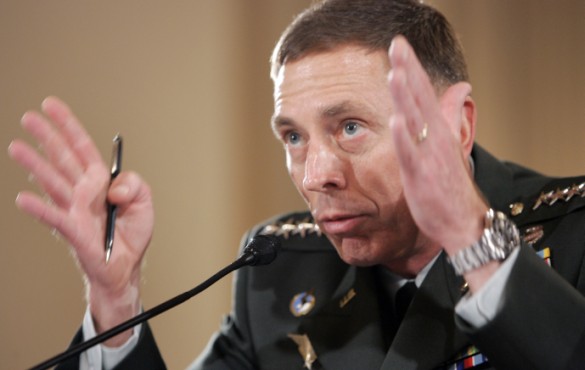
As erupting violence in Jerusalem suggests a third intifada may soon take hold, the CENTCOM commander Gen David Petraeus, testifying before the US Senate Armed Services Committee today, gave a grave warning about the wider impact of a conflict that has been the epicenter of Middle East hostilities ever since the creation of Israel.
In issuing his warning, Petraeus — arguably the most influential even if not the highest ranking member of the US military — was reiterating a statement he made almost a year ago. The only difference between what he said in April 2009 and what he said today, was that he now acknowledges al Qaeda is being strengthened by the conflict.
The enduring hostilities between Israel and some of its neighbors present distinct challenges to our ability to advance our interests in the AOR [CENTCOM’s area of responsibility]. Israeli-Palestinian tensions often flare into violence and large-scale armed confrontations. The conflict foments anti-American sentiment, due to a perception of U.S. favoritism for Israel. Arab anger over the Palestinian question limits the strength and depth of U.S. partnerships with governments and peoples in the AOR and weakens the legitimacy of moderate regimes in the Arab world. Meanwhile, al-Qaeda and other militant groups exploit that anger to mobilize support. The conflict also gives Iran influence in the Arab world through its clients, Lebanese Hizballah and Hamas.
If such a statement was being made outside the American political arena, it could be regarded as a rather bland expression of what has long been utterly obvious. Yet from the lips of a celebrated general, regarded by many as a potential future president, these words come as a bombshell.
Neoconservatives and the Israel lobby have worked hard and long to obscure the deeply corrosive regional impact of a conflict that successive Israeli leaders have either been unwilling or seemingly incapable of resolving. Others, who earlier said what Petraeus now says, have either been dismissed as poorly informed or worse, branded as anti-Israeli or by insinuation, anti-Semitic.
No such charge will stick to Petraeus. Indeed, if the Israel lobby was so foolhardy as to try and go after an American general who sometimes gets treated like a latterday Eisenhower, the lobby will be at dire risk of being visited by its own greatest fear: being branded as anti-American.
Just over a year ago, Bob Simon at CBS’s 60 Minutes did a piece that implicitly challenged the credibility of President Obama’s early push to revive the Middle East peace process. Simon noted the swiftness with which the new president had taken up the issue, but then went on to show the stark realities of segregated life in the occupied West Bank.
For anyone paying attention to the issues, there were no revelations in the 60 Minutes segment, yet the fact that it aired on prime-time network television and right at the moment the Obama administration was being viewed by so many with such a giddy sense of hope, showed Simon’s seriousness as a journalist. Nothing that has happened in the intervening months has cast an iota of doubt on the perspective he presented.
Prime Minister Benjamin Netanyahu said Tuesday that Israel would never agree to withdraw from the Jordan Valley under any peace agreement signed with the Palestinians.
Netanyahu told the Foreign Affairs and Defense Committee that the Jordan Valley’s strategic importance along the eastern border of the West Bank made it impossible for Israel to withdraw, according to a meeting participant.
Salman Masalha points out that Israel’s apartheid nature is not confined to the physical separation it has created between Jewish settlers and Palestinians but is also intrinsic to the structure, operation and identity of the Jewish state:
The alienation between Arabs and Jews can be seen everywhere. It has not arisen solely in the context of the national conflict, but is rather a result of an establishment policy which has expropriated Arabs’ lands to build communities “for Jews only” and has pushed the Arab inhabitants into localities under an “ethno-Zionist siege” on all sides.
The Israel Police, which is responsible for maintaining public law and order, provides the most blatant evidence that the Israeli regime behaves as if it is a foreign regime. It abandons the Arab localities to the rule of criminal gangs, intervening only when concern arises that the crime might spill over into Jewish locales. The Arab alienation from the police – a symbol of the regime – is apparent, among other things, in the absence of Arabic writing on police vehicles. How does an Arab citizen feel about a police force that appears in his community, but does not include any writing in his language? Does this not symbolize, more than anything else, that the police represent an occupation regime, a foreign regime? How would the inhabitant of some Jewish locale feel if there were no writing in Hebrew on police vehicles, but only a foreign language?
The alienation is also evident with regard to the central government. This is the only democratic country in the world where one-fifth of the citizens – who are declared to have equal rights, at least on paper – have no representation in the government or in “provisional and permanent institutions.” And this is the case even before we start talking about budgetary allocations, master plans, the building of cities and communities, education, culture, industrialization and more.
Impolitic as it is to mention this, in rejecting the analogy with apartheid in South Africa, the Washington Post’s Richard Cohen is not only denying realities on the ground in Palestine but also the principal and most awkward difference between the two cases. South Africa’s whites did not have a dedicated cadre of coreligionists or ethnic kin abroad who labored to protect them from the consequences of their deviance from the norms of humane behavior as defined by Western civilization at large. Nor, despite open sympathy for South African whites in the American South and among ardent anti-Communists, did apartheid enjoy international ideological support outside the neo-Nazi fringe. Israel’s policies are supported morally, politically, and financially by large Jewish communities and a vocal minority of Christians abroad, especially in North America, which is where global power remains concentrated. Without that support and those subsidies, Israel manifestly could not act as it does. The dependence of South Africa on external factors was far less direct or clear.
These differences between South Africa and Israel seem to me to be crucial both morally and politically. Cohen is clearly in denial not only about the realities of the Israel-Palestine situation but more importantly about the moral question raised by his support and that of so many other Jews who identify with Israel not just for the existence of Israel but for whatever it does: is Israeli pseudo-apartheid entitled to and does it enjoy the approval and support of world Jewry regardless of how inhumane it is to others? If the answer to either question is yes, it follows that the Jewish Diaspora and its Christian camp followers are as responsible as Israel itself for the Jewish state’s increasingly blatant racist outrages against Palestinians and other Arabs.
I grew up in an anti-apartheid household in Toronto. My parents met while my father was touring southern Africa as part of a Canadian anti-apartheid organisation, building links with postcolonial African socialist states and the South African liberation movement. On long car journeys, our family would mix Nelson Mandela’s autobiography with Just William children’s story tapes, and my parents would occasionally hire a babysitter so they could attend organising meetings for the international boycott campaign against South Africa.
As much as I was taught about apartheid, the violence of segregation, and the brutality of a state designed only to serve a settler population, I didn’t experience it first-hand until I moved to Ramallah in 2007.
Going to Jerusalem through the Qalandia terminal checkpoint and watching the soldiers harass and degrade Palestinians with Jerusalem IDs – while most of my Ramallah friends were barred from travelling there altogether – was the first I saw of state-run segregation. Walking through the Balata refugee camp on the edge of Nablus was the first township-style ghetto I set foot in. Seeing the Palestinian Authority beat anti-Bush demonstrators in the street during the former president’s visit in 2008 was my first real taste of the bitterness of Inkatha-style divide-and-rule.
“To cut down on gang-related crimes, policies could be put in place to curb the African-American population growth in places like Harlem and Compton. The government could consider cutting off welfare benefits for families in these urban areas to discourage births of blacks and cut down the supply of ‘superfluous young men’ who have nothing else to do in their lives but be preyed on by criminal gang leaders who give them a sense of belonging. Ultimately these policies are an effective way to limit gang related crimes.”
The absurdity and lack of logic in the above fictitious paragraph is overshadowed only by its offensive nature. Few would welcome such a view in 2010, but this kind of argument was made recently to an audience that received it with applause instead of disgust.
Martin Kramer, a fellow at Harvard University’s Weatherhead Center for International Affairs, made this argument at a conference in Israel last month. The only difference was that the population he sought to limit was Palestinians in Gaza to prevent “economically superfluous young men” from joining radical groups. He said that “if society cannot offer dignified pursuits for the fourth and fifth and sixth sons, then someone else will.”
He also supported lowering the fertility rate for Palestinians in Gaza and argued that this “will happen faster if the West stops providing pro-natal subsidies for Palestinians with refugee status.”
The decision to add the Tomb of the Patriarchs and Rachel’s Tomb to the list of historical heritage sites up for renovation was not made with the intention of inflaming tempers and sabotaging efforts to revive final-status talks with the Palestinians. It was merely a routine move by a rightist government, further proof that Prime Minister Benjamin Netanyahu’s “two states” speech at Bar-Ilan University was a milestone on the road to nowhere. The only difference between “the rock of our existence” that launched the Western Wall tunnel violence in 1996 and the 2010 model is that this time Netanyahu is wearing a mask, trying to pass himself off as peace activist Uri Avnery, with the generous help of Defense Minister Ehud Barak.
The prime minister, as we all know, simply can’t wait for renewed final-status talks to get underway, but Palestinian Authority President Mahmoud Abbas refuses to back down and is setting “conditions that predetermine the outcome of the negotiations,” as Netanyahu told Haaretz a week ago. Indeed, the Palestinians have made their participation in indirect talks conditional on, in part, a construction freeze during the talks in West Bank settlements and East Jerusalem. They have the audacity to claim that it is Netanyahu’s demand to expand settlements during negotiations along with the assertion of Jewish ownership over sensitive sites which are the conditions that predetermine the outcome of the talks.
The Palestinian demand for a total freeze on settlement construction, including that required for natural population growth, is not, in Netanyahu’s words “a condition that no country would accept.” Israel accepted that condition in the road map seven years ago. In an article in the journal of the Israel Council on Foreign Relations in December 2009, Prof. Ruth Lapidoth, recipient of the 2006 Israel Prize for Legal Studies, and Dr. Ofra Friesel wrote that the Netanyahu government is obligated by the road map, which was ratified by the Sharon government. A former legal adviser to the Foreign Ministry, Lapidoth stresses that the 14 remarks (not reservations, as they are usually termed) that Israel appended have no legal validity. And since the U.S. government promised no more than to relate “fully and seriously” to these remarks, they don’t have any diplomatic validity, either.
“The year 2009 was the quietest for Israelis from the security point of view and the most violent for the Palestinians from the point of view of attacks by settlers in the West Bank.” Just as he was saying this – as an example of one of the absurdities that characterize the political situation – Palestinian Agriculture Minister Ismail Daiq received a phone call from the Jenin district to inform him that five artesian wells in the village of Daan had been destroyed that morning. One person was shot and wounded in the abdomen when he tried to lift the pump to save it from damage. This was not an attack by settlers but a raid by the army.
And that wasn’t the only routine event on Wednesday, February 24. The negotiations affairs department of the Palestine Liberation Organization collects information daily from all the districts of the occupied territories (Gaza and the West Bank, as well as Jerusalem) and publishes it in a daily situation report by the Palestinian Monitoring Group. For the sake of convenience, the report categorizes the events and then provides details for each district.
That Wednesday, a total of 212 occupation-related incidents were recorded. Examples include: four physical assaults (which took place in the West Bank, and included civilians being beaten in Nablus and Jerusalem); one injury (a civilian hurt in a clash in Daan); eight military shooting attacks (two of which took place in Gaza, two were in the midst of raids, and one came from a military outpost; 39 army raids (one in Gaza); 28 arrests; and 12 detentions at checkpoints and in residential areas. The items on the checklist include home demolition (none that day), the leveling of agricultural land (one, in Gaza), and construction of the separation wall (at 22 locations).
Germany’s foreign intelligence agency has reached an impasse in its efforts to secure the release of Israeli soldier Gilad Shalit, who has been held captive in the Gaza Strip since 2006. The chief negotiator for the Palestinian militant group Hamas has told SPIEGEL that he is no longer willing to take part in talks.
Mahmoud Zahar, 64, is sitting in an armchair in the corner of a huge room on the ground floor of his house in the Tel al-Hawa neighborhood of Gaza City. On the other side of the room stands a massive desk, and beyond that a Toyota off-road vehicle. This space serves Zahar as a reception room, an office and a garage, all rolled into one. Zahar looks like a lonely man.
He feels betrayed by Israel’s Prime Minister Benjamin Netanyahu. In the spring of last year, Netanyahu asked Germany’s foreign intelligence agency, the Bundesnachrichtendienst (BND), to act as a go-between in the negotiations with the militant Islamist group Hamas over the possible release of the soldier Gilad Shalit, who was abducted and taken to the Gaza Strip in 2006. Zahar, who is a senior Hamas leader in the Gaza Strip, became the BND’s contact person on the Hamas side. Now he has had enough. “I am not ready to negotiate anymore,” Zahar told SPIEGEL.
The BBC has raised this question 430 times in banners featuring U.S. President Barack Obama in key locations across Gaza. The banners confront Gazans on morning and evening commutes, and as a result Obama has become the talk of the town.
Gaza’s BBC correspondent Shohdy Al-Kashef explains the banners are part of an ad campaign for a recent a BBC Arabic-language program, and the Obama banners have gone up in cities across the Palestinian territories. The BBC called on Palestinians to interact with the program, especially asking for comments about the Obama presidency one year later, via text and interactive internet forum. Said Al-Kashef, “The main goal is for… the people to ask questions [about Obama] without restrictions.”
I wandered up to a number of people looking at the Obama banners and asked them to answer the question the signs raise.
Abu Mohammed, a falafel vendor, sees the BBC sign everyday, as it is suspended on the side of the street opposite his. About the question, he answers, “There is nothing new under the sun. Obama’s sleeping in honey – [he has gotten comfortable where he is], and he does not mind ruin of the Palestinian people.”
How long will it be before Israeli immigration officers start asking every visitor whether they support Zionism?
Australia’s ABC News reports on the latest arrests in an expanding campaign against foreign activists:
The lawyer for an Australian woman arrested in the West Bank says her detention is part of a campaign by the Israeli government to silence pro-Palestinian foreigners.
Israeli soldiers arrested Bridgette Chappell, 22, in a pre-dawn raid and was held in an immigration jail in Israel. A court has since agreed to release her on bail provided she does not return to the West Bank.
The Israeli government says Ms Chappell, who was studying Arabic and politics at Birzeit University in the West Bank, was arrested for overstaying her visa.
But she was also active in the International Solidarity Movement (ISM) – a pro-Palestinian organisation committed to resisting Israel’s occupation of the West Bank.
Ms Chappell was sharing an ISM apartment with two other activists – a Spanish woman and an American man, Ryan Olander.
Mr Olander says about 12 soldiers broke down the door during the night and burst in with M16 rifles.
This website or its third-party tools use cookies, which are necessary to its functioning. By closing this banner, you agree to the use of cookies.






 The siege of Gaza, which Israeli tightened when Hamas took control in June 2007, makes women’s lives much more complicated.