During Israel’s recent Gaza offensive, Israeli soldiers unlawfully shot and killed 11 Palestinian civilians, including five women and four children, who were in groups waving white flags to convey their civilian status, Human Rights Watch said in a report released today. The Israeli military should conduct thorough, credible investigations into these deaths to tackle the prevailing culture of impunity, Human Rights Watch said.
The 63-page report, “White Flag Deaths: Killings of Palestinian Civilians during Operation Cast Lead,” is based on field investigations of seven incident sites in Gaza, including ballistic evidence found at the scene, medical records of victims, and lengthy interviews with multiple witnesses – at least three people separately for each incident.
The Israel Defense Forces (IDF) declined repeated Human Rights Watch requests for a meeting to discuss the cases and did not respond to questions submitted in writing. [continued…]
My wife, Lamia, once asked me: “Why can’t we live like other people?” It was a very difficult question for me to answer. All the Palestinians of my generation were born under military occupation, so this is the only life we know.
As I write these words, it’s almost midnight and we are sitting on the roof of my house, on the look-out for the Israeli army. It’s been two months since the most recent wave of night raids began, with the army now employing a new strategy of arresting every villager who attends the demonstrations, in an attempt to crush our campaign of nonviolent resistance. Up until now eleven people have been arrested, but the list of those wanted is much, much longer. So in Bi’lin, no one goes to sleep before four or five in the morning. We stay awake all night, observing the movements of the Israeli military, fearing that we may be the next person to be kidnapped and thrown in jail. Our nights have become our days, and our days have become our nights. For some it is more difficult than others because of work commitments, but we have no choice.
But it’s not only the adults who stay awake. Our children can’t sleep either, afraid that the army will burst into his or her room in the middle of the night. They don’t knock on the door during the night raids. So imagine the horror for a child to wake up to find a stranger with a painted face pointing his gun in their face. We don’t stay up so much to avoid arrest, but to avoid facing this terrible moment. [continued…]
Spending a few weeks in Gaza and seeing the full extent of the Hamas media control in Gaza, you can’t help but notice the success of Hamas and its propaganda efforts in the Palestinian territories and beyond. As someone who does not hold much affection toward Hamas and its ideology (their militia killed my first cousin and mutilated his body in front of cameras) I have to give credit where credit is due:
1) For starters, there’s the Al-Aqsa TV station, a Hamas run satellite TV that has upbeat programming and a wonderful lineup of shows that keep audiences interested and tuned in. The station broadcasts educational, religious, social and political programming, the last of which really shows the extent to which Hamas makes things clear that they’re serious about propaganda. Compare that with the official, Ramallah-run Palestine channel where audiences would have to be paid in Euros to be kept in their seats. Boring and old-fashioned messages with too much political rhetoric just turns off those who tune in. [continued…]
The two-state solution has welcomed two converts. In recent weeks, Benjamin Netanyahu, the Israeli prime minister, and Khaled Meshal, the head of Hamas’s political bureau, have indicated they now accept what they had long rejected. This nearly unanimous consensus is the surest sign to date that the two-state solution has become void of meaning, a catchphrase divorced from the contentious issues it is supposed to resolve. Everyone can say yes because saying yes no longer says much, and saying no has become too costly. Acceptance of the two-state solution signals continuation of the Israeli-Palestinian struggle by other means.
Bowing to American pressure, Mr. Netanyahu conceded the principle of a Palestinian state, but then described it in a way that stripped it of meaningful sovereignty. In essence, and with minor modifications, his position recalled that of Israeli leaders who preceded him. A state, he pronounced, would have to be demilitarized, without control over borders or airspace. Jerusalem would remain under Israeli sovereignty, and no Palestinian refugees would be allowed back to Israel. His emphasis was on the caveats rather than the concession.
As Mr. Netanyahu was fond of saying, you can call that a state if you wish, but whom are you kidding? [continued…]
US House Majority leader Steny Hoyer praised Prime Minister Binyamin Netanyahu, called for the Palestinian Authority to drop any preconditions to negotiations, and said that Congress differentiated between building in east Jerusalem and in the West Bank, during an interview with The Jerusalem Post on Monday.
Hoyer, currently in the country leading a delegation of 29 Democratic legislators, also said the rhetoric coming out of the Fatah General Assembly in Bethlehem was “unfortunate.”
The delegation, sponsored by the American Israel Education Foundation, a charitable organization affiliated with the American Israel Public Affairs Committee, arrived on Sunday evening and met Monday with President Shimon Peres, Foreign Minister Avigdor Lieberman and US security coordinator Lt.-Gen. Keith Dayton.
Lieberman told the group that the continued control of Gaza by Hamas, along with the rhetoric coming out of the Fatah conference in Bethlehem, essentially buried chances of peace for the near future. [continued…]
Prime Minister Benjamin Netanyahu pledged on Sunday that he will never evict Jewish settlers from occupied Palestinian land as Israel did in 2005 in the Gaza Strip.
“The withdrawal from the Gaza Strip brought us neither peace nor security. The territory has become a base for the pro-Iranian Hamas movement and we will never make the same mistake again,” Netanyahu said at the weekly cabinet meeting.
“We will not evict any more people from their homes,” he added in comments carried by public radio. [continued…]
Even compared to the low ethical standards which most people, outside the United States, ascribe to the actions of the Israeli government of occupation, the recent decision of their Supreme Court to evict long-time residents of Arab neighborhoods and to replace them with Jewish Israelis signals a particularly low point in the Jewish state’s brutally harsh treatment of Palestinians.
In a sparsely reported incident which occurred on Sunday, August 1,Ofra Ben-Artzi, the sister-in-law of Israeli Prime Minister Binyamin Netanyahu, was detained by police in the Sheikh Jarrah neighborhood in East Jerusalem. The 58 year-old Ben-Artzi, an editor for the anti-occupation magazine, HaKibush, spent several hours in police custody before being released without any charges being filed. Her apparent crime was her sympathy with the Palestinians who had recently been evicted from their homes. [continued…]
Last weekend the State of Israel discovered the “other” West Bank. With suspicious timing, almost all the Israeli media devoted broad coverage to the improvement in the living conditions of the Palestinians in the West Bank, the increased freedom of movement permitted by Israel, the law and order that have returned to Palestinian cities and the momentum of construction and development – the new malls, the shows, the cafes.
We hate to admit it, but the Palestinian Authority, as opposed to Israel, is keeping to the requirements of the road map and is operating against the “terror infrastructure.” In the past, one of the easiest tasks for a journalist in the territories was interviewing armed men. Today they cannot be found in the West Bank cities. The government of Prime Minister Salam Fayyad disbanded Fatah’s Al-Aqsa Martyrs’ Brigades, and the services subordinate to PA Chairman Mahmoud Abbas are fighting an all-out war against the armed men of Hamas and Islamic Jihad.
It’s true that the West Bank has never been so quiet. But we must make no mistake; the situation remains fragile. In the opinion of many senior members of Fatah, in light of the dead end that characterizes the diplomatic contacts, the next explosion between Israel and the Palestinians is only a matter of time.
Although the PA has succeeded in improving the quality of life of West Bank residents, the Palestinians are still living under occupation. Although many of the checkpoints have been removed, there are enough surprise checkpoints and various obstacles that undermine freedom of movement; the Israel Defense Forces rarely operates in the Palestinian cities, but does so occasionally, and, above all, the PA and Fatah are forced to deal with their image as collaborators, without any diplomatic compensation from the Israeli side.
This time it probably won’t be an intifada-style popular uprising. The Palestinian public seems to be too tired for that. But from within Fatah there is a growing number of rebellious voices, calling to use weapons against the settlers and IDF soldiers.
Activists who were at the center of the last intifada and were pushed to the margins of the political arena are warning that turning the PA into the “Dayton Authority” (named after the U.S. security coordinator Lt. Gen. Keith Dayton, who is helping to rehabilitate the Palestinian security forces) will not help Fatah to improve its status in the street. In the final analysis, they claim, the diplomatic crisis vis-a-vis Israel will lead to a renewal of terror attacks in the West Bankand to the formation of armed cells who will operate clandestinely.
The forecast of Hussam Khader, a leader of the Tanzim Fatah faction and one of the prominent figures in the last intifada, is even more pessimistic. He says the diplomatic freeze will lead to the removal of
the Palestinian leadership in the West Bank, the strengthening of the Islamic extremists, and within about a year, a violent conflict. “The residents will throw shoes at the PA. A day will come and they will be regarded like Lahoud’s men [a reference to the commander of the South Lebanon Army],” Khader says. “It’s possible that we are marching toward a situation in which there will be two separate Palestinian entities, in the West Bank and in Gaza, but Israel must help to prove that the situation in the West Bank is better.”
Such claims are being heard with increasing frequency on the backdrop of the sixth Fatah convention in Bethlehem, at which the leadership of the organization will be elected for the first time in 20 years. The candidates know that one surefire way to win the support of conference delegates is to speak in praise of the armed struggle. If the Israeli government continues to entrench itself in its position that there is no Palestinian partner, and that this is not the time to discuss a peace agreement, it is quite possible the forecasts of a violent outbreak will, in fact, come true.
Here’s what Israelis need to understand: President Obama is not some outlier when it comes to Israel. His call for a settlements freeze reflects attitudes that have been building in America for a long time. For the last 40 years, a succession of Israeli governments has misled, manipulated or persuaded naïve U.S. presidents that since Israel was negotiating to give up significant territory, there was no need to fight over “insignificant” settlements on some territory. Behind this charade, Israeli settlers bit off more and more of the West Bank, creating a huge moral, security and economic burden for Israel and its friends.
As Bradley Burston, a columnist for Israel’s Haaretz newspaper, put it last week: “The settlement movement has cost Israel some $100 billion. … The double standard which for decades has favored settlers with inexpensive housing, heavily subsidized social services, and blind-eye building permits has long been accompanied by a kid-gloves approach regarding settler violence against Palestinians and their property. … Settlers and settlement planners have covertly bent and distorted zoning procedures, military directives, and government decrees in order to boost settlement, block Palestinian construction, agriculture, and access to employment, and effectively neutralize measures intended to foster Israeli-Palestinian peace progress.”
For years, the Conference of Presidents of Major American Jewish Organizations and the pro-Israel lobby, rather than urging Israel to halt this corrosive process, used their influence to mindlessly protect Israel from U.S. pressure on this issue and to dissuade American officials and diplomats from speaking out against settlements. Everyone in Washington knows this, and a lot of people — people who care about Israel — are sick of it. [continued…]
In a bid to staunch the flow of damaging evidence of war crimes committed during Israel’s winter assault on Gaza, the Israeli government has launched a campaign to clamp down on human rights groups, both in Israel and abroad.
It has begun by targeting one of the world’s leading rights organisations, the US-based Human Rights Watch (HRW), as well as a local group of dissident army veterans, Breaking the Silence, which last month published the testimonies of 26 combat soldiers who served in Gaza.
Additionally, according to the Israeli media, the government is planning a “much more aggressive stance” towards human rights groups working to help the Palestinians. [continued…]
After receiving eviction notices last May, three Palestinian families constituting 53 people, including 20 children, were forcibly removed from their homes under High Court order at dawn yesterday, August 2.
The Hanouns, the Rawis and the al-Ghawis, all families who fled their homes in West Jerusalem and became refugees during the 1948 War, have been living in their houses since 1956, when Jordan reached an agreement with UNRWA to resettle them. They are now living on the streets, homeless.
Just a week ago they were living inside their home and now there are Jewish settlers inside, exhibiting not the least bit of remorse for the homeless family just outside. The Hanoun family’s furniture was seized by Israeli forces and they are now responsible for paying the storage and mover fees. Meanwhile, the Jewish settlers are living with round-the-clock security, not allowing anyone near. At one house, the police actually had the nerve to tell us not to film too close, as we should respect the privacy of the new residents. [continued…]
Early in the morning on July 7, an excited crowd of more than 100 gathered in Ben-Gurion International Airport to greet 232 new Jewish immigrants to Israel who arrived from North America on an El Al charter flight organized and funded by Nefesh B’Nefesh (which means “Soul in Soul” in Hebrew). The airport’s old and defunct Terminal 1 has been transformed into a celebratory arrival hall for new immigrants brought by the nonprofit organization, which was founded in 2001 with the aim of revitalizing immigration to Israel from North America and Britain.
Recently considered by the Jewish Agency to be serious competition when it comes to immigration, NBN is now recognized as the official operator of North American immigration to Israel. After some years of animosity and tension between the two groups, the Jewish Agency, along with the Israeli government, signed a contract with NBN last September that not only grants formal recognition to NBN but also guarantees that the government and the Jewish Agency will each fund a third of NBN’s $12 million annual budget. The remaining third comes from private donors. It is noteworthy, given the fact that Israeli taxpayer money goes toward this enterprise, that so few Israelis have heard of it. [continued…]
An Israeli judge has ruled that Israel has authority over a disputed area in the Ayalon Valley, a move that could allow the confiscation of Palestinian land bordering the occupied West bank.
The decision, reported in the Israeli press on Sunday, goes against a previous agreement that all issues of sovereignty must be decided by both parties.
Unlike East Jerusalem or the Golan Heights, both considered internationally to be occupied territory, the area around Latrun, about 25km from Jerusalem, was never annexed by Israel. [continued…]
About half of Israelis believe that in order to be a “true Israeli,” one has to have been born in Israel, so finds the Israel Democracy Institute in its annual Israeli Democracy Index, published Monday.
The report, which this year focused on the integration of Russian immigrants into Israeli society, tested the prevalent notion that the integration was smooth. The findings of the study, however, suggested otherwise. The study revealed that most Russian immigrants feel that they have no power to change their immediate reality, even 20 years after the immigration from the former Soviet Union began.
The democracy poll was conducted in March 2009, and included a random sample of adult Israelis. 1,191 people were polled in three different languages: Hebrew, Arabic and Russian. The margin of error is 2.8 percent.
The study found that the mood of the Russian immigrants is generally darker, the problems they face are tougher, and that their reactions are harsher than veteran Israelis’. The immigrant sector voices more concern over Israel’s security threats, is less connected to Israel, and fewer immigrants say that they would want their children to grow up in Israel.
The report found that 77 percent of Russian immigrants support promoting Arab migration from Israel, as opposed to 47 percent of native Jews who say they would support such a policy. 33 percent of the native Jews accept the existence of Arab political parties within the Knesset, while only 23 percent of the immigrants accept this fact. 27 percent of Israelis oppose the statement “a Jewish majority is necessary for fateful decisions for the country” ? in comparison with 38 percent who opposed the same statement in 2003. These figures indicate a growing support for the stripping of political rights from Israel’s Arab minority. [continued…]
I was one of about 175 Americans who formed the VIVA PALESTINA USA Convoy that entered the Gaza Strip on Wednesday evening, July 15, 2009, carrying medical and other humanitarian aid. We entered the Gaza Strip through the Rafah crossing from Egypt with permission to stay 24 hours.
The 1.5 million people who live in the Gaza Strip have been under Israeli restrictions for over 15 years. Starting in the mid-1990s, Israel imposed restrictions on permits for Palestinian men to work in Israel. Coincident with the unilateral, non-negotiated Israeli withdrawal of settlers and its army in 2005, Israel started to restrict imports and exports. Israel tightened these restrictions in 2006 in response to Hamas winning a majority in the Palestinian Authority elections, and again in 2007 when Hamas won a mini-civil war that was initiated by Fatah and took exclusive control of the Gaza Strip. Restrictions of food, fuel, and medical supplies triggered a humanitarian crisis in the Gaza Strip with the U.N. reporting a large fraction of the people, especially children, suffering from malnutrition. The cut-off of import and export of commercial goods led to destruction of the economy and massive unemployment. The situation was made much worse by the December 2008-January 2009 bombing by Israel that resulted in over 1,400 killed and many buildings destroyed, including government and civic buildings and housing for over 100,000 people. [continued…]
In coming weeks, senior administration officials said, the White House will begin a public-relations campaign in Israel and Arab countries to better explain Mr. Obama’s plans for a comprehensive peace agreement involving Israel, the Palestinians and the Arab world.
The campaign, which will include interviews with Mr. Obama on Israeli and Arab television, amounts to a reframing of a policy that people inside and outside the administration say has become overly defined by the American pressure on Israel to halt settlement construction on the West Bank.
“We’re at a crucial moment now,” said Martin S. Indyk, a former ambassador to Israel and peace negotiator in the Clinton administration. “There are only so many visits George Mitchell can make.” [continued…]
Netanyahu does not care so much whether people believe him or not. This week, like every other week since he returned to power, he was fully occupied with survival. In order to survive, the coalition must remain intact. To achieve this, he must show that he does not “fold” under American pressure. No better place to prove this than Jerusalem.
About Jerusalem, as official spokesmen never tire of telling us, about Jerusalem there is a national consensus. From wall to wall. From Left to extreme Right.
However, this myth is long dead. No such consensus exists. Right now, most Israelis are ready to return the Arab quarters of East Jerusalem to Palestinian rule in return for real peace. I know of no Jewish mother who is ready to sacrifice her son in a war for the Shepherd Hotel.
*
I beg to contradict yet another myth that is being propagated relentlessly by our media: that a national consensus against President Obama is forming.
As we say in classical Hebrew: No bears and no forest. Or more colloquially: No birds and no shoes.
Many Israelis, very many, hope that Barack Obama will do for them what seems impossible without him: bring them peace. They have despaired of our political system, of both the coalition and the opposition, of both Right and Left. They are convinced that only an outside force can realize this hope.
If indeed Obama does clash with Netanyahu over his refusal to freeze the settlements in the West Bank and his insistence on continuing to build in East Jerusalem, it is for Obama’s victory that many Israelis will be praying. They know that in this battle, it is not Netanyahu but Obama who represents the true interests of Israel. [continued…]
The ultra-Orthodox inhabitants [of Modiin Illit and its sister community, Beitar Illit] often express contempt for the settler movement, with its vows never to move. The people here, who shun most aspects of modernity, came for three reasons: they needed affordable housing no longer available in and around Jerusalem or Tel Aviv; they were rejected by other Israeli cities as too cult-like; and officials wanted their presence to broaden Israel’s narrow border.
Yet they are lumped with everyone else. The settler movement and the Israeli government point to ultra-Orthodox settlements, with their large and ever-increasing families, to argue that there is no way to stop “natural growth” without imposing acute human suffering. Those seeking a freeze use the settlements as evidence that growth is so out of control that drastic action must be taken. More broadly, opponents say the settlements violate international law, legitimize force by armed messianic Jews and ruin the chance of establishing a viable Palestinian state.
But even those who strongly favor a complete freeze acknowledge that the annual settler growth rates of 5 and 6 percent owe a great deal to these two towns that have little to do with the broader settler enterprise.
Dror Etkes of Yesh Din, an antisettlement group in Israel, noted that half of all construction in West Bank settlements was taking place in these two ultra-Orthodox communities, adding that given their location next to the boundary, it was highly likely they would be in Israel in a future deal through a redrawn border. “From a purely geographic point of view, construction there is not as destructive as elsewhere,” he said.
But he does not want building to continue in Modiin Illit or Beitar Illit without a deal for a Palestinian state, nor does he mean to imply that these settlements have been a benign force. “Land has been taken from Palestinians, in some cases from private landowners, for the building in these settlements, and there are many other issues like sewage flow into Palestinian villages that must be addressed,” Mr. Etkes said.
Settler leaders reject any distinction. The fact that the ultra-Orthodox came to the West Bank to solve their housing problems is “completely O.K. with me,” said Dani Dayan, chairman of the Yesha Council, the settlers’ political umbrella group. “They are an integral part of our endeavor and our achievement.”
But even in Bilin, the Palestinian village that abuts Modiin Illit and has become a symbol of Palestinian resistance against Israel’s West Bank separation barrier, the settlers over the fence are viewed as different from the Jewish nationalists in, say, Hebron.
Abedallah Abu Rahma, a teacher from a farming family and a leading activist in the village, pointed toward the settler high-rise buildings visible across the valley from his living room window and said: “They tell us, ‘We are poor, the apartments here are cheaper and we did not know it was a settlement.’ Many told us, ‘Give us our money back and we will leave.’ ”
The Palestinians, who hold weekly demonstrations against the barrier, have even joined forces with some of the settlers. Two years ago, Bilin won a major Supreme Court case that forced a change in the route of the barrier, and some of the documents the victorious villagers used, Mr. Abu Rahma said, had been secretly passed to them by ultra-Orthodox settlers feuding with their own municipal leaders. [continued…]
There are many twists in the fate of Palestinians, particularly in the Gaza Strip, but in Palestine as a whole. They are all significant steps in the one million mile journey of my people. Gaza, not more than 360 square kilometres, may be a tiny spot of land on the map, but for many around the world it has become legendary, the embodiment of steadfastness and perseverance for an epoch. Currently bled dry by the Siege imposed for three years now, it still prides itself on teaching the rest of the world what dignity and honour mean. Impoverished families whose houses were demolished in front of their eyes remain unbowed, not willing to give up. Families who lost loved ones in their battle for freedom are determined more than ever. Their plights and misfortunes have only made them stronger, more adamant in their pursuit of liberty. This is the image with which we welcome a visitor to Gaza.
Four years ago, it was an everyday occurrence to hear clashes of gunfire in the streets of Gaza, Palestinian on Palestinian gunfire or Israeli incursions. Above our heads and whenever they wished to, the Israeli Occupation Air Forces could strike a car, a house or a person without prior warning. My home used to be a peaceful area, but I remember four years ago hearing an exchange of heavy gunfire so close that I decided to call the police emergency number: it felt as if the bullets were about to come through my windows. I was worried about my newborn babies. The best answer I could muster from the emergency service was:” What can I do sister, it’s a chaotic country we live in”.
As you walk along the streets and alleys, today, you will see ordinary people, children playing in the streets and alleys, men and women rushing back from their jobs, and order and security back in the streets from which they have long been absent. How, you might ask, can the people of Gaza go about their ordinary lives after such a horrific war? Are they pretending that nothing has happened or is it something else? Yes: it is something else. On this holy land, there is no place for cowardice or retreat. One has only one recourse which is to heal the wounds, wipe the tears and move on. It is one of those situations which echoes: To be or not to be. The people of Gaza have chosen to be. [continued…]
British lawmakers have released a report urging the government to talk with moderates in the Palestinian militant group Hamas, which controls the Gaza Strip.
The British Parliament’s Foreign Affairs Committee said the current policy of not talking to Hamas is achieving little.
The report published Sunday reinforces a recommendation the committee made two years ago. [continued…]
A flurry of upcoming meetings between senior U.S. and Israeli officials suggest that Washington is determined to try to overcome the current impasse. Defense Secretary Robert Gates arrives in Israel Monday for talks with Israeli Defense Minister Ehud Barak and other leaders. Aides declined to discuss the secretary’s agenda at all except to confirm the trip.
Mitchell too is headed back to Israel Sunday, after visits today in Abu Dhabi, and Damascus tomrrow, and before going on to Egypt and Bahrain. One notes that Mitchell’s and Gates’s trips might overlap, and that both have Defense Minister Barak as one chief interlocutor.
National Security Advisor Gen. James. L. Jones also confirmed to Foreign Policy that he plans to lead a separate multiagency team that reportedly includes officials from the Treasury Department, CIA, as well as NSC Senior Director for the Central Region Dennis Ross to Israel for meetings next Wednesday with Israeli national security advisor Uzi Arad and others. Iran is expected to be the major focus of these talks, which are separate from the Gates’ trip, a U.S. defense official said. Some Iran watchers believe if Iran hasn’t responded to the offer for talks by September, that the process for organizing a tougher sanctions regime targeting Iran will begin to get underway at the U.N. General Assembly in September and subsequent G-20 meeting in Pittsburgh, although administration and outside sources have indicated Russia is not likely to support such measures until after the end of the year. [continued…]
Daniel Levy: “Brokering real progress on Israel-Palestine is now more readily understood as being in the US national interest. An especially compelling case can also now be made on why a two-state solution is urgent for Israel and its future as a democracy, and there are new progressive dynamics in America’s Jewish community and in online political organising that support this trend.
“Against this backdrop, Mr Obama is staking out that role of the honest-enough broker. His administration has made public its disagreement with Israel’s settlement policy, unequivocally calling for a full freeze. US relations with Syria have been upgraded. The president has made a point of reaching out to the Arab and Muslim worlds, notably in his Cairo speech, and has done so respectfully, eschewing the arrogant and lecturing tone of his predecessor. Obama has conveyed his determination to realise a two-state solution, just last week telling American Jewish leaders that he would be ‘evenhanded’, having honest conversations with and putting pressure on both the Israeli and Arab sides.” [continued…]
Israeli and U.S. military officials this week aborted a test of a missile-defense shield under development by the two countries, raising questions about the reliability of Israel’s defenses against a potential Iranian attack.
The news, which military officials were careful not to characterize as a failure of the Israeli missile-defense program, comes amid heightened tensions in the Middle East over the strengthening of Iranian hawks loyal to Iranian President Mahmoud Ahmadinejad.
Mr. Ahmadinejad’s recent electoral victory has fueled renewed debate in Washington and European capitals about whether to rely on continued diplomacy to curb what the U.S. and Israel see as Iran’s intention to build nuclear weapons. Iran says its nuclear program is for peaceful purposes. [continued…]
There’s no sneaking a warship through the Suez Canal, so it’s best to sail through and remain coy.
Israel has done just that. At least two of its missile-class Saar 5 warships and a Dolphin submarine have sailed through the canal in recent weeks, prompting conjecture about Israel’s intentions. Possible scenarios include the sending of a message to Iran about Israeli military might and giving the impression that Israel and Egypt, which controls the Suez, are closely cooperating against regional security threats.
The Israeli government has said little about why the vessels were on missions that took them through the Suez, but they come as Israel has grown insistent on stopping Iran’s nuclear program. That fits in with Prime Minister Benjamin Netanyahu’s attempts to link the resolution of the Israeli-Palestinian conflict with agreements from Arab states to help Israel counter Iran. [continued…]
The United States views East Jerusalem as no different than an illegal West Bank outpost with regard to its demand for a freeze on settlement construction, American sources have informed both Israel and the Palestinian Authority.
This clarification came in the context of a growing crisis in U.S.-Israel relations over the planned construction of some 20 apartments for Jews in the Shepherd Hotel, in East Jerusalem’s Sheikh Jarrah neighborhood. The U.S. has demanded that the project be halted, but Prime Minister Benjamin Netanyahu told the cabinet meeting Sunday that “Israel will not agree to edicts of this kind in East Jerusalem.” [continued…]
Prime Minister Benjamin Netanyahu’s scheduled meeting with US Mideast envoy George Mitchell has been postponed at least until the end of the month.
Another meeting between the two, which was set to take place in Paris last month, was also cancelled.
Mitchell was originally scheduled to arrive in Israel on Sunday and later hold meetings with senior Palestinian officials in Ramallah. Jerusalem did not state the official reason for the delay, but some officials suspect it relates to the fact that the Netanyahu and Obama administrations have yet to resolve their differences on the issue of settlement expansion in the West Bank, among other things. [continued…]
Who is to blame for the latest dispute with the United States over the new neighborhood going up in Jerusalem’s Sheikh Jarrah area? Mayor Nir Barkat? Certainly not. Prime Minister Benjamin Netanyahu, who stood behind him? Ridiculous. Any child knows that everything is the fault of other Jews: Rahm Emanuel and David Axelrod, two American administration officials who are inciting President Barack Obama against their own people.
This is not the first time that “self-hating Jews” have given us trouble. In negotiations over the separation of forces agreement in the 1970s, U.S. secretary of state Henry Kissinger, the scion of a family of Jewish refugees who had escaped from Nazi Germany, earned the anti-Semitic epithet “Jewboy” in Israel. At the end of the 1980s, when president George H.W. Bush dared to argue that the peace process does not jibe with settlement expansion, the Shamir government instigated a campaign against “the ‘Jewboy’ trio”: Dennis Ross, Aaron Miller and Dan Kurtzer. Now it is the turn of Obama’s Jewish confidantes to be the scapegoats.
It is easy to imagine what an uproar there would be in Jerusalem if an Arab leader or newspaper dared to claim that an American president was favorable to Israel because of the influence of a Jewish adviser. Netanyahu, who spent many years in the United States, knows very well the extent to which Jewish administration officials in key positions are sensitive to the slightest hint of dual loyalty – to their birthplace and their historic homeland. It turns out that for him, politics bends the iron-clad rule that “all Jews are responsible for one another.” [continued…]
In a hilltop suburb South of Jerusalem called Efrat, Sharon Katz serves a neat plate of sliced cake inside her five-bedroom house, surrounded by pomegranate, olive and citrus trees that she planted herself. She glances out the window at the hills where, she believes, David and Abraham once walked. “We are living in the biblical heartland,” she sighs.
It is a heartland the prophets would not recognize, replete as it is with pizza parlor, jazz nights at the coffee shop, grocery store and yellow electronic gate with machine-gun-wielding guards. Efrat is one of 17 settlements that make up a bloc called Gush Etzion, located not in Israel but in the occupied West Bank. The Katzes (Sharon, husband Israel and five children) consider themselves law-abiding citizens. They publish a small community magazine and take part in civic projects. Sharon raises money for charity by putting on tap-dancing and theater shows. And yet to much of the outside world, the Katzes are participating in an illegal land grab forbidden by the Geneva Conventions, which prohibit an occupying power from settling its own civilians on militarily controlled land. Some Israelis have admitted as much. While Benjamin Netanyahu, then as now Prime Minister, was negotiating with Palestinian leader Yasser Arafat in 1998, Foreign Minister Ariel Sharon got on Israeli radio and urged Israelis to settle more land fast. “Grab the hilltops, and stake your claim,” he said. “Everything we don’t grab will go to them.” [continued…]
The Pope and the cardinals of the Vatican help organize tours of Auschwitz for Hezbollah members to teach them how to wipe out Jews, according to a booklet being distributed to Israel Defense Forces soldiers.
Officials encouraging the booklet’s distribution include senior officers, such as Lt. Col. Tamir Shalom, the commander of the Nahshon Battalion of the Kfir Brigade. [continued…]
US relations with Saudi Arabia are always something of a proverbial black box. And President Barack Obama’s meeting with Saudi King Abdullah last month was no exception. A late add-on to Obama’s planned June itinerary to Egypt, Germany, and France and conducted at King Abdullah’s horse ranch outside of Riyadh, the June 3 meeting was quickly overtaken by coverage of Obama’s high-profile June 4 speech to the Muslim world from Cairo.
But two sources, one a former U.S. official who recently traveled there and one a current official speaking anonymously, say the meeting did not go well from Obama’s perspective. What’s more, the former official says that Dennis Ross has told associates that part of what prompted Obama to bring him on as his special assistant and NSC senior director for the “Central Region” last month was the president’s feeling that the preparation for the trip was insufficient. The White House vigorously disputes all of that, some of which was previously reported by the New York Times.
Sources say Obama was hoping to persuade the king to be ready to show reciprocal gestures to Israel, which Washington has been pushing to halt settlements with the goal of advancing regional peace and the creation of a Palestinian state.
“The more time goes by, the more the Saudi meeting was a watershed event,” said the former U.S. official who recently traveled to Riyadh. “It was the first time that President Obama as a senator, candidate, or president was not able to get almost anything or any movement using his personal power of persuasion.” [continued…]
The U.S. should proceed cautiously in its engagement strategy with Iran, while moving quickly toward final-status negotiations between Israelis and Palestinians, according to a new report by a team of veteran diplomats and Middle East policymakers.
The policy paper, released Wednesday by the Israel Policy Forum (IPF), an organisation that promotes U.S. diplomatic engagement in the Middle East, expresses support for President Barack Obama’s ambitious Middle East strategy.
Thousands of road signs are the latest front in Israel’s battle to erase the Arab heritage from much of the Holy Land, according to critics in both Israel and the wider Arab world.
Israel Katz, the transport minister, announced this week that signs on all major roads in Israel, East Jerusalem and possibly parts of the West Bank would be “standardised”, converting English and Arabic place names into straight transliterations of the Hebrew name.
Currently, road signs include the place name as it is traditionally rendered in all three languages.
Under the new scheme, the Arab identity of important Palestinian communities will be obscured: Jerusalem, or “al Quds” in Arabic, will be Hebraised to “Yerushalayim”; Nazareth, or “al Nasra” in Arabic, the city of Jesus’s childhood, will become “Natzrat”; and Jaffa, the port city after which Palestine’s oranges were named, will be “Yafo”. [continued…]
Abe Foxman, President of the Anti-Defamation League and a stalwart cheerleader for Israel in Washington, has been worried about President Barack Obama ever since the new Administration took office. When Obama named Senator George Mitchell as his Mideast envoy, Foxman actually complained that the problem with Mitchell was “meticulously fair and even handed,” which he insisted was not a desirable approach for the U.S. to take to the Israeli-Palestinian conflict.
Ever since Obama’s Cairo speech, Foxman’s concerns have become more pronounced. It’s not that the Anti Defamation League president didn’t take heart from Obama’s insistence that Israel’s security is sacrosanct; or that “he made strong statements against anti-Semitism and Holocaust denial.” No, his concern — among others — was that Obama should have “made clear that Israel’s right to statehood is not a result of anti-Semitism and the Holocaust.”
He’s not the only one who argues this, of course; many on the Zionist right have long insisted that the movement claimed sovereignty in Palestine not on the basis of the Holocauast, but claiming to represent the continuity of the Hebrews of Judea thousands of years ago. [continued…]
This past Monday, President Obama met with the heads of a number of prominent Jewish groups, to talk about the state of U.S.-Israeli relations and the future direction of U.S. Middle East policy. Virtually all the news reports I’ve seen suggest that the attendees had a cordial and candid discussion. After reading through various accounts, I have three comments.
First, although a few individuals in the Israel lobby continue to downplay its influence, the very fact that this meeting was held is additional testimony to its important role in shaping U.S. Middle East policy. Why was Barack Obama taking time from his busy schedule to meet with the heads of groups like AIPAC, the Anti-Defamation League, J Street, Hadassah, and the Conference of Presidents of Major American Jewish Organizations (among others)? Simple: he knows that these groups have a lot of political power. He also knows that the success of his Middle East policy depends in large part on getting significant support from them. In a political system like ours, where well-organized interest groups routinely wield disproportionate influence over the issues they care about, holding a White House sit-down with these key leaders was smart politics.
Second, the meeting also makes it clear that there have been significant changes within the lobby over the past several years, and that there is an evident rift between those who think the United States should continue to the same “special relationship” with Israel, and those who believe that it would be in Israel and America’s interest if Washington adopted a more candid and nuanced policy toward the Jewish state. It is noteworthy that the invitees included representatives from both J Street and Americans for Peace Now — groups that openly favor a two-state solution and have been backing Obama’s campaign to halt all construction in the settlements. Maybe even more noteworthy, the more hard-line groups were remarkably restrained in defending the settlement enterprise. [continued…]
The idea for Israeli author Alon Hilu’s latest novel, “The House of Dajani,” came to him one day in a Tel Aviv cafe when he began mentally stripping the city to its roots.
Where he ended was with an Arab boy in the 1890s, at his family farm near what would become the Jewish metropolis, hallucinating about a future in which an army invades and builds skyscrapers over the land.
The novel based on Hilu’s ruminations has now embroiled him in an intense discussion of Israeli letters and the identity of the Jewish state. Critics have labeled the book anti-Semitic, lambasted what they call its loose use of historical details and branded Hilu’s unflattering portrayal of early Zionist immigrants as an effort to undermine the state. Admirers awarded the book Israel’s richest literary prize, only to have their decision reversed over conflict-of-interest allegations. [continued…]
The other day I mentioned the explosive allegations made by PLO political section head Farouq Qaddoumi that Mahmoud Abbas and Mohammed Dahlan had conspired with Israel and the U.S. to have Yasir Arafat killed. Abbas has called Qaddoumi’s statement “lies” and threatened punishment, and rumors are that Qaddoumi will soon be expelled from his position in the PLO; Qaddoumi has presented documents that he claims prove his contention. His comments to a group of Jordanian journalists have led to a minor diplomatic crisis between the Palestinian Authority and Jordan. That will pass. But they have also led a defensive Mahmoud Abbas to order the closure of the Al Jazeera offices in the West Bank.
That’s a major mistake, and all too typical of the way the Palestinian Authority and most other Arab governments have approached critical media over the years. Shutting down critical media outlets represents the bad habit of the official Arab order, which has never adjusted to the contentious new media (whether Al Jazeera or political blogs). [continued…]
A decade after being ousted by Israelis entranced by his then rival’s pledges of peace accords and modest governance, Benjamin Netanyahu has won a new lease on power over a country now more given to disaffection and fears of war.
President Shimon Peres on Friday handed him a mandate to form Israel’s next government, and the right-wing Likud leader now has 42 days to put together a coalition. He should manage that with like-minded allies, even if his appeal to centrist and left-wing rivals for a unity government falls on deaf ears. [continued…]
George Mitchell, the US special envoy to Mideast said Thursday that while the development of the West Bank’s economy remains important, it cannot take precedent to the diplomatic route.
Mitchell, who held a conference call with the heads of various Jewish groups in the United States, refrained from answering questions regarding the political situation in Israel, saying he would not address the subject before President Shimon Peres’ tasked one of the parties’ leaders with forming the government. Continue reading →
“We had no choice,” has become Israel’s national mantra.
But to say “we had no choice,” is to say our actions are not the fruit of our intentions. We are now the instrument of the will of others. Hamas made us do this.
There would be more moral clarity in simply declaring that Israel is a mighty power that has no compunction about the effects of its ruthless efforts to crush its enemies.
Instead, Israel wants to have it both ways: to demonstrate its might even while portraying itself as a helpless victim.
From Avi Shlaim we learn that this moral two-step actually has a name in Hebrew: bokhim ve-yorim. It means “crying and shooting.”
As always, mighty Israel claims to be the victim of Palestinian aggression but the sheer asymmetry of power between the two sides leaves little room for doubt as to who is the real victim. This is indeed a conflict between David and Goliath but the Biblical image has been inverted – a small and defenceless Palestinian David faces a heavily armed, merciless and overbearing Israeli Goliath. The resort to brute military force is accompanied, as always, by the shrill rhetoric of victimhood and a farrago of self-pity overlaid with self-righteousness. In Hebrew this is known as the syndrome of bokhim ve-yorim, “crying and shooting”.
In one of the latest examples of Israel’s abnigation of responsibility for its own actions, we learn that several children have spent the last few days starving as they huddle next to the bodies of their dead mothers. The Washington Post reports:
The International Committee of the Red Cross said Thursday that it had found at least 15 bodies and several children — emaciated but alive — in a row of shattered houses in the Gaza Strip and accused the Israeli military of preventing ambulances from reaching the site for four days.
Red Cross officials said rescue crews had received specific reports of casualties in the houses and had been trying since Saturday to send ambulances to the area, located in Zaytoun, a neighborhood south of Gaza City. They said the Israeli military did not grant permission until Wednesday afternoon.
In an unusual public statement issued by its Geneva headquarters, the Red Cross called the episode “unacceptable” and said the Israeli military had “failed to meet its obligation under international humanitarian law to care for and evacuate the wounded.”
When rescue workers from the Red Cross and the Palestinian Red Crescent arrived at the site, they found 12 corpses lying on mattresses in one home, along with four young children lying next to their dead mothers, the Red Cross said. The children were too weak to stand and were rushed to a hospital, the agency said.
This is what happens when a military force, its commanders, its government and the population cheering on this war believes that it has “no choice.”
This is the twilight zone of moral paralysis in which evil takes on the disguise of “necessity.”
The only way to make sense of Israel’s senseless war in Gaza is through understanding the historical context. Establishing the state of Israel in May 1948 involved a monumental injustice to the Palestinians. British officials bitterly resented American partisanship on behalf of the infant state. On 2 June 1948, Sir John Troutbeck wrote to the foreign secretary, Ernest Bevin, that the Americans were responsible for the creation of a gangster state headed by “an utterly unscrupulous set of leaders”. I used to think that this judgment was too harsh but Israel’s vicious assault on the people of Gaza, and the Bush administration’s complicity in this assault, have reopened the question.
I write as someone who served loyally in the Israeli army in the mid-1960s and who has never questioned the legitimacy of the state of Israel within its pre-1967 borders. What I utterly reject is the Zionist colonial project beyond the Green Line. The Israeli occupation of the West Bank and the Gaza Strip in the aftermath of the June 1967 war had very little to do with security and everything to do with territorial expansionism. The aim was to establish Greater Israel through permanent political, economic and military control over the Palestinian territories. And the result has been one of the most prolonged and brutal military occupations of modern times.
Four decades of Israeli control did incalculable damage to the economy of the Gaza Strip. With a large population of 1948 refugees crammed into a tiny strip of land, with no infrastructure or natural resources, Gaza’s prospects were never bright. Gaza, however, is not simply a case of economic under-development but a uniquely cruel case of deliberate de-development. To use the Biblical phrase, Israel turned the people of Gaza into the hewers of wood and the drawers of water, into a source of cheap labour and a captive market for Israeli goods. The development of local industry was actively impeded so as to make it impossible for the Palestinians to end their subordination to Israel and to establish the economic underpinnings essential for real political independence.
Gaza is a classic case of colonial exploitation in the post-colonial era. Jewish settlements in occupied territories are immoral, illegal and an insurmountable obstacle to peace. They are at once the instrument of exploitation and the symbol of the hated occupation. In Gaza, the Jewish settlers numbered only 8,000 in 2005 compared with 1.4 million local residents. Yet the settlers controlled 25% of the territory, 40% of the arable land and the lion’s share of the scarce water resources. Cheek by jowl with these foreign intruders, the majority of the local population lived in abject poverty and unimaginable misery. Eighty per cent of them still subsist on less than $2 a day. The living conditions in the strip remain an affront to civilised values, a powerful precipitant to resistance and a fertile breeding ground for political extremism.
In August 2005 a Likud government headed by Ariel Sharon staged a unilateral Israeli pullout from Gaza, withdrawing all 8,000 settlers and destroying the houses and farms they had left behind. Hamas, the Islamic resistance movement, conducted an effective campaign to drive the Israelis out of Gaza. The withdrawal was a humiliation for the Israeli Defence Forces. To the world, Sharon presented the withdrawal from Gaza as a contribution to peace based on a two-state solution. But in the year after, another 12,000 Israelis settled on the West Bank, further reducing the scope for an independent Palestinian state. Land-grabbing and peace-making are simply incompatible. Israel had a choice and it chose land over peace. [continued…]
Rarely do Egyptian demonstrations see thousands of people take to the streets. But, put together anti-Israeli and anti-government sentiments spearheaded by the powerful Muslim Brotherhood, and the result is the country’s largest street action since the first anniversary of the American invasion of Iraq in 2004.
With Israel vowing a “long” siege against the Gaza Strip, there are concerns that the already strong opposition Brotherhood could become even stronger in the face of Israel’s military action against Palestinians.
On Monday, thousands of Egyptians marched in downtown Cairo, chanting phrases such as, “Off to Gaza we go, martyrs by the million,” and “We all belong to Hamas.”
The government and the military were as much to blame as Israel, activists said. “Where is the Egyptian army?” was another slogan chanted by the throngs of demonstrators.
“It is disappointing that while our Palestinian brothers and sisters are being killed, [President Hosni] Mubarak and his cronies sit by and do nothing. Only the Brotherhood is leading this country on the right path,” says Ahmed Said, a university student who is supporting the efforts of the Brotherhood. [continued…]
Is the incoming president, world-renowned for his eloquence, about to become better known for his silence?
Barack Obama may not have assumed office yet but a war is already being conducted in his name.
Israel’s defense minister, Ehud Barak, now says that Israel is engaged in a “war to the bitter end” against Hamas in Gaza. And in justifying this war to Israel’s state assembly, the Knesset, Barak said: “Obama said that if rockets were being fired at his home while his two daughters were sleeping, he would do everything he could to prevent it.”
Barak’s war has become Barack’s war — unless he breaks his silence.
Obama chooses his words carefully. He did so when speaking to the press in Sderot in southern Israel, during the presidential election campaign this summer. While he was clearly and shamelessly pandering to American Jewish voters, his statement expressed sympathy for the Israelis being targeted by Qassam rocket fire, but it also underlined that an effective response would focus on preventing further attacks — not merely the retaliatory and bellicose response with which Israelis are so familiar, that is, a military operation whose purpose is “to teach the Palestinians a lesson.”
If Obama continues to remain silent he will implicitly be sending a message to Israelis, Palestinians, and everyone else across the Arab world. His silence will be seen and will have the operational effect of providing an endorsement for Israel’s war on Gaza. His silence will set the tone for his whole approach to the Middle East. If his plan to give a major speech in a Muslim capital has not already been put on hold, it might as well now be scrapped.
But there is an alternative. This is what Obama can and should say:
I support the Israeli government in its goal of providing security for its citizens. However, I believe that the current operation in Gaza is unlikely to serve that goal and in the long run may further undermine Israel’s security.
What can Israel do now? Pull back its troops, offer to renew the truce and lift the siege.
What we now know, is that Israel did not view the truce as a means to bring calm to southern Israel but instead used it as an aid for gathering intelligence in preparation for war.
Had the Olmert government regarded the cessation of rocket fire as a foundation upon which it could build, it would have taken clear steps to lift the siege. (But to have pursued such a course would not however have provided the Palestinian body count upon which Israel’s next prime minister hopes to ride into office.)
Instead, what we now witness is a brutal spectacle in which, using the Orwellian language of war, Israel claims that it’s target is Hamas, not the residents of Gaza.
Obama is still in a position to exert influence, but the longer he waits, the less power he will have; the more likely he will be seen as the perpetuator of George Bush’s failed approach to the Middle East.
Israel plans to accept the Egyptian-mediated cease-fire proposal with Hamas in the Gaza Strip, but does not intend to officially declare a commitment to it. Instead, Israel will treat the deal struck indirectly with Hamas as a series of steps beginning with a lull in hostilities, followed by gradual relaxation of the financial blockade of Gaza.
Ehud Barak, who will discuss the cease-fire with Egyptian President Hosni Mubarak in Sharm el-Sheikh Monday, is skeptical about the chances of achieving long-term quiet with Hamas, and his feelings are shared by Prime Minister Ehud Olmert and Foreign Minister Tzipi Livni.
However, Barak, who will be attending the World Economic Forum, is set to tell Mubarak and Egyptian intelligence chief Omar Suleiman that Israel is prepared to stop its military activities in Gaza if Hamas stops firing rockets at Israel. Israel will also try to get Egypt to step up efforts to stop weapons from being smuggled into Gaza. Barak is also expected to say that Israel will lift the blockade and open border crossings only if progress is made on talks aimed at releasing captive soldier Gilad Shalit.
Once quiet reigns, Israel hopes to gradually raise the number of trucks allowed to bring goods into the Strip (only about 60 trucks a day, on average, are now allowed in). If a deal is reached on returning Shalit, in exchange for Israel’s release of 450 prisoners, Israel would also agree to reopen the Rafah crossing, essentially lifting the blockade almost completely. [complete article]
Participants at a recent inner cabinet meeting were listening to details of the Egyptian mediation initiative between Israel and Hamas on a cease-fire in the Gaza Strip recently, when a senior minister reportedly reminded those present that Israel does not negotiate, directly or indirectly, with Hamas. Shin Bet security service head Yuval Diskin interrupted, saying there was no other way to describe the talks.
A letter to Prime Minister Ehud Olmert, Defense Minister Ehud Barak and Foreign Minister Tzipi Livni, the details of which were revealed Friday, called for the indirect and secret talks with Hamas to be recognized. As for Israel’s greatest concerns – that Hamas will use a lull in hostilities to rearm and that Egypt’s promises to fight weapons smuggling bear no weight – the writers of the letter offered no solution.
Among the signatories’ names, that of MK Yossi Beilin (Meretz) is to be expected. More surprising are the names of the former Shin Bet chief Ephraim Halevi, who has actually been calling for talks with Hamas in recent months, along with former chief of staff Amnon Lipkin-Shahak and Brigadier General (res.) Shmuel Zakai, a former Gaza Division commander. This is an attempt to provide a military stamp of approval to a step Israel has officially sworn it would not take. What was taboo two years ago is no longer. [complete article]
Editor’s Comment — There’s one thing that George Bush, John McCain, and Barak Obama all currently claim: talking to Hamas is a bad idea. So what do they each have to say about the fact that Israel has abandoned this principle?
The Israelis are doing lots of posturing – claiming that talks have not been negotiations, saying that they won’t express their official commitment to a ceasefire with Hamas – but the reality is clear: the policy of attempting to defeat Hamas through a war of attrition has failed.
The presidential campaigns and the American press will of course all press along as though nothing has changed.
When the prime minister of Israel, Ehud Olmert, arrived at a Jerusalem ballroom in February to address the grandees of the Conference of Presidents of Major American Jewish Organizations (a redundancy, since there are no minor American Jewish organizations), he was pugnacious, as is customary, but he was also surprisingly defensive, and not because of his relentlessly compounding legal worries. He knew that scattered about the audience were Jewish leaders who considered him hopelessly spongy — and very nearly traitorous — on an issue they believed to be of cosmological importance: the sanctity of a “united” Jerusalem, under the sole sovereignty of Israel.
These Jewish leaders, who live in Chicago and New York and behind the gates of Boca Raton country clubs, loathe the idea that Mr. Olmert, or a prime minister yet elected, might one day cede the Arab neighborhoods of East Jerusalem to the latent state of Palestine. These are neighborhoods — places like Sur Baher, Beit Hanina and Abu Dis — that the Conference of Presidents could not find with a forked stick and Ari Ben Canaan as a guide. And yet many Jewish leaders believe that an Israeli compromise on the boundaries of greater Jerusalem — or on nearly any other point of disagreement — is an axiomatic invitation to catastrophe.
One leader, Joshua Katzen, of the Jewish Institute for National Security Affairs, told me, “I think that Israelis don’t have the big view of global jihad that American Jews do, because Israelis are caught up in their daily emergencies.” When I asked him how his Israeli friends responded to this, he answered: “They say, ‘When your son has to fight, you can have an opinion.’ But I tell them that it is precisely because your son has to fight that you have a harder time seeing the larger picture.”
When I spoke to Mr. Olmert a few days after his meeting with the Conference of Presidents, he made only brief mention of his Diaspora antagonists; he said that certain American Jews he would not name have been “investing a lot of money trying to overthrow the government of Israel.” But he was expansive, and persuasive, on the Zionist need for a Palestinian state. Without a Palestine — a viable, territorially contiguous Palestine — Arabs under Israeli control will, in the not-distant future, outnumber the country’s Jews. [complete article]
Editor’s Comment — We hear a lot about the existential threats that Israel faces, but an American plot to overthrow the government of Israel? And the accusation comes from the Israeli prime minister? Shouldn’t that be headline news?
Senators Clinton, McCain, and Obama daily wage verbal slugfests on national security, the US’s proper role in the Middle East, and which of them will be best prepared to defend “our strong ally” Israel. OK, business as usual in an election year?
Er, . . . wait a minute.
The timing here ought to be raising antennae here in the US. You can bet that the Arab and Iranian “street” will be taking due note.
The arrival of a US Navy vessel off the coast of Lebanon had to send chills up the spines of many Lebanese. As Roger Morris recently reminded us in his chronicle of the life of Hezbollah “engineer” Imad Mugnieh, the US Navy has pumped shells into Lebanese villages on several occasions (even rolling out a World War II era battleship, the USS New Jersey, on one occasion to use its huge shells to get maximum killing and intimidation effect on the unfortunate villagers on whom they rained down ). That was in the context of the Lebanese civil war of 1975-1990, which featured ongoing deadly scrums involving the IDF, the PLO, and various Lebanese militias – Christian and Muslim, including the newly established Hezbollah. In the summer of 2006, Israel and Hezbollah got into it again, with horrific toll in life and infrastructure (especially on the Lebanese side) while US Secretary of State Condoleeza Rice, as a rather ghoulish birthing coach, urged on the IDF during what she then called the “birth pangs of a new Middle East.” Now, in March 2008, the Lebanese government is mired in a parliamentary impasse, unable to elect a new president. Not yet a full-fledged civil war in Lebanon, but the US Navy lies offshore again, this time, we’re told, to signal to Hezbollah (which is now a legitimately constituted, democratically elected political party in Lebanon’s political structure) that the US will tolerate no stronger interference from them (or from Syria or Hezbollah’s ally and patron, Iran) as Lebanon’s struggles continue.
Yet the very next day, the IDF launched its deadly raid into Gaza, knowing that Hamas forces would resist with whatever means they could muster but would be ultimately powerless to change the outcome. Might they assume (dare we say, hope?) that Hezbollah and Iran might find this an unacceptable provocation and wish to retaliate against Israel? Except that – gosh, wouldn’t you know it? – the US Navy is parked right offshore. And wouldn’t you know it? It’s the USS Cole, the same USS Cole in whose side an al-Qaeda suicide boat blew a hole in those distant days before 9-11. The irony is palpable – indeed, dare we say, intended? Certainly, from the US perspective, delicious.
So, with the US looming in the wings, Israel can do what it wants to in Gaza. And if Hezbollah (and, by implication, Iran) decide not to respond to Israel’s wanton holocaust of innocent Palestinians in Gaza (whose lives had already been made miserable by Israel’s US-approved blockade), they run the risk of accusations of cowardice in the face of the Zionist bullies. If they were to rise to the bait and retaliate, they run the risk of the bullies turning against them and trying to flatten them. Israeli prime minister Olmert will jump at the chance to atone for the disaster of the summer 2006 war, and George Bush may get the military confrontation with Iran that he well may have been hoping for all along.
And all the while, our senator-candidates must intone their often rehearsed mantra, “Israel has the right to defend itself against the terrorists.” The US Navy offshore, the US presidential candidates cowed by political realities in an election season — how much better cover could the bully have?
John Robertson is a professor of Middle East history at Central Michigan University and has his own blog, Chippshots.
Editor’s Comment — It’s worth recalling that less than two weeks before the beginning of the 2006 Lebanon War, Israel was in the middle of pounding Gaza in what Mahmoud Abbas described as an “unacceptable and barbaric collective punishment of civilians, including women, children and old people.”
This website or its third-party tools use cookies, which are necessary to its functioning. By closing this banner, you agree to the use of cookies.

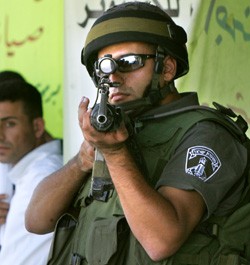 uring Israel’s recent Gaza offensive, Israeli soldiers unlawfully shot and killed 11 Palestinian civilians, including five women and four children, who were in groups waving white flags to convey their civilian status, Human Rights Watch said in a report released today. The Israeli military should conduct thorough, credible investigations into these deaths to tackle the prevailing culture of impunity, Human Rights Watch said.
 pending a few weeks in Gaza and seeing the full extent of the Hamas media control in Gaza, you can’t help but notice the success of Hamas and its propaganda efforts in the Palestinian territories and beyond. As someone who does not hold much affection toward Hamas and its ideology (their militia killed my first cousin and mutilated his body in front of cameras) I have to give credit where credit is due:



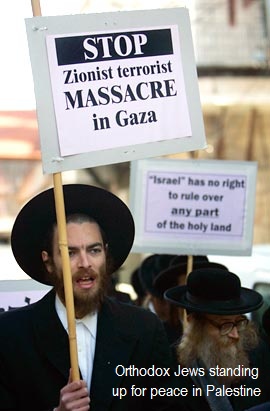 e had no choice,” has become Israel’s national mantra.
 s the incoming president, world-renowned for his eloquence, about to become better known for his silence?

 28 and 29 February: the US parks the USS Cole off the shore of Lebanon. Uh-oh.