Category Archives: United States

The curse of American support

Yonatan Touval, one of the Israelis behind the Geneva Initiative, clearly articulates the degree and ways in which Israel has suffered as a result of its special relationship with the United States. His hope is that Obama might correct the imbalance in the relationship and make it one based on genuine mutual interests, yet the quirk in Touval’s analysis is his claim that Israel is a victim in a relationship thrust upon the Jewish state — that America has indulged Israel “to the point of abuse.”

“Take the money,” insisted Uncle Sam. Little Israel was powerless to refuse. And now look what this over-indulgent uncle has done to its helpless nephew.

I guess this can be seen as a version of the “friends don’t let friends…” sentiment. Even so, the fact that Israelis still feel they can push their Little Israel image seems itself to be an expression of the way Israel has been over-indulged.

In “Pox Americana,” Touval writes:

Put simply, the relationship has damaged Israel by turning it into an adolescent state that doesn’t take responsibility for its own actions. And why should it take responsibility, when America’s uncritical embrace allows it to behave with the certainty that no action would ever be too costly – America would always save it from military, economic or diplomatic ruin.

To the extent, moreover, that this certainty has weakened Israel’s resolve to settle its conflict with its neighbors, the country has been further damaged by the loss of faith that the conflict could ever end. Hence the powerlessness to stop the occupation. This has had a terribly corrosive effect on Israeli life – from the high level of stress in everyday living, to the distorted allocation of national resources (Israel’s 2010 state budget allocates $14.4 billion for defense, a figure equal to 6.7 percent of the country’s GDP – the highest of any developed nation ), to the psychological adjustments that Israelis must make in the face of the deepening erosion of democratic values and growing doubts about the future prospects of the country as such.

Israelis have become accustomed to living under such anomalous conditions because, in many respects, the cushion of the special relations with the United States allows them to. But being habituated is a mixed blessing – which is also to say, a mixed curse.

Indeed, rather than habituation, Israel needs rehabilitation. And to those on the other side of the ocean who would disclaim responsibility, by placing the onus on Israel alone, we Israelis can only respond: “Where have you been all this time? It is you, America, that has turned us into what we are.”


Facebooktwittermail

Tea partying through history

At TomDispatch, Steve Fraser and Joshua B. Freeman, put the Tea Party movement in a historical context.

[T]he Tea Party movement reminds us that the moral self-righteousness, sense of dispossession, anti-elitism, revanchist patriotism, racial purity, and “Don’t Tread on Me” militancy that were always at least a part of the populist admixture are alive and well. For all the fantastical paranoia that often accompanies such emotional stances, they speak to real experiences — for some, of economic anxiety, insecurity, and loss; for others, of deeper fears of personal, cultural, political, or even national decline and moral disorientation.

Though such fears and feelings are, in part, legacies of the corporate liberal order — one of the dark sides of “progress” under capitalism — in this new populist moment, anti-capitalism itself barely lingers on. Though outrage at the bank bailout did help propel the Tea Party explosion, anti-big-business sentiment is now a pale shadow of its former self, a muted sub-theme in the movement when compared to the Wallace moment, not to mention those of Huey Long or the Populists.

This is hardly surprising since, at least economically, capitalism has, according to recent surveys of Tea Party membership, served many of them reasonably well. Like Goldwater supporters of the 1960s, those who identify with the Tea Party movement are generally wealthier than the population as a whole, and more likely to be employed. They are also apparently better educated, so their fondness for Sarah Palin’s intellectual debilities may be more a case of resentment of bicoastal cultural snobbery than eye-popping ignorance.

Alongside an exalted rhetoric about threats to liberty lies a sour, narrow-minded defensiveness against any possible threat of income redistribution that might creep into the body politic… and so into their pockets. “Don’t Tread on Me,” once a rebel war cry, has morphed into: “I’ve got mine. Don’t dare tax it.” The state, not the corporation, is now the enemy of choice.

Facebooktwittermail

Israelis have an un-American view of democracy

Imagine reading this report in an American newspaper:

More than half of white Americans think human rights organizations that expose immoral behavior by the United States should not be allowed to operate freely, and think there is too much freedom of expression here, a recent survey found.

The pollsters surveyed 500 white Americans who can be considered a representative sample of the adult white population.

They found that 57.6 percent of the respondents agreed that human rights organizations that expose immoral conduct by the United States should not be allowed to operate freely.

Slightly more than half agreed that “there is too much freedom of expression” in the US.

The poll also found that most of the respondents favor punishing journalists who report news that reflects badly on the actions of the US military.

Another 82 percent of respondents said they back stiff penalties for people who leak illegally obtained information exposing immoral conduct by the military.

In reality, the views related in the fictitious article above are not those of white Americans but come from Jewish Israelis and pertain to their own state, military, and press. The results of the poll commissioned by the Tami Steinmetz Center for Peace Research at Tel Aviv University, are reported by Haaretz.

During his recent visit to Israel, Vice President Joe Biden spoke about the “unbreakable bond borne of common values” shared by America and the Jewish state.

What the Israeli poll makes clear is that Jewish Israelis and Americans, far from having an unbreakable bond of common values, actually have significantly different views about how democracy works. As Daniel Bar-Tal, a professor at Tel Aviv university said: “The public recognizes the importance of democratic values, but when they need to be applied, it turns out most people are almost anti-democratic.”

Of course, even my attempt to contrive some kind of ethnic symmetry by juxtaposing the dominant ethnic group in the United States with that in Israel, is itself a tenuous parallel. We now have a non-white president but for as long as Israel remains a Jewish state it will surely never have a non-Jewish prime minister.

Most Americans understand that the separation of Church and State protects both democracy and religious freedom. In this era, we know that if any single ethnic or religious group were to assert a “right” to control this country, the United States would cease to be a democracy. The principle of equal rights does not come in different ethnic flavors.

Facebooktwittermail

American kleptocracy — How fears of socialism and fascism hide naked theft

At TomDispatch, William Astore writes:

America is not now, nor has it often been, a hotbed of political radicalism. We have no substantial socialist or workers’ party. (Unless you’re deluded, please don’t count the corporate-friendly “Democrat” party here.) We have no substantial fascist party. (Unless you’re deluded, please don’t count the cartoonish “tea partiers” here; these predominantly white, graying, and fairly affluent Americans seem most worried that the jackbooted thugs will be coming for them.)

What drives America today is, in fact, business — just as was true in the days of Calvin Coolidge. But it’s not the fair-minded “free enterprise” system touted in those freshly revised Texas guidelines for American history textbooks; rather, it’s a rigged system of crony capitalism that increasingly ends in what, if we were looking at some other country, we would recognize as an unabashed kleptocracy.

Recall, if you care to, those pallets stacked with hundreds of millions of dollars that the Bush administration sent to Iraq and which, Houdini-like, simply disappeared. Think of the ever-rising cost of our wars in Iraq and Afghanistan, now in excess of a trillion dollars, and just whose pockets are full, thanks to them.

If you want to know the true state of our government and where it’s heading, follow the money (if you can) and remain vigilant: our kleptocratic Houdinis are hard at work, seeking to make yet more money vanish from your pockets — and reappear in theirs.

Never has the old adage my father used to repeat to me — “the rich get richer and the poor poorer” — seemed fresher or truer. If you want confirmation of just where we are today, for instance, consider this passage from a recent piece by Tony Judt:

In 2005, 21.2 percent of U.S. national income accrued to just 1 percent of earners. Contrast 1968, when the CEO of General Motors took home, in pay and benefits, about sixty-six times the amount paid to a typical GM worker. Today the CEO of Wal-Mart earns nine hundred times the wages of his average employee. Indeed, the wealth of the Wal-Mart founder’s family in 2005 was estimated at about the same ($90 billion) as that of the bottom 40 percent of the U.S. population: 120 million people

Wealth concentration is only one aspect of our increasingly kleptocratic system. War profiteering by corporations (however well disguised as heartfelt support for our heroic warfighters) is another. Meanwhile, retired senior military officers typically line up to cash in on the kleptocratic equivalent of welfare, peddling their “expertise” in return for impressive corporate and Pentagon payouts that supplement their six-figure pensions. Even that putative champion of the Carhartt-wearing common folk, Sarah Palin, pocketed a cool $12 million last year without putting the slightest dent in her populist bona fides.

Facebooktwittermail

An empire decomposed: American foreign relations in the early 21st century

A must-read speech on the militarization of American diplomacy, by Chas Freeman, former US ambassador to Saudi Arabia, and the first casualty in the Israel lobby’s efforts to rein in what in its early days might have looked like a dangerously independent Obama administration.

Americans are accustomed to foreigners following us. After all, for forty years, we led the industrial democracies against the former USSR and its captive entourage. After the Soviet collapse, we bestrode the world as its sole colossus. For a while, we imagined we could do pretty much anything we wanted to do on our own. This, in the opinion of some, made followers irrelevant and leadership unnecessary.
Still, on reflection, we thought things might go better with a garland of allies and a garnish of friends. So we accepted some help from NATO members and some other foreign auxiliaries in Afghanistan. And, when we marched into the ambush of Iraq, we recruited a few other nations eager to ingratiate themselves with us to tag along in what became known as “the coalition of the billing.” In the end, however, in Iraq, it came down to us and our faithful British collaborators. Then, without even a “yo! Bush,” the Brits too were gone. And when we looked for other allies to follow us back into Afghanistan, they weren’t there.

All this should remind us that power, no matter how immense, is not by itself enough to ordain leadership. Power must be informed by vision, guided by wisdom, and embodied in strategy if it is to inspire companions and followers. We’re a bit short of believers in our leadership these days, not just on the battlefields of West Asia but at global financial gatherings, the United Nations, meetings of the G-20, among human rights and environmental activists, in the world’s regions, including our own hemisphere, and so forth. There are few places where we Americans still enjoy the credibility and command the deference we once did. A year or so ago, we decided that military means were not always the best way to solve problems and that having diplomatic allies could really help do so. But it isn’t happening.

The excesses that brought about the wide-ranging devaluation of our global standing originate, I think, in our politically self-serving reinterpretation of the Cold War soon after it ended. As George Kennan predicted, the Soviet Union was eventually brought down by the infirmities of its system. The USSR thus lost its Cold War with America and our allies. We were still standing when it fell. They lost. We won, if only by default. Yet Americans rapidly developed the conviction that military prowess and Ronald Reagan’s ideological bravado — not the patient application of diplomatic and military “containment” to a gangrenous Soviet system — had brought us victory. Ours was a triumph of grand strategy in which a strong American military backed political and economic measures short of war to enable us to prevail without fighting. Ironically, however, our politicians came to portray this as a military victory. The diplomacy and alliance management that went into it were forgotten. It was publicly transmuted into a triumph based on the formidable capabilities of our military-industrial complex, supplemented by our righteous denunciation of evil.

Many things followed from this neo-conservative-influenced myth. One conclusion was the notion that diplomacy is for losers. If military superiority was the key to “victory” in the Cold War, it followed for many that we should bear any burden and pay any price to sustain that superiority in every region of the world, no matter what people in these regions felt about this. This was a conclusion that our military-industrial complex heard with approval. It had fattened on the Cold War but was beginning to suffer from enemy deprivation syndrome — that is, the disorientation and queasy apprehension about future revenue one gets when one’s enemy has irresponsibly dropped dead. With no credible enemy clearly in view, how was the defense industrial base to be kept in business? The answer was to make the preservation of global military hegemony our objective. With no real discussion and little fanfare, we did so. This led to increases in defense spending despite the demise of the multifaceted threat posed by the USSR. In other words, it worked.

Only a bit over sixty percent of our military spending is in the Department of Defense budget, with the rest hidden like Easter eggs in the nooks and crannies of other federal departments and agencies’ budgets. If you put it all together, however, defense-related spending comes to about $1.2 trillion, or about eight percent of our GDP. That is quite a bit more than the figure usually cited, which is the mere $685 billion (or 4.6 percent of GDP) of our official defense budget. Altogether, we spend more on military power than the rest of the world — friend or foe — combined. (This way we can be sure we can defeat everyone in the world if they all gang up on us. Don’t laugh! If we are sufficiently obnoxious, we might just drive them to it.) No one questions this level of spending or asks what it is for. Politicians just tell us it is short of what we require. We have embraced the cult of the warrior. The defense budget is its totem.

The rest of this speech can be read here. Thanks to War in Context reader Delia Ruhe for bringing this to my attention.

Facebooktwittermail

UK needs to be less deferential to US, MPs say

In a new report, Global security: UK-US relations, members of Britain’s parliamentary foreign affairs committee say that the so-called “special relationship” between Britain and America is a thing of the past and it’s time for British leaders to stop kissing American ass — well, they didn’t use those exact words, but that’s what they meant. The BBC reports:

The committee said that the relationship was more associated now with the perceived support Britain gave to President George W Bush over the Iraq war.

“The perception that the British government was a subservient ‘poodle’ to the US administration leading up to the period of the invasion of Iraq and its aftermath is widespread both among the British public and overseas,” it said.

“This perception, whatever its relation to reality, is deeply damaging to the reputation and interests of the UK.”

The committee also said US President Barack Obama had taken the same “pragmatic” attitude as it was recommending now since entering the White House in 2009.

It said: “The UK needs to be less deferential and more willing to say no to the US on those issues where the two countries’ interests and values diverge.

“The UK’s relationship should be principally driven by the UK’s national interests within individual policy areas. It needs to be characterised by a hard-headed political approach to the relationship and a realistic sense of the UK’s limits.”

Committee chairman Mike Gapes said: “We must be realistic and accept that globalisation, structural changes and shifts in geopolitical power will inevitably affect the UK-US relationship.

“Over the longer-term, the UK is unlikely to be able to influence the US to the extent it has in the past.”

Facebooktwittermail

Israel’s game of bluff

Didi Remez has translated parts of a column by Nahum Barnea that appeared in Hebrew in Yediot‘s Friday political supplement. Barnea considers the assessments by Dr. Moshe Vered who published a study last year on possible scenarios that would result from an Israeli military strike on Iran’s nuclear facilities.

Barnea goes on to say:

The game is now approaching the critical stage, the “money time.” Netanyahu and Barak are waving the military card. “All the options are on the table,” they say, accompanying the sentence with a meaningful look. There are Israelis, in uniform and civilian clothes, who take them seriously. The Obama administration is troubled. It is no accident that US Chairman of the Joint Chiefs of Staff Admiral Michael Mullen was sent here, to make it clear that the US was vetoing a military strike. It is no accident that Barak was invited to Washington and Vice President Biden will be coming here on Monday. He is not only coming to visit Yad Vashem.

I find it difficult to believe that Netanyahu will undertake such a weighty and dangerous decision. It is more reasonable to assume that he and Barak are playing “hold me back.” On the day they will be called upon to explain why Iran attained nuclear weapons, they will say, each on his own, what do you want from me, I prepared a daring, deadly, amazing operation, but they—the US administration, the top IDF brass, the forum of three, the forum of seven, the forum of ten—tripped me up. They are to blame.

Netanyahu and Barak know: there is no military operation more successful, more perfect, than an operation that did not take place.

Netanyahu has upgraded Ahmadinejad to the dimensions of a Hitler. Against Hitler, one fights to the last bunker. This is what Churchill did, and Netanyahu wants so badly to be like Churchill. His credibility—a sensitive issue—is on the table. If he retreats, the voters will turn their back on him. Where will he go? In his distress, he may run forward.

The fascinating side of this story is that very few Israelis would appear to believe their prime minister. If they believed him, they would not run in a frenzy to buy apartments in the towers sprouting like mushrooms around the Kirya. In the event that Iran should be bombed, the residents of the towers would be the first to get it. If they believed [Netanyahu], the real estate prices in Tel Aviv would drop to a quarter of their current value, and long lines of people applying for passports would extend outside the foreign embassies.

Given that, as Barnea notes, Israelis can tell Netanyahu is bluffing, there seems little reason to doubt that the Israeli prime minister’s bluff is equally transparent to both Washington and Tehran.

Washington feels obliged to play along in order to make the Israeli threat seem credible. Tehran in turn needs to show that it will not bow to foreign pressure and thus the likely effect of Israel’s threats is to make the Iranian nuclear program advance more quickly than it would have minus the pressure.

How can this possibly serve Israel’s interests? In terms of thwarting Iran’s nuclear program it doesn’t, but this is not the Jewish state’s primary goal. What it wants more than anything else is to promote division across the region and thereby undermine the power of the opponents of Zionism.

Come the day that “the Iranian threat” turns out to have been overstated, a new threat will emerge. Israel cannot survive without its beloved enemies.

Facebooktwittermail

How the war on drugs gave birth to a permanent American undercaste

At TomDispatch, Michelle Alexander writes:

Ever since Barack Obama lifted his right hand and took his oath of office, pledging to serve the United States as its 44th president, ordinary people and their leaders around the globe have been celebrating our nation’s “triumph over race.” Obama’s election has been touted as the final nail in the coffin of Jim Crow, the bookend placed on the history of racial caste in America.

Obama’s mere presence in the Oval Office is offered as proof that “the land of the free” has finally made good on its promise of equality. There’s an implicit yet undeniable message embedded in his appearance on the world stage: this is what freedom looks like; this is what democracy can do for you. If you are poor, marginalized, or relegated to an inferior caste, there is hope for you. Trust us. Trust our rules, laws, customs, and wars. You, too, can get to the promised land.

Perhaps greater lies have been told in the past century, but they can be counted on one hand. Racial caste is alive and well in America.

Facebooktwittermail

Rage on the Right

The Southern Law Poverty Center reports:

The radical right caught fire last year, as broad-based populist anger at political, demographic and economic changes in America ignited an explosion of new extremist groups and activism across the nation.

Hate groups stayed at record levels — almost 1,000 — despite the total collapse of the second largest neo-Nazi group in America. Furious anti-immigrant vigilante groups soared by nearly 80%, adding some 136 new groups during 2009. And, most remarkably of all, so-called “Patriot” groups — militias and other organizations that see the federal government as part of a plot to impose “one-world government” on liberty-loving Americans — came roaring back after years out of the limelight.

The anger seething across the American political landscape — over racial changes in the population, soaring public debt and the terrible economy, the bailouts of bankers and other elites, and an array of initiatives by the relatively liberal Obama Administration that are seen as “socialist” or even “fascist” — goes beyond the radical right. The “tea parties” and similar groups that have sprung up in recent months cannot fairly be considered extremist groups, but they are shot through with rich veins of radical ideas, conspiracy theories and racism.

“We are in the midst of one of the most significant right-wing populist rebellions in United States history,” Chip Berlet, a veteran analyst of the American radical right, wrote earlier this year. “We see around us a series of overlapping social and political movements populated by people [who are] angry, resentful, and full of anxiety. They are raging against the machinery of the federal bureaucracy and liberal government programs and policies including health care, reform of immigration and labor laws, abortion, and gay marriage.”

Facebooktwittermail

Turkey recalls ambassador over US vote

The Financial Times reports:

Washington suffered a setback in its attempt to strengthen relations with Turkey when Ankara recalled its US ambassador on Thursday night.

The move came after a congressional panel backed a resolution describing the Ottoman-era massacres of 1.5m Armenians as “genocide”. Ankara has long warned that such a vote could harm US-Turkish relations and efforts to establish diplomatic ties between Turkey and Armenia.

Washington is currently seeking to persuade Ankara to back sanctions against Iran.

“We condemn this draft resolution, accusing the Turkish nation with a crime that it has not committed,” said the Turkish government. “This decision, which could adversely affect our co-operation on a wide common agenda with the US, also regrettably attests to a lack of strategic vision.”

Facebooktwittermail

Dubai assassins employed by US companies

Bloomberg reports:

Suspected assassins of a Hamas leader in Dubai “fraudulently” acquired prepaid payroll cards and stole identities to obtain jobs at U.S. companies, according to card-issuer MetaBank.
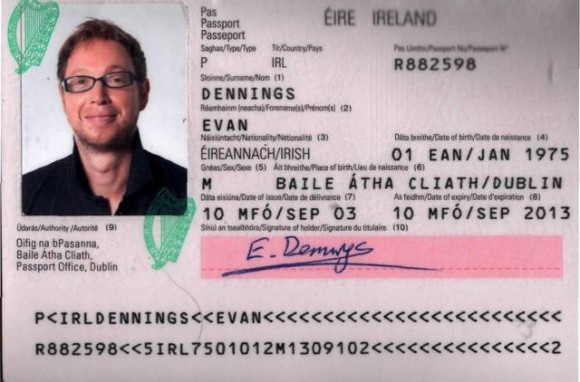
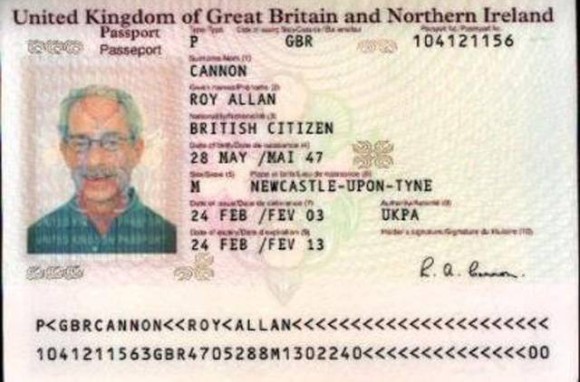
Authorities informed Meta, a unit of publicly traded Meta Financial Group Inc., that the suspects used fake passports to get cards issued by the firm and other banks, according to an e- mailed statement from Meta yesterday. The lender, rooted in regions of Iowa and South Dakota tied to farming, said it followed proper procedures and that the people weren’t on federal lists designed to block potential terrorists.

“No other readily apparent method existed for Meta to determine that identity theft had been perpetrated on valid governments and their citizens,” said MetaBank, based in Storm Lake, Iowa.

Fourteen of the suspects in the January killing of Mahmoud al-Mabhouh used payment cards issued by MetaBank to book hotel rooms and pay for air travel, Dubai police said last month. Police Chief Dahi Khalfan Tamim accused Israel’s spy agency, Mossad, of orchestrating the murder of al-Mabhouh, a founder of the Ezzedine al-Qassam Brigades, the armed wing of the Islamic Palestinian movement Hamas.

Next question: which US companies?

Facebooktwittermail

America, the fragile empire

Niall Ferguson writes:

If empires are complex systems that sooner or later succumb to sudden and catastrophic malfunctions, what are the implications for the United States today? First, debating the stages of decline may be a waste of time — it is a precipitous and unexpected fall that should most concern policymakers and citizens. Second, most imperial falls are associated with fiscal crises. Alarm bells should therefore be ringing very loudly indeed as the United States contemplates a deficit for 2010 of more than $1.5 trillion — about 11% of GDP, the biggest since World War II.

These numbers are bad, but in the realm of political entities, the role of perception is just as crucial. In imperial crises, it is not the material underpinnings of power that really matter but expectations about future power. The fiscal numbers cited above cannot erode U.S. strength on their own, but they can work to weaken a long-assumed faith in the United States’ ability to weather any crisis.

One day, a seemingly random piece of bad news — perhaps a negative report by a rating agency — will make the headlines during an otherwise quiet news cycle. Suddenly, it will be not just a few policy wonks who worry about the sustainability of U.S. fiscal policy but the public at large, not to mention investors abroad. It is this shift that is crucial: A complex adaptive system is in big trouble when its component parts lose faith in its viability.

Facebooktwittermail

The war on terror is anti-American

Philip Giraldi writes:

The expression war on terror is meaningless. Terror is a tactic, it is not a foreign government or political movement. To use the expression a “terrorist group” is equally misleading as the groups which come in all shapes sizes and colors are essentially political and have frequently clearly defined political objectives even if they use terrorism to advance their agenda. In most cases, the groups we call terrorists seek to take over the government of the countries where they operate, replacing groups not dissimilar to themselves who are currently in charge.

Why is what we call something important, whether we use the expression “terrorist” or not? It is important because how you name and define something shapes how you think about it and how you respond to it. It frames the narrative. Instead of bumper sticker definitions, we should instead be asking whether international groups that use terror genuinely threaten either the United States or any vital national interest. If we were to undertake such an analysis, we would quickly learn that frequently the terrorist label is misleading.

The exploitation of fear of terrorism by those in government has led to wars that did not have to be fought. Fear has been the key to the door for expansion of government and government powers and the people in charge in Washington have seized the opportunity. It has also eroded the liberties that have defined us as a nation.

Facebooktwittermail

American hypocrisy on weapons in the Middle East

Haaretz reports:

The U.S. administration has asked Syrian President Bashar Assad to immediately stop transferring arms to Hezbollah. American officials made the request during a meeting Friday with the Syrian ambassador to Washington.

Al-Hayat reports Hillary Clinton sent a message to Lebanese Parliament Speaker Nabih Berri on the need to curtail arms smuggling to Hezbollah. “Not a problem” said Berri, but that the US must also stop arming Israel with weapons and equipment.

Facebooktwittermail

Two Dubai murder suspects entered the US

A murder suspect, traveling as an Irishman Evan Dennings, entered the US on January 21, a day after Mahmoud al Mabhouh’s body was discovered in Dubai.

Roy Allan Cannon, entered the US on February 14.

The Wall Street Journal reports:

At least two of the 26 suspects sought by Dubai police for the alleged killing of a top Hamas leader appear to have entered the U.S. shortly after his death, according to people familiar with the situation.

Records shared between international investigators show that one of the suspects entered the U.S. on Feb. 14, carrying a British passport, according to a person familiar with the situation. The other suspect, carrying an Irish passport, entered the U.S. on Jan. 21, according to this person. Senior Hamas leader Mahmoud al-Mabhouh’s body was found in a Dubai hotel room on Jan. 20.

There aren’t records of either man leaving the U.S., though investigators can’t be sure the two are still in the country, according to this person. Since the two were traveling with what investigators believe to be fraudulently issued passports, they may have traveled back out of the U.S. with different, bogus travel documents.

The suspected U.S. travel broadens to American shores the international manhunt triggered by Dubai’s investigation into the death of Mr. Mabhouh. Dubai police have already identified two U.S. financial companies they believe issued and distributed several credit cards used by 14 of the suspects in the alleged killing.

Facebooktwittermail

Twenty-seven years of solitary confinement

In the United States it isn’t just suspected terrorists who are subject to cruel and unusual punishment. The case of Tommy Silverstein highlights the extremes that can be found inside the largest prison system in the world:

Tommy Silverstein has been held in solitary confinement for the past 27 years, longer than anyone else in the federal prison system, his lawyers say.
He is locked up at the high-security prison in Florence, Colorado, known as Supermax. The lights are always on. Guards who slip him food through a slot in his cell door usually ignore him. A few times a week, he is permitted to exercise in the recreation room — alone. Visits with his family and his lawyers are conducted through Plexiglas.

Silverstein’s isolation is the result of an unusual no-human-contact order issued by a judge in 1983, after he murdered a guard at the federal prison in Marion, Illinois. Marion was known at the time as the most rigorous confinement in the federal prison system.

Silverstein has referred to his solitary existence as “a slow, constant peeling of the skin.”

His attorneys, who are affiliated with the University of Denver, filed a lawsuit against the U.S. Bureau of Prisons in 2007, alleging that such prison conditions violate the cruel and unusual punishment clause of the Eighth Amendment. The lawsuit, filed in the federal district court of Colorado, is awaiting trial.

Facebooktwittermail

The rise of militainment

At Foreign Policy, P W Singer writes:

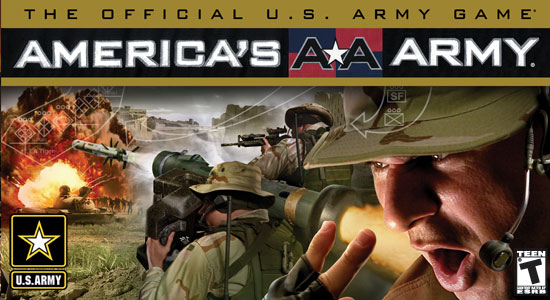
The country of Ghanzia is embroiled in a civil war. As a soldier in America’s Army, your job is to do everything from protect U.S. military convoys against AK-47-wielding attackers to sneak up on a mountain observatory where arms dealers are hiding out. It is a tough and dangerous tour of duty that requires dedication, focus, and a bit of luck. Fortunately, if you get hit by a bullet and bleed to death, you can reboot your computer and sign on under a new name.

America’s Army is a video game — a “tactical multiplayer first-person shooter” in gaming lingo — that was originally developed by the U.S. military to aid in its recruiting and training, but is now available for anyone to play. Among the most downloaded Internet games of all time, it is perhaps the best known of a vast array of video game-based military training programs and combat simulations whose scope and importance are rapidly changing not just the video-game marketplace, but also the way the U.S. military finds and trains its future warriors and even how the American public interfaces with the wars carried out in its name. For all the attention to the strategic debates of the post-9/11 era, a different sort of transformation has taken place over the last decade — largely escaping public scrutiny, at modest cost relative to the enormous sums spent elsewhere in the Pentagon budget, and with little planning but enormous consequences.

Facebooktwittermail

US can’t get no satisfaction from Syria and Iran

At his blog, Syria Comment, Joshua Landis writes:

President Bashar al-Assad and Mahmoud Ahmadinejad, who was in Damascus today, threw down the gauntlet. Only the day before Hilary Clinton warned Syria “to begin to move away from the relationship with Iran,” and stop supporting Hizbullah, Hamas, and ex-Baathists in Iraq. For several years, Syria has been told to “flip” and break from Iran if it expects to be allowed out of diplomatic and economic isolation. Israel has made Syria’s break with Iran a condition for peace with Damascus.

Today, Assad came out forcefully and defiantly to end any talk of separation.

“We must have understood Clinton wrong because of a bad translation or our limited understanding, so we signed the agreement to cancel the visas,” Assad said. “I find it strange that they (Americans) talk about Middle East stability and peace and the other beautiful principles and call for two countries to move away from each other,” he added.

Ahmadinejad, for his part, held up his hand with his thumb and index finger only a centimeter apart to indicate how little separated the positions of both countries.

The Washington Post reported:

The presidents of Iran and Syria on Thursday ridiculed U.S. policy in the region and pledged to create a Middle East “without Zionists,” combining a slap at recent U.S. overtures and a threat to Israel with an endorsement of one of the region’s defining alliances.

Ah, more threats to Israel… except Ahmadinejad’s threat was more nuanced than the Post report implies and it was made conditional on the possibility that Israel might launch another war. The Iranian president said:

I call on the Zionists to return to their senses and to recognize the legitimate rights of the people of the region and to respect them and to understand that if they continue to go down the wrong path, which they have traveled in the past, there will be no place for them in our region.

In other words, if Zionists insist on disregarding the rights of Palestinians and on making war with their neighbors, they are not welcome in the Middle East. What a reckless and unreasonable statement!

Facebooktwittermail