Category Archives: United States

FEATURE: “We had no freedom.”

America’s forgotten Vietnamese victims

Nguyen Van Tu asks if I’m serious. Am I really willing to tell his story — to tell the story of the Vietnamese who live in this rural corner of the Mekong Delta? Almost 40 years after guerrilla fighters in his country threw the limits of U.S. military power into stark relief — during the 1968 Tet Offensive — we sit in his rustic home, built of wood and thatch with an earthen floor, and speak of two hallmarks of that power: ignorance and lack of accountability. As awkward chicks scurry past my feet, I have the sickening feeling that, in decades to come, far too many Iraqis and Afghans will have similar stories to tell. Similar memories of American troops. Similar accounts of air strikes and artillery bombardments. Nightmare knowledge of what “America” means to far too many outside the United States. [complete article]

Facebooktwittermail

OPINION: Challenging a unipolar world

Challenging a unipolar world

One of the more interesting phenomena to emerge from the U.S. debacle in Iraq is the demise of the unipolar world that rose from the ashes of the Cold War. A short decade ago the United States was the most powerful political, economic, and military force on the planet. Today its army is straining under the weight of an unpopular occupation, its economy is careening toward recession, and the only “allies” we can absolutely depend on in the United Nations are Israel, Palau, and the Marshall Islands.

Rather than the “American Century” the Bush administration neo-conservatives predicted, it is increasingly a world where regional alliances and trade associations in Europe and South America have risen to challenge Washington’s once undisputed domination. [complete article]

Facebooktwittermail

FEATURE: Fighting over there, then killing back here

Across America, deadly echoes of foreign battles

Town by town across the country, headlines have been telling similar stories. Lakewood, Wash.: “Family Blames Iraq After Son Kills Wife.” Pierre, S.D.: “Soldier Charged With Murder Testifies About Postwar Stress.” Colorado Springs: “Iraq War Vets Suspected in Two Slayings, Crime Ring.”

Individually, these are stories of local crimes, gut-wrenching postscripts to the war for the military men, their victims and their communities. Taken together, they paint the patchwork picture of a quiet phenomenon, tracing a cross-country trail of death and heartbreak.

The New York Times found 121 cases in which veterans of Iraq and Afghanistan committed a killing in this country, or were charged with one, after their return from war. In many of those cases, combat trauma and the stress of deployment — along with alcohol abuse, family discord and other attendant problems — appear to have set the stage for a tragedy that was part destruction, part self-destruction. [complete article]

Facebooktwittermail

OPINION: Welcome to the post-American world

The fearful superpower

For the past few years, America has been alienated from the world. We have all read the yearly polls with the same damning numbers. But on one issue, the United States and the world agree: majorities everywhere expect things to improve markedly after George W. Bush. Whether it’s in Europe or Asia, the refrain from politicians, businessmen and intellectuals is the same. “We don’t hate America,” one of them told me recently. “We hate Bush. When he’s gone, it will be a new day.”

But will it? The question will be put to the test in a year, when a new president enters the White House.

There’s little doubt that the style and substance of U.S. foreign policy over the past seven years has provoked enormous international opposition. What is less clear is that the style and substance were unique products of the Bush administration. Some part of the global response was surely the product of longstanding unease with U.S. dominance. After all, France’s foreign minister coined the term “hyperpuissance” to describe America under Bill Clinton, not George W. Bush.

Then came 9/11. Ever since the attacks, the United States has felt threatened and under siege and determined to carve out maximum room to maneuver. But where Americans have seen defensive behavior, the rest of the world has looked on and seen the most powerful nation in human history acting like a caged animal, lashing out at any and every constraint on its actions. [complete article]

Facebooktwittermail

EDITORIAL: When reason prevails

When reason prevails

To some political observers there is something vaguely disappointing about witnessing events shaped by reason. Reasonable behavior is somewhat predictable and lacks the zest and drama of the unexpected.

In as much as news-watching is driven by the stimulating effect of the shock of the new, there is then a tendency for one revelation to trigger a desire that this be followed by a cascade of revelations. In the current context, this is provoking a notion that now, anything could happen.

In a game of whack-a-mole, as soon as the National Intelligence Estimate had knocked down the notion of the “mad mullahs”, the image of “mad dog” Israel popped up.

For the past several years, U.S. intelligence analysts have doubted hawkish U.S. and Israeli rhetoric that Iran is dominated by “mad mullahs” — clerics whose fanatical religious views might lead to irrational decisions. In the new NIE, the analysts forcefully posit an alternative view of an Iran that is rational, susceptible to diplomatic pressure and, in that sense, can be “deterred.”

“Tehran’s decisions are guided by a cost-benefit approach rather than a rush to a weapon irrespective of the political, economic and military costs,” states the NIE. Asked if this meant the Iranian regime would be “deterrable” if it did obtain a weapon, a senior official responded, “That is the implication.” He added: “Diplomacy works. That’s the message.”

But not so fast, says Seymour Hersh — “there’s always Israel… Israel can always decide to take military action.” And on CNN last night, Hersh continued. “I’m told that Olmert had a private discussion with Bush about it during Annapolis — before Annapolis. Bush briefed him about it.” This contradicts National Security Adviser Stephen Hadley’s claim that Bush was not briefed on the NIE until Wednesday — the day after the Annapolis Conference. Indeed, there is further evidence that the Israelis were informed well before the conference.

In today’s Haaretz, Amos Harel writes:

Israel has known about the report for more than a month. The first information on it was passed on to Defense Minister Ehud Barak, and to Shaul Mofaz, who is the minister responsible for the strategic dialog with the Americans. The issue was also discussed at the Annapolis summit by Barak and U.S. Secretary of Defense Robert Gates, and it seems also between Bush and Prime Minister Ehud Olmert.

What surprised Israel is the sharp turn from the previous line presented by the DNI [Director of National Intelligence, Mike McConnell], and the fact the report was made public. Based on his short comments yesterday, it seems Barak, like Olmert, is trying to avoid open disagreement with the U.S. government.

But the issue of the NIE is expected to create tension on two levels. It will cloud the tight cooperation between the two countries intelligence agencies, since now it will no longer look as if it is only a disagreement over timing, but a fundamental disagreement over Iran’s intentions. It will also cause a feeling of distress on the Israeli side, as now it will seem that the U.S. is abandoning Israel to fight alone.

But is there really much likelihood that Israel would take on the fight alone?

Some would argue that Israel’s September 6 strike on Syria was intended as a warning shot — a signal to Tehran that “mad dog” Israel can, if it chooses, just as easily strike Iranian targets. At the time, it was certainly easy to accept such an interpretation. Now, things look different.

It seems more reasonable — in accordance with the principle of Ockham’s razor (cleaving to the simplest explanation) — to believe that bombs dropped on Syria were intended to send a message to Syria, not Iran. The message? Just because of last summer’s mess in Lebanon, don’t get the idea that you’d stand a chance in a military confrontation with Israel. We can hit you whenever we want, wherever we want. Now we’ve made that clear, we’re ready to talk.

When it comes to Iran, the political challenge now is for those who until very recently were hysterically presenting Iran as the greatest threat to the world, to make an about face without losing face and say that Iran can now effectively be engaged.

Those still feeling the sting of the NIE’s claims will predictably revive Rumsfeld’s line of reasoning that the absence of evidence is not evidence of absence. But this always was, and remains, a faultless yet deceptive line of reasoning since the absence of evidence is not evidence of concealment. Just as there are still those who believe that Saddam Hussein’s WMD were never found because they were so well hidden, the same line is being used again: “The Israelis interpret the evidence to mean the Iranians have almost certainly continued to conduct their military nuclear program in secret.”

That’s all well and good, but while the masters-of-secrecy argument might have some limited value in sustaining the image of Iran’s government as a nefarious and deceptive entity, at the same time, it’s hard to plausibly argue in favor of missile strikes on targets so well hidden that their locations are unknown.

The neocons know the game is up and some of them are being surprisingly quick to concede the fact. Norman Podhoretz sees the intelligence community engaged in a scheme to “head off the possibility that the President may order air strikes on the Iranian nuclear installations.” But even if the father of neoconservatism doesn’t like what he sees, he concedes that the plot has worked.

Robert Kagan, perhaps the most nimble-minded among the neocons, says, “With its policy tools broken, the Bush administration can sit around isolated for the next year. Or it can seize the initiative, and do the next administration a favor, by opening direct talks with Tehran.” Part of Kagan’s motive for advocating talks now is that this “would give the United States a better chance to frame the discussion, at home and abroad.” Which is to say, a better chance for Kagan and his friends to frame the issues.

Be that as it may, the opportunity that has now opened up needs to be grasped. The question is, who is going to quickest off the mark in becoming the strongest advocate of a bold and strategic policy shift? Those who have nothing to advocate will do no more than sustain the culture of political reactivity in which nothing really gets said and nothing much gets done.

So far there are no signs that inside Bush’s brain there are any new neuronal pathways being tickled by an action potential. It’s time for Iran to “come clean” he says — and Ahmadinejad could say just the same. If the absence of cunning is a precondition for U.S.-Iranian talks, they’re not going to happen.

But Bush’s isn’t the only voice that needs to be heard right now. There are a bunch of folks waltzing around America at the moment claiming they want to lead the nation. OK. Now’s the time to show your mettle. And just in case anyone needs reminding: whether or not Iran has an active program for developing nuclear weapons, it does remain the strategically most important country in the Middle East.

The release of the NIE may have the effect of making presidential candidates think that Iran can quietly be dropped from the political agenda. This would be a mistake. The opportunity here is not limited to finding a new way to approach Iran; with some courage and imagination the conversation could actually start to shift away from its myopic focus on national security threats and towards a new focus on engagement. Instead of talking about how America must lead the world, save the world or protect itself from the world, it’s time to start talking about working together and raising America’s awareness of a convergence of national and global interests.

Facebooktwittermail

OPINION: Forgeting how democracy works

Hey, young Americans, here’s a text for you

Is America still America if millions of us no longer know how democracy works?

When I speak on college campuses, I find that students are either baffled by democracy’s workings or that they don’t see any point in engaging in the democratic process. Sometimes both.

Not long ago, I gave a talk at a major university in the Midwest. “They’re going to raze our meadows and put in a shopping mall!” a young woman in the audience wailed. “And there’s nothing we can do!” she said, to the nods of young and old alike.

I stared at her in amazement and asked how old she was. When she said 26, I suggested that she run for city council. Then she stared at me– with complete incomprehension. It took me a long time to convince her and her peers in the audience that what I’d suggested was possible, even if she didn’t have money, a major media outlet of her own or a political “machine” behind her.

This lack of understanding about how democracy works is disturbing enough. But at a time when our system of government is under assault from an administration that ignores traditional checks and balances, engages in illegal wiretapping and writes secret laws on torture, it means that we’re facing an unprecedented crisis. [complete article]

Facebooktwittermail

OPINION: What’s America worth?

In the realm of the dying dollar

Great powers die slowly. It took years before the world realized that Great Britain was an imperial corpse, sapped of its strength by two world wars. The funeral finally occurred on Feb. 21, 1947, a freezing winter day in bomb-torn, bedraggled London, when the British wrote their own epitaph. That was the day that London cabled Washington: “His Majesty’s Government, in view of their own situation, find it impossible to grant further financial assistance to Greece,” amounting to a half billion dollars a year and a garrison of 40,000 troops. The British also announced the same day that they were withdrawing from Turkey. “The British are finished,” remarked a stunned Dean Acheson, who was soon to be Harry Truman’s secretary of State. And so they were. It was the early cold war. With the Soviet Union threatening to extend its influence over Greece and Turkey, there was no time for elegies. Instead, a quick passing of the baton took place: the United States would now fill Britain’s role and become the central, stabilizing power in the West. This was the moment of “creation” of the U.S.-led world order, Acheson later realized.

One has to wonder now whether the American superpower is also experiencing a terminal illness, with its decline marked by the dollar’s downward drift. The one difference being that there is no successor on the horizon (the Chinese have a long, long way to go), and the currency that is replacing the dollar, the euro, is backed not by an emerging superpower but by the feeble cacophony of voices that is the European Union. Yet the signs of imperial decadence are unmistakable. The world is losing confidence in the dollar, in no small part because it has lost confidence in America’s strategic judgment and in its sustainability as a great power in the face of record budget and trade deficits, which are forcing the United States to borrow ever more money from future rivals like China and Russia. [complete article]

Facebooktwittermail

FEATURE: Economic recovery from Bush will take a generation

The economic consequences of Mr. Bush

When we look back someday at the catastrophe that was the Bush administration, we will think of many things: the tragedy of the Iraq war, the shame of Guantánamo and Abu Ghraib, the erosion of civil liberties. The damage done to the American economy does not make front-page headlines every day, but the repercussions will be felt beyond the lifetime of anyone reading this page.

I can hear an irritated counterthrust already. The president has not driven the United States into a recession during his almost seven years in office. Unemployment stands at a respectable 4.6 percent. Well, fine. But the other side of the ledger groans with distress: a tax code that has become hideously biased in favor of the rich; a national debt that will probably have grown 70 percent by the time this president leaves Washington; a swelling cascade of mortgage defaults; a record near-$850 billion trade deficit; oil prices that are higher than they have ever been; and a dollar so weak that for an American to buy a cup of coffee in London or Paris—or even the Yukon—becomes a venture in high finance.

And it gets worse. After almost seven years of this president, the United States is less prepared than ever to face the future. We have not been educating enough engineers and scientists, people with the skills we will need to compete with China and India. We have not been investing in the kinds of basic research that made us the technological powerhouse of the late 20th century. And although the president now understands—or so he says—that we must begin to wean ourselves from oil and coal, we have on his watch become more deeply dependent on both. [complete article]

Facebooktwittermail

REVIEW: The Second Civil War

Division of the U.S. didn’t occur overnight

During President George W. Bush’s first term, one of his senior political advisers summed up the prevailing philosophy at the White House like this: “This is not designed to be a 55 percent presidency,” he said. “This is designed to be a presidency that moves as much as possible of what we believe into law while holding 50 plus one of the country and the Congress.” Bold ideas that could mobilize his conservative Republican base were prized over efforts to convince independent voters in the center; sharp divisions over the administration’s policies were regarded as proof of Mr. Bush’s decisiveness and willingness to challenge conventional thinking.

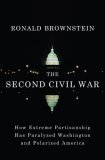
amazon-secondcivilwar.jpgAs the veteran political reporter Ronald Brownstein observes in his timely and compelling new book, this is very much how President Bush has governed: “In his congressional strategy he consistently demonstrated that he would rather pass legislation as close as possible to his preferences on a virtually party-line basis than make concessions to reduce political tensions or broaden his support among Democrats.” And in his dealings with both Congress and other nations before the invasion of Iraq, Mr. Brownstein goes on, Mr. Bush “sought not to construct a consensus for a common direction on Iraq, but rather to obtain acquiescence for the undeviating direction he had charted in his own mind.” [complete article]

Facebooktwittermail

NEWS, OPINION & EDITOR’S COMMENT: An American awakening?

Picking up after failed war on terror

Given that Bush’s version of global war has proved such a costly flop, what ought to replace it? Answering that question requires a new set of principles to guide U.S. policy. Here are five:

* Rather than squandering American power, husband it. As Iraq has shown, U.S. military strength is finite. The nation’s economic reserves and diplomatic clout also are limited. They badly need replenishment.

* Align ends with means. Although Bush’s penchant for Wilsonian rhetoric may warm the cockles of neoconservative hearts, it raises expectations that cannot be met. Promise only the achievable.

* Let Islam be Islam. The United States possesses neither the capacity nor the wisdom required to liberate the world’s 1.4 billion Muslims, who just might entertain their own ideas about what genuine freedom entails. Islam will eventually accommodate itself to the modern world, but Muslims will have to work out the terms.

* Reinvent containment. The process of negotiating that accommodation will produce unwelcome fallout: anger, alienation, scapegoating and violence. In collaboration with its allies, the United States must insulate itself against Islamic radicalism. The imperative is not to wage global war, whether real or metaphorical, but to erect effective defenses, as the West did during the Cold War.

* Exemplify the ideals we profess. Rather than telling others how to live, Americans should devote themselves to repairing their own institutions. Our enfeebled democracy just might offer the place to start.

The essence of these principles can be expressed in a single word: realism, which implies seeing ourselves as we really are and the world as it actually is. [complete article]

Editor’s Comment — “Seeing ourselves as we really are and the world as it actually is” — yes indeed, wouldn’t that be a welcome change? But it would also amount to a profound transformation in the American psyche.

Few people in the world have a realistic self-image — what distinguishes Americans is that their lack of self-understanding has such a destructive impact on others.

As occupants of a continent with vast oceans to either side, there is a geographic realism to America’s sense of isolation. The gulf that now needs to be crossed is psychological — it requires that Americans acquire the conviction that the world matters. Yet the world as “other” — as somewhere else — is something from which we have set ourselves apart. Having distasterously ventured into this other, discovered that we are often unwelcome and even reviled, the natural response is to retreat.

The pompous advocates of engagement assert that the world needs American leadership. The message that Americans and the world really need to hear is the reverse: America needs the world. We cannot afford to isolate ourselves. We cannot afford to remain ignorant. The world that seems other is simply a world in which we have yet to understand our place. It is a world in which we should neither assert preeminence nor project our fear.

Next president urged to fix global image

The next US president must expand American involvement in the United Nations and other international bodies and dramatically increase foreign aid – especially among Muslim countries – to reverse the steep decline in American influence and enhance national security, a bipartisan group of politicians, business executives, and academics said in a report yesterday.
more stories like this

The report, titled “A Smarter and Safer America,” also condemned what it called the American “exporting of fear” since the Sept. 11, 2001, terrorist attacks, and criticized the use of “hard power,” military might, as the main component of US foreign policy instead of the “soft power” of positive US influences.

But the authors – including Richard Armitage, former deputy secretary of state under President Bush, retired Supreme Court Justice Sandra Day O’Connor, and Harvard professor Joseph S. Nye Jr. – said their recommendations, issued one year ahead of Election Day, is a foreign policy blueprint for Democratic and Republican presidential hopefuls. [complete article]

Facebooktwittermail

ANALYSIS: Russia did not lose the Cold War

Losing Russia

Faced with threats from al Qaeda and Iran and increasing instability in Iraq and Afghanistan, the United States does not need new enemies. Yet its relationship with Russia is worsening by the day. The rhetoric on both sides is heating up, security agreements are in jeopardy, and Washington and Moscow increasingly look at each other through the old Cold War prism.

Although Russia’s newfound assertiveness and heavy-handed conduct at home and abroad have been the major causes of mutual disillusionment, the United States bears considerable responsibility for the slow disintegration of the relationship as well. Moscow’s maladies, mistakes, and misdeeds are not an alibi for U.S. policymakers, who made fundamental errors in managing Russia’s transition from an expansionist communist empire to a more traditional great power.

Underlying the United States’ mishandling of Russia is the conventional wisdom in Washington, which holds that the Reagan administration won the Cold War largely on its own. But this is not what happened, and it is certainly not the way most Russians view the demise of the Soviet state. Washington’s self-congratulatory historical narrative lies at the core of its subsequent failures in dealing with Moscow in the post-Cold War era. [complete article]

Facebooktwittermail

NEWS, ANALYSIS & EDITOR’S COMMENT: Why America uses torture

U.S. accused of torture

The United States’s willingness to resort to harsh interrogation techniques in its so-called war on terror undermined human rights and the international ban on torture, a United Nations spokesman says.

Manfred Nowak, UN Special Rapporteur on torture, said the US’s standing and importance meant it was a model to other countries which queried why they were subject to scrutiny when the US resorted to measures witnessed at Guantanamo Bay and Abu Ghraib prison.

Mr Nowak was speaking after releasing his finding that the use of torture was routine and widespread in Sri Lanka ,despite laws against it.

“I am very concerned about the undermining of the absolute prohibition of torture by interrogation methods themselves in Abu Grahib, in Guantanamo Bay and others, but also by rendition and the whole CIA secret places of detention. All that is really undermining the international rule of law in general and human rights but also the prohibition of torture,” said Mr Nowak. [complete article]

Editor’s Comment — The renewed debate on torture that has been provoked by statements made by AG-nominee Judge Mukasey on the legitimacy of waterboarding, has resulted in numerous assertions that torture is un-American. As Senate Judiciary Committee Chairman Patrick Leahy said today, “I remain very concerned that Judge Mukasey finds himself unable to state unequivocally that waterboarding is illegal and below the standards and values of the United States.”

To my mind, this is a rather weak moral argument. To say that we don’t torture because we’re American, is to imply that the majority of humanity, not being endowed with American virtue, might find the use of torture more acceptable than their high-minded stateside counterparts. But on the contrary, it is this notion that there is some intrinsic moral foundation to Americanness that is itself the great enabling force beneath a national trait that most of us would rather ignore: American hypocracy. The self-agrandizing virtue that this nation so often wants to celebrate is a mask that conceals a plethora of contradictions: that a nation that identifies itself as religious is so profoundly materialistic; that a nation that predominently identifies itself as Christian has such a strong preference for pre-Christian values; that a nation that sees itself as a moral beacon to the world has with such frequency chosen military engagement as its point of contact with the rest of the world. Americans can and do engage in torture not in spite of this being un-American, but because as Americans they find it all too easy to sustain an image of themselves that is a glaring contradiction with their actions.

If the Senate wants to assert that America will no longer condone torture, then first we need to acknowledge that the climate of fear engendered by the war on terrorism has in fact led many Americans to regard torture as an acceptable tool of national defense. And secondly, that if America wants to now change course and unequivocally renounce the use of torture, it will not be reclaiming moral high ground; it will be returning to an internationally recognized set of moral standards that for most of this decade it has chosen to ignore.

Waterboarding is torture… period

1. Waterboarding is a torture technique. Period. There is no way to gloss over it or sugarcoat it. It has no justification outside of its limited role as a training demonstrator. Our service members have to learn that the will to survive requires them accept and understand that they may be subjected to torture, but that America is better than its enemies and it is one’s duty to trust in your nation and God, endure the hardships and return home with honor.

2. Waterboarding is not a simulation. Unless you have been strapped down to the board, have endured the agonizing feeling of the water overpowering your gag reflex, and then feel your throat open and allow pint after pint of water to involuntarily fill your lungs, you will not know the meaning of the word.

Waterboarding is a controlled drowning that, in the American model, occurs under the watch of a doctor, a psychologist, an interrogator and a trained strap-in/strap-out team. It does not simulate drowning, as the lungs are actually filling with water. There is no way to simulate that. The victim is drowning. How much the victim is to drown depends on the desired result (in the form of answers to questions shouted into the victim’s face) and the obstinacy of the subject. A team doctor watches the quantity of water that is ingested and for the physiological signs which show when the drowning effect goes from painful psychological experience, to horrific suffocating punishment to the final death spiral.

Waterboarding is slow motion suffocation with enough time to contemplate the inevitability of black out and expiration –usually the person goes into hysterics on the board. For the uninitiated, it is horrifying to watch and if it goes wrong, it can lead straight to terminal hypoxia. When done right it is controlled death. Its lack of physical scarring allows the victim to recover and be threaten with its use again and again. [complete article]

On torture, 2 messages and a high political cost

Six years after the Bush administration embraced harsh physical tactics for interrogating terrorism suspects, and two years after it reportedly dropped the most extreme of those techniques, the taint of torture clings to American counterterrorism efforts.

The administration has a standard answer to queries about its interrogation practices: 1) We do not torture, and 2) we will not say what we do, for fear of tipping off future prisoners. In effect, officials want Al Qaeda to believe that the United States does torture, while convincing the rest of the world that it does not.

But that contradictory catechism is not holding up well under the battering that American interrogation policies have received from human rights organizations, European allies and increasingly skeptical members of Congress. [complete article]

Squeezing Mukasey on torture

George W. Bush has always wielded moral clarity as a weapon, beating Democrats by declaring his high purpose and principled resolve. But in recent months, as critics have shined new light on domestic spying and harsh interrogation techniques in the morally ambiguous world of counter-terrorism, Bush has had to retreat to gray-area defenses, using tailored definitions and legalisms to dodge questioners. And now, as Democrats raise the pressure on embattled Attorney General nominee Michael Mukasey to state his opinion on whether or not waterboarding constitutes torture, it is the President’s opponents who are using moral clarity against him.

Mukasey’s (and the White House’s) problems began during his Oct. 18 Judiciary Committee confirmation hearing to replace Alberto Gonzales as Attorney General. At the hearing veteran Illinois Senator Dick Durbin asked Mukasey a deceptively simple question: Is waterboarding torture? Waterboarding simulates drowning, and involves constraining a person, restricting their breathing and pouring water on all or part of their face. Some version of it is widely reported to have been used by U.S. interrogators in an attempt to extract information from high-level terrorism suspects in the wake of 9/11. [complete article]

See also, Dozens of ‘ghost prisoners’ not publicly accounted for (WP) and Judgment day for the CIA? (Christopher Dickey).

Facebooktwittermail

OPINION & EDITOR’S COMMENT: The unwritten contract requiring the American media to bow before the Israel lobby

The Israel lobby targets Haaretz

When Haaretz was just published in Israel, CAMERA didn’t care about its statements about the occupation and the destruction of Palestinian hopes and dreams and olive trees. “This all happened in Hebrew… causing little outward impact..”

Outward impact. She means: now Haaretz is affecting U.S. opinion and foreign policy. The most important statement Levin made was that she gets the brushoff from Amos Schocken, the Haaretz publisher, but with the American media, “there is an unwritten contract between them and us.” (Verbatim transcript to come later, when I have a little time…) An unwritten contract: to be fair to Israel, to print CAMERA members’ letters, to pick up the phone.

Isn’t that amazing and scandalous? Levin is explaining why there is a free debate in Israel and not here. Because of the lobby and its “unwritten contract.” [complete article]

Editor’s Comment — There’s another name for this “unwritten contract” between the U.S. media and the Israel lobby: cowardice and self-interest. Journalists and editors would rather be gelded than jeopardize their professional advancement. In the contest between the dollar and the truth, the dollar always wins.

Facebooktwittermail

NEWS: Turkish-U.S. ties threatened

Turkish general warns of irreversible damage to U.S. ties if genocide resolution passes

Turkey’s top general warned that ties with the U.S., already strained by attacks from rebels hiding in Iraq, will be irreversibly damaged if Congress passes a resolution that labels the World War I-era killings of Armenians a genocide.

Turkey, which is a major cargo hub for U.S. and allied military forces in Iraq and Afghanistan, has recalled its ambassador to Washington for consultations and warned that there might be a cut in the logistical support to the U.S. over the issue. [complete article]

Facebooktwittermail

OPINION & EDITOR’S COMMENT: America’s shadow

The ‘good Germans’ among us

We can continue to blame the Bush administration for the horrors of Iraq — and should. Paul Bremer, our post-invasion viceroy and the recipient of a Presidential Medal of Freedom for his efforts, issued the order that allows contractors to elude Iraqi law, a folly second only to his disbanding of the Iraqi Army. But we must also examine our own responsibility for the hideous acts committed in our name in a war where we have now fought longer than we did in the one that put Verschärfte Vernehmung on the map.

I have always maintained that the American public was the least culpable of the players during the run-up to Iraq. The war was sold by a brilliant and fear-fueled White House propaganda campaign designed to stampede a nation still shellshocked by 9/11. Both Congress and the press — the powerful institutions that should have provided the checks, balances and due diligence of the administration’s case — failed to do their job. Had they done so, more Americans might have raised more objections. This perfect storm of democratic failure began at the top.

As the war has dragged on, it is hard to give Americans en masse a pass. We are too slow to notice, let alone protest, the calamities that have followed the original sin. [complete article]

See also,

Editor’s Comment — As Frank Rich notes:

It was always the White House’s plan to coax us into a blissful ignorance about the war. Part of this was achieved with the usual Bush-Cheney secretiveness, from the torture memos to the prohibition of photos of military coffins. But the administration also invited our passive complicity by requiring no shared sacrifice. A country that knows there’s no such thing as a free lunch was all too easily persuaded there could be a free war.

Yet what is missing in these observations about the multiple ways in which our humanity has been compromised, is an acknowledgment of the degree to which the administration’s policies have been buttressed by a current in American politics and across American culture that provided the bedrock for America’s response to 9/11, namely, xenophobia. This isn’t xenophobia that was triggered by 9/11; it was an already prevailing sentiment that the Bush administration could easily harness in support of its policies.

When GOP presidential candidate, Mitt Romney, recently said, “we ought to double Guantanamo,” he wasn’t sticking his neck out; he knew he was appealing not only to his base but to also to those xenophobic Democrats who fear that a liberal in the White House might make America more vulnerable to the foreign threat.

And when last year the controversy blew up over the outsourcing of US port management to Dubai’s DP World, Democrats in Congress didn’t hesitate to jump on the xenophobic bandwagon.

And after four Blackwater mercenaries were brutally killed in Fallujah in 2004, the Pentagon knew that domestically there would be little significant political fallout from the ensuing Battle of Fallujah in which an estimated 600 Iraqi civilians died. Just as in Mogadishu, when American lives had been lost, any notion of proportionality went out of the window.

And now that in the millions, Iraqis have had to flee their war-torn country, Congress seems more concerned about the Armenian genocide than about America’s responsibility for accepting refugees. While Sweden — a country that has had no role in the war — has accepted Iraqis in numbers which would be the equivalent of the U.S. taking in about 500,000 refugees, politicians in America know that pushing for a similar response here would involve unacceptable political risks. In May, in a token humanitarian gesture, the House of Representatives proposed a four-year plan to accept up to 60,000 Iraqis who worked for at least a year with U.S.- or U.N.-affiliated groups. This reflects the way in which in much of the public debate on the refugee issue, the focus has been narrowed to one of employer-employee obligations.

When it comes to Iraqi refugees, the same America that thought it could have a free war, would rather turn away from its responsibilities than open its doors.

No need for a warrant, you’re an immigrant

Long Island officials protested when federal agents searching for immigrant gang members raided local homes two weeks ago. The agents had rousted American citizens and legal immigrants from their beds in the night, complained Lawrence W. Mulvey, the Nassau County police commissioner, and arrested suspected illegal immigrants without so much as a warrant.

“We don’t need warrants to make the arrests,” responded Peter J. Smith, the special agent in charge in New York for Immigration and Customs Enforcement, or ICE, the agency that conducted the raids.

His concise answer helps explain the friction that the Bush administration’s recent campaign of immigration enforcement has caused. Last week, immigration officials announced that they had made more than 1,300 arrests across the country over the summer when they went looking for gang members. Since the raids were carried out under immigration law, many protections in place under the American criminal codes did not apply. Foreign residents of the United States, whether here legally or not, answer to a different set of rules.

Immigration agents are not required to obtain warrants to detain suspects. The agents also have broad authority to question people about their immigration status and to search them and their homes. There are no Miranda rights that agents must read when making arrests. Detained immigrants have the right to a lawyer, but only one they can pay for. [complete article]

Facebooktwittermail

NEWS & OPINION: The global warming that leaves America in the cold

The Sino-Russian embrace leaves the U.S. out in the cold

It has become a commonplace of international diplomacy that Russia and China often work together on key issues. They have frustrated western hopes for sanctions or other tough action on disputes ranging from Burma and Darfur to Iran. They are blocking a solution on Kosovo. What few in the west have spotted is that Sino-Russian rapprochement has reached such a point that the two huge countries’ relations with each other are far warmer than either US-Russian or US-Chinese relations. In other words, the famous US-Russia-China triangle Nixon and Kissinger created by their path-breaking overtures to Beijing in the early 1970s is completely reversed.

China, in those Maoist days, was mired in a mixture of international quarantine and self-imposed isolation, feared by the Soviet Union and hated by the US. The two Americans dramatically broke the mould. They cleverly manipulated Mao’s ideological rivalry with Moscow to bring China back into the global arena and thereby infuriate and put pressure on the Soviets. This helped to ease the US retreat from Vietnam.

Now Russia and China are together and the US is out of the loop. It is a stark fact that Condoleezza Rice and defence secretary Robert Gates cannot ignore today as they start two days of talks in Moscow. No more easy concessions from Moscow and Beijing. Both powers are big boys and can bargain as hard as anyone from Washington, whether neocon or “realist”. [complete article]

Putin threatens withdrawal from cold war nuclear treaty

President Vladimir Putin warned today that Russia was considering withdrawal from a major cold war arms treaty restricting intermediate range nuclear missiles unless it is expanded to include other states.

Mr Putin said that Moscow is planning to dump the intermediate range nuclear forces treaty (INF) – signed in a landmark deal between the US and Soviet Union in 1987 – unless countries like China are included in its provisions.

His comments came just before talks in Moscow today between the US secretary of state, Condoleezza Rice, and the US defence secretary, Robert Gates, with Russia’s foreign minister, Sergei Lavrov, and the defence minister, Anatoly Serdyukov. [complete article]

Facebooktwittermail

SPEECH & EDITOR’S COMMENT: Together we can do the hard work to seek a new dawn…

Courage against convention, then and now

We need to change our nuclear policy and our posture, which is still focused on deterring the Soviet Union – a country that doesn’t exist. Meanwhile, India and Pakistan and North Korea have joined the club of nuclear-armed nations, and Iran is knocking on the door. More nuclear weapons and more nuclear-armed nations mean more danger to us all.

Here’s what I’ll say as President: America seeks a world in which there are no nuclear weapons.

We will not pursue unilateral disarmament. As long as nuclear weapons exist, we’ll retain a strong nuclear deterrent. But we’ll keep our commitment under the Nuclear Non Proliferation Treaty on the long road towards eliminating nuclear weapons. We’ll work with Russia to take U.S. and Russian ballistic missiles off hair-trigger alert, and to dramatically reduce the stockpiles of our nuclear weapons and material. We’ll start by seeking a global ban on the production of fissile material for weapons. And we’ll set a goal to expand the U.S.-Russian ban on intermediate-range missiles so that the agreement is global.

As we do this, we’ll be in a better position to lead the world in enforcing the rules of the road if we firmly abide by those rules. It’s time to stop giving countries like Iran and North Korea an excuse. It’s time for America to lead. When I’m President, we’ll strengthen the Nuclear Non-Proliferation Treaty so that nations that don’t comply will automatically face strong international sanctions. [complete article]

See also, A world free of nuclear weapons (George P. Shultz, William J. Perry, Henry A. Kissinger, Sam Nunn, Wall Street Journal, January 8, 2007).

Editor’s Comment — To say, “America seeks a world in which there are no nuclear weapons,” is a fine thing. Reagan said the same thing, but what he left behind was missile defense — the fanciest boondoggle the military-industrial complex ever dreamed up.

If Obama is actually serious — in other words, if he isn’t merely trying to conjure up a narrative of light contrasting with the era of Bush-Cheney darkness — then he needs to add some substance to his declaration.

A plan is a dream with a deadline.* Kennedy didn’t just say that America would send a man to the moon as soon as it would be feasible. He said that it would happen before the end of the decade. Likewise the dream of a nuclear weapon-free world is no use if it’s off on a horizon that we never reach. Obama’s “long road” sounds like one that goes on forever.

And if Obama really wants to give his declaration some punch, he must do better than this: “It’s time to stop giving countries like Iran and North Korea an excuse. It’s time for America to lead.”

Instead, how about acknowledging that in a world of nuclear-haves and nuclear-have-nots, there is not a single nation that can claim a right to nuclear arms and that it is this inequity more than anything else that is the driving force behind nuclear proliferation.

Nuclear power confers political power and everyone wants it.

This isn’t about good boys protecting the world from bad boys. A path towards nuclear disarmament requires that the members of the nuclear club be willing to disavow a form of power that they have hitherto regarded as their entitlement.

(*Since I never knowingly plagiarize, I must give credit where it’s due. That line comes from a fortune cookie.)

Facebooktwittermail

OPINION & EDITOR’S COMMENT: In praise of the future

9/11 is over

9/11 has made us stupid. I honor, and weep for, all those murdered on that day. But our reaction to 9/11 — mine included — has knocked America completely out of balance, and it is time to get things right again.

It is not that I thought we had new enemies that day and now I don’t. Yes, in the wake of 9/11, we need new precautions, new barriers. But we also need our old habits and sense of openness. For me, the [presidential] candidate of 9/12 is the one who will not only understand who our enemies are, but who we are.

Before 9/11, the world thought America’s slogan was: “Where anything is possible for anybody.” But that is not our global brand anymore. Our government has been exporting fear, not hope: “Give me your tired, your poor and your fingerprints.”

You may think Guantánamo Bay is a prison camp in Cuba for Al Qaeda terrorists. A lot of the world thinks it’s a place we send visitors who don’t give the right answers at immigration. I will not vote for any candidate who is not committed to dismantling Guantánamo Bay and replacing it with a free field hospital for poor Cubans. Guantánamo Bay is the anti-Statue of Liberty. [complete article]

Editor’s Comment — Tom Friedman has what I would call a uniquely American affliction: pathological optimism. One can argue that life is sustained by irrational hope — there is after all no happy ending. But excessive hope makes it much harder to anticipate failure and thereby avoid mistakes.

Friedman’s little pep talk on bringing back the good ol’ new times will appeal to lots of Americans. To say that “9/11 made us stupid” is to imply that the last six years have been nothing more than an aberration; that they did not reveal anything about America’s character, its political culture or its relationship with the world. All we have to do is vote for the right candidate in November 2008. If only it was going to be that easy!

Facebooktwittermail