Category Archives: News

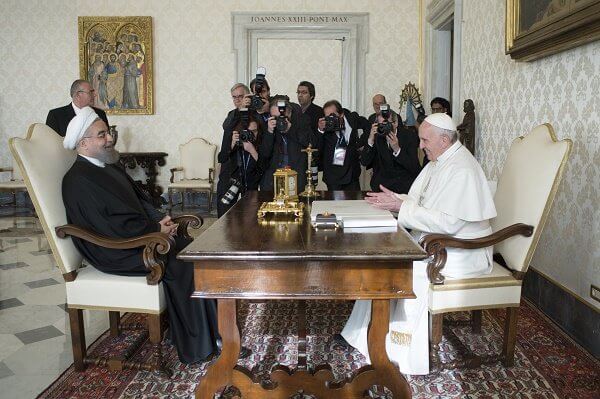
The bond between the Vatican and Iran is a partnership destined to endure

rouhani-francis

Following a meeting on Tuesday at the Vatican between Pope Francis and Iranian President Hassan Rouhani, and noting that the Vatican has had diplomatic ties with Iran since 1954 (30 years longer than U.S.-Vatican relations), John L. Allen Jr. writes: the close ties between Rome and Tehran reflect the often under-appreciated fact that both the Vatican and post-revolutionary Iran are basically theocracies, representing spiritual traditions — Catholicism and Shia Islam — that have a surprising amount in common.

Iranian writer Vali Nasr, author of the 2006 book “The Shia Revival,” argues that the divide between Sunni and Shia bears comparison to that between Protestants and Catholics, with Shia being the branch closer to Catholicism.

Among those points of contact are:

  • A strong emphasis on clerical authority
  • An approach to the Quran accenting both scripture and tradition
  • A deep mystical streak
  • Devotion to a holy family (in the case of Shiites, the blood relatives of Mohammad) and to saints (the Twelve Imams)
  • A theology of sacrifice and atonement through the death of Hussain, grandson of Mohammad and the first imam of Shia Islam
  • Belief in free will (as opposed to the Sunni doctrine of pre-destination)
  • Holy days, pilgrimages, and healing shrines
  • Intercessory prayer
  • Strongly emotional forms of popular devotion, especially the festival of Ashoura commemorating Hussain’s death

One recent sign of the spiritual vicinity is that Iranian scholars recently translated the Confessions of Augustine and the Catechism of the Catholic Church into Farsi, the result of a 12-year effort.

In terms of sheer realpolitik, both parties also have strong motives for keeping their relationship green.

From Iran’s point of view, it aspires to being not merely a regional but a global player, and to do so it requires not merely “hard” power, to invoke the famous distinction of Harvard political scientist Joseph Nye, but also “soft,” meaning moral legitimacy. The perception of being in dialogue with the Vatican is crucially important, counteracting Bush administration rhetoric about Iran being part of an “axis of evil.”

Tehran also sees the Vatican as a firebreak with sometimes hostile Western nations. In 2007, when it seemed as if concerns over Iran’s nuclear program might lead to armed conflict with the United States, Iranian diplomats quietly sought out the Vatican as a potential mediator. [Continue reading…]


Facebooktwittermail

Failures in handling unaccompanied migrant minors have led to trafficking

The Washington Post reports: On the phone, the boy was frantic. After traveling hundreds of miles from a village in Guatemala, he had made it across the U.S. border and into a government-funded shelter for unaccompanied minors.

But then something went terribly wrong.

Instead of sending him to his uncle, Carlos Enrique Pascual, a landscape worker in Florida, authorities said the shelter released the teenager to traffickers who took him to central Ohio, held him captive in a roach-infested trailer and threatened to kill him if he tried to leave.

“Please, how can I get out of this?” Pascual’s nephew begged him during a stolen moment with a telephone. “I’m hungry, and my heart is bursting with fear.”

Pascual called police and, in December 2014, authorities found his nephew, then 17, and seven other boys living in cramped, dirty trailers about an hour outside of Columbus. Authorities said they were working at Trillium Farms, one of the country’s largest egg producers, debeaking hens and cleaning cages nearly 12 hours a day, six days a week, for as little as $2 a day.

The boys were part of a surge of children flowing across the U.S.-Mexico border over the past four years, overwhelming federal officials responsible for their safekeeping, child advocates say. Since 2011, more than 125,000 unaccompanied minors from Central America have been stopped at the border, many placed in shelters funded by the federal Office of Refugee Resettlement. [Continue reading…]

Facebooktwittermail

Pursuing critics, China reaches across borders. And nobody is stopping it.

The Washington Post reports: China’s campaign against dissent is going global.

Amid extraordinary moves to rein in criticism at home, Chinese security personnel are reaching confidently across borders, targeting Chinese and foreign citizens who dare to challenge the Communist Party line, in what one Western diplomat has called the “worst crackdown since Tiananmen Square.”

A string of incidents, including abductions from Thailand and Hong Kong, forced repatriations and the televised “confessions” of two Swedish citizens, has crossed a new red line, according to diplomats in Beijing. Yet many foreign governments seem unwilling or unable to intervene, their public response limited to mild protests.

The European Union is divided and appears uncertain about what to do. Hong Kong is in an uproar, with free speech under attack, activists looking over their shoulders and many people saying they feel betrayed by a lack of support from Britain. [Continue reading…]

Facebooktwittermail

Europe wades into debate over Poland’s constitutional crisis

By Simona Guerra, University of Leicester and Fernando Casal Bértoa, University of Nottingham

Poland’s prime minister Beata Szydło recently found herself summoned to the European Parliament in Strasbourg to defend her government over accusations that its commitment to democratic values is on the slide.

This was an unprecedented meeting. The parliament had called a debate under the auspices of a law introduced in March 2014, giving it the right to question a national government if it thinks a systemic threat to democracy is about to take place in a European country.

In Poland’s case, concerns were raised over government plans to limit the power of the national constitutional court, and change the way the media is governed and civil servants hired.

The aim of a meeting is to have a constructive conversation about concerns but if that fails, Brussels can move to suspend a country from taking part in EU decision making (although this is an unlikely scenario).

Among the post-communist states that joined the EU in 2004, Poland has generally been seen as a success story. While Hungary and Romania, and candidate countries such as Macedonia and Bosnia and Herzegovina seem to be dragging their feet over democratic reform, Poland has blazed the trail.

But in October 2015, the new social national conservative government, led by Szydło (Law and Justice party, PiS) won an outright majority in parliamentary elections and quickly set about making significant changes.

Continue reading

Facebooktwittermail

By 2030, renewables will be the world’s primary power source

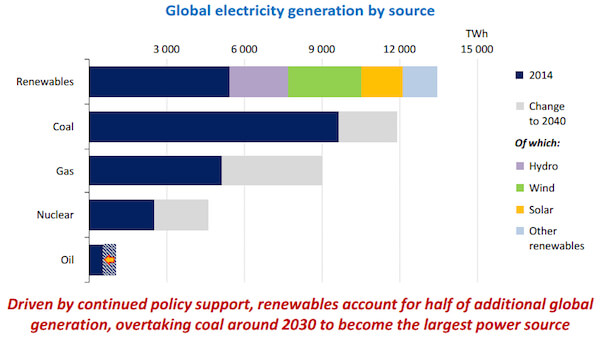
Climate Progress reports: In November, the International Energy Agency quietly dropped this bombshell projection: “Driven by continued policy support, renewables account for half of additional global generation, overtaking coal around 2030 to become the largest power source.”

In this post, I’ll dive deeper into this rapidly-approaching role reversal for coal and renewables. In Part Two, I’ll explain why the so-called “intermittency” problem for some renewables is basically solved and thus not a barrier to this reversal.

In releasing its World Energy Outlook 2015 last fall, the IEA published this chart of projected electricity generation in 2040: [Continue reading…]

renewables2030

Facebooktwittermail

Wall Street declares war on Bernie Sanders

Bill Black writes: Wall Street billionaires are freaking out about the chance that Bernie Sanders could be elected President. Stephen Schwarzman, one of the wealthiest and most odious people in the world, told the Wall Street Journal that one of the three principal causes of the recent global financial trauma was “the market’s” fear that Sanders may be elected President. Schwarzman is infamous for ranting that President Obama’s proposals to end the “carried interest” tax scam that allows private equity billionaires like Schwarzman to pay lower income tax rates than their secretaries was “like when Hitler invaded Poland.”

Schwarzman and Pete Peterson co-founded the private equity firm Blackstone. Peterson leads the effort to destroy the safety net in America. His greatest dream is to privatize Social Security so that Wall Street could increase its revenues by tens of billions of dollars. Blackstone is a major owner of Sea World, and it was in this sphere that Schwarzman went beyond his delusional rants about Hitler and became vile. When an Orca killed its trainer, Schwarzman lied and blamed the death on the trainer, claiming that Sea World “had one safety lapse — interestingly, with a situation where the person involved violated all the safety rules that we had.”

Schwarzman’s claim that the global financial markets are tanking because of Bernie’s increasing support is delusional, but it is revealing that he used the most recent market nightmare as an excuse to attack Bernie. The Wall Street plutocrats, with good reason, fear Bernie – not Hillary. Indeed, it is remarkable how vigorous and open Wall Street has been in signaling through the financial media that it has no problem with Hillary’s Wall Street plan. CNN, CNBC, and the Fiscal Times, under titles such as: “Here’s Why Wall Street Has Little to Fear from Hillary Clinton,” pushed this meme. [Continue reading…]

Facebooktwittermail

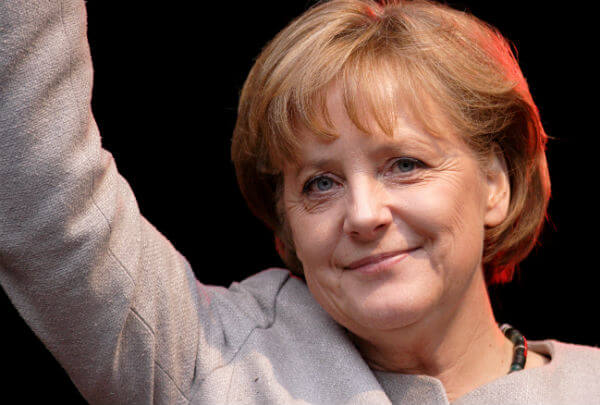
In the face of mounting opposition, Angela Merkel holds to her principles on accepting refugees

Angela_Merkel

Der Spiegel reports: On a Sunday evening in early January, Angela Merkel went to a piano concert by Antonio Acunto in the Konzerthaus on Berlin’s beautiful Gendarmenmarkt. The program included works from Chopin, Rachmaninoff and Schumann, but the chancellor didn’t just come for the music. It was also for a good cause and to show support. The concert was a benefit for the refugees. Her refugees.

Shortly before the concert began, Merkel saw an old acquaintance: Reverend Rainer Eppelmann. In 1990, Eppelmann was head of the Democratic Awakening, a party formed in East Germany soon after the fall of the Berlin Wall, and Merkel was its spokesperson. The party was ultimately folded into the Christian Democratic Union, of which Merkel is now the head.

At the concert, Eppelmann told Merkel how courageous and wonderful he thought her refugee policies were. Given the situation in which Merkel is now in, Eppelmann said, he finds himself thinking often about his favorite quote from the former Czech president and writer Vaclav Havel. “Hope is not the conviction that something will turn out well, but the certainty that something makes sense, regardless of how it turns out.”

The concert began and Merkel listened to a melancholic Chopin ballad in G-minor. When the intermission arrived, she jumped up from her chair and walked directly over to Eppelmann. She asked: “How did that quote about hope go again?”

It is completely unclear how the experiment will end that the German chancellor has forced upon the European Continent, upon her fellow citizens and, not least, upon her party. Her decision late last summer to open the German border to refugees transformed Merkel into a historic figure. It was the most consequential decision of her entire decade in office. [Continue reading…]

Facebooktwittermail

Danish parliament approves plan to seize assets from refugees

The Guardian reports: Denmark has become the latest European state to force refugees to hand over their valuables, with the continent increasingly using scare tactics and physical deterrents to deal with the biggest migration crisis since the second world war.

Following similar moves in Switzerland and southern Germany, Denmark’s parliament voted on Tuesday to allow police to search asylum seekers on arrival in the country and confiscate any non-essential items worth more than 10,000 Danish kroner (about £1,000) that have no sentimental value to their owner.

The bill presented by the centre-right minority government of the prime minister, Lars Løkke Rasmussen, was approved after almost four hours of debate by 81 of the 109 lawmakers present, as members of the opposition Social Democrats and two small rightwing parties backed the measures. [Continue reading…]

Facebooktwittermail

Growing concern about EU’s commitment to open borders

The New York Times reports: European Union interior ministers clashed on Monday over how to check the flow of migrants across their countries’ borders amid growing concern that the Continent’s commitment to the free movement of people within the bloc is at risk of collapse.

Some of the wealthy northern nations that are the preferred destinations of many migrants suggested that much of the solution should rest with their neighbors to the south, especially Greece, the main entry point into the European Union for refugees arriving from Syria, Iraq and Afghanistan via Turkey. At a meeting here, Germany told Greece to do its “homework” to stop the flow at its borders, and Austria suggested that Greece could be excluded from the Schengen area, which allows border-free travel across much of the European Union.

Ioannis Mouzalas, a Greek minister for immigration policy, criticized the focus on his country, saying that the bloc had not made good on its pledges of more assistance in managing the flow of people — nearly 1.1 million arrived last year in the European Union — and that some European politicians were spreading “lies” about the crisis and the role of the government in Athens.

There is a “blame game against Greece,” Mr. Mouzalas said. [Continue reading…]

Facebooktwittermail

Hardliners disqualify Khomeini’s grandson in Iran power struggle

Hassan-Khomeini

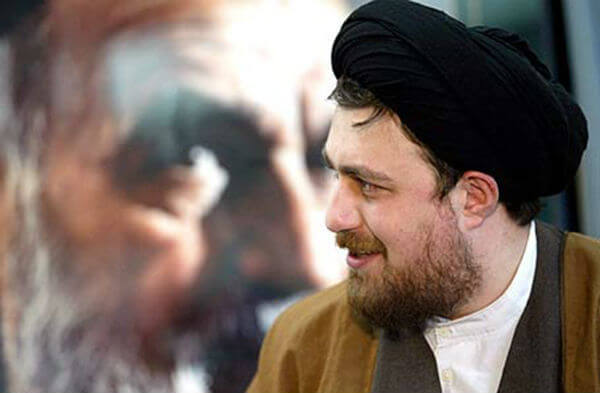
Financial Times reports: Hassan Khomeini may be the grandson of the founder of Iran’s 1979 Islamic Revolution, but his religious and political credentials were deemed insufficient to qualify him for membership in the Assembly of Experts, the body that will determine Iran’s next supreme leader.

The Guardian Council, a constitutional watchdog that vets candidates standing for the council, disqualified Mr Khomeini despite “testimony by all those senior clerics” that he had reached a sufficiently high level of religious learning to interpret Islamic law or Ijtihad, Mr Khomeini’s son, Ahmad, said on his Instagram page on Tuesday.

“The reason for the disqualification is clear to all,” he added, implying that Mr Khomeini, whose candidacy outraged hardliners, was disqualified because of his alliance with reformists.

Mr Khomeini’s disqualification is a blow to centrist president Hassan Rouhani and comes amid a tense power struggle between moderate forces and hardliners. The implementation of the landmark nuclear agreement last week was seen as a big victory for pro-reform forces. But their conservative opponents are determined to maintain their hold on key institutions and say they will resist “infiltration” by western governments bent on “undermining the regime” through pro-reform forces. [Continue reading…]

IranWire reports: Reformists and moderates enthusiastically embraced Khomeini when he announced his candidacy, an excitement that Khomeini tried to quell in order to comply with electoral guidelines and to satisfy the Guardian Council — half of which are appointed by the Supreme Leader. Aware of the importance of pleasing the regime, Hassan Khomeini’s brother Ali spoke about his brother’s candidacy in a way that would meet the approval of Iran’s hardliners, particularly those on the Council.

Despite these overtures, the Council rejected Khomeini’s bid to join the Assembly of Experts.

Under Iranian law, disqualified Assembly candidates have the right to appeal the Council’s decision. The deadline for this is January 30. Khomeini has not stated whether he will launch an appeal.

Former president Akbar Hashemi Rafsanjani, currently the president of the Expediency Council, and Intelligence Minister Mahmoud Alavi, as well as President Hassan Rouhani, were all successful in their bids to run as candidates for the Assembly. [Continue reading…]

Facebooktwittermail

The UN repeats mistakes of the past in Madaya

starving-child-madaya

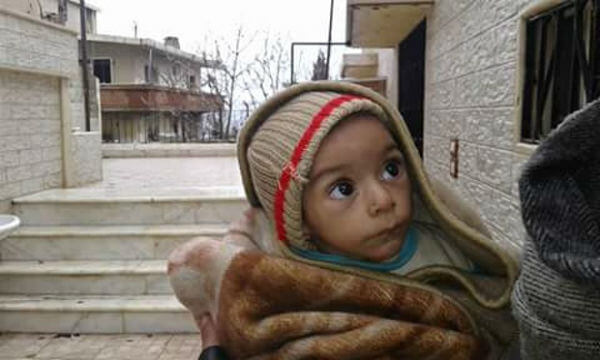
Muhammad Idrees Ahmad writes: Two weeks before an aid convoy delivered food and medicine to the 42,000 people of Madaya, a representative for the town’s council made an urgent appeal to the UN office responsible for the region. The town had been strangled since July 2015 by Bashar Al Assad’s army and the Lebanese Hizbollah. The condition was precarious: inhabitants were subsisting on grass, cats, dogs, insects, salt and water. At least 28 had died of starvation since the beginning of December. The council representative received an automated reply: the staff were away until January 5.

On New Year’s Eve, when the UN chief Ban Ki-moon wished his Twitter followers a peaceful 2016, he made no mention of the unfolding tragedy.

The inertia was broken when a determined social media campaign forced Madaya on the world’s attention and, eventually, the UN relented. On January 7, the regime agreed to allow a one-off supply of aid. The UN was quick to praise the regime for this concession, but it took another four days before it delivered aid to the town. The delay resulted from the “complexity” of synchronising deliveries to the 12,000 inhabitants of Al Fu’a and Kefraya, two pro-regime villages in Idlib encircled by rebels. On entering the town, aid workers were shocked by the “horrifying” conditions. “There are people in Madaya, but no life,” said Sajjad Malik, the UNHCR chief in Syria. “They are fighting for survival. No food, no electricity, no heating, no medicines. People did not even have the energy to complain.”

The representative for the UN’s Office of Coordination of Humanitarian Affairs in Syria, Yacoub El Hillo, too was moved: “We saw a people that are desperate; a people that are cold; a people that are hungry; a people that have almost lost hope”.

But in a curious statement, Mr El Hillo added that before entering Madaya, “it was at times difficult to determine whether what we were seeing was actually fabricated or exaggerated”.

It is unclear why Mr El Hillo should’ve faced such difficulty. The conditions in Madaya had been known to the UN for months. This scepticism may be unfounded but it is consistent with the state-centric bias of the UN’s humanitarian practices. UN agencies are required to respect state sovereignty regardless of legitimacy. And in Syria, they have been reluctant to act without the consent of the regime. This has turned the UN into an unwitting agent of the status quo, allowing the regime to politicise aid. [Continue reading…]

Facebooktwittermail

Rebels in north-western Syria buckle under Russian bombardment

Aron Lund writes: Syria news right now is all about the peace process that is set to start on Friday in Geneva, Switzerland, despite its limited chances of success. But even as they talk, the parties continue to fight and the Russian-Iranian military intervention continues to wear down Syrian rebels. On September 30, the Russian Air Force dropped its first bombs in Syria. The government of Iran joined in by raising an expeditionary corps of Iranian, Iraqi, and Afghan Shia Islamists for the front south of Aleppo.

In a recent article for Vice News, the American freelance writer and Syria expert Sam Heller notes a flurry of desperate-sounding calls for outside support from rebels in northwestern Syria. Though most frontlines have held with little or limited change, four months of relentless Russian bombardment and offensives by the Syrian Arab Army and its Shia allies seem to have left the insurgents exhausted.

In early December, I tried to evaluate the extent of government progress in a post on Syria in Crisis. As far as I could tell, it was clear then that Assad stabilized his positions, but overall progress seemed underwhelming and the picture was mixed. We would have to wait and see.

Since then, however, the wind has continued to blow Assad’s way. General Joseph F. Dunford Jr., the chairman of the U.S. Joint Chiefs of Staff, recently noted that “the regime is in a better place now” compared to before the intervention. Indeed, after four months, the effects of the concerted Russian-Iranian-Syrian campaign have begun to surface. [Continue reading…]

Facebooktwittermail

Saudi bombing campaign — supported by Britain — leaves Yemen’s healthcare system in tatters

yemen-bombing

The Independent reports: When the men and women who worked at Shiara hospital heard the explosion, there was little surprise. Just half an hour’s drive from the border with Saudi Arabia, in Yemen’s mountainous northern region, they were used to the sound of shelling.

What they did not expect 10 months into the Saudi-led campaign of airstrikes was that it would be their own hospital that had been hit. The bombing on 10 January left six people dead, including three staff members. Many more were injured.

“The wounded were hit by shrapnel from the missile, and also by shards of metal from the fence [around the hospital]. The injuries were brutal,” said Teresa Sancristoval, the head of the emergency desk at Médecins Sans Frontières (MSF), which operates in the hospital.

The attack was among 130 on health facilities hit in Yemen since the Saudi-led coalition began its bombing campaign in March last year. It was the fourth on a facility supported by MSF – which says it gives detailed co-ordinates for its hospitals to both sides of the conflict. [Continue reading…]

Facebooktwittermail

Nuclear mishap withheld by Air Force from review team

The Associated Press reports: In the spring of 2014, as a team of experts was examining what ailed the U.S. nuclear force, the Air Force withheld from them the fact that it was simultaneously investigating damage to a nuclear-armed missile in its launch silo caused by three airmen.

The Air Force on Friday gave The Associated Press the first substantive description of the accident after being questioned about it by the AP for more than a year.

The accident happened May 17, 2014, at an underground launch silo containing a Minuteman 3 intercontinental ballistic missile, or ICBM. The silo, designated Juliet-07, is situated among wheat fields and wind turbines about 9 miles west of Peetz, Colorado. It is controlled by launch officers of the 320th Missile Squadron and administered by the 90th Missile Wing at F.E. Warren Air Force Base at Cheyenne, Wyoming.

The Air Force said that while three airmen were troubleshooting the missile, a “mishap” occurred, causing $1.8 million in damage to the missile. [Continue reading…]

Facebooktwittermail

Pentagon wants psychologists to end ban on interrogation role

decay14bw

The New York Times reports: The Pentagon has asked the American Psychological Association to reconsider its ban on the involvement of psychologists in national security interrogations at the Guantánamo Bay prison and other facilities.

The Defense Department reduced its use of psychologists at Guantánamo in late 2015 in response to the policy approved by the association last summer.

But in a letter and accompanying memo to association officials this month, Brad Carson, the acting principal deputy secretary of defense for personnel and readiness, asked that the group, the nation’s largest professional organization for psychologists, revisit its “blanket prohibition.” [Continue reading…]

Facebooktwittermail

Republican elites surrender to Trump

Dana Milbank writes: Late Thursday night, National Review, the storied conservative magazine founded by William F. Buckley, published an issue denouncing Donald Trump.

“Trump is a philosophically unmoored political opportunist who would trash the broad conservative ideological consensus within the GOP in favor of a free-floating populism with strong-man overtones,” the editors wrote. “Donald Trump is a menace to American conservatism who would take the work of generations and trample it underfoot in behalf of a populism as heedless and crude as the Donald himself.”

The Republican National Committee reacted swiftly — immediately revoking the permission it had given National Review to host a Republican presidential debate next month. “Tonight, a top official with the RNC called me to say that National Review was being disinvited,” the magazine’s publisher wrote online. “The reason: Our ‘Against Trump’ editorial.”

That soft flapping sound you hear is the Grand Old Party waving the flag of surrender to Trump. Party elites — what’s left of the now-derided “establishment” — are acquiescing to the once inconceivable: that a xenophobic and bigoted showman is now the face of the Republican Party and of American conservatism.

In recent days, influential Republicans including Bob Dole, Iowa Gov. Terry Branstad, RNC Chairman Reince Priebus, Rupert Murdoch and, as my Post colleagues reported, Rudy Giuliani and Rep. Peter King (N.Y.) have made noises about being able to stomach Trump. Republican donors are trying to insinuate themselves in the billionaire’s orbit. Trump himself said Thursday: “I have received so many phone calls from people that you would call ‘establishment,’ from people — generally speaking, conservatives, Republicans — that want to come onto our team.”

The Wall Street Journal editorial page had long criticized Trump’s candidacy, publishing an editorial in July arguing that the conservative media who applaud Trump “are hurting the cause.” The editors opined: “If Donald Trump becomes the voice of conservatives, conservatism will implode along with him.”

A week ago, the Journal reversed course. “Mr. Trump is a better politician than we ever imagined, and he is becoming a better candidate,” the editorialists wrote, speculating that “he might possibly be able to appeal to a larger set of voters than he has so far.” [Continue reading…]

Facebooktwittermail

ISIS targeting Europe for Paris-style attacks, says EU police chief

The Guardian reports: Islamic State is actively focusing its attention on conducting large-scale attacks in Europe similar to those last year in Paris, the head of the EU’s law enforcement agency has said.

Rob Wainwright, the head of Europol, the Hague-based organisation that coordinates EU policing efforts over terrorism and organised crime, said Isis had “developed a new combat-style capability to carry out a campaign of large-scale terrorist attacks on a global stage, with a particular focus in Europe”.

His comments, at a meeting of interior ministers in Amsterdam, came as France’s interior minister said Islamist terrorists had planned to attack another concert in Paris and carry out a mass killing in the streets of the capital.

Bernard Cazeneuve was defending the government’s decision to maintain a state of emergency imposed after the shootings and bombings across Paris on 13 November, which left 130 people dead, including 89 at the Bataclan concert hall. Isis claimed responsibility.

Cazeneuve said that since last spring the country’s intelligence services had foiled 11 terrorist attacks, some of which had been ordered by the Islamic State attackers behind the Paris atrocities. [Continue reading…]

Facebooktwittermail

What Donald Rumsfeld knew we didn’t know about the lack of evidence for WMD in Iraq

John Walcott writes: On September 9, 2002, as the George W. Bush administration was launching its campaign to invade Iraq, a classified report landed on the desk of the chairman of the Joint Chiefs of Staff. It came from Defense Secretary Donald Rumsfeld, and it carried an ominous note.

“Please take a look at this material as to what we don’t know about WMD,” Rumsfeld wrote to Air Force General Richard Myers. “It is big.”

The report was an inventory of what U.S. intelligence knew — or more importantly didn’t know — about Iraqi weapons of mass destruction. Its assessment was blunt: “We’ve struggled to estimate the unknowns. … We range from 0% to about 75% knowledge on various aspects of their program.”

Myers already knew about the report. The Joint Staff’s director for intelligence had prepared it, but Rumsfeld’s urgent tone said a great deal about how seriously the head of the Defense Department viewed the report’s potential to undermine the Bush administration’s case for war. But he never shared the eight-page report with key members of the administration such as then-Secretary of State Colin Powell or top officials at the CIA, according to multiple sources at the State Department, White House and CIA who agreed to speak on condition of anonymity. Instead, the report disappeared, and with it a potentially powerful counter-narrative to the administration’s argument that Saddam Hussein’s nuclear, chemical and biological weapons posed a grave threat to the U.S. and its allies, which was beginning to gain traction in major news outlets, led by the New York Times.

While the threat posed by a nuclear-armed Iraq was at the heart of the administration’s case for war, the JCS report conceded: “Our knowledge of the Iraqi (nuclear) weapons program is based largely — perhaps 90% — on analysis of imprecise intelligence.”

The rationale for the invasion has long since been discredited, but the JCS report, now declassified, which a former Bush administration official forwarded in December, nevertheless has implications for both sides in the 2016 presidential race, in particular the GOP candidates who are relying for foreign policy advice on some of the architects of the war, and the Democratic front-runner, who once again is coming under fire from her primary opponent for supporting the invasion. [Continue reading…]

Facebooktwittermail