Category Archives: News

Hackers trick Israeli military with ‘girls in the IDF’ emails

Reuters reports: Hackers have managed to penetrate computer networks associated with the Israeli military in an espionage campaign that skillfully packages existing attack software with trick emails, according to security researchers at Blue Coat Systems Inc.

The four-month-old effort, most likely by Arabic-speaking programmers, shows how the Middle East continues to be a hotbed for cyber espionage and how widely the ability to carry off such attacks has spread, the researchers said.

Waylon Grange, a researcher with Blue Coat who discovered the campaign, said the vast majority of the hackers’ software was cobbled together from widely available tools, such as the remote-access Trojan called Poison Ivy.

The hackers were likely working on a budget and had no need to spend much on tailored code, Grange said, adding that most of their work appeared to have gone into so-called social engineering, or human trickery.

The hackers sent emails to various military addresses that purported to show breaking military news, or, in some cases, a clip featuring “Girls of the Israel Defense Forces.” Some of the emails included attachments that established “back doors” for future access by the hackers and modules that could download and run additional programs, according to Blue Coat. [Continue reading…]

Facebooktwittermail

Pentagon: Ramadi isn’t about to fall to ISIS, but if it does, it’s not a big deal (unless you live in Ramadi)

The Wall Street Journal reports: U.S. defense officials said a provincial capital in Iraq could soon fall to Islamic State, while America’s top military officer sought to minimize the strategic importance of the city.

At a Pentagon news conference, Gen. Martin Dempsey, chairman of the Joint Chiefs of Staff, suggested that maintaining control of Ramadi, the capital of Anbar province, isn’t central to the U.S. and Iraqi aims of defeating Islamic State forces.

“The city itself is not symbolic in any way,” Gen. Dempsey said. “It’s not been declared part of the caliphate on one hand, or central to the future of Iraq.”

Earlier this week, Pentagon officials minimized the possibility that Ramadi was going to fall. But U.S. officials have monitored large numbers of civilians fleeing from the city, a sign that residents fear an imminent takeover.

Islamic State fighters have taken over a number of villages surrounding Ramadi, destroyed bridges and other infrastructure and reversed recent gains by Iraqi Security forces, defense officials said Thursday.

The U.S. has been stepping up strikes around Ramadi, but those have been insufficient to blunt the advance of Islamic State fighters.

Officials compared the city with Kobani, a Syrian city that was on the brink of being taken over before Kurdish fighters, aided by U.S. airstrikes, retook it. [Continue reading…]

Which is to say, Ramadi is like Kobane, minus the Kurdish fighters.

Facebooktwittermail

Al-Qaeda seizes airport in eastern Yemen

The Washington Post: Al-Qaeda has seized an airport in eastern Yemen, an intelligence official confirmed Thursday, signaling that the extremist group is exploiting the chaos caused by the Saudi-led attacks in the country.

Fighters from the Yemeni branch of the militant group, known as al-Qaeda in the Arabian Peninsula (AQAP), on Tuesday seized the Riyan Airport in the city of Mukalla, said the Yemeni intelligence officer, who spoke on condition of anonymity.

The group was already in control of areas around the airfield, including the nearby city of Mukalla, which is the capital of Yemen’s Hadhramaut Province. According to the intelligence official, the militants faced no resistance when taking the airport, suggesting that AQAP receives significant support in the area.

Facebooktwittermail

Cyberattacks alleged to be coming from Iran may be increasing — or diminishing

The New York Times reports: In the report, to be released Friday, Norse — which, like other cybersecurity firms, has an interest in portraying a world of cyberthreats but presumably little incentive in linking them to any particular country — traced thousands of attacks against American targets to hackers inside Iran.

The report, and a similar one from Cylance, another cybersecurity firm, make clear that Iranian hackers are moving from ostentatious cyberattacks in which they deface websites or simply knock them offline to much quieter reconnaissance. In some cases, they appear to be probing for critical infrastructure systems that could provide opportunities for more dangerous and destructive attacks.

But Norse and Cylance differ on the question of whether the Iranian attacks have accelerated in recent months, or whether Tehran may be pulling back during a critical point in the nuclear negotiations.

Norse, which says it maintains thousands of sensors across the Internet to collect intelligence on attackers’ methods, insists that Iranian hackers have shown no signs of letting up. Between January 2014 and last month, the Norse report said, its sensors picked up a 115 percent increase in attacks launched from Iranian Internet protocol, or I.P., addresses. Norse said that its sensors had detected more than 900 attacks, on average, every day in the first half of March.

Cylance came to a different conclusion, at least for Iran’s activities in the past few months, as negotiations have come to a head. Stuart McClure, the chief executive and founder of Cylance, which has been tracking Iranian hacking groups, said that there had been a notable drop in activity over the past few months, and that the groups were now largely quiet. [Continue reading…]

Facebooktwittermail

How could crimes that don’t warrant a life sentence justify a death sentence?

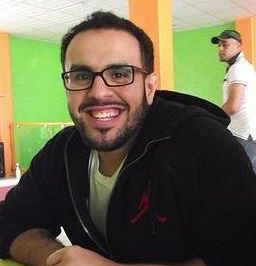
Conor Friedersdorf writes: Some of the most powerful people in the U.S. government wanted to kill Mohanad Mahmoud Al Farekh. The military, the CIA, and an influential Republican member of Congress all argued that a drone should be sent to kill the American.

Now he is in custody.

And if convicted of all charges that he faces, he’ll get a maximum of 15 years in prison–the same sentence that a brother and sister in Missouri got for growing marijuana.

How can a person narrowly escape extrajudicial assassination, get extradited to the United States, appear inside our judicial system, and face just 15 years in prison? Powerful people were prepared to end his life, but the extent of what they’re willing to prove beyond a reasonable doubt wouldn’t even draw a life sentence. [Continue reading…]

Facebooktwittermail

Pakistan could end up charging CIA officials with murder over drone strikes

Time: A landmark case may open the door for a possible multibillion-dollar class-action lawsuit launched by relatives of the alleged 960 civilian victims of U.S. drone strikes in Pakistan

A senior judge in Pakistan has ordered police to formally investigate former CIA agents for allegedly authorizing a 2009 drone strike.

If the case moves forward, it may subject the U.S. embassy in Islamabad to sensitive police investigations and even result in U.S. citizens for the first time being charged with murder for covert drone strikes in the South Asian nation.

Last Tuesday, the Islamabad High Court ordered police to open a criminal case against former CIA Islamabad Station Chief Jonathan Bank and ex-CIA legal counsel John A. Rizzo for murder, conspiracy, terrorism and waging war against Pakistan.

Facebooktwittermail

In Yemen chaos, al Qaeda may be the biggest winners

Harriet Salem and Sama’a al Hamdani report: Standing beneath an ornate chandelier, Khaled Batarfi, a high-ranking member of al Qaeda in the Arabian Peninsula (AQAP), poses for a snapshot in the governor’s palatial residence in the port city of al Mukalla. Trampling on the Yemeni national flag, the bespectacled jihadi raises his index finger in salute as he grins at the cameraman.


Batarfi has plenty to smile about. As Yemen descends into a full-scale war between Shia Houthi rebels and the Saudi Arabia-backed forces of its president-in-exile, Abd Rabbuh Mansur Hadi, dormant AQAP factions — backed by a handful of Sunni tribes — have surged out of their heartlands into towns and cities across the country’s central and southern provinces.

Last week, in a lightning offensive, fighters from the group stormed al Mukalla, capital of the oil-rich Hadhramaut province. Entering in the dead of night by morning they had taken over government buildings, emptied the city’s bank vaults of the equivalent of $80 million, and freed 300 prisoners, including Batarfi and several other high-ranking members of AQAP, from the local jail.

But for the power hungry group, the snatch of al Mukalla is just the tip of the iceberg. The lawlessness that followed the revolution of 2011, coupled with the recent outbreak of war, has enabled AQAP to secure a stronghold in at least seven governorates: ‘Ibb, Al-Jawf, Ma’rib, Hadhramout, Lahj, Abyan, and Shabwah. [Continue reading…]

Facebooktwittermail

Mohamed Soltan — an American citizen abandoned by President Obama

In an open letter to President Obama on his 26th birthday, November 16, 2013, Mohamed Soltan wrote from a cell in Cairo’s infamous Tora Prison:

Dear President Obama,

Last week, I underwent a procedure to remove two 13” metal nails that were placed in my left arm to help support and repair the damage sustained from a gunshot wound I suffered at the hands of Egyptian security forces. The bullet that punctured my arm was paid for by our tax dollars. I was forced to undergo this procedure without any anesthesia or sterilization because the Egyptian authorities refused to transfer me to a hospital for proper surgical care.

Mohamed-SoltanAfter the nails penetrated the skin at my elbow from below, and ripped through my shoulder muscle from above. The doctor who performed this procedure is a cellmate. He used pliers and a straight razor in lieu of a scalpel. I laid on a dirty mat as my other cellmates held me down to ensure I did not jolt from the pain and risk permanent loss of feeling and function in that arm. The pain was so excruciating, it felt like my brain could explode at any given point. I was finally given two aspirin pills almost an hour later when the guards found my cellmates screams for help unbearable.

I share these details here because my mind drifted to 2007 as I stared at the ceiling of my cramped cell after surgery. During your first presidential campaign, I was moved by your message. I was so passionate about everything you represented. Finally, “change we can believe in.” I saw you, as many Americans did then, a true civil servant looking to put the disadvantaged first, and to pioneer a new model of governance. I felt I was part of the making of a great chapter in my country’s history. You were someone I wanted to stand behind, someone I wanted to support, so I volunteered and worked for your campaign in Ohio, a crucial swing state. As an O.S.U. student, I went door-to-door, made phone call after phone call, urged people to join the movement that would revolutionize American politics. It was time to go back to a government “for the people, of the people.”

Now as I sit in this crowded cell, I can’t help but ask myself, was I naïve to think you were a departure from the norm? As domestic and foreign policies I disagreed with passed during your terms, I chalked it up to the negative consequence of bipartisanship, but now after months of being held without cause in Egypt’s infamous prisons and so little [regard for] my Americanness, let alone humanity, shown, I am beginning to think I was just another silly, idealistic college kid who believed the world can look a whole lot different, with a leader such as yourself at the head of it.

Your abandonment of me, an American citizen who worked tirelessly towards your election, and a staunch supporter and defender of your presidency, has left a sting in me that is almost as intense as the sharp pain emanating from my recently sliced arm.

Last weekend Soltan was sentenced to life imprisonment:

An Egyptian court on Saturday sentenced an American citizen, Mohamed Soltan, to life imprisonment for supporting an Islamist protest against the military ouster of President Mohamed Morsi of the Muslim Brotherhood in the summer of 2013.

The presiding judge, Mohammed Nagi Shehata, sentenced more than 35 other defendants in the case to the same penalty and also confirmed death sentences in the same case for about a dozen defendants, including the Muslim Brotherhood’s top spiritual guide, Mohamed Badie, 71, as well as Mr. Soltan’s father, Salah Soltan.

Gehad el-Haddad, a spokesman for the Muslim Brotherhood, was also sentenced to life in prison. Members of the Soltan family have said they will appeal the decision, and other defendants are expected to appeal as well.

The verdict is the latest in a long series of similarly harsh sentences handed down at mass trials of dozens or hundreds of defendants accused of participating in violent protests or riots in the aftermath of the military takeover, often based on only police testimony or cursory evidence. Thousands more remain imprisoned without convictions. The sweeping penalties have drawn outraged denunciations from rights groups and milder rebukes from Western diplomats.

But the case of the younger Mr. Soltan, 27, is exceptional because he is an American citizen.

The verdict comes just days after President Obama released hundreds of millions of dollars in military aid for Egypt that had previously been suspended in response to the military takeover and subsequent repression.

The White House released a brief statement:

The United States condemns the life sentence issued today in Egypt against American citizen Mohamed Soltan. We call for Mr. Soltan’s immediate release from prison. We remain deeply concerned about Mr. Soltan’s health, which has suffered during his 20 month-long incarceration. The President is deeply committed to the welfare of all U.S. citizens abroad and we will ensure that Mr. Soltan continues to receive consular support until he can return safely to the United States, per his wishes.

Facebooktwittermail

ISIS’ attack on Ramadi just upended U.S. war plans

Nancy A. Youssef reports: ISIS is reportedly marching on key Iraqi city of Ramadi—upending the momentum that the U.S.-led military coalition seemed to have just days ago, and threatening to shatter an already delicate recent power shift that both the U.S. and Iraq hoped to exploit.

Until Wednesday’s reports about Ramadi both U.S. and Iraqi officials were examining what effects ISIS’ recent losses could have in future battles. The officials were even talking about where they would take down ISIS next. During his visit to Washington, Iraqi Prime Minister Haider al Abadi suggested in an interview Wednesday with reporters that his troops could move on both Anbar province—where Ramadi in the local capital—and the oil-rich city of Baiji.

But that was before, according to residents, three cities near Ramadi fell into ISIS hands. Hours later, area security forces reportedly asked for more support from the central government to retain control of the city. Pentagon officials stopped short of saying the city was on the brink of falling. But they didn’t sound confident it would hold, either. [Continue reading…]

Facebooktwittermail

The Night Wolves — Putin’s biker friends — plan to descend on Berlin

night-wolves

The New York Times reports: Several hundred leather-clad motorcyclists from the Night Wolves, a club closely allied with President Vladimir V. Putin of Russia, plan to roar from Moscow to Berlin this month for the 70th anniversary of the Soviets’ victory over Nazi Germany.

Like the Red Army before them, the Night Wolves will have several countries to cross on the way, including Poland. And given the current tensions over Ukraine and widespread worries that Mr. Putin may have other aggressive designs on his neighbors, the prospect of hundreds of Russian bikers’ roaring across the Polish countryside — not to mention Slovakia, the Czech Republic, Austria or Germany — is not being greeted with joy in all quarters.

“I wish they would never come here,” said Monika Trzcinska, the mayor of Braniewo, a small Polish town a stone’s throw from the Russian border, which will be the first stop in Poland for some of the riders on April 25.

A Facebook page opposing the event had 11,000 likes by Wednesday afternoon with a logo featuring a Polish eagle with a lit match chasing a flaming wolf. Meanwhile, a petition calling for the motorcycle rally to be banned had attracted 4,000 signatures, and some Polish lawmakers were calling on their government to find some way to block the event.

Prime Minister Ewa Kopacz called the rally a “provocation” in an interview Tuesday on Polish radio, and said it would be up to Polish border guards to decide whether Russian bikers would be allowed into the country.

Some Polish biker groups said they intended to take to the highways to block the Russians, but others were more welcoming. [Continue reading…]

Facebooktwittermail

Turkish army clashes with PKK

Fehim Taştekin writes: Guns had fallen silent thanks to a de facto cease-fire and the peace process had been moving along, if not at desired pace. The country was preparing for general elections when clashes broke out between the Turkish Armed Forces (TSK) and the Kurdistan Workers Party (PKK) at Agri, a province near the border with Iran. Suddenly, Turkey found itself experiencing terror and chaos. The clashes in Agri followed warnings that the ruling Justice and Development Party (AKP) might resort to provocation as it tries to set up a presidential system and ensure that the pro-Kurdish People’s Democracy Party (HDP) does not cross the 10% electoral threshold.

Mayhem ensued. Even before the clashes ended, President Recep Tayyip Erdogan accused the HDP of politicking under the shadow of guns. HDP Co-chair Selahattin Demirtas accused the AKP of panicking over unfavorable opinion polls, saying, “What happened at Agri was a pre-planned provocation.”

What was the incident that amplified political tensions so much?

According to the government version, in the village of Yukaritufek of Diyadin township in Agri province, PKK members organized a spring festival. The government received intelligence that the terror outfit would use the occasion to spread propaganda and pressure people to vote for the HDP in coming elections. The governor of Agri instructed the provincial gendarmerie command to send a special forces detachment of 15 soldiers to the location. It was reported that terrorists opened rifle fire on soldiers deployed near the village. After 12 hours of combat, the TSK announced that four soldiers had been wounded, five PKK members had been killed and one had been captured. [Continue reading…]

Facebooktwittermail

Iranian president: We are in talks with ‘the major powers,’ not the U.S. Congress

The Washington Post reports: Iranian President Hassan Rouhani said Wednesday that Tehran was negotiating a comprehensive nuclear deal with world powers, not the U.S. Congress, and called a Senate committee’s vote to give Congress the power to review any potential deal a domestic U.S. matter.

The Iranian leader, speaking in a televised speech in the northern Iranian city of Rasht, also repeated earlier statements that his country will not accept any comprehensive nuclear deal with world powers unless all sanctions imposed against it are lifted.

“We are in talks with the major powers and not with the Congress,” Rouhani said, Iranian state television reported. Rouhani said the U.S. Congress’ power to review a nuclear deal with Iran was a domestic U.S. matter, the Reuters news agency reported.

He said Iran wanted to end its isolation from the world by constructing “constructive interaction with the world and not confrontation.”

Rouhani’s comments came one day after a Senate committee voted unanimously to give Congress the power to review a potential Iran nuclear deal after a June 30 negotiating deadline, in a compromise with the White House that allows President Obama to avoid possible legislative disapproval of the pact before it can be completed. [Continue reading…]

Facebooktwittermail

U.N. confirms new push for Syria talks, Iran to be invited

Reuters: The United Nations said on Tuesday that its Syria envoy Staffan de Mistura planned to consult Syrian factions and interested countries on a new round of peace talks, confirming a Reuters report.

“Starting in May … de Mistura will proceed with a series of in-depth, separate consultations with the Syrian stakeholders and regional/international actors to take stock of their views as of today,” U.N. spokesman Stephane Dujarric said.

A U.N. spokesman in Geneva, Ahmad Fawzi, said de Mistura was “heavily engaged” in discussions on the process, which would be based on the Geneva communiqué, the June 2012 document that set out a path to peace and political transition but left unresolved the future role of Syrian President Bashar al-Assad.

Facebooktwittermail

Inside Yarmouk refugee camp

The Daily Beast reports: Bombs and shells from all sides continue to rain down on Yarmouk, the Palestinian refugee camp on the outskirts of Damascus, as residents say the so-called Islamic States is taking ever-greater control. The jihadist assault that started April 1 has left residents trapped amid the rubble without medical aid or food while street fighting and heavy shelling by ISIS has overwhelmed Palestinian and Free Syrian Army forces trying to protect the camp. And to make matters works, the Syrian regime has been dropping barrel bombs and intensifying its own artillery barrages, raising fears it will invade with ground forces.

“It’s an absolute horror and I’m terrified,” says 27-year-old Tarek over Skype from near ISIS’s front lines. He is a longtime camp resident who became an activist in 2011 with the anti-regime protest movement. A human-rights organization put The Daily Beast in contact with him and he asked to be quoted only by a pseudonym for obvious security reasons.

Tarek worries that a regime ground invasion could trigger wide-scale massacres committed by the troops of President Bashar al Assad along with jihadist reprisal killings. He describes a situation of chaos in a camp — really a densely populated urban neighborhood — that has been increasingly crippled by the regime’s siege and bombardment since Free Syrian Army forces and Palestinian rebels rose up in December 2012.

“The streets are abandoned and filled with rubble as people hide in their homes,” Tarek says. Many residents have run out of food and water. There are desperate scenes as some of those come out to scour the area under sniper fire and shelling and look for wells. [Continue reading…]

Facebooktwittermail

Libya migrants: Hundreds feared drowned in Mediterranean

BBC News: About 400 migrants are feared drowned after their boat capsized off Libya, survivors have told Save the Children.

The Italian coast guard rescued 144 people from the boat on Monday and launched an air and sea search operation in hopes of saving others.

Hundreds more migrants rescued from boats in the Mediterranean are due to arrive in Sicily during the day.

More than 8,000 migrants have been picked up since Friday, and more boats are heading for the Italian coast.

Facebooktwittermail

Is Turkey heading towards one-man rule?

The Daily Beast reports: Is NATO ally Turkey on track to become a country under one-man rule?

With parliamentary elections scheduled for June 7, President Recep Tayyip Erdogan is trying to cement his all-powerful role in Turkish politics by sending his son-in-law to parliament. Berat Albayrak, 42, a former executive turned newspaper columnist — who is married to Erdogan’s older daughter, Esra — is running for a seat for Erdogan’s ruling Justice and Development Party (AKP) in Istanbul. Some media reports suggest Albayrak could be promoted to a ministerial post after the vote.

Other Erdogan confidants on the AKP ticket, which was published this past week, include Mucahit Arslan, an adviser, Aydin Unal, a former speechwriter, and Ali Ozkaya, Erdogan’s lawyer.

Although the constitution says the president has to be above politics, Erdogan, who was elected president last August, continues to control the ruling party and to direct the government of his successor as prime minister, Ahmet Davutoglu. Erdogan has chaired two cabinet meetings as president this year. The president has also openly campaigned for the AKP ahead of the June elections. In a speech on Wednesday, he accused opposition parties and media of supporting terrorism.

Erdogan, 61, aims for a big win for the APK in June to push through constitutional changes to change Turkey’s system of government, moving it from a parliamentary to a presidential one — with himself at the top, of course. He says he wants 400 out of 550 seats in the new parliament filled with deputies who support the switch to the presidential system. [Continue reading…]

Facebooktwittermail

American academia — liberal in name but conservative in practice

The Daily Beast: The academy might seem like a bastion of American liberalism but an extensive database of faculty salaries compiled by The Chronicle of Higher Education paints a damning picture of gender inequality at U.S. colleges and universities.

Not only does the data reveal a substantial gender pay gap at both private and public schools, it also shows that male-dominated college faculties disproportionately rely on the labor of women in instructor and lecturer positions.

Women may keep our colleges running but the American university is still an old boys’ club.

The Chronicle of Higher Education’s new tool displays faculty and staff salary data from over 4,700 colleges and universities stretching from 2003 to 2013. The federal data powering the database isn’t brand new but it provides the starkest and most accessible visualization yet of the gendered distribution of labor in the American academy.

Facebooktwittermail

Why has Russia lifted its ban on delivery of S-300 surface-to-air missile system to Iran?

The Wall Street Journal reports: The Kremlin lifted its self-imposed ban on the delivery of a powerful missile air-defense system to Iran on Monday, stoking sharp criticism from the White House and Israel and casting fresh doubt on the international effort to curb Tehran’s nuclear program.

U.S. lawmakers seized on Moscow’s announcement Monday to warn Russia was among a host of foreign countries using the prospect of a nuclear deal to begin seeking out lucrative business deals that could bolster Iran’s military and economy.

Any delivery of an air-defense system would complicate airstrikes on Iranian nuclear facilities by Israel or the U.S. should the diplomatic track fail.

Iran thinks that Russia will deliver the missile system this year, Ali Shamkhani, secretary of Iran’s Supreme National Security Council, told the Interfax news agency in Moscow on Tuesday.

The U.S. Senate is set to vote this week on legislation that would provide Congress with the power to approve, amend or kill any agreement that seeks to curb Iran’s nuclear program in exchange for a lifting of international sanctions.

Supporters of the bill, Republican and Democrat, said Russia’s lifting of its ban on the S-300 surface-to-air missile system could be just the beginning of countries testing the sanctions regime and a United Nations arms embargo on Iran.

“Before a final nuclear deal is even reached, [Russian President] Vladimir Putin has started to demolish international sanctions and ignore the U.N. arms embargo,” said Sen. Mark Kirk (R., Ill.), who sponsored legislation that seeks to impose new sanctions on Iran if a final deal isn’t reached by June 30.

Russian Foreign Minister Sergei Lavrov said the defensive systems didn’t come under the U.N. arms embargo, and that Russia implemented the S-300 ban voluntarily. “This was done in the spirit of good will to stimulate progress in the negotiations,” he said, adding that it was no longer necessary.

The State Department also said that the embargo imposed on Iran in 2010 didn’t prevent the delivery of S-300s. But the White House warned that the missile system, while defensive, could enhance Iran’s ability to challenge key U.S. allies in the Middle East, such as Israel and Saudi Arabia.

It said that Secretary of State John Kerry raised the issue with Mr. Lavrov on Monday.

Still, the Obama administration was measured in its criticism, noting that it didn’t believe the proposed missile sale would jeopardize the nuclear negotiations. [Continue reading…]

Some analysts may interpret Putin’s move as an effort to undermine the nuclear deal with Iran, but one can argue that on the contrary, the planned delivery of S-300 missiles may make the conclusion of the deal a fait accompli.

With an elastic clock, Benjamin Netanyahu has long favored a breathless time is running out narrative when it comes to closing the door on Iran’s nuclear capabilities.

If no deal is signed and within a few months Iran’s newly-reinforced defense systems make its nuclear sites extremely difficult to attack, 2015 is probably the last year that Israel could launch or instigate air strikes on Iran. It has never been plausible that it could conduct such attacks on its own, but the timing for it to enlist the support of others has probably never been worse.

The U.S. and Iran are effectively on the same side in a war against ISIS. American forces currently in Iraq would definitely become very vulnerable if the U.S. soon started bombing Iran.

Moreover, as Yemen becomes a quagmire for Saudi Arabia, an attack on Iran would likely become the tipping point for the current matrix of regional conflicts to start hopelessly spinning out of control.

Putin’ intention in approving the delivery of S-300 missiles at this juncture might simply be to push Russia first out of the gate in the race to cash in on the rewards from the inevitable ending the economic embargo on Iran.

Those who currently argue that the framework agreement is not good enough are rapidly being confronted with the reality that either the deal gets struck by the end of June or within a fairly short period Iran will see dwindling incentives for making any deal. Time is on Iran’s side.

Facebooktwittermail