Category Archives: News

Puppet ad draws terror accusations in Egypt

Al Jazeera reports: Prosecutors have questioned officials in one of Egypt’s largest telecommunications companies over an online advertisement featuring a puppet, which a controversial blogger has accused of delivering a coded message linked to the Muslim Brotherhood group, the company said.

The accusations made on Wednesday against Vodafone Egypt’s ad starring well-known puppet Abla Fahita comes days after the military-back interim government designated the Brotherhood a terrorist organisation.

The government accused the Brotherhood of orchestrating a series of attacks by Sinai militants, but has provided little evidence to prove the connection. The Brotherhood denies the accusations.

Ahmed “Spider,” a self-style youth activist and a strong supporter of ousted President Hosni Mubarak, said a coded message about an upcoming attack is included in the details of the puppet ad.

Facebooktwittermail

Egypt under military rule

An editorial in the Los Angeles Times says: It’s increasingly evident that the military rulers of Egypt are determined to intimidate and silence their political opponents, whether they are members of the Muslim Brotherhood or secular Egyptians who believe the generals are betraying the spirit of the “Arab Spring.” Yet the Obama administration continues to entertain the pious hope that Egypt is on the road to an inclusive democracy.

In recent days the military-backed government has declared the Brotherhood a terrorist organization — blaming it for an attack on a police headquarters for which another group claimed responsibility — and has seized the financial assets of hundreds of Brotherhood activists and other Islamist figures.

But the Brotherhood isn’t the only target. Three leaders of the protests in 2011 that toppled President Hosni Mubarak have been sentenced to three years in prison for violating a law that criminalized street protests. And as part of an attempt to deny opposition groups publicity, authorities arrested four journalists from the satellite channel Al Jazeera English and charged them with “broadcasting false news.” [Continue reading…]

Al Jazeera says: These arrests are part of what Reporters Without Borders has called growing hostility towards journalists in Egypt.

There has also been a campaign against Al Jazeera in particular as the channel’s offices were raided in August and security forces seized equipment which has yet to be returned.

Al Jazeera called on the Egyptian authorities to immediately release all its detained staff unconditionally along with their belongings and equipment.

Facebooktwittermail

The security industry finds a dream enemy — government spy agencies

Lucian Constantin reports: 2013 was the year we learned we must encrypt our data if we don’t want the likes of the U.S. National Security Agency or the U.K. Government Communications Headquarters reading it as it crosses the Internet.

The security industry has the enemy it always dreamed of to help it make the case for encryption adoption, but users looking to secure their data and communications need to be wary of claims made in marketing messages. Securing data in motion is the priority, experts say, and some large Internet firms are already making progress in this area, but encrypting data at rest without losing its usefulness will prove a greater challenge.

“The NSA’s surveillance has opened the eyes of many people around the world,” Lamar Bailey, director of security research and development at security firm Tripwire said via email. “Security professionals have always known that this style of surveillance is possible with the right resources, but this episode has been a big wake-up call for everyone. Many countries and companies outside the U.S. are now taking a harder, more in-depth look at software and hardware that comes from the U.S., although the silver lining is that mainstream users are now more concerned with encrypting data and reviewing how their information is being shared.”

The public debate sparked by the surveillance revelations in recent months has prompted some encouraging responses already: Google has encrypted the links between its data centers; Yahoo is working to do the same and has promised to enable SSL encryption by default for webmail and other services, and Twitter has enabled an SSL feature called forward secrecy, already implemented by Google and Facebook, which makes mass decryption of SSL traffic hard even if the website operator’s master private key is compromised. [Continue reading…]

Facebooktwittermail

Study predicts ‘catastrophic’ rise in global temperatures

The Guardian reports: Temperature rises resulting from unchecked climate change will be at the severe end of those projected, according to a new scientific study.

The scientist leading the research said that unless emissions of greenhouse gases were cut, the planet would heat up by a minimum of 4C by 2100, twice the level the world’s governments deem dangerous.

The research indicates that fewer clouds form as the planet warms, meaning less sunlight is reflected back into space, driving temperatures up further still. The way clouds affect global warming has been the biggest mystery surrounding future climate change.

Professor Steven Sherwood, at the University of New South Wales, in Australia, who led the new work, said: “This study breaks new ground twice: first by identifying what is controlling the cloud changes and second by strongly discounting the lowest estimates of future global warming in favour of the higher and more damaging estimates.”

“4C would likely be catastrophic rather than simply dangerous,” Sherwood told the Guardian. “For example, it would make life difficult, if not impossible, in much of the tropics, and would guarantee the eventual melting of the Greenland ice sheet and some of the Antarctic ice sheet”, with sea levels rising by many metres as a result.

The research is a “big advance” that halves the uncertainty about how much warming is caused by rises in carbon emissions, according to scientists commenting on the study, published in the journal Nature. [Continue reading…]

Facebooktwittermail

Soil pollution is poisoning China’s food supply

soil-pollution-china

The New York Times reports: The farm-to-table process in China starts in villages like this one in the agricultural heartland. Food from the fields of Ge Songqing and her neighbors ends up in their kitchens or in the local market, and from there goes to other provinces. The foods are Chinese staples: rice, cabbage, carrots, turnips and sweet potatoes.

But the fields are ringed by factories and irrigated with water tainted by industrial waste. Levels of toxic heavy metals in the wastewater here are among the highest in China, and residents fear the soil is similarly contaminated. Though they have no scientific proof, they suspect that a spate of cancer deaths is linked to the pollution, and worry about lead levels in the children’s blood.

“Of course I’m afraid,” said Ms. Ge, in her 60s, pointing to the smokestacks looming over her fields and the stagnant, algae-filled irrigation canals surrounding a home she shares with a granddaughter and her husband, a former soldier. “But we don’t do physical checkups. If we find out we have cancer, it’s only a burden on the children.”

With awareness of China’s severe environmental degradation rising, there has been a surge of anxiety in the last year among ordinary Chinese and some officials over soil pollution in the country’s agricultural centers and the potential effects on the food chain. In recent years, the government has conducted widespread testing of soil across China, but it has not released the results, adding to the fear and making it more difficult for most Chinese to judge what they eat and pinpoint the offending factories.

An alarming glimpse of official findings came on Monday, when a vice minister of land and resources, Wang Shiyuan, said at a news conference in Beijing that eight million acres of China’s farmland, equal to the size of Maryland, had become so polluted that planting crops on it “should not be allowed.”

A signal moment came in May, when officials in Guangdong Province, in the far south, said they had discovered excessive levels of cadmium in 155 batches of rice collected from markets, restaurants and storehouses. Of those, 89 were from Hunan Province, where Ms. Ge farms.

The report set off a nationwide scare. In June, China Daily, an official English-language newspaper, published an editorial saying that “soil contaminated with heavy metals is eroding the foundation of the country’s food safety and becoming a looming public health hazard.”

One-sixth of China’s arable land — nearly 50 million acres — suffers from soil pollution, according to a book published this year by the Ministry of Environmental Protection. The book, “Soil Pollution and Physical Health,” said that more than 13 million tons of crops harvested each year were contaminated with heavy metals, and that 22 million acres of farmland were affected by pesticides.

But the government has refused to divulge details of the pollution, leaving farmers and consumers in the dark about the levels of contaminants in the food chain. The soil survey, completed in 2010, has been locked away as a “state secret.” [Continue reading…]

Facebooktwittermail

Alberta tar sands operations encircled by expanding area of mercury pollution

ThinkProgress: Just one week after Al Jazeera discovered that regulatory responsibility for Alberta, Canada’s controversial tar sands would be handed over to a fossil-fuel funded corporation, federal scientists have found that the area’s viscous petroleum deposits are surrounded by a nearly 7,500-square-mile ring of mercury.

Canadian government scientists have found that levels of mercury — a potent neurotoxin which has been found to cause severe birth defects and brain damage — around the region’s vast tar sand operations are up to 16 times higher than regular levels for the region. The findings, presented by Environment Canada researcher Jane Kirk at an international toxicology conference, showed that the 7,500 miles contaminated are “currently impacted by airborne Hg (mercury) emissions originating from oilsands developments.”

The Canadian government touts Alberta’s oil sands as the third-largest proven crude oil reserve in the world, next to Saudi Arabia and Venezuela. The region’s heavy crude oil is mixed with clay, bitumen, and a good deal of sand — hence the name “oil sands.” This makes for a unique and energy-intensive extraction process that some scientists say produces three times the greenhouse gas emissions of conventionally produced oil. Environment Canada has said it expects production emissions from tar sands to hit 104 million tonnes of CO2 by 2020 under current expansion plans. [Continue reading…]

Facebooktwittermail

Israeli military intelligence sees genuine political change in Iran

Summarizing the assessment of Israeli military intelligence, Haaretz reports: Syria is continuing to fall apart, with forces that oppose the regime now in control of nearly half the country, in the north and the east. But the Assad regime continues to cling to the cities that are important to its survival and maintains a fairly wide corridor that includes the Alawite cities in the northwest of the country, as well as Aleppo, Homs, Damascus and the southern city of Daraa. Last March, Assad seemed to be on the verge of collapse, but was able to recover thanks to massive aid from Russia, Iran and Hezbollah. Since the victory organized for Assad in June by Hezbollah forces in the town of Qusair, on the Lebanese border, the fighting has become static, with no thrust of momentum or victory by either side. Presently, the opposition looks too weak and divided to topple the regime in the near future.

All the signs are that the upheaval in the Arab world will continue into 2014. The worsening economic situation – which the violence has only aggravated – will likely push more young people into the arms of the jihadist organizations, which will increasingly also clash with Israel on the margins of their main activity.

As for Iran, intelligence discerns a genuine struggle over the future image of the country between the spiritual leader Ali Khamenei and his conservative allies, and a more moderate group headed by the new president, Hassan Rohani. Expert analysis does not view Rohani’s election as a deception by Khamenei intended solely to mislead the West, but rather as an authentic leader who is creating an independent power center. The internal struggle between the blocs in Iran has yet to be resolved, but Rohani enjoys broad public support, despite the clout of the Revolutionary Guards and the senior army officers who are loyal to the spiritual leader.

Haaretz reported in September that on the eve of Netanyahu’s departure for the United Nations General Assembly in New York, the head of MI, Maj. Gen. Aviv Kochavi, provided him with an assessment holding that a deep strategic change was being played out in Iran, expressed in Rohani’s election victory in June.

Kochavi appears to be sticking to this opinion. Earlier this month, he presided over a ceremony at which prizes for creative thinking were awarded to intelligence officers. According to a report on Israel Radio, a group of officers from the research division who “identified the change in Iran” received a special certificate of appreciation from Kochavi. Officially, senior Israeli figures such as Netanyahu, Ya’alon and Foreign Minister Avigdor Lieberman are scoffing at the change in Tehran and saying that Rohani’s “charm offensive” is simply a mask assumed by the regime solely in order to get relief from the international sanctions. It turns out that MI, without for a moment detracting from the dangers of Iran’s nuclear project and its support for terrorism, thinks otherwise.

Facebooktwittermail

Inside the NSA’s catalog of surveillance magic

Sean Gallagher writes: The National Security Agency’s sophisticated hacking operations go way beyond using software vulnerabilities to gain access to targeted systems. The agency has a catalog of tools available that would make James Bond’s Q jealous, providing NSA analysts access to just about every potential source of data about a target.

In some cases, the NSA has modified the firmware of computers and network hardware—including systems shipped by Cisco, Dell, Hewlett-Packard, Huawei, and Juniper Networks—to give its operators both eyes and ears inside the offices the agency has targeted. In others, the NSA has crafted custom BIOS exploits that can survive even the reinstallation of operating systems. And in still others, the NSA has built and deployed its own USB cables at target locations—complete with spy hardware and radio transceiver packed inside.

Documents provided by former NSA contractor Edward Snowden to Der Spiegel reveal a fantastical collection of surveillance tools dating back to 2007 and 2008 that gave the NSA the power to collect all sorts of data over long periods of time without detection. The tools, ranging from back doors installed in computer network firmware and software to passively powered bugs installed within equipment, give the NSA a persistent ability to monitor some targets with little risk of detection. While the systems targeted by some of the “products” listed in the documents are over five years old and are likely to have been replaced in some cases, the methods and technologies used by all the exploit products could easily still be in use in some form in ongoing NSA surveillance operations. [Continue reading…]

Jacob Applebaum, co-author of the Der Spiegel report, spoke yesterday at the 30th annual Chaos Communication Congress where he presented new details including the NSA’s ability to hack a Wi-Fi network from up to eight miles away.

Facebooktwittermail

ACLU sues administration over overseas U.S. surveillance

UPI reports: A rights group sued to make five U.S. agencies prove Americans whose overseas communications are picked up by surveillance are fully protected under the law.

The American Civil Liberties Union said in its lawsuit, filed in U.S. District Court in New York, the CIA, National Security Agency, Justice Department, Defense Department and State Department have all but ignored a Freedom of Information Act request the non-partisan, non-profit group made in May and followed up on over successive months.

The FBI, Defense Department’s Defense Intelligence Agency, the Justice Department’s National Security Division and the State Department “have acknowledged receipt of the FOIA request and indicated its placement in their FOIA processing queues, but have provided no substantive response to date,” the lawsuit states.

The NSA provided four documents that were already publicly available and didn’t directly address the FOIA request, and the CIA said it wouldn’t comply with the request, citing an “unreasonably burdensome search,” says the lawsuit, which the ACLU filed with Yale Law School’s Media Freedom and Information Access Clinic.

The FOIA request and lawsuit seek to know what constitutional protections Americans’ international communications have under a several-times-modified December 1981 executive order signed by President Ronald Reagan that is frequently used by the Obama administration to justify NSA actions. [Continue reading…]

Facebooktwittermail

Saudis pledge $3 billion to support Lebanon’s army

The Wall Street Journal reports: Saudi Arabia pledged $3 billion to bolster Lebanon’s armed forces, in a challenge to the Iranian-allied Hezbollah militia’s decadeslong status as Lebanon’s main power broker and security force.

Lebanese President Michel Sleiman revealed the Saudi gift on Lebanese national television Sunday, calling it the largest aid package ever to the country’s defense bodies. The Saudi pledge compares with Lebanon’s 2012 defense budget, which the Stockholm International Peace Research Institute put at $1.7 billion.

Lebanon would use the Saudi grant to buy “newer and more modern weapons,” from France, said Mr. Sleiman, an independent who has become increasingly critical of Hezbollah. It followed what he called “decades of unsuccessful efforts” to build a credible Lebanese national defense force.

As a direct challenge to Hezbollah, the Saudi gift—and the Lebanese president’s acceptance—has potential to change the balance of power in Lebanon and the region. It also threatens to raise sectarian and political tensions further in a region already made volatile by the three-year, heavily sectarian civil war next door in Syria.

The Saudi move was announced hours after thousands of Lebanese turned out for the funerals of former cabinet minister Mohamad Chatah and some of the other victims killed Friday in a bombing in downtown Beirut. The bomb was believed to have targeted Mr. Chatah, an outspoken critic of Hezbollah’s dominance of Lebanese affairs and security. No group has claimed responsibility. [Continue reading…]

Facebooktwittermail

The NSA’s hackers

Der Spiegel reports: When it comes to modern firewalls for corporate computer networks, the world’s second largest network equipment manufacturer doesn’t skimp on praising its own work. According to Juniper Networks’ online PR copy, the company’s products are “ideal” for protecting large companies and computing centers from unwanted access from outside. They claim the performance of the company’s special computers is “unmatched” and their firewalls are the “best-in-class.” Despite these assurances, though, there is one attacker none of these products can fend off — the United States’ National Security Agency.

Specialists at the intelligence organization succeeded years ago in penetrating the company’s digital firewalls. A document viewed by SPIEGEL resembling a product catalog reveals that an NSA division called ANT has burrowed its way into nearly all the security architecture made by the major players in the industry — including American global market leader Cisco and its Chinese competitor Huawei, but also producers of mass-market goods, such as US computer-maker Dell.

These NSA agents, who specialize in secret back doors, are able to keep an eye on all levels of our digital lives — from computing centers to individual computers, from laptops to mobile phones. For nearly every lock, ANT seems to have a key in its toolbox. And no matter what walls companies erect, the NSA’s specialists seem already to have gotten past them.

This, at least, is the impression gained from flipping through the 50-page document. The list reads like a mail-order catalog, one from which other NSA employees can order technologies from the ANT division for tapping their targets’ data. The catalog even lists the prices for these electronic break-in tools, with costs ranging from free to $250,000.

In the case of Juniper, the name of this particular digital lock pick is “FEEDTROUGH.” This malware burrows into Juniper firewalls and makes it possible to smuggle other NSA programs into mainframe computers. Thanks to FEEDTROUGH, these implants can, by design, even survive “across reboots and software upgrades.” In this way, US government spies can secure themselves a permanent presence in computer networks. The catalog states that FEEDTROUGH “has been deployed on many target platforms.”

The specialists at ANT, which presumably stands for Advanced or Access Network Technology, could be described as master carpenters for the NSA’s department for Tailored Access Operations (TAO). [Continue reading…]

In another report, describing TAO, Der Spiegel says: This is the NSA’s top operative unit — something like a squad of plumbers that can be called in when normal access to a target is blocked.

According to internal NSA documents viewed by SPIEGEL, these on-call digital plumbers are involved in many sensitive operations conducted by American intelligence agencies. TAO’s area of operations ranges from counterterrorism to cyber attacks to traditional espionage. The documents reveal just how diversified the tools at TAO’s disposal have become — and also how it exploits the technical weaknesses of the IT industry, from Microsoft to Cisco and Huawei, to carry out its discreet and efficient attacks.

The unit is “akin to the wunderkind of the US intelligence community,” says Matthew Aid, a historian who specializes in the history of the NSA. “Getting the ungettable” is the NSA’s own description of its duties. “It is not about the quantity produced but the quality of intelligence that is important,” one former TAO chief wrote, describing her work in a document. The paper seen by SPIEGEL quotes the former unit head stating that TAO has contributed “some of the most significant intelligence our country has ever seen.” The unit, it goes on, has “access to our very hardest targets.”

Defining the future of her unit at the time, she wrote that TAO “needs to continue to grow and must lay the foundation for integrated Computer Network Operations,” and that it must “support Computer Network Attacks as an integrated part of military operations.” To succeed in this, she wrote, TAO would have to acquire “pervasive, persistent access on the global network.” An internal description of TAO’s responsibilities makes clear that aggressive attacks are an explicit part of the unit’s tasks. In other words, the NSA’s hackers have been given a government mandate for their work. During the middle part of the last decade, the special unit succeeded in gaining access to 258 targets in 89 countries — nearly everywhere in the world. In 2010, it conducted 279 operations worldwide.

Indeed, TAO specialists have directly accessed the protected networks of democratically elected leaders of countries. They infiltrated networks of European telecommunications companies and gained access to and read mails sent over Blackberry’s BES email servers, which until then were believed to be securely encrypted. Achieving this last goal required a “sustained TAO operation,” one document states.

This TAO unit is born of the Internet — created in 1997, a time when not even 2 percent of the world’s population had Internet access and no one had yet thought of Facebook, YouTube or Twitter. From the time the first TAO employees moved into offices at NSA headquarters in Fort Meade, Maryland, the unit was housed in a separate wing, set apart from the rest of the agency. Their task was clear from the beginning — to work around the clock to find ways to hack into global communications traffic. [Continue reading…]

Facebooktwittermail

Brotherhood confronts Egypt ‘anti-terror’ law

Al Jazeera reports: After much pulling and tugging between Egypt’s military-backed government and the Muslim Brotherhood, the state has adopted a highly controversial “anti-terrorism” law that effectively freezes any legal activity from the country’s largest opposition group.

The law, which criminalises any kind of participation linked to the Muslim Brotherhood, intensifies Egypt’s political polarisation. The legislation comes ahead of a nationwide referendum on the country’s constitution set for January 5.

The bill was passed after a bomb blast killed 16 people on December 24 in the Nile Delta city of Al Mansoura. Although the law does not include Ansar Bayt al-Makdis, the an al-Qaeda-linked group who claimed responsibility for the attack, legislation does target the Muslim Brotherhood who condemned the assault and whose supporters have been staging daily peaceful protests since the army-led overthrow of President Mohamed Morsi on July 3.

Despite previous government pledges not to shun any faction from the political scene, the law bolts the lock on the return of a party that has won every vote since the 2011 uprising that toppled Hosni Mubarak.

Human Rights Watch has said the law banning the Brotherhood is “politically driven”.

Anti-coup protesters, mostly sympathisers of the Muslim Brotherhood, remain determined to stay on the streets, even if it means risking arrest. [Continue reading…]

Facebooktwittermail

No doubt about effectiveness of mass metadata collection, claims federal judge — ignoring evidence to the contrary

Adam Serwer writes: When Judge William H. Pauley ruled that the National Security Agency’s metadata program was lawful on Friday, he argued that there was no significant dispute about “the effectiveness of bulk telephony metadata collection.”

Pauley — who issued his ruling from a courthouse less than two miles from where the twin towers once stood — then offered a series of examples cited by the NSA to bolster their claims that the program is effective, all of which have been “seriously disputed.”

Only four plots among the fifty-four the NSA claims to have helped foil have been made public. Pauley cited three of those four plots in arguing that the metadata program was effective, but journalists and legislators have picked already picked those examples apart. ProPublica published a piece in October by Justin Elliott and Theodoric Meyer noting that in each of the three cases Pauley mentions, there were serious doubts as to whether or not the NSA was exaggerating either the plot itself or the impact of the program.

Pauley cites the case of Najibullah Zazi, who was convicted of a plot to bomb the New York subway in 2009. An Associated Press examination concluded that the NSA had the authority to monitor the email account that lead to Zazi’s capture even without the authority to gather communications records in bulk.

Pauley also cited an effort by a man named Khalid Ouazzani to attack the New York Stock Exchange. But Ouazzani was convicted of funding al Qaeda, and as ProPublica notes neither he nor anyone else was ever actually charged or convicted of a plot to bomb the NYSE.

Pauley also cites the case of David Headley, who was involved in the 2008 terrorist attack in Mumbai and was involved in a plot to attack on a Danish newspaper which had published cartoons depicting the Islamic prophet Mohammed. But according to ProPublica, it was British intelligence, not the NSA’s datagathering, that first brought Headly to U.S. authorities’ attention.

All of this information would have been available to Pauley, because the ProPublica piece disputing the NSA’s claims was cited as a footnote in the prior ruling by Judge Richard Leon that found the NSA’s data gathering program unconstitutional. Pauley refers to Leon’s ruling multiple times in his own, indicating that he read it. [Continue reading…]

Facebooktwittermail

UK anti-Muslim hate crime soars, police figures show

The Press Association reports: Hate crimes against Muslims have soared in the UK this year, figures show.

Hundreds of anti-Muslim offences were carried out across the country in 2013, with Britain’s biggest force, the Metropolitan police, recording 500 Islamophobic crimes.

Many forces reported a surge in the number of anti-Muslim hate crimes after the murder of soldier Lee Rigby by two Islamic extremists in Woolwich, south-east London, in May.

But the figures could be much higher as nearly half of the 43 forces in England and Wales did not reveal how many hate crimes had targeted Muslims. Some forces admitted they did not always record the faith of a religious hate-crime victim.

Freedom of Information requests were sent by the Press Association to every police force in England and Wales. Of the 43 forces, 24 provided figures on the number of anti-Muslim crimes and incidents recorded.

Tell Mama, a group which monitors anti-Muslim incidents, said it had dealt with 840 cases since April, with the number expected to rise to more than 1,000 by the end of March. This compared with 582 anti-Muslim cases it dealt with from March 2012 to March 2013. [Continue reading…]

Facebooktwittermail

Warren Weinstein appeals to Obama and Kerry to negotiate his release

Warren Weinstein, a U.S. government contractor kidnapped by al-Qaeda militants in Pakistan in 2011 has called on President Obama to negotiate with his captors and says he feels “totally abandoned and forgotten.” In a letter to the media, Weinstein wrote:

“I have appealed several times to President Obama to help me but to no avail. I am therefore writing now to the Media to ask that you help me to gain my release and rejoin my family – my wife, two daughters, two grandchildren and my son-in-law. I am hoping that you will take up my case on a human interest and humanitarian basis, and that you can help my family and me to convince President Obama to take action to negotiate my release.”

Facebooktwittermail

Departing minister calls for Erdogan’s resignation as crisis in Turkey deepens

The New York Times reports: Prime Minister Recep Tayyip Erdogan of Turkey said in comments reported Thursday that he believes he is the ultimate target of a bribery and corruption investigation that has plunged his government into one of its worst crises since he came to power a decade ago.

In remarks published in Hurriyet, a Turkish daily newspaper, Mr. Erdogan said that those who tried to embroil him in the investigation would be “left empty-handed.” He made the comments to reporters on a plane as he returned from a visit to Pakistan on Tuesday.

Mr. Erdogan reshuffled his cabinet late Wednesday, replacing 10 ministers, after three top ministers whose sons had been detained as part of the investigation abruptly resigned. One of the departing ministers shook the Turkish political establishment by calling for Mr. Erdogan to step down, a defiant move that underlined the growing fissures in Mr. Erdogan’s governing Justice and Development Party.

Turkey’s opposition on Thursday accused Mr. Erdogan of trying to rule via a secretive “deep state,” following the cabinet reshuffle in which he moved to cement his control over the police by installing a key ally at the powerful Interior Ministry. The term “deep state” has a sinister connotation in Turkey, and alludes to a murky group of operatives linked to the military who operate outside democratic structures.

The government has dismissed more than a dozen high-ranking police officials as part of a purge of those it believes are driving the investigation, prompting criticism of Mr. Erdogan from people both within and outside his party who accuse him of interfering in judicial affairs.

Mr. Erdogan “is trying to put together a cabinet that will not show any opposition to him,” Kemal Kilicdaroglu, the head of the biggest opposition party, the Republican People’s Party, or C.H.P., said in remarks reported by Turkish media. “Erdogan has a deep state.”

The resignations on Wednesday, coming only hours after the ministers welcomed Mr. Erdogan at the Ankara airport as he returned from Pakistan, were enough to inspire new talk of a deepening crisis, which Mr. Erdogan has repeatedly denounced as a foreign plot.

But the call for Mr. Erdogan’s resignation by one of the departing ministers was considered stunning, coming from within a political party known for silencing dissent. That instantly raised the significance of the entire inquiry and left members of the Turkish public wondering if they were witnessing the collapse of their Islamist-rooted government of the last decade. [Continue reading…]

Facebooktwittermail

Al Nusra leader targeting UN workers in Syria

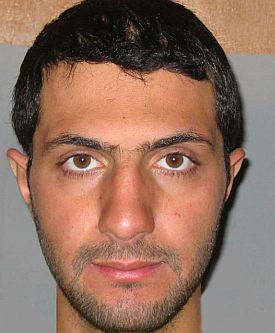
If this is indeed the leader of Jabhat al-Nusra, presumably it is not a recent photograph.

If this is indeed the leader of Jabhat al-Nusra, presumably it is not a recent photograph.

The Associated Press reports: The shadowy leader of a powerful al-Qaida group fighting in Syria sought to kidnap United Nations workers and scrawled out plans for his aides to take over in the event of his death, according to excerpts of letters obtained Wednesday by The Associated Press.

Iraqi intelligence officials offered the AP the letters, as well as the first known photograph of the Nusra Front leader, Abu Mohammed al-Golani, the head of one of the most powerful bands of radicals fighting the Syrian government in the country’s civil war.

The officials said they obtained the information about al-Golani after they captured members of another al-Qaida group in September. They spoke on condition of anonymity because they weren’t authorized to speak to journalists.

“I was told by a soldier that he observed some of the workers of the U.N. and he will kidnap them. I ask God for his success,” read an excerpt of a letter given by officials from Iraq’s Falcon Intelligence Cell, an anti-terrorism unit that works under Prime Minister Nouri al-Maliki.

The officials said other letters planned the kidnapping and killing of other foreigners, and Syrian and Iraqi civilians.

One U.N. worker was kidnapped for eight months in Syria and was released in October. Another two dozen U.N. peacekeepers were briefly held this year. It’s not clear if those abductions had any relation to al-Golani’s letters. [Continue reading…]

Facebooktwittermail

Israel tracks Syria’s Western jihadis, worried about their return

Reuters reports: Israel is working with allies abroad to track Westerners fighting in Syria, concerned that such militants could attack Israeli or Jewish targets once back home, a senior Israeli official said on Tuesday.

Of an estimated 10,000 foreign combatants among rebels battling Syrian President Bashar al-Assad, around 20 percent are from the West and that number is rising, the official said.

“Think of a scenario, even one of them returning and getting instructions from someone he worked with, someone he fought beside, someone like (the al Qaeda-linked) Nusra Front, to carry out an attack,” said the official, who is privy to intelligence assessments. “This has been keeping us very, very busy lately.”

The official, who declined to be named because of the sensitivity of the issue, said Israel was coordinating monitoring efforts with Western countries, whose legal options against fighters returning home were limited.

Facebooktwittermail