Syria has used chemical arms on rebels, U.S. and allies find

The New York Times reports: American intelligence analysts now believe that President Bashar al-Assad’s troops have used chemical weapons against rebel forces in the civil war in Syria, an assessment that will put added pressure on a deeply divided Obama administration to develop a response to a provocation that the president himself has declared a “red line.”

“Following a deliberative review, our intelligence community assesses that the Assad regime has used chemical weapons, including the nerve agent sarin, on a small scale against the opposition multiple times in the last year,” the deputy national security adviser, Ben Rhodes, said in a statement released by the White House on Thursday afternoon. “Our intelligence community has high confidence in that assessment given multiple, independent streams of information”

President Obama said in April that the United States had physiological evidence that the nerve gas sarin had been used in Syria but lacked proof of who used it and under what circumstances. Mr. Rhodes said that American intelligence officials now believed that 100 to 150 people had died from the attacks, and he said that the number “is likely incomplete.”

In his statement, Mr. Rhodes alluded to Mr. Obama’s position that the use of chemical weapons would be a red line for the United States. “The president has said that the use of chemical weapons would change his calculus, and it has,” he said.

The Wall Street Journal reports: A U.S. military proposal for arming Syrian rebels also calls for a limited no-fly zone inside Syria that would be enforced from Jordanian territory to protect Syrian refugees and rebels who would train there, according to U.S. officials.

Asked by the White House to develop options for Syria, military planners have said that creating an area to train and equip rebel forces would require keeping Syrian aircraft well away from the Jordanian border.

To do that, the military envisages creating a no-fly zone stretching up to 25 miles into Syria which would be enforced using aircraft flown from Jordanian bases and flying inside the kingdom, according to U.S. officials.

The Daily Beast reports: In sharp remarks directed against his Democratic successor and his wife’s former boss, President Bill Clinton said Tuesday that President Barack Obama risks looking like a “wuss,” a “fool,” and “lame” for not doing more to influence events in Syria.

Clinton, speaking with Sen. John McCain Tuesday night in a closed press event sponsored by the McCain Institute, contrasted Obama’s inaction in Syria to his own action in the 1999 NATO intervention in Kosovo, which included the bombing of the forces of Serbian President Slobodan Milosevic. Clinton said a president must look beyond public and congressional reluctance to military intervention for the sake of national security and to save lives.


Facebooktwittermail

Outside powers must not impose solutions on Syrians

Hassan Hassan writes: As US officials deliberate this week on whether to arm the Syrian rebels, they should remember one point: It will be easier to impose a solution on the regime than on the people.

Leaks from meetings in Geneva last week suggested that representatives from Russia and western countries were focusing on handpicking opposition figures to lead the planned negotiations with the regime. Critical issues such as the future of the security forces, whose brutality sparked the revolt in the first place, were hardly discussed. The world’s great powers appear to think that if some opposition groups agree with the regime on a formula, they can then impose the solution on the rest of Syria. But the time for such thinking is long gone.

Neither those in charge of the regime nor the rebels across Syria are interested in compromise. And “victory” by one side or the other will not end the violence.

Consider the context. The government controls hardly any of the country’s eastern region. The north, from Idlib to the countryside around Aleppo, is in the hands of the rebels. The regime is either weak or embattled everywhere else, except in Damascus and Suwaida in the south and in the coastal region in the west. Even in those areas, especially the coastal region where there is a strong rebel presence, the regime is not secure.

The point is that extending the reach of state agencies back across the entire country will require major, sustainable military ground operations – in effect an invasion.

Any solution or process that can end the violence must be acceptable to the people. Contrary to some media reports, the rebels on the ground have the resilience and determination to continue fighting. [Continue reading…]

Facebooktwittermail

Rebels kill dozens in Syrian Shiite village

The Wall Street Journal reports: Sunni rebels tore through a Shiite village in eastern Syria, killing dozens while documenting the rampage with videos broadcast Wednesday, and a Syrian military helicopter struck a pro-rebel Sunni town in Lebanon, in incidents that sharpened the sectarian divisions across Syria and beyond.

Mortars and rockets from Syria have landed across the Lebanese border before, but the air attack on Wednesday appeared to be the first in which a Syrian aircraft struck from within Lebanese airspace.

Both incidents bore repercussions from the victory last week by Syrian forces and fighters from the Lebanese Shiite group Hezbollah over the strategic town of Qusayr, near the Lebanese border.

Hezbollah’s pivotal role in Qusayr drew condemnation from Sunni governments and Sunni religious leaders across the region, as the Syrian civil war becomes a focal point for the centuries-old feud between the two rival sects of Islam.

After the battle, some Hezbollah fighters patrolled Qusayr brandishing Shiite banners and blaring Shiite chants from vehicles, underscoring sectarian motivations driving the conflict.

Facebooktwittermail

General Alexander’s secret army

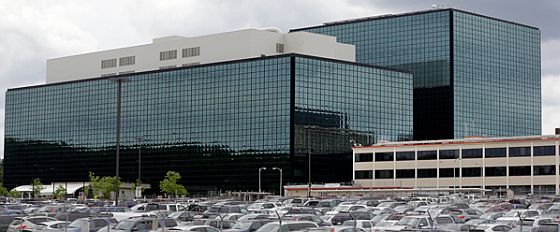
James Bamford writes: Inside Fort Meade, Maryland, a top-secret city bustles. Tens of thousands of people move through more than 50 buildings—the city has its own post office, fire department, and police force. But as if designed by Kafka, it sits among a forest of trees, surrounded by electrified fences and heavily armed guards, protected by antitank barriers, monitored by sensitive motion detectors, and watched by rotating cameras. To block any telltale electromagnetic signals from escaping, the inner walls of the buildings are wrapped in protective copper shielding and the one-way windows are embedded with a fine copper mesh.

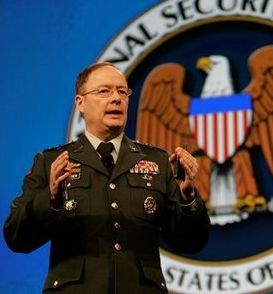
This is the undisputed domain of General Keith Alexander, a man few even in Washington would likely recognize. Never before has anyone in America’s intelligence sphere come close to his degree of power, the number of people under his command, the expanse of his rule, the length of his reign, or the depth of his secrecy. A four-star Army general, his authority extends across three domains: He is director of the world’s largest intelligence service, the National Security Agency; chief of the Central Security Service; and commander of the US Cyber Command. As such, he has his own secret military, presiding over the Navy’s 10th Fleet, the 24th Air Force, and the Second Army.

Alexander runs the nation’s cyberwar efforts, an empire he has built over the past eight years by insisting that the US’s inherent vulnerability to digital attacks requires him to amass more and more authority over the data zipping around the globe. In his telling, the threat is so mind-bogglingly huge that the nation has little option but to eventually put the entire civilian Internet under his protection, requiring tweets and emails to pass through his filters, and putting the kill switch under the government’s forefinger. “What we see is an increasing level of activity on the networks,” he said at a recent security conference in Canada. “I am concerned that this is going to break a threshold where the private sector can no longer handle it and the government is going to have to step in.” [Continue reading…]

Facebooktwittermail

Guantanamo doctors are violating medical ethics

In the New England Journal of Medicine, Dr George Annas, Dr Sondra Crosby and Dr Leonard Glantz write: American physicians have not widely criticized medical policies at the Guantanamo Bay detainment camp that violate medical ethics. We believe they should. Actions violating medical ethics, taken on behalf of the government, devalue medical ethics for all physicians. The ongoing hunger strike at Guantanamo by as many as 100 of the 166 remaining prisoners presents a stark challenge to the U.S. Department of Defense (DOD) to resist the temptation to use military physicians to “break” the strike through force-feeding.

President Barack Obama has publicly commented on the hunger strike twice. On April 26, he said, “I don’t want these individuals [on hunger strike] to die.” In a May 23 speech on terrorism, the President said, “Look at our current situation, where we are force-feeding detainees who are . . . on a hunger strike. . . . Is this who we are? . . . Is that the America we want to leave our children? Our sense of justice is stronger than that.” How should physicians respond? That force-feeding of mentally competent hunger strikers violates basic medical ethics principles is not in serious dispute. Similarly, the Constitution Project’s bipartisan Task Force on Detainee Treatment concluded in April that “forced feeding of detainees [at Guantanamo] is a form of abuse that must end” and urged the government to “adopt standards of care, policies, and procedures regarding detainees engaged in hunger strikes that are in keeping with established medical professional ethical and care standards.” Nevertheless, the DOD has sent about 40 additional medical personnel to help force-feed the hunger strikers.

The ethics standard regarding physician involvement in hunger strikes was probably best articulated by the World Medical Association (WMA) in its Declaration of Malta on Hunger Strikers. Created after World War II, the WMA comprises medical societies from almost 100 countries. Despite its checkered history, its process, transparency, and composition give it credibility regarding international medical ethics, and its statement on hunger strikers is widely considered authoritative. The WMA’s most familiar document is the Declaration of Helsinki — ethical guidelines for human-subjects research. The Declaration of Malta states that “Forcible feeding [of mentally competent hunger strikers] is never ethically acceptable. Even if intended to benefit, feeding accompanied by threats, coercion, force or use of physical restraints is a form of inhuman and degrading treatment.” The Declaration of Malta aims to set the same type of ethical norm as the Helsinki document. Physicians can no more ethically force-feed mentally competent hunger strikers than they can ethically conduct research on competent humans without informed consent. [Continue reading…]

Facebooktwittermail

The seeds of American fascism — taking freedom away in order to keep it safe

Washington Post columnist, Matt Miller, is offended by Edward Snowden’s “grandiose” conscience:

An Internet-era J. Edgar Hoover is frightening to conjure. But what Snowden exposed was not some rogue government-inside-the-government conspiracy. It’s a program that’s legal, reviewed by Congress and subject to court oversight.

The conversation would be entirely different today if we’d had a series of attacks since Sept. 11, 2001. As the Wall Street Journal editorial page (with which I don’t usually nod in agreement) wrote, if the nation suffered another 9/11 or an attack with weapons of mass destruction, “the political responses could include biometric national ID cards, curfews, surveillance drones over the homeland, and even mass roundups of ethnic or religious groups.” Practices like data mining, the Journal added, “protect us against far greater intrusions on individual freedom.”

What Miller and the Wall Street Journal are appealing to is exactly the same line of reasoning employed by Bashir al-Assad and every other authoritarian leader: if I don’t limit your freedom, then you will lose it altogether.

Dissenters duly rebuked are then expected to shut their mouths in recognition of the greater good. (H/t Philip Weiss.)

Facebooktwittermail

NSA surveillance: The U.S. is behaving like China

Ai Weiwei, one of China’s leading contemporary artists, writes: Even though we know governments do all kinds of things I was shocked by the information about the US surveillance operation, Prism. To me, it’s abusively using government powers to interfere in individuals’ privacy. This is an important moment for international society to reconsider and protect individual rights.

I lived in the United States for 12 years. This abuse of state power goes totally against my understanding of what it means to be a civilised society, and it will be shocking for me if American citizens allow this to continue. The US has a great tradition of individualism and privacy and has long been a centre for free thinking and creativity as a result.

In our experience in China, basically there is no privacy at all – that is why China is far behind the world in important respects: even though it has become so rich, it trails behind in terms of passion, imagination and creativity.

Of course, we live under different kinds of legal conditions – in the west and in developed nations there are other laws that can balance or restrain the use of information if the government has it. That is not the case in China, and individuals are completely naked as a result. Intrusions can completely ruin a person’s life, and I don’t think that could happen in western nations.

But still, if we talk about abusive interference in individuals’ rights, Prism does the same. It puts individuals in a very vulnerable position. Privacy is a basic human right, one of the very core values. There is no guarantee that China, the US or any other government will not use the information falsely or wrongly. I think especially that a nation like the US, which is technically advanced, should not take advantage of its power. It encourages other nations. [Continue reading…]

Facebooktwittermail

Edward Snowden is irrelevant

Ron Fournier writes: Is Edward Snowden a hero or a traitor? I don’t care. You read right: I don’t give a whit about the man who exposed two sweeping U.S. online surveillance programs, nor do I worry much about his verdict in the court of public opinion.

Why? Because it is the wrong question. The Snowden narrative matters mostly to White House officials trying to deflect attention from government overreach and deception, and to media executives in search of an easy storyline to serve a celebrity-obsessed audience. [Continue reading…]

Facebooktwittermail

54% of Americans polled say Snowden did a ‘good thing’

Time reports: More than half of Americans approve of a former intelligence contractor’s decision to leak classified details of sprawling government surveillance programs, according to the results of a new TIME poll.

Fifty-four percent of respondents said the leaker, Edward Snowden, 29, did a “good thing” in releasing information about the government programs, which collect phone, email, and Internet search records in an effort, officials say, to prevent terrorist attacks. Just 30 percent disagreed.

But an almost identical number of Americans — 53 percent — still said he should be prosecuted for the leak, compared to 28% who said he should not. Americans aged 18 to 34 break from older generations in showing far more support for Snowden’s actions. Just 41 percent of that cohort say he should face charges, while 43 percent say he should not. Just 19 percent of that age group say the leak was a “bad thing.”

TIME POLL 6-12-13

Facebooktwittermail

Britain’s legacy of torture

David M. Anderson writes: The British do not torture. At least, that is what we in Britain have always liked to think. But not anymore. In a historic decision last week, the British government agreed to compensate 5,228 Kenyans who were tortured and abused while detained during the Mau Mau rebellion of the 1950s. Each claimant will receive around £2,670 (about $4,000).

The money is paltry. But the principle it establishes, and the history it rewrites, are both profound. This is the first historical claim for compensation that the British government has accepted. It has never before admitted to committing torture in any part of its former empire.

In recent years there has been a clamor for official apologies. In 2010, Britain formally apologized for its army’s conduct in the infamous “Bloody Sunday” killings in Northern Ireland in 1972, and earlier this year Prime Minister David Cameron visited Amritsar, India, the site of a 1919 massacre, and expressed “regret for the loss of life.”

The Kenyan case has been in process for a decade in London’s High Court. The British fought to avoid paying reparations, so the decision to settle is a significant change of direction. The decision comes months ahead of the 50th anniversary of the British departure from Kenya — once thought of as the “white man’s country” in East Africa. [Continue reading…]

Facebooktwittermail

Syria death toll at least 93,000, says UN

BBC News reports: At least 93,000 people have been killed in Syria since the start of the conflict, according to latest United Nations figures.

This represents a rise of more than 30,000 since the UN last issued figures covering the period to November 2012.

At least 5,000 people have been dying in Syria every month since last July, the UN’s human rights body says.

But it says these statistics are an underestimate as it believes many deaths have not been reported.

Facebooktwittermail

Iran declares victory

The National Interest: In the days after the joint Syrian Army–Lebanese Hezbollah victory over the rebels in the strategic town of Qusayr, the Assad regime has been positively giddy, announcing plans for a major offensive to retake the northern city of Aleppo. Assad’s key backer, Iran, has also been gloating. A victory speech of sorts, reported by hardline outlet Fars News and translated by the American Enterprise Institute’s Iran Tracker, offers a broad insight into how one of Supreme Leader Ali Khamenei’s closest advisers sees the Islamic Republic’s standing in the region, and how the Syrian conflict figures in Iranian strategy. It’s a vision that sharply conflicts with how we’d expect Tehran to see itself — and accordingly, one that should be closely examined as the United States attempts to compel Iran to make concessions on its nuclear program.

The speaker, general Yahya Rahim-Safavi, is Khamenei’s top military aide, a role that he took up after a decade heading the politically powerful Islamic Revolutionary Guard Corps. He’s an influential player — notably, he backed the infamous head of the IRGC’s covert Quds Force, general Qassim Suleimani, whom the New York Times branded “Iran’s Master of Chaos.” And if his position and background didn’t already give it away, Rahim-Safavi is known as a resolute hardliner.

In Rahim-Safavi’s eyes, Iran’s strategic position is strong and getting stronger, and two men are responsible — Ali Khamenei and George W. Bush. [Continue reading…]

Facebooktwittermail

Topless Femen activists jailed in Tunisia for indecency

The Independent reports: Three European, female activists who protested topless outside the Tunisian Palace of Justice have been sentenced to four months in prison in Tunisia. The two French women and one German are members of the controversial Femen protest group and were charged with indecency.

“The three Femen protesters are shocked by this sentence. The judge has given them each four months in prison for violating decency and modesty,” said their Tunisian lawyer Souhaib Bohri.

The prison sentence was seen as harsh by many who thought that the women would be acquitted or fined and deported from the country. This sentence also comes only two weeks after the twenty Tunisians accused of attacking the American Embassy in Tunis last year, setting fire to cars and damaging property, were given a suspended sentence. The three Femen activists will appeal and it is unclear as yet if they will have to serve the full sentence.

Facebooktwittermail

Mahmoud Abbas’s reign of terror

Khaled Abu Toameh writes: Until recently, the Palestinian Authority in the West Bank used to arrest Palestinians who criticized its leaders, especially Mahmoud Abbas.

But now the Palestinian Authority has resumed using thugs to break the bones of its critics.

It is an easy and quick way to deal with the critics and deter others from speaking out against Palestinian Authority leaders.

The thugs are often members of Abbas’s ruling Fatah faction. However, they do not hold any official position in the Palestinian Authority; they do not belong to Palestinian Authority security forces or any government-related agency in the West Bank.

This allows the Palestinian Authority to distance itself from the thugs each time they perpetrate a crime.

But the thugs, who are referred to by Palestinians as “Shabbiha,” are known to act on instructions from top Palestinian Authority leaders. [Continue reading…]

Facebooktwittermail

Snowden revelations on NSA strain U.S.-China relations, says Beijing

The Guardian reports: China has warned that revelations of electronic surveillance on a huge scale by American intelligence agencies will “test developing Sino-US ties” and exacerbate their “soured relationship” on cybersecurity.

The assessment in an article and editorial carried by the state-run China Daily represents the first official comment in state media as China grapples with the presence in Hong Kong of Edward Snowden, the US analyst who revealed himself as the source of the Guardian exposé.

Quoting analysts, the China Daily said the “massive US global surveillance programme … is certain to stain Washington’s overseas image” and pointedly referred to Washington recently levelling claims of hacking at other governments, including China’s.

“Observers said how the case is handled could pose a challenge to the burgeoning goodwill between Beijing and Washington given that Snowden is in Chinese territory and the Sino-US relationship is constantly soured on cybersecurity,” the paper said. [Continue reading…]

Facebooktwittermail

Why you should worry about the NSA

Ricahrd A. Clarke writes: None of us want another terrorist attack in the United States. Equally, most of us have nothing to hide from the federal government, which already has so many ways of knowing about us. And we know that the just-revealed National Security Agency program does not actually listen to our calls; it uses the phone numbers, frequency, length and times of the calls for data-mining.

So, why is it that many Americans, including me, are so upset with the Obama administration gathering up telephone records?

My concerns are twofold. First, the law under which President George W. Bush and now President Obama have acted was not intended to give the government records of all telephone calls. If that had been the intent, the law would have said that. It didn’t. Rather, the law envisioned the administration coming to a special court on a case-by-case basis to explain why it needed to have specific records.

I am troubled by the precedent of stretching a law on domestic surveillance almost to the breaking point. On issues so fundamental to our civil liberties, elected leaders should not be so needlessly secretive.

The argument that this sweeping search must be kept secret from the terrorists is laughable. Terrorists already assume this sort of thing is being done. Only law-abiding American citizens were blissfully ignorant of what their government was doing. [Continue reading…]

Facebooktwittermail