The treason of the intellectuals

Chris Hedges writes: The rewriting of history by the power elite was painfully evident as the nation marked the 10th anniversary of the start of the Iraq War. Some claimed they had opposed the war when they had not. Others among “Bush’s useful idiots” argued that they had merely acted in good faith on the information available; if they had known then what they know now, they assured us, they would have acted differently. This, of course, is false. The war boosters, especially the “liberal hawks” — who included Hillary Clinton, Chuck Schumer, Al Franken and John Kerry, along with academics, writers and journalists such as Bill Keller, Michael Ignatieff, Nicholas Kristof, David Remnick, Fareed Zakaria, Michael Walzer, Paul Berman, Thomas Friedman, George Packer, Anne-Marie Slaughter, Kanan Makiya and the late Christopher Hitchens — did what they always have done: engage in acts of self-preservation. To oppose the war would have been a career killer. And they knew it.

These apologists, however, acted not only as cheerleaders for war; in most cases they ridiculed and attempted to discredit anyone who questioned the call to invade Iraq. Kristof, in The New York Times, attacked the filmmaker Michael Moore as a conspiracy theorist and wrote that anti-war voices were only polarizing what he termed “the political cesspool.” Hitchens said that those who opposed the attack on Iraq “do not think that Saddam Hussein is a bad guy at all.” He called the typical anti-war protester a “blithering ex-flower child or ranting neo-Stalinist.” The halfhearted mea culpas by many of these courtiers a decade later always fail to mention the most pernicious and fundamental role they played in the buildup to the war—shutting down public debate. Those of us who spoke out against the war, faced with the onslaught of right-wing “patriots” and their liberal apologists, became pariahs. In my case it did not matter that I was an Arabic speaker. It did not matter that I had spent seven years in the Middle East, including months in Iraq, as a foreign correspondent. It did not matter that I knew the instrument of war. The critique that I and other opponents of war delivered, no matter how well grounded in fact and experience, turned us into objects of scorn by a liberal elite that cravenly wanted to demonstrate its own “patriotism” and “realism” about national security. The liberal class fueled a rabid, irrational hatred of all war critics. Many of us received death threats and lost our jobs, for me one at The New York Times. These liberal warmongers, 10 years later, remain both clueless about their moral bankruptcy and cloyingly sanctimonious. They have the blood of hundreds of thousands of innocents on their hands.

The power elite, especially the liberal elite, has always been willing to sacrifice integrity and truth for power, personal advancement, foundation grants, awards, tenured professorships, columns, book contracts, television appearances, generous lecture fees and social status. They know what they need to say. They know which ideology they have to serve. They know what lies must be told—the biggest being that they take moral stances on issues that aren’t safe and anodyne. They have been at this game a long time. And they will, should their careers require it, happily sell us out again. [Continue reading…]


Facebooktwittermail

6,000 people killed in Syria in March

BBC News reports: More than 6,000 people died in Syria in March, the deadliest month since protests against the government began two years ago, activists say.

The Syrian Observatory for Human Rights (SOHR), a UK-based activist group, said it recorded 6,005 deaths last month.

It said victims included at least 291 women, 298 children, 1,486 rebel fighters and army defectors, and 1,464 government troops.

The other casualties were unidentified civilians and fighters, it added.

The anti-government group, which monitors human rights violations on both sides of the conflict via a network of contacts across Syria, said the total toll was much higher than the 62,554 deaths it has documented.

“We estimate it is actually around 120,000 people,” Rami Abdelrahman, the head of the group, told Reuters news agency.

Facebooktwittermail

Portrait of an activist: Razan Ghazzawi, the Syrian blogger turned exile

Time reports: On July 18 Razan Ghazzawi, a Syrian blogger and media activist, was in the city of Douma, 45 minutes outside the capital, when she received a call: Free Syrian Army (FSA) fighters, dug-in in the central Damascus neighborhood of Midan, needed someone who could set up a remote Internet connection. So she and two other activists went in a taxi, circumnavigating military checkpoints, to join the fighters.

Days earlier, Syria’s armed opposition launched an unprecedented assault on the government, which they dubbed Damascus Volcano and Syrian Earthquake. The operation peaked with a bombing at the national-security headquarters in the capital, which killed four top officials, including President Bashar Assad’s brother-in-law. The regime was already striking back, sending helicopter gunships, tanks and snipers after roaming bands of lightly armed rebels.

“I went down there with a taxi driver who we trusted but I don’t know why and how,” Ghazzawi says. “FSA revolutionaries secured our entrance, and I was welcomed as a media expert. I explained I’m not. I’m just a blogger with a laptop and 3G,” she says, referring to her wireless Internet link.

Ghazzawi, 32, is a short, trim woman with large brown eyes. At the time of the Damascus battle, she was the only widely known antiregime blogger writing in English under her real name from inside Syria. She had already been detained by the government twice for her activism since the Syrian uprising began, once for two weeks after being held at the Jordanian border and a second time for 22 days after a raid on the office of her employer, the Syrian Center for Media and Freedom of Expression. She left Syria for Sweden in October 2012.

While the majority of news reports from Syria consisted of information stitched together by journalists outside the country and attributed to unnamed “activists,” Ghazzawi was a verified source reporting live from the firing zone, and doing so at great personal risk. “I was the one who uploaded the videos. I was the one who was giving all the information to certain media figures,” she recalled, speaking recently at New York University. [Continue reading…]

Facebooktwittermail

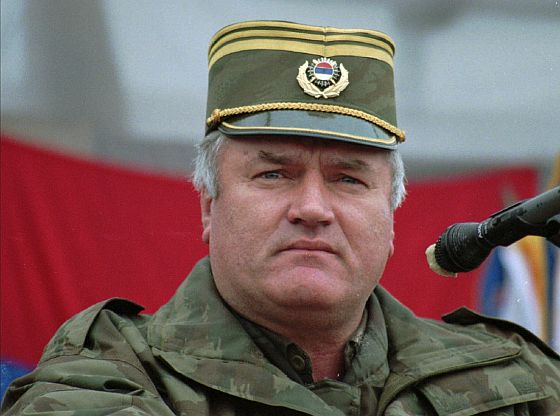
Ratko Mladic on the run: the full story of how the general evaded capture

The Guardian reports: The men and women who helped hide Ratko Mladic through his many years as a fugitive saw him as a Serb hero. But just in case their loyalty should waver, they were presented with a gift: photographs of their children. The implication was clear: if we can shoot them with a camera, we can shoot them by other means as well.

The Bosnian Serb general, now on trial in The Hague for genocide and other crimes against humanity, eluded capture for 14 years, with the help of the Serbian military, then his wartime lieutenants, then his family. But the common factor throughout was fear.

The stocky, ruddy-faced, ex-artillery officer made a career out of terror. He oversaw the three years of the Sarajevo siege and the daily attrition of its residents by shelling and sniping. He was also at the Muslim enclave in Srebrenica in July 1995, reassuring panicked women captives their loved ones would be safe, while his men were rounding up and slaughtering 8,000 men and boys. It was the worst atrocity Europe has witnessed since the Nazi era.

After the war, Mladic withdrew to Han Pijesak in eastern Bosnia, where the communists had built a reinforced bunker to resist invasion. But in 1997 when Nato troops finally began looking for war criminals, he slipped across the river Drina from the separatist Bosnian Serb republic to Serbia proper, where President Slobodan Milosevic, the mastermind behind the “ethnic cleansing” of non-Serbs, was ready to offer shelter. But Mladic’s days as a wanted man had only just begun.

From interviews with relatives, court records as well as the accounts of Serbian and international investigators who ultimately tracked Mladic down in 2011, the Guardian has been able to piece together a detailed picture of the general’s years in hiding.

While the ability to evade his pursuers for so long burnished his folk-hero image among nationalists as a Serbian Scarlet Pimpernel, the reality was more mundane and brutal. He stayed free by trusting fewer and fewer people, living in increasing isolation and squalor, ensuring silence with the threat of force. [Continue reading…]

Facebooktwittermail

The Peace Process was always a process of subjugation

Amira Hass writes: “I didn’t know you were such an empiricist,” a friend told me impatiently, a veteran peace activist with a doctorate, when I insisted at some meeting on specifying the prohibitions on the movement of Palestinians in the Gaza Strip.

That was in 1995, and he thought I didn’t see the big picture, the positive direction, the vision, the beat of the wings of history, and instead was merely insisting on going into detail, into temporary malfunctions. He wasn’t alone in thinking that. One of my editors at the time told me I lacked perspective because I lived in Gaza, and so my reports looked the way they did. In short, wearisome.

The signs were there right from the start − signs that the so much talked-about Peace Process was a process of subjugation; signs that Israel intended to impose on the other side an agreement whose terms were far from the Palestinian minimum, and far from what many countries in the world envisioned as a two-state solution.

But it was hard for these signs to infiltrate public awareness ‏(as well as the Israeli and international media‏) through the powerful interest in seeing the outward manifestations of something that you believe exists: in Gazans bathing in the sea; in the head of the Israeli Shin Bet security service meeting with the head of the Palestinian security service; in Shimon Peres visiting Gaza; in joint security patrols; and in our soldiers no longer patrolling in the heart of the Palestinian towns.

From the supposedly narrow perspective of the Strip, though, the reality of incarceration was, looked and felt like the complete opposite of a peace process.

The chronology is important here − I’ve repeated it countless times and will repeat it countless more times − because local readers like to think that the blanket prohibitions on Palestinian mobility were a response to the suicide attacks from 1994 on. That is not the case.

It began in January 1991, on the eve of the Gulf War. The Israel Defense Forces GOC Central and Southern Commands then revoked an earlier order, from the 1970s, of a “general exit permit to Israel” − in other words, one that allowed the Palestinian residents of the occupied territory to enter Israel, and move freely within its borders and between the Gaza Strip and the West Bank.

Initially, the revocation was interpreted as something temporary, a preventive measure during the unclear period of wartime. But after a lengthy curfew, the residents of the Strip woke up to a new reality. If up until 1991 Israel had respected ‏(for reasons of its own‏) the right to freedom of movement for all Palestinians, but withheld it from a few people, after 1991 the situation was reversed: Israel denied all Palestinians ‏(those in the West Bank as well‏) the right to freedom of movement, aside from a few groups and numbers that it determined. [Continue reading…]

Facebooktwittermail

Hamas re-elects Meshaal as leader

AFP reports: Hamas re-elected its veteran exiled leader Khaled Meshaal in Cairo on Monday, said an official of the Palestinian Islamist movement that rules Gaza.

“The leaders of Hamas chose Meshaal,” the high-ranking official told AFP via telephone from the Egyptian capital, requesting anonymity.

Hamas officials said earlier that the movement’s governing shura council was poised to renew Meshaal’s leadership for another four years, with one describing his re-election as “widely known”.

Prior to Monday’s vote, however, there had been speculation that the exiled leader would be forced aside by the movement’s powerful leaders in the Gaza Strip, which it has controlled since 2007.

Meshaal himself had said last year that he would not seek a new term.

But developments in the Middle East since the Arab Spring uprisings of 2011 “pushed Hamas to choose Meshaal… who has given the movement a national face… and has good relations in the Arab world,” one Hamas official said Monday.

Facebooktwittermail

Video: Interview with Egyptian satirist Bassem Youssef

Reuters reports: The United States on Monday accused Egypt of muzzling freedom of speech after prosecutors questioned the most popular Egyptian television satirist over allegations he insulted President Mohamed Mursi and Islam.

U.S. State Department spokeswoman Victoria Nuland also suggested the Egyptian authorities were selectively prosecuting those accused of insulting the government while ignoring or playing down attacks on anti-government demonstrators.

Bassem Youssef, who rose to fame with a satirical online show after the uprising that swept autocrat Hosni Mubarak from power in 2011, turned himself in on Sunday after the prosecutor general issued an arrest warrant for the comedian on Saturday.

Facebooktwittermail

Rise in sexual assaults in Egypt sets off clash over blame

The New York Times reports: The sheer number of women sexually abused and gang raped in a single public square had become too big to ignore. Conservative Islamists in Egypt’s new political elite were outraged — at the women.

“Sometimes,” said Adel Abdel Maqsoud Afifi, a police general, lawmaker and ultraconservative Islamist, “a girl contributes 100 percent to her own raping when she puts herself in these conditions.”

The increase in sexual assaults over the last two years has set off a new battle over who is to blame, and the debate has become a stark and painful illustration of the convulsions racking Egypt as it tries to reinvent itself.

Under President Hosni Mubarak, the omnipresent police kept sexual assault out of the public squares and the public eye. But since Mr. Mubarak’s exit in 2011, the withdrawal of the security forces has allowed sexual assault to explode into the open, terrorizing Egyptian women.

Women, though, have also taken advantage of another aspect of the breakdown in authority — by speaking out through the newly aggressive news media, defying social taboos to demand attention for a problem the old government often denied. At the same time, some Islamist elected officials have used their new positions to vent some of the most patriarchal impulses in Egypt’s traditional culture and a deep hostility to women’s participation in politics.

The female victims, these officials declared, had invited the attacks by participating in public protests. “How do they ask the Ministry of Interior to protect a woman when she stands among men?” Reda Saleh Al al-Hefnawi, a lawmaker from the Muslim Brotherhood’s political party, asked at a parliamentary meeting on the issue. [Continue reading…]

Facebooktwittermail

How Monsanto is killing off the monarch butterfly

Yale Environment 360: University of Kansas insect ecologist Orley R. “Chip” Taylor has been observing the fragile populations of monarch butterflies for decades, but he says he has never been more concerned about their future.

Monarchs are beloved for their spectacular migration across Canada and the United States to overwintering sites in central Mexico — and back again. But a new census taken at the monarchs’ wintering grounds found their population had declined 59 percent over the previous year and was at the lowest level ever measured.

In an interview with Yale Environment 360 contributor Richard Conniff, Taylor — founder and director of Monarch Watch, a conservation and outreach program — talked about the factors that have led to the sharp drop in the monarch population. Among them, Taylor said, is the increased planting of genetically modified corn in the U.S. Midwest, which has led to greater use of herbicides, which in turn kills the milkweed that is a prime food source for the butterflies.

“What we’re seeing here in the United States,” he said, “is a very precipitous decline of monarchs that’s coincident with the adoption of Roundup-ready corn and soybeans.” [Continue reading…]

Meanwhile, thanks to its lackeys in the Senate, just a few days ago Monsanto (the manufacturer of Roundup and Roundup-ready GMO crops) got a legal waiver that effectively bypasses consideration of the safety of its products.

Take Part: When the Senate passed a budget resolution last Wednesday that appears to prevent some of the potential damage from sequestration, the Continuing Resolution included several food- and agriculture-related earmarks.

But one inclusion in particular is especially controversial. The “biotech rider” would require the USDA to approve the harvest and sale of crops from genetically modified seed even if a court has ruled the environmental studies on the crop were inadequate. This aspect of the bill infuriated many sustainable food and agriculture groups, who nicknamed the bill the “Monsanto Protection Act.”

If signed into law by President Obama, here’s what the Monsanto Protection Act would do: It will allow farmers to plant, harvest and sell genetically engineered plants even if the crops have been ruled upon unfavorably in court. A Center for Food Safety statement called the rider “an unprecedented attack on U.S. judicial review of agency actions” and “ a major violation of the separation of powers.”

But perhaps more frightening, other critics say, is that the Monsanto Protection Act threatens the health and wellbeing of the public by undermining the federal courts’ ability to protect farmers and the environment from potentially hazardous genetically engineered (GE) crops.

The Monsanto Protection Act was slipped into the bill while it sat in the Senate Appropriations Committee, chaired by Maryland Democrat Barbara Mikulski. According to the Center for Food Safety, the committee held no hearings on this controversial biotech rider and many Democrats were unaware of its presence in the larger bill.

To understand why many people regard Monsanto as the corporate embodiment of pure evil, watch “The World According to Monsanto”:

Facebooktwittermail

The tar sands disaster

Thomas Homer-Dixon writes: If President Obama blocks the Keystone XL pipeline once and for all, he’ll do Canada a favor.

Canada’s tar sands formations, landlocked in northern Alberta, are a giant reserve of carbon-saturated energy — a mixture of sand, clay and a viscous low-grade petroleum called bitumen. Pipelines are the best way to get this resource to market, but existing pipelines to the United States are almost full. So tar sands companies, and the Alberta and Canadian governments, are desperately searching for export routes via new pipelines.

Canadians don’t universally support construction of the pipeline. A poll by Nanos Research in February 2012 found that nearly 42 percent of Canadians were opposed. Many of us, in fact, want to see the tar sands industry wound down and eventually stopped, even though it pumps tens of billions of dollars annually into our economy.

The most obvious reason is that tar sands production is one of the world’s most environmentally damaging activities. It wrecks vast areas of boreal forest through surface mining and subsurface production. It sucks up huge quantities of water from local rivers, turns it into toxic waste and dumps the contaminated water into tailing ponds that now cover nearly 70 square miles.

Also, bitumen is junk energy. A joule, or unit of energy, invested in extracting and processing bitumen returns only four to six joules in the form of crude oil. In contrast, conventional oil production in North America returns about 15 joules. Because almost all of the input energy in tar sands production comes from fossil fuels, the process generates significantly more carbon dioxide than conventional oil production.

There is a less obvious but no less important reason many Canadians want the industry stopped: it is relentlessly twisting our society into something we don’t like. Canada is beginning to exhibit the economic and political characteristics of a petro-state. [Continue reading…]

Facebooktwittermail

Ecuador auctions off Amazon to Chinese oil firms

The Guardian reports: Ecuador plans to auction off more than three million hectares of pristine Amazonian rainforest to Chinese oil companies, angering indigenous groups and underlining the global environmental toll of China’s insatiable thirst for energy.

On Monday morning a group of Ecuadorean politicians pitched bidding contracts to representatives of Chinese oil companies at a Hilton hotel in central Beijing, on the fourth leg of a roadshow to publicise the bidding process. Previous meetings in Ecuador’s capital, Quito, and in Houston and Paris were each confronted with protests by indigenous groups.

Attending the roadshow were black-suited representatives from oil companies including China Petrochemical and China National Offshore Oil. “Ecuador is willing to establish a relationship of mutual benefit – a win-win relationship,” said Ecuador’s ambassador to China in opening remarks.

According to the California-based NGO Amazon Watch, seven indigenous groups who inhabit the land claim that they have not consented to oil projects, which would devastate the area’s environment and threaten their traditional way of life. [Continue reading…]

Facebooktwittermail

Illegal logging has all but wiped out Peru’s mahogany

National Geographic: Mahogany is the crown jewel of the Amazon, soaring in magnificent buttressed columns high into the forest canopy. Its rich, red grain and durability make it one of the most coveted building materials on Earth, favored by master craftsmen, a symbol of wealth and power. A single tree can fetch tens of thousands of dollars on the international market by the time its finished wood reaches showroom floors in the United States or Europe.

After 2001, the year Brazil declared a moratorium on logging big-leaf mahogany, Peru emerged as one of the world’s largest suppliers. The rush for “red gold,” as mahogany is sometimes called, has left many of Peru’s watersheds — such as the Alto Tamaya, homeland of a group of Ashéninka Indians — stripped of their most valuable trees. The last stands of mahogany, as well as Spanish cedar, are now nearly all restricted to Indian lands, national parks, and territorial reserves set aside to protect isolated tribes.

As a result, loggers are now taking aim at other canopy giants few of us have ever heard of — copaiba, ishpingo, shihuahuaco, capirona — which are finding their way into our homes as bedroom sets, cabinets, flooring, and patio decks. These lesser known varieties have even fewer protections than the more charismatic, pricier ones, like mahogany, but they’re often more crucial to forest ecosystems. As loggers move down the list from one species to the next, they’re cutting more trees to make up for diminishing returns, threatening critical habitats in the process. Primates, birds, and amphibians that make their homes in the upper stories of the forest are at increasing risk. Indigenous communities are in turmoil, divided between those favoring conservation and those looking for fast cash. And some of the world’s most isolated tribes are in flight from the whine of chain saws and the terrifying crash of centuries-old leviathans hitting the ground. [Continue reading…]

Facebooktwittermail

While Wall Street crooks walk free, others end up jailed for life just for shoplifting

Matt Taibbi writes: On July 15th, 1995, in the quiet Southern California city of Whittier, a 33-year-old black man named Curtis Wilkerson got up from a booth at McDonald’s, walked into a nearby mall and, within the space of two hours, turned himself into the unluckiest man on Earth. “I was supposed to be waiting there while my girlfriend was at the beauty salon,” he says.

So he waited. And waited. After a while, he paged her. “She was like, ‘I need another hour,'” he says. “So I was like, ‘Baby, I’m going to the mall.'”

Having grown up with no father and a mother hooked on barbiturates, Wilkerson, who says he still boasts a Reggie Miller jumper, began to spend more time on the streets. After his mother died when he was 16, he fell in with a bad crowd, and in 1981 he served as a lookout in a series of robberies. He was quickly caught and sentenced to six years in prison. After he got out, he found work as a forklift operator, and distanced himself from his old life.

But that day in the mall, something came over him. He wandered from store to store, bought a few things, still shaking his head about his girlfriend’s hair appointment. After a while, he drifted into a department store called Mervyn’s. Your typical chain store, full of mannequins and dress racks; they’re out of business today. Suddenly, a pair of socks caught his eye. He grabbed them and slipped them into a shopping bag.

What kind of socks were they, that they were worth taking the risk?

“They were million-dollar socks with gold on ’em,” he says now, laughing almost uncontrollably, as he tells the story 18 years later, from a telephone in a correctional facility in Soledad, California.

Really, they were that special?

“No, they were ordinary white socks,” he says, not knowing whether to laugh or cry. “Didn’t even have any stripes.”

Wilkerson never made it out of the store. At the exit, he was, shall we say, over­enthusiastically apprehended by two security officers. They took him to the store security office, where the guards started to argue with each other over whether or not to call the police. One guard wanted to let him pay for the socks and go, but the other guard was more of a hardass and called the cops, having no idea he was about to write himself a part in one of the most absurd scripts to ever hit Southern California.

Thanks to a brand-new, get-tough-on-crime state law, Wilkerson would soon be sentenced to life in prison for stealing a pair of plain white tube socks worth $2.50. [Continue reading…]

Facebooktwittermail

Women make better corporate leaders than men, study finds

Healthline News: Women have more than a “good head for business.” Researchers find they actually have a different cognitive approach to corporate decision making, which may help the bottom line.
Female Directors

“Vive la différence,” as the French are fond of saying. A new study published in the International Journal of Business Governance and Ethics builds on the established correlation between female board representation and better business performance.

The study, “Why women make better directors,” was conducted by Chris Bart, professor of strategic management at the DeGroote School of Business at McMaster University in Ontario, and Gregory McQueen, a McMaster graduate and senior executive associate dean at the A.T. Still University School of Osteopathic Medicine in Arizona.

Bart and McQueen began their “moral reasoning” psychological study in the aftermath of scandals at major companies such as Enron, Arthur Anderson, and ALO Time Warner. Bart says that people at the time were asking, “Where were the directors and why did they allow this to happen?”

Over the course of nine years, they surveyed 624 directors using an established survey instrument called the Defined Issues Test (DIT). Approximately 75 percent of the survey participants were men and 25 percent were women.

Nearly all of the companies represented in the study were Canadian, and included large publicly traded and nonprofit entities. According to the authors, theirs is the largest-known moral reasoning study of board directors.

“We’ve known for some time that companies with more women on their boards have better results,” explained Bart in a press announcement. “We set out to find out why.”

Unlike in the U.S., where boards must only protect shareholder interests, Canadian directors are compelled to act in the company’s best interest while taking into account how their decisions will affect the interests of all stakeholders. [Continue reading…]

Facebooktwittermail

New website: Syria Video

Syria Comment Announces a new web service: Syria Video, which can be found at http://syriavideo.net

Syria Video is a web application that maps and aggregates Syrian war videos by tracking a large number of YouTube channels. The channels have been identified as reliable and tied to specific towns or regions of Syria. Syria Video collects all new videos released on these channels and attempts to identify their location in Syria and then displays them in chronological order. Since going online in early January, Syria Video has collected over 40,000 videos from 42 Syrian cities and 10 governates. Syria Video is an automated system, and thus, gathers videos in an unbiased manner.

Syria Video is our first attempt to bring order to the online Syrian war-sphere and has the potential to provide valuable insight to the conflict.

The Syrian government has tried to exploit the fog of war to gain advantage over its opponents by barring foreign journalists, restricting what Syrian journalists can report, and attacking its own citizen journalists.

Opposition activists have struggled to counter this blackout by posting a growing stream of YouTube videos. They are intended to keep the international community abreast of the revolution’s progress, to produce sympathy for their cause, raise money, and advertise their exploits and victories.

The footprint of the Syrian conflict on the web has been tremendous. The daily barrage of videos, tweets and Facebook posts coming out of Syria, has the potential to provide great insight into events occurring in any given area across the country. The lack of clarity that we face in following these events is not so much due to the lack of information, but to the overwhelming amount of it.

Facebooktwittermail