



Paul Hyacinthe Mben reports for Der Spiegel: Gao, a city of 100,000 people, has become a lifeless place since the Islamists took over. It was once a stopping point for tourists traveling to Timbuktu, but now the roadside stands have disappeared, bars and restaurants are boarded up and music is banned. The new strongmen proclaim their creed on signs posted at street corners, written in white Arabic lettering on a black background, that read: “There is no God but Allah, and Muhammad is his messenger.”
To make matters worse, garbage collection has been suspended, leaving waste to rot in the streets at temperatures of 40 degrees Celsius (104 degrees Fahrenheit). Around 400,000 people have already fled the Islamists. Most who have left represent the better-educated parts of the work force, like the engineers who kept the power plant and waterworks in operation. Foreign aid organizations are gone, as are government officials who were in the process of implementing a new road construction program.
“Gao is a dead city,” says Allassane Amadou Touré, a mechanic, as he drinks tea in the shade. He is unemployed, like many in the city, and says that Gao’s economic output has “declined by 85 percent” since the spring.
The Islamic police have become the city’s biggest employers. Ironically, their headquarters are on Washington Street in downtown Gao. From there, the armed police officers, most of them young men who are little more than children, are sent out into the neighborhoods to drum into residents what is considered “haram” and “halal,” or pure.
Grisly Punishments
Until recently, the Sharia courts’ sentences were also carried out on Washington Street, but now the Islamic police have become more cautious. Since an angry crowd managed to rescue people who had been convicted of crimes from the executioner, hands and feet are now being severed in secret.
The Sharia court uses a former military base outside the city to carry out its grisly punishments. One of its victims is Alhassane Boncana Maiga, who was found guilty of stealing cattle. Four guards drag Maiga, wearing a white robe, into a dark room and tie him to a chair, leaving only one hand free. A doctor gives the victim an injection for the pain.
Then Omar Ben Saïd, the senior executioner, pulls a knife out of its sheath. “In the name of God, Most Gracious, Most Merciful,” he calls out, takes the convicted man’s hand and begins to slice into it, as blood squirts out. It becomes more difficult when Saïd reaches the bone, and it’s a full three minutes before the hand drops into a bucket. The executioner reaches for his mobile phone, calls his superior and says: “The man has been punished.”
Maiga had kept his eyes shut the entire time, not even screaming. The men lead him into another room, where his arm is bandaged, and after 15 minutes he is released and stumbles into the street. “I’m innocent,” he says. “What am I supposed to do now? I can’t work anymore.”
A few days later, Maiga is dead, probably as a result of blood loss or an infection. [Continue reading…]

Jeffrey Lewis writes: October is a scary month. And it’s not just Halloween. October also happens to be the anniversary of the Cuban Missile Crisis. And if the ghosts and goblins don’t make you wet your pants, the thought of Khrushchev, Kennedy, and Castro dancing on the edge of nuclear war should.
During the Cold War, the United States twice more raised the alert status of its nuclear forces — in October 1969 and October 1973. And one of the worst reactor accidents at a military program — the fire at Britain’s Windscale reactor — also happened in October.
You might start to think there is something particularly dangerous about October. But the reality is that there have been so many accidents, false alarms, and other mishaps involving nuclear weapons that you haven’t heard about — and every month contains at least one seriously scary incident. The Department of Defense has released narrative summaries for 32 accidents involving nuclear weapons between 1950 and 1980, many of which involve aircraft bearing bombs. False alarms? Please. The Department of Defense admitted 1,152 “moderately serious” false alarms between 1977 and 1984 — roughly three a week. (I love the phrase “moderately serious.” I wonder how many “seriously serious” false alarms they had?) I kind of get the feeling that if NORAD went more than a week without a serious false alarm, they would start to wonder if the computers were ok.
The hard part was choosing the most frightening moments. There is no reason to believe the apocryphal story about the British Army choosing red uniforms because they do not show blood. But after 60-odd years of nuclear accidents, incidents, and whatnot, I can recommend that the STRATCOM commander consider brown pants.
So, here’s my list of 12 seriously scary events, one for each month. This list is not comprehensive, nor is it intended to be the worst events. [Continue reading…]
Micah Zenko writes: Nov. 3 marks the tenth anniversary of America’s Third War — the campaign of targeted killings in non-battlefield settings that has been a defining feature of post-9/11 American military policy as much as the conflicts in Iraq or Afghanistan.
Unlike other wars, there won’t be any ceremonies at the White House or Pentagon, parades down Main Streets, or town square rallies to acknowledge the sacrifices made by the countless civilian and military personnel involved. There won’t even be a presidential statement since targeted killings cannot and will not be recognized by the U.S. government. The war is conducted by both the CIA — covert and totally unacknowledged — and by the Joint Special Operations Command (JSOC) — described without any specificity as “direct action” by the White House. Whether the CIA or JSOC is the lead executive agency, the Third War is marked by the limited transparency and accountability of U.S. officials.
The Third War, which began with a drone strike in Yemen, had two simple goals: preventing another attack on the U.S. homeland and capturing or killing those al Qaeda operatives responsible. Bush administration officials warned ominously that its forward-leaning counterterrorism approach mandated preventive attacks against terrorist safe havens. Five days after 9/11, Vice President Dick Cheney stated that the United States would have to work “the dark side,” and an anonymous senior official declared: “The gloves are off. The president has given the [CIA] the green light to do whatever is necessary. Lethal operations that were unthinkable pre-September 11 are now underway.”
On September 17, 2001, President Bush signed a memorandum of notification that authorized the CIA to kill, without further presidential approval, “two or three dozen” high-value targets. A former CIA official estimated: “There are five hundred guys out there you have to kill. There’s no way to sugarcoat it — you just have to kill them.” (In a quaint historical footnote, on October 15, 2001, the Bush administration rebuked Israel for killing the suspected plotter of a Tel Aviv terror attack: “It’s the same position that we’ve said over and over again, and that is that we oppose the policy of targeted killings.”) [Continue reading…]
Nicolas Pelham writes: This week’s arrival in Gaza of the Emir of Qatar and his entourage of fifty Mercedes revived the frenetic pace of activity in the coastal enclave, which has been uncommonly quiet in recent months. On his day-trip spent laying foundation stones for cities, hospitals, and schools all bearing his name, the Emir, Sheikh Hamad Al Thani, came pledging gifts of $400 million in reconstruction, and promised to end the political and economic isolation Gaza has endured since the Palestinian Islamist movement Hamas took power six years ago.
For Hamas leaders the trip, the first by a head of state since the siege on Gaza began, heralds their latest attempt to escape political pariahdom, after their hopes of deliverance by the new Muslim Brotherhood–led Egypt ran aground this summer. On August 5, sixteen Egyptian soldiers were gunned down by militants just across Gaza’s borders from Egypt; Egypt suspected the killers had crossed over from Gaza. Fearing the ire of its powerful neighbor, Hamas temporarily barred access to the border, including the vast tunnel complex connecting Gaza with Egypt that serves as Gaza’s economic lifeline. The trucks that cart thousands of tons of raw materials and fuel every day lay silent, and a few of the Gazan government officials and 9,000 tunnel workers who had bothered to make an appearance sat on stools disconsolately counting the lost revenue, which they estimated in the tens of millions of dollars.
The tunnels symbolize Hamas’s paradox: on the one hand, they have enabled Palestine’s main Islamist movement to thrive amid an external siege, and despite a Western boycott to take their place amongst the Islamist parties that have gained or strengthened their hold on power in many parts of the Middle East. Thanks to Gaza’s supply lines to Egypt, its GDP outpaced by a factor of five that of Hamas’s Western-funded rival, the Palestinian Authority (PA) in the West Bank. Further propelling Gaza’s economy, Arab governments across the region, like Qatar’s, have been shifting hundreds of millions of dollars in aid money from the PA to Hamas, signaling what may be a historic shift in Palestinian politics.
Yet the tunnels are also a reminder of just how much of a clandestine underground authority Hamas still is, and how fragile the territory’s recovery may be. Gaza continues to rely on smuggling for even basic goods, and the underground trade can be turned on and off as easily as a tap. The current restrictions, if they continue, could have devastating effects not only on the economy, but on Hamas’s own longevity. “We can’t keep ourselves imprisoned much longer,” a Hamas commander tells me as he and his patrol slouch bootless on mattresses under a makeshift tent erected between the tunnel mouths. [Continue reading…]
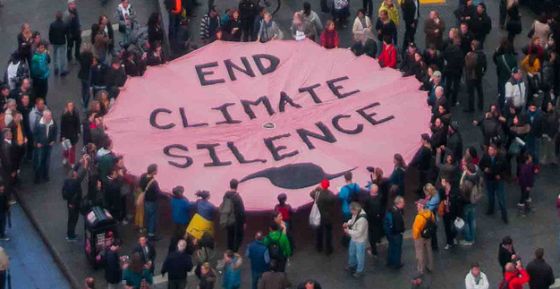
‘I’m surprised it didn’t come up in one of the debates,’ said many Americans in response to the fact that President Obama and Mitt Romney didn’t have a single word to say about climate change.
But Obama claims he was surprised too — the quotation above actually comes from him.
Surprised that it got left out of the talking points he had to memorize?
84% of Democrats regard global warming as a serious issue and yet Obama didn’t use any of many easy opportunities to weave this into the debates, even though it has been discussed in every presidential debate for over three decades. Not only has climate change been largely left out of both Obama and Romney’s campaigns but each candidate has championed the accelerated development of fossil fuels.
In presidential politics, it’s not that the issue of climate change has failed to be advanced — it is not even being addressed as seriously as it was 24 years ago!
As David Roberts noted: The questioner doesn’t mamby-pamby around with he-said she-said, he states flatly that “most scientists” agree and that future generations are at risk.
And neither candidate bothers with dissembling or dodging. Both acknowledge the problem and promise to address it.
In 1988! In the ensuing 24 years, U.S. politics has moved backward on this issue.
There’s lots being written these days about “climate silence.” There’s a grassroots protest underway. Coral Davenport has a piece on it at National Journal. Mike Grunwald touches on it at Time. Eugene Robinson has editorialized on it at The Washington Post. Tom Zeller Jr. has covered it, and so have ClimateWire and the L.A. Times. But by far the smartest take I’ve seen yet is from the only person in the cable news universe who takes this issue seriously, Chris Hayes:
Visit NBCNews.com for breaking news, world news, and news about the economy

Time reports: Even before Hurricane Sandy made landfall on the East Coast of the U.S., economists were predicting that the historic storm would cause billions of dollars in damage across more than a dozen states where planes were grounded, stock exchanges were closed, public transportation was halted and homes began to get pounded by devastating wind and torrential rain.
By Monday, disaster-modeling company Eqecat estimated that Sandy would cause $5 billion to $10 billion in insured losses and $10 billion to $20 billion in economic damages. (In 2008, Hurricane Ike had similar economic damages at $20 billion.) Others have estimated as much as $100 billion in damages. The real cost is probably somewhere in the middle. For example, Peter Morici, a business professor at the University of Maryland, is estimating up to $45 billion in losses by comparing Sandy with Hurricane Irene when it hit the Northeast in 2011.
The initial estimates last year for Irene were around $7 billion, but it eventually caused about $10 billion to $15 billion worth of damage. Morici says he’s predicting a similar increase from the estimate to the actual damages for Sandy considering the size of the storm, the number of Americans who will be affected (estimated around 60 million) and the possibility that metropolitan areas like New York City and Washington, D.C., could essentially be shut down for several days. [Continue reading…]
John Pedro Schwartz writes: If you go to Damascus and ask a taxi driver to take you to the suburb of Harasta, you will not find it. Nor will you find Jobar. You will not find al-Hajar al-Aswad, either. Nor Qaddam. You will find half of Douma, three quarters of Daraya. Zamalka you will not find.
What you will find in place of these villages in the Damascus countryside, which the Syrian army reclaimed from the rebels in August and September, is the rubble of war. Rows of four- and five- and six-story buildings razed to their foundations. Symmetrical heaps of broken masonry, neatly setting off the original real estate lots — and then whole oceans of stone, with jagged waves. Electricity poles shattered at the trunk like felled trees, their tangle of wires branching in the dirt. Cars flattened as at the junk yard. Buses riddled with bullets. Apartment buildings with their fronts sheared off, so that you get an axial view of the floors, furniture and tenants gone missing.
The Damascus outskirts are not entirely unpeopled, however. I’m in the cab with Khalid, driving from Douma, the half-destroyed district northeast of the capital city, south along the smooth, deserted Hafez al-Assad highway. “Jobar,” Khalid points left across the highway to hulks of buildings heavily shelled yet erect amid the ruins. “We cannot go in. If we go in, they will kill us.”
“Who?”
“Both sides, the jaysh al-suri and the jaysh al-hur,” the Syrian government army and the Free Syrian Army (FSA), a collection of anti-government fighters and army defectors. “They are in there” — I peer down the narrow, empty streets as we drive slowly past — “but they fight at night.”
Night-fighting goes on among the alleyways and rooftops and oblique angles of Zamalka and Ain Terma, too. But not in Jaramana, a town southeast of Damascus that appears entirely unscathed, where people fill the streets and merchants hawk their wares. Even the drabness remains undisturbed. The only sign that something is rotten is the garbage that remains uncollected by the curbs. “Why no damages?” I ask.
“They support Assad.”
“Why do they support Assad and their neighbors don’t?”
“Bee-khafuu,” They are scared. That they are mostly Christian and Druze might also have something to do with it. The Assads are Alawites, a Shiite Muslim offshoot, and the minorities have largely stuck together, fearful of a takeover by the Sunni majority.
Returning north, we see a white-haired man trudging across the grassless median. He tells us he is going home. Where is home? “Zamalka.” How are you? “Mneeh,” fine. How is everything? “Kil shee mneeh,” everything is fine. Are they any problems? “Maa fee mashakil,” there are no problems. We say our goodbyes.
“Kil shee mneeh,” Khalid repeats, as we drive off. He points to one of Zamalka’s leveled buildings, lifts his hands, palms to the ground, and brings them down. “Bee-khaf,” He is afraid.
He has good reason to be afraid. Within minutes, we see a security officer leading a man in handcuffs across the highway. The officer turns to us with the snarl of a carnivore who has caught his prey. The detained has the look of one upon whom the reason why his wrists are hurting is slowly dawning. “Harasta,” Khalid points to the ghost town — once the scene of thousands-strong protests — on the right. “Jaysh,” he looks out the window at the army quarters on our left. A giant billboard image of President Bashar al-Assad looms over the sandbagged gate.
Passing a row of flattened structures, Khalid says, “kanabil foraghieh.” He sucks in and brings his palms together. “Suction bombs?” He nods his head. It is difficult to verify the claim, and I know of no reports that make the allegation. But implosive or explosive, the weapons — including aerial and artillery fire — have done their job well.
Khalid is young, short, dark, bearded, Sunni, illiterate, and fearless. “B-khaaf aleik,” I am afraid for you, he tells me.
Do you support Assad? “No.” Why not? “He killed 10 of my friends.” Do you know the rebels? “They are my friends.” Before the war started, did you like Assad? “Yes. Very much.” Why did you change? “He killed my friends.” Why don’t you join the rebels? “Maa bhebb el asliha,” I don’t like weapons. What kind of government do you want? “Muslim.” [Continue reading…]
The United States is the most prosperous nation on earth.
This has become one of the most oft repeated lines in the catechism of Americanism that politicians never fail to dutifully recite. But as Bloomberg reports, the U.S. no longer even ranks in the top ten of such nations. The U.S. economy ranks lower than Thailand’s!
The U.S. slid from the top ten most prosperous nations for the first time in a league table which ranked three Scandinavian nations the best for wealth and wellbeing.
The U.S. fell to 12th position from 10th in the Legatum Institute’s annual prosperity index amid increased doubts about the health of its economy and ability of politicians. Norway, Denmark and Sweden were declared the most prosperous in the index, published in London today.
With the presidential election just a week away, the research group said the standing of the U.S. economy has deteriorated to beneath that of 19 rivals. The report also showed that respect for the government has fallen, fewer Americans perceive working hard gets you ahead, while companies face higher startup costs and the export of high-technology products is dropping.
Mike Tidwell writes: The presidential candidates decided not to speak about climate change, but climate change has decided to speak to them. And what is a thousand-mile-wide storm pushing 11 feet of water toward our country’s biggest population center saying just days before the election? It is this: we are all from New Orleans now. Climate change—through the measurable rise of sea levels and a documented increase in the intensity of Atlantic storms—has made 100 million Americans virtually as vulnerable to catastrophe as the victims of Hurricane Katrina were seven years ago.
Arriving atop fantastically warm water and aided by a full foot of sea-level rise during the last century, Hurricane Sandy is just the latest example of climate change’s impact on human society. Unless we rapidly phase out our use of fossil fuels, most Americans within shouting distance of an ocean will—in coming years—live behind the sort of massive levees and floodgates that mark Louisiana today.
The New York Academy Sciences has already begun examining the viability of three massive floodgates near the mouth of New York Harbor, not unlike the Thames River floodgate that protects London today. Another floodgate has been proposed for the Potomac River just south of Washington, fending against tsunami-like surge tides from future mega storms. Plus there will be levees—everywhere. Imagine the National Mall, Reagan National Airport and the Virginia suburbs—all well below sea level—at the mercy of “trust-us-they’ll-hold” levees maintained by the Army Corps of Engineers.
Oceans worldwide are projected to rise as much as three more feet this century—much higher if the Greenland ice sheet melts away. Intense storms are already becoming much more common. These two factors together will in essence export the plight of New Orleans, bringing the Big Easy “bowl” effect here to New York City and Washington, as well as to Charleston, Miami, New York and other coastal cities. Assuming we want to keep living in these cities, we’ll have to build dikes and learn to exist beneath the surface of surrounding tidal bays, rivers and open seas—just like New Orleans.
Meanwhile, it’s not our imagination that hurricanes have grown more ferocious than in the past. Multiple scientific studies in the past few years have found that rising sea-surface temperatures linked to global warming are causing an increase in the number of stronger hurricanes. Sandy, right now, is approaching the east coast atop Atlantic sea-surface temperatures a full five degrees Fahrenheit above normal. [Continue reading…]
A New York Times editorial says: Most Americans have never heard of the National Response Coordination Center, but they’re lucky it exists on days of lethal winds and flood tides. The center is the war room of the Federal Emergency Management Agency, where officials gather to decide where rescuers should go, where drinking water should be shipped, and how to assist hospitals that have to evacuate.
Disaster coordination is one of the most vital functions of “big government,” which is why Mitt Romney wants to eliminate it. At a Republican primary debate last year, Mr. Romney was asked whether emergency management was a function that should be returned to the states. He not only agreed, he went further.
“Absolutely,” he said. “Every time you have an occasion to take something from the federal government and send it back to the states, that’s the right direction. And if you can go even further and send it back to the private sector, that’s even better.” Mr. Romney not only believes that states acting independently can handle the response to a vast East Coast storm better than Washington, but that profit-making companies can do an even better job. He said it was “immoral” for the federal government to do all these things if it means increasing the debt.
It’s an absurd notion, but it’s fully in line with decades of Republican resistance to federal emergency planning. FEMA, created by President Jimmy Carter, was elevated to cabinet rank in the Bill Clinton administration, but was then demoted by President George W. Bush, who neglected it, subsumed it into the Department of Homeland Security, and placed it in the control of political hacks. The disaster of Hurricane Katrina was just waiting to happen.
The agency was put back in working order by President Obama, but ideology still blinds Republicans to its value. Many don’t like the idea of free aid for poor people, or they think people should pay for their bad decisions, which this week includes living on the East Coast.
Over the last two years, Congressional Republicans have forced a 43 percent reduction in the primary FEMA grants that pay for disaster preparedness. Representatives Paul Ryan, Eric Cantor and other House Republicans have repeatedly tried to refuse FEMA’s budget requests when disasters are more expensive than predicted, or have demanded that other valuable programs be cut to pay for them. The Ryan budget, which Mr. Romney praised as “an excellent piece of work,” would result in severe cutbacks to the agency, as would the Republican-instigated sequester, which would cut disaster relief by 8.2 percent on top of earlier reductions.
Does Mr. Romney really believe that financially strapped states would do a better job than a properly functioning federal agency? Who would make decisions about where to send federal aid? Or perhaps there would be no federal aid, and every state would bear the burden of billions of dollars in damages. After Mr. Romney’s 2011 remarks recirculated on Monday, his nervous campaign announced that he does not want to abolish FEMA, though he still believes states should be in charge of emergency management. Those in Hurricane Sandy’s path are fortunate that, for now, that ideology has not replaced sound policy.
The Guardian reports: Syrian air force planes have launched dozens of attacks from Damascus to Aleppo as the truce declared for the Eid al-Adha Muslim holiday ended as it began – in violence.
Opposition activists reported 48 air strikes in a few hours while the UN and Arab League envoy, Lakhdar Brahimi, admitted that the four-day ceasefire had failed. “The situation is bad and getting worse,” he told reporters in Moscow after talks with the Russian foreign minister Sergei Lavrov. Russia is Syria’s closest and most supportive ally at the UN.
Air raids were reported overnight from the Damascus suburbs of Qaboun, Zamalka and Irbin and described by residents as the heaviest since planes and helicopters first bombarded pro-opposition parts of the Syrian capital in August.
In Jermana, near Damascus, a car bomb killed 11 people, including women and children, and injured 50 others, Syrian state media reported, blaming “terrorists” for deliberately breaching the truce.
Fighting was also reported from Homs, Idlib and Deir al-Zour on the Iraqi border.
The truce, for Eid al-Adha, the Muslim feast of the sacrifice which marks the end of the annual hajj pilgrimage to Mecca, began on Friday morning. An estimated 400 people have died during it. The Syrian Observatory for Human Rights said 110 people were killed on Sunday alone. Of those, 39 were civilians, 34 armed opposition fighters and 35 members of the state security forces, said the UK-based group. [Continue reading…]
By Kim Barker, ProPublica, and Rick Young and Emma Schwartz, Frontline, October 29, 2012
This post was co-published with PBS’ Frontline.
The boxes landed in the office of Montana investigators in March 2011.
Found in a meth house in Colorado, they were somewhat of a mystery, holding files on 23 conservative candidates in state races in Montana. They were filled with candidate surveys and mailers that said they were paid for by campaigns, and fliers and bank records from outside spending groups. One folder was labeled “Montana $ Bomb.”
The documents pointed to one outside group pulling the candidates’ strings: a social welfare nonprofit called Western Tradition Partnership, or WTP.
Altogether, the records added up to possible illegal “coordination” between the nonprofit and candidates for office in 2008 and 2010, said a Montana investigator and a former Federal Election Commission chairman who reviewed the material. Outside groups are allowed to spend money on political campaigns, but not to coordinate with candidates.
“My opinion, for what it’s worth, is that WTP was running a lot of these campaigns,” said investigator Julie Steab of the Montana Commissioner of Political Practices, who initially received the boxes from Colorado.
The boxes were examined by Frontline and ProPublica as part of an investigation into the growing influence on elections of dark money groups, tax-exempt organizations that can accept unlimited contributions and do not have to identify their donors. The documents offer a rare glimpse into the world of dark money, showing how Western Tradition Partnership appealed to donors, interacted with candidates and helped shape their election efforts.
Though WTP’s spending has been at the state level, it’s best-known nationally for bringing a lawsuit that successfully challenged Montana’s ban on corporate spending in elections, extending the provisions of the U.S. Supreme Court’s landmark Citizens United decision to all states.
Silvana Toska writes: During his recent visit to the United States, President Abed Rabbo Mansour Hadi of Yemen expressed his concerns that if the National Dialogue — a forum supposedly representing the major political players in Yemen — fails, Yemen could slide into a civil war that will be worse than those in Somalia or Afghanistan. Part of this rhetoric was strategic, intended to nudge the so-called “Friends of Yemen” to commit to much needed (although potentially pernicious) aid. Nevertheless, Hadi is only slightly exaggerating the dangers Yemen could face, and recent developments — such as the delay of the National Dialogue — make his predictions more worrisome.
Hadi, who ran unopposed in February, was elected after a prolonged stalemate since January 2011. The Gulf Cooperation Council (GCC)-engineered compromise that ensured the transfer of power from then President Ali Abdullah Saleh to Hadi helped avert the civil war that Yemen was dangerously skirting at that time. Many groups in Yemen, however, view the GCC deal as a failure and an imposition that ensured that formal and informal power remain in the hands of old elites. As the International Crisis Group (ICG) reports, Yemeni elites have kept their hold on power as they continue to play musical chairs with government positions. Meanwhile, the Houthi rebels in the North, the Hiraaki separatists in the South, as well as various youth groups who were the backbone of the early days of the revolution, are left out of the deal. [Continue reading…]
Iran’s Mehr news agency reports: Member of Parliament Esmail Kosari announced on Sunday that Iran has photos of restricted areas in Israel, which were transmitted by a drone launched into Israeli airspace earlier this month.
On October 6, Israel shot down an Iranian-made drone operated by Hezbollah that had penetrated hundreds of kilometers into Israeli airspace and gotten very close to the Dimona nuclear plant without being detected by advanced Israeli and U.S. radar systems.
The drone transmitted photos of Israel’s “sensitive bases” said Kosari, who is a member of the Majlis National Security and Foreign Policy Committee.
“These aircraft transmit their photos… and now we have photos of restricted areas,” he added.
He also stated that Hezbollah possesses more advanced aircraft, adding, “That is why we say that if Israel intends to take the smallest action against us, we will respond to the regime within their territorial boundaries.”
He went on to say that Iran has the expertise to design and manufacture unmanned aerial vehicles (UAVs) that can carry weapons.
On Sunday, Iranian Defense Minister Ahmad Vahidi said Iran has manufactured UAVs that are far more advanced than the drone which the Hezbollah resistance movement recently sent into Israel.
In April, Iran announced it had started to back-engineer the RQ-170 Sentinel, a U.S. surveillance drone that was brought down by the armed forces of the Islamic Republic last year.