The Washington Post reports: Syrian President Bashar al-Assad made a rare appearance with the head of Iran’s Supreme National Security Council on Tuesday in video footage broadcast on state television.
Assad has made one appearance since the assassination of four top security officials on July 18. In video footage broadcast the following day, he was shown swearing in a new defense minister.
Saeed Jalili, a top security official in Iran and the country’s lead nuclear negotiator, visited Damascus on Tuesday to discuss the fate of 48 Iranians captured by rebels just outside the capital on Saturday, as well as the ongoing crisis in Syria.
“Kidnapping innocent people is not acceptable anywhere in the world,” Jalili said, according to the official Islamic Republic News Agency. He said Iran would do what it could to “secure release of the 48 innocent pilgrims kidnapped in Syria.”
He also said the only way to resolve the unrest in the country would be to find a “Syrian solution.”
The Iranian government claims that the captives were Shiite pilgrims on their way to Sayida Zeinab, a Muslim shrine south of Damascus that is popular with Shiites. But rebels assert that the Iranians belong to their country’s elite Revolutionary Guard Corps and were on a mission to help the Assad government battle Syria’s persistent 17-month-long uprising.
Jalili’s visit came a day after Syria’s prime minister defected to Jordan, becoming the most senior official to quit Assad’s embattled government, according to rebels who claim they helped him escape.
The reported defection of Prime Minister Riyad al-Hijab buoyed the rebels, who saw it as a clear sign that top officials are abandoning Assad as he attempts
A statement attributed to Hijab and read on the al-Jazeera Arabic news channel Monday said he had resigned to protest his government’s harsh tactics in confronting the opposition.
“I am announcing that I am defecting from this regime, which is a murderous and terrorist regime,” the statement said. “I join the ranks of this dignified revolution.”
Real power in Syria is wielded by Assad’s inner circle of friends, family and the powerful chiefs of his security forces. But the defection of the head of Assad’s government nonetheless sent a strong signal that his support is rapidly unraveling even within the ranks of those assumed to still be loyal.
Hijab, a former agriculture minister and a member of the ruling Baath Party, is a Sunni Muslim from the eastern town of Deir al-Zour, which has been in open revolt against the government for more than a year.
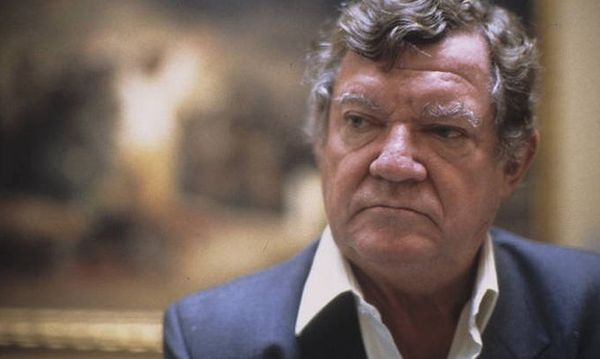
Remembering the great and irreplaceable, Robert Hughes: 1938-2012

Ken Tucker writes: Robert Hughes, not only one of the greatest art critics, but one of the greatest critics in any medium, has died. He was 74. The Australian-born Hughes was the art critic for Time Magazine starting in 1970, the author of the bestselling history of Australia, The Fatal Shore, and was the writer, producer, and star of one of the finest television documentaries ever aired: The Shock of the New, first broadcast in 1980.
Hughes had a rugged pug face, a resonant voice that could hypnotize you when he narrated or lectured, and was a fiercely combative critic with strong opinions about beauty, the art market, and artists’ technical skills. He had little use for an awful lot of modern art, or what he describes here, in a clip from Shock of the New, as stuff such as “a videotape of some twit from the University of Central Paranoia”:
First broadcast by the BBC and in this country on PBS, The Shock of the New was, for me, a shock on a couple of levels. I’d never seen such a forcefully argued documentary on television; I’d never heard art explained with such clarity; I’d never felt such joy absorbing invective mingled with praise emanating from such a curt, dashing fellow.
What Hughes demonstrated so effectively was that television, in the right hands (which might not be easy to find), was a medium with a much greater capacity than to merely entertain; that it could cultivate and express intelligence. Unfortunately, that capacity has never much overlapped with its even greater capacity: to turn a profit and exploit the tradable value of stupidity.
Here’s the first episode of The Shock of the New. Don’t be put off by the cheesy synthesized music accompanying the titles — in those days the state-funded BBC worked on a tight budget.
Peter Coster writes: Robert Hughes took a long time dying. Not in the Calvary Hospital in New York on Monday. That was the end of a road bearing a cross he carried from a near-fatal car crash in Western Australia.
It was as he lay broken in the wreckage 13 years ago that the art critic and historian first saw death.
This brilliant son of a transplanted Irish Catholic family that achieved so much in Australia saw Death “sitting at a desk like a banker. He made no gesture, but he opened his mouth and I looked right down his throat, which distended to become a tunnel”.
Hughes said it led to the inferno of old Christian art.
He was grievously hurt in that car crash on what seemed an empty road in the Outback when his car and another somehow collided. Had they not seen each other? Were the drivers drunk?
Close to death, on life support, Hughes endured many operations. Catholics never escape their Catholicism, and Hughes thought he experienced a descent into hell as he lay in the wreckage of his car, his flesh torn by demons.
A handsome, powerful hunk of a human being, he was reduced to a shambling wreck as he staggered on over the next 13 years to die, like Christ at Calvary.
The analogy would not have escaped him, knowing the hospital in the Bronx was where life was likely to end.
He had limped away from Australia on sticks, but as always he returned to the country that made him and of which he wrote with such honest clarity.
Australia, too, came from a hell in its convict past, as Hughes wrote in The Fatal Shore, his history of the beginnings of Australia as a convict settlement that was born anew.
Hughes was not some effete to turn his nose away from the taint of the past. But Australia was also a place he had to leave to understand by seeing the world. It was also why he returned.
He hated the Australia that hurt him, but he recovered, though not from his wounds.
The flesh was weak, but the spirit still strong. He was a crumbling figure, a broken Toby Jug, when he was signing his book on the tempestuous Spanish artist Goya while speaking at a Melbourne art gallery.
I asked what he thought of the tens of millions of dollars being splashed then by hedge-fund manipulators and art ignoramuses on the great paintings of the world.
He was in pain, not entirely from his injuries. His great head shook. His cheeks reddened. He described the billionaire buyers of art as investment as “raw” people. He might have been talking about meat. He roared that putting great art before them was “like putting a bucket of blood in front of a pack of dingoes”.
Video: Analysing Obama’s track record
Obama more sympathetic to Israelis killed in Bulgaria than to Sikh Americans murdered in Wisconsin
Ali Abunimah writes: As soon as news came of a bomb attack that killed Israeli tourists in Bulgaria on 18 July, US President Barack Obama condemned it in the most strident terms – even though, then, as now, the perpetrator and his motive remain unknown.
Obama’s statement left no room for ambiguity:
I strongly condemn today’s barbaric terrorist attack on Israelis in Bulgaria. My thoughts and prayers are with the families of those killed and injured, and with the people of Israel, Bulgaria, and any other nation whose citizens were harmed in this awful event. These attacks against innocent civilians, including children, are completely outrageous. The United States will stand with our allies, and provide whatever assistance is necessary to identify and bring to justice the perpetrators of this attack. As Israel has tragically once more been a target of terrorism, the United States reaffirms our unshakeable commitment to Israel’s security, and our deep friendship and solidarity with the Israeli people.
Such sentiments at the killing of innocent people are understandable. But why has Obama so far refused to condemn in equally strong terms Wade Michael Page’s murderous rampage that killed six people at the Sikh Temple in Oak Creek, Wisconsin yesterday? [Continue reading…]
State Dept and Pentagon form Syria prayer circle
The byline on the NBC News report below says Andrea Mitchell and Catherine Chomiak. I’ll assume Chomiak wrote it and Mitchell provided a veteran reporter’s oversight. “Now take care, we don’t want this to sound too much like Iraq. Make sure no one gets the idea that the US is planning an invasion and occupation.” I’m imagining Mitchell offered a tip like this, and that’s why, deep into the report a reference to the opposition comes out as “occupation.”
Besides planning for a major influx of additional refugees into neighboring states — a real likelihood that demands to be addressed by adequate planning and funding — the rest of this planning for a post-Assad Syria sounds like Washingtonian wishful thinking. An array of fine ideas and total lack of any practical means through which the U.S. might play an instrumental role in seeing they could be implemented. Don’t get me wrong. It’s not as though I’m suggesting that it would be good if the U.S. actually had such power, but this looks like an Obama-esque PR exercise — the application of one of the lessons-learned from Iraq: the necessity for a post-regime collapse plan. But it skips over that little detail: the U.S. has no presence inside Syria and thus very little ability to control what happens after the fall of Assad even if this time there is a plan. It’s the bureaucrat’s security blanket: have strong documentation and then when others ask, what went wrong?, you can say: But we did have a very good plan.
Perhaps the phrase that most accurately captures the substance of this effort came when a State Dept spokesman said: “that’s certainly where our feelings are.”
The U.S. knows what it wants Syria to end up looking like and it’s going to pray in earnest that this might happen.
But what more tangible and immediate outcome might there be from this last-minute planning? The creation of a website in English and Arabic? The drafting of a “Syria roadmap”? I’m sure that will prove indispensable.
At the same time, have no doubt that anti-imperialist conspiracy theorists will be jumping all over this: the imperial blueprint for a NATO-controlled Syria. Hot stuff!
The State Department and the Pentagon are jointly working on plans for a post-President Bashar al-Assad Syria, NBC News has learned.
They hope to avoid the kind of implosion they believe occurred because of a lack of planning for post-Saddam Iraq.
The Bush administration’s decision to disband Iraqi security forces, made shortly after the U.S.-led invasion in 2003, was a catalyst for the bloody civil war that followed.
Critics said that decision, made by senior Pentagon officials and announced by the head of the U.S. occupation authority at the time, Paul Bremer, set loose tens of thousands of armed, disaffected young men.
The U.S. is indicating to the Syrian army that it does not want it to dissolve and those not directly involved in atrocities could be part of a successor regime.
State Department Spokesman Patrick Ventrell said at a daily press briefing Monday:
“What we’re focused on and our concern is that as the opposition comes together with the remaining elements of the regime that don’t have blood on their hands, that they create an inclusive Syria where the rights of all Syrians are respected. And so that’s our focus and that’s what we’re directly communicating to the opposition, and that’s certainly where our feelings are.”
U.S. officials also hope that civil servants and other Assad holdovers will work with an interim government to avoid the kind of vacuum that led to widespread civil disorder, looting, and ultimately to civil war in Iraq.
Officials believe it is only a matter of time before Assad is gone, one way or another — although they can’t predict when.
Deputy Secretary of State William Burns, a veteran in Middle East affairs, is in charge of the planning.
An activist takes a photo of buildings damaged by what activists say is shelling by forces loyal to Syrian President Bashar al-Assad, in Talbeiseh, near Homs, on Monday.
He is assisted by U.S. Ambassador to Syria Robert Ford, who had returned to Washington after diplomatic operations in Damascus were suspended in February.
Last week, Ford talked with Syria opposition leaders in Cairo.
Burns’ schedule includes two White House meetings Tuesday, likely indicating more inter-agency planning on the Syria crisis.
Secretary of State Hillary Clinton, traveling in South Africa on Monday, announced a day earlier that she will add a stop in Turkey to her overseas trip for meetings with Prime Minister Recip Tayyip Erdogan on the Syria crisis.
Part of the U.S. planning includes Pentagon contingency plans for NATO and Syria’s neighbors to help provide transportation, food and medical supplies to a potential flood of refugees — well beyond the current numbers — in case there is a total collapse of the Syrian regime.
A key component of the post-Assad plan: pressing the occupation [sic] not to inflict reprisals against Assad loyalists after he goes.
“When we talk to the opposition we’re very clear … revenge or reprisals are totally unacceptable,” Ventrell said Monday.
An all-American racist

Wade Michael Page, vocalist and guitarist in the band 'End Apathy' and suspected gunman in the Sikh temple shooting. Note Page's Confederate flag design guitar-strap and the Nazi flag draped behind his band.
I doubt it.
When a white man picks up a gun and slaughters a bunch of fellow Americans, the most predictable feature of the subsequent process through which everyone else tries to come to terms with what happened is that it will be seen as an isolated event. We will look at it through the narrow prism of the personal history of the gunman and his idiosyncratic pathology and refuse to acknowledge that the killing might also have been shaped by some of the darker contours of the surrounding culture.
In the case of Wade Michael Page, the suspect in the Sikh temple shootings that took place in Wisconsin yesterday, there are already a few indications that this time some cultural context becomes inescapable.
The Southern Poverty Law Center has already pointed out some of the white supremacist connections that surely say a great deal about why Page chose his targets.
The man who allegedly murdered six people at a Sikh temple in suburban Milwaukee yesterday, identified in media reports as Wade Michael Page, was a frustrated neo-Nazi who had been the leader of a racist white-power band.
In 2010, Page, then the leader of the band End Apathy, gave an interview to the white supremacist website Label 56. He said that when he started the band in 2005, its name reflected his wish to “figure out how to end people’s apathetic ways” and start “moving forward.” “I was willing to point out some of my faults on how I was holding myself back,” Page said. Later, he added, “The inspiration was based on frustration that we have the potential to accomplish so much more as individuals and a society in whole.” He did not discuss violence in the interview.
Page told the website that he had been a part of the white power music scene since 2000, when he left his native Colorado on a motorcycle. He attended white power concerts in Georgia, North Carolina, West Virginia and Colorado. At various times, he said, he also played in the hate rock bands Youngland (2001-2003), Celtic Warrior, Radikahl, Max Resist, Intimidation One, Aggressive Force and Blue Eyed Devils. End Apathy, he said, included “Brent” on bass and “Ozzie” on drums; the men were former members of Definite Hate and another band, 13 Knots.
In 2000, the Southern Poverty Law Center has found that Page also attempted to purchase goods from the neo-Nazi National Alliance, then America’s most important hate group.
The fact that many (most?) Americans are too ignorant to know the difference between a Sikh and a Muslim is reason, some observers infer, to think that Page wrongly believed the people he was killing were Muslims. But given the other indications of his racist xenophobia, it seems quite likely that Page bore equal animosity towards everyone who in his eyes did not look like an ‘American.’
If American xenophobia does not frequently express itself through mass murder on American soil, the tentacles of racism — particularly fear and hatred of Muslims — nevertheless spread far and wide.
Pastor John Hagee, Pastor Terry Jones, Robert Spencer, Pamela Geller, Sam Harris, Frank Gafney, David Yerushalmi, Daniel Pipes, Steven Emerson, Geert Wilders, Michael Savage — all would no doubt disavow Page’s action, yet they share a kind of spiritual kinship. At one end of the spectrum are those who can apply varying degrees of intellectual sophistication to soften the edges of their fear of Islam and to dampen the flames of hatred with what appears like cool rationality. Yet the underlying message they promote is that Islam is a pathogen and individual Muslims are infecting America.
Once in a while this message gets translated into physical action as individuals such as Wade Michael Page take it upon themselves to engage in a barbaric act of ‘cultural defense.’ And at such moments all attention turns to the brutality on display while very little goes to the tendrils of the mycelium through which the fungus of hatred permeates this society.
Where pluralism has demanded that Americans broaden their knowledge of the world, instead political correctness has provided effective tools through which hatred can be kept alive, yet largely out of sight.
American racists have found it much easier to change the way they talk than change the way they think. And while Page most likely, in his actions, speaks for far too many, unlike him, most of them will continue to harbor their hatred in silence.
Assad’s premier defects — then gets fired
The state-run Syrian Arab News Agency reports:
President Bashar al-Assad on Monday issued Decree No 294 on dismissing Prime Minister Riyad Hijab from his post.
The President issued Decree No. 295 on designating Eng. Omar Galawanji as a caretaker premier.
Each time there is a major defection and a new crack opens in the crumbling Assad regime, we witness the same chirade: the defector flees, then gets fired. The sad thing is that as farcical as this might look from outside Syria, Assad is probably correct in believing that a segment of the population believe the lies they continue being fed.
BBC News reports: Syrian Prime Minister Riad Hijab has defected from President Bashar al-Assad’s government to join “the revolution”, his spokesman says.
Mr Hijab was appointed less than two months ago and his departure is the highest-profile defection since the uprising began in March 2011.
His family is reported to have fled Syria with him.
Riad Hijab is a Sunni Muslim from the Deir al-Zour area of eastern Syria which has been caught up in the revolt.
His spokesman Mohammed el-Etri told al-Jazeera TV that he was in a safe location.
“I announce today my defection from the killing and terrorist regime and I announce that I have joined the ranks of the freedom and dignity revolution,” ran the statement read by his spokesman.
Mr Hijab is the first cabinet minister to defect. The BBC’s Dale Gavlak in Jordan says the development underscores the cracks in the regime which are reaching beyond military ranks.
Unconfirmed reports suggested that two other cabinet ministers had also deserted and there were claims that a third, Finance Minister Mohammad Jalilati, had been arrested while trying to flee.
But Syrian state TV said he was still in his office working as usual, and it broadcast what it said was a phone interview with Mr Jalilati categorically denying reports that he had been detained.
I imagine a phone interview was all he could give. There’d be no point having him appear on TV reading a statement while a revolver’s pointed at his head.
Reuters adds: A senior Syrian intelligence officer has defected to Jordan, Al Arabiya television reported on Sunday.
It said Colonel Yarub Shara was head of the Damascus branch of Political Security, an intelligence organization responsible for monitoring and suppressing dissent.
Israel’s envoy to U.S. blames Iran for Sinai attack, but evidence is lacking

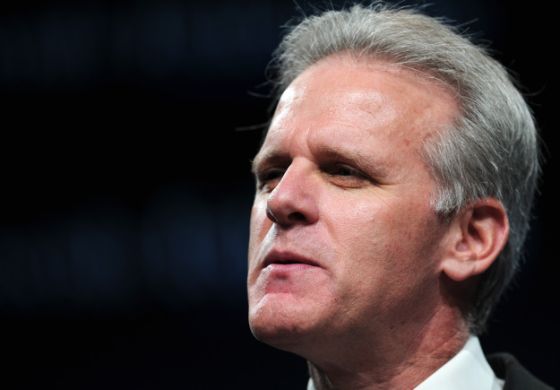
Michael Oren with lips pursed. Something's rolling around on his tongue. Did he just cough up some phlegm or come up with his latest lie?
I know it’s one of the most worn-out jokes in existence but never more true than when applied to Israel’s ambassador to the US. How can you tell when Michael Oren is lying? You can see his lips move.
At Haaretz, Barak Ravid writes:
Israel’s ambassador to the U.S Michael Oren, who is no stranger to gaffes, provided yet another strange headline on Sunday. Only hours after the attack on the Kerem Shalom crossing, before the fog of war had time to dissipate, the ambassador announced on his Twitter account that Iran was behind the assault.
“Iranian backed terrorists again struck at our Southern border today killing 15 Egyptian guards and attempting to massacre Israeli civilians,” Oren wrote in a Twitter post. On his Facebook page he wrote that “terrorists also shelled Israeli farms and towns along the border… the thwarted attack underscores the length to which the extremist regime in Iran will attempt to kill innocent Israelis.”
It is unclear what prompted Oren to release these statements, as it is clear he was in no possession of evidence linking Iran to the attack. Just how unfounded these allegations are was further underscored by a briefing given Monday morning by Defense Minister Ehud Barak at the Knesset Foreign Affairs and Defense Committee. In the briefing, Barak said the insurgents were operatives in an organization affiliated with Al-Qaida, “apparently some kind of global Jihad, with unclear connections.”
Oren’s gaffe brings to mind a statement made last month by his boss, Prime Minister Benjamin Netanyahu – shortly after the terror attack in Burgas, Bulgaria. While it was still unclear whether the attack was carried out by a suicide bomber or caused by hidden explosives, Netanyahu wasted no time in pointing a finger at Iran. A day later Netanyahu corrected himself, saying Hezbollah was behind the attack. It is worth noting, however, that two weeks after the Bulgaria attack, Israeli, Bulgarian and U.S. officials are still searching for a lead on the identity of the perpetrator.
Like Netanyahu, Oren’s statements on Twitter and Facebook are part of an Israeli propaganda campaign aimed at smearing Iran’s image. Yet like everything in life – it is all about dosage. Sometimes the urge to galvanize the world against the Iranians can lead to nothing more than baseless exaggerations.
Key advisor to Supreme Leader may seek Iran presidency
Laura Rozen writes: Ali Akbar Velayati, the longtime foreign policy advisor to Iran’s Supreme Leader Ayatollah Ali Khamenei, is likely to run for Iran’s presidency next year, and if elected would take a more pragmatic stance to ease soaring tensions with the West that have isolated Iran and hurt its economy, a former Iranian diplomat told Al Monitor.
The former diplomat and academic, who plans to advise Velayati, a longtime family friend, if he does run, asked not to be named in a piece. He spoke to Al Monitor in an interview Friday, as Iranians were trying to analyze press reports showing the United States increasing its muscular rhetoric in an effort to stave off any possible Israeli unilateral strike against Iran. Iran does not fear an Israeli attack, the former diplomat said, but does feel the impact of economic sanctions and takes the prospect of possible future US military action more seriously.
The former diplomat expressed optimism that Iran would reach a negotiated solution with the West over its nuclear program by June of next year, when Iranian presidential elections are due to be held. He also said the Iranian foreign ministry may take a larger role in handling Iran’s negotiations with the P5+1 over its nuclear program in the future.
The larger message the former diplomat conveyed is that Khamenei, at 73, does not want the end of his legacy in Iranian history books to be having brought economic hardship to the Iranian people. The sanctions are hurting Iran and Iranians, including in the fall of the Iran’s currency, the rial, to 20,000 to the dollar last week. Iran also recognizes that Syria’s Bashar al-Assad will eventually be toppled in Syria, the former diplomat said, but said whatever future leadership comes to power in Syria will maintain ties with Tehran. (Among economic reasons he cited, Iranian pilgrims bring Syria $2 billion in annual revenues, and Syria needs Iranian oil and gas, he said.) [Continue reading…]
Concern rises among Palestinians for their relatives in Syria
McClatchy reports: For the Hafeiz family in Ramallah, the violence raging in Syria is just a computer click away.
The youngest members of the family, who are descended from Palestinian refugees who fled central Israel in 1967, are divided between Jordan, Syria and the West Bank. They’ve always relied on email and Skype to keep in touch, but since violence broke out in Syria more than a year ago, the computer has become a lifeline.
“I have their email passwords and they have mine. It’s a way of checking up on each other – the ones who can still use computers, at least,” said Sami Hafeiz, a 22-year-old student in Ramallah. “They are very active online.”
He showed McClatchy Newspapers some of the recent conversations he’d held with his cousins.
“You see here, they are worried about food, and medicine for our uncle. They write here about trying to get out, but it is impossible,” he said, scrolling through the older messages. “Some of them have now joined the fighting, others have not.”
The fate of some 500,000 Palestinian refugees currently living in Syria has recently become more perilous, as the violence that has raged in Syria for more than a year finally reached the doorstep of some of that country’s largest Palestinian refugee camps.
Last month, the Yarmouk refugee camp just south of Damascus became a focus of fighting after forces loyal to President Bashar Assad used live ammunition to disperse a demonstration, killing dozens; on Thursday, mortar rounds struck near the camp, killing 20 people, according to the United Nations Relief and Works Agency, the international agency with responsibility for providing services to millions of Palestinian refugees throughout the Middle East. The U.N. agency said it did not know how many of the casualties were Palestinian, however.
“There were Palestinians killed in the fighting before, but this is when they realized that Assad was not going to spare them,” Hafeiz said.
The advocacy group Human Rights Watch has noted that Palestinians have increasingly picked up arms and joined the rebel Free Syrian Army. Exact numbers are unknown, but in recent months lists of casualties published by anti-Assad groups include dozens of Palestinians. Col. Kassem Saadeddine, a spokesman for the Free Syrian Army, told a Lebanese newspaper that “Palestinians are fighting alongside us, and they are well trained.” [Continue reading…]
Reuters adds: An aid convoy left the West Bank city of Ramallah on Sunday carrying food and medicine in a symbol of support for Palestinian refugees caught up in the crisis in Syria.
“Today the first convoy will leave from here, from the West Bank, from Palestinian soil towards Syria,” Palestinian President Mahmoud Abbas said at a press event marking the event.
An official donations drive netted around $650,000 worth of food and medical aid from Palestinian companies, businessmen, and individuals during the charitable month of Ramadan.
A one percent cut of salaries from the Palestinian Authority’s cash-strapped public sector went toward the convoy.
Syria — Faith in the future?
BBC Radio Wales: The news from Syria gets bleaker by the day. More than a hundred thousand have already fled as refugees, the killing continues, and Kofi Annan resigns as UN peace envoy, declaring the diplomatic task impossible in the present situation.
Syria has a rich mosaic of spiritual traditions, including some of the earliest of all Christian churches: but for how much longer? What future is there for religious minorities if the regime falls? And to what extent is religion a factor in this conflict?
Roy Jenkins is joined by four people with personal experience of Syria: Dr Harry Hagopian, international lawyer and consultant, and former Assistant General Secretary of the Middle East Council of Churches; the Rev Nadim Nassar, the only Syrian priest in the Church of England, and director of the Awareness Foundation, an educational charity founded in response to religious conflict around the world; British/Syrian journalist Robin Yassin-Kassab, author of The Road From Damascus and co-editor of the quarterly magazine The Critical Muslim; the Rev Christopher Gilham, a Congregational minister in Pembrokeshire who has made many visits to Syria over the years, and retains strong links with the country.
This broadcast lasts 30 minutes:
Collapse or decentralization for Syria?
Rami G. Khouri writes: Amid the many scenarios for Syria are two widely discussed possibilities: that President Bashar Assad will respond to his imminent collapse by retreating with his Alawite compatriots to an Alawite mini-state in the northwestern coastal area of Syria; and that Syria will fragment into a series of smaller entities based on ethnicity and religion – Kurdish, Druze, Alawite, Sunni, Christian and so on.
I suspect that both of these dire expectations are wrong, though each carries within it a hint of what is possible, not only for Syria but also for much of the Arab world. In between the centralized police and welfare state and a collapse into fragmented ethnic statelets may be a more feasible and appropriate third way, one that is based on strong decentralization of regional power and identity within a looser national superstructure.
This might be an appropriate governance model for much of the Arab world, whose own citizens have never had the opportunity to shape their countries’ borders, values or policies. I am assuming that many of the Arab world’s troubles reflect a critical lack of legitimacy and natural cohesion, which has allowed so many states to fall into the hands of individuals and families that passed on rule, or intended to do so, as a personal inheritance, regardless of the will of the citizenry (Hafez Assad, Saddam Hussein, Ali Abdullah Saleh, Moammar Gadhafi, Omar Hassan Bashir, a dozen or so Lebanese families, not to mention the hereditary principle in a handful of monarchies).
Chronic autocracy in the Middle East has led to many other deficiencies and distortions that have defined our countries for generations. These include exaggerated militarism, economic frailty, recurring political violence, profound national vulnerability, corruption, lack of citizen participation in public life, and mass pauperization in the non-oil-producing states.
Syria is a perfect example of all that ails the modern Arab world, and it is no surprise that now is its turn to offer us pictures of tanks and jet fighters bombing civilian quarters of ancient cities, as the central government’s authority over the land shrinks.
In Syria and elsewhere, the past century of Arab statehood has been a tale of state birth and formation in the early decades, rapid socio-economic development in the middle of the last century, then the start of a downward cycle in the 1970s that included oil-fuelled massive distortions, consolidation of security-dominated and family-dominated leaderships for life, and wars and civil strife, which involved domestic forces, regional states and foreign powers alike.
The violent end of the Assad regime in Syria will give the citizens of that country the opportunity to configure their country’s institutions of governance according to their own values, identities and priorities, as Tunisians, Egyptians, Yemenis and Libyans have started to do. This process of national self-determination usually occurs when states are born, not a century later, though this is one of the peculiarities of modern Arab history, with its colonial heritage and the stultifying impacts of the Arab-Israeli conflict, the oil boom and the Cold War. [Continue reading…]
How Russia continues to fool much of the world about its position on Syria
Colum Lynch writes: The resignation of Kofi Annan as the U.N.-Arab League joint envoy to Syria on Aug. 2 effectively marks the end of U.N.-led diplomatic efforts to persuade President Bashar al-Assad to leave office peacefully, setting the stage for a new and deadlier phase of the Syrian crisis and heightening pressure on the United States and its allies to now step up military support for an armed opposition movement that they don’t know well or entirely trust. But it also raises questions as to what extent the United States ever believed the peace process would succeed and whether it misplayed its hand in attempting to convince Syria’s longstanding Russian ally to back a cessation of violence and Assad’s removal from power. In explaining his refusal to approve a Chapter VII resolution threatening sanctions against Syria and opening the door to additional unspecified measures, President Vladimir Putin told Annan in a closed-door meeting in Moscow: “We have been bitten by the West before, and we won’t let it happen again,” according to an account by a diplomat present at the meeting.
From the earliest stages of the Syrian uprising, the Obama administration harbored reservations about the wisdom of confronting Russia at the U.N., anticipating that Moscow would block any meaningful action to pressure Assad. But with little stomach for intervening militarily in Syria, the administration ultimately backed a European- and Arab-led drive to pursue Assad’s negotiated departure through the United Nations while publicly denouncing Russia for protecting a dictator. Some observers charge, however, that the U.N. strategy ultimately provided diplomatic cover for an administration in Washington that feared getting embroiled in another Middle Eastern war.
“Washington’s primary goal has been to avoid getting dragged into a military operation in Syria,” said Richard Gowan, an analyst at New York University’s Center for International Cooperation. “And to some extent the high-profile diplomatic clashes with the Russians let the Americans look tough and active but without them actually having to invest militarily. In a sense, the angry diplomacy of the Security Council has been an alibi for military inaction in Syria.”
Indeed, the Obama administration has been widely criticized for proceeding too cautiously in its response to the Arab Spring, and even today it continues to resist calls to arm the opposition, limiting its support to humanitarian assistance, communications equipment, and intelligence, much of it channeled through Jordanian and Turkish agents. Earlier this year, President Barack Obama signed a “finding” authorizing the CIA to provide indirect military support for the rebels, but the administration has refused to provide lethal assistance, according to news reports this week.
It has been almost a year since Obama first called on Assad to “step aside,” proclaiming “the future of Syria must be determined by its people.” But his strategy for dislodging the Syrian leader — which hinged in large part on a U.N. diplomatic effort to push Assad out voluntarily — finally ran aground in the Security Council last month, leaving Assad clinging to power and raising the prospect that Syria’s fate will be settled on the battlefield. How did we get to this point?
The story begins not in Syria, where protests broke out in earnest in March 2011, but in Benghazi, Libya, where the late Libyan leader Muammar al-Qaddafi, was poised to deliver a decisive blow to the insurgency, raising fear among Arab and Western governments that thousands of civilians could be slaughtered in the process. “We are coming tonight,” Qaddafi warned on state television as his forces prepared for their final assault. Buoyed by a call for action from Libya’s own diplomats, the United States and its European and Arab allies drove through a resolution that granted NATO sweeping powers to protect civilians from imminent threat of violence. Confronted with support from the Arab League and the African Union, China and Russia grudgingly allowed the resolution to pass, casting abstentions along with Brazil, Germany, and India. But Russia and other critics reacted angrily after NATO and a handful of Arab countries entered the conflict on behalf of the rebels, targeting the Qaddafi family’s homes from the air, while providing intelligence – and, in some cases — arms to the insurgents. Even South Africa, which had voted in favor of the resolution, complained that NATO had overreached.
The dispute would poison the atmosphere in the Security Council just at a time when it was seeking to forge an agreed response to the violence in Syria. Libya “did create some bad blood” which has spilled over into the deliberations on Syria, Russia’s U.N. envoy Vitaly Churkin told me back in January. “The worst way to achieve [your] goal in the Security Council is to mislead and manipulate…. We are going to have a tougher look at all of the sort of draft resolutions we are considering in the Security Council because we have to take now into account the scope of misinterpretation.” [Continue reading…]
The idea that Russia was misled and manipulated into allowing a NATO intervention in Libya which, had they foreseen the manner of its implementation, they would have opposed, is a narrative that has been widely accepted. The Russians were tricked but they are not going to let that happen again. This is a line that has been swallowed whole by most of the opponents of the intervention in Libya.
The problem is, if the Russians truly were misled, then why didn’t they vote in favor of UN Resolution 1973? In fact, they were unwilling to support the resolution and merely refrained from exercising their veto power. The fact that they and China abstained suggests that their primary concern was to avoid the diplomatic repercussions of being seen in the eyes of the world as having allowed Gaddafi to conduct an unrestrained assault on Benghazi.
Then as now, Russia is no different from any other country in pursuing what it sees as its own interests. The idea that Russia has become the champion of sovereignty and serves as a healthy restraint on US manipulation of the UN should be treated with just as much skepticism as America’s claim that it is a champion of democracy.
Video: Syrian rebels say hostages ‘Iranian soldiers’
Assad using cluster bombs on Syrian civilians, says Human Rights Watch
International Business Times reports: Human Rights Watch has confirmed for the first time claims that the Syrian government has used cluster bombs against its civillian population during the 17-month conflict.
“We have been able to verify the use of cluster bombs,” Nadim Houry, regional Deputy Director of Human Rights Watch, told the International Business Times in Beirut, Lebanon.
The verification comes before the third meeting of states parties to the Convention on Cluster Munitions, to be held in Oslo, Norway, on September 11.
Houry added that there was no evidence of cluster bomb use in the ongoing major clashes in Syria’s biggest city and commercial hub, Aleppo.
Turkey: 115 Kurdish rebels killed in offensive
The Associated Press reports: Turkey’s security forces have killed as many as 115 Kurdish rebels during a major security offensive over the past two weeks, the country’s interior minister said Sunday.
Idris Naim Sahin said the rebels were killed in an airpower backed offensive near the town of Semdinli, in Hakkari province which sits on the border with Iraq. He said the offensive began on July 23.
Sahin provided few other details on the ongoing operation but said the security forces were trying to block the rebels’ escape routes into northern Iraq.
Private NTV television said earlier that as many as 2,000 troops were taking part in the offensive and that public access to some roads in the area were blocked.
Earlier Sunday, Kurdish rebels raided three military posts in simultaneous attacks in Hakkari, sparking a clash at one paramilitary outpost that left six soldiers and 14 rebels dead. Two government-paid village guards assisting the Turkish military were also killed.
The Olympics as wonderful kitsch
Uri Avnery writes: To sum up the opening ceremony of the Olympic Games in one word: kitsch.
To sum up the opening ceremony of the Olympic Games in two words: wonderful kitsch.
Honest disclosure: I am an Anglophile.
At the age of 15 I started working for an Oxford-educated lawyer. At the office only English was spoken. So I had to learn it, and immediately fell hopelessly in love with the English language and British culture in general.
Some may wonder at this, since at the same time I joined a terrorist organization whose aim was to fight the British and drive them out of Palestine.
Soon after my 15th birthday I faced the admission panel of the Irgun. I was asked if I hated the British. Facing the beam of a powerful projector, I answered: no. Sensing the consternation on the other side of the blinding light, I added that I wanted to liberate our country, and did not need to hate the British to do that.
Actually, I think that most Irgun fighters felt like that. The nominal Commander in Chief, Vladimir (Ze’ev) Jabotinsky, was an ardent anglophile and once wrote that the Englishman in the colonies was a brutal oppressor, but that the Englishman at home was a decent and likeable fellow. When Great Britain declared war on Nazi Germany, Jabotinsky ordered the immediate cessation of all Irgun actions. The Irgun’s military commander, David Raziel, was killed by a Nazi bomb while assisting the British in Iraq.
His successor, Menachem Begin, came to Palestine with the Polish exile army, in which he served as a Polish-English interpreter. In this capacity he was often in contact with the British authorities. He once told me how he brought documents to British officers in the King David hotel, the building which he later – as Irgun commander – ordered to be bombed. Years later, the Queen graciously received him as Prime Minister of Israel.
Altogether, we had the feeling that we were lucky to be fighting the British, and not, say, a French or American (not to mention Israeli) occupation regime.
After this confession, another one: I am not a sports enthusiast. Actually, I have no sense for sport at all.
Even as a child, I was the worst in gymnastics class. A good book always attracted me more than an exciting football game. My father treated sport as “goyim-naches” – Pleasure for Goyim. (Naches in Yiddish is derived from the Hebrew word Nakhat, pleasure or satisfaction.
But back to the Olympics. In the summer of their discontent, the British produced something unique: original, exciting, surprising, moving, humorous. I laughed when Her Majesty jumped out of the helicopter, I almost shed a tear when the handicapped children sang “God Save The Queen”.
But let us go beyond the pomp and circumstance. Do the Olympic games have a deeper significance? I think they do.
Konrad Lorenz, the Austrian professor who researched the behavior of animals as a basis for understanding human behavior, asserted that sports are a substitute for war.
Nature has equipped humans with aggressive instincts. They were an instrument for survival. When resources on earth were scarce, humans, like other animals, had to fight off intruders in order to stay alive.
This aggressiveness is so deeply imbedded in our biological heritage that it is quite useless to try to eliminate it. Instead, Lorenz thought, we must find harmless outlets for it. Sport is one answer. [Continue reading…]
Visualizing occupation: freedom of movement
An infographic produced by Michal Vexler that shows the administrative barriers that Israel maintains preventing Palestinians in the West Bank from access to the Mediterranean, which, absent all the obstacles would be less than an hour’s drive away: Continue reading