



Michael Shermer writes: It is the oldest and most universally recognized moral principle, codified more than 2,000 years ago by the Jewish sage Hillel the Elder: “Whatsoever thou wouldst that men should not do to thee, do not do that to them. This is the whole Law. The rest is only explanation.” The explanation of morality was the subject of intense theological and philosophical disputation well before Hillel, of course, and has been ever since. Lately scientists have begun weighing in with naturalistic views of the matter, and now their cause has been joined by Paul J. Zak with The Moral Molecule and Christopher Boehm with Moral Origins.
Mr. Zak, an economist and pioneer in the new science of neuroeconomics, has built his reputation on research that has identified the hormone oxytocin as a biological proxy for trust. As he documents, countries whose citizens trust one another gain economically, enjoying a higher gross domestic product, on average, than countries where lower levels of trust exist. Mr. Zak explains that trust is built through mutually beneficial exchanges that result in higher levels of oxytocin.
How does he know this? By studying blood samples taken from participants in economic-exchange games administered by researchers as well as from people in real-world encounters. “The Moral Molecule” is an engaging popular account of Mr. Zak’s decade of intense research into how oxytocin evolved for one purpose—pair bonding and attachment in social mammals—but had the bonus effect of cementing a sense of trust among strangers.
The problem to be solved here is why strangers would be nice to one another. Evolutionary “selfish gene” theory accounts for why we would be nice to our kin—they share our genes, so being altruistic and moral has an evolutionary payoff in our genes being indirectly propagated into future generations. The theory of kin selection explains how this works, and the theory of reciprocal altruism—I’ll scratch your back if you’ll scratch mine—goes a long way toward explaining why unrelated people in a social group would be kind to one another: My generosity to you today, when my fortunes are sound, may pay off down the road if life is good to you and my luck has run out. What Mr. Zak has so brilliantly done is to identify the precise biological pathways through which this behavior system evolved and operates today. [Continue reading…]
Salon: When Anonymous posted some 40,000 emails of the HBGary’s computer security executive Aaron Barr — as detailed in this story — the emails revealed a proposed campaign by several security firms to take on Wikipedia and its supporters on behalf of Bank of America. The campaign also included a plan to pressure and attack journalists, including Salon’s Glenn Greenwald. Read Glenn on the proposed smear campaign here, and PowerPoint slides detailing the specifics of the attack can be seen here.
Excerpted from “WE ARE ANONYMOUS: Inside the Hacker World of LulzSec, Anonymous, and the Global Cyber Insurgency” by Parmy Olson.
Across America on February 6, 2011, millions of people were settling into their couches, splitting open bags of nachos and spilling beer into plastic cups in preparation for the year’s biggest sporting event. On that Super Bowl Sunday, during which the Green Bay Packers conquered the Pittsburgh Steelers, a digital security executive named Aaron Barr watched helplessly as seven people whom he’d never met turned his world upside down. Super Bowl Sunday was the day he came face-to-face with Anonymous.
By the end of that weekend, the word “Anonymous” had new ownership. Augmenting the dictionary definition of being something with no identifiable name, it seemed to be a nebulous, sinister group of hackers hell-bent on attacking enemies of free information, including individuals like Barr, a husband and a father of twins who had made the mistake of trying to figure out who Anonymous really was.
The real turning point was lunchtime, with six hours to go until the Super Bowl kickoff. As Barr sat on the living room couch in his home in the suburbs of Washington, D.C., dressed comfortably for the day in a T-shirt and jeans, he noticed that his iPhone hadn’t buzzed in his pocket for the last half hour. Normally it alerted him to an email every 15 minutes. When he fished the phone out of his pocket and pressed a button to refresh his mail, a dark blue window popped up. It showed three words that would change his life: Cannot Get Mail. The email client then asked him to verify the right password for his email. Barr went into the phone’s account settings and carefully typed it in: “kibafo33.” It didn’t work. His emails weren’t coming through.
He looked down at the small screen blankly. Slowly, a tickling anxiety crawled up his back as he realized what this meant. Since chatting with a hacker from Anonymous called Topiary a few hours ago, he had thought he was in the clear. Now he knew that someone had hacked his HBGary Federal account, possibly accessing tens of thousands of internal emails, then locked him out. This meant that someone, somewhere, had seen nondisclosure agreements and sensitive documents that could implicate a multinational bank, a respected U.S. government agency, and his own company.
One by one, memories of specific classified documents and messages surfaced in his mind, each heralding a new wave of sickening dread. Barr dashed up the stairs to his home office and sat down in front of his laptop. He tried logging on to his Facebook account to speak to a hacker he knew, someone who might be able to help him. But that network, with his few hundred friends, was blocked. He tried his Twitter account, which had a few hundred followers. Nothing. Then Yahoo. The same. He’d been locked out of almost every one of his Web accounts, even the online role-playing game World of Warcraft. Barr silently kicked himself for using the same password on every account. He glanced over at his Wi-Fi router and saw frantic flashing lights. Now people were trying to overload it with traffic, trying to jam their way further into his home network.
He reached over and unplugged it. The flashing lights went dead. [Continue reading…]
The New York Times reports: One young Tibetan monk walked down a street kicking Chinese military vehicles, then left a suicide note condemning an official ban on a religious ceremony. Another smiled often, and preferred to talk about Buddhism rather than politics. A third man, a former monk, liked herding animals with nomads.
All had worn the crimson robes of Kirti Monastery, a venerable institution of learning ringed by mountains on the eastern edge of the Tibetan plateau. All set themselves on fire to protest Chinese rule. Two died.
At least 38 Tibetans have set fire to themselves since 2009, and 29 have died, according to the International Campaign for Tibet, an advocacy group in Washington. The 2,000 or so monks of Kirti Monastery in Sichuan Province have been at the center of the movement, one of the biggest waves of self-immolations in modern history. The acts evoke the self-immolations in the early 1960s by Buddhist monks in South Vietnam to protest the corrupt government in Saigon.
Twenty-five of the self-immolators came from Ngaba, the county that includes Kirti; 15 were young monks or former monks from Kirti, and two were nuns from Mame Dechen Chokorling Nunnery.
Chinese paramilitary units are now posted on every block of the town of Ngaba, and Kirti is under lockdown. Journalists are barred from entering the monastery, which has made the question of how Kirti became the volcanic heart of this eruption of self-immolations something of a mystery.
But monks and laypeople from Ngaba who have fled across the Himalayas to this Indian hill town said that Kirti had been radicalized in the last four years by an occupation of the monastery that amounted to one of the harshest crackdowns in Tibet. Chinese security measures have converted the white-walled monastery, with its temples and dormitories and rows of prayer wheels, into a de facto prison, which has fueled the anger that the measures are aimed at containing.
Patrick Cockburn writes: Damascus feels like a city expecting the worst to happen and seeing no way to avoid it. War is spreading across the country and is unlikely to spare the capital. Rebels speak of stepping up attacks in the city and could easily do so in the next few weeks.
I spent the last week in Damascus and the atmosphere reminds me of Beirut in 1975 at the start of the 15-year civil war. Again and again in conversations, people realistically laid out for me the nasty things that are all too likely to happen, but few were able to produce plausible ideas on how disaster might be averted.
“I wish people abroad would stop talking about a civil war starting here because it is still the people against the government,” said one committed member of the opposition as we sat in a café in Damascus (everybody I spoke to has to be nameless, for obvious reasons). She believed that it was only the heavy presence of the security forces that were suppressing mass popular protest in the days after the Houla massacre.
She may have been right, but in practice not a lot was happening. There was less traffic on the streets and foreign TV stations made much play of YouTube postings showing merchants shutting their shops in protest at the Houla slaughter. But, driving around Damascus, the strike’s success was difficult to judge since so many shops and restaurants are shut anyway because of the lack of tourists and the impact of sanctions.
The rebels could probably start a campaign of bombings and selective assassinations fairly easily in Damascus. This is not a sign that they are militarily strong, but it would be easy for a movement lacking arms and experienced fighters to spread instability by these means. The rebels can do this using as bases strongholds in and around the city such as Douma, which they more or less control.
None of this is good news for the people of Damascus since government retaliation and collective punishments are likely to be savage and sustained. It is depressing that Damascus, one of the more beautiful cities in the world, is on the edge of becoming the victim of the same sort of hatred, fear and destruction that have convulsed Beirut, Baghdad and Belfast over the past 50 years.
Sectarianism is deepening. Christians are fearful and are all too aware of what happened to their co-religionists in Iraq after 2003. Opposition members in Damascus often blandly blame the rise in sectarian fears on the authorities. “The government is just trying to frighten people,” said one Christian human rights activist. “People here have never had a problem with each other.” He pointed out that the French had tried to secure their imperial rule by exploiting communal and religious differences, but they had failed. [Continue reading…]
The Observer reports: A senior Syrian military officer has described how he defected to opposition forces after witnessing hundreds of pro-regime militiamen carry out the now infamous massacre of more than 100 civilians in the town of Houla one week ago.
The account of Major Jihad Raslan comes as the United Nations’ special envoy to Syria, Kofi Annan, yesterday warned of an increasing risk of imminent war in Syria. “The spectre of an all-out war with an alarming sectarian dimension grows by the day,” Annan told an Arab League gathering.
His concerns follow warnings delivered on Friday by the United States, Britain and the UN Human Rights Council, which voted overwhelmingly to condemn the Syrian regime for the Houla killings.
The killing of so many civilians, among them 49 children and at least 20 women, continues to galvanise international anger against regime officials and their loyalist militias, which have widely been blamed for what took place.
Raslan served until last Saturday in the Syrian Air Force in the strategically vital port city of Tartous. He had been in Houla on leave when the town was shelled just after 1pm last Friday, then invaded by a civilian militia, known as the Shabiha, in the worst single atrocity of the Syrian uprising.
The officer’s account to the Observer of what took place is among the most important of the testimonies to have emerged since the massacre, the aftermath of which appears to be causing fresh turmoil inside Syria 16 months after the first stirrings of revolt inspired by the Arab spring.
Raslan said he was in his house, around 300 metres from the site of the first massacre in the village of Taldous, when several hundred men whom he knew to be Shabiha members rode into town in cars and army trucks and on motorbikes.
“A lot of them were bald and many had beards,” he said. “Many wore white sports shoes and army pants. They were shouting: ‘Shabiha forever, for your eyes, Assad.’ It was very obvious who they were.
“We used to be told that armed groups killed people and the Free Syria Army burned down houses,” he said. “They lied to us. Now I saw what they did with my own eyes.”
He said the killings in his area were over in around 15 minutes. However, the rampage in other parts of Houla continued until the early hours of Saturday, according to eye-witnesses and survivors.
“Those victims who were slaughtered are people that I knew well,” Raslan said. “These children I knew well, personally. I ate with their families. I had social ties with them. The regime cannot lie about these people, who they were and what they did to them. It was a brutal act by the regime against people who were with the revolution,” he said.
Raslan said that he served on a missile base in Tartous, removed from the grinding everyday savagery of Syria’s uprising. “I knew they had been lying, but I had not been exposed to the effects of it. This was the first time I had seen anything like this.”
Paul McGeough writes: Grand Ayatollah Ali Sistani is rarely seen. The most revered spiritual leader for the world’s 170 million Shiite Muslims, he hardly ever speaks in public. Some 90 miles south of Baghdad, in Najaf, the seat of Shiite religious power, people say that in the last few years the 82-year-old Sistani has grown frail and relies increasingly on one of his sons to carry out his duties. “He’s a weak old man; soon he might have to go to London for more treatment,” a local student of religious politics says. (Like most who were interviewed for this report, the student wished to remain anonymous.)
As Sistani ages, a struggle to succeed him has begun, putting the spiritual leadership of one of the world’s foremost faiths in play. But with neighboring Iran moving to install its preferred candidate in the position, the secular political foundations of Iraq’s fledgling democracy are at risk. Consequently, what amounts to a spiritual showdown could pose a challenge to Washington’s hope for postwar Iraq to serve as a Western-allied, moderate, secular state in the heart of the Middle East.
Shia doctrine requires that an incumbent die before jockeying can begin in a succession process that is as opaque as it is informal. But Mahmoud Hashemi Shahroudi, the 64-year-old cleric who is widely seen as Tehran’s preferred choice, has jumped the gun by sending an advance party to open an office in Najaf. This cohort works from a dust-coated building, painted in banded tones of white and salmon, just a couple of blocks from Sistani’s office and home. On a recent visit, a scattering of shoes and sandals at the entrance suggested a gathering within, but a man who came to the door makes it clear: “We apologize, but we can’t meet any journalists.”
Without so much as setting foot in Najaf, Shahroudi is rolling out a sophisticated and expensive campaign — reputedly bankrolled by Tehran. Key to Shahroudi’s strategy has been luring Sistani and his followers into a costly bidding war for clerical loyalty. Clerics and seminarians are being offered an assortment of stipends, housing, and health services in the hope that they can be swayed.
A Najafi by birth, Shahroudi has lived much of his adult life in Iran. Under the patronage of Iran’s supreme leader, Ayatollah Ali Khamenei, he rose to the top tiers of Iran’s religious and political establishment. And in recent months Shahroudi has had several meetings with Iraqi Prime Minister Nouri al-Maliki, most recently in Tehran in April. According to sources close to the religious and political leadership in Baghdad, Shahroudi has already informed some key Iraqi officials that he is positioning himself to take the spiritual helm of Shia Islam.
“Without Khamenei’s support, he could not dream of doing this,” a diplomat from the region who is based in Baghdad, and who spoke on condition of anonymity, says. Because of Shahroudi’s stature in Iran, the diplomat says, he will always be seen as Tehran’s candidate: “It is [Iranian] money and authority that’ll make him Grand Ayatollah.”
Shahroudi’s challenge sets in conflict two opposing views of politics in Shiism. Iraqi Shiites have long held to the so-called quietist school of thought, a doctrine known more expansively as irshad wa tawjeeh, which translates as “guidance and direction” and is rooted in a sixteenth-century deal with the Persian monarchy by which the clerics of the day opted to remain above the political fray. Sistani’s interventions in the early days of the U.S. occupation of Iraq were arguably a glaring exception to quietest thinking, but the ayatollah’s singular objective at the time was to bend the will of the Americans in shaping a political process from which he and the clergy would ultimately step back. Now, Iraqis have had nearly a decade to judge contemporary application of Najaf’s quietist theory.
In Iran, however, the 1979 revolution gave holy men full control of the political process. Although more than three messy decades of Islamic rule have stripped the varnish from wilayat al-faqih, “guardianship of the Islamic jurists,” the revolutionary Ayatollah Ruhollah Khomeini’s constitutionally enshrined theory that God’s authority is vested in the supreme leader and senior religious scholars, Tehran continues to insist that politics be guided by faith. [Continue reading…]

Clive Stafford Smith writes: Last October I was at a jirga in Islamabad where 80 people from Waziristan had assembled to talk about the US Predator drones that buzz around overhead, periodically delivering death by Hellfire missile. A jirga is the traditional forum for discussing and resolving disputes, part parliament, part court of law. The turbaned tribal elders were joined by their young sons on a rare foray out of their region to meet outsiders and discuss the killing. The isolation of the Waziris is almost total – no western journalist has been to Miranshah for several years.
At our meeting I spoke as the representative westerner. I reported the CIA claim that not one single innocent civilian had been killed in over a year. I did not need to understand Pashtu to translate the snorts of derision when this claim was translated.
During the day I shook the hand of a 16-year-old kid from Waziristan named Tariq Aziz. One of his cousins had died in a missile strike, and he wanted to know what he could do to bring the truth to the west. At the Reprieve charity, we have a transparency project: importing cameras to the region to try to export the truth back out. Tariq wanted to take part, but I thought him too young.
Then, three days later, the CIA announced that it had eliminated “four militants”. In truth there were only two victims: Tariq had been driving his 12-year-old cousin to their aunt’s house when the Hellfire missile killed them both. This came just 24 hours after the CIA boasted of eliminating six other “militants” – actually, four chromite workers driving home from work. In both cases a local informant apparently tagged the car with a GPS monitor and lied to earn his fee. [Continue reading…]
David Sanger writes: In March the White House invited all the members of the Senate to a classified simulation on Capitol Hill demonstrating what might happen if a dedicated hacker — or an enemy state — decided to turn off the lights in New York City. In the simulation, a worker for the power company clicked on what he thought was an e-mail from a friend; that “spear phishing” attack started a cascade of calamities in which the cyberinvader made his way into the computer systems that run New York’s electric grid. The city was plunged into darkness; no one could find the problem, much less fix it. Chaos, and deaths, followed.
The administration ran the demonstration — which was far more watered-down than the Pentagon’s own cyberwar games — to press Congress to pass a bill that would allow a degree of federal control over protecting the computer networks that run America’s most vulnerable infrastructure. The real lesson of the simulation was never discussed: cyberoffense has outpaced the search for a deterrent, something roughly equivalent to the cold-war-era concept of mutually assured destruction. There was something simple to that concept: If you take out New York, I take out Moscow.
But there is nothing so simple about cyberattacks. Usually it is unclear where they come from. That makes deterrence extraordinarily difficult. Moreover, a good deterrence “has to be credible,” said Joseph S. Nye, the Harvard strategist who has written the deepest analysis yet of what lessons from the atomic age apply to cyberwar. “If an attack from China gets inside the American government’s computer systems, we’re not likely to turn off the lights in Beijing.” Professor Nye calls for creating “a high cost” for an attacker, perhaps by naming and shaming.
Deterrence may also depend on how America chooses to use its cyberweapons in the future. Will it be more like the Predator, a tool the president has embraced? That would send a clear warning that the United States was ready and willing to act. But as President Obama warned his own aides during the secret debates over Olympic Games [the Stuxnet operation], it also invites retaliatory strikes, with cyberweapons that are already proliferating. In fact, one country recently announced that it was creating a new elite “Cybercorps” as part of its military. The announcement came from Tehran.
Since cyberdeterrence looks like a non-starter, the U.S. should perhaps focus instead on a home truth: those who live in cyber houses shouldn’t throw cyber stones.
Al Jazeera reports: Thousands of people descended on Tahrir Square to protest on Saturday night, a spontaneous outpouring of anger after a Cairo court sentenced former president Hosni Mubarak to life in prison but acquitted a number of other former regime officials.
The verdict was initially met with euphoria: Egyptians celebrated upon hearing that Mubarak was convicted of complicity in the murder of more than 800 protesters during the Egyptian revolution in January of 2011. It was the first time an Arab head of state had been convicted, and a major accomplishment for the revolution which toppled Mubarak nearly 18 months ago.
But the joy was short-lived. Mubarak’s two sons, Gamal and Alaa, were acquitted of corruption charges, and several senior security officials were found not guilty of murder. Some had wanted Mubarak to face the death penalty; others appreciated the verdict, but expected it would be overturned on appeal.
So they flocked to Tahrir Square, the heart of last year’s revolution, to voice their frustration, not just with the verdict but with Egypt’s post-revolution military leadership.
“It’s garbage,” Najdi Mohamed el-Din said of the verdict. “And it has made us realize something. The revolution of January 2011? We need to do it again, and we need to do it until everyone who was with Mubarak is gone.”
More than 5,000 people had gathered in Tahrir before midnight, and some planned to spend the night. The atmosphere felt almost nostalgic, as if protesters were reliving their roles from last year’s revolution. Many vowed not to leave the square until their demands were met.
Yet they struggled to articulate what, exactly, those demands were, and there were moments of disunity inside the square. At one point, the April 6 youth movement tried to hoist its flag; other protesters demanded they lower it. An hour later, a heated argument among another group ended with several men beating each other with folding chairs.
Several prominent politicians visited the square on Saturday night. Hamdeen Sabahi, the defeated leftist presidential candidate, was the first to appear, to an energetic welcome. “You are the president in our hearts,” some protesters chanted. Abdel Moneim Aboul Fotouh, the moderate Islamist candidate who placed fourth in last month’s presidential election, also made an appearance.
So did Mohammed Morsi, the Muslim Brotherhood’s candidate and one of two contenders in the runoff election later this month. In a press conference before his visit, he tried to present himself as the revolutionary candidate. “There will be no fair elections, no fair trials, unless the revolution continues,” he said.
Yet his newfound praise for the revolution – the Brotherhood has historically kept its distance from the protests in Tahrir – failed to win him much support from the crowd in Tahrir. “The Brotherhood is coming?” one man asked sarcastically. “Where have they been?”
Nicolas Pelham writes: Beneath a golden canopy lined with frilly red tassels and vaulted with chandeliers, hundreds of militiamen from across Libya gathered at a security base in Benghazi, the launch pad of their anti-Qaddafi revolution, at the end of April and called for another uprising. After a lunch of mutton and macaroni, a nod to their former Italian masters, one belligerent revolutionary after another took to the podium to lambast Libya’s would-be governors, the National Transitional Council (NTC). “Thuwwar (revolutionaries) of Libya unite!” cried the chairman, beseeching his fellows to reclaim the country from those who had stolen the revolution. These are no idle threats. My lunch companion from Jufra, one of Col. Muammar Qaddafi’s former garrison towns in central Libya, claimed to have 600 tanks under his command. If push came to shove, the militias could overpower the fledgling forces the NTC have at their disposal.
While the militiamen flaunt their might, they seem less confident of public support. No one at the swashbucklers’ Congress mentioned the upcoming elections, scheduled for June 19, as the means of being catapulted to power. Rather, for many the new assembly threatens to transfer authority away from those who “paid the price of the revolution” to elected representatives. “They are afraid that an elected government will limit their voice,” says Milad al-Hawti, a recruit to the Benghazi branch of the Supreme Security Commission. If the thuwwar are to make a bid for power, their window of opportunity is now, while the NTC — with its less than solid legitimacy — still holds the constitutional reins.
Friction between the civilian and military arms of the revolution has been brewing since the first days of the February 2011 uprising, when a nascent civilian leadership, the NTC, struggled to establish a semblance of governance over liberated territories. To stand up its authority in the face of a plethora of anarchic rival groups of thuwwar under its wing, and prepare for a smooth transition, the NTC reached out to defecting old regime commanders and their forces. But what the NTC viewed as a professional corps, able to stabilize a post-Qaddafi era, the thuwwar saw as a fifth column riddled with Qaddafi loyalists bent on denying them ownership of the revolution for which they had risked their lives. In July 2011, militiamen killed Maj. Gen. ‘Abd al-Fattah Younis, Qaddafi’s former interior minister, whom the NTC had appointed commander-in-chief of rebel forces.
As relations spiraled downward, the thuwwar began to tar the NTC with the same brush. Spokesmen and leaders were denounced as pretenders and holdovers from jama‘at Sayf, Sayf’s gang, a reference to the coterie of apparatchiks who surrounded Sayf al-Islam, the late colonel’s favored son, and filled the ranks of the last Qaddafi-era governments. Determined to thwart the resurrection of the old order that had hobbled them, the thuwwar posed increasing challenges to the NTC’s self-appointed role as the revolution’s moral arbiters. For its part, the NTC viewed the militiamen less as liberators than as looters and hooligans, whose celebrations traumatized Tripolitanians for weeks with their firing of heavy weapons throughout the night. When the thuwwar finally conquered Qaddafi’s hometown of Sirte, the NTC stymied their plans for a triumphal march through Tripoli with the promise of a heroes’ welcome in Benghazi. The welcome never materialized, leaving the militias aggrieved and determined to settle the score. [Continue reading…]
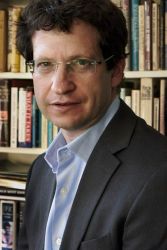
Daniel Klaidman
An excerpt from his book which appeared at the Daily Beast earlier this week is an example of servile propaganda at its worst.
At least in totalitarian states with their ministries of information and state-controlled newspapers, no one is under any illusion about the way in which governments shape public discourse. But in the United States with a nominally free press, accounts such as Klaidman’s purport to offer Americans outside government a rare glimpse into its innermost workings.
In this case we are being led to believe that we can now better understand what is actually happening when President Obama and a small circle of advisers make the weightiest decision anyone could ever make: when (if ever) it is justifiable to execute someone while suspending the legal constraints that otherwise control the use of capital punishment.
Klaidman’s approach to this story suggests that he investigated the issues in a similar way that an interior designer might discuss color choices with her client. His idea of depth is that he wants to find out how his subjects feel about killing people.
Klaidman tells us that Harold Hongju Koh and Jeh C. Johnson, the top lawyers at the State Department and the Pentagon, have found it stressful helping decide who gets to live or die. In other words, those observers who might imagine that a cold bureaucratic process is at work can be assured that Obama’s death panel operates with feeling and sensitivity and an acute sense of moral responsibility. These are not casual killers.
Like Koh, [Johnson] wondered whether he could withstand the heavy pressure exerted by the military to expand operations. After approving his first targeted killings one evening, he watched the digital images of the strike in real time — “Kill TV,” the military calls the live battlefield feed. Johnson could see the shadowy images of militants running drills in a training camp in Yemen. Then suddenly there was a bright flash. The figures that had been moving across the screen were gone. Johnson returned to his Georgetown home around midnight that evening, drained and exhausted. Later there were reports from human-rights groups that dozens of women and children had been killed in the attacks, reports that a military source involved in the operation termed “persuasive.” Johnson would confide to others, “If I were Catholic, I’d have to go to confession.”
If watching ones victims get executed on Kill TV evokes an image of cold brutality, we are assured that Washington’s practitioners of targeted killing, just like their Israeli counterparts, shoot and cry.
What Klaidman does through this style of narrative is set up a false intimacy — a sense that we really know what goes on in the so-called Terror Tuesday meetings because we now know that when Obama decides to kill someone who considers the matter very carefully.
The president is not a robotic killing machine. The choices he faces are brutally difficult, and he has struggled with them — sometimes turning them over in his mind again and again.
Is this what “due process” now means: that when executioner Obama issues a death sentence, it’s not an impulsive action; it’s something he actually spends some time thinking about? How reassuring!
If Klaidman was a serious journalist he would ask some serious questions. For instance, even though he might not be shown the intelligence information that forms the basis for Obama’s “kill list”, there are some relevant comparisons that he could attempt in order to expose the legal implications of what is now happening inside the White House.
For instance, is the process of deliberation inside Obama’s Star Chamber, more thorough than what happens inside a district attorney’s office in the process of considering a major criminal indictment? I suspect not, but if he had chosen to approach his subject with this amount of seriousness, Klaidman could easily have collected the kind of anecdotal evidence that would most likely make it clear that in the Obama administration, death sentences get handed out more casually than indictments. (In a summary of key moments from Klaidman’s book we learn that the State Department’s top legal adviser “would be presented with the classified PowerPoint slides, and would often have less than an hour to flick through them and determine whether or not the government had the legal authority to take out the target.”)
The picture Klaidman prefers to construct is one framed to a tee by the interests of President Obama. Whereas the CIA and the military are eager to kill as many suspected terrorists as possible, Obama is deeply concerned about the risk to innocent life.
Schooled as a constitutional lawyer, he had had to adjust quickly to the hardest part of the job: deciding whom to kill, when to kill them, and when it makes sense to put Americans in harm’s way. His instincts tilted toward justice and protecting the innocent, but he also knew that war is a messy business no matter how carefully it is conducted.
What Klaidman is doing here — and I suspect doing so in a completely mindless way — is sustaining a narrative that shapes the whole approach to drone warfare: that it goes without saying that the targets of drone strikes are guilty. In other words, no one even raises the possibility that the innocent might not only include bystanders but even the target himself.
The only time “mistakes” get reported they are of the form that a strike targeted such-and-such a suspect but ended up killing someone else. Whenever the intended target gets killed, it’s case closed. The dead are always guilty.
But how could this possibly be so? We know that it’s possible inside the elaborately constructed American capital punishment system, that after lengthy trials, appeals and sentence reviews, innocent people can still end up being executed. Why on earth would we assume that Obama’s execution process operates more efficiently?
When Klaidman presents the case of the first presidentially authorized assassination of a U.S. citizen, he doesn’t stray a fraction from the official narrative.
In Barack Obama’s mind, Anwar al-Awlaki was threat No. 1. The Yemen-based leader of AQAP had grown up in the United States, spoke fluent American-accented English, and had a charisma similar to that of Osama bin Laden: soft eyes, a mastery of language, and a sickening capacity for terror. Obama told his advisers that Awlaki was a higher priority than even Ayman al-Zawahiri, who had succeeded bin Laden as al Qaeda’s top commander. “Awlaki had things on the stove that were ready to boil over,” one of Obama’s national-security advisers observed. “Zawahiri was still looking for ingredients in the cupboard.”
What worried President Obama most was Awlaki’s ingenuity in developing murderous schemes that could evade America’s best defenses. Already he had launched the Christmas Day plot, in which a Nigerian operative had nearly brought down a packed airliner by trying to set off explosives hidden in his underwear. Then, in October 2010, AQAP had managed to put improvised bombs—ink toner cartridges filled with explosive material—on cargo planes headed to the United States. (They were intercepted as a result of a tip from Saudi intelligence.) During the summer of 2011 Obama was regularly updated on a particularly diabolical plan that AQAP’s master bomb builder, Ibrahim Hassan Tali al-Asiri, was devising. The intelligence indicated that he was close to being able to surgically implant bombs in people’s bodies. The wiring was cleverly designed to circumvent airport security, including full-body scanners. AQAP’s terror doctors had already successfully experimented with dogs and other animals.
The president made sure he got updates on Awlaki at every Terror Tuesday briefing. “I want Awlaki,” he said at one. “Don’t let up on him.” Hoss Cartwright even thought Obama’s rhetoric was starting to sound like that of George W. Bush, whom Cartwright had also briefed on many occasions. “Do you have everything you need to get this guy?” Obama would ask.
But that sense of fierce determination was a product of long experience and didn’t come easily. By the time United States intelligence agents got Awlaki in their sights, Obama had adjusted and readjusted his views on targeted killings several times. Usually he tried to measure the possible benefits of a specific killing or killings against the possible downsides, including the slaying of innocents and getting the United States more deeply embroiled in civil conflicts. The Awlaki case was in a special category, however: By almost anyone’s definition, he was a threat to the homeland, but he was also an American citizen, born in New Mexico.
The capture of a Somali operative who worked closely with Awlaki produced key intelligence, including how he traveled, the configuration of his convoys, his modes of communication, and the elaborate security measures he and his entourage took. Finally, in the spring and summer of last year, U.S. and Yemeni intelligence started to draw a bead on him. A tip from a Yemeni source and a fatal lapse in operational security by the cleric eventually did him in.
The claims that Awlaki masterminded and led terrorist operations have never been substantiated. If there really was significant evidence that he had such an operational role, it seems extremely unlikely that Obama would have any reason to need to press the case for the urgency of Awlaki’s elimination. The CIA and the Pentagon would be leading that charge without any need for Obama to crack the whip.
A much more plausible explanation for Obama’s obsession with Awlaki is one that could not be easily accommodated inside a legal framework. It wasn’t that the American cleric was in the process of devising a dastardly new way to insert explosives into underwear; it was the real threat he posed as a propagandist. That is, Awlaki represented one of the worst fears of anyone involved in counterterrorism: that as an American-born, charismatic and articulate preacher, he was capable of recruiting radicalized Caucasian converts to Islam.
Of course it this was Obama’s fear, killing Awlaki with a drone strike was no way to avert the danger since even now, as a propagandist he remains alive and well on YouTube. But these are issues that are of no apparent interest to Klaidman as he tells us how Obama learned to kill.
Perhaps the worst feature of Klaidman’s work is that he is collaborating in the definition of the new normal.
When Bush and Cheney instituted the use of torture, this provoked national debate. Even if they were able to exploit national fears that had produced a widely permissive attitude towards so-called “harsh interrogation” methods, Bush and Cheney were in some measure held accountable for choosing to adopt these practices.
When Obama entered office with the support of many Americans who imagined he was the antidote to the extremism of the previous administration, he swiftly reinforced that perception by banning the use of torture.
But when it transpired that he had banned torture only to replace it with murder, rather than this prompt loud expressions of outrage, we are being told to see this as the “evolution” of a president who is grappling with the harsh realities of the era.
This is a much more insidious message: that Obama is simply doing what anyone in his shoes would feel compelled to do; that targeted killing should now be seen as an enduring feature of U.S. foreign policy.

David J Wasserstein writes: Islam saved Jewry. This is an unpopular, discomforting claim in the modern world. But it is a historical truth. The argument for it is double. First, in 570 CE, when the Prophet Mohammad was born, the Jews and Judaism were on the way to oblivion. And second, the coming of Islam saved them, providing a new context in which they not only survived, but flourished, laying foundations for subsequent Jewish cultural prosperity – also in Christendom – through the medieval period into the modern world.
By the fourth century, Christianity had become the dominant religion in the Roman empire. One aspect of this success was opposition to rival faiths, including Judaism, along with massive conversion of members of such faiths, sometimes by force, to Christianity. Much of our testimony about Jewish existence in the Roman empire from this time on consists of accounts of conversions.
Great and permanent reductions in numbers through conversion, between the fourth and the seventh centuries, brought with them a gradual but relentless whittling away of the status, rights, social and economic existence, and religious and cultural life of Jews all over the Roman empire.
A long series of enactments deprived Jewish people of their rights as citizens, prevented them from fulfilling their religious obligations, and excluded them from the society of their fellows.
This went along with the centuries-long military and political struggle with Persia. As a tiny element in the Christian world, the Jews should not have been affected much by this broad, political issue. Yet it affected them critically, because the Persian empire at this time included Babylon – now Iraq – at the time home to the world’s greatest concentration of Jews.
Here also were the greatest centres of Jewish intellectual life. The most important single work of Jewish cultural creativity in over 3,000 years, apart from the Bible itself – the Talmud – came into being in Babylon. The struggle between Persia and Byzantium, in our period, led increasingly to a separation between Jews under Byzantine, Christian rule and Jews under Persian rule.
Beyond all this, the Jews who lived under Christian rule seemed to have lost the knowledge of their own culturally specific languages – Hebrew and Aramaic – and to have taken on the use of Latin or Greek or other non-Jewish, local, languages. This in turn must have meant that they also lost access to the central literary works of Jewish culture – the Torah, Mishnah, poetry, midrash, even liturgy.
The loss of the unifying force represented by language – and of the associated literature – was a major step towards assimilation and disappearance. In these circumstances, with contact with the one place where Jewish cultural life continued to prosper – Babylon – cut off by conflict with Persia, Jewish life in the Christian world of late antiquity was not simply a pale shadow of what it had been three or four centuries earlier. It was doomed. [Continue reading…]
The New York Times reports: An Egyptian judge on Saturday sentenced former President Hosni Mubarak to life in prison for the killing of unarmed demonstrators during the first six days of protests that ended his rule.
It was the first verdict against an Arab ruler brought before the law by a popular revolt, and for many Egyptians it may be the greatest achievement so far of the uprising that began 16 months ago. With the nation still awaiting the ratification of a new constitution, the election of a new president and the hand-over of power by its military rulers, the decision is Egypt’s most significant step yet toward establishing the principle that no leader is above the law.
Yet lawyers critical of Mr. Mubarak immediately warned that the verdict may not survive an appeal. The judge acquitted several lower-ranking security officials of responsibility for the same deaths, raising questions about the chain of command. He also dismissed corruption charges against Mr. Mubarak and his sons on technical grounds, and by early afternoon protesters angry at the flimsiness of the decision were pouring into Tahrir Square, the symbolic heart of the revolt.
Egyptian state television reported that within hours of the decision, Mr. Mubarak, 84, had suffered a “health crisis” as he was being flown by helicopter to a Cairo prison from the military hospital where he had awaited the verdict. He was being treated inside the helicopter which he refused to leave, the state network reported.