
David Cole writes:
On Friday, a front-page New York Times story reported that a rift has emerged within the Obama Administration over whether it has authority to kill “rank-and-file” Islamist militants in foreign countries in which there is not an internationally recognized “armed conflict.” The implications of this debate are not trivial: Imagine that Russia started killing individuals living in the United States with remote-controlled drone missiles, and argued that it was justified in doing so because it had determined, in secret, that they posed a threat to Russia’s security, and that the United States was unwilling to turn them over. Would we calmly pronounce such actions compliant with the rule of law? Not too likely.
And yet that is precisely the argument that the Obama Administration is now using in regard to American’s own actions in places like Yemen and Somalia—and by extension anywhere else it deems militant anti-US groups may be taking refuge. On the same day the Times article appeared, John Brennan, President Obama’s senior advisor on homeland security and counterterrorism, gave a speech at Harvard Law School in which he defended the United States’ use of drones to kill terrorists who are far from any “hot battlefield.” Brennan argued that the United States is justified in killing members of violent Islamist groups far from Afghanistan if they pose a threat to the United States, even if the threat is not “imminent” as that term has traditionally been understood. (As if to underscore the point, The Washington Post reports that the US has “significantly increased” its drone attacks in Yemen in recent months, out of fears that the government may collapse.)
In international law, where reciprocity governs, what is lawful for the goose is lawful for the gander. And when the goose is the United States, it sets a precedent that other countries may well feel warranted in following. Indeed, exploiting the international mandate to fight terrorism that has emerged since the September 11 attacks, Russia has already expanded its definition of terrorists to include those who promote “terrorist ideas”—for example, by distributing information that might encourage terrorist activity— and to authorize the Russian government to target “international terrorists” in other countries. It may seem fanciful that Russia would have the nerve to use such an authority within the United States—though in the case of Alexsander Litvinenko it appears to have had few qualms about taking extreme measures to kill an individual who had taken refuge in the United Kingdom. But it is not at all fanciful that once the US proclaims such tactics legitimate, other nations might seek to use them against their less powerful neighbors.



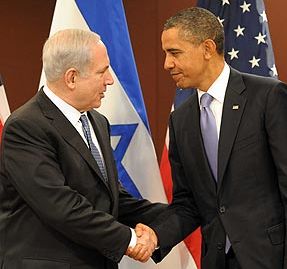 In case anyone is in any doubt that President Obama’s comments on the Israeli-Palestinian conflict, delivered to the UN General Assembly this morning, were nothing more than a string of worthless peace-process platitudes, then listen to the rave review he got from Israeli foreign minister
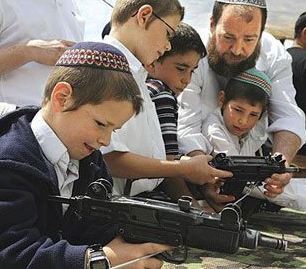 As Israel decided to further arm the settlers by providing them with stun grenades and tear gas bombs, the settlers, supported by extremist right wing factions in Israel, are preparing a plan to “respond to any popular Palestinian move that will likely take place as the Palestinian leadership asks the United Nations this month to recognize a Palestinian State with East Jerusalem as its capital.