The CIA’s ties to the Gaddafi regime

The Wall Street Journal reports:

The Central Intelligence Agency and Libyan intelligence services developed such a tight relationship during the George W. Bush administration that the U.S. shipped terror suspects to Libya for interrogation and suggested the questions they should be asked, according to documents found in Libya’s External Security agency headquarters.

The relationship was close enough that the CIA moved to establish “a permanent presence” in Libya in 2004, according to a note from Stephen Kappes, at the time the No. 2 in the CIA’s clandestine service, to Libya’s then-intelligence chief, Moussa Koussa.

The memo began “Dear Musa,” and was signed by hand, “Steve.” Mr. Kappes was a critical player in the secret negotiations that led to Libyan leader Col. Moammar Gadhafi’s 2003 decision to give up his nuclear program. Through a spokeswoman, Mr. Kappes, who has retired from the agency, declined to comment.

A U.S. official said Libya had showed progress at the time. “Let’s keep in mind the context here: By 2004, the U.S. had successfully convinced the Libyan government to renounce its nuclear-weapons program and to help stop terrorists who were actively targeting Americans in the U.S. and abroad,” the official said.

The files documenting the renewal of ties between the CIA and Libyan intelligence were reviewed and copied by researchers from Human Rights Watch during a tour of Libya’s External Security agency headquarters in downtown Tripoli. Emergencies Director Peter Bouckaert said he was touring the building on Friday as part of the group’s effort to help the Libyan transitional authority secure sensitive documents left by the Gadhafi regime, which collapsed in August after a five-month rebellion.

Mr. Bouckaert said he discovered the files inside the complex in a room that guards described as the former office of Mr. Koussa, who became foreign minister in 2009. Mr. Bouckaert photographed the documents, leaving the originals in their place, and gave copies to The Wall Street Journal.

Human Rights Watch has been critical of the U.S. policy of sending terror suspects to third countries for interrogation, a practice known as rendition. The practice dates at least to 1995, when Egypt began aiding the U.S. with rendition.

U.S. officials say they obtained assurances from the recipient countries that the rendered detainees would be treated humanely. “There are lots of countries willing to take terrorists off the street who want to kill Americans,” the U.S. official said. “That doesn’t mean U.S. concerns about human rights are ignored in the process.”

In an April 15, 2004 letter to Libyan intelligence, the CIA proposed the rendition of another man, saying, “We respectfully request an expression of interest from your service regarding taking custody.”

Citing “recently developed agreements,” the CIA asked the Libyans to “agree to take our requirements for debriefings of [the suspect], as well as a guarantee that [his] human rights will be protected.”

The files also show the close relationship that some British intelligence officials had with Mr. Koussa.

Mr. Koussa, who defected from Col. Gadhafi’s government in March, was credited with helping negotiate Libya’s rapprochement with the international community and bartering an end to sanctions in return for Libya renouncing its weapons-of-mass-destruction program.

Yet he was also one of the stalwarts of the Gadhafi regime and headed the foreign intelligence service during a time when many Western officials believed Col. Gadhafi was funding and supporting international terrorist groups. In 1980, he was expelled from his diplomatic post in the U.K. after calling in a newspaper interview for the killing of Libyan dissidents in Great Britain. Libya later claimed he had been misquoted.

By the early years of the George W. Bush administration, however, as seen in the 2004 memo, Mr. Kappes was writing to Mr. Koussa: “Libya’s cooperation on WMD and other issues, as well as our nascent intelligence cooperation mean that now is the right moment to move ahead.”

The intelligence services had discussed the move for “quite some time” Mr. Kappes wrote.

The files provide an extraordinary window into the highly secretive and controversial practice of rendition, whereby the agency would send detainees to other countries for interrogation, including ones known for harsh treatment of detainees. The program was ramped up for terror detainees after the Sept. 11 attacks.

When taking over the CIA at the outset of the Obama administration, then-director Leon Panetta said the agency would continue to use rendition, but would seek assurances that the detainee wouldn’t be tortured—which has been the standing U.S. policy. Mr. Panetta left the CIA two months ago to lead the Pentagon.

“We are eager to work with you in the questioning of the terrorist we recently rendered to your country,” Mr. Kappes wrote in the memo, adding that he would like to send two more officers to Libya to question a suspect directly.

A lengthy profile of Kappes appeared in Washingtonian Magazine last year written by Jeff Stein, the SpyTalk columnist for the Washington Post. Stein’s account describes Kappes as resolutely loyal, dedicated, well-liked, politically skilled, and incompetent. Under his watch, the CIA was implicated in fraud, rape, and homicide.

Jeffrey Castelli, a friend of Kappes, had a pivotal role in propagating myths about Saddam Hussein’s WMD program. Castelli passed along the bogus intelligence that allowed President Bush, in his 2003 State of the Union speech to claim that Saddam had attempted to buy yellow cake uranium from Niger.

Castelli then oversaw the kidnapping of Abu Omar off a Milan street, which led to him and 24 other CIA agents being indicted by Italian magistrates.

In spite of this track record, “in 2008, Kappes picked Castelli to run the CIA’s New York station, one of the agency’s most prestigious appointments. Shock turned into protest, according to CIA insiders, forcing Kappes to drop the idea. Castelli soon retired.”

Kappes’s rise to behind-the-scenes stardom in the intelligence community is a lesson in how to maneuver in Washington: It’s one thing to be successful in the field; it’s more valuable to convince Congress you’re effective. “Kappes runs better ops on the Hill and with the White House than he ran human sources in the field,” a CIA veteran says in what turns out to be a consistent refrain.

“He’s the Teflon Don,” says a veteran of the CIA’s Operations Directorate, renamed the National Clandestine Service in 2005. “Nothing bad ever sticks to him.”

Over more than 20 years with the CIA, Kappes’s career has taken him through most of the world’s cold- and hot-war battlefields from India and Pakistan to Germany and Russia. But the journey of Kappes from secret agent to CIA superstar began in Libya.

In March 2003, leader Muammar Qaddafi signaled that he was ready to jump-start his on-again, off-again campaign to end his long diplomatic and commercial isolation, get off Washington’s list of terrorist states, and get back into the oil business with the West. Two years earlier, he’d dispatched one of his top operatives, Michigan State–educated Mousa Kousa, to a clandestine meeting in London with top CIA and British intelligence officials. Kousa carried with him the names of some of Osama bin Laden’s closest associates, including Ibn al-Sheikh al-Libi, a Libyan who would soon be the first major catch in the CIA’s pursuit of al-Qaeda. But with Qaddafi dragging his feet on final payouts over Libya’s 1988 downing of PanAm Flight 103 over Lockerbie, Scotland, negotiations stalled.

Then, with American and British troops massing to invade Iraq, Qaddafi decided it was time to talk again—in secret.

President George W. Bush and CIA chief George Tenet, desperate for intelligence on al-Qaeda, decided the time was ripe, too. But they wanted something big in return, a “deliverable,” as Bush put it: Qaddafi’s public renunciation of his nuclear, chemical, and biological weapons programs.

For the secret mission to Tripoli to work out the deal, they chose Steve Kappes.

By 2003, Kappes was deeply schooled in the dark arts. He had been station chief in Kuwait and Moscow. At a CIA station in Frankfurt, he had run highly sensitive operations targeting Iran’s nuclear-weapons program, and he had served in Pakistan, which sheltered its own nuclear-bomb effort. For the past year, as associate deputy director for operations, he had supervised some of the CIA’s most secret programs, from “extraordinary renditions”—kidnapping terrorist suspects abroad—to the agency’s secret foreign prisons to waterboarding and other “enhanced interrogation techniques.”

Then came Libya.

“Clearly, Kappes was a man who could keep a secret, and Bush gave him one: No one at State or Defense, not even Rumsfeld or Powell, should know about this major initiative,” Ron Suskind wrote in the Washington Monthly. Suskind’s account of the clandestine affair was one of a flurry of flattering articles about Kappes that began surfacing in the spring of 2006 as pressure was building to bring Kappes back to Langley.

The Libyan mission was a “lengthy dialogue, a delicate and subtle dance,” wrote Newsweek’s Mark Hosenball, quoting an anonymous former agency official. “And Steve handled it very well.”

Qaddafi did renounce his weapons-of-mass-destruction programs, allowing the Bush administration to claim that regime change in Iraq was already paying dividends elsewhere. After the Lockerbie claims were finally settled, diplomatic recognition came. The oil companies moved into Libya.

Washington, the story went, had eliminated a potential threat and gained an ally in the “war on terror.”

But on closer examination, some thought Qaddafi got the better end of it: His nuclear effort had never really gotten off the ground, intelligence sources say, despite the acquisition of millions of dollars of black-market equipment and supplies from Pakistani rogue nuclear scientist A.Q. Khan.

Qaddafi liked to buy stuff that was way beyond his scientists’ ken to assemble, a former top CIA official says.

Nor were Qaddafi’s other WMD programs much to write home about, according to the Monterey Institute’s Jonathan Tucker, one of the foremost WMD experts.

Libya’s chemical-warfare capability was “quite limited,” Tucker says. “Although Libya wanted to expand its chemical arsenal to include nerve agents, it did not have the materials, equipment, or know-how needed to do so. The nuclear program, however embryonic, was perceived as being of greater potential value, but after the interdiction of [A.Q. Khan’s] centrifuges en route to Libya, Qaddafi began to view his WMD programs as a security risk rather than an asset.”

Kappes has a reputation for micromanagement, right down to his recent insistence on selecting applicants for a two-person station. Therefore, says a former high-level official, Kappes had to know—and approve of—virtually everything that went on in the counterterrorism program after 9/11.

“All decision making in the Directorate of Operations flowed through the ADDO,” or assistant deputy director of operations, the position Kappes held when the war on terror ramped up in 2002–04, says a former top official during that era. “And he was specifically in a position of decision making and influence and persuasion. . . . So any decision or voice he gave to a particular point of view would have been, and was, given great consideration.”

“So if he was opposed to [waterboarding] and made his position known,” the former official adds, “that would have carried great weight. After all, not only was he ADDO, but don’t forget that at the same time he was carrying water for the White House on the Libya stuff and had a personal relationship, he claimed, with the President. So if he was able to do what he did on Libya, he should have been able to persuade the same decision makers with respect to enhanced interrogation techniques if he actually was opposed to them.”

It’s not likely Kappes was opposed to such programs, says a retired station chief who knows Kappes well: “He’s very jingoistic, very much a believer in American exceptionalism and the leading place the United States has in the world.”

Says John Sifton, a private investigator and attorney in New York who has carried out extensive research on the CIA’s secret programs for law firms and human-rights groups: “It strains credulity for him to say, ‘I didn’t know, I wasn’t involved.’ His denials would be like the Yankees pitching coach saying he didn’t know the playoffs rotation.”

“He became ADDO in the fall of 2002,” Sifton said, “just as the CIA was expanding its program for secret prisons and harsh interrogations and as it continued its renditions program with zeal.”

In at least one case, Kappes didn’t stay far away, sources say. According to an internal investigation, he helped tailor the agency’s paper trail regarding the death of a detainee at a secret CIA interrogation facility in Afghanistan, known internally as the Salt Pit.

The detainee froze to death after being doused with water, stripped naked, and left alone overnight, according to reports in the Washington Post and Los Angeles Times. He was secretly buried and his death kept “off-the-books,” the Post said.

According to two former officials who read a CIA inspector general’s report on the incident, Kappes coached the base chief—whose identity is being withheld at the request of the CIA—on how to respond to the agency’s investigators. They would report it as an accident.

“The ADDO’s direction to the field officer anticipated that something worse had occurred and so gave him directions on how to report the situation in his cable,” one of the former officials says.

“The ADDO basically told the officer, ‘Don’t put something in the report that can’t be proved or that you are going to have trouble explaining.’ In essence, the officer was told: Be careful what you put in your cable because the investigators are coming out there and they will pick your cable apart, and any discrepancies will be difficult to explain.”

As a result, the former official says, the Salt Pit officer’s cable was “minimalist in its reporting” on what happened to the prisoner. “It seems to me the ADDO should have been telling him, ‘Report the truth, don’t hold anything back, there’s an investigative team coming out, be honest and forthright. But that was not the message that was given to the chief of base by the ADDO.”


Facebooktwittermail

Libyan rebel military chief says he was tortured by CIA

Patrick Cockburn writes:

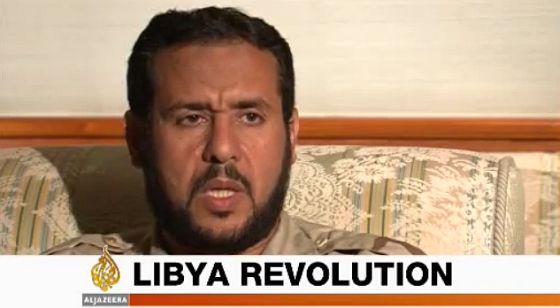
The overthrow of Gaddafi has brought together strange allies, but few stranger than Abdulhakim Belhaj, the military commander of all rebel military forces in Tripoli, and Nato. An Islamist whom Gaddafi tried to have the US list as a terrorist, Mr Belhaj says he was tortured by CIA agents after being arrested in the Far East in 2004 and later handed over by them to Colonel Gaddafi for further torture and imprisonment in Libya.

Mr Belhaj, the head of the military council for Tripoli, who led an Islamist guerrilla organisation fighting the Gaddafi regime in the 1990s, told The Independent in an interview that he had been directly “tortured by CIA agents” in Thailand after being first arrested in Malaysia.

If true, his story is evidence of the close co-operation between the CIA and Colonel Gaddafi’s security services after the Libyan leader denounced the 9/11 attacks. After his stint in the hands of the CIA, Mr Belhaj was kept in Abu Salim prison in Tripoli. He says: “I was in prison for seven years during which I was subjected to torture as well as solitary confinement. I was even denied a shower for three years.” Other Libyan Islamist prisoners have related how they were sometimes taken from Abu Salim to be questioned by US officials in Tripoli.

Released from prison in 2010, Mr Belhaj, who had military experience from fighting in Afghanistan against the Russians in the 1980s, became one of the most effective rebel military commanders. He is said by diplomats to have played a crucial role in the capture of Tripoli at the end of last month, and is highly regarded by the chairman of the Transitional National Council (TNC), Mustafa Abdul Jalil.

Ironically, given his claims of previous mistreatment at US hands, Mr Belhaj has emerged as one of Nato’s most important allies during their air campaign in support of the rebels over the last six months. Speaking in his headquarters in the Mitiga military airbase on the eastern outskirts of Tripoli, he forcefully denied that he and the Libyan Islamic Fighting Group (LIFG), which he helped found in 1995, had ever been allied to al-Qa’ida.

“We never had any link to al-Qa’ida,” said Mr Belhaj, a short, soft-spoken, bearded man, who does not use a military title. “We never took part in global jihad. The fact that we were in the same country, Afghanistan, [as al-Qa’ida] does not mean we had the same goal.” He stresses that the sole aim of the LIFG was always to overthrow Gaddafi.

Despite his current close co-operation with Nato, Mr Belhaj says he finds it difficult to forgive his treatment by the CIA in the past.

When first detained at an airport in Malaysia in 2004 he says he was with his wife: “She was six months pregnant and she suffered a lot.”

After a few days, CIA agents took him to Thailand as part of the notorious rendition process by which the agency transferred prisoners to countries where security forces were known to use torture. He says that in Thailand CIA agents took a direct part in his torture, though he did not give details. He says that “if I ever have the chance I will take legal action” against those responsible.

The disclosure of Libya’s intelligence files may reveal embarrassing details of co-operation between the CIA and other Western intelligence agencies with Gaddafi’s brutal and ruthless security services in pursuit of Islamist opponents. Mr Belhaj says that in the wake of 9/11, the US administration reacted by pursuing “any organisation with an Islamic agenda”.

Mr Belhaj spent seven years in Abu Salim prison which was the site of the Gaddafi regime’s most infamous atrocity, the massacre of some 1,200 prisoners in 1999, almost all of them Islamists, who had protested against conditions. The first protests which ushered in the uprising in Benghazi this February was by lawyers representing the families of the dead Abu Salim prisoners.

The Libyan prison was run with great savagery even against those whose offences were minor. Students accused of being excessively religious were stripped naked and attacked by dogs. Prisoners who survived might spend decades without seeing their families. In Abu Salim, Mr Belhaj helped write a 419-page document, published in 2009, which repudiated the Jihadi doctrine of holy war and the use of violence to change regimes. The name of the LIFG was changed to the Libyan Islamic Movement for Change. The ideological change, spurred by the failure of radical Islamic groups fighting on their own to overthrow governments, led to Islamists seeking the co-operation of more secular and liberal groups also opposed to Arab police states. It is these popular front coalitions that have won victories in Tunisia, Egypt and now Libya.

The New York Times reports on evidence gathered from the bombed ruins of Gaddafi’s intelligence headquarters in Tripoli that corroborates Belhaj’s account.

When Libyans asked to be sent Abu Abdullah al-Sadiq, another member of the [Libyan Islamic Fighting G]roup, a [CIA] case officer wrote back on March 4, 2004, that “we are committed to developing this relationship for the benefit of both our services,” and promised to do their best to locate him.

Two days later, an officer faxed the Libyans to say that Mr. Sadiq and his pregnant wife were planning to fly into Malaysia, and the authorities there agreed to put them on a British Airways flight to London that would stop in Bangkok. “We are planning to take control of the pair in Bangkok and place them on our aircraft for a flight to your country,” the case officer wrote.

Mr. Bouckaert of Human Rights Watch said he had learned from the documents that Sadiq was a nom de guerre for Abdel Hakim Belhaj, who is now a military leader for the rebels.

In an interview [with The Independent — see above] on Wednesday, Mr. Belhaj gave a detailed description of his incarceration that matched many of those in the documents. He also said that when he was held in Bangkok he was tortured by two people from the C.I.A.

Facebooktwittermail

Women celebrate in Tripoli’s Martyrs’ square

Farah Abushwesha writes:

At this week’s conference on Libya in Paris, the Libyan National Transitional Council (NTC) and the international community talk about “inclusiveness” in the new country’s future. It seems strange, then, that half of the population – women – seem to be excluded from the discussions on the future of their country.

It is not commonly known, but Libyan women started the revolution when the mothers, sisters and widows of prisoners killed in the 1996 Abu Salim massacre took to the streets in Benghazi on 15 February to protest outside the courthouse after their lawyer was arrested.

Since then Libyan women at home and abroad have protested, smuggled arms beneath their clothing, founded countless civil society groups, tweeted, blogged, fed, nursed, mourned, mothered, raised funds and awareness, and sent in humanitarian aid and medical staff for the cause. Women have taken a central role alongside men and it has united us.

Libyan women may not have been visible on the streets with guns, but they have played an equally important role, displaying courage and strength that has been invaluable to the success of the country’s revolution. Only now are some of the harrowing stories starting to emerge. We have seen the iconic images of Iman al-Obeidi, who spoke out about the sexual violence inflicted on so many who have otherwise suffered in silence; the elderly lady praising rebels at a lay-by and giving them her blessing; and Malak, the five-year-old amputee from Misrata – to name a few.

Libyan women will no doubt continue to play a vital part in the national reconciliation and rebuilding process, but the time has come for this role to be fully recognised, encouraging them to step forward. The Women for Libya campaign aims to mobilise and encourage Libyan women to take their rightful place and be included as equals for the purpose of shaping a better Libya. We do not want tokenistic representation.

Facebooktwittermail

Do the Gaddafis hope to take refuge in Israel?

As Hosni Mubarak approaches the end of his life inside a prison cell in Egypt, he might be having second thoughts about his decision to turn down an offer of asylum that came from Israel a few months ago.

The idea that Israel has some affection for Arab tyrants might have something to do with a story about the Gaddafis that now emerges from an interesting source.

The Associated Press reports:

An Austrian politician says one of Muammar Gadhafi’s sons told him Libya was ready to sign a peace treaty with Israel once the fighting in his country ended.

David Lasar also said Thursday that Seif al-Islam, Gadhafi’s longtime heir apparent, also told him he was ready to act as a middleman to secure the release of an Israel soldier held for more than four years by Hamas, the Palestinian faction controlling Gaza.

Lasar, a Vienna municipal political with the rightist Freedom Party, was in Libya last month on a trip coordinated between his party and Ayoub Kara, an Israeli deputy minister.

Lasar is Jewish, while Kara is a Druze, and both occasionally assume positions and take on missions that are unusual for their government or party.

In July, Der Spiegel reported on the growing ties between the far right in Israel and the far right in Europe — in spite of the latter’s long history of antisemitism.

The partners that the European right-wing has sought out in Israel are, perhaps not surprisingly, well to the right of center. Kara himself, a member of the minority Druze religious community who enjoys close ties with Netanyahu, opposed the Israeli withdrawal from the Gaza Strip and is a loyal supporter of Jewish settlements in the West Bank. Gershon Mesika, a settler leader in the West Bank, received the populist delegation in December. Hillel Weiss and David Ha’ivri, both proponents of “neo-Zionism,” a movement which holds the belief that it is impossible to live in peace with Arabs, traveled to Germany last April for a conference hosted by the small, German right-wing populist movement Pro-NRW.

Their hope is that a pan-European platform will begin to emerge that values Israel as an important bastion in resisting the advancing tide of Islam. And they think, with the populist right making electoral gains across Europe in recent years, the smart bet is on Strache and Co [that being Heinz-Christian Strache and his Freedom Party of Austria (FPÖ)].

“The reasonable right parties have their roots at home. The Germans in Germany, the Swedes in Sweden and so on,” says David Lasar, a member of the Vienna city government for the FPÖ. “I think that Israel is also a country that says this is our homeland and we can’t open the borders and let everyone in as happened in Europe. That is a reason that Israel today has more trust in the right-wing parties in Europe than in the left-wing parties.”

Lasar himself is Jewish and is one of the key players in ongoing efforts to tighten relations between Israel and the Europeans. And his view on Israel is one which would seem to be at odds with his party’s past positions on the Middle East. Whereas Lasar is skeptical of peace negotiations which would require Israel to give up East Jerusalem or to withdraw from the settlements, the FPÖ has traditionally been allied with Arab leaders such as Moammar Gadhafi and remained skeptical of America’s hard-line position on Iran.

That, though, Strache made clear, is changing. “There are areas where we Europeans cannot sleep, where we can’t remain silent,” says Strache. “Israel is in danger of being destroyed. Were that to happen, it would also result in Europe losing its foundation for existence.”

So how do the Gaddafis fit into this picture?

The FPÖ, one of several right-wing populist parties gaining in popularity across Europe, is viewed with distaste by many for its strident opposition to Austria’s Muslim immigrant population. The party is also deeply skeptical of the European Union and efforts to prop up the common currency. Many see the FPÖ and its right-wing allies across the Continent as being too close to the extreme right wing for comfort.

But it is also no secret that Strache’s party has long had close ties to the Gadhafi clan. Former FPÖ leader Jörg Haider became friendly with Gadhafi’s second-oldest son, Saif al-Islam Gadhafi, when the Libyan was studying in Vienna in the 1990s. Haider visited Tripoli for the first time in 1999 and returned several times thereafter, getting to know Moammar Gadhafi in the process.

Following an internal party spat, Haider split off from the FPÖ in 2005 and founded the Alliance for the Future of Austria (BZÖ). And in 2008, the right-wing leader died in a car accident.

The two parties rejoined forces soon thereafter and the FPÖ, Strache said, has maintained relations with the Gadhafi clan.

So why is this story coming out now about Saif al-Islam claiming Libya was ready to sign a peace treaty with Israel and also negotiate the release of Gilad Shalit? None of the Gaddafi family seems well-placed right now for taking major initiatives in international diplomacy.

On the other hand, if they don’t want to suffer the same fate as Mubarak, maybe the possibility of asylum in Israel looks quite attractive to the Gaddafis, so it wouldn’t be a bad time to burnish their image as Zionist-friendly peacemakers.

Facebooktwittermail

Turkey expels Israeli diplomats, suspends military ties after UN report

Today’s Zaman reports:

In the face of a leaked United Nations panel report on the Mavi Marmara incident, which includes accusations both against Israel and Turkey, Turkey on Friday announced that it is further reducing diplomatic relations and cutting military ties with Israel over the country’s refusal to apologize for last year’s deadly raid on a Gaza-bound flotilla.

The decision effectively expels Israeli diplomats in Turkey.

“The time has come for Israel to pay for its stance that sees it above international laws and disregards human conscience,” Foreign Minister Ahmet Davutoğlu said at a press conference in Ankara. “The first and foremost result is that Israel is going to be devoid of Turkey’s friendship.”

Davutoğlu said the UN report “displayed the violence committed by the Israeli soldiers,” but also criticized it for describing Israel’s naval blockade as a legitimate security measure and in line with international law.

He stated that Turkey is downgrading its diplomatic representation in Israel from charge d’affaires to the level of second secretary, suspending all military agreements with Israel, and that Turkey will, as the country with the longest coastal line in the eastern Mediterranean, take necessary measures pertaining to freedom of navigation, lend full support to the victims of the flotilla incident in their legal efforts to seek their rights and will seek a review of the Israeli blockade of Gaza by the International Court of Justice (ICC) as Turkey does not recognize the blockade.

Haaretz reports:

Speaking to reporters in Istanbul later Friday, [Turkish President Abduallah] Gul said that Israel apparently “did not understand how determined Turkey was to show it has not forgotten the events of the past,” adding that Turkey “would always defend our citizens’ rights,” saying that the “steps announced today were just the first phase.”

“In accordance with Israel’s stance, it is possible that more steps may come in the future,” the Turkish president added, saying of the UN’s Gaza flotilla report that “as far as we’re concerned that reports doesn’t exist.”

Gul also said that Turkey had considered to sanction Israel for its refusal to apologize sooner, but instead waited since it wanted to “give some of our good-willed allies the opportunity to end the crisis.”

The Jerusalem Post reports on how at least one member of Israel’s Knesset has become so incensed by Turkey’s response to the killing of its own citizens, that he imagines the Obama administration might be willing to include Turkey in the “axis of evil”! Dream on Danny!

Following a Turkish ultimatum warning Israel to apologize for the raid of the Mavi Marmara or face snactions, Likud MK Danny Danon on Thursday sent a letter to US Secretary of State Hillary Clinton calling on Washington to declare Turkey a “terror-supporting state.”

“Turkey has gotten closer to Iran and constitutes a direct continuation of the axis of evil. The government in Washington must answer the Turkish problem before it is too late,” Danon wrote.

Danon called for economic and diplomatic sanctions against Turkey until Ankara changes its ways and abandons the way of terror.

“The Turks have crossed the line. They supported the flotilla, they support terror and they dare to ask Israel to apologize to them,” Danon stated in response to the ultimatum.

Danon’s views are not shared by all members of the Knesset. Haaretz reports:

In response to the Turkish announcement, two of the Knesset’s leading Israeli Arab voices later Friday voiced support of the decision to expel the Israeli envoy to Ankara, with United Arab List-Ta’al chairman Ahmed Tibi saying that “these days, whoever kills pays,” adding that “eventually, Israeli arrogance will lead to an apology by the most extreme and arrogant of Israel’s governments.”

“In Turkey, the blood of those killed can be heard screaming from the soil and from the sea,” Tibi added.

Balad MK, and flotilla participant, MK Hanin Zuabi called the Turkish decision a “strong and dramatic move, but it is the “right response to a continued disregard of human life, of the pride of the nations of the regions, and of the sovereignty of neighboring states.”

“Turkey will not be the last country to put an end to Israeli arrogance and aggressiveness,” Zuabi added. The Israeli Arab MK also tied the recent wave of Israeli social protest with the Turkish move, saying that “just as Israelis are beginning to seriously consider a new social order, they must also consider a new diplomatic order in which Israel will pay a heavy price for its policy of oppression, occupation, and belligerence.”

Facebooktwittermail

How Israel got away with murder on the Mavi Marmara

The long-delayed and long-awaited UN report [PDF] on the Mavi Marmara massacre has finally been released by the New York Times.

I guess the newspaper feels a responsibility that it should spin this as much in Israel’s favor as possible before the report get’s officially released.

“Report Finds Naval Blockade by Israel Legal but Faults Raid,” says the headline. The siege is OK. Executing unarmed activists is not OK.

“Israel considers the report to be a rare vindication for it in the United Nations,” we are told.

There are a few unpleasant pesky detail however. Go all the way down to paragraph seventeen of the Times article and we learn:

The report assailed Israel for the way in which the nine were killed and others injured. “Forensic evidence showing that most of the deceased were shot multiple times, including in the back, or at close range has not been adequately accounted for in the material presented by Israel,” it says. The report does, however, acknowledge that once on board the commandos had to defend themselves against violent attack. The report also criticizes Israel’s subsequent treatment of passengers, saying it “included physical mistreatment, harassment and intimidation, unjustified confiscation of belongings and the denial of timely consular assistance.”

Like so many elements of the Israeli-Palestinian conflict, the events on the Mavi Marmara produced two fiercely competing narratives, each full of self-justification and contempt for the other.

And couldn’t we move forward so much more easily if it wasn’t for those fiercely competing narratives.

But just a minute. The panel — even if it’s conclusion amounted to saying, can’t you all just learn to get along — did actually note that Israel provided no information whatsoever on the circumstances in which nine men were killed. And had those deaths not occurred, there would have been no inquiry.

Let’s repeat that. After nine men were killed on board the Mavi Marmara on May 31, 2010, and the United Nations conducted a commission of inquiry into this incident, Israel provided no information whatsoever on the circumstances in which each of these deaths occurred.

The Israeli Point of Contact sought to explain to the Panel that the chaotic circumstances of the situation, made it “difficult to identify specific incidents described by soldiers as related to a specific casualty from among the nine activists who died during the takeover.” This is greatly to be regretted.

Indeed — especially since the evidence — bullets shot between the eyes or in the back of the head — strongly suggests that several of these deaths involved cool calculation. In other words, these were execution-style killings.

These are the descriptions of deaths about which the UN panel regrets Israel could offer no further information:

In the Panel’s view the following facts are of particular concern and have not been adequately answered in the material provided by Israel. Although the Israeli Point of Contact provided a general response to these points, he was unable to provide the Panel with more detailed information, particularly with respect to the death of the passenger described below:

  • Seven of the nine persons killed received multiple gunshot wounds to critical regions of the body: Ali Bengi, Cengiz Akyüz, Çetin Topçuoğlu, Fahri Yaldız, Furkan Doğan, İbrahim Bilgen and Necdet Yıldırım.
  • Five of those killed had bullet wounds indicating they had been shot from behind: Cengiz Akyüz, Çetin Topçuoğlu, Necdet Yıldırım, Furkan Doğan and İbrahim Bilgen. This last group included three with bullet wounds to the back of the head: Cengiz Akyüz, Çetin Topçuoğlu and Furkan Doğan. İbrahim Bilgen was killed by a shot to the right temple.
  • Two people were killed by a single bullet wound: Cevdet Kılıçlar was killed by a single shot between the eyes; and Cengiz Songür was killed by a shot to the base of the throat.
  • At least one of those killed, Furkan Doğan, was shot at extremely close range. Mr. Doğan sustained wounds to the face, back of the skull, back and left leg. That suggests he may already have been lying wounded when the fatal shot was delivered, as suggested by witness accounts to that effect.
  • No evidence has been provided to establish that any of the deceased were armed with lethal weapons. Video footage shows one passenger holding only an open fire hose being killed by a single shot to the head or throat fired from a speedboat.
Facebooktwittermail

The problem with Palestinian political leadership

Ben White writes:

For a few months now, discussion of Palestine/Israel has focused on the looming UN vote on Palestinian statehood, but this is obscuring more fundamental problems in the Palestinian political arena – of which the forthcoming UN vote is a symptom.

In three critical areas, there are significant flaws hampering Palestinian political leadership.

The first is a legitimacy deficit. Both the Fatah-dominated Palestinian Authority and Hamas have, with the most generous interpretation, a minority mandate from the Palestinian people. The last elections of any sort took place in 2005-2006, and overdue local elections have been indefinitely postponed. And even if presidential or parliamentary elections in the West Bank and Gaza were to take place tomorrow, they would still exclude Palestinian refugees. The Palestine Liberation Organisation (PLO) remains a potential vehicle for democratic decision-making, but serious reform is still not on the horizon.

The second critical problem is a lack of creativity and strategic thinking when it comes to tactics. This has a number of root causes which are beyond the scope of this article but the main point is a marked inability to adapt to circumstances with regard to the kind of smart resistance most appropriate for confronting Israeli colonisation. This is more than simply an issue of “violent” versus “nonviolent” (a discussion often plagued by patronising western double standards).

Fear of losing control over the course of events can be one factor inhibiting an openness to change – which brings us to the third problematic area: a focus on power for its own sake rather than for the achievement of a specific goal.

This criticism applies to both Fatah and Hamas, though the former has been guilty of it for a longer period of time and with more devastating consequences. Over the past five years or so, the conflict between these two factions has frequently resembled a fight for who can occupy the Bantustan palace, rather than who can serve most effectively the unfinished Palestinian revolution.

This fight for fake authority has resulted in a dangerous phenomenon: the harassment of youth activists (such as the 15 March movement) and dissidents in the West Bank and Gaza. The growing expressions of dissatisfaction, particularly from young Palestinians, have contributed to a hardening grip on power by two regimes that fear they stand to lose from an overhauled democratic system.

Facebooktwittermail

Language becomes a political weapon in Israel

Mya Guarnieri writes:

Speaking to the US congress in May, Israeli Prime Minister Benyamin Netanyahu boasted that his country is a beacon of freedom in the Middle East and North Africa, that it is the only place where Arabs “enjoy real democratic rights”.

It’s true that Palestinian citizens of Israel have some democratic rights, like the vote. But, as Netanyahu told congress: the “path of liberty is not paved by elections alone.” And the summer months have seen an acceleration of worrisome anti-democratic trends.

First, the Knesset passed the anti-boycott law, a move that was widely condemned as a strike against free speech and democracy. Even some of Israel’s staunchest supporters expressed concern.

Now lawmakers have introduced a bill that proposes to change the definition of Israel as “Jewish and democratic” to “the national home of the Jewish people”.

If passed, the legislation would become part of Israel’s Basic Laws, which are used as a working constitution.

Whenever a conflict between democracy and Jewish values arises, the new definition of Israel would allow courts and legislators to favour the latter. According to Haaretz, the proposed bill will also make halacha, Jewish religious law, “a source of inspiration to the legislature and the courts”. And, in the spirit of favouring the Jewish character of the state over a state for all its citizens, the legislation would also downgrade Arabic from an official language to one with “special status”.

Arabic is the mother tongue of 20 per cent of Israel’s citizens. It has been an official language of the land since 1924, when the British mandate set three: English, Hebrew, and Arabic.

Facebooktwittermail

Turkish FM: No more delays for UN report on Israel

Today’s Zaman reports:

Ankara has refused to comply with Israel’s request seeking a delay of the UN report on the Mavi Marmara flotilla raid for another six months, reportedly designed to cut Israeli Prime Minister Benjamin Netanyahu some slack until he gets more political backing at home in Israel.

“It is not remotely possible for us to agree to a six-month delay,” said Turkish Foreign Minister Ahmet Davutoğlu from Sarajevo, where he was visiting as part of his tour of the Balkans during Eid al-Fitr. “For us the deadline [for the formal apology from Israeli officials] is the day the UN report gets released, or we resort to Plan B,” said the minister without further elaborating on what might constitute the premises of the alternative “B” route.

The UN-led Palmer Report, initially expected to be released in February 2011, has already seen multiple delays that Turkish officials blame on Israeli leaders who have taken one step forward and two steps back on the issue of an apology and compensation demanded by Turkey in the aftermath of the Mavi Marmara raid that brought about a diplomatic crisis between the two countries.

Although not conclusively determined, the UN report is expected to be released by UN Secretary-General Ban Ki-moon some time in early September and shed light on the investigation carried out concerning the deadly flotilla raid that is the reason of the year-long impasse between the old allies in the region.

Facebooktwittermail

Oil firms bet on survival of Syria’s Assad

Reuters reports:

Oil companies in Europe are betting on the survival of President Bashar al-Assad in Syria, in sharp contrast to their support for Libya’s opposition six months ago, even while the European Union is expected to soon slap oil sanctions on Damascus.

Several tankers are sailing to Syria this week to either deliver fuel or pick up crude, which may suggest that oil companies believe the rebellion in Syria will fail to overthrow Assad’s government.

The same companies, including Swiss-based trader Vitol, made the opposite bet when it came to trade in Libya. They agreed to supply opponents of Muammar Gaddafi with fuel in the hope their support would be rewarded at the end of the war.

“What oil firms are currently doing does really look like they believe Assad will win, and they will have to deal with him again,” said a Western diplomatic source.

“The big difference that they all see with Libya is that in Syria you don’t even have a location where the opposition can get together like Benghazi,” he added.

Facebooktwittermail

Syrians must contemplate foreign help – if not the West’s

Abdur Rahman al Shami” writes:

On 22 August an interview with Bashar Al-Assad was aired on Syrian TV. He assumed the people were following his every word. But they were not in the least concerned with his interview; instead, many stayed up the whole night watching the battle to liberate Tripoli. It had huge symbolism, especially for the people of Damascus. With the fall of Tripoli and the departure of Gaddafi and his family, it became clear to the people that despite the severity of losses, the fight in Libya was worth the price.

The decision by the Syrian people to march in protest was taken on the night of 17 March, the day the UN passed resolution 1973, imposing a no-fly zone over Libya. The following day there were demonstrations in Damascus, Dara’a, Banias and Homs. Two people were killed, and this effectively lit the flames of the Syrian revolution.

But our peaceful revolution received no official support from the Islamic and Arab countries. All we got were hesitant platitudes from our neighbours. Likewise, the west called only for reform, or at most economic sanctions. This encouraged Assad to increase his repression in the hope that he would be able to quell the revolution quickly.

But our revolution gathered momentum. Always peaceful, and without any external intervention it spread, with more and more protesters, cities and villages taking part. Syrian opposition figures inside and abroad worked to support the revolution through a series of initiatives, culminating in the formation of national councils earlier this month.

The revolutionaries on the ground now find themselves confronting a new reality. On the one hand we are faced with Arab silence, an ongoing regional indecision – especially from neighbouring Turkey – and the west as passive spectators to Assad’s violations. On the other, Tripoli and Libya are liberated. While Nato support was helpful, credit must be given to the determination of the Libyan people and their tactics, including armed struggle.

There is no doubt that the Syrian revolutionaries will now carry out a reappraisal of their own position; especially as we witness the daily bombardment of Homs, Latakia and Deir al-Zour; while Hama is attacked, the plains of Houran bleed, Aleppo is terrorised and Damascus repressed. The revolutionaries are now questioning the peaceful nature of the Syrian revolution – we have not until now used arms against the regime – and also re-evaluting our position on foreign intervention.

Meanwhile, Amnesty International says:

At least 88 people are believed to have died in detention in Syria during five months of bloody repression of pro-reform protests, a new Amnesty International report reveals today.

Deadly detention: Deaths in custody amid popular protest in Syria documents reported deaths in custody between April and mid-August in the wake of sweeping arrests.

The 88 deaths represented a significant escalation in the number of deaths following arrest in Syria. In recent years Amnesty International has typically recorded around five deaths in custody per year in Syria.

“These deaths behind bars are reaching massive proportions, and appear to be an extension of the same brutal disdain for life that we are seeing daily on the streets of Syria,” said Neil Sammonds, Amnesty International’s researcher on Syria.

Facebooktwittermail

Is BDS campaign working?

Ynet reports:

Many Israeli agricultural products have been recently targeted by the Israel boycott campaign: tomatoes, peppers, citrus fruit, carrots, melons, strawberries and celery. But the flowers have been the primary obsession of the divestment movement, which wants to strangle the Israeli economy.

Agrexco, Israel’s leading flower exporter, has recently declared bankruptcy, partially due to the global boycott of its produce, according to some reports. More than 20 organizations in Europe in 13 countries endorsed a boycott of Agrexco.

International pressure, boycotts and sanctions on South Africa’s apartheid government played a major role in ending its power. Modeled on that global campaign, the anti-Israel boycott movement has notched notable victories of late, while making use of an old Marxist lexicon (“imperialism,” “colonialism,” “occupation,” and “settler society”).

The first symbol of the anti-Israel economic campaign, Caterpillar, was far removed from the Western public consciousness. Yet Israeli roses were a better Jewish scapegoat, as flowers are a pillar of Israel’s economy (in the 1980s Israel became the world’s number two flower exporter. Agrexco was boycotted because it’s partially owned by the Israeli government and because the company has some farms in the Jordan Valley and in Tekoa, a settlement at the gates of the Judean desert.

Facebooktwittermail

Israel’s social protest leaders mull pulling up stakes after ‘march of million’ rally

Haaretz reports:

Social protest leaders are starting to discuss what to do about the tent camps scattered around the country once the summer’s demonstrations come to a head with the “march of the million” scheduled for Saturday night.

They are considering a call to dismantle the tent cities after the march, which will include a mass rally at Tel Aviv’s Kikar Hamedina. The leaders noted, however, that local activists may well ignore such a call and keep the camps standing. Moreover, there are many homeless people in the camps who have nowhere else to go.

The tent element of the protests has been waning. On Tel Aviv’s Rothschild Boulevard, many of the tents stand empty. There are no longer activities, lectures and debates there, and at night the street is often quiet.

Although complaints from area residents have been piling up at city halls across the country, local authorities have made very few moves to take down tent cities.

Facebooktwittermail

Evidence that former Bush official David Welch and US Rep. Dennis Kucinich tried to help Gaddafi retain power — updated

(Update below)
Jamal Elshayyal visited Libya’s intelligence headquarters in Tripoli, much of which were destroyed in NATO airstrikes.

I managed to smuggle away some documents, among them some that indicate the Gaddafi regime, despite its constant anti-American rhetoric – maintained direct communications with influential figures in the US.

I found what appeared to be the minutes of a meeting between senior Libyan officials – Abubakr Alzleitny and Mohammed Ahmed Ismail – and David Welch, the former assistant secretary of state who served under George W Bush and the man who brokered the deal which restored diplomatic relations between the US and Libya in 2008.

Welch now works for Bechtel, a multinational American company with billion dollar construction deals across the Middle East. The documents record that, on August 2, 2011, David Welch met with Gaddafi’s officials at the Four Seasons Hotel in Cairo, just a few blocks from the US embassy there.

During that meeting Welch advised Gaddafi’s team on how to win the propaganda war – suggesting several “confidence building measures”, the documents said. The documents appear to indicate that an influential US political personality was advising Gaddafi on how to beat the US and NATO.

Minutes of this meeting note his advice on how to undermine Libya’s rebel movement, with the potential assistance of foreign intelligence agencies, including Israel. “Any information related to al-Qaeda or other terrorist extremist organisations should be found and given to the American administration but only via the intelligence agencies of either Israel, Egypt, Morroco, or Jordan… America will listen to them… It’s better to receive this information as if it originated from those countries…”

The papers also document that Welch advised Gaddafi’s regime to take advantage of the current unrest in Syria, pointing out: “The importance of taking advantage of the Syrian situation particularly regarding the double-standard policy adopted by Washington… the Syrians were never your friends and you would loose nothing from exploiting the situation there in order to embarrass the West.”

Despite this apparent encouragement to Gaddafi of going on a propaganda campaign at the expense of Syria, the documents claim Welch attacked Qatar, describing Doha’s actions as “cynical” and an attempt to divert attention from the unrest in Bahrain.

The documents claims that Welch went on to propose the following solution to the crisis which he said many would support in the US administration; Gaddafi “should step aside” but “not necessarily relinquish all his powers”. This advice is a clear contradiction to public demands from the White House that Gaddafi must be removed.

According to the document, as the meeting closed, Welch promised: “To convey everything to the American administration, the congress and other influential figures.” But it appears that David Welch was not the only prominent American giving help to Gaddafi as NATO and the rebel army were locked in battle with his regime.

On the floor of the intelligence chief’s office lay an envelope addressed to Gaddafi’s son Saif Al-Islam. Inside, I found what appears to be a summary of a conversation between US congressman Denis Kucinich, who publicly opposed US policy on Libya, and an intermediary for the Libyan leader’s son.

It details a request by the congressman for information he needed to lobby American lawmakers to suspend their support for the Libyan National Transitional Council (NTC) and to put an end to NATO airstrikes. According to the document, Kucinich wanted evidence of corruption within the NTC and, like his fellow countryman Welch, any possible links within rebel ranks to al-Qaeda.

The document also lists specific information needed to defend Saif Al-Islam, who is currently on the International Criminal Court’s most wanted list.

Update: Al Jazeera:

A spokesperson for the US state department said that David Welch is “a private citizen” who was on a “private trip” and that he did not carry “any messages from the US government”. Welch has not responded to Al Jazeera‘s requests for comment.

Dennis Kucinich issued a statement to the Atlantic Wire stating: “Al Jazeera found a document written by a Libyan bureaucrat to other Libyan bureaucrats. All it proves is that the Libyans were reading the Washington Post… I can’t help what the Libyans put in their files… Any implication I was doing anything other than trying to bring an end to an unauthorised war is fiction.”

The document connected to Welch can be read here.

The document connected to Kucinich can be read here.

Facebooktwittermail

On Israel, the New York Times is perniciously one-sided

At Adbusters, Matthew A. Taylor writes:

Although the spin is hard to detect for the average reader, New York Times reportage of Middle East affairs is perniciously biased. In their seminal book, Israel-Palestine on Record: How the New York Times Misreports Conflict in the Middle East, Princeton professor Richard Falk and media critic Howard Friel argue that “the Times regularly ignores or under-reports a multitude of critical legal issues pertaining to Israel’s policies, including Israel’s expropriation and settlement of Palestinian land, the two-tier system of laws based on national origin evocative of South Africa’s apartheid regime, the demolition of Palestinian homes, and use of deadly force against Palestinians.” In other words, what is not said by the New York Times may be even more important than what is said.

In June of 2010, a year and a half after the Israeli military launched what a United Nations investigation described as “a deliberately disproportionate attack designed to punish, humiliate and terrorize a civilian population,” the New York Times sent a photographer into Gaza to capture a slice of daily life. Ethan Bronner, the Times Jerusalem bureau chief, wrote the narrative for the photo essay entitled “Gaza, Through Fresh Eyes,” in which he gushes about “jazzy cellphone stores and pricey restaurants … endless beaches with children whooping it up … the staggering quality of the very ordinary.” Seemingly lifted from an apolitical travel magazine, Bronner’s article merely alludes to families who have been “traumatized,” and omits any mention of the UN allegations of recently committed Israeli war crimes and human rights violations. Other than an oblique reference to “destroyed buildings” and “rubble,” Bronner’s travelogue also elides the vast civilian infrastructure Israel destroyed during the onslaught, including chicken farms, a flour mill, a sewage treatment plant, a UN school, vast tracts of civilian housing, government buildings, a prison, police stations, TV stations, newspapers … and between 600 and 700 factories, workshops and businesses. The impression left by Bronner? Gaza is an OK place; nothing remarkable to see there, least of all evidence of Israeli war crimes; move along, move along.

(H/t Mondoweiss)

Facebooktwittermail

What does Gaddafi’s fall mean for Africa?

Mahmood Mamdani writes:

“Kampala ‘mute’ as Gaddafi falls,” is how the opposition paper summed up the mood of this capital the morning after. Whether they mourn or celebrate, an unmistakable sense of trauma marks the African response to the fall of Gaddafi.

Both in the longevity of his rule and in his style of governance, Gaddafi may have been extreme. But he was not exceptional. The longer they stay in power, the more African presidents seek to personalise power. Their success erodes the institutional basis of the state. The Carribean thinker C L R James once remarked on the contrast between Nyerere and Nkrumah, analysing why the former survived until he resigned but the latter did not: “Dr Julius Nyerere in theory and practice laid the basis of an African state, which Nkrumah failed to do.”

The African strongmen are going the way of Nkrumah, and in extreme cases Gaddafi, not Nyerere. The societies they lead are marked by growing internal divisions. In this, too, they are reminiscent of Libya under Gaddafi more than Egypt under Mubarak or Tunisia under Ben Ali.

Whereas the fall of Mubarak and Ben Ali directed our attention to internal social forces, the fall of Gaddafi has brought a new equation to the forefront: the connection between internal opposition and external governments. Even if those who cheer focus on the former and those who mourn are preoccupied with the latter, none can deny that the change in Tripoli would have been unlikely without a confluence of external intervention and internal revolt.

The conditions making for external intervention in Africa are growing, not diminishing. The continent is today the site of a growing contention between dominant global powers and new challengers. The Chinese role on the continent has grown dramatically. Whether in Sudan and Zimbawe, or in Ethiopia, Kenya and Nigeria, that role is primarily economic, focused on two main activities: building infrastructure and extracting raw materials. For its part, the Indian state is content to support Indian mega-corporations; it has yet to develop a coherent state strategy. But the Indian focus too is mainly economic.

The contrast with Western powers, particularly the US and France, could not be sharper. The cutting edge of Western intervention is military. France’s search for opportunities for military intervention, at first in Tunisia, then Cote d’Ivoire, and then Libya, has been above board and the subject of much discussion. Of greater significance is the growth of Africom, the institutional arm of US military intervention on the African continent.

This is the backdrop against which African strongmen and their respective oppositions today make their choices. Unlike in the Cold War, Africa’s strongmen are weary of choosing sides in the new contention for Africa. Exemplified by President Museveni of Uganda, they seek to gain from multiple partnerships, welcoming the Chinese and the Indians on the economic plane, while at the same time seeking a strategic military presence with the US as it wages its War on Terror on the African continent.

Facebooktwittermail