In 2004, Dave Roberts, a little-known British communist running for the equally obscure Socialist Labour Party, stood as a candidate in the Leicester South by-election. He won 263 votes — just 38 more than the Monster Raving Loony Party’s candidate RU Seerious.
In other circumstances they could have been a group of British package tourists, clad in identical T-shirts, clambering on and off buses with cameras hanging around their necks.
But Libya has no tourists now, let alone of the package variety. And the 13 Britons who toured the west of the country over eight days, had a self-declared mission: to “find facts” about the situation in Gaddafi-controlled Libya to counter what they described as the manipulation and distortion of the western media.
The group, calling itself British Civilians for Peace in Libya, had found each other through word-of-mouth and the internet. They were, they said, academics, lawyers, a doctor, humanitarian campaigners and “independent journalists”, collectively outraged about the attacks on Libyan government forces by “the biggest military force in the world” – Nato.
Roberts fell in love with Gaddafi’s Libya back in 1999 when he was sent their by his SLP boss, Arthur Scargill, to attend an international youth conference in Tripoli.
After visiting the National Soap Factory, Libya’s largest, comrade Roberts was apparently so inspired by what he had seen that he delivered the following speech on behalf of the SLP’s NEC, “which was received by rapturous applause”.
He said: “Brothers and sisters, it is a great privilege to be here with you today on the occasion of your celebration of the great Al Fatah revolution. Here in the Great Socialist Jamahiriya, a free land amongst a free people, I bring you socialist and internationalist greetings from the Socialist Labour Party in Britain.
“Many young people who have been involved in the international camps during the last eight years have seen at first hand and marvelled at the great social and economic, political developments you have achieved throughout your 30 years of revolutionary struggle …
“Those of us fighting for the liberation of our countries from imperialism, and our people from capitalism, pay tribute to the generosity of the Libyan people for the solidarity they have shown to anti-imperialist and progressive movements throughout the world. We hope one day to be able to return to a future celebration of the Al Fatah revolution, and announce that we too have defeated capitalism in our countries and are joining with you in the building of a socialist world. In the meantime we say: Long live the Great Socialist Libyan Peoples Jamahiriya. Long live Muammer Al Gadaffy. Al Fatah forever!”
Meanwhile, here are some passionate performances from Muammar’s local supporters — no translation required:
In the aftermath of Israel’s 2008-2009 intervention into the Gaza Strip, Susan E. Rice, the U.S. ambassador to the United Nations, led a vigorous campaign to stymie an independent U.N. investigation into possible war crimes, while using the prospect of such a probe as leverage to pressure Israel to participate in a U.S.-backed Middle East peace process, according to previously undisclosed diplomatic cables provided by the anti-secrecy website WikiLeaks.
The documents provide a rare glimpse behind the scenes at the U.N. as American diplomats sought to shield Israel’s military from outside scrutiny of its conduct during Operation Cast Lead. Their release comes as the issue is back on the front pages of Israel’s newspapers, following the surprise recent announcement by Richard Goldstone — an eminent South African jurist who led an investigation commissioned by the U.N.’s Human Rights Council — in a Washington Post op-ed that his team had unfairly accused Israel of deliberately targeting Palestinian civilians.
The new documents, though consistent with public U.S. statements at the time opposing a U.N. investigation into Israeli military operations, reveal in extraordinary detail how America wields its power behind closed doors at the United Nations. They also demonstrate how the United States and Israel were granted privileged access to highly sensitive internal U.N. deliberations on an “independent” U.N. board of inquiry into the Gaza war, raising questions about the independence of the process.
In one pointed cable, Rice repeatedly prodded U.N. Secretary-General Ban Ki-moon to block a recommendation of the board of inquiry to carry out a sweeping inquiry into alleged war crimes by Israeli soldiers and Palestinian militants. In another cable, Rice issued a veiled warning to the president of the International Criminal Court, Sang-Hyun Song, that an investigation into alleged Israeli crimes could damage its standing with the United States at a time when the new administration was moving closer to the tribunal. “How the ICC handles issues concerning the Goldstone Report will be perceived by many in the US as a test for the ICC, as this is a very sensitive matter,” she told him, according to a Nov. 3, 2009, cable from the U.S. mission to the United Nations. (Foreign Policy)
[T]he PLO is as much a part of the crumbling Arab order as any of the collapsing regimes around it; and it is now losing the last vestiges of its founding legitimacy as a product of the era of armed struggle and the contemporary national movement forged by Yasser Arafat. Today the PLO can claim no genuine representative status; (its local arm the Ramallah PA) the PA rules by decree and is sustained by a combination of foreign aid, the power of the Israeli military, and Palestinian police action on the ground; and the factions that once were a credible reflection of the Palestinian political will (such as Fatah and the Popular Front for the Liberation of Palestine) have faded into ossified insignificance, their power-sharing formula fatally compromised by the absence of Hamas.
The Gaza-West Bank split, the experience of PA rule, the failure to stem the tide of Israeli settlement, and the increasingly strident terms for any final agreement articulated by Israel have all contributed to a new popular Palestinian mood where the goal of statehood has lost most if not all its glitter and resonance. While UN recognition will undoubtedly mark an important stage in the Palestinian struggle, there is a clear and growing realisation that this will neither fulfil Palestinian national aspirations nor address the needs of significant constituencies such as the diaspora and Israel’s Arab citizens – together a majority of the Palestinian people. For those under occupation in the West Bank or besieged in Gaza, moreover, it will have no palpable effect.
What is emerging instead is a slow but sure manifestation of a new transnational movement, centred less on statehood and more on forging a national project that will traverse the existing Palestinian divides – diaspora, occupied territories and Israeli Arab citizens – and bypass the notion of an independent Palestinian state on part of Palestinian soil.
In what may be the beginnings of an unprecedented and fertile exchange of ideas, recent meetings have brought together intellectuals, opinion-formers and policymakers from the different Palestinian constituencies to review the challenges arising from the blocked prospects for negotiations and the surging revolutions changing the map of the Arab world. This has been matched by a renewed spirit of popular activism that is starting to take hold in the occupied territories, spurred and inspired by events elsewhere in the region.
What this approach, still in nascent and tentative form, reflects may be profoundly important for the future of the struggle; a move away from seeking the ever-shifting goalposts of an inevitably constrained and incomplete form of statehood that would come at the expense of equally fundamental rights to a much broader interpretation of self-determination that includes all the divergent Palestinian constituencies, and a much wider and continuing confrontation with the Zionist enterprise in Palestine. (Ahmad Samih Khalidi)
The government in Syria tried to placate protesters with declarations of reform Tuesday while bluntly warning its people to end more than a month of demonstrations, a now-familiar strategy in one of the Arab world’s most repressive countries that has so far failed to blunt the most serious challenge to its 40-year rule.
The mix of concession and coercion came hours after police, army and the other forces of an authoritarian state were marshaled to crush one of the biggest gatherings yet by protesters bent on staging an Egyptian-style sit-in in Homs, Syria’s third-largest city. At least two people died as security forces cleared the square, protesters said, but there were conflicting accounts on casualties.
The warning by the Interior Ministry — forbidding protests “under any banner whatsoever” — suggested that the government was prepared to escalate a crackdown, even as the promised repeal of emergency law, in place since 1963, went far in meeting at least some of the demands of protests that have mirrored uprisings elsewhere in the Arab world and reverberated across a region where Syria’s influence outstretches its relative power. The repeal must still be formally approved by Parliament or the president, but that amounts to a formality.
Since the uprising began, the government has vacillated between compromise and crackdown, a formula that proved fatal for strongmen in Tunisia and Egypt. But the combination Tuesday was most remarkable for how divergent it was. Even as protesters buried those killed in Homs, the reforms ostensibly granted civil liberties, curbed the power of police and abolished draconian courts. The reforms also legalized peaceful protests — coded language for those approved by the government — as the Interior Ministry warned that it would bring to bear the full breadth of the law against any other kind of demonstration.
“The street is in one world and the president and the regime are in another,” said Wissam Tarif, executive director of Insan, a Syrian rights group, reached by telephone.
The statements followed another government crackdown on protests, this time in Homs, an industrial city near the Lebanese border.
For days, organizers in Syria have sought to replicate the experience of Tahrir Square in Cairo, where hundreds of thousands of Egyptians gathered to demand the end of President Hosni Mubarak’s three-decade rule. The square became symbol and instrument of the demonstrations, eventually forcing him to resign in February. Organizers envisioned as their equivalent Abbassiyeen Square, a crucial artery in the capital, Damascus, but were prevented by security forces. Some organizers said they turned instead to Homs, where funerals Monday for 14 demonstrators killed a day earlier drew thousands.
Some protesters said the security forces seemed taken aback by the crowds, which grew through the day. “A sit-in, a sit-in, until the government falls!” some shouted. Mr. Tarif cited witnesses who said protesters served tea and sandwiches as night fell, and organizers said mattresses were carted in so that protesters could serve in shifts.
Security forces made some attempts to disperse the crowds but relented until after midnight. Then, protesters said, a mix of soldiers, security forces and police officers attacked the crowd with tear gas and live ammunition after the crowds had dwindled. Videos posted on Facebook showed scenes of chaos as volleys of gunfire echoed over a square faintly lit by yellow streetlights. Mattresses were strewn across the square, where a portrait of President Bashar al-Assad superimposed on a Syrian flag read, “Yes to living together, no to strife.”
“This is reform? This is reform?” asked a protester in one of the videos. (New York Times)
The regime’s double-edged strategy of cracking down hard on protesters (200 have reportedly died in the last month), while simultaneously promising reform, is not working.
The protesters seem undeterred by memories of the Hama massacre in 1982, which showed just how brutal this regime can be, and each new attack fuels their anger. Monday’s protest in Homs was triggered by the deaths of 17 people in a protest on Sunday – and that protest in turn had been triggered by the death in custody of a prominent tribal figure. Deaths mean funerals, funerals mean protests and protests mean more deaths.
At the same time, the regime’s efforts to blame the demonstrations on foreign conspiracies, armed gangs, sectarian elements, militant Salafists and the like, are self-defeating. Disinformation of that kind might have worked years ago when the state had total control over the media, but today its absurdity is far too obvious.
On the reform front, protesters have every reason to be sceptical of the president’s promises: they have heard it all before and won’t take it seriously unless or until it actually happens. (Brian Whitaker)
The armed men arrived this month, pounded on the door and took Ibrahim’s cousin away. There was not a word of explanation and not a word since about where he has been taken.
“I can’t even ask anyone where my cousin is. It’s too dangerous,” the 33-year-old told two reporters who had briefly slipped away from their government minders, on a chance encounter in the mazelike streets of Tripoli’s walled old town.
“Everyone is scared,” he added, looking furtively to the right and left, wary of government informers. “We can only talk to a few close friends. We can’t trust anyone else.”
Human rights groups say the Libyan government embarked on a systematic and widespread campaign to imprison critics in Tripoli after protests against Moammar Gaddafi’s rule erupted — and were violently put down — in February. Ibrahim’s account, and that of other Tripoli residents, suggests that the campaign is continuing this month, albeit at a slower pace.
“Gaddafi and his security forces are brutally suppressing all opposition in Tripoli, including peaceful protests, with lethal force, arbitrary arrests and forced disappearances,” said Sarah Leah Whitson, Middle East and North Africa director at Human Rights Watch. “Given Libya’s record of torture and political killings, we worry deeply about the fate of those taken away.”
The rebel Transitional National Council — the de facto government in eastern Libya — says 20,000 people have been “kidnapped” by the Gaddafi government and are being held in inhumane conditions in several prisons across the capital, as well as in police and army camps and in an old tobacco factory. That figure could not be independently confirmed, but Human Rights Watch said the detentions have been significant and widespread. (Washington Post)
A month ago in Libya, troops loyal to Moammar Kadafi were advancing on opposition-held areas, tens of thousands of civilians feared for their lives, and rebel forces appeared in disarray with little prospect of driving Kadafi from power.
After four weeks and hundreds of airstrikes by the U.S. and its NATO allies, in many ways little has changed.
Kadafi’s tanks and artillery no longer threaten the de facto rebel capital of Benghazi in eastern Libya, and Kadafi’s combat aircraft and helicopter gunships are grounded. But the disorganized rebel forces are still outmatched and outnumbered by Libyan army units, which, along with their leader, show no sign of giving up.
Rather, Kadafi has intensified his counteroffensive in recent days. Human rights groups accused Kadafi’s military of using cluster bombs and truck-mounted Grad rockets to bombard residential areas of Misurata, the only city in western Libya still in rebel hands.
“We rushed into this without a plan,” said David Barno, a retired Army general who once commanded U.S. and NATO forces in Afghanistan. “Now we’re out in the middle, going in circles.” (Los Angeles Times)
Escalating violence has tempered the regional euphoria that followed the youth-led revolutions in Tunisia and Egypt. And yet, young people will continue to play an important role in the Arab Spring. This month, The New York Times interviewed more than two dozen of them, from Morocco to the West Bank, to find out how they consider their moment in history and their generation’s prospects for the future.
For those who’ve forgotten what real journalism looks like, Matt Lee provides a welcome reminder
Numbers alone tell much of the story: we are now spending 50% more (even excluding the wars in Afghanistan and Iraq) than we did on 9/11. We are spending more on the military than we did during the Cold War, when U.S. and NATO troops stared across Germany’s Fulda Gap at a real super-power foe with real tanks and thousands of nuclear weapons aimed at U.S. cities. In fact, the U.S. spends about as much on its military as the rest of the world combined.
And yet we feel less secure. We’ve waged war nonstop for nearly a decade in Afghanistan — at a cost of nearly a half-trillion dollars — against a foe with no army, no navy and no air force. Back home, we are more hunkered down and buttoned up than ever as political figures (and eager defense contractors) have sounded a theme of constant vigilance against terrorists who have successfully struck only once. Partly as a consequence, we are an increasingly muscle-bound nation: we send $1 billion destroyers, with crews of 300 each, to handle five Somali pirates in a fiberglass skiff.
While the U.S.’s military spending has jumped from $1,500 per capita in 1998 to $2,700 in 2008, its NATO allies have been spending $500 per person over the same span. As long as the U.S. is overspending on its defense, it lets its allies skimp on theirs and instead pour the savings into infrastructure, education and health care. So even as U.S. taxpayers fret about their health care costs, their tax dollars are paying for a military that is subsidizing the health care of their European allies. (Time)
A drive down Tripoli Street, Misrata, during Ramadan in August 2010, uploaded to YouTube by HoneyBees1985:
Below is a picture of the same street, taken a few days ago by Telegraph photographer, Geoff Pugh.
Through his slogan, “God, Muammar and Libya only,” Gaddafi wants to portray himself as inseparable from identity and fate of the country he controls. The assault on Misrata suggests Gaddafi believes he can only save his country by destroying it.
A walk down Tripoli Street, video posted at The Telegraph on April 12:
Click on the image below to view a larger version of this map at LibyaFeb17.com.
I have little doubt the Gaddafi regime pays close attention to the views being expressed by Western critics of the intervention in Libya.
One of the key lessons the Libyan leadership will have duly noted is that so long as Libyan civilians are killed 10 or 20 at a time, the war’s critics will view this as a moderate amount of killing — nothing that merits the application of the term massacre. At the same time, the message going out to Libyan civilians is that many observers in the West have less interest in who is getting killed than in who is doing the killing. Deaths that can be attributed to NATO reveal the dreadful consequences of foreign intervention, while those caused by Gaddafi are, supposedly, the unavoidable consequences of a “counter-insurgency” operation.
I guess it’s on this basis that Glenn Greenwald recommends an op-ed by University of Texas Associate Professor Alan Kuperman which is “well-argued and definitely worth reading.”
Human Rights Watch has released data on Misurata, the next-biggest city in Libya [after Tripoli and Benghazi] and scene of protracted fighting, revealing that Moammar Khadafy is not deliberately massacring civilians but rather narrowly targeting the armed rebels who fight against his government.
Misurata’s population is roughly 400,000. In nearly two months of war, only 257 people — including combatants — have died there. Of the 949 wounded, only 22 — less than 3 percent — are women. If Khadafy were indiscriminately targeting civilians, women would comprise about half the casualties.
Women would comprise half the casualties if most of Misrata’s men thought like the satirical Larry David. (I refer to an episode of Curb Your Enthusiasm where Larry tells his wife that in the face of an imminent terrorist attack on LA, he should probably leave town and spend the weekend golfing at Pebble Beach because it wouldn’t make sense for both of them to get killed.)
Is it conceivable that the disproportionate number of male casualties has something to do with men telling their wives and children to stay indoors while they risk their lives by going out to buy the necessities their families need to survive?
It’s telling that Kuperman would selectively use statistics from a Human Rights Watch report with the title “Libya: Government Attacks in Misrata Kill Civilians” to construct an argument on how Gaddafi is not targeting civilians.
The very next paragraph after the one from which Kuperman took his numbers states:
A second doctor, interviewed separately, said that hospitals in the city had documented about 250 dead over the past month, most of them civilians. He believed the actual number was higher because many people could not reach medical facilities.
If Kuperman and other Gaddafi apologists still want to cling to the idea that the Libyan leader is showing restraint in his attempt to crush the revolution, they better not read Human Rights Watch’s latest report on the use of cluster munitions.
Government forces loyal to the Libyan leader, Muammar Gaddafi, have fired cluster munitions into residential areas in the western city of Misrata, posing a grave risk to civilians, Human Rights Watch said today.
Human Rights Watch observed at least three cluster munitions explode over the el-Shawahda neighborhood in Misrata on the night of April 14, 2011. Researchers inspected the remnants of a cluster submunition and interviewed witnesses to two other apparent cluster munition strikes.
Based on the submunition inspected by Human Rights Watch, first discovered by a reporter from The New York Times, the cluster munition is a Spanish-produced MAT-120 120mm mortar projectile, which opens in mid-air and releases 21 submunitions over a wide area. Upon exploding on contact with an object, each submunition disintegrates into high-velocity fragments to attack people and releases a slug of molten metal to penetrate armored vehicles.
“It’s appalling that Libya is using this weapon, especially in a residential area,” said Steve Goose, arms division director at Human Rights Watch. “They pose a huge risk to civilians, both during attacks because of their indiscriminate nature and afterward because of the still-dangerous unexploded duds scattered about.”
A majority of the world’s nations have comprehensively banned the use of cluster munitions through the Convention on Cluster Munitions, which became binding international law in August 2010.
I trust that those who in the past have condemned the use of cluster munitions by countries such as the United States or Israel, will likewise now, just as loudly, condemn their use in Libya.
Meanwhile, the Daily Telegraph reports on the effects of the Libyan government forces’ use of indiscriminate violence against the civilian population in Misrata:
The university professor’s eyes were red-rimmed from sleeplessness as he stood among the mourners.
“The barrage wasn’t random, it was meant to hit civilians and Nato is doing nothing to help us,” he said, to angry growls of assent from men who gathered around.
As he spoke, eight coffins carrying the latest victims of the siege of Misurata were borne past to a makeshift, playground cemetery almost within sight of where they had died. “Gaddafi is doing this to show that Nato cannot protect civilians. What is happening is a disaster, Misurata is really a disaster,” Dr Faraj Garman said.
He and hundreds of others had gathered yesterday in the port area of Ghasr Ahmad for a funeral which mixed anger, defiance and gnawing desperation.
Early prayers had not long finished and the besieged city was emerging to its daily wartime routine yesterday when the rockets fell without warning. At least thirteen were killed and 25 wounded in heavy salvoes at 6.30am and 7.30am. Between 60 and 80 Grad rockets landed among residential streets.
The worst carnage happened as residents and migrant workers joined a long bakery queue for their daily ration of bread. When the first rockets landed, many of those waiting sheltered in a garage. Moments later a rocket struck five feet from its entrance, blasting shards of steel into those huddled inside and killing six.
I guess this would be an example of what Alexander Cockburn describes as a “tsunami of breathless reports suggests that Misrata is enduring travails not far short of the siege of Leningrad in World War 2.”
Cockburn — who obviously thinks that Gaddafi has been getting a bumb rap in the Western media — says “I’d really like to see an objective account of Qaddafi’s allocation of oil revenues versus the US’s, in terms of social improvement.” Does he imagine that such an account would reveal that Gaddafi’s rule has been benign and socially enlightened?
Anyone who still believes that Libya is in the grip of a civil war should watch the following video in order to better understand what it means to be living under the control of a man who wants to brainwash his “supporters” into believing that he, his country and God are indivisible. There’s nothing benign about an authoritarian personality cult which strips children and adults of their right and capacity to express themselves.
In a civil war, vying populations are locked in a struggle over contested claims to power and territory. In Libya the Gaddafi regime has lost control over part of the population while retaining control over the remainder. But where Gaddafi retains control, he only does so by physical and psychological force.
Kudos to Al Jazeera‘s Inside Story who made a great editorial call by airing this Libyan report without additional commentary. It really does speak for itself.
(Now back to my semi-silence — this probably isn’t the best way to use cervical traction and Prednisone.)
Update: This is in response to some reader comments.
Russia and China had the power to find out what the death toll in Benghazi would have been. Either country could have cast a veto in the Security Council and stopped the intervention. If they had, the Obama administration would have probably quietly let out a sigh of relief as it was let off the hook. But neither cast a veto. Why? Because they were not willing to bear responsibility for what Gaddafi would then do, having effectively been given a green light.
It’s one thing to say, we have no way of knowing whether there would or would not have been genocidal killing take place in a scenario that never took place, but to claim certainty about what would have happened in the absence of the intervention is to make a vacuous assertion.
Moreover, it’s hypocritical to argue that the death toll in Misrata is negligible.
My hometown New York City has a population of just over 8 million. That is 20 times the size of Misurata. So an equivalent casualty rate for NYC over a two-month period would be about 5000, right? And over a 12 month period would be 30,000? Now of course this would not be ”genocide” but it would be a massacre of immense proportions.
Consider that Gaza has a population of 1.6 million, just 4 times the size of Misurata. When Israel left 1500 Palestinians dead after its December 2008 invasion, the world cried out against such a bloody attack even to the point that a life-long Zionist by the name of Richard Goldstone felt enough pressure to head a commission that found Israel guilty of war crimes. But when the equivalent death toll in Misurata is nearly as high, our anti-anti-Qaddafi friends see this as a mere bagatelle.
Alan Kuperman is a Zionist who wants to see the US to bomb Iran. A month ago his main concern about Libya was that US opposition to Gaddafi would make the US look like an “untrustworthy ally.” In other words, if the US wanted to protect its international reputation then it better make sure Gaddafi stayed in power! I assume Kuperman is now deeply disturbed to see the Mubaraks thrown in jail.
For more on why I’m doing reduced news coverage right now, please read this post. — PW
With Tripoli’s rebel underground
He was rummaging in the boot of his car as we walked past. “Go forward,” he instructed out of the side of his mouth. “I’ll pick you up further on.”
The car circled several times before he stopped. In a snatched conversation on the phone, he told us he feared he was being watched.
Eventually he felt confident enough to draw up. “You want to go to the fish market?” he called through the lowered window. “Get in.”
No, we didn’t want to go to the fish market, but as rare and highly-restricted westerners in Tripoli, we both needed a cover story for why we were getting in a Libyan’s car.
Our contact was a middle-aged opposition activist in the heart of Muammar Gaddafi’s stronghold. Fear and danger are rife; the stakes are high.
During the course of an hour-long conversation, he told us that activists in Tripoli, frustrated by the violent suppression of peaceful protests, were now resorting to guerilla tactics to try to bring down the regime. Even suicide bombings were being considered, he said. His claims cannot be verified or properly evaluated, but they echo accounts obtained by other journalists in Tripoli, and help piece together a picture of underground opposition in the regime-held west of the country.
Our contact took us to a safe house some distance from the city centre. “I am not going to tell you my name, and I don’t want to know yours,” he said. Before we left, he insisted we delete his phone number from our mobiles.
“They are going to catch me soon,” he said with a shrug. He suspected his neighbour of being a spy for the regime – “supergrass” the word he used, reflecting his years living in the UK.
“My name is on a list. Three or four of his boys are really interested in me.” In the course of our discussion, he rarely called Gaddafi by name.
“My family don’t know about what I’m doing – even my wife,” he said. He and his fellow activists communicate using sim cards bought from migrant workers who have fled the country. They speak in code and rarely meet. They have “a few friends in Benghazi”, the heart of the rebel-held east, with whom they are in sporadic contact.
Shortly after the Libyan uprising began in the east of the country in mid-February, activists in Tripoli attempted to mount a protest in the capital’s central Green Square. It met a violent response from the regime. The rebels were forced to retreat and reconsider their tactics.
Now, the contact said, they were turning to guerrilla actions. They have attacked checkpoints across the city, killing the pro-Gaddafi militia and stealing their guns. The shooting that crackles across the city after dark, which regime officials claim is celebratory gunfire, is the work of the underground rebels, he said. “They [the regime] are covering up … Every night there are attacks. The boys [on the checkpoints] have got scared. They are only getting 40 dinars (£20) a night, and they are saying we don’t want to do this dirty work any more.” There have been fewer checkpoints since the attacks began, he claimed.
Asked how they felt about killing fellow Libyans, he replied: “If we don’t kill them, they’re going to kill us.”
The rebels, he said, were planning attacks on petrol stations. Fifteen police stations in the capital have been burned down since the uprising began, he said.
And the underground activists were preparing even bigger attacks. “People are ready for suicide bombings.” He told us the rebels were gaining access to explosives from fishermen who use dynamite to stun or kill fish to aid harvesting.
The Libyan leader himself was their number one target, he said. How would they get near him? “We will. We can get near him.” (The Guardian)
U.S. groups helped nurture Arab uprisings
Even as the United States poured billions of dollars into foreign military programs and anti-terrorism campaigns, a small core of American government-financed organizations were promoting democracy in authoritarian Arab states.
The money spent on these programs was minute compared with efforts led by the Pentagon. But as American officials and others look back at the uprisings of the Arab Spring, they are seeing that the United States’ democracy-building campaigns played a bigger role in fomenting protests than was previously known, with key leaders of the movements having been trained by the Americans in campaigning, organizing through new media tools and monitoring elections.
A number of the groups and individuals directly involved in the revolts and reforms sweeping the region, including the April 6 Youth Movement in Egypt, the Bahrain Center for Human Rights and grass-roots activists like Entsar Qadhi, a youth leader in Yemen, received training and financing from groups like the International Republican Institute, the National Democratic Institute and Freedom House, a nonprofit human rights organization based in Washington, according to interviews in recent weeks and American diplomatic cables obtained by WikiLeaks.
The work of these groups often provoked tensions between the United States and many Middle Eastern leaders, who frequently complained that their leadership was being undermined, according to the cables.
The Republican and Democratic institutes are loosely affiliated with the Republican and Democratic Parties. They were created by Congress and are financed through the National Endowment for Democracy, which was set up in 1983 to channel grants for promoting democracy in developing nations. The National Endowment receives about $100 million annually from Congress. Freedom House also gets the bulk of its money from the American government, mainly from the State Department.
No one doubts that the Arab uprisings are home grown, rather than resulting from “foreign influence,” as alleged by some Middle Eastern leaders.
“We didn’t fund them to start protests, but we did help support their development of skills and networking,” said Stephen McInerney, executive director of the Project on Middle East Democracy, a Washington-based advocacy and research group. “That training did play a role in what ultimately happened, but it was their revolution. We didn’t start it.”
Some Egyptian youth leaders attended a 2008 technology meeting in New York, where they were taught to use social networking and mobile technologies to promote democracy. Among those sponsoring the meeting were Facebook, Google, MTV, Columbia Law School and the State Department.
“We learned how to organize and build coalitions,” said Bashem Fathy, a founder of the youth movement that ultimately drove the Egyptian uprisings. Mr. Fathy, who attended training with Freedom House, said, “This certainly helped during the revolution.”
Ms. Qadhi, the Yemeni youth activist, attended American training sessions in Yemen.
“It helped me very much because I used to think that change only takes place by force and by weapons,” she said.
But now, she said, it is clear that results can be achieved with peaceful protests and other nonviolent means.
But some members of the activist groups complained in interviews that the United States was hypocritical for helping them at the same time that it was supporting the governments they sought to change.
“While we appreciated the training we received through the NGOs sponsored by the U.S. government, and it did help us in our struggles, we are also aware that the same government also trained the state security investigative service, which was responsible for the harassment and jailing of many of us,” said Mr. Fathy, the Egyptian activist.
Interviews with officials of the nongovernmental groups and a review of diplomatic cables obtained by WikiLeaks show that the democracy programs were constant sources of tension between the United States and many Arab governments.
The cables, in particular, show how leaders in the Middle East and North Africa viewed these groups with deep suspicion, and tried to weaken them. Today the work of these groups is among the reasons that governments in turmoil claim that Western meddling was behind the uprisings, with some officials noting that leaders like Ms. Qadhi were trained and financed by the United States.
Diplomatic cables report how American officials frequently assured skeptical governments that the training was aimed at reform, not promoting revolutions. (New York Times)
When I say War in Context is handmade, that’s not a figure of speech. Typing and cutting-and-pasting involve all sorts of precise flexions, animated by action potentials rippling at high speed down the median nerve which extends from the cervical spine to the hand.
For the last two months the root of my own right median nerve has been held in a vice grip — a high grade central canal stenosis, to be precise.
With physical therapy and narcotics, I’ve tried to ward off the evil effects of curse-inducing pain coursing through my arm — even though the pain kept repeating the same message. If there’s one thing that with absolute consistency aggravates this condition, it’s stretching my hand over a keyboard. The message is: stop typing.
A friendly neurosurgeon who I talked to for all of fifteen minutes, glanced over my MRI results and told me he’d be happy to slit my neck open and go to work with sharp instruments and power tools operating in close proximity to every major vessel that keeps me alive.
Afterwards he wrote (in reference to me):
I talked to him about the nature of the procedure, as well as the risks of bleeding, infection, injury to the trachea, esophagus, or carotid requiring repair, laryngeal nerve injury with hoarseness, spinal cord injury with weakness, CSF leak, and failure of bony union. We talked about the need for reoperation if this occurs. All questions were answered and no guarantees were given as the the outcome of surgery.
It’s true — he did mention the risk of hoarseness.
I’ll be sure to exhaust all my other options before I get this intimate with a virtual stranger — but that means I have to take a break from intensive blogging.
There are all sorts of things worth giving up your right arm for — except your right arm.
Meanwhile, I strongly encourage regular readers who haven’t already done so, to subscribe to War in Context by email so that I can alert you when this site and its creator are back at full strength. Prior to that, I will continue to post videos and probably the occasional must-read.
Update 4/15/11: Many thanks for all the expressions of support in comments and messages I’ve received over the last week. With the help of a naturapathic physician and regular restorative yoga and a prednisone jumpstart, I’m fairly confident I’ll be able to escape the knife. But after having done over 23,000 posts on this site over the last nine years, I’ll also need to cut back on the repetitive stress for a while.
Rebels and NATO strikes repel assault on Ajdabiya
Col. Muammar el-Qaddafi’s military forces appeared to falter on Sunday in a second day of assault against the rebel city of Ajdabiya, as opposition fighters aided by heavy NATO airstrikes retook positions through much of the city.
Occasional skirmishes between small units within the city on Sunday morning appeared to be dying out. And other than an apparent mortar attack against a rebel checkpoint, the loyalists’ artillery and rocket batteries were mostly silent by the afternoon, when rebel fighters were able to roam many of Ajdabiya’s streets with confidence.
It was a sharp turnabout from the fighting on Saturday, when heavy artillery barrages sent rebel forces running several times through the day and caused heavy damage here. Loyalist forces were able to infiltrate the city, fighting gun battles in the city center against local rebels who had stayed to defend their homes. But by Sunday, that threat appeared to have passed.
“I think the Qaddafi forces go out of the city,” a doctor working at the city’s hospital said, in English.
By 4 p.m., a long rebel column of pickup trucks passed through the city’s main street, firing their weapons in the air in celebration.
The rebels’ gains were at least in part because of heavy NATO airstrikes throughout the morning and afternoon outside Ajdabiya, at a vital crossroads of highway networks in eastern Libya. NATO officials reported destroying several tanks on the western approaches to the city, and in the rebel holdout city of Misurata, over the past day.
“The situation in Ajdabiya, and Misurata in particular, is desperate for those Libyans who are being brutally shelled by the regime,” General Bouchard said.
While NATO’s operation is focused on destroying the heavy military equipment that poses the most threat to civilians, the statement said the airstrikes were also hitting ammunition bunkers and supply lines. “We are hitting the regime logistics facilities as well as their heavy weapons because we know Gaddafi is finding it hard to sustain his attacks on civilians”, General Bouchard said. (New York Times)
Airstrikes blew up 11 tanks belonging to forces loyal to Libyan dictator Muammar Qaddafi as they approached Ajdabiya today, and 14 more were hit earlier on the outskirts of Misrata. NATO strikes also left craters in the road used by Qaddafi to resupply troops shelling Ajdabiya, the North Atlantic Treaty Organization said. (Bloomberg)
“Where is Nato?” demanded the same people who only days earlier were waving French flags and shouting “Viva David Cameron”.
But behind the growing anger in revolutionary Libya over what is seen as a retreat by the west from air strikes against Muammar Gaddafi’s forces – a fury compounded by two botched Nato raids that killed rebel fighters – there was a second question: where are our leaders?
Nato’s failure to use its air power to reverse days of military setbacks for the rebels prompted a collapse in confidence in the west’s intentions among Gaddafi’s foes. Conspiracy theories flew. The west wants a divided Libya so it can control the oil, said some. Turkey, a Nato member, is vetoing air strikes because it supports Gaddafi, said others.
The concerns intensified on a day which saw Gaddafi’s forces advance further eastwards into oppositon territory than at any stage since international airstrikes began. Fierce fighting in Ajdabiya saw at least eight people killed and recapturing the city would give the Libyan military a staging ground to attack the rebels stronghold, Benghazi, about 100 miles further east.
Nato denied it was scaling back attacks and explained it faced new challenges in striking Gaddafi’s forces now that they have switched from relying on tanks and heavy armour in favour of smaller fighting units in pick-up trucks that are harder to hit. Not many in the liberated areas of Libya were interested. They were angry – and wanted their leaders to tell the west. But the revolution’s self-appointed chiefs in the interim national council were nowhere to be seen. (The Guardian)
NATO air strikes target Misurata
Libyan rebel forces have beaten off a new assault by government troops on the besieged western city of Misurata, but lost eight of their fighters in fierce street battles.
Mustafa Abdulrahman, a rebel spokesman, told Reuters by phone that Saturday’s fighting was centred on the Nakl al-Theqeel road to Misurata port.
He praised what he called a positive change from NATO, saying its aircraft carried out several air strikes on forces loyal to Muammar Gaddafi, the Libyan leader. Rebels have complained for days that NATO is too slow and imprecise in responding to government attacks. (Al Jazeera)
Libyan refugees tell of region suffering in silence
Libyan leader Muammar Gaddafi’s forces are shelling homes, poisoning wells and threatening to rape women in a remote mountain region, out of sight of the outside world, said people who fled the area.
The violence in the Western Mountains region, a sparsely-populated area reached only by winding roads, has received little of the international attention given to attacks on cities on the coast such as Misrata and Ajdabiyah.
But residents who escaped the region in the past three days, loading suitcases and mattresses onto their cars and driving across the border into Tunisia, said they were subject to a campaign of terror.
They now want their story to be heard.
“The bombardment … is targeting homes, hospitals, schools,” said Mohamed Ouan, from the town of Kalaa, who arrived at Tunisia’s Dehiba border crossing with about 500 other Libyans from the Western Mountains.
“No one is interested in this region, which is suffering in silence,” he told Reuters late on Saturday.
Another man from the same town, Hedi Ben Ayed, said: “Just imagine, there is no life left there. Gaddafi’s forces used petrol to burn the drinking water wells so we would go thirsty … Believe me, his forces have even killed the sheep.”
“You shouldn’t ask questions about the number of dead,” he said. “The last victims were a whole family which was killed on Friday by indiscriminate bombardments.”
REBELLION
The Western Mountains region, which includes the towns of Nalout, Kalaa, Yafran and Zintan, is populated by Berbers, a group ethnically distinct from most Libyans and traditionally viewed with suspicion by Gaddafi.
Away from the wealth on Libya’s Mediterranean coast, they scratch out a living rearing goats and sheep on mountain scrubland. Until a generation ago, many lived in underground caves they had carved out of the rock.
When people in the eastern Libyan city of Benghazi revolted against Gaddafi’s four-decade rule in February, residents in the Western Mountains region, southwest of Tripoli, joined in.
Videos posted on the Internet show crowds in Kalaa waving the green, black and red flag of the anti-Gaddafi rebels and chanting slogans in the Berber language.
Another video, from Nalout, showed people at a protest holding up a banner with the words: “The rebels of Nalout are supporting the Benghazi rebels.”
For weeks afterwards, forces loyal to Gaddafi, reeling from uprisings across the country, left the rebellion in the Western Mountains unchallenged. Now though, they are seeking to restore their control.
Libyan officials deny attacking civilians, and say they are waging a battle against armed criminal gangs and al Qaeda sympathisers who, they say, are trying to destroy the country.
FEAR OF RAPE
Aziza Belgasem, an 86-year-old woman, sits in a corner of the encampment at Dehiba where dozens of families parked their cars after arriving from Libya.
She wept as she said: “He has destroyed everything. Gaddafi is a catastrophe … We want to go back to our homes in peace.”
Her son, Mohammed Aissa, explained why his mother was distraught. She had to leave her daughters behind because they could not find fuel for their vehicles to escape.
Many said they fled after days living in fear of abuse — including rape — at the hands of Gaddafi’s forces.
“We are here because we were threatened with death, with kidnap, and with the rape of our sisters,” said Walid Salem, who is from Kalaa. “Gaddafi’s forces have promised to rape all the girls.”
“I slept for several nights in an underground cave out of fear, not of being killed but of being kidnapped.”
Said Amrawi said it was the threat of rape which made him flee his home in Nalout. “To be frank, there is no shelling in Nalout, but I am afraid that my wife and daughters will be raped,” he said.
“I wanted to bring them to a safe place … As for me, I want to go back to Nalout.”
One man, from the town of Yafran, appealed for foreign help. “We do not want direct NATO intervention but it is necessary, otherwise there will be no one left in Yafran,” he said.
Even in exile, the spirit of the rebellion in the Western Mountains lives on. A group of children played in the encampment, among them a 9-year-old boy.
Holding a plastic gun in his hands, he repeated the words: “I want to kill you, Gaddafi.” (Reuters)
In a predawn raid Saturday that stunned the nation, Egyptian soldiers stormed Tahrir Square to disperse about 2,000 protesters angry at the ruling military council for failing to deliver democracy and bring corrupt officials to justice after the ouster of President Hosni Mubarak.
The capital’s central square, a scene of celebration two months ago when Mubarak fell from power, became a surprise battlefield as soldiers beat protesters and tore down tents. One demonstrator was shot dead and 71 others were injured. The military said its troops fired only blanks, but protesters said the air was peppered with live ammunition.
The city echoed with sustained gunfire as soldiers swept into the crowd shortly after 3 a.m. Many protesters were dragged toward trucks, and hundreds of others scattered as troops closed ranks and demonstrators hurled stones. Tensions were further heightened as protesters formed a line to protect at least eight junior military officers who had switched sides and joined the demonstrations hours earlier.
“We are starting to realize that unfortunately the military is our enemy,” said Mohamed Wagdy, a protester and unemployed engineer who witnessed the raid. “They were an integral part of Mubarak’s regime, and now their mask has fallen off. Now we can’t say that the army and the people are one hand anymore.” (Los Angeles Times)
Soldiers in Tahrir Square
No one is quite sure where the red lines are in Egypt these days. Over the past weeks, protesters have gathered and been dispersed, most notably a month ago, on March 8th, when dozens were detained and some were beaten by the military with electric cattle prods, while women among them were subjected to forced virginity tests. The Army seemed to step back from these heavy handed tactics over the past weeks. Then, at around 3AM on Saturday, an hour after a curfew that is routinely ignored, the Army moved in on a few hundred protesters still in the square—firing into the air, beating people with batons. The protesters clearly tried to fight back; at daybreak, burnt vans were visible, and a bloodied patch of trash.
The light fell, gold and then grey, on Tahrir Square Saturday evening. The vans still smoldered and set an acrid tang in the air which stung bitter in the back of the throat. The ground was littered with the detritus of fighting: rubble, the ammunition of the protesters; and the Army’s bullet casings. By a Kentucky Fried Chicken outlet that had been the gallery for the revolutionary cartoonist syndicate the day before, the patch of blood had been reverently cordoned off. The crowd—milling, chanting, angry, bruised, defiant—were almost entirely young men of the poorer classes. The families that one usually sees in the square were missing, and there few women present. The atmosphere was grim and tense and uncomfortable. There were no police or soldiers to be seen.
I found a young blond woman, a Moroccan called Faten; she was distraught, explaining to a group of people that she had come to the square the day before with her fiancé, Mohamed Tarek Al Wadie, an officer with three stars on his shoulders (between a captain and a major). He had arrived in civilian dress, she said, just to see what it was all about, and seen a fellow officer he knew, in uniform, addressing the crowd. There were several officers on the square Friday—I saw one of them, and tried to talk to him, but he dared not be seen speaking to a foreign reporter—even though the military had forbidden soldiers to attend in uniform on pain of mutiny charges. Her fiancé had been inspired to take the microphone, and had denounced Mubarak and his regime. Later, around midnight, he was arrested by the military police from his parents’ house. Faten told her story to several activists who wrote the details down: “They came in seven cars and took him away like a criminal.” She said she had tried to call her fiancé’s friends, also officers, but their phones were switched off, “which is something not normal at all.”
Nearby, a chanting mob paraded a uniform on a stick. “It’s all about Tantawi”—the defense minister and head of the Supreme Military Council—Nawra Mourad told me. She was picking up garbage, exhibiting a vestige of the spirit of the old, utopian Tahrir Square. “They are saying that seven people were killed last night. Someone else told me that two officers who were on the square yesterday were killed.” The crowd was young and brooding, and there looked like there would be trouble again. Mourad shrugged. She had been through the revolution, and “the fear barrier is already gone,” she said. “I don’t think I’ll go home today, a lot of us will stay. This is Tahrir, this is ours—this is for the rebels.” (Wendell Steavenson)
Hosni Mubarak breaks silence to deny corruption
Egypt’s deposed president Hosni Mubarak has denied he stole billions of dollars from his country’s coffers, in his first public address since he was removed from power by mass protests in February.
Mubarak said he would defend himself from any accusations of corruption, after a fresh wave of protests in Cairo in part to demand he be put on trial.
“I will uphold all my legal rights to defend my reputation as well as that of my family,” he said in a speech broadcast on an Arab satellite news channel. “I have been, and still am, pained by what I and my family are facing from fraudulent campaigns and unfounded allegations that seek to harm my reputation, my integrity and my military and political record.”
Mubarak said he held just one account with an Egyptian bank, and promised to co-operate with any investigation in order to prove that he did not have property or bank accounts abroad. He also denied similar accusations against his wealthy and once powerful sons, Alaa and Gamal. (The Guardian)
Egypt prosecutor alleges schemes by Mubarak family
Egypt’s top prosecutor has notified the United States and other governments around the world that former president Hosni Mubarak and his family may have hidden hundreds of billions of dollars worth of cash, gold and other state-owned valuables, according to a document obtained by The Washington Post.
Prosecutor General Abdel Meguid Mahmoud wrote in the document that Mubarak and his sons, Gamal and Alaa, may have violated laws prohibiting the “seizing of public funds and profiteering and abuse of power,” using complex business schemes to divert the assets to offshore companies and personal accounts.
The claims spelled out in the document are the most sweeping to date against Mubarak, a strategic ally of the United States for three decades until he was forced from power in February in the wake of national protests and international pressure. The sum of the assets alleged to be appropriated by the Mubarak family — more than $700 billion — far exceeds earlier estimates and might be wildly exaggerated. Previous figures for the amount allegedly stolen by the Mubaraks range from $1 billion to $70 billion.
The 12-page document, written in Arabic and titled “Request for Judicial Assistance,” is intended to provide the legal basis under civil law to recover assets belonging to the Egyptian people. The copy of the document obtained by The Post indicates it was prepared in February 2011 but does not provide a more precise date. An Egyptian official in Washington said the request was sent to countries where the Mubarak family might maintain assets. (Washington Post)
In a brief audio message aired on Al-Arabiya television, Mubarak said the Egyptian government’s probe into his finances is aimed at tarnishing his reputation and undermining his “history.”
“I cannot keep silent facing this continued falsified campaign and the continued attempt to undermine my reputation and the reputation of my family,” he said.
He has agreed to allow the public prosecutor to contact governments around the world “to take all the proper legal steps to reveal” whether he and his family own any properties or real estate outside of Egypt. He also claimed he has no bank accounts abroad. (CNN)
A new era for US-Egypt relations?
The narrative whereby the West orchestrated a careful conspiracy to keep down the Arab world by imposing Mubaraks is no truer than the idea of that democracy and its promotion will suddenly become a priority for strategic planners in Washington, London or Paris. The truth is more humdrum: For a host of complicated reasons, ranging from their domestic politics to colonial legacy to the need for a stable oil-producing Middle East, the West preferred to deal with tyrants whose behavior was predictable and, at least most of the time, friendly. But it’s worth considering that the tyrants were often indigenously created, not the invention of an outside power. Lack of democracy in the region is partly related to outside intervention, but also fundamentally rooted in its own political, cultural and developmental dynamics.
The West and the United States in particular will continue to prefer dealing with a friendly and predictable regime. It will not take great risks to ensure that the next government of Egypt is a democratic one, but it will try to nudge things in that direction when possible. This, at least, is what appears to be the attitude of the Obama administration towards Egypt. We need only look at Washington’s tacit support for repression of the uprising in Bahrain to know that, in different circumstances, things would be different.
In Egypt, Washington sees many things: an influential power in the region; a military partner that can help reduce logistical headaches for the US military (for instance by granting overflight rights and refueling facilities, as it has done throughout the occupation of Iraq); a country with a combustible mix of social, economic and political ills; the host of the Suez Canal; and a place for which the American public has a certain fondness (for a variety of reasons ranging from the Pyramids to the infectious enthusiasm of Tahrir revolutionaries to the presence of a large Christian minority). It’s also worth remembering that America’s foreign policy system is complex and multi-layered, with the US-Egypt bilateral relationship having increasingly been dominated by military and security imperatives in recent years. Official attitudes in Washington today are shaped as much by the Pentagon and CIA as they are by Congress, the State Department and the White House.
Because Pentagon strategists tend to plan for everything, they also fear that Egypt might become another Iran, or even another Somalia. And they know from experience that the US will inevitably be drawn into Egyptian affairs, partly because of the logic of its imperial military posture towards the Middle East (secure oil routes, contain the rogue states, protect the Gulf monarchies, etc.), but also because the Egyptian government is already asking for help. Those who think Egypt can now, for instance, break off the Camp David agreement should be asking how receptive Washington will then be to supporting Egypt’s borrowing on the international markets or its requests for World Bank or IMF funding.
It will take time for Egypt to develop a new relationship with the United States. The patron-client relationship in which Egypt was increasingly pigeonholed over the last decades, in part because its foreign policy sought to defend a regime rather than advance the interests of a nation, will continue for some time. To re-balance it — hopefully so that Egypt can be more like Turkey, which has closer military ties to the United States (through NATO) but can afford to be more independent in its foreign policy (a good corrective to American hubris in recent years) — will take time, careful planning and a clever reinvention of what Egyptian foreign policy stands for. But it need not be couched in either reflexive hostility or naiveté. (Issandr El Amrani)
Just a couple of months ago, her husband, the steel tycoon Ahmed Ezz, moved in Egypt’s most elite circles, a parliamentary leader and political enforcer for the ruling party and a close friend of Gamal Mubarak, the son of then-President Hosni Mubarak.
But since the regime-toppling revolution here, Ezz, 52, has been paraded through the streets like a common criminal, taunted by a mob and tossed into jail on charges of graft. (For good measure, pro-
democracy demonstrators also looted and torched the headquarters of Ezz Steel.)
Ezz, in a recent public letter from jail, says he did nothing illegal. But as Egypt purges elements of its old order and gropes to structure a new one, he has emerged as perhaps the most hated symbol of a system that rewarded the few and oppressed the many. Fairly or not, Ezz — the oligarch who cornered the market on steel production in the Arab world — represents for millions of Egyptians a pervasive crony capitalism that, before the revolution, was simply a fact of life. (Washington Post)
U.S. halted record aid deal as Yemen rose up
As the Yemeni president, Ali Abdullah Saleh, cracks down with increasing violence against peaceful protesters, his regime and al-Qaida in the Arabian Peninsula (AQAP) both repeat the same mantra: political unrest in Yemen is good for al-Qaida.
The US has also suggested that this reading of events is warranted. Defence secretary Robert Gates stated: “We’ve had counter-terrorism co-operation with President Saleh and the Yemeni security services … So if that government collapses, or is replaced by one that is dramatically more weak, then I think we’d face some additional challenges out of Yemen, there’s no question about it.”
But Yemeni politics is anything but a zero-sum game. First, President Saleh has not been a particularly reliable ally on counterterrorism matters, and neither is he the only force standing between Yemen as it is now and Yemen as a jihadi state. In fact, many Yemenis believe that the AQAP organisation is little more than a myth or, at least, part of a cynical plot by the regime to maintain power. (Sarah Phillips)
The U.S. was on the verge of launching a record assistance package to Yemen when an outbreak of protests against its president led Washington to freeze the deal, officials say, marking a sharper turn in U.S. policy there than the administration has previously acknowledged.
The first installment of the aid package, worth a potential $1 billion or more over several years, was set to be rolled out in February, marking the White House’s largest bid at securing President Ali Abdullah Saleh’s allegiance in its battle against al Qaeda in the Arabian Peninsula, the group behind the failed underwear bombing in 2009 and the foiled air-cargo bombing plot in October.
For Mr. Saleh, the money would help shore up his shaky political position and reward the risks he took by bucking popular opinion and letting U.S. Special Forces hunt down militants inside his country.
But before the first check could be written, anti-Saleh protesters took to the streets of San’a in an echo of antiregime demonstrations sweeping the region. The Obama administration’s suspension of the new aid put a spotlight on the unraveling of a troubled anti-terror alliance with a man who has ruled Yemen like a family fiefdom for three decades.
The U.S. reversal was the latest and largest episode in an up-and-down history with Mr. Saleh. Throughout much of the last decade, according to U.S. officials, his commitment to cooperating with the U.S. in the hunt for al Qaeda in his country was questionable. By the end of 2009, the U.S. had become encouraged by his willingness to let the U.S. battle the group. But relations foundered a few months later after a U.S. missile strike killed a Saleh envoy. (Wall Street Journal)
Essential readings — Bahrain: origins of the crisis
When I lived in Bahrain a few years ago, the Pearl monument was for me a reliable landmark that helped me navigate the streets of Manama in my rented compact car. Standing 300 feet high, the single white pearl was supported by six dhow sails, representing the six member countries of the GCC who share the heritage of the gulf seafaring culture. The pearl symbolized the Bahraini people’s past as renowned pearl divers and merchants. That past extends back hundreds of years, before the formation of the GCC, before the arrival of the Al Khalifa, before the arrival of European colonial powers looking to secure control over the vibrant Gulf trade. When Bahrainis began to take part in the recent “Arab Spring” sweeping the region, they chose the Pearl Roundabout, named after the monument, as their rallying point. Like demonstrators elsewhere, the Bahraini protesters gathered for political and economic reasons: greater political participation, more jobs, less corruption. Unlike demonstrators elsewhere, Bahrainis faced an additional challenge: the deliberate, carefully calculated political, economic, and social oppression of the kingdom’s Shii majority population by the ruling Sunni Al Khalifa.
Whether the Pearl Roundabout had been chosen by protesters because of its symbolism, its proximity to the Shii villages from which many demonstrators came, or simply because it is the only public space in Manama large enough to host such a rally, the Roundabout today is ripe with symbolism. Much like the hopes and aspirations of those who stood freely in this space to ask for their right to participate in their country’s future, the monument has been destroyed and bulldozed away by order of the Al Khalifa, leaving an ugly scar where the proud monument once stood. The ugliness does not end there: in order to silence these voices, the Al Khalifa called in Saudi troops, arrested bloggers, and confiscated many of those wounded in the demonstrations from their hospital beds and reportedly interrogated, insulted, and tortured them, some to death. Just as disturbing, if not more so, are reports that the U.S., whose 5th Fleet Navy base is located in Manama, cut a deal with Saudi leaders to refrain from criticizing Bahrain’s handling of the protests in exchange for Saudi Arabia’s, and thus the Arab League’s, agreement on operations in Libya.
What are we to make of this heartbreaking outcome of the Bahraini Spring? The following sources offer readers some historical background of the current crisis. This background was not easy to come by. Partly due to its small size, and partly due to its location in a generally understudied region (the Gulf), Bahrain has not received much scholarly attention. Archaeologists have examined its past as the possible seat of the ancient Dilmun civilization, naturalists have studied its flora and fauna, and scholars of the British empire have written about its status as a British protectorate, but few scholars have examined its more recent social or political history. Of those who have, I have chosen the works that best help explain the origins of the current crisis. Also included in this list are sources that present analysis of the international significance of the events currently taking place in Bahrain. For example, a claim that has been repeatedly bandied about by the Al Khalifa is that the mostly Shii demonstrators are taking their cues from Iran. That there is little basis for this claim, and that in fact Bahraini Shiis’ concerns have been decidedly local, has not allayed the fears of Sunnis in the region, or of the U.S.
Today, Bahrainis continue to gather in public to seek justice and greater freedom, despite brutal crackdowns implemented not only by their own government’s forces, but also those of foreign nations. For the interested reader, these few sources will provide a glimpse into Bahrain’s past as a vibrant center of commercial life, transnational trade, and Shii intellectual thought. The era of Al Khalifa rule is also explored here, as well as references to the specific actions, policies, and events that led to the current conflict. For example, while reading the first paragraph of Munira Fakhro’s analysis of the uprising of the 1990’s, one is struck by the similarities between the issues at stake and the response of the state then and that of now, twenty-one years later. This is despite the government’s claims that Bahrain has entered an era of reform. As for Bahrain’s future, analysts here suggest that all depends on the Al Khalifa’s willingness to finally institute real political reform. As long as the U.S. agrees to turn a blind eye and Saudi forces remain on Bahraini soil, regrettably, there is little hope of such an outcome. (Sandy Russell Jones)
Bahrain: free prominent opposition activist
Bahrain authorities should immediately release prominent opposition and rights activist Abdul Hadi al-Khawaja, or bring him before an independent judge and charge him with a recognizable offense, Human Rights Watch said today.
Human Rights Watch also called on authorities to allow an independent medical doctor immediate and unconditional access to al-Kahawaja, 50, whom witnesses say was badly beaten by riot police when they raided his daughter’s home in the predawn hours of April 9, 2011. Al-Khawaja, an opposition and rights activist, has worked for national and international human rights organizations, including the Bahrain Center for Human Rights and Dublin-based Front Line.
“The brutal beating of rights activist Abdul Hadi al-Khawaja by police during a warrantless predawn raid adds cruelty on top of illegality,” said Joe Stork, deputy Middle East director at Human Rights Watch. “He should be released immediately.” (Human Rights Watch)
Police on Saturday arrested 61 people — including 19 women — for attempting to hold an outlawed Paris protest against France’s pending ban on face-covering Islamic veils, a top police official said.
Fifty-nine people were detained while trying to demonstrate at Place de la Nation in eastern Paris, as were two others while traveling there from Britain and Belgium, said Nicolas Lerner, chief of staff for the Paris police chief.
The arrests come amid in a rising, if small, groundswell of controversy over Monday’s start of an official ban of garments that hide the face, which includes Muslim veils such as the slit-eyed niqab and the full face-covering burqa. Women who disobey the law risk a fine, special classes and a police record.
There was a time when Shazia Mirza, stand-up comic and British Asian Muslim, performed as a character who wore a hijab. She doesn’t now. But she still has a good line on the full-body veil. “All my cousins in France wear the burqa. Which is great. Because they all use the same bus pass.”
Not any more. Tomorrow, France launches a full-scale ban. For Sarkozy and his friends, the burqa is no joke. It’s dangerous and illegal. Women wearing the burqa and the niqab (the more common facial veil) will not exactly be arrested on sight. But if they wear a veil over their face in a public place, anyone can ask them to uncover their face – or leave. Not quite stop and search. Just stop and unmask. If a woman refuses to co-operate, citizens are advised to call the police. The fine is €150.
Does this sound a little unfriendly to you? If so, be very worried. Because this trend is spreading. A ban is already in operation in Belgium and under discussion in Canada, Denmark and Spain. It is likely to become law in the Netherlands this year or next. There have been calls in Sweden for the niqab to be prohibited in schools and universities.
A de facto ban already exists in Italy (where a 1975 antiterrorism law forbids the covering of the face) and Berlusconi’s party has drafted a new, more specific ruling. Last year, a Tunisian woman was fined €500 for wearing a burqa in Italy’s Piedmont region.
Women in front of the court house in Benghazi demonstrating in favor of a no-fly zone, mid-March, 2011
Whether it’s on the basis of an anti-imperialist narrative or cold-blooded realism, most of the opponents of intervention in Libya have one thing in common: bar those who belong to or a have a direct affiliation with the Gaddafi family, virtually everyone whose been beating this particular antiwar drum is outside and most often many thousands of miles away from Libya.
Stephen Walt, for instance, who writes from the comfort of a tenured chair at Harvard is skeptical about whether, absent Western intervention, bodies were destined to mount up in Benghazi on a scale that could fittingly be termed “mass killings.”
To be clear, I do think rebel lives would have been lost had Qaddafi’s force taken Benghazi, and I have no doubt that the Libyan dictator would have dealt harshly with the rebel leaders and anyone who fought to the bitter end. In other words, I’m pretty sure his forces would have murdered some of the rebels and probably some innocent civilians too. But the [US] president seems to have been convinced that Qaddafi was about to unleash genuine mass killings of perhaps as many as 100,000 people, in a city of roughly 650,000 (remember his pointed reference to Benghazi being nearly the size of Charlotte?). Thus, the president’s rhetoric strongly implied that tens of thousands of innocent bystanders were about to be ruthlessly slaughtered. That same image was reinforced by media references to the “lessons of Rwanda” that supposedly had shaped the views of some of Obama’s advisors.
Yet as I noted in my piece, there were no large-scale massacres in the other cities that the loyalists had recaptured. It is easy to believe that Qaddafi would have gone after the rebel leaders and diehard followers — whom he undoubtedly regards as traitors — but turning Benghazi into a ghost town filled with corpses was probably not in his own interest.
Obviously, one can argue that any substantial loss of life is worth preventing, and that the United States and NATO were justified in intervening even if the number of people at risk was fairly small.
How does one measure a “fairly small” number? I guess Israel’s war on Gaza provides a useful guide since this particular president demonstrated his ability to do no more than monitor the situation as hundreds of civilians — men, women and children, were slaughtered in the days just before Obama was sworn in as president.
If a siege of Benghazi or a direct assault had resulted in 5-10,000 casualties would this have counted in Walt’s mind as “mass killing”? As a reference through which that term might be defined, he cites Final Solutions by Benjamin Valentino, where the author notes: “the intentional slaughter of civilians in the effort to defeat guerrilla insurrgencies was the most common impetus for mass killing in the twentieth century.”
Given that Benghazi is the rebel stronghold, the fact that mass killings did not take place in other towns that Gaddafi’s forces earlier recaptured hardly tells us much about Benghazi’s likely fate in the event that Gaddafi had the opportunity to not merely cut the uprising’s offshoots but to sever its roots.
And having said that, the dehumanizing feature of so many criticisms against intervention has less to do with the fact that some, like Walt’s, rely on an utterly dispassionate realism, than that they are so thoroughly physically and psychologically removed from the experience of individual Libyans. It is no accident that in these arguments there is no Libyan voice.
For that reason, a single vignette from the front line — not the front line on a battle field but the interface through which the outside world and Libyans can connect — can tell us far more about this war than the endless polemics that are intent on telling us what a dreadful mistake this has been.
Ryan Calder provides one such story (and many more).
Last week, during the battle for Ajdabiya, I was sharing a ride from Tobruk to Benghazi with a 25-year-old guy dressed in a green knockoff Adidas soccer jacket with yellow stripes. I struck up a conversation.
“Why are you headed to Benghazi?” I asked.
“I’m stopping in Benghazi for the night and then heading to Ajdabiya,” the young man — I’ll call him Hussein — replied.
“It’s my hometown. Going to fight.” That is, to join the rebel forces.
“Take care of yourself, man,” I said.
“Thanks. What’s your name?”
“My name’s Ryan. I’m from the United States.”
“I’m Hussein. Your name’s Bryan? I love Bryan Adams. Celine Dion, too.”
“Uh, the name’s Ryan. With an ‘R.'”
“Oh.” Hussein told me he had four brothers and one sister. Four of the five sons are fighting with the rebels.
“Your mom must be scared,” I said.
“Yup.”
Hussein had been studying engineering at a university in Benghazi for a while, but dropped out. “What’s the point?” he said. “All of my friends who had graduated weren’t getting jobs anyway.” To get a proper job — an official one, with a regular salary, he later explained — you need to have been in the army. “And even then,” he went on, “it’s pretty damn hard to get a proper job. You need connections.” Most formal employment is controlled by the state. Otherwise, people work in the informal economy.
Hussein told me he had been involved in the rebellion “from the beginning. I was one of the protesters who started even before February 17” — the revolution’s “official” start date, he said.
“How did you know to join the demonstrations in the first place?” I asked.
“Facebook,” he said.
“And how’d you get into Bryan Adams and Celine Dion?”
“Facebook, you know? And other websites. Online, people are always talking music, sharing music.”
In Benghazi’s central square, nationalist songs celebrating Libyan freedom stream out of large speakers in the tent set up by the University of Garyounis, the largest university in the city. (In Benghazi, as in Cairo and Manama, student groups, women’s activists, professional associations, and other organizations set up tents near the center of the protest action, showing their solidarity with the revolutionary cause.) One clever Shargawi (that’s what you call someone from Benghazi) remixed to a beat a speech by Qaddafi in which the colonel vowed to take Benghazi back from the rebels street by street, house by house, room by room. Titled Zenga zenga, dar dar — “Street by street, room by room” — it has become a pop sensation in liberated Libya.
Yesterday, as we drove through a checkpoint, some rebels on inspection duty asked where we were from. “I’m from the United States,” I said in Arabic. “Yeah, man! I loooove heavy metal,” he responded in English, putting his fingers up and rocking his head back and forth, doing his best Ozzy Osbourne impression.
This morning, one of the fighters I had dinner with in Brega — Khalid, a 39-year-old bakery owner from Benghazi — called me over from the next room.
“Hey Ryan — come here for a second.”
“What’s up?”
“You like Sabaringasteen?” he asked.
“Huh?”
“Sabaringasteen? You don’t know Sabaringasteen? He’s American.”
I drew a blank.
“Listen to this,” Khalid said, punching buttons on his phone. I recognized the opening snare hits and guitar riff immediately. Then the Boss’s voice kicked in. “I was … born in the USA…”
“I love Sabaringasteen,” said Khalid with a broad smile. “And Kenny Rogers. You know Kenny Rogers? Kantaree” — country — “music. I love kantaree music.” Khalid was wearing a red turtleneck and stonewashed jeans. He had a handlebar mustache and a bit of a paunch. It worked — all he needed was a ten-gallon hat.
***
As I write this, it’s 7 p.m. on March 29, and we’re driving back from Ras Lanuf to Brega. We pass young rebels with Kalashnikovs who had never touched a gun until the revolution, driving their own cars to the front, wearing camo and black-and-white checked kaffiyehs and reflective sunglasses — thawra chic. Groups of them sit by the side of the road, eating dinner. Some have brought along whatever they could find at home for protection: construction helmets, work boots, and even those plastic dive masks you wear to go snorkeling. Toyota Hilux pickup trucks zoom past, carrying Russian-made artillery pieces older than I am. This is what a 21st-century volunteer army looks like. These guys are all heart, not much coordination, and no training whatsoever.
To the north, in the stone’s throw between us and the Mediterranean, rises an orange gas flare from the Ras Lanuf Oil and Gas Processing Company. Here, from the Sirt Plain, come most of the 1.6 million barrels of oil that Libya produces each day. (Or at least, that was the figure before the revolution; it’s much lower now.) Behind us lie the gutted, burned-out shells of Qaddafi’s tanks and supply vehicles.
We pass a yellow road sign with a camel symbol on it. Camel crossing.
Muhammad, the driver, slips a CD into the stereo. The rapper Akon comes on. “You’re so beautiful… I wanna get with youuuuuu…”
Prospects fade for military overthrow of Gaddafi
Libyan rebels said on Friday they repulsed a government assault on the besieged city of Misrata but prospects faded for a military overthrow of Muammar Gaddafi.
NATO leaders acknowledged the limits of their air power, which has caused rather than broken a military stalemate, and analysts predicted a long-drawn out conflict that could end in the partition of the North African oil producer.
Alliance officials expressed frustration that Gaddafi’s tactics of sheltering his armor in civilian areas had reduced the impact of air supremacy and apologized for a second “friendly fire” incident on Thursday that rebels said killed five fighters. (Reuters)
One-time Libyan energy minister Omar Fathi Bin Shatwan has fled to Malta.
In this first televised interview since the start of the rebellion, Bin Shatwan said time is running out for Gaddafi’s regime and more Libyan ministers would like to defect.
“Most of the people want to the same as Koussa and some others have done, but they cannot do it because they don’t have the chance to do it,” Bin Shatwan told euronews. (Euronews)
Torture and killing in Kenya – Britain’s double standards
This week, a British human rights lawyer backed by the Foreign Office managed to strong-arm an apology out of Libya’s revolutionary leadership for the actions of the man it is struggling to overthrow.
The apology and promise of compensation over Muammar Gaddafi’s supply of explosives used in IRA bombs and his role in blowing up the Pan Am flight over Lockerbie was made by the rebels in the name of the Libyan people as a whole – a move that astonished and offended many Libyans, who see no reason to take responsibility for the crimes of their oppressor.
But the Foreign Office shared the view of the British lawyer, Jason McCue, that saying sorry for something they had no hand in would somehow be good for the Libyan people as a whole by establishing a newfound commitment to human rights. The promise of money helps, of course.
The truth is that the revolutionary leadership, which has rather more pressing issues to hand such as keeping Gaddafi’s troops from overrunning Benghazi, felt it had to play along to bolster crucial support from the UK and the west. McCue even praised David Cameron for making the case a priority at the Foreign Office.
This demonstration of power politics is made all the more distasteful by the contrasting attitude of the British government at the high court toward victims of the most depraved torture, gruesome killings and mass hangings by Britain during Kenya’s struggle for independence.
Hiding behind legal contortions, the government is refusing to apologise or pay compensation for appalling abuses done in the name of and with the knowledge of the British state, with the intent of preserving a system of racist privilege for white settlers in the east African colony. (Chris McGreal)
Under former U.N. Secretary General Kofi Annan, the U.N. brass cringed when American politicians and diplomats, both Republican and Democratic, revealed that their true aim in pursuing U.N. arms inspections and sanctions in Iraq was the downfall of Saddam Hussein.
But in the past two months, U.N. Secretary General Ban Ki moon has reversed course, fully embracing the toppling of governments in Ivory Coast and Libya. On Monday, Ban authorized a U.N. military operation, backed by French military power, to strike at key military bases, and installations under the control of Ivorian strongman Laurent Gbabgo.
The operation — which included helicopter gunship attacks against army camps by blue-helmeted Ukrainian pilots — was ostensibly aimed at preventing Gbagbo’s forces from using their heavy weapons against civilians and U.N. personnel. But its impact on the conflict was decisive: The U.N. and French attacks had degraded Gbagbo’s last line of defense, clearing the way for a final offensive by followers of Ivory Coast’s president-elect Alassane Ouattara.
Within 24 hours, Gbagbo’s top generals had written to the United Nations with an offer to halt the fighting and surrender their weapons, together with a request that their fighters be protected. Gbagbo remained holed up in a bunker underneath the presidential residence, under attack by Ouattara’s forces.
The U.N. chief’s action in Ivory Coast is all the more surprising given his readiness throughout most of his term to accommodate some of the world’s most noxious governments, notably Burma, Sri Lanka and Sudan. Ban had bet much of his political capital upon his capacity to use personal, quiet diplomacy, to nudge the likes of Burmese junta leader Than Shwe, Sri Lankan president Mahinda Rajapaksa and Sudanese leader Omar Hassan al-Bashir, to moderate their mistreatment of their own people. (Colum Lynch)
Friday protests erupt in Arab world
Protests erupted across much of the Arab world on Friday, the Muslim day of prayer, with demonstrators killed in Syria and Yemen while Egyptians staged one of the biggest rallies since President Hosni Mubarak’s fall.
Syrian security forces killed 17 pro-democracy demonstrators and two were shot dead in Yemen. In Saudi Arabia local Shi’ites protested in the oil-producing east to call for the withdrawal of Saudi troops from neighboring Bahrain.
In Cairo’s Tahrir Square, perhaps the spiritual home of the Arab protest movement, crowds demanded Mubarak’s prosecution as discontent with military rule grows; but in Oman heavy security prevented a planned demonstration after Friday prayers. (Reuters)
Egypt rallies swell against military
Protesters poured into Tahrir Square in one of Egypt’s largest marches in two months, marking growing frustration among many here at the military’s perceived slowness in removing and prosecuting officials from the deposed regime.
Friday’s “Day of Trial and Cleansing” drew several thousand protesters, one of the biggest gatherings since President Hosni Mubarak was replaced on Feb. 11 by an interim high council of military officers, a show of the abiding strength of Egypt’s youth-led protest movement.
The gathering also demonstrated how the prosecution of lingering elements of the old regime, such as Mr. Mubarak and his top aides and officials, will be a critical task for Egypt’s military officers if they hope to maintain their high standing among the public.
“People feel they are not doing enough—and if they are doing enough, it’s too slow,” said Ahmed Wahba, 41, referring to the Supreme Council of the Armed Forces, which is leading Egypt’s transition toward democracy. Mr. Wahba, who was protesting in the crowded square Friday, said the Egyptian public won’t be satisfied until they “see Mubarak in the middle of [Tahrir] Square, locked up or executed.” (Wall Street Journal)
U.S. was told of Yemen leader’s vulnerability
A billionaire Yemeni sheik met with a high-ranking officer from the U.S. Embassy in Sanaa less than two years ago and revealed a secret plan to overthrow President Ali Abdullah Saleh, the country’s longtime autocratic ruler.
Hamid al-Ahmar, an opposition party leader and a prominent businessman, vowed to trigger the revolt if Saleh did not guarantee the fairness of parliamentary elections scheduled for 2011, according to a classified U.S. diplomatic cable summarizing the meeting. The sheik said he would organize massive demonstrations modeled on protests that toppled Indonesia’s President Suharto a decade earlier.
“We cannot copy the Indonesians exactly, but the idea is controlled chaos,” Ahmar told the unnamed embassy official. The embassy, however, was dismissive of the sheik, concluding that his challenge posed nothing more than “a mild irritation” for Saleh.
Today, Saleh is barely clinging to power amid a popular uprising in Yemen that is unfolding more or less along the lines that Ahmar predicted. Several previously undisclosed U.S. diplomatic cables, provided by the anti-secrecy site WikiLeaks, show that influential Yemenis and U.S. allies repeatedly warned U.S. diplomats of Saleh’s growing weakness in 2009 and 2010. But despite those warnings, the Obama administration continued to embrace Saleh and became increasingly dependent on him to combat an al-Qaeda affiliate that was plotting attacks against the United States from the Arabian peninsula. (Washington Post)
“Black sites,” the secret network of jails that grew up after the Sept. 11 attacks, are gone. But suspected terrorists are still being held under hazy circumstances with uncertain rights in secret, military-run jails across Afghanistan, where they can be interrogated for weeks without charge, according to U.S. officials who revealed details of the top-secret network to The Associated Press.
The Pentagon has previously denied operating secret jails in Afghanistan, although human rights groups and former detainees have described the facilities. U.S. military and other government officials confirmed that the detention centers exist but described them as temporary holding pens whose primary purpose is to gather intelligence.
The Pentagon also has said that detainees only stay in temporary detention sites for 14 days, unless they are extended under extraordinary circumstances. But U.S. officials told the AP that detainees can be held at the temporary jails for up to nine weeks, depending on the value of information they produce. The officials spoke on condition of anonymity because the program is classified.
The most secretive of roughly 20 temporary sites is run by the military’s elite counterterrorism unit, the Joint Special Operations Command, at Bagram Air Base. It’s responsible for questioning high-value targets, the detainees suspected of top roles in the Taliban, al-Qaida or other militant groups.
The site’s location, a short drive from a well-known public detention center, has been alleged for more than a year.
The secrecy under which the U.S. runs that jail and about 20 others is noteworthy because of President Barack Obama’s criticism of the old network of secret CIA prisons where interrogators sometimes used the harshest available methods, including the simulated drowning known as waterboarding.
As US Secretary of Defense Robert Gates visited Baghdad yesterday, the New York Times reported:
Mr. Gates and American military commanders have made no secret of their view that some of the 47,000 American troops in Iraq should remain after 2011 as a stability force, particularly as tensions have flared between Arabs and Kurds in the north. But Mr. Gates said that the Iraqi government must first request that the American troops stay. That has not happened yet, much to the growing impatience of American commanders who say they need to know now in order to plan into 2012.
“We are willing to have a presence beyond that time,” Mr. Gates told the soldiers at Camp Liberty. “But we’ve got a lot of commitments around the world.” He added that “if folks are going to want us to have a presence, we’re going to need to get on with it pretty quickly in terms of our planning and our ability to figure out where we get the forces.”
He also said that although the Iraqis had shown interest in keeping some American troops in the country, “The politics are such, we’ll just have to wait and see.”
Mr. Gates was obliquely referring to the politics surrounding Mr. Maliki, who is hemmed in by a bloc of politicians loyal to the anti-American cleric Moktada al-Sadr. Mr. Sadr, whose support Mr. Maliki relied on to secure a second term as prime minister, is opposed to any delay in the American withdrawal. Any extension of the American troop presence would require the politically risky decision by Mr. Maliki to ask for it.
The top American commander in Iraq, Gen. Lloyd J. Austin III, made clear on Thursday that Iraq was not ready to defend itself, particularly from the skies. He said the Iraqis also needed help with intelligence gathering, logistics and the use of different weapons systems in coherent warfare. He said that there was a debate in the Iraqi government about whether the United States should stay or not, and that the wind of that debate was not blowing in one direction, “It’s blowing in every direction.”
Despite the uncertainties, Mr. Gates told the troops at Camp Liberty that “Iraq has been an extraordinary success story for the United States military.” In briefly reflective comments, he recalled for them the first of some dozen trips to Iraq as defense secretary, in December 2006, when violence was raging and he held a news conference at a nearby base while a firefight went on in the background.
Today, Mr. Gates said, countries in turmoil across the Middle East “would be happy if they could get to where Iraq is today — it isn’t perfect, but it’s new and it is a democracy and people do have rights.”
In conclusion, he recalled that when he took over as defense secretary, people said he would be evaluated by how Iraq turned out. “And I’ll let people judge for themselves,” he said.
Meanwhile, Al Jazeera‘s Jane Arraf tweets that demonstrators gathered in Baghdad’s Tahrir Square today, burning American flags and protesting against the continuation of the US occupation. The protesters also say even the US embassy — the biggest embassy in the world — is part of the occupation.
All at once the last doubts have disappeared and the question marks have become exclamation points. Dr. Ezzeldeen Abu Al-Aish wrote a short book in which he invented the killing of his three daughters. The 29 dead from the Al-Simoni family are now vacationing in the Caribbean. The white phosphorus was only the pyrotechnics of a war film. The white-flag wavers who were shot were a mirage in the desert, as were the reports about the killing of hundreds of civilians, including women and children. “Cast lead” has returned to being a phrase in a Hanukkah children’s song.
A surprising and unexplained article in The Washington Post by Richard Goldstone caused rejoicing here, a Goldstone party, the likes of which we haven’t seen for a long time. In fact, Israeli PR reaped a victory, and for that congratulations are in order. But the questions remain as oppressive as ever, and Goldstone’s article didn’t answer them – if only it had erased all the fears and suspicions.
Anyone who honored the first Goldstone has to honor him now as well, but still has to ask him: What happened? What exactly do you know today that you didn’t know then? Do you know today that criticizing Israel leads to a pressure-and-slander campaign that you can’t withstand, you “self-hating Jew”? This you could have known before.
Was it the two reports by Judge Mary McGowan Davis that led to your change of heart? If so, you should read them carefully. In her second report, which was published about a month ago and for some reason received no mention in Israel, the New York judge wrote that nothing indicates that Israel launched an investigation into the people who designed, planned, commanded and supervised Operation Cast Lead. So how do you know which policy lay behind the cases you investigated? And what’s this enthusiasm that seized you in light of the investigations by the Israel Defense Forces after your report?
You have to be a particularly sworn lover of Israel, as you say you are, to believe that the IDF, like any other organization, can investigate itself. You have to be a blind lover of Zion to be satisfied with investigations for the sake of investigations that produced no acceptance of responsibility and virtually no trials. Just one soldier is being tried for killing.
As Palestinians were preparing for their weekend this Thursday afternoon, all of a sudden barrages of Israeli artillery fire and air raids by warplanes struck several regions of the Gaza Strip. Five Palestinians were killed and about thirty more injured.
Israeli shells struck farm land, homes, a mosque and an ambulance, and the injured were evacuated to al-Shifa hospital in Gaza City, Kamal Adwan hospital in northern Gaza and the Abu Yousif al-Najjar hospital in southern Gaza.
At the admissions department at al-Shifa hospital, Muhammad al-Madhoun, a journalist, told The Electronic Intifada how he was injured by a huge explosion as he sat at a relative’s home in the al-Saftawi neighborhood in northern Gaza.
“All of a sudden, we heard an explosion and saw pillars of smoke. Then I felt I had a big strike on my head, then I saw nothing and put my hand on my back to find blood. I fell down on the floor and awoke to find myself at the hospital,” al-Madhoun said, surrounded by medical staff.
Sources at the al-Shifa hospital in Gaza City said that they received six injuries earlier this afternoon; among them were two women and several children.
The Iron Dome missile defense system on Thursday successfully intercepted for the first time a Grad rocket that was fired at the Israeli city of Ashkelon from the Gaza Strip.
Iron Dome’s success Thursday marks the first time in history a short-range rocket was ever intercepted.
According to reports from the area, the interception could be seen in Israeli towns near northern Gaza. The second Iron Dome battery was positioned in the area of Ashkelon over the weekend, in addition to a battery already placed north of Be’er Sheva.
Following the attack on the bus, in which a 16-year-old boy was seriously wounded and the bus driver was hurt moderately, a barrage of 15 rockets and mortars were fired at southern Israel, most of them hitting open areas.
Palestinian crossings official Raed Fattouh, who coordinates entry of goods between Israel and Gaza, said that Israeli authorities are prohibiting the passage of at least 700 goods into Gaza.
In a press statement Wednesday morning, Fattouh made clear that the Israeli Occupation Forces are preventing 50 per cent of Gaza imports to pass due to excuses that are unsubstantiated and unconvincing.
Fattouh pointed out that most of the prohibited material belongs to the building and construction sector, which increased the housing problem in the strip that had been piling up for four years.
The democratic uprisings that have swept through the Middle East will make it harder for Israel to reach a peace deal with Palestinians, Israeli Prime Minister Binyamin Netanyahu said this week.
That stance puts Netanyahu at odds with others here, including his defense minister, who say the changes in the region add urgency to Israel’s pursuit of a peace accord. It will also dampen expectations that Netanyahu will use a visit to Washington next month to outline any bold new ideas about breaking a negotiating impasse.
“Any potential deal with the Palestinians has to account for the tremendous instability in the region,” Netanyahu said in an interview at his Jerusalem office. “The majority of the Israeli public wants to be sure those concessions don’t endanger Israel’s security.”
Netanyahu has always struck a cautious line on relinquishing more of the West Bank to Palestinian control and has long insisted on the need for strong security guarantees, such as maintaining an Israeli military presence in the disputed territory of the Jordan Valley, part of territory that Palestinians want for a future state. But the tumult in Jordan and Egypt makes him even more cautious about making concessions, a senior Israeli official said.
Israeli troops have stormed Awarta village in the northern West Bank, arresting more than 100 women as they hunted the killers of an Israeli family from the illegal settlement of Itamar, officials said.
The military also used bulldozers to destroy Palestinian houses in a northern farming village east of Tubas, in an area under Israeli control, according to Palestinian security officials.
In Awarta, hundreds of troops entered the village shortly after midnight on Thursday and imposed a curfew after which they began rounding up women, many of whom were elderly, local council head Tayis Awwad told the AFP news agency.
They continued to carry out house-to-house searches through the night, he said.
The women were taken to a military camp where troops took their fingerprints – and DNA samples – before most were released, said the Palestinian sources.
Turkey working on ‘roadmap’ to end Libya war
Tayyip Erdogan has said Turkey was working on a “roadmap” to end the war in Libya which would include a ceasefire and the withdrawal of Muammar Gaddafi’s forces from some cities.
Turkey has held talks this week with envoys from Gaddafi’s government and representatives of the opposition.
“We are working on the details of this road map,” Prime Minister Erdogan told a news conference on Thursday.
He said a “real ceasefire should be settled immediately” and Gaddafi’s forces should withdraw from besieged cities.
“A comprehensible democratic transformation process that takes into account the legitimate interests of Libyan people should start immediately,” said Erdogan, calling for political reforms.
“The aim of this process should be to settle constitutional order that people freely elect their rulers.” (Al Jazeera)
General says US may consider sending troops into Libya as part of any international force
The U.S. may consider sending troops into Libya with a possible international ground force that could aid the rebels, the former U.S. commander of the military mission said Thursday, describing the current operation as a stalemate that is more likely to go on now that America has handed control to NATO.
But Army Gen. Carter Ham also told lawmakers that American participation in a ground force would not be ideal, since it could erode the international coalition attacking Moammar Gadhafi’s forces and make it more difficult to get Arab support for operations in Libya.
He said NATO has done an effective job in an increasingly complex combat situation. But he noted that, in a new tactic, Gadhafi’s forces are making airstrikes more difficult by staging their fighters and vehicles near civilian areas such as schools and mosques.
The use of an international ground force is a possible plan to bolster the Libyan rebels, Ham said at a Senate Armed Services Committee hearing.
Asked whether the U.S. would provide troops, Ham said, “I suspect there might be some consideration of that. My personal view at this point would be that that’s probably not the ideal circumstance, again for the regional reaction that having American boots on the ground would entail.”
President Barack Obama has said repeatedly there will be no U.S. troops on the ground in Libya, although there are reports of small CIA teams in the country.
Pressed by Sen. John McCain, a leading Republican, about the situation in Libya, Ham agreed that a stalemate “is now more likely” since NATO took command. (Associated Press)
Saif Gaddafi: his father’s son, or the would-be face of Libyan reform?
On 19 February Dr Muhammad al-Houni, a Libyan academic and long-time adviser to Colonel Muammar Gaddafi’s son, Saif al-Islam, finished a speech he had written for his patron to deliver on state television in the midst of a crisis.
Four days into the Libyan uprising, Houni suggested Saif strike a conciliatory tone. He should apologise for those who had died in the country’s east. He should insist too on the necessity of reforming his father’s four-decades-old regime, announcing a tranche of long-promised laws to usher in new freedoms.
“I wrote down what he must say,” Houni recalled on Thursday. “I said he should say sorry for the victims. But he went to his father and his father did not like it. So his father changed the speech.”
When Saif appeared on television, he looked and sounded every inch his father’s son, waving his finger angrily, and saying the words that have since become notorious: “We will fight until the last man, until the last woman, until the last bullet.”
Houni left Tripoli the following day. Shortly afterwards he issued a furious open letter to his former employer, accusing Saif of “donning his father’s cloak, which is contaminated with 40 years of his deeds”.
Once regarded as the Gaddafi family’s friendly, reform-minded western face, Saif, supported by his brother Saadi, has emerged in the past week as the most visible figure in the regime’s efforts to negotiate an end to the conflict on its own terms.
One influential figure, who knows the regime and members of the Gaddafi family well, is convinced that Saif speaks for the family with his father’s support.
“They are looking for a way out,” said the source. “It makes sense for Libya if there is a good exit [for Gaddafi]. What I understand they are saying is that the sons want to continue playing a political role [after the regime has fallen] by having their own party.
“They would accept an interim government and a transition period. What they will not accept is being forced to leave the country. It is what Saif has been working [on]. It is about getting the sides to sit down together and talk and also about having an exit strategy that is not insulting to Gaddafi: that leaves him but without power. That’s what Saif is fighting for.” (The Guardian)
Nato ‘apologises for hitting Libya rebels’
The commander of Libya’s rebel forces has said Nato apologised for mistakenly hitting a column of rebel tanks near the eastern town of Ajdabiya.
Gen Abdelfatah Yunis said the deadly air strike had occurred despite a warning to Nato that the tanks were being moved to the front line.
Nato said it was investigating the claim, without giving further details.
Rebels said four rebels died, while local doctors told the BBC at least 13 fighters had been killed in the strike. (BBC)
The Revolutionary Committees (al-lijan al-thawriyah) are Gaddafi’s die-hards. Established in the 1977 as the ideological vanguard of the Green revolution, their members have a reputation as thugs who menace, beat up, and sometimes kill those who take issue with the regime.
Being a Revolutionary Committee member can be lucrative, too. It is widely reported that members special benefits — such as cars and cash payments — for their dirty work. Members have also been promoted to senior government posts, in recognition of their loyalty to the Colonel.
When you see footage of Gaddafi supporters in Tripoli waving green flags with gusto and holding Gaddafi’s portrait aloft, many of those you see are probably Revolutionary Committee members.
Their Benghazi headquarters looks like an outsized high-modernist tepee. A fence in green trim surrounds it. Inside its burnt remains, there is a mural that reflects some of the ideological affinities between Gaddafi’s Third Universal Theory and communism. There are heroic laborers, rockets, and lots of right angles. It wouldn’t look out of place in Minsk.
A few other people are walking through the building, poking around. “Is this your first time in this building?” I ask a man in a black faux-leather jacket, probably in his late 20s.
“Yeah — only Revolutionary Committee members were allowed in this place before. And anyway, I wouldn’t have had any reason to come.”
He seems a little nervous talking about it. I imagine how it must feel being in the burnt-out headquarters of an institution whose name has been associated with fear for as long as you can remember.
I talk to another man, in his early 30s. It’s his first time here too. “You know, the Revolutionary Committee members — they’re not the kind of people you’d want to associate with. If someone introduced me to a friend and said he was a Revolutionary Committee member, I’d stay away from the guy.” He shakes an imaginary hand as if only decorum demands it, and then feigns walking away.
He then explains that many people are still uncomfortable speaking about the Revolutionary Committees. “They’re scared that Gaddafi could come back, you know?”
The Bahraini King bragged about intelligence contacts with Israel, and instructed that official statements stop referring to Israel as the “Zionist entity,” according to the latest trove of documents revealed by WikiLeaks.
On February 15, 2005, U.S. ambassador to Bahrain William Monroe met with the leader of the small kingdom, Hamad ibn Isa Al Khalifa – the same king whose position is now threatened by popular protests.
Monroe wrote to Washington the next day, saying the meeting was amiable and that the two sat near the fireplace on a cold and unusually wet day. Their conversation lasted about an hour and a half, and at some point moved to the subject of the Israeli-Palestinian conflict. The king said he was pleased with the developments in the peace process.
He also revealed to the ambassador that he had instructed his public information minister to stop referring to Israel in official statements of the kingdom as the “enemy” or the “Zionist entity.”
An international humanitarian organization said Thursday that Bahraini authorities turned hospitals into “places to be feared” during a deadly crackdown on anti-government protesters in the Gulf country.
Doctors Without Borders condemned the arrest of injured opposition supporters being treated at medical facilities. In a statement, the organization said Bahrain’s security forces used hospitals and health centers as “bait to identify and arrest those (protesters) who dare seek treatment.”
The capital’s Salmaniya medical complex, in particular, was at the center of the country’s turmoil, treating hundreds of injured demonstrators. The military took control of the facility, and doctors and patients there said soldiers and policemen interrogated and detained them.
The BBC has obtained images of alleged police brutality against peaceful protesters in the Bahraini capital Manama, where fears of a systematic crackdown on pro-democracy activists are growing.
Pictures sent by a human rights activist show police from Bahrain’s Interior Ministry, and others in plainclothes, their faces hidden by balaclavas.
The police are seen beating and kicking men who are handcuffed and hooded.
The attack occurred on the outskirts of the capital Manama last Wednesday, 30 March, on a busy stretch of road opposite a popular shopping mall.
Eyewitnesses, some of them crying, described a scene that one said “was like watching a horror film.”
But the attack is not isolated.
This website or its third-party tools use cookies, which are necessary to its functioning. By closing this banner, you agree to the use of cookies.




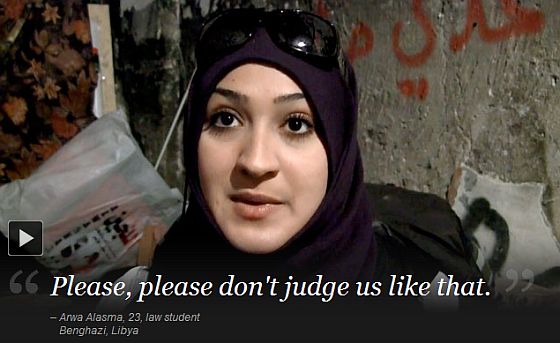

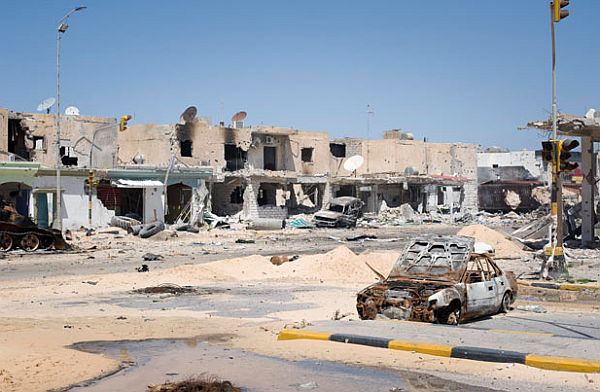


 When I say War in Context is handmade, that’s not a figure of speech. Typing and cutting-and-pasting involve all sorts of precise flexions, animated by action potentials rippling at high speed down the median nerve which extends from the cervical spine to the hand.