The real winner of Afghanistan’s election

The real winner of Afghanistan’s election

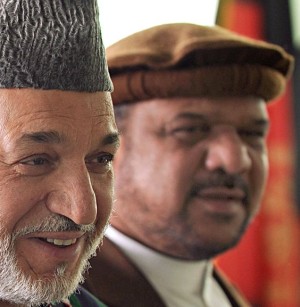
The real winner of Afghanistan’s presidential election will not be Hamid Karzai or his main rival, Abdullah Abdullah. It’s a man named Mohammad Qasim Fahim. He is Afghanistan’s senior-most military commander, with the lifetime rank of marshal, and was Karzai’s running mate during the campaign. Whether Karzai or one of his opponents wins, Fahim will hold and exercise extraordinary influence over the country’s military and security apparatus — more so than the elected president.
This means the real loser of Afghanistan’s presidential election — besides the Afghan people — will be the United States’ long-standing ambition to train and equip enough Afghan forces to allow for an eventual withdrawal of the U.S. military. Building up the Afghan military and police is at the heart of Gen. Stanley McChrystal’s latest assessment for Washington of what needs to be done in Afghanistan. But McChrystal’s forces will be training Afghan soldiers and police to work for Fahim: a human-rights-abusing, drug-trafficking warlord who might also have had a role in al Qaeda’s assassination of his political godfather, Tajik warlord Ahmad Shah Massoud, on Sept. 9, 2001 — an operation widely viewed in retrospect as a precursor to the terrorist attacks in the United States two days later. [continued…]

Time to get out of Afghanistan

“Yesterday,” reads the e-mail from Allen, a Marine in Afghanistan, “I gave blood because a Marine, while out on patrol, stepped on a [mine’s] pressure plate and lost both legs.” Then “another Marine with a bullet wound to the head was brought in. Both Marines died this morning.”

“I’m sorry about the drama,” writes Allen, an enthusiastic infantryman willing to die “so that each of you may grow old.” He says: “I put everything in God’s hands.” And: “Semper Fi!”

Allen and others of America’s finest are also in Washington’s hands. This city should keep faith with them by rapidly reversing the trajectory of America’s involvement in Afghanistan, where, says the Dutch commander of coalition forces in a southern province, walking through the region is “like walking through the Old Testament.” [continued…]

The Afghan 8os are back

It is deja vu on a huge and bloody scale. General Stanley McChrystal, the US commander in Afghanistan, is about to advise his president that “the Afghan people are undergoing a crisis of confidence because the war against the Taliban has not made their lives better”, according to leaked reports. Change the word “Taliban” to “mujahideen”, and you have an exact repetition of what the Russians found a quarter of a century ago.

Like Nato today, the Kremlin realised its forces had little control outside the main cities. The parallels don’t end there. The Russians called their Afghan enemies dukhy (ghosts), ever-present but invisible, as hidden in death as they were when alive – which echoes Sean Smith’s recent photographic account of the fighting in Helmand and the failure of the British units he was with to find a single Talib body.

The Soviet authorities never invited western reporters to be embedded, but you could track down Afghan war veterans in Moscow’s gloomier housing estates. They were conscripts, unlike British and US troops, so perhaps they had a heightened sense of anger. But how many British vets would share the sentiments that Igor expressed, as he hung out with his mates one evening in February 1989 and let me listen? “You remember that mother who lost her son. She kept repeating, ‘He fulfilled his duty. He fulfilled his duty to the end.’ That’s the most tragic thing. What duty? I suppose that’s what saves her, her notion of duty. She hasn’t yet realised it was all a ridiculous mistake. I’m putting it mildly. If she opened her eyes to our whole Afghan thing, she’d probably find it hard to hold out.” [continued…]


Facebooktwittermail

Once-legendary Fatah figure makes a comeback

Once-legendary Fatah figure makes a comeback

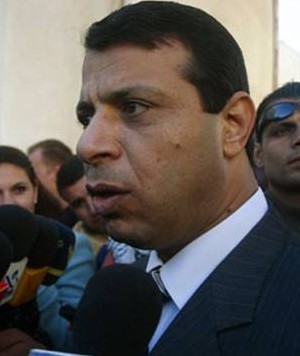
He ran the Gaza Strip like the Godfather, dispensing brutal punishment and benevolent largess. But that was before his summer of disgrace, two years ago, when Hamas militants drove out his armed followers and allowed looters to pick apart his seaside villa.


Mohammed Dahlan, the once-legendary chief of Fatah’s forces in the enclave, watched his own defeat helplessly from exile. Then he felt the sting of blame for “losing Gaza,” a debacle that split the Palestinians into hostile camps and crippled their drive for statehood.

Stripped of his authority in the late Yasser Arafat’s movement, he dropped from the limelight and plotted. But his target was not Hamas; it was the many detractors among his Fatah brethren who branded him a has-been.

After 18 months of quiet but tireless politicking, Dahlan is back in play. His recent election to Fatah’s Central Committee put him in an elite circle of advisors to Arafat’s 74-year-old successor, Palestinian Authority President Mahmoud Abbas, and positioned him as a contender to lead the movement someday. [continued…]

Facebooktwittermail

Iran news agency reports prisoner died of abuse

Iran news agency reports prisoner died of abuse

In what may be the first admission that a prisoner died from abuse by Iranian prison authorities in the wake of post-election unrest, a semiofficial news service reported Monday that the son of an adviser to a prominent conservative politician had died of “physical stress, conditions of imprisonment, repeated blows and harsh physical treatment.”

The report, by the Mehr News Agency, quoted “informed sources” as saying the medical examiner had determined that Mohsen Ruholamini, 25, died of abuse and neglect after being held in the Kahrizak detention center and then being transferred to Evin prison under “unsuitable conditions.” He was one of hundreds of people arrested as mass protests swept major Iranian cities after President Mahmoud Ahmadinejad claimed a landslide victory in June, and one of dozens who died.

“As a result of his poor physical condition, at the end of the journey, and after a delay of 70 minutes in transferring him to hospital, he unfortunately died,” said the report by Mehr, which has close ties to conservatives. [continued…]

Son to succeed father as Iraqi Shiite party leader

One of Iraq’s leading Shiite political parties moved quickly on Monday to fill the vacuum left by the death of its influential leader last week, nominating his son to take over a party now poised to challenge Prime Minister Nuri Kamal al-Maliki in national elections next year.

The nominee, Ammar al-Hakim, the scion of a respected political and religious family that fought Saddam Hussein’s government from exile and emerged as a political force after its fall, was widely expected to take over the party, the Supreme Islamic Iraqi Council.

His father, Abdul Aziz al-Hakim, who died of cancer in Tehran last week, provided for the succession in his will, heading off any potential leadership challenges. The party’s television network announced the nomination, and a spokesman said it would be ratified by the party’s leadership on Tuesday. [continued…]

Facebooktwittermail

Against the Israel boycott

Against the Israel boycott

One of the main battlefields in our fight for peace is Israeli public opinion. Most Israelis believe nowadays that peace is desirable but impossible (because of the Arabs, of course.) We must convince them not that peace would be good for Israel, but that it is realistically achievable.

When the archbishop [Tutu] asked what we, the Israeli peace activists, are hoping for, I told him: We hope for Barack Obama to publish a comprehensive and detailed peace plan and to use the full persuasive power of the United States to convince the parties to accept it. We hope that the entire world will rally behind this endeavor. And we hope that this will help to set the Israeli peace movement back on its feet and convince our public that it is both possible and worthwhile to follow the path of peace with Palestine.

No one who entertains this hope can support the call for boycotting Israel. Those who call for a boycott act out of despair. And that is the root of the matter. [continued…]

Netanyahu ‘doesn’t care what Britain thinks of Israel’

The editor of The Jewish Chronicle has accused Israel’s Prime Minister, Binyamin Netanyahu, of not caring about British public opinion after he refused to give any interviews during his visit to London last week.

In a comment piece in the newspaper, Stephen Pollard – though essentially supportive of Mr Netanyahu – concludes of his office: “The truth of it is that for all they moan about coverage of the Middle East, they don’t actually care. They don’t care if Brits end up thinking they are warmongers. They don’t care if they are losing the PR war. And they don’t care if those of us who do care are left fuming at their wilful refusal to do anything to help us counter Israel’s appalling image.” [continued…]

Editor’s Comment — Uri Avnery’s hope might be a testament to the tenacious spirit of this old peace activist, but is there any evidence that Israel’s political leadership or the majority of its population would be receptive to an Obama peace initiative? Fifty-one percent of Jewish Israelis view Obama as anti-Israel (pro-Palestinian) and a mere four percent see him as supportive of the Jewish state.

When The Jewish Chronicle‘s Stephen Pollard bemoans Benjamin Netanyahu’s indifference to international opinion, Pollard might be voicing a frustration commonplace within the Jewish diaspora, but the object of his frustration is what many (perhaps most) Israelis regard as one of the nation’s core strengths: it’s righteous isolation. Israel’s isolation — so the thinking goes — is not the product of its behavior but proof for the necessity of its existence.

Why should the Israeli prime minister be concerned about Israel’s appalling global image? He’s milking it for all it’s worth!

Facebooktwittermail

Israel ‘ups settlement activity in east Jerusalem’

Israel ‘ups settlement activity in east Jerusalem’

Israeli settlement activity in annexed east Jerusalem accelerated in the first half of 2009 despite US calls for a freeze, an anti-settlement activist group said on Sunday in a report.

“Recent months have seen the acceleration of the process of Israeli settlement in Palestinian communities in east Jerusalem,” the Israeli Ir Amim group said.

“These settlements… implant (a) Jewish population… precisely in the areas of the most intense dispute in the Palestinian-Israeli conflict,” it said. [continued…]

Facebooktwittermail

Pressuring Iran on nukes: would a gas embargo help?

Pressuring Iran on nukes: would a gas embargo help?

While the Obama Administration may think that a gasoline embargo, even a partial one, would pressure the Iranian regime to suspend its nuclear activities, Tehran may be hoping for just that sanction to help it with one of its longtime goals: reducing gasoline consumption. Indeed, the Iranian government, which has been subsidizing pump prices for years and keeping them well below the international market price (at a huge burden to the national budget), would love the U.S. to take the political hit for helping to end the subsidies.

Former President Mohammad Khatami stated that his greatest economic failure during his tenure was not reducing the massive subsidies the Iranian government spends to keep gas prices low. Every year, his government had to draw millions of dollars from Iran’s special “rainy day” oil revenue reserve fund in order to pay out the subsidies. By 2003, the leaders today associated with the ongoing Green Movement opposition — Khatami, Mehdi Karroubi and Ali Akbar Hashemi Rafsanjani — all supported rationing gasoline in order to reduce domestic consumption and government expenditure. [continued…]

Panel in Iran will oversee investigations into unrest

Conservative rivals of President Mahmoud Ahmadinejad of Iran have continued to challenge his drive to consolidate power, appointing a committee to supervise investigations into the unrest that swept the nation after he claimed a landslide victory in the disputed presidential election in June, political analysts said.

On Saturday, a day before Mr. Ahmadinejad stepped before a hostile Parliament to defend his 21 nominees for the cabinet — one of the many internal fights he is confronting — the chief of the judiciary, Sadeq Larijani, announced the appointment of a panel to oversee investigations by allies of the president into the postelection unrest.

Mr. Larijani, a rival of the president, said the committee was told “to ensure that the defendants’ rights are reserved and that they are treated properly,” according to the semi-official Fars news service, offering a not-too-subtle vote of no confidence in the president’s handling of events. [continued…]

Facebooktwittermail

Cheney says he was proponent for military action against Iran

Cheney says he was proponent for military action against Iran

Former Vice President Dick Cheney hinted that, in the waning days of the Bush administration, he had pushed for a military strike to destroy Iran’s nuclear-weapons program.

In an interview on Fox News Sunday, Mr. Cheney described himself as being isolated among advisers to then-President George W. Bush, who ultimately decided against direct military action.

“I was probably a bigger advocate of military action than any of my colleagues,” Mr. Cheney said in response to questions about whether the Bush administration should have launched a pre-emptive attack prior to handing over the White House to Barack Obama. [continued…]

Cheney offers sharp defense of CIA interrogation tactics

Mr. Cheney said he also supported officers who strayed outside Justice Department rules and used unauthorized interrogation techniques, saying they did so to keep Americans safe. And he warned that Mr. Holder’s investigation would demoralize intelligence officers and discourage them from working aggressively to protect the nation. [continued…]

Editor’s Comment — Will this become known as The Cheney Defense? “I broke the law to keep Americans safe.” Unlike the Nuremberg defense which was rejected by a panel of judges, The Cheney Defense would most likely seem compelling to the average American jury whose allegiance to the patriotic concept of defending America is no doubt far stronger than the constitutionally abstract notion of upholding the law.

Facebooktwittermail

Seven days that shook Afghanistan

Seven days that shook Afghanistan

The darker currents that have undercut the American-led war in this country have surfaced often over the past eight years, but rarely have so many come into view all at once.

In the space of a single week, a string of disturbing military and political events revealed not just the extraordinary burdens that lie ahead for the Americans and Afghans toiling to create a stable nation, but the fragility of the very enterprise itself.

On Tuesday, four American soldiers on patrol near in the southern city of Kandahar were killed when their armored vehicle, known as a Stryker, struck a homemade bomb, now the preferred killer of American troops. Their deaths brought the toll of foreign soldiers killed this year to 295, making 2009 the bloodiest so far for the American-led coalition. Of the dead, 175 were American — also the most for a single year since the war began. There are still four months left in the year, and the toll keeps rising. [continued…]

Increasing accounts of fraud cloud Afghan vote

A Kabul teacher assigned to run a polling station in this village arrived at 6 a.m. on Election Day to find the ballot boxes already full, well before the voting was to start. When he protested, the other election officials told him to let it go; when he refused, he was taken away by the local tribal chieftain’s bodyguards.

Now he is in hiding and receiving threats, he said. And the village’s polling place is under investigation in one of the most serious reports of fraud that officials worry could affect the results of the country’s Aug. 20 elections — in this case, as in many others, in favor of President Hamid Karzai.

Afghan election officials said Sunday that the serious fraud reports that they were considering had suddenly doubled — to 550 from 270, in a development likely to stoke public outrage and perhaps even delay the official results past September. By law, each of the more serious cases, out of more than 2,000 complaints of irregularities so far, must be investigated before the elections results can be certified. [continued…]

Many women stayed away from the polls in Afghanistan

Five years ago, with the country at peace, traditional taboos easing and Western donors pushing for women to participate in democracy, millions of Afghan women eagerly registered and then voted for a presidential candidate. In a few districts, female turnout was even higher than male turnout.

But on Aug. 20, when Afghans again went to the polls to choose a president, that heady season of political emancipation seemed long gone. This time, election monitors and women’s activists said, a combination of fear, tradition, apathy and poor planning conspired to deprive many Afghan women of rights they had only recently begun to exercise.

With insurgents threatening to attack polling places and voters, especially in the rural south, many families kept their women home on election day, even if the men ventured out to vote. In cities, some segregated female polling rooms were nearly empty, and many educated women who had voted or even worked at polling stations in previous elections decided not to risk going out this time. [continued…]

Organized crime in Pakistan feeds Taliban

Taliban fighters have long used this city of 17 million as a place to regroup, smuggle weapons and even work seasonal jobs. But recently they have discovered another way to make fast money: organized crime.

The police here say the Taliban, working with criminal groups, are using Mafia-style networks to kidnap, rob banks and extort, generating millions of dollars for the militant insurgency in northwestern Pakistan.

“There is overwhelming evidence that it’s an organized policy,” said Dost Ali Baloch, assistant inspector general of the Karachi police.

Jihadi-linked crime has surfaced in other Pakistani cities, like Lahore. But Karachi, the central nervous system of Pakistan’s economy, and home to its richest businessmen, is the hub. It has been free of the bombings that have tormented Pakistan’s other major cities this year, and some officials believe that is the result of a calculated strategy. [continued…]

U.S. sets metrics to assess war success

The White House has assembled a list of about 50 measurements to gauge progress in Afghanistan and Pakistan as it tries to calm rising public and congressional anxiety about its war strategy.

Administration officials are conducting what one called a “test run” of the metrics, comparing current numbers in a range of categories — including newly trained Afghan army recruits, Pakistani counterinsurgency missions and on-time delivery of promised U.S. resources — with baselines set earlier in the year. The results will be used to fine-tune the list before it is presented to Congress by Sept. 24.

Lawmakers set that deadline in the spring as a condition for approving additional war funding, holding President Obama to his promise of “clear benchmarks” and no “blank check.” [continued…]

Facebooktwittermail

My Lai and Lockerbie reconsidered

My Lai and Lockerbie reconsidered

A week ago, two convicted mass murderers leaped back into public consciousness as news coverage of their stories briefly intersected. One was freed from prison, continuing to proclaim his innocence, and his release was vehemently denounced in the United States as were the well-wishers who welcomed him home. The other expressed his contrition, after almost 35 years living in his country in a state of freedom, and few commented.

When Abdel Baset al-Megrahi, the Libyan sentenced in 2001 to 27 years in prison for the 1988 bombing of Pan Am Flight 103 over Lockerbie, Scotland, was released from incarceration by the Scottish government on “compassionate grounds,” a furor erupted. On August 22nd, ABC World News with Charles Gibson featured a segment on outrage over the Libyan’s release. It was aired shortly before a report on an apology offered by William Calley, who, in 1971 as a young lieutenant, was sentenced to life in prison for the massacre of civilians in the Vietnamese village of My Lai.

After al-Megrahi, who served eight years in prison, arrived home to a hero’s welcome in Libya, officials in Washington expressed their dismay. To White House Press Secretary Robert Gibbs, it was “outrageous and disgusting”; to President Barack Obama, “highly objectionable.” Calley, who admitted at trial to killing Vietnamese civilians personally, but served only three years of house arrest following an intervention by President Richard Nixon, received a standing ovation from the Kiwanis Club of Greater Columbus, Georgia, the city where he lived for years following the war. (He now resides in Atlanta.) For him, there was no such uproar, and no one, apparently, thought to ask either Gibbs or the president for comment, despite the eerie confluence of the two men and their fates. [continued…]

Facebooktwittermail

Hints of pluralism in Egyptian religious debates

Hints of pluralism in Egyptian religious debates

Writing in his weekly newspaper column, Gamal al-Banna said recently that God had created humans as fallible and therefore destined to sin. So even a scantily clad belly dancer, or for that matter a nude dancer, should not automatically be condemned as immoral, but should be judged by weighing that person’s sins against her good deeds.

This view is provocative in Egypt’s conservative society, where many argue that such thinking goes against the hard and fast rules of divine law. Within two hours of the article’s posting last week on the Web site of Al Masry al Youm, readers had left more than 30 comments — none supporting his position.

“So a woman can dance at night and pray in the morning; this is duplicity and ignorance,” wrote a reader who identified himself as Hany. “Fear God and do not preach impiety.”

Still, Mr. Banna was pleased because at least his ideas were being circulated. Mr. Banna, who is 88 years old and is the brother of Hassan al-Banna, founder of the Muslim Brotherhood, has been preaching liberal Islamic views for decades.

But only now, he said, does he have the chance to be heard widely. It is not that a majority agrees with him; it is not that the tide is shifting to a more moderate interpretative view of religion; it is just that the rise of relatively independent media — like privately owned newspapers, satellite television channels and the Internet — has given him access to a broader audience. [continued…]

Facebooktwittermail

Blackwater tapped foreigners on secret CIA program

Blackwater tapped foreigners on secret CIA program

When the CIA revived a plan to kill or capture terrorists in 2004, the agency turned to the well-connected security company then known as Blackwater USA.

With Blackwater’s lucrative government security work and contacts arrayed in hot spots around the world, company officials offered the services of foreigners supposedly skilled at tracking terrorists in lawless regions and countries where the CIA had no working relationships with the government.

Blackwater told the CIA that it “could put people on the ground to provide the surveillance and support — all of the things you need to conduct an operation,” a former senior CIA official familiar with the secret program told The Associated Press.

But the CIA’s use of the private contractor as part of its now-abandoned plan to dispatch death squads skirted concerns now re-emerging with recent disclosures about Blackwater’s role. [continued…]

CIA’s black sites, illuminated

Their transformations took place in a sensory cocoon: aboard a CIA aircraft, shackled in place, deprived of sight and sound by blindfolds, headsets and hoods.

They emerged into an existence that was hidden for most of the last eight years, but now is possible to glimpse through dozens of declassified files released by the Obama administration last week.

Scattered throughout, in the CIA’s clinical style, are descriptions of the prisoners’ surroundings, the extraordinary security measures with which they were handled, the often brutal search for answers they were thought to possess, and what passed for everyday life.

Some days seemed endless, illuminated around the clock by a pair of 17-watt fluorescent bulbs. White noise from the walkways filtered through the cell walls usually “in the range of 56-58” decibels, about as loud as people generally talk. [continued…]

Facebooktwittermail

Remnants of Iraq Air Force are found

Remnants of Iraq Air Force are found

Iraqi officials have discovered that they may have a real air force, after all.

The Defense Ministry revealed Sunday that it had recently learned that Iraq owns 19 MIG-21 and MIG-23 jet fighters, which are in storage in Serbia. Ministry officials are negotiating with the Serbs to restore and return the aircraft.

The Serbian government has tentatively promised to make two of the aircraft available “for immediate use,” according to a news release from the ministry. The rest would be restored on a rush basis, the ministry said.

An Iraqi delegation went to Serbia as part of an effort by the government to locate assets stashed abroad by Saddam Hussein to evade sanctions. Serbia had had friendly relations with Mr. Hussein’s government.

During that visit, Serbian defense officials told the Iraqis that Mr. Hussein had sent 19 fighter jets to Serbia for repairs in the late 1980s, during the Iran-Iraq war, but was unable to bring them back after sanctions were imposed on his country. [continued…]

Facebooktwittermail

Sept. 11 plotter cooperated after waterboarding

Sept. 11 plotter cooperated after waterboarding

The debate over the effectiveness of subjecting detainees to psychological and physical pressure is in some ways irresolvable, because it is impossible to know whether less coercive methods would have achieved the same result. But for defenders of waterboarding, the evidence is clear: Mohammed cooperated, and to an extraordinary extent, only when his spirit was broken in the month after his capture March 1, 2003, as the inspector general’s report and other documents released this week indicate.

Over a few weeks, he was subjected to an escalating series of coercive methods, culminating in 7 1/2 days of sleep deprivation, while diapered and shackled, and 183 instances of waterboarding. After the month-long torment, he was never waterboarded again.

“What do you think changed KSM’s mind?” one former senior intelligence official said this week after being asked about the effect of waterboarding. “Of course it began with that.” [continued…]

Editor’s Comment — As Khalid Sheik Mohammed sits in his Guatanamo cell studying the Bible, Dick Cheney would have us believe that the turning point in his detention came when his will was broken by the unbearable stress provoked by his fear of drowning.

To those who buy the morally eviscerated argument that when it comes to torture, the ends justify the means, Mohammed’s case provides the causal clincher: “an avowed and truculent enemy of the United States” got waterboarded and was transformed into the CIA’s “preeminent source” on al-Qaeda. Waterboarding was for the intelligence operative no less powerful than alchemy.

But where’s the actual proof that Mohammed’s apparent change of heart was really the effect of his being tortured?

The one piece of common knowledge that captives and captors share (assuming that the captive does actually know something) is that the captive’s most valuable asset is time. The longer he can hold out, the less his intelligence is worth. By the time KSM “broke”, for all we know the breaking point had little to do with whether waterboarding bout 184 seemed unimaginably less tolerable than the preceding 183 instances; it might simply have marked the point in time at which KSM decided he had bought his collaborators as much time as they could effectively employ in their furious efforts at damage control that must have followed his capture.

Facebooktwittermail

Olmert indicted in three corruption affairs

Olmert indicted in three corruption affairs

Former Prime Minister Ehud Olmert was indicted Sunday in three corruption affairs, concluding months of investigations into cases allegedly conducted during his tenure as Jerusalem mayor and trade minister.

Attorney General Menachem Mazuz had announced earlier this month that Olmert would be charged in the Rishon Tours, cash envelopes and Investment Center affairs.

The State Prosecution on Sunday presented to the Jerusalem Magistrate’s Court the indictment papers against both Olmert and his former bureau chief, Shula Zaken. The charges surfaced when Olmert was still prime minister, eventually forcing him to step aside. Mazuz had rejected a request by Olmert’s attorneys for a pre-trial hearing, claiming their client had given up that right by refusing to attend another hearing.

The former prime minister had claimed then that the prosecution could not discuss the matters with an open mind, as they had already decided to press charges against his former travel coordinator, Rachel Risby-Raz, for her involvement in the Rishon Tours case.

The former prime minister has now been charged with accepting cash envelopes from American businessman Morris Talansky. Continue reading

Facebooktwittermail

Tutu to Haaretz: Arabs paying the price of the Holocaust

Tutu to Haaretz: Arabs paying the price of the Holocaust

he lesson that Israel must learn from the Holocaust is that it can never get security through fences, walls and guns,” Archbishop Emeritus Desmond Tutu of South Africa told Haaretz Thursday.

Commenting on Prime Minister Benjamin Netanyahu’s statement in Germany Thursday that the lesson of the Holocaust is that Israel should always defend itself, Tutu noted that “in South Africa, they tried to get security from the barrel of a gun. They never got it. They got security when the human rights of all were recognized and respected.”

The Nobel Prize laureate spoke to Haaretz in Jerusalem as the organization The Elders concluded its tour of Israel and the West Bank. He said the West was consumed with guilt and regret toward Israel because of the Holocaust, “as it should be.”

“But who pays the penance? The penance is being paid by the Arabs, by the Palestinians. I once met a German ambassador who said Germany is guilty of two wrongs. One was what they did to the Jews. And now the suffering of the Palestinians.” Continue reading

Facebooktwittermail

Hard-line Iranian prosecutor fired

Hard-line Iranian prosecutor fired

Iran’s new judiciary chief ousted the hard-line prosecutor behind the ongoing trials against opposition figures in Tehran, replacing him with a relatively moderate newcomer from the provinces, an Iranian news agency reported Saturday.

For years, Tehran prosecutor-general Saeed Mortazavi, a staunch ally of President Mahmoud Ahmadinejad, has been the bane of reformists, journalists and activists.

His removal suggests an attempt by the new judiciary chief, Sadegh Larijani, the scion of a powerful conservative family, to curtail the influence of hard-liners and clean up the image of the country’s legal system. [continued…]

Neither Islamic nor a republic

As the second act of the post-electoral drama unfolds in Iran, internal weaknesses are exposed more clearly than ever before. Behind the facade of victory lie deep divisions among the top clergy about what an Islamic government should be composed of and how it should treat its citizens.

Ayatollah Ali Montazeri – who is not a state official but has great religious authority in Iran – addressed “top officials” directly when he wrote: “At least have the courage to admit this is neither an Islamic state nor a republic.”

Ayatollah Khamenei sidelined Montazeri in 1989, when he should have occupied the seat of the supreme leader after the death of the leader of Ayatollah Khomeini. Montazeri has been enraged by recent developments and made public statements condemning the treatment of the detained demonstrators. In a letter responding to 293 journalists who asked his opinion on recent developments in Iran he said he expected the authorities to stop these “show trials and forced confessions” which were ridiculing Islamic justice. [continued…]

Facebooktwittermail

Karzai using rift with U.S. to gain favor

Karzai using rift with U.S. to gain favor

A little over 24 hours after the polls closed, President Obama stepped out on the White House South Lawn last week to pronounce the Afghanistan presidential elections something of a success.

“This was an important step forward in the Afghan people’s effort to take control of their future, even as violent extremists are trying to stand in their way,” Mr. Obama said. “I want to congratulate the Afghanistan people on carrying out this historic election.”

But now, as reports mount of widespread fraud in the balloting, including allegations that supporters of the Afghan president, Hamid Karzai, illegally stuffed ballot boxes in the south and ripped up ballots cast for his opponents, Mr. Obama’s early praise may soon come back to haunt him. [continued…]

U.S. fears clock ticking on Afghanistan

The Obama administration is racing to demonstrate visible headway in the faltering war in Afghanistan, convinced it has only until next summer to slow a hemorrhage in U.S. support and win more time for the military and diplomatic strategy it hopes can rescue the 8-year-old effort.

But the challenge in Afghanistan is becoming more difficult in the face of gains by the Taliban, rising U.S. casualties, a weak Afghan government widely viewed as corrupt, and a sense among U.S. commanders that they must start the military effort largely from scratch nearly eight years after it began.

A turnaround is crucial because military strategists believe they will not be able to get the additional troops they feel they need in coming months if they fail to show that their new approach is working, U.S. officials and advisors say. [continued…]

Facebooktwittermail

Israel has Iran in its sights

Israel has Iran in its sights

If Israel attempts such a high-risk and destabilizing strike against Iran, President Obama will probably learn of the operation from CNN rather than the CIA. History shows that although Washington seeks influence over Israel’s military operations, Israel would rather explain later than ask for approval in advance of launching preventive or preemptive attacks. Those hoping that the Obama administration will be able to pressure Israel to stand down from attacking Iran as diplomatic efforts drag on are mistaken.

The current infighting among Iran’s leaders also has led some to incorrectly believe that Tehran’s nuclear efforts will stall. As Friday’s International Atomic Energy Agency report on Iran’s nuclear programs revealed, throughout the political crises of the last three months, Iran’s production rate for centrifuges has remained steady, as has its ability to produce uranium hexafluoride to feed into the centrifuges. [continued…]

Nuclear agency says Iran has bolstered ability to make fuel but slowed its output

International nuclear inspectors reported on Friday that Iran had significantly increased its ability to produce nuclear fuel over the summer, even while slowing the pace at which it was enriching the uranium that the West fears could one day fuel nuclear weapons.

The slowdown puzzled the inspectors, and Iran offered no clues about whether technical problems or political considerations accounted for its action.

Nonetheless, outside nuclear experts who dissected the agency’s latest report — a critical one because it comes just as the United States and its European allies are debating far more damaging sanctions against Iran — said that if Iran’s current stockpile of low-enriched uranium was further purified, it would have nearly two warheads’ worth of bomb fuel. [continued…]

Facebooktwittermail